They Tied a Paralyzed Dog Inside Three Garbage Bags and Left Her to D!e—Then Stefany Did the One Thing Her Rescuers Never Expected
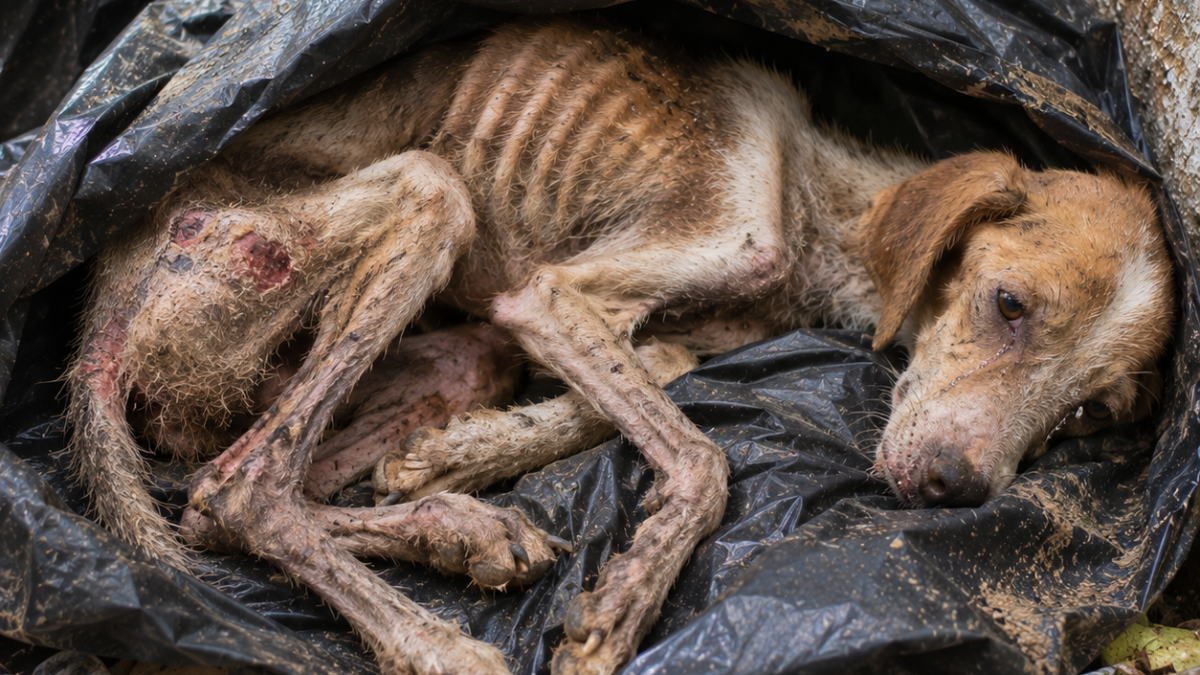
They Tied a Paralyzed Dog Inside Three Garbage Bags and Left Her to D!e—Then Stefany Did the One Thing Her Rescuers Never Expected.
When we cut open the third garbage bag in Monte Pascoal, Brazil, the little dog inside was still alive—but her back legs would never carry her normally again, and every human hand made her tremble as if the danger had followed her into safety.
The people who abandoned Stefany had not only tied her up and thrown her away; they had left her with a spinal injury so severe that even escaping the bags would have been impossible.
But months later, when the same terrified dog was given the chance to choose whether a person could come close, Stefany made one small decision that changed every assumption we had made about how much of her life could still be saved.
The first thing I heard was not barking.
It was plastic.
A dry, irregular scratching sound coming from the weeds beside an unpaved road outside Monte Pascoal.
At first, I thought wind had caught trash against a branch.
The afternoon was hot, and the air over southern Bahia had that heavy, almost metallic stillness that comes before rain.
Motorcycles passed occasionally.
A bus had gone through twenty minutes earlier and left a cloud of pale dust hanging between the trees.
My name is Ana Ribeiro.
At the time, I was thirty-eight years old and working with Caraíva Proteção Animal, a small rescue network that survived mostly because a handful of people refused to accept that “someone else will help” was a plan.
We were not a large organization.
We did not have endless money.
We did not have a hospital.
We had borrowed crates, old blankets, donated food, two reliable veterinarians, three volunteers who answered their phones at unreasonable hours, and the kind of stubbornness that often substitutes for resources in rescue work.
That afternoon, I had not been looking for a dog.
I was returning from checking on an injured mule when I noticed three black garbage bags piled near a drainage ditch.
There was nothing unusual about garbage along rural roads.
That is the sad truth.
People dump mattresses.
Broken chairs.
Construction debris.
Household trash.
Everything they do not want to deal with anymore.
I had already passed the bags when I heard the scratching.
I stopped walking.
Listened.
Nothing.
Then again.
Scratch.
Pause.
Scratch.
My stomach tightened.
I stepped off the road.
The bags were tied together.
Not stacked naturally.
Tied.
One around another.
Then another around that.
I stood there for perhaps two seconds, already knowing something was wrong.
“Hello?”
PART2:
Ridiculous thing to say to garbage bags.
Still, I said it.
The scratching stopped.
Then came a sound.
Very soft.
Not a bark.
Not even a whine.
More like breath forced through a throat that had become too tired to make noise.
I dropped to my knees.
The outer bag was secured with yellow electrical cord.
I pulled at the knot.
It had been tightened deliberately.
Not a loose knot.
Not something tied quickly to keep trash from spilling.
Someone had wanted the bag closed.
My hands started shaking.
I carried a pocketknife.
I cut the cord.
PART3:
The first bag opened.
Inside was another.
Tied.
I swore.
Cut that one.
Then the third.
The smell came out first.
Urine.
Feces.
Heat.
Fear.
And then I saw two brown eyes.
A small dog lay curled awkwardly inside the plastic.
Tan coat.
White chest.
Narrow face.
She was young.
Maybe two.
Maybe three.
Her front legs were pulled against her body by a cord looped around them.
Another piece of cord had been tied around her torso.
Her rear legs lay limp.
Completely limp.
For one terrible second, I thought she was dead from the waist down and dying everywhere else.
“Meu Deus.”
She looked at me.
That was all.
She did not struggle.
She did not try to bite.
She did not bark.
Her eyes widened when my hands moved.
And then she froze.
That reaction stayed with me far longer than the bags.
Animals fight when they believe fighting might matter.
They flee when escape seems possible.
Stefany did neither.
She became still.
As if she had learned that making herself smaller was the safest thing she could do around people.
I reached toward the cord.
Her breathing quickened.
“Okay.”
I stopped.
“You don’t know me.”
Her eyes remained fixed on my hand.
“I know.”
I backed away a few inches.
Took my phone out.
Called Luciana.
She answered on the second ring.
“What happened?”
Not hello.
People who work rescue learn that when another rescuer calls during the day and sounds wrong, something happened.
“I found a dog.”
“Hit by car?”
“I don’t know.”
“Where?”
“Outside Monte Pascoal, near the old quarry road.”
“Condition?”
I looked at the bags.
“At least three bags. Tied.”
Silence.
Luciana’s voice changed.
“Tied inside?”
“Yes.”
“Alive?”
“Yes.”
“Can she stand?”
I looked at the rear legs.
“No.”
“I’m coming.”
“Bring cutters.”
“I have them.”
I hung up.
The dog’s eyes tracked the phone.
I put it on the ground.
Then sat beside the ditch.
No touching.
No reaching.
Traffic passed.
Dust moved.
The dog stayed inside the opened plastic.
I talked because silence suddenly felt cruel.
“My name is Ana.”
Her ear twitched.
“I know you don’t care.”
Nothing.
“I don’t know your name.”
Her eyes stayed on me.
“Probably better than whatever they called you.”
That made me angry again.
I forced myself to calm down.
Anger is useful later.
It is not useful around terrified animals.
I kept my hands visible.
“You’re not staying here.”
The dog’s chest moved fast.
“You don’t have to believe me.”
A motorcycle passed.
She flinched violently.
Her front claws scraped against plastic.
But her back legs did nothing.
Not even a kick.
I moved slightly closer.
“Can I touch the cord?”
Of course she did not answer.
Still, asking mattered to me.
I waited.
She did not turn her head away.
I reached slowly.
One finger touched the yellow cord.
Her body hardened.
I stopped.
Waited again.
Then cut one loop.
Then another.
When the restraint around her front legs loosened, she tried to pull herself forward.
Only the front half moved.
Her chest lifted.
Her front paws clawed at the dirt.
Her hips dragged behind.
I felt the entire shape of the situation at once.
Whoever put her in those bags had known.
Maybe not medically.
But they had known she could not walk away.
They had not abandoned a healthy dog who might eventually find water or a house.
They had tied up a disabled animal and sealed her inside plastic.
There was no version of that act I could soften.
Luciana arrived twelve minutes later with Paulo, another volunteer.
Their truck stopped hard enough to send dust over us.
Luciana jumped out carrying a crate and towels.
She saw the bags.
Stopped.
Her face went white.
“Oh, no.”
Paulo swore.
I held up one hand.
“She’s terrified.”
Luciana crouched several feet away.
“Hi, baby.”
The dog froze again.
Luciana lowered her voice.
“No one touches until she lets us.”
Paulo looked at the rear legs.
“Spinal?”
“Probably.”
“Recent?”
“I don’t know.”
That became the answer to everything.
We did not know how long she had been inside the bags.
We did not know who had tied her.
We did not know whether the spinal injury happened before or during the abandonment.
We did not know if she had been hit by a vehicle.
Kicked.
Dragged.
Dropped.
We knew only what was in front of us.
A young dog.
Dehydrated.
Soiled.
Terrified.
Unable to use her rear legs normally.
Luciana moved the crate close.
We lined it with towels.
Then came the difficult part.
The dog could not enter it herself easily.
We had to lift her.
I hated that.
She hated it more.
When my arms slid beneath her chest and abdomen, she made the first real sound.
A scream.
Short.
Sharp.
Not necessarily from pain.
Fear.
Pure fear.
I almost let go.
Luciana said, “Keep her supported.”
“I know.”
The dog twisted her front half.
Her back half followed like something disconnected from the rest of her.
I held her securely.
“Sorry.”
Another scream.
“I’m sorry.”
I lowered her onto the towel.
The moment my hands released, she crawled to the far corner of the crate using only her front legs.
Pressed herself against the plastic wall.
And stared.
Luciana whispered, “She thinks we’re going to hurt her.”
I closed the crate.
“I know.”
Paulo picked up the garbage bags.
“Police?”
“Yes.”
“Now?”
“After the vet.”
We drove to Porto Seguro.
The clinic had agreed to wait.
Stefany did not make a sound during the drive.
We did not call her Stefany yet.
At that point she was simply the dog from the bags.
I sat beside the crate.
Every bump in the road made her front paws brace.
Her rear legs shifted passively.
I kept one hand near the bars.
Not inside.
Near.
At one point, her nose moved toward my fingers.
Then she stopped herself.
That nearly broke me.
Trust trying to happen and fear interrupting it.
At the clinic, Dr. Ricardo Almeida met us at the back entrance.
He had worked with our rescue for years.
Forty-six.
Patient.
Not easily shocked.
He opened the crate.
The dog flattened herself.
Ricardo did not reach.
He watched.
“How long?”
“Unknown.”
“Motor function?”
“Front only.”
“Urination?”
“She wet herself in the bags.”
“Voluntary?”
“No idea.”
“Pain response?”
“Not tested.”
He looked at me.
“We need to examine her.”
“I know.”
“You stay.”
“Wasn’t leaving.”
Ricardo gave a small nod.
We moved slowly.
Sedation became necessary.
Not because she was aggressive.
Because every touch sent her into panic.
Once the medication relaxed her, we could finally see the extent of the physical damage.
She was thin but not emaciated.
Several pressure sores had begun near her hips.
There were abrasions around the front legs where the cord had rubbed.
The muscles in her rear legs were already wasting.
That told Ricardo something.
“This is not new.”
“How old?”
“The spinal injury?”
“Yes.”
“At least weeks. Maybe longer.”
Luciana looked at me.
“So they had time.”
I knew what she meant.
Whoever abandoned Stefany had lived with her disability long enough to understand it.
Enough time to see she could not walk normally.
Enough time to know care would be needed.
Then they chose plastic bags.
Ricardo took X-rays.
The images showed damage in the thoracolumbar spine.
Not a fresh complete fracture.
Old trauma.
Compression.
Neurological damage.
He tested deep pain sensation.
Minimal.
Reflexes were inconsistent.
Bladder function was poor.
I stood beside the monitor.
“What are we looking at?”
Ricardo sat down.
“She may regain some function.”
“May?”
“Maybe small amounts.”
“Walk?”
“Not normally.”
The answer came gently.
Still felt brutal.
“Ever?”
“I would not promise that.”
Luciana crossed her arms.
“What can she do?”
Ricardo looked at the sleeping dog.
“A lot.”
That answer surprised me.
“She can live?”
“Yes.”
“With paralysis?”
“Yes.”
“Pain?”
“We manage that.”
“Bladder?”
“We assess. She may need assistance.”
“Wheelchair?”
“Possibly later.”
I looked at him.
“You’re saying she can have a life.”
“I’m saying paralysis changes the care plan.”
He paused.
“It does not automatically cancel the life.”
That sentence stayed with me.
We called her Stefany because one of the clinic assistants looked at her and said she had a soft face that reminded her of a cousin named Stefany.
It was not a sophisticated naming process.
Most rescue names aren’t.
The name entered the chart.
Suddenly she was no longer “the bag dog.”
Stefany.
We posted a brief statement online that evening.
No graphic photographs.
No speculation.
Female dog found tied inside multiple garbage bags near Monte Pascoal.
Severe spinal injury.
Receiving veterinary care.
Police notified.
People reacted immediately.
Anger spreads faster than compassion online.
Comments demanded punishment.
Names.
Arrests.
Somebody suggested dumping the perpetrator in garbage bags.
I understood the feeling.
I deleted the comment.
Stefany did not need more cruelty performed in her name.
She needed antibiotics.
Clean bedding.
Pain control.
Bladder care.
Food.
And people who could move slowly enough not to make her terrified.
Her first three days in the clinic were physically easier than emotionally.
She ate.
That was good.
Drank.
Good.
Her bloodwork was not catastrophic.
Very good.
But if someone entered the kennel area too quickly, Stefany flattened herself.
If a hand came from above, she trembled.
If two people stood near her at once, she tried to drag herself into a corner.
No barking.
No biting.
No resistance.
Just disappearance.
She made her body small.
I began sitting outside the kennel every morning.
Not touching.
Not talking much.
Sometimes I brought paperwork.
Sometimes coffee.
I would sit sideways so my shoulders did not face her directly.
For the first week, she ignored me.
That was fine.
Ignoring was better than panic.
One morning, I placed a piece of cooked chicken two feet inside the kennel.
Then moved away.
She waited until I left.
The next morning, same.
Third morning, she ate while I was still sitting outside.
I did not look at her.
That was harder than it sounds.
Humans ruin many good moments by staring.
Two days later, I placed the chicken closer.
Stefany crawled forward.
Her front legs were surprisingly strong.
She moved by planting both paws and dragging her hips.
Not graceful.
But effective.
She ate.
Then backed away.
“Good girl.”
Her head snapped up.
I immediately regretted speaking.
She froze.
I looked down.
“Sorry.”
Thirty seconds passed.
Then she ate the second piece.
That was our first conversation.
Trust came in measurements smaller than inches.
Hand visible.
No reaction.
Hand closer.
Tension.
Stop.
Try tomorrow.
Voice.
Ear movement.
Name.
Eye contact.
Chicken.
Distance.
Repeat.
People asked why we did not simply pet her so she would “understand.”
Because affection forced onto a frightened animal is not affection.
It is another loss of control.
Stefany had experienced enough of those.
She needed choices.
That became the foundation of everything.
Physical therapy began carefully.
Ricardo wanted to preserve muscle.
Prevent contractures.
Protect skin.
Maintain joint range.
We used padded mats.
Gentle massage.
Supported positioning.
At first, Stefany hated it.
Even with people she had begun recognizing, manipulation of the hind legs made her panic.
So we changed our expectations.
Short sessions.
Two minutes.
Then three.
Pause when she became overwhelmed.
No heroic rehabilitation videos.
No forcing for a dramatic result.
One day Paulo said, “If we move slower, this will take months.”
Luciana answered, “Then it takes months.”
That became our rule.
Months were cheaper than breaking what trust we had.
Stefany moved to our small recovery property after two weeks.
It was not a formal shelter.
More like an old house with fenced areas, converted rooms, and too many bowls.
There were usually fifteen to twenty dogs there.
Some recovering from surgery.
Some waiting for homes.
Some who had nowhere else.
We gave Stefany her own quiet room.
Soft mattress.
Washable covers.
Low water bowl.
Padded floor.
A gate so she could see activity without being surrounded by it.
For the first three days, she stayed near the back wall.
Then something changed.
A dog named Beto walked past.
Beto was old.
Missing part of one ear.
Gentle with everyone.
He stopped outside Stefany’s gate.
She raised her head.
Beto lay down.
That was all.
No interaction.
No sniffing through the bars.
No pressure.
He simply lay there.
Stefany watched him for almost an hour.
The next day, Beto returned.
On the third, Stefany dragged herself toward the gate.
One foot.
Then another.
When Beto placed his nose near the bars, Stefany sniffed him.
Her tail moved.
Once.
I was standing at the other end of the hallway.
I put my hand over my mouth.
Luciana whispered, “Don’t cry.”
“I’m not.”
“You are.”
“Dust.”
“Inside?”
“Old house.”
She smiled.
Beto became Stefany’s first friend.
Not me.
Not Luciana.
Not Ricardo.
A dog.
That was fair.
Animals often believe other animals before they believe us.
Beto showed Stefany the routine.
Breakfast comes.
Nobody steals it.
People enter.
Nobody kicks.
Doors close.
They open again.
Beds remain.
Water returns.
Hands sometimes bring medicine.
Hands can also bring chicken.
That last part was important.
Three weeks after rescue, Stefany allowed Luciana to touch the side of her neck.
Not pet.
Touch.
One second.
Luciana had been sitting near her for twenty minutes.
Stefany crawled closer voluntarily.
Luciana lowered her hand.
Stefany smelled it.
Then pressed her cheek against two fingers.
Luciana froze.
I watched from the doorway.
Nobody spoke.
Stefany remained there.
One second.
Two.
Then moved away.
Luciana began crying after she left the room.
Not before.
That mattered.
We never wanted Stefany to feel responsible for our emotions.
The police investigation moved slowly.
Painfully slowly.
People assume abandoned animals come with obvious perpetrators.
Usually they do not.
The garbage bags carried no useful prints.
The electrical cord was common.
There were no nearby security cameras.
We posted Stefany’s photo.
A woman eventually contacted us.
She believed she recognized the dog from a property outside Itabela.
We followed the lead.
Then another.
Then another.
Most went nowhere.
One man claimed Stefany belonged to a neighbor who moved.
False.
Another thought she had seen her at a roadside mechanic shop.
Wrong dog.
Then a young delivery driver named João sent a photograph.
The image was six months old.
Taken accidentally while photographing a package delivery.
In the background, near the gate of a house, was a tan female dog.
Same white chest.
Same narrow face.
Standing.
Standing.
That detail mattered.
Stefany had once been able to walk.
The house belonged to a man named Gilberto Nunes and his adult son Marcos.
Animal welfare officers visited.
The men denied knowing the dog.
Then a neighbor confirmed otherwise.
Stefany had belonged to Marcos’s girlfriend, Renata.
She had lived at the property for more than a year.
The girlfriend moved away after the relationship ended.
And Stefany remained.
We contacted Renata.
She cried before I finished explaining.
“Is she alive?”
“Yes.”
“What happened to her?”
“You tell me.”
Silence.
Then, “She got hit.”
“By a car?”
“I think so.”
“When?”
“Maybe five months ago.”
“Who took her to the vet?”
Silence again.
“No one.”
My hand tightened around the phone.
“Why?”
“Marcos said she would get better.”
“She couldn’t use her back legs.”
“I know.”
“You knew?”
“Yes.”
I stood outside Stefany’s room while we spoke.
Inside, she was sleeping beside Beto.
I lowered my voice because anger makes me loud.
“Why did you leave her there?”
Renata began crying harder.
“I tried to take her.”
“Then why didn’t you?”
“Marcos said she was his.”
“Was she?”
“No.”
“So?”
“He threatened me.”
That complicated things.
Cruelty usually does.
Renata had been in an abusive relationship.
She had left quickly.
She had called a cousin to help retrieve belongings.
Marcos blocked them.
She reported threats but never mentioned Stefany.
“I thought his mother would care for her.”
“She didn’t.”
“I know.”
“No, you know now.”
She sobbed.
That did not make me feel better.
But it changed my anger.
Not erased.
Changed.
“Did Marcos ever hurt Stefany?”
A pause.
“I saw him kick her once.”
My stomach turned.
“When?”
“Before the car.”
“Did he hit her with the car?”
“No. I don’t think so.”
“Why not?”
“Because she got out through the gate and was hit on the road.”
“How do you know?”
“His mother told me.”
“Afterward?”
“Yes.”
“And they never took her for treatment.”
“No.”
I looked through the gate.
Stefany woke.
Her eyes met mine.
“Anything else?”
Renata’s voice became quiet.
“After I left, Marcos sent me a photo.”
“What photo?”
“Stefany lying in the yard.”
“Why?”
“He said, ‘See what happens when you leave things behind.’”
I closed my eyes.
That message changed the case.
Renata still had it.
She sent screenshots.
Then another neighbor came forward.
He had seen Stefany dragging herself through the yard weeks after the injury.
He sometimes pushed food through the fence.
He asked Marcos if the dog needed veterinary help.
Marcos told him to mind his business.
The neighbor later noticed Stefany disappeared.
Marcos said she had been “taken care of.”
That phrase.
People use it when they do not want to name what they did.
Investigators now had more.
Not everything.
But more.
The case moved.
Online attention grew.
A local television program requested an interview.
I initially refused.
Luciana argued that public pressure could help.
So we agreed.
The reporter came to the rescue property.
We did not show Stefany’s face closely at first.
She disliked cameras.
The reporter asked me, “Do you believe someone intentionally threw her away because she was disabled?”
I said, “I believe somebody tied a dog who could not walk inside three garbage bags.”
“That sounds intentional.”
“It was.”
“What do you want to happen?”
I thought she expected me to say prison.
Punishment.
Something dramatic.
“I want people to understand disability is not a reason to make an animal disappear.”
She waited.
I continued.
“Stefany was harder to care for after her injury. That is true. She needed help with mobility, hygiene, skin care, probably bladder care. But ‘harder’ and ‘worthless’ are not the same word.”
The clip spread.
People began sending wheelchairs.
Too many.
Most were the wrong size.
One had been designed for a Labrador.
Stefany could have lived inside it.
But one message came from a mobility organization willing to build a custom cart.
Measurements.
Chest width.
Hip height.
Weight.
Shoulder height.
We sent everything.
While we waited, Stefany continued moving in her own way.
She became astonishingly fast.
The first time I saw her cross the courtyard at speed, I panicked.
She planted both front paws, pulled, slid, planted again.
Fast.
Determined.
Tail up.
I shouted, “Stefany!”
She ignored me.
Beto was ahead.
She wanted him.
She caught up.
Then stole the toy he was carrying.
Beto looked offended.
I laughed until my stomach hurt.
That was another important day.
Not because Stefany walked.
She didn’t.
Because she played.
There is a difference between being alive and having something you want badly enough to chase.
Stefany had started wanting things.
Food.
Sunshine.
Beto’s toys.
Certain people.
Certain blankets.
Chicken.
Especially chicken.
She hated bananas.
No medical reason.
Personal principle.
Her body remained complicated.
We had to watch for pressure sores.
Change positions.
Keep bedding dry.
Check the skin on her back feet because dragging could create wounds.
Use protective coverings.
Monitor urine.
Clean her carefully.
Some days were exhausting.
One morning I arrived to find she had removed her diaper, shredded half of it, dragged herself through the mess, and then looked at me with an expression suggesting I had failed housekeeping standards.
I stood in the doorway.
“No.”
Tail thump.
“You did this.”
Tail thump.
“I’m not blaming Beto.”
Beto was sleeping peacefully in the hall.
Stefany barked.
It was one of her first proper barks.
I stopped.
“You bark?”
Another bark.
Luciana appeared.
“What happened?”
“She’s arguing.”
Luciana looked at the disaster.
“With evidence.”
Stefany barked again.
We laughed.
Months earlier, she had frozen when people entered.
Now she complained.
Fear was becoming personality.
That was one of the most beautiful transformations I had ever watched.
She developed favorites.
Paulo could feed her.
Luciana could massage her legs.
Ricardo could examine her if I stayed nearby.
But with me, Stefany began doing something different.
She sought contact.
Not constantly.
Never desperately.
Choice remained important.
One afternoon I sat beneath a mango tree with paperwork.
Stefany was lying ten feet away in the grass.
Beto slept nearby.
I was reading adoption applications for another dog when something touched my shoe.
I looked down.
Stefany had dragged herself across the yard.
She rested her chin on my foot.
I froze.
Then slowly lowered one hand.
“Can I?”
Her eyes half closed.
I touched her ear.
No tension.
I stroked the side of her face.
She leaned in.
I cried.
Obviously.
By then everyone mocked me for crying.
Paulo walked past.
“Again?”
“Go away.”
“She put her head on your shoe?”
“Yes.”
“Emergency.”
“Paulo.”
He smiled and left.
Stefany remained.
That was the first time I petted her for more than a few seconds.
Not because we decided she was ready.
Because she decided.
That difference mattered more than the touch itself.
The custom wheelchair arrived six months after rescue.
Bright aluminum frame.
Two large wheels.
Padded support sling.
Adjustable chest harness.
I hated it at first.
Not rationally.
Emotionally.
The cart looked like confirmation.
Permanent.
Before it arrived, some hidden part of me still imagined a miracle.
Stefany waking one morning.
Rear legs moving.
Walking.
Everybody cheering.
The wheelchair felt like admitting that future was not coming.
Ricardo noticed.
“You’re disappointed.”
“No.”
“You are.”
“I know she needs it.”
“That’s not what I said.”
I looked at the cart.
“She deserves to walk.”
He leaned against the table.
“She deserves to move.”
I looked at him.
“Those are not always the same thing.”
That sentence changed how I saw the wheelchair.
We introduced it slowly.
Stefany hated the harness.
Of course.
Anything wrapped around her body still triggered old fear.
So first the cart sat in the room.
Nothing happened.
Then near her bed.
Treat.
Then we touched the harness to her chest.
Treat.
Then buckled one strap.
Remove.
Treat.
Days.
Not hours.
Some volunteers complained.
“She could already be using it.”
Luciana answered, “She could also already be afraid of it forever.”
We took our time.
The first full fitting happened outside.
Stefany stood with her front paws planted while the sling supported her hips.
She froze.
I crouched in front of her.
“No hurry.”
Beto walked past.
Stefany watched.
Beto kept going.
Her front paw moved.
The cart rolled.
Stefany stopped.
Looked behind herself.
Then moved another paw.
Roll.
Another.
Roll.
Her ears lifted.
I smiled.
“Yeah.”
She moved faster.
The wheels turned.
Stefany’s entire expression changed.
Her front legs worked.
Her back half followed smoothly instead of scraping.
She accelerated.
“Stefany.”
Faster.
“Stefany!”
She went after Beto.
Beto looked over his shoulder.
Saw the wheelchair dog gaining on him.
Ran.
That was a mistake.
Stefany chased.
Everyone shouted.
I laughed and ran after them.
The cart hit a patch of soft dirt and bounced.
Stefany did not care.
She passed Beto.
Actually passed him.
Reached the shade tree first.
Stopped.
Turned around.
Barked.
I bent over laughing.
Luciana was crying.
Paulo filmed.
Ricardo later told us the video would be good for awareness.
I told him if he posted my running, I would sue.
The video went online.
Not my best angle.
Stefany looked magnificent.
People loved the wheelchair.
That bothered me in an unexpected way.
Comments called it “the miracle.”
The miracle wheelchair.
The moment everything changed.
But everything had changed before that.
The moment Stefany ate while I remained in the room.
The first tail movement for Beto.
Luciana’s fingers against her cheek.
The first bark.
Her chin on my shoe.
Those moments mattered as much as wheels.
A wheelchair increased mobility.
It did not create her courage.
It gave courage more territory.
We began taking her on supervised outings.
Grass.
Dirt paths.
A quiet beach once, early in the morning.
That day was unforgettable.
Caraíva at sunrise.
Low tide.
Soft light.
Few people.
We fitted Stefany into the cart.
She moved cautiously across the packed sand.
Then smelled the ocean.
Stopped.
Waves rolled in.
She stared.
Beto had come too.
He ran toward the water.
Stefany followed.
The first wave reached the wheels.
She jumped backward so hard the cart nearly tipped.
I caught it.
“Nope?”
She barked at the ocean.
A full angry bark.
The ocean returned.
Stefany barked again.
We stood there laughing while a paralyzed rescue dog argued with the Atlantic.
That was life.
Not inspirational life.
Not rescue-video life.
Actual life.
Ridiculous.
Messy.
Specific.
And hers.
The criminal case against Marcos and his father moved forward.
Brazilian animal cruelty laws had strengthened in recent years, especially regarding dogs and cats, but legal cases still depended on evidence.
The messages helped.
Witnesses helped.
Renata testified.
The neighbor testified.
The prosecutor argued that Stefany had been left without veterinary care after a disabling injury and later deliberately abandoned in a condition that made self-rescue impossible.
Marcos’s defense argued that he had given the dog to someone else.
No name.
No proof.
Then his father gave a different statement.
He claimed Stefany escaped.
That contradiction mattered.
The most disturbing evidence came from a gas station camera.
A pickup matching Marcos’s vehicle traveled along the road where Stefany was found on the night before rescue.
The time lined up.
The plate was partially visible.
Not perfect.
Enough to support the rest.
I attended one hearing.
I wish I hadn’t.
Not because justice did not matter.
Because seeing the man who had lived around Stefany while she dragged herself through a yard did something ugly to my imagination.
Marcos looked ordinary.
Mid-thirties.
Jeans.
Clean shirt.
He seemed annoyed.
Not ashamed.
Annoyed.
At one point, while the prosecutor described the garbage bags, he smiled at something his attorney whispered.
That smile stayed with me.
Outside the courthouse, reporters waited.
One asked me, “Do you think he is evil?”
I stopped.
I could have said yes.
People would have liked it.
Instead I said, “I think what he did was cruel.”
“Isn’t that the same?”
“No.”
The reporter looked surprised.
“Why not?”
“Because if we turn cruelty into something only monsters do, ordinary people never have to examine themselves.”
I thought of Stefany.
“How many animals are neglected because someone gets tired of cleaning? How many disabled dogs are abandoned because their care becomes inconvenient? How many people say, ‘I can’t deal with this anymore,’ and turn inconvenience into suffering?”
The microphone remained near me.
“What happened to Stefany was extreme.”
I nodded.
“But the thinking behind it starts smaller.”
The reporter asked, “What thinking?”
I answered, “That a life becomes worth less when it becomes difficult.”
That quote traveled farther than anything else I said.
The court eventually imposed penalties.
Animal cruelty conviction.
Fines.
Restrictions.
A custodial sentence that some thought too short and others thought unusually strong.
His father received lesser penalties related to neglect.
Renata was not charged.
People argued online.
Too harsh.
Too weak.
Not enough.
Too much.
I stopped reading.
Stefany did not know.
She was busy stealing Beto’s blanket.
Months after the case, adoption became the next problem.
Yes.
Problem.
Stefany was medically stable.
Emotionally improving.
Comfortable with several people.
Good with calm dogs.
Capable of moving independently without the cart for short indoor distances.
Able to use her wheelchair for outings.
She needed daily skin checks.
Hygiene support.
Soft bedding.
Supervised cart use.
Occasional bladder assistance.
A home without slippery floors.
A patient person.
That last requirement eliminated more people than the physical ones.
Applications came.
One family had three young children.
Sweet family.
Too chaotic for Stefany.
Another lived in a second-floor apartment without an elevator.
No.
A man from Salvador wanted a “special-needs dog to inspire people” and had a large social media following.
Absolutely not.
Stefany was not content.
She was a dog.
One couple seemed perfect.
Quiet home.
Experience with disabled animals.
Ground-floor house.
Fenced yard.
No children.
Older calm dog.
They visited three times.
Stefany never approached.
Not once.
She remained behind me.
On the third visit, the woman looked disappointed.
“Maybe she just needs to be forced to spend time with us.”
I knew the adoption was over.
“No.”
“She’ll never bond if she can always hide.”
“No.”
“You can’t let her control everything.”
I looked at Stefany.
Her body had gone stiff.
I said, “She has had enough people decide what happens to her body.”
The woman’s face hardened.
“We drove four hours.”
“I know.”
“We could give her a better life.”
“Maybe.”
I opened the gate.
“But not if the price is taking away the choice that made her trust us.”
They left angry.
I did not regret it.
Stefany was not a prize for patient-looking people.
She needed actual patience.
Then came Gabriel and Teresa.
They were not who I expected.
Gabriel was fifty-nine, a retired school principal.
Teresa was fifty-six and worked from home doing accounting.
They lived near Trancoso.
No children at home.
One senior dog.
Tiled floors, which was initially bad.
Before the second visit, they covered the main rooms with washable runners and rubber-backed mats.
Without being asked.
That got my attention.
Gabriel sat outside Stefany’s enclosure for forty-five minutes.
He never called her.
Never offered his hand.
Never said, “Come here.”
He read a newspaper.
Stefany watched him.
Teresa spoke quietly with Luciana.
No performance.
No baby voice.
No crying.
On the second visit, Gabriel did the same.
Newspaper.
Stefany moved closer.
Not touching.
Third visit.
He brought a book.
Stefany approached within three feet.
Gabriel kept reading.
I wanted to shake him and say, “Do you realize what is happening?”
He knew.
That was why he did nothing.
On the fourth visit, Stefany crawled to his shoe.
Smelled it.
Then rested one paw on the toe.
Gabriel closed his eyes.
Just for a second.
Then kept reading.
Afterward, he went to his car and cried.
Teresa told me.
I liked them immediately.
But liking adopters is dangerous.
We still checked everything.
Veterinary references.
Home inspection.
Fencing.
Routine.
Financial ability.
Backup care.
Wheelchair storage.
Pressure-sore prevention.
Emergency plan.
Gabriel answered every question.
Then asked more.
“What if her bladder control worsens?”
“We teach you.”
“What if she hates the cart some days?”
“Don’t use it.”
“How long can she be in it?”
“Short supervised sessions.”
“What if she won’t let us touch her?”
“Wait.”
He nodded.
“What if she never loves us?”
That question stopped me.
Most adopters ask how long bonding takes.
Not what if it never happens.
I said, “Then you give her safety anyway.”
Gabriel nodded again.
“That seems fair.”
I knew.
They were the ones.
The day Stefany left the rescue property, I almost stopped the adoption.
I am not proud of that.
Everything had been approved.
Paperwork signed.
Supplies packed.
Custom wheelchair loaded.
Medication list printed.
Bedding.
Food.
Diapers.
Protective boots.
Toys.
Beto’s old blue blanket.
Stefany sat beside me under the mango tree.
I looked at Gabriel’s car.
Then at her.
“What if she thinks we abandoned her?”
Luciana sat beside me.
“She knows them.”
“What if she doesn’t?”
“They visited eight times.”
“What if she panics?”
“They’ll call.”
“What if—”
“Ana.”
I looked at her.
“You are not keeping every animal because goodbye hurts.”
“I know.”
“No, you don’t.”
I started crying.
Of course.
Stefany looked up.
Then placed her chin on my leg.
That made it worse.
“She trusts me.”
Luciana put an arm around my shoulders.
“Yes.”
“I don’t want to break that.”
“You’re not.”
“It feels like it.”
Luciana waited.
Then said, “Trust is not proving nobody will ever leave.”
I wiped my face.
“What?”
“It is teaching her that sometimes people can go and she is still safe.”
I looked at Stefany.
Beto was asleep nearby.
The rescue house buzzed.
Dogs barking.
Bowls clanging.
Volunteers talking.
It had become familiar.
But familiar was not the same as forever.
Stefany deserved a home where she did not have to share care with nineteen other animals.
She deserved people whose daily schedule included her.
A bed that belonged only to her.
A yard she could learn completely.
I nodded.
“Okay.”
Gabriel came over.
He did not reach for Stefany.
He waited.
I fitted her into the wheelchair because she had become comfortable with me doing it.
Then we rolled toward the car.
Halfway there, Stefany stopped.
I thought my heart would stop too.
She turned.
Looked at Beto.
Beto raised his head.
Stefany wheeled back to him.
They touched noses.
Beto licked her cheek.
Then Stefany turned again.
Rolled toward the car.
I cried harder.
Paulo recorded and wisely kept the camera away from my face.
At the car, Teresa had created a flat padded area in the back.
No crate.
No slippery seats.
Stefany was lifted gently after choosing to approach the open door.
She settled on Beto’s blanket.
Gabriel sat beside her in the back instead of the front.
Teresa drove.
Before they left, Gabriel looked at me.
“We’ll call tonight.”
“You better.”
“We will.”
“Video.”
“Yes.”
“If she doesn’t eat—”
“We call.”
“If she doesn’t urinate—”
“We call.”
“If the skin around her—”
“Ana.”
I stopped.
He smiled.
“We’ll call.”
The car drove away.
I stood in the road.
Luciana beside me.
Empty wheelchair ramps visible in the distance.
I whispered, “I hate adoption.”
Luciana laughed.
“No, you hate successful adoption.”
“Same thing.”
That evening, Gabriel sent a video.
Stefany was lying on a thick bed near a glass door.
Teresa sat six feet away on the floor.
Nobody touching.
Nobody pressuring.
Stefany looked around.
Then lowered her head.
Second video.
She ate dinner.
Third.
She barked at a ceiling fan.
I laughed.
At 10:40 p.m., Gabriel sent one photograph.
Stefany asleep.
Deep sleep.
On her side.
Body loose.
That posture meant more than any message.
Animals do not sleep deeply where they believe danger is immediate.
I went to bed.
For once, I did not worry until morning.
The first week went well.
Then not well.
Stefany stopped eating on day eight.
Gabriel called immediately.
We panicked.
Turned out Teresa had changed the food bowl.
Stefany disliked the new metal bowl because it reflected light.
They returned to the old ceramic bowl.
Problem solved.
That was Stefany.
Huge trauma.
Permanent spinal injury.
Three garbage bags.
And sometimes the crisis was a shiny bowl.
There was something wonderfully ordinary about that.
A month later, Gabriel sent video of Stefany racing across the yard in her wheelchair.
Their senior dog, Lola, followed.
Stefany reached a banana tree.
Barked at a bird.
Then rolled through a flower bed.
Teresa shouted from behind the camera.
“Stefany!”
The dog accelerated.
I watched the video six times.
Two months later, something happened that Gabriel called me about before sending video.
His voice shook.
“Ana.”
“What happened?”
“She climbed into my lap.”
I sat down.
“What?”
“She was out of the cart. We were on the floor.”
He laughed and cried at the same time.
“She crawled over and put herself in my lap.”
I covered my mouth.
“Did you touch her?”
“No.”
Perfect answer.
“What happened?”
“I waited.”
“And?”
“She fell asleep.”
I began crying.
Naturally.
Gabriel continued.
“I didn’t want to move.”
“How long?”
“Forty minutes.”
“Your legs?”
“Numb.”
“Good.”
He laughed.
That was the moment I knew Stefany had truly gone home.
Not when she entered the house.
Not when paperwork changed.
When she chose a person in her new life while vulnerable enough to sleep.
Months became years.
Stefany grew stronger in the front end.
Her shoulders became muscular.
She learned every corner of the house.
Without the wheelchair, she dragged herself confidently across the mats.
With the wheelchair, she explored the yard.
She went to quiet beaches.
Short walks.
Outdoor cafés at slow hours.
Never crowded places.
Gabriel became expert in pressure-sore prevention.
Teresa could change a diaper faster than some parents.
Lola tolerated Stefany.
Then loved her.
They slept together.
Stefany learned to ask for help.
That mattered.
If her wheel caught against furniture, she barked.
If she wanted onto the padded sofa area, she stared at Gabriel until he understood.
If water ran low, she hit the bowl with one paw.
The dog once afraid to make any sound had become demanding.
Perfect.
We visited every few months.
The first time I came, I worried Stefany would think I was taking her away.
She saw me at the gate.
Stopped.
Then began moving so fast across the yard that the wheelchair bounced.
I crouched.
“Hey!”
She reached me.
Hit my knees.
Pressed her face into my chest.
I held her.
Then she left me.
Immediately.
Rolled back toward Gabriel.
I laughed.
“That’s rude.”
Gabriel smiled.
“She knows where she lives.”
Those words healed something I did not know still hurt.
She knew where she lived.
The rescue became part of her past.
Not because it stopped mattering.
Because her life had grown beyond it.
Years later, a journalist contacted us while making a report on disabled animal adoption.
They wanted Stefany.
Gabriel asked my opinion.
I said only if Stefany seemed comfortable.
The interview happened in their yard.
The journalist asked Gabriel, “Is caring for a paralyzed dog difficult?”
“Yes.”
I appreciated that answer.
No sentimental lie.
He continued.
“There are routines. Cleaning. Skin checks. Mobility equipment. Medical visits. Some days are tiring.”
Then the journalist asked, “Would you do it again?”
Gabriel looked toward Stefany.
She was lying beneath the table without her wheelchair.
“Yes.”
“Why?”
He smiled.
“Because difficulty is part of the schedule, not the definition of her.”
I wrote that sentence down.
Later the journalist asked me about the rescue.
“Do you believe Stefany forgave the people who abandoned her?”
I hated that question.
“I don’t know.”
“Do dogs forgive?”
“I’m not sure dogs think about forgiveness the way we do.”
“But she trusts people again.”
“Some people.”
“Isn’t that forgiveness?”
“No.”
I looked toward Gabriel.
“Trusting someone new does not erase what someone old did.”
The journalist paused.
“That sounds important.”
“It is.”
We ask survivors to forgive too quickly because it makes the rest of us feel that the world has been repaired.
Stefany did not need to absolve anybody.
She needed to be safe.
Loved.
Allowed to choose.
That was enough.
Stefany lived far longer than Ricardo expected when he first examined her.
Her spinal condition remained permanent.
Age eventually made mobility harder.
The front legs that had carried most of her weight developed arthritis.
Wheelchair outings became shorter.
Then occasional.
Gabriel built a low rolling platform for days she did not want the cart.
Teresa added thicker bedding.
They turned the living room into something halfway between a home and a rehabilitation center.
No one complained.
Lola died first.
Stefany searched for her.
Moved from room to room.
Barked once near the back door.
Then lay on Lola’s bed.
Gabriel called me crying.
I drove down the next day.
Stefany greeted me more slowly.
Gray around the muzzle.
Still beautiful.
I sat beside her.
“She’s gone, baby.”
Stefany looked toward the hallway.
I rested my hand near her.
She placed her paw over my fingers.
We stayed that way.
By then I had stopped wondering whether she remembered the garbage bags.
Sometimes I thought she did.
Plastic sounds still bothered her.
Tight spaces bothered her.
Being wrapped in blankets unless she could move her head freely bothered her.
But memories do not have to disappear for life to become good.
That was another thing Stefany taught us.
Healing is not always forgetting.
Sometimes healing is learning that the memory is no longer a prediction.
A bag rustles.
But nobody puts you inside it.
Hands reach.
But they stop when you are afraid.
A door closes.
But someone comes back.
That is how the nervous system learns a new story.
In her eleventh year, Stefany developed kidney problems.
Manageable at first.
Then less manageable.
Gabriel and Teresa adapted again.
Special food.
Fluids.
More veterinary visits.
The wheelchair gathered dust more often.
She preferred the garden.
They would carry her outside on a padded sling.
Set her beneath the banana tree.
She watched birds.
Slept.
Barked occasionally at motorcycles passing the road.
Her world became smaller.
But still hers.
One afternoon Gabriel called.
I knew before he told me.
There are voices people use when goodbye has entered the room.
“Ana.”
I sat down.
“How bad?”
“She hasn’t eaten since yesterday.”
“What did Ricardo say?”
“Kidneys are worse.”
“Pain?”
“Some.”
“Can it be controlled?”
“For a little while.”
I closed my eyes.
“Do you want me there?”
“Yes.”
I drove to Trancoso.
Luciana came too.
Ricardo met us.
Stefany lay on her bed near the open back door.
Sunlight touched her front paws.
Her hind legs rested beneath a soft blanket.
Gabriel sat on one side.
Teresa on the other.
I approached.
Stefany lifted her head.
Her eyes found me.
Tail moved once.
That was enough to destroy me.
“Hi.”
I sat on the floor.
Her head lowered again.
“You got old.”
Gabriel laughed through tears.
“She did.”
There was something miraculous about old age on her.
The dog abandoned because caring for her seemed too difficult had spent nearly a decade proving that difficulty did not prevent a life from becoming full.
Gabriel had photographs on the table.
Stefany at the beach.
Stefany chasing Lola.
Stefany asleep on Teresa’s foot.
Stefany wearing a ridiculous birthday bandana.
Stefany covered in mud because wheelchair wheels apparently do not respect flower beds.
No photographs of garbage bags.
That part was documented elsewhere.
It did not deserve the family album.
Ricardo examined her.
Then sat back.
“The treatments may buy a little time.”
Gabriel asked, “Good time?”
Ricardo was quiet.
“No.”
That was the answer.
Teresa began crying.
Gabriel placed his forehead against Stefany’s.
I looked away.
After a while, Gabriel said, “I promised her I wouldn’t keep her here because I was scared.”
No one answered.
Stefany’s breathing was shallow.
She did not seem afraid.
That mattered more than anything.
Ricardo prepared the medication.
Then Gabriel looked at me.
“Will you hold her?”
I shook my head.
“No.”
He looked surprised.
“She chose you.”
My voice broke.
“You’re her home.”
Gabriel cried harder.
He gathered Stefany carefully against his chest.
The dog who once panicked when people touched her now relaxed completely inside a man’s arms.
Teresa stroked her ear.
Luciana sat beside me.
I put one hand near Stefany’s paw.
She moved it over my fingers.
Same gesture she had made after Lola died.
“Hey, girl.”
Her eyes opened slightly.
I remembered the ditch.
Three black garbage bags.
Yellow cord.
Two brown eyes.
A body that froze when I reached.
I swallowed.
“You remember when I told you that you weren’t staying there?”
Of course she did not understand.
That was okay.
“I meant it.”
Her paw remained on my hand.
“You never went back.”
Gabriel kissed her forehead.
Ricardo administered the first medication.
Stefany relaxed.
Her breathing slowed.
Teresa whispered, “You’re safe.”
Those words.
The entire story reduced to those words.
You’re safe.
Something she had not believed when we first said them.
Something people had to prove to her day after day.
For years.
Food.
Beds.
Patience.
Choices.
A wheelchair.
A garden.
A family.
Safety was never a sentence.
It was accumulated evidence.
Ricardo asked if everyone was ready.
Nobody was.
Gabriel nodded anyway.
The final medication entered.
Stefany exhaled.
Her paw loosened over my fingers.
One more breath.
Then none.
Gabriel did not let go.
Neither did Teresa.
I sat there staring at her face.
She looked small again.
Not injured.
Not abandoned.
Just small.
For a moment I thought about the people who tied her into those bags.
Then something surprised me.
I stopped.
They had taken enough space in her story.
This moment did not belong to them.
Her death was not about what they had done.
It was about who stayed.
Gabriel.
Teresa.
Luciana.
Ricardo.
Me.
The people who had built years around the damaged body somebody else had considered disposable.
We buried Stefany beneath the banana tree.
Gabriel insisted.
“She loved yelling at birds from there.”
Fair.
The marker was simple.
STEFANY
HERE BY CHOICE.
I cried when I saw it.
Gabriel said, “Too much?”
“No.”
Perfect.
Years have passed since then.
Caraíva Proteção Animal still gets messages about Stefany.
People remember the bags.
I understand why.
Three garbage bags.
Tied.
A paralyzed dog inside.
It is impossible not to be horrified.
But when people ask me about her now, I try to tell them something else.
The bags were the beginning of the story we knew.
They were not the story.
Stefany was suspicious.
Funny.
Demanding.
Selective.
She hated bananas.
Loved chicken.
Barked at the ocean.
Stole Beto’s toys.
Did not like shiny bowls.
Could race a wheelchair faster than most people expected.
She took months to trust Luciana’s fingers against her cheek.
Then years later fell asleep in Gabriel’s lap like she had been born there.
She was not inspirational because she was disabled.
She was not brave every second.
Some days she was scared.
Some days she was difficult.
Some days care was exhausting.
That truth is important.
Disabled animals do not need to become saints to deserve homes.
They can be inconvenient.
Messy.
Expensive.
Moody.
And still worth loving.
Stefany’s life after rescue required work.
Daily work.
Soft bedding to protect her skin.
Cleaning.
Monitoring.
Physical therapy.
Wheelchair fitting.
Veterinary care.
Watching the back paws.
Checking for pressure sores.
Adjusting routines when age changed her needs.
That is real.
But so were the other parts.
The first bark.
The garden.
The beach.
The way she rested her chin on shoes.
The way she recognized my car.
The way Gabriel’s voice changed when he talked about her.
The way Teresa rearranged an entire house without once calling it sacrifice.
People often want to know the secret to helping traumatized animals trust again.
There was no secret.
We stopped demanding trust.
That was it.
We gave Stefany food without requiring affection.
Medical care without asking gratitude.
Space without abandonment.
Touch only when she could tolerate it.
Distance when she needed it.
We showed up.
Again.
Again.
Again.
Eventually she decided some of us were safe.
Not everyone.
She never became the kind of dog who loved strangers.
Why should she?
Trust does not need to become indiscriminate to count as healing.
She learned that she could choose.
That was enough.
And that may be the greatest thing we gave her.
Not the wheelchair.
Not even the home.
Choice.
Who touched her.
When.
How close.
Whether she wanted the cart.
Whether she wanted the yard.
Whether she wanted to sleep alone or against somebody’s leg.
The people who abandoned her had taken every choice.
They tied her.
Sealed the bags.
Left a disabled animal where she could not escape.
Recovery began when control returned to her.
A paw moved toward a hand.
Her decision.
A chin rested on my shoe.
Her decision.
She climbed into Gabriel’s lap.
Her decision.
She stayed beside Teresa at night.
Her decision.
That is how we knew she was healing.
Not because fear disappeared.
Because fear stopped making every decision for her.
People sometimes ask whether I hate the men responsible.
I did.
For a long time.
Anger kept me awake.
I imagined punishments.
Confrontations.
What I would say if I saw them.
Eventually, Stefany made that anger feel smaller too.
Not because I forgave them.
I did not need to.
Because their cruelty occupied minutes.
Hours.
Perhaps months.
Her good life occupied years.
That became the answer.
They tried to reduce Stefany to a problem inside three garbage bags.
She became a dog with a family.
They left her with no way to walk away.
She spent years going everywhere.
Across courtyards.
Through gardens.
Onto beaches.
Toward people she chose.
The spinal injury remained.
That did not make the victory smaller.
It made it more honest.
Stefany never walked normally again.
That sentence sounds tragic only if walking is the only kind of life we respect.
She moved.
She chased.
She explored.
She demanded.
She loved.
She aged.
She became gray.
She became difficult about food.
She mourned another dog.
She learned a house well enough to know where sunlight landed in the afternoon.
That is a life.
A complete one.
Not despite disability.
With it.
Sometimes I still think about the exact moment I heard that scratching beside the road.
A few seconds later and maybe I would have kept walking.
A louder truck.
A different route.
Music in my ears.
Anything.
That possibility never stopped frightening me.
Stefany had no way to make herself visible except a front paw against plastic.
Scratch.
Pause.
Scratch.
That was all.
A tiny sound from something somebody wanted gone.
I heard it.
That was luck.
What happened afterward was choice.
We chose to stop.
Ricardo chose to treat.
Luciana chose patience.
Beto chose to lie outside her gate.
Gabriel chose to read a newspaper instead of demanding affection.
Teresa chose to redesign a home around a body that moved differently.
And Stefany, eventually, chose us back.
Not all at once.
One inch at a time.
That is why I never describe her story as the story of a dog we saved.
That feels incomplete.
Stefany survived the bags before we arrived.
She survived fear.
She survived untreated spinal trauma.
She survived abandonment.
What we did was meet her after survival had already asked too much.
Then we tried to make the rest of life ask less.
A soft bed.
A full bowl.
A hand that stopped when she stiffened.
A set of wheels when dragging became tiring.
A person on the floor who did not move closer until she did.
Simple things.
But simple things repeated long enough become a world.
The last photograph I keep of Stefany is not from her rescue.
Not the bags.
Not the clinic.
Not even the first wheelchair run.
It shows her beneath Gabriel and Teresa’s banana tree.
She is old.
Gray around the muzzle.
Wheelchair parked several feet away.
She is lying on a thick blue mat.
Eyes half closed.
Sun across her face.
Gabriel’s hand rests nearby but not on her.
She had moved away from it because she wanted to sleep alone that afternoon.
And he let her.
That photograph is everything.
A dog who once had no control over what happened to her body was finally living in a place where even love waited for permission.
If I could return to the ditch outside Monte Pascoal, kneel beside those three garbage bags, and speak to the terrified dog looking at me from inside, I would not promise she would walk again.
She wouldn’t.
I would not promise fear would disappear.
It didn’t.
I would not promise life would become easy.
It wasn’t.
I would tell her something better.
I would tell her that one day a man would sit several feet away from her reading a newspaper and refuse to ask anything from her.
That she would move toward him because she wanted to.
That one day she would race across a yard on two wheels and bark because another dog had the toy she wanted.
That she would see the ocean.
That she would be annoying.
That she would grow old.
That she would be held at the end not because somebody restrained her, but because she had spent years choosing those arms.
And most of all, I would tell the frightened dog inside those bags the truth that took us months to prove.
No one gets to throw you away again.
From now on, Stefany, you choose who comes close.








