They Returned 5-Year-Old Oliver to the Shelter Because He “Loved Too Much”—Now He Sits Behind the Bars Waiting for the Person Who Won’t Leave Him Again
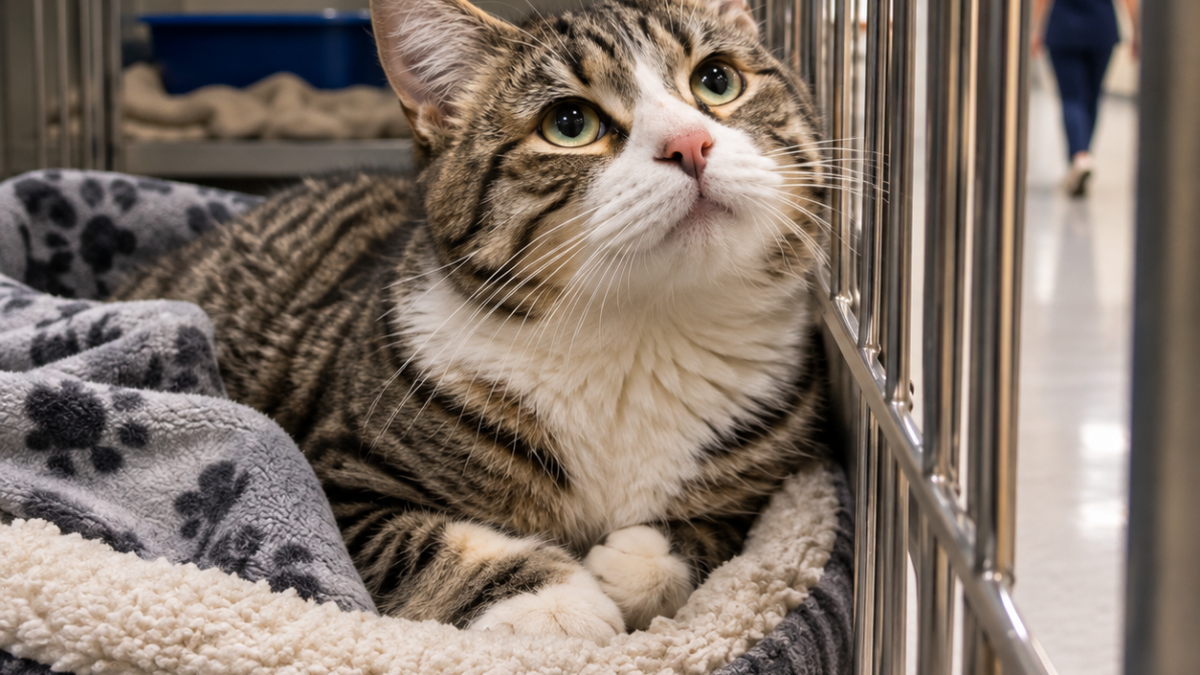
They Returned 5-Year-Old Oliver to the Shelter Because He “Loved Too Much”—Now He Sits Behind the Bars Waiting for the Person Who Won’t Leave Him Again
Oliver was returned to the shelter for one reason no one there could understand: he followed his family everywhere because he loved them too much.
But when a volunteer uncovered a forgotten intake note from five years earlier, she realized Oliver’s desperate need to stay close had nothing to do with being spoiled—and everything to do with the night he had been abandoned once before.
By the time the truth finally reached the people who had given him back, Oliver’s quiet grief would expose a lie, destroy a carefully protected reputation, and force an entire town to decide whether loyalty was really a flaw—or the purest thing this broken cat had ever offered.
The woman returning Oliver did not cry.
That was the first thing Mara Ellison remembered.
Not the carrier.
Not the paperwork.
Not the cold January rain tapping against the shelter’s front windows.
Not even Oliver himself, curled into the farthest corner of a beige plastic crate with his orange-and-white face pressed against the ventilation slots.
Mara remembered the woman’s dry eyes.
People cried at the shelter all the time.
They cried when they surrendered elderly dogs because medical bills had become impossible.
They cried when landlords changed rules.
They cried when divorces turned homes upside down.
They cried when relatives died and left animals behind.
Sometimes they cried from guilt.
Sometimes from grief.
Sometimes because they had truly run out of choices.
But Rachel Mercer did not cry.
She stood at the front counter in a camel-colored wool coat, one hand holding the carrier and the other scrolling through her phone while shelter coordinator Beth Lawson pulled up Oliver’s adoption record.
“Oliver Mercer?” Beth asked.
Rachel glanced up.
“Yes.”
“You adopted him from us fourteen months ago?”
“Correct.”
Beth looked toward the carrier.
Oliver’s nose was pressed against the wire door.
His eyes followed Rachel.
“You understand this is an owner surrender?”
“Yes.”
“And that once the surrender paperwork is signed, ownership transfers back to the shelter?”
“Yes.”
Beth paused.
“We always ask whether there is anything we can do before taking an animal back.”
Rachel sighed.
Not dramatically.
Not angrily.
PART2:
Just with the faint impatience of someone who had already repeated an explanation too many times.
“There isn’t.”
“Behavioral problem?”
“Not exactly.”
“Medical?”
“No.”
“Is he having litter box issues?”
“No.”
“Scratching furniture?”
“No.”
“Biting?”
“No.”
“Aggression toward children or other pets?”
“No.”
Beth looked confused.
Mara, who had been carrying folded towels toward the laundry room, slowed down.
Rachel noticed.
“He is too attached.”
Beth blinked.
“I’m sorry?”
“He is too attached.”
Oliver shifted inside the carrier.
His tail disappeared around his paws.
Rachel continued.
PART3:
“He follows us constantly.”
Beth waited.
“Everywhere.”
“Okay.”
“If I go into the kitchen, he’s in the kitchen. If my husband sits in his office, Oliver sits outside the door. If we watch television, he has to be on the couch beside us.”
Mara stopped walking.
Rachel seemed to realize how the explanation sounded.
She straightened.
“It’s excessive.”
Beth’s expression remained professional.
“What happens if you close a door?”
“He waits outside.”
“Meows?”
“Sometimes.”
“How long?”
“I don’t know.”
“Minutes?”
“Maybe.”
“Does he scratch?”
“Occasionally.”
“Damage the door?”
“No.”
“Urinate outside the box?”
“No.”
“Become destructive?”
“No.”
Beth’s eyebrows drew together.
“So when you say excessive…”
Rachel’s mouth tightened.
“He has no independence.”
The carrier door rattled softly.
Oliver had shifted closer to Rachel’s side of the counter.
“He sleeps outside our bedroom,” Rachel said. “If we leave the bedroom door open, he gets on the bed. If we close it, he’s there first thing in the morning.”
Mara looked at Oliver.
His eyes had not moved from Rachel.
Not once.
Rachel continued talking.
“He waits outside the shower. He sits by the garage door when we leave. He greets us when we come home.”
Beth stared at her.
“That sounds…”
She stopped herself.
Mara knew what she had almost said.
That sounds like a cat who loves you.
Rachel heard it anyway.
“Look, I know how this sounds.”
Mara doubted that.
“We didn’t adopt a dog.”
That sentence landed strangely.
Mara set the towels on a chair.
Rachel looked toward her.
“Is there a problem?”
“No,” Mara said.
Beth gave her a warning glance.
Mara had been volunteering at Hamilton County Animal Rescue for only nine months, but she had already learned the most important front-desk rule.
Never judge a surrendering owner out loud.
Even when you desperately wanted to.
Especially then.
Rachel turned back to Beth.
“My husband travels. I work from home. Oliver wants attention constantly.”
“What does he do when you don’t give it to him?”
“He sits near me.”
Beth waited.
“That’s it?”
“He watches me.”
Mara actually had to look away.
Rachel noticed.
“It’s distracting.”
Beth’s voice softened.
“Have you spoken with a veterinarian?”
“There’s nothing medically wrong with him.”
“A behaviorist?”
“He’s a cat.”
“Behaviorists work with cats.”
Rachel checked her watch.
“I’ve made the decision.”
Beth nodded slowly.
“All right.”
She turned the computer monitor.
“I need you to complete the surrender form.”
Rachel began typing.
Mara looked at Oliver.
He was five years old.
Orange tabby markings ran across his back and tail, while his chest, muzzle, and front paws were white.
His eyes were a pale amber.
His face looked softer than most adult male cats, almost permanently concerned.
The file photo attached to his original adoption profile showed him sitting upright with one paw lifted toward the camera.
Mara remembered him.
She had not been volunteering when he was first adopted, but she had seen his photograph on the shelter’s “happy endings” wall.
OLIVER — ADOPTED.
Someone had drawn a heart beside his name.
Now he was back.
The cursor blinked as Rachel filled in the reason for surrender.
Beth read it when she finished.
She looked up.
“Separation anxiety?”
Rachel nodded.
“Extreme.”
Mara nearly laughed.
There was nothing funny about it.
But the word extreme seemed absurd after everything Rachel had described.
Beth asked, “Has he ever injured himself when alone?”
“No.”
“Stopped eating?”
“No.”
“Eliminated outside the litter box?”
“No.”
“Destroyed property?”
“No.”
“Vocalized for extended periods?”
“I don’t know. We’re not home.”
“So what makes you believe it’s extreme?”
Rachel’s face hardened.
“Because he cannot tolerate being away from us.”
Oliver made a tiny sound inside the carrier.
A chirp.
Rachel’s eyes flicked toward him.
For the first time, something in her expression moved.
Not sadness.
Annoyance.
“He does that.”
Beth looked at the carrier.
“What?”
“That noise.”
The little chirp came again.
Oliver pressed his nose against the door.
Rachel stepped backward.
“See?”
Mara felt anger climb into her throat.
He was calling to her.
That was all.
He was sitting inside a plastic box in a building filled with barking dogs, bleach, strangers, and fear, and he was calling to the only person he recognized.
Rachel signed.
Beth printed the surrender agreement.
“Would you like to say goodbye?”
“No.”
Mara looked at her sharply.
Rachel picked up her purse.
“It’ll upset him.”
She turned.
The carrier exploded with movement.
Oliver stood.
His paws struck the door.
A desperate meow tore from him.
Rachel froze.
Everyone in the lobby heard it.
Oliver shoved his face against the bars.
Another cry.
Not loud.
Not angry.
Just shocked.
Rachel took one step toward the exit.
Oliver cried again.
Mara would remember that sound for years.
Because it did not sound like a cat demanding attention.
It sounded like an animal realizing the impossible was happening.
Again.
Rachel opened the front door.
Oliver began pawing at the carrier gate.
“Ma’am,” Beth said.
Rachel stopped.
“You forgot his blanket.”
A blue fleece blanket sat inside a grocery bag beside the counter.
Rachel looked at it.
“You can keep it.”
Then she left.
Oliver watched through the glass door until her car disappeared.
He continued watching after it was gone.
Mara crouched beside the carrier.
“Hey, sweetheart.”
Oliver did not look at her.
“It’s okay.”
That was a lie.
He knew it.
So did she.
Beth exhaled.
“Put him in intake three.”
Mara opened the carrier.
Oliver refused to move.
Normally surrendered cats either hid or tried to flee.
Oliver simply stayed where Rachel had placed him.
Mara waited.
Five minutes.
Ten.
Finally she reached inside.
He flattened himself.
Not aggressive.
Just terrified.
“It’s okay, Oliver.”
His body trembled under her hands.
She lifted him.
He was heavier than she expected.
Healthy.
Warm.
Well-fed.
A cat from a comfortable home.
Yet the moment Mara pulled him from the carrier, he twisted around trying to look toward the lobby doors.
“She’s gone,” Mara whispered.
Oliver froze.
For one strange second, Mara felt as though he had understood every word.
Then his head lowered.
He stopped struggling.
She carried him to intake.
His kennel had stainless-steel walls on three sides and a clear front.
Clean bedding.
Fresh litter.
Water.
Food.
A hiding box.
The shelter was better than many.
But it was still a shelter.
Mara placed Oliver inside.
He immediately walked to the clear door.
He sat.
And stared down the corridor.
Waiting.
By closing time, he had not touched his food.
The next morning, he was still sitting there.
At noon, same position.
At three, a family walked past.
Oliver stood.
His ears lifted.
He moved toward the door.
The father leaned down.
“Hey, buddy.”
Oliver stared behind him.
At the hallway.
At the woman.
At the children.
Searching.
When they walked away, he sat again.
“He thinks she’s coming back,” Mara said.
Beth was filling medication syringes.
“Probably.”
“How long does that last?”
Beth looked at her.
“For some animals?”
She capped the syringe.
“A long time.”
Oliver ate late that night.
Only when Mara sat inside his enclosure.
She wasn’t supposed to.
Technically volunteers weren’t meant to climb into cat kennels.
But Oliver refused food when humans stood outside.
So Mara opened the door, sat cross-legged on the tile, and placed a plate beside her.
He watched.
She didn’t touch him.
“Your choice.”
Ten minutes passed.
Oliver walked forward.
He smelled the food.
Then looked at Mara.
She looked away deliberately.
He took one bite.
Then another.
Then he moved closer.
By the end of the meal, his side touched her knee.
The next morning, Mara found him curled against the kennel door.
When she opened it, he climbed directly into her lap.
No hesitation.
He pressed his forehead under her chin.
Mara closed her eyes.
“Oh, Oliver.”
That was how he loved.
Not dramatically.
Not demandingly.
He simply closed distance.
If Mara cleaned the room, Oliver followed.
If she sat, he sat touching her.
If she stood, he stood.
When she left, he waited at the door.
Rachel had been right about one thing.
He did follow people.
But what she had called a flaw looked very different in a shelter.
To Mara, it looked like devotion mixed with fear.
She started asking questions.
Beth wasn’t surprised.
“You’ve got that face.”
“What face?”
“The one you get before you create work for everyone.”
“I’m serious.”
“So am I.”
Mara held Oliver’s file.
“There has to be more here.”
“Why?”
“Because he’s terrified of abandonment.”
“Most returned animals are.”
“No. This is different.”
Beth leaned back.
“Different how?”
“He doesn’t just want attention.”
Mara looked toward Oliver’s kennel.
“He monitors where people are.”
“So?”
“If I go through the back door, he waits there. If I come back through the front, he panics until he sees me.”
Beth said nothing.
“He doesn’t care who feeds him if I’m in the room,” Mara continued. “But if I leave, he stops eating.”
“You’ve known him four days.”
“I know.”
Beth’s expression softened.
“Mara.”
“What?”
“Don’t build a tragedy because you need one.”
That hurt.
Because Mara knew why Beth said it.
Everyone at the shelter knew about Simon.
Mara had adopted a senior cat eight years earlier.
Simon had followed her through divorce, job loss, and her mother’s death.
When kidney failure took him the previous spring, Mara lasted exactly six weeks before she walked into the shelter asking if they needed volunteers.
She told people she wanted to help.
That was true.
It was also easier than admitting she could not tolerate coming home to an apartment where no one waited for her.
Beth had noticed.
“Maybe you’re seeing Simon,” Beth said gently.
Mara looked down.
“Maybe.”
“Oliver’s history might be boring.”
“I hope it is.”
Beth sighed.
“Fine.”
She pulled his full record.
The electronic file began with the recent surrender.
Then the adoption fourteen months earlier.
Before that, three months in shelter care.
Before that—
Nothing.
Mara frowned.
“He’s five.”
“Estimated.”
“So where was he before he came here at three?”
“Stray intake.”
“From where?”
Beth clicked.
“County transfer.”
“Which facility?”
“Old Northside municipal shelter.”
Mara looked at her.
“That closed.”
“Two years ago.”
“Are their records archived?”
“Probably.”
“Can we access them?”
Beth laughed.
“There it is.”
“What?”
“The work.”
Mara smiled.
Beth emailed the county.
Two days passed.
Oliver changed.
The outgoing cat described in his previous adoption notes disappeared.
He no longer reached through the bars.
He stopped chirping at visitors.
When families entered the room, he often turned his back.
If someone opened his kennel, he accepted affection.
But when they left, he did not follow anymore.
That scared Mara more.
A hopeful animal could recover.
An animal learning not to hope was something else.
On his sixth day back, a couple visited.
They wanted an adult cat.
The woman, Grace, fell in love with Oliver instantly.
“He just melts.”
Oliver had placed both paws on her chest.
Grace laughed.
Her husband, Evan, scratched under Oliver’s chin.
“Friendly guy.”
Mara’s heart lifted.
She explained everything she knew.
“He bonds strongly.”
“Good,” Grace said. “So do I.”
“He may follow you.”
“I’d love that.”
“He may wait outside doors.”
Evan smiled.
“My last cat used to supervise showers.”
Mara almost cried.
This was it.
Then Beth pulled her aside.
“We can’t approve yet.”
“Why?”
“Rachel wrote ‘extreme separation anxiety.'”
“You heard what she meant.”
“Doesn’t matter.”
“Of course it matters.”
“We have to evaluate.”
“He’s sitting in Grace’s lap.”
“Mara.”
“What?”
“If he gets adopted and develops severe behaviors, he gets returned again.”
Mara went quiet.
Beth was right.
That was the worst part.
They scheduled a behavioral assessment.
Grace and Evan agreed to wait.
For the first time since his return, Mara felt hopeful.
Then Rachel Mercer posted online.
Mara saw it accidentally.
A friend tagged the shelter.
The post showed a picture of Oliver from his adoption day.
Rachel had written:
Sometimes loving an animal means admitting you aren’t the right home. We recently made the painful choice to return Oliver after months of struggling with severe behavioral and attachment issues. We tried everything, but his anxiety became unmanageable and began affecting our household. We hope professionals can find him the specialized environment he needs.
Hundreds of people responded.
“You did the right thing.”
“Don’t let anyone shame you.”
“Behavioral issues can be so hard.”
“Responsible choice.”
Rachel replied:
Thank you. It has been devastating.
Mara stared at that word.
Devastating.
She remembered the dry eyes.
The refusal to say goodbye.
The abandoned blanket.
Then someone commented:
Was he aggressive?
Rachel replied:
I don’t want to go into details publicly.
Mara’s stomach turned.
The implication was obvious.
She wanted people to imagine details.
Worse than reality.
A former coworker of Rachel’s commented:
You have such a big heart. I know you wouldn’t give up unless things were serious.
Mara screenshotted the post.
Beth saw her.
“No.”
“I didn’t say anything.”
“Your face did.”
“She’s making him sound dangerous.”
“Don’t engage.”
“That could hurt his adoption.”
“I know.”
“Then why aren’t we correcting it?”
“Confidentiality.”
Mara hated the answer.
“She’s lying.”
“We cannot publicly discuss an owner’s surrender file.”
“So she gets to destroy his chances and we stay quiet?”
Beth’s face hardened.
“We protect animals by being professional, not by starting Facebook wars.”
Mara slammed the phone onto the desk.
Oliver flinched in his kennel.
Immediately Mara regretted it.
She walked over.
“I’m sorry.”
Oliver approached.
He pushed his head against her wrist.
Even after being startled by her, he comforted her.
That broke something inside Mara.
“You’re not the problem,” she whispered.
The county archive arrived the next afternoon.
Forty-seven scanned pages.
Most were irrelevant.
Vaccination records.
Transfer forms.
Old kennel notes.
Then Mara found the first intake.
Oliver had not been three when he entered the system.
He had been approximately seven weeks old.
The date was almost five years earlier.
FOUND IN VACANT APARTMENT.
Mara sat straighter.
The report continued.
NEIGHBOR HEARD KITTEN VOCALIZING FOR APPROXIMATELY THREE DAYS.
Mara stopped breathing.
She read further.
PROPERTY MANAGER ENTERED AFTER TENANT EVICTION.
ONE MALE ORANGE/WHITE KITTEN LOCATED INSIDE BEDROOM CLOSET.
NO FOOD AVAILABLE.
TOILET LID OPEN; KITTEN MAY HAVE BEEN DRINKING FROM BOWL.
TENANT CONTACTED BY PHONE.
STATED SHE DID NOT WANT CAT.
DECLINED TO RETURN.
Mara stared at the screen.
Three days.
Seven weeks old.
Alone in an empty apartment.
She kept reading.
Then came the note.
Written by an animal-control officer named Luis Ortega.
KITTEN EXTREMELY DISTRESSED WHEN LEFT ALONE. CALMS IMMEDIATELY WITH HUMAN CONTACT. ATTEMPTS TO FOLLOW STAFF BETWEEN ROOMS. RECOMMEND FOSTER PLACEMENT WITH CONSISTENT HUMAN PRESENCE.
Mara covered her mouth.
There it was.
Not misbehavior.
Not manipulation.
Not neediness.
Memory.
Oliver had learned before he was old enough to understand the world that people could disappear.
Doors could close.
Rooms could empty.
Voices could stop.
He had spent three days calling for someone who chose not to return.
Mara read the notes again.
Then another.
FOSTER REPORT: OLIVER SLEEPS AGAINST CAREGIVER’S NECK. CRIES IF DOOR IS CLOSED. IMPROVING.
Another.
SEEKS CONSTANT VISUAL CONTACT WITH PEOPLE. FOOD MOTIVATED BUT MAY STOP EATING IF ISOLATED.
Another.
BONDS STRONGLY.
The phrase repeated.
Bonds strongly.
Somewhere between county systems, shelter closures, transfers, database migrations, and time, that history had been reduced to a single line:
Friendly male stray.
Mara printed everything.
Beth read it.
Her face changed.
“Oh.”
“Yeah.”
“Oh, God.”
“Seven weeks old.”
Beth sat down.
“Three days.”
“In an empty apartment.”
Beth read the officer’s note.
Then the foster report.
“This should have transferred.”
“It didn’t.”
“Rachel never knew.”
Mara looked at Oliver.
“Would it have mattered?”
Beth didn’t answer.
That was the question.
The behavioral evaluation happened the next day.
Dr. Lena Porter, a veterinary behaviorist who consulted with the shelter, spent two hours observing Oliver.
Mara told her the history.
Lena read the documents.
She watched Oliver follow Mara.
Watched him relax when Mara sat.
Watched his eyes track the door.
Then she deliberately left Oliver alone in an assessment room while monitoring from a camera.
He waited by the door.
Two minutes.
Three.
At four minutes, he meowed.
At five, he paced once.
Then sat.
He did not scratch.
Did not urinate.
Did not destroy anything.
Did not injure himself.
At eight minutes, Mara returned.
Oliver ran to her.
He chirped.
He rubbed against her legs.
He climbed onto the chair beside her and pressed his flank to her hip.
Dr. Porter smiled sadly.
“This is not severe separation anxiety.”
Mara exhaled.
“What is it?”
“Attachment insecurity.”
“Meaning?”
“He expects loss.”
Mara looked at Oliver.
“Can it be treated?”
“I wouldn’t use that word.”
“Why?”
“Because loving proximity isn’t a disease.”
That sentence hit Mara hard.
Dr. Porter continued.
“He does have anxiety connected to isolation, likely rooted in early abandonment. But his behavior is mild and manageable.”
“So Rachel—”
“Don’t make this about her.”
Mara frowned.
“How can I not?”
“Because Oliver doesn’t need revenge.”
Dr. Porter crouched and let Oliver sniff her hand.
“He needs stability.”
Mara knew she was right.
She hated it anyway.
Grace and Evan adopted Oliver three days later.
They signed everything.
They read his history.
All of it.
Grace cried when she reached the abandoned-apartment report.
“Three days?”
Mara nodded.
“He was a baby.”
“I know.”
Grace looked at Oliver.
He was curled in Evan’s arms.
“Well.”
She wiped her face.
“He’s never going to wonder where we went again.”
Mara wanted to believe her.
She really did.
The adoption photograph showed Oliver between them.
Grace kissed his forehead.
Evan held the carrier.
Oliver’s paw reached through the opening toward Mara.
“You’re okay,” she whispered.
Grace noticed.
“You can visit.”
Mara laughed.
“I’ll try not to become the weird shelter lady.”
“No promises.”
For two weeks, everything went beautifully.
Grace sent updates.
Oliver sleeping on Evan’s chest.
Oliver watching Grace cook.
Oliver sitting outside the shower.
Caption:
My bathroom supervisor takes his job seriously.
Mara showed Beth.
“See?”
Beth smiled.
“Good match.”
Another photo came.
Oliver asleep between them in bed.
Caption:
Apparently we have a king-size cat bed and he generously lets us use it.
Mara laughed.
Then the messages stopped.
On day eighteen, Grace called.
Mara saw the number and immediately felt afraid.
“Is Oliver okay?”
Silence.
Then Grace said, “Yes.”
But her voice sounded wrong.
“What happened?”
“Evan saw Rachel’s post.”
Mara closed her eyes.
“No.”
“He searched her name because she was listed in the paperwork.”
“Grace—”
“He thinks the shelter minimized something.”
“We didn’t.”
“I know that.”
“Does Evan?”
“He says Rachel wouldn’t have returned him for just following her.”
Mara felt rage.
“People do worse things for less.”
“I told him that.”
“Has Oliver done anything?”
“No.”
“Anything at all?”
“No.”
“Then what is the problem?”
“Fear.”
Mara understood.
That was how insinuation worked.
It didn’t need evidence.
It only needed uncertainty.
“What does Evan think he’s going to do?”
“I don’t know.”
“Is Oliver safe?”
“Yes.”
“Are you returning him?”
Grace’s silence answered.
Mara’s stomach dropped.
“No.”
“I’m trying.”
“Grace.”
“I’m trying.”
Mara heard crying.
“I love him.”
“Then trust what you see.”
“I do.”
“Not what someone implied.”
“Evan keeps saying, ‘What if something happens?'”
“Nothing has happened.”
“I know.”
“Then tell him.”
“I have.”
Mara stood in the shelter hallway gripping the phone.
“Grace, listen to me. Oliver has already been returned because someone called affection a problem. If he comes back again after less than three weeks, that does something to him.”
“I know.”
“He is not a suitcase.”
“I know.”
“He can’t understand risk management.”
“I know!”
Grace’s voice broke.
Mara stopped.
“I’m sorry.”
“No.”
Grace cried quietly.
“You’re right.”
“What does Evan need?”
“Proof.”
“Proof of what?”
“That Rachel exaggerated.”
Mara laughed bitterly.
“We have it.”
“Can we show him?”
“We can show you Oliver’s behavior assessment and early history.”
“Would Rachel’s surrender notes be included?”
“Not her confidential form.”
“Then he’ll say we’re hiding it.”
Mara looked through the glass at Oliver’s old empty kennel.
Her reflection stared back.
“I’ll figure something out.”
Beth told her not to.
“The adoption is legal. Grace has the records she’s entitled to.”
“But the lie is poisoning it.”
“We can’t release Rachel’s confidential information.”
“So we’re helpless.”
“No.”
“What then?”
“Let Grace and Evan work it out.”
Mara hated that answer too.
But for forty-eight hours, nothing happened.
Then Grace arrived.
Alone.
Oliver was in the carrier.
Mara felt physically ill.
“No.”
Grace’s face was swollen from crying.
“I couldn’t stop him.”
“You brought Oliver back.”
“I didn’t want to.”
Oliver heard Mara’s voice.
He began chirping.
Mara crouched.
The carrier door opened.
Oliver rushed out.
He climbed into Mara’s arms.
Not carefully.
Desperately.
He buried his face against her neck.
Mara held him.
Grace covered her mouth.
“I am so sorry.”
Mara could barely speak.
“Where is Evan?”
“In the car.”
“Tell him to come inside.”
“Mara.”
“Tell him.”
Beth appeared.
“Mara.”
“No.”
She handed Oliver to Beth.
“Tell him to come inside.”
Grace hesitated.
Then left.
Evan walked in two minutes later.
He looked ashamed.
That almost made it worse.
Mara laid Oliver’s first intake file on the counter.
“Read.”
Evan frowned.
“Mara—”
“Read it.”
He did.
His expression changed.
Mara waited.
When he finished, she placed Dr. Porter’s assessment beside it.
“Read that.”
He read.
Grace stood beside him crying.
Evan whispered, “I didn’t know.”
“You did know.”
He looked up.
“I told you.”
“I didn’t know about the apartment.”
“Neither did Rachel.”
“Then why—”
“Because Oliver’s behavior bothered her.”
Evan looked toward him.
Oliver was in Beth’s arms.
His face tucked against her shoulder.
“She said severe.”
“She was wrong.”
“Why would she lie?”
Mara stared at him.
“People lie.”
Evan flinched.
“She’s respected in town.”
There it was.
Mara suddenly understood.
Rachel Mercer wasn’t just anyone.
She chaired a local children’s charity.
Served on the library board.
Her husband owned two dental practices.
Her holiday photos appeared in neighborhood magazines.
People trusted appearances.
A shelter cat did not have a reputation.
Rachel did.
Evan looked at Grace.
“I just wanted to protect us.”
Grace’s face changed.
“From what?”
He didn’t answer.
“From him?”
She pointed toward Oliver.
“From the cat who sleeps on your stomach every night?”
“I didn’t know what might happen.”
“What happened?”
“Nothing.”
“Exactly.”
Grace wiped her face.
“I begged you.”
Evan lowered his eyes.
Mara expected Grace to sign the return form.
Instead she took the carrier.
She opened it.
“Oliver.”
He looked at her.
His body remained tense.
Grace crouched.
“I’m sorry.”
Oliver stayed with Beth.
Grace began crying harder.
“I deserve that.”
Evan looked at Mara.
“Can we take him back?”
Mara wanted to say no.
Her anger wanted punishment.
But Dr. Porter’s words returned.
Oliver doesn’t need revenge.
He needs stability.
Mara looked at Grace.
“Do you want him?”
“Yes.”
Then Evan.
“Do you?”
He nodded.
“That’s not enough.”
He looked confused.
“You need to say what you’re agreeing to.”
Evan swallowed.
“I agree that he may follow us.”
Mara said nothing.
“He may sleep near us.”
“Keep going.”
“He may wait outside doors.”
Grace almost smiled.
“He may want to know where we are.”
Mara crossed her arms.
“And?”
Evan looked at Oliver.
“And that isn’t a defect.”
The room went quiet.
Beth handed Oliver to Grace.
He hesitated.
Then allowed her to hold him.
He didn’t melt into her immediately.
That mattered.
Trust repaired more slowly than it broke.
But when Grace whispered his name, Oliver pressed one paw against her shoulder.
They took him home.
Mara thought the story ended there.
It should have.
It didn’t.
Three weeks later, an email arrived from a woman named Kimberly Hayes.
Subject line:
About Oliver Mercer.
Mara opened it at lunch.
My sister used to work for Rachel Mercer. I saw the post about Oliver being returned for behavioral issues. I think you should know what actually happened.
Mara read it twice.
Then called Kimberly.
Kimberly’s sister, Allison, had cleaned Rachel’s house twice a week.
She had seen Oliver.
Often.
“He followed Allison everywhere,” Kimberly said.
“Was he aggressive?”
“No.”
“Destructive?”
“No.”
“Did he have accidents?”
“No.”
“Did he attack anyone?”
“No.”
“Then why was he returned?”
Kimberly hesitated.
“Rachel’s mother was coming to live with them.”
Mara frowned.
“What does that have to do with Oliver?”
“Her mother doesn’t like cats.”
Mara went still.
“That’s it?”
“That’s what Allison says.”
“No.”
“There’s more.”
Of course there was.
Rachel’s mother, Constance, was wealthy.
Very wealthy.
She had recently sold a property in Naples, Florida, and planned to spend several months each year with Rachel.
Constance disliked pets indoors.
Rachel wanted her mother comfortable.
Her husband suggested keeping Oliver in the finished basement.
Oliver cried at the door.
Rachel found it irritating.
They tried closing him into a guest room.
He waited by the door.
They tried keeping him downstairs overnight.
He meowed.
Rachel began calling him “obsessive.”
Then Constance arrived for a weekend trial visit.
Oliver followed Rachel into the living room.
Constance complained.
Two days later, Oliver was surrendered.
Mara sat silently.
“So the attachment issue…”
“Was convenient.”
“Why post publicly?”
“Allison thinks Rachel wanted to control the story.”
Mara’s jaw tightened.
“Why?”
“Because people knew she had adopted Oliver. She’d posted about rescuing him.”
Mara searched.
Kimberly was right.
Rachel’s old social media was full of Oliver.
Our rescue baby.
Best decision ever.
He chose us.
Who rescued who?
Mara wanted to throw her phone.
Rachel had used Oliver’s adoption as part of her identity.
Returning him because her mother disliked cats would look ugly.
So Oliver became disordered.
Problematic.
Extreme.
The shame moved from Rachel to the animal.
It was elegant.
And cruel.
“Will Allison speak publicly?”
Kimberly sighed.
“She signed a nondisclosure agreement for household employment.”
Mara laughed in disbelief.
“Of course she did.”
“She’ll speak to the shelter privately.”
“That won’t fix the post.”
“I know.”
The truth came out anyway.
Not because Mara exposed Rachel.
Because Rachel did.
Three months later, Hamilton County Animal Rescue held its annual spring fundraiser.
Rachel’s charity had sponsored events with the shelter before.
She attended.
Mara saw her across the ballroom.
For one second, neither moved.
Rachel approached first.
“How is Oliver?”
Mara stared.
“Fine.”
“I’m glad.”
“Are you?”
Rachel’s smile thinned.
“I don’t want hostility.”
“Then don’t lie about animals.”
Rachel lowered her voice.
“I didn’t lie.”
“You returned him because your mother didn’t like cats.”
The color drained from Rachel’s face.
“Who told you that?”
“Does it matter?”
“Yes.”
“It matters more that it’s true.”
Rachel glanced around.
“We did have multiple considerations.”
“But you wrote severe separation anxiety.”
“He had attachment issues.”
“Dr. Porter assessed him.”
Rachel said nothing.
“He doesn’t have severe separation anxiety.”
“That doesn’t invalidate our experience.”
“No.”
Mara stepped closer.
“But you implied he was dangerous.”
“I never said dangerous.”
“You wanted people to assume something serious without saying what.”
Rachel’s eyes hardened.
“You don’t know anything about my family.”
“Oliver knew enough.”
“Excuse me?”
“He knew what it felt like to be thrown away.”
Rachel flinched.
Mara continued.
“He was abandoned as a seven-week-old kitten in an empty apartment.”
For the first time, Rachel looked genuinely shocked.
“What?”
“Three days alone.”
“I didn’t know.”
“No.”
Mara’s anger softened just slightly.
“That’s the point.”
Rachel looked down.
“He follows people because he learned early that they disappear.”
The ballroom noise seemed farther away.
“He wasn’t trying to control you.”
Mara’s voice shook.
“He was trying to make sure you were still there.”
Rachel stared toward the floor.
For one second, Mara thought she might apologize.
Then Constance Mercer appeared.
Silver hair.
Pearls.
Sharp posture.
“Rachel?”
Rachel turned.
Constance looked at Mara.
“Is there a problem?”
“No, Mother.”
Mara understood immediately.
The dynamic.
The fear.
The need for approval.
Rachel, who had called Oliver dependent, looked exactly like him in that moment.
Watching someone she could not bear to disappoint.
Constance frowned.
“Is this about that cat?”
Mara’s eyes moved to Rachel.
Constance continued.
“I told Rachel she was foolish to bring an animal into that house in the first place.”
Rachel whispered, “Mother.”
“What?”
Constance looked at Mara.
“Animals belong in barns, not beds.”
Mara stared at her.
Then at Rachel.
Something sad replaced some of the anger.
Not forgiveness.
Understanding.
Rachel had learned love with conditions too.
Be easy.
Be presentable.
Be useful.
Do not inconvenience anyone.
Perhaps Oliver’s unconditional closeness had bothered her because she had never learned what to do with anything that loved without negotiation.
Constance walked away.
Rachel remained.
Mara said quietly, “You knew what rejection felt like.”
Rachel’s face changed.
“Don’t.”
“And you gave it to him anyway.”
Rachel left.
The conversation should have stayed private.
But a local reporter standing nearby had heard enough.
Not everything.
Enough.
The resulting article was not sensational.
It was better than that.
It was careful.
A piece about surrendered animals and the language humans use to justify giving them up.
Oliver was not named at first.
Neither was Rachel.
The article quoted Dr. Porter:
“An affectionate animal is not inherently an anxious animal. Human preferences are often mislabeled as behavioral defects.”
Then it discussed how surrender narratives affect adoption chances.
Words like aggressive, needy, difficult, and obsessive can follow animals long after context disappears.
The story spread.
A week later, Rachel posted again.
This time the tone was different.
She wrote that after reflection, she realized she had described Oliver unfairly.
She admitted that family circumstances had played a larger role than she initially disclosed.
She wrote:
Oliver was affectionate, loyal, and deeply bonded to people. I allowed my frustration and household circumstances to become a judgment of his character. That was wrong.
Mara read the post twice.
Then kept going.
I also recently learned more about Oliver’s early history and now understand that some behaviors I interpreted as “neediness” may have been rooted in previous abandonment. I wish I had responded with more compassion.
People praised her.
Of course they did.
Some said it took courage.
Others called it accountability.
Mara wasn’t impressed.
Then she reached the final paragraph.
I have contacted the shelter privately to cover Oliver’s adoption fee permanently and to fund behavioral assessments for returned cats whose histories may be incomplete.
Mara stopped.
Beth read over her shoulder.
“Well.”
“Do you believe her?”
“Does it matter?”
Mara looked at her.
“If the money helps cats?”
Beth shrugged.
“People can do something good for imperfect reasons.”
That annoyed Mara because it was wise.
Grace sent a message later that day.
Photo attached.
Oliver was on the couch.
Evan lay beside him reading.
Oliver’s paw rested on Evan’s wrist.
Grace wrote:
He still follows us everywhere.
Then another message:
We finally realized that’s the best part.
Mara smiled.
Months passed.
Oliver became part of the shelter’s unofficial training material.
Not because he returned.
Because his file changed how intake questions were asked.
Instead of writing “clingy,” staff asked:
What specifically does the animal do?
Instead of “separation anxiety”:
What happens when the animal is alone, for how long, and with what consequences?
Instead of “too needy”:
Describe frequency and intensity.
Context replaced labels.
That mattered.
Grace and Evan became volunteers.
Evan surprised Mara most.
He began working with returned cats.
Maybe guilt motivated him at first.
Eventually it became something else.
One Saturday, Mara found him sitting on the floor beside a terrified black cat named Luna.
“She’s been hiding three days,” he whispered.
Mara smiled.
“Patience.”
“I’m learning.”
“Oliver teach you?”
“Painfully.”
Luna eventually crawled onto his lap.
Evan didn’t move for forty minutes.
Oliver, meanwhile, flourished.
Grace sent photographs.
Oliver in laundry baskets.
Oliver helping with taxes by sitting on receipts.
Oliver waiting outside the shower.
Oliver supervising dinner.
Oliver sleeping with one paw touching Grace’s shoulder.
Then came the picture Mara loved most.
Evan had left for a three-day work trip.
Grace expected Oliver to panic.
He didn’t.
He watched Evan pack.
Sat by the door.
Then went to the window.
When Evan returned three days later, Oliver ran to him.
But he had eaten.
Slept.
Played.
Used his litter box normally.
He had waited.
Not because he believed Evan had vanished forever.
Because he had finally learned people could leave and still come back.
Grace wrote:
I think he’s starting to believe us.
Mara cried at her desk.
Beth found her.
“Good tears?”
Mara showed the picture.
Beth smiled.
“Very good tears.”
One year after Oliver’s return, Hamilton County Animal Rescue held another fundraiser.
This time Oliver attended.
Grace brought him in a soft-sided carrier.
He wore a blue bow tie.
Mara objected to the bow tie on principle.
Then took fourteen photographs.
Oliver walked on a harness.
He greeted people.
Accepted chin scratches.
Followed Grace.
Followed Evan.
Followed Mara.
At one point Rachel arrived.
Mara saw her before Oliver did.
Rachel stopped.
Her face changed.
Grace noticed.
“That’s her?”
Mara nodded.
Evan went still.
Rachel approached slowly.
“May I?”
Grace looked at Oliver.
Then at Rachel.
“It’s up to him.”
Rachel crouched.
Oliver watched her.
For several seconds, nothing happened.
Rachel held out her hand.
He smelled it.
Then looked toward Grace.
Rachel’s eyes filled.
Not performative tears.
Not public tears.
Quiet ones.
“I’m sorry,” she whispered.
Oliver blinked.
Then walked back to Grace.
Rachel lowered her hand.
That was all.
No cinematic forgiveness.
No reunion.
No magical understanding.
Oliver simply chose the person who had stayed.
Rachel stood.
Grace said softly, “He’s happy.”
Rachel nodded.
“I can see that.”
Then she walked away.
Mara expected satisfaction.
Instead she felt something quieter.
Justice, she realized, was not always watching someone suffer.
Sometimes justice was watching the person they discarded stop needing them.
Oliver never hated Rachel.
Cats don’t build moral arguments the way people do.
He did something more powerful.
He healed.
That summer, Grace and Evan moved into a small house with wide windows overlooking a wooded yard.
They built Oliver a screened porch.
They called it “Oliver’s office.”
He spent mornings watching birds.
Afternoons sleeping beside Grace’s desk.
Evenings following Evan from room to room.
At night he slept at the foot of their bed.
Sometimes touching them.
Sometimes not.
The first time he chose to sleep alone on the porch couch, Grace texted Mara at 11:47 p.m.
HE IS SLEEPING BY HIMSELF.
Mara replied:
DO NOT WAKE HIM.
Grace:
I’M EMOTIONAL.
Mara:
NORMAL PEOPLE WOULD NOT UNDERSTAND THIS CONVERSATION.
Grace:
GOOD THING WE’RE CAT PEOPLE.
Mara smiled.
Years later, people still told Oliver’s story incorrectly.
They said:
He was returned because he loved too much.
It made a powerful sentence.
It was close to true.
But Mara always thought the real truth was more complicated.
Oliver was returned because a person had decided love should be convenient.
He had been abandoned because his loyalty asked for patience.
He had been labeled because someone found it easier to diagnose his devotion than admit her own limitations.
And before all of that, he had once been a seven-week-old kitten trapped in an empty apartment, calling for a human who had already decided not to come back.
That first abandonment had entered his bones.
It taught him to watch doors.
To follow footsteps.
To sleep close.
To listen for movement.
To make sure love had not disappeared.
For years, humans called those habits neediness.
But no one asked what had taught him to need reassurance.
That became Mara’s lasting lesson.
Behavior always had a history.
Fear had a history.
Silence had a history.
Clinging had a history.
Even anger had a history.
The shelter saw hundreds of animals each year.
Some hid.
Some barked.
Some growled.
Some shook.
Some threw themselves against kennel doors when people walked away.
After Oliver, Mara asked different questions.
Not “What’s wrong with you?”
But “What happened to you?”
That one change transformed everything.
One winter evening, nearly four years after Oliver’s final adoption, Mara visited Grace and Evan.
Snow covered the yard.
Oliver was nine now.
A little heavier.
Whiter around the muzzle.
Still orange.
Still soft-eyed.
Still absurdly affectionate.
Mara sat on the couch.
Oliver climbed beside her.
He sniffed her hand.
Then settled against her thigh.
“Remember me?”
Grace laughed.
“Oh, he remembers.”
Mara scratched his chin.
Oliver purred.
Evan came from the kitchen carrying coffee.
“He was waiting at the window before you pulled up.”
Mara smiled.
“Of course he was.”
On the wall hung framed photographs.
Their wedding.
A beach trip.
Family Christmas.
And Oliver.
Many Oliver pictures.
Too many, according to Evan.
Not enough, according to Grace.
One photograph showed him staring out the front window.
Mara recognized it.
“The trip?”
Grace nodded.
“When Evan went away for three days.”
Mara looked closer.
Oliver’s posture was calm.
Waiting.
Not panicking.
There was a difference.
A huge one.
“He’s changed.”
Grace sat beside them.
“He still wants to know where we are.”
“That’s okay.”
“We think so.”
Oliver rolled onto his side.
His paw landed on Mara’s leg.
Grace smiled.
“Sometimes I wonder what would have happened if we hadn’t taken him back that day.”
Mara knew which day she meant.
The second adoption.
The return that almost happened.
“You did take him back.”
“I nearly didn’t.”
“But you did.”
Grace looked at Oliver.
“He deserved better than our fear.”
Mara nodded.
“We all get scared.”
“That doesn’t excuse everything.”
“No.”
“But it doesn’t have to be the final decision either.”
Mara looked at Grace.
That was another lesson Oliver had taught them.
People could fail.
Then choose differently.
Evan had failed him.
Then became one of his safest people.
Rachel had failed him.
Then funded programs that helped other animals avoid being mislabeled.
Mara had nearly judged everyone involved as permanent versions of their worst moments.
Oliver had no interest in that.
He responded to what people did next.
He trusted slowly.
But when consistency arrived, he recognized it.
Outside, snow began falling harder.
Grace stood.
“I need more firewood.”
She walked toward the back door.
Oliver lifted his head.
Watched her.
Then lowered it again.
Mara noticed.
“He didn’t follow.”
Grace turned.
She smiled.
“No.”
A minute later, Evan walked upstairs.
Oliver stayed.
Mara looked down.
He was asleep against her.
Two people he loved had left the room.
He did not panic.
He did not stand.
He did not rush to the door.
He knew.
They were coming back.
Mara’s eyes stung.
She placed a hand on his side.
His breathing was slow and steady.
The kitten who once cried inside an empty apartment had finally learned that closed doors were not always endings.
That footsteps fading down a hallway did not mean abandonment.
That silence did not automatically mean he had been forgotten.
That love could move into another room and still exist.
Years earlier, Rachel had described Oliver as a cat who could not tolerate independence.
But Mara eventually understood that independence had never been the goal.
Safety was.
Trust was.
Love without fear was.
People liked to say Oliver loved too much.
Mara disagreed.
Oliver had never loved too much.
He had simply loved without pretending not to care.
He did not play games.
He did not protect his pride.
He did not calculate how much affection was safe to give.
If he loved you, he sat beside you.
If he missed you, he waited.
If you came home, he greeted you.
If you cried, he climbed closer.
If you slept, he stayed nearby.
If you closed a door, he waited on the other side.
There was nothing shameful in that.
The shame belonged to anyone who mistook loyalty for inconvenience.
Years after his story first spread, Mara still kept the original intake note in a folder.
Not because Oliver needed it anymore.
He had a home.
A family.
A porch.
A bed.
People who understood him.
She kept it because it reminded her how easily a life could be misunderstood when someone reduced it to a label.
EXTREME ATTACHMENT.
TOO NEEDY.
SEPARATION ANXIETY.
DIFFICULT.
Behind those words had been a baby kitten left alone for three days.
Behind those words had been fear.
Behind those words had been loyalty.
Behind those words had been a heart trying to make one simple request:
Please don’t disappear.
Oliver had asked that question his whole life without words.
Rachel heard it as pressure.
Grace eventually heard it for what it was.
And answered.
I’m here.
Evan answered too.
I’m coming back.
Mara answered every time she visited.
I remember you.
As Oliver grew older, he became less frantic about closeness.
But he never stopped choosing it.
And no one asked him to.
At twelve, arthritis slowed him.
Evan built little steps beside the bed.
At thirteen, his kidneys began weakening.
Grace learned to give fluids at home.
Oliver hated the needle.
Loved the lap afterward.
At fourteen, he stopped jumping onto counters.
No one complained.
He had supervised enough kitchens.
He began sleeping more.
Often between Grace and Evan.
Mara visited whenever she could.
One afternoon she arrived to find Oliver curled beneath the living-room window.
Sunlight warmed his orange fur.
Grace sat on the floor beside him.
“Bad day?”
Grace nodded.
“He didn’t eat breakfast.”
Mara sat down.
Oliver opened his eyes.
He saw her.
His tail moved once.
Then he lifted his head.
Mara smiled through tears.
“Hey, buddy.”
Oliver tried to stand.
“No.”
She moved closer.
“Don’t you dare.”
He settled.
Mara placed her hand beside him.
Oliver slowly shifted until his paw touched her fingers.
The same gesture.
After all those years.
Still closing distance.
Grace began crying.
“He always has to be touching somebody.”
Mara looked at her.
“You say that like it’s a bad thing.”
Grace laughed through tears.
“Never.”
Oliver lived another seven months.
His final morning came quietly.
No emergency.
No panic.
Just age.
Grace called Mara at dawn.
Mara drove over immediately.
Oliver lay on their bed.
Evan on one side.
Grace on the other.
Mara sat near his feet.
His breathing was shallow.
But he was peaceful.
Dr. Porter came to the house.
The same woman who had once said loving proximity was not a disease.
Oliver was surrounded by proximity now.
Every inch of it chosen.
Grace held his face.
“You never loved too much.”
Her voice broke.
“Do you hear me?”
Oliver’s eyes stayed half-open.
“You never did.”
Evan kissed his head.
“You were never too much.”
Mara pressed her hand against his back.
Oliver exhaled.
Slowly.
Then again.
Then he was gone.
No kennel.
No carrier.
No closed door.
No one walking away.
He died exactly where he had always wanted to be.
Close enough to know his people were there.
For months afterward, Grace could not move his bed.
Evan left the little steps beside theirs.
Mara understood.
Grief made objects sacred.
Eventually they donated Oliver’s things to the shelter.
Everything except his blue blanket.
The same one Rachel had left behind years earlier.
Grace kept it.
Not because of Rachel.
Because Oliver had slept on it during his first night home after Grace and Evan chose him for good.
Hamilton County Animal Rescue created a small fund in Oliver’s name.
Not for medical emergencies.
Not for senior care.
For returned animals.
Especially animals whose surrender notes contained behavioral labels that needed context.
Every cat and dog entering that program received a deeper history review.
Foster observation.
Behavioral assessment when necessary.
Staff were trained to distinguish inconvenience from pathology.
The plaque outside the room carried no dramatic paragraph.
Only one sentence.
“Before deciding an animal is too much, ask what they have already survived.”
Mara chose it.
Years later, she would still occasionally stand in front of that plaque.
She would remember a rainy January morning.
A woman in a camel coat.
A carrier on a counter.
A five-year-old orange cat staring through a glass door, waiting for someone who had already driven away.
She would remember how quickly the world nearly accepted the wrong version of him.
Too needy.
Too attached.
Too dependent.
Too much.
Then she would remember the truth.
Seven weeks old.
Three days alone.
No food.
An empty apartment.
A baby calling for someone who refused to return.
Oliver had spent the rest of his life trying to make sure love did not disappear again.
And when he finally found people who understood that, something beautiful happened.
He stopped being afraid every time they left the room.
Not because he learned to love them less.
Because he finally learned that love could stay even when he could not see it.
That was Oliver’s victory.
Not becoming independent.
Not becoming less affectionate.
Not becoming easier.
He never needed to be fixed.
He needed people who stopped treating his tenderness like a defect.
People who understood that some hearts do not ask for expensive things.
They ask for consistency.
They ask for patience.
They ask for the light under the bedroom door.
The footsteps coming back down the hallway.
The same voice in the morning.
The same hands at night.
A promise repeated until fear finally believes it.
Oliver spent his first years asking one question.
Will you leave me too?
And at last, for the rest of his life, the answer was no.








