They Called This Shelter Cat “Unadoptable” and Put Him on the Transfer List—Then He Did One Small Thing No One Expected
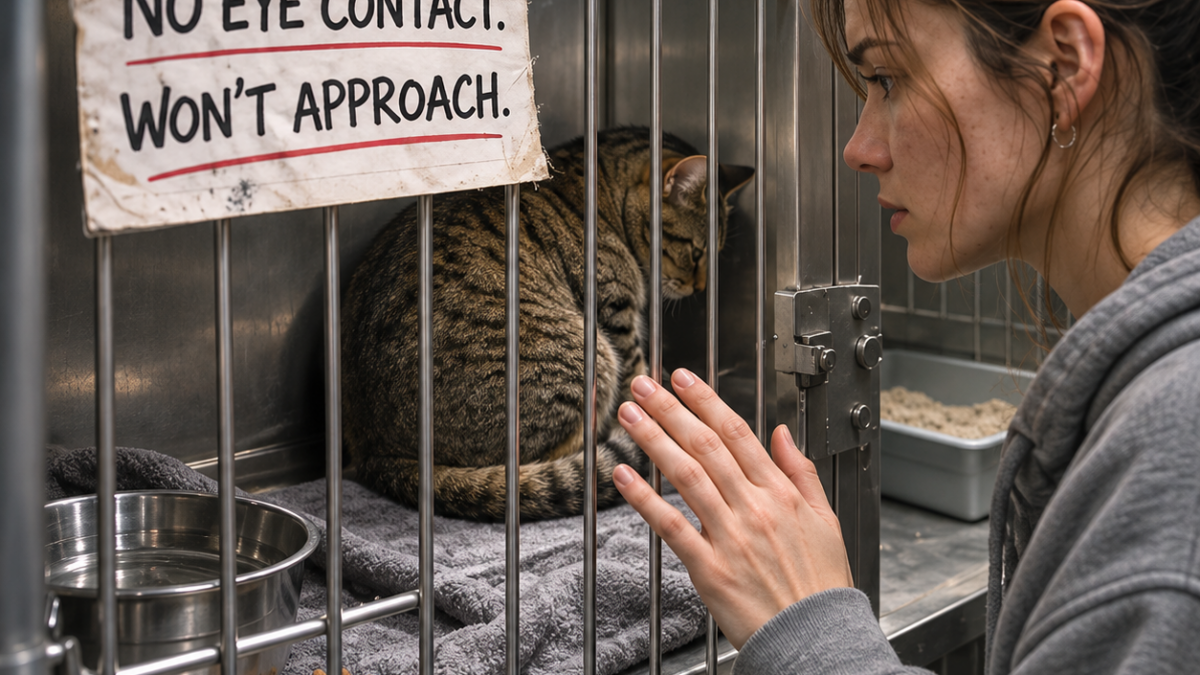
They Called This Shelter Cat “Unadoptable” and Put Him on the Transfer List—Then He Did One Small Thing No One Expected.
The shelter had already moved Rivet to the “hard to handle” row, and by Friday morning his file carried the word nobody wanted to say out loud: unadoptable.
I was supposed to document his lack of progress and approve the transfer, but one terrified touch of his paw against my sleeve made me question whether we had been measuring the wrong animal all along.
Then I found the missing intake notes that explained exactly why Rivet feared human hands—and suddenly saving one silent tabby meant challenging the shelter director, exposing a cruel shortcut hidden inside our overcrowding crisis, and admitting that I was shutting down almost as completely as he was.
I was already sliding the latch closed when Rivet moved.
That is the moment I remember most clearly.
Not the meeting.
Not the transfer list.
Not the argument with my manager.
Not even the night I carried him out of the shelter in a plastic crate and realized I had just made my personal life infinitely more complicated.
The latch.
My fingers around cold metal.
The kennel door almost shut.
And one brown-striped paw moving toward me.
My name is Aaron Cole.
I was thirty years old that fall, working at Silver Creek Animal Rescue on the east side of Reno, Nevada, and by then I had become very good at pretending exhaustion was professionalism.
I smiled at adopters.
Answered phones.
Cleaned kennels.
Gave medications.
Moved crates.
Logged intake notes.
Matched animals.
Calmed crying owners.
Calmed angry owners.
Calmed coworkers.
Sometimes I even calmed myself.
Mostly, though, I had developed a system.
Keep moving.
If you keep moving, you don’t have to notice what the work is taking from you.
The front of Silver Creek looked cheerful enough.
Bright murals.
A donation wall covered with photographs.
Little chalkboards that said things like FIND YOUR NEW BEST FRIEND and ADOPT LOVE.
Children pressed their faces against kitten-room glass.
Volunteers wore purple shirts with paw prints across the back.
PART2:
The lobby smelled faintly like disinfectant under whatever cinnamon air freshener our receptionist insisted made the place “feel less clinical.”
But the farther you walked toward the rear of the building, the more the slogans disappeared.
Past medical.
Past laundry.
Past quarantine.
Past the door marked STAFF ONLY.
There was a narrow wing we called Behavior.
That was the official name.
Most employees called it the hard row.
Animals ended up there for different reasons.
Bite history.
Severe fear.
Handling sensitivity.
Kennel aggression.
Shutdown.
Sometimes simply because the main adoption floor made them worse.
Rivet occupied the last kennel on the left.
Adult domestic shorthair.
Brown mackerel tabby.
Approximately five years old.
Amber eyes.
One small notch in his right ear.
PART3:
White spot beneath his chin.
Intake weight: 10.4 pounds.
Owner surrender.
Reason: relocation.
That was the clean version.
The card clipped to his kennel had accumulated additions.
NO EYE CONTACT.
WON’T APPROACH.
FREEZES DURING HANDLING.
DIFFICULT TO ASSESS.
One volunteer had written beneath that:
May do best as working/barn cat.
Someone else had circled it.
Rivet didn’t hiss.
That was the strange thing.
He didn’t spit.
Didn’t strike.
Didn’t charge the door.
Didn’t growl when we entered.
Cats displaying obvious aggression made people cautious.
Rivet made people impatient.
He would press himself into the back corner of the kennel and become so still that after a while your brain began treating him like part of the bedding.
I had watched visitors walk past him without slowing.
I had watched volunteers clean around him while discussing weekend plans.
I had watched prospective adopters look inside and say:
“Is something wrong with him?”
Technically?
No.
Bloodwork normal.
Teeth decent.
Weight healthy.
FIV/FeLV negative.
No orthopedic pain.
No obvious neurological problem.
Nothing wrong enough for medicine to explain him.
He simply seemed to have left while keeping his body behind.
The afternoon the latch changed everything, I was exhausted.
We had taken in eighteen animals in two days.
A backyard breeder had surrendered seven dogs.
Animal control had brought us three neglected cats.
A woman left four kittens in a laundry basket outside the front entrance before opening.
Two owner surrenders arrived without appointments.
And our foster coordinator had called in sick.
By four-thirty, I had skipped lunch.
My shirt smelled like bleach and dog food.
My head hurt.
And I was counting minutes until six.
That embarrassed me.
I had entered shelter work because I cared.
Five years earlier, I could spend an hour sitting outside a kennel for one frightened animal and feel lucky to have the chance.
Now sometimes all I saw was the next task.
Water.
Food.
Medication.
Notes.
Move.
Rivet’s water needed replacing.
I opened the kennel a few inches.
He stayed pressed to the back.
I slid the old bowl out.
New bowl in.
No eye contact.
No reaching.
Good technique.
Efficient.
Safe.
Then I started closing the kennel.
A coworker named Jasmine passed behind me carrying intake folders.
“We’ve got another eight tomorrow.”
I groaned.
“Please tell me you’re joking.”
“Nope.”
She glanced at Rivet.
“Marla wants the transfer list finalized tonight.”
I looked toward her.
“Tonight?”
“Transport has space Friday.”
“Where?”
“High Desert Working Cat Program.”
My stomach tightened.
High Desert placed unsocialized cats at ranches, warehouses, feed stores, and barns.
Good program.
Necessary program.
Some cats thrived there.
But Rivet?
I looked back into the kennel.
He had never shown me that he wanted zero human contact.
He had shown me that he did not know what human contact would cost him.
Those are not the same thing.
Jasmine shifted the folders.
“If he doesn’t show progress, he’s probably going.”
Progress.
That word.
I hated it even then.
Progress meant:
Come forward.
Take treats.
Allow touch.
Show curiosity.
Interact.
Demonstrate adoptability.
All behaviors humans could see.
All behaviors that made us feel something was happening.
I put my fingers on the latch.
Then Rivet moved.
One inch.
Maybe less.
His body shifted forward.
I froze.
He stayed low.
His amber eyes never reached my face.
Instead he watched my hand.
His front paw slid over the blanket.
Toward me.
Another inch.
His whiskers reached almost to the kennel opening.
My fingers remained on the latch.
I stopped breathing.
It would be dramatic to say he touched me.
He didn’t.
He almost did.
That mattered more.
Because Rivet had been at Silver Creek sixteen days.
Sixteen days without voluntarily approaching a human.
And just as I was preparing to close the door, he had chosen to reduce the distance himself.
I slowly removed my hand from the latch.
Sat down on the floor.
Rivet stopped.
I didn’t speak.
The hallway lights hummed.
A washing machine spun somewhere behind me.
Keys jingled.
A dog barked twice.
Rivet stayed where he was.
Closer than before.
That was all.
Jasmine returned five minutes later.
“You’re still here?”
“Yeah.”
“What happened?”
“He moved.”
She looked into the kennel.
“Okay?”
“Toward me.”
Jasmine’s expression softened.
“Did you note it?”
“Not yet.”
“You should.”
She continued walking.
Then turned back.
“Aaron?”
“Yeah?”
“Don’t fall in love with another project.”
“I’m not.”
She raised an eyebrow.
“You’re sitting on a concrete floor after your shift ended.”
I looked at Rivet.
“I’m observing.”
“Sure.”
She left.
I stayed twelve more minutes.
Rivet eventually retreated.
Not suddenly.
Not panicked.
He simply moved back to his corner.
I wrote in his notes:
4:37 p.m. — Voluntary forward movement while kennel open. Approached approx. 10–12 inches from resting position. No vocalization, no defensive behavior. Focused strongly on handler’s hand/latch. Retreated after sustained quiet presence.
Then, because I knew Marla would read it, I added:
Recommend delaying transfer pending further observation.
The next morning, someone had written beneath my entry:
No measurable social engagement. Transfer remains likely.
No initials.
That irritated me more than it should have.
I found Marla in her office.
Marla Henson had managed Silver Creek for nine years.
Forty-two.
Short blond hair.
Always moving.
She cared about animals.
I need to say that because the story becomes too easy otherwise.
Marla had slept overnight at the shelter during wildfire evacuations.
She had bottle-fed kittens under her desk during donor meetings.
She had once driven six hours to collect a dog abandoned after an interstate accident because no transport volunteer was available.
She also believed very strongly that rescue without turnover became warehousing.
And Silver Creek was drowning.
She looked up from her computer.
“What?”
“Rivet.”
“What about him?”
“I think we should hold the transfer.”
“No.”
“You didn’t even—”
“We’re at 118 percent capacity.”
“I know.”
“County called. Twelve-cat seizure may come in.”
“Then we need fosters.”
“We need everything.”
“He approached yesterday.”
“Aaron.”
“He did.”
“One approach does not equal adoption potential.”
“I’m not saying it does.”
“Then what are you saying?”
“That we haven’t figured him out.”
Marla leaned back.
“We have sixteen days of notes.”
“We have sixteen days of him shutting down inside a kennel.”
“That is information.”
“So is approaching.”
She sighed.
“What do you want?”
“Seventy-two hours.”
“For?”
“Structured observation.”
“You already observe him.”
“Not like this.”
“What does ‘like this’ mean?”
I hadn’t planned that far.
“Same person. Same times. Same routine. No random handling.”
Marla stared at me.
“You?”
“Yes.”
“You’re already over hours.”
“I’ll do it off the clock.”
“No.”
“Why?”
“Because I enjoy not being sued.”
“Fine. I’ll shift tasks.”
“With whose permission?”
“Yours.”
She almost smiled.
Almost.
Then looked at the intake board behind me.
Every line filled.
“I can give you seventy-two hours.”
My chest loosened.
“But.”
Of course.
“If he doesn’t show meaningful change, he transfers Friday.”
“What counts as meaningful?”
“Approach. Food engagement. Reduced fear. Something.”
“That’s vague.”
“So is behavior.”
I nodded.
She pointed at me.
“And Aaron?”
“Yeah?”
“If you start changing the criteria because you’re attached, I’ll pull you off the case.”
“I’m not attached.”
She laughed.
Actually laughed.
“Get out.”
I did.
For three days, I made Rivet boring.
Same time.
Same hallway.
Same jacket.
Same posture.
Same words.
“Morning, Rivet.”
Sit.
No reaching.
Five minutes.
Then ten.
Then fifteen when workload allowed.
I learned quickly that Rivet did not fear faces most.
He feared hands.
Not hands resting.
Hands moving toward him.
If I scratched my nose too quickly, his shoulders tightened.
If I reached for a clipboard, his pupils widened.
If a volunteer extended a finger toward the bars, he became stone.
So I stopped trying to make touch the goal.
That sounds obvious now.
It wasn’t then.
Shelters rely on touch.
Move animal.
Examine animal.
Vaccinate.
Clean kennel.
Place in carrier.
Show adopter.
Touch is built into the system.
For Rivet, touch appeared to be the problem.
On day two, I placed a strip of clean fleece near the front of his kennel.
No treat.
No catnip.
Nothing hidden.
Then walked away.
Two hours later, the fleece had moved.
Maybe Rivet touched it.
Maybe cleaning staff bumped it.
I didn’t know.
Next morning I tried again.
This time he approached while I remained seated.
Not toward me.
Toward the fleece.
Halfway forward.
He stopped.
Ears angled.
Listening.
I kept my hands tucked against my stomach.
He touched the cloth once.
Then looked away.
I wrote:
Voluntary exploration while handler present.
It felt absurdly significant.
The board still said:
POSSIBLE EARLY TRANSFER.
Thursday morning, the kennel door slipped.
My fault.
I rushed.
That is important.
Rivet did nothing wrong.
I opened the latch to remove his tray.
Someone called my name from behind.
I turned my head.
The door swung three inches farther than intended.
Rivet moved.
No explosion.
No scrambling.
He simply flowed through the opening.
By the time I turned back, his tail disappeared around the corner.
My heart stopped.
“Cat loose.”
The hallway changed instantly.
Doors shut.
Radios came out.
Volunteers froze.
Someone started toward the corridor.
“Stop,” I said.
Too sharply.
Everyone looked at me.
“He’s not running. Give him space.”
We blocked exits.
I followed quietly.
Supply room.
The door was partly open.
Inside, I found him wedged between a yellow mop bucket and the wall.
Flattened.
Eyes huge.
Watching my hands.
I crouched.
My first impulse was practical.
Grab towel.
Secure cat.
Return kennel.
But I imagined what he would remember.
Door opens.
Escape.
Human hands seize.
Back into cage.
That would become the whole story.
Instead, I removed my jacket.
Placed it on the floor.
Rivet’s eyes followed.
I slowly slid the jacket sideways.
Not toward his face.
Creating a soft boundary.
He shifted.
I shifted.
No grabbing.
No reaching.
Five minutes.
Eight.
My knees hurt.
He eventually stepped onto the jacket.
I lifted one side.
Not wrapping him.
Guiding.
He moved with it.
Then I used a carrier positioned behind him.
He entered.
Door closed.
No struggle.
No claws.
Nothing.
When we returned to the kennel, my hands shook so badly I had trouble with the latch.
Jasmine was standing behind me.
“You okay?”
“Yeah.”
“You’re pale.”
“He could’ve bolted.”
“But he didn’t.”
“He was terrified.”
“He’s always terrified.”
“That’s the problem.”
A voice behind us said:
“And if he can’t recover from it, that tells us something.”
Marla.
I turned.
She held a clipboard.
“Transfer transport moved up.”
My stomach sank.
“When?”
“Tonight.”
“You gave me seventy-two hours.”
“We need the kennel.”
“You gave me seventy-two hours.”
“Aaron.”
“No.”
She looked surprised.
I almost never told Marla no.
“The seizure cats are coming early.”
“That isn’t Rivet’s fault.”
“This isn’t about fault.”
“It becomes his consequence.”
“We have thirty-nine cats and thirty-one cat kennels.”
“Then put him in overflow.”
“Full.”
“Office.”
“Full.”
“Foster.”
“With whom?”
I had no answer.
Marla’s voice softened.
“High Desert isn’t euthanasia.”
“I know.”
“They’re good people.”
“I know.”
“He may be happier with less human pressure.”
“Maybe.”
“Then what are you fighting?”
I looked at Rivet.
He had retreated to the corner.
But his body was not as flat as before.
I said:
“The fact that we don’t know.”
Marla rubbed her forehead.
“Knowing is a luxury overcrowded shelters don’t always get.”
That sentence hurt because it was true.
Not acceptable.
True.
Then Jasmine said quietly:
“Aaron could foster.”
I turned toward her.
“What?”
She shrugged.
“You asked with whom.”
Marla stared at me.
I laughed once.
“No.”
Jasmine raised an eyebrow.
“You’ve been sitting beside his kennel three times a day.”
“I rent.”
“Does your lease ban pets?”
“No.”
“Then?”
“I don’t—”
My mouth stopped.
I don’t what?
Own cat supplies?
Know how to foster?
Have enough time?
Have emotional room?
Marla watched me.
“If you take him tonight, transfer is canceled.”
I looked at Rivet.
Then at her.
“How long?”
“Minimum seventy-two hours. Preferably one week.”
“I work here.”
“Yes.”
“I work stupid hours here.”
“I’m aware.”
“My apartment is tiny.”
“Cats famously require mansions.”
Jasmine smiled.
I ignored her.
Marla said:
“You do not have to do this.”
That mattered.
No manipulation.
No guilt.
A choice.
I looked into the kennel.
Rivet did not look back.
“I’ll take him.”
Paperwork took an hour.
By the time I carried the carrier into the parking lot, the Reno sky had gone dark violet over the mountains.
The building lights glowed behind me.
I stood beside my car and suddenly wanted to turn around.
Not because of Rivet.
Because I was exhausted.
Because my apartment was the one place nobody needed anything from me.
No phones.
No kennels.
No adopters.
No managers.
No emergencies.
I had spent years protecting that quiet.
Now I was carrying work home.
Rivet remained completely still inside the carrier.
I whispered:
“This might be a terrible idea.”
One amber eye watched me.
I put him in the back seat.
My apartment was on the second floor of an older complex near Plumb Lane.
One bedroom.
Small kitchen.
Thin walls.
Neighbor on one side watched television too loudly.
Neighbor on the other played acoustic guitar badly but enthusiastically.
I owned one plant and had nearly killed it twice.
The pantry became Rivet’s safe room.
Not really a pantry.
More like a large storage closet beside the kitchen.
Enough space for a litter box.
Water.
Food.
Cardboard hide.
Blanket.
I cleared the bottom shelves.
Set everything up.
Then placed the carrier inside.
Opened it.
Sat outside the doorway.
Rivet remained inside for twenty-two minutes.
Then one paw appeared.
Pause.
Second paw.
His nose.
He stepped out.
Immediately moved behind the cardboard box.
I saw only stripes.
“I’m tired, buddy.”
The words came out before I could stop them.
No response.
“I don’t know if I’m helping you.”
I leaned against the kitchen cabinet.
“I don’t know if I’m helping anything anymore.”
That was harder to say.
Shelter burnout is a strange kind of grief.
You start because every animal matters.
Then enough animals arrive that caring about each one at full volume becomes impossible.
So you turn the volume down.
Then one day you realize you also turned yourself down.
I had stopped seeing friends.
Stopped going to the gym.
Stopped cooking.
My mother called every Sunday and I let voicemail answer.
My girlfriend, Leah, had moved out eight months earlier.
She said I was physically home but emotionally always still at the shelter.
I told her the animals needed me.
She said:
“So do people.”
I called that unfair.
Then proved her right by going back to work the next morning twelve hours after she left.
I had not seriously dated since.
My apartment reflected that.
Nothing settled.
No pictures.
Few decorations.
A couch bought used.
Two plates.
Three mugs.
Everything temporary despite living there four years.
Maybe that was why Rivet’s stillness felt familiar.
We were both physically present in places we had stopped inhabiting.
That first night, I slept badly.
At 1:30, tiny footsteps.
Pause.
Scratch of cardboard.
At three, water bowl.
At four, silence.
Morning.
Food gone.
Litter used.
Rivet hidden.
Good.
I left for work.
All morning I imagined disasters.
He stopped eating.
He escaped.
He injured himself.
The apartment manager entered.
Neighbor complained.
Nothing happened.
When I returned, I put my key in the lock slowly.
Entered quietly.
Bag down.
Shoes off.
Kitchen.
Pantry door open three inches.
I turned my body sideways.
Opened it more.
Rivet was not behind the box.
He sat at the edge.
Half visible.
Watching the floor near my feet.
I lowered the food bowl.
Slowly.
He tracked my hand.
Body tense.
But did not retreat.
Then I started closing the door to give him privacy.
Rivet moved.
One step.
Then another.
He raised one paw.
Touched the sleeve of my sweatshirt.
Barely.
Just fabric.
A tap.
My entire body froze.
His paw remained one second.
Then withdrew.
I sat on the floor.
Rivet stayed.
That was the first time he chose contact.
Not skin.
Not petting.
A sleeve.
Something between us.
Maybe that was all he could risk.
My phone buzzed.
Apartment management.
ANNUAL UNIT INSPECTIONS TOMORROW.
My stomach dropped.
Of course.
I emailed.
Asked to reschedule.
No.
Required.
Between nine and noon.
I called Marla.
“Bring him back for the day.”
I looked toward Rivet.
He had just touched me.
The shelter meant noise.
Kennel.
Hands.
Transport.
“No.”
“Then secure him.”
“I know.”
“You okay?”
“Yeah.”
Pause.
“You don’t sound okay.”
“I’m fine.”
The easiest lie.
Next morning, my anxiety changed the apartment before anyone arrived.
I cleaned too quickly.
Moved chairs.
Shifted boxes.
Checked locks.
Rivet felt it.
He retreated.
At 9:17, voices in the hallway.
Keys.
Clipboard.
Doors opening.
I cracked mine to tell the inspector I needed one minute.
That was enough.
Rivet slipped through my legs.
Into the hallway.
My heart stopped.
He didn’t sprint.
He moved fast and low.
Down six feet.
Around the corner.
Onto the stair landing.
I followed.
No chasing.
No grabbing.
My neighbor Mrs. Bell stood there with her old golden retriever, George.
George was thirteen.
Arthritic.
One cloudy eye.
The least threatening animal alive.
Rivet froze.
George sat.
Did nothing.
Rivet stared at him.
Not hands.
Not door.
Dog.
George yawned.
Rivet’s body softened by one degree.
Mrs. Bell whispered:
“That yours?”
“Sort of.”
“He scared?”
“Yes.”
“George doesn’t care.”
George indeed did not care.
He leaned against Mrs. Bell’s leg.
I crouched.
Hands still.
Turned one sleeve toward Rivet.
Same gray sweatshirt.
Rivet looked.
One step.
Then another.
He walked past me.
Straight back into the apartment.
I slowly closed the door.
My legs went weak.
The inspector said:
“Everything okay?”
I laughed.
“No.”
He smiled awkwardly.
“Need a minute?”
“Yes.”
He waited.
That was kindness.
Small kindness.
I remember it.
That afternoon, the shelter wanted my seventy-two-hour report.
I opened the foster form.
Behavior:
Eating? Yes.
Eliminating? Yes.
Exploring? At night.
Human interaction?
I typed:
Initiated sleeve contact once. Remained near foster after return from accidental hallway escape.
Then:
Recommendation?
I stared.
RETURN TO SHELTER.
CONTINUE FOSTER.
ADOPTION INTEREST.
I clicked continue foster.
Then stopped.
Added:
Potential adoption interest if progress remains stable.
My heart pounded harder than it should have.
Rivet was sitting beneath the kitchen chair.
I looked at him.
“You better not be terrible.”
He blinked.
The next day, everything changed.
Not Rivet.
His file.
Jasmine called me into the records room.
She closed the door.
“That’s ominous.”
“I found something.”
“What?”
“His intake documents.”
“I’ve seen them.”
“No.”
She placed a paper folder down.
“Original ones.”
I frowned.
Rivet’s surrender packet had been scanned.
Owner move.
Unable to keep.
Fearful.
No aggression.
Simple.
Jasmine opened the folder.
Handwritten veterinary record.
Behavior consult.
Photographs.
My stomach tightened.
“Where was this?”
“Misfiled under owner last name.”
I read.
Rivet’s former owner was not simply moving.
Her name was Sylvia Hart.
Age seventy-one.
She had entered assisted living after a stroke.
Her adult son surrendered Rivet.
Veterinary notes from two years earlier said:
Significant handling fear following suspected mistreatment by previous household member.
I looked at Jasmine.
“Previous household member?”
She turned the page.
Sylvia had originally adopted Rivet from a neighbor after finding him injured.
Her boyfriend at the time, Frank Weller, disliked cats.
The veterinary note documented:
Owner reports partner forcibly removes cat from furniture, scruffs frequently, uses hands for physical punishment. Cat increasingly freezes/urinates when approached.
My stomach turned.
Another entry:
Small healed fracture right front metacarpal, cause unclear.
Then:
Owner separated from partner. Cat behavior gradually improved. Accepts contact from owner when allowed to initiate.
I stared.
“Why isn’t this in his current file?”
Jasmine looked grim.
“There’s more.”
She showed me the intake scan metadata.
The detailed veterinary attachment had been uploaded initially.
Then marked nonessential and archived.
By whom?
Behavior coordinator, Paige Renner.
Paige had left three weeks before I started working with Rivet.
“Why?”
Jasmine shook her head.
“Marla says we were overwhelmed during that intake month.”
“That doesn’t explain deleting relevant behavior history.”
“Archived, not deleted.”
“Same effect if nobody can see it.”
I felt angry.
Then ashamed.
Because I had spent two weeks treating Rivet’s fear like a mystery when the answer had existed in our own system.
Human hands had been punishment.
Of course he watched hands.
Of course grabbing him would confirm everything.
Of course sleeve contact mattered.
He had approached the safest version of a hand he could tolerate.
I called Marla.
She listened.
Then said:
“Bring the file.”
We met in her office.
She read silently.
Her face hardened.
“Who archived this?”
“Paige.”
“Why?”
“Do you know?”
“No.”
“You supervised her.”
“Yes.”
“Did she do this often?”
Marla looked at me.
“That’s a serious question.”
“I’m seriously asking.”
She leaned back.
“Paige believed detailed trauma narratives scared adopters.”
My jaw tightened.
“So?”
“So she shortened them.”
“Without preserving triggers?”
“Apparently.”
“Apparently?”
“Aaron.”
“No. Rivet was nearly transferred to a working-cat program because our notes said he wouldn’t engage.”
“That program is safe.”
“That is not the point.”
“What do you want me to say?”
“That we failed him.”
Marla’s eyes narrowed.
“We did not abuse him.”
“No.”
“We took him in.”
“Yes.”
“Fed him.”
“Yes.”
“Provided medical care.”
“Yes.”
“Then be careful with the word failed.”
I looked directly at her.
“We almost made a permanent placement decision based on incomplete records we already had.”
Silence.
Marla looked at the papers again.
Finally:
“That is a failure.”
It surprised me.
No defense.
No fight.
She picked up the phone.
Called IT.
Then the medical director.
By evening, every archived behavior attachment from the previous twelve months was flagged for review.
That should have reassured me.
Instead, it opened something bigger.
Rivet was not the only animal.
A dog named Max had a documented history of panic around men in baseball caps omitted from his adoption profile.
He had been returned after growling at an adopter’s husband.
A cat named Lily had a record of severe handling sensitivity after declawing complications.
Her file simply said independent.
A cattle dog named Ember had bite-context notes reduced to “high energy.”
Not lies exactly.
Worse in a way.
Truth softened until it became useless.
Paige was gone.
But the system that rewarded those decisions remained.
Fast adoptions.
Short kennel stays.
Lower length-of-stay numbers.
Fewer “negative” words.
Good statistics.
Then returns.
Transfers.
Animals labeled difficult.
We held a staff meeting.
Marla stood in front.
No slogans.
No donor language.
She put Rivet’s two files on the table.
Current.
Original.
“This is what happens when positive language becomes incomplete language.”
Nobody spoke.
Then one employee said:
“We’re already drowning in notes.”
Another:
“Adopters don’t read them.”
Another:
“If we write every trigger, some animals will never leave.”
Marla nodded.
“All true.”
Then she looked at me.
I hadn’t planned to speak.
I did anyway.
“Then we need better conversations, not less truth.”
Someone said:
“Easy when you’re fostering one.”
That stung.
I turned.
“Yeah. It is easier when there’s one.”
The room quieted.
“I know what overcrowding looks like. I know we don’t have unlimited time. But if an animal gets returned because we hide what the adopter needs to know, we didn’t save space. We delayed the return.”
Jasmine said:
“And made the animal worse.”
Nobody argued.
The policy changed slowly.
Not heroically.
Behavior notes became protected.
Original entries remained visible.
Public adoption profiles could stay readable.
Internal matching notes had to include triggers.
Potential adopters got verbal disclosure.
No more changing severe fear to shy without context.
No more independent when touching caused panic.
Meanwhile, Rivet stayed in my pantry.
Then outside it.
Week two, he reached the kitchen.
Week three, living room.
He developed a ritual.
At 7:10 p.m., he walked from the pantry to the window.
Sat on the sill.
Watched parking-lot lights.
At 7:45, he ate.
At eight, he disappeared under the chair.
Predictability became architecture.
I started changing too.
Not because I made some grand mental-health declaration.
Because keeping Rivet stable forced me to notice instability in myself.
I worked too many consecutive shifts.
Skipped meals.
Answered work messages at midnight.
Then complained I had no life.
One evening, I opened the scheduling app.
Requested two consecutive days off.
My finger hovered.
I almost canceled.
Then Rivet touched my sleeve.
Same tiny paw.
Same signal.
I submitted the request.
Marla approved it.
No comment.
On my first full Saturday off in months, I slept until nine.
Made eggs.
Called my mother.
She answered on the first ring.
“Aaron?”
The surprise in her voice hurt.
“Hey, Mom.”
“Are you okay?”
“Yeah.”
“You never call Saturday morning.”
“I know.”
She was quiet.
Then:
“How are you?”
I almost said fine.
Instead:
“Tired.”
That one truthful word changed the call.
We talked forty minutes.
I told her about Rivet.
She said:
“You adopted a cat?”
“Fostering.”
“Of course.”
“What does that mean?”
“It means you adopted a cat but haven’t signed the paper yet.”
“Everyone is very funny.”
She laughed.
I had missed that sound.
Rivet eventually allowed touch.
Not on the head.
Not from above.
One evening, I sat on the floor reading.
He approached.
Sniffed my sleeve.
Then pressed his cheek against my elbow.
I didn’t move.
He did it again.
I slowly lowered one finger beside him.
Not toward.
Beside.
He leaned.
Touched himself to me.
The first pet lasted two seconds.
Then he walked away.
I wrote nothing down.
That moment did not belong in a behavior chart.
It belonged to him.
Two months after Rivet came home, Silver Creek received a visit from the county contract office.
Our shelter accepted municipal overflow funds.
They wanted documentation about transfer decisions.
Normally boring.
That year, not boring.
The reviewer asked why several animals with known behavior histories had incomplete internal records.
Marla showed the audit.
No hiding.
No excuses.
That decision mattered.
The review expanded.
Not into a scandal exactly.
Into accountability.
The county found that our record practices met basic legal standards but were inconsistent enough to create welfare risk.
They recommended formal behavior-document retention rules.
The board adopted them.
Then donors found out.
One major donor called Marla.
I heard only her side.
“No, this is not a crisis.”
Pause.
“Yes, our return numbers were higher last quarter.”
Pause.
“No, I will not instruct staff to use less detail.”
I looked up.
Marla saw me outside her office.
Closed the door.
Later she found me in cat intake.
“They threatened to pull funding.”
“For what?”
“They think detailed behavior language makes animals look damaged.”
“What did you say?”
“That damaged is their word, not ours.”
I smiled.
“Good.”
She looked irritated by my approval.
“Don’t enjoy this.”
“I’m not.”
“You are a little.”
“Maybe.”
The donor reduced funding.
For three months, everyone panicked.
Then another foundation stepped in after seeing our new transparency policy.
Smaller amount.
Enough.
Public trust improved.
Returns decreased.
Not immediately.
Over six months.
Then a year.
The animals who got adopted were not magically easier.
The humans were simply more prepared.
Rivet’s adoption became my next problem.
Not because anyone wanted him.
Because I did.
I kept telling myself fostering remained appropriate.
Stable.
Quiet apartment.
Known handler.
Why disrupt?
Marla eventually called me into her office.
“Sign.”
She pushed adoption paperwork across the desk.
I stared.
“What?”
“You’ve had him four months.”
“I know.”
“He sleeps on your couch.”
“Sometimes.”
“You bought him a six-foot cat tree.”
“It was on sale.”
“You declined two potential adopters.”
“They were wrong.”
“One was a retired librarian.”
“She had grandchildren every weekend.”
“Fair.”
She slid the form closer.
“Sign.”
I looked at the line.
Adopter name.
Aaron Cole.
I felt unexpectedly afraid.
“What if this isn’t good for him?”
Marla sat back.
“That is not your real question.”
“What is?”
“What if you commit to something and it matters enough to hurt later?”
I stared.
“Did my mother call you?”
“No.”
“Jasmine?”
“No.”
“Who told you?”
“You’re not mysterious.”
I looked at the form.
Leah leaving.
Animals dying.
Animals returned.
Burnout.
Shelter workers become experts at temporary love.
Care deeply.
Release.
Repeat.
Sometimes you start protecting yourself by never letting anything feel permanent.
Rivet walked into that exact weakness.
I signed.
The next morning, his kennel card disappeared from Silver Creek.
Jasmine replaced it with a photograph on the adoption board.
RIVET — ADOPTED.
Beneath it she wrote:
Progress: moved into Aaron’s entire life.
I crossed it out.
She wrote it again.
Rivet never became the cat people expected adoption stories to produce.
He didn’t greet visitors.
Didn’t perform tricks.
Didn’t love being held.
He tolerated the veterinarian with betrayed silence.
He hid when maintenance workers entered.
He preferred sitting beside me to sitting on me.
That was enough.
More than enough.
Then one year after adoption, something happened that tested everything.
Frank Weller walked into Silver Creek.
I did not know his face.
His name did not register at first.
He approached the desk asking about surrendering a cat.
Another cat.
Young gray female.
Staff called me because he described her as “impossible.”
I came out.
The man was in his fifties.
Heavy hands.
Baseball cap.
Impatient posture.
A carrier sat beside his shoe.
Inside, a gray cat pressed against the back.
“What’s the behavior concern?” I asked.
“She won’t listen.”
I stared.
“She won’t what?”
“She gets on counters. Furniture. Runs when I correct her.”
“How do you correct her?”
His expression hardened slightly.
“You know. Move her.”
“How?”
“Pick her up.”
“Anything else?”
He shrugged.
“Sometimes she needs to learn.”
My stomach tightened.
I asked his name.
“Frank Weller.”
The room narrowed.
Rivet’s old record.
Previous household member.
Frank Weller.
Could there be another?
Of course.
Common enough.
I checked the address.
Same one from Rivet’s historical veterinary note.
My hands went cold.
I kept my voice neutral.
“Have you owned cats before?”
“Yeah.”
“What happened to them?”
He frowned.
“My ex had one.”
“Name?”
He looked irritated.
“I don’t remember.”
“Brown tabby?”
His face changed.
Small.
But I saw it.
“Maybe.”
“Rivet?”
He stared at me.
Then laughed.
“That crazy thing?”
Everything inside me went still.
I wanted anger.
Instead I got clarity.
“Did you ever physically punish him?”
Frank’s face hardened.
“No.”
“Scruff him?”
“He was a cat.”
“That isn’t an answer.”
“Look, are you taking this one or not?”
The gray cat inside the carrier was watching his hands.
Exactly like Rivet.
I looked at Marla across the lobby.
She had heard enough.
She approached.
“Sir, before we complete intake, I need you to fill out a full behavior questionnaire.”
“I’m not spending an hour on paperwork.”
“Then we cannot accept the surrender today.”
“You’re a shelter.”
“Yes.”
“Take the damn cat.”
The carrier moved when his foot bumped it.
The cat flattened.
My jaw tightened.
Marla remained calm.
“If you leave the animal without completing intake, we will document it as abandonment and contact animal control.”
Frank swore.
Filled out the form.
We accepted the cat.
Named her Willow.
Then Marla filed a welfare report based on Rivet’s historical veterinary documentation and current concerns.
Animal control investigated.
The statute of limitations and lack of direct evidence meant nothing dramatic happened regarding Rivet’s old injuries.
But Willow’s veterinary exam revealed bruising inconsistent with normal handling.
She was placed under protective hold.
Frank was cited under local animal cruelty provisions after additional evidence from a neighbor supported rough treatment.
No prison.
No public spectacle.
But Willow never went back.
That mattered.
We placed her with a quiet foster named Denise.
Three months later, Denise adopted her.
When I told Rivet that his old tormentor had lost another cat, Rivet was asleep.
He opened one eye.
Then went back to sleep.
Probably healthier than my response.
The encounter changed me anyway.
For years, Rivet had carried consequences for something another person taught him.
We called his fear difficult.
His stillness unadoptable.
His self-protection failure to progress.
Frank had caused the damage.
Rivet wore the label.
That happens to animals constantly.
People too.
We judge the adaptation instead of asking what required it.
A child becomes quiet.
An employee becomes guarded.
A dog growls.
A cat freezes.
A person stops answering calls.
We say:
Difficult.
Cold.
Lazy.
Unmotivated.
Unadoptable.
We rarely ask what made disappearing feel safer.
Two years after I adopted Rivet, Silver Creek stopped using the phrase hard to handle.
The wing still existed.
It needed to.
But the sign changed.
BEHAVIOR SUPPORT.
It sounded small.
Words do not solve overcrowding.
They do shape how people enter a room.
We also removed the category unadoptable from internal shorthand except in rare legal/medical contexts.
Instead:
Current barriers to placement.
That phrase forced a question.
Barrier for whom?
Animal?
Shelter?
Adopter?
Environment?
Sometimes the barrier was real.
Severe danger.
Medical suffering.
Legal restrictions.
Sometimes the barrier was simply time.
Rivet had needed more of it than our kennel system could comfortably give.
That did not make him incapable of home life.
It made the kennel a bad measuring instrument.
I stayed at Silver Creek.
That surprised me.
For a while, I thought Rivet had taught me I needed to quit.
He hadn’t.
He taught me I needed to stop sacrificing myself as proof that I cared.
I reduced overtime.
Took vacation.
Went home when my shift ended unless there was a real emergency.
Started eating lunch away from the kennel wing.
Called my mother.
Saw friends.
Eventually dated again.
Her name was Nina.
She worked in occupational therapy.
Our third date happened at my apartment.
Rivet watched her from beneath the table.
Nina ignored him.
Good start.
At the end of the evening, Rivet came halfway into the living room.
Nina whispered:
“He’s beautiful.”
I said:
“Don’t look at him.”
She immediately looked away.
Better.
Six months later, Rivet touched her shoe.
She texted me from across the room:
IS THIS A BIG DEAL?
I replied:
ENORMOUS. DO NOT MOVE.
She stayed still eight minutes.
I loved her a little more after that.
Eventually, Nina moved in.
We bought a second couch because Rivet claimed one end of the first.
He never became cuddly with her.
But he slept near her feet.
Trust has many dialects.
By Rivet’s fifth year with me, the notch in his ear had become one of my favorite things.
His coat had softened.
He carried a little extra weight despite my veterinarian’s repeated diplomatic comments.
He still watched hands.
Less.
Not never.
If someone reached suddenly, his body remembered before his mind did.
Then he recovered.
That was healing.
Not erasure.
Recovery speed.
Choice returning.
One afternoon, Silver Creek received a cat unlike Rivet.
Black.
Young.
Violent with fear.
Hissing.
Striking.
Throwing himself against the kennel.
A new employee named Chloe stood outside.
“Is he unadoptable?”
The word hit me like an echo.
I looked at the cat.
Then at Chloe.
“No.”
“What is he?”
“Terrified.”
“But he’s attacking.”
“Yes.”
“Isn’t that dangerous?”
“It can be.”
“So what do we do?”
“Figure out what he’s telling us.”
She looked overwhelmed.
“How?”
I sat on the floor.
“First, stop asking him to prove anything today.”
Chloe sat beside me.
The cat hissed.
We waited.
Ten minutes.
Nothing changed.
Chloe whispered:
“Is this progress?”
I smiled.
“We’re still here.”
That was enough for day one.
Years earlier, I would have needed more.
Treat taken.
Approach.
Touch.
Something measurable.
Rivet taught me another kind of progress.
Sometimes the animal changes.
Sometimes the human standard changes first.
On the anniversary of his adoption, Jasmine sent me a photograph.
She had found it in an old shelter archive.
Rivet in the hard row.
Back corner.
Body compressed.
Eyes down.
Kennel card visible.
NO EYE CONTACT.
WON’T APPROACH.
Beneath it, in faint marker:
POSSIBLE WORKING CAT.
I stared for a long time.
Then looked across the room.
Rivet was asleep on the couch.
Belly partly exposed.
One front paw stretched over the edge.
Nina reading beside him.
He wasn’t touching her.
Didn’t need to.
Home does not always look like closeness.
Sometimes home looks like sleeping deeply while someone else turns pages nearby.
I sent the picture to Marla.
She replied:
We almost got that one very wrong.
I wrote:
We did get it wrong. We just corrected it in time.
She answered:
Fair.
Marla eventually left Silver Creek.
Not in disgrace.
Not from scandal.
She became director of a regional shelter network.
Before leaving, she gave me an envelope.
Inside was Rivet’s original transfer form.
High Desert Working Cat Program.
Friday transport.
His name.
Intake number.
Everything filled out.
Only one thing missing.
Final authorization signature.
Marla’s.
She had never signed it.
I looked at her.
“You told me transport was final.”
“It was scheduled.”
“You were going to sign.”
“Yes.”
“But you didn’t.”
“No.”
“Why?”
She smiled.
“Because you asked for seventy-two hours.”
I looked at the paper.
“That’s very sentimental for you.”
“Don’t tell anyone.”
I laughed.
Then she became serious.
“Aaron.”
“Yeah?”
“I thought you were burned out enough that you’d leave.”
“I almost did.”
“Why didn’t you?”
I thought about it.
“Because leaving wasn’t the only thing I needed.”
“What did you need?”
“Boundaries.”
She nodded.
Then looked toward the behavior wing.
“Animals taught us everything.”
“Unfortunately.”
She laughed.
After Marla left, I became behavior placement supervisor.
I did not want the title.
Then accepted it.
My first policy was unpopular.
No animal could be designated for working-cat placement solely because of shutdown behavior in a kennel unless foster or alternate-environment observation had been attempted when safely possible.
People complained.
Capacity.
Time.
Foster shortages.
All real.
We created emergency decompression fosters.
Forty-eight hours.
Seventy-two.
One week.
Volunteers who couldn’t commit months could commit weekends.
Some animals changed completely outside the shelter.
Some didn’t.
Some truly preferred minimal human contact.
Those cats still went to excellent working placements.
But now we knew more before deciding.
Rivet’s seventy-two hours became a program.
We called it the Pause Foster Initiative.
Jasmine wanted to call it Rivet’s Rule.
I refused.
She printed stickers anyway.
A small tabby silhouette beside the words:
PAUSE BEFORE YOU LABEL.
They appeared on staff water bottles.
Clipboards.
My desk.
I pretended to hate them.
Nina ordered fifty more.
The program reduced behavior-based transfers.
More importantly, it improved accuracy.
One terrified cat became affectionate in foster.
Another remained highly avoidant and thrived later in a barn.
A dog who appeared shut down in kennel became playful in a home but showed severe separation distress we never would have discovered otherwise.
Better information.
Better matches.
Not magic.
Just context.
That became Rivet’s legacy at the shelter.
He did not know.
He preferred sunbeams.
One winter evening, almost seven years after I first touched that kennel latch, I came home late.
Not because of overwork.
Snow had caused traffic.
Nina was visiting her sister.
The apartment was dark except for the lamp near the couch.
Rivet was waiting in the hallway.
Older now.
Gray beginning around his muzzle.
He walked toward me.
No crouch.
No hesitation.
Touched my sleeve.
Same gesture.
I sat on the floor.
“Hey, buddy.”
He leaned into my arm.
Then climbed onto my lap.
For the first time in seven years.
Completely.
All four paws.
Turned once.
Lay down.
I stopped breathing.
Some habits never change.
He stayed ten minutes.
Maybe twelve.
I didn’t reach for my phone.
Didn’t take a picture.
Didn’t document.
Didn’t measure.
I just sat.
Warm cat.
Quiet apartment.
My hand resting beside him.
Eventually, Rivet lifted his head.
Looked directly into my eyes.
Then settled again.
Eye contact.
The thing his original kennel card had listed like a failure.
I laughed softly.
“You took your time.”
He purred.
That almost destroyed me.
Not because he had finally become the cat we wanted.
He hadn’t.
Because after seven years, he still had nothing to prove.
He could have lived his whole life without sitting in my lap and still been worthy of the life we built.
That moment was a gift.
Not a graduation.
There is a difference.
Rivet died at thirteen.
Kidney disease.
Then lymphoma.
We had good months after diagnosis.
Then fewer.
Nina and I made the final decision at home.
I hated it.
No lesson made it easier.
No rescue philosophy turned grief noble.
I cried until my face hurt.
Rivet lay on his blanket beside the window.
His favorite place.
The veterinarian sat on the floor.
No rush.
No grabbing.
No hands from above.
I placed my sleeve beside him.
Gray sweatshirt again.
Not the original.
Same color.
Rivet lifted one paw.
Old.
Thin.
Touched the fabric.
Exactly the way he had years earlier.
I lost whatever composure I had left.
Nina put her hand on my back.
The veterinarian waited.
Rivet’s paw stayed on my sleeve.
Then his eyes closed.
He died with his choice intact.
That mattered more than I can explain.
Afterward, I kept the old transfer form.
His adoption paperwork.
One photograph.
And a small strip of fleece from the first trust exercise.
Everything else?
Memory.
People sometimes expect me to say Rivet saved me.
I understand why.
Animal stories like symmetry.
Broken cat.
Burned-out shelter worker.
They heal each other.
Nice.
Simple.
But Rivet did not save me.
Not alone.
Jasmine helped.
Marla helped.
My mother.
Nina.
The inspector who waited outside my apartment.
Mrs. Bell’s old dog George.
Coworkers who challenged policy.
People who covered shifts when I finally took days off.
I helped myself too.
That part matters.
Rivet gave me one thing.
A reason to stop mistaking shutdown for peace.
In him.
And in myself.
The shelter called Rivet hard to handle because he would not behave in ways we recognized as cooperation.
I called myself fine because I still showed up to work.
Both labels were wrong.
He was terrified.
I was empty.
Neither condition was permanent.
Both required something less dramatic than rescue.
Time.
Predictability.
Truth.
Boundaries.
Choice.
And somebody willing to stay long enough to notice small changes.
One paw forward.
One meal eaten while someone remains in the room.
One phone call answered.
One shift declined.
One sleeve touched.
One evening off.
One couch shared.
One tomorrow that no longer feels impossible.
That is how lives change most of the time.
Quietly.
So quietly that if you are only looking for dramatic progress, you miss it.
I nearly missed Rivet.
The shelter nearly did too.
We were measuring him by approach distance, contact tolerance, adoption-floor behavior, and how efficiently he fit inside a crowded system.
Then one afternoon, with my hand already closing his kennel, he moved toward me.
Barely an inch.
Small enough that another tired employee might not have noticed.
I noticed.
That inch became seventy-two hours.
Seventy-two hours became a foster.
The foster became a home.
The home became seven years.
And those seven years changed how an entire shelter looked at frightened animals.
People used to ask me:
“What made you know Rivet was adoptable?”
The answer is:
I didn’t.
That was the point.
I stopped demanding certainty before giving him a chance.
“Unadoptable” had sounded like a description.
It was really a prediction.
And predictions are dangerous when the animal cannot argue back.
Rivet never argued.
Never defended himself.
Never explained why hands terrified him.
Never told us his history.
Never asked for more time.
He only moved one paw.
The rest was our responsibility to notice.
Years after he died, the Pause Foster program still operates.
New staff hear his story during orientation.
Not the sentimental version.
The real one.
An adult tabby.
Owner surrender.
Shutdown.
Incomplete records.
Transfer scheduled.
One staff member asked for seventy-two hours.
That is enough.
On the wall outside Behavior Support hangs a small framed photograph.
Rivet on my couch.
Not looking at the camera.
Sitting several feet away.
Exactly himself.
Beneath it is a sentence Marla suggested before she left:
BEHAVIOR IS INFORMATION, NOT A VERDICT.
I added another line later.
SMALL PROGRESS STILL COUNTS.
Sometimes I walk past that photograph during a terrible day.
Phones ringing.
Kennels full.
Staff tired.
Animals arriving faster than spaces open.
Nothing about shelter work became easy.
We still make impossible decisions.
Still run out of room.
Still lose animals medically.
Still face cases where love cannot repair everything.
But when I catch myself rushing toward a label because certainty would make the workload easier, I look at Rivet.
And I remember metal beneath my fingers.
A kennel almost closed.
A paw moving forward.
I remember how close I came to seeing nothing.
They said Rivet was unadoptable.
Maybe what they really meant was that he had stopped performing hope where people could see it.
Fortunately, hope did not need to be loud.
It only had to move one inch.
And someone had to notice before the latch clicked shut.








