The Shelter Separated Two Cats They Thought Were “Too Dependent”—At 3:47 A.M., One Was Bleeding Trying to Reach Her Deaf Sister
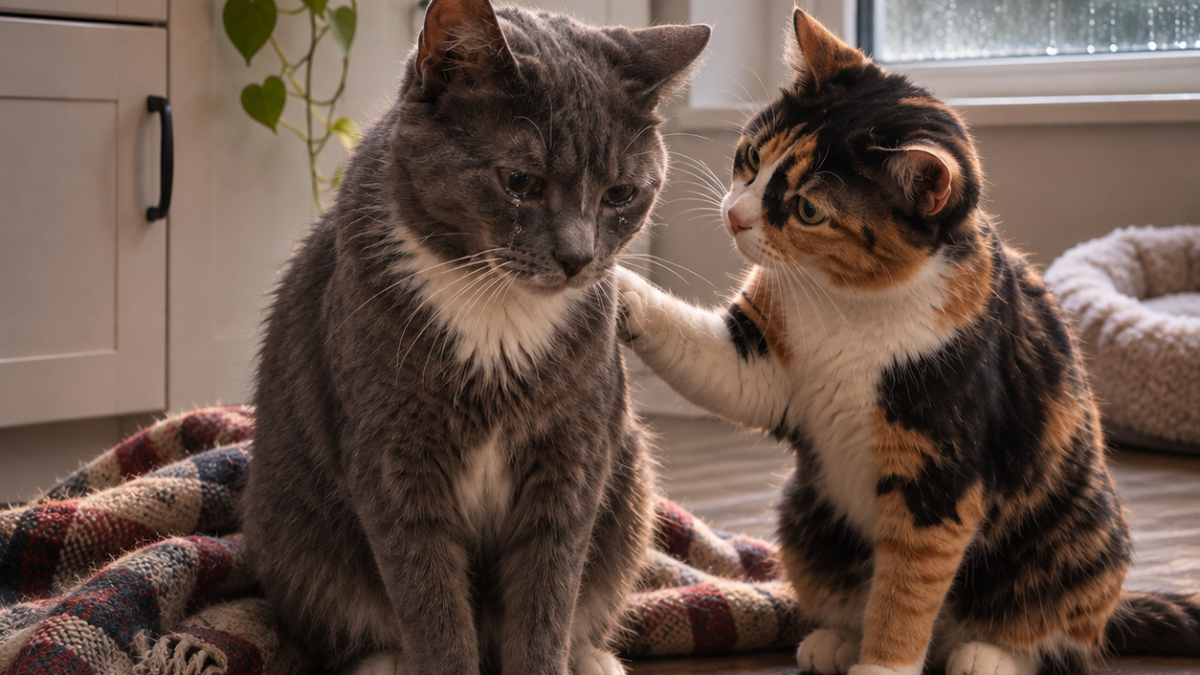
The Shelter Separated Two Cats They Thought Were “Too Dependent”—At 3:47 A.M., One Was Bleeding Trying to Reach Her Deaf Sister
At exactly 3:47 a.m., the shelter manager called to tell me Juniper had shredded her paws bloody trying to claw through a kennel door after we separated her from Willow, the quiet gray cat I had fostered only twelve hours earlier.
I drove Willow back in my pajama pants, watched Juniper stop screaming the instant their paws touched through the carrier bars, and weeks later discovered the truth the shelter had completely missed: Willow was deaf, and Juniper had spent years quietly acting as her ears.
Then a wonderful family offered to adopt both sisters together, giving me the perfect ending every foster parent is supposed to want—and forcing me to admit that while I had been telling everyone I was saving two abandoned cats, they had been rebuilding the part of me my divorce had left completely silent.
At 3:47 in the morning, nobody calls because something has gone well.
I knew that before I opened my eyes.
My phone was vibrating across the nightstand, knocking softly against a glass of water.
For a few seconds I could not remember where I was.
Then I saw the screen.
CEDAR RIDGE ANIMAL SHELTER.
My stomach dropped.
I sat up.
At the foot of my bed, Willow lifted her head.
She had been in my house less than twelve hours.
Small gray body.
White paws.
Green eyes.
One tiny notch missing from her left ear.
She had spent most of her first evening examining every room before settling onto the corner of my bed as though she had already determined the house was acceptable but I remained under review.
I answered.
“Hello?”
“Michael?”
I recognized Mara Collins immediately.
She managed Cedar Ridge.
She was fifty-two, permanently underslept, and had the sort of voice that could calm a frightened pit bull or terrify a city budget committee depending on what the situation required.
That night, she sounded frightened.
“We need your help.”
I swung my feet onto the floor.
“What happened?”
“It’s Juniper.”
I looked instinctively toward Willow.
Her head was up now.
Eyes fixed on the bedroom doorway.
“What about her?”
Mara hesitated.
“She won’t stop hurting herself.”
I was fully awake.
“What do you mean?”
“She’s been crying since about eleven.”
“We thought she’d settle.”
“She hasn’t.”
“She shredded the fleece blanket.”
“She’s been clawing at the kennel door.”
“Her front paws are bleeding.”
I stood.
“What?”
“We moved her to the quiet room.”
“She’s still doing it.”
“I gave her another bed.”
“She tore that up too.”
“She keeps going to the door.”
I looked at Willow.
PART2:
She was still staring into the hallway.
Not at me.
At the door.
Waiting.
“Did something happen?”
“No.”
“No dog scared her?”
“No.”
“No one dropped anything?”
“No.”
“Nothing.”
Mara’s voice softened.
“Michael, I think it’s Willow.”
I stared at the little gray cat.
“That makes no sense.”
“I know.”
“They barely interacted at the shelter.”
“I know.”
“You told me they weren’t bonded.”
“I told you we didn’t think they were bonded.”
“That’s different.”
“I’m aware of that now.”
Willow stood.
Walked toward the edge of the bed.
Stopped.
Her body was rigid.
PART3:
I realized she had not slept either.
Not really.
She had spent hours changing positions.
Looking toward the hallway.
Looking at the front door.
Walking to the window.
Returning.
I had thought she was adjusting to a new house.
Mara said:
“Can you bring her back?”
I looked at the clock.
3:49.
“Now?”
“Yes.”
Pause.
“Please.”
I was already looking for pants.
“Give me fifteen minutes.”
I hung up.
Then realized I was already wearing pajama pants.
Good enough.
I found one sock beneath the bed.
The other in the laundry basket.
They did not match.
I did not care.
Willow watched me.
“Apparently your sister is committing property damage.”
No reaction.
I pulled on a sweatshirt.
“You want to explain that?”
Nothing.
I carried the plastic cat carrier into the bedroom.
Willow saw it.
Immediately walked inside.
No hesitation.
That stopped me.
Most cats treated carriers as portals to betrayal.
Willow entered like she knew exactly where we were going.
I shut the door.
“Okay.”
My house was forty minutes from Cedar Ridge if you obeyed every traffic law.
At 4:00 a.m., I discovered I had flexible values.
The roads were almost empty.
Willow sat silently.
No crying.
No scratching.
She simply faced forward inside the carrier.
I kept glancing over.
“You know something I don’t.”
She looked at me.
At one red light, I said:
“Juniper’s okay.”
Willow blinked.
“We’re going to get her.”
Nothing.
I did not yet understand why my voice meant almost nothing to her.
The shelter looked strange at night.
During the day it was noise.
Phones.
Dogs.
Volunteers.
Metal doors.
People walking.
At four sixteen in the morning, the parking lot was empty except for Mara’s Subaru and an animal-control van.
The moment I opened my truck door, I heard Juniper.
Not a normal cat cry.
Not a meow.
A hoarse, broken call coming from somewhere deep inside the building.
Willow stood inside the carrier.
Her entire body changed.
Mara met me at the staff entrance.
Hair pulled into a crooked ponytail.
Sweatshirt over pajama pants.
No makeup.
“You came fast.”
“What the hell happened?”
“Come see.”
We walked through the kennel corridor.
Juniper cried again.
Willow pushed against the front of her carrier.
Mara looked down.
“See?”
We reached the quiet room.
Juniper was inside a large stainless-steel kennel.
Brown tabby.
White chest.
Slightly bigger than Willow.
Usually alert.
Curious.
Always watching everyone.
That night she looked destroyed.
The fleece blanket beneath her had been shredded into strips.
Small blood smears marked the bottom edge of the kennel door.
Her front paws were red.
Her voice was almost gone.
When she saw me, she screamed once.
Then she saw the carrier.
Stopped.
Completely.
The silence was so sudden that Mara and I both froze.
Juniper rushed toward the kennel door.
I put Willow’s carrier on the floor.
Before I could open anything, Juniper pushed her face against the bars.
Willow moved forward.
One white paw appeared through the carrier opening.
Juniper pushed one paw through her own kennel door.
Their toes touched.
That was it.
No dramatic sound.
No frenzy.
No meowing.
Willow pressed forward until her forehead rested against the carrier.
Juniper lowered herself onto the kennel floor.
One paw remained extended.
Touching Willow.
Her breathing slowed.
Mara sat down in the nearest chair.
“Oh my God.”
I looked at her.
“You separated them?”
She looked guilty.
“Yes.”
“You told me to take Willow.”
“Yes.”
“You said Juniper would be easier to place alone.”
“I know what I said.”
“You were wrong.”
“I know.”
She rubbed her face.
“I know.”
There was no point being angry at her.
Not yet.
Juniper’s paws mattered more.
A veterinary technician named Elena came in.
She cleaned the wounds.
Superficial, thankfully.
Raw pads.
Broken nails.
One small cut.
Juniper did not fight.
Willow remained beside her.
Mara watched.
Then said:
“Take them both.”
I looked over.
“What?”
“Take Juniper.”
“For tonight?”
“Just until she calms down.”
I laughed once.
“You know that sentence is how foster parents get destroyed.”
Mara almost smiled.
“Michael.”
“I agreed to one.”
“I know.”
“I have one litter box.”
“I’ll give you another.”
“One cat bed.”
“They won’t use it.”
“Food bowls.”
“We have bowls.”
“I’m trying to think of objections.”
“I know.”
Juniper pushed closer to Willow’s carrier.
Mara whispered:
“Take her.”
I did.
That was how I left Cedar Ridge at 4:52 in the morning with twice as many cats as I had owned twenty-four hours earlier.
Technically, I owned zero.
Fostered two.
That distinction felt important at the time.
I had been fostering animals for almost three years.
It started after my divorce.
People like simple explanations for why marriages end.
Infidelity.
Money.
Addiction.
One terrible event.
Mine ended because two people slowly became good at living separately while sharing an address.
My ex-wife, Rachel, and I had been married fourteen years.
No affair.
No screaming.
No plates thrown against walls.
We simply became logistics partners.
Who pays the electric bill?
Who gets groceries?
Who takes the car in?
What time will you be home?
Eventually, conversation itself began to feel like administration.
By the time we admitted it, the marriage had already been gone for years.
She moved to Chicago for work.
I kept the house outside Dayton.
We did not have children.
That made the paperwork easier.
It did not make the silence easier.
Everyone told me I was handling it well.
“You look good.”
“You seem lighter.”
“Fresh start.”
“You’ll meet someone.”
I nodded.
Thanked them.
Went home.
Sat in my driveway.
Sometimes fifteen minutes.
Sometimes an hour.
The house had become unbearable after dark.
Not because I missed Rachel specifically every second.
That would have been simpler.
I missed evidence that somebody else existed.
Cabinet doors.
A shower running.
Shoes by the door.
Someone laughing at something in another room.
Even arguments.
Silence after a marriage is not ordinary silence.
It is absence with memory attached.
I started leaving the television on.
Then the radio.
Then both.
One Saturday I visited Cedar Ridge because I saw they needed volunteers.
I cleaned cat kennels for four hours.
Went home smelling like bleach and litter.
Slept better than I had in months.
A week later, Mara asked:
“Ever fostered?”
“No.”
“Want to?”
“No.”
She handed me a carrier containing an orange kitten with pneumonia.
“That isn’t how questions work.”
“His name is Pumpkin.”
“I hate that name.”
“You can complain at home.”
Pumpkin stayed eleven days.
Then got adopted.
I cried in the shelter parking lot like an idiot.
Mara said:
“Congratulations.”
“For what?”
“You’re a foster now.”
I told her never again.
Three weeks later, I took home two kittens with ringworm.
Then an elderly cat recovering from dental surgery.
Then a mother with four babies.
Then a terrified tomcat named Bruce who spent thirteen days behind my washing machine.
Fostering gave me something the house had been missing.
Need.
An animal had to eat.
Medication happened at times.
Litter needed scooping.
Fear needed patience.
My evenings stopped being empty because something always required me to get up.
That felt like healing.
I did not ask whether I was actually healing or simply making sure I was never still long enough to notice I wasn’t.
Willow and Juniper arrived at Cedar Ridge together on a Tuesday in September.
Animal control found them beneath the loading dock of an abandoned garden center.
No microchips.
No collars.
Both thin but not starving.
No obvious injuries.
Estimated ages:
Around four.
The intake officer listed them as sisters because they looked similar enough in size and arrived together.
Different coats.
Willow gray.
Juniper brown tabby.
No proof of relation.
But shelters need labels.
“Bonded?”
Someone had written on the chart.
The answer:
UNDETERMINED.
For eleven days they shared a kennel.
Volunteers noticed Juniper moved constantly.
Front of cage.
Back.
Perch.
Door.
Watching people.
Willow stayed in corners.
Slept.
Rarely approached unless Juniper was nearby.
A behavior note said:
Juniper may be socially dependent on Willow. Recommend separation trials to build confidence.
Another note:
Willow appears more independent than Juniper.
That sentence later became a running joke in my house.
At the time, nobody questioned it.
Juniper appeared anxious.
Willow appeared calm.
Therefore Juniper needed Willow.
Willow did not need Juniper.
Simple.
Wrong.
The first morning with both cats, I woke at nine after approximately three hours of sleep.
Juniper was lying across Willow.
Not beside.
Across.
One front leg over Willow’s shoulders.
Willow slept.
Juniper’s eyes were open.
Watching me.
“Good morning.”
Juniper’s ears moved.
Willow did not.
I walked into the kitchen.
Juniper followed.
Willow remained asleep.
I opened a cabinet.
Juniper looked back toward the bedroom.
Then returned.
Thirty seconds later, Willow appeared.
They ate side by side.
Juniper waited until Willow began.
That caught my attention.
“Polite.”
The next week became a routine.
Juniper followed Willow everywhere.
Living room.
Kitchen.
Bedroom.
Laundry.
Bathroom.
If Willow jumped onto the windowsill, Juniper joined.
If Willow moved to another room, Juniper followed within seconds.
If Willow slept, Juniper usually positioned herself touching her.
I thought:
Separation anxiety.
Mara thought the same.
We discussed it over the phone.
“Give it a week.”
She said.
“Once Juniper learns Willow isn’t disappearing, maybe she’ll loosen up.”
“She sleeps with one paw on her.”
“Very dependent.”
“Should we worry?”
“Not unless they’re preventing each other from functioning.”
They weren’t.
So I stopped worrying.
Willow fascinated me.
She seemed fearless.
The vacuum cleaner?
Nothing.
Blender?
Nothing.
Delivery truck outside?
Nothing.
A thunderstorm rolled over the neighborhood on night four.
Juniper disappeared beneath my desk.
Willow slept on the couch.
I laughed.
“You are either extraordinarily brave or not very smart.”
Willow opened one eye.
Then went back to sleep.
I took a video and sent it to Mara.
Caption:
YOUR “SHY” CAT DOESN’T CARE ABOUT THUNDER.
Mara replied:
lol.
That was all.
On Wednesday morning I dropped a cast-iron skillet.
It slipped while I was putting it away.
The thing hit tile hard enough that I thought I had cracked both.
Juniper launched three feet sideways.
I yelled something inappropriate.
Willow slept on a dining chair.
Did not move.
I stopped laughing.
Walked behind her.
“Willow?”
Nothing.
“Willow.”
Nothing.
I clapped.
No response.
My stomach tightened.
I went to the pantry.
Found the plastic treat container.
Shook it behind her.
Nothing.
Juniper entered.
Looked at me.
Then at Willow.
She walked over.
Lifted one paw.
Tap.
Tap.
Two gentle touches on Willow’s shoulder.
Willow immediately turned.
Saw me.
Saw the treats.
Jumped down.
I stared at Juniper.
“What did you just do?”
Juniper meowed.
Willow came toward me.
I moved behind her.
Snapped my fingers.
Nothing.
Moved into her field of vision.
Immediate eye contact.
I crouched.
“Willow.”
No response.
Juniper approached.
Tap.
Tap.
Willow looked toward her.
Then followed Juniper’s gaze to me.
The strange feeling in my chest became certainty.
“Oh.”
I called Mara.
“I think Willow is deaf.”
Silence.
“What?”
“Deaf.”
“No.”
“Yes.”
“She responds to people.”
“When she sees them.”
“She comes for food.”
“When Juniper wakes her.”
Mara went quiet.
I told her everything.
Vacuum.
Thunder.
Pan.
Treats.
Two taps.
“Oh my God.”
“Exactly.”
“We tested basic startle response at intake.”
“How?”
“I don’t know.”
“Apparently badly.”
“Michael.”
“I’m not blaming you.”
“I’m blaming all of us.”
She sighed.
“Bring her in.”
Dr. Nora Callahan examined Willow that afternoon.
No major ear infection.
No obstruction.
Eardrums appeared abnormal but intact.
A formal BAER hearing test was scheduled through a specialty clinic.
A week later, we had confirmation.
Profound bilateral hearing loss.
Essentially deaf.
Likely longstanding.
Possibly congenital.
Possibly from old untreated infection or injury.
Impossible to know.
Mara sat in the consultation room holding the report.
“We missed this.”
“Yes.”
She looked at me.
“We missed this completely.”
“Yes.”
“You can say something else.”
“I’m trying.”
She rubbed her eyes.
“We thought Juniper was clingy.”
“So did I.”
“We separated them because we wanted Juniper to become independent.”
“I know.”
Mara looked sick.
“God.”
I leaned back.
“Watch them.”
Willow and Juniper sat together beneath the exam table.
A technician entered from behind.
Juniper saw her.
Tap.
Tap.
Willow turned.
Calm.
No startle.
The technician crouched.
Willow approached.
Mara whispered:
“Juniper is telling her.”
“Looks like it.”
“When people enter.”
“Yes.”
“When something changes.”
“Yes.”
Mara watched.
“That’s why Juniper watches everybody.”
I nodded.
“She’s not anxious about herself.”
“She’s watching for Willow.”
That interpretation changed everything.
Every behavior note looked different.
Juniper at the front of the kennel.
Not begging for attention.
Monitoring.
Juniper moving constantly.
Not restlessness.
Surveillance.
Juniper following Willow.
Not dependence.
Guidance.
Juniper panicking after separation.
Not because she could not exist without Willow.
Because for the first time in years, she had no idea who was warning Willow when the world moved around her.
The shelter had mistaken devotion for dysfunction.
So had I.
I asked Nora:
“Could she actually understand Willow is deaf?”
Nora answered carefully.
“We can’t know what concept Juniper has.”
“She may have learned that Willow doesn’t respond to sound.”
“She’s learned behaviors that work.”
“Touch.”
“Positioning.”
“Visual cues.”
“Whatever internal story we put on that is ours.”
Fair.
But the behavior itself was undeniable.
Juniper had adapted around Willow.
The question became:
How long?
That answer came unexpectedly.
Cedar Ridge posted Willow’s story online.
Not sensationally.
Just:
We recently discovered that foster cat Willow is deaf. Her companion Juniper has developed an extraordinary habit of gently touching her to alert her to people, meals, and movement. We are looking for any information about these two cats before intake.
Two days later, a woman named Grace Miller called.
“I know them.”
Mara phoned me immediately.
Grace was sixty-seven.
Retired home-health aide.
She lived four miles from the abandoned garden center where Willow and Juniper had been found.
She sent photographs.
No question.
Same cats.
Willow younger.
Juniper younger.
Always together.
Their previous owner had been an eighty-three-year-old widow named Helen Porter.
Grace had helped care for Helen during the final year of her life.
Helen had found Willow as a kitten under her porch.
Deaf from the beginning, according to Helen.
Juniper arrived six months later.
Stray.
Eventually stayed.
Helen never called them sisters.
She called them “the girls.”
Grace had videos.
One changed me.
Helen sat in a recliner.
Willow asleep on the rug.
Grace entered through the front door.
Juniper saw her.
Walked to Willow.
Tap.
Tap.
Willow opened her eyes.
Helen laughed.
“You always tell her everything.”
That video was two years old.
Juniper had been doing it for years.
Maybe longer.
Grace explained Helen used hand signals with Willow.
Open palm for come.
Two fingers pointed down for food.
Light flicker at bedtime.
She never approached Willow from behind without touching the floor or couch first.
Juniper had apparently learned alongside them.
“After Helen died?”
I asked.
Grace became quiet.
“That’s the ugly part.”
Helen had one son.
He lived in Arizona.
He came to Ohio after the funeral.
Did not want the cats.
Grace offered to take them temporarily, but her apartment allowed only one pet and she already owned a dog.
Helen’s son said a neighbor had agreed.
Apparently that arrangement never happened.
The house was sold.
Cats vanished.
Three months later, animal control found them at the garden center.
“How far from Helen’s house?”
“About two miles.”
Mara asked:
“Did they ever live outdoors?”
“No.”
“Not really.”
“Screened porch.”
“That’s it.”
My chest tightened.
Willow had lost Helen.
Then her house.
Then whatever temporary situation came next.
Juniper had remained.
The only constant.
No wonder the separation destroyed her.
I asked Grace:
“Did Helen know how attached they were?”
She laughed sadly.
“Attached?”
“She used to say Juniper was Willow’s doorbell.”
That sentence became famous at Cedar Ridge.
Juniper was Willow’s doorbell.
Not poetic.
Practical.
Exactly right.
Grace visited my house the next weekend.
Willow recognized her.
I think.
At least something happened.
Grace entered.
Juniper watched.
Tap.
Tap.
Willow looked.
Grace crouched.
Made an open-hand gesture.
Willow stood immediately.
Walked to her.
Grace cried.
“Oh, sweetheart.”
Juniper approached too.
Grace touched both.
“I’m sorry.”
I waited.
“For what?”
“I should have done more.”
“You offered.”
“I should have insisted.”
“You weren’t their owner.”
“I knew Helen.”
“She trusted people.”
“I trusted her son.”
I understood that guilt.
The fantasy that if we had been a little louder, faster, smarter, we could have prevented everything.
Grace looked at Willow.
“She never knew she was disabled.”
“Not really.”
“What do you mean?”
“Helen never treated deaf as broken.”
“She just changed the rules.”
Grace smiled.
“Lights instead of calling.”
“Touch instead of sound.”
“Juniper learned.”
I looked across the room.
Juniper had positioned herself behind Willow.
Always watching.
“Yeah.”
Grace stayed for lunch.
She showed me every hand signal she remembered.
Willow still knew most.
Come.
Food.
Up.
No.
Good.
The sign for “good” was one finger touching the chest, then open palm.
Helen had invented it.
Grace demonstrated.
Willow blinked.
Then rubbed against her.
I learned all of them.
Added a few.
Bedtime.
Outside-no.
Treat.
Juniper learned those too.
That cat observed everything.
The house adapted.
I installed a doorbell light in the living room.
My phone could flash lamps when someone knocked.
I stamped the floor before approaching Willow from behind.
Guests were told not to surprise-touch her.
Willow did not become fragile.
That mattered.
She ran.
Played.
Climbed furniture she was not supposed to climb.
Stole turkey.
Attacked shoelaces.
Slept through thunderstorms like royalty.
Her deafness changed how information reached her.
Not who she was.
Juniper remained her translator where needed.
But something else happened too.
Once I understood Willow, Juniper became less frantic.
Because I started doing some of the work.
When I entered the room, I flicked the light.
Willow looked.
Juniper no longer needed to tap every time.
When food was ready, I used a visual signal.
When the vacuum started, I showed Willow first.
Juniper relaxed.
More.
Slept deeper.
Spent time in rooms Willow was not in.
That was the irony.
The shelter had separated them to make Juniper “independent.”
We accomplished something closer to independence by respecting the bond.
Juniper did not need to carry every responsibility alone once the human learned how to help.
That landed harder than I expected.
Because I knew something about pretending independence meant handling everything yourself.
After the divorce, I became excellent at appearing fine.
I worked from home as a technical editor.
Paid bills.
Cooked.
Exercised.
Fixed things.
Remembered birthdays.
Returned messages.
Went to dinner when friends invited me.
Nobody had to rescue me.
Therefore I was okay.
That was the logic.
One Friday night my friend Aaron came over.
He had not visited since before the divorce.
He watched Willow and Juniper for maybe twenty minutes.
Then said:
“That’s you.”
I looked at him.
“What?”
He pointed at Willow.
“The deaf cat?”
“Great.”
“No.”
He laughed.
“You look fine until somebody realizes what you’re not responding to.”
I stared.
“What does that even mean?”
“You’ve been avoiding people for two years.”
“I see people.”
“You see the grocery cashier.”
“I see you.”
“Tonight.”
He took a drink.
“You never call.”
“You leave gatherings early.”
“You work Sundays now.”
“I don’t work Sundays.”
“You answer emails.”
“Same sickness.”
I became defensive.
“I’m fine.”
Aaron looked at Juniper.
“Sure.”
That made me angry enough to end the conversation.
After he left, I sat in the living room.
Television on.
Muted.
Willow slept.
Juniper watched me.
I realized I had been sitting there for an hour without hearing anything.
Not metaphorically.
The television was muted.
The house was silent.
I had not noticed.
Months earlier, silence made me panic.
Now there were two cats breathing nearby.
Juniper stretched.
Touched Willow once.
Willow shifted.
I thought about Aaron’s sentence.
What are you not responding to?
The next morning, I called my therapist.
Former therapist.
I had stopped going eleven months earlier because I was “doing better.”
Her receptionist said:
“Dr. Hayes has Tuesday.”
I almost said no.
Then:
“Take it.”
Therapy was less cinematic than cat rescue.
No revelations every week.
Mostly uncomfortable repetition.
I admitted I was lonely.
That took three sessions.
I admitted I missed being married without specifically wanting the marriage back.
Another two.
I admitted fostering had become a socially acceptable way to make sure something always needed me so I never had to ask anybody else to.
That one hurt.
Dr. Hayes asked:
“Is that bad?”
“I assumed you’d say yes.”
“Why?”
“Dependency.”
“Caregiving is not automatically avoidance.”
“But it can be.”
“Yes.”
“What makes the difference?”
She shrugged.
“Whether you can let relationships be mutual.”
I thought of Juniper.
Always watching.
Always alerting.
Never sleeping unless Willow was safe.
And then Juniper after we humans learned the hand signals.
Sleeping alone in the sun.
Still connected.
Less burdened.
Maybe love was not being indispensable.
Maybe it was building enough safety that nobody had to be.
Willow and Juniper stayed with me three months.
Then four.
Cedar Ridge listed them as a bonded pair.
Non-negotiable.
Mara personally rewrote their profile.
JUNIPER & WILLOW — MUST BE ADOPTED TOGETHER.
Under special notes:
Willow is deaf. Juniper has naturally developed tactile cues to help alert her. Their bond is functional, affectionate, and longstanding. We will not separate them.
Applications came.
Then disappeared when people learned “bonded pair.”
One family wanted Willow alone.
“She’s quieter.”
Mara said no.
Another wanted Juniper because she seemed more social.
No.
A couple loved them but had a dog that chased cats.
No.
The right home took time.
I was relieved every time an application failed.
I pretended I wasn’t.
Mara noticed.
“You know what this is.”
“What?”
“You’re getting attached.”
“I always get attached.”
“Different.”
“No.”
“You bought a custom light system.”
“For accessibility.”
“You ordered them matching ceramic bowls.”
“They were on sale.”
“You sent me a fourteen-paragraph email about preferred litter.”
“That was evidence-based.”
Mara stared.
I stared back.
She said:
“Sure.”
I was still a foster.
I said it often.
To her.
To Aaron.
To myself.
Temporary.
Temporary.
Temporary.
The word became less convincing every month.
Willow slept beside my pillow.
Juniper slept against Willow’s back.
Sometimes one paw draped over her.
Always contact.
At 5:30 every morning, Juniper woke first.
Watched the room.
Then touched Willow twice.
Breakfast.
If I slept late, she touched me too.
Not gently.
One morning she slapped my cheek.
I opened my eyes.
“You have adapted your signal system poorly.”
Juniper meowed.
Willow was already sitting on my chest.
Traitors.
My house changed.
Not visibly at first.
Then everywhere.
Cat ramp near the window.
Scratchers.
Toy mice under furniture.
A cardboard box I was forbidden to throw away.
Blankets.
Water fountain.
Light signals.
But the bigger change was internal.
I no longer sat in my car after work.
I wanted to enter.
Not because the house was noisy.
It wasn’t.
Willow made almost no sound unless she wanted food.
Juniper was quiet too.
The house remained physically silent.
Yet no longer empty.
That distinction became the heart of everything.
One afternoon in February, Cedar Ridge called.
Mara sounded excited.
That should have warned me.
“We have them.”
“Who?”
“The family.”
I sat straighter.
“What family?”
“The family.”
“For Willow and Juniper.”
My stomach dropped in a way that made no sense.
“This is good.”
Mara said it carefully.
“Yes.”
I answered too quickly.
“Very.”
“They’re excellent.”
“Okay.”
“Married couple.”
“Teen daughter.”
“Quiet house.”
“No other pets.”
“Both work partly from home.”
“They read the full deaf-cat information.”
“They already met with Nora.”
“Good.”
“They want both.”
“Good.”
“They asked about light cues.”
“Good.”
“They’re willing to keep all of Helen’s signals.”
“Great.”
Mara paused.
“You sound like you’re being held hostage.”
“I’m working.”
“They want to meet Saturday.”
I looked across the living room.
Willow asleep in sunlight.
Juniper beside her.
“Okay.”
Saturday came.
The Reynolds family arrived at Cedar Ridge.
Not my house.
I insisted on neutral ground.
That sounded professional.
Really, I did not want strangers standing in my living room imagining the cats there without me.
Tom Reynolds was forty-three.
Software engineer.
His wife Melissa taught sixth grade.
Their daughter Avery was fifteen.
Quiet kid.
She knew some American Sign Language because her best friend’s younger brother was deaf.
Not directly relevant to a cat.
Still felt meaningful.
Avery sat on the floor.
Did not touch Willow.
Waited.
Juniper approached first.
Then Willow.
Avery used the open-palm “come” signal I had taught Mara to show them.
Willow walked toward her.
My chest hurt.
She was doing it right.
That made it worse.
Tom asked good questions.
“What happens if Juniper dies first?”
That stopped everyone.
People avoided the obvious.
He didn’t.
I answered.
“We don’t know.”
“Willow can function independently.”
“She already does more now.”
“But transitions need to be visual.”
“Predictable.”
“You’d need to make sure she doesn’t suddenly lose all her cues at once.”
Melissa asked:
“Does Juniper need anxiety medication?”
“No.”
“Not since they’ve been together?”
“No.”
“She’s actually less anxious now than at intake.”
“Because Willow is there?”
“Partly.”
I hesitated.
“And because she’s not solely responsible anymore.”
Tom nodded.
“Meaning?”
“She used to alert Willow to everything.”
“Now humans do some of it.”
“She rests.”
“That seems important.”
“It is.”
They were perfect.
I hated them.
Not really.
That would have been easier.
They were exactly what I wanted for foster cats.
Patient.
Prepared.
Kind.
They stayed an hour.
At the end, Avery asked:
“Can we adopt them?”
Not me.
Her parents.
Melissa smiled.
“We’d like to.”
Mara looked at me.
The foster approval step.
I was supposed to speak honestly about fit.
“They’re good.”
My voice sounded strange.
Mara watched.
“Michael?”
“They’re good.”
I looked at the family.
“They understand.”
That night I packed.
Willow’s yellow blanket.
Juniper’s favorite fleece.
Food.
Medication.
Light-switch notes.
Hand-signal chart.
Toys.
The ridiculous cardboard box.
I packed everything like I had done with twenty-three foster animals before them.
Usually the sadness had sweetness inside.
You did it.
They’re going home.
This felt different.
The house seemed to know.
Juniper watched me from the couch.
Willow sat in the hallway.
I put two carriers beside the front door.
Juniper walked into hers.
She was always good with carriers.
Willow did not move.
I signaled:
Come.
Nothing.
Again.
Willow stared at me.
Juniper noticed.
She stepped back out of her carrier.
Walked to Willow.
Tap.
Tap.
Willow looked toward her.
Juniper turned.
Looked at me.
The signal.
Pay attention.
Something changed inside me.
Not because I believed Juniper was delivering a supernatural message.
She was doing what she always did.
Alert.
Direct attention.
That was enough.
I sat on the floor.
Willow walked toward me.
Climbed into my lap.
No hesitation.
Juniper came next.
Curled against my thigh.
I put one hand on each.
Then started crying.
Not graceful.
Not quiet.
My whole body gave up pretending.
I had spent months telling myself that being a good foster meant being able to let go.
Sometimes it does.
But there is another form of dishonesty.
Using the rules to avoid admitting your own answer.
I had wanted the Reynolds family to fail.
They didn’t.
I had wanted some reason they were wrong.
There wasn’t.
I had wanted the choice taken away.
It wasn’t.
The question had become simple.
Would Willow and Juniper have a good life with them?
Yes.
Would they have a good life with me?
Yes.
Did I want them to leave?
No.
Not fear.
Not foster sadness.
No.
I reached for my phone.
Mara answered on the second ring.
“Everything okay?”
“No.”
“What happened?”
I laughed through tears.
“Nothing.”
“Michael.”
“I can’t do it.”
Pause.
“Can’t do what?”
“Let them go.”
Longer pause.
I looked down.
Willow tucked under my arm.
Juniper’s paw across her back.
“I’m sorry.”
“I know the Reynolds family is good.”
“I know we approved them.”
“I know this is terrible.”
“I just…”
My voice broke.
“They’re home.”
Mara said nothing for several seconds.
Then:
“About damn time.”
I stared at the phone.
“What?”
She laughed.
“You think I didn’t know?”
“You approved another family.”
“Because my job is to find them a home, not manipulate you into adopting.”
“You could have said something.”
“I did.”
“When?”
“Every time I asked whether you were attached.”
“That doesn’t count.”
“It absolutely counts.”
I wiped my face.
“What about the Reynolds family?”
“I’ll call.”
“I feel awful.”
“They’ll be disappointed.”
“Yes.”
“Another bonded pair arrived yesterday.”
I froze.
“You planned this?”
“No.”
“Did you?”
“Michael.”
“I hate you.”
“You’re adopting?”
I looked at the cats.
“Yes.”
“Both?”
“That’s generally how bonded means work.”
Mara laughed.
“I’ll prepare the paperwork.”
The Reynolds family handled it better than I deserved.
I called them myself.
Apologized.
Tom was quiet.
Then said:
“So you’re keeping them together?”
“Yes.”
“And they’re staying with you?”
“Yes.”
“Then I’m disappointed for us.”
“But happy for them.”
Avery asked to speak.
I braced myself.
She said:
“Can you send pictures sometimes?”
I almost cried again.
“Yes.”
They adopted the other pair three weeks later.
Two elderly brothers named Walter and Henry.
Avery still sends me birthday photos.
Sometimes good people lose one animal and save another.
The adoption paperwork for Willow and Juniper was signed on March 18.
Mara slid it across the desk.
“Congratulations.”
I signed.
“Any regrets?”
“Ask me when they destroy the couch.”
“They already destroyed your couch.”
“Then no.”
Juniper sat in her carrier.
Willow beside her.
Mara crouched.
“I owe you both an apology.”
I looked at her.
She was talking to the cats.
“We separated you because we thought we understood.”
Juniper blinked.
Mara touched one finger to the carrier.
“We didn’t.”
I said:
“You also called at 3:47.”
“True.”
“That counts.”
She smiled.
“We corrected.”
That became something important too.
Cedar Ridge changed its intake procedures.
Any cats arriving together received longer bond assessments before separation.
Staff were trained on sensory disabilities.
Startle tests became more structured.
Veterinary screening expanded for animals with unusual response patterns.
Behavior notes had to distinguish observation from interpretation.
Instead of:
Juniper is dependent on Willow.
They wrote:
Juniper follows Willow from room to room and touches her when people enter.
Behavior before conclusion.
Small change.
Big difference.
Mara used Willow and Juniper in staff training.
Not as proof shelter workers were incompetent.
As proof competent people can still misread behavior when they already believe they know what it means.
That lesson reached me too.
People had misread Willow.
Calm.
Fearless.
Independent.
She was deaf.
People had misread Juniper.
Anxious.
Clingy.
Dependent.
She was vigilant.
People had misread me.
Strong.
Adjusted.
Moved on.
I had been lonely enough to sit in a car because opening my own front door hurt.
The dangerous thing about appearances is not that they are always false.
It is that they can be partially true.
Willow was calm.
Juniper did depend on her.
I was functioning.
Those facts were real.
They were simply incomplete.
Eight months after the adoption, Willow and Juniper had fully reorganized my life.
Willow slept beside my pillow.
Every night.
Juniper pressed against her back.
Usually one paw across Willow’s shoulders.
Sometimes I woke and found the paw there.
Still checking.
Still connected.
But Juniper had changed.
She now slept alone sometimes.
Sun patch by the window.
Chair in my office.
Top of the couch.
She knew I would flash the light if someone entered.
Knew I would tap the floor.
Knew Willow had more than one set of eyes now.
That allowed Juniper to rest.
One afternoon I realized she had been asleep upstairs for nearly two hours while Willow sat downstairs with me.
First time.
I texted Mara.
JUNIPER IS NAPPING WITHOUT WILLOW.
She responded:
Congratulations on your cat learning boundaries.
I replied:
Congratulations on being annoying.
Willow learned too.
She became better at checking visually.
Looked back more often.
Watched shadows.
Felt floor vibration.
Used mirrors, strangely enough.
I placed one near the hallway after noticing she used the dark television screen to monitor movement behind her.
Nora called it environmental adaptation.
I called it creepy intelligence.
Willow also became louder.
That surprised me.
Deaf cats can vocalize differently because they cannot monitor volume.
Willow eventually discovered yelling.
At 5:30 a.m.
Directly beside my face.
The first time it happened, I nearly fell out of bed.
Juniper looked offended.
“You taught her this?”
Juniper closed her eyes.
Willow yelled again.
The silent cat had found a voice.
Irony has a sense of humor.
My life outside the cats changed too.
Therapy continued.
Aaron came over more.
I started attending dinners without inventing work deadlines.
I joined a weekend woodworking group because I had always wanted to learn furniture restoration.
I went on a date.
One date.
Then another with someone else.
Neither became a relationship.
That was okay.
The important part was not replacing my marriage.
It was remembering connection did not have to arrive only after something needed rescuing.
A year after Willow and Juniper came home, Rachel—my ex-wife—visited town.
We had not seen each other in person for almost two years.
She asked if she could stop by.
I said yes.
That would once have terrified me.
She entered the house.
Stopped.
“Cats.”
“Two.”
“You hated cat hair.”
“I have evolved.”
Juniper approached.
Willow slept on the chair.
Rachel said:
“They’re beautiful.”
I explained Willow’s deafness.
Juniper’s tapping.
The shelter call.
Everything.
Rachel listened.
Then smiled sadly.
“You always needed something to take care of.”
I bristled.
Then stopped.
“Yeah.”
She looked around.
“But you seem different.”
“How?”
“You’re not making it your entire identity.”
That annoyed me because it sounded like my therapist.
“You two coordinating?”
“No.”
She laughed.
We had coffee.
Talked about work.
Her life.
Mine.
No reopening of old wounds.
No secret reconciliation.
When she left, I felt sad.
Then okay.
Both.
Juniper watched the door close.
Willow did not hear it.
I flicked the light.
Willow looked up.
Saw Rachel gone.
Then returned to sleep.
I thought:
That is what adjustment looks like.
Not pretending nothing changed.
Getting the information.
Understanding it.
Continuing.
Three years passed.
Willow’s deafness remained stable.
Juniper’s protective routine softened but never disappeared.
If a stranger entered, two taps.
If something heavy fell, tap.
If the lights suddenly went out during a storm, Juniper found Willow immediately.
One night a transformer blew.
Whole neighborhood dark.
Willow woke confused.
Juniper walked to her.
Touched once.
Then lay beside her.
I found flashlights.
Lit candles.
Willow relaxed.
I watched them in the dim room.
Juniper did not eliminate danger.
Did not make Willow hear.
She simply made sure Willow received the message:
Something changed.
I’m here.
That is a powerful promise.
Not:
Nothing bad will happen.
No one can honestly promise that.
Better:
You will not face the change alone.
Grace Miller visited every few months until she moved to Florida.
Before leaving, she brought one final item from Helen Porter’s house.
A small brass bell.
It had hung beside Helen’s back door.
“What’s Willow going to do with a bell?”
I asked.
Grace smiled.
“Nothing.”
“Exactly.”
“Then why?”
“Helen rang it when Juniper came in from the screened porch.”
“But Willow couldn’t hear.”
“No.”
“Juniper could.”
I understood.
One sound for one cat.
One light for another.
One household had already learned to speak two languages of attention.
I hung the bell near my back door.
Juniper responded the first time.
Turned immediately.
Willow watched Juniper.
Then looked at me.
Tap.
Tap.
Four years after adoption, Juniper got sick.
That was the day I had always known would come and never properly imagined.
She stopped eating breakfast.
Juniper loved breakfast.
By dinner, still nothing.
Nora found a mass.
Further imaging.
Lymphoma.
My first question was not about Juniper.
I hate admitting that.
I asked:
“What happens to Willow?”
Nora looked at me.
Then answered the question underneath.
“We take care of Juniper first.”
I nodded.
Ashamed.
Juniper was eight or nine by then.
Not old.
Treatment options existed.
Chemotherapy.
Good response possible.
Not cure.
We treated.
Juniper tolerated it surprisingly well.
Good months.
Bad days.
Willow adapted around her now.
That reversal broke me.
When Juniper slept after treatment, Willow stayed pressed beside her.
When Juniper moved slowly, Willow matched her.
One afternoon Juniper vomited.
I cleaned.
Willow remained nearby.
Juniper finished.
Lay down.
Willow touched her shoulder.
Not twice.
Once.
I do not know whether that meant anything.
It meant everything to me.
I had spent years thinking of Juniper as the helper.
Willow as the one being helped.
That framework dissolved.
Relationships are not fixed roles.
Nobody is always the strong one.
Nobody is permanently the protected one.
Sometimes the person who translated the world for you becomes the one who needs you to stay close.
Willow stayed.
Juniper went into remission for seven months.
Then the cancer returned.
Harder.
Nora told me further treatment might buy time but likely at greater cost to comfort.
I knew the language.
Quality.
Appetite.
Interest.
Pain.
Good days.
Bad.
Knowing it did not make the decision easier.
Juniper’s final week happened at home.
No shelter kennel.
No bloody paws.
No door between them.
I slept on the living-room floor because Juniper no longer wanted stairs.
Willow slept against her every night.
One paw touching Juniper now.
The morning we chose, sunlight covered the rug.
Juniper had not eaten in two days.
She drank.
Barely.
Could not get comfortable.
Nora came at eleven.
Mara came too.
She asked first.
“Okay if I’m there?”
I nodded.
Juniper had been hers too, once.
The shelter manager who called at 3:47.
The woman whose mistake led to correction.
Mara sat on the floor.
Juniper recognized her.
Slow blink.
Mara cried immediately.
“I’m sorry about that first night.”
I said:
“She already got revenge on the kennel door.”
Mara laughed through tears.
Willow slept against Juniper.
Nora prepared the medication.
Then asked:
“How do we help Willow understand?”
Important question.
Animals do not understand explanations.
But many veterinarians recommend allowing companion animals to see or smell a body after death if safe and appropriate.
Not because we know what they comprehend.
Because abrupt disappearance can also be confusing.
We decided Willow would stay.
Juniper rested with her head in my hand.
I whispered:
“You can stop watching.”
My voice meant nothing to Willow.
Everything to Juniper.
“You did enough.”
Juniper’s eyes closed.
Willow’s paw rested across her back.
Same position Juniper had used for years.
Mara covered her mouth.
Nora gave the sedative.
Juniper relaxed.
For the first time since I had known her, she looked completely unguarded.
No watching doors.
No tracking movement.
No checking Willow.
Just rest.
The final medication stopped her heart.
I cried into her fur.
Willow stayed.
For several minutes, no movement.
Then she lifted her head.
Sniffed Juniper’s face.
Neck.
Paws.
She tapped Juniper’s shoulder.
Twice.
No response.
Again.
Tap.
Tap.
Nothing.
I almost stopped her.
Nora touched my arm.
“Let her.”
Willow stood.
Walked around Juniper.
Returned.
Touched once.
Then sat.
The room was silent.
True silence.
For Willow, it had always been.
For me, suddenly unbearable.
After maybe five minutes, Willow walked into my lap.
That had never been her usual response to distress.
She pressed her body against me.
I wrapped both arms around her.
“I know.”
She could not hear.
I signed GOOD against my chest.
Helen’s old signal.
Then HOME.
One I had invented.
Willow watched.
She stayed.
The weeks after Juniper’s death terrified me.
I expected Willow to collapse like Juniper had at separation.
She searched.
Yes.
Room to room.
First night she returned repeatedly to Juniper’s bed.
She slept badly.
Ate less for two days.
But something was different.
She had me.
She had visual cues.
Light signals.
Routine.
A whole environment built around her rather than one cat carrying the burden alone.
Juniper had spent years teaching us how to communicate with Willow.
In doing so, she had made herself less essential.
That may have been her greatest gift.
Willow grieved.
I believe that.
But she functioned.
By week two, appetite returned.
By week four, she slept through the night again.
She still looked toward doors when lights changed.
Sometimes I caught her waiting after two taps that never came.
That hurt.
I started using the same signal.
Not to replace Juniper.
Impossible.
But because it already meant:
Pay attention.
I’m here.
Tap.
Tap.
Willow would turn.
See me.
Continue.
Years later, I understood something I could not understand in the first months.
Juniper did not protect Willow by making Willow dependent on her forever.
She protected her by helping her navigate a world that had not learned how to communicate.
Once the rest of us learned, Willow had more than one bridge.
That is what good love does when it can.
Not:
You can survive only if I remain.
But:
I will stay while I can, and while I’m here, I’ll help make the world safer enough that you can survive when I cannot.
Willow lived five more years.
She became gray around the muzzle, though she was already gray enough that nobody noticed except me.
Arthritis.
Kidney disease eventually.
Normal aging.
She slept beside my pillow every night.
After Juniper died, she moved closer.
Sometimes with one paw on my shoulder.
I chose to believe that was coincidence because the alternative would destroy me.
Mara retired.
Cedar Ridge hired a new manager.
The intake training still included a slide with Willow and Juniper.
Not their most dramatic photograph.
Not bloody paws.
Not the kennel.
A simple picture:
Two cats on a windowsill.
Juniper looking toward the room.
Willow looking outside.
Underneath:
DESCRIBE BEHAVIOR BEFORE YOU INTERPRET IT.
Mara sent me the slide when she retired.
I framed it in my office.
Grace died at seventy-four.
Her daughter emailed me.
She said Grace kept a photograph of Willow and Juniper on her refrigerator in Florida.
Helen Porter’s bell remained beside my back door.
Eventually it tarnished.
I never polished it.
Willow stopped reacting to it after Juniper was gone.
Of course.
She could not hear it.
Still, I rang it sometimes.
For myself.
I dated.
Eventually met a woman named Claire—not the ex, not anyone from the shelter.
Different Claire.
A librarian.
We took things slowly.
She learned the hand signals before moving into my house.
That mattered more than flowers.
The first night she slept over, Willow woke.
Saw her.
Stared.
Claire signed:
GOOD.
Then:
HOME.
Willow walked over.
Slept at her feet.
I knew then this relationship had a chance.
We married two years later.
Small ceremony.
Aaron was best man.
Mara attended.
Willow did not because I had learned some boundaries.
At Willow’s final decline, she was almost fourteen.
Older than estimated.
Kidneys.
Weight loss.
Arthritis.
No cancer.
Nothing dramatic.
She simply became tired.
Nora had retired by then, but another veterinarian came to the house.
I knew the process.
That did not help.
Claire sat beside me.
Willow rested on the same yellow blanket she had shared with Juniper years earlier.
I still had it.
Faded.
Claw marks.
One corner patched.
I placed Helen’s old brass bell nearby.
Pointless.
Perfect.
Willow watched my face.
I signed:
GOOD.
Her eyes softened.
Then:
HOME.
She reached one white paw.
Touched my hand.
I signed something else.
Two taps against my own shoulder.
Our borrowed Juniper signal.
Pay attention.
Willow looked.
I touched my chest.
Then hers.
No official sign.
No need.
She knew my face.
The veterinarian gave the sedative.
Willow relaxed.
I placed my forehead against hers.
For one moment I thought about 3:47 a.m.
Pajama pants.
Mismatched socks.
Juniper bleeding inside a kennel because human beings had decided we understood a relationship better than the two animals living it.
I remembered their paws touching.
Silence.
The whole room stopping.
I remembered learning Willow was deaf.
Learning Juniper had been her ears.
Learning Helen had already understood.
Learning the shelter had been wrong.
Learning I had been wrong.
Learning dependency and devotion are not the same.
Learning silence and emptiness are not the same.
Learning that being alone and being abandoned are not the same either.
Willow’s heart stopped beneath my hand.
Quietly.
Of course.
I stayed.
Claire stayed.
The house became silent again afterward.
But never empty in the old way.
That surprised me most.
For years I had believed the cats cured the silence by filling it.
They hadn’t.
Willow could not hear silence.
Juniper rarely made noise.
What they changed was my understanding of it.
An empty house is not defined by decibels.
It is defined by whether connection lives inside it.
Years after both cats were gone, their routines remained everywhere.
I still flicked the hall light sometimes before entering a room.
Habit.
Claire would laugh gently.
I still tapped the floor twice before approaching sleeping animals.
We eventually adopted another cat.
A loud orange male named Gus.
Completely hearing.
Completely ridiculous.
The first time I tapped the floor before approaching him, Claire said:
“He can hear you.”
“I know.”
“Then why?”
I looked at Gus.
“Courtesy.”
She smiled.
Cedar Ridge asked me to speak at a foster orientation once.
I hate public speaking.
Mara convinced me.
New volunteers sat in folding chairs.
I told them Willow and Juniper’s story.
Not the romanticized version.
The mistake too.
That mattered.
The shelter separated them.
I took Willow home.
We were wrong.
Juniper hurt herself.
We corrected.
Then we learned.
A woman in the audience asked:
“Should bonded cats never be separated?”
“No.”
I said.
“Some cats share space without being bonded.”
“Some do better apart.”
“The lesson isn’t that separation is always wrong.”
“What is it?”
I thought.
“Be careful when you turn behavior into a story.”
She frowned.
I explained.
“Juniper followed Willow.”
“We called her dependent.”
“Willow didn’t react to noise.”
“We called her calm.”
“I fostered animals constantly.”
“People called me generous.”
“Sometimes I was.”
“Sometimes I was lonely.”
“The behavior was real.”
“Our explanation was incomplete.”
The room went quiet.
I continued:
“Watch longer.”
“That’s the lesson.”
“Watch longer before deciding what someone needs.”
Animal.
Person.
Yourself.
Afterward, a young foster volunteer approached.
“My brother is deaf.”
I worried I had said something stupid.
Instead she smiled.
“He hates when people describe him as inspirational for doing normal things.”
I laughed.
“Willow would have liked him.”
“She also hated being inspirational.”
“What did she like?”
“Turkey.”
That was the correct ending.
Willow was not extraordinary because she was deaf.
Juniper was not extraordinary because she helped her.
They were extraordinary to me because they were mine.
Because I knew their habits.
Because I had lived inside the relationship instead of observing it from a kennel card.
Juniper did not spend every second heroically protecting Willow.
Sometimes she stole Willow’s food.
Sometimes she shoved her off the heated bed.
Once she bit Willow because Willow sat on her tail.
Willow was not helpless.
She started fights.
Climbed shelves.
Ignored Juniper when she felt like it.
They were sisters in the way people use the word even when blood is unknown.
Annoying.
Tender.
Entangled.
Imperfect.
But when information mattered, Juniper made sure Willow received it.
Tap.
Tap.
Someone entered.
Tap.
Tap.
Dinner.
Tap.
Tap.
Wake up.
Tap.
Tap.
Pay attention.
This matters.
And maybe that was why, on the day I was supposed to hand them to another family, Juniper’s old signal broke through every excuse I had been using.
Willow stood in my hallway.
Juniper tapped her twice.
Then looked at me.
Pay attention.
This matters.
I finally did.
I had spent years entering my own house and hearing nothing.
Calling it independence.
Calling it recovery.
Calling it moving on.
Two cats taught me another language.
Not loud.
Not complicated.
A paw on a shoulder.
A light flicked on.
A body sleeping close enough to notice when you move.
Someone paying attention when you cannot hear what is coming.
Someone willing to learn how you experience the world instead of demanding you experience it their way.
I thought fostering gave the silence in my house a purpose.
I was only partly right.
Willow and Juniper gave me something better.
They taught me that silence was never the enemy.
Being unseen was.
Being misunderstood was.
Being left alone with a need nobody bothered to notice was.
Juniper noticed Willow.
Then I noticed Juniper.
Eventually, because of them, I learned to notice myself.
And on the nights when the house was completely still, Willow asleep beside my pillow and Juniper curled against her back with one paw resting across her sister, I finally understood why it no longer felt empty.
Nothing had become louder.
Someone had simply stayed.








