The Shelter Cat Chose the “Wrong” Visitor—Then He Led Me to the Door I Hadn’t Opened in a Year
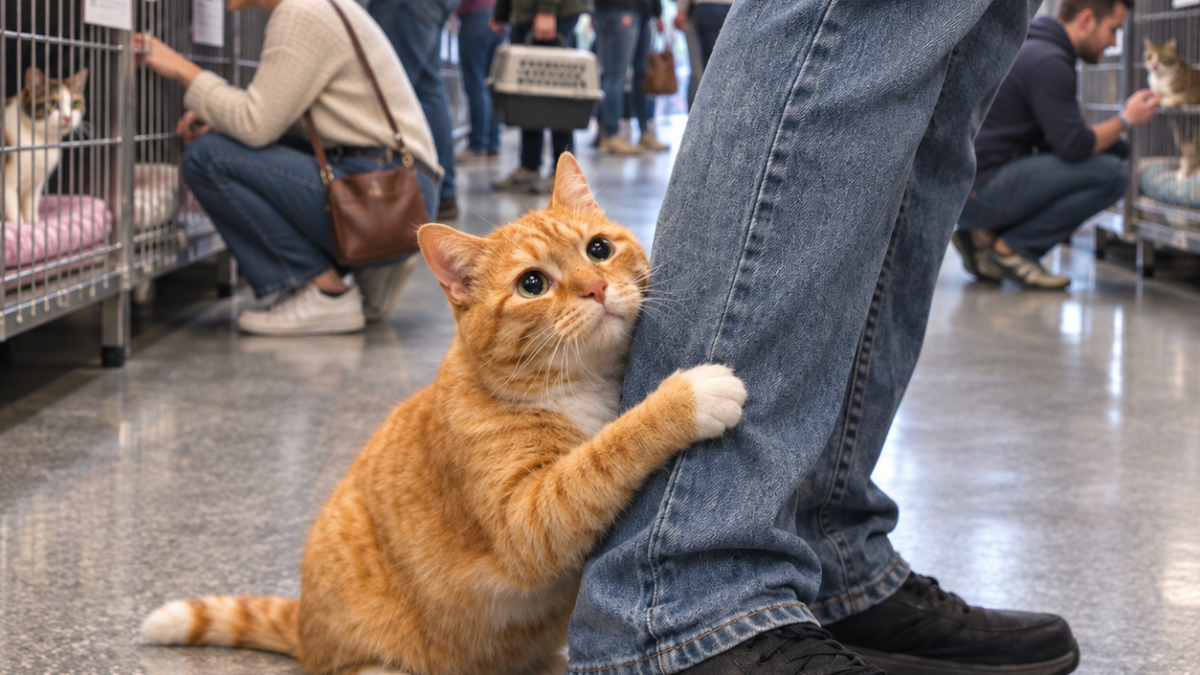
PART2:
A warehouse scanner stopped communicating with the inventory system in Toledo.
A manager in Akron forgot his password three times and insisted the network was down.
Somebody in accounting clicked a link she should not have clicked.
A database froze.
A printer became a national emergency.
I fixed things.
That was what I did.
Things broke, I found the problem, and I fixed them.
Machines made sense because when something failed, there was a reason.
A bad cable.
A corrupted file.
A failed drive.
A permission error.
People could break for reasons nobody could diagram.
I had learned that the hard way.
My sister Jenna was the only person who refused to accept “fine” as an answer.
She was thirty-two, three years younger than me, and had spent most of our adult lives treating my emotional defenses like mildly inconvenient furniture.
She did not crash through them.
She simply walked around them.
On the Saturday everything started, she called me at 9:14 in the morning.
I remember because I was staring at the clock on the microwave while deciding whether eleven months was long enough for a person to justify still eating cereal directly from the box.
“Are you busy?” she asked.
“Yes.”
“What are you doing?”
PART3:
I looked around my silent kitchen.
“Stuff.”
“What stuff?”
“Important Saturday stuff.”
“You’re standing in your kitchen drinking coffee.”
I looked down at the mug.
“That’s invasive.”
“I need you to come somewhere with me.”
“No.”
“You don’t even know where.”
“That improves the odds of no.”
She sighed.
Then she said, “Animal shelter.”
I actually laughed.
“No.”
“Mark.”
“No.”
“I’m looking at a kitten.”
“You have been looking at that kitten online for two weeks.”
“Exactly. Which means I am emotionally compromised.”
“You called the wrong person if you want impulse control.”
“You are literally the human version of a parking brake.”
“That’s the nicest thing you’ve ever said to me.”
“I need someone there who can tell me if I’m making a stupid decision.”
“Get a plant.”
“I have plants.”
“Get another plant.”
“Eleven-thirty. I’ll pick you up.”
“I didn’t say yes.”
“You also didn’t hang up.”
She was right.
That annoyed me enough that I went.
The shelter sat in a converted veterinary building on the west side of Cleveland, tucked between a tire shop and a small brick church whose sign that week read KINDNESS COSTS NOTHING.
It was late February.
Dirty snow had collected in gray walls along the parking lot.
The sky looked like wet concrete.
Jenna drove because she said I would “develop a sudden work emergency” if I had access to my own escape vehicle.
“You understand kidnapping is illegal,” I told her.
“You brought coffee. You’re participating.”
“I brought coffee because I assumed you’d be late.”
She smiled.
“You missed this.”
“Missed what?”
“Being annoying with another person.”
I looked out the window.
That was Jenna.
She could place a knife exactly where the truth lived and somehow make you thank her for being careful.
Inside, the shelter was warmer than I expected.
It smelled like detergent, disinfectant, dry food, and something faintly animal underneath all of it.
Dogs barked somewhere beyond a pair of swinging doors.
A phone rang.
A volunteer carried folded towels past us.
Another woman was kneeling beside a family with two children explaining why they should let a nervous terrier approach them instead of grabbing him.
The place was busy without feeling chaotic.
Jenna immediately became a different person.
Her shoulders lifted.
Her eyes brightened.
She had already memorized the black-and-white kitten’s online profile.
His name was Domino.
Eight weeks old.
Found with two littermates behind a grocery store.
One ear leaned sideways.
According to Jenna, this made him “look like he was constantly hearing gossip.”
A volunteer named April came to take her to the kitten room.
“You coming?” Jenna asked.
I looked through the glass door.
There were at least six kittens in there.
Tiny bodies.
Tiny paws.
People making voices adults should not make in public.
“I’m good.”
Jenna narrowed her eyes.
“You’re afraid of kittens?”
“I’m afraid of becoming the kind of man who says ‘toe beans.’”
April laughed.
Jenna pointed at me.
“Ten minutes. Don’t disappear.”
“I’m thirty-five.”
“Exactly.”
They went inside.
I stayed in the hallway.
That was intentional.
Kittens felt easy.
Everyone wanted kittens.
They were new.
Blank.
Portable little beginnings.
The adult-cat hallway felt different.
Those cats watched.
They had histories.
They looked like animals that had already formed opinions about humanity and were waiting to see whether you deserved an appeal.
I walked slowly past the enclosures.
A gray cat slept with his face pressed against a blanket.
A white female stared at me from a shelf like I owed her money.
A huge black cat rolled onto his back when I stopped.
Then I saw the orange one.
He was sitting in the center of his enclosure.
Not at the door.
Not hiding.
Just sitting there.
Full-grown ginger tabby.
Pale cream chest.
One tiny notch in his left ear.
Greenish-gold eyes.
His card said:
RUFUS
MALE
APPROX. 4 YEARS
NEUTERED
SELECTIVE WITH PEOPLE
QUIET HOME PREFERRED
Underneath that, in smaller handwriting:
Likes string toys. Dislikes being rushed.
“You and me both,” I muttered.
Rufus looked directly at me.
There was something almost irritatingly steady about his expression.
He did not meow.
He did not rub against the glass.
He did not perform.
He looked at me the way a person looks through a restaurant window when the friend they have been waiting for finally arrives forty minutes late.
I moved one enclosure down.
He stood.
I stopped.
He stopped.
I moved again.
He walked to the edge of his cage.
“Don’t make this weird,” I told him.
“Too late.”
I turned.
A shelter employee stood behind me holding a stack of stainless-steel bowls.
Her name tag said LENA.
She was maybe forty, with tired eyes and the calm voice of someone who had spent a lot of time around frightened animals.
“He’s been tracking you since you walked in.”
“I’m probably suspicious.”
“That would explain his taste.”
I smiled despite myself.
She put the bowls down.
“Want to meet him?”
“No.”
Rufus placed one paw against the enclosure door.
Lena looked at the paw.
Then at me.
“No pressure.”
“I’m here because of my sister.”
“Sure.”
“I’m not adopting a cat.”
“Okay.”
“I don’t want a cat.”
“I believe you.”
She said it in a way that made it clear she did not believe me at all.
Before I could object, she opened Rufus’s enclosure.
I expected him to hesitate.
His profile literally said selective.
Instead, Rufus stepped out, looked at Lena, looked at me, jumped onto the bench beside my leg, and climbed straight into my lap.
I froze.
Not figuratively.
My hands actually lifted away from him as though somebody had put a warm loaf of bread on me without warning.
Rufus turned once.
Sat.
Then settled his full weight across my thighs.
Lena blinked.
“Well.”
“What?”
“He usually makes people work harder than that.”
“He’s confused.”
Rufus reached for the cord attached to my employee badge.
I wore it because I had come straight from checking a server upgrade that morning.
He hooked one claw around the cord.
Missed.
Tried again.
Caught it.
Pulled my badge toward his face.
I took it away.
He stared at the cord.
Then attacked it with both front paws.
I laughed.
It happened so suddenly I surprised myself.
Not a polite laugh.
Not the small breath I had learned to use when coworkers made jokes.
A real laugh.
It came out of me sharp and loud enough that Rufus stopped and stared at me.
Then he grabbed the badge again.
That made it worse.
I laughed harder.
The kitten-room door opened.
Jenna leaned halfway into the hallway.
She stared.
Her mouth fell open.
“Oh, wow.”
“Don’t.”
“So that still exists.”
“Very funny.”
“I genuinely forgot what your laugh sounded like.”
Something in my chest tightened.
Rufus placed one paw directly against my sternum.
Jenna’s expression changed.
Only for a second.
Then she smiled.
“Well,” she said. “That seems subtle.”
“It means nothing.”
“Of course.”
“He’s friendly.”
Lena made a face.
“He actually isn’t.”
I looked at her.
“He’s not mean,” she clarified. “He’s just particular. Some people come in, sit with him twenty minutes, and he never leaves the shelf.”
Jenna folded her arms.
“So he chose the emotionally unavailable IT guy.”
“He did not choose me.”
Rufus climbed higher and pushed the side of his face against my chin.
Jenna looked at Lena.
“Can I get that in writing?”
I gently moved Rufus back onto my lap.
“I’m not adopting him.”
No one argued.
That somehow made it worse.
When Jenna finished meeting Domino, she stayed to start the adoption application.
I stood.
Rufus immediately stood too.
Lena picked him up before he could follow.
I scratched under his chin once.
“Nice meeting you.”
His eyes stayed on me.
I walked toward the front lobby.
Halfway there, something tugged lightly at my jeans.
I looked down.
Rufus had slipped from Lena’s arms.
He had followed me into the hallway.
One paw hooked into the fabric near my ankle.
He was not clawing.
Not panicking.
Just holding.
Lena came up behind him.
“I’m sorry.”
I crouched.
Rufus looked at me.
The expression I remember is probably something I added later.
Human beings are very good at turning animal faces into sentences.
But if I had to translate that look even now, I would use four words.
You’re going the wrong way.
Lena lifted him.
I stood.
Then I left.
Outside, Jenna talked about Domino all the way to the car.
I answered.
I smiled.
I listened to her describe his sideways ear.
But once I sat in the passenger seat, I realized I was not thinking about her kitten.
I was thinking about the orange cat.
“Don’t,” I said.
Jenna had not spoken.
She started the engine.
“I didn’t say anything.”
“You’re about to.”
“Nope.”
We pulled out of the lot.
Thirty seconds passed.
Then she said, “That cat looked at you like you were the only person in the building.”
I stared through the windshield.
“He wanted attention.”
“There were twelve people closer.”
“He wanted my badge.”
“He followed you.”
“Cats follow movement.”
“He grabbed your pants.”
“I’m begging you to stop narrating this like a romantic comedy.”
She laughed.
Then her voice softened.
“You were happy for ten minutes.”
That shut me up.
Not because I agreed.
Because I did.
That night, Jenna texted me a picture of Domino.
APPROVED, she wrote.
I sent back a thumbs-up.
Then I opened my laptop.
I had work to finish.
At least that was what I told myself.
Instead, I went to the shelter website.
Adult Cats.
Rufus.
There he was.
Same steady face.
Same cream chest.
SELECTIVE WITH PEOPLE.
I stared at that word.
Selective.
I closed the page.
Opened a work ticket.
Read the first sentence three times.
Closed that.
Opened Rufus’s profile again.
“This is stupid,” I said aloud.
My apartment did not answer.
That was the thing about silence.
People talk about it as peaceful.
Silence can be peaceful when you choose it.
When it becomes the only witness to your life, it changes.
It starts keeping score.
There was a second bedroom at the end of my hallway.
The door was closed.
It had been closed for almost eleven months.
I did not look toward it.
I had become very skilled at not looking toward it.
My phone rang.
Jenna.
I answered.
“You looking at him?” she asked.
“No.”
“Liar.”
“How could you possibly know?”
“Because you always get quiet when you’re lying.”
“I am literally speaking.”
“You know what I mean.”
“I don’t need a cat.”
“Maybe he needs you.”
“That is manipulative.”
“I learned from Mom.”
I smiled.
Then Jenna said something that irritated me because it was too close to true.
“You sound like somebody who got chosen and is trying very hard to act like being wanted is inconvenient.”
I stared at Rufus’s picture.
“Good night, Jenna.”
“Good night, Mark.”
I closed the laptop.
Ten minutes later, I opened it again.
The next morning, I left for work at 7:15.
At the intersection where I normally turned east toward the office, I sat through a green arrow.
A horn sounded behind me.
I lifted one hand in apology.
The light turned red.
I looked left.
Then right.
When it changed again, I turned west.
Toward the shelter.
I told myself I would stay five minutes.
That lie lasted until I walked through the door.
The woman at reception recognized me immediately.
“Back for the orange Klingon?”
“Just checking.”
Her smile disappeared.
Not completely.
Just enough.
That was the first moment I knew something had changed.
“What?”
“He’s okay.”
Whenever someone begins with those words, you immediately assume the opposite.
“What happened?”
“He had a rough night.”
My stomach tightened.
“He didn’t eat much. He’s been withdrawn. We moved him into one of the quiet rooms.”
“Is he sick?”
“We don’t think so. Vitals were normal. Sometimes shelter stress catches up with them.”
I looked toward the cat hallway.
“Can I see him?”
The receptionist hesitated.
Then nodded.
Lena met me in the back.
She looked surprised.
“You came back.”
“I was nearby.”
She looked down at my coat, then toward the front windows.
“My office is twenty-five minutes east.”
“Very nearby.”
For once, she did not tease me.
She led me down a quieter corridor.
Rufus was inside a small recovery room with soft lights.
He was lying in a plastic cubby under a folded towel.
Yesterday he had seemed solid.
Confident.
Today he looked smaller without actually being smaller.
Dimmer.
I stood near the doorway.
“Hey.”
His ears moved.
I crouched.
“It’s me again.”
He lifted his head.
For a second, nothing happened.
Then his body changed.
It was subtle.
His shoulders loosened.
His eyes widened slightly.
He stood.
Walked out.
Crossed the room.
And pressed himself against my leg.
Lena exhaled.
“He hasn’t done that all morning.”
I swallowed.
Rufus leaned harder.
I sat on the floor.
He climbed halfway into my lap and put one paw on my shoe.
I looked at Lena.
“How long has he been here?”
“Six weeks.”
“Why?”
She hesitated.
“Owner surrender.”
“What kind?”
“There are things I’m not supposed to discuss beyond the adoption notes.”
That sentence bothered me immediately.
“What things?”
“Mark.”
“You know my name?”
“You filled out the visitor card yesterday.”
“Oh.”
She sat in the chair by the wall.
“Rufus has had some instability. That’s all I can say right now.”
“Was he hurt?”
“No major injuries when he arrived.”
“That’s not what I asked.”
Her eyes met mine.
Something was there.
Not fear exactly.
Discomfort.
Before she could answer, another employee appeared in the doorway.
Tall man.
Late forties.
White dress shirt under a navy shelter vest.
His badge said GREG HARLAN, OPERATIONS DIRECTOR.
“Everything okay?”
Lena stood.
“Yes.”
His eyes moved to me.
“Visitor?”
“Potential adopter.”
“Excellent.”
He smiled.
Professional smile.
Polished.
“We love seeing our adult cats connect with people.”
Rufus moved closer against me.
Greg watched.
“Interesting.”
Something about the word made Lena stiffen.
He looked at me.
“If you’re interested, talk to the desk before you leave. Rufus has already had several inquiries.”
That hit me strangely.
Jealousy was ridiculous.
I had known this cat less than twenty-four hours.
Still, I asked, “Several?”
Greg smiled.
“He photographs well.”
Then he left.
Lena waited until his footsteps disappeared.
“Don’t let that rush you.”
“I’m not.”
But suddenly I wanted to know who else was asking about him.
I hated that.
I hated how quickly caring created vulnerability.
The moment something matters, the world gains another weapon.
My phone buzzed.
My boss.
DAN RUSK.
WHERE ARE YOU?
I looked at the time.
8:04.
We had an 8:00 operations meeting.
Damn.
I stood too quickly.
Rufus startled.
“Sorry, buddy.”
He immediately followed.
Lena caught him before he reached the door.
I watched his face disappear behind her arm.
“I’ll come back.”
The words were out before I could stop them.
Rufus went still.
It was the first promise I had made in a long time that frightened me because I actually meant it.
Dan Rusk was waiting beside my desk when I arrived.
He was fifty-one, broad-shouldered, always overdressed, and possessed the strange talent of making every conversation feel like you had already disappointed him.
“You planning to work remotely from traffic now?”
“Personal issue.”
“You know what happens when senior people treat start times like suggestions?”
“Yes.”
“What?”
“Junior people learn start times are suggestions.”
He stared.
I regretted the answer immediately.
Dan did not like humor unless he was delivering it.
“Conference room. Now.”
Inside were six department managers.
A dashboard glowed on the wall.
Red numbers.
Overnight shipment records had failed to synchronize between two warehouses.
Thousands of inventory entries were delayed.
Dan pointed at the screen.
“This started after Mark’s deployment Saturday.”
Every face turned toward me.
I looked at the logs.
“No.”
Dan’s jaw tightened.
“No?”
“The deployment completed at 6:12 Saturday morning. The failure began at 2:43 Monday.”
“You touched the system.”
“So did three automated jobs and the vendor patch you approved Sunday.”
A silence fell.
Dan smiled without warmth.
“This isn’t the time to get defensive.”
“I’m not being defensive. I’m describing the timeline.”
“We’ll review your work.”
“Good.”
He had expected me to retreat.
When I did not, something changed behind his eyes.
It was small.
But I saw it.
I had worked under Dan for four years.
He was the kind of manager who loved competence until competence contradicted him.
Then it became attitude.
The meeting continued.
I spent three hours tracing the failure.
By noon I had found it.
A third-party integration patch had changed an authentication token.
Dan had approved the patch without staging tests because the vendor offered a discount for immediate deployment.
He had copied me on the email.
I printed it.
Not because I planned revenge.
Because I had learned years earlier that memory becomes political when money is involved.
At 12:18, Dan stopped by my desk.
“Find anything?”
“Vendor token mismatch.”
His face stayed blank.
“That doesn’t explain why your monitoring didn’t catch it.”
“Our monitoring did catch it.”
“When?”
“2:44.”
“Then why wasn’t it resolved?”
“The alert distribution list was changed last week.”
“By who?”
I looked at him.
“You removed the overnight escalation because you said the licensing cost was unnecessary.”
His eyes hardened.
“Careful.”
There it was.
Not a disagreement.
A warning.
“You want me to fix the system or the story?”
His face reddened.
“Conference room. Five minutes.”
That afternoon Dan blamed me in front of the vice president of operations.
Not directly.
People like Dan rarely lie directly when implication will do more damage.
He said my team “may not have fully validated downstream monitoring.”
He said there were “process concerns.”
He said accountability mattered.
I sat at the table listening to him describe a version of events that had been designed one sentence at a time to place the smoke around me while keeping the fire near him invisible.
When the vice president asked if I agreed, I said, “No.”
Dan stared at me.
I opened my folder.
“The monitoring alert triggered correctly. I have the log.”
I slid it across the table.
“The escalation path failed because the overnight service was removed.”
Another page.
“Dan approved that change Tuesday.”
Another.
“The authentication break came from the vendor patch approved Sunday without staging.”
Another.
“Dan approved that too.”
The room went silent.
Dan leaned back.
“That’s a very selective interpretation.”
“It’s timestamped.”
“You seem unusually combative today.”
“I’m correcting the record.”
“Maybe if you had shown this level of urgency at eight o’clock instead of arriving late—”
The humiliation was deliberate.
I knew that immediately.
He could not defeat the evidence, so he changed the subject to my character.
I felt six people watching me.
My ears burned.
Eleven months earlier, I might have exploded.
Instead, I closed the folder.
“My being late this morning did not cause a system failure at 2:43 a.m.”
The vice president cleared his throat.
“We’ll investigate the change process separately.”
Dan looked at me.
The expression was calm.
His eyes were not.
That evening, I drove directly to the shelter.
Rufus was still in the quiet room.
He came out the second he heard my voice.
I sat.
He climbed into my lap.
My breathing slowed.
I had not realized how angry I was until something warm and alive gave my body permission to stop defending itself.
“You have terrible timing,” I told him.
He bit my badge cord.
“You also have terrible professional boundaries.”
He bit it harder.
I laughed.
Lena appeared with a bowl of food.
“He ate a little after you left.”
“That’s good.”
“He ate more when we put your visitor blanket in with him.”
“My what?”
She looked embarrassed.
“You had some cat hair on the fleece jacket you left on the chair. We rubbed a small towel against it.”
I stared.
“You stole my scent?”
“In animal rescue we call that enrichment.”
“In normal society we call it alarming.”
She smiled.
Then the smile disappeared.
“Mark, can I ask you something?”
“Sure.”
“If you applied for Rufus, would you be planning to keep him indoor-only?”
“Yes.”
“Quiet home?”
“Yes.”
“Other pets?”
“No.”
“Children?”
“No.”
“You live alone?”
The question landed differently.
I hesitated.
“Yes.”
She nodded.
“Why?”
“No reason.”
“Lena.”
She sat beside me.
“His first adoption after he came here lasted nine days.”
I looked down at Rufus.
“You said owner surrender.”
“That was the intake before the first adoption.”
“What happened?”
“The adopter returned him.”
“Why?”
“Behavioral incompatibility.”
“What does that mean?”
She looked toward the door before answering.
“It means the adopter said Rufus hid too much, then became clingy, then urinated outside the litter box after loud guests came over.”
“That’s it?”
“According to the form.”
“You don’t believe the form?”
“I wasn’t there.”
Again, careful words.
Then she added, “But when Rufus came back, he flinched whenever someone raised a hand too quickly.”
My stomach dropped.
“Was he hit?”
“We could not prove anything.”
“Who adopted him?”
“I cannot tell you.”
“Why?”
“Privacy.”
I looked at Rufus.
He was purring.
His eyes half closed.
“He picked me because I don’t raise my hand?”
“I don’t know why he picked you.”
Lena’s voice softened.
“But animals who’ve lost control over their environment can become very particular about where they feel safe.”
I thought of my apartment.
My routine.
My closed bedroom door.
Control.
I understood the word too well.
“I want the application.”
Lena looked at me.
“You sure?”
“No.”
That made her smile.
“But give it to me anyway.”
I filled out seven pages.
Housing.
Income.
Veterinarian plans.
Travel arrangements.
Emergency contact.
My sister.
I wrote JENNA ELLISON and realized I had not asked her permission.
She would consider this an honor.
I handed the clipboard back.
Lena checked the first page.
Then frowned.
“What?”
“There’s already a hold request on him.”
My stomach sank.
“From who?”
“I can’t say.”
“How long?”
“Twenty-four hours.”
“So someone else gets priority?”
“It’s not technically priority. It’s a pending meet-and-greet.”
“Can I still apply?”
“Yes.”
“Then submit mine.”
She did.
I left feeling ridiculous.
I had spent one day insisting I did not want a cat.
Now I was angry someone else might.
At 8:40 that night, Jenna called.
“You applied.”
“How do you know?”
“I listed myself as your emergency contact at the same shelter today, genius. Lena recognized the last name.”
“That feels like a privacy violation.”
“She said nothing specific. She asked if I was related to ‘the man Rufus adopted.’”
I closed my eyes.
“I hate everyone there.”
“You applied.”
“Yes.”
Jenna screamed.
I pulled the phone away.
“You’re thirty-two.”
“You’re getting Rufus!”
“Maybe.”
“What does maybe mean?”
I explained the hold.
Her excitement dropped.
“Oh.”
“I know.”
“Who wants him?”
“They won’t say.”
“Can I call and pretend to be the FBI?”
“No.”
“Can I call and pretend to be a concerned citizen?”
“No.”
“Can I—”
“Jenna.”
“Fine.”
There was a pause.
Then she said, “Do you want him?”
I looked around my living room.
The answer frightened me because it was uncomplicated.
“Yes.”
For eleven months, almost everything I wanted had come with an argument.
More sleep.
Less work.
Open the second bedroom.
Call someone.
Go somewhere.
Move forward.
Every desire collided with the part of me that wanted to remain untouched.
This one did not.
I wanted Rufus.
“Yes,” I said again.
Jenna became quiet.
“That’s good.”
“Why?”
“Because wanting something is good.”
The next morning, Dan summoned me into Human Resources.
That was how my week escalated from strange to ugly.
A woman named Patrice sat behind the desk.
Dan sat beside her.
There was a printed complaint in front of them.
I read it twice.
INSUBORDINATION.
HOSTILE COMMUNICATION.
FAILURE TO FOLLOW INCIDENT RESPONSE PROCEDURE.
Dan folded his hands.
“I didn’t want it to reach this point.”
That sentence nearly made me laugh.
People say that when they have personally driven the car to the point.
Patrice spoke carefully.
“This is a preliminary discussion.”
“I’d like a copy of the complaint.”
Dan shifted.
Patrice nodded.
“Of course.”
“And I’d like the change logs, vendor approval emails, overnight alert records, and my Saturday deployment report attached to my response.”
Dan said, “This isn’t a trial.”
“No. Which is why accurate documentation should be easy.”
His mouth tightened.
Patrice looked at him.
Then back at me.
“We’ll review everything.”
I stood.
Dan said, “Mark.”
I turned.
“You may want to think about whether this is still the right environment for you.”
It was a threat disguised as concern.
I looked at him for several seconds.
Then I said, “That sounds like something HR should probably write down.”
Patrice did.
Dan stopped talking.
I walked back to my desk with shaking hands.
Strength does not always feel strong.
Sometimes strength feels like wanting to throw up while refusing to bow your head.
At lunch, the shelter called.
My heart jumped.
It was Greg.
The operations director.
“Mark, I wanted to update you on Rufus.”
“Okay.”
“The other applicant completed their meeting.”
I waited.
“They’d like to proceed.”
Something dropped inside me.
“I thought my application was active.”
“It is.”
“Then what happens?”
“They’re a long-time supporter of the shelter.”
There it was.
A sentence that should have meant nothing.
It meant everything.
“Does donating money move them ahead of me?”
“I wouldn’t phrase it that way.”
“How would you phrase it?”
He became cooler.
“They have an established relationship with us and significant experience with rescue animals.”
“Did Rufus choose them?”
A pause.
“Animal placement decisions involve more than a momentary reaction.”
I looked across the office.
Dan was laughing with someone near the printer.
My entire day felt like people with authority explaining why evidence mattered less than status.
“What did Rufus do with them?”
“Mark—”
“I’m asking a simple question.”
“He was reserved.”
“Did he approach them?”
“That is not the only criterion.”
“Did he approach them?”
“No.”
I closed my eyes.
“Then why are they ahead of me?”
Greg’s voice hardened.
“We are determining the best placement.”
“For Rufus?”
“Obviously.”
“Or for the donor?”
Silence.
Then Greg said, “I think you’re allowing emotion to interfere with your understanding.”
That phrase.
I heard Dan in it.
Power loves accusing injured people of being emotional.
It sounds more civilized than admitting someone is being ignored.
“I want my application evaluated on the same criteria.”
“It will be.”
“If it isn’t?”
He exhaled.
“Have a good afternoon, Mark.”
He hung up.
I sat at my desk for a full minute.
Then I called Jenna.
“I think they’re giving Rufus to a donor.”
Her response was immediate.
“Absolutely not.”
“Jenna.”
“No. What does that even mean?”
I explained.
She went quiet.
Then she asked, “Who?”
“They won’t tell me.”
“I’ll find out.”
“Please don’t commit a felony.”
“I’m not promising anything.”
She did not commit a felony.
She did something much more effective.
She looked at the shelter’s public social media page.
Twenty minutes later, she sent me a screenshot.
A woman named Celeste Harrow had posted a photograph from inside the shelter.
She was fifty-something, blond, heavily styled, wearing a cream coat.
She was standing beside Greg.
Her caption read:
SO EXCITED TO WELCOME ANOTHER RESCUE INTO OUR FAMILY SOON! SOME ANIMALS JUST NEED THE RIGHT HOME. PROUD TO SUPPORT THIS AMAZING ORGANIZATION.
The photograph had been posted forty-three minutes after my phone call.
Behind them, barely visible through the open door, was Rufus’s quiet room.
My jaw tightened.
Then Jenna sent another screenshot.
Celeste’s profile.
Founder of Harrow Home Interiors.
Board member for three charities.
Photos of fundraisers.
Vacation homes.
Dogs in sweaters.
And an old post from two years earlier.
OUR BEAUTIFUL RESCUE PERSIAN, LUNA, JUST WASN’T THE RIGHT FIT FOR OUR LIFESTYLE. SO GRATEFUL SHE FOUND ANOTHER FAMILY.
Jenna wrote:
She returned a cat.
I called Lena.
No answer.
I called the shelter.
Greg answered.
“I need to know whether Celeste Harrow is the applicant.”
“Mark, we discussed confidentiality.”
“She posted from your hallway.”
He paused.
“That doesn’t give me permission to discuss another adopter.”
“Then answer this instead. Does Rufus require a quiet home?”
“Yes.”
“Does the person you’re considering have other animals?”
“I cannot discuss—”
“Does Rufus have a history of stress around loud environments?”
“Yes.”
“So if someone has multiple dogs, frequent events, staff coming and going, and a history of returning animals that don’t fit their lifestyle, would that matter?”
His tone changed.
“You appear to be researching one of our donors.”
“She announced herself publicly.”
“Your behavior is becoming inappropriate.”
I almost laughed.
There it was again.
Make the person objecting to unfairness the problem.
“I’m coming in after work.”
“I don’t think that would be productive.”
“I’m coming to visit a cat I have an active application for.”
Silence.
Then: “We close at six.”
“I know.”
At 5:12, my work email access stopped.
At first I thought the network was down.
Then my badge failed at the server-room door.
A message appeared on my screen.
ACCOUNT DISABLED.
I stood.
Across the room, Dan looked at me.
Patrice from HR approached.
“Mark, can we talk privately?”
Everyone knew what that meant.
Twenty-two people pretended not to watch me walk toward the conference room.
Dan was already there.
So was the vice president.
Patrice closed the door.
“Pending investigation, we’re placing you on administrative leave.”
I looked at Dan.
He looked almost sad.
It was excellent acting.
“Based on what?”
Patrice slid a document toward me.
“There’s an allegation that you copied internal operational data to a personal device.”
For one second, I genuinely could not process the words.
“What?”
“Yesterday at 4:16 p.m., a large file transfer was logged from your workstation to an external USB device.”
“I didn’t do that.”
Dan leaned forward.
“Mark, nobody wants this to become something bigger.”
I stared at him.
He knew.
That was the moment I understood.
This was not management conflict anymore.
He had done something.
Either he had copied the data himself or arranged for someone else to do it.
And because I had challenged him with documentation, he needed me discredited before the change-control investigation reached his approvals.
I felt fear.
Real fear.
Jobs are not abstract.
They are rent.
Insurance.
Reputation.
A future employer calling your previous one.
“Preserve the workstation,” I said.
Patrice blinked.
“What?”
“Do not reimage it. Do not move it. Preserve security-camera footage from the fourth floor between four and five yesterday. Preserve badge access. Preserve endpoint logs. Preserve USB device identifiers.”
Dan said, “You’re not directing the investigation.”
“No.”
I looked at Patrice.
“I’m protecting my right to one.”
She wrote something down.
Dan’s expression changed.
For the first time all day, he looked uncertain.
I signed nothing.
I took my personal items from my desk under supervision.
The humiliation was quiet.
That made it worse.
Coworkers looked away.
One man named Eric whispered, “Call me,” when Dan could not hear.
I carried my cardboard box through the lobby.
It contained a coffee mug, two chargers, a framed picture of Jenna and me at Lake Erie, aspirin, and a tiny plastic dinosaur someone had put on my monitor three years earlier.
That was how quickly a professional life can be reduced.
One box.
One security escort.
One glass door closing behind you.
Outside, snow had started.
I put the box in my trunk.
Then I sat in my car.
I should have called a lawyer.
I should have called Jenna.
Instead, I drove to the shelter.
Rufus was gone from the quiet room.
My heart stopped.
Lena met me near the lobby.
“Where is he?”
“Back enclosure.”
“Why?”
Her face was pale.
“Greg told us to prepare him for pickup tomorrow.”
“By Celeste.”
Lena looked away.
That was answer enough.
“Let me see him.”
She hesitated.
Then opened the employee door.
Rufus was in a kennel in the adult-cat room.
The moment he saw me, he stood.
He began pawing at the latch.
Not wildly.
Repeatedly.
Deliberately.
I knelt.
“Hey.”
He pushed his face against the bars.
Behind me, Greg said, “You shouldn’t be back here.”
I stood.
“I have an application.”
“The placement decision has been made.”
“On what basis?”
“Overall suitability.”
I laughed once.
It had no humor in it.
“You chose the wealthy donor.”
“I’m not discussing this.”
“Did Lena document that he stopped eating after I left?”
Greg looked at her.
That told me something.
Lena swallowed.
“Yes.”
“Did he approach Celeste?”
Greg’s face hardened.
“Enough.”
“Did he?”
“No,” Lena said.
Greg turned.
“Lena.”
She flinched.
That was the second thing I noticed.
Not disagreement.
Fear.
I looked at her.
Then at him.
“What aren’t you telling me?”
Greg stepped closer.
“You need to leave.”
Rufus began scratching the enclosure door.
I looked down.
His eyes were fixed on me.
Something inside me cracked.
Not rage.
Recognition.
My entire life had become people behind doors being told to accept decisions made by someone more powerful.
I had accepted too much already.
“I want the adoption policy.”
Greg stared.
“What?”
“Written policy. Criteria. Appeal procedure. Conflict-of-interest policy for donor adoptions.”
“This is a private nonprofit.”
“Then you should have excellent written policies.”
“I’m asking you to leave.”
“And I’m asking for public adoption criteria.”
Lena said quietly, “They’re on the website.”
Greg turned toward her.
“Go finish medication rounds.”
She did not move.
“Lena.”
She left.
I looked at Rufus one more time.
“I’ll come back.”
Greg said, “I suggest you don’t.”
I turned.
“People keep suggesting that to me this week.”
That night, my apartment felt different.
Not quiet.
Hostile.
The silence had teeth.
I dropped my work box near the kitchen.
I stood in the living room.
I looked toward the closed second bedroom.
I looked away.
My phone rang.
Jenna.
I answered.
“Where are you?”
“Home.”
“Eric called me.”
I frowned.
“Why does Eric have your number?”
“You gave it to him when we went to that Guardians game.”
“I regret all friendships.”
“What happened?”
I told her.
All of it.
The accusation.
Administrative leave.
Rufus.
Celeste.
Greg.
When I finished, Jenna was silent.
Then she said, “I’m coming over.”
“No.”
“I wasn’t asking.”
Twenty minutes later, she arrived carrying Domino in a soft carrier because she said leaving him alone would result in “property damage beyond my current insurance coverage.”
Domino exploded into my apartment like a small tuxedo-colored grenade.
He inspected everything at running speed.
Jenna sat beside me.
“You need a lawyer.”
“I know.”
“You need to write down everything you remember.”
“I know.”
“You need to stop saying ‘I know’ like it means you’re actually going to do it.”
I looked at her.
She softened.
“You don’t have to handle every bad thing by becoming quieter.”
That hurt.
I stood and went to the kitchen.
“I’m making coffee.”
“It’s eight at night.”
“I’m unemployed.”
“You’re on administrative leave.”
“See? Positive thinking.”
She followed me.
“Mark.”
I gripped the counter.
“I cannot lose this job because some insecure man decided facts were disrespectful.”
“You won’t.”
“You don’t know that.”
“No.”
She stepped closer.
“I don’t.”
I turned.
Her eyes were wet.
“But I know what you do when you’re scared. You make your world smaller until nothing can surprise you.”
I looked away.
She continued.
“You did it after Claire died.”
There it was.
The name.
My entire body went still.
Eleven months.
No one said Claire’s name inside my apartment.
Jenna knew.
She usually respected that.
Tonight she did not.
“You stopped going to restaurants because you didn’t want people asking where she was.”
“Jenna.”
“You stopped seeing friends.”
“Stop.”
“You work late because coming home means remembering she used to be here.”
“Stop.”
“You closed that room—”
“Enough.”
My voice echoed.
Domino froze beneath the table.
Jenna flinched.
Immediately, shame hit me.
“I’m sorry.”
She wiped her cheek.
“I know.”
I sat down.
Claire had been my fiancée.
She was thirty-three when she died.
There was no dramatic murder.
No long illness.
No villain I could hate.
A delivery truck ran a red light on a rainy Thursday morning while Claire was crossing West 25th Street on her way to work.
The driver had been looking at a navigation screen.
He lived.
She did not.
There are tragedies so ordinary that they feel insulting.
No storm.
No war.
No rare disease.
A red light.
A screen.
Nine seconds of inattention.
Claire and I had been six months from our wedding.
The second bedroom had become the wedding room.
Boxes of decorations.
Invitations.
A folded table runner.
Fabric samples.
Gifts we had bought for the wedding party.
A binder Claire had organized with frightening precision.
After she died, people packed anything connected to the wedding into that room because they did not know where else to put it.
I closed the door.
Then I kept closing it.
Jenna sat across from me.
“You don’t have to open it tonight.”
“I know.”
“But you need to stop treating grief like evidence that you failed.”
I stared at my hands.
“I’m tired.”
“I know.”
“I’m so tired of everything becoming another thing I have to survive correctly.”
She reached across the table.
For once, I let her hold my hand.
Domino jumped onto the chair beside us.
Then immediately slipped, scrambled, knocked over an empty paper bag, and vanished inside it.
Jenna laughed through tears.
I did too.
It was small.
But it mattered.
The next morning, I hired a lawyer.
Her name was Renee Alvarez.
She specialized in employment disputes and internal investigations.
She listened without interrupting while I explained everything.
Then she said, “You did one very smart thing.”
“What?”
“You immediately requested preservation of digital evidence.”
“Occupational reflex.”
“It may save you.”
She sent the company a litigation-hold letter before noon.
Preserve workstation.
Badge access.
Security cameras.
Endpoint logs.
USB serial records.
Email.
Change-control approvals.
No deletions.
No reimaging.
At 12:40, Eric texted me.
CALL ME FROM ANOTHER PHONE.
I borrowed Jenna’s.
Eric answered on the first ring.
“They’re asking questions.”
“About what?”
“The USB transfer.”
“Good.”
“No. Mark, listen.”
His voice dropped.
“Dan was at your desk.”
“When?”
“Yesterday.”
“What time?”
“Around four.”
My pulse accelerated.
“Did you see him?”
“Yes. He said he was checking whether you had updated the incident log.”
“Did he touch my computer?”
“I don’t know. I walked past. He was sitting in your chair.”
“Will you tell HR?”
Silence.
“Eric.”
“I have two kids.”
I closed my eyes.
“I know.”
“Dan controls performance reviews.”
“I know.”
“I’m sorry.”
I wanted to be angry.
Instead, I understood him.
Fear makes cowards out of good people before it makes heroes.
“Write down what you saw,” I said. “Even if you don’t send it yet.”
He exhaled.
“Okay.”
Then something unexpected happened.
Lena called.
Not from the shelter number.
From her personal phone.
“Mark?”
“Yeah.”
“I could get fired for this.”
I sat up.
“For what?”
“There are things about Rufus’s file you need to know.”
My heart started pounding.
“Tell me.”
“He wasn’t originally surrendered directly to us.”
“What does that mean?”
“He came through a partner rescue.”
“Why does that matter?”
“Because Greg changed the intake notes.”
I went silent.
“What?”
“The original record said Rufus was found abandoned in an apartment after an eviction. The tenant disappeared. Property management found him under a bed.”
My stomach tightened.
“Okay.”
“He was severely dehydrated. No food left. No litter. He had been there at least several days.”
I closed my eyes.
“And Greg changed that?”
“He simplified it to owner surrender. He said detailed negative history reduces adoption rates.”
“That’s unethical.”
“It gets worse.”
Of course it did.
“The first adopter who returned him?”
“Yes?”
“Celeste Harrow.”
I stood so quickly my chair rolled backward.
“What?”
“She adopted him six weeks ago.”
My skin went cold.
“You told me another adopter returned him.”
“I wasn’t allowed to say who.”
“Why is she adopting him again?”
“She isn’t.”
I waited.
Lena’s voice shook.
“She wants him for a publicity campaign.”
For a moment, the sentence made no sense.
“What?”
“Her company is partnering with the shelter for a spring fundraiser. She wants Rufus in the promotional photos because orange cats test well on social media.”
I thought I had misheard.
“She returned him.”
“Yes.”
“And now she wants to borrow him?”
“Officially, it’s a foster-to-adopt placement.”
“Why?”
“Because permanent placement photographs better than temporary foster.”
I felt sick.
“Greg agreed?”
“Celeste donated forty thousand dollars last year.”
There it was.
The whole ugly shape.
“Why did she return him?”
Lena was silent.
“Lena.”
“She had a dinner party. Rufus hid. One of her dogs cornered him. He urinated on an antique rug.”
I gripped the phone.
“She brought him back the next morning.”
“What happened to him?”
“He had a bruised rib and a torn claw. She said he injured himself running.”
“Did anyone investigate?”
“I asked Greg to document it.”
“And?”
“He told me not to alienate donors.”
I sat down.
My anger became very calm.
That was when I knew it was serious.
“Do you have the original records?”
“Yes.”
“Photos?”
“Yes.”
“Veterinary report?”
“Yes.”
“Why are you telling me?”
Her answer came quietly.
“Because yesterday I watched Rufus claw at the cage after you walked away, and I realized we were about to send him back to the person he was afraid of because she had money.”
I said nothing.
Lena started crying.
“I’ve worked there nine years.”
“You tried.”
“Not hard enough.”
“Send everything to the board.”
“I’ll lose my job.”
“Maybe.”
“I have a mortgage.”
“I know.”
I thought of Eric.
Fear everywhere.
Ordinary people balancing truth against bills.
Then I said, “Don’t send it to me.”
She sounded surprised.
“Why?”
“If you send confidential records to an applicant, Greg will turn the story into you violating privacy.”
“What do I do?”
“Go above him.”
“To who?”
“The board chair. Compliance officer if there is one. Their insurance carrier if necessary.”
I paused.
“And document that you are reporting animal-welfare concerns, not an adoption disagreement.”
There was silence.
“You really work in IT?”
“Unfortunately.”
She laughed through tears.
For the first time all week, I felt useful.
Not because I was fixing Rufus.
Because I was helping someone else stop being afraid.
That afternoon, the shelter board received Lena’s complaint.
By evening, Rufus’s transfer to Celeste had been suspended.
At 6:10, Greg called me.
He was furious.
“You had no right to interfere in internal shelter operations.”
“I didn’t.”
“Lena filed a complaint immediately after speaking with you.”
“That sounds like Lena exercised her own judgment.”
“You’re manipulating staff because you didn’t get the animal you wanted.”
I almost admired how quickly powerful people reverse victim and offender.
“I want Rufus safe.”
“Rufus is safe.”
“He was returned injured by the same person you were about to send him back to.”
Silence.
So he knew I knew.
“Be very careful making accusations you cannot substantiate.”
“Then the veterinary record should settle it.”
He hung up.
Jenna was sitting at my kitchen table.
“You’re enjoying this a little.”
“I am not.”
“You used your documentation voice.”
“I have no documentation voice.”
“You absolutely do. You sound like a disappointed federal auditor.”
Domino sprinted through the hallway with a sock in his mouth.
We both looked.
“That’s mine,” I said.
Jenna shrugged.
“He has entered his criminal phase.”
Three days passed.
My company investigation expanded.
So did the shelter investigation.
I went nowhere.
Administrative leave creates a strange kind of time.
You are free but not relaxed.
Every hour feels borrowed.
I cleaned things that were already clean.
I checked email too often.
I researched employment law.
I refreshed the shelter page.
Rufus disappeared from the adoption listings.
That terrified me until Lena texted:
BOARD HOLD. HE’S SAFE. QUIET ROOM.
On Friday afternoon, Renee called.
“They found the USB device.”
I stopped breathing.
“What?”
“The serial number in the endpoint log belongs to a company-issued encrypted drive.”
“Whose?”
“Dan Rusk.”
I closed my eyes.
The room went silent.
Renee continued.
“Security footage shows him entering your workstation area at 4:09. Badge records show you were in Conference Room B from 4:02 until 4:38.”
I sat down.
“He framed me.”
“It appears that way.”
I thought I would feel triumphant.
I did not.
I felt tired.
Deeply tired.
Because being proven innocent does not erase the moment people believed you might be guilty.
“What happens now?”
“HR has retained outside counsel.”
“For him?”
“For the company.”
“That’s not comforting.”
“It shouldn’t be.”
The next Monday, the company asked me to attend a meeting.
Renee came with me.
Dan was not there.
The vice president was.
Patrice was.
So was the chief legal officer.
They apologized.
Corporations apologize differently than people.
There are more qualifiers.
More careful verbs.
“We regret the circumstances.”
“We recognize the distress.”
“We have substantiated serious misconduct.”
Eventually I interrupted.
“Did Dan copy the file?”
The chief legal officer looked at Renee.
Then at me.
“Yes.”
“Why?”
“We believe he intended to create evidence supporting disciplinary action.”
“He framed me.”
Another pause.
“Yes.”
“Is he still employed?”
“No.”
That was the first moment something inside me loosened.
Not because he lost his job.
Because there was finally a fact nobody could bend.
The truth had a timestamp.
Dan had also deleted change-approval messages, altered an internal incident summary, and instructed another manager to rewrite monitoring procedures after the outage so it would appear my team had failed to follow a process that had not existed at the time.
The outside investigation found it all.
His arrogance had been his undoing.
He believed systems were complicated enough to hide him.
He forgot that complicated systems remember.
Logs remember.
Cameras remember.
Access records remember.
People remember too, once they stop being afraid.
Eric gave a statement.
So did two other employees.
One said Dan had pressured her to change dates in a report six months earlier.
Another said he routinely blamed technicians for cost-cutting decisions he made himself.
The company offered to reinstate me.
Same position.
Back pay.
Written correction in my personnel file.
They also offered a settlement connected to confidentiality.
Renee slid the document toward me.
“Read everything.”
I did.
Then I asked the vice president, “If I come back, who handles change control?”
“You would report temporarily to infrastructure leadership.”
“That’s not what I asked.”
He paused.
“We’re restructuring.”
“Is the restructure written?”
Another pause.
Renee almost smiled.
It was strange.
A week earlier, I had been carried out with a cardboard box.
Now everybody at the table chose words carefully around me.
Humiliation can destroy you.
Or, if you survive it without surrendering your dignity, it can clarify what respect should look like.
I did not return immediately.
I negotiated.
That surprised everyone, including me.
I asked for my back pay.
I asked for attorney fees.
I asked for the false misconduct complaint to be formally withdrawn.
I asked for an independent change-control process and documented whistleblower protections for technical staff who raised security concerns.
The company agreed to most of it.
I returned two weeks later.
People applauded when I walked in.
I hated every second.
Eric hugged me.
I tolerated that.
Someone had placed the plastic dinosaur back on my monitor.
Under it was a sticky note.
SYSTEMS REMEMBER.
That made me laugh.
The shelter investigation took longer.
During that time, I was allowed supervised visits with Rufus.
The first time I saw him after the board suspended his transfer, he climbed directly into my lap.
I buried my face against the top of his head.
“You have caused an unreasonable amount of administrative activity.”
He purred.
Lena laughed.
“He has no remorse.”
“Clearly.”
Rufus reached for my badge cord.
I had been reinstated that morning.
The badge was new because the company had disabled the old one permanently.
He caught it.
Bit it.
I laughed.
Lena watched us.
Then she said, “There’s something else.”
I looked up.
“What now?”
“Nothing bad.”
“That sentence has betrayed me recently.”
She sat across from us.
“The board reviewed your adoption application.”
My heart sped up.
“And?”
“They approved it.”
For a second, I simply stared at her.
“What?”
“He can go home with you once the veterinary hold clears.”
I looked down at Rufus.
He was still fighting the badge.
“That’s it?”
“That’s it.”
“No donor?”
“No donor.”
“No appeal?”
“No.”
“What happened to Greg?”
Lena’s expression shifted.
“Suspended pending final board action.”
“And Celeste?”
“Removed from the foster program. Her company partnership was canceled.”
I let out a breath.
Lena continued.
“The board also reported the prior return incident to animal control for review.”
“Will she be charged?”
“I don’t know.”
That mattered to me.
Justice is not the same as punishment.
I did not need Celeste publicly destroyed.
I needed Rufus protected.
I needed the shelter to stop treating money as a substitute for suitability.
Later, animal control issued citations related to failure to provide adequate supervision during the earlier incident. Celeste denied wrongdoing publicly.
Then she deleted her post.
The shelter rewrote its donor-conflict policy.
Adoption decisions involving board members or major donors would require independent review.
Return injuries would require mandatory veterinary documentation.
Staff could report welfare concerns directly to the board without going through operations management.
Greg eventually resigned.
Lena stayed.
The day she told me that, I said, “Good.”
She smiled.
“I almost left.”
“What changed?”
“I realized being afraid of losing a job had slowly turned into being afraid to do the job.”
I understood that better than she knew.
Rufus came home on a Thursday.
Jenna insisted on driving.
“You’re emotionally compromised,” she said.
“That was my line.”
“You taught me.”
She had filled my trunk with supplies.
A cat bed.
Food.
Litter.
Toys.
A scratching post large enough for a mountain lion.
“You understand I already bought things.”
“Not the right things.”
“What determines right?”
“Internet strangers.”
“Excellent.”
At the shelter, Lena carried Rufus out in a gray carrier.
He looked offended by transportation.
I signed the final form.
ADOPTER: MARK ELLISON.
I stared at the line after signing it.
Something about seeing my name next to responsibility frightened me.
Not badly.
Just honestly.
Lena handed me the carrier.
“He may hide for a few days.”
“He doesn’t seem like a hider.”
“New environment.”
“Right.”
“He might not eat immediately.”
“Okay.”
“Give him space.”
“I can do space.”
Jenna coughed.
I ignored her.
In the car, Rufus sat quietly.
He did not cry.
He watched Cleveland move past the carrier door.
Red lights.
Snow piles.
Gas stations.
People walking dogs.
At one intersection, I looked over.
“You sure about this?”
Rufus blinked.
Jenna said, “He literally fought a donor network for you.”
“I was asking him.”
“I’m translating.”
When we reached my apartment, I placed the carrier in the entryway.
Opened it.
Waited.
Rufus remained inside.
One paw emerged.
Then his head.
Then the rest of him.
He stepped onto the floor slowly.
He sniffed my shoes.
My laptop bag.
The wall.
The baseboard.
He tapped my shoelace once.
Then he walked into the living room like a building inspector assessing structural integrity.
Jenna whispered, “He’s judging you.”
“He’s going to have plenty of material.”
Rufus inspected the couch.
The window.
The radiator.
The kitchen.
He ignored the expensive scratching post.
Ignored the cat bed.
Ignored three toys.
Then he found a sock sticking out of my laundry basket.
He pulled it free.
Carried it proudly through the living room.
Dropped it beside the couch.
Looked at me.
I laughed.
Jenna covered her mouth.
“Oh my God.”
“What?”
“He did it.”
“Did what?”
“He made it sound like a home.”
I stopped.
The apartment had not changed physically.
Same furniture.
Same walls.
Same kitchen light I had been meaning to replace.
But she was right.
Something had changed.
Movement.
Sound.
Expectation.
For the first time in months, something else was happening in the room besides me remembering what was missing.
Jenna stayed for dinner.
Rufus tolerated her.
He sniffed her fingers.
Accepted one scratch behind the ears.
Then walked away like their meeting had concluded.
“Mine loves everyone,” Jenna said.
“Mine has standards.”
“Mine is joyful.”
“Mine files complaints.”
When Jenna left, the apartment became quiet.
But not the old quiet.
Rufus walked from room to room.
I followed at a respectful distance.
He investigated the bathroom.
The coat closet.
The kitchen again.
Then he entered the hallway.
I stopped.
At the end of the hall was the closed door.
The second bedroom.
The wedding room.
Rufus walked directly to it.
He sniffed beneath the door.
Sat down.
I felt every muscle in my body tighten.
“No.”
He looked back.
“No.”
He looked at the door.
I walked to the kitchen.
Shook the treat bag.
Rufus came running.
He ate one.
Then returned to the door.
I moved his bed into the living room.
He inspected it.
Then returned to the door.
I opened a toy.
Little fabric fish.
Catnip.
He slapped it twice.
Then returned to the door.
“Seriously?”
He sat.
Not scratching.
Not crying.
Waiting.
It was unbearable.
“You don’t know what’s in there.”
He stared at me.
“You don’t.”
His tail curled around his paws.
I turned off the hallway light.
Went to the couch.
Watched television.
Or pretended to.
Forty minutes later, I checked.
Rufus was still there.
I went to bed.
At 1:13 a.m., I woke up.
The apartment was silent.
I walked into the hall.
Rufus was lying outside the door.
My chest hurt.
“You stubborn little jerk.”
He lifted his head.
I sat on the floor beside him.
The door was inches from my shoulder.
For eleven months I had treated that piece of wood like a border between two countries.
On one side, functioning.
On the other, everything I could not fix.
Claire’s handwriting.
Claire’s wedding plans.
Claire’s stupid gold ribbon samples.
Claire’s voice inside objects that had no right to remember her better than the world did.
I put my hand on the knob.
Stopped.
Rufus stood.
Pressed against my knee.
“You’re asking a lot for your first night.”
He purred.
I turned the knob.
The door opened six inches.
Dust smell.
Cardboard.
Still air.
I almost shut it.
Rufus squeezed through.
“Hey.”
He disappeared inside.
I had no choice but to follow.
I switched on the lamp.
The room looked exactly as it had eleven months earlier.
Boxes.
Garment bags.
Wedding magazines.
A folding chair.
A wooden sign Claire had ordered online that said THE ELLISONS — EST. 2026.
I could not breathe.
Rufus moved between the boxes.
Sniffed.
Jumped onto the old chair.
Turned twice.
Lay down.
Just like that.
As if this room were not radioactive.
As if grief were not stored in cardboard.
As if the air inside had not been waiting almost a year for me to fail.
I stood in the doorway.
Then something caught Rufus’s attention.
A blue ribbon hung from one box.
He pawed at it.
Pulled.
A small paper bag slid sideways.
Rufus got one foot caught in the handle.
The bag lifted with him.
He froze.
Looked at me with outrage.
I laughed.
It escaped before I could stop it.
Right there.
In that room.
I laughed.
Then I cried.
Not elegantly.
Not one cinematic tear.
I folded onto the floor and cried so hard my ribs hurt.
Rufus dragged the paper bag halfway across the carpet.
Then abandoned it.
He walked toward me.
Climbed into my lap.
Exactly the way he had at the shelter.
No hesitation.
No ceremony.
He settled his weight.
Warm.
Solid.
Alive.
I pressed my face into his fur.
“I can’t fix this.”
The words came out broken.
Rufus purred.
“I know.”
I had spent eleven months trying to solve grief like a system failure.
Find the cause.
Restore the previous state.
Eliminate the error.
That night, sitting on the floor with an orange cat in my lap, I finally understood the problem.
There was no previous state.
There was no version of my life where Claire had not existed.
There was no repair that removed the damage without removing the love that caused it.
Grief was not a bug.
It was evidence.
Something mattered.
Someone mattered.
You did not honor that by shutting every door it touched.
I stayed there almost two hours.
I opened one box.
Only one.
Inside were table-number cards.
Fabric.
A bundle of envelopes.
At the bottom was Claire’s wedding notebook.
I touched the cover.
My first instinct was to close everything.
Instead, I opened it.
Her handwriting filled the page.
Venue calls.
Florist.
DJ.
Seating chart reminders.
Near the bottom, one note:
MAKE SURE MARK EATS SOMETHING BEFORE CEREMONY. HE’LL CLAIM HE’S NOT NERVOUS AND FORGET.
I laughed and cried at the same time.
Rufus tried to bite the ribbon bookmark.
“Don’t eat that.”
He pulled harder.
“That belonged to Claire.”
He stopped.
Not because he understood.
Because a noise outside distracted him.
He jumped down and walked toward the door.
I stared at the notebook.
Then I did something I had not done in eleven months.
I carried it out of the room.
The next morning, Jenna arrived with coffee.
She saw the open door before I spoke.
Her hand covered her mouth.
Rufus sat on the old chair.
She looked at him.
Then at me.
“You opened it.”
“He was annoying.”
She cried.
I pointed at her.
“We are not making this dramatic.”
“You cried.”
“I can see your face.”
“You have no evidence.”
“You’re terrible at lying.”
She stepped inside.
Slowly.
We spent the morning opening boxes.
Not all of them.
That would have been too much.
We found things we had forgotten.
A photograph of Claire wearing sunglasses indoors because she said wedding planning had made her famous.
A card from Jenna.
A receipt from the restaurant where Claire and I had our first date.
A cheap plastic tiara she wore at her bridal shower.
At noon, Jenna held up the wooden THE ELLISONS sign.
“What do you want to do with this?”
I stared.
Rufus sniffed one corner.
“I don’t know.”
That became one of the best sentences I learned that year.
I don’t know.
Not everything needs immediate resolution.
We put it back.
A month passed.
Rufus changed.
Or maybe I finally saw more of him.
His appetite became enormous.
His coat grew sleek.
He claimed the windowsill every morning.
He learned what time I returned from work and waited near the door.
He discovered the drawer where his toys were stored and learned to open it with one paw.
He stole socks.
Only mine.
Never matched pairs.
He developed a personal hatred for the printer.
The first time it started automatically at 10:30 p.m., Rufus jumped three feet into the air, stared at it for ten full seconds, then slapped the paper as it emerged.
I sent the video to Jenna.
She replied:
HE’S PROTECTING YOU FROM OFFICE EQUIPMENT. TRAUMA INFORMED.
Her Domino videos were chaos.
Domino climbing curtains.
Domino asleep inside a sink.
Domino attacking his own tail.
Domino falling off the back of a couch and immediately pretending he meant to.
Our phone calls changed.
We used to discuss whether I was okay.
Now we discussed cats.
In a strange way, that did more good.
Healing became something that happened while we were busy talking about litter brands.
At work, I changed too.
Not dramatically.
I still wore the same shirts.
Still solved the same problems.
But when a manager tried to blame a technician for a flawed rollout, I spoke.
Calmly.
With documentation.
When a junior analyst admitted she had made a mistake that caused two hours of downtime, I did not humiliate her.
I asked what the system needed so one mistake could not create that much damage again.
People noticed.
One afternoon Eric said, “You’re different.”
“That sounds ominous.”
“No.”
He leaned against my cubicle.
“You used to look like you were always waiting for the next thing to hit you.”
“And now?”
“Now you look annoyed in a healthier way.”
“I appreciate your medical assessment.”
The shelter changed too.
Lena became adoption-program manager after the board restructured operations.
The first thing she did was remove donor status from every adoption-review document.
The second was create a behavior-history page that could not be edited without veterinary approval.
The third was hang a photograph of Rufus behind the front desk.
Not because he was famous.
Because his case became the reason they changed.
The caption underneath read:
THE RIGHT HOME IS THE ONE THE ANIMAL CAN LIVE IN—NOT THE ONE THAT LOOKS BEST ON PAPER.
Celeste threatened legal action.
Nothing came of it.
Her canceled fundraiser became a small local story after a reporter obtained public animal-control records.
For about three days, social media did what social media does.
People were furious.
Then they found something new.
I was glad.
Rufus did not need to become anyone’s symbol.
He had already spent enough time being used by people who wanted something from him.
He deserved the privilege of being ordinary.
One Tuesday in April, I came home after ten hours of calls.
Everything had gone wrong.
A software upgrade failed.
A warehouse director shouted at me.
A vendor denied responsibility.
Traffic was terrible.
By the time I entered my apartment, my skull felt packed with static.
Rufus met me at the door.
I dropped my bag.
He waited.
Normally I fed him immediately.
Instead, I sat down on the kitchen floor.
Back against the cabinets.
I closed my eyes.
Rufus did not meow.
Did not paw at the food cabinet.
He watched me.
Then he walked over.
Climbed into my lap.
Settled.
Same motion.
Shelter bench.
Quiet room.
Wedding room.
Kitchen floor.
I rested one hand on his back.
My breathing slowed.
“I still don’t understand why you picked me.”
Rufus purred.
A few minutes later, Jenna knocked.
She had accidentally bought the wrong food for Domino and brought it over.
She walked into the kitchen and found me on the floor.
“Bad day?”
“Yep.”
Rufus remained on my lap.
I looked at him.
“I was just telling him I still don’t get why he chose me.”
Jenna put the food on the counter.
“Really?”
“What?”
“You seriously don’t know?”
“Apparently not.”
She crouched.
“Mark, everybody else walked into that shelter looking for an animal.”
“So?”
“You walked in trying not to need anything.”
I looked at her.
She nodded toward Rufus.
“Maybe he recognized the type.”
“That sounds scientifically questionable.”
“Maybe.”
She smiled.
“Or maybe he picked the person who needed to be picked.”
My throat tightened.
I looked down.
Rufus opened one eye.
I scratched behind his ear.
“No.”
Jenna sighed.
“Of course not.”
“We’re both just stubborn and unusually attractive.”
She laughed so hard Rufus turned toward her with visible disapproval.
That night, I opened the second bedroom again.
I had started calling it Claire’s room.
Not the wedding room.
Not the closed room.
Claire’s room.
The name was temporary.
That was okay.
I took out another box.
Rufus sat in the doorway.
Inside were wedding invitations.
Three hundred of them.
MARK ELLISON & CLAIRE BENNETT REQUEST THE PLEASURE OF YOUR COMPANY…
I stared at the printed date.
October 18.
The wedding that never happened.
My chest hurt.
But I did not close the box.
I picked up one invitation.
Then another.
At the bottom was a sealed envelope with my name written on it.
MARK.
Claire’s handwriting.
My fingers went numb.
I had never seen it.
The envelope had been buried under the invitations.
For several minutes, I could not move.
Rufus walked over.
Sniffed the corner.
I whispered, “Don’t.”
He sat beside me.
I opened it.
Inside was one sheet of paper.
It was not a farewell letter.
Claire had written it months before she died.
Apparently as part of some private wedding surprise.
Mark,
If you found this before October, put it back, you criminal.
If you found it on our wedding day, congratulations on following instructions for once.
There are about a thousand things I love about you, but one of the biggest is that when something goes wrong, you stay.
You stay when people are difficult.
You stay when plans break.
You stay when I am scared.
You stay when life stops being convenient.
I hope you understand that you don’t always have to be the strong one who stays for everybody else.
You’re allowed to need people to stay for you too.
Love,
Claire
I stopped reading after the first time.
Then started again.
The second time was worse.
By the third, I was crying.
Rufus pressed against my leg.
I laughed through it.
“You’ve got to be kidding me.”
For almost a year, that letter had been behind a door I would not open.
Claire had left me exactly one message about allowing myself to need someone.
And I found it because a cat refused to sleep anywhere else.
That was when I finally understood.
Not some supernatural explanation.
Not fate in the movie sense.
Rufus had not known Claire.
He had not known about the letter.
He had not known about the room.
He was simply an animal who had learned what abandonment felt like.
He knew closed spaces.
Empty rooms.
Waiting.
He knew the sound of someone leaving.
Maybe that was why he noticed people who carried the same silence.
At the shelter, everyone else had approached Rufus wanting something.
Affection.
A pet.
A photograph.
A story.
I had approached him expecting nothing because I had trained myself not to expect anything from anyone.
Maybe that felt safe.
Maybe my stillness looked familiar.
Maybe he climbed into my lap because I did not reach first.
Whatever the reason, two creatures who had both become extremely good at waiting found each other.
That was enough.
The following October, on the date Claire and I were supposed to marry, I took the day off work.
For the first time, I did not pretend it was an ordinary date.
Jenna came over in the morning.
We made coffee.
We went through the last boxes.
I kept some things.
Donated others.
Gave Claire’s wedding dress to a nonprofit that provided gowns to women who could not afford them.
Her craft supplies went to a community center.
The unopened decorations went to another couple.
I kept the notebook.
The plastic tiara.
One invitation.
The letter.
And the wooden sign.
Jenna held it.
“Still keeping this?”
I looked at THE ELLISONS — EST. 2026.
“No.”
She nodded.
I took it from her.
For the first time, letting go did not feel like betraying Claire.
It felt like making room for the life she had told me I was allowed to have.
That afternoon, I moved my desk into the second bedroom.
The room became an office.
I kept Claire’s photograph on the shelf.
Rufus claimed the chair by the window.
Of course he did.
He supervised every work-from-home day like an underqualified manager.
Sometimes during video meetings, an orange tail crossed behind my head.
Once he jumped directly onto my desk while I was presenting quarterly reliability metrics to twelve executives.
He stepped on the keyboard.
My screen switched to a photo of himself.
For four seconds, Rufus’s face filled the presentation.
Someone said, “Strong data.”
I laughed so hard I had to mute myself.
A year after his adoption, I returned to the shelter carrying three bags of blankets.
Lena was at the front desk.
She looked at me.
Then at the carrier beside my foot.
“You brought him?”
“Annual performance review.”
Rufus stepped out wearing a harness.
He recognized the hallway.
I could tell.
His body became cautious.
He looked toward the old enclosure area.
Then he looked at me.
I crouched.
“You’re not staying.”
His ears moved.
“You’re going home.”
He stepped forward.
Pressed against my leg.
Lena looked away quickly.
I pretended not to notice her crying.
A young man stood nearby with his daughter.
They were looking at an older gray cat.
The father seemed uncertain.
The girl wanted the cat desperately.
I heard him say, “Maybe we should look at kittens.”
His daughter said, “But this one keeps looking at us.”
I smiled.
Lena saw.
“Don’t.”
“What?”
“You’re about to become one of those people.”
“What people?”
“The ones who tell strangers the cat chooses you.”
“That sounds irresponsible.”
“Exactly.”
We laughed.
I donated the blankets.
Rufus stole a pen from the front desk.
Some things never changed.
On the drive home, snow began falling.
Soft.
Early.
Rufus sat in the passenger-side carrier watching it.
At a red light, I looked at him.
There had been a time when I thought adopting him meant adding responsibility to an already difficult life.
Food.
Litter.
Vet bills.
Travel arrangements.
Hair on furniture.
Destroyed badge cords.
Those things were real.
But responsibility was not what changed me.
Presence was.
Someone waited when I came home.
Someone moved through the silence.
Someone noticed when I sat on the floor too long.
Someone forced open doors simply by refusing to believe they should stay closed forever.
People like to tell stories about rescue animals as though rescue moves in one direction.
Human saves animal.
That sounds clean.
Heroic.
Comfortable.
My experience was messier.
I signed the paperwork.
I paid the fee.
I bought the food.
I gave Rufus a home.
Those facts are true.
But they are not the whole truth.
The whole truth is that an orange cat who had been abandoned, returned, frightened, and almost handed back to someone who valued his image more than his safety looked across a shelter hallway and chose the one person who had spent nearly a year convincing himself he did not need to be chosen.
He followed me when I tried to leave.
He stopped eating when I disappeared.
He trusted me while I was still deciding whether I trusted life enough to let anything matter again.
Then he came home and found the door I had built my entire routine around avoiding.
He sat beside it.
He waited.
He did not understand grief.
He did not understand Claire.
He did not understand why my hand shook when I touched the knob.
He simply knew that closed doors could open.
That rooms people abandoned could become safe again.
That waiting did not always have to end with someone disappearing.
Years later, Jenna still insists Rufus knew exactly what he was doing.
I tell her she gives cats too much credit.
She says I give myself too little.
We have agreed to remain professionally divided on the issue.
Domino grew into a fifteen-pound menace who still sleeps in sinks.
Rufus remains calmer.
Mostly.
He still steals socks.
He still hates the printer.
He still treats every cardboard box as either property or enemy territory.
And every once in a while, after a long day, he climbs into my lap the same way he did the first afternoon.
No hesitation.
Like the years between do not matter.
Like he is reminding me of the decision he made before I was ready to make mine.
There are nights when I still miss Claire so sharply that I have to stop whatever I am doing.
Healing did not erase her.
I am grateful for that now.
Her letter lives in the desk drawer in the room that used to stay locked.
The door is almost always open.
Sometimes sunlight comes through the window in the afternoon and falls across the floor.
Rufus sleeps directly in it.
And when I pass the doorway, I still occasionally remember the man I was before he came home.
The man who mistook isolation for stability.
The man who thought not needing anything made him strong.
The man who could solve a thousand technical problems but had no idea what to do with a heart that could not be restored to its previous version.
I do not hate that man.
He was surviving the only way he knew how.
But I am glad Rufus ignored him.
I am glad that stubborn orange cat looked at a hallway full of easier choices and somehow decided the quiet man with the work badge was worth following.
I thought the shelter cat had chosen the wrong visitor.
Everyone else had walked through those doors hoping to take something home.
I had walked in determined to leave exactly as I came.
Rufus was the only one who seemed to understand that I was the person most in danger of succeeding.
So he climbed into my lap.
He grabbed my pant leg.
He waited for me to come back.
And when I finally brought him home, he led me to the one door I had spent almost a year refusing to open.
Only then did I understand the truth.
Rufus had never chosen the wrong visitor.
He had chosen the man standing behind a closed door, waiting for someone patient enough to stay on the other side until he was ready to come out.








