She Was Only 29 Days Old When Her Skull Was Crushed—Seven Days Later, the Tiny Puppy Was Still Fighting
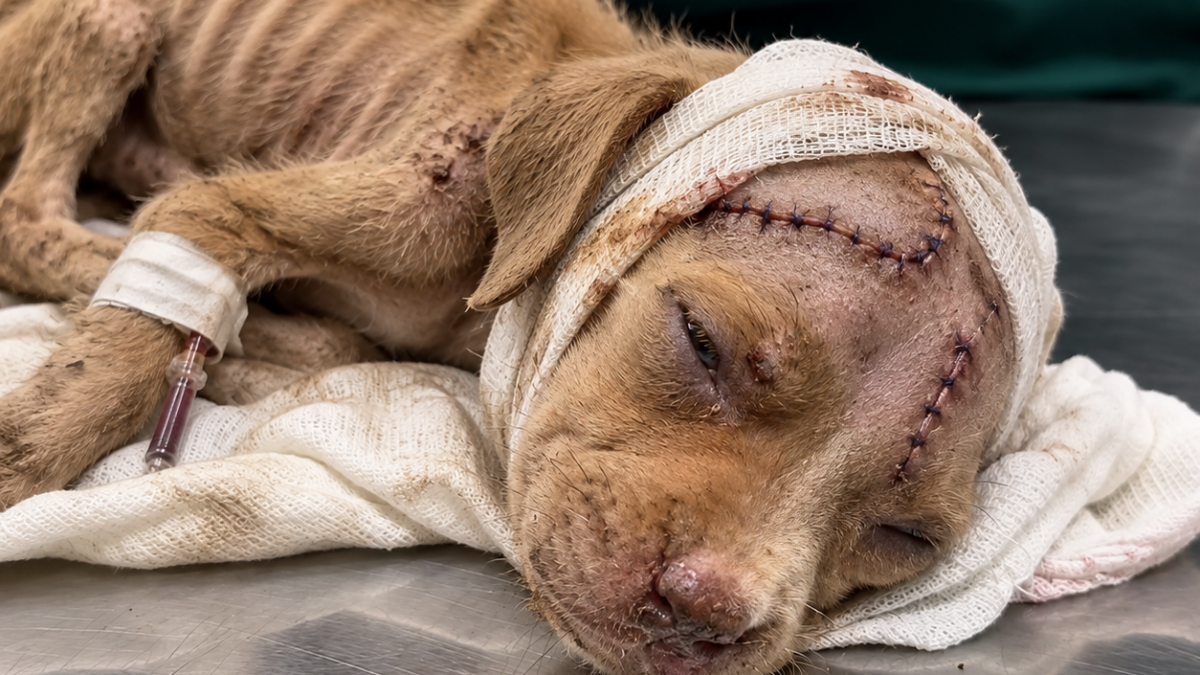
PART3:
He did not answer.
“Diego.”
“Twenty-eight.”
“That’s it?”
“That’s it.”
She looked down at Valentina.
The puppy’s eyes were partly closed.
“We can ask your brother.”
“I still owe him from the motorcycle.”
“Ask him.”
Diego called.
His brother had nothing.
They called Mariela’s sister.
She could lend a little the following week.
They called a neighbor who sometimes helped animals.
No answer.
The clinic was twenty-five kilometers away.
There was transportation.
Consultation.
Imaging.
Medication.
Whatever came after.
Mariela pressed the puppy against her chest.
“I’ll watch her tonight.”
Diego looked at her.
“If she gets worse—”
“We’ll take her.”
They both wanted to believe there would be a clear line.
A moment when the situation became bad enough to justify ignoring the money.
They did not understand that the line had already been crossed.
That night, Valentina cried.
Not loudly.
That was worse.
She made tiny noises every time she shifted.
Mariela slept on the floor beside the box where the puppies stayed.
At two in the morning, Valentina tried to crawl toward her mother.
Mariela stopped her.
“No, little one.”
Valentina pushed weakly against her hand.
“You can’t go back there.”
The mother dog watched from several feet away.
She did not attack again.
She did not seem enraged.
She simply watched.
Mariela wondered whether dogs could regret something they had done.
Then she wondered whether that question mattered.
By sunrise, Valentina’s head was larger.
Her mouth had blood around it.
Diego saw it and went pale.
“We take her today.”
“With what?”
“I’ll find something.”
He left before breakfast.
He asked three people for money.
One promised to call him.
Another gave him the equivalent of a few dollars.
The third told him about a cheaper veterinary office two towns away.
By afternoon, Diego had enough for transportation and perhaps a basic consultation.
Then Tomás came running outside.
“Papá!”
Diego dropped the wrench he was holding.
“What?”
“Valentina.”
They rushed inside.
The puppy was trying to walk.
One step.
Two.
Then she turned.
Instead of moving toward Mariela, she circled.
A small, confused loop.
Then another.
Mariela’s face changed.
“What is she doing?”
Diego did not know.
Valentina tried again.
Circle.
Stop.
Circle.
Fall.
Tomás began crying.
“Why can’t she walk straight?”
Mariela lifted the puppy.
Valentina’s head leaned strangely against her wrist.
That should have been the moment.
Years later, when Mariela replayed those seven days in her mind, she would come back to that afternoon again and again.
The blood.
The circling.
Tomás crying.
Diego holding the few bills he had gathered.
She would wish she had walked out the door and refused to think about anything beyond keeping the puppy alive.
But fear can make people strangely passive.
Especially when every solution seems to lead to a bill they cannot pay.
A neighbor told them the puppy might recover with rest.
Another said young animals healed quickly.
Someone suggested cold cloths.
Someone else said the swelling might go down by itself.
Mariela listened because hope is easiest to accept when it is free.
They did not go.
That evening, Valentina passed a dark clot from her mouth.
Mariela stared at it in horror.
Diego whispered, “Tomorrow.”
She looked at him.
“Tomorrow we find someone.”
The second day became the third.
The third became the fourth.
Valentina survived.
That became its own dangerous reassurance.
She was still breathing.
Still drinking small amounts.
Still responding when touched.
Maybe that meant she was stronger than they feared.
But her head remained swollen.
The circling continued.
Sometimes she stood and immediately collapsed.
Sometimes she would wake and cry.
Sometimes she simply lay still.
Tomás stopped playing with the other puppies.
He sat beside Valentina’s box.
“Does she know I’m here?”
“Yes,” Mariela said.
“How?”
“She knows your smell.”
He put one finger near Valentina’s paw.
The paw shifted.
Tomás smiled through tears.
“She touched me.”
On the fifth day, Mariela finally found a social-media page belonging to an animal rescue organization.
She had seen its posts before.
Dogs hit by cars.
Cats with infections.
Animals pulled from drainage canals.
She stared at the message button for nearly ten minutes.
Diego stood behind her.
“Write.”
“They’ll judge us.”
“Let them.”
“They’ll ask why we waited.”
“They should.”
She looked at him.
He was ashamed too.
That almost made it harder.
“We should have taken her.”
“Yes.”
“We failed her.”
Diego looked toward the box.
“Yes.”
Mariela began typing.
She deleted the first message.
Wrote another.
Deleted that too.
Finally she sent photographs.
One showed Valentina’s swollen head.
Another showed blood around her mouth.
A short video showed her trying to walk.
Three steps.
A circle.
A stumble.
Mariela wrote:
Please help us. She is only a baby. We have no money. I know we waited too long.
No answer came immediately.
Mariela checked the phone every few minutes.
An hour passed.
Then two.
At 9:17 p.m., the rescue team responded.
How old is she?
Twenty-nine days when it happened. Thirty-four now.
What happened?
Her mother bit her head.
Is she eating?
A little.
Is she conscious?
Yes.
Any seizures?
We don’t know.
Can you bring her tonight?
Mariela stared at the last question.
She wrote:
We don’t have transportation or money for treatment.
The reply came almost immediately.
Send your location.
Someone would later ask the rescuer who answered that message why she agreed so quickly.
Her name was Helena Duarte.
She had been volunteering with animal rescues for eleven years.
She had learned caution.
Not every story online was accurate.
Not every emergency could be handled immediately.
Resources were limited.
There were always more animals than money.
But she remembered the video.
The puppy walking in circles.
Helena had watched it twice.
Then she had stood up from her kitchen table.
Her husband looked at her.
“Where are you going?”
“I don’t know yet.”
“That sounds promising.”
She showed him the screen.
His expression changed.
“How old?”
“Barely a month.”
“Can they pay?”
“No.”
He looked at his wife.
Helena was already reaching for her keys.
“I’ll make coffee.”
The rescue organization began an emergency appeal while Helena contacted a veterinary clinic willing to receive Valentina late that night.
One volunteer agreed to drive.
Another called the clinic.
A third began contacting donors.
Nobody knew yet what the final cost would be.
That was a problem for later.
The immediate problem was that a puppy with obvious neurological symptoms had already gone nearly a week without professional care. The rescue team’s updates later documented the same frightening signs—severe swelling, bleeding, difficulty standing, and circling—before treatment finally began.
Helena arrived at the family’s home shortly before midnight.
The neighborhood was almost entirely dark.
A single porch bulb glowed outside the small house.
Mariela stood beneath it holding a bundle.
Helena climbed from the car.
She had prepared herself for the swelling.
She had seen photographs.
Reality was worse.
“Oh, baby.”
Mariela’s eyes filled immediately.
“I’m sorry.”
Helena looked at her.
“Show me.”
Mariela pulled the towel back.
Valentina opened one eye.
The puppy’s head looked impossibly large compared with the rest of her body.
There was dried blood around her mouth.
Helena reached toward her, then stopped before touching the swollen area.
“How long exactly?”
“Seven days tomorrow.”
Helena closed her eyes for one second.
“Why?”
Mariela looked down.
“We had nothing.”
“You could have contacted us earlier.”
“I didn’t know.”
“You found us eventually.”
“I was ashamed.”
Helena’s anger rose.
She had seen animals suffer because people waited.
She had heard every excuse.
Money.
Time.
Transportation.
Fear.
Embarrassment.
She wanted to say seven days was too long.
She wanted to say shame did not matter when an animal was bleeding.
Then Tomás stepped into the doorway.
He was barefoot.
He had been crying.
“Is she going to die?”
The question changed the room.
Helena looked at the child.
Then at Mariela.
Then at the puppy.
“I don’t know.”
Mariela began crying.
Helena softened her voice.
“But we are taking her now.”
Tomás stepped forward.
“Can I say goodbye?”
Mariela looked at Helena.
Helena nodded.
The boy touched Valentina’s paw.
“Don’t be scared.”
Valentina’s toes moved weakly around his finger.
Tomás bit his lip.
Helena turned away because suddenly she could not trust her own face.
They placed Valentina into a padded carrier.
Mariela tried to hand Helena some folded bills.
“What’s this?”
“Everything Diego found.”
Helena looked at the money.
It would barely cover fuel.
“Keep it.”
“No.”
“You have a child.”
“And she needs help.”
“The rescue will handle tonight.”
“But—”
Helena pushed the money gently back into her hand.
“If you want to help, answer the phone when the doctors call.”
Mariela nodded.
“And don’t disappear because you’re ashamed.”
“I won’t.”
Helena looked at her hard.
“Promise.”
“I promise.”
They drove into the night.
Valentina cried twice during the trip.
Both times Helena reached through the carrier door and placed two fingers beside her paw.
“Stay with me.”
The puppy’s breathing was shallow but steady.
The driver, Marcos, kept glancing toward the passenger seat.
“How bad?”
“I don’t know.”
“Don’t lie.”
Helena swallowed.
“Very.”
“How is she alive?”
“I don’t know.”
At the clinic, the emergency team was waiting.
A veterinary technician named Bruna opened the carrier.
Her eyes widened.
“How old?”
“Thirty-six days.”
“Jesus.”
Dr. Rafael Moreira arrived still fastening the cuff of his scrub top.
He crouched.
“History?”
“Bitten on the head by the mother approximately seven days ago. No veterinary treatment. Oral bleeding. Blood clots. Severe swelling. Ataxia. Circling.”
Dr. Moreira looked up sharply.
“Seven days?”
“Yes.”
He said nothing else.
The team moved.
Temperature.
Heart rate.
Neurological response.
Blood sample.
IV access.
Pain control.
Antibiotics.
Fluids.
They clipped fur around the most swollen areas.
Valentina cried.
Helena stood outside the treatment area, arms wrapped around herself.
She had seen emergency medicine many times.
Watching never became easy.
At 1:42 a.m., Dr. Moreira came out.
“We need radiographs tonight.”
“Do it.”
“We also need to drain some of the collection.”
“Do it.”
“You understand we don’t know whether she’ll survive?”
Helena looked through the glass.
Valentina’s body was almost hidden beneath hands, gauze, and equipment.
“I understand.”
“There may be intracranial injury.”
“I know.”
“There may be infection.”
“I know.”
“There may be damage we can’t fix.”
Helena met his eyes.
“Doctor, please stop asking whether we understand the worst thing that can happen.”
He paused.
“Then what do you want me to tell you?”
“What you can do next.”
Dr. Moreira nodded.
“X-rays. Drainage. Stabilization. Then we see what she gives us.”
That became the philosophy of Valentina’s rescue.
Not tomorrow.
Not next month.
Not the happy ending everyone desperately wanted.
The next thing.
The X-rays appeared on the screen before dawn.
Dr. Moreira stared at them.
Bruna stood beside him.
Helena watched from several feet away.
Nobody spoke.
Finally Helena asked, “What?”
The veterinarian enlarged the image.
“You see here?”
She did not.
“It’s fractured.”
Helena’s stomach dropped.
“How badly?”
“I need better imaging before I answer that.”
“Can it heal?”
“Possibly.”
“Possibly?”
“She’s very young.”
“Is that good or bad?”
“Yes.”
Helena frowned.
Dr. Moreira rubbed his face.
“Her age gives her healing capacity. Her age also makes everything smaller, more delicate, and less forgiving.”
He pointed toward another area.
“There’s more than one fracture.”
Helena looked through the glass at Valentina.
“She’s a month old.”
“I know.”
“How does a month-old puppy survive this for seven days?”
The veterinarian looked at the X-ray again.
“I don’t have an answer.”
The drainage began.
Blood.
Pus.
Inflammatory fluid.
Material trapped beneath the swelling that had been pressing painfully around the damaged tissues.
Bruna held Valentina carefully.
Dr. Moreira worked in silence.
The first collection was thick and dark.
Helena watched the container fill.
Her jaw tightened.
“That was inside her?”
“Yes.”
“All of it?”
“Some of it.”
Helena covered her mouth.
The swelling reduced slightly.
Not dramatically.
But enough to reveal the shape of the puppy’s face again.
At four in the morning, Valentina slept.
For the first time since arriving, her breathing seemed less frantic.
Helena sat beside the cage.
She sent Mariela a message.
She is alive. Skull fractures. Infection. We are treating her. I will update you.
The reply came seconds later.
Thank you. Please don’t let her die alone.
Helena stared at the words.
Then she placed her phone facedown.
“No,” she whispered through the cage door. “You’re not doing anything alone anymore.”
The first forty-eight hours were a series of cautious victories followed by new fears.
Valentina tolerated medication.
Good.
Her temperature remained concerning.
Bad.
She accepted a little food.
Good.
She lost her balance when standing.
Bad.
The fluid draining from the wound slowly became clearer.
Very good.
The circling continued.
Very bad.
Every improvement revealed another question.
The team needed more precise imaging.
That meant a CT scan.
That meant money.
The rescue had already spent beyond the emergency donations collected the first night.
Helena sat with the organization’s administrator, Paulo, looking at numbers on a laptop.
“We can’t stop now.”
Paulo sighed.
“I did not say stop.”
“You made the face.”
“What face?”
“The money face.”
“I’m the treasurer. Every face I have is a money face.”
“She needs a CT.”
“I know.”
“She may need surgery.”
“I know.”
“Then why are we arguing?”
“We’re not arguing. I’m telling you we have six other hospitalized animals.”
Helena leaned back.
One had been hit by a motorcycle.
One had severe mange and anemia.
Two kittens had panleukopenia.
A dog named Boris needed orthopedic surgery.
Compassion did not create unlimited resources.
That was the cruelty rescue workers carried quietly.
Saving one animal could sometimes mean saying no to another.
Paulo closed the laptop.
“How much can we raise by tomorrow?”
“I don’t know.”
“Then we ask.”
Again.
Photos were posted.
Not sensational ones.
The rescue refused to show unnecessary suffering.
A picture of Valentina wrapped in a blanket.
Another of her tiny paw beside a veterinary technician’s hand.
A short update explained the fractures and the need for advanced imaging.
Donations arrived.
Five dollars.
Ten.
Twenty.
One hundred.
Then a larger payment.
Anonymous.
Enough to push them over the amount needed for the scan.
Helena called Paulo.
“We have it.”
“For the CT?”
“Yes.”
“And transport?”
“Yes.”
He exhaled.
“Book it.”
The day before the scan, something happened that none of them expected.
Bruna placed a small amount of food in front of Valentina.
The puppy sniffed.
Licked.
Ate.
Then ate again.
Bruna smiled.
“Good girl.”
Valentina finished nearly half.
Later, she stood.
Her legs trembled.
She took one step.
Then two.
She began turning left.
Bruna moved her hand gently to redirect her.
Valentina corrected.
Three steps forward.
Helena saw from the doorway.
“She’s walking.”
“Sort of.”
“She’s walking.”
“Helena.”
“She is.”
Bruna laughed.
“Okay. She’s walking.”
Then Valentina noticed a small piece of gauze on the floor.
She reached toward it with one paw.
A clumsy, uncertain movement.
But unmistakable.
Play.
Helena’s face crumpled.
“Oh, don’t do that.”
Bruna laughed.
“What?”
“Don’t start playing. I’m already emotionally unstable.”
Valentina pawed the gauze again.
The clinic staff gathered.
For thirty seconds, everyone forgot the scans.
The infection.
The money.
The fractures.
There was only a puppy trying to turn medical waste into a toy.
Dr. Moreira watched from the hallway.
He smiled.
Then he looked at Helena.
“Don’t get ahead of yourself.”
She knew.
Small improvement did not mean the danger was gone.
Inside Valentina’s skull, damaged bone remained.
The CT scan proved how serious it was.
Helena stood beside the specialist, Dr. Caio Nascimento, while he moved through the images.
He was a veterinary neurosurgeon with the unnerving habit of becoming quieter as cases became more serious.
He said nothing for nearly a minute.
Helena finally asked, “Is silence part of your medical training?”
He did not smile.
“How old did you say?”
“About five weeks now.”
He looked at her.
“This puppy was walking?”
“A little.”
“Eating?”
“Yes.”
“Playing?”
“She tried.”
Dr. Nascimento turned back toward the screen.
“What?”
Helena’s heart started pounding.
“Tell me.”
He pointed.
“One fracture here.”
Another.
“Here.”
Another.
“And here.”
The CT showed multiple skull fractures, far more extensive than the original X-rays could reveal. The documented treatment updates described the same grim conclusion: medication alone would not solve the problem, and surgery became necessary.
Helena stared.
“That’s her skull?”
“Yes.”
“It looks shattered.”
Dr. Nascimento did not correct her.
“Some fragments are loose.”
“Can they move?”
“They already have.”
“What does that mean?”
“It means inflammation. Infection. Abscess formation. Pain.”
She leaned one hand against the counter.
“And her brain?”
“There are reasons to be concerned, but she is functioning better than these images would make me expect.”
“Meaning?”
Dr. Nascimento turned toward her fully.
“Meaning I am surprised she is alive.”
Helena looked through the window into the small recovery area.
Valentina was asleep in a blanket.
The sight suddenly felt impossible.
“She needs surgery?”
“Yes.”
“Could medication work?”
“No.”
The answer was immediate.
Helena closed her eyes.
“What are the risks?”
“Anesthesia.”
“What else?”
“Bleeding. Infection. Neurological deterioration. Damage to healthy structures. She could arrest.”
“What happens if we don’t operate?”
“Persistent infection. Continued abscesses. Potential brain involvement.”
“And?”
Dr. Nascimento did not answer.
He did not need to.
Helena whispered, “When?”
“As soon as possible.”
“How soon?”
“Tonight.”
The operating room was prepared near midnight.
Valentina had spent most of her life by then either injured or hospitalized.
Helena sat outside the surgical wing with a paper cup of coffee she never drank.
Paulo arrived.
“You should go home.”
“No.”
“You’ve been awake for almost twenty hours.”
“So has half the clinic.”
“They’re being paid.”
“Poorly.”
“That is not the point.”
Helena stared at the closed operating-room door.
“Do you know what Mariela asked me?”
Paulo sat beside her.
“What?”
“Not to let her die alone.”
“She won’t.”
“What if—”
“She won’t be alone.”
“That isn’t the same thing.”
Paulo studied her.
“You’re angry at the family.”
“Yes.”
“You’re also defending them.”
Helena looked down at her coffee.
“Yes.”
“Why?”
“Because everybody online wants a villain.”
Paulo said nothing.
“They want someone to hate because hating is easier than understanding how this happened.”
“She went seven days without care.”
“I know.”
“That matters.”
“I know.”
“But?”
Helena sighed.
“But Mariela didn’t throw her away. She stayed beside her. She made terrible decisions because she was scared and poor and ashamed.”
Paulo leaned back.
“You think poverty excuses it?”
“No.”
“Then what?”
“I think explanation and excuse are different things.”
The surgical doors remained closed.
Helena looked at them.
“If we turn every desperate person into a monster, they stop asking for help before it’s too late.”
Paulo nodded slowly.
“And if we pretend the delay didn’t matter?”
“Then we lie.”
“So what do we say?”
“The truth.”
“Which is?”
Helena looked at him.
“She should have gotten care immediately.”
“And?”
“Her family couldn’t afford it.”
“And?”
“They waited too long.”
“And?”
“When they finally asked, we helped.”
Paulo smiled faintly.
“That’s less satisfying than a villain.”
“Reality usually is.”
Inside the operating room, Dr. Nascimento made the first incision.
The swelling had already decreased after days of drainage and medication, but beneath it the damage remained.
He worked slowly.
Magnification.
Suction.
Tiny instruments.
Every movement deliberate.
The first loose fragment of bone appeared beneath inflamed tissue.
Sharp.
Unstable.
Exactly the kind of fragment that could keep irritating tissue and sustaining infection.
He removed it.
Then another.
Then another.
Some were surrounded by abscess material.
Others had begun integrating with healing tissue.
That was the surprise.
Valentina’s body had not waited politely for medicine.
Even during the week without treatment, even while infection spread and broken bone shifted beneath swollen tissue, her young body had begun building.
Healing tissue had formed.
A protective response.
Primitive.
Incomplete.
But active.
Dr. Nascimento paused.
Another surgeon looked at him.
“What?”
“She’s already remodeling.”
“At this age?”
“Exactly because of this age.”
They had discussed whether reconstruction might require an artificial implant.
What they found changed the plan.
Valentina’s own body was beginning to create what she needed.
The surgical team removed the fragments causing trouble while preserving healthy healing tissue wherever possible. The specialists later documented that they chose not to place an artificial skull implant, allowing her growing body to continue forming its own protective barrier.
Outside, Helena watched the clock pass one.
Then two.
Then three.
At 3:18 a.m., she called Mariela.
The woman answered immediately.
“Is she alive?”
“She’s still in surgery.”
“Is that bad?”
“It means they’re working.”
Tomás’s voice sounded faintly in the background.
“Is that the boy?”
“He won’t sleep.”
“Put me on speaker.”
A pause.
“You’re on.”
Helena leaned forward.
“Tomás?”
“Yes?”
“She’s still fighting.”
“Can she hear us?”
“Not right now.”
“When she wakes up, tell her I said she has to come home.”
Helena closed her eyes.
“I’ll tell her you said you love her.”
“No.”
She frowned.
“No?”
“Tell her she has to come home. She already knows I love her.”
Helena smiled despite herself.
“Okay.”
At 4:07, the doors opened.
Dr. Nascimento stepped out.
His cap was still on.
His face was exhausted.
Helena stood so fast the coffee spilled.
“Well?”
“She survived the procedure.”
Her knees weakened.
Paulo grabbed her arm.
“She’s alive?”
“Yes.”
“What did you find?”
“Multiple loose fragments. Inflammation. Abscesses.”
“Did you remove them?”
“The problematic ones.”
“And the skull?”
“We preserved the tissue her body is already forming.”
“No implant?”
“Not tonight.”
Helena stared.
“You’re telling me that baby is rebuilding her own head?”
The neurosurgeon gave the smallest smile.
“In very simplified terms.”
“I like my terms better.”
“She still has a difficult recovery.”
“I know.”
“Helena.”
“I know.”
He placed one hand on her shoulder.
“The surgery went well.”
That was enough.
She cried.
Not dramatically.
Not loudly.
She lowered herself into a chair and covered her face.
Paulo sat beside her.
“You okay?”
“No.”
“Good.”
She laughed through tears.
“You’re terrible.”
“I know.”
When Valentina woke, she looked smaller than ever.
The swelling was reduced.
Her head was wrapped.
An IV line ran into one leg.
Her eyes opened briefly.
Helena stood beside the cage.
“Hey.”
The puppy blinked.
“You have been extremely expensive.”
Another blink.
“You’re going to need a job.”
Valentina closed her eyes.
“Don’t ignore me. We need to discuss your financial contribution.”
Bruna walked past.
“Stop harassing the brain-surgery patient.”
“She owes us.”
“She’s five weeks old.”
“Exactly. No dependents. Very few expenses.”
For the first time in days, laughter moved through the treatment room.
Recovery was slow.
The first day, Valentina barely moved.
The second, she lifted her head.
The third, she ate.
The fourth, she stood.
The fifth, she walked three straight steps.
Everyone applauded.
Valentina looked confused.
She sat down.
Then sneezed.
They applauded that too.
The rescue team began posting cautious updates.
Not miracle language.
Not yet.
Stable.
Eating.
Responding.
Wound healing.
Neurological signs improving.
Dr. Nascimento warned them repeatedly.
“She is not finished.”
Helena knew.
But hope had become difficult to suppress.
One afternoon, Tomás visited.
His family had borrowed money for transportation.
Mariela stood awkwardly near the clinic entrance.
Helena saw her and felt the old frustration return.
Seven days.
She could not erase it.
Neither could Mariela.
The woman approached slowly.
“Can we see her?”
Helena looked toward Bruna.
The technician nodded.
“One at a time.”
Tomás entered first.
Valentina was resting in a padded enclosure.
The boy stopped.
Her head was still shaved in places.
There were sutures.
She looked fragile.
His face twisted.
“Does it hurt?”
Helena crouched beside him.
“Less than before.”
“Will her hair grow back?”
“Yes.”
“All of it?”
“Probably.”
“Will she be normal?”
Helena paused.
Adults asked questions children asked too, but adults often hid the frightening words inside more complicated sentences.
“What does normal mean?”
“Run.”
“We hope so.”
“Play?”
“She already tried.”
“Sleep in my room?”
Helena looked through the glass at Mariela.
The woman lowered her eyes.
“We don’t know where she’ll live yet.”
Tomás turned.
“What?”
Mariela entered.
“Tomás.”
“No.”
“Listen.”
“She’s ours.”
Helena stood.
Mariela looked at her son.
“We almost lost her.”
“But we didn’t.”
“We couldn’t take care of her.”
“We can now.”
“With what money?”
“I’ll work.”
“You’re ten.”
“I’ll do something.”
Mariela began crying.
Tomás looked at Helena.
“You’re going to take her?”
“No decision has been made.”
“She knows me.”
“Yes.”
“I told her to come home.”
Helena’s chest hurt.
Mariela knelt.
“Baby, sometimes loving an animal means admitting somebody else can give them what we can’t.”
Tomás pulled away.
“That’s stupid.”
“I know it feels that way.”
“You said we were family.”
“We are.”
“Then why doesn’t she come back?”
Mariela had no easy answer.
Helena wished she did.
The rescue had concerns.
Not because the family did not love Valentina.
Because love had not been enough when the emergency came.
The organization needed to know she would receive follow-up care.
Medication.
Monitoring.
Possible future procedures.
The family’s poverty had not disappeared because the surgery succeeded.
Helena hated the unfairness of it.
Wealth did not automatically make someone a good pet owner.
Poverty did not make someone bad.
But medical needs remained medical needs regardless of anyone’s heart.
Mariela looked at Helena.
“What do you think?”
The question was almost accusatory.
Helena answered carefully.
“I think you love her.”
Mariela cried harder.
“And?”
“I think she needs more care than you can guarantee right now.”
Tomás turned away.
Mariela nodded.
That response hurt Helena more than anger would have.
“I know.”
She touched the glass.
“Can I say goodbye?”
“It doesn’t have to be goodbye today.”
Mariela shook her head.
“If I keep coming, I’ll keep thinking she’s coming home.”
Helena swallowed.
“Okay.”
Mariela whispered through the enclosure.
“I’m sorry, little one.”
Valentina lifted her head.
Mariela pressed two fingers near the opening.
The puppy sniffed them.
“I should have been braver.”
Helena looked away.
There was no victory in that room.
Only consequences.
Valentina remained hospitalized until the team believed she was stable enough for supervised foster recovery.
Helena volunteered immediately.
Paulo stared at her.
“No.”
“What?”
“You already have four dogs.”
“Three.”
“What happened to four?”
“Luna belongs to my husband.”
“You live in the same house.”
“Legally distinct emotional ownership.”
“You are impossible.”
“She needs medical monitoring.”
“So do you.”
“Is that a yes?”
“No.”
“Great.”
“That was no.”
“I heard supportive hesitation.”
Valentina went home with Helena two days later.
The first night, Helena placed her in a small recovery pen beside the sofa.
Her husband, André, stared at the puppy.
“That is the most expensive potato I have ever seen.”
Valentina blinked.
“She has brain surgery.”
“I know.”
“Don’t call her a potato.”
“She looks like one.”
“She’s beautiful.”
“She can be both.”
Their old dog Nina approached.
Helena blocked her gently.
“Slow.”
Nina sniffed from a distance.
Valentina’s tail moved.
One tiny wag.
André pointed.
“You saw that?”
“No.”
“You did.”
“I’m trying not to make every normal puppy behavior into a religious event.”
The tail moved again.
Helena burst into tears.
André sighed.
“Religious event.”
Each day brought progress.
Valentina ate more.
Her balance improved.
The circles became less frequent.
She followed Helena across short distances.
She discovered a soft yellow ball.
The first time she chased it, she fell after two steps.
Helena gasped.
Valentina got back up.
Chased again.
Fell again.
Stood again.
André recorded from the doorway.
“She’s stubborn.”
“She’s alive because she’s stubborn.”
“Possibly.”
“No. Definitely.”
Valentina reached the ball and bit it.
Her tail wagged wildly.
Helena laughed.
It was the sound everyone had been waiting for.
Not because playing with a ball was extraordinary.
Because ordinary puppy behavior had once seemed impossible.
The clinic appointments became more encouraging.
Dr. Moreira examined her.
“Weight is up.”
Helena smiled.
“Of course. She eats like a construction worker.”
“Neurologically improved.”
“She only walks into the wall occasionally.”
“She’s a puppy.”
“Exactly.”
The incision looked good.
Then, several days later, Helena noticed moisture.
At first she thought Valentina had spilled water.
Then she saw the surgical site.
A small section had opened.
Her stomach dropped.
“André.”
He came running.
“What?”
“The wound.”
He crouched.
“Is that—”
“Yes.”
Within minutes, Helena was on the phone.
Dr. Nascimento wanted her back.
Immediately.
The drive felt longer than the first emergency transport.
Helena gripped the carrier with one hand.
“No.”
Valentina whimpered.
“No, no, no. We did not come this far for this.”
André drove.
“She’s awake.”
“That isn’t enough.”
“She’s alert.”
“Stop giving me facts like they’re reassurance.”
“They are literally reassurance.”
“I want guarantees.”
“You work in rescue.”
“I know.”
“You chose the wrong hobby for guarantees.”
At the clinic, the surgeon examined the wound.
“It needs revision.”
Helena stared.
“Another surgery?”
“Yes.”
“General anesthesia?”
“Yes.”
“She just went through all of this.”
“I know.”
“Can’t you close it without—”
“Not safely.”
Helena looked at Valentina.
The puppy tried to chew a corner of the examination pad.
“You have got to be kidding me.”
Dr. Nascimento frowned.
“What?”
“She’s trying to eat the table while you’re telling me she needs another operation.”
The surgeon smiled.
“That is actually encouraging.”
Helena did not smile.
“When?”
“Tomorrow morning.”
She called Mariela.
There was silence on the other end.
Then:
“Again?”
“Yes.”
“Is she in danger?”
“It needs to be fixed.”
“Can I come?”
Helena hesitated.
“Yes.”
Mariela arrived before surgery.
Without Tomás.
“He couldn’t handle seeing her go in again.”
“I understand.”
She sat beside Helena.
For nearly an hour, they barely spoke.
Finally Mariela said, “Do you still hate me?”
Helena looked at her.
“I never hated you.”
“You were angry.”
“I’m still angry.”
“I am too.”
“At me?”
“At myself.”
Helena leaned back.
Mariela twisted her hands together.
“Every time something happens to her, I think if I had gone the first day, maybe none of this…”
“You don’t know that.”
“I know it would have been better.”
“Yes.”
The honesty hurt.
Mariela nodded.
“I keep trying to make excuses.”
“Why?”
“Because the truth makes me feel like a terrible person.”
Helena looked toward the operating doors.
“Maybe stop deciding whether you’re a terrible person.”
Mariela frowned.
“What?”
“Ask whether you made a terrible decision.”
“I made seven days of them.”
“Yes.”
Mariela flinched.
Helena continued.
“But if guilt only makes you hide, then it teaches you nothing.”
“What am I supposed to do with it?”
“Remember.”
“That’s all?”
“Remember the next time you’re scared to ask for help.”
Mariela looked down.
“And teach your son differently.”
The second procedure was shorter.
The surgical site was cleaned and repaired.
Valentina woke furious.
That, according to Bruna, was excellent.
“She tried to bite my glove.”
Helena laughed.
“That’s my girl.”
Mariela cried.
“She’s mad?”
“Very.”
“Good.”
“You’re celebrating aggression?”
“I’m celebrating opinions.”
This recovery went better.
No reopening.
No new infection.
No neurological collapse.
Weeks passed.
Valentina’s hair grew back.
The strange proportions of puppyhood began changing.
Her legs lengthened.
Her ears became expressive.
She learned the kitchen was where food came from.
She learned Nina would surrender any bed if annoyed long enough.
She learned André was easier to manipulate than Helena.
“Stop feeding her from the table,” Helena said.
“I’m not.”
Valentina sat directly beneath his chair chewing something.
“What is in her mouth?”
André looked down.
“Unknown.”
“André.”
“A naturally occurring chicken substance.”
“You gave her chicken.”
“I cannot confirm that.”
Valentina swallowed.
Helena pointed.
“You are creating a criminal.”
“She had brain surgery twice.”
“That is not a legal defense forever.”
“It should be.”
At the clinic, the final major neurological evaluation lasted nearly an hour.
Dr. Nascimento watched Valentina walk.
Turn.
Follow movement.
Respond to sound.
Balance.
Play.
He examined the healed surgical site.
Then he sat back.
Helena waited.
“Well?”
He looked at her.
“She’s doing exceptionally well.”
“How exceptionally?”
“Helena.”
“I want technical language.”
“Her recovery exceeds what I expected when I saw the CT.”
“Better.”
“She has no current indication for additional neurosurgery.”
“Better.”
“She can live like a dog.”
Helena stopped smiling.
The sentence reached somewhere deeper.
“Say that again.”
He softened.
“She can live like a dog.”
Run.
Play.
Sleep.
Destroy furniture.
Steal food.
Chase things she should not chase.
Become annoying.
Become loved.
Grow old, if life was kind.
Helena cried quietly.
Dr. Nascimento pretended to study the chart until she recovered.
The rescue posted the update.
The response was enormous.
Among the messages was one from a man named Daniel Ribeiro.
He had donated toward Valentina’s CT scan.
Not the whole amount.
But enough that Helena recognized the name.
He asked whether he could meet her.
Normally, Helena disliked adoption inquiries that began with dramatic rescue stories.
People sometimes wanted the symbol more than the animal.
They wanted the dog everyone recognized.
The miracle puppy.
The before-and-after story.
Then real life arrived.
House-training.
Chewing.
Veterinary appointments.
Energy.
Expense.
Commitment.
Helena replied cautiously.
Why do you want to meet her?
Daniel answered:
Because I helped pay to see what was inside her head, and I’ve been worrying about that head ever since.
Helena laughed.
She agreed to a visit.
Daniel arrived on Saturday.
He was thirty-eight, quiet, broad-shouldered, and worked as an electrician.
He brought no giant basket of toys.
No dramatic speech.
He sat on the floor.
Valentina ignored him.
Good, Helena thought.
He waited.
Better.
Nina approached him first.
Daniel scratched her chest.
Valentina noticed.
She wandered closer.
Daniel did not reach.
She sniffed his shoe.
Then his knee.
Then climbed directly into his lap and bit his watchband.
Daniel stared at Helena.
“Does this mean she likes me?”
“It means you own something chewable.”
“Promising.”
Over the next hour, Helena interrogated him.
Work schedule.
Home.
Fence.
Previous pets.
Veterinary plan.
Emergency savings.
Travel.
Who would care for Valentina if he got sick?
Daniel answered everything.
His previous dog, Bento, had died at sixteen.
He had not adopted again because the loss had been harder than expected.
“Why now?”
He watched Valentina drag a toy across the floor.
“Because I kept checking the updates.”
“That isn’t enough.”
“I know.”
“What happens when she stops being the miracle puppy people recognize?”
He looked confused.
“What do you mean?”
“She becomes a dog.”
“I hope so.”
“She pees on something.”
“Probably.”
“She destroys a shoe.”
“I own more.”
“She needs another expensive scan.”
He nodded.
“That would be frightening.”
“And expensive.”
“Yes.”
“You still take her?”
Daniel looked at Helena.
“Of course.”
There was no performance in the answer.
That mattered.
Helena looked down.
Valentina had fallen asleep partly across Daniel’s shoe.
“Come back next week.”
He smiled.
“That bad?”
“That good.”
He came back.
Then again.
He walked Valentina.
Helped give medication.
Sat through one follow-up visit.
Asked the neurosurgeon questions.
Asked Helena more.
He never once asked whether Valentina would be “perfect.”
He asked what she might need.
There was a difference.
The adoption was approved.
Helena hated it.
Not because Daniel was wrong.
Because he was right.
The night before Valentina left, Helena slept on the sofa beside her recovery pen even though the puppy no longer needed one.
André found her at midnight.
“You know she’s going to a good home.”
“Yes.”
“You selected him.”
“Yes.”
“You threatened him with bodily harm if he didn’t follow the medication schedule.”
“I gave clear expectations.”
“You said, ‘I know where you work.’”
“Transparency.”
André sat down.
Valentina was asleep between them.
“You can keep her.”
Helena looked at him.
“Don’t.”
“I mean it.”
“We already have Nina and two others.”
“We’ve had four before.”
“She deserves her own family.”
“We’re family.”
“You know what I mean.”
He did.
Daniel had a quiet home.
A fenced yard.
Time.
Resources.
And a strange, immediate bond with Valentina.
Keeping every animal because letting go hurt would destroy rescue work.
Helena knew that.
Knowing did not make morning easier.
Daniel arrived at ten.
Valentina greeted him with her entire body.
Tail.
Hips.
Shoulders.
Everything moved.
Helena glared at the puppy.
“Traitor.”
Daniel laughed.
“She’ll remember you.”
“She better.”
The adoption paperwork sat on the kitchen table.
Helena reviewed every line even though she knew it by heart.
Medication.
Follow-up.
Microchip.
Emergency contacts.
Return clause.
No transfer without rescue approval.
Daniel signed.
Then Helena placed the leash in his hand.
She did not let go immediately.
Daniel waited.
“Take care of her.”
“I will.”
“No, listen to me.”
He did.
“She doesn’t know she’s special.”
Daniel looked at Valentina.
“Okay.”
“She doesn’t know she survived something impossible.”
“Okay.”
“She doesn’t owe anybody inspiration.”
His expression softened.
“I understand.”
“She should get to be stupid.”
He smiled.
“What?”
“A normal stupid dog. Dig holes. Chase leaves. Bark at a plastic bag. Steal socks. Get muddy.”
Daniel nodded.
“I can provide stupidity.”
“Good.”
Helena finally released the leash.
Valentina walked toward the gate.
Then stopped.
Turned.
Came back.
Helena’s breath caught.
The puppy pressed her face against Helena’s leg.
For two seconds.
Three.
Then she turned again and trotted after Daniel.
Helena cried before the gate closed.
Daniel’s first update arrived that evening.
A photograph.
Valentina asleep upside down on his couch.
The message read:
She has been here six hours and already owns the property.
Helena replied:
Correct.
The second update showed a destroyed slipper.
The third showed Valentina running through the yard.
Not stumbling.
Not circling.
Running.
Her legs stretched beneath her.
Ears flying.
Mouth open.
A yellow ball ahead of her.
Helena watched the video seven times.
Then sent it to Mariela.
Mariela called immediately.
“She runs.”
“Yes.”
“She runs straight.”
Helena smiled.
“Yes.”
For several seconds, neither woman spoke.
Then Mariela asked, “Can I show Tomás?”
“Of course.”
A minute later, Helena heard the boy crying in the background.
Not frightened crying.
Something else.
Mariela returned to the phone.
“He said she came home.”
Helena looked at the video again.
“She did.”
Months passed.
Valentina grew.
Her head became proportionate to her body.
The scars became harder to see beneath the fur.
She developed an obsession with tennis balls.
She barked at delivery motorcycles.
She slept beside Daniel’s bed.
She learned the exact sound his truck made when he came home.
And every afternoon, she waited near the gate.
Daniel once sent Helena a video.
His truck pulled into the drive.
Valentina exploded across the yard.
She ran so fast she overshot him, turned, raced back, jumped against his legs, spun once, grabbed a toy, dropped it, then returned to him.
Helena watched with tears in her eyes.
André looked over her shoulder.
“That’s the brain-surgery potato?”
“Don’t call her that.”
“Look at her.”
“I’m looking.”
“She’s enormous.”
“She is not enormous.”
“She was the size of my shoe.”
“She grew.”
“That is generally what puppies do.”
Helena watched again.
There was no circling from neurological damage.
Only excited spinning.
No collapsing.
Only reckless puppy speed.
No bandages.
No tubes.
No swollen head.
Just Valentina.
A year after the rescue, the institute invited Daniel to bring her for a visit.
The clinic staff gathered outside.
Bruna saw her first.
“No.”
Daniel laughed.
“What?”
“That is not her.”
Valentina pulled toward her.
Bruna crouched.
The dog launched herself into her arms.
“Oh my God.”
Dr. Moreira came outside.
He stared.
“That’s Valentina?”
Helena folded her arms.
“You sound disappointed.”
“She has a normal-sized head.”
“Very observant, doctor.”
“I remember when—”
“I know.”
Dr. Nascimento arrived last.
He had not seen her in months.
Valentina approached him confidently.
He placed one hand on her skull.
Not pressing.
Just feeling.
His expression changed.
Daniel noticed.
“What?”
The surgeon shook his head.
“Nothing.”
“What?”
Dr. Nascimento smiled.
“I remember looking at her CT.”
Daniel nodded.
“So do I.”
“No. I mean I remember genuinely wondering whether I would ever see her awake after surgery.”
Helena became quiet.
The surgeon rubbed Valentina’s ears.
“And now she’s trying to eat my shoelace.”
Daniel looked down.
Valentina had indeed found the lace.
He pulled her away.
“Sorry.”
Dr. Nascimento laughed.
“Don’t apologize.”
He crouched.
“Do you know how many animals come through a hospital and leave you with an image you can’t forget?”
Daniel shook his head.
“Not many.”
He touched the dog’s head again.
“She was one.”
Valentina licked his chin.
The surgeon stood.
“All right. That’s enough emotion.”
Helena smiled.
“You started it.”
They took a photograph.
Not of a patient.
Not of a tragedy.
A dog standing between the people who had once fought to keep her alive.
Later that afternoon, Mariela and Tomás came.
Daniel had agreed to meet them after Helena explained the history.
Tomás was taller.
Valentina did not recognize him immediately.
That hurt more than anyone expected.
The boy crouched several feet away.
“It’s okay.”
Valentina sniffed.
He held out his hand.
She approached.
Smelled his fingers.
Then his sleeve.
Tomás’s eyes filled.
“You used to fit here.”
He held both hands close together.
Valentina wagged.
Then licked him.
Tomás laughed.
Mariela covered her mouth.
Daniel stood nearby.
Helena watched him carefully.
He did not seem threatened.
He understood something many adopters did not.
A rescued animal could have a past without loving the present less.
Mariela approached slowly.
“Hi.”
Valentina sniffed her.
No dramatic recognition came.
No cinematic collapse into her arms.
Life did not owe anyone that scene.
But the dog stayed.
Mariela stroked her shoulder.
“I’m sorry.”
Daniel looked away to give her privacy.
Mariela whispered, “I hope you forgot the worst part.”
Helena heard.
She stepped closer.
“Maybe she doesn’t have to forget.”
Mariela looked at her.
“What?”
“We always think healing means forgetting.”
Helena watched Valentina chase a leaf.
“It doesn’t.”
Mariela’s eyes filled.
“She’s happy.”
“Yes.”
“That’s enough.”
“Yes.”
Tomás threw the yellow ball.
Valentina ran.
Everyone watched.
The boy laughed.
Again.
The ball flew.
Again.
Valentina chased it.
That was what recovery finally looked like.
Not a perfect scar.
Not a dramatic medical chart.
Not a viral photograph.
A dog running after something pointless because she had enough safety, energy, and future to waste time.
Years later, Helena would still remember Valentina whenever someone asked why rescuers kept answering phones after midnight.
Why they begged strangers for five-dollar donations.
Why veterinarians attempted difficult procedures on animals who might not survive.
Why foster families stayed awake beside cages.
Why people drove hours for follow-up care.
Why they kept choosing hope when hope was expensive.
She never answered with the surgery.
She answered with the ball.
Because there had been a night when Valentina could not walk forward.
Her brain and body were so injured that she moved in circles.
There had been a week when every untreated hour allowed swelling and infection to continue.
There had been a CT image so severe that an experienced specialist wondered how such a young puppy remained alive.
There had been one operation.
Then another.
There had been fear that the wound would not close.
Fear that her neurological deficits might remain.
Fear that money would run out.
Fear that the next phone call would contain the sentence nobody wanted to hear.
Instead, years later, there was a yellow ball crossing green grass.
And Valentina running after it.
She had no idea how much it had cost.
She did not know strangers had donated.
She did not know surgeons had removed fragments of her broken skull.
She did not know people had cried over her scans.
She did not know her foster mother had sat outside an operating room until dawn.
She did not know a boy had once begged her to come home.
She did not know Daniel had followed every update before he ever held her leash.
Dogs are fortunate that way.
They do not carry their survival like a résumé.
They simply live.
Valentina lived loudly.
She grew into a dog who stole socks.
She rolled in wet grass immediately after baths.
She dragged blankets into the wrong rooms.
She discovered that if she rested her chin on Daniel’s knee while he ate, eventually a piece of chicken might fall.
She barked at thunder and then pretended she had not.
She slept with all four legs pointed in different directions.
She ran.
She played.
She became ordinary.
That was the ending everyone had nearly been afraid to imagine.
Not famous.
Not fragile forever.
Not defined by what happened when she was twenty-nine days old.
Ordinary.
One evening, Daniel sent Helena another photograph.
Valentina was asleep beside him on the porch.
Her muzzle was beginning to lose the unmistakable softness of puppyhood.
The caption said:
She had a very difficult day. She chased three balls, intimidated a broom, stole half my sandwich, and required a two-hour nap.
Helena laughed.
Then she looked at the first photograph still saved on her phone.
Tiny Valentina.
Swollen head.
Eyes barely open.
A puppy who had already spent nearly a quarter of her life injured before help reached her.
The difference was difficult to process.
And yet the lesson was not that miracles always happened.
Helena knew better.
She had held animals that did not make it.
She had sat beside cages that became empty.
She had watched veterinarians do everything correctly and still lose.
Compassion did not guarantee survival.
Medicine did not guarantee recovery.
Love did not control biology.
Valentina’s story mattered precisely because nothing had been promised.
People acted anyway.
The family finally asked for help even though shame had delayed them.
The rescue answered without knowing whether money could be found.
Donors gave without knowing whether their contribution would end in a happy update.
Veterinarians operated without knowing whether the puppy would wake.
Helena fostered without knowing whether she would have to say goodbye for the worst reason.
Daniel adopted knowing that a severe medical history might follow Valentina for life.
Each person stepped forward before certainty arrived.
That was what saved her.
Not one hero.
Not one miracle.
A chain of decisions.
Someone sent a message.
Someone answered.
Someone drove.
Someone opened a clinic after midnight.
Someone drained an infected wound.
Someone donated toward a CT scan.
Someone looked at shattered bone and believed surgery was still worth attempting.
Someone stayed.
Someone tried again when the wound reopened.
Someone opened a home.
And because enough people refused to let the next step become someone else’s responsibility, Valentina eventually got to do what she had almost been denied.
Grow up.
There is something enormous hidden inside those two words.
Grow up.
For most puppies, it is expected.
For Valentina, it had to be fought for.
The first time she was injured, she was twenty-nine days old.
At that age, the future should have been automatic.
More teeth.
Longer legs.
New foods.
First walks.
First toys.
First naps in ridiculous positions.
First time learning her own name.
Instead, her first month became hospitals, infection, fractures, scans, anesthetic, surgery, sutures, medication, and another surgery.
But those things did not become the whole story.
They became the price of reaching everything after them.
Daniel once asked Dr. Nascimento whether Valentina remembered pain from that early in life.
The surgeon considered the question.
“I can’t tell you what she remembers.”
Daniel nodded.
“I hope she doesn’t.”
The doctor looked toward Valentina.
She was pulling Helena toward a patch of grass because she had found an interesting smell.
“Maybe memory isn’t the important part.”
“What is?”
“What her life teaches her afterward.”
Daniel watched the dog.
Dr. Nascimento continued.
“An animal can experience pain and still learn the world is safe.”
Valentina sneezed.
Then dug furiously at nothing.
Daniel smiled.
“That sounds about right.”
The dog had started life learning that the body could hurt without warning.
Then humans taught her another lesson.
Hands could also heal.
A car ride could lead somewhere frightening.
Then another car ride could bring her home.
A stranger could hold her still for a painful procedure.
Then that same stranger could offer food.
A door could open into an operating room.
Then someday a door could open into a yard where someone was waiting with a ball.
The first month of Valentina’s life was defined by suffering.
The rest did not have to be.
That was the victory.
Not that the fractures never happened.
Not that seven untreated days could be erased.
Not that surgery made everyone forget what they had seen.
Nothing erased those things.
Healing simply built something larger around them.
Bone around broken places.
Tissue around wounds.
Trust around fear.
A life around survival.
Valentina’s body had begun doing that before anyone realized it.
Inside her fractured skull, while infection raged around sharp pieces of bone, healing tissue had already started forming.
Her body did not wait for perfect circumstances.
It began repairing what it could.
Perhaps that was why the neurosurgeon remembered her years later.
He had seen stronger animals die.
Older animals with less catastrophic injuries fail.
Yet this tiny dog, barely old enough to understand the world, had been rebuilding herself before the surgeons ever opened the wound.
They did not create her will to survive.
They simply gave it room to work.
And once they did, Valentina seemed determined to use every bit of it.
She grew.
She healed.
She ran.
She became somebody’s dog.
Not the clinic’s patient.
Not the rescue organization’s case.
Not the puppy from the photographs.
Daniel’s dog.
The one waiting behind the gate.
The one leaving fur on the couch.
The one stealing food she had absolutely been told not to steal.
The one bringing the same disgusting ball indoors.
The one who would someday become gray herself.
Older.
Slower.
Needier.
And when that day came, Daniel already knew what he would do.
He would stay.
Because Valentina’s life had begun with a terrible accident.
Then a terrible delay.
But it would not end with abandonment.
She had already spent enough of her first month waiting for help.
For the rest of her life, help would already be home.
And perhaps that was the most extraordinary thing about the puppy whose fractured skull had once shocked an experienced neurosurgeon.
She survived surgeries.
She survived infection.
She survived a wound reopening.
She survived the days when nobody knew whether she would ever walk normally.
But survival was never the final gift people wanted for her.
They wanted something larger.
They wanted Valentina to reach a day when nobody looking at her could tell she had ever been a patient.
A day when the hardest decision in front of her was which toy to chase.
A day when she could run without anyone watching her balance.
Eat without anyone measuring every bite.
Sleep without someone checking her breathing.
Wake without a clinic light above her.
She reached that day.
Then another.
Then hundreds more.
The puppy who once walked helplessly in circles eventually raced straight across a yard toward the man she loved.
The puppy who once bled from her mouth grew strong enough to drag toys twice the size of her head.
The puppy whose skull had been broken became the dog whose favorite problem was convincing Daniel to throw the ball one more time.
And the people who had once stood around a CT image wondering how she was still alive eventually learned to stop wondering.
Valentina was alive because, when her tiny body could no longer fight alone, enough people chose to fight beside her.
Her first weeks were filled with pain she never deserved.
Her future was filled with ordinary joy she had nearly lost.
And somewhere between those two lives was a surgical scar hidden beneath fur, a scar most strangers would never notice.
Daniel noticed sometimes.
When Valentina slept against him, he would run his hand gently over her head.
Not because he thought she might break.
She had already proved she would not.
He touched the place simply because he knew what had happened there.
Broken bone.
Infection.
Fear.
Then healing.
Valentina would usually open one eye.
Sometimes she would lick his wrist.
Sometimes she would sigh and go back to sleep.
She never looked like a miracle in those moments.
She looked like a dog.
Safe.
Warm.
Annoyingly comfortable.
Exactly where she belonged.
And after everything it took to get her there, nothing could have been more extraordinary.








