She Spent 5 Years Raising Her Sister’s Son and Giving Him Everything—Then a Rancher Saw Her Shivering With Fever and Asked, “Who Takes Care of You?”
She Spent 5 Years Raising Her Sister’s Son and Giving Him Everything—Then a Rancher Saw Her Shivering With Fever and Asked, “Who Takes Care of You?”
For five years, Varity Hail kept the promise she had made beside her dying sister’s bed: Milo would never feel alone, even if keeping that promise meant she went hungry, cold, and exhausted herself.
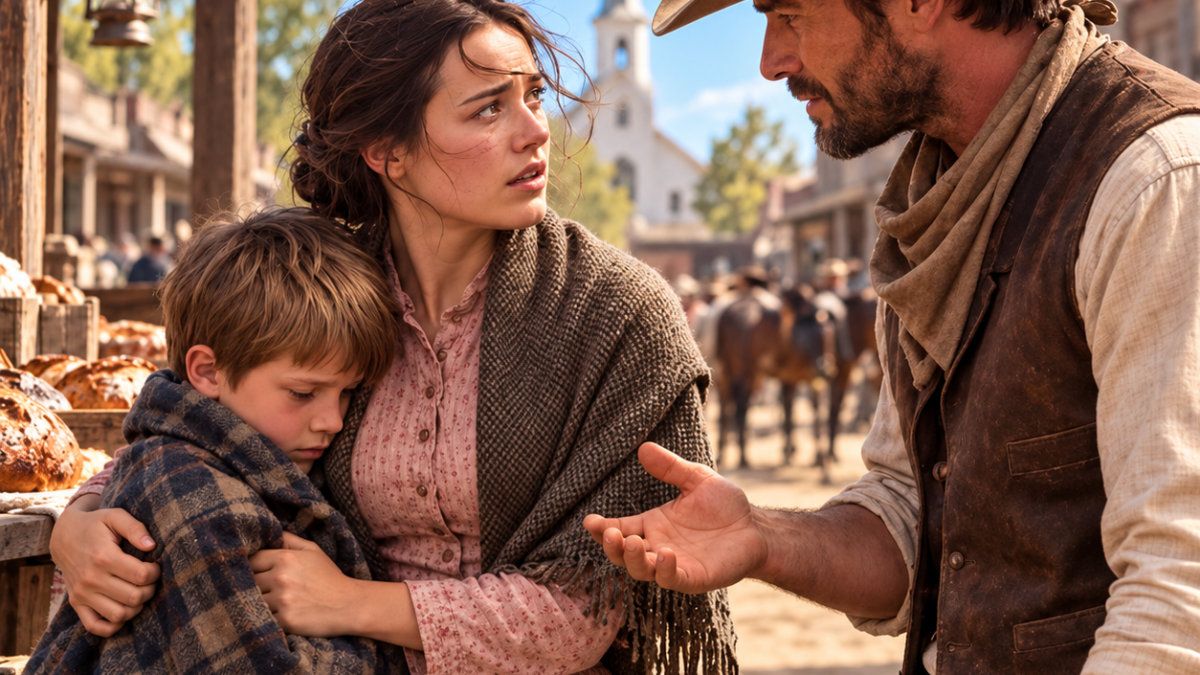
Then one freezing morning, a rancher found her shivering behind her bread stall with a fever she was trying to hide, looked at the warm coat she had given the boy instead of herself, and asked the one question nobody had ever thought to ask.
“Who takes care of you?” Duncan Reyes said—and for the first time since her sister died, Varity realized she had built an entire life around protecting someone else without ever leaving room for anyone to protect her.
Nevada, 1887.
Varity Hail had spent five years learning how little sleep a person could survive on if the reason for getting out of bed mattered enough.
Most mornings, she rose before four.
Not because she liked mornings.
She did not.
She liked the first hour after sunrise, when town was quiet and the mountains turned gold.
But there was a difference between liking dawn and waking three hours before it.
Still, she did it.
Every morning.
She slipped from the narrow bed in the small room behind Mrs. Abernathy’s boarding house, careful not to wake Milo sleeping on the pallet across from her.
Then she wrapped her shawl around her shoulders, lit the lamp, and began bread.
Flour.
Salt.
Yeast.
Water.
Her hands knew the work without thought.
Knead.
Turn.
Rest.
Shape.
Fire.
Bake.
Repeat.
The room had once been the boarding house’s kitchen and laundry before Mrs. Abernathy built a newer kitchen attached to the main building.
What remained was cramped but useful.
A brick oven.
A chimney that still drew cleanly.
One table.
Two narrow beds.
A washbasin.
A small cupboard.
One window facing east.
Varity paid very little in rent because most people would not have considered the space worth living in.
To her, it was shelter, workspace, and independence all at once.
That mattered.
By six, the room smelled of warm bread.
By seven, Milo woke.
He was nine now.
Too old, in his opinion, to be tucked in.
Too young, in Varity’s opinion, to have any authority on the subject.
He emerged from blankets with dark hair standing in several directions.
“Aunt Varity?”
“Morning.”
“Is there bread?”
“There is always bread.”
“Fresh?”
“Absolutely not. I baked it last year.”
He stared at her.
Then smiled.
PART2:
Varity slid a small loaf toward him.
He tore it open.
Steam escaped.
“Last year was good.”
She smiled.
Milo had his mother’s eyes.
That was the hardest part.
Anne’s eyes had been darker, perhaps.
Or maybe memory changed them.
But sometimes Milo looked up unexpectedly and for half a second Varity saw her sister.
It still hurt.
Less sharply than it once had.
But never not at all.
Anne had died five years earlier.
A fever.
That was all anyone called it.
Fever.
As though one simple word could explain how a twenty-nine-year-old woman could be speaking on Monday, delirious by Thursday, barely conscious on Saturday, and dead before the following week began.
Milo had been four.
Varity had been twenty-four.
Anne’s husband had died two years earlier in a ranch accident, leaving the two sisters the boy’s only family.
Varity remembered that final night with painful clarity.
The doctor had already stopped pretending.
Anne’s breathing was shallow.
Every inhale sounded harder than the last.
Varity sat beside the bed holding her sister’s hand.
Milo slept in another room.
At least, they thought he did.
Anne opened her eyes.
PART3:
“Varity.”
“I’m here.”
“Milo.”
“He’s asleep.”
Anne’s fingers tightened weakly.
“Don’t let him think he’s alone.”
Varity’s throat closed.
“He won’t.”
“Whatever it costs you.”
Anne’s eyes filled.
“Promise.”
Varity leaned over the bed.
“I promise.”
Anne died the next morning.
At the graveside three days later, Varity repeated the promise silently.
Whatever it costs.
At twenty-four, she did not yet understand how dangerous those words could become.
Not because she loved Milo too much.
There was no such thing.
Because somewhere along the way, she decided that keeping him safe required her to become unnecessary to herself.
If there was one apple, Milo ate it.
If there was one warm blanket, Milo used it.
If bread sales were poor, he had supper and Varity claimed she had eaten earlier.
If her boots needed replacing but he needed school books, the boots lasted another season.
If rain came through the stall awning, Milo stood beneath the dry side while Varity worked the wet one.
Nobody told her to live that way.
Mrs. Abernathy complained constantly.
“You cannot feed that boy properly if you collapse beside the oven.”
“I’m not collapsing.”
“You look pale.”
“I’m naturally disappointing in color.”
Mrs. Abernathy was sixty-two, widowed twice, and had raised four children.
She possessed the special impatience of women who had spent enough of life keeping other people alive to recognize foolishness immediately.
“You skipped supper.”
“I tasted bread all afternoon.”
“That is not supper.”
“It is if you taste enough.”
Mrs. Abernathy pointed a wooden spoon at her.
“One day someone will force you to sit down.”
Varity smiled.
“I wish them luck.”
That person turned out to be Duncan Reyes.
He first began buying bread from Varity’s stall nearly a year before the morning everything changed.
At first, she barely noticed him.
Customers came and went.
Ranch hands.
Mothers.
Rail workers.
Travelers.
Store clerks.
Duncan was simply one more man with dust on his coat and coins in his palm.
He was thirty-five.
Tall.
Broad through the shoulders.
Dark hair.
Brown eyes.
A face that seemed serious until he smiled, which he did rarely enough that people noticed when it happened.
His ranch lay less than five miles outside town.
He came through most days for supplies or business.
The first time he stopped, he bought one loaf.
“Morning.”
“Morning.”
“How much?”
“Eight cents.”
He paid.
Left.
The second time, two loaves.
A week later, three.
Varity assumed his ranch hands were eating more.
That made sense.
She did not ask.
Duncan did.
“Do you remember everybody’s name?”
Varity wrapped bread in paper.
“Most.”
“You greeted twelve people by name in ten minutes.”
“People like being remembered.”
“That why?”
“Partly.”
“What’s the other part?”
“A person remembers what feeds him.”
Duncan looked at her.
“Suppose that’s true of more things than bread.”
Varity glanced up.
“What?”
“Nothing.”
He took the loaves and left.
The comment bothered her longer than she expected.
Duncan returned the following morning.
Then the one after that.
Eventually Varity began recognizing his horse before she recognized him.
Gray gelding.
Black mane.
White sock on the left rear leg.
Duncan usually tied it near the feed store, walked to her stall, and bought more bread than seemed reasonable for one ranch.
Sometimes he stayed five minutes.
Sometimes ten.
He never lingered enough to become obvious.
But he noticed things.
Varity did not understand that until later.
He noticed she saved the best-shaped loaf beneath the counter.
“For someone?”
“Milo.”
He noticed she cut apples in half and somehow always ended with the smaller half.
He noticed Milo’s coat was better than hers.
He noticed her gloves had been repaired three times at the fingertips.
He noticed she coughed one winter morning and then turned away so the boy would not hear.
Duncan’s family had taught him to understand care through work.
His father rarely said he was proud.
He simply repaired Duncan’s saddle without being asked.
His mother did not say she worried when he rode through bad weather.
She left stew near the stove and extra blankets on his bed.
Duncan grew up learning that love frequently looked like something else.
A sharpened tool.
A repaired roof.
Food saved warm.
He recognized it immediately in Varity.
He also recognized something else.
No one seemed to be doing the same for her.
The morning he finally asked about it began badly.
Varity woke before the alarm of habit.
Her body hurt.
Every joint.
Her head throbbed.
When she sat up, the room moved slightly.
She waited until it stopped.
“Aunt Varity?”
Milo’s voice came from the dark.
“You awake?”
“Yes.”
“Why?”
“I heard you coughing.”
“I’m fine.”
That sentence had become so automatic she barely heard herself say it.
She stood.
Her knees felt weak.
She lit the oven.
Measured flour.
Dropped the scoop.
Milo sat up.
“You’re sick.”
“No.”
“You dropped that.”
“That is not a recognized medical diagnosis.”
He frowned.
“Mama dropped things when she got sick.”
Varity stopped.
There it was.
Five years later.
One fever, and he was four again.
She walked over.
“Milo.”
He looked at her.
“This is not that.”
“How do you know?”
She didn’t.
But she smiled.
“Because I said so.”
He knew that was not an answer.
So did she.
Still, rent was due in four days.
Flour had to be paid.
Firewood cost money.
Missing one day could make the entire week unstable.
So she baked.
By eleven, she carried the bread to the stall.
The air was colder than expected.
Milo had lessons at the small schoolroom behind the church.
He stood beside her as she buttoned his thick wool overshirt.
“You should wear this.”
“No.”
“You’re shivering.”
“I’m not.”
“You are.”
“I’m buttoning badly.”
Milo touched her hand.
It shook.
Varity pulled it away.
“Off you go.”
Then she began coughing.
Not a small cough.
Deep.
Rattling.
It bent her forward.
She held the stall counter until it passed.
When she looked up, Duncan Reyes was standing ten feet away.
Coins in hand.
Expression changed.
“How long?”
Varity straightened.
“Good morning.”
“How long have you been sick?”
“I’m not sick.”
Milo looked at Duncan.
“She has a fever.”
Varity stared at him.
“Traitor.”
Milo folded his arms.
Duncan came closer.
“You’re blue.”
“I’m cold.”
“You’re wearing that?”
He pointed at her shawl.
“It’s a shawl.”
“It is nearly transparent.”
“It is not.”
A gust moved through it.
Duncan looked at Milo.
Heavy wool shirt.
Coat.
Scarf.
Then Varity.
Thin shawl.
Plain dress.
No gloves.
He looked back at Milo.
“You warm?”
Milo nodded.
Duncan looked at Varity again.
Something in his face made her uncomfortable.
Not pity.
That she could have resisted.
Concern.
Quiet.
Steady.
“You spend all day taking care of him,” Duncan said.
Varity stiffened.
“Yes.”
“But who takes care of you?”
The question struck harder than it should have.
Varity opened her mouth.
Nothing came.
Duncan waited.
For five years, everyone had asked about Milo.
How is he growing?
Is he eating?
How are his lessons?
Does he remember Anne?
Does he need boots?
Does he have friends?
Nobody had ever asked Varity who watched her.
Maybe because she seemed capable.
Maybe because capable people often disappear behind what they manage.
“I don’t need—”
She coughed again.
Duncan reached for the awning poles.
“What are you doing?”
“Closing the stall.”
“No.”
“Yes.”
“I cannot afford to close.”
“You cannot afford pneumonia.”
“I have rent.”
“I’ll buy the bread.”
“You already buy too much.”
“Then today I’ll become irresponsible.”
He began folding the awning.
Varity grabbed one pole.
“Duncan.”
He stopped.
“I mean it.”
“So do I.”
“I am not taking charity.”
His expression softened slightly.
“Good.”
He pointed at the bread.
“Because I am purchasing inventory.”
“That is ridiculous.”
“So is standing outside with a fever.”
She glared.
Milo watched both of them.
Duncan lowered his voice.
“You can be angry from bed.”
“I am not going to bed.”
Mrs. Abernathy’s voice came from behind them.
“Yes, you are.”
Varity turned.
The older woman stood in the boarding-house doorway.
Hands on hips.
Traitor number two.
Duncan almost smiled.
Together they dismantled the stall.
Varity lost.
She hated losing.
She hated it more because ten minutes later she was back in her room beneath two blankets, too exhausted to argue further.
Mrs. Abernathy took her temperature.
“High.”
“How high?”
“High enough that you stop asking questions.”
Milo sat at the foot of the bed.
Duncan stacked bread into a wooden crate.
“I’ll take these.”
“To where?”
“Ranch.”
“You cannot possibly eat twenty-seven loaves.”
“No.”
“What will you do?”
“Sell them.”
“To whom?”
“People.”
“That is not a plan.”
“It is by rancher standards.”
He lifted the crate.
“I’ll bring the money tonight.”
“Duncan.”
He stopped.
“You don’t have to do this.”
“I know.”
Then he left.
That answer stayed with her.
I know.
Duncan sold every loaf.
Some to his hands.
Some to neighboring ranches.
Several to families he knew would use them.
He paid exactly what Varity would have collected.
No less.
No invented generosity.
No rounded-up amount meant to humiliate her.
He counted the money twice.
Then he returned.
By then Varity’s fever had climbed.
Milo sat beside the bed.
Mrs. Abernathy had made broth.
Duncan entered quietly.
Milo looked up.
“Is she going to die?”
Duncan stopped.
Varity heard him.
“Milo.”
The boy ignored her.
“My mama had a fever.”
Duncan removed his hat.
“I know.”
“She died.”
Duncan came closer.
“This fever is not automatically that one.”
“That’s what everybody says.”
Milo’s voice cracked.
Varity held out her hand.
He came to her.
“Milo.”
His eyes were wet.
“I’m not your mother.”
“I know.”
“I don’t intend to leave.”
“You can’t promise.”
The sentence cut through the room.
A nine-year-old should not sound that old.
Varity looked at him.
He was right.
She could not promise life.
Anne had taught her that.
“No.”
Milo looked surprised.
Varity squeezed his hand.
“I can’t.”
His mouth trembled.
“But I can promise I am going to fight.”
She smiled weakly.
“And I can promise Mrs. Abernathy is too mean to let me die peacefully.”
Mrs. Abernathy snorted from the stove.
“Correct.”
Milo smiled despite himself.
Varity continued.
“And Duncan seems determined to interfere.”
Duncan sat in the chair beside the bed.
“Very.”
Milo looked at him.
“You’ll stay?”
Duncan glanced at Varity.
Then back.
“Yes.”
That was enough.
Milo allowed Mrs. Abernathy to take him to his bed.
Duncan stayed.
Not all night.
But long enough.
Long enough that the boy fell asleep believing someone capable remained awake.
The fever lasted three days.
Three difficult days.
There were moments Varity barely remembered afterward.
Cold cloths.
Broth.
Duncan’s voice.
Mrs. Abernathy arguing with a doctor.
Milo whispering from the doorway.
Then finally, on the fourth morning, she woke soaked in sweat and no longer freezing.
Mrs. Abernathy touched her forehead.
“Broke.”
Varity closed her eyes.
Relief.
Not because she had been afraid of dying for herself.
That realization bothered her later.
Her first thought had been Milo.
Always Milo.
A week passed before she could sit outside without dizziness.
Duncan visited every day.
Sometimes with bread orders.
Sometimes medicine.
Sometimes no excuse at all.
One afternoon, Varity sat by the open window while Duncan repaired a broken hinge on the cupboard.
“You did not have to do any of that.”
He kept working.
“I know.”
“You say that frequently.”
“It remains true.”
“You sold bread.”
“Yes.”
“Bought medicine.”
“Some.”
“Paid Mrs. Abernathy for broth.”
“She refused most of it.”
“Stayed with Milo.”
Duncan set down the screwdriver.
“You asked me once?”
“I asked you nothing.”
He smiled faintly.
“I asked who takes care of you.”
Varity looked away.
“A man asks a question like that, seems wrong to ride off without considering the answer.”
Her throat tightened.
“Most men would consider asking enough.”
“I’m not most men.”
He said it plainly.
No pride.
No performance.
For some reason, that made it heavier.
During her recovery, Duncan began talking about himself.
Not easily.
He had been raised two counties north.
Only child.
Ranch family.
His father believed almost any emotional problem could be solved by fixing something.
His mother believed food could solve whatever remained.
“They said little,” Duncan told her.
“But you knew?”
“Yes.”
“How?”
“My father once rode forty miles because I mentioned a saddle squeaked.”
Varity smiled.
“He never said he missed me.”
“He fixed the saddle?”
“Completely rebuilt the stirrup leather.”
“And your mother?”
“If I rode out in bad weather, supper stayed warm until I returned.”
He looked at his hands.
“I learned care as work.”
“That explains a great deal.”
“What?”
“You are terrible at sentences.”
Duncan laughed.
“Probably.”
“Your parents?”
“Gone.”
“How long?”
“Ten years now. Mother first. Father two years later.”
“I’m sorry.”
“Thank you.”
He looked toward the empty chair opposite.
“House got quiet.”
“Never married?”
“No.”
“Why?”
“Didn’t.”
“Insightful.”
“I warned you about sentences.”
One afternoon he mentioned his birthday.
Almost accidentally.
“I stopped marking it years ago.”
Varity looked up.
“Why?”
“Seems pointless alone.”
“When?”
He immediately looked suspicious.
“No.”
“When?”
“Varity.”
She smiled.
“What?”
“You are collecting information.”
“I collect many things.”
“You are dangerous.”
She did not ask again.
Instead, she waited.
Two weeks later, she persuaded one of Duncan’s ranch hands to reveal the date.
On the morning of his birthday, Varity closed the stall early.
She baked a cake.
Not elegant.
Good.
She packed roast chicken, potatoes, beans, bread, and preserves into a basket.
Milo carried the cake with both hands and the solemnity of transporting explosives.
They rode to the Reyes ranch.
Duncan opened the door.
He stared.
“Milo?”
“Happy birthday.”
Duncan looked at Varity.
“You knew?”
“Yes.”
“I didn’t tell you.”
“You told another person at some point in your life. That was sufficient.”
He looked at the basket.
“What’s all this?”
“Supper.”
“For me?”
“No, Duncan. We traveled five miles to eat outside your house while you watched.”
He smiled.
They ate together.
Milo requested a second piece of cake.
Then a third.
Varity denied the third.
Duncan overruled her.
Varity informed him he had no authority.
Milo agreed with Duncan.
The room filled with argument.
Laughter.
Plates.
A house that had been quiet for ten years suddenly sounded inhabited.
Duncan grew quieter as the evening went on.
After Milo went outside to look at a foal, Duncan said, “Nobody’s done this since my mother.”
Varity looked at him.
“Then it was overdue.”
His eyes stayed on her.
Neither spoke for several seconds.
The feeling between them did not arrive suddenly.
That would have frightened Varity.
It grew through repetition.
Duncan repaired one wheel on her stall.
Then another.
Varity began bringing bread directly to the ranch.
Sometimes she stayed for coffee.
Milo started saving Duncan a chair at supper.
“You don’t need to do that,” Varity told him.
“He might come.”
“He does not come every night.”
“More reason to keep it ready.”
Duncan came often enough that the small chair became his.
He folded his long legs under the table.
Listened to Milo describe lessons.
Complained about Varity’s habit of working while eating.
Was told repeatedly that nobody had asked.
Then one afternoon, Varity discovered the truth about the extra bread.
She was delivering an order to the ranch.
Duncan was in the barn with a lame horse.
Varity entered the pantry.
Loaves.
Far too many.
She found one of his hands outside.
“Does your crew eat this much bread?”
The man looked uncomfortable.
“Sometimes.”
“That is not an answer.”
He sighed.
“Boss buys more than we eat.”
“Why?”
The man hesitated.
“Widow Callahan.”
“What?”
“Sends some there.”
“Who else?”
“Trent family after their barn fire.”
He scratched his neck.
“Sometimes others.”
Varity stared.
“He buys it from me and gives it away?”
“Yes, ma’am.”
“How long?”
“Months.”
That evening she waited on Duncan’s porch.
He saw her face.
“What?”
“You buy bread you don’t need.”
He paused.
“Some.”
“You send it to families.”
“Some.”
“Why?”
Duncan removed his hat.
“At first, I bought because I liked the bread.”
Varity folded her arms.
“And?”
“Then I liked stopping.”
Her expression softened despite herself.
He continued.
“Then I understood your stall mattered.”
“To me.”
“To others too.”
He sat.
“I did not want you thinking I was inventing charity.”
“So you hid charity inside commerce.”
“No.”
He looked directly at her.
“I kept the two separate.”
That distinction mattered.
“You paid me for a product.”
“Yes.”
“Then gave away what you purchased.”
“Yes.”
“Because?”
“Because I could.”
Varity looked down.
“You could have told me.”
“I could.”
“Why didn’t you?”
“I didn’t want gratitude changing anything.”
That answer frightened her more than romance might have.
Because it was the opposite of what she had learned to expect.
People who helped usually wanted something.
Respect.
Loyalty.
Obligation.
Duncan seemed uncomfortable even being thanked.
Then the landlord’s letter arrived.
Rent nearly doubled.
Varity sat at the table late into the night.
Numbers.
Always numbers.
Flour.
Fuel.
Rent.
Milo’s lessons.
Winter clothing.
She calculated six times.
Same answer.
Impossible.
Within six weeks she would have to move.
Maybe another town.
Maybe work in someone else’s kitchen.
Maybe give up the stall.
Duncan learned two days later.
He did not say, “Move into my house.”
That might have ruined everything.
Instead he said, “Come see something.”
He took Varity and Milo to a small weathered building on the edge of his ranch.
Old tool house.
Solid walls.
Bad roof.
Two windows broken.
No oven.
Varity looked around.
“What is this?”
“Mine.”
“I gathered that.”
“Free and clear.”
She turned.
“Why are you telling me?”
“Could be a bakery.”
Varity stared.
“No.”
“Hear the arrangement.”
“No.”
“Varity.”
She crossed her arms.
Duncan continued.
“I repair the roof.”
She said nothing.
“Replace the windows.”
Still nothing.
“Build proper oven ventilation.”
“You cannot give me a building.”
“I’m not.”
“Sounds suspiciously close.”
“You repay repairs through bread.”
She blinked.
“Bread.”
“Two loaves weekly.”
“For how long?”
“Until we agree the cost is settled.”
Varity immediately shook her head.
“You’d never recover the full expense.”
“That depends how long I live.”
“Duncan.”
“All right.”
He became serious.
“We write the number.”
That caught her attention.
“Every nail. Window. Mason. Timber.”
“Everything?”
“Yes.”
“And every loaf counts against it?”
“Yes.”
“Market price.”
“Yes.”
“No gifts.”
“No gifts.”
Varity walked through the room.
Large enough.
Better light.
Space for shelves.
Space for two ovens someday.
A counter.
She could imagine it.
That terrified her.
“What about living?”
“Same room in town.”
She turned.
“You’re not asking us to move here?”
“No.”
“Why not?”
Duncan’s expression was careful.
“Because this is a business offer.”
The answer gave her room.
“That is all?”
“For now.”
Varity heard the honesty in the last two words.
She respected it.
“I’ll take it.”
Milo cheered.
“On written terms.”
Duncan nodded.
“Written.”
“And two loaves.”
“Yes.”
“Not three.”
“Two.”
“You are already buying three.”
“That is separate.”
Varity almost laughed.
Construction began.
Roof first.
Oven next.
Windows.
Shelves.
A proper front counter.
Varity hired a sixteen-year-old girl named Lucy to help mornings.
For the first time in five years, Varity occasionally had an afternoon with nothing urgent.
The first time Milo found her sitting on the porch drinking tea, he stopped.
“What?”
Varity looked up.
“What what?”
“You’re sitting.”
“Yes.”
“Why?”
“Apparently people do this.”
“Are you sick again?”
She laughed.
“No.”
He studied her.
Then sat too.
The bakery grew.
Not wildly.
Steadily.
Families came from outside town.
Standing orders increased.
Milo learned to count change.
Duncan taught him multiplication using cattle numbers.
Varity objected because Milo began pricing imaginary livestock during supper.
Duncan visited far more often than business required.
“You’ve been here three times this week.”
Duncan leaned against the counter.
“Checking my investment.”
“You have stood in my kitchen twenty minutes doing absolutely nothing.”
“I’m highly useful.”
“How?”
“Milo now knows how to saddle a horse.”
“That benefits your argument how?”
“Broad educational value.”
Varity laughed.
She laughed more now.
That surprised her.
One evening, after closing, she rode to Duncan’s ranch.
Neither was in a hurry for her to leave.
They sat on the porch.
Sunset turned the fields orange.
Varity held a cup of coffee.
Better now.
Duncan had improved.
Slightly.
“You asked me something months ago.”
He looked over.
“What?”
“Who takes care of me.”
His expression changed.
“I remember.”
“I didn’t answer.”
“You were feverish.”
“I had no answer.”
“And now?”
Varity looked toward the pasture.
“I think I do.”
Duncan waited.
“The answer has been standing in my kitchen inventing increasingly weak reasons to visit.”
He went still.
Varity smiled.
“I needed time.”
“I know.”
“To trust it.”
“I know.”
“To understand you weren’t trying to turn helping me into a claim on me.”
His jaw tightened slightly.
“I would never.”
“I know that now.”
Duncan looked down at his hands.
For once, words seemed to fail him completely.
Varity waited.
“You were right about my parents,” he said.
“What?”
“They taught me to show things.”
“Yes.”
“Not say them.”
“Yes.”
He looked at her.
“I’m trying to improve.”
“You are.”
Then he breathed in.
“I love you.”
Simple.
Awkward.
Perfect.
“Have for longer than I have admitted.”
Varity’s eyes filled.
“I know.”
Duncan looked almost offended.
“You know?”
“You bought bread you did not need for six months.”
“That could be generosity.”
“You repaired a stall wheel that was still functional.”
“It squeaked.”
“You rode into town in rain for two loaves.”
“Supplies.”
“You forgot the supplies.”
He smiled.
Varity touched his hand.
“You have been saying it for months.”
Duncan turned his hand beneath hers.
“Same way my father would’ve.”
“Yes.”
“And you heard it?”
“Eventually.”
“Will you let me keep saying it?”
Varity looked at him.
“With words sometimes?”
“I’ll attempt it.”
“Then yes.”
Before proposing marriage, Duncan did one thing Varity never forgot.
He spoke to Milo.
Alone.
Not asking the child to decide Varity’s life.
Giving him a place inside a decision that would change his own.
Milo stood behind the bakery counter after lessons when Duncan arrived.
“Need bread?”
“No.”
Milo looked suspicious.
Duncan crouched.
“I want to tell you something.”
“Am I in trouble?”
“No.”
“Aunt Varity?”
“No.”
“Then what?”
Duncan smiled.
“I want to marry her.”
Milo stared.
“Oh.”
“I wanted you to hear before anybody else.”
“Did she say yes?”
“I haven’t asked.”
“Why?”
“I’m talking to you first.”
Milo considered that.
“Do you need permission?”
Duncan thought carefully.
“Not to ask her.”
Milo nodded.
“But if she says yes, your life changes too.”
Another nod.
“I want to know how you feel.”
Milo looked at the counter.
“Would we live at your ranch?”
“Maybe. We’d decide together.”
“Would Aunt Varity still bake?”
“If she wants.”
“Would I still see Mrs. Abernathy?”
“As often as possible.”
Milo thought longer.
Then asked the question Duncan had expected least.
“Would you still teach me things?”
Duncan’s throat tightened.
“More.”
“How much more?”
He smiled.
“A man teaches his own son plenty.”
Milo’s eyes widened.
Duncan continued quietly.
“If you would want me that way.”
Milo looked down.
“You wouldn’t make me forget Mama?”
“Never.”
“Or my father?”
“No.”
Duncan’s voice softened.
“I’m not asking to replace anybody.”
Milo looked at him.
“I’m asking whether there’s room for one more person who plans to stay.”
The boy launched himself forward.
Arms around Duncan’s neck.
Duncan held him.
Longer than necessary.
Maybe exactly long enough.
That evening, Duncan found Varity sitting on the bakery step.
Warm spring air.
Door open behind her.
He sat beside her.
“I spoke with Milo.”
She turned.
“About?”
“You.”
Varity narrowed her eyes.
“That sounds dangerous.”
“I told him I want to marry you.”
Her entire expression changed.
“You told him before me?”
“Yes.”
“Duncan.”
“I thought he deserved to know.”
She tried looking annoyed.
Failed.
“What did he say?”
“He asked whether I’d keep teaching him.”
Varity swallowed.
“What did you say?”
“That I’d teach him more if he’d let me be his family.”
Her eyes filled.
Duncan reached for her hand.
“Varity.”
She looked at him.
“Marry me.”
He paused.
“Not because you need someone.”
She smiled faintly.
“You have made that mistake already?”
“No.”
“Good.”
“You have proven you can survive without me.”
“That sounds romantic.”
“I warned you about words.”
She laughed through tears.
Duncan continued.
“I want to marry you because I like your bread.”
Varity stared.
He smiled.
“And because I love Milo.”
Her expression softened.
“And because every time I ride home after supper at your table, my house feels wrong until I remember you might come tomorrow.”
Varity’s eyes closed briefly.
“I want mornings.”
He squeezed her hand.
“Even when you wake at four.”
“You will regret that.”
“Probably.”
“I want the bakery.”
“Good.”
“I want Milo to remember Anne.”
“He will.”
“I want work of my own.”
“It remains yours.”
“I don’t want gratitude between us.”
“Neither do I.”
She looked directly at him.
“And I do not want you thinking care means deciding for me.”
Duncan nodded.
“Then tell me when I forget.”
“You will?”
“Frequently, probably.”
Varity smiled.
“Then yes.”
He froze.
“Yes?”
“Yes.”
No cost.
No sacrifice.
No promise extracted at a deathbed.
Just yes.
They married the following spring.
At the bakery.
Varity refused a church because the bakery, she said, was where her new life had actually begun.
Mrs. Abernathy sat in the front row.
She informed everyone who would listen that she had predicted the marriage the moment Duncan began buying three loaves.
“You did not,” Varity said.
“I absolutely did.”
“You told me he was wasting money.”
“I was protecting the surprise.”
Milo stood beside Duncan.
He looked serious during the vows.
Then spent most of the reception focused on cake.
Patrick Mason, one of Duncan’s oldest ranch hands, gave him terrible advice all morning.
Lucy cried.
Mrs. Abernathy cried more.
Varity did too.
Not when the vows were spoken.
When she looked at Milo.
He was laughing.
Safe.
Loved.
Not alone.
The promise to Anne had been kept.
But something had changed.
Varity finally understood she had interpreted that promise too narrowly.
Don’t let him think he’s alone.
She had believed that meant she must become everything.
Mother.
Father.
Provider.
Protector.
Teacher.
Shelter.
Every answer.
But children do not feel less alone because one person destroys herself keeping them alive.
They feel less alone when love multiplies.
Mrs. Abernathy.
Duncan.
Lucy.
The ranch hands.
Teachers.
Neighbors.
Family did not weaken because it widened.
Neither did Varity.
The morning after the wedding, she woke before dawn automatically.
Years of habit.
She reached across the bed.
Empty.
Varity sat up.
She heard noise from the kitchen.
Then a crash.
Then Duncan muttering something inappropriate.
She put on a robe and walked out.
The kitchen looked like flour had exploded.
Duncan stood at the table.
White dust in his hair.
On his shirt.
On the floor.
Dough stuck to both hands.
Varity leaned against the doorway.
“What are you doing?”
He looked up.
“Bread.”
“That is not bread.”
“It will become bread.”
“Under whose authority?”
“I’ve watched you.”
“Apparently not closely.”
He looked at the ruined dough.
“I wanted breakfast ready.”
“For me?”
“Yes.”
Varity’s expression softened.
Duncan tried brushing flour from his shirt and made it worse.
“Thought somebody should take care of you.”
She laughed.
The same question.
Different answer now.
Varity walked to the table.
“I’ll show you.”
“No.”
She stopped.
Duncan pushed a chair toward her.
“You sit.”
“Duncan.”
“You married me.”
“That does not grant you control of my kitchen.”
“Our kitchen.”
“Dangerous wording.”
He smiled.
“Sit.”
Varity sat.
Mostly because watching him fail had become entertaining.
Milo entered ten minutes later.
He stopped.
Looked at Duncan.
Looked at the flour.
Looked at Varity drinking coffee.
“What happened?”
“Your uncle tried to bake.”
Duncan turned.
“Father.”
The word slipped out naturally.
Milo froze.
So did Duncan.
Varity watched them.
Duncan looked immediately worried.
“Only if you want.”
Milo’s face changed.
“Father.”
He tried it again.
Then smiled.
Duncan had to turn away for several seconds.
Varity pretended not to notice his eyes.
Years passed.
The bakery expanded.
The old tool house became a proper shop.
Then a second oven.
Then a small side room where families could sit.
Varity eventually hired two more helpers.
She worked hard.
Still too hard sometimes.
Duncan noticed.
“You promised to rest.”
“I promised nothing.”
“You sat down once voluntarily in 1888. There are witnesses.”
“Unreliable witnesses.”
Milo grew.
He learned horses.
Accounts.
Bread.
He eventually became better at arithmetic than both adults and used this fact insufferably.
He remembered Anne.
Varity made sure of that.
There was a photograph in the house.
Stories.
Recipes.
Milo’s mother remained part of him without becoming a shadow over everything that came after.
When he turned sixteen, he asked Varity about the promise.
“What promise?”
“Mama’s.”
Varity looked at him.
“How do you know?”
“Mrs. Abernathy.”
“Of course.”
“She said Mama told you not to let me feel alone.”
Varity nodded.
Milo looked down.
“Did it cost you a lot?”
The question hurt.
She answered honestly.
“Yes.”
His expression tightened.
Varity took his hand.
“I chose badly sometimes.”
“What?”
“I thought loving you meant I had to disappear.”
Milo looked confused.
“You didn’t.”
“I nearly did.”
She smiled.
“That is what Duncan taught me.”
“What?”
“That people can take turns being strong.”
Milo thought.
“You still do too much.”
“Careful.”
“You do.”
“That sounds like your father.”
Milo smiled.
By then, Duncan had been “Father” for years.
No one pretended blood had changed.
It didn’t need to.
Milo grew into a man.
Varity aged more slowly once she learned to rest.
Duncan liked taking credit for that.
He should not have.
Mrs. Abernathy deserved at least half.
On cold mornings, Duncan still asked whether Varity had eaten.
On difficult days, Varity brought Duncan coffee without being asked.
When he injured his shoulder at fifty, she reorganized the ranch before he could pretend he could work.
When Varity’s hands began aching with age, Duncan learned enough baking to become useful.
Not good.
Useful.
He considered this an achievement.
One evening, long after Milo had married and built a home of his own, Varity and Duncan sat on the porch outside the bakery.
The town had changed.
More buildings.
Busier roads.
Different faces.
But bread still cooled behind them.
Duncan looked at her.
“You remember the first question I asked you?”
“You asked how much a loaf cost.”
“The important question.”
Varity smiled.
“Yes.”
“Who takes care of you?”
She looked across the road.
“That question made me angry.”
“I know.”
“Why did you ask?”
Duncan thought.
“You were shaking.”
“That is all?”
“No.”
He looked at her.
“I had watched you for months.”
Her eyebrows rose.
“That sounds suspicious.”
“It probably was.”
“You watched me?”
“Yes.”
“Why?”
“I liked you.”
“Ah.”
“And I kept seeing you give things away.”
“To Milo.”
“To everybody.”
Varity waited.
“Food.”
“Time.”
“Warm clothes.”
“Rest.”
He shook his head.
“You gave as though receiving would make what you gave less meaningful.”
She looked down.
“That is probably true.”
“I wanted to know whether anybody ever gave back.”
“And when you realized no?”
“I got angry.”
Varity laughed.
“At me?”
“Mostly at everybody else.”
“You included yourself?”
“Eventually.”
She rested her head against his shoulder.
“So who takes care of me now?”
Duncan answered immediately.
“I do.”
Varity lifted her head.
He continued.
“And Milo.”
She smiled.
“And Mrs. Abernathy would rise from the grave if we omitted her.”
“Definitely.”
“Lucy.”
“Sometimes.”
“Half the town.”
Duncan nodded.
Varity took his hand.
“And me.”
He looked at her.
“I take care of me too.”
Duncan smiled.
“There it is.”
That had been the part she took longest to learn.
Love was not simply allowing someone else to save you.
It was not being rescued.
Duncan had never wanted that.
He had wanted partnership.
To stand beside her burdens.
Not steal them.
Varity eventually understood that accepting care did not weaken the promise she had made to Anne.
It completed it.
Milo never felt alone.
But neither did she.
Years later, when people told the story, they usually began with Duncan’s question.
Who takes care of you?
It made a clean beginning.
But Varity knew the question itself had not changed her life.
The answer had.
Duncan did not ask and then disappear.
He folded the stall.
Sold the bread.
Sat beside a frightened boy.
Remembered the fever.
Fixed the wheel.
Bought the extra loaves.
Built terms instead of favors.
Asked Milo before proposing.
Burned his first batch of bread spectacularly.
And kept learning how to turn love into both words and work.
Varity did the same.
She remembered his birthday.
Filled his quiet house.
Made room at the table.
Learned his silences.
And eventually stopped assuming every act of care created a debt.
That was the life they built.
Not rescuer and rescued.
Two people who could stand alone.
Choosing not to make the other do it unnecessarily.
The promise Varity made beside her sister’s deathbed remained one of the most important promises of her life.
But she understood it differently at sixty than she had at twenty-four.
Whatever it costs you.
Anne had said that out of fear.
A dying mother desperate for her child.
Varity honored the love inside the words.
Not the destruction.
She gave Milo everything he needed.
Then learned that she did not have to give him everything she was.
There was a difference.
And on winter mornings, when bread cooled by the window and Duncan complained that she had started work too early again, Varity sometimes remembered herself at the stall.
Thin shawl.
Blue lips.
Fever burning.
Buttoning Milo’s coat.
Believing strength meant never needing anything.
Then Duncan’s voice.
Who takes care of you?
She had no answer that morning.
Years later, she had many.
Duncan.
Milo.
Friends.
Family.
And finally, after a lifetime of practice giving herself away—
Varity herself.








