Rich Girl Threw Money at a Black Waitress—Never Expected She Was Actually Her Long-Lost Sister
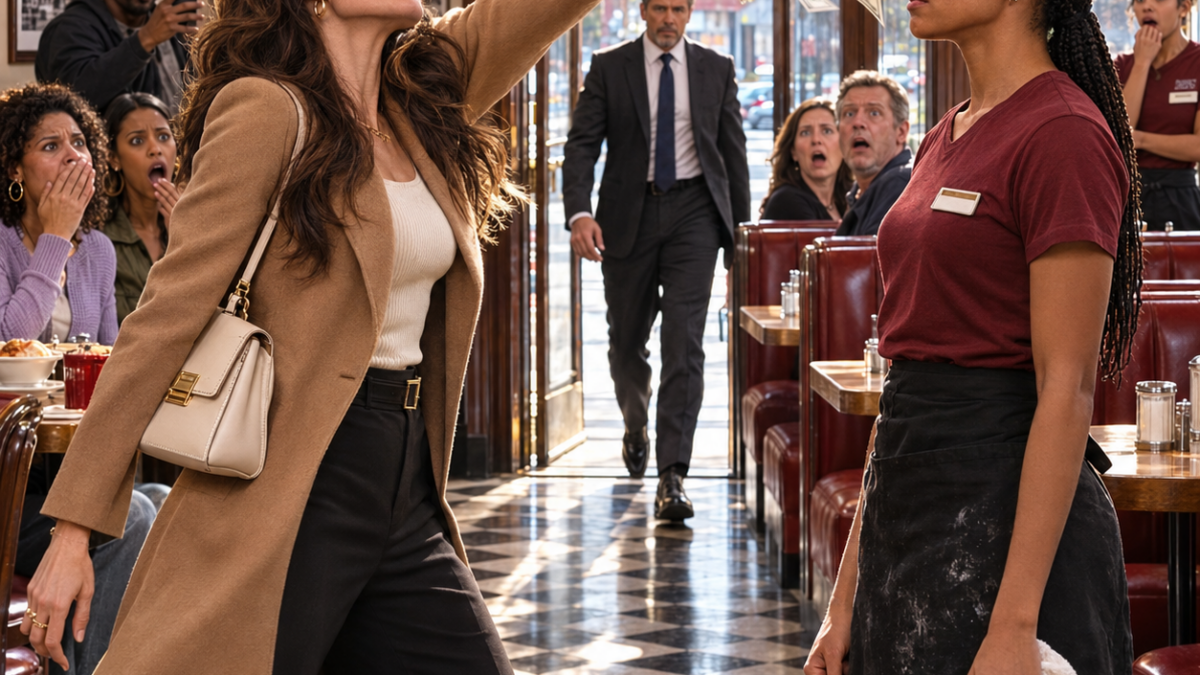
Rich Girl Threw Money at a Black Waitress—Never Expected She Was Actually Her Long-Lost Sister
Kennedy Hale tossed a wad of cash onto the diner floor and told the Black waitress standing over it that the money was probably more than she earned in a week. Twenty minutes later, Kennedy’s billionaire restaurateur father took one bite of that same waitress’s peach cobbler and recognized a secret ingredient only one woman from his past had ever used. Before the night was over, Kennedy would learn that the woman she had humiliated was not a stranger at all—but the sister her own family had spent twenty-six years making sure she never knew existed.
Naomi Carter had learned a long time ago that rich customers came in two kinds.
The first kind barely noticed her.
The second kind wanted to make sure she noticed them.
Kennedy Hale was definitely the second kind.
It was 12:37 on a Tuesday afternoon at Rosie’s Diner when Naomi carried two waters toward table six.
Rosie’s was the kind of place people either loved immediately or dismissed before sitting down.
Red vinyl booths.
Chrome-edged tables.
A pie case near the register.
Coffee strong enough to argue back.
The menu had not changed much in twenty years because Rosie believed people who wanted foam on their breakfast could go somewhere else.
Naomi had worked there since she was nineteen.
At twenty-five, she was the shift manager.
She knew which regular wanted extra onions.
Which construction crew needed three checks.
Which nurse from St. Agnes ordered coffee so dark even Rosie called it excessive.
And she knew when trouble entered the room.
Kennedy Hale arrived wearing sunglasses that probably cost more than Naomi’s monthly rent.
Designer handbag.
Cream-colored coat.
Gold bracelet.
Phone in one hand.
The expression of someone already annoyed that the world had failed to arrange itself before she arrived.
She sat with two friends.
Ordered sparkling water.
Then complained Rosie’s didn’t carry the brand she wanted.
Naomi had handled worse.
“Regular water okay?”
Kennedy sighed.
“I guess.”
Naomi poured.
A customer behind her shifted his chair.
Naomi stepped sideways.
The glass tipped.
PART2:
Maybe two tablespoons of water landed on the corner of Kennedy’s handbag.
Kennedy shot to her feet.
“Oh my God!”
Every conversation in the diner softened.
Naomi immediately grabbed a clean towel.
“I’m sorry.”
Kennedy snatched the bag away.
“What are you doing?”
“Drying the water.”
“You ruined it.”
“It’s water.”
Naomi kept her voice level.
“It should dry without staining.”
Kennedy stared at her.
“Is this your first day?”
“No.”
“I want your manager.”
Naomi nodded toward Jasmine near the coffee station.
“Jasmine, can you cover six for a minute?”
Then she looked back at Kennedy.
“I’m the manager on shift.”
Kennedy blinked.
PART3:
That clearly was not the answer she wanted.
“Then fire whoever poured it.”
Naomi almost smiled.
“That was me.”
One of Kennedy’s friends whispered:
“Ken, let it go.”
Kennedy ignored her.
“This bag cost six thousand dollars.”
Naomi looked at the tiny wet corner.
“I’m sorry it happened.”
“Did I ask if you were sorry?”
“No.”
“Did I ask whether it would dry?”
“No.”
“Then what exactly are you going to do?”
Naomi picked up the towel.
“I can bring you another water.”
A few people snorted.
Kennedy heard them.
Her face reddened.
She opened her bag.
Pulled out several hundred-dollar bills.
Then dropped them.
Not onto the table.
Onto the floor.
At Naomi’s feet.
“There.”
Kennedy smiled.
“For your trouble.”
Naomi looked down.
Then back up.
Kennedy added:
“Split it with the other waitress.”
Nobody moved.
“Go on.”
Naomi’s expression did not change.
Kennedy pointed.
“Pick it up.”
“No.”
The smile on Kennedy’s face sharpened.
“It’s more than you make in a week.”
“Probably.”
Naomi nodded toward the floor.
“It’s still staying there.”
Kennedy laughed.
“Wow.”
She looked at her friends.
“You’d rather be broke than polite.”
A man’s voice came from the diner entrance.
“Kennedy.”
Everything about Kennedy changed.
She turned.
“Dad.”
Marcus Hale stood near the door.
Fifty-four.
Dark suit.
No tie.
Silver appearing at his temples.
Marcus Hale owned Hale Hospitality Group, a collection of successful restaurants that had started with one neighborhood steakhouse thirty years earlier and grown into a company whose name appeared on buildings from Chicago to Atlanta.
He had been interviewed in business magazines.
Cooking magazines.
Television.
Kennedy had grown up in private schools, private cars, private clubs, and kitchens where celebrity chefs knew her birthday.
Marcus looked at the money on the floor.
Then at his daughter.
“I said five minutes.”
Kennedy glanced toward the phones people had raised.
“Dad, someone’s filming.”
“I noticed.”
“The waitress poured water on my bag.”
Marcus walked toward the table.
“And?”
“And she was rude.”
Naomi said nothing.
Marcus looked at her.
“Did you damage the bag?”
“Water hit the corner.”
“It’ll dry?”
“Yes.”
He turned to Kennedy.
“Pick it up.”
She stared.
“What?”
“The money.”
“Dad.”
“You threw it.”
“So?”
“So pick it up.”
“Everyone is watching.”
“Then you should probably move quickly.”
Kennedy’s jaw tightened.
“Seriously?”
Marcus pointed toward the bills.
Kennedy crouched.
One hundred.
Two.
Three.
Four.
Five.
Her phone buzzed.
Someone in the diner whispered something.
Kennedy’s face burned.
When she stood, Marcus said:
“Apologize.”
“Dad.”
“Kennedy.”
She looked at Naomi.
“I’m sorry.”
Naomi nodded.
Marcus took out his wallet.
“Her table?”
Naomi said:
“Sixty-two forty.”
He handed her a card.
“And something for the trouble.”
“Mr. Hale.”
She pushed his wallet back.
“She paid for lunch.”
“I’m fine.”
Marcus studied her.
Then nodded.
“Fair enough.”
He glanced toward the half-eaten peach cobbler on the table.
Kennedy had barely touched it.
“You’re wasting that?”
“I’m not hungry.”
Marcus picked up the plate.
“Dad.”
“I don’t throw food away.”
He took a bite while walking toward the door.
Then stopped.
Naomi saw it.
His entire body became still.
Marcus looked at the cobbler.
Took another small bite.
Then turned.
“Who made this?”
Naomi frowned.
“I did.”
“The crust?”
“Yes.”
“Brown butter?”
“Yes.”
“And black pepper.”
Naomi’s face changed.
Almost nobody noticed that.
“Most people don’t.”
Marcus walked back toward her.
“Who taught you?”
“Why?”
“Please.”
His voice had lost its authority.
Now it sounded almost frightened.
“Who taught you to put black pepper in peach cobbler?”
Naomi stared at him.
“My mother.”
Marcus swallowed.
“What’s her name?”
Kennedy appeared beside him.
“Dad, can we go?”
Marcus ignored her.
Naomi’s guard rose.
“Why do you need my mother’s name?”
“Please.”
Naomi hesitated.
“Loretta.”
Marcus’s eyes widened.
“Loretta Carter?”
Naomi stopped breathing for a second.
“How do you know my mother?”
Marcus looked as though the diner had disappeared around him.
“Is she here?”
“No.”
“Does she still cook?”
“That’s not your business.”
He nodded immediately.
“You’re right.”
Naomi folded her arms.
“Who are you to her?”
Marcus looked at Kennedy.
Then at Naomi.
“I don’t know anymore.”
He walked out.
Kennedy followed.
But before she crossed the doorway, she looked back at Naomi.
No arrogance this time.
Just confusion.
That evening Marcus stood in a quiet hospital room at St. Agnes staring at a woman he had not seen in twenty-six years.
Loretta Carter looked smaller than he remembered.
Fifty-one.
Thin.
Heart monitor beside her bed.
Gray beginning at the edges of her hair.
But when Marcus placed a small container of peach cobbler on the bedside table and said:
“You still put pepper in it.”
Loretta looked at him.
Then smiled.
“You got old.”
Marcus laughed once.
“So did you.”
“I have an excuse.”
She pointed toward the cobbler.
“The peaches are flat.”
“They need something.”
“Black pepper?”
“Trust me.”
His smile disappeared.
“You left.”
Loretta looked toward the window.
“No note.”
“No number.”
“I looked for you for a year.”
“It was a long time ago.”
“That isn’t an answer.”
“It’s the answer I have.”
Marcus sat.
“Your daughter.”
Loretta closed her eyes.
“How old is she?”
Before Loretta could answer, the door opened.
Naomi entered carrying a grocery bag.
“Mom, they were out of the green grapes, so I got—”
She stopped.
Marcus stood.
Naomi looked at her mother.
Then him.
“What is he doing here?”
Loretta’s face collapsed.
“Naomi.”
“Mom?”
“Marcus and I worked together a long time ago.”
Naomi looked at Marcus.
“He came into the diner.”
“He tasted the cobbler.”
Then she looked at Loretta again.
Something in her mother’s expression answered the question before anybody spoke.
Naomi slowly set down the grocery bag.
“He’s my father.”
Marcus went completely still.
Loretta whispered:
“Yes.”
Naomi laughed.
One short, unbelieving sound.
“You told me you didn’t know where he was.”
“I didn’t.”
“You knew his name.”
Loretta looked down.
“Yes.”
“Twenty-five years.”
“Naomi—”
“Twenty-five years and you knew his name?”
Marcus stepped forward.
“I didn’t know.”
Naomi turned toward him.
“I believe you.”
That should have comforted him.
It didn’t.
She continued:
“It doesn’t help.”
Marcus stopped.
Loretta reached for her daughter.
Naomi moved back.
“Why?”
“I was twenty-two.”
“So?”
“I was scared.”
“Of what?”
Loretta looked toward Marcus.
“Not tonight.”
Naomi’s eyes filled.
“Of him?”
“No.”
“Then what?”
“Naomi.”
“No.”
Her voice cracked.
“You two decided everything.”
“One of you left.”
“One of you never knew.”
“And somehow I’m the person who lived twenty-five years without being asked.”
She left the room.
Marcus stayed.
Loretta whispered:
“Give her time.”
“You should’ve told me.”
“I know.”
“Why didn’t you?”
Loretta looked at him.
“You were sleeping on somebody’s couch when we met.”
“So?”
“You were fighting to keep one restaurant open.”
“So?”
“You had no money.”
“I would have figured it out.”
Loretta smiled sadly.
“That’s easy to say when you know how your life turned out.”
Marcus looked away.
Then noticed an envelope beside her bed.
Hospital billing.
Another.
Another.
“How bad?”
“Don’t.”
“Loretta.”
“Don’t make this about money.”
“Her bills?”
“She handles most of it.”
“Naomi?”
“Yes.”
“On a diner salary?”
“Shift manager.”
Marcus reached for his wallet.
Loretta’s voice sharpened.
“No.”
“Let me help.”
“No.”
“She’s my daughter.”
“You learned that ten minutes ago.”
“And?”
“And she gets to decide what that means.”
Marcus lowered his hand.
For once, money could not make the next step happen faster.
When he returned home, Kennedy was waiting.
So was his mother.
Evelyn Hale.
Seventy-six.
Elegant.
Sharp.
The woman who had turned Marcus’s first struggling restaurant into a business by handling everything he hated.
Payroll.
Negotiations.
Investors.
Real estate.
Contracts.
For thirty years, Marcus had described her as the reason Hale Hospitality survived.
Kennedy sat at the dinner table.
“Tell Grandma where you went.”
Marcus looked at her.
“Kennedy.”
“You told me to tell the truth.”
Evelyn looked between them.
“What happened?”
Kennedy folded her arms.
“He went to St. Agnes.”
Marcus said:
“Kennedy.”
“To see the waitress’s mother.”
Evelyn’s hand paused over her teacup.
Kennedy continued.
“And apparently the waitress is his daughter.”
The cup touched the saucer.
Barely.
But Marcus heard it.
“Mother?”
Evelyn looked at him.
“Is that true?”
“I found out tonight.”
He explained.
Loretta.
The diner.
The cobbler.
Naomi.
Evelyn listened.
Then said:
“You need a test.”
Kennedy’s face tightened.
“Grandma.”
Evelyn ignored her.
“A proper test.”
Marcus stared.
“You think Loretta is lying?”
“I think twenty-six years is a long time.”
“She never asked me for anything.”
“Which proves nothing.”
Marcus looked toward Kennedy.
Then back at his mother.
“Fine.”
“A test.”
Evelyn nodded.
“Meridian Diagnostics handles our executive physicals.”
“I know Dr. Price.”
“He’s discreet.”
Marcus should have heard something in that sentence.
He didn’t.
Naomi agreed to the DNA test only after setting her own conditions.
She stood in the Meridian lobby with Marcus.
“I’m not doing this for your family.”
“I know.”
“I’m doing it because nobody is ever going to say my mother lied.”
“Understood.”
“And I’m in the room when they open it.”
“Absolutely.”
Evelyn arrived unexpectedly.
“Of course I came.”
Naomi looked at Marcus.
He quietly said:
“I didn’t invite her.”
Evelyn smiled.
“You must be Naomi.”
“Yes.”
“I understand you work at Rosie’s.”
“I manage shifts.”
“College?”
“Two years.”
“Why stop?”
“My mother got sick.”
Evelyn looked sympathetic.
“What does she have?”
“Heart disease.”
“And the hospital bills?”
“I handle what I can.”
“On waitress pay?”
“Shift manager pay.”
Naomi’s voice hardened.
“And tips.”
Evelyn leaned back.
“It must be difficult wanting something this much.”
Naomi looked at her.
“I don’t want anything from you.”
The room became quiet.
“I want to be at work by two.”
Dr. Leon Price entered carrying an envelope.
“Both samples were verified at collection.”
He began.
“Chain of custody was documented.”
Marcus leaned forward.
Naomi stopped breathing.
Dr. Price read.
“The alleged father is excluded.”
Silence.
Marcus stared.
“What?”
“There is no biological relationship.”
Naomi’s face emptied.
Evelyn sat back.
“It’s a very good laboratory.”
Naomi looked at Marcus.
“My mother said—”
“I know.”
He reached toward her.
She moved away.
Evelyn said softly:
“I don’t blame you.”
Naomi turned.
“What?”
“You believed your mother.”
“That’s what daughters do.”
“Don’t talk about my mother.”
“I haven’t accused her of anything.”
Naomi stood.
“Mr. Hale.”
Marcus looked at her.
“I never asked you for anything.”
Then she walked out.
Two days later, Rosie called Naomi into the back office.
Rosie was sixty-two.
Owned the diner.
Still wore the same flour-covered apron she had worn when Naomi first applied.
She closed the door.
“A lawyer called.”
Naomi felt cold.
“What lawyer?”
“Hale family counsel.”
“What did they want?”
“He said you were making false claims about Marcus Hale.”
“I haven’t said anything publicly.”
“I know.”
“He said the diner is in the video.”
“And?”
“They’d hate to name the business in a defamation action.”
Naomi stared.
“Rosie.”
Rosie started crying.
“I have a loan on this building.”
“My grandson is in college.”
“I can’t fight those people.”
Naomi understood immediately.
“You’re firing me.”
“Two weeks’ pay.”
“A little extra.”
“Keep it.”
“Baby.”
“Rosie.”
Naomi forced a smile.
“Two weeks is what I earned.”
“Nothing more.”
When Naomi told Loretta, her mother said something that would change everything again.
“The test is wrong.”
“Mom.”
“There was nobody else.”
“Please.”
“Before Marcus?”
“No one.”
“After?”
“No one for years.”
Naomi sat beside the hospital bed.
“I believe you.”
Loretta’s eyes filled.
“They won’t.”
“I don’t need them to.”
But Marcus did.
Because the internet had discovered the diner video.
Kennedy throwing money.
Marcus forcing her to pick it up.
Then anonymous posts appeared claiming Naomi had falsely attempted to claim Marcus Hale as her father.
Millions watched.
The story became:
WAITRESS TRIES TO SCAM RESTAURANT MOGUL AFTER VIRAL INCIDENT.
Marcus returned to Rosie’s after closing.
Naomi was there helping Jasmine clean.
“You’re late.”
Jasmine said.
“We’re closed.”
Marcus looked at Naomi.
“My mother picked the lab.”
Naomi kept wiping the counter.
“I know.”
“I let somebody hand me the result.”
“No one forced you.”
“I never looked underneath it.”
She stopped.
“What do you want?”
“Another test.”
“No.”
“Naomi.”
“I’m done auditioning to be your daughter.”
“Two million people have been told your mother is a liar.”
She looked at him.
“I’d like a piece of paper proving she isn’t.”
Naomi thought.
Then:
“My clinic.”
“Fine.”
“You do not pay for it.”
“Fine.”
“Nobody in your family knows where or when.”
“Fine.”
“And this is the last one.”
Marcus nodded.
“Done.”
The second test came back four days later.
Probability of paternity:
Greater than 99.99%.
Naomi read the number twice.
Marcus did too.
Nobody celebrated.
Marcus looked at her.
“I’m sorry.”
“For what?”
“The first room.”
“For believing the paper before I believed you.”
Naomi folded the result.
“I’m the same person I was last week.”
“I know.”
“Next time?”
She looked at him.
“There better not be a next time.”
Then she asked:
“Did you send a lawyer to Rosie?”
Marcus frowned.
“What lawyer?”
Naomi told him.
His face changed.
“I never authorized that.”
“Then someone did.”
Marcus went home furious.
His general counsel checked.
No call from corporate legal.
No authorized threat.
But Grant Mercer, the Hale family’s longtime administrative director, had requested outside counsel on Evelyn Hale’s family account.
Marcus confronted him.
“Did someone from this house call Rosie’s?”
Grant looked at Evelyn.
That was enough.
Evelyn said:
“Grant.”
Her tone was cold.
“I asked you to protect this family.”
“Not threaten waitresses.”
Grant swallowed.
“It won’t happen again.”
Marcus turned toward his mother.
“You knew?”
“Marcus.”
“The second test says she’s mine.”
Evelyn’s expression stayed calm.
“Then she is family.”
The words sounded gracious.
Marcus almost believed them.
Then he visited Loretta.
He brought the second DNA result.
She barely looked.
“I told you.”
Marcus sat.
“Why did you leave?”
Loretta’s face changed.
“Marcus.”
“Tell me.”
“No.”
“Twenty-six years.”
“You deserve something.”
She closed her eyes.
Then finally:
“Your mother came to my apartment.”
Marcus stopped.
“What?”
“She brought a check.”
“And a man in a suit.”
“She said if I stayed in your life, she would make sure my baby had nothing.”
Marcus stared.
“I tore the check up.”
“Then why leave?”
“Because I believed the rest.”
Loretta looked at him.
“You were broke.”
“Your restaurant was barely surviving.”
“She controlled the lease.”
“The investors.”
“She told me she could destroy you.”
“And if I stayed, she would make sure you believed the baby wasn’t yours anyway.”
Marcus stood.
“My mother told me you left because you wanted a different life.”
“I know.”
“How?”
“Because she told me exactly what she planned to tell you.”
Marcus felt sick.
“Naomi needs to know.”
Loretta shook her head.
“Not yet.”
“She deserves the truth.”
“She just got a father.”
Loretta’s voice softened.
“Don’t give her that grandmother in the same week.”
Marcus hated it.
But he understood.
He tried to help Naomi without buying her.
That was harder than expected.
He offered her a management position at a new Hale restaurant.
She said no before he finished.
“You haven’t heard the salary.”
“I don’t care.”
“What do you want?”
Naomi thought.
“A job.”
“I’m offering one.”
“No.”
“You’re offering your daughter a title.”
“I want one I would have earned if you had never met me.”
Marcus waited.
She continued.
“Line cook.”
He blinked.
“What?”
“At the flagship.”
“Same pay as everyone else.”
“Same chef.”
“Same rules.”
“You started in a kitchen.”
“So will I.”
Marcus smiled.
“Done.”
“Jasmine gets a floor job.”
“Done.”
“And I keep working the food truck on weekends.”
“Done.”
Naomi started on prep.
Not management.
Not executive training.
Greens.
Onions.
Stock.
Potatoes.
Chef Otis Bennett did not care whose daughter she was.
First morning, he pointed toward three crates.
“Boss’s daughter washes greens.”
Naomi put on an apron.
“Yes, Chef.”
Within weeks, she earned more.
Not because of Marcus.
Because she could cook.
Her peach cobbler became Saturday’s dessert special.
Brown butter.
Black pepper.
Loretta’s recipe.
That was where Kennedy encountered Naomi again.
Kennedy had not forgotten the diner.
Worse, the internet had not forgotten Kennedy.
The video of her throwing money had been viewed millions of times.
She had become “the diner brat.”
Every comment.
Every reaction video.
Every stranger telling her who she was.
Then Naomi appeared.
Her father’s newly confirmed daughter.
Working in the flagship kitchen.
Everyone suddenly loved her.
The contrast was brutal.
Kennedy walked into the kitchen one afternoon.
Naomi looked up.
“You have got to be kidding me.”
Kennedy almost smiled.
“Hi.”
“Dad didn’t say you were coming.”
“He didn’t say you worked Saturdays.”
Chef Otis interrupted.
“Carter.”
“Yes, Chef?”
“Dessert special is yours.”
He put down an order sheet.
“Prep.”
“Plating.”
“Inventory.”
“If it goes badly, it’s yours too.”
“Yes, Chef.”
Kennedy watched.
For the first time, she saw Naomi in a place where nobody treated her like a victim.
She was simply working.
Then the peaches arrived.
Four pounds.
Naomi stared at the invoice.
“Chef.”
“What?”
“I ordered forty.”
Otis looked.
“System says four.”
“No.”
“I wrote forty.”
“Then you wrote badly.”
Naomi called the farm.
No answer.
Five o’clock Saturday.
Dinner service starting.
A restaurant critic from the Tribune had already been seated.
Otis looked toward the dessert station.
“Kill the cobbler.”
Naomi shook her head.
“Give me fifteen minutes.”
“With what peaches?”
“I don’t need peaches.”
“You’re making peach cobbler.”
“I need the crust.”
She created a brown-butter custard tart using the same black-pepper crust.
Fifteen minutes later, the critic asked to meet whoever made it.
The review the next morning called the dessert “the rare kind of improvisation that feels inevitable.”
Marcus was proud.
Naomi was relieved.
Kennedy was furious.
Because she knew exactly what had happened to the peach order.
She had changed it.
Using temporary purchasing access Grant had created for her.
She told herself Naomi needed to fail once.
Just once.
Not get hurt.
Not lose everything.
Just stop being perfect.
Then the Hale family attorney called Evelyn about estate planning.
Marcus had requested a review now that Naomi was legally confirmed as his daughter.
Kennedy overheard enough to understand.
Half.
Inheritance.
Family holdings.
Trusts.
Suddenly Naomi was not just the waitress from the diner.
She was the second daughter in a family Kennedy had believed belonged entirely to her.
Evelyn saw Kennedy’s fear.
And used it.
“You know what happens next.”
Evelyn told her.
Kennedy looked away.
“Dad says nothing changes.”
“Men say that before attorneys rewrite documents.”
“She doesn’t even want his money.”
Evelyn smiled.
“Everyone says that at first.”
Kennedy hated hearing it.
Because it sounded exactly like something she once would have said.
Days later, Grant was fired.
The purchasing system showed his temporary login had altered the peach order.
He insisted he had not done it.
Evelyn did not care.
“You’ve become a liability.”
“Twelve years.”
Grant whispered.
“Twelve years paid in full.”
Evelyn answered.
“Leave your badge.”
Kennedy watched from the hallway.
Her stomach turned.
She had used the login.
Grant lost his job.
That night Kennedy found Naomi alone in the kitchen cutting cold butter into flour.
Naomi looked up.
“What?”
Kennedy stood there.
Then said:
“The account that posted your first DNA result online.”
Naomi stopped.
Kennedy swallowed.
“That was me.”
Silence.
“Why?”
“Because two million people were calling me a brat.”
“And?”
“For one night they stopped.”
Naomi stared at her.
Kennedy continued.
“They called you a scammer instead.”
Naomi went back to cutting butter.
“Aren’t you going to yell?”
“My mom is in the hospital.”
“I work doubles.”
“We have a gala in two weeks.”
She pushed the bowl toward Kennedy.
“I don’t have time.”
Kennedy stared.
“That’s it?”
“No.”
Naomi handed her a knife.
“Cut this smaller.”
“What?”
“Small pieces.”
“Don’t let it get warm.”
Kennedy slowly began cutting.
Naomi said:
“More pepper.”
Kennedy looked up.
“That’s too much.”
“More than you think.”
For the first time, they cooked together.
Neither called the other sister.
Not yet.
The Hale Hospitality thirtieth-anniversary gala was two weeks later.
Hundreds of guests.
Investors.
Press.
Politicians.
Restaurant critics.
Among them was Daisy Okafor, whose investment group was considering a major expansion partnership with Hale Hospitality.
Daisy had a severe peanut allergy.
Every kitchen employee knew.
Chef Otis made the protocol explicit.
Separate equipment.
Separate sauce.
Verified ingredients.
Emergency epinephrine at the pass.
Naomi insisted on the last part.
“Anaphylaxis doesn’t wait for medics to cross a ballroom.”
Kennedy wrote it onto the event sheet herself.
By then, she and Naomi were something strange.
Not friends.
Not enemies.
Not sisters.
Something unfinished between all three.
Then Evelyn approached Kennedy the day before the gala.
Her voice was low.
“Before dessert service.”
Kennedy stiffened.
“No.”
Evelyn looked at her.
“I know about the peach order.”
Kennedy went pale.
“And Grant.”
“I didn’t mean for him to—”
“You used the login.”
Kennedy stared.
Evelyn reached into her bag.
Small sealed bottle.
Peanut extract.
Kennedy stepped back.
“No.”
“Nobody will eat anything.”
Evelyn said.
“You place it in Naomi’s station drawer.”
“Someone finds it.”
“She is dismissed for bringing an allergen into a controlled kitchen.”
“That’s all.”
Kennedy looked horrified.
“Mrs. Okafor—”
“Nothing goes onto her plate.”
“Nobody gets hurt.”
“It ends before service.”
Kennedy shook her head.
“I made cobbler with Naomi last night.”
Evelyn’s voice hardened.
“You heard the attorney.”
“Your father is rewriting everything.”
“Do you want to become the second daughter in your own house?”
Kennedy stared at the sealed bottle.
Fear won.
She put it in Naomi’s drawer.
She hated herself immediately.
But what happened next was not Evelyn’s plan as Kennedy understood it.
At the gala, Naomi worked dessert.
Kennedy hovered near purchasing and front-of-house operations.
Before service, she entered Naomi’s station.
Jasmine saw her.
“What are you doing?”
“Checking inventory.”
Jasmine frowned.
Floor managers did not count dessert drawers.
But service moved too fast for questions.
Then Evelyn entered the kitchen.
Chef Otis objected.
“This is my kitchen.”
“This is my restaurant.”
Evelyn adjusted the garnish on Daisy Okafor’s dessert herself.
Naomi hesitated.
Otis told her:
“Send it.”
The plate went out.
Minutes later, Daisy coughed.
Then grabbed her throat.
Chairs scraped.
Someone screamed.
Naomi saw the reaction and moved instantly.
“Get her on the floor!”
“Call medics!”
“Epinephrine!”
The injector Naomi had insisted be kept at the pass was there.
Administered at 8:22.
Dessert service stopped.
Every plate frozen.
Every station locked.
Daisy survived.
Then investigators entered the kitchen.
Peanut extract was found in Naomi’s drawer.
Sealed.
Naomi looked at it.
“I’ve never seen that.”
Evelyn said:
“It was in your station.”
“The seal is intact.”
Naomi answered.
“If I used it, it would be open.”
Then she pointed toward the pot of sauce prepared specifically for Daisy.
“Test that.”
“It’s still on my station.”
Jasmine spoke.
“Kennedy was at Naomi’s drawer before service.”
Everyone turned.
Kennedy’s face collapsed.
“I was checking—”
Jasmine shook her head.
“Floor managers don’t count dessert drawers.”
Chef Otis added:
“And the last hands on Okafor’s plate before it left this kitchen were Mrs. Hale’s.”
Evelyn’s expression hardened.
“I moved a mint leaf.”
Marcus entered.
He looked at Kennedy.
“What did you do?”
Kennedy stared at her grandmother.
Then at Naomi.
Then at Daisy being transported out.
Her entire body began shaking.
“Grandma gave me the bottle.”
Silence.
“She told me to put it in Naomi’s drawer.”
Evelyn whispered:
“Kennedy.”
“She said nobody would eat anything.”
Kennedy was crying now.
“She said somebody would find it before dessert service.”
“Naomi would get fired.”
“That was all.”
Marcus stared at his mother.
Kennedy continued.
“The peaches were me too.”
Naomi’s eyes widened.
“I changed the order.”
“Grant lost his job because of me.”
Kennedy covered her face.
“I’m sorry.”
Marcus turned slowly toward Evelyn.
“Mother.”
Evelyn lifted her chin.
“I have kept this family whole for fifty years.”
Marcus looked at her as if seeing her for the first time.
“The lawyer who called Rosie.”
Silence.
“Dr. Price.”
Evelyn said nothing.
“Loretta.”
Still nothing.
“The check.”
“The man in the suit.”
“Twenty-six years.”
Evelyn’s eyes hardened.
“I protected you.”
Marcus’s voice cracked.
“You took twenty-six years from me.”
Naomi stood completely still.
She finally understood.
Her grandmother had known.
Not for weeks.
For decades.
Marcus looked at Naomi.
“I knew what she did to Loretta after the second test.”
Naomi stared.
“And you didn’t tell me?”
“I wanted to.”
“Your mother asked me to wait.”
“My mother?”
“Loretta.”
Naomi’s anger softened.
Barely.
Marcus continued:
“But I should have confronted this sooner.”
He looked at Evelyn.
“As of tonight, you are off the board.”
Evelyn actually laughed.
“You cannot remove me from the family.”
“No.”
Marcus said.
“But I can remove you from the company.”
Kennedy stood beside Naomi.
Not behind Evelyn.
That mattered.
The gala scandal became impossible to contain.
Police investigated the allergen incident.
The sealed bottle.
Kitchen access.
Purchasing sabotage.
The falsified first DNA result.
Dr. Price had already disappeared from Meridian shortly after the test.
Records showed irregular access.
Grant’s dismissal was reviewed.
Walt Bishop, the peach farmer whose contract had been terminated after Kennedy’s sabotage, was reinstated and compensated.
Rosie received an apology from Hale Hospitality and confirmation that no legitimate company lawyer had ever been authorized to threaten her business.
Kennedy faced consequences for what she had admitted doing.
Not merely family consequences.
Real ones.
She had manipulated purchasing records.
Planted the sealed allergen bottle.
Helped create a situation that could have ended much worse than she had been told.
The fact that she confessed mattered.
It did not erase what she had done.
Naomi understood that better than anyone.
Months later, Kennedy stood inside the flagship kitchen wearing plain black work pants.
No designer coat.
No status.
No special access.
She was completing court-ordered obligations and working under restrictions that made sure she could not quietly walk away from what she had done.
Naomi was nearby.
Chef Otis looked between them.
“Carter.”
“Yes, Chef?”
“Separate pan?”
“Separate pan.”
“Separate sauce?”
“Checked twice.”
Then Daisy Okafor entered the dining room.
Recovered.
Alive.
She had chosen to return.
Naomi went to greet her.
Daisy smiled.
“The person who poisoned me wasn’t you.”
Naomi swallowed.
“No.”
“The person who helped save me was.”
Naomi looked down.
“Anyone would’ve done it.”
Daisy shook her head.
“No.”
“You made sure the epinephrine was close before anybody knew they’d need it.”
That sounded familiar.
Protection mattered most before the emergency.
After service, Kennedy found Naomi sitting near the back prep table.
Two plates of cobbler.
Kennedy sat across from her.
Naomi pushed one over.
Kennedy looked suspicious.
“Peanut-free?”
Naomi stared.
Kennedy immediately raised both hands.
“Bad joke.”
“Terrible joke.”
They ate.
Kennedy broke the silence.
“Do you hate me?”
Naomi thought.
“Sometimes.”
Kennedy nodded.
“Fair.”
“Do you hate me?”
Kennedy looked surprised.
“No.”
“You should.”
“Why?”
“Because I showed up and your entire family changed.”
Kennedy stared at the cobbler.
“That wasn’t you.”
Naomi waited.
Kennedy continued.
“It was already broken.”
“You just walked into the room where everybody had been pretending it wasn’t.”
Naomi smiled slightly.
“That sounded almost mature.”
“Probation builds character.”
Naomi laughed.
For the first time, Kennedy did too.
Months became a year.
Loretta’s health stabilized enough for her to return home with continuing care.
Marcus did not try to buy forgiveness.
He visited Sundays.
Six o’clock.
Naomi’s rule.
Dinner at six.
Cold at 6:05.
Some nights Marcus cooked.
Badly.
Loretta reminded him constantly that he used to burn everything.
Naomi worked her way from prep to line.
Then dessert.
Then station lead.
No shortcuts.
When promotions came, Chef Otis documented them like he did for everyone else.
Marcus stayed out of it.
That was the gift Naomi actually wanted.
Kennedy changed more slowly.
Public humiliation had not changed her.
Losing control had.
Seeing Daisy unable to breathe had.
Watching Grant lose twelve years of work because of her lie had.
Learning her grandmother had used the same kind of manipulation against Loretta twenty-six years earlier had.
Kennedy began understanding something Naomi had known her entire life.
Money does not make consequences disappear.
It usually only determines how long you can postpone looking at them.
One Sunday, Kennedy came to Loretta’s apartment carrying groceries.
Loretta opened the door.
Looked at the bags.
Then at Kennedy.
“What?”
Kennedy said.
“Naomi invited me.”
Loretta shouted into the apartment:
“NAOMI.”
Naomi appeared.
“What?”
“Did you invite the rich one?”
Kennedy sighed.
Naomi smiled.
“Yes.”
Loretta opened the door wider.
“Fine.”
“You cook?”
Kennedy looked toward Naomi.
“I’m learning.”
Loretta pointed toward the kitchen.
“Peel peaches.”
Kennedy removed her coat.
No complaint.
Marcus arrived twenty minutes later.
Stopped in the doorway.
Kennedy peeling peaches.
Naomi rolling crust.
Loretta criticizing both of them.
For a second, he could not speak.
Loretta noticed.
“Don’t get emotional.”
“I’m not.”
“You are.”
“Pepper?”
Naomi asked.
Loretta pointed.
“More than you think.”
Kennedy laughed.
Marcus sat down.
Twenty-six years could not be restored.
Nobody pretended they could.
Naomi could not become the child Marcus never knew.
Kennedy could not become the sister Naomi grew up beside.
Loretta could not erase the years she kept the truth hidden.
Marcus could not erase believing the first DNA test.
Kennedy could not erase the money she threw on Rosie’s floor.
Evelyn could not erase the fear she used to separate people.
But families are not built only from what happened first.
They are also built from what people choose after the truth becomes unavoidable.
Years later, a framed newspaper clipping hung near the employee entrance of Hale’s flagship restaurant.
Not the DNA scandal.
Not the gala.
Not Kennedy’s viral diner video.
A restaurant review.
The headline praised the dessert program.
The photograph beneath it showed Naomi Carter in a chef’s coat.
No mention of Marcus Hale’s daughter until halfway through the article.
Naomi loved that.
Kennedy did too.
One evening, the sisters returned to Rosie’s.
The diner had survived.
Rosie was still there.
Jasmine now managed most weekday shifts.
Kennedy sat in the same booth.
Naomi carried two waters.
Kennedy immediately moved her handbag.
Naomi stared.
Then deliberately filled the glass almost to the top.
Kennedy pointed.
“Don’t.”
Naomi smiled.
“Expensive bag?”
“Very.”
Naomi set down the water.
“Want me to throw some money at you?”
Kennedy groaned.
Rosie laughed from behind the counter.
Then brought peach cobbler.
Kennedy took one bite.
Black pepper.
Brown butter.
The flavor that had found Loretta.
The flavor that had led Marcus to Naomi.
The flavor that had cracked open a family secret buried for twenty-six years.
Kennedy looked across the table.
“You know the worst part?”
“What?”
“If I hadn’t acted like an absolute monster that day…”
Naomi raised an eyebrow.
Marcus might never have tasted the cobbler.
Kennedy continued.
“We might never have found you.”
Naomi thought about that.
Then shook her head.
“No.”
“What?”
“He would’ve ordered dessert eventually.”
Kennedy laughed.
“God, I hate you.”
“No, you don’t.”
“No.”
Kennedy looked at her sister.
“I really don’t.”
The first time Kennedy Hale saw Naomi Carter, she saw a waitress.
Someone carrying water.
Someone she could embarrass because she assumed money placed one of them above the other.
She threw cash onto the floor and told Naomi to pick it up.
Naomi refused.
At the time, that refusal made Kennedy furious.
Years later, she understood it was the first thing her sister ever taught her.
Money can pay a bill.
Buy a restaurant.
Hire a lawyer.
Manipulate a laboratory.
Threaten a diner.
Rewrite an inheritance.
It can even silence people for a while.
But it cannot decide who deserves dignity.
It cannot change blood.
And it cannot make a person beneath you simply because you can afford to throw something at their feet.
Kennedy had once looked down at Naomi and seen a woman who needed her money.
Then the truth came out.
The waitress was Marcus Hale’s daughter.
Loretta Carter’s child.
Kennedy Hale’s sister.
But by then, Naomi had already taught the whole Hale family something more important than DNA ever could.
She had never needed their last name to know her own worth.
And that was exactly why, when she finally became part of their family, she entered it standing up.








