My Ranch Radios Went Dead—Finds out HOA Had Filled My Cabinet With Its Security Gear
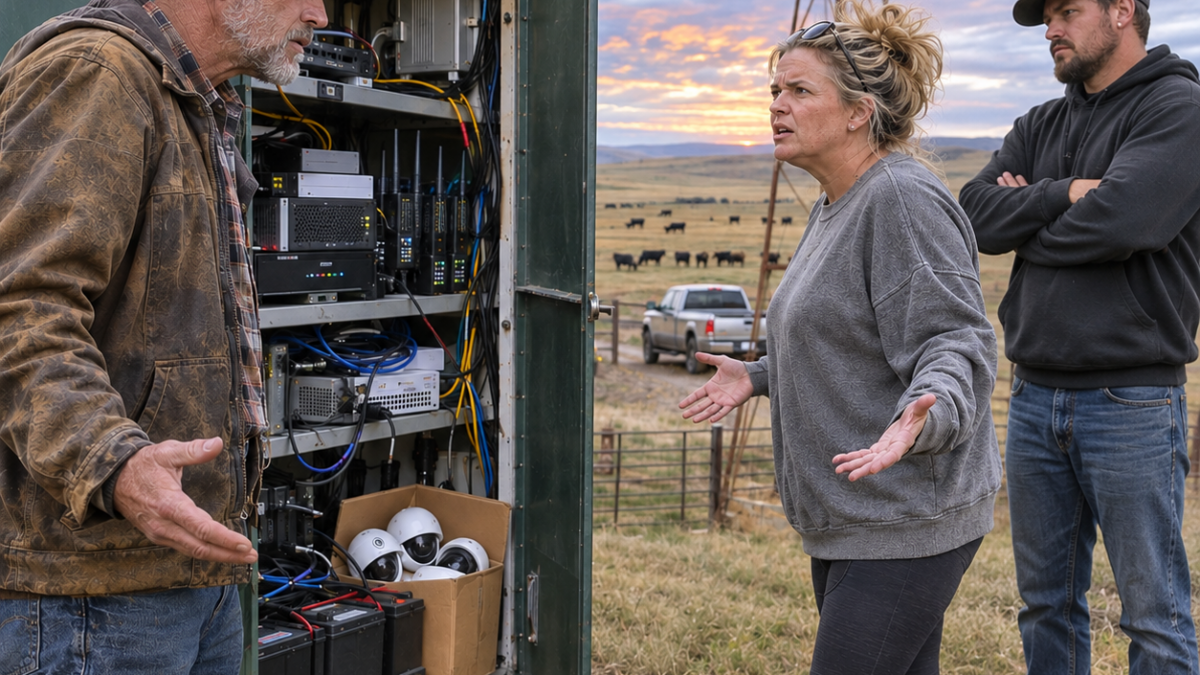
My Ranch Radios Went Dead—Then I Opened My Private Repeater Cabinet and Found It Packed With HOA Security Gear
At 5:47 on a freezing Thursday morning, every radio on my 600-acre Wyoming ranch went dead while thirty cattle were loose and one of my workers had stopped answering—and when I reached my private repeater cabinet, the lock had been replaced with one labeled Sage Hills Community Security.
I cut it open and found my equipment shoved aside behind HOA transmitters, camera recorders, backup batteries, and a surveillance map marking my barn, fuel tanks, roads, and even the route to my house.
Then a stranger’s voice broke through the static and calmly said, “Cabinet’s open. Call Karen,” and I realized whoever had taken over my radio system already knew I was standing there.
At 5:47 that Thursday morning, I was standing beside the equipment barn with a cup of coffee in one hand and a handheld radio in the other when Jason Miller’s voice disappeared in the middle of a sentence.
“Daniel, we’ve got cattle through the north—”
Static.
Not ordinary static.
A hard electronic burst that swallowed the whole channel.
I keyed the radio.
“Jason?”
Nothing.
“Jason, come back.”
More static.
The battery indicator showed full.
I switched channels.
Nothing.
Tried the barn repeater.
Nothing.
Tried calling Frank Parker.
Nothing.
Then I tried Tyler Brooks.
Nothing.
That was when I stopped thinking about radios and started thinking about men.
The Lawson Ranch covered just under six hundred acres outside Sheridan, Wyoming.
Beautiful country.
Rolling grassland.
Cottonwoods along the creek.
Low hills that turned gold in late summer.
Snow in winter.
Wind almost all year.
It was the kind of place people photographed from the highway and said they wished they could live there.
Usually those people had never repaired a frozen stock tank at two in the morning.
Cell service disappeared across almost half the ranch.
That was why our radio system mattered.
Every truck had one.
Every worker carried a handheld.
PART2:
We had a base unit in the barn and a repeater on the highest hill near an old windmill.
My father had installed the first version in the late nineties.
We had upgraded it over the years, but the idea never changed.
If a man got thrown from a horse on the west ridge, if a tractor rolled, if cattle broke a fence near the county road, the radio could reach where a phone could not.
That morning, it reached nowhere.
Then Jason’s truck came over the ridge much too fast.
He hit the brakes near the barn and jumped out before the truck had completely stopped.
“We’ve got cattle through the north fence.”
“How many?”
“Thirty, maybe.”
“Where’s Tyler?”
“That’s the problem.”
Jason looked toward the north pasture.
“He went down there alone. I can’t raise him.”
“Is he hurt?”
“I don’t know.”
That changed everything.
PART3:
I grabbed a second radio from my truck.
Different battery.
Same static.
I tried the base station inside the barn.
Nothing useful.
Just noise.
Then I looked toward the hill.
Our repeater sat up there inside a green steel cabinet beside the old windmill.
Locked.
Private.
Mine.
“Get in.”
Jason climbed into my truck.
Frank headed north in another vehicle to find Tyler.
I drove for the hill.
The closer we got, the more uneasy I felt.
The cabinet had been there for almost twenty years.
Thomas Reed, the communications technician who maintained our system, inspected it twice a year.
Nothing about it was sophisticated.
Repeater.
Battery bank.
Charge controller.
Solar panel.
Some filters.
Antenna cables.
It was ranch infrastructure.
Nothing more.
We stopped beside the windmill.
I got out.
Then I saw the padlock.
My old brass lock was gone.
In its place hung a new black combination lock.
Silver sticker across the front.
SAGE HILLS COMMUNITY SECURITY.
For a second, my brain refused to understand what I was seeing.
Sage Hills was the HOA development along my southern boundary.
Their houses were almost two miles away from that hill.
They had no equipment agreement with me.
No easement.
No key.
No reason to have a lock on my cabinet.
Jason came around the truck.
“That yours?”
“No.”
I walked closer.
The cabinet door itself looked untouched.
No pry marks.
No bent hinges.
Just somebody else’s lock hanging where mine should have been.
I went back to the truck for bolt cutters.
Jason watched me.
“You sure?”
“It’s my cabinet.”
The lock snapped.
I pulled it free.
Opened the door.
And for several seconds, neither one of us spoke.
My repeater was still there.
Technically.
It had been pushed toward one side.
Everything around it belonged to somebody else.
Two wireless transmitters.
A network switch.
Four separate power supplies.
A cellular modem.
A battery backup.
Bundles of cable.
Three radio repeaters labeled SAGE HILLS SECURITY.
A black digital video recorder.
Boxes of cameras.
A laminated HOA equipment sheet taped directly over the label identifying my ranch frequencies.
Jason stared.
“What the hell is all that?”
I did not answer.
One of their power supplies was plugged into the circuit feeding my repeater.
Another had been tied directly into my battery backup.
The battery meter was almost empty.
Red warning lights blinked.
Then I saw a small transmitter mounted less than a foot from one of my antenna lines.
Its status light showed active transmission.
Continuous.
Thomas had warned me months earlier that a nearby transmitter could overload our equipment if it was badly configured.
Now I was looking at one.
Jason pointed toward the bottom shelf.
“Daniel.”
A folder.
Plain manila.
My name written on the front.
LAWSON RANCH RADIO / CAMERA COVERAGE.
I opened it.
The first page was a map.
Not Sage Hills.
My ranch.
The cattle barn circled.
Front gate.
Fuel tanks.
Equipment shed.
North pasture road.
Old quarry.
House access road.
Several positions marked with numbers.
Beside one location somebody had written:
DEAD ZONE AFTER MIDNIGHT.
NEED CAMERA 7 RELOCATED.
Jason leaned closer.
“Camera?”
I stared at the map.
Someone had studied my property closely enough to identify where their cameras worked and where they did not.
Then my radio cracked alive.
A weak voice pushed through the interference.
“Daniel…”
Tyler.
I grabbed it.
“Tyler, where are you?”
Static.
“Tyler?”
Another burst.
Then a different voice.
Male.
Clear.
Calm.
Close to our frequency.
“Cabinet’s open.”
Jason slowly looked at me.
The voice continued.
“Call Karen.”
Then silence.
That was the moment this stopped being a property dispute.
Someone knew we were standing on the hill.
Someone was listening.
And whoever it was expected Karen Whitmore to care that I had finally opened my own cabinet.
Five months earlier, I would have laughed if anybody had told me an HOA security system would end up inside ranch infrastructure my father had built before Sage Hills existed.
My name is Daniel Lawson.
I was fifty-three then.
The Lawson Ranch had been in my family since my grandfather bought the first section after coming home from military service.
Over three generations we added ground whenever neighboring families retired.
Nothing enormous by Wyoming standards.
But big enough to keep us busy.
Around one hundred twenty head of cattle most years.
Hay acreage.
A few horses.
Equipment in various stages of breaking.
My wife Rachel used to say ranching was mostly paying money to repair machines that existed to help us make money to repair other machines.
She was not wrong.
Rachel died seven years before all this started.
Short illness.
Fast enough that I still occasionally thought of something I should tell her before remembering there was no one to call.
Our daughter Jennifer lived in Colorado with her husband and two children.
Our son David worked in Casper.
Neither wanted the ranch full-time.
I understood.
A ranch is beautiful when somebody else owns the bills.
I had three full-time workers.
Jason Miller had been with me twelve years.
Tyler Brooks was twenty-four, energetic, mechanically gifted, and convinced speed limits were philosophical suggestions.
Frank Parker was sixty-one and had worked cattle longer than Tyler had been alive.
They were not employees in the corporate sense.
They were the people I trusted when things went wrong.
And things always went wrong.
For most of my life, the southern boundary of the ranch bordered dry pasture owned by Robert and Linda Jenkins.
Good people.
After Robert died, their children sold.
Mountain Ridge Communities bought the land and announced Sage Hills.
One hundred forty homes.
Clubhouse.
Pool.
Walking trails.
Decorative ponds.
Private security patrol.
The usual brochure.
I did not fight the development.
Their land.
Their decision.
During construction, Mountain Ridge asked for a temporary utility easement across one corner of my property for a fiber installation.
They asked.
We negotiated.
They paid fairly.
Their crews stayed inside the agreed corridor.
When the work finished, they left.
Simple.
That is how property agreements are supposed to work.
The first Sage Hills residents were mostly good neighbors.
Susan Parker brought her grandson to see calves.
Robert Miller bought eggs.
Harold Price walked along the boundary most mornings and waved.
I never had a problem with the neighborhood.
Then Karen Whitmore became HOA president.
Our first conversation happened at my front gate.
She arrived in a white SUV with SAGE HILLS HOA on a removable door magnet.
Beside her sat a man in a dark polo.
Scott Wallace.
Head of Sage Hills Community Security.
Not police.
Private security.
Karen explained that residents had reported vehicle break-ins.
They wanted more cameras.
I understood.
Then she pointed toward my radio hill.
“We’d like to install a camera up there.”
“No.”
She blinked.
“We’d compensate you.”
“I’m not interested.”
“The elevation gives us excellent coverage of the western entrance.”
“I understand.”
“Then why not?”
“Because that’s my radio site.”
“We wouldn’t interfere.”
“No.”
Karen glanced at Scott.
Scott was staring toward the hill.
She tried another argument.
“It could improve security for your ranch too.”
“My security is fine.”
“You don’t have cameras along the southern boundary.”
That caught my attention.
“How do you know?”
She hesitated.
“You can see from the road.”
Maybe.
I let it go.
Then she asked if they could mount a temporary wireless relay on one of my fence posts.
Again:
“No.”
It was not because I hated cameras.
I hated blurred boundaries.
Allow one relay today and tomorrow somebody needs access to service it.
Then a contractor.
Then an electrician.
Then nobody remembers what permission originally covered.
I wanted Sage Hills equipment on Sage Hills property.
Lawson equipment on Lawson property.
Simple.
Karen smiled tightly.
“We’ll find another solution.”
I thought that was the end.
A few weeks later, Thomas Reed came for our annual radio inspection.
He checked the repeater.
Battery.
Weather seals.
Antenna.
Before leaving he asked:
“You getting interference around midnight?”
“Not that I know of.”
“I picked up a weak digital signal close to your operating range.”
“Problem?”
“Not yet.”
Nearby equipment created noise all the time.
Construction systems.
Business radios.
Security networks.
Badly filtered transmitters.
Thomas adjusted one filter and told me to call if it became worse.
Two weeks later Tyler complained about static in the south pasture.
Jason heard the same thing near the fuel shed.
Frank noticed clicking at night.
Thomas came back with a spectrum analyzer.
He measured new transmissions coming from the direction of Sage Hills.
“Illegal?”
“Not automatically.”
I appreciated that answer.
Facts first.
Accusations second.
Sage Hills was installing wireless cameras and security radios.
Properly configured, all perfectly legal.
Then one evening I found a Sage Hills patrol vehicle seventy yards inside my ranch.
Scott Wallace was driving.
Another security employee sat beside him.
I blocked their route with my pickup.
Scott rolled down his window.
“Daniel.”
“What are you doing?”
“Looking for a resident’s missing dog.”
“On my ranch?”
“They reported it came through the fence.”
“Did you call me?”
“We didn’t think it was necessary.”
“It is.”
Scott looked irritated.
“We’re trying to help.”
“I’m not telling you not to help. I’m telling you to ask before driving across private property.”
“Fine.”
Then I saw a directional antenna in the rear of his SUV.
Alongside radio equipment.
“What’s that?”
“Security communications.”
“Why do you need it to find a dog?”
Scott looked at the employee.
“Testing coverage while we’re out.”
That answer bothered me.
The missing dog was later found sleeping beneath its owner’s porch.
Two days afterward, Karen called.
She said Scott felt I had been “uncooperative.”
“He entered my ranch without permission.”
“He was helping a resident.”
“He could have called.”
“You’re making a simple issue complicated.”
“No, Karen. I’m making a simple boundary clear.”
Then she asked again for access to the hill.
Temporary.
Just a repeater test.
No permanent equipment.
I said no.
She said it could improve emergency coverage.
I said no.
She said they would not touch my system.
I said no.
That was the second unmistakable refusal.
After that, our radio interference became worse.
Not dramatically.
That would have been easier.
Static here.
Dropped transmission there.
Clicking late at night.
A conversation disappearing mid-sentence.
Thomas tested the equipment twice.
Mechanically, everything worked.
Then he noticed our backup battery was draining too fast.
Eighteen months old.
Should have been fine.
He changed a connector.
Problem improved for a week.
Then returned.
We should have torn the hill cabinet apart.
We did not.
Why would we?
It was locked.
No damage.
Solar looked normal.
We assumed something inside our own system was failing.
That assumption cost us time.
Then Sage Hills began installing security cameras along its western walking trail.
The cameras themselves stayed on HOA property.
At least the visible ones did.
One afternoon Susan Parker stopped me at the feed store.
“Daniel, your ranch is famous.”
“What?”
“The security committee has maps everywhere.”
“What maps?”
“Coverage maps.”
“How much coverage?”
She shrugged.
“Part of your south field, I think.”
One HOA resident on their technology committee emailed me a presentation after confirming residents were allowed to share it.
A slide titled PERIMETER OBSERVATION COVERAGE showed shaded camera zones.
One extended almost half a mile into my ranch.
I called Karen.
“Are you recording my property?”
“Security cameras record whatever is visible.”
Technically true.
A camera standing on one parcel can see another.
Still, there is a difference between incidental visibility and deliberately designing surveillance around someone else’s barns.
“Any cameras physically on my land?”
“No.”
“Any transmitters?”
“No.”
“Cables?”
“No.”
“Radio equipment?”
There was a pause.
“No.”
I remembered that pause later.
At the time, I accepted her answer.
Then Frank Parker found a small black device mounted on one of my fence posts.
My fence post.
Not Sage Hills.
Short antenna.
Small solar cell.
No obvious label.
I photographed it and called Thomas.
Wireless signal relay.
Used for cameras or low-power sensors.
I called Karen.
She said she knew nothing about it.
Ten minutes later Scott called.
“That’s ours.”
“Karen just said it wasn’t.”
“She probably didn’t know.”
“Why is it on my fence?”
“Coverage testing.”
“Remove it.”
“It’s temporary.”
“Remove it.”
He sighed.
“We’ll get it tomorrow.”
“Today.”
Scott came two hours later.
I watched him take it down.
Then I handed him a written notice my attorney, Rebecca Hayes, had prepared.
No Sage Hills equipment on Lawson Ranch without written permission.
No camera devices.
No relays.
No cables.
No patrol employees except during genuine emergency or direct invitation.
Scott read it.
“Lawyer already?”
“I like clear paperwork.”
He shook his head.
“You ranch guys really don’t like neighbors.”
I pointed toward Susan Parker’s grandson feeding carrots to one of my horses.
“I like neighbors fine. I don’t like people attaching equipment to my land without asking.”
For a month, nothing obvious happened.
Then Thomas found a thin black cable tied along the backside of our antenna mast.
New.
Not ours.
He followed it down the slope until it disappeared underground.
Someone had buried cable on my hill.
Rebecca told me not to start digging blindly.
Document first.
Photographs.
Measurements.
Call Karen.
She denied knowing anything.
Scott suggested it might be an old developer line.
Thomas said the jacket looked less than a year old.
Three days passed.
No explanation.
Then a Sage Hills technician named Paul Norton called me privately.
He sounded frightened.
“Mr. Lawson, I think you should check your hill equipment.”
“I did.”
“No.”
Pause.
“Inside.”
“What do you mean?”
Another silence.
“I can’t say more.”
“Paul, is there Sage Hills equipment inside my cabinet?”
He hung up.
I drove up there that afternoon.
My key still worked.
I opened the cabinet.
Nothing.
Repeater.
Battery.
Charge controller.
Normal.
No hidden HOA gear.
For four days afterward, our radios worked perfectly.
I actually began wondering whether Paul had misunderstood something.
Then Sage Hills lost power during a windstorm.
Their generators kicked on.
Our radios immediately filled with static.
Thomas came the next morning.
The signal was strong.
Coming from our hill.
Yet the cabinet looked normal again.
He walked around the back.
Stopped.
Four screws.
Fresh marks.
Someone had been removing the rear panel of my cabinet.
That was how they were getting in without touching my lock.
We planned to come back Thursday morning with tools and open the rear assembly properly.
We should have done it immediately.
At 5:47 Thursday, every ranch radio died.
Tyler disappeared.
Cattle escaped.
And when Jason and I reached the hill, my brass lock had finally been replaced.
Now I stood with an HOA surveillance map in my hand while a stranger had just announced over the radio that my cabinet was open.
Then my phone rang.
Karen Whitmore.
I answered.
“What did you put in my cabinet?”
She did not sound surprised.
That mattered.
Instead she said:
“Daniel, don’t disconnect anything.”
“You knew.”
“Listen to me. If you start pulling cables, you could knock out security coverage for the entire western half of Sage Hills.”
“You put it inside my private radio cabinet.”
“We needed temporary coverage.”
“I told you no.”
“Our residents have had break-ins.”
“That does not make my property yours.”
“You don’t understand the emergency system.”
“No, Karen. You don’t understand the word no.”
She inhaled.
Then changed tone.
“Daniel, there are devices in that cabinet associated with an active investigation.”
“What investigation?”
“I can’t discuss it.”
“Then call the sheriff.”
Silence.
That silence told me more than everything before it.
I ended the call and called the county sheriff myself.
A ranch truck came racing toward us.
Frank Parker.
He got out.
“We found Tyler.”
My stomach dropped.
“Is he okay?”
“He’s alive.”
Not the same thing.
Tyler had been thrown from an ATV while trying to turn cattle away from the county road.
Shoulder looked broken.
Possibly ribs.
He had tried calling.
Repeatedly.
Nobody heard him.
Because our radios were being drowned beneath equipment somebody else installed on our own hill.
I felt anger rise.
Then Jason pointed into the cabinet.
“Daniel.”
The security recorder’s small monitor had changed views.
Camera one.
Sage Hills front gate.
Camera two.
Walking trail.
Camera three.
Clubhouse.
Camera four.
My south pasture.
Camera five.
My fuel tanks.
Camera six.
My equipment barn.
Camera seven.
The road to my house.
Then camera seven moved.
Not a digital zoom.
The camera itself rotated.
Slowly.
Until my front porch sat centered on the screen.
Someone was controlling it live.
Jason whispered:
“They’re watching us.”
The first sheriff’s SUV appeared below the hill.
Then a second.
Before they reached us, the recorder beeped.
REMOTE WIPE REQUEST RECEIVED.
Jason looked at me.
“What does that mean?”
“Don’t touch anything.”
A deputy was running toward us.
Thomas Reed’s truck appeared behind him.
The recorder changed.
DELETE ALL VIDEO ARCHIVE.
I pointed.
“Someone’s deleting it.”
The deputy was James Walker.
He looked at Thomas.
“Can you stop it without destroying evidence?”
Thomas studied the wiring.
Reached past the power connections.
Pulled one network connector.
The countdown froze.
Screen changed.
CONNECTION LOST.
ARCHIVE PRESERVED.
Nobody spoke for a second.
James looked inside the cabinet.
Then at me.
“You authorize any of this?”
“No.”
“Shared communication agreement?”
“No.”
“Camera agreement?”
“No.”
“Access easement to this hill?”
“No.”
He began taking photographs.
Then his radio called.
Another deputy had found buried conduit crossing beneath my southern boundary from Sage Hills.
We traced it.
One branch went toward the hill.
Another continued north.
Toward my equipment barn.
Thomas used a locator.
The signal entered beneath the barn floor.
Behind an electrical panel we found a hidden network box.
Powered.
Active.
One cable went upward.
Another disappeared toward my office.
James immediately stopped us from touching it.
Thomas traced the line.
Into the office.
Behind shelving.
Toward my router.
It did not connect directly.
Instead, a tiny device sat hidden between my local network line and the router.
James asked:
“What is that?”
Thomas answered:
“Network bridge.”
“What does that mean?”
Thomas looked at me.
“It means whoever installed this might not only be using Daniel’s power and hill.”
He pointed toward my computer.
“They may have been inside his network too.”
Then James received a call.
Deputies searching the Sage Hills security office had found a wall covered with photographs.
My workers.
My trucks.
Cattle gates.
Fuel tanks.
My daughter Jennifer’s SUV during her last visit.
And in the center:
My house.
Written beneath it:
OWNER LEAVES TUESDAYS.
OFFICE USUALLY EMPTY 9:00–3:00.
That was when the word “security” stopped meaning anything to me.
Someone had been studying us.
Tyler went to the hospital with a broken shoulder and two cracked ribs.
The cattle were gathered before reaching the county road.
That was the one good thing.
Digital crimes investigator Laura Mitchell arrived before noon.
She did not walk onto my ranch announcing theories.
I liked her immediately for that.
Photographs first.
Questions.
Who had access?
Who knew the hill cabinet existed?
Who knew I went into town most Tuesdays?
Who installed the ranch internet?
Who had been inside my office?
Was anything missing?
At first, nothing obvious.
Then Jason opened one desk drawer.
“Daniel, where’s your backup drive?”
I looked.
Gone.
Small portable hard drive.
Accounting backups.
Equipment records.
Scanned property documents.
Maybe I moved it.
Maybe David borrowed it.
I called him.
No.
I checked the house.
Nothing.
Laura added it to the list.
Then we discovered our office printer had been active at strange hours.
2:14 a.m.
3:08 a.m.
1:47 a.m.
Print jobs on nights when the radio interference had been worst.
Thomas said someone connected through the hidden network bridge might have been able to reach printers.
Cameras.
Possibly shared files.
My ranch cameras existed to protect us.
Now I had to consider that somebody else might have been watching through them.
Thomas shut down the unauthorized hill transmitters one at a time.
The static faded.
Then disappeared.
Jason keyed his handheld.
“Barn to hill.”
I answered.
“Go ahead.”
His voice came through perfectly.
Clear.
That simple sound made me furious.
Nothing had been wrong with my system.
Our equipment had been overwhelmed by unauthorized gear somebody packed beside it.
Tyler had spent nearly twenty minutes injured in a field unable to reach us because someone decided my radio cabinet was convenient infrastructure.
Rebecca arrived that afternoon.
Her first instructions:
Do not threaten anyone.
Do not confront Karen.
Do not post accusations.
Do not start ripping out evidence.
Photograph damage.
Preserve records.
Let law enforcement determine crimes.
Let her handle civil and property issues.
I agreed.
Mostly because I knew my own temper well enough to understand why she said it.
The next morning Sage Hills sent a neighborhood email.
It described the shutdown of its security department as an “equipment dispute with an adjoining landowner.”
Equipment dispute.
An impressive phrase.
As if we disagreed about where to store a lawn mower.
Mr. Miller, one of the Sage Hills technology committee members, called me.
“They’re telling residents you shut down the cameras.”
“I didn’t.”
“I know.”
He had believed the HOA’s western relay sat somewhere inside Sage Hills.
Board records called it the WESTERN COMMUNICATIONS NODE.
No parcel location.
No mention of my ranch.
Then the HOA attorney, Charles Bennett, came to inspect the hill after deputies released the physical site.
He looked inside.
Went quiet.
Rebecca asked:
“How was this described to you?”
“A licensed shared relay location.”
I laughed once.
Charles looked at me.
“You signed no shared-site agreement?”
“No.”
“Nothing with Sage Hills?”
“No.”
“Security contractor?”
“No.”
“Mountain Ridge?”
“No.”
He rubbed his forehead.
Then we found the payment records.
Sage Hills had been paying $1,850 every month for use of the Western Communications Node.
Recipient:
High Plains Relay Services LLC.
Owner:
Scott Wallace.
The HOA security chief.
Scott had been charging the HOA almost two thousand dollars a month to “lease” a relay site that physically existed inside my private cabinet.
Using my land.
My battery.
My solar.
My mast.
The lease listed a parcel number inside Sage Hills.
Not mine.
The board thought it was paying for a legal site.
Charles stopped the payments immediately.
Then he said something important.
“This does not prove Karen knew where the physical equipment was.”
I did not like hearing that.
But it was true.
Karen wanted my hill.
I refused.
She later denied equipment was there.
Those facts were suspicious.
Suspicion was not proof of every later crime.
That became the rule of the entire case.
Facts.
Not anger.
Not assumptions.
Facts.
Paul Norton eventually admitted he had helped install cameras and run cable on my ranch.
Scott told him we had a “perimeter security cooperation” agreement.
To prove it, Scott showed him a signed authorization.
Daniel Lawson.
My name.
My signature.
Except I had never signed it.
Rebecca recognized the copied signature almost immediately.
It had been lifted from the old utility easement agreement I signed with Mountain Ridge years earlier.
Same shape.
Same spacing.
Even the small break in the L.
Someone had forged an access document from a legitimate contract.
Investigators also recovered server logs connected to the attempted remote wipe.
The deletion request came from Scott’s administrative account.
That alone did not prove Scott personally clicked the button.
Then access logs showed Scott entered the Sage Hills security office at 5:31 that Thursday morning.
Sixteen minutes before my radios went dead.
His company phone location placed him there too.
Two days later, the HOA fired him.
Not because every criminal accusation had been proven.
Because he owned an undisclosed company receiving HOA payments.
That alone violated his employment agreement.
Karen released a statement claiming Scott had misled her.
Maybe he had.
Then emails surfaced.
Karen:
DANIEL WILL NEVER APPROVE HILL ACCESS. FIND ANOTHER PATH.
Scott:
I HAVE A WORKAROUND.
Karen:
AS LONG AS BOARD EXPOSURE IS LIMITED.
Another exchange:
Scott:
NODE CAN SIT WHERE WE DISCUSSED. NO VISIBLE CHANGES.
Karen:
DO NOT INVOLVE ME IN INSTALLATION DETAILS.
Bad.
Very bad.
Still not proof Karen knew about burglary planning.
Then Rebecca found the email that defined Karen’s responsibility more clearly than anything else.
Karen had asked the HOA attorney:
CAN LONG-TERM SECURITY NEEDS OVERRIDE AN UNCOOPERATIVE NEIGHBOR’S REFUSAL IF EQUIPMENT CAUSES NO DAMAGE?
Charles had replied:
No.
Not without an easement.
Not without agreement.
Not without court authority.
Not except for genuine emergency entry justified by immediate circumstances.
Do not install permanent or semi-permanent equipment on Lawson property without written permission.
Karen replied:
UNDERSTOOD.
Three weeks later, unauthorized cable appeared on my hill.
She knew the boundary.
She chose not to make sure Scott respected it.
That did not automatically make her part of whatever else we were about to uncover.
But it made one thing impossible for her to claim later:
She had not known she needed permission.
Meanwhile, Tyler came home from the hospital wearing a sling.
His ribs hurt whenever he laughed.
Jason immediately spent ten minutes trying to make him laugh.
I told Tyler to stay home four weeks.
He refused.
We compromised.
Paperwork only.
No ATV.
No cattle.
No lifting anything heavier than coffee.
He complained.
I was happy to hear it.
The accident bothered me.
Maybe the radio failure had not caused him to fall.
Ranch accidents happen.
But the failed communication made everything worse.
He could not reach help.
We could not find him.
That mattered.
Sage Hills’ insurer opened a claim.
Our radio system needed filters.
New batteries.
A damaged amplifier.
The hill cabinet required repair.
Hidden cables needed removal.
The network needed a complete security audit.
Mr. Miller came by with an HOA check.
I refused it.
“Why?”
“Investigation isn’t finished.”
“The board wants to make this right.”
“I appreciate it.”
“Then take it.”
“I’ll let Rebecca handle claims.”
He shook his head.
“You are frustrating.”
“I’ve heard that.”
I did not want the entire neighborhood turned into an enemy.
Most Sage Hills residents had done nothing.
They paid dues.
They trusted people who claimed to provide security.
Then deputies found the cameras.
One aimed toward my south pasture from HOA property.
Intrusive, maybe.
But physically legal.
Another camera aimed near my fuel tanks from an HOA utility pole.
Then they found one hidden inside an artificial birdhouse attached to one of my cottonwoods.
My land.
Camera seven—the one that had rotated toward my front porch—was inside an abandoned grain bin.
Also my land.
Someone had been entering repeatedly.
Installing equipment.
Working long enough to mount cameras.
Run power.
Hide transmitters.
How?
Frank remembered a white “pest control” van that had crossed through the south gate the previous summer.
The workers said Sage Hills was treating mosquitoes near its drainage pond.
Frank assumed there was permission.
I was in town.
Tuesday.
Of course.
Laura found old offline camera footage.
White van.
PRAIRIE ENVIRONMENTAL SERVICES.
The real Prairie Environmental said none of its vehicles had been there.
Fake magnetic logos.
The driver was Paul Norton.
The same frightened technician who eventually called warning me about the cabinet.
Paul was not innocent.
He had entered my ranch.
Installed equipment.
Used false markings.
But fear or guilt had eventually made him talk.
Investigators discovered Scott had shown him the forged agreement.
Then digital analysis of the hidden network bridge came back.
It had captured months of local traffic.
Camera feeds.
Printer activity.
Device information.
Some unencrypted files.
Laura gave me the good news first.
No evidence of bank-account access.
No evidence anyone logged into my email.
No proof of financial theft from my accounts.
Then she turned the page.
Someone had copied shared folders from my office system.
Property records.
Equipment lists.
Employee schedules.
Insurance files.
Legal documents.
And a spreadsheet I had forgotten existed.
RANCH ASSET INVENTORY.
Tractors.
Trailers.
Fuel tanks.
Generators.
Serial numbers.
Locations.
Estimated values.
Laura asked:
“Who would want this?”
For the first time, I understood this might be more than aggressive HOA surveillance.
Nearby farms had reported equipment thefts.
A generator.
Two utility trailers.
Fuel.
Tools.
All properties near Sage Hills.
Then investigators recovered a folder from the Sage Hills recorder.
PATROL TARGETS.
Not HOA houses.
Outside properties.
Ranches.
Farms.
Vacant homes.
Notes.
OWNER AWAY.
TRAILER UNLOCKED.
NO DOGS.
My ranch:
TUESDAY SCHEDULE CONFIRMED.
Rebecca looked at Laura.
“This looks like burglary planning.”
Laura said:
“We’re considering that.”
Then Paul asked to speak again.
This time through an attorney.
He said Scott had been selling access to camera information.
Private logins.
People paid for data.
Empty homes.
Equipment locations.
Owner schedules.
Paul supplied three usernames.
One belonged to Scott.
One to Douglas Price.
The third:
KW.
Everyone immediately thought Karen Whitmore.
Laura refused to assume.
Good investigator.
Logs showed KW connecting frequently from Karen’s residential internet address.
Then dates were compared.
Many connections occurred while Karen was traveling.
She voluntarily turned over her router and laptop after her attorney reviewed the request.
The KW account belonged to Kyle Wallace.
Scott’s younger brother.
Kyle had lived in Karen’s basement apartment for eight months while doing maintenance work for Sage Hills.
After moving out, he left behind a remote-access computer connected to Karen’s router.
The same general kind of hidden bridge found in my barn.
Karen’s own network had been compromised.
For the first time, I saw genuine fear on her face.
That changed the picture.
She had still ignored legal advice.
Still pushed for expanded surveillance after I refused.
Still chosen not to ask enough questions.
But it looked increasingly possible Scott and Kyle had used the environment she created to build something much worse without telling her.
Then investigators identified Douglas Price.
Local hauling-company owner.
Prior theft convictions.
Search warrants followed.
Deputies found stolen equipment from neighboring properties in his yard.
Generators.
Tools.
Trailer.
Fuel equipment.
Then something from mine.
My missing backup hard drive.
Inside Douglas Price’s office.
No innocent explanation for that.
Beside it:
A printed map of my ranch.
Same base map as the one found inside the radio cabinet.
But this copy carried red notes.
FUEL TRAILER — THURSDAY.
ATV SHED — EASY.
OFFICE — TUESDAY.
MAIN EQUIPMENT BARN:
WAIT UNTIL RADIO TEST COMPLETE.
I read that line twice.
Radio test.
They had not merely caused interference because they were careless.
Someone had been testing how effectively our communication could be disabled.
Then Laura got a call.
Someone had entered the north equipment shed while we were away.
We drove back.
Door open.
Inside:
Bolt cutters.
Gloves.
Cable ties.
A handheld radio programmed to my frequencies.
A printed copy of that week’s worker schedule.
Then Frank called over our newly restored radio.
“Daniel, there’s a truck near the old quarry.”
Laura called deputies.
We drove down.
Truck hidden behind a dirt berm.
Engine running.
Driver door open.
Movement inside the quarry shed.
Deputies surrounded it.
A man emerged with both hands raised.
Kyle Wallace.
Scott’s brother.
Inside the shed they found tools.
Rope.
Fuel cans.
A portable signal jammer.
Six brand-new batteries matching our ranch radios.
And a box of tracking devices.
Labels.
TRUCK 1.
TRUCK 2.
ATV.
JENNIFER SUV.
My daughter’s vehicle.
Same one they had photographed.
Then they found an open laptop.
Live map.
Small dots.
My truck moving along the road.
Jason’s at the barn.
Frank’s near the south pasture.
They had trackers on us.
One more dot sat inside my house.
Label:
JENNIFER PHONE.
Jennifer was in Colorado.
I called her anyway.
“Dad?”
“Where are you?”
“Home. Why?”
“Kids with you?”
“Yes.”
“Stay there.”
Then Laura pointed at the screen.
The dot labeled JENNIFER PHONE moved.
Not in Colorado.
Inside my house.
Upstairs guest room.
Then an alert appeared.
MOTION DETECTED — HOUSE INTERIOR.
I looked toward the ranch house.
One upstairs window was open.
I had closed it that morning.
Deputies moved.
Laura would not let me go with them.
That was one of the hardest instructions I followed during the entire investigation.
My own house.
Less than two hundred yards away.
Somebody inside.
The live tracker moved from guest room to hallway.
Then downstairs.
The front and rear doors were locked.
Whoever entered had used a key, defeated the lock, or climbed through that window.
Laura called out over a loudspeaker.
Sheriff’s office.
Come out with empty hands.
Nothing.
Then a deputy shouted.
“Movement.”
Kitchen door opened.
A man stepped outside.
Hands raised.
Not Scott.
Not Douglas.
Michael Grant.
Former Sage Hills Community Security employee.
Official records said he had quit six months earlier.
Michael claimed he had entered to remove “company hardware.”
“What company?” Laura asked.
“High Plains Relay.”
Scott’s private company.
Deputies searched him.
Tools.
Memory cards.
Network tester.
Small wireless device.
No weapon.
No stolen jewelry.
Then they searched the guest room.
One deputy found a smoke detector that did not belong there.
I knew because I had replaced every detector in the house two years earlier.
Mine were white.
This one was cream.
Inside:
Camera.
Microphone.
Wireless transmitter.
Someone had been recording inside my home.
That was when anger changed.
Outside surveillance could be argued endlessly.
Boundary.
Field of view.
Security.
This could not.
A hidden camera in my guest room.
More devices were found.
One beneath an office bookshelf.
One near the mudroom.
Another hidden inside an old electrical outlet by the kitchen.
Some were cameras.
Others motion sensors or network relays.
Together, they could tell someone when rooms were occupied.
When devices connected.
When family visited.
I thought about Jennifer.
Grandchildren.
David.
Christmas.
Rachel’s family.
Private conversations inside the one place that was supposed to belong completely to us.
Michael requested an attorney.
Fair.
The devices spoke for themselves.
Investigators then figured out how he entered.
My back door used an older electronic deadbolt.
I had never changed the factory programming code after purchasing the property because I mostly used the physical key.
Who had serviced similar locks during renovations?
A contractor connected to Mountain Ridge.
And Sage Hills security had access to administrator information for the same systems.
The next morning, every lock changed.
Every code changed.
Every password changed.
Thomas brought cybersecurity technician David Reynolds.
We did not “fix” the network.
We rebuilt it.
Separate security network.
Separate office network.
No remote ranch accounting access.
New router.
New passwords.
Old equipment into evidence.
I felt ridiculous installing cybersecurity on a cattle ranch.
David told me:
“You don’t have to be a bank to own information somebody wants.”
He was right.
Schedules.
Gate codes.
Equipment locations.
Property files.
All valuable to the right kind of thief.
Michael eventually talked.
Scott had continued paying him through High Plains Relay after he left Sage Hills employment.
“Technical maintenance.”
A phrase that apparently included hidden cameras.
Relays.
Trackers.
Network monitoring.
And removing devices whenever Scott believed discovery was close.
Laura asked what Karen knew.
Michael answered:
“Not about the theft side.”
Those words mattered.
The theft side.
According to him, Sage Hills security began normally.
Residents had experienced break-ins.
Karen wanted more coverage.
Scott wanted more equipment.
When I refused access to the hill, Scott told Karen he would solve the technical issue.
Karen stopped asking how.
Irresponsible.
Cowardly, as she later admitted.
But Michael said the criminal network developed afterward.
Scott realized cameras revealed far more than neighborhood security.
They showed when surrounding ranches were empty.
Where expensive equipment sat.
Which roads workers used.
Kyle connected him with Douglas Price.
And security slowly became intelligence for theft.
Michael said some transmitters were badly filtered.
Others had been intentionally configured close enough to my working frequencies to test interference.
Laura asked why.
Michael looked at the table.
“Blackout runs.”
“What is a blackout run?”
Before stealing equipment from rural properties, the group wanted communications degraded.
They could not shut down cell towers.
But ranches like mine relied heavily on private radios.
Scott learned my frequencies while operating along the boundary.
Using unauthorized hill equipment, they could jam or overload our system long enough to create confusion.
Then somebody created a distraction.
Open gate.
Cut fence.
Trigger alarm.
Move cattle.
Workers respond one direction.
The theft crew enters from another.
I thought about Thursday.
North fence.
Loose cattle.
Tyler.
Radios dead.
“Was Thursday a blackout run?”
Michael shook his head.
“Test.”
One word.
That made the room feel colder.
A test.
Kyle had cut the north fence.
Scott jammed the radios.
They wanted to see how fast we responded.
Nobody intended Tyler to crash.
According to Michael.
I did not care much about that distinction.
If you deliberately open a cattle fence and disable communication, you do not get to pretend consequences are somebody else’s bad luck.
Investigators asked when the real theft was planned.
Michael hesitated.
“Soon.”
Scott had changed plans after I discovered the cabinet.
Now he was missing.
His truck turned up at a trailhead.
Phone left inside.
House empty.
Wife frightened.
Deputies searched a hunting trailer near the Big Horns.
Nothing.
Then they searched High Plains Relay’s business address.
A rented storage building.
Inside were shelves of radios.
Cameras.
Tracking devices.
Fake contractor decals.
Uniform shirts.
Network hardware.
Blank work orders.
Property files.
Not just mine.
Six ranches.
Four farms.
Vacation homes.
Construction yards.
A neighborhood security operation had become camouflage for something criminal.
A van marked as a security contractor could sit beside a property without attracting attention.
A technician could photograph a gate and call it coverage mapping.
A camera could observe equipment and call it perimeter protection.
Good tools.
Bad control.
Sage Hills held an emergency HOA meeting.
I did not want to attend.
Mr. Miller asked me to.
The clubhouse was packed.
Karen sat at the board table.
She looked completely different from the woman who once stood at my gate explaining why her cameras would make my property safer.
No clipboard.
No confidence.
Just tired.
The HOA attorney laid out what the board could legally confirm.
Unauthorized equipment had been installed on Lawson Ranch.
The board had not approved trespass.
The HOA had unknowingly paid Scott’s private company for a relay location different from the site described in financial documents.
Security cameras had been used outside the scope residents understood.
Scott had been fired.
Sage Hills Community Security was suspended.
Residents erupted.
Some wanted every camera removed.
Others were terrified because real vehicle break-ins had happened.
One woman shouted:
“I moved here because you promised security.”
Another yelled:
“Security from who? Us?”
Eventually Karen stood.
The room went quiet.
She admitted she pushed Scott to expand surveillance.
Admitted Charles told her equipment could not be placed on my property without permission.
Admitted that after I refused, she told Scott to find another solution.
Then she said something I did not expect.
“I chose not to ask questions because I wanted the result.”
That was probably the most honest thing she ever said to me.
She denied knowing about theft planning.
Denied hidden cameras inside my home.
Denied trackers.
Denied Scott selling access.
By then, evidence suggested she probably was telling the truth about those parts.
Then she looked directly at me.
“I should have stopped the moment Daniel said no.”
Yes.
That was where it started.
Not the burglary network.
Not hidden cameras.
The permission problem.
Everything else grew inside the space people created after deciding my answer was inconvenient.
Karen resigned that night.
No dramatic vote.
No sheriff dragging her away.
She resigned.
Mr. Miller became acting president and looked almost physically ill when people applauded.
I laughed.
He heard me.
“I hate you.”
“No, you don’t.”
“Maybe a little.”
For several weeks, life became almost normal.
Our radio system worked perfectly.
Thomas replaced the old cabinet with a hardened enclosure.
Independent battery.
Independent solar.
Tamper alarm.
No shared mast.
No mystery wiring.
Tyler healed.
Jason repaired the north fence.
Frank went back to complaining about feed prices.
Mr. Miller brought hamburgers one Saturday as a peace offering.
I told him they probably violated HOA architectural guidelines.
He laughed.
Then Laura called.
The hidden bridge from my barn had finished digital analysis.
It had copied ranch asset files.
Camera footage showed equipment being zoomed in on at night.
Other nearby farms had reported thefts.
The case was growing.
Then Douglas Price’s property search turned up the map saying:
WAIT UNTIL RADIO TEST COMPLETE.
Soon afterward somebody broke into my north equipment shed.
Kyle was caught near the quarry.
Trackers were found.
Michael was caught inside my house.
Scott remained missing.
Then investigators recovered Scott’s cloud backup.
He had tried deleting it.
The provider retained a copy.
Inside was everything.
Payments.
Camera logins.
Property notes.
Messages with Kyle.
Burglary targets.
Blackout plans.
One folder:
LAWSON FINAL.
Laura warned me before opening it.
I told her to continue.
The plan targeted almost $140,000 in ranch equipment.
Portable generator.
Two ATVs.
Fuel trailer.
Welding unit.
Tools.
Three distractions.
First:
Open north cattle gate.
Second:
Jam ranch radios.
Third:
Trigger motion at old quarry.
Workers would move north and west.
A second crew entered from the south.
They had even calculated our response times.
DANIEL — NORTH PASTURE 8–12 MINUTES.
JASON — BARN TO NORTH 6 MINUTES.
FRANK — LIKELY FOLLOWS CATTLE.
TYLER — UNCERTAIN.
We had become pieces on a board.
The date for the first attempt?
Thursday.
The morning Tyler crashed.
Beside it:
CANCELLED AFTER INJURY.
Not because Scott suddenly developed morals.
Sheriff.
Ambulance.
Too much attention.
Then another date.
Two weeks later.
The night Kyle was arrested near the quarry.
That had been the rescheduled theft attempt.
Douglas already arrested.
Kyle now arrested.
Scott still missing.
The server also contained a remote-control script.
Thomas studied it.
It could activate hidden equipment still installed around the ranch.
Trackers.
Gate modules.
Relays.
A quarry power switch.
Two ranch gates had hidden remote openers.
We removed them.
Then Thomas noticed one scheduled event.
EVENT BLACKOUT.
Tonight.
11:58 p.m.
Commands:
11:58 — disable repeater.
11:59 — open south equipment gate.
12:00 — activate quarry motion beacon.
12:02 — disable house exterior lights.
12:04 — route camera feed to private server.
Laura had an idea.
Let the script partially run.
Controlled.
Block the dangerous commands.
Keep deputies hidden around the property.
Monitor the private server.
See if someone logged in live.
Possibly Scott.
I agreed.
At 11:50 that night, Jason, Frank, Tyler, Thomas, Laura, and I sat in my kitchen drinking coffee nobody needed.
Tyler still wore a shoulder brace.
I had ordered him to stay home.
He ignored me.
At 11:58, the repeater received the shutdown command.
Thomas blocked it.
11:59.
South gate open command.
Hidden module already removed.
Nothing moved.
Midnight.
Quarry motion beacon activated.
Deputy confirmed.
12:02.
Exterior light command.
Blocked.
Then Laura leaned toward her laptop.
“Connection.”
Someone had logged into Scott’s private server.
Not automation.
A person.
At almost the same moment, a deputy whispered over the radio.
“Vehicle approaching south boundary.”
Second vehicle on county road.
Movement near quarry.
Three directions.
Exactly like the original plan.
Laura looked at me.
“This isn’t just the script.”
Then the entire ranch went dark.
Not just outside lights.
Everything.
House.
Barn.
Workshop.
Repeater.
Thomas stood.
“That wasn’t the script.”
Backup generator should have started.
It did not.
Static returned to my radio.
Then the landline rang.
Nobody moved for one second.
Laura looked at me.
“Answer.”
I picked up.
No greeting.
Then Scott Wallace’s voice.
Calm.
“You should have left the cabinet closed.”
Click.
Laura ordered every deputy to move.
Jason shouted from the rear window.
“Daniel.”
Orange light glowed beside the equipment barn.
Then climbed.
Fire.
Hay storage.
Someone had set it.
Wind pushed flames toward the barn wall.
Another radio call.
Two suspects detained at south gate.
Another running from quarry.
Thomas stared at his screen.
“The server connection is moving.”
“Where?”
He looked at me.
“Inside the ranch.”
Scott was already here.
Then the repeater came alive for one moment.
A voice.
Scott.
“Try saving the barn.”
Then my house security alarm triggered.
Not smoke.
Upstairs office window.
Open.
Scott had not come only for equipment.
Someone was inside my house.
Laura stopped us from running upstairs.
Two deputies moved through the hallway.
Flashlights.
Outside, fire painted orange light across the windows.
We heard a crash upstairs.
A command shouted.
Then another crash.
Laura’s radio:
“Subject moving rear roof.”
I ran to the kitchen window.
A man dropped from the small porch roof.
Hit the ground.
Rolled.
Got up.
Ran toward the orchard.
I recognized him.
Scott.
Deputies chased him.
Laura finally let Jason, Frank, and me help with the fire after the yard was cleared.
Emergency water tank still had pressure.
We pulled hoses.
Soaked the barn wall.
Dragged loose hay away.
Tyler stood back in his brace yelling directions, which apparently meant injury had promoted him to management.
Jason almost laughed.
Then the wind shifted.
Away from the barn.
Volunteer firefighters arrived within ten minutes.
The main structure survived.
Thirty bales did not.
Part of the hay shed burned.
Electrical lines melted.
Tools took smoke damage.
Compared to what could have happened?
Nothing.
Laura walked toward me while firefighters worked.
“They have Scott.”
I closed my eyes.
“Where?”
“North orchard.”
“Anyone hurt?”
“One deputy twisted an ankle. Scott got cut crossing the fence.”
No gunfight.
No dramatic standoff.
No one dead.
Just a tired man caught running through wet grass toward a fence he had probably watched through cameras for months.
Scott carried a backpack.
Inside:
Two hard drives from my upstairs office.
Memory cards.
Network equipment.
Handheld radio.
Pry tool.
One drive contained property records and family photographs.
The other held archived security footage and business files.
Scott had returned for evidence.
He believed my backup drives contained footage showing how often he and Kyle had entered the ranch.
He was right.
The hay fire?
Distraction.
That made me angrier than the attempted theft.
Fire does not understand plans.
Fire does not know it is only supposed to scare people.
Fire does not agree to stop before reaching a barn or pasture or house.
Scott later claimed he intended only a small fire beside the hay storage.
One of the stupidest sentences I have ever heard.
There is no safe fire beside dry hay.
The criminal cases lasted months.
There was no single courtroom scene where everybody confessed while a judge delivered the perfect speech.
Real consequences moved slower.
Scott eventually pleaded guilty to several serious offenses after negotiations.
Charges related to burglary planning.
Illegal surveillance.
Unauthorized computer access.
Forgery.
Trespass.
Property damage.
The fire.
Conspiracy.
Some counts combined.
Others dropped as part of agreements.
He received a substantial prison sentence.
Kyle pleaded guilty to charges tied to trackers, unlawful entry, surveillance devices, and attempted theft.
Douglas Price faced stolen-property and theft charges.
Paul received reduced consequences because he cooperated early and helped investigators understand the technical system.
Reduced did not mean innocent.
He had entered my ranch.
Installed devices.
Used fake contractor markings.
His later courage mattered.
It did not erase his earlier choices.
Michael faced penalties too.
He had helped install hidden equipment and then made another bad decision by assisting Scott after he had already begun cooperating.
Fear explained some of his behavior.
Fear did not erase responsibility.
Karen’s case remained different.
Investigators found no evidence she knew Scott had converted HOA surveillance into a burglary network.
No evidence she approved tracking my daughter.
No evidence she knew about cameras inside my house.
No evidence she participated in theft planning.
But she had still crossed a serious line.
She knew I refused.
She had legal advice telling her she could not put equipment on my land.
Then she told Scott to find another solution and deliberately avoided details because she wanted the outcome without having to confront how it was achieved.
That did not make her a burglar.
It made her a leader who chose ignorance because knowledge might have forced her to stop.
The HOA barred her from leadership under its bylaws.
Civil claims included her role in the unauthorized expansion.
The following spring, she sold her house.
Before leaving Sage Hills, she asked to meet me.
I almost refused.
Then I remembered something Rachel used to say.
“You don’t have to reopen a door to let somebody close it properly.”
So I met Karen at the gate.
She looked older.
Not in years.
In exhaustion.
“I owe you more than an apology.”
“You already apologized.”
“Not for the right thing.”
I waited.
She looked toward the radio hill.
“I kept telling myself Scott was aggressive but useful.”
I said nothing.
“Every time he crossed a line, I told myself residents wanted security.”
Still nothing.
“When Charles told me we needed your permission, I should have stopped.”
“Yes.”
“Instead I told Scott to solve it without involving me.”
She looked at me.
“That was cowardly.”
I appreciated that word.
Not misunderstood.
Not bureaucratic.
Cowardly.
She did not want to know how Scott solved the problem because knowing created responsibility.
Then she asked about Tyler.
“He’s fine.”
“I’m glad.”
“He still complains.”
“That sounds healthy.”
“It is.”
She looked toward Sage Hills.
“I really believed more cameras meant more safety.”
“Cameras are tools.”
I nodded toward the neighborhood.
“People decide what they become.”
She left.
We never spoke again.
The civil process took almost a year.
Insurance covered most radio damage.
Network replacement.
Battery systems.
Cabinet repair.
Cable removal.
Parts of Tyler’s medical costs linked to delayed emergency communication.
The fire damage went through a mixture of my insurance and restitution claims.
Slow.
Messy.
Eventually money became less important.
I wanted my property back.
Every hidden cable removed.
Every camera found.
Every tracker pulled.
Thomas checked the trucks twice.
Jason made him check again.
The conduit crossing from Sage Hills was cut and sealed at the property line.
No shared power.
No shared antennas.
No hidden network.
The hill cabinet once again contained only ranch equipment.
That felt better than I expected.
When Frank Miller was officially elected HOA president, he asked if I wanted every Sage Hills camera near my boundary removed.
I surprised him.
“No.”
“Why not?”
“Some of them are useful.”
The western entrance camera did not invade my privacy.
The public walking-trail camera made sense.
The problem had never been that cameras existed.
The problem was people using the word security to make permission optional.
So we wrote a simple agreement.
Any camera intentionally observing beyond the immediate boundary had to be listed.
No Sage Hills equipment on Lawson Ranch.
No camera pointed toward my home, barns, worker areas, or windows.
No remote camera movement into those areas.
For genuine emergency access, call me or call the sheriff.
Frank read it.
“That’s it?”
“That’s it.”
“You’re not charging us?”
“No.”
“Why?”
“Because money wasn’t the point.”
Permission was.
That was one of the strangest lessons from the whole mess.
People often assume boundaries are negotiations about price.
Sometimes a boundary is simply:
Ask.
Listen.
Respect the answer.
Scott could have built a relay tower inside Sage Hills.
Would have cost more.
Might not have worked as well.
But it would have been theirs.
Instead, he used my hill because it was easier.
Then hid it.
Then lied.
Every worse decision followed that first shortcut.
Sage Hills eventually dissolved its private patrol department.
A licensed outside company handled basic gate monitoring and emergencies.
Camera locations became visible to residents.
Footage exports required authorization.
No shared administrator accounts.
Vendor contracts received board and attorney review.
Security directors could not secretly own companies receiving HOA payments.
Frank originally called that “the Scott Rule.”
I told him not to name rules after bad people.
They renamed it the conflict disclosure policy.
Better.
The sheriff later held a rural-security meeting at the Sage Hills clubhouse.
Ranchers.
Farmers.
Homeowners.
Small-business owners.
Thomas explained radio interference.
Laura explained trackers.
David Reynolds explained network security.
They asked me to speak.
I talked for about three minutes.
My message was simple.
Ask before entering somebody’s property.
People laughed.
But they understood.
Most neighbor disputes do not require fifty-page rules.
Ask.
Listen.
Respect the answer.
Tyler eventually returned to full duty.
The first day I allowed him back on an ATV, he drove so slowly Jason accused him of becoming eighty years old.
By afternoon he was moving too fast again.
His shoulder healed.
Ribs healed.
He kept the handheld radio that failed the morning he crashed.
Mounted it above his workbench.
Small label beneath it:
TRY CALLING AGAIN.
I told him it was not funny.
He said it was extremely funny.
Frank agreed.
I was outnumbered.
Jennifer visited later that summer.
First thing she asked Thomas to do?
Scan her SUV for trackers.
He laughed.
Then did it anyway.
Clean.
My granddaughter asked why the old grain bin had holes where cameras used to be.
I told her bad equipment had been removed.
That was enough.
Children do not need every ugly detail.
Then she asked whether she could paint a sign for the radio hill.
I said yes.
Bright red letters:
LAWSON RANCH RADIO SITE
Underneath:
PLEASE ASK FIRST.
I mounted it beside the new cabinet.
It is still there.
About a year after everything began, Frank Miller stood beside me on the hill looking down toward Sage Hills.
Children riding bicycles.
People walking dogs.
Sprinklers.
Normal life.
He asked:
“Still hate seeing us down there?”
“I never hated seeing you.”
“You hated Karen.”
“I disliked Karen.”
“You hated Scott.”
I thought about it.
“No.”
Frank stared.
“You’re a better man than me.”
“No.”
I looked at the cabinet.
“I just don’t want him occupying space in my head after he already occupied enough space in my cabinet.”
Frank laughed.
But it was true.
Anger is useful.
It tells you something is wrong.
That a line has been crossed.
But carrying it forever gives the person who crossed the line more control than they deserve.
I wanted my hill back.
My radios.
My privacy.
My normal life.
Eventually, I got them.
The ranch radio system still works.
Every truck carries one.
Every worker has a handheld.
The repeater has independent power.
Independent battery.
Tamper alarm.
Thomas checks it twice a year.
Jason complains about static even when there is none.
Tyler talks too much on channel two.
Whenever the system goes quiet for more than a minute, somebody says:
“Check for HOA equipment.”
The joke was funnier the first hundred times.
Still, we laugh.
Because the ending could have been different.
Tyler could have died in that field.
Cattle could have reached the highway.
The barn fire could have spread.
Scott could have escaped.
My house could have burned.
My family could have been there when hidden devices were active.
Instead, we got something messier than perfect justice but better than revenge.
Scott received the strongest consequences because evidence showed he created and expanded the criminal system.
Kyle answered for his part.
Douglas answered for theft.
Paul’s cooperation mattered but did not erase his wrongdoing.
Michael’s fear mattered but did not erase his choices.
Karen answered for the decisions evidence actually showed she made.
The homeowners did not become my enemies simply because criminals had used their HOA as cover.
That mattered to me.
Justice is not treating everybody as equally guilty.
It is separating what each person actually did.
The title sounds almost ridiculous when I say it now.
My ranch radios went dead.
I opened a cabinet.
Found it packed with HOA security equipment.
That really happened.
But the equipment was only the first layer.
Behind the radios were cameras.
Behind the cameras were hidden cables.
Behind the cables was network access.
Behind the network access were schedules, trackers, property maps, burglary targets, and a criminal operation hiding beneath something residents thought was keeping them safe.
And the strangest part is that nearly everything might have stopped before it started if one simple word had been respected.
No.
Karen asked for the hill.
I said no.
That should have ended it.
Instead, people decided their reason was important enough to turn my answer into a suggestion.
That is how small disrespect grows into large disaster.
Today, Sage Hills and Lawson Ranch have exactly one standing access agreement.
Emergency only.
Wildfire.
Missing child.
Serious vehicle crash.
Immediate threat to life.
Either side can cross the boundary to help without waiting for paperwork.
Everything else?
Permission.
Two pages.
Frank wanted twelve.
Rebecca wanted nine.
I insisted on two.
Some things do not need to be complicated.
The last time Frank visited, he stood beside my granddaughter’s red sign and looked at the repeater cabinet.
“No HOA equipment?”
“None.”
“No secret camera?”
“None.”
“No network bridge?”
“None.”
“That sounds almost boring.”
I looked across the ranch.
Cattle grazing.
Workers moving between barns.
No strange vans.
No hidden cameras turning toward my porch.
No one documenting when I left town on Tuesdays.
“Boring is underrated.”
Right then, Tyler’s voice came over my radio.
Perfectly clear.
“Daniel, north pasture gate is open.”
I grabbed the handset.
“Did someone cut it?”
“No. Jason forgot to close it.”
Jason immediately came over another radio.
“I did not.”
Frank Parker joined in.
“He did.”
Then three grown men started arguing over the same channel.
I stood on the hill listening to every word.
No clicking.
No interference.
No strange voice.
No burst of static.
Just my workers arguing about a gate like they had done a hundred times before.
And after everything we had been through, that ordinary noise sounded perfect.








