My Husband Called Me Stingy Over One Piece of Chicken—Then His Niece Exposed the Lie His Mother Had Been Feeding Him for Months
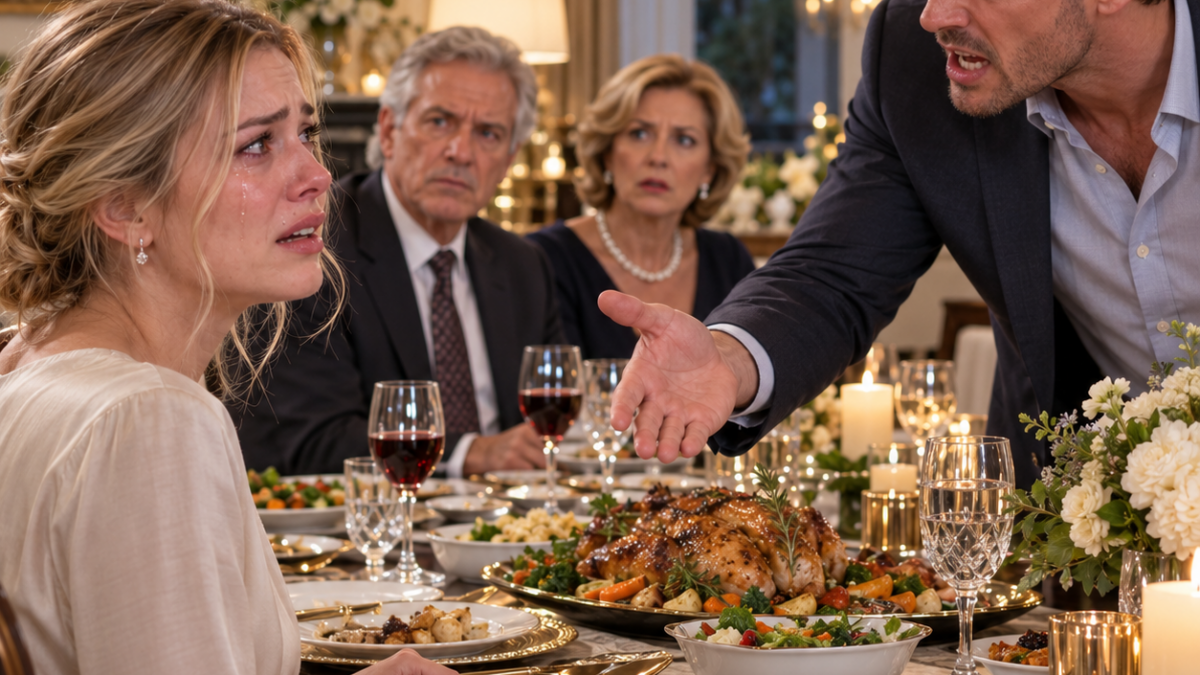
My Husband Called Me Stingy Over One Piece of Chicken—Then His Niece Exposed the Lie His Mother Had Been Feeding Him for Months
My husband accused me of starving his niece in front of our daughter and the child he claimed I had mistreated.
He did not know that nine-year-old Emma had been warned not to ask me for chicken because my mother-in-law wanted to catch me being cruel.
When Emma finally told the truth, the ugliest thing at that dinner was not what was missing from her plate—it was how quickly my husband believed I could be that heartless.
My name is Rachel Miller, and before that dinner, I truly believed my husband knew me.
Not perfectly. Nobody knows another person perfectly, not even after years of marriage, a mortgage, a shared daughter, a hundred ordinary mornings, a thousand grocery lists, and all the little compromises that make a home function without anyone clapping for it.
But I thought Mark knew the important things.
I thought he knew I was careful, not cold.
I thought he knew I would never humiliate a child over food.
I thought he knew the difference between me saving a piece of roasted chicken until his niece finished the snack already on her plate and me excluding a little girl from my table.
That was my mistake.
The thing about being misjudged by a stranger is that it stings and then passes. A stranger does not know your daily life. A stranger does not know how many times you packed school lunches, remembered food allergies, cut grapes in half when the kids were small, stayed up late frosting cupcakes for classroom birthdays, or stood in the kitchen with one hand on your lower back wondering if anyone in the house understood that love often looked like dishes.
But when your own husband misjudges you, when he takes a tiny moment and fills it with the ugliest motive he can imagine, it does something worse than sting.
It makes you wonder how long he has been looking at you through someone else’s story.
That evening started like any other family dinner.
It was a Friday in late October, the kind of chilly evening when daylight leaves too early and the windows turn dark before you’re ready for the day to be over. Our daughter Lily had a school art project spread across the breakfast nook, paper leaves and glue sticks everywhere, and Mark’s niece Emma was sitting beside her in mismatched socks, finishing a small plate of crackers, apple slices, and cheese cubes I had made earlier because she came over hungry after school.
Emma was nine.
Lily was eight.
They were close enough in age to adore each other one minute and accuse each other of emotional crimes over a purple marker the next. Emma had been coming to our house since she was a toddler. She knew where we kept the cups. She knew which drawer had the colored pencils. She knew I always kept strawberry yogurt for her because she hated blueberry and would rather starve than eat peach.
I loved that child.
Not in the same exact way I loved Lily, of course. Anyone who pretends every love feels identical is lying or trying too hard. Lily was my daughter, the heartbeat I had carried under my ribs, the child who could still make me wake from a dead sleep if she coughed wrong down the hall.
But Emma was family too.
She was Mark’s sister Danielle’s daughter, a serious little girl with big brown eyes, a sensitive stomach, and the habit of apologizing for things that were not her fault. She took small bites and listened more than she talked. She noticed moods in adults before adults admitted they were having them.
That made what happened even crueler.
Because Emma had already been carrying something before she sat at my dining table that night.
I just didn’t know it yet.
Danielle had dropped Emma off around four-thirty because she had a late appointment across town. It was not unusual. Danielle was a single mother, and Mark and I had always helped when we could. I worked from home three days a week as a billing coordinator for a dental group, so my schedule was more flexible than Danielle’s. If Emma needed somewhere to go after school, our house was often the answer.
That afternoon, Emma came in quieter than usual.
I noticed.
I always noticed.
“Hey, sweetheart,” I said, taking her backpack. “You hungry?”
She hesitated.
“A little.”
“Snack plate?”
She nodded.
“Can I have apples?”
“Green or red?”
“Red.”
“Cheese?”
“Just a little.”
“Crackers?”
“Yes, please.”
She followed me into the kitchen, standing near the island while I sliced the apple. Lily was still at the table, humming while she glued construction-paper leaves onto a poster board.
“You okay?” I asked Emma softly.
She looked at me quickly.
“Yeah.”
Too quick.
I set the apple slices on the plate.
“You sure?”
She nodded again.
“Just tired.”
I let it go because children deserve privacy too, and sometimes tired means tired.
But I remember now the way she watched me make that plate. Carefully. Like she was checking whether I was measuring something.
At the time, I thought maybe she was nervous because her mother was busy or because school had been hard.
I did not know my mother-in-law had already put a test in that child’s head.
Dinner was simple because Fridays were not for heroic cooking.
Rice with butter and a little garlic.
Steamed green beans.
Carrots roasted with honey.
PART2:
A whole chicken I seasoned with paprika, rosemary, lemon, and more salt than Mark thought necessary because Mark believed salt was optional and joyless.
By six, the kitchen smelled warm and golden. The chicken skin had crisped beautifully. Lily kept wandering in asking if it was ready. Emma stayed at the table, still nibbling from her snack plate while helping Lily decide whether a paper leaf looked “more maple or more regular.”
Mark got home late, which was also normal.
He worked as a project manager for a construction supply company, and by Friday he usually came through the door with dust on his boots, stress between his shoulders, and a phone still buzzing from people who should have learned to read invoices before calling him.
He kissed the top of Lily’s head, gave Emma a quick hello, and disappeared upstairs to change.
Nothing felt unusual.
That is what makes the memory so sharp.
There was no music of warning.
No thunder.
No slow-motion sense that a marriage was about to crack open over a piece of chicken.
I set the table.
Four plates.
Four glasses.
Napkins.
Serving dish in the center.
Lily washed her hands and climbed into her chair.
Emma stayed where she was, still working through the last of the apple slices and cheese. She had eaten slower than usual. Not because she was being difficult, just careful. Emma was always careful with food. Sometimes she filled up quickly. Sometimes she wanted only rice. Sometimes she asked for chicken and ate two pieces. Sometimes she said meat felt “too heavy” after a snack and I never pushed.
That night, I looked at her small snack plate and made the most ordinary decision in the world.
I served Lily rice, vegetables, and chicken.
I served myself rice, vegetables, and chicken.
I put rice and vegetables on Emma’s dinner plate and left the chicken on the serving dish.
My plan was simple.
Once she finished what she was already eating, I would ask, “Emma, do you want chicken too?”
I didn’t want to put a piece on her plate only for it to sit there and get thrown away. My own mother raised me not to waste food, and years of feeding children had taught me that sometimes giving a kid less at first is not stinginess. It is respect for their actual appetite.
Emma looked at the plate, then at the chicken, then down at her lap.
I noticed that too.
“Sweetheart,” I started, but before I could finish, Mark walked into the dining room.
He had changed into jeans and a gray sweatshirt. His hair was still damp from washing his face. He looked at the plates.
Then he frowned.
“Why doesn’t Emma have meat?”
It was such a small question.
It should have taken ten seconds to answer.
“She was still eating,” I said calmly. “I was going to ask her when she finished.”
He did not let me finish properly.
“So your daughter gets chicken, but my sister’s daughter doesn’t?”
The room changed.
You could feel it.
Lily stopped moving her fork.
Emma went still.
I looked at Mark, waiting for him to hear himself.
“That isn’t what happened,” I said.
He looked at Emma’s plate again.
PART3:
Then at mine.
Then at Lily’s.
His face hardened in a way I did not recognize.
“You’re unbelievable.”
I froze.
“What?”
“Greedy. Stingy.” His voice rose. “My niece comes to our house and you can’t even give her meat?”
The words landed so harshly that for a second I could not answer.
Not because I did not have an answer.
Because the accusation was too ugly for the moment.
There is a strange silence that follows being insulted by someone who is supposed to love you. Your mind does not process the words first. It checks the relationship. It asks, Did he really say that? Did the person who knows how I pack this child’s lunch when she sleeps over, how I buy her favorite yogurt, how I remember she hates raisins, just call me greedy over chicken sitting six inches away in a serving dish?
Lily’s eyes filled with panic.
Emma’s face flushed red.
I lowered my voice.
“Mark, the chicken is right there. I was waiting to see if Emma wanted some.”
But he had already entered some other argument.
One I had not been told we were having.
“If Lily wanted it, you wouldn’t make her wait.”
“That’s because Lily wasn’t already eating something else.”
He laughed bitterly.
“Always an excuse.”
Always.
That word bothered me before I understood why.
Always meant he had collected evidence.
Always meant this was not about one plate.
Always meant someone had been building a case against me and I had not been invited to my own trial.
I stood slowly.
“Do not call me greedy in front of the kids.”
“Then don’t act greedy.”
Lily made a small sound.
“Dad.”
He looked at her.
“Eat your dinner, Lily.”
That did something to me.
Maybe it was the way our daughter shrank. Maybe it was Emma staring into her rice like she wanted to disappear. Maybe it was the chicken sitting in the middle of the table, absurdly available, while my husband acted like I had locked it in a safe.
I picked up the serving plate, walked around the table, and crouched beside Emma.
My voice softened.
“Sweetheart, would you like some chicken?”
She shook her head immediately.
“No, Aunt Rachel. I’m full.”
The room went quiet.
I thought that would end it.
I thought Mark would blink, realize he had overreacted, maybe apologize awkwardly, maybe retreat behind fatigue and say he misunderstood.
Instead, he pushed his chair back.
“That’s not the point.”
I stood.
The serving plate felt heavy in my hands.
“Then what is the point?”
He looked at me.
For one second, I saw something in his face.
Not anger exactly.
Fear.
No.
Not fear.
Confirmation.
Like he had expected this moment and now wanted it to mean something.
But he would not answer.
He just shook his head and said, “Forget it.”
“You brought it up.”
“I said forget it.”
“No. You called me greedy and stingy at our dinner table in front of two children because I waited to ask a nine-year-old if she wanted chicken after she finished the food already on her plate. So I’m asking you, what is the point?”
His jaw flexed.
Emma whispered, “I’m sorry.”
That snapped my attention away from him.
“Oh, honey, no.” I set the plate down and touched the back of her chair, not her shoulder because she looked too tense to be touched. “You did nothing wrong.”
Mark muttered something under his breath.
I looked at him.
“What did you say?”
“Nothing.”
“Say it clearly.”
He stared at me, then looked away.
Dinner died after that.
There is no better word for it.
The food sat there getting cold while everyone pretended to eat. Lily pushed rice around her plate. Emma took three tiny bites because she was the kind of child who thought eating might make adults less upset. Mark chewed like he was punishing the chicken personally. I sat with my hands folded under the table so the girls would not see them shaking.
After dinner, I packed leftovers into containers with careful, furious movements.
Emma helped Lily rinse brushes from the art project.
Mark went into the living room and turned on the TV too loudly.
When Danielle came to pick Emma up, I almost said something.
I opened the door and saw her standing on the porch in scrubs under a black jacket, hair pulled into a messy bun, exhaustion all over her face.
“How was she?” Danielle asked.
I looked behind me.
Emma was putting on her shoes, shoulders rounded.
“Quiet,” I said.
Danielle’s eyes sharpened.
“What happened?”
“Mark and I need to talk first.”
That was another mistake, though a smaller one.
I thought I was protecting Emma from adult conflict.
But adult conflict had already been handed to Emma like homework.
Danielle looked past me toward the living room, where Mark’s laugh from the TV track echoed too loudly for a man who had just humiliated his wife.
“Okay,” she said slowly.
Emma hugged Lily goodbye.
Then she surprised me by hugging me too.
Hard.
Her little arms went around my waist, and for a second she held on like she was trying to say something without permission.
I bent down.
“You okay?”
She nodded into my sweater.
“Bye, Aunt Rachel.”
“Bye, sweetheart.”
When they left, the house felt wrong.
Not quiet.
Wrong.
Lily stood at the bottom of the stairs in her pajamas, clutching her stuffed rabbit.
“Mom?”
I turned.
“Yes, baby?”
“Did you not want Emma to have chicken?”
The question nearly broke me.
I went to her immediately and crouched.
“No. Of course I wanted Emma to have chicken if she wanted it.”
“Dad said—”
“Dad was wrong.”
Lily’s eyes widened because we did not usually say things that plainly.
I took a breath.
“Sometimes adults get upset and say something before they understand. That does not make it okay.”
“She looked sad.”
“I know.”
“Were you being mean?”
“No, Lily.”
She searched my face.
Children ask cruel questions honestly because they trust you not to collapse under them. That is a gift, even when it hurts.
“I gave Emma rice and vegetables because she was still eating her snack,” I said. “The chicken was on the table. I was going to ask if she wanted some when she finished. She said she was full.”
Lily nodded slowly.
“Dad yelled.”
“Yes.”
“I didn’t like it.”
“Neither did I.”
“Are you going to yell?”
I smoothed her hair.
“No. I’m going to talk to him.”
She did not look relieved.
That told me something else.
Kids know the difference between talking and safety.
I tucked Lily into bed, sat with her until her eyes got heavy, and promised again that Emma had not done anything wrong.
When I came downstairs, Mark was in the kitchen drinking water like nothing had happened.
I stood in the doorway.
“We need to talk.”
He did not turn.
“I’m tired.”
“I don’t care.”
That got him to look at me.
His eyebrows lifted, offended.
“You humiliated me in front of Lily and Emma,” I said. “You scared both of them. You accused me of intentionally excluding a child from dinner. You don’t get to be tired now.”
He set the glass down.
“Fine. Talk.”
The coldness in his voice made my skin prickle.
“Where did that come from?”
“You know where.”
“No, Mark. I don’t.”
He laughed once, humorless.
“That’s convenient.”
“Stop using vague accusations and speak clearly.”
He leaned against the counter, arms folded.
“You treat Lily better than Emma.”
For a moment, I could only stare at him.
“What?”
“You heard me.”
“Based on what?”
His expression flickered.
“Don’t do that.”
“Do what?”
“Act innocent.”
I felt the floor shift under me.
Not literally.
Emotionally.
There are moments in marriage when you realize the person in front of you is holding a version of you that has been built somewhere else. You can see it in their eyes. They are not responding to what just happened. They are responding to a file you have never read.
“Mark,” I said carefully, “when have I treated Emma badly?”
He looked away.
“That’s not—”
“No. You said it. Give me examples.”
He rubbed his forehead.
“The food tonight.”
“We already established she didn’t want chicken.”
“That doesn’t matter.”
“It matters a lot.”
“You should have put it on her plate.”
“So she could feel pressured to eat it?”
“So she wouldn’t feel second-class.”
I recoiled slightly.
“Second-class?”
His face flushed.
“You always make sure Lily gets first choice.”
“Lily lives here.”
“And Emma is a guest.”
“Yes. Which is why I ask her what she wants.”
“You buy Lily better things.”
I blinked.
“What things?”
“Don’t play dumb.”
“I am asking you to name them.”
He hesitated.
“Clothes. School stuff. Birthday gifts.”
I almost laughed, not because it was funny, but because the accusation was absurd enough to tilt reality.
“Mark, Lily is our daughter. We buy her clothes because she lives here and is growing. Emma has a mother who buys her clothes.”
“You know what I mean.”
“No, I don’t. For birthdays, we got Emma the art kit she asked for and the sparkly sneakers Danielle said were okay. Lily got a bike because it was from us and my parents combined. Danielle knew that.”
His jaw tightened.
“You always have an explanation.”
“Because you keep making accusations that require facts.”
His eyes flashed.
“You think I don’t see things.”
“I think you’re refusing to tell me what you think you see.”
He stared at me.
Then said, “My mom noticed too.”
There it was.
My whole body went still.
“Your mother.”
“She’s not blind.”
“No. She’s not.”
My mother-in-law, Carol Miller, had never liked me.
That is a plain sentence, but plain sentences can carry a lot of years.
Carol was one of those women who introduced herself as “old-fashioned” when she meant controlling and “family-oriented” when she meant everyone should orbit her emotions. She was sixty-two, beautifully dressed, active in her church, generous in public, and vicious in private only when there were no witnesses she could not manage.
When Mark and I first started dating, Carol called me “sweet” in a way that made the word sound like an insult. After we got engaged, she cried because Mark was “leaving the family,” despite the fact that we planned to live twenty minutes away. When Lily was born, Carol told people she was “finally a grandmother,” even though Emma had been born a year earlier, because apparently Danielle’s divorce made Emma less useful for bragging.
She did not hate Emma.
I want to be clear about that.
Carol loved Emma in the possessive, anxious, competitive way some people love children—as extensions, evidence, emotional property. She loved Lily that way too, but Lily was my daughter, which made her harder for Carol to claim.
That had always been the real problem.
My house was not Carol’s house.
My child was not Carol’s child.
My kitchen was not Carol’s stage.
So she did what controlling people do when they cannot rule directly.
She narrated.
A comment here.
A concern there.
A raised eyebrow when I corrected Lily.
A sigh when I told Carol not to give the girls soda before bed.
A little, “Well, Rachel has her ways.”
Mark usually brushed it off.
Or I thought he did.
Now I saw that Carol had not been dropping comments into empty air.
She had been planting seeds.
“What exactly did your mother notice?” I asked.
He shifted.
“Forget it.”
“No.”
“Rachel, I’m not doing this tonight.”
“You already did it tonight.”
He looked trapped now.
That made me angrier.
Not because he was uncomfortable.
Because he had been comfortable enough calling me greedy in front of two children, but naming the source of his suspicion suddenly felt too hard.
“Did your mother tell you I mistreat Emma?” I asked.
He did not answer.
“Did she?”
“She said Emma feels left out sometimes.”
My chest tightened.
“Emma said that?”
“She said Mom noticed.”
“That is not the same thing.”
“You’re twisting it.”
“No, I’m separating facts from gossip.”
He threw his hands up.
“See? This is why I didn’t say anything before. You turn everything into an attack.”
“Before?” I said.
That word hit me the way always had.
Before.
“How long have you been thinking this?”
He looked away again.
“Mark.”
“A while.”
“How long is a while?”
“I don’t know. A few months.”
A few months.
For a few months, my husband had been walking around our house believing I might be quietly mistreating his nine-year-old niece.
For a few months, he had watched me cook for Emma, drive her to activities, braid her hair when Danielle got stuck at work, buy the yogurt she liked, help her with math, sit with her when she missed her dad, and somewhere behind his eyes, he had let suspicion gather.
And he never asked me once.
That was the part that split something open.
“Get out of the kitchen,” I said quietly.
He stared.
“What?”
“I cannot talk to you right now.”
“Rachel—”
“No.” My voice shook. “You believed I was capable of hurting Emma, and instead of asking me, instead of talking to Danielle, instead of listening to the actual child, you waited until dinner and attacked me in front of both girls over a piece of chicken she did not even want.”
His face changed.
Maybe the words finally sounded different when repeated plainly.
“I was protecting my niece.”
“You were protecting your mother’s story.”
He flinched.
Good.
I turned and walked upstairs before he could answer.
I slept in Lily’s room that night, on the little trundle bed we kept for sleepovers. Lily curled toward me in the dark, half asleep, and placed one warm hand on my cheek.
“Mom?”
“I’m here.”
“Is Dad mad?”
“I don’t know.”
“Are you mad?”
“Yes.”
She was quiet.
Then whispered, “At me?”
My heart broke cleanly.
“No, baby. Never at you.”
“Emma too?”
“Never at Emma.”
Lily nodded and drifted off.
I lay awake for hours, staring at the ceiling painted with glow-in-the-dark stars we had stuck up when Lily was five.
Had I missed something?
Had Emma felt excluded?
Had I favored Lily in ways I did not notice?
Every parent with any conscience knows that children perceive fairness differently than adults. Maybe Lily got the bigger piece of cake one day. Maybe Emma noticed Lily choosing the movie more often because it was Lily’s house. Maybe I had corrected Emma’s manners once and Lily’s not at the same moment. I replayed months of visits like security footage.
But the more I replayed, the more one thing became clear.
If Emma had ever felt hurt, no one had helped her tell me.
Someone had used it.
Around ten-thirty, my phone buzzed.
I expected Mark.
It was Danielle.
I opened the message with a knot in my stomach.
I heard what happened. Mark finally said something.
I sat up.
Finally?
I stared at that word until it lost shape.
Then another message arrived.
He should have confronted you months ago.
My hands went cold.
I slipped carefully out of the trundle bed and went into the hallway, closing Lily’s door behind me.
Then I called Danielle.
She answered on the second ring.
“Rachel?”
“What exactly has Mark been told?”
Silence.
Then, “About what?”
“Danielle.”
She sighed.
Her voice was tired but defensive.
“Emma came home upset.”
“I know. Mark upset her.”
“She said there was an argument because she didn’t have chicken.”
“She didn’t want chicken.”
“That’s not the point.”
I closed my eyes.
There it was again.
The same phrase.
Not the point.
“Then tell me what the point is.”
Danielle was quiet.
When she spoke, her voice was smaller.
“That you treat Lily better than Emma whenever she visits.”
I leaned against the hallway wall.
“Who told you that?”
Another pause.
Too long.
“Mom.”
Of course.
“Did Emma tell you that?” I asked.
“Mom said Emma had mentioned feeling left out.”
“Did Emma say that to you herself?”
Danielle did not answer.
“Danielle.”
“I asked Emma once if she felt okay at your house. She shrugged.”
“She’s nine. A shrug is not evidence.”
“I know.”
But she did not sound like she knew.
She sounded like a mother caught between guilt and defensiveness, which is one of the most dangerous emotional places in any family. It makes people believe bad information if believing it means they might still be protecting their child.
“What exactly did Carol say?” I asked.
Danielle exhaled.
“That you give Lily better snacks. That Lily gets first choice on everything. That Emma told her she feels like a guest instead of family. That you correct Emma more harshly. That you buy Lily special things and make Emma watch. That Emma said you don’t really like having her there.”
Each sentence struck a different memory.
Emma and Lily choosing snacks together.
Me asking Lily to let Emma pick the movie because Emma was visiting.
Me correcting Emma once for feeding the dog under the table after I had corrected Lily for the same thing the week before.
The art kit.
The sneakers.
The yogurt.
All of it twisted into something ugly.
“And nobody asked me?”
Danielle’s voice sharpened.
“I was trying to protect my daughter.”
“No,” I said. “You were listening to your mother instead of your daughter.”
She snapped, “Don’t tell me how to parent.”
“Then don’t accuse me of mistreating your child based on gossip.”
Silence.
I heard movement on her end.
A door maybe.
Then a small voice.
“Mom?”
Emma.
Danielle said, “Go back to bed, honey.”
“What’s Aunt Rachel saying?”
My throat tightened.
“Danielle,” I said, “put me on speaker.”
“No.”
“Put me on speaker.”
“This is between adults.”
“No. This has been placed on a child’s plate. She deserves to tell the truth.”
Danielle hesitated.
Then I heard a click.
“Emma, sweetheart,” I said carefully, “you are not in trouble. I need to ask you something, and you can tell the truth.”
Emma’s voice came small through the phone.
“Okay.”
“Do you feel like I don’t like you?”
A tiny gasp.
“No.”
My eyes filled.
“Do you feel like I give Lily food and don’t want you to have any?”
“No.”
“Do you feel left out at my house?”
Emma hesitated.
There it was.
Something.
I softened my voice.
“It’s okay if the answer is yes sometimes. You won’t hurt my feelings by telling the truth.”
She whispered, “Sometimes Lily gets to choose more because it’s her house.”
That was honest.
Fair.
“I understand that,” I said. “I’m sorry. We can do better with taking turns.”
“Okay.”
Danielle was silent.
I continued.
“But did I ever tell you that you couldn’t have food Lily had?”
“No.”
“Did I not want you to have chicken tonight?”
“No.”
I closed my eyes.
Then Emma said, “Grandma is the one who keeps saying you don’t like me.”
The hallway seemed to tilt.
Danielle inhaled sharply.
“What?”
Emma’s voice trembled now, like the truth had finally found a door and terrified her by opening it.
“Grandma says Aunt Rachel acts nice but she only loves Lily. She says I should watch what Aunt Rachel gives me because I’ll see.”
I gripped the phone tighter.
“Emma,” Danielle said, voice breaking, “how long has Grandma been saying that?”
“I don’t know.”
“Has she said it a lot?”
“Sometimes.”
“What did she say tonight?”
Emma was quiet.
I held my breath.
Then she said the sentence that changed everything.
“Grandma told me not to ask Aunt Rachel for chicken tonight. She said we should see whether Aunt Rachel would give me any by herself.”
For a second, nobody spoke.
Not me.
Not Danielle.
Not even the house around me.
The dinner had not been misunderstood.
It had been staged.
Someone had turned a child’s plate into a test.
And my husband had walked straight into it without asking me a single question.
Behind me, the floor creaked.
I turned.
Mark stood at the end of the hallway in sweatpants and a T-shirt, face pale.
He had heard enough.
The phone remained against my ear.
Danielle’s voice came through thin and shaken.
“Emma, go sit on my bed for a minute.”
“But—”
“You’re not in trouble. I promise. I just need to talk to Aunt Rachel.”
Soft footsteps.
A door closing.
Then Danielle broke.
“Oh my God.”
I could not comfort her.
Not yet.
“She used Emma,” I said.
“I didn’t know.”
That phrase again.
I looked at Mark.
His eyes were fixed on the phone.
“You didn’t ask,” I said, to both of them.
Danielle started crying.
“I thought Mom was exaggerating maybe, but I didn’t think she would tell Emma—”
“Did you believe I might be doing it?”
Silence.
That was answer enough.
My throat tightened.
“Rachel,” Danielle whispered.
“No. I need you to answer.”
“I was worried.”
“About Emma or about what your mother told you?”
“Both.”
I closed my eyes.
The pain was different now.
Mark calling me greedy had cut deep, but Danielle’s worry added something else. She had trusted me with her daughter for years. Years. Birthday parties, school pickups, sick days, sleepovers. She had eaten food from my kitchen, hugged me at holidays, cried on my couch during her divorce.
And still, a few months of Carol whispering had been enough to make her wonder.
“Why didn’t you talk to me?” I asked.
“I didn’t want to start a fight.”
I laughed once, but there was no humor in it.
“So instead everyone waited until Mark started one in front of the kids.”
“I’m sorry.”
“Emma is the one who needs apologies tonight.”
“I know.”
“No,” I said. “I don’t think you do. Your mother made that little girl sit at my table and measure whether I loved her by what I did with a piece of chicken. Then Mark confirmed every fear Carol planted by turning dinner into proof.”
Mark looked like I had slapped him.
Good.
Some truths should leave a mark.
Danielle cried harder.
“I’ll talk to Mom.”
“No.”
“What?”
“Not tonight. Not while you’re emotional and she can twist it. Write down exactly what Emma said. Ask Emma, gently, if there are other times Grandma told her to test me or watch me. Do not interrogate her. Do not make her feel responsible. But document it.”
The practical part of me had taken over.
Maybe because if I felt everything at once, I would fall apart.
Danielle sniffed.
“Okay.”
“And Mark,” I said, looking directly at him, “is going to call you tomorrow and apologize to Emma. Not explain. Not justify. Apologize.”
Mark swallowed.
“Yes.”
His voice was barely there.
Danielle whispered, “I’m sorry, Rachel.”
I ended the call because I did not trust myself to answer.
The hallway stretched between Mark and me.
For a moment, he looked like a stranger.
Not because I did not recognize his face.
Because I recognized too much.
The defensiveness.
The guilt.
The desperate hope that now that the truth had come out, we could rush to the part where he was sorry and I was soft and the marriage remained intact without him having to sit too long in what he had done.
He took one step toward me.
“Rachel.”
I stepped back.
He stopped.
Good.
“I heard Emma,” he said.
“I know.”
“I didn’t know Mom told her that.”
“No. You only believed the rest.”
His face crumpled.
“I thought—”
“Do not start with what you thought.”
He flinched.
I held the phone at my side, my hand shaking.
“You called me greedy and stingy in front of our daughter and your niece.”
“I know.”
“You said I treat Lily better.”
“I know.”
“You believed I might be the kind of woman who would invite a child into my home and deny her food to make a point.”
His eyes filled.
“When you say it like that—”
“No,” I cut in. “When I say it accurately.”
He covered his mouth with one hand.
“I’m sorry.”
“I am not ready to do anything with your apology.”
He nodded quickly.
Too quickly.
“I understand.”
“No, you don’t.”
His hand dropped.
I took a breath.
“You think this is about your mother lying.”
“It is.”
“It is also about you believing her.”
He looked down.
There it was again.
Not my father’s silence from another story, not the same dynamic, but close enough to make my anger sharpen. Men who look down when their own behavior enters the room. Men who are brave in work meetings, traffic arguments, and sports opinions, but suddenly find the floor fascinating when a woman asks why they trusted gossip over years of evidence.
“Look at me,” I said.
His head lifted.
“You had months to ask me. Months. You had months to ask Emma. Months to ask Danielle whether Emma had actually said these things. Months to observe with fairness. Instead, you stored suspicion until you could throw it at me in front of children.”
“I was angry.”
“At what?”
“At thinking Emma was being treated like less.”
“Because your mother trained you to see it.”
He winced.
“Yes.”
“And you let her.”
He opened his mouth, then closed it.
That was the first wise thing he had done since dinner.
I turned toward the guest room.
“I’m sleeping downstairs.”
“Rachel, please—”
“No. You will sleep in our room because Lily might come looking for you and I don’t want to explain another thing tonight. Tomorrow morning, before anything else, you will apologize to Lily. Then Emma. Then we will talk.”
He nodded.
“I love you.”
I stopped.
Those words felt wrong there.
Not false.
Wrong.
Love does not fix what respect has damaged.
“I know,” I said.
Then I went downstairs and locked the guest room door.
I did not sleep.
I lay under the thin quilt staring at the ceiling while the house settled around me. Every small sound carried meaning. Pipes clicking. Lily turning in bed upstairs. Mark walking once down the hall, then stopping outside the guest room, then walking away.
My phone lit up at 12:14.
Danielle.
I didn’t answer, but I read the message.
I asked Emma a little more. Mom has been telling her for months to “pay attention” when she visits. She told Emma Lily gets the best because she is “Rachel’s real child.” Emma said Mom told her not to mention it because adults get mad when kids notice things. I am sick. I am so sorry.
I put the phone face down on the bed.
Then I finally cried.
Not loud.
Not dramatic.
Just tears leaking sideways into the pillow because a nine-year-old had been taught to watch my hands at dinner instead of enjoying her cousin’s company.
I thought about Emma staring at her plate.
I thought about Lily asking if I had been mean.
I thought about Mark’s voice.
Greedy.
Stingy.
Words can bruise in places no one sees.
By morning, I had made two decisions.
The first was that Carol would not be allowed around Lily unsupervised again.
The second was that Mark’s apology would not be allowed to become the end of the story.
Many men apologize as if apology is a receipt.
I said sorry, so the debt is paid.
But apology is not payment.
It is the moment you admit the debt exists.
Mark found me in the kitchen at seven. I had already made coffee, packed Lily’s lunch, and put Emma’s leftover art leaves into a folder because even when your marriage is on fire, school still starts at eight.
He looked terrible.
Good.
Lily came down rubbing her eyes, hair messy, rabbit tucked under one arm.
She paused when she saw us.
Children read rooms better than adults think.
Mark crouched immediately.
“Lily,” he said softly, “I need to apologize.”
She looked at me.
I nodded.
He continued.
“Last night, I got angry at Mom during dinner. I said things that were wrong and hurtful, and I scared you and Emma. Mom was not being mean to Emma. Mom did not keep food from her. I was wrong.”
Lily’s lower lip trembled.
“Why did you yell?”
Mark’s eyes filled.
“Because I believed something without asking enough questions.”
“About Mom?”
“Yes.”
“But Mom is nice to Emma.”
“I know that now.”
Lily frowned, small and fierce.
“You knew before.”
The kitchen went silent.
Mark inhaled like the words had hit him in the ribs.
I looked away because I did not want to interfere.
This was his wound to receive.
“You’re right,” he said. His voice cracked. “I should have known before.”
Lily studied him.
“Are you going to say sorry to Emma too?”
“Yes.”
“Good.”
Then she climbed into her chair and asked for cereal like she had not just delivered moral judgment with a stuffed rabbit under one arm.
After I took Lily to school, Mark called Danielle on speaker.
I required that.
Not because I wanted to supervise him like a child.
Because trust had become something that needed witnesses.
Emma was home from school that morning. Danielle had kept her back because she had cried before bed and woken with a stomachache.
When Emma came on the phone, Mark’s face folded.
“Hey, Em.”
“Hi, Uncle Mark.”
Her voice was cautious.
That hurt him.
Again, good.
“I need to tell you I’m sorry,” he said. “I was wrong last night. Aunt Rachel did not do anything bad to you. She was going to ask if you wanted chicken, and you said you were full. I should not have yelled. I should not have made you feel like dinner was your fault. It wasn’t.”
Emma was quiet.
Then she said, “I didn’t want chicken.”
“I know.”
“Grandma said not to ask.”
“I know that now too.”
“She said you would see.”
Mark closed his eyes.
“I should have asked you what happened instead of getting mad.”
“You were mad at Aunt Rachel.”
“Yes,” he whispered. “And I was wrong.”
Emma sniffled.
“Is Aunt Rachel mad at me?”
I stepped closer to the phone.
“No, sweetheart. I’m not mad at you at all.”
“You promise?”
“I promise.”
“I didn’t want to test you.”
“I know. Adults put you in a bad position, and that was not fair.”
Danielle made a small broken sound.
Emma whispered, “I’m sorry I didn’t tell.”
I nearly lost my composure.
“You never have to apologize for being confused by grown-ups, Emma. That was not your job to fix.”
Mark pressed the heel of his hand to his forehead.
Danielle took the phone back after a minute.
“I’m keeping her away from Mom,” she said.
Mark opened his eyes.
“Good.”
“No,” Danielle said. “Not good. Necessary. There’s a difference.”
I almost smiled despite everything.
She was learning fast.
That afternoon, Carol called Mark seventeen times.
He did not answer.
Then she called me.
I did not answer either.
At four-thirty, she showed up at our house.
Of course she did.
Carol believed boundaries were doors other people installed for decoration.
I saw her car from the upstairs window and felt my whole body tense. Lily was still at school for aftercare. Thank God. Mark was in the living room, laptop open, not working.
“Your mother is here.”
He stood.
For one second, I saw the old reflex in him.
Anxiety.
Obligation.
The need to manage her mood before it became weather.
Then his face changed.
“I’ll handle it.”
“No,” I said. “We will handle it. But if you fold, I’m done with this conversation.”
He looked at me.
“I won’t.”
Promises are cheap before the test.
We opened the door together.
Carol stood on the porch wearing a camel coat, pearl earrings, and the expression of a woman arriving to correct reality. Her hair was perfect. Her lipstick was perfect. Her anger was wrapped in concern.
“Finally,” she said. “I have been calling all day.”
Mark stepped onto the porch and closed the door behind us so she could not enter.
That alone startled her.
“We need to talk,” she said.
“Yes,” Mark replied. “We do.”
She glanced at me.
“I meant family.”
I smiled slightly.
“Careful, Carol.”
Her eyes narrowed.
Mark said, “Rachel is my wife. This is her home. She is family.”
Carol looked offended, as if he had recited something obscene.
“I see she’s already turned this around.”
“No,” he said. “Emma told the truth.”
Carol’s face shifted.
Just a flicker.
Then gone.
“Emma is a child. Children misunderstand.”
“She said you told her not to ask Rachel for chicken.”
Carol lifted her chin.
“I told her to pay attention.”
“You told her to test my wife.”
“I was protecting my granddaughter.”
“From what?”
Carol looked at me.
“From being treated like an outsider.”
I felt my hands curl.
Mark spoke before I could.
“You made her feel like one.”
Carol’s mouth tightened.
“Excuse me?”
“You told a nine-year-old that Rachel doesn’t like her. You told her Lily gets better treatment because she’s Rachel’s real child. You put those thoughts in her head.”
“I did no such—”
“Don’t,” Mark said.
One word.
Firm.
Carol stopped.
I looked at him then.
Not with forgiveness.
But attention.
He continued.
“Do not stand on my porch and lie about a child you used.”
Carol’s face flushed.
“I used her? I am the only person in this family who notices anything. Danielle is too overwhelmed. You’re too blind. Rachel plays sweet while making sure her daughter comes first.”
“Our daughter,” Mark said.
Carol faltered.
“What?”
“Lily is our daughter. Not Rachel’s daughter when you want to accuse Rachel of favoritism. Our daughter.”
Carol waved a hand.
“You know what I mean.”
“I do,” he said. “That’s the problem.”
She turned on me.
“You have always resented Emma.”
“No, Carol,” I said. “You resented not controlling my house.”
Her eyes flashed.
“There it is. The disrespect.”
“No,” I said. “There is the truth without a casserole over it.”
Mark made a sound like he almost laughed and wisely swallowed it.
Carol pointed toward the door.
“You think because this is your house, you can cut me out?”
“Yes,” I said.
The simplicity stunned her.
Mark added, “And we are.”
Her face changed again.
Fear now.
Real fear.
Not of losing us emotionally. Not yet. Carol was not there.
Fear of losing access.
“To my grandchild?” she asked.
“To Lily,” Mark said, “yes. You will not be around her unsupervised. You will not speak to Emma without Danielle present. You will not discuss Rachel with either child. You will not turn cousins against each other because you’re angry at an adult.”
Carol stared at him.
“You don’t mean that.”
“I do.”
“She is making you say this.”
That was the line I had expected.
Mark looked at his mother for a long moment.
“No,” he said quietly. “That’s what I told myself for years whenever I didn’t want to admit you were being cruel.”
Carol recoiled.
Cruel.
The word hit her like a slap.
“I gave everything for this family.”
“And you use that sentence like a bill,” he said.
Her eyes filled.
Not pretty tears.
Angry ones.
“You will regret this.”
“Maybe,” Mark said. “But not as much as I regret last night.”
For the first time, Carol had no immediate answer.
She looked at me with a hatred so sharp it almost clarified the whole relationship.
“This is your doing.”
“No,” I said. “This is your consequence.”
She left furious.
No apology.
No concern for Emma.
No question about how Lily was handling it.
Just fury.
After her car disappeared down the street, Mark and I stood on the porch in the cold.
He exhaled shakily.
I did not comfort him.
He looked at me.
“I should have done that years ago.”
“Yes.”
He nodded.
“I’m sorry.”
“I know.”
“I mean—”
“I know what you mean.”
He looked toward the street.
“What now?”
It was the first useful question he had asked.
“Now you earn back trust.”
His jaw tightened, not defensively this time.
More like bracing.
“How?”
“Therapy. For you. For us, if I decide I’m ready. A real apology to Danielle too, because you helped your mother make her question the person watching her child. Written boundaries with Carol. No private calls where she cries you back into obedience. And you stop saying ‘that’s just Mom’ the way your family has used it to excuse damage.”
He nodded after each one.
No argument.
No negotiation.
That did not fix everything.
But it mattered.
That evening, Lily asked why Grandma Carol was not coming over for Sunday dinner anymore.
Mark looked at me.
I looked back.
His answer.
Not mine.
He sat beside Lily on the couch.
“Grandma said some unkind things to Emma about Mom,” he said carefully. “She made Emma feel worried at dinner. Adults are supposed to help kids feel safe, not use them in arguments.”
Lily’s face darkened.
“Grandma made Emma sad?”
“Yes.”
“That’s mean.”
“It was.”
“Is Emma coming back?”
“Of course,” I said, sitting on Lily’s other side. “Emma is always welcome here.”
Lily looked relieved.
“Can she pick the movie next time?”
My eyes filled unexpectedly.
“Yes.”
Mark’s voice roughened.
“She can pick the movie.”
The next visit was delicate.
Danielle and I planned it carefully. Not like a diplomatic summit, though it nearly felt like one. Emma came over the following Friday after school, but Danielle stayed for dinner too. Lily had made a sign that said WELCOME EMMA in purple marker, which embarrassed Emma and pleased her in equal measure.
I made tacos.
Not chicken.
That was intentional.
Emma laughed when she saw the spread.
“Mom said you might make chicken just to prove a point.”
Danielle closed her eyes.
“I said I hoped she wouldn’t.”
“I considered it,” I admitted.
Mark, setting napkins on the table, said, “I voted no because I am learning survival instincts.”
Danielle gave him a look.
“Good.”
Emma smiled.
It was small at first.
Then bigger.
At dinner, I put everything in the center of the table.
Tortillas.
Rice.
Beans.
Chicken, yes, but shredded and not symbolic.
Cheese.
Lettuce.
Salsa.
Guacamole.
Everyone made their own plate.
Emma looked at the food, then at me.
“Can I have just rice and cheese first?”
“Absolutely.”
“And maybe chicken later?”
“Also absolutely.”
She relaxed.
That was the moment I hated Carol the most.
Not when Mark yelled.
Not when I learned about the lies.
When I saw a child relax because she had been given permission to eat according to her own body instead of performing fairness for adults.
Danielle noticed too.
Her eyes filled.
After dinner, Lily and Emma played in the living room, and the three of us sat at the kitchen table.
Danielle turned her mug between her hands.
“I owe you more than sorry.”
“Yes,” I said.
Mark looked at me, startled by the bluntness.
Danielle nodded.
“I know.”
I appreciated that she did not flinch away.
“I trusted Mom because I was scared,” she said. “Emma is sensitive. After the divorce, I worry about her feeling unwanted everywhere. Mom knew exactly where to press.”
“She’s good at that,” Mark said quietly.
Danielle looked at him.
“You helped her.”
“I know.”
“No, Mark. You really helped her. You made me feel like maybe I was missing signs. You said Rachel can be ‘particular’ and that maybe she doesn’t realize how she comes off.”
I turned to him.
He closed his eyes.
I waited.
He opened them.
“I said that,” he admitted. “I shouldn’t have.”
“When?” I asked.
He rubbed a hand over his face.
“A month ago. Mom called after Emma’s birthday party. She said Emma looked sad because Lily got attention from your parents. I said you can be particular about fairness and maybe you didn’t see it.”
I stared at him.
“At Emma’s birthday party? The one where I spent six hours setting up decorations at Danielle’s apartment?”
His face flushed.
“Yes.”
“The one where my parents brought Lily because Emma asked for her?”
“Yes.”
“The one where Carol arrived late, criticized the cake, and told Emma her dress made her look pale?”
Danielle’s mouth fell open.
“What?”
I looked at her.
“You didn’t hear that?”
“No.”
Mark whispered, “I did.”
The table went silent.
Danielle turned to him slowly.
“You heard Mom tell Emma her birthday dress made her look pale, and later you let Mom say Rachel made Emma sad?”
Mark looked sick.
“Yes.”
I stood up.
Not dramatically.
I just needed space before I said something I could not take back.
Mark rose too.
“Rachel.”
“No. Sit down.”
He sat.
Again, good.
I paced once to the sink, then back.
“This is what I mean,” I said. “Your mother creates the wound, then points at me as the weapon.”
Danielle covered her mouth.
“She does this all the time,” she whispered.
The realization came over her in pieces.
“After the divorce, she told me Emma was acting out because I was too lenient. Then she told Emma I was stressed because Emma was difficult. They fought all summer.”
Mark stared at her.
“What?”
Danielle nodded slowly, horror growing.
“She kept translating us to each other. She told me Emma said things she never said. She told Emma I felt things I never felt.”
The kitchen felt colder.
Carol had not only lied about me.
She had been making herself necessary by making everyone else unsafe.
That is the quiet genius of certain toxic people. They break communication, then offer themselves as the bridge.
Danielle began crying.
“I let her babysit.”
I sat back down because that pain deserved company.
“We didn’t know all of it,” I said.
“But I knew enough to question.”
“Yes.”
She nodded, tears falling.
“I will.”
Emma slept over that night.
Not because we wanted to pretend everything was fixed, but because she asked.
Danielle hesitated. So did I. Then Mark said, “Maybe we ask Emma what would make her feel comfortable.”
Another good question.
Emma wanted to stay if her mom could read bedtime story first and if she could sleep in Lily’s room with the door open.
So that is what happened.
At bedtime, I stood in the hallway while Danielle sat on Lily’s bed reading to both girls. Mark stayed downstairs folding blankets, giving them space. I listened to Danielle’s voice steady itself as she read. I watched Emma slowly inch closer to Lily under the covers.
After the story, Emma called me in.
“Aunt Rachel?”
“Yes?”
“If I get hungry later, can I ask for something?”
My throat tightened.
“Always.”
“Even if it’s not dinner time?”
“Yes.”
“What if I ask too much?”
I sat carefully on the edge of the bed.
“Then I’ll help you figure out what your body needs. You are not in trouble for being hungry.”
She nodded.
“Grandma says kids who ask too much look greedy.”
I had to breathe before answering.
“Grandma was wrong.”
Emma studied me.
“Uncle Mark said you were greedy.”
A sharp pain crossed Mark’s face from the hallway.
He had come up quietly and heard it.
I looked at him.
He stepped into the doorway.
“I was wrong too,” he said.
Emma held the blanket to her chin.
“Were you mad because of me?”
“No,” Mark said. “I was mad because I listened to Grandma instead of asking the truth. That is my fault, not yours.”
Emma looked at Lily.
Lily said, “Grown-ups were weird.”
Emma giggled.
Just once.
But it broke the heaviness enough for everyone to breathe.
After the girls fell asleep, Mark and I sat downstairs.
For a long time, neither of us spoke.
Then he said, “I called a therapist.”
I looked at him.
“For me,” he added quickly. “And I sent Mom the boundary email. I copied you and Danielle.”
I had seen it. It was clear. No unsupervised contact. No negative talk about adults to children. No triangulating through children. No visits until she acknowledged what she had done and agreed to family counseling if contact resumed.
Carol responded within nine minutes.
So Rachel wins.
Mark did not answer.
That mattered more than any speech.
“What made you believe her?” I asked.
He looked down.
Then lifted his eyes again, forcing himself to stay with it.
“She raised me to think her feelings were evidence.”
That answer surprised me.
He continued slowly.
“If Mom felt hurt, someone hurt her. If Mom felt excluded, someone excluded her. If Mom felt disrespected, someone disrespected her. We didn’t question the feeling. We found the culprit.”
“And this time it was me.”
“Yes.”
His voice broke.
“I’m sorry.”
I looked at the man I loved and did not entirely trust.
Both things were true.
“I need you to understand something,” I said. “You didn’t just hurt my feelings. You made our home feel unsafe. Lily watched you accuse me of being cruel. Emma watched you confirm a lie that had already been hurting her. You let your mother sit invisibly at our table and speak through your mouth.”
Tears slid down his face.
He did not wipe them.
“I know.”
“I don’t want a marriage where I have to defend my character from your mother’s rumors.”
“I don’t either.”
“You had one job when you heard something ugly about me.”
“Ask you.”
“No,” I said. “Start by remembering me.”
He stared.
I felt my own tears come then.
“You know me. You know how I feed kids. You know how I care for Emma. You know how many times I’ve changed plans for Danielle. You know the difference between me and the woman your mother described. Or you should have.”
His face crumpled.
“I should have.”
“That is the part I don’t know how to forgive yet.”
He nodded.
“I’ll wait.”
“No,” I said.
He looked confused.
“Don’t wait. Work. Waiting is passive. Work on why you were so willing to doubt me.”
He swallowed.
“Okay.”
It was not romantic.
It was better.
Over the next several months, the fallout moved through the family like a storm system.
Carol tried every strategy.
Denial first.
Then tears.
Then rage.
Then vague social media posts about “being punished for caring too much.”
Then calls to relatives saying I had turned Mark and Danielle against her.
Then church-lady concern about how sad it was when young mothers became controlling.
But for the first time, the usual machinery did not work.
Because Danielle had started asking Emma direct, gentle questions. Because Mark stopped translating Carol’s feelings into family obligations. Because Aunt Rachel—me—was no longer quietly absorbing accusations to keep holidays smooth.
At Thanksgiving, we did not attend Carol’s dinner.
Instead, Danielle and Emma came to our house. My parents came too. Mark cooked the turkey, which was brave because he still feared salt. Lily and Emma made place cards. Emma’s said Aunt Rachel in purple marker with a tiny chicken drawn beside it.
I laughed until I cried.
“Too soon?” Danielle asked.
Emma grinned.
“Mom said humor helps.”
“It does,” I said.
Before dinner, Mark stood awkwardly near the table.
“I want to say something.”
Everyone looked at him.
He glanced at me.
I nodded slightly.
He turned to Emma first.
“I am thankful you told the truth, even though adults made it hard.”
Emma looked down shyly.
Then he turned to Lily.
“I am thankful you reminded me that I should have known better.”
Lily, mouth full of roll, nodded with great authority.
Then he looked at me.
“And I am thankful Rachel didn’t let me turn an apology into the end of accountability.”
My father raised his eyebrows, but wisely said nothing.
Mark’s voice thickened.
“I hurt my family by believing gossip instead of asking questions. I’m working on that. I’m grateful I still get to sit at this table.”
No one applauded.
Thank God.
We ate.
Emma had turkey.
Then decided she wanted only mashed potatoes.
No one commented.
That felt like victory.
In January, Carol requested a mediated family meeting through Mark’s therapist.
I did not want to go.
Danielle did not want to go.
Mark said he would go alone if we preferred.
That was part of why I agreed.
The meeting happened in a therapist’s office with beige walls, too many tissues, and a painting of a lake so aggressively calm it felt insulting.
Carol arrived with a folder.
Of course she did.
She wore navy, pearls, and injured dignity.
The therapist, Dr. Anita Reed, had the kind of patient face that made me suspect she had seen through more mothers-in-law than Carol could imagine.
Carol began with tears.
“I just want my family back.”
Dr. Reed asked, “What actions are you taking responsibility for?”
Carol dabbed her eyes.
“I may have phrased some concerns poorly.”
Danielle’s hand tightened around mine.
Mark said, “No.”
Carol blinked.
“Excuse me?”
“That’s not responsibility.”
Her mouth tightened.
“I was worried about Emma.”
“You told Emma Rachel didn’t like her,” Mark said. “You told her to test Rachel at dinner.”
Carol looked at Dr. Reed.
“This is what I mean. They’ve all decided I’m some monster.”
Dr. Reed said calmly, “I’m hearing them describe specific behaviors. Can you respond to those?”
Carol’s tears paused.
Not stopped.
Paused.
A person cannot perform and think at full speed at the same time.
“I wanted Emma to pay attention,” she said.
“Why?” Dr. Reed asked.
“Because Rachel favors Lily.”
I sat forward.
“Give one example you personally witnessed that was not explained by Lily living in our home, Emma’s own preference, or normal parental responsibility.”
Carol’s eyes flashed.
“You always talk like you’re in court.”
“Because you keep making accusations.”
She turned to Mark.
“See?”
Mark did not move.
No rescue.
No smoothing.
No Mom, she didn’t mean it.
Carol looked back at me.
“At Lily’s birthday, Emma got a smaller piece of cake.”
Danielle frowned.
“Emma asked for a smaller piece. She said the frosting was too sweet.”
Carol waved that away.
“At the pool, Lily had a new swimsuit and Emma didn’t.”
I stared.
“Carol, Emma was not swimming that day. She had an ear infection.”
Danielle’s face darkened.
Carol pressed on.
“You bought Lily boots.”
I waited.
That seemed to be the whole accusation.
“Yes,” I said. “She outgrew hers.”
“Emma saw.”
“Was I supposed to buy Emma boots because my daughter’s feet grew?”
Carol looked cornered.
“You don’t understand how children feel.”
That was when Emma, who had been allowed to submit a written statement instead of attending, entered the room in Danielle’s voice.
Danielle unfolded a paper.
“Emma wanted this read.”
Carol stiffened.
Danielle’s voice shook but held.
Grandma, I love you, but I don’t like when you tell me Aunt Rachel doesn’t like me. It makes me feel scared to go there. Aunt Rachel asks me what I want. Sometimes Lily gets things because it is her house, but Aunt Rachel shares. I didn’t like the chicken test. I felt bad all night. Please don’t make me watch people to see if they love me. I just want to play with Lily.
By the end, Carol was crying for real.
I could tell because real tears made her angry, not pretty.
“She shouldn’t have been allowed to write that.”
Danielle looked at her mother.
“That sentence is exactly why she needed to.”
Dr. Reed asked Carol if she could apologize to Emma without explaining herself.
Carol said, “I’m sorry she felt that way.”
Mark stood.
The whole room paused.
“We’re done.”
Carol looked up, shocked.
“Mark.”
“No. We agreed before coming. If you apologized to feelings instead of actions, we would end the meeting.”
“I’m trying.”
“No,” he said. “You’re trying to keep access without telling the truth.”
He looked at Danielle.
Then at me.
“Let’s go.”
And we did.
That moment did not heal our marriage either.
But it became one of the bricks.
Trust rebuilds like that, if it rebuilds at all.
Not in one grand apology.
In moments where the person who failed you meets the next test differently.
Spring came.
Emma grew lighter again.
Not all at once. Children do not simply drop burdens because adults finally notice them. For months, she still asked permission for ordinary things. Can I have more rice? Is it okay if I pick the movie? Are you sure Lily doesn’t want the blue cup?
Every question made me hate what Carol had done.
But we answered with consistency.
Yes, you can have more rice.
Yes, it is your turn to pick.
Yes, Lily can survive the green cup.
Lily, bless her fierce little soul, began announcing fairness rules with the authority of a tiny judge.
“Emma picks first because last time I picked.”
“Mom gives everybody food.”
“Grandma Carol is in timeout.”
We corrected that last one gently, though privately Danielle said it was accurate.
Mark continued therapy.
At first, he came home with insights that sounded like homework.
“My therapist says I was triangulated.”
“My therapist says Mom uses guilt to regulate closeness.”
“My therapist says conflict avoidance can still cause harm.”
I listened.
Sometimes patiently.
Sometimes not.
One night, after he explained a concept for the third time, I said, “I don’t need a vocabulary report. I need changed behavior.”
He nodded.
After that, he talked less and showed more.
When Carol texted him a photo of herself crying on Mother’s Day, he replied:
I’m willing to talk when you can discuss your actions without blaming Rachel, Danielle, or the children.
She sent twelve paragraphs.
He did not respond.
When a cousin called me cold for “keeping a grandmother from her grandkids,” Mark called her himself.
“Rachel is not keeping anyone from anyone,” he said. “My mother’s choices created boundaries. Do not contact my wife about this again.”
When Danielle apologized for the fourth time, Mark said, “You can apologize to Rachel if you need to, but I need to be clear that I was the one who attacked her at dinner. Don’t carry my part.”
That mattered.
So did the night Emma spilled juice all over our dining table.
The old Emma would have frozen.
Actually, she did freeze.
Her eyes went huge. Her face drained. Red juice ran across the tablecloth toward Lily’s art homework.
“I’m sorry,” she gasped. “I’m sorry, I’m sorry, I’m sorry.”
Before I could move, Mark grabbed a towel and said gently, “No emergency. Cups spill.”
Emma stared at him.
He cleaned the table without a single sigh.
Lily lifted her wet paper and said, “My fox looks murdered.”
Emma burst out laughing.
Then crying.
Then laughing again.
I stood in the kitchen doorway watching Mark kneel beside her chair and say, “You are more important than the table.”
He looked at me over Emma’s head.
I could see the apology there.
Not the word.
The work.
That summer, Danielle started dating someone new, a quiet school counselor named Aaron who met Emma slowly and did not try to win her over with big gestures. The first time he came to our house for a barbecue, Emma asked if she could make her own plate.
Aaron said, “That sounds smart.”
No commentary.
No pressure.
Carol would have made the moment about herself.
Aaron passed her the tortillas.
I liked him immediately.
At that barbecue, Lily and Emma invented a restaurant in the backyard called Cousin Café. They served grass soup, invisible lemonade, and one actual cherry tomato they found near my garden pot. Mark pretended to be a difficult customer until Lily banned him.
Emma came inside later, sweaty and happy.
“Aunt Rachel?”
“Yes?”
“Can I have chicken?”
I froze for half a second.
Not visibly, I hope.
She stood in front of me, face open, waiting for food, not proof.
I smiled.
“Of course.”
“How much?”
“As much as you’re hungry for.”
She thought about it.
“Two pieces.”
I put two pieces on her plate.
She walked back outside.
That was all.
That was everything.
Mark came up beside me.
He had seen.
His eyes were wet.
I handed him the serving fork.
“Don’t make it a moment,” I whispered.
He nodded, laughing quietly through emotion.
“Right.”
We let it be ordinary.
That was the gift.
By the time a full year passed, our family looked different.
Not broken.
Not exactly whole in the old way either.
Different.
Danielle and I became closer, but more honest. We did not pretend the accusation had not hurt me. She did not demand that I “understand as a mother” in a way that erased the damage. Sometimes she still cried when Emma revealed another small thing Carol had said. Sometimes I still got angry all over again. We learned to tell the truth without making the children hold it.
Mark and I stayed married.
That sentence is simple, but the year behind it was not.
There were nights I slept in the guest room because a comment from him landed wrong and my body remembered dinner before my mind could sort intent from fear. There were therapy sessions where I said things that made him put his head in his hands. There were moments when I wondered if love was enough and moments when I realized love had never been the right question.
Respect was.
Trust was.
Accountability was.
Love without those things is just attachment with better lighting.
Mark learned that.
Slowly.
Imperfectly.
But he learned.
Carol did not see Lily or Emma for nine months.
When limited contact resumed, it was in public, supervised, and short. She was not allowed to discuss adult conflict, fairness, food, gifts, or who loved whom more. The first visit lasted thirty-eight minutes before she said, “I just miss when everyone trusted me,” and Danielle stood up with Emma’s coat.
“We’re leaving.”
Carol protested.
Danielle left anyway.
I was proud of her.
The second visit went better.
The third ended early.
That became the rule: access depended on behavior, not title.
Carol hated it.
The children thrived under it.
One evening, almost exactly a year after the chicken dinner, we hosted family dinner again.
Same dining room.
Same table.
Different season.
Different people.
Danielle came with Emma and Aaron.
My parents came.
Aunt Paula, Mark’s father’s sister, came too because she had privately told Mark, “Your mother has needed consequences since 1987,” and I decided any woman with that level of clarity deserved roasted potatoes.
Carol was not invited.
Not because we were punishing her.
Because peace is allowed to be protected.
I made roasted chicken.
Yes.
On purpose this time.
Not as a test.
As reclamation.
The house smelled like lemon, rosemary, garlic, and butter. Lily and Emma set the table together. Emma placed napkins crookedly and did not apologize. Lily corrected one fork and Emma stuck her tongue out. Normal cousin crimes.
When dinner was ready, everyone sat.
I placed the chicken in the center of the table.
For one brief second, the memory passed through the room.
I felt it.
Mark felt it.
Danielle too.
Emma reached for the serving fork.
Then paused and looked at me.
My heart clenched.
“Go ahead, sweetheart,” I said.
She put chicken on her own plate.
One piece.
Then rice.
Then too many carrots.
Lily leaned over and whispered, “You’re going to turn orange.”
Emma whispered back, “Worth it.”
Dinner continued.
No accusation.
No test.
No child measuring love by meat.
Halfway through, Emma looked at Mark.
“Uncle Mark?”
He smiled.
“Yeah?”
“Remember when you thought Aunt Rachel didn’t give me chicken?”
The table went quiet.
Mark set down his fork.
“I remember.”
“You were really wrong.”
Aunt Paula coughed into her napkin.
Mark nodded.
“I was.”
Emma considered him with the solemn power of a child who had survived adult foolishness and gained opinions.
“But you say sorry better now.”
His eyes filled.
“I’m trying.”
She nodded once.
“Okay.”
Then she went back to her carrots.
Children can be merciful in ways adults do not deserve.
After dinner, Mark and I stood in the kitchen washing dishes while the girls made a blanket fort in the living room.
He handed me a plate.
“I thought about last year all day.”
“So did I.”
“I’m sorry.”
“I know.”
He looked at me carefully.
“Does tonight feel okay?”
I listened.
To the girls laughing.
To Danielle talking with Aaron.
To my father asking Aunt Paula about her garden.
To the ordinary clink of plates and water running warm over my hands.
“Yes,” I said. “It does.”
Mark nodded.
“I’m glad.”
He did not reach for more.
Did not ask if that meant we were fixed.
Did not try to turn my okay into absolution.
That was how I knew he understood more than before.
Later that night, after everyone left, Lily came downstairs for water and found me sitting alone at the table.
“Mom?”
“Hey, baby.”
She climbed into the chair beside me.
“Are you sad?”
“No. Just thinking.”
“About the old chicken fight?”
I laughed softly.
“That is a terrible name for it.”
“It’s what Emma calls it.”
“Of course she does.”
Lily leaned against me.
“Emma says she likes eating here now because nobody watches her plate.”
I closed my eyes.
That sentence felt like a medal no one would ever pin on me.
“She said that?”
“Yeah.”
I kissed the top of Lily’s head.
“I’m glad.”
“Grandma Carol was wrong about you.”
I looked at my daughter.
Her face was sleepy and serious.
“Yes,” I said. “She was.”
“Dad was wrong too.”
“Yes.”
“But he got better.”
I thought about that.
“He worked to do better.”
Lily nodded.
“That’s what I meant.”
She finished her water and went back upstairs.
I stayed at the table a little longer.
People might think this story is about chicken.
It is not.
It is about how quickly a lie can grow when people water it with silence.
It is about how some adults use children as evidence instead of protecting them as people.
It is about the danger of believing someone’s version of your spouse while ignoring the life you have watched them live.
It is about mothers-in-law who call control concern, husbands who call suspicion protection, sisters who mistake fear for proof, and little girls who learn too early that grown-ups can make love feel like a test.
But it is also about what happens after truth enters the room.
Not the easy part.
Truth is not a magic broom. It does not sweep away every hurt just because someone finally says, “That isn’t true.”
Truth is a door.
People still have to walk through it.
Danielle did.
Mark did.
Carol stood outside it for a long time, angry that the door existed.
Maybe she still is.
That is no longer my responsibility.
My responsibility is the table I set now.
The children who sit at it.
The peace I protect.
The husband who learned that being sorry means staying in the work after the dramatic apology fades.
The niece who now asks for seconds without fear.
The daughter who knows her mother is allowed to be defended.
I think often about that first dinner.
About Emma staring down at rice and vegetables.
About Lily’s fork frozen halfway to her mouth.
About Mark’s voice saying greedy.
Stingy.
Those words do not vanish completely.
But they no longer own the room.
Last week, Emma came over after school, dropped her backpack by the door, and walked straight into my kitchen.
“Aunt Rachel?”
“Yes?”
“I’m starving.”
The sentence was loud, dramatic, and completely free.
I opened the fridge.
“We have pasta, soup, turkey sandwiches, yogurt, or leftover chicken.”
She grinned.
“Chicken.”
I put it on a plate beside rice and carrots.
She sat at the counter and ate while Lily told her a long story about a girl at school who claimed her hamster could understand Spanish.
No one watched Emma’s plate.
No one measured fairness by portion size.
No one turned hunger into a courtroom.
When Mark came home, he saw Emma eating and smiled.
“Hey, Em.”
She lifted her fork.
“Hi.”
Then, after a second, she held up one piece of chicken and said, “Want some?”
Mark looked at me.
I looked back.
Then we both laughed.
Not because the past was funny.
Because it had lost enough power for a child to joke near it.
That is healing sometimes.
Not forgetting.
Not pretending.
Just reaching the point where the wound is no longer the only thing at the table.
Emma ate every bite.
Then asked for yogurt.
Strawberry, of course.
I handed it to her with a spoon.
And when she said thank you, she did not sound careful.
She sounded full.
Safe.
Loved.
Exactly as a child should.








