My Daughter’s Fiancé Banned Me From Her Wedding Because I’m a Biker—Then 50 of My Brothers Parked Across the Street and Stood in Silence
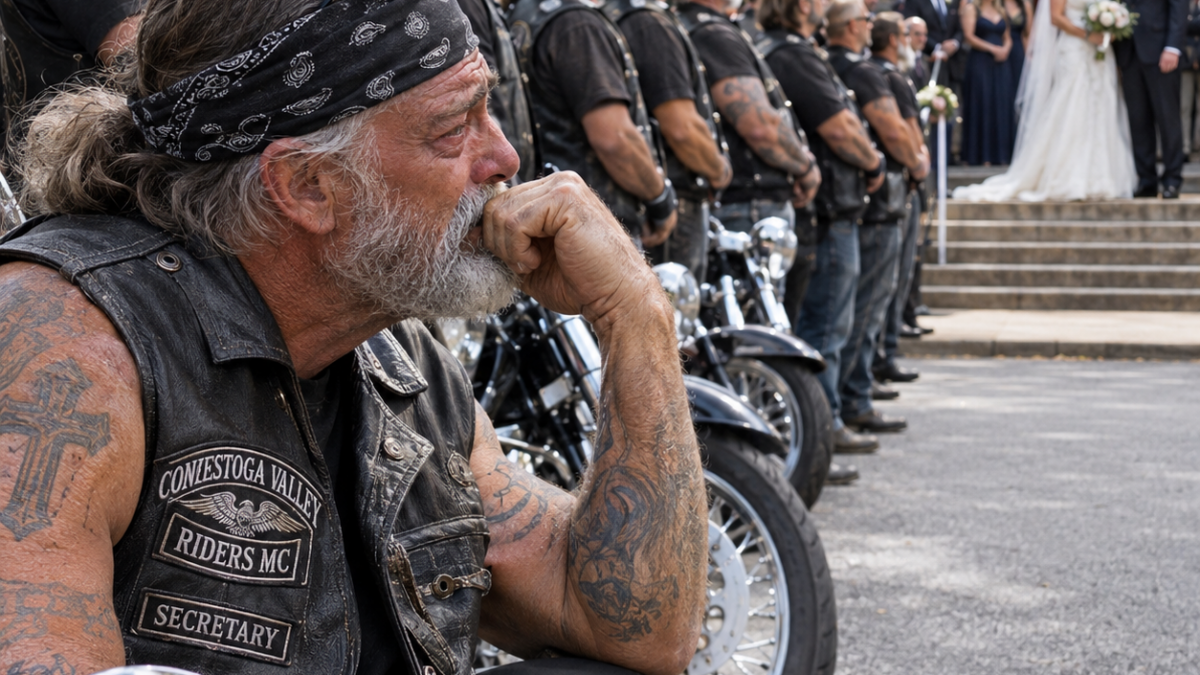
My Daughter’s Fiancé Banned Me From Her Wedding Because I’m a Biker—Then 50 of My Brothers Parked Across the Street and Stood in Silence.
My daughter’s fiancé convinced her that having me at their wedding would damage the image his family had spent years building, so I did the only thing a father who loved his daughter more than his pride could do—I told her I would stay home.
Three days before the ceremony, I discovered fifty men from my motorcycle club had quietly planned to park across the street from the church, never approach the guests, never cause a scene, and simply stand where my daughter could see the family her fiancé was ashamed of.
But when Hannah walked out of that church in front of two hundred and seven guests, lifted the hem of her wedding dress, and crossed the street toward fifty silent bikers instead of getting into her husband’s limousine, everyone finally understood who had actually humiliated whom.
My name is Walter Reinholt.
Most people call me Walt.
I am sixty-two years old.
I live in a small ranch house outside Lancaster, Pennsylvania, in a place where the cornfields still run right up against developments full of vinyl siding and mailboxes designed to look more expensive than they are.
I retired three years ago after thirty-seven years as a structural ironworker.
Most of my adult life was spent hundreds of feet above the ground, walking beams men on sidewalks were afraid to look at.
I built parts of hospitals, office towers, parking garages, two college buildings, one ugly casino addition I still refuse to point out when I drive past it, and enough warehouses to make me wonder whether America plans to eventually put everything it owns inside a warehouse.
I have two replaced knees.
A fused vertebra.
A left shoulder that predicts rain better than any weather app.
And hands that no longer close all the way in the morning.
I have been a patched member of the Conestoga Valley Riders Motorcycle Club for twenty-six years.
Secretary for eleven.
People hear motorcycle club and often fill in the rest themselves.
I won’t spend ten pages defending every man who has ever worn leather.
Some of us have records.
Some of us have tempers.
Some of us have made mistakes.
A few have made more than their share.
But Conestoga Valley has also buried brothers whose children we still send Christmas cards to.
We have rebuilt wheelchair ramps.
Raised money for burned-out families.
Sat outside hospitals all night.
Fixed cars for widows who couldn’t pay.
Delivered turkey dinners in sleet.
And held one another together through things polite people usually prefer to grieve privately.
I tell you that because this story is about appearances.
More specifically, it is about what happens when somebody decides appearance matters more than the truth.
I have one child.
Hannah Marie Reinholt.
Twenty-eight years old when this happened.
The only child my wife Margaret and I ever had.
Margaret used to say God gave us one because one Hannah contained enough personality for three children.
She was right.
Hannah teaches third grade in West Lawn.
PART2:
She volunteers at a food pantry on Saturdays even though she claims it isn’t volunteering because they give her coffee.
She owns a 2011 Toyota Corolla with 214,000 miles on it and an emotional attachment I consider medically concerning.
I’ve replaced the suspension three times.
The front wheel bearing twice.
The alternator.
Radiator.
Control arms.
One window regulator.
And something inside the dashboard that required me to remove enough plastic trim that the interior looked like it had been attacked by raccoons.
Every time I tell her to buy another car, she says, “Dad, this one is paid off.”
Every time I tell her eventually the repairs cost more than the car, she says, “That’s what you’re for.”
Fair.
She FaceTimes me every Sunday at four.
If she’s late, I call her.
If I don’t answer, she calls again.
That is our arrangement.
Hannah was seven when she first rode on the back of my motorcycle.
Margaret made me circle our driveway six times before she allowed us onto the road.
Hannah wore a helmet so large it looked like someone had put a bowling ball on a stick.
She screamed with happiness the entire ride.
PART3:
At twelve, she told a teacher her father belonged to a motorcycle club.
The teacher asked Margaret whether she felt safe at home.
Margaret laughed so hard in the principal’s office she had to leave.
At sixteen, Hannah decided I was embarrassing.
That lasted approximately two years.
At nineteen, she called me from college because somebody had slashed one of her tires.
I drove ninety minutes with three brothers.
We changed it.
Bought her dinner.
Never found out who did it.
At twenty-four, she cried against my chest because her first serious boyfriend told her she was “too much.”
I told her, “Good. Find somebody who has room.”
Then she met Derek Whitmore.
March of 2022.
I remember the date because Hannah called beforehand.
“Dad.”
That tone.
“What?”
“I am bringing someone to dinner.”
“Man or woman?”
“Dad.”
“I like to prepare.”
“A man.”
“Is he armed?”
“Please behave.”
“Define behave.”
“Wear sleeves.”
That told me everything.
She was nervous about the tattoos.
Mine aren’t dramatic.
An old union emblem.
Margaret’s name.
Hannah’s birthday.
Conestoga Valley insignia on my upper arm.
A memorial tattoo for three men we lost in a highway accident outside Scranton.
I own shirts with sleeves.
Apparently that qualified as formal parental cooperation.
Derek arrived at six exactly.
Of course he did.
He drove a black BMW that looked recently detailed enough to have never experienced rain.
Thirty-one.
Tall.
Fit.
Expensive haircut.
Navy sweater.
Watch that probably cost more than Hannah’s Corolla.
Polite smile.
Good handshake.
“Mr. Reinholt.”
“Walt.”
“Derek.”
We stood there measuring each other the way men do while pretending not to.
Hannah noticed.
“Can everybody stop being weird?”
I stepped aside.
“I’m delightful.”
Derek smiled.
But the smile didn’t reach his eyes.
Dinner was pot roast.
Hannah’s favorite.
Derek complimented the wine.
I had bought it twenty minutes earlier after asking a clerk which bottle made me look like I knew what I was doing.
Things went fine.
Until he noticed a framed photograph on the wall.
Conestoga Valley Riders.
Twenty-three men outside the clubhouse.
Motorcycles lined behind us.
He walked closer.
“Is this your club?”
“Yes.”
Hannah gave me a warning glance.
I ignored it.
“How long have you been riding?”
“Since nineteen.”
“No, I mean with them.”
“Twenty-four years.”
He studied the picture.
“What kind of club is it?”
I knew what he meant.
“You can ask directly.”
Hannah closed her eyes.
“Dad.”
Derek turned.
“I didn’t mean anything.”
“You did.”
He looked uncomfortable.
I smiled.
“It’s fine.”
He hesitated.
“Is it an outlaw club?”
That word.
Outlaw.
People love that word.
It does a lot of work for them.
I took a drink.
“We’re a motorcycle club.”
He waited.
I didn’t fill the silence.
Eventually Hannah changed the subject.
After they left, Margaret’s photograph sat on the kitchen counter facing me.
I looked at it.
“You would’ve loved that.”
I could practically hear her.
Be nice, Walter.
Margaret had been dead five years by then.
Cancer.
Pancreatic.
Ten months from diagnosis to funeral.
Forty-one years together.
There are kinds of silence a house never recovers from.
Hannah became the sound that remained.
That is important.
Because if you want to understand why I agreed to miss her wedding, you need to understand I had already learned what it costs to lose somebody you thought would always be there.
Derek was never rude to me after that first dinner.
That’s what made the whole thing difficult.
If he’d been openly cruel, I would’ve known what to do.
But Derek was educated.
Controlled.
Polite.
He knew how to place a knife between your ribs while making it sound like a concern.
He didn’t say my friends were criminals.
He asked whether they had ever “created complications.”
He didn’t call my motorcycle club embarrassing.
He said, “I imagine Hannah grew up in a very different social environment.”
He didn’t insult my work.
He said, “Ironwork must have been physically demanding.”
With the same tone people use to describe coal mining in 1890.
Maybe I was sensitive.
I asked myself that many times.
And to be fair, Derek had good qualities.
He loved Hannah.
Or at least I believed he did.
He remembered things.
Her favorite coffee.
Parent-teacher conference dates.
When she had migraines.
He cooked.
Badly, but willingly.
He called her from work.
He encouraged her to apply for a master’s program.
He took her to New York for her birthday.
He never cheated.
Never screamed.
Never laid a hand on her.
People are complicated.
That’s another important thing.
Villains in real life rarely wake up every morning deciding to be villains.
Usually they tell themselves they’re protecting something.
Derek was protecting an image.
At first, that seemed harmless.
He proposed in June 2023.
Longwood Gardens.
Hannah called me crying.
I cried too.
Don’t tell anyone.
She drove to my house the following morning.
Ran up the porch.
Held out the ring.
“Dad.”
I looked.
“Big.”
“Is that all?”
“Sparkly.”
She hit me.
I hugged her.
Then, because mothers remain part of weddings even after they die, we went to the cemetery.
Hannah sat beside Margaret’s stone.
Showed her the ring.
Talked for half an hour.
I stood far enough away to let them have privacy.
That sounds strange if you’ve never lost your person.
If you have, you understand.
Wedding planning began.
Saint Asaph’s Episcopal Church in Berwyn.
June 21, 2024.
Two hundred guests.
Then two hundred and seven.
Flowers.
String quartet.
Reception at a country club.
Derek’s parents were paying for most of it.
His mother, Elaine Whitmore, had opinions.
Many opinions.
Napkin colors.
Menu.
Seating.
Photography.
Transportation.
The fact that Hannah wanted Margaret’s old silver locket incorporated into her bouquet.
Elaine called it “sweet, though perhaps a little rustic.”
Hannah told me that over coffee.
I said, “What does rustic mean?”
“It means she hates it.”
“Then wear two lockets.”
Hannah laughed.
That was our method.
She complained.
I made it funny.
But the jokes became harder as the wedding approached.
The first real warning came at Thanksgiving.
Dinner at Derek’s parents’ house in Haverford.
Dr. Charles Whitmore was a cardiologist.
Elaine was a dermatologist.
Beautiful house.
Stone exterior.
Everything inside looked selected by someone who believed furniture should be admired rather than used.
My club vest stayed in the truck.
Not because anyone asked.
Because I can read a room.
Charles offered me bourbon.
Good bourbon.
We talked about construction.
He was interested in the buildings I’d worked on.
Genuinely interested.
Elaine asked about riding.
“Isn’t it dangerous at your age?”
“So are stairs.”
She smiled politely.
Derek’s uncle asked whether I’d ever been arrested.
Hannah immediately said, “Uncle Patrick.”
I answered anyway.
“Twice.”
The room went quiet.
I let them sit in it.
Then smiled.
“Both union demonstrations. Charges dismissed.”
Charles laughed.
Patrick did not.
Later, while I was helping Hannah put dishes away, I heard Elaine in the dining room.
She didn’t know I was close enough to hear.
“Of course her father can come.”
Derek said something too low.
Elaine replied, “I’m only saying photographs last forever.”
I stopped moving.
Hannah looked at me.
“What?”
“Nothing.”
I carried the plates into the kitchen.
I told myself I had misunderstood.
For four months, I continued telling myself that.
Then came April.
Two months before the wedding.
Thursday afternoon.
I was replacing a gate hinge beside my house when Hannah’s Corolla turned into the driveway.
No phone call.
That was unusual.
She parked crooked.
Very unusual.
She sat behind the wheel.
Didn’t get out.
I knew.
Not what.
But something.
I walked over.
She unlocked the door.
Her face was red.
“Dad.”
I opened the passenger door.
“What happened?”
She started crying.
I sat.
For several minutes she couldn’t talk.
I waited.
When Hannah was a child, Margaret taught me not to ask “what’s wrong?” six times in a row.
People speak when they can.
Eventually Hannah said, “Derek doesn’t want you at the wedding.”
There are sentences your body understands before your mind does.
My chest became cold.
I looked through the windshield.
The garage door needed painting.
Funny what you notice.
I said, “Okay.”
She turned toward me.
“That’s it?”
“Tell me exactly what he said.”
She wiped her face.
The night before, Derek had asked to discuss the guest list.
He had notes.
Of course he had notes.
He said his firm partners would attend.
Several judges.
Clients.
His parents’ medical colleagues.
He had concerns about “optics.”
That word.
Optics.
He told Hannah he worried my presence would create questions.
Not only because of me.
Because of the club.
Hannah reminded him I had already agreed nobody would attend wearing club colors.
Derek said the issue wasn’t clothing.
It was association.
“Association with what?”
I asked.
Hannah looked ashamed.
“He said the club.”
“What about it?”
“He said people Google things.”
I almost laughed.
“People Google me?”
“No. Conestoga Valley.”
“Anything interesting?”
“Dad.”
“Sorry.”
She kept going.
Derek said if I attended, people from his professional circle might ask questions.
His father had mentioned concerns.
Elaine had apparently been worried about wedding photographs.
Again.
Then Hannah said the line that finished it.
“He said he wasn’t asking me to disinvite my father.”
I looked at her.
“He said he was asking me to disinvite the man you choose to be.”
I sat very still.
There are insults that hurt because they’re true.
And insults that hurt because they erase everything true about you.
Thirty-seven years working iron.
Forty-one years loving one woman.
Twenty-eight raising one daughter.
Thousands of mornings at work before sunrise.
Hospital bills.
School plays.
Flat tires.
Mortgage payments.
Funerals.
Birthday cakes.
All reduced to leather.
Motorcycle.
Patch.
The man you choose to be.
I asked, “What did you say?”
“I told him no.”
“Good.”
“He said if I couldn’t make one sacrifice for our future, maybe I wasn’t ready to understand what marriage required.”
That angered me more than what he’d said about me.
“He said that?”
“Yes.”
“That’s manipulation.”
“I know.”
“Then why are you here crying instead of telling him to go to hell?”
She looked at me.
And I saw it.
She loved him.
Still.
That is inconvenient for people telling stories.
Love doesn’t turn off when somebody does something ugly.
Sometimes it gets confused.
Sometimes it makes excuses.
Sometimes it becomes terrified of what ending the relationship might cost.
She whispered, “I don’t want to lose him.”
I closed my eyes.
Margaret, I thought.
Help me.
Then I said the hardest thing I’ve ever said to my daughter.
“Hannah Marie.”
She looked at me.
“You are going to have the wedding day you want.”
“Dad—”
“If having me there makes the day harder for you, I will not be there.”
Her face collapsed.
“No.”
“Yes.”
“No, because then he’s winning.”
“This isn’t about winning.”
“It is.”
“No.”
I took her hand.
“This is your wedding.”
“You’re my father.”
“And because I’m your father, I’m telling you that you do not have to spend that day choosing between people.”
“That’s exactly what he’s making me do.”
“Then I’ll choose for you.”
She stared at me.
I hated myself.
“If I don’t go, there isn’t a fight.”
“You deserve to be there.”
“Deserve doesn’t matter.”
“It matters to me.”
“Hannah.”
My voice broke.
“I buried your mother.”
She stopped.
I almost never used Margaret like that.
Not in an argument.
Not ever.
But I needed her to understand.
“I know what it feels like to have one day left with somebody and not know it’s the last one.”
Tears filled her eyes.
“I will not let resentment become what you remember about your wedding.”
She shook her head.
“You won’t be there.”
“I’ll be here.”
“That’s not the same.”
“No.”
I squeezed her hand.
“But we can have our moment.”
“What moment?”
“I’ll walk you down your living room.”
She laughed through tears.
“Dad.”
“Full aisle.”
“It’s twelve feet.”
“I’ve worked with less.”
She cried harder.
We sat in the Corolla for forty-five minutes.
Eventually she agreed.
I didn’t call Derek.
That surprises people.
I wanted to.
Every part of me wanted to.
But if I confronted him, Hannah would become the battlefield.
So I swallowed it.
That is what parents do more often than children realize.
We swallow things so our kids don’t have to carry them yet.
The following Sunday, I told Rusty.
We were alone in the clubhouse office.
Rusty’s real name was Frank Malloy.
Sixty-six.
Retired plumber.
Club president for nine years.
Gray beard.
Bad hearing.
Good heart.
I said, “Hannah’s wedding. Don’t plan anything.”
He looked at me.
“Why?”
“I won’t be attending.”
He leaned back.
“You sick?”
“No.”
“Then you’re attending.”
“No.”
I told him.
Not all the details.
Enough.
Rusty’s face went red.
“Say his name again.”
“No.”
“Walt.”
“I made my decision.”
“That little suit-wearing prick—”
“Rusty.”
He stopped.
“This is my daughter.”
“I know.”
“You will not turn her wedding into a club issue.”
His jaw worked.
“Understood?”
Long silence.
“Understood.”
“Not discussed.”
“Fine.”
“No rides.”
“Fine.”
“No parking lot surprises.”
He looked offended.
“I’m sixty-six.”
“You’re twelve.”
He almost smiled.
“Fine.”
I believed him.
That was my mistake.
The Conestoga Valley Riders handbook is not impressive.
It is an old black binder.
Half the pages smell like beer.
Some rules are typed.
Others handwritten.
The current bylaws have been updated digitally.
The old binder survives because bikers are sentimental about things they claim not to care about.
Rusty pulled it from a cabinet the following Tuesday.
He showed it to Road Captain Gene “Moses” Baxter.
Moses was sixty.
Former truck driver.
Then to Sergeant-at-Arms Carl Dugan.
They found Section C.
Paragraph 4.
Written in 1998.
Brother in distress.
The wording said:
“When a brother is unable to attend a family event by his own decision out of love for his kin, the chapter shall, when invited or uninvited, conduct a respectful presence at a respectful distance, to honor the family member he cannot stand beside.”
I had forgotten the rule existed.
Apparently they had not.
Rusty did something else without telling me.
He called Hannah.
Sunday afternoon.
Early June.
I later heard the conversation from her.
“Hello?”
“Hannah Marie?”
“Yes?”
“This is Rusty.”
Long pause.
“Dad’s Rusty?”
“I’m everybody’s Rusty. Your dad just complains louder.”
She laughed.
“What can I do for you?”
Rusty became serious.
“We’re not gonna cause trouble.”
“That is a terrifying way to start a conversation.”
“Fair.”
He explained.
Fifty riders.
Across the street.
Not on church property.
No approach.
No shouting.
No confrontation.
No signs.
No revving during the ceremony.
No conversation with Derek’s family.
Nothing.
They would simply park.
Stand.
Wait.
Then when Hannah and Derek exited and the guests did the traditional rice toss, they would start their engines together.
Once.
Then leave.
Rusty asked one question.
“Will that ruin your day?”
Hannah was quiet for a long time.
Rusty thought the call had disconnected.
Then she said, “No.”
Another pause.
“It’ll be the only thing that makes the day right.”
That should have remained a secret.
It nearly did.
Three days before the wedding, I entered the clubhouse through the rear door.
I was dropping off membership paperwork.
The back office door was open.
Moses was on the phone.
“No, east side of the road. Church parking entrance stays clear. Fifty max. Nobody crosses unless Hannah crosses first.”
I stopped.
Rusty saw me.
His face said everything.
Moses turned.
“Oh.”
I looked at Rusty.
“Fifty what?”
Nobody spoke.
“Fifty what?”
Rusty sighed.
“Sit down.”
“No.”
“Walt.”
“What did you do?”
He pulled out the binder.
I stared at the rule.
Then at him.
“You had no right.”
“Correct.”
“You called my daughter?”
“Yes.”
“You went behind my back.”
“Yes.”
“I told you not to make this a club issue.”
“We didn’t.”
“Fifty bikes isn’t a club issue?”
“It’s a presence.”
I laughed.
Angry.
“That’s politician language.”
Rusty looked at me.
“She said yes.”
That stopped me.
“What?”
“Hannah knows.”
“When?”
“Two weeks.”
I sat.
Not because I chose to.
My knees stopped working properly.
“She wants it?”
“Yes.”
Rusty pulled another metal chair close.
I covered my face.
I don’t cry often.
That’s not pride.
Just biography.
My father didn’t cry.
Ironworkers didn’t cry much in front of one another when I came up.
Bikers mostly save it for funerals.
Margaret spent decades trying to teach me that emotions weren’t a plumbing leak you solved by shutting off the valve.
She made progress.
Not enough.
The last time I had cried hard was the morning she died.
Seven years earlier.
I sat in that folding chair and cried again.
No dignity.
No quiet tear.
I shook.
Rusty put one hand on my shoulder.
Didn’t speak.
Eventually I said, “She should’ve had her mother.”
“I know.”
“She should have me.”
“I know.”
“I told her I was okay.”
“I know.”
“I lied.”
“I know.”
I looked at him.
“You say that one more time—”
He smiled slightly.
“Walt.”
“What?”
“You stay home Saturday.”
I stared.
“We’ve got it.”
Saturday arrived.
June 21, 2024.
I woke at 4:38 a.m.
Didn’t need an alarm.
The house was silent.
Margaret’s side of the bed had been empty seven years, but some mornings it still surprised me.
I showered.
Shaved.
Put on the charcoal suit I’d bought for the wedding before I knew I wouldn’t attend.
Then took it off.
Felt stupid.
Put on jeans.
Made coffee.
At 7:10, Hannah arrived.
Wedding wasn’t until three.
She came alone.
No makeup yet.
Hair up.
White button-down shirt.
Leggings.
She carried Margaret’s locket.
“Hi, Dad.”
“Hi.”
We stood in the doorway.
Neither moved.
Then she hugged me.
“Come inside.”
In the living room, I had moved the furniture.
Made an aisle.
Twelve feet.
As promised.
I had put Margaret’s favorite chair at the end.
Hannah saw it.
Her hand flew to her mouth.
“Dad.”
“I thought your mother should have a seat.”
She cried.
I almost did.
She disappeared into the spare bedroom.
Twenty minutes later, she came out wearing her wedding dress.
Not fully prepared.
No veil.
No professional hair.
No flowers.
But the dress.
I had never seen it.
She stepped into the hallway.
I forgot how to breathe.
People say daughters look like their mothers on wedding days.
Sometimes they do.
Hannah did.
Not exactly.
Enough.
Margaret was there in the tilt of her chin.
The way she held one hand against her waist.
The smile trying not to become tears.
I whispered, “Oh.”
Hannah laughed.
“Good oh?”
I nodded.
“Very good.”
She walked to me.
“Ready?”
No.
“Yep.”
She hooked her arm through mine.
I had put my phone on a shelf recording the room.
No photographer.
No audience.
Just us.
We stood at the start of the living-room aisle.
I whispered, “Your mother would be losing her mind.”
Hannah smiled through tears.
“She’d tell you you’re walking too fast.”
“She always did.”
I started.
Hannah immediately pulled me back.
“Too fast.”
We laughed.
Twelve feet.
That’s all.
Maybe six steps.
But I remembered every age.
Hannah at four asleep against my chest.
Seven on the motorcycle.
Eleven with braces.
Sixteen furious because I wouldn’t let her drive in a snowstorm.
Eighteen leaving for college.
Twenty-four crying over that boy.
Twenty-seven holding out an engagement ring.
Twenty-eight walking beside me through my own living room because the man she was about to marry didn’t want me in the church.
At the end, Margaret’s empty chair waited.
I stopped.
Turned to Hannah.
Took her hand.
Usually a father gives his daughter away.
I hated that phrase.
I said, “I don’t give you away.”
She looked at me.
“You were never mine to give.”
Her lip trembled.
“You’re yours.”
I swallowed.
“And if he is lucky enough to walk beside you, that is his privilege.”
Hannah cried.
“So do not make yourself smaller to fit into anybody’s life.”
She whispered, “Dad.”
I kissed her forehead.
“That’s all.”
“No, it’s not.”
She hugged me.
I held her.
She eventually left to get ready with bridesmaids.
At 1:30, I sat on my back porch.
Suit hanging in the closet.
Motorcycle in the garage.
Phone face down.
I had promised not to interfere.
At 2:15, fifty motorcycles gathered at a warehouse parking lot six miles from Saint Asaph’s.
I wasn’t there.
I know what happened because Rusty told me later.
No alcohol.
No club flags.
No unnecessary noise.
Everyone briefed.
“Across the street.”
“No church property.”
“No talking to press.”
“No engaging guests.”
“No response if provoked.”
“Helmets off once parked.”
“Cuts stay on.”
Someone asked, “What if the groom comes over?”
Rusty said, “We do nothing.”
“What if he insults Walt?”
“We do nothing.”
“What if—”
Moses interrupted.
“We are not there for Derek.”
Rusty nodded.
“We’re there for Hannah.”
At 2:42, fifty motorcycles rode into Berwyn.
Not racing.
Not revving.
Not trying to be dramatic.
They turned onto the road beside Saint Asaph’s in two columns.
Church guests noticed immediately.
Of course they did.
People in formal clothes stopped halfway up the steps.
Phones appeared.
A valet stared.
Derek’s mother came outside.
She looked across the street.
Fifty motorcycles parked along the far curb and in the lot of a closed office building whose owner, a friend of Moses, had given permission.
Engines stopped.
One after another.
The riders dismounted.
Removed helmets.
And stood.
Nothing else.
No signs.
No yelling.
No music.
No confrontation.
Fifty men and women in leather cuts.
Silence.
Inside the church, Derek learned within minutes.
His best man, Connor, came into the side room.
“You need to see this.”
“What?”
“Motorcycles.”
Derek looked through the window.
His face changed.
“Are you kidding me?”
Elaine entered behind him.
“This is exactly what I was afraid of.”
Charles Whitmore followed.
He looked outside.
“They’re across the street.”
“That doesn’t matter.”
Charles turned toward his wife.
“Actually, legally, it matters quite a lot.”
“This is humiliating.”
Derek pulled out his phone.
“I’ll call the police.”
Charles said, “For what?”
“Intimidation.”
“They’re standing.”
“In gang colors.”
“Motorcycle club colors.”
“Dad.”
Charles looked at his son for a long moment.
“What exactly did you think would happen?”
Derek stared.
“What does that mean?”
“You excluded her father from her wedding.”
Derek’s face hardened.
“You agreed.”
“No.”
Elaine looked at Charles.
“You said it was probably wise.”
“I said I understood your concern about a large group attending in club clothing.”
He pointed across the street.
“I did not say her father should be excluded.”
Derek said, “He’s part of them.”
Charles’s expression changed.
That sentence mattered.
“He is also Hannah’s father.”
Derek turned away.
The first fracture opened there.
Hannah arrived at 2:51.
Her limousine turned toward the church.
She saw the motorcycles.
She started crying before the vehicle stopped.
Her maid of honor, Kelly, grabbed her hand.
“Oh my God.”
Hannah smiled.
“No.”
Kelly stared.
“No?”
“They came.”
“You knew?”
“I hoped.”
The limousine stopped.
Hannah stepped out.
Across the street, fifty riders saw her.
Rusty had warned them.
Nobody moved.
Nobody shouted.
Not one cheer.
They simply faced her.
Hannah lifted one hand.
Fifty hands rose.
That was all.
A tiny gesture.
Almost nothing.
It nearly broke her.
She walked into the church.
Derek met her in the vestibule.
“You told them?”
She looked at him.
“I gave permission.”
His face tightened.
“Hannah.”
“They aren’t coming inside.”
“This is exactly the spectacle we were trying to avoid.”
She stared.
“We?”
“You know what I mean.”
“No. I want you to say it.”
“This isn’t the time.”
“You brought it up.”
Guests were arriving behind them.
Kelly quietly moved people around.
Derek lowered his voice.
“They’re making us look ridiculous.”
Hannah looked through the glass.
Fifty people standing silently.
“They haven’t done anything.”
“They’re sending a message.”
“Yes.”
Derek stared at her.
“What message?”
“That my father is loved.”
He exhaled.
“This is manipulative.”
Hannah laughed once.
Not happily.
“You asked me to remove my father from my wedding because his existence made you uncomfortable.”
“I asked you to think about our future.”
“My father is part of my future.”
“Hannah—”
“No.”
She looked at him.
Something had shifted.
“I am about to marry you.”
“Yes.”
“And I need one answer.”
He looked nervous now.
“If those people weren’t standing across the street, would you regret what you asked me to do?”
Derek didn’t answer quickly enough.
Hannah’s eyes filled.
“That’s what I thought.”
The wedding still happened.
That surprises some people when they hear the story.
They expect Hannah to call everything off right there.
Real life is messier.
Two hundred and seven people had traveled.
Money spent.
Promises made.
Families seated.
And Hannah still loved him.
So at 3:08, the organ began.
The church doors opened.
Hannah walked down the aisle.
Alone.
That hadn’t been the original plan.
Derek’s uncle was supposed to escort her after I was removed.
Hannah changed it that morning.
When Elaine asked why, Hannah said:
“My father isn’t replaceable.”
So she walked alone.
But through the stained-glass windows, she could see flashes of black leather across the road.
Fifty people.
Standing.
Respectful distance.
The ceremony lasted thirty-two minutes.
Outside, the temperature climbed.
Nobody left.
One rider had a bad hip.
Another was seventy-two.
Rusty had prostate issues and regretted drinking coffee.
Still they stood.
At one point, a Berwyn police cruiser arrived.
Derek had called before the ceremony.
Officer Thomas Leary stepped out.
Rusty walked to the edge of the lot.
“Afternoon.”
“We got a complaint.”
“Figured.”
“You folks planning anything?”
“No.”
“Whose property?”
Rusty handed him the written permission from the building owner.
Leary read it.
“You blocking traffic?”
“No.”
“Going across there?”
“No.”
“Then enjoy your afternoon.”
He started away.
Rusty asked, “Officer?”
Leary turned.
“Could you do me one favor?”
“What?”
“When the bride comes out, don’t park your cruiser in front of us.”
Leary looked at the church.
Then at the fifty riders.
He almost smiled.
“I’ll see what I can do.”
Inside, vows were exchanged.
Hannah’s voice shook.
Derek’s did too.
Something was happening to him.
I will give him that.
He was not blind.
He heard the words he had asked her to promise.
To honor.
To cherish.
To stand beside.
And somewhere between those words, he began looking at the empty pew where the bride’s father should have been.
Hannah had placed Margaret’s locket on that seat.
Nothing else.
No reserved sign.
No flower.
The absence spoke loudly enough.
At 3:43, the church doors opened.
Guests gathered for the rice toss.
Phones ready.
Photographer positioned.
Hannah and Derek emerged.
Cheers.
Rice.
White petals.
Sunlight.
Across the street, fifty bikers stood beside their motorcycles.
They had rehearsed one action.
Wait until Hannah and Derek reached the bottom step.
Then, together, start engines.
Not rev.
Just start.
Rusty watched.
Hannah reached the bottom step.
He raised his hand.
Fifty engines turned over.
The sound rolled across the road.
Deep.
Layered.
Steady.
Guests stopped talking.
Hannah froze.
Derek looked up.
And I wasn’t there to see what happened next.
But I have watched the video more times than I will admit.
Hannah looks across the street.
Her face changes.
She grabs the front of her dress.
Lifts the skirt enough to walk.
Then steps off the church path.
Derek says something.
She doesn’t hear him.
Or chooses not to.
She crosses the grass.
Reaches the curb.
A bridesmaid calls, “Hannah!”
She looks for traffic.
Then crosses the road.
Two hundred and seven guests watch the bride walk away from her new husband toward fifty bikers.
The engines shut off.
Silence again.
Hannah walks directly to Rusty.
He removes his sunglasses.
His eyes are already wet.
She says, “Where is my dad?”
Rusty replies, “Home.”
She nods.
Then asks, “Which one of you knew my mother longest?”
Several hands rise.
Rusty points.
“Moses.”
Hannah walks to him.
Moses looks terrified.
This man has ridden through hailstorms.
He is terrified of a bride.
Hannah says, “My dad was supposed to walk me out of that church.”
Moses’s face breaks.
“I know, sweetheart.”
“He didn’t.”
“No.”
Hannah turns toward the fifty riders.
Then toward the church guests.
She raises her voice.
“My father stayed home today because he loves me.”
Nobody moves.
She continues.
“He told me he didn’t want me choosing between him and the man I married.”
Derek stands across the street.
White rose on his lapel.
Face pale.
Hannah says:
“He carried the humiliation so I wouldn’t have to.”
Elaine whispers, “Oh God.”
Hannah looks back at the riders.
“And these people stood across the street because they refused to let him disappear.”
Then she does something nobody planned.
She walks to the middle of the line.
Looks at Rusty.
“Can I borrow your phone?”
He hands it over.
She calls me.
I was on my porch.
I saw Rusty’s name.
Almost didn’t answer.
Then I did.
“Yeah?”
Silence.
Then:
“Dad.”
I stood.
“Hannah?”
Behind her, I could hear engines ticking as they cooled.
Voices.
Wind.
“What happened?”
She started crying.
“Come get me.”
My entire body went cold.
“What?”
“Come get me, Dad.”
“Did he hurt you?”
“No.”
“Are you safe?”
“Yes.”
“Then what’s happening?”
She took a breath.
“I need you to come to the church.”
“Hannah.”
“I made the wrong choice.”
“No.”
“Yes.”
“Do not make decisions in the middle of a wedding because you are emotional.”
She almost laughed.
“You’re telling me to calm down?”
“Apparently.”
“Dad.”
I grabbed my keys.
Then stopped.
“Are you ending the marriage?”
Silence.
Derek could hear the question through the speaker.
So could Rusty.
Hannah looked across the road at her husband.
She said, “I don’t know.”
That was honest.
“Then what do you want?”
“I want my father here.”
I closed my eyes.
“Okay.”
“I need you to come.”
“Okay.”
“I mean now.”
“I’m already moving.”
I drove.
Not the motorcycle.
The truck.
I don’t know why.
Maybe some part of me knew leather had already said enough that day.
The drive took forty-eight minutes.
It felt like four hours.
During that time, nobody left the church.
That still amazes me.
Some guests went inside.
Some stood outside.
The reception schedule collapsed.
The photographer didn’t know what to do.
Derek and Hannah sat separately.
Rusty ordered the club to remain where they were.
“No one talks to him.”
Derek eventually crossed the road himself.
Fifty riders watched.
He stopped ten feet from Rusty.
“Which one is the president?”
Rusty stepped forward.
“I am.”
Derek looked around.
“This was meant to intimidate me.”
Rusty shook his head.
“No.”
“You brought fifty people.”
“Correct.”
“In club colors.”
“Correct.”
“To my wedding.”
“Across from your wedding.”
Derek laughed bitterly.
“You expect me to believe this wasn’t a threat?”
Rusty looked at him.
“Son.”
That word alone irritated Derek.
“We’re not your problem.”
He pointed toward the church.
“We’re just here for her.”
Derek stared.
Rusty continued.
“Your problem is inside that building.”
“What does that mean?”
“Means you convinced the woman you married today that loving you required hiding where she came from.”
Derek’s jaw tightened.
“You don’t know anything about our relationship.”
“Correct.”
“So don’t lecture me.”
“I ain’t.”
Rusty nodded toward the riders.
“You walked over.”
Derek looked around again.
Some of the bikers were old.
One had a cane.
One was a woman in her fifties with gray braids.
One man was missing two fingers.
Another was holding a water bottle for the seventy-two-year-old beside him.
Not an invasion.
Not a mob.
Just people.
Derek’s certainty started weakening.
Rusty said, “You know Walt was an ironworker thirty-seven years?”
Derek didn’t answer.
“You know he spent eleven months beside Margaret while she died?”
Derek looked down.
“You know Hannah called him every day her first year away at college because she was homesick?”
“I know he loves her.”
“Then why wasn’t he in that church?”
Derek had no answer that sounded good anymore.
Rusty lowered his voice.
“I don’t think you’re a bad man.”
That surprised him.
“I think you’re a scared man.”
“Scared of what?”
“Looking like something you don’t think you are.”
Derek stared.
Rusty tapped his own leather vest.
“We got the opposite problem.”
“What?”
“People look at us and think they already know.”
He stepped closer.
Not threatening.
Just enough that Derek had to listen.
“You spent two years doing to Walt exactly what you were afraid your friends would do to you.”
Derek’s face changed.
Across the street, Charles Whitmore heard enough.
He crossed.
Elaine followed.
Charles stopped beside his son.
“Derek.”
“Dad, please.”
“No.”
Charles looked at Rusty.
“Mr…?”
“Malloy.”
“Mr. Malloy.”
“Rusty works.”
Charles nodded.
“I owe your friend an apology.”
Rusty shrugged.
“Tell him.”
Elaine remained silent.
Hannah came outside.
Her veil had been removed.
She looked exhausted.
Derek turned.
“Hannah.”
She stopped.
He took one step toward her.
“I am sorry.”
That was the first time.
Not “I’m sorry you feel.”
Not “I’m sorry this got complicated.”
Just:
“I am sorry.”
Hannah stared.
“I made this about people I wanted to impress.”
He swallowed.
“I told myself I was protecting our future.”
Her eyes filled.
“I humiliated my father.”
“Yes.”
“And me.”
“Yes.”
“You made me ashamed of loving him.”
Derek closed his eyes.
“Yes.”
Elaine whispered, “Derek.”
He turned toward his mother.
“No, Mom.”
She stopped.
“This was me.”
That mattered too.
He could have blamed her.
He didn’t.
“I listened because it gave me permission to do what I already wanted.”
Elaine looked wounded.
Charles looked at her.
Years of marriage passed silently between them.
Hannah asked Derek, “Why?”
He took a long breath.
“Because when I was twelve, my father lost a hospital position after a malpractice allegation.”
Charles stiffened.
Derek continued.
“He was cleared.”
Hannah knew the story.
Most people didn’t.
“For almost a year, people whispered about us.”
Derek looked at the riders.
“I watched my mother stop going places.”
Elaine looked away.
“I heard kids at school repeat things their parents said.”
His voice shook.
“And I decided reputation was armor.”
Rusty listened.
Derek looked at Hannah.
“I built my whole life around never giving anybody something to whisper about.”
Hannah wiped tears.
“And my dad became something to whisper about.”
“Yes.”
The truth sat between them.
Ugly.
But real.
At 5:02, my truck turned onto the road.
Rusty saw me.
Every rider turned.
I parked behind the office building.
Got out.
Nobody cheered.
Bless them for that.
Rusty walked over.
“Walt.”
I hugged him.
Hard.
“You son of a bitch.”
“I know.”
“You disobeyed me.”
“Correct.”
“Thank you.”
He squeezed my shoulder.
Hannah ran.
I barely had time to brace.
Wedding dress.
Barely controlled sobbing.
She hit me full force.
I held her.
“Hey.”
“I’m sorry.”
“No.”
“Dad—”
“No.”
“I should never have asked—”
“You didn’t.”
“I agreed.”
“You were trying to keep your life together.”
“I failed you.”
I pulled back.
“Look at me.”
She did.
“You did not fail me.”
“Yes—”
“No.”
I took her face in both hands.
“You made a mistake.”
I glanced toward Derek.
“So did he.”
“Big one.”
“Very.”
She almost smiled.
“But if mistakes automatically cancel love, none of us make it past kindergarten.”
She looked at me.
“Do you want me to stay married?”
That is not a question a father should answer for his daughter.
“I want you to know why you’re staying if you stay.”
“And if I leave?”
“Know why you’re leaving.”
She nodded.
“Don’t do either one for me.”
She looked toward the church.
“Will you come inside?”
The ceremony was finished.
“Why?”
“I need something.”
I followed her.
So did Derek.
Rusty stayed outside.
Most riders did.
Hannah led me into the sanctuary.
Guests filled the pews again.
Nobody had told them to.
News travels strangely through a wedding.
By then, everyone knew enough.
Elaine sat down.
Charles stood in the aisle.
Hannah walked me to the front.
The empty seat was still there.
Margaret’s locket rested on it.
I stopped.
My throat closed.
Hannah picked it up.
Placed it in my hand.
Then turned to the priest.
“Can we do something?”
The priest, Reverend James Bell, looked like a man who had abandoned any expectation of schedule an hour earlier.
“What would you like?”
Hannah looked at me.
“I want my dad to walk me down the aisle.”
I shook my head.
“You already got married.”
“I know.”
Derek stood ten feet away.
Everyone looked at him.
He stepped aside.
Then said:
“She should.”
That was the second important thing he did.
I looked at Hannah.
“Where am I walking you?”
She smiled through tears.
“Anywhere.”
So we walked.
From the altar to the back doors.
Backward from tradition.
Father and daughter.
Not giving her away.
Bringing her back toward herself.
Halfway down, I heard someone crying loudly.
Rusty.
Of course.
He had entered without me noticing and was standing at the rear.
“Shut up,” I told him.
People laughed.
At the doors, Hannah stopped.
“Dad.”
“What?”
“I want the picture.”
“What picture?”
“All of us.”
I knew immediately.
“Fifty?”
“Fifty-one.”
I looked at her.
She smiled.
Outside, two hundred and seven wedding guests crossed the road.
Not all at once.
Not elegantly.
High heels in grass.
Old people moving slowly.
Children running.
The photographer looked like he’d just been handed the greatest day of his career.
Fifty riders stood beside their motorcycles.
I put on my cut.
First time that day.
Hannah walked to me.
Touched the secretary patch.
“You wore this when I was born.”
“Not this exact vest.”
“You know what I mean.”
She turned to Derek.
“Come here.”
He hesitated.
Then crossed.
No one threatened him.
No one stared him down.
Rusty extended a hand.
Derek took it.
Hannah stood between us.
The photographer arranged the riders behind.
Guests around the sides.
Charles and Elaine came too.
Elaine stopped near me.
“Walter.”
“Elaine.”
Her face was pale.
“I owe you an apology.”
“Yes.”
She seemed surprised.
I wasn’t going to make it easy.
“I was cruel.”
“Yes.”
“I thought I was protecting my son.”
“I know.”
“I treated you as though you were beneath us.”
I looked at her.
“You don’t need to describe it.”
She nodded.
“I’m sorry.”
“Thank you.”
That was all.
Forgiveness is not pretending something didn’t happen.
Sometimes it’s simply deciding what happens next.
The photographer raised his camera.
Before he took the picture, Hannah called out:
“Wait.”
She stepped forward.
Looked at the fifty riders.
Then at Derek.
Then at me.
“Dad.”
“Yes?”
“Tell them.”
“Tell them what?”
“What Rusty said.”
I looked at him.
He shrugged.
So I turned toward Derek.
Not angry.
Not triumphant.
Just tired.
“We’re not your problem, son.”
I gestured toward the line of riders.
“We’re just here for her.”
Derek lowered his head.
“I know.”
The photograph was taken.
I have it framed in my living room.
Fifty-one bikers.
Two hundred guests.
One bride.
One groom.
Two families who had spent a year misunderstanding each other.
And one empty space in the front where Hannah insisted the photographer leave room.
“For Mom,” she said.
The reception happened.
Late.
Very late.
The country club threatened extra charges.
Charles told them to bill him.
The club wasn’t originally invited.
Hannah changed that.
Not everybody came.
Some riders left because they’d promised not to intrude.
Rusty stayed.
Moses.
Carl.
About fifteen others.
They removed their cuts before entering the reception hall.
Derek saw.
He walked up to Rusty.
“You don’t have to do that.”
Rusty looked at the vest in his hands.
“Your house.”
Derek shook his head.
“My wedding.”
Then after a pause:
“You can wear it.”
Rusty studied him.
“Sure?”
“Yes.”
So they did.
Elaine did not faint.
An orthopedic surgeon danced with Moses.
A federal judge spent twenty minutes asking Carl about a restored 1972 Shovelhead.
One of Derek’s law partners discovered he and Rusty had served at the same Army base twenty years apart.
People who had spent the morning worrying about optics spent the evening eating cake beside the people who were supposed to ruin the photographs.
Life has a sense of humor.
I danced with Hannah.
The band played Margaret’s favorite song.
I lasted approximately thirty seconds before crying.
Hannah put her head against my chest.
“Mom would be furious she missed this.”
“She’d blame me.”
“She blamed you for everything.”
“Correct.”
Across the room, Derek stood with Charles.
His father said something.
Derek nodded.
Then he approached me when the song ended.
“Can we talk?”
Hannah looked at me.
I nodded.
Derek and I stepped onto the terrace.
For a few seconds, neither spoke.
Then he said, “I don’t expect you to forgive me.”
“Good.”
He almost smiled.
“I deserved that.”
“Yes.”
“I was wrong.”
“Yes.”
“You’re going to make me do all the work here?”
“You’re a lawyer.”
He laughed once.
Then became serious.
“I thought success meant getting far enough away from anything people could use against me.”
I listened.
“My parents built a certain life.”
He looked through the window at Elaine.
“I grew up believing respect was fragile.”
“It is.”
He looked at me.
“Then why don’t you care?”
“I care.”
“You don’t seem like it.”
“I care what people I respect think.”
He absorbed that.
“That’s different.”
“Yes.”
He looked down.
“I didn’t respect you.”
“No.”
“I don’t know why.”
“I do.”
He looked up.
“You were afraid other people wouldn’t.”
That hit him.
I continued.
“So you got there first.”
He nodded slowly.
“I am sorry.”
This time, I believed he knew what he was apologizing for.
“I accept the apology.”
His eyes lifted.
“But.”
He smiled weakly.
“There it is.”
“If you ever ask my daughter to cut away part of herself so you can feel taller in a room, I’ll tell her what I should’ve told her the first time.”
His face tightened.
“What?”
“To leave.”
He nodded.
“Fair.”
We shook hands.
Not friends.
Not yet.
But maybe the beginning of something honest.
Hannah and Derek did not have an easy first year of marriage.
That’s the part fairy-tale versions leave out.
The wedding did not magically fix them.
Trust had cracked.
Hannah started counseling alone.
Then Derek joined.
He had to face how much of his life was organized around approval.
Elaine had to face her own class prejudice.
Charles apologized to me separately for remaining quiet too long.
I told him silence is sometimes participation.
He agreed.
Derek came to my house one Saturday in October.
No BMW.
Hannah’s Corolla.
He was driving because the BMW was at the dealer.
“Can you look at the front end?”
I laughed.
“What?”
“You’re asking the biker to fix the tax attorney’s car?”
“Technically Hannah’s car.”
“Technically a disaster.”
We spent four hours replacing sway-bar links.
He ruined one shirt.
Cut his knuckle.
Swore badly.
I showed him how to use a breaker bar.
At lunch, he asked about the club.
Actually asked.
Not investigating.
Not measuring.
I told him about Rusty.
Moses.
Brothers we’d lost.
Charity rides.
Funerals.
Bad decisions.
Good people.
He listened.
Then he said, “What does the 1% patch mean?”
I looked at him.
“You sure you want the long answer?”
“Yes.”
So I gave it.
He didn’t like every part.
Good.
Respect does not require pretending.
That became our relationship.
He stopped trying to approve of me.
I stopped enjoying making him uncomfortable.
Mostly.
At Christmas, he gave me an expensive bottle of bourbon.
I gave him a socket set.
“You think I’m going to use these?”
“No.”
“Then why?”
“Hope.”
Hannah laughed so hard she snorted.
Two years later, Hannah called me on a Sunday.
Four o’clock.
Exactly.
FaceTime.
Her face appeared.
Derek beside her.
They looked suspicious.
“What?”
Hannah smiled.
“We have something.”
She held up an ultrasound image.
I stopped breathing.
“Dad?”
I couldn’t talk.
Derek smiled.
“Walter?”
I cried.
They laughed.
Hannah said, “If it’s a boy, middle name Walter.”
“No.”
“What?”
“Absolutely not.”
“Why?”
“Cruel thing to do to a child.”
Derek said, “I agree.”
“Don’t get comfortable.”
The baby was a girl.
Margaret Elaine Whitmore.
Margaret for my wife.
Elaine for Derek’s mother.
I didn’t argue.
When Maggie was three months old, Derek brought her to the clubhouse.
His idea.
He walked through the door carrying my granddaughter in a pink carrier.
Fifty grown bikers immediately became idiots.
Rusty cried.
Moses refused to hold her because he was afraid.
Then held her for forty minutes.
Derek stood beside me.
He looked around.
“You know what?”
“What?”
“I was really stupid.”
“Yep.”
“You didn’t even hesitate.”
“Nope.”
He looked at the men passing around his daughter.
“I thought this place would be dangerous.”
“It is.”
He looked alarmed.
I pointed at Roach.
“He makes chili.”
Derek laughed.
On the wall behind us hung the old handbook.
Section C.
Paragraph 4.
Framed.
Rusty had done it after the wedding.
Underneath, somebody had added another handwritten line.
Section C, paragraph 5:
“When a brother’s daughter crosses the road, somebody better stop traffic.”
Nobody admitted writing it.
I suspect Moses.
Hannah still FaceTimes every Sunday.
Now Maggie appears too.
She calls me Pop.
My knees are worse.
I ride less.
Still secretary.
Rusty finally retired as president.
Nobody believes him when he says he’s staying out of club business.
Derek has been to three club cookouts.
He wears khakis.
We mock him.
He no longer cares.
That might be the biggest change.
He learned a thing I didn’t expect him to learn.
Shame needs cooperation.
People can only make you spend your whole life performing respectability if you agree that their approval is worth the performance.
I learned something too.
Sacrifice can become dangerous when you hide inside it.
I thought staying home from Hannah’s wedding was love.
Part of it was.
But part of it was cowardice.
I didn’t want to force the conflict.
I told myself I was carrying the burden for my daughter.
What I was really doing was making myself disappear so everybody else could stay comfortable.
Margaret would have been furious.
I know exactly what she would’ve said.
Walter, stop acting noble and tell the truth.
The truth was simple.
I wanted to be there.
I wanted to see my daughter walk down the aisle.
I wanted to stand beside the empty seat where her mother should’ve been.
I wanted to hear her vows.
I wanted the photograph.
I wanted all of it.
And wanting those things didn’t make me selfish.
It made me her father.
Hannah taught me that.
My club taught me that too.
Not with a fight.
Not with threats.
Not by storming a church.
Fifty people parked across the street.
Stood quietly.
And let their presence say what I had been too proud to say for myself.
He matters.
She matters.
Their bond matters.
We will not ruin her day.
But we will not help you pretend he never existed.
There is one photograph from the wedding I value more than all the others.
Not the big group picture.
Not Hannah and me walking through the church.
It was taken accidentally.
One of the photographer’s assistants caught it from across the road.
Hannah is standing between me and Derek.
My cut is on.
Derek’s tuxedo jacket is open.
Rusty is behind us.
The church is out of focus.
Nobody is looking at the camera.
Hannah is laughing.
I am looking at her.
Derek is looking at me.
And his expression is different.
No embarrassment.
No calculation.
No optics.
Just a young man finally seeing the person he’d spent two years reducing to an image.
On the back of the framed print, Hannah wrote one sentence.
Dad, thank you for refusing to make me choose even when someone else tried to.
I read that sentence sometimes.
Especially when I think about Margaret.
Especially when I think about the living-room aisle.
Especially when I remember sitting alone on my porch while my daughter was getting married fifty miles away.
People have asked me whether I hated Derek.
No.
I came close.
But hate would have been easy.
Understanding was harder.
He grew up believing social judgment could destroy a family.
So he spent his adult life controlling what other people saw.
Then he met Hannah.
Hannah came from me.
From Margaret.
From construction sites and church picnics and motorcycles and public-school classrooms and casserole dishes carried to grieving neighbors.
She came from people who showed up.
Derek loved her warmth but became frightened by the world attached to it.
He wanted the woman without everything that had made her that woman.
A lot of people make that mistake in relationships.
They say they love you.
Then slowly begin editing.
Maybe dress differently.
Maybe don’t mention your family.
Maybe your friends are embarrassing.
Maybe your job doesn’t fit.
Maybe your accent.
Your neighborhood.
Your history.
Your father.
They call it compromise.
Sometimes it is.
Sometimes it is erasure.
The trick is learning the difference before you disappear.
Hannah almost did.
So did I.
Fifty motorcycles stopped us.
Not because bikers are better than anybody else.
We’re not.
But because brotherhood, at its best, is not about defending somebody’s pride.
It is about standing close enough that he remembers he still has a place in the world.
I asked Rusty years later why he really did it.
We were sitting outside the clubhouse.
He was seventy now.
Hands shaking slightly.
He thought about the question.
Then said:
“Because Margaret would’ve killed us if we didn’t.”
I laughed.
“That your official answer?”
“Yep.”
“What’s the real one?”
He looked across the parking lot.
“Walt, every man in that line had lost something.”
He nodded toward the road.
“Wife. Kid. Parent. Marriage. Job. Years in prison. Years drinking. Whatever.”
He looked at me.
“We knew what it meant to have one person you couldn’t stand beside.”
I said nothing.
“So we stood there for you.”
That may be the best explanation.
Not club law.
Not tradition.
Not revenge.
Men standing where another man couldn’t.
Years later, Derek asked whether I still had the suit I bought for the wedding.
I told him yes.
He said, “You should have worn it.”
I looked at him.
“To what?”
“The wedding.”
“Bit late.”
He nodded.
Then smiled.
“We’re renewing our vows for our tenth anniversary.”
I stared.
“You planning to invite me this time?”
He laughed.
“I was going to ask you something.”
“What?”
“Will you walk Hannah down the aisle?”
I shook my head.
“No.”
His smile disappeared.
“Why?”
“Because I told her once already.”
“Told her what?”
“She isn’t mine to give away.”
Derek considered.
Then nodded.
“Fair.”
I said, “I’ll walk beside her.”
He smiled again.
“That works.”
It does.
That is what family is supposed to be.
Not ownership.
Not approval.
Not optics.
Walking beside.
The motorcycle club never speaks much about the wedding anymore.
We have other stories.
Other funerals.
Other weddings.
New members who weren’t there.
But sometimes a prospect finds the framed handbook page.
Reads Section C, paragraph 4.
Asks:
“Did fifty guys really stand outside a church?”
Rusty will say, “Forty-nine.”
Moses says fifty-two.
I say fifty.
Numbers improve with age.
Then the prospect usually asks:
“Was the groom scared?”
And I tell them the truth.
“Yes.”
But not of us.
He was scared of judgment.
Scared of losing status.
Scared of becoming the subject of the same whispers he’d spent his life avoiding.
That fear made him cruel.
But here’s the important part.
He eventually looked at what he’d done.
Really looked.
And he changed.
Not instantly.
Not perfectly.
But enough that my granddaughter now knows him as a father who kneels beside her bed every night and reads the same book until he’s sick of it.
Enough that he once defended one of his junior associates after a partner mocked the young man’s working-class family.
Enough that when his firm held a charity event two years ago, he invited Conestoga Valley Riders.
Cuts and all.
Elaine attended too.
She brought brownies.
Rusty flirted with her.
Charles told him to stop.
I nearly died laughing.
Life is long if you’re lucky.
Long enough for people to become more than their worst afternoon.
Long enough for a father who stayed home from his daughter’s wedding to someday sit beside the husband who once excluded him and watch their daughter become a mother.
Long enough for shame to turn into an apology.
An apology to turn into work.
Work to turn into trust.
And trust to become family.
I still ride the Road King I owned when Hannah got married.
Black.
Scratched tank.
A little oil seep near the rear rocker box that I have been “going to fix” for three years.
Inside my saddlebag is a photograph.
Hannah.
Wedding dress.
Crossing the road.
The photographer caught her halfway.
One hand holding her skirt.
The other reaching toward us.
Behind her stands the church.
Behind us, fifty riders.
If you look closely, Derek is visible on the church steps.
He is watching her.
For a long time, I thought that photograph showed a bride walking away from her husband.
Now I think it shows something else.
It shows a woman walking back toward the part of herself she had almost agreed to leave behind.
And the husband who eventually learned that if he wanted to stay married to her, he would have to walk toward that part too.
That is what happened.
Nobody fought.
Nobody threatened anyone.
No windows broke.
No motorcycles roared into a sanctuary.
Fifty brothers simply parked across the street.
At a respectful distance.
They stood in silence.
And when my daughter came outside, the engines started.
For a few seconds, the whole road shook.
Then they stopped again.
And in that silence, everyone could finally hear the thing Derek had spent months trying not to understand.
A leather vest did not make me less of a father.
A motorcycle did not erase the nights I sat beside Hannah when she was sick.
A club patch did not cancel thirty-seven years of work, forty-one years of marriage, or twenty-eight years of raising my daughter.
And respectability was never going to be found by making good people disappear from photographs.
I wish Margaret had been there.
That is the one thing no apology fixed.
But maybe Rusty was right.
Maybe she would’ve killed us all if we hadn’t handled it.
Sometimes, when I visit her grave, I tell her the story again.
Not because I think she doesn’t know.
Because I like imagining her reaction.
I tell her about the fifty bikes.
The church.
The empty seat.
Hannah crossing the road.
Derek apologizing.
The photograph.
Maggie.
Everything that came after.
Then I usually sit for a while.
Last time I was there, I said:
“You were right about Hannah.”
Wind moved through the trees.
“She was always too much.”
I smiled.
“And she finally found a man smart enough to make room.”
Then I stood.
My knees complained.
I walked back toward the motorcycle.
And before I put on my helmet, I looked at Margaret’s stone one more time.
“You should’ve seen us, sweetheart.”
Maybe she did.
Maybe not.
Either way, on June 21, 2024, when my daughter needed her family and I had convinced myself love meant staying away, fifty men and women did something I will never be able to repay.
They stood where I could not.
They made no threats.
They demanded no apology.
They did not cross the road until Hannah did.
And when the man who had been afraid of us finally approached, our president gave him the only explanation he deserved.
No anger.
No swagger.
No warning.
Just the truth.
“We’re not your problem, son.”
Then Rusty looked toward my daughter.
“We’re just here for her.”
And sometimes, that is all family is.
Not fixing the mistake.
Not winning the fight.
Not demanding to be understood.
Just standing where someone you love can see you—
and refusing to let them believe they are standing alone.








