My 18-Year-Old Cat Dragged Himself to the Front Door While I Was Stuck at Work—He Wasn’t Trying to Escape, He Was Waiting to Die in My Arms
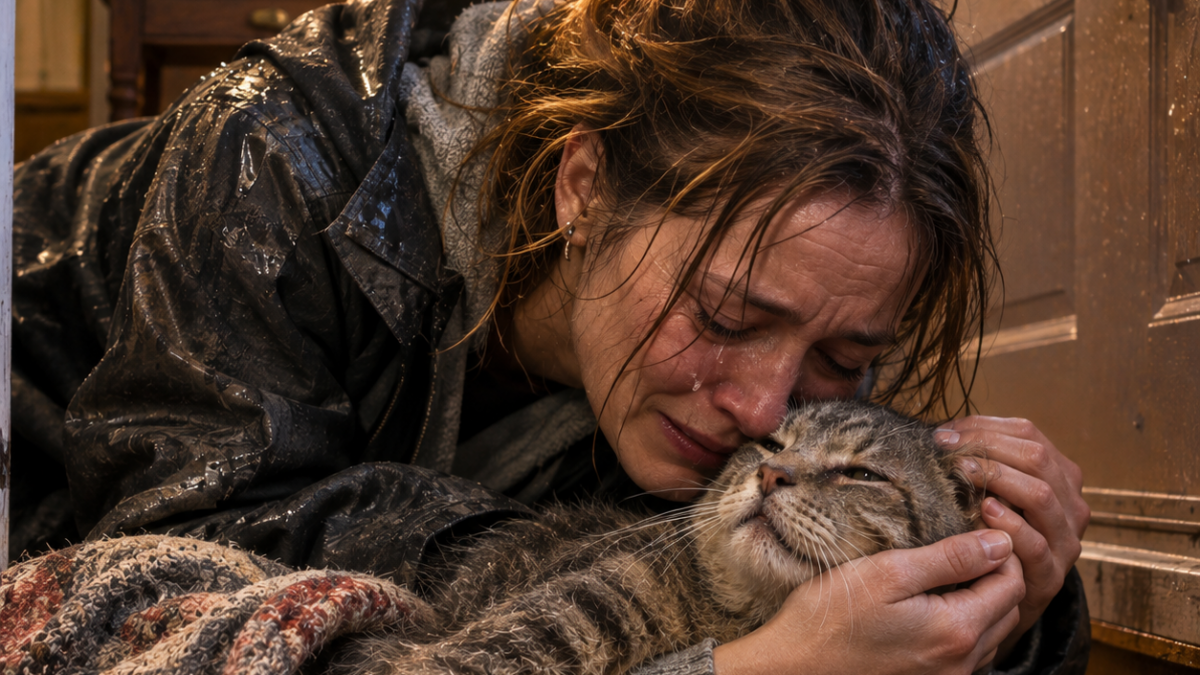
My 18-Year-Old Cat Dragged Himself to the Front Door While I Was Stuck at Work—He Wasn’t Trying to Escape, He Was Waiting to D!e in My Arms
At 6:30 that rainy Manhattan evening, I watched my dying eighteen-year-old cat drag his useless back legs across the floor toward the front door while I sat trapped in a meeting forty blocks away.
My manager was asking about quarterly projections while Oliver collapsed on the hallway runner, staring at the thin strip of light beneath the door as if the only thing keeping him alive was the belief that my key would turn in the lock one more time.
By the time I understood what he was doing, the subway had shut down, traffic had frozen, and I had one terrifying question left: could I get home before the one soul who had never abandoned me finally stopped waiting?
At 6:27 p.m., someone in Conference Room 19B was explaining the difference between a priority and a strategic priority.
I remember that because I almost laughed.
Not because anything was funny.
Because by then we’d been sitting beneath fluorescent lights for two hours and seventeen minutes discussing a proposal that had already been discussed in three previous meetings, and words had begun losing their meaning.
Priority.
Alignment.
Visibility.
Deliverables.
Execution.
Synergy.
I had spent fourteen years in corporate communications and had become fluent in a language designed to make ordinary problems sound expensive.
Outside the glass walls of our Manhattan office tower, rain hammered against the windows hard enough to blur the skyline.
Headlights moved through the streets below like smears of red and white paint.
The entire city looked underwater.
My manager, Greg, stood near the screen with a remote in one hand.
“So if we move the launch forward,” he was saying, “we need confidence that the revised messaging framework will support—”
My phone buzzed.
One vibration.
Short.
I glanced down.
HOME CAMERA: MOTION DETECTED.
Normally I would have ignored it.
The camera sent alerts for everything.
A shift in sunlight.
A delivery package settling outside the door.
A neighbor walking past.
Oliver jumping onto the couch.
Except Oliver hadn’t jumped onto anything in weeks.
I looked toward Greg.
He was pointing at a bar graph.
Nobody was watching me.
I slid my phone beneath the edge of the conference table and opened the alert.
The camera feed took one second to load.
Then my stomach dropped.
The image was grainy because I kept the hallway lights dim while I was gone.
My apartment appeared in washed-out black and white.
Front door.
Runner.
Umbrella stand.
Small console table.
PART2:
Oliver’s orthopedic bed was visible near the radiator.
Empty.
My breath stopped.
“Come on,” I whispered.
One of my coworkers glanced at me.
I lowered the phone.
Then raised it again.
Oliver appeared near the edge of the frame.
At first I couldn’t understand what I was seeing.
My brain expected him to walk.
He didn’t.
He pulled.
His front paws dug into the hardwood.
His shoulders moved forward.
His hindquarters followed only because the rest of his body dragged them.
His back legs stretched uselessly behind him.
He moved perhaps four inches.
Stopped.
His head lowered.
For several seconds, nothing happened.
Then he pulled again.
“Oliver.”
I said his name so softly nobody heard.
He was eighteen years old.
PART3:
Eighteen years and four months, technically, although by that point every extra month felt like a borrowed season.
His hips had been bad for years.
Arthritis first.
Then muscle loss.
Then spinal degeneration.
Then the awful progression that veterinarians describe gently because they know you’re listening for any phrase that doesn’t mean what you already know it means.
He still ate.
Mostly.
He still drank.
Still purred.
Still yelled at me if breakfast was more than ten minutes late.
Still insisted on sleeping against my ribs.
But during the previous two weeks, his world had shrunk.
Bedroom.
Kitchen.
Orthopedic bed.
Litter box with the low entrance I’d bought because climbing over a standard edge had become too difficult.
The hallway had become too far.
The front door farther still.
Yet there he was.
Dragging himself toward it.
“Come on, buddy.”
Another pull.
His claws slid on the wood.
He stopped.
His breathing was visible now.
Too slow.
Not labored exactly.
Just tired.
A terrible, ancient tiredness.
He made it onto the runner.
The same narrow gray runner he’d sat on every evening for years waiting for me to come home.
Oliver had always known my schedule better than I did.
When I worked late, he’d wait.
When I traveled, my cat sitter would send photographs of him sitting near the door around six.
When I came home after midnight, he’d still be there.
Not frantic.
Not dramatic.
Just present.
Like attendance mattered.
Like I did.
Now he reached the middle of the runner.
Collapsed.
His head remained pointed toward the door.
His eyes were fixed on the small strip of hallway light underneath.
He didn’t move again.
The cold certainty arrived before any thought.
He’s dying.
There are realizations that come gradually.
And there are realizations that strike like something breaking inside the body.
I knew.
Not suspected.
Not worried.
Knew.
Oliver wasn’t crawling because he wanted water.
He wasn’t trying to reach the litter box.
He wasn’t confused.
He had spent almost his entire adult life meeting me at that door.
And somewhere inside that failing little body, one habit remained stronger than pain.
Wait for Megan.
“Megan?”
I looked up.
Everyone was watching me.
Greg had stopped beside the screen.
“What?”
“Your take on the proposal?”
For half a second, I genuinely didn’t know what proposal he meant.
I looked around.
Nine people.
Laptops.
Coffee cups.
Charts.
Numbers.
A glass wall covered in yellow sticky notes.
Someone had spent twenty minutes earlier debating whether the word “accessible” was too passive.
My cat was dying on a hallway rug.
I put my phone on the table.
Closed my laptop.
Stood.
“I have to go.”
Greg frowned.
“Is everything okay?”
“No.”
The room changed.
Not much.
Just enough.
People become uncomfortable when someone answers that question honestly.
I grabbed my bag.
“It’s an emergency.”
Greg glanced toward the rain outside.
“We’re almost through the key decision points.”
I stared at him.
Maybe he didn’t mean anything by it.
Probably didn’t.
Maybe his brain was still in meeting mode.
But something in me snapped cleanly into place.
“I understand.”
“Megan—”
“I have to go.”
One coworker, Nina, saw my face.
She shut her own laptop halfway.
“Do you need help?”
“No.”
“You sure?”
I nodded.
“My cat.”
The words sounded small when I said them.
A cat.
In a room where people had spouses.
Children.
Parents.
Mortgages.
Medical emergencies.
A cat shouldn’t have had the power to erase the importance of everything on the screen.
But it did.
“He’s dying.”
Silence.
Nina’s expression softened immediately.
Greg’s did too.
“Oh.”
That single syllable.
The moment when a person either understands or doesn’t.
I didn’t wait to find out which.
I walked out.
The hallway outside Conference Room 19B was bright, carpeted, aggressively calm.
I hit the elevator button.
Nothing.
Hit it again.
Still nothing.
“Come on.”
My phone was already back in my hand.
Camera feed.
Oliver had not moved.
His head was down now.
I zoomed in.
Bad idea.
His ribs shifted beneath his fur.
One breath.
Pause.
Another.
I pressed the elevator button hard enough to hurt my finger.
“Come on!”
A woman from finance came around the corner and looked at me.
“Everything okay?”
“No.”
The elevator arrived.
I stepped inside before the doors fully opened.
Lobby.
The numbers descended.
I watched the security feed.
Oliver’s ear moved.
That was all.
I wanted to speak through the camera.
It had two-way audio.
I almost pressed the microphone.
Then stopped.
Would hearing my voice comfort him?
Or would he try harder to move?
Would he think I was home?
I didn’t know.
My thumb hovered.
The elevator reached twelve.
I pressed it.
“Oliver.”
My own voice came through the tiny apartment speaker, distorted and metallic.
His head lifted.
My heart broke.
“Hey, baby.”
His ears turned.
He tried to raise his chest.
“No. No, don’t move.”
He couldn’t understand that.
Of course he couldn’t.
“Mama’s coming.”
I had never called myself Mama to him before.
Not seriously.
Suddenly I did.
“I’m coming home.”
His head lowered again.
The elevator doors opened into the lobby.
I ran.
Security guard called, “Careful, ma’am.”
The revolving door pushed me into rain.
Cold water hit my face.
Instantly.
My umbrella was somewhere in my bag.
I didn’t bother.
The subway entrance was half a block away.
I ran toward it.
My office was in Midtown East.
My apartment was on the Upper West Side.
Under normal conditions, subway was fastest.
Twenty-five minutes if everything lined up.
Maybe thirty.
I reached the stairs.
People were coming back up.
That should have warned me.
At the bottom, the electronic board flashed:
SERVICE SUSPENDED — SIGNAL FAILURE.
“No.”
Another message.
DELAYS IN BOTH DIRECTIONS.
“No, no, no.”
A transit employee stood behind the booth answering five angry people at once.
“How long?”
“No estimate.”
“I need uptown.”
“No service right now.”
“Buses?”
“Packed.”
I stood there.
Rainwater dripped from my hair onto my coat.
My phone shook in my hand.
7 percent battery.
Of course.
I looked at Oliver.
Still breathing.
I ran back upstairs.
The rain had gotten worse.
The city looked hostile.
Taxis passed with lights off.
Ride-share estimate: forty-three minutes.
Then fifty-one.
Then unavailable.
I stepped into the street and raised my arm.
A cab passed.
Another.
One slowed.
Someone else opened the door before I reached it.
I nearly screamed.
Then a yellow cab pulled out from behind a bus.
Light on.
I stepped directly into the lane.
The driver hit the horn.
Stopped.
I yanked the back door open.
“Upper West Side.”
He turned around.
Middle-aged man.
Salt-and-pepper beard.
“Cross town?”
“Yes.”
“Lady, traffic is terrible.”
“I know.”
“Rain—”
“Please.”
Something in my voice changed his face.
I climbed in.
“West 86th.”
He pulled away.
I opened the camera feed again.
Oliver hadn’t moved.
The driver looked in the mirror.
“Someone sick?”
“My cat.”
I expected the usual half-second reaction.
Oh.
Just a pet.
Instead he nodded.
“Old?”
“Eighteen.”
“That’s old.”
“Yeah.”
“My daughter has a cat. Fifteen.”
I looked up.
He changed lanes.
“She says that cat is her best friend.”
“Mine too.”
Traffic stopped.
Completely.
Red taillights stretched ahead.
The driver sighed.
“Tonight is bad.”
“I have to get there.”
“I know.”
He checked his mirrors.
Cut right.
Turned onto a side street.
Cars honked.
He didn’t care.
“My name’s Samir,” he said.
“Megan.”
“We get you there.”
I almost cried from gratitude.
Not because I believed he could control Manhattan traffic.
Because he said we.
My phone buzzed.
Battery 5%.
I turned brightness down.
Opened feed.
Oliver’s eyes were closed.
“Oliver?”
I pressed microphone.
His ear moved.
“Hey.”
His head lifted perhaps an inch.
“I’m coming.”
I covered my mouth.
Samir looked in the mirror.
“He’s there?”
“At the door.”
“Waiting?”
“Yes.”
Samir didn’t say anything.
He took another turn.
We moved six blocks.
Then stopped behind a delivery truck double-parked on a narrow street.
Cars stacked behind us.
A horn began.
Then another.
Samir leaned on his.
Nothing.
A man in a reflective vest shouted at someone near the truck.
Samir checked left.
No room.
Right.
Parked cars.
“Can you go around?”
“No.”
“How long?”
“I don’t know.”
I looked at the clock.
7:11.
Forty-four minutes had passed since the camera alert.
Oliver’s breathing looked slower.
Maybe the video lagged.
Maybe I imagined it.
“Please.”
Samir slapped the steering wheel.
“I know.”
Then he turned around.
“How far are you from here?”
I looked at the map.
Twenty-seven blocks.
I could run.
Not well.
Not in these shoes.
But I could.
“I’m getting out.”
“Too far.”
“I can make it.”
“Rain—”
“I have to.”
I pulled cash from my wallet.
“Megan.”
“It’s fine.”
He shook his head.
“No fare.”
“What?”
“Go.”
“Please take it.”
“No.”
He reached back and pushed my hand away.
“Go to your cat.”
That did it.
I cried.
“Thank you.”
“Go.”
I opened the door.
“Hey.”
I looked back.
Samir pointed at me.
“He waited this long.”
I nodded.
“He waits.”
Then I ran.
There is no graceful way to sprint through Manhattan in work shoes during a January storm.
My shoes filled with water almost immediately.
My bag slammed against my hip.
Rain ran down my face so hard I could barely see.
I nearly slipped crossing Lexington.
Someone cursed at me when I bumped an umbrella.
I apologized without stopping.
Every traffic light became personal.
Every person walking slowly in front of me became an obstacle.
My lungs started burning after six blocks.
At ten, my calves cramped.
I checked my phone while running.
3%.
Oliver remained by the door.
“Come on, baby.”
I passed a bakery we used to live near.
That triggered a memory so unexpectedly I almost stopped.
Oliver at six months old.
Sitting inside a cardboard box on the kitchen counter.
I’d brought him home in August when I was twenty-two.
My first apartment in New York was a fourth-floor walk-up in Queens with one window that faced a brick wall and a radiator that screamed like someone was trapped inside it.
I had been living in the city for five months.
I told everyone I loved it.
I told my mother I loved the energy.
My friends back home that I loved the independence.
My coworkers that I loved having everything nearby.
The truth was I was lonely.
Not dramatically.
Just constantly.
The kind of loneliness that attaches itself to ordinary things.
Cooking too much pasta and realizing nobody else would eat it.
Coming home after a bad day and having no one to tell.
Getting sick and discovering independence means buying your own cold medicine with a fever.
My roommate had moved in with her boyfriend.
I couldn’t afford the apartment alone but was too proud to admit it.
One Saturday I went to an adoption event because it was raining and I had nothing else to do.
Oliver was in a wire pen with four other kittens.
He was gray-brown.
Huge ears.
Too-big paws.
White chin.
He climbed my jeans.
That was the entire adoption interview as far as he was concerned.
The volunteer said, “He likes you.”
“I think he’s using me as furniture.”
“Same thing with cats.”
I took him home.
He cried the entire subway ride.
The first night, he climbed onto my pillow and bit my hair.
The second, he slept under my chin.
By the third, the apartment didn’t feel quite so empty.
Oliver was there when my landlord raised the rent.
There when I got my first promotion.
There when I got fired from my first real job.
There when my boyfriend Andrew left after three years because he “needed to figure out what he wanted.”
Apparently what he wanted was a yoga instructor in Brooklyn.
I found that out later.
The night Andrew left, I sat on the floor because the couch felt too normal.
I didn’t cry at first.
Oliver walked over.
He was five then.
Strong.
Annoying.
He sat directly on the papers Andrew had left beside me.
I pushed him away.
He came back.
I pushed him again.
He came back again.
Eventually I gave up and held him.
Then I cried.
That became our pattern.
Life happened.
Oliver stayed.
I made another block.
Another.
Rain.
Traffic.
My phone hit 2%.
I stopped beneath an awning.
Camera feed.
Oliver’s eyes were open.
I used the speaker.
“Buddy.”
His ear moved.
“Still coming.”
I hated the sound of my own voice.
Panicked.
Begging.
“You stay there.”
As if he had a choice.
“I’m almost home.”
Lie.
Ten blocks.
Maybe twelve.
Battery died.
The screen went black.
“No.”
I hit the side button.
Nothing.
“No, no.”
A man smoking under the awning looked at me.
“You okay?”
“My phone died.”
He held out a portable battery pack.
“Need charge?”
I stared.
“Seriously?”
He shrugged.
“It’s USB-C.”
Mine was compatible.
I nearly hugged him.
“Thank you.”
“Keep it.”
“I can’t.”
“I’ve got another.”
“What’s your name?”
“Devon.”
“Thank you, Devon.”
“Sure.”
I connected the phone and kept running with the charger in my pocket.
There is kindness everywhere when you’re desperate enough to notice it.
That thought came later.
At the time, there was only Oliver.
When I finally reached my building, my legs were trembling.
The doorman, Luis, saw me through the glass.
He opened the door.
“Ms. Harper?”
“Elevator?”
“Up on fourteen.”
I looked at the indicator.
I lived on eight.
No.
I went for the stairs.
“Megan!”
“Oliver.”
Luis understood immediately.
He’d known Oliver for eleven years.
He’d brought packages upstairs.
Held the apartment door while I wrestled with carriers.
Once smuggled a tiny bag of turkey from his lunch because Oliver liked him.
“Oh God.”
He followed me into the stairwell.
“Want me to—”
“No. I’m good.”
I wasn’t.
First flight.
Second.
My lungs felt shredded.
Third.
The wet soles of my shoes slipped on concrete.
Luis stayed below me.
“Slow down.”
“I can’t.”
Fourth.
Fifth.
By six, I was crying from pain and fear.
At eight, I shoved open the door.
Hallway.
Twenty feet.
My apartment.
I ran.
Keys.
My hands were shaking.
Wrong key.
Dropped them.
“Come on!”
Luis reached me.
“Here.”
“No.”
I snatched them.
Found the right key.
Inserted it.
Then froze.
My hand on the knob.
Because there was a possibility waiting on the other side that I had not allowed myself to imagine.
Silence.
What if Oliver had died during the last five minutes?
What if I had been too late by one traffic light?
One elevator?
One meeting slide?
I couldn’t turn the knob.
Luis stood behind me.
“Megan.”
I looked at him.
“Go.”
I nodded.
Opened the door.
The apartment was dark.
Quiet.
Rain and city noise vanished when the door shut behind me.
“Oliver?”
Nothing.
My heart stopped.
Then I saw him.
On the runner.
Exactly where the camera showed.
Head down.
Body thin.
Still.
“Oliver.”
His ear moved.
I dropped everything.
Bag.
Coat.
Charger.
I fell to my knees.
The sound of my body hitting the floor made his head rise.
Barely.
But it rose.
His cloudy gold eyes found me.
There are things I will remember after I’ve forgotten my own phone number.
That look.
Relief has a physical shape.
I saw it move through his face.
The tension left his jaw.
His ears softened.
His body seemed to let go of something.
He made one small sound.
Not a meow.
Oliver hadn’t properly meowed in years.
It was the little chirp he’d always used when I came home.
Mrrp.
My entire life broke open.
“I’m here.”
I crawled toward him.
“I’m here, baby.”
His head fell into my hand.
He was cold.
Not freezing.
But wrong.
His fur had lost the warmth I associated with him.
I gathered him carefully.
His back legs remained limp.
He weighed barely six pounds.
At his healthiest he’d been twelve.
“I’m sorry.”
I repeated it.
“I’m sorry. I’m sorry. I’m sorry.”
Oliver purred.
Faint.
Almost imagined.
But I felt it against my palm.
That destroyed me.
He was dying and comforting me.
The same ridiculous thing he’d done for eighteen years.
Luis stood in the doorway.
His face was wet.
Not from rain.
“I call emergency vet?”
I looked at Oliver.
We had already talked about this.
Dr. Chen and I.
Two weeks earlier.
Quality of life.
Emergency signs.
Pain.
Respiratory distress.
When aggressive intervention becomes something you’re doing for yourself instead of them.
Oliver hated hospitals now.
Terrified.
The last visit had taken hours for him to recover from.
Dr. Chen had given me her personal number.
“If it happens suddenly and he’s comfortable, call me. Don’t automatically put him through an emergency clinic.”
I looked at Luis.
“No.”
“You sure?”
“Yes.”
He understood.
“I’ll be outside.”
“Thank you.”
He closed the door.
I sat on the hallway floor.
My wet clothes made a puddle.
Oliver lay in my arms.
“Look at me.”
He did.
His pupils were wide.
Cloudy with age.
Still him.
I touched his cheek.
“You waited.”
Purr.
I started sobbing.
“You stupid, stubborn old man.”
His paw moved against my wrist.
“Why did you do that?”
I knew why.
Or believed I did.
People warn you not to assign human motives to animals.
They’re right.
Probably.
But after eighteen years, you learn patterns.
Oliver didn’t crawl to the front door every day.
Not anymore.
He hadn’t managed the hallway in almost two weeks.
Yet on the evening his body began failing, he had left the warm orthopedic bed.
Crossed hardwood.
Dragged two useless legs.
Reached the place where he’d always waited for me.
That wasn’t proof of some mystical understanding of death.
It didn’t need to be.
He knew one thing.
Megan comes through that door.
That was enough.
I called Dr. Chen.
She answered on the second ring.
“Megan?”
“I’m home.”
“With him?”
“Yes.”
“Tell me what you’re seeing.”
I did.
Breathing.
Temperature.
Eyes.
Back legs.
Responsiveness.
She asked questions.
“Is he crying?”
“No.”
“Open-mouth breathing?”
“No.”
“Trying to move?”
“Not now.”
“Does he settle when you hold him?”
I looked down.
Oliver had relaxed against my chest.
“Yes.”
“Okay.”
Her voice softened.
“I think he’s actively dying.”
I closed my eyes.
“I know.”
“I can come.”
“How long?”
“Forty minutes, maybe less.”
I looked at Oliver.
His eyes were closing.
“I don’t think we have forty.”
She was silent.
Then:
“Stay with him.”
“I am.”
“Talk to him.”
“I am.”
“Keep him warm.”
I pulled my wet coat away.
Grabbed the blanket hanging on the bench.
Wrapped him.
“Do I need to do anything?”
“No.”
“How do I know if he’s hurting?”
She guided me.
Signs.
Breathing.
Body tension.
Vocalizing.
Oliver seemed peaceful.
Exhausted.
“He’s purring.”
Dr. Chen’s voice broke slightly.
“He loves you.”
I cried harder.
“Don’t say that.”
“Why?”
“Because I won’t survive this.”
“You will.”
“I don’t want to.”
“I know.”
I hated her for being right.
Oliver’s head shifted.
I lowered the phone.
“Hey.”
His eyes opened again.
“I remember the first night.”
His ear moved.
“You chewed my hair.”
Purr.
“You ruined a pair of shoes.”
Breath.
“And that couch.”
Breath.
“You hated Andrew.”
That made me laugh through tears.
“Correct call, by the way.”
Oliver blinked slowly.
“You stayed through everything.”
His eyes remained on me.
“I left you alone too much.”
There it was.
The guilt.
Not just that night.
Years.
Late work.
Trips.
Dinner plans.
Dating.
The promotion I’d worked for at thirty-nine that turned into sixty-hour weeks.
The times I came home exhausted and fed Oliver without sitting with him.
The times he climbed onto my lap and I moved him because I was typing.
The times I said, “Not now.”
As though later had been guaranteed.
“I should’ve been home.”
Oliver breathed.
I pressed my forehead against his.
“I should’ve left that stupid meeting earlier.”
Breath.
“I knew you weren’t doing well.”
Breath.
“I knew.”
Purr.
That faint purr again.
It felt like forgiveness.
Maybe I invented that.
I needed it.
“I love you.”
His body softened further.
His eyes closed.
“You’re okay.”
I remembered something Dr. Chen had told me weeks earlier.
When the time comes, give him permission.
I’d thought it sounded ridiculous.
As if an animal needed a formal release.
Now I understood.
The permission wasn’t for Oliver.
It was for me.
I held him tighter.
“You don’t have to wait anymore.”
My voice broke.
“I’m here.”
His breath came in.
Slow.
Out.
Pause.
“Everybody who mattered left at some point, except you.”
That sentence escaped before I could stop it.
It was true.
My father died when I was thirty-two.
My mother moved to Arizona and became someone I mostly spoke to on Sundays.
Friends married.
Had children.
Moved away.
Relationships ended.
Coworkers changed jobs.
Neighbors came and went.
People didn’t betray me necessarily.
They simply continued in directions that didn’t include me.
Oliver stayed.
Apartment one.
Apartment two.
Apartment three.
The tiny Queens walk-up.
The sublet in Chelsea.
The place in Brooklyn with mice Oliver never caught.
The first apartment I owned.
Then this one.
Every move, Oliver entered the empty rooms first.
Sniffed.
Declared them unacceptable.
Then made them home.
“You were my whole adult life.”
His breathing slowed.
I felt panic.
“No, no.”
Then remembered.
Permission.
I swallowed.
“It’s okay.”
Breath.
“I’ve got you.”
Breath.
“You can go.”
I didn’t mean it.
I meant it more than anything.
Oliver opened his eyes once more.
Looked at me.
No fear.
Maybe animals are kinder than people because they don’t waste the end pretending the end isn’t happening.
He simply looked.
I stroked the bridge of his nose.
His favorite spot.
His final breath was deeper than the others.
Trembling.
His chest rose.
Held.
Then fell.
No next breath.
I waited.
One second.
Two.
Five.
“Oliver?”
Nothing.
I put my hand over his chest.
Nothing.
“No.”
Of course I had known.
Still, the word came.
“No.”
I shook my head.
“No, baby.”
Silence.
I put my ear against his body.
Nothing.
The purr was gone.
I don’t know how long I stayed on the floor.
Twenty minutes.
An hour.
Time stopped having shape.
Rainwater dried in my hair.
My clothes became cold.
The apartment heater clicked on.
Cars moved below.
A siren passed.
Somebody laughed in the hallway.
An elevator dinged.
Life continued with grotesque normalcy.
Oliver was dead.
And some stranger was ordering dinner.
Someone was getting engaged.
Someone was fighting over laundry.
Someone was sending an email marked urgent.
The world had the nerve to continue.
I held him.
His body changed slowly.
That was the cruel physical part.
The difference between holding someone and holding what remains.
I hated it.
I loved him anyway.
At some point, Luis knocked gently.
“Megan?”
I couldn’t answer loudly.
“Yeah.”
“Dr. Chen is here.”
I looked at Oliver.
“Okay.”
She entered carrying a small bag she didn’t need anymore.
The moment she saw us, she understood.
“Oh, Megan.”
I shook my head.
“He waited.”
She knelt.
“I know.”
“I watched him crawl to the door.”
Her eyes filled.
“He hadn’t walked that far in weeks.”
“I know.”
“He waited.”
She put one hand on my shoulder.
“Yes.”
That was all I needed from her.
Not correction.
Not science.
Not a lecture about projection.
Just yes.
Dr. Chen confirmed what I already knew.
Then helped me wrap Oliver in his favorite blanket.
The blue one with tiny white stars.
I had bought it at a pet store because it was on clearance.
He’d loved it for twelve years.
“Do you want me to take him?”
I panicked.
“No.”
“Okay.”
“I’m sorry.”
“You don’t have to apologize.”
“Not yet.”
“Then not yet.”
She sat on the floor with me.
For almost forty minutes.
No rush.
No invoice.
No clinical distance.
She told me Oliver had been one of her oldest feline patients.
“He was mean to me.”
“He liked you.”
“He bit me in 2019.”
“He had boundaries.”
She laughed.
I laughed too.
That felt horrible.
Then good.
Then horrible again.
Grief is indecent that way.
It lets laughter into rooms where you think only pain belongs.
Eventually Dr. Chen left.
Luis brought tea I didn’t drink.
He stood awkwardly near the door.
“I remember when you moved in.”
I looked up.
“You had him in that red carrier.”
“Yeah.”
“He screamed all the way from elevator.”
I laughed.
“He hated moving.”
“He always sit here.”
Luis pointed to the runner.
“When I bring package.”
“I know.”
“He wait.”
I looked at Oliver.
Wrapped.
Still.
“Yeah.”
Luis wiped his eye quickly.
“He good cat.”
“The best.”
Then he left.
At 9:42 p.m., Nina texted.
Are you okay?
I stared at the message.
Then typed:
He waited for me.
She replied immediately.
Oh Megan.
Then:
I’m so sorry.
Greg emailed too.
No need to come in tomorrow. Take whatever time you need.
I read it.
Something ugly rose in me.
Whatever time you need.
How much time was appropriate for a cat?
One day?
Two?
Would Monday be excessive?
Would coworkers whisper?
Would HR categorize it as personal leave?
I almost laughed again.
Eighteen years.
What policy covers eighteen years?
I turned my laptop off.
The next morning, I woke at 5:16.
My first thought was breakfast.
Oliver ate at 5:30.
My body knew before my mind.
I got halfway out of bed.
Then remembered.
The pain was physical.
I sat.
The apartment felt wrong.
Not quieter.
Different.
Oliver had never been a loud cat.
His absence shouldn’t have changed the volume.
It changed everything.
No water fountain hum in the kitchen.
I’d unplugged it after he died because the sound became unbearable.
No scratching from the litter box.
No little nails crossing hardwood.
No body on the heated bed.
No gray head appearing in the bedroom doorway.
I walked to the hallway.
The runner was still there.
There was one tiny scratch in the fabric where his claw had caught while dragging himself.
I sat beside it.
Cried.
Then opened the security camera app.
I don’t know why.
The final footage was still saved.
6:29.
Oliver pulling.
Pause.
Pulling.
Pause.
Reaching the runner.
Collapsing.
Waiting.
I watched it once.
Then again.
Then again.
It became self-punishment.
Why wasn’t I home?
Why did I go to work?
Why did I stay in that meeting?
Why hadn’t I taken leave when his legs worsened?
Why did I think tomorrow was guaranteed?
My phone rang.
My sister, Claire.
Nina must have told someone.
Or maybe I’d texted Claire the night before.
I couldn’t remember.
“Hey.”
“You sound terrible.”
“Thanks.”
“How are you?”
“Oliver died.”
“I know.”
Silence.
Then she said, “I’m sorry.”
I cried.
Claire had known Oliver almost his entire life.
She used to cat-sit.
“He waited until I got home.”
“I know.”
“How?”
“Because he loved you.”
Again.
I hated that sentence.
Loved it.
Claire said, “Megan.”
“What?”
“Don’t do what you’re doing.”
“What am I doing?”
“Making his last day an indictment of your whole life.”
That hit.
“How would you know?”
“Because you’re you.”
I stared at the runner.
“You weren’t there.”
“No.”
“I watched him crawl.”
“I know.”
“I should’ve been home.”
“Maybe.”
I went quiet.
Claire continued.
“But you were home for eighteen years.”
I closed my eyes.
“That doesn’t cancel last night.”
“No.”
“Then—”
“And last night doesn’t cancel eighteen years.”
I started crying harder.
Sometimes grief makes you want punishment because punishment feels like action.
If I could convict myself, maybe the pain would have somewhere to go.
Claire wouldn’t let me.
“He waited because he expected you to come back,” she said.
“That’s worse.”
“No.”
“How is that not worse?”
“Because he expected you.”
Her voice softened.
“Megan, animals learn what happens repeatedly. Oliver waited at that door because for eighteen years, you came through it.”
I couldn’t answer.
“That isn’t proof you failed him.”
Pause.
“It’s proof you were home.”
I wrote that sentence down later.
At the time, I only cried.
Oliver’s cremation happened three days later.
I chose private cremation.
I spent an embarrassing amount on an urn.
Dark walnut.
Small brass plate.
OLIVER
2007–2026
YOU WAITED. I CAME HOME.
The woman at the crematory read it and quietly said, “That’s beautiful.”
I nearly changed it.
Too sentimental.
Too much.
Then I thought about eighteen years.
Let it be too much.
The office expected me Monday.
I went.
People were kind in the way coworkers are kind when they don’t know whether mentioning the loss will make it worse.
Nina hugged me.
Greg said, “Take it easy.”
Someone left a card.
Someone else brought coffee.
One person said, “At least he had a long life.”
I knew they meant well.
I wanted to scream.
At least.
Grief hates “at least.”
At least he lived eighteen years.
At least you got to say goodbye.
At least he wasn’t suffering long.
At least he was a cat and not—
People always want to limit grief by comparison.
I stopped them in my head.
Oliver did have a long life.
I was grateful.
I was still devastated.
Both things fit.
The conference room remained exactly as we’d left it.
The sticky notes.
The screen.
My chair.
For one irrational second, I could see myself sitting there with my phone under the table.
I almost threw up.
Greg came in.
“Want to switch rooms?”
I looked at him.
He understood.
“Yeah.”
He moved the meeting.
No explanation.
That mattered.
Weeks passed.
I kept working.
That’s what people do.
The world requires passwords even when you’re grieving.
Rent still auto-deducts.
Emails still arrive.
Laundry still accumulates.
I went through the motions.
But things had shifted.
At 6:00 every evening, my body became anxious.
Going-home time.
The old rhythm.
I’d enter my apartment and expect Oliver.
Nothing.
The runner became unbearable.
I rolled it up.
Put it in the closet.
Then cried because I’d moved something connected to him.
I put it back.
Then cried again.
Eventually, I learned that grief makes ordinary objects radioactive.
Food bowls.
Blankets.
A brush with hair in it.
A half-used bag of kidney-support food.
His medications.
The little stairs beside the bed.
I left everything for two months.
My apartment looked like a cat still lived there.
Maybe that was denial.
Maybe it was mercy.
One Sunday, I found an old video.
Oliver at age two.
Running full speed through my Queens apartment.
He launched himself onto the couch.
Missed.
Fell.
Got up like nothing happened.
I laughed until I cried.
His body had once been that strong.
That careless.
I had forgotten.
The final years had replaced earlier images.
Arthritis.
Kidney disease.
Medication.
Slow walking.
I had started thinking of Oliver as old.
But Oliver had not always been old.
He had been a kitten.
A menace.
A hunter of bottle caps.
He once stole an entire bagel from my plate.
He fell into a bathtub.
He chased a laser pointer into a wall.
He attacked my Christmas tree every year until he was eight.
He hated one boyfriend on sight.
Correctly.
He slept inside my suitcase whenever I traveled.
He once disappeared for six hours and was found inside a kitchen cabinet.
He had a whole life before the hallway.
That realization saved something in me.
The security footage stopped being the only film I replayed.
I watched the good videos.
Too many.
Oliver at seven.
Oliver at eleven.
Oliver sleeping on my father.
Oliver sitting in a moving box.
Oliver yelling because dinner was late.
Oliver at sixteen still managing to jump onto the couch.
I began remembering life instead of only death.
Then Samir called.
The taxi driver.
I had given him my number because I’d insisted on paying electronically after all.
I’d forgotten.
“Miss Megan?”
“Yes?”
“This Samir. Taxi.”
I remembered immediately.
“Oh.”
“I hope okay to call.”
“Yes.”
“Your cat?”
I swallowed.
“He waited.”
Silence.
Then Samir said, “Good.”
“He died.”
“I know.”
“What?”
“You say he waited. That is good.”
I closed my eyes.
“I guess.”
“My mother died in Bangladesh. I didn’t make it.”
His voice changed.
“Plane was too late.”
“I’m sorry.”
“She was not alone. My sister was there.”
He paused.
“Still, you think about minutes.”
Yes.
Minutes.
Traffic lights.
Meetings.
Elevators.
Flights.
We talked for ten minutes.
Two strangers connected by endings.
Before hanging up, Samir said, “Don’t remember only the running.”
“What?”
“You ran because there was love before.”
I wrote that down too.
I had begun collecting sentences like medicine.
Claire’s:
You were home for eighteen years.
Samir’s:
You ran because there was love before.
Dr. Chen’s:
Stay with him.
Months later, I finally donated Oliver’s unopened food.
I brought it to a senior-cat rescue in Brooklyn.
I almost left the bags at the door.
Then a volunteer named Monica asked if I wanted a tour.
“No.”
I said it too quickly.
She smiled.
“That’s okay.”
I looked through the glass anyway.
Old cats.
Gray faces.
Thin bodies.
Cloudy eyes.
One enormous black cat sat with his back to everyone.
A little white cat slept beneath a heating pad.
Another had only three legs.
I felt panic.
Not ready.
Absolutely not.
Monica noticed.
“Lost one?”
“Yes.”
“Recently?”
“Four months.”
“Long time together?”
“Eighteen years.”
Her expression changed.
“That’s a whole era.”
Exactly.
Not a pet.
An era.
I left.
Came back two weeks later.
Not to adopt.
To volunteer.
I told myself I could clean cages.
Do laundry.
Anything that didn’t involve loving.
The rescue agreed.
My first job was washing bowls.
Perfect.
No emotions.
Just soap.
Then they gave me medication charts.
Then transport.
Then photographs.
I met people surrendering senior pets because owners died.
Because nursing homes wouldn’t allow animals.
Because someone lost housing.
Because medical bills became impossible.
I stopped believing every surrender meant betrayal.
I saw guilt.
Poverty.
Illness.
Compromise.
Love reaching its limits.
One Saturday, an elderly man brought in a thirteen-year-old tabby named George.
The man was ninety-one.
His daughter stood beside him.
He was moving to assisted living after a fall.
The facility refused cats.
He held George against his chest.
“I promised his mother I’d keep him.”
The daughter started crying.
Monica said, “We’ll take care of him.”
The man looked at us.
“He’s never slept alone.”
My chest tightened.
I knelt.
“Then he won’t tonight.”
The words came out before I planned them.
George came home with me as a foster.
Temporary.
Absolutely temporary.
He was nothing like Oliver.
That mattered.
Orange.
Loud.
Food-obsessed.
Terrible manners.
He slept at the opposite end of the bed.
Hated being picked up.
Loved cardboard.
He did not sit by the door.
He waited in the kitchen because that was where food came from.
Good.
I didn’t need another Oliver.
There could never be another Oliver.
George needed a home.
Not a replacement role.
For three months, I fostered him.
Then a retired teacher adopted him.
I cried when he left.
Not because I wanted to keep him.
Because I could love something and let it go.
That was new.
I fostered another.
Then another.
Senior cats.
Always seniors.
Some stayed a week.
Some months.
One died in my apartment after five days.
That nearly ended fostering.
Her name was Ruthie.
Kidney failure.
We thought she had more time.
She didn’t.
She died in the orthopedic bed Oliver had used.
I sat on the floor and thought:
I cannot keep doing this.
Monica came over.
“Then don’t.”
“I thought you’d tell me it matters.”
“It does.”
“I thought you’d tell me they need us.”
“They do.”
“Then—”
“You don’t owe suffering your entire life just because you’re good at witnessing it.”
That sentence changed me too.
I took a month off.
Then returned.
Not because I stopped being afraid.
Because fear and love can occupy the same apartment.
A year after Oliver died, my office announced another restructuring.
The old Megan would have panicked.
Stayed later.
Worked harder.
Proved more.
Instead, I looked at my calendar.
Then at a veterinarian appointment for a foster cat named Louis.
I blocked the time.
No explanation.
Greg, still my manager, noticed.
“Everything okay?”
“Vet.”
He nodded.
No argument.
Maybe he had changed too.
Maybe I had.
I still worked hard.
I just stopped confusing employment with moral worth.
There are meetings that matter.
There are meetings that can wait.
It took Oliver’s last night to teach me the difference.
On the first anniversary, rain fell.
Of course.
Not the same storm.
But enough.
I stood by the front door.
The runner was there.
I had kept it.
One small pulled thread marked where Oliver’s claw caught.
I touched it.
Then sat.
My foster at the time, a fifteen-year-old tuxedo cat named Marty, walked past me completely uninterested.
“Very emotional moment,” I told him.
He went to his food bowl.
Good.
I opened the old security footage.
Not because I wanted to punish myself.
I hadn’t watched it in months.
Oliver pulled.
Paused.
Pulled.
Reached the runner.
Waited.
I cried.
But this time, I saw something different.
I noticed the lamp.
The little cat stairs.
The heated bed.
The low-entry litter box.
The water fountain.
Evidence everywhere.
Care.
Not perfect care.
Not saintly devotion.
A life built around an aging animal’s needs.
I had spent a year seeing only where I wasn’t.
Now I could see where I had been.
For eighteen years.
The footage wasn’t proof of abandonment.
It was proof Oliver knew exactly where home was.
That changed everything.
I deleted the clip from my phone.
Not from the cloud archive.
I wasn’t that evolved.
But I stopped carrying it in my pocket.
Years later, people still ask why I foster senior cats.
I don’t tell the entire story every time.
Usually I say, “I had an old cat.”
That’s enough.
Sometimes someone says, “I could never do seniors. I’d get too attached and lose them too soon.”
I understand.
I used to think the same way about loss.
That love was worth more if it lasted longer.
Now I know duration is not the only measurement.
A week can matter.
A night.
Forty minutes on a hallway floor.
The ending doesn’t cancel the life before it.
And the pain after doesn’t mean the love was a mistake.
Oliver taught me that.
He taught me something else too.
Waiting is a form of trust.
For eighteen years, he heard elevators.
Footsteps.
Keys.
Doors.
And learned:
Megan leaves.
Megan returns.
That final night, when his body had almost nothing left, he moved toward the place where that promise had been proven thousands of times.
He did not know about quarterly projections.
Subway delays.
Signal failures.
Traffic.
Delivery trucks.
Rain.
He knew the door.
He knew my footsteps.
He knew my key.
He knew I came home.
And I did.
Not gracefully.
Not calmly.
Soaked.
Late.
Terrified.
But I came.
For a long time, I thought Oliver’s final gift was waiting so I could say goodbye.
Maybe it was.
But I think there was another gift hidden inside it.
He forced me to see that love is built long before the emergency.
It is built in breakfasts.
Litter boxes.
Vet bills.
Annoyance.
Ordinary Tuesdays.
Opening the door ten thousand times.
Saying “I’m home” when nobody else is there.
Letting a cat sit on your laptop when you’re trying to work.
Moving apartments and carrying the same ridiculous scratching post because he refuses to use anything else.
Staying.
Returning.
Again.
Again.
Again.
Until one day, when everything else is failing, the body remembers the pattern.
Home comes through that door.
I no longer spend my life trying to deserve Oliver’s last night.
That was grief talking.
Love isn’t a debt.
I don’t owe him a lifetime of punishment because he loved me well.
I try instead to honor what he taught me.
Leave meetings when something real needs you.
Answer people when they tell you they’re hurting.
Don’t assume there will be time later.
Don’t make productivity your religion.
Come home.
And when someone you love is tired—human or animal—don’t measure their worth by how much longer they can stay.
Sometimes the kindest thing love can say is:
I’m here.
You don’t have to wait anymore.
I have you.
You can rest.
Oliver spent eighteen years meeting me at doors.
On his last night, he made one final journey toward one.
And sometimes, when rain hits my windows around six-thirty and the city outside turns gray, I still see him there in my mind.
Old.
Fragile.
Stubborn.
Dragging himself forward one impossible inch at a time.
Not because he was afraid of dying.
Not because he believed he could outrun what was happening.
Because somewhere in that ancient, exhausted little body was one certainty stronger than pain:
I would come home.
And for the rest of my life, no matter how guilty grief once made me feel, I will be grateful for the simplest truth of that night.
He waited.
I ran.
The door opened.
And the last thing Oliver ever had to learn was that after eighteen years of trusting me to return, he had been right.








