Jo had spent nearly his entire life shut away in a dark attic, without enough food, clean water, or kindness, until there was barely anything left of him but skin and bones.
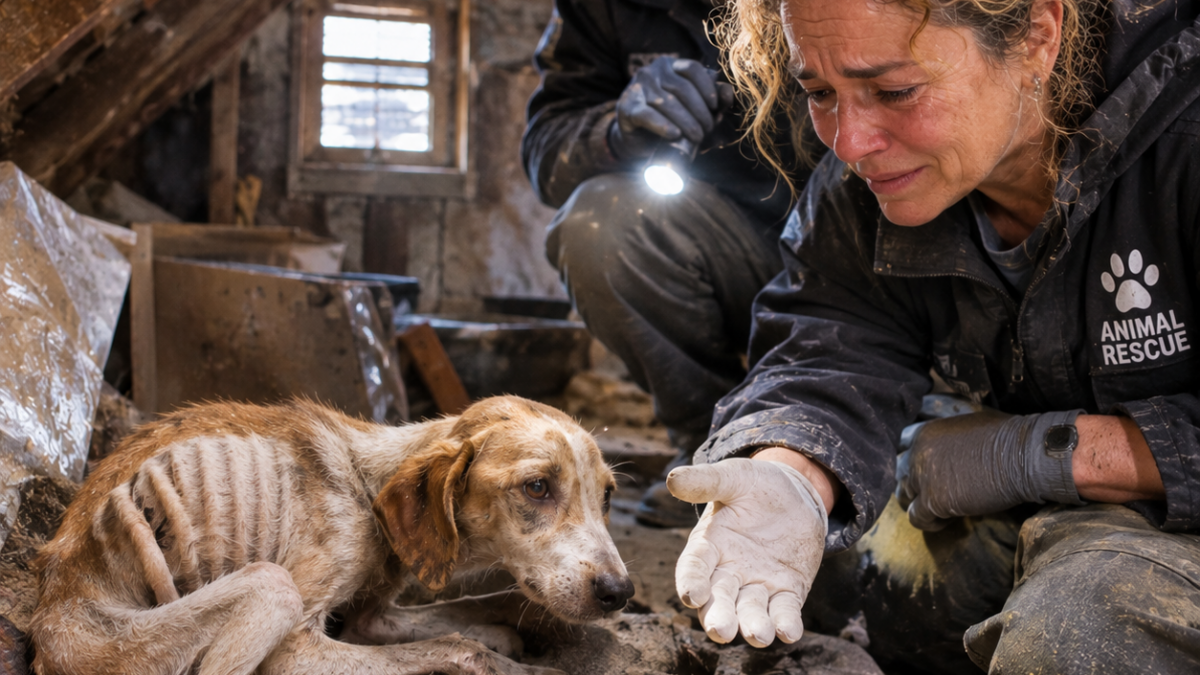
Jo had spent nearly his entire life shut away in a dark attic, without enough food, clean water, or kindness, until there was barely anything left of him but skin and bones.
When rescuers finally reached him, the little dog was so weak he could hardly stand—and so frightened of human hands that even the people trying to save him had to move slowly.
But weeks later, after treatment, food, and patient care, the same dog who once recoiled from touch began leaning toward the hands that fed him.
Constança had been rescuing animals for twenty-five years when she got the call.
A dog was trapped inside a house.
The details were unclear.
The condition sounded bad.
She went with a rescue team.
When they finally entered the property and reached the attic, they found Jo.
Small.
Terrified.
Painfully thin.
His body looked almost too fragile to hold itself upright.
He had spent so long without proper nutrition that standing had become work.
Every movement cost him energy he barely had.
And when people approached, Jo didn’t understand that they were there to help.
He had learned something very different from humans.
So the rescuers slowed down.
No grabbing.
No rushing.
No expecting trust simply because they had good intentions.
Eventually, they got him out.
That was only the beginning.
At the veterinary clinic, Jo’s condition turned out to be even more complicated than it looked.
He was severely malnourished.
Tests showed two tick-borne infections.
His liver was already struggling.
Before the team could move forward with the rest of his treatment, they had to stabilize the problems that were threatening his body first.
Food had to be introduced carefully.
Medication had to be monitored.
His weight had to come back slowly.
For a dog as thin as Jo, rescue wasn’t one dramatic moment.
It was repetition.
Meals.
Medicine.
Rest.
Checkups.
Then more meals.
More patience.
More waiting.
And there was another kind of healing that couldn’t be measured on a scale.
Trust.
At first, Jo was nervous around the people caring for him.
Hands had never meant comfort before.
PART2:
So the team let him learn at his own pace.
A bowl placed nearby.
A voice kept soft.
A person sitting close without demanding anything.
Day after day, the frightened little dog started noticing something.
These hands brought food.
These hands brought medicine.
These hands cleaned him.
These hands didn’t hurt him.
Then the numbers began changing.
His weight climbed.
His strength returned.
His body started filling out.
Standing became easier.
Walking became steadier.
And somewhere along the way, Jo stopped looking at every person as though he needed to prepare himself for something bad.
He started staying close.
Started accepting touch.
Started enjoying the company of the people around him.
Constança had first met a dog who barely had the strength to remain on his feet.
Now she was watching him become curious about life beyond survival.
Jo still had treatment ahead of him.
He wasn’t ready for adoption yet.
There were medical steps to finish before anyone could promise him a permanent home.
But for the first time, the rescue team could begin talking about one.
A family.
A bed.
Regular meals.
Sunlight.
Rooms he would be allowed to enter instead of one dark space he could never leave.
Jo had spent most of his life learning that people could fail him.
Now, little by little, he was learning something else.
Some people come back with food.
Some hands are gentle.
And sometimes being rescued is only the first chapter of finally getting to live.








