I Saved a Pregnant Stray From a Man in a Parking Lot—Then I Saw a “REWARD” Poster With Her Face at the Vet
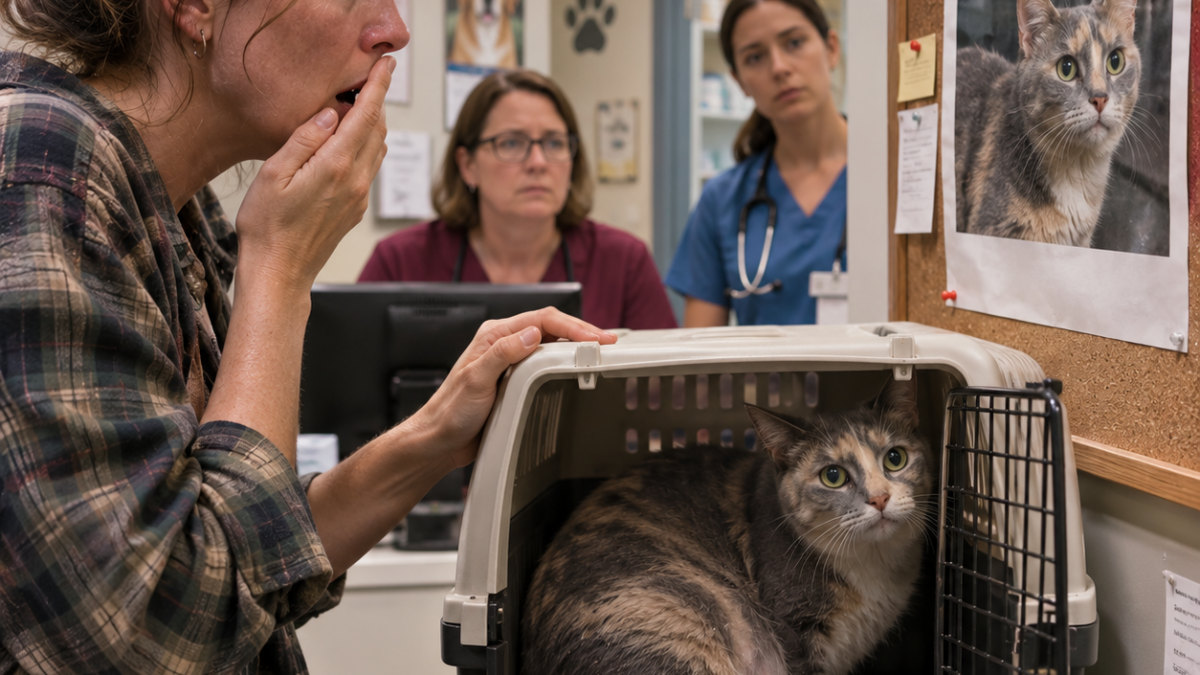
I Saved a Pregnant Stray From a Man in a Parking Lot—Then I Saw a “REWARD” Poster With Her Face at the Vet
The photograph was close enough to make my stomach drop, but the markings were wrong, the timeline made no sense, and when I called the number on the flyer, the woman claiming to know the cat could not describe the small white patch directly beneath her chin.
By midnight, the man from the parking lot had shown up at my apartment building asking neighbors whether anyone had seen a pregnant cat, and I realized the safest thing I could do was stop acting like a rescuer and start making sure every decision from that moment forward could be documented.
My name is Erin.
I was twenty-nine when this happened, living alone in a one-bedroom apartment in Durham, North Carolina, and until that Tuesday afternoon, I had never owned a cat.
Not once.
Dogs, yes.
My uncle had an old Labrador when I was growing up.
One of my college roommates had an anxious terrier who barked at ceiling fans.
But cats?
Nothing.
I did not know how to read their faces.
Did not know what different tail positions meant.
Did not know how much they should eat.
Did not know the difference between hiding because a cat was scared and hiding because something was medically wrong.
That matters, because when people tell stories like this later, they often turn themselves into someone more competent than they were.
They say:
I knew immediately.
I trusted my instincts.
Something told me.
The truth is less impressive.
I was carrying groceries across a parking lot and noticed a cat.
That was all.
Middle of the day.
Bright North Carolina sun.
Cars pulling in and out.
Shopping carts rattling against metal rails.
Normal Tuesday.
I had a paper grocery bag digging into my fingers when I saw her near the cart return.
Dusty blue-and-cream coat.
Little white patch beneath the chin.
Slim face.
Large eyes.
She took two steps.
Stopped.
Looked back at me.
Then two more.
Stopped again.
Looked.
I slowed.
“Hey.”
The cat turned sideways.
PART2:
That was when I noticed her belly.
Not enormous.
Not obviously near delivery.
Just round enough beneath the ribs that my first thought was:
Pregnant?
I set my groceries inside my car.
When I turned back, she had moved farther toward the edge of the cart corral.
Still watching.
A woman crossed the parking lot nearby with a small Beagle mix.
The dog never lunged.
Never barked.
Barely noticed the cat.
But the cat changed completely.
Body low.
Ears back.
Tail straight and low.
Ready to disappear between parked cars.
“It’s okay,” I whispered.
I had no idea whether it was okay.
Then she surprised me.
PART3:
Instead of running from me, she moved away from the dog and stopped beside a patch of shrubs behind the cart return.
Looked at me.
Moved.
Looked again.
I followed.
Half hidden beneath leaves was a cardboard box.
Small.
Damaged.
Rain-softened.
Old strips of tape clung to one side.
I remember thinking:
Do not open random boxes in parking lots.
Then immediately crouching to open it.
That was when footsteps came quickly behind me.
Fast enough that I turned before the person spoke.
“Hey.”
Male voice.
Annoyed before I had even seen his face.
“Don’t.”
I straightened.
A man perhaps in his thirties stood a few feet away.
Jeans.
Dark hoodie despite the warm afternoon.
Paper coffee cup in one hand.
He pointed toward the cat.
“That’s mine.”
I looked at him.
“You lost her?”
“I’ve been taking care of her.”
The distinction registered.
Not:
She’s my cat.
First:
I’ve been taking care of her.
The box contained nothing dramatic.
No hidden kittens.
No injured animal.
Just old paper towels and several empty food pouches flattened against the cardboard.
It looked like someone had made a temporary sleeping place.
Maybe him.
Maybe someone else.
I did not know.
The cat saw the man.
That was when my uncertainty changed.
Her entire body went rigid.
Not normal alertness.
Not curiosity.
She retreated.
One step.
Another.
Careful.
Practiced.
Then slid behind the cart corral, placing metal bars between herself and the man.
He crouched slightly.
“Come on, girl.”
Reached.
Palm down.
Fingers moving.
The cat pressed deeper into the narrow space.
Breathing fast.
He stepped closer.
She moved farther away.
She was not reacting to me like that.
I understood enough to know that did not prove he had harmed her.
Animals can fear familiar people for complicated reasons.
Medical treatment.
Being captured.
Bathing.
Transport.
Bad associations.
I did not know this man.
I did not know this cat.
And the fastest way to make a bad situation worse would have been to invent a complete story from twenty seconds of behavior.
So I tried to make the situation smaller.
“If she belongs to you, we can take her to a vet.”
He stared.
“What?”
“A clinic.”
I nodded toward the cat.
“She looks pregnant.”
“She’s fine.”
“They can scan for a microchip.”
His expression changed.
“No need.”
“It would clear everything up.”
“You don’t understand how much she’s worth.”
That word.
Worth.
Not:
How worried I’ve been.
Not:
I thought she was dead.
Not:
She’s my baby.
Worth.
Maybe I gave the word too much meaning.
Maybe not.
But I remember the way it landed.
The cat backed another inch away from him.
I looked toward my car.
Then made what was probably the strangest decision of my adult life.
I opened the rear passenger door.
Put my reusable grocery tote inside.
Then stepped back.
I did not call the cat.
Did not grab.
Did not reach.
I wanted the open door to be an option.
Nothing else.
The man noticed.
“Don’t.”
I looked at him.
“If she chooses to get in, I’m taking her to the clinic.”
“You’re not taking my cat.”
“Then meet me there with proof she’s yours.”
He stepped toward me.
Close enough that I smelled stale coffee.
“Move.”
I wish I could tell you I became fearless.
I did not.
My body went cold.
I became aware of every person around us.
The woman with the Beagle.
A man returning a shopping cart.
A couple loading cases of water.
My car keys in my right hand.
The distance to the driver’s door.
Then the cat moved.
She slipped from behind the cart corral.
Low.
Quick.
Not toward my hands.
Toward the car.
The man reached.
She flinched so hard her feet skittered on the pavement.
Then she jumped into the backseat.
One clean movement.
Pressed herself into the far corner beside the tote.
The man snapped:
“Hey!”
She shrank.
That decided it for me.
“I’m taking her to a clinic.”
His face hardened.
“You’re making a mistake.”
“Then meet me there.”
I closed the door.
Locked it.
Got into the driver’s seat.
Started the engine.
My hands were shaking.
I pulled away normally.
No dramatic acceleration.
No tires squealing.
I obeyed every red light.
The whole drive, I expected his car to appear behind me.
It never did.
The cat remained crouched in the back seat.
Silent.
Fast breathing.
Eyes moving constantly.
The closest veterinary clinic was less than ten minutes away.
It felt like an hour.
Inside, I tried very hard not to sound like a person arriving with a conspiracy.
“I found a stray.”
I looked toward the parking lot.
“She may be pregnant.”
“And someone says she belongs to him.”
The receptionist asked:
“Do you have her contained?”
“Not properly.”
That was generous.
The cat was still inside my car.
I bought a carrier from the pet section next door.
Getting her inside was not elegant.
Eventually, with help, it happened.
The cat became terrifyingly still.
At the clinic, I completed paperwork with almost nothing to write.
Name:
Unknown.
Age:
Unknown.
Owner:
Unknown.
Medical history:
Unknown.
Then I sat down.
That was when I noticed the bulletin board.
Lost dogs.
Missing cats.
Found animals.
Flyers with phone numbers.
Some faded.
Some new.
Then:
REWARD.
Big letters.
Photograph beneath.
My stomach dropped.
The cat in the picture looked like the one in my carrier.
Same dusty blue-and-cream coloring.
Same narrow face.
Same cautious eyes.
I stood.
Moved closer.
Read.
The name on the flyer was unfamiliar.
The date bothered me.
According to the poster, the cat had disappeared during a period that did not fit what the man in the parking lot had implied.
Then the physical description.
Mostly gray.
Dark tail.
Small white marking.
Except the cat in my carrier did not have a black tail.
And the little white patch under her chin was specific enough that I expected an owner to mention it.
The poster did not.
The longer I looked, the stranger it felt.
The receptionist called:
“Erin?”
I turned.
She looked at my face.
Then toward the carrier.
“Everything okay?”
I pointed.
“That looks like her.”
She came around.
Studied the poster.
“Could be.”
“I don’t know.”
“Do you know who posted it?”
“No.”
She lowered her voice.
“Do you feel safe handing her to whoever claims her?”
That question made everything more real.
“I don’t know.”
I told her what happened in the parking lot.
Not conclusions.
Only behavior.
Man approached.
Cat retreated.
He declined veterinary verification.
Said she was worth a lot.
Reached for her.
She panicked.
The receptionist listened.
Then nodded.
“Let’s keep this boring.”
“What?”
“Boring is good.”
She pulled the carrier farther from the main waiting area.
“Proper documentation.”
“Microchip scan.”
“Medical exam.”
“Anyone claiming her goes through normal channels.”
That was exactly what I needed.
A veterinary technician took us into a small room.
Low voices.
Slow hands.
The cat did not attack.
Did not hiss.
She simply folded inward.
Like being invisible had worked before.
No microchip.
No collar.
No obvious identification.
Then the veterinarian examined her abdomen.
Confirmed what I suspected.
Pregnant.
Not apparently in active labor.
No immediate emergency.
But stressed.
She needed quiet.
Food.
Water.
Consistency.
And follow-up.
I sat staring at the carrier.
Pregnant.
That word transformed everything.
I had not rescued one animal for an afternoon.
Potentially, I had interrupted the lives of several animals I could not see yet.
The clinic gave me care instructions.
Rescue numbers.
Emergency signs.
And one very firm piece of advice:
“If someone claims her, don’t meet them alone.”
I nodded.
“Send them through the clinic or rescue.”
“Okay.”
“Documentation first.”
“Okay.”
“Do not post your home address.”
“Definitely okay.”
I drove home.
My apartment building had cameras.
Management.
A lobby.
Rules.
Pets were allowed with paperwork and fees.
But I was not adopting a cat.
At least that was the story I told myself.
Emergency.
One night.
Until rescue responded.
That sounded manageable.
I carried her upstairs.
Bathroom first.
Small.
Quiet.
No places where I would need to drag her out later.
Towel.
Water.
Litter.
Dim light.
Carrier door opened.
Nothing.
Minutes passed.
Then the cat stepped out.
Slowly.
Moved into the far side of the bathtub.
Sat.
Watched me.
I remained on the floor.
I texted every rescue contact the clinic gave me.
Replies arrived.
Kind.
Apologetic.
Full.
Full.
No foster available.
Maybe next week.
Try another organization.
I emailed my apartment manager.
I tried to sound responsible rather than panicked.
Found pregnant stray.
Short-term emergency housing.
Working with veterinary clinic/rescue.
Will comply with paperwork.
Then I sat in the bathroom.
The cat drank three times.
Every few seconds, she stopped and listened.
Hallway door closed.
Freeze.
Elevator.
Freeze.
Pipe noise.
Freeze.
Then she looked at me.
Not affectionate.
Not grateful.
Tracking.
As though my behavior was another environmental threat she needed to calculate.
That evening I called the number on the reward poster.
A woman answered immediately.
Too quickly, maybe.
I tried not to turn that into evidence.
“Hi.”
“I’m calling about the cat on your flyer.”
“Yes?”
“Could you tell me something specific about her?”
“What do you mean?”
“Something not obvious from the picture.”
Pause.
“Markings.”
“Scars.”
“Anything.”
The woman began describing the flyer.
Gray.
Dark tail.
I looked toward the bathroom.
Wrong.
“Anything under her chin?”
Pause.
“She’s mostly gray.”
I closed my eyes.
“I don’t think this is the same cat.”
“Where are you?”
The question came instantly.
“I can come get her.”
“I’m not giving out my address.”
Her tone sharpened.
“If you found my cat, you need to return her.”
“I’ll give the clinic your information.”
“No.”
“If she’s yours, they’ll verify it.”
“Where are you?”
I ended the call.
My hands shook.
Not because I knew she was lying.
I still did not know.
Because she wanted access before verification.
Minutes later, a text came from the neighbor who had been walking the Beagle at the grocery store.
Someone had been in our building lobby.
A man.
Asking whether anyone had seen a pregnant cat.
Same man?
She believed so.
My stomach dropped.
“How does he know where I live?”
I sent.
She replied:
“He probably followed your plate?”
I looked out my window.
Parking lot.
My car.
I suddenly felt ridiculous for not thinking of it.
The cat took two quick sips of water.
Stopped.
Listened.
I locked the deadbolt.
Closed blinds.
Then told myself:
Do not turn fear into incompetence.
I called building management.
Explained.
Asked them not to release apartment information to anyone asking about a cat.
They agreed.
Lobby cameras would remain available if needed.
I called the veterinary clinic.
Documented the call from the flyer number.
Documented the man appearing at the apartment building.
The receptionist said:
“Good.”
“Good?”
“You’re creating a record.”
That calmed me more than reassurance would have.
That night I slept sitting against the bathroom vanity.
Or tried.
The cat stayed in the tub.
Near midnight, she made one tiny sound.
Not quite meow.
More like air.
I woke instantly.
She stared at the bathroom door.
My neighbor messaged again.
“He came to intercom.”
“I told him I didn’t know anything.”
I set the phone down.
The cat looked at me.
I whispered:
“I’m still here.”
No reaction.
“I’m still here.”
Sometime before dawn, the building became completely quiet.
The cat stood.
Walked toward the edge of the tub.
Stopped.
One step closer.
Whiskers trembling.
I understood something then.
Not mystically.
Not that she had chosen me forever.
Just this:
The situation needed to become official before emotion made me stupid.
The following morning, I put the carrier inside the bathroom.
Door open.
Waited.
The cat examined it.
Then climbed inside on her own.
At the clinic, I asked:
“Can you connect me with a rescue that can actually document custody and claims?”
“Yes.”
The receptionist lowered her voice.
“Also, someone came in asking about a pregnant cat.”
My stomach tightened.
“The man?”
“Man.”
“Small shy cat.”
“No documentation.”
“We didn’t confirm anything.”
“What did he say?”
“That he had been feeding her.”
Same phrase.
Not owner.
Feeding.
The clinic’s position was simple.
If he claimed legal ownership:
proof.
Prior veterinary records.
Microchip registration.
Photographs with identifiable markings.
Adoption paperwork.
Something.
Not just:
She is worth money.
No proof came.
The woman from the reward poster did not provide any either.
The clinic documented both inquiries.
A local rescue coordinator called me that afternoon.
Her name was Mariah.
She did not offer drama.
She offered paperwork.
“First thing.”
She said.
“Do not advertise her exact location.”
“Okay.”
“Second.”
“Keep every message.”
“Okay.”
“Third.”
“We document the found-animal process.”
She explained local procedures for reporting a found animal and attempting to locate a legitimate owner without exposing the finder.
The goal was not to secretly keep somebody else’s cat.
The goal was to make any ownership claim verifiable.
That distinction mattered.
I completed what they asked.
The clinic scanned again.
No chip.
We photographed every distinctive marking.
White chin patch.
Cream along shoulder.
Tail coloring.
Small nick along one ear.
Pregnancy confirmed.
Then we waited.
The man did not produce records.
The flyer claimant did not.
Several messages came through the rescue.
One person claimed the cat was theirs but described her as male.
Another said she had disappeared three months earlier but provided a photograph of a visibly different cat.
The rescue handled it.
I stayed out.
That was a relief.
Meanwhile, the cat stayed with me.
Temporary.
I kept repeating that.
Temporary.
My neighbor with the Beagle, Nina, turned out to know far more about cats than I did.
She had fostered kittens years earlier.
She came over quietly.
Never entered the guest room without warning.
Never tried to touch the cat.
“Predictable,” she told me.
“That’s the main thing.”
“Meals at similar times.”
“Same room.”
“Same people.”
“Let her choose distance.”
We moved the cat from bathroom to my small guest room.
Blanket tent.
Litter box.
Water.
Food.
Carrier left open.
No one forced her out.
For two days, she remained almost invisible.
Then one afternoon, I entered with food and found her sitting in the middle of the rug.
Not hiding.
She froze when she saw me.
I froze too.
Neither moved.
Then I slowly set the bowl down.
Backed out.
She stayed.
That felt enormous.
Not because she loved me.
Because she did not disappear.
I began calling her Blue.
Not because I thought I owned her.
I needed something besides:
the pregnant cat.
Nina said:
“She looks like a Blue.”
I shrugged.
“She doesn’t care.”
“Most cats don’t.”
Over the following week, Blue changed in tiny increments.
Drank while I remained in room.
Then ate.
Stopped freezing at every elevator.
Stopped retreating every time I stood.
One morning, she stretched while I was watching.
It sounds ridiculous.
I almost cried.
A vulnerable animal does not stretch fully when it expects immediate danger.
At least that was what Nina told me.
“Don’t make it a Disney movie.”
She warned.
“She’s still scared.”
“I know.”
“Good.”
Two weeks after the parking lot, no verified owner had come forward.
The rescue formally assumed coordination under its process.
That meant I was no longer improvising alone.
Veterinary follow-up continued.
Pregnancy progressed normally.
We still did not know exact due date.
I began learning terms I had never expected to Google at midnight.
Nesting.
Queening.
Lactation.
Emergency labor signs.
I bought supplies.
Then felt guilty.
Was I preparing to keep her?
I was not.
Was I preparing for kittens?
Maybe.
Did preparation create obligation?
I did not know.
This is the part rescue stories usually skip.
They turn one moral choice into a straight line.
I rescued her.
Therefore:
I kept her.
The end.
Real life was more complicated.
My job involved irregular meetings.
Occasional travel.
Long workdays.
I lived alone.
Blue was becoming calmer specifically because her world had become quiet and predictable.
Could I give her that permanently?
Maybe.
Could I give several kittens that?
Absolutely not.
Love and suitability are not identical.
I did not want to learn that after making promises.
Nina noticed before I admitted it.
One evening, we sat outside the guest room.
Blue was kneading the edge of a towel.
“You’re not keeping her.”
Nina said.
I looked at her.
“I don’t know.”
“Yes, you do.”
“That obvious?”
“You’ve made a spreadsheet.”
“That means I’m responsible.”
“It means you’re deciding.”
I laughed.
Then stopped.
“I feel like a terrible person.”
“Why?”
“Because she finally trusts this room.”
Nina looked through the doorway.
“You think permanent means never changing rooms again?”
“No.”
“Then?”
I stared at Blue.
“I don’t want to be another person who moves her.”
Nina became quiet.
Then:
“Moving somewhere safe is not the same as being taken from safety.”
That stayed with me.
A few days later she said:
“My parents asked about her.”
I looked up.
“What?”
“They’re retired.”
“Quiet house.”
“Have always had cats.”
“No children.”
“Home most of the day.”
“They saw the picture I showed them.”
“You showed them?”
“I asked first.”
She had.
I had forgotten.
“They want to meet her.”
I immediately became defensive.
“She doesn’t like strangers.”
“I know.”
“She may hide.”
“They know.”
“She’s pregnant.”
“They know.”
“Kittens could make placement complicated.”
“They know.”
“She may never be a lap cat.”
Nina smiled.
“They said they don’t need a cat to perform gratitude.”
That sentence got me.
The meeting was almost aggressively uneventful.
Nina’s mother, Susan, sat on my couch.
Spoke quietly.
Did not call Blue.
Did not offer food.
Did not reach toward guest room.
Her husband, Mark, asked practical questions.
Medical care.
Delivery plan.
Emergency clinic.
Rescue agreement.
Kittens.
Spay after recovery.
What happens if Blue never becomes social?
Susan answered before I could.
“Then she has a room.”
I looked at her.
“She doesn’t have to sleep on my lap to be safe.”
Mark added:
“We’ve had shy cats.”
“One took eight months before she sat near us.”
Susan smiled.
“She eventually became a tyrant.”
Blue watched from inside the guest room.
Then, after perhaps twenty minutes, walked to the doorway.
Stopped.
Sat.
Not close.
Not hidden.
Present.
Susan looked.
Then deliberately turned her eyes away.
I liked her immediately.
The rescue conducted its own screening.
Home check.
Veterinary reference.
Adoption plan.
Everything.
No exceptions because they were Nina’s parents.
I wanted that.
The process took another week.
During that time, something unexpected happened.
The man from the parking lot contacted the rescue.
Finally.
He claimed he had been feeding Blue for months.
That might have been true.
He produced photographs.
Blue near the grocery store.
Blue eating beside the cardboard box.
Blue from a distance.
What he did not produce:
purchase records.
adoption records.
microchip.
vet history.
proof that Blue had lived inside his home.
The rescue asked directly whether he considered himself the owner or caretaker of a community stray.
His answer reportedly changed depending on the question.
He wanted the cat.
Then said he only wanted the kittens.
That mattered.
When asked why:
He believed kittens with Blue’s coloring could be sold.
There it was.
Maybe that explained “worth.”
Maybe not all of it.
But enough that the rescue refused any informal handover and continued through the documented ownership process.
The woman from the reward poster turned out to be connected to him.
Not Blue’s owner.
The poster had been placed after Blue had begun appearing around the grocery store.
The image came from one of his photographs.
The description was generic because they did not actually know her individual markings.
Reward offered.
Ownership implied.
Documentation nonexistent.
The rescue handled the dispute.
I was relieved not to.
Blue stayed where she was.
Then one Sunday morning, she began acting differently.
Pacing.
Entering carrier.
Leaving.
Scratching at towel.
Nina looked at me.
“Call the vet.”
I did.
Labor had begun.
I will spare you my incompetence.
I sat outside the room reading instructions I had already read six times.
Nina stayed with me.
We contacted the emergency clinic once.
Then again.
Everything continued normally.
Blue did not want me near the nesting area.
So I stayed away.
Hours later:
first kitten.
Then another.
Then another.
Four in total.
Tiny.
Wet.
Impossible.
I had never seen newborn kittens before.
Their entire bodies looked too small to contain organs.
Blue knew what to do far better than I did.
That was humbling.
I had spent weeks thinking:
How do I save her?
Blue needed very little saving from me that day.
She needed safety.
Food.
Medical backup.
Privacy.
She did the rest.
Susan and Mark’s adoption plan changed.
They did not take Blue immediately.
The rescue kept the foster arrangement stable through nursing.
That meant my “temporary” cat stayed considerably longer than expected.
Eight more weeks.
Then more.
Kittens grew.
Eyes opened.
Walking began.
Chaos arrived.
My apartment, once quiet, became a tiny criminal organization.
One kitten climbed curtains.
Another somehow entered a shoe.
One attacked my laptop charger with the seriousness of a professional assignment.
Blue watched from a safe distance.
Over time, she allowed me closer.
Not touching.
Then brief touch.
One finger along cheek.
First time, she flinched.
I stopped.
Next week:
she allowed two seconds.
Then walked away.
No offense.
Progress.
The kittens were socialized carefully.
Nina helped.
The rescue handled adopters.
Each kitten eventually received a vetted home.
No sales.
No “rare color” advertising.
No person taking all four for unclear reasons.
I watched them leave one by one.
Unexpectedly hard.
Blue seemed to notice.
But she did not collapse.
She ate.
Slept.
Watched.
Her world had become predictable enough to contain change.
That was the lesson I had needed too.
Finally came Blue’s adoption day.
I packed the carrier with her towel.
Same one she had kneaded for weeks.
Same scent.
Same familiarity.
Susan brought a soft blanket from her house and rubbed it against Blue’s bedding before transport.
Mark had prepared one quiet room.
Not the whole house.
One room.
Same principle.
Small world first.
Blue entered carrier on her own.
I sat beside it.
“You know.”
I whispered.
“I really considered making a terrible decision.”
She blinked.
“I thought loving you meant keeping you.”
Nothing.
I smiled.
“You’re lucky you don’t understand speeches.”
At Susan and Mark’s house, we did not stage some cinematic release.
Carrier into quiet room.
Door closed.
Carrier opened.
Everyone backed away.
Blue stayed inside forty minutes.
Then stepped out.
Sniffed.
Found hiding place.
Good.
I hugged Nina outside.
Then Susan.
Then awkwardly hugged her again.
“Thank you.”
“You’ve said that.”
“I know.”
“You can visit.”
I shook my head.
“Not right away.”
She understood.
Blue needed new people to become normal without me constantly reappearing.
Letting go was not abandonment.
It was part of the handoff.
That first night, I went home alone.
Guest room empty.
No bowl.
No litter.
No blanket tent.
I stood in the doorway longer than necessary.
The silence hurt.
That surprised me.
I had spent months insisting:
temporary.
Temporary still creates attachment.
I sat on the floor.
Exactly where I had sat the first week.
And cried.
Not because I regretted it.
Because the right decision can still hurt.
Three days later, Susan sent a message.
Tonight she laid on her side in the middle of the room.
No hiding.
Then she came into the living room and lay near the couch.
Not on it.
Near us.
I stared at the photograph.
Blue stretched on a rug.
Body loose.
Eyes half closed.
No corner.
No carrier.
No tub.
I put the phone down.
Then picked it up again.
Zoomed in.
White patch beneath chin.
Same one the reward poster never mentioned.
I laughed.
Then cried again.
Weeks passed.
Updates continued.
Blue began following Susan into the kitchen.
Slept in sunlight.
Allowed Mark to brush her twice before walking away.
Discovered windows.
Became obsessed with a cardinal outside.
Eventually she climbed onto the far end of the couch.
Susan did not touch her.
Next week:
closer.
Months later:
lap.
Not dramatic.
Just one evening.
Blue walked across the cushion.
Turned twice.
Lay against Susan’s leg.
Susan sent one sentence:
I didn’t move for two hours.
I understood.
The rescue later confirmed that no legitimate ownership claim had been established during the required process.
The man stopped contacting them.
The flyer disappeared from the clinic board.
Blue was spayed after she finished nursing and recovered.
Her kittens remained in their adopted homes.
Normal lives.
That was what I wanted for all of them.
Normal.
People sometimes asked me:
“So you rescued a pregnant cat from a bad owner?”
I always corrected them.
“I found a pregnant stray.”
“Two people claimed her.”
“Neither could establish ownership.”
“The rescue handled it.”
That version sounds less exciting.
I prefer it.
Because fear can make people reckless.
So can compassion.
I easily could have handed Blue to the first person who spoke confidently.
I also could have decided her fear proved everything and secretly kept somebody else’s pet without verification.
Neither would have been responsible.
The most important thing I did after putting her in my car was stop believing I had to know the whole story immediately.
Clinic.
Documentation.
Microchip scan.
Found-animal report.
Rescue.
Records.
Verification.
Boring steps.
Boring saved us.
Several months later, I went back to that grocery store.
Middle of the afternoon.
Same cart return.
Same shrubs.
Same bright North Carolina sun.
The cardboard box was gone.
Of course.
People pushed carts.
Cars came and went.
I stood near the spot where Blue first looked back at me.
Two steps.
Stop.
Look.
Two steps.
Stop.
Look.
For a while, I had told myself she had chosen me.
That was comforting.
I no longer think it was exactly true.
She chose an open car door because something frightened her.
I happened to be standing beside it.
What mattered came afterward.
I chose not to hand her to someone just because he spoke with authority.
I chose not to trust a reward poster simply because it looked official.
I chose to ask for verification.
The clinic chose documentation over assumptions.
The rescue chose process over pressure.
Nina chose to help without taking over.
Susan and Mark chose the cat Blue actually was rather than the affectionate animal they hoped she might become.
And eventually I had to make the hardest choice of all.
I chose not to keep her.
Not because I loved her too little.
Because I finally understood that loving an animal does not automatically make you the best home for it.
My schedule remained unpredictable.
Susan and Mark were home.
Blue thrived on routine.
They could give her more of it than I could.
That truth hurt.
It was still true.
I stood in that parking lot and thought about the reward poster.
For days, those giant letters had terrified me.
REWARD.
As though Blue were property someone had misplaced.
As though the story ended with whoever could claim her most loudly.
It did not.
The real reward came months later.
A photograph on my phone.
Blue asleep on Susan’s couch.
Belly partly exposed.
One paw stretched toward the edge.
Completely ordinary.
Completely safe.
Nobody reaching for her.
Nobody chasing.
Nobody arguing about what she was worth.
Just a cat sleeping in a house where nothing was expected from her except waking up tomorrow.
That was enough.
More than enough.
And every time I pass that grocery store now, I still look toward the cart return.
Not because I expect another cat.
Because I remember the afternoon I learned that helping does not mean becoming the hero of somebody else’s story.
Sometimes helping means opening a door.
Sometimes it means protecting that door long enough for the right people to arrive.
And sometimes it means loving something enough to close your own door behind it and let it go somewhere better.








