“I Only Want the Elite Surgeon!” — The Wounded SEAL Pointed Past Every Doctor at the Quiet Nurse They’d Ignored for Three Years
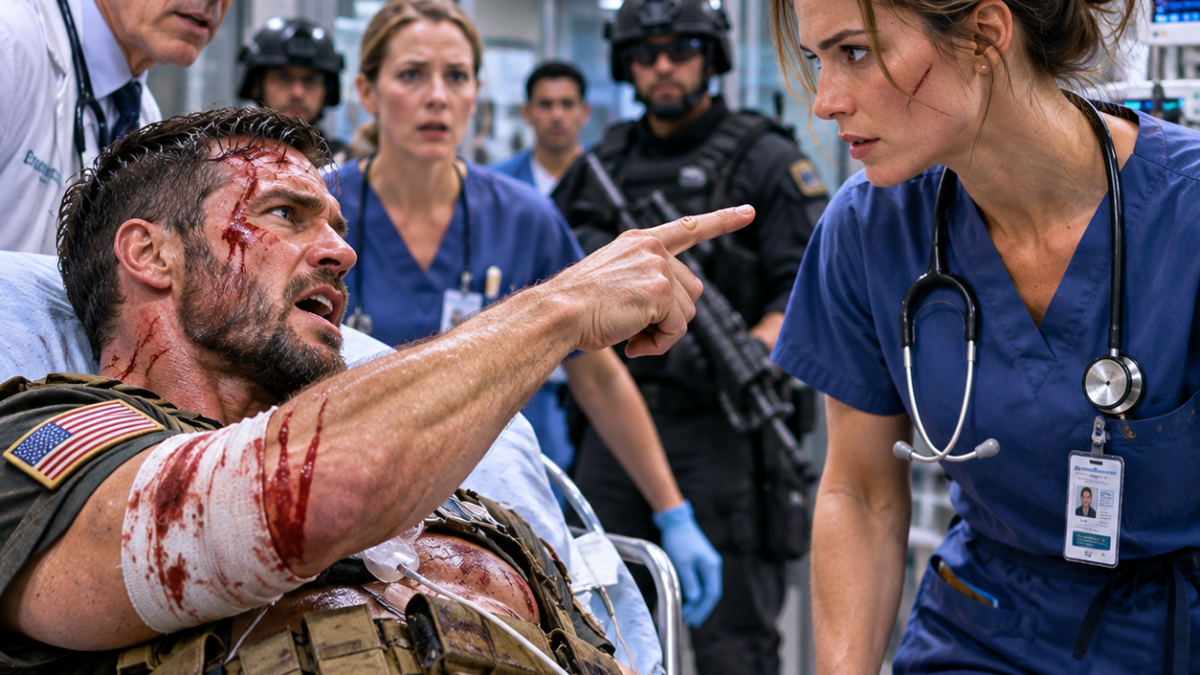
“I Only Want the Elite Surgeon!” — The Wounded SEAL Pointed Past Every Doctor at the Quiet Nurse They’d Ignored for Three Years.
The wounded Navy SEAL shoved the trauma chief away with what little strength he had left, ignored every white coat surrounding his gurney, and pointed straight at the quiet nurse standing three feet behind them.
“I only want the elite surgeon.”
The hallway went silent.
Dr. Foster Callahan actually laughed.
“That woman is a floor nurse.”
The SEAL coughed blood into his oxygen mask, kept his finger locked on Harper Quinn, and rasped the words that erased three years of hiding in a single breath.
“She’s not a nurse.”
His eyes never left hers.
“She’s Ghost Actual.”
Harper Quinn had spent three years learning how to disappear inside Ridgeview Regional Trauma Center.
Not physically.
She was there every shift.
Blue scrubs.
Dark hair pulled tight.
Badge clipped neatly.
Charts completed.
Supplies restocked.
Patients turned.
Medications checked.
Calls answered.
But nobody really saw her.
Especially Dr. Foster Callahan.
“Quinn.”
Harper looked up from the supply cart.
“Bay Four needs restocking.”
“I finished it ten minutes ago.”
Callahan finally glanced at her.
“Then do it again.”
Two residents standing beside him smiled.
Callahan continued.
“And try not to touch anything sharp.”
One resident laughed.
Harper didn’t.
She simply turned back toward Bay Four.
That was how most conversations with Callahan ended.
He was chief of trauma.
Tall.
Photogenic.
Confident.
Local television loved him.
PART2:
Every few months, a camera crew seemed to appear after some dramatic rescue, and Callahan somehow always ended up standing nearest the stretcher when photographs were taken.
He wore his title like armor.
Harper wore hers like camouflage.
REGISTERED NURSE.
HARPER QUINN.
Nothing else.
Callahan never asked about the thin white scar cutting through her left eyebrow.
Never asked about the puckered mark beneath her jaw disappearing into her hairline.
Never asked why she moved through a trauma bay without ever bumping a cart, opening the wrong drawer, or reaching twice for the same instrument.
Never asked why she could restock a chest tray without looking at the labels.
He only noticed her handwriting.
That morning, he’d made her rewrite a wound-care note in front of two residents.
“Looks like somebody wrote it while running.”
Harper had answered:
“I’ll redo it.”
No argument.
Questions led to explanations.
Explanations led to history.
Harper had spent three years making sure history stayed somewhere else.
At night, alone in her apartment, her hands occasionally shook.
No warning.
No obvious trigger.
PART3:
A tremor beginning somewhere deep behind her ribs and spreading into her fingers.
When that happened, she sat down.
Four seconds in.
Four out.
Again.
Again.
Until the room became an apartment instead of somewhere hotter, darker, louder.
Nobody at Ridgeview knew.
Except Priya, the charge nurse, had noticed one strange habit.
“You’re humming.”
Harper stopped organizing syringes.
“What?”
“You hum before something bad comes in.”
“I don’t.”
“You absolutely do.”
Harper almost smiled.
Priya pointed toward her.
“You’ve been doing it for three years.”
“Maybe you only notice because you’re bored.”
“In a trauma center?”
Then the emergency radio crackled.
Incoming trauma.
Male.
Thirty-four.
Gunshot wound to upper chest.
Unstable.
Agitated.
Possible military personnel.
ETA four minutes.
Callahan straightened immediately.
Priya looked at Harper.
Harper had stopped humming.
Something inside her tightened.
Not fear exactly.
Recognition without a memory attached to it yet.
Callahan started toward the ambulance bay.
“Residents with me.”
Then, without turning:
“Quinn, stay out of the way unless somebody needs gauze.”
Harper said nothing.
The ambulance doors exploded inward four minutes later.
The gurney came through fast.
Two paramedics were fighting to keep the patient flat.
He wore torn tactical clothing.
A field dressing covered part of his head.
Another dark bandage crossed his upper chest.
One forearm was wrapped with gray athletic tape.
His breathing was shallow.
Too fast.
His eyes moved wildly around the room.
But underneath the blood loss and confusion—
Harper saw something familiar.
Operator eyes.
Even injured, he was assessing.
Doors.
People.
Hands.
Threats.
Callahan moved in.
“Sir, I’m Dr. Foster Callahan. Lie back.”
The patient’s arm shot out.
He shoved Callahan away.
Not far.
But enough to stun everyone.
“Sir!”
The man ignored him.
His eyes swept the residents.
Security.
Nurses.
White coats.
Then stopped.
On Harper.
Everything changed.
The wounded man’s face loosened.
Not much.
Just enough.
Relief.
His hand rose.
Finger trembling.
Pointed.
“I only want her.”
Callahan looked behind himself.
Then back.
“Who?”
The man’s finger remained fixed on Harper.
“Her.”
Callahan actually smiled.
“Sir, that’s a registered nurse.”
The man tried to sit.
One paramedic held his shoulder.
“Easy.”
“I don’t want a doctor.”
His breath rattled.
“I want the elite surgeon.”
The hallway went silent.
Callahan turned toward Harper.
“The what?”
The man coughed.
“She pulled metal out of my chest under fire.”
Harper’s stomach dropped.
“She operated while the building was coming down.”
His voice became weaker.
“She’s Ghost Actual.”
Nobody knew what the name meant.
Harper did.
The room seemed to tilt.
Three years disappeared.
Dust.
Smoke.
Concrete.
The smell of fuel.
A collapsed wall.
A voice in her headset.
GHOST ACTUAL, WE HAVE ONE PINNED.
Harper’s hands became completely still.
Callahan shook his head.
“He’s confused.”
Harper looked at the patient’s pupils.
Then his wrist tape.
Then the torn patch still hanging from his tactical vest.
And finally his face.
Older.
More scarred.
But unmistakable.
She whispered:
“Anvil.”
The man’s eyes filled.
Not tears.
Something close.
“Marcus Boyd.”
His entire body sagged.
“You’re supposed to be dead.”
Harper stepped forward.
“Not today.”
Boyd tried to smile.
“They told us you were gone.”
“Let’s keep you from joining me.”
Callahan blocked her with one arm.
“Quinn.”
Harper stopped.
“You are not touching my patient.”
The monitor alarm changed.
Sharper.
Faster.
The resident beside the gurney looked up.
“Oxygen’s dropping.”
Harper’s eyes went to Boyd’s chest.
Breathing asymmetry.
Neck.
Color.
Monitor.
Her brain stopped being a civilian hospital brain.
The old system came back.
Fast.
Cold.
Precise.
“He’s deteriorating.”
Callahan snapped:
“We can see that.”
Harper ignored the insult.
“He needs immediate decompression and surgical evaluation.”
Callahan stared.
“You don’t make that decision.”
“You don’t have time to argue.”
“What’s your credential?”
“Right now?”
“Yes.”
“His oxygen saturation.”
The resident looked between them.
“Sixty-eight.”
Harper stepped around Callahan.
He grabbed her arm.
“Quinn.”
Harper looked down at his hand.
Then up.
Something in her face made him release her.
She moved to Boyd.
“Marcus.”
His eyes opened.
“Copy.”
“Stay with me.”
“Trying.”
Harper helped the team perform the emergency intervention.
The room went quiet when the pressure in Boyd’s chest began to ease.
His oxygen level started climbing.
Sixty-eight.
Seventy-four.
Eighty.
Eighty-six.
The alarm softened.
Callahan stared at the monitor.
Then Harper.
Nobody spoke for several seconds.
Harper kept two fingers against Boyd’s pulse.
“Two units blood ready.”
A nurse moved.
“Surgical team on standby.”
Another moved.
“Chest equipment.”
Priya was already reaching for it.
Harper continued.
“Page vascular.”
Nobody looked at Callahan.
They looked at Harper.
That was when he understood something had shifted.
“Who are you?”
Harper pulled on gloves.
“Later.”
The gurney rolled toward Trauma Four.
Harper walked beside it.
Not hunched.
Not trying to make herself smaller.
Shoulders back.
Eyes up.
For the first time since coming to Ridgeview—
She looked like someone returning somewhere rather than someone trying to disappear.
Inside Trauma Four, Boyd was still unstable.
His breathing remained poor.
Blood pressure low.
Harper moved around him with a familiarity that made the young resident, Dana, stare.
“Talk to me, Anvil.”
Boyd opened his eyes.
“Training.”
“What kind?”
“Live-fire.”
“Accident?”
“Round deflected.”
Harper looked at the wound.
“You came in combative deliberately.”
Boyd’s mouth moved.
“Had to know.”
“Know what?”
“That it was you.”
Harper stared at him.
“You almost died proving a rumor.”
“Wouldn’t be first dumb thing I’ve done.”
“How did you find me?”
Boyd breathed through pain.
“Two years ago.”
Pause.
“Heard about a civilian nurse during a disaster drill.”
Another breath.
“Moved like a combat surgeon.”
Harper’s face hardened.
“You crossed three states because of gossip?”
“Exercise happened five miles from here.”
He closed his eyes briefly.
“Figured if rumor was true…”
“You’d bleed in my doorway?”
“That part wasn’t planned.”
Harper almost laughed.
Didn’t.
Boyd opened his eyes again.
“Would you have answered if I’d called?”
That stopped her.
They both knew the answer.
No.
She had changed numbers.
Moved.
Stopped speaking to people from the old unit.
She had not disappeared accidentally.
She had worked at it.
Dana stepped closer.
“Prior surgeries?”
Boyd looked at Harper.
“Classified.”
Dana blinked.
“What?”
Harper spoke calmly.
“Dana.”
The resident turned.
“Breathe.”
“I am.”
“No.”
Harper looked at her trembling hands.
“You aren’t.”
Dana swallowed.
Harper’s voice softened.
“Your hands know what to do.”
Dana looked at her.
“Trust the monitor. Trust your training.”
The resident’s fingers steadied.
Such a small sentence.
Harper remembered someone saying almost the same thing to her years earlier.
Different room.
Different uniform.
Same fear.
Boyd noticed.
“She always did that.”
Dana looked at him.
“Did what?”
“Made everyone else remember they knew their job.”
Harper cut him off.
“Save your oxygen.”
The door opened.
Callahan stood there.
Security guard behind him.
His face had recovered some of its authority.
“I called the on-call trauma surgeon.”
“How far?”
“Twenty minutes.”
Harper looked at Boyd’s monitor.
“He may not have twenty.”
Callahan’s jaw tightened.
“We stabilize him until the surgeon arrives.”
Harper looked directly at him.
“He’s still bleeding somewhere.”
“You don’t know that.”
“I know his pressure isn’t responding the way it should.”
“You’re a nurse.”
Harper’s expression changed.
“I am a professional.”
“Then prove it.”
He stepped farther into the room.
“License.”
“Credential.”
“Board certification.”
“Anything.”
Boyd suddenly grabbed Callahan’s sleeve.
His voice was weak.
But clear.
“She trained where people like you would have lasted five minutes.”
Callahan ripped his sleeve free.
“Sir, you’re delirious.”
Boyd glared.
“She kept eleven of us alive.”
Harper went still.
Callahan turned toward her.
“Eleven?”
Harper said nothing.
Boyd continued.
“Collapsed building.”
“Stop.”
“Hostile fire.”
“Marcus.”
“She opened my chest with mortar rounds landing outside.”
Dana stared.
Callahan stared.
Boyd whispered:
“She’s the best trauma surgeon I’ve ever seen.”
Callahan’s face reddened.
“This is my trauma bay.”
Harper’s voice dropped.
“Not if you waste the next ten minutes defending your ego.”
The security guard shifted uncomfortably.
Callahan pointed toward Harper.
“Escort her out.”
The guard didn’t move.
“Did you hear me?”
The monitor suddenly screamed.
Boyd’s pressure dropped again.
Harper’s head snapped toward the screen.
“Get ultrasound.”
Dana moved instantly.
Callahan shouted:
“Stop taking orders from her.”
Dana froze.
Harper looked at her.
“Dana.”
The resident chose.
She grabbed the portable ultrasound.
Harper scanned rapidly.
Her expression changed.
“Fluid around the heart.”
Callahan stepped closer.
“How much?”
“Enough.”
“Tamponade?”
“Progressing.”
Callahan looked toward the clock.
“Reyes will be here in seventeen minutes.”
“He’ll arrest before then.”
“Harper—”
The hospital security radio crackled.
A voice cut through.
“Ridgeview security, hold all press access.”
Everyone looked toward the radio.
Then:
“This is Naval Criminal Investigative Service.”
Harper stopped moving.
“Nobody releases information concerning the unidentified special operations patient.”
Another burst of static.
“NCIS personnel inbound.”
Harper went cold.
Not because of Boyd.
Because of herself.
They found me.
Eleven minutes later, two federal agents entered Trauma Four.
Badges displayed.
No cameras.
No drama.
The taller one spoke.
“Special Agent Reyes, NCIS.”
Callahan straightened.
Finally, someone with authority he recognized.
“I am Dr. Foster Callahan, chief of trauma.”
Reyes looked toward Boyd.
“Who’s treating Petty Officer Marcus Boyd?”
“I am.”
Boyd opened his eyes.
Lifted one shaking hand.
Pointed past Callahan.
“She is.”
Every face turned toward Harper again.
Boyd whispered:
“Commander Quinn.”
Silence.
Callahan looked at Harper.
Then Reyes.
Then Harper again.
Reyes studied her.
Recognition slowly appeared.
“Commander Harper Quinn.”
Harper said:
“Former.”
Reyes continued anyway.
“Navy Medical Corps.”
Callahan’s mouth opened.
“Trauma surgery.”
Dana stopped breathing.
“Attached to special operations medical support for four years.”
Harper’s jaw tightened.
“Former.”
“Call sign Ghost Actual.”
Priya, standing in the doorway, whispered:
“Oh my God.”
Reyes continued.
“Three confirmed field surgeries under hostile conditions.”
Callahan looked like someone had pulled the floor away beneath him.
Then he said the only sentence his brain could assemble.
“She is a floor nurse.”
Reyes looked at him.
“She has worked as one for three years.”
“No.”
Callahan pointed at Harper.
“She is a nurse.”
Harper finally spoke.
“There is no ‘just’ in that sentence.”
Callahan stopped.
Reyes looked at her.
“We’ve been trying to find you for eight months.”
Harper’s face changed.
“You could have called.”
“We did.”
“My contact information was deliberately outdated.”
“We noticed.”
“That was the point.”
Reyes nodded.
Then:
“We need to discuss the operation that ended your assignment.”
Harper’s eyes hardened.
“No.”
“Commander—”
“I said no.”
Boyd’s monitor continued beating unevenly.
Reyes lowered his voice.
“The communications leak was confirmed eleven months ago.”
Harper stared.
“What?”
“The coordinates.”
Everything in the room disappeared.
The collapsed compound.
Dust.
The wrong strike.
Concrete falling.
Eleven wounded men.
Harper operating beneath emergency lights.
A senior officer sitting across from her three days later.
Clearance suspended.
Assignment terminated.
Questions.
No answers.
A folder.
A signature line.
The certainty that somehow she’d caused the disaster.
Reyes continued.
“The leak did not originate from you.”
Harper didn’t move.
“It came from a compromised communications relay above your clearance level.”
Her voice barely came out.
“No.”
“Yes.”
“I had the coordinates.”
“You had what you were sent.”
“I transmitted—”
“Through the authorized channel.”
Reyes stepped closer.
“The channel was compromised.”
Harper’s hands began trembling.
The same hands that had been absolutely steady inside Boyd’s chest emergency moments earlier.
“No.”
Reyes said:
“Command knew.”
Harper looked at him.
“What?”
“Not immediately.”
Pause.
“But before your separation was finalized.”
Callahan had gone silent.
Priya covered her mouth.
Reyes continued.
“They chose not to admit the failure publicly.”
Harper stared at him.
“They let me take it.”
Nobody answered.
Three years.
Three years believing she had done something wrong.
Three years hiding in blue scrubs.
Three years letting Callahan mock her handwriting because punishment felt easier than being seen.
Reyes’s voice softened.
“You saved eleven people in that building.”
Harper looked toward Boyd.
He was watching her.
“You were never the reason they were there.”
She whispered:
“I didn’t leak the coordinates.”
“No.”
Reyes shook his head.
“You didn’t.”
The monitor alarm changed again.
Harper turned immediately.
Guilt could wait.
Boyd could not.
“Pressure?”
Dana answered.
“Falling.”
Harper checked the ultrasound again.
“Tamponade is worsening.”
Callahan looked at the door.
“Dr. Reyes is still—”
“Too far.”
Callahan stopped.
For the first time that night, he didn’t argue.
He looked at Harper.
“What do you need?”
She stared at him.
Three years.
Three years of small insults.
Dismissals.
Public corrections.
Jokes.
Now he stood in front of her without a tablet.
Without a camera.
Without certainty.
And asked the correct question.
Harper answered.
“Assist me.”
He nodded.
“Tell me where.”
The next minutes moved quickly.
The team prepared for an emergency life-saving procedure because Boyd was deteriorating too fast to wait for transfer.
Harper took command.
Dana assisted.
Callahan followed instructions.
Nobody argued about titles.
Nobody asked whether the person speaking wore the right coat.
They watched the monitor.
They watched Boyd.
They listened.
Harper’s voice never rose.
“Slow.”
“Hold there.”
“Don’t rush.”
“Good.”
Dana’s hands began trembling again.
Harper noticed.
“Look at me.”
Dana did.
“Breathe.”
One breath.
“Again.”
Another.
“You’re doing fine.”
Dana nodded.
Her hands steadied.
Callahan watched.
He had spent years believing leadership meant being the loudest person in the room.
Harper barely spoke above normal volume.
Yet everyone moved when she did.
Boyd’s heart rhythm faltered.
Then returned.
Weak.
Ragged.
Alive.
Dana looked at the monitor.
“We have rhythm.”
Harper didn’t celebrate.
“Keep working.”
They stabilized the source of the immediate threat enough to move Boyd safely to definitive surgical care.
By the time the operating team took over, his pressure had begun crawling upward.
His skin slowly regained color.
His hand found Harper’s wrist.
Squeezed once.
“Ghost.”
She leaned closer.
“Still here.”
“You too.”
Harper looked at him.
For the first time in years—
She believed him.
Two hours later, Boyd was stable in intensive care.
Harper stood outside the glass.
One sleeve of her scrubs was dark with dried blood.
Her hair had come loose.
The hospital around her had become quiet.
Agent Reyes found her there.
“Command wants you back.”
Harper didn’t turn.
“No.”
“You didn’t let me finish.”
“I know the sentence.”
“Joint trauma unit.”
She looked at him.
“Special operations support.”
“No press.”
“No announcement.”
“Why?”
“Because someone finally read what happened.”
Harper stared through the glass at Boyd.
“And if I say no?”
Reyes shrugged.
“Then you remain Nurse Harper Quinn at Ridgeview Regional Trauma Center.”
“That’s it?”
“That’s it.”
“No pressure?”
“You’ve had enough of that.”
Harper almost smiled.
Reyes continued.
“You don’t owe the Navy your return.”
She looked at him.
“But?”
“You may owe yourself the truth.”
That one stayed.
Reyes left.
Callahan appeared several minutes later.
No tablet.
No white coat.
Just hospital scrubs.
He stopped beside her.
“I owe you an apology.”
Harper kept watching Boyd.
“Yes.”
Callahan looked surprised by how quickly she agreed.
“Several, probably.”
“Yes.”
He nodded.
“For what it’s worth…”
Harper waited.
“I have never watched anyone work like that.”
She said nothing.
“Not the speed.”
Pause.
“The way the room changed around you.”
Harper finally looked at him.
“Rooms don’t change around people.”
“That one did.”
“No.”
She shook her head.
“People changed because somebody finally gave them clear work.”
Callahan absorbed that.
Then:
“I judged you the first day you arrived.”
“I know.”
“I never checked your background.”
“I know.”
“I assumed…”
“That I was less capable than you.”
He looked down.
“Yes.”
Harper didn’t rescue him from the discomfort.
Callahan continued.
“I complained about your handwriting three times this year.”
“Four.”
He stared.
She almost smiled.
“Four?”
“February.”
He rubbed his forehead.
“Of course.”
Then he laughed quietly at himself.
“I never once wrote anything praising the work underneath it.”
Harper looked back through the glass.
“You can start today.”
“I intend to.”
He turned to leave.
Then stopped.
“Whatever they offer you…”
Harper waited.
“This department would be lucky to keep you.”
He hesitated.
“Even as a nurse.”
Harper looked at him.
“No.”
His face fell.
She continued.
“Not even.”
Callahan waited.
“Especially.”
He nodded.
Inside the ICU room, Boyd opened his eyes.
Saw Harper.
Raised one weak hand.
She entered.
His voice was rough.
“Ghost Actual.”
“Anvil.”
“Still alive.”
“Unfortunately.”
He smiled.
Pain caught him.
Harper checked his monitor.
“Don’t laugh.”
“You still ordering me around?”
“Yes.”
“Good.”
He looked at her.
“Thought about you.”
“That’s unfortunate too.”
“Every time that beam came down.”
Harper stopped.
Boyd continued.
“Those three minutes before you reached me.”
She looked away.
“I thought whoever came through that wall was going to be the last person I ever saw.”
“Marcus.”
“I need to say it.”
She let him.
“You pulled me out.”
His eyes softened.
“You saved me.”
“You thanked me.”
“I cursed at you.”
“Extensively.”
“That was gratitude.”
Harper almost smiled.
Boyd breathed carefully.
“They offering you your old job?”
“Something like it.”
“You taking it?”
Harper looked through the window.
Three years at Ridgeview.
Three years shrinking in hallways.
Three years letting other people decide that quiet meant ordinary.
She thought about Reyes.
Callahan.
Dana.
Priya.
And the name Boyd had shouted across the emergency department.
Ghost Actual.
“I don’t know.”
Boyd closed his eyes.
“Wrong answer.”
Harper raised an eyebrow.
“You nearly died today.”
“Still doesn’t make me wrong.”
“What answer do you want?”
He opened one eye.
“That you’re done disappearing.”
Harper said nothing.
Boyd’s eye closed again.
“Take your time.”
She looked at her hands.
Steady.
For once, not because somebody was dying.
Steady because she had stopped fighting what they knew how to do.
“I think I am.”
Boyd smiled.
“Good.”
An hour later, Priya found Harper beside the vending machines.
Two coffees.
She handed one over.
“You want to tell me what happened?”
“No.”
“Commander?”
“No.”
“Ghost Actual?”
“Absolutely not.”
Priya took a drink.
“I knew you were weird.”
Harper laughed.
A small sound.
But real.
Priya leaned against the wall.
“You always hum before trauma.”
Harper looked at her coffee.
“I used to hum in helicopters.”
“I knew it.”
“You absolutely did not.”
“No.”
Priya smiled.
“But it makes me feel better to say I did.”
Harper looked toward the ICU.
“Fair.”
Priya became serious.
“Are you leaving?”
Harper thought about it.
“Maybe.”
“For the Navy?”
“Maybe.”
“You want to?”
Harper looked down the hallway.
Three years earlier, Ridgeview had been somewhere to hide.
Tonight, it felt different.
Not because everyone knew her rank.
Not because a federal agent had called her Commander.
Because she finally understood she hadn’t needed punishment.
She had needed time.
“I want to stop choosing things only because they let me disappear.”
Priya nodded.
“That sounds healthier.”
“Don’t make it emotional.”
“Too late.”
Outside, dawn had begun turning the sky pale gray.
The hospital was changing shifts.
Fresh nurses arrived.
Night staff left.
Residents traded notes.
Someone had already cleaned most of the blood from the floor.
Hospitals were good at making extraordinary nights look ordinary by breakfast.
Harper walked back toward Boyd’s room.
A young transport employee passed her.
“Morning, Nurse Quinn.”
Harper stopped.
Not Commander.
Not Ghost.
Nurse.
She smiled.
“Morning.”
That title felt different now.
Not smaller.
Not a disguise.
Something she had chosen.
Hours earlier, Dr. Callahan had looked at a dying SEAL and told him the woman he wanted was “just a nurse.”
Marcus Boyd knew better.
He had seen Harper Quinn in a building collapsing under hostile fire.
He knew what her hands could do when everything around her failed.
He knew why eleven men remembered the name Ghost Actual.
And when he was bleeding out beneath the fluorescent lights of Ridgeview Regional Trauma Center, surrounded by celebrated doctors he had never met, he didn’t ask for the highest-ranking physician in the room.
He pointed at the quiet woman pushing a gurney.
The woman Callahan barely noticed.
The woman who had spent three years deliberately becoming invisible.
“I only want the elite surgeon.”
Everyone thought he was confused.
He wasn’t.
Marcus Boyd was the only person in the hallway who knew exactly who Harper Quinn was.
By sunrise—
Everyone else did too.








