I Had Already Chosen My Dog—Then I Heard a Heartbreaking Sound Two Kennels Away and Found Two Strangers Who Couldn’t Bear to Lose Each Other
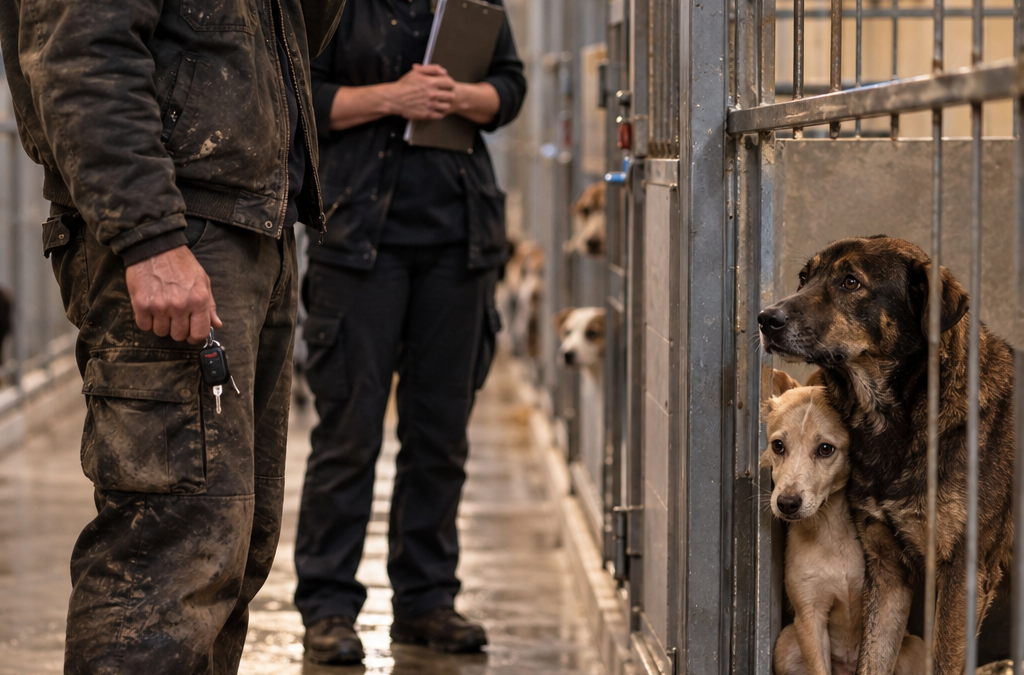
I Had Already Chosen My Dog—Then I Heard a Heartbreaking Sound Two Kennels Away and Found Two Strangers Who Couldn’t Bear to Lose Each Other.
I had already chosen the dog I was taking home when a sound from two kennels away stopped me with my car keys in my hand.
Ten seconds later, I was staring at two dogs who had never arrived together, never belonged to the same family, and somehow acted as if losing each other would destroy them.
Then the shelter worker told me what happened the last time someone tried to separate them, and every plan I had made before walking through that door suddenly meant nothing.
“Open this kennel, please.”
I had not planned to say those words.
A few minutes earlier, my decision had seemed final.
I had driven to the shelter outside Lyon to meet Oslo, a young shepherd mix I had seen online three nights earlier.
Kennel 14.
Quiet.
Strong.
Alert without being nervous.
Exactly the kind of dog I thought would fit my life.
I was forty-two years old and had spent nearly twenty years working construction. I supervised crews on large renovation projects, and I had learned to make decisions quickly because hesitation cost money, time, and sometimes safety.
Look at the problem.
Choose a solution.
Move forward.
That was how I lived.
That was how I worked.
That was how I had survived becoming a man who went home every evening to a silent house and pretended the silence was peace.
So when Oslo stood as I approached his kennel, gave one slow wag of his tail, and waited instead of barking, I almost smiled.
“That’s the one,” I whispered.
He was perfect on paper.
Not too young.
Not too old.
Social but not frantic.
Confident but not pushy.
A good dog for a man who wanted companionship without chaos.
I had already reached into my pocket for my car keys when I heard the sound.
Not barking.
Not growling.
A tiny whimper, almost invisible beneath the noise of thirty other dogs.
But something in it reached me anyway.
I turned.
Two kennels down, a small sand-colored dog was pressed tightly against a larger dark brown one.
The smaller dog was trembling.
Not dramatically.
Just a faint shiver that passed through his thin body every few seconds, the kind of trembling you could miss if you were not looking closely.
The larger dog barely moved.
But his position stopped me.
He was not simply sitting beside the smaller dog.
He was standing slightly in front of him.
Like a wall.
Like anything entering that kennel would have to go through him first.
I took one step closer.
The larger dog lifted his head.
Not aggressive.
Not friendly.
Assessing.
The smaller dog immediately tucked himself deeper behind him.
“You’re looking at Nino and Vasco?”
I turned.
PART2:
A shelter employee stood behind me holding a folder against her chest.
Her name tag said CLAIRE.
She looked to be in her fifties, with gray threaded through her dark hair and the tired eyes of someone who had watched too many animals arrive and not enough leave.
“Are they brothers?” I asked.
“No.”
“They came in together?”
“No.”
I looked back at them.
The small one—Nino, I assumed—moved even closer to the big one.
“They look like they’ve known each other forever.”
Claire gave me a sad smile.
“Everybody says that.”
She nodded toward kennel 14.
“You came for Oslo, right?”
“Yes.”
“He’s a wonderful dog. Stable, social. You could probably take him home today.”
That was exactly what I had planned.
One dog.
One uncomplicated adoption.
But I could not stop watching the other two.
“What about them?”
“They’re available.”
“Together?”
Claire hesitated.
“Not necessarily.”
I turned fully toward her.
“What does that mean?”
“It means this place is almost full. They arrived separately. On paper, they are two individual dogs. We can’t always insist that people adopt pairs.”
I looked at Nino.
His breathing was fast.
PART3:
Vasco had shifted one paw until it touched Nino’s shoulder.
“Can they handle being separated?”
Claire lowered her eyes.
That was when I knew there was more to the story.
“Claire?”
She sighed.
“We tried once.”
“What happened?”
Her fingers tightened around the folder.
“Nino stopped eating before the adopter even got him home.”
I frowned.
“And Vasco?”
“He tore his paws bloody trying to get through the kennel door.”
I looked back at the two dogs.
Claire continued quietly.
“The family brought Nino back that same evening. The second he entered this hallway, Vasco heard him.”
“What did he do?”
“He screamed.”
I stared at her.
She nodded.
“Not barked. Screamed.”
The noise of the shelter seemed to disappear around me.
“Nino pulled free from the volunteer holding his leash. Vasco was throwing himself against the gate. We opened it because we were afraid one of them was going to break bones.”
“And?”
Claire looked through the bars.
“They lay down together and fell asleep.”
I swallowed.
“How long had they known each other?”
“Eleven days.”
Eleven days.
I looked at Oslo.
Then at Nino.
Then Vasco.
Everything logical inside me said I had come for one dog.
I had one large dog bed waiting at home.
One leash.
One set of bowls.
One space prepared beside the kitchen.
I had never owned two dogs at the same time.
And I knew almost nothing about either of these two.
But Vasco was watching me.
Not aggressively.
Carefully.
Nino was half hidden behind him.
I stepped closer.
Vasco stood.
Nino trembled harder.
I stopped.
“I’m not coming any closer.”
Vasco kept staring at me.
Claire spoke softly.
“He’ll decide whether you’re safe.”
“How?”
“He’ll show you.”
For almost a minute, nothing happened.
Then Vasco lowered his head.
One step.
Another.
He came to the front of the kennel.
Nino followed exactly behind him.
Vasco sniffed my fingers through the bars.
Then, slowly, Nino stretched his nose beside Vasco’s.
Two dogs.
Two completely different histories.
One decision I had not planned to make.
I looked at Claire.
“Open this kennel, please.”
Before she reached for the latch, she asked me one question that made me realize adopting them might be only the beginning of what I was about to walk into.
“Are you sure you want to know why each of them ended up here?”
I looked at her.
“Would it change whether they deserve a home?”
“No.”
“Then tell me.”
She did not open the kennel immediately.
Instead, she motioned toward a small consultation room at the end of the corridor.
“Come with me.”
I glanced at Nino and Vasco.
Vasco was still standing at the gate.
Nino remained behind him.
“I’m not leaving,” I said without thinking.
Claire gave me a strange look.
“They don’t understand French promises.”
“Maybe not.”
I looked back at the dogs.
“But I do.”
I followed her into the consultation room.
She closed the door and placed the folder on the table.
“Which one first?”
“Vasco.”
Claire opened the file.
There were photographs inside.
The first showed the dark brown dog sitting beside a concrete wall.
He looked thinner than he did now.
A rope was looped around his neck.
Behind him was what appeared to be a loading area behind an old warehouse.
“Where was that taken?” I asked.
“Industrial district.”
“What happened?”
“He was found tied outside a closed repair shop.”
“Abandoned?”
“That was our assumption.”
“How long?”
“At least two nights, according to the business owner next door.”
My jaw tightened.
“Food?”
“A broken plastic container with some kibble. No water when he was found.”
I looked closer at the picture.
Even then, Vasco’s expression was different from Nino’s.
Nino looked afraid of everything.
Vasco looked as though he expected trouble and intended to meet it standing.
“Was he chipped?”
“Yes.”
That surprised me.
“So you found the owner.”
Claire did not answer immediately.
“What?”
“We found the registered owner.”
“And?”
“He claimed he had given Vasco away months earlier.”
“To whom?”
“He gave us a first name. No last name. No phone number. No address.”
“You believed him?”
“It wasn’t my job to decide whether I believed him. Animal services documented the statement.”
“Did anyone identify the person who tied him there?”
“No.”
I looked at Vasco’s photograph again.
“So that’s it?”
“For now.”
I did not like the phrase.
“For now?”
Claire closed that part of the folder.
“We’ll get there.”
Then she removed another set of papers.
“Nino.”
The photograph was worse.
He was standing beneath a highway overpass.
Mud covered his legs.
His ears were pinned back.
His body was so low to the ground that he looked as though he were trying to disappear into the concrete.
“Someone found him there?”
“A delivery driver.”
“Same story?”
“No chip. No collar. Nothing.”
“How old?”
“The veterinarian estimated around three.”
“How long had he been outside?”
“We don’t know.”
“What condition?”
“Underweight. Dehydrated. Minor wounds. Nothing life-threatening.”
Claire hesitated.
“Physically.”
I understood.
“And mentally?”
“He was terrified.”
“Of people?”
“Of everything.”
She began counting quietly.
“Doors. Raised voices. Brooms. Cars. Metal bowls. Men wearing heavy boots.”
I looked down at my construction boots.
Claire noticed.
“That doesn’t mean he’ll be afraid of you forever.”
“But he might be today.”
“Yes.”
“What about Vasco?”
“That’s the strange part.”
She leaned back.
“Vasco arrived first. He wasn’t social, exactly, but he wasn’t shut down. Cautious with strangers. Very observant.”
“Nino came eleven days later?”
“Yes.”
“How did they end up together?”
“Accident.”
I raised an eyebrow.
“One of our kennel gates malfunctioned during cleaning. Nino slipped through.”
“And ran to Vasco?”
“Not initially.”
Claire smiled faintly.
“He ran everywhere.”
I could almost picture it.
A frightened little dog loose in a loud shelter.
“He was panicking. Staff tried to corner him, but that made it worse.”
“What happened?”
“Vasco was in the exercise yard.”
Claire’s expression changed as she remembered.
“Nino found the open yard door and ran in.”
“What did Vasco do?”
“Nothing.”
“Nothing?”
“That was exactly what Nino needed.”
She looked toward the hallway.
“Vasco lay down.”
I said nothing.
“Nino circled him for almost ten minutes. Then he sat about six feet away.”
“And?”
“Vasco stayed there.”
Claire smiled.
“Eventually Nino moved closer.”
“How close?”
“By that evening, they were sharing the same blanket.”
I looked through the glass panel in the consultation room door.
I could see part of their kennel.
Vasco’s back.
Nino beside him.
“So you kept them together.”
“We tried separating them the next morning.”
“And they panicked?”
“Not immediately.”
Claire shook her head.
“Nino refused to leave his kennel. Vasco refused breakfast. Once we put them back together, both behaviors stopped.”
“You knew then.”
“We knew they were bonding.”
“But still tried adopting Nino alone.”
Her expression tightened.
“We’re a municipal partner shelter with limited space. We don’t always get to make perfect decisions.”
There was no defensiveness in her voice.
Only fatigue.
“I’m not blaming you.”
“I blamed myself.”
I looked at her.
“The adoption coordinator thought Nino would attach to a person if he were removed from Vasco.”
“And instead?”
“He collapsed in the adopter’s car.”
“Collapsed?”
“Not medically. Emotionally.”
Claire folded her hands.
“He pressed himself against the floorboard. Wouldn’t take food. Wouldn’t look at anyone.”
“And Vasco injured his paws.”
“Yes.”
I exhaled.
“What happened when Nino came back?”
“That’s the part I told you.”
The scream.
The gate.
The two dogs falling asleep together.
I looked at the unopened section of Vasco’s file.
“You said there was more.”
“There is.”
Claire hesitated.
“The registered owner called yesterday.”
My attention snapped back to her.
“What did he want?”
“Vasco.”
I stared at her.
“After leaving him tied behind a repair shop?”
“We cannot prove he did that.”
“But he’s claiming the dog now?”
“He says he never surrendered ownership.”
“What did he say happened?”
“That the person he supposedly gave Vasco to abandoned him without permission.”
I laughed once.
It was not funny.
“And where was this concern when Vasco was sitting here for weeks?”
“He says he only recently learned where the dog was.”
“You believe that?”
Claire held my gaze.
“I think the timing is interesting.”
“Why?”
She reached for her phone.
A local rescue page was open.
There was a photograph of Nino and Vasco lying together.
The post had been shared thousands of times.
“They became popular,” she said.
I understood.
“So the owner saw the post.”
“Possibly.”
“And now he wants Vasco back.”
“Possibly.”
“What does that mean for adoption?”
“That’s why I asked whether you were sure you wanted the story.”
My stomach dropped.
“You can’t adopt Vasco?”
“Not today.”
I pushed back from the table.
“And Nino?”
“Legally, yes.”
I stared at her.
“You’re suggesting I take Nino and leave Vasco here after what you just told me?”
“No.”
Her answer was immediate.
“Absolutely not.”
“Then what are you saying?”
“I’m saying we have to wait.”
“How long?”
“I don’t know.”
That answer irritated me more than it should have.
I was a man who built schedules.
Concrete poured at seven.
Electricians arrived Wednesday.
Inspectors Friday.
If something slipped, I wanted a new date.
“I don’t do well with I don’t know.”
Claire smiled without humor.
“Then animal rescue is going to be educational.”
I sat back down.
“What happens now?”
“Animal services reviews ownership records. The former owner will have to provide proof of his version. We have intake records, photographs, and witness statements from where Vasco was found.”
“And while that happens?”
“They stay here.”
I looked through the glass again.
“No.”
Claire frowned.
“No?”
“They shouldn’t stay in that kennel if they don’t have to.”
“What are you suggesting?”
I had not thought it through.
That was unusual for me.
“Foster.”
Her face changed.
“You want to foster them?”
“Both.”
“Julien—”
“You said Nino can’t be separated from Vasco.”
“For now.”
“And Vasco may not legally be adoptable yet.”
“Yes.”
“So let me foster them together until you sort it out.”
She stared at me.
“You came here for Oslo.”
“I know.”
“You have never owned two dogs.”
“I know.”
“You work full-time.”
“I know.”
“You have met these dogs for approximately fifteen minutes.”
I leaned back.
“Are you trying to talk me out of helping?”
“I’m trying to make sure this isn’t an emotional decision you regret tomorrow.”
That landed.
Because it was exactly the kind of decision I usually avoided.
Emotion first.
Planning later.
I glanced toward kennel 14.
Oslo was lying quietly on his bed.
Guilt struck me.
“What happens to Oslo?”
Claire softened.
“He has three other approved applicants.”
I nodded.
That helped.
A little.
“What would fostering Nino and Vasco involve?”
She started listing requirements.
Home inspection.
Secure yard.
Separate feeding initially.
Behavioral plan.
Veterinary appointments.
No off-leash outdoor access.
No visitors for the first few days unless necessary.
The more she talked, the more practical I became.
That helped too.
“What about work?”
“How long are your days?”
“Usually seven to five.”
“Too long at first.”
“I can take a week off.”
Claire raised an eyebrow.
“You can?”
“I’m the site supervisor.”
“That’s not the same as owning the company.”
“No.”
I pulled out my phone.
“But my boss owes me seventeen vacation days and approximately six years of unanswered Saturday calls.”
For the first time, Claire laughed.
I called him.
“Luc?”
“What broke?”
“Nothing.”
“Then why are you calling before lunch?”
“I need next week off.”
Silence.
“Are you dying?”
“No.”
“Getting married?”
“No.”
“Then what?”
I looked through the glass toward the dogs.
“I may have accidentally acquired two dogs.”
Another silence.
Then:
“You left this morning to look at one dog.”
“I know.”
“You are bad at shopping.”
“I’ll explain Monday.”
“You just said you weren’t coming Monday.”
“Then the following Monday.”
He sighed.
“Take the week.”
I ended the call.
Claire was staring at me.
“What?”
“Nothing.”
“You think I’m insane.”
“I work in animal rescue.”
She stood.
“My threshold for insanity is extremely high.”
The home inspection happened two days later.
I spent those two days preparing.
The single dog bed became three because I could not decide what size they would prefer.
One bowl set became four.
I bought baby gates.
A second leash.
Then a third because the clerk convinced me backup leashes were important.
Toys.
Blankets.
Cleaning supplies.
A crate large enough for Vasco.
A smaller one for Nino.
I moved chemicals from the garage.
Repaired a loose section of fence.
Covered a gap beneath the side gate.
By the time Claire arrived, my house looked like I was opening an amateur shelter.
She walked into the living room.
“You know fostering doesn’t require buying the entire pet store.”
“I like being prepared.”
She counted the beds.
“There are three.”
“They may not want to sleep together.”
“They probably will.”
“Then they have options.”
Claire looked at me for a moment.
“You’re nervous.”
“No.”
“You bought three dog beds for two dogs.”
“That is evidence of planning.”
“That is evidence of panic.”
I ignored her.
The inspection passed.
The next afternoon, I drove to the shelter.
Nino and Vasco were brought into the meeting yard first.
I sat on a bench.
I had changed out of my construction clothes.
No heavy boots.
No reflective jacket.
Nothing that might make Nino more nervous.
Vasco approached me first.
He sniffed my shoes.
My knees.
My hands.
Then he walked away.
Nino stayed behind him.
I did nothing.
Five minutes passed.
Then ten.
Nino eventually moved close enough to smell my fingers.
I did not reach for him.
That seemed important.
“You don’t owe me anything,” I whispered.
His nose touched my knuckle.
Vasco looked at me.
I could have sworn there was approval in his face.
Claire opened the yard gate.
“Ready?”
I looked at both dogs.
“No.”
She smiled.
“Good answer.”
The drive home was quiet.
Vasco lay across the back seat.
Nino pressed against him.
Every time the car slowed, Nino lifted his head.
Every time we stopped completely, he began panting.
“Almost there.”
I kept my voice calm.
“I know that means nothing to you.”
Vasco watched the road through the window.
Nino watched Vasco.
When we reached my house, I opened the rear door.
Vasco jumped out.
Nino refused.
I waited.
Five minutes.
Ten.
Claire had warned me not to drag him.
So I sat on the curb beside the open door.
“It’s your decision.”
Nino stared at me.
Vasco came back.
He put his front paws onto the floor of the car.
Touched Nino’s face with his nose.
Then jumped down again.
Nino followed.
That was the pattern.
For the first month, Vasco entered every new situation before Nino.
Doorway?
Vasco first.
New room?
Vasco first.
Backyard?
Vasco checked it.
Visitor?
Vasco approached.
Nino watched him constantly.
It would have been easy to call Vasco dominant.
But that was not what I saw.
He was not controlling Nino.
He was translating the world for him.
Safe.
Not safe.
Wait.
Come.
Relax.
I became part of that language slowly.
The first night, neither dog used any of my three expensive beds.
They slept together on the kitchen floor.
I lay awake upstairs listening.
At two in the morning, I went down for water.
Vasco’s head lifted instantly.
Nino woke and began trembling.
I stopped halfway into the kitchen.
“It’s me.”
Vasco watched.
Nino pressed against him.
I filled my glass without approaching.
Then returned upstairs.
The second night, the same thing happened.
The fourth night, Vasco lifted his head but Nino stayed asleep.
On the sixth night, I found both of them on one of the beds.
Progress.
The seventh morning, Nino took food from my hand.
I almost ruined it by reacting.
He stepped forward.
Took the piece of chicken.
I inhaled sharply.
He jumped backward.
Vasco looked at me as if I were an idiot.
“Right,” I whispered. “Act normal.”
I placed another piece on my palm.
Nino stared.
Then returned.
That became our relationship.
Tiny agreements.
No pressure.
No grabbing.
No dramatic affection.
I sat on the floor.
He chose the distance.
Sometimes five feet.
Sometimes two.
Then one evening, after three weeks, I was watching television when I felt something touch my sock.
I looked down.
Nino was sleeping against my foot.
I did not move for forty minutes.
My leg went numb.
I considered that an acceptable price.
Vasco changed too.
At the shelter, he had seemed serious.
At home, he discovered balls.
Obsessively.
I threw one across the yard.
He brought it back.
Again.
Again.
Again.
After the fiftieth throw, I stopped.
Vasco dropped the ball on my boot.
“No.”
He picked it up.
Dropped it again.
“No.”
He stared at me.
“You have four legs. Entertain yourself.”
He barked once.
It was the first time I had heard him bark at home.
Nino jumped.
Vasco immediately turned toward him.
Then, astonishingly, Nino wagged his tail.
I threw the ball.
“Fine.”
That was how a man who prided himself on discipline became employed by a brown dog with a tennis ball.
The ownership investigation continued quietly.
Until the fourth week.
Claire called me at work.
I was standing on scaffolding when my phone vibrated.
“Claire?”
“Are you somewhere safe?”
I looked down three stories.
“Define safe.”
“Get off the scaffolding.”
That was not the beginning of a good conversation.
Five minutes later, I called her from the site office.
“What happened?”
“Vasco’s registered owner has formally challenged the shelter’s authority to transfer him.”
My stomach tightened.
“What does that mean?”
“He has an attorney.”
“For a dog he says he gave away?”
“He now says Vasco was temporarily being cared for by a friend.”
“That’s not what he said the first time.”
“I know.”
“What does he want?”
“Return of the dog.”
“No.”
“Julien—”
“No.”
I stood.
“He abandoned him.”
“We still have to prove the legal chain of events.”
“You have pictures.”
“Pictures of where Vasco was found. Not who tied him there.”
“What about his first statement?”
“That helps.”
I paced the office.
“And Nino?”
“No claim on Nino.”
“So if Vasco goes back—”
“We would have a serious welfare decision to make regarding Nino.”
I stopped.
That was bureaucratic language for the nightmare we both understood.
Separate them.
Again.
“No.”
“I know.”
“What can I do?”
“Keep fostering them.”
“That’s all?”
“For now.”
There was that phrase again.
For now.
I hated it more every time.
When I came home that evening, Vasco met me at the door with his ball.
Nino appeared behind him.
I crouched.
Vasco dropped the ball.
I did not throw it.
Instead, I placed both hands around his face.
“You’re not going anywhere.”
He licked my chin.
I knew promises did not decide court cases.
I made it anyway.
Three days later, a man came to my house.
I was in the backyard with the dogs when the doorbell rang.
Vasco stopped playing.
Nino froze.
I checked the camera on my phone.
A man in an expensive jacket stood on my porch.
Late forties.
Gray car in the driveway.
I did not recognize him.
I put both dogs inside and closed the kitchen door.
Then I opened the front door.
“Yes?”
“Julien Moreau?”
“Yes.”
“My name is Philippe Darras.”
The name meant nothing for half a second.
Then it did.
Vasco’s registered owner.
My body went cold.
“You need to leave.”
“I want to see my dog.”
“He’s not your dog.”
“He is legally registered to me.”
“You told animal services you gave him away.”
“That statement was misunderstood.”
“No. It was recorded.”
His expression tightened.
“I’m not here to argue.”
“You came to my house.”
“To see Vasco.”
“No.”
He looked past me.
“Is he inside?”
“Leave.”
Then Vasco barked.
One deep bark from behind the kitchen door.
Philippe’s face changed.
“Vasco!”
I stepped outside and pulled the door shut behind me.
“Do not call him.”
“He knows me.”
“Then maybe you should have cared where he was for the weeks he sat in a shelter.”
His jaw tightened.
“You don’t know what happened.”
“Then explain it.”
“I was going through a difficult separation. A friend offered to take Vasco temporarily.”
“Name?”
He blinked.
“What?”
“The friend.”
“That’s none of your concern.”
“It became my concern when your dog was tied behind a closed repair shop.”
He stepped closer.
“I want him back.”
“No.”
“You don’t get to decide.”
“Neither do you.”
For several seconds, we stared at each other.
Then he said something I would remember later.
“You think you’re some kind of hero because you saw a sad story online?”
“I didn’t see Vasco online.”
He frowned.
“I came for another dog.”
That seemed to confuse him.
“I didn’t choose this situation.”
I pointed toward the driveway.
“But I’m choosing what I do about it now. Leave.”
He smiled without warmth.
“My attorney will handle the rest.”
“Good.”
I opened the door.
“Then I won’t have to see you again.”
He left.
Nino was trembling when I returned to the kitchen.
Vasco was standing in front of him.
Exactly as he had been the first day I saw them.
I sat on the floor.
“It’s okay.”
Vasco watched me.
Nino stayed behind him.
“I’m sorry.”
I did not know whether Philippe’s voice had frightened Nino or whether my anger had.
Probably both.
So I sat there until Nino eventually came closer.
That night, I called Claire.
She was furious.
“He is not supposed to contact the foster home directly.”
“Well, he did.”
“Did he threaten you?”
“Not exactly.”
“Did he attempt to enter?”
“No.”
“Did he interact with Vasco?”
“No.”
She exhaled.
“Good.”
“Good?”
“Legally, yes.”
“Claire, I don’t care whether he violated a technical rule. I care whether he can take Vasco.”
“We’re working on it.”
“With what?”
There was a pause.
“Something changed today.”
“What?”
“A witness contacted us.”
I sat down.
“What witness?”
“The owner of the repair shop where Vasco was found.”
“I thought he was the one who found him.”
“He was.”
“So?”
“He checked old security footage.”
My heart started beating harder.
“And?”
“There’s video.”
I did not speak.
Claire continued.
“Someone tying Vasco behind the building.”
“Philippe?”
“We don’t know yet. Image quality is poor.”
“But you can see the person?”
“Yes.”
“And the vehicle?”
“What vehicle?”
She paused.
“A gray Peugeot.”
My mind went immediately to the car that had just left my driveway.
“Claire.”
“I know.”
“His car is gray.”
“There are millions of gray cars.”
“Same model?”
“We’re checking.”
For the first time since the legal challenge began, I felt something besides helplessness.
“What happens if it was him?”
“Then his claim gets very complicated.”
That was Claire being careful.
I was not.
“If it was him, he loses.”
“We need evidence.”
“Then get it.”
“I intend to.”
The security footage was poor.
But not useless.
The timestamp showed a man arriving after dark.
He opened the rear passenger door.
Vasco jumped out.
The dog appeared excited.
He wagged his tail.
That detail made me sick.
Vasco trusted the man.
The man led him behind the building.
Tied him.
Returned to the car.
Vasco followed as far as the rope allowed.
Then the man drove away.
The video had no sound.
That made it worse somehow.
I imagined what Vasco might have done.
Whined.
Barked.
Pulled against the rope.
The vehicle disappeared.
The license plate was unreadable.
But investigators found something else.
A traffic camera three blocks away.
Same evening.
Same twenty-minute window.
A gray Peugeot matching Philippe’s model drove toward the industrial area.
Its plate was visible.
Registered to Philippe Darras.
Claire called me at 6:20 the next evening.
“It was his car.”
I sat on the edge of my couch.
Vasco was lying near the fireplace.
Nino was asleep with his back against Vasco’s stomach.
“Are you sure?”
“The vehicle appears on municipal traffic footage entering the area eleven minutes before Vasco is tied up and leaving seven minutes after.”
“Is that enough?”
“It’s strong.”
“Strong isn’t enough.”
“No.”
“What else?”
“The repair shop footage shows the man wearing a coat with a company logo.”
“What company?”
Claire almost sounded amused.
“Darras Immobilier.”
Philippe’s real estate company.
I laughed once.
“He wore his own company jacket?”
“Apparently.”
“Please tell me someone has photographed him wearing it.”
“His company website has an entire staff gallery.”
I leaned back.
For the first time, I allowed myself to believe Vasco might be safe.
But Claire was not finished.
“There’s more.”
“What?”
“Remember the person he said he temporarily gave Vasco to?”
“The mysterious friend.”
“He finally provided a name.”
“And?”
“The man signed a statement.”
I waited.
“He says he never had Vasco.”
I closed my eyes.
Philippe’s story was collapsing.
One lie at a time.
The legal hearing was scheduled for three weeks later.
Three weeks sounded short to anyone not living with the possibility of losing a dog.
For me, it was twenty-one mornings wondering whether Vasco would still be sleeping on my kitchen floor by the end of the month.
Twenty-one evenings watching Nino follow him from room to room.
Twenty-one nights knowing that one decision could destroy the fragile sense of safety both dogs were finally building.
During that time, something happened that made the thought of separation even more impossible.
Nino played.
Not watched another dog play.
Not wagged once.
Played.
It happened in the backyard.
Vasco dropped his tennis ball near Nino.
Probably by accident.
Nino sniffed it.
Vasco picked it up.
Nino followed.
Vasco dropped it again.
Nino grabbed it.
Then ran.
Vasco stood completely still.
I stood completely still.
Nino sprinted around the yard with the ball in his mouth.
Vasco chased him.
Nino dodged left.
Vasco followed.
For thirty seconds, Nino forgot to be afraid.
I started laughing.
He stopped immediately.
I clapped a hand over my mouth.
“Sorry.”
Vasco looked at me.
Nino looked at Vasco.
Then Vasco bumped his shoulder.
Nino ran again.
I sat on the back step and watched them.
There are moments when an animal’s recovery is so small that nobody else would understand why you are crying.
That was one.
A dog carrying a dirty tennis ball.
A dog running.
A dog believing the world might contain something besides danger.
I took a short video.
Then I deleted it.
Not because I did not want the memory.
Because I did.
But I had become protective of their story.
People online already knew Nino and Vasco as “the inseparable shelter dogs.”
They shared photographs.
Wrote comments.
Called them soulmates.
It was sweet.
But those dogs were not content.
They were living beings.
And right then, Nino’s joy belonged to him.
Not to an audience.
The hearing took place on a rainy Thursday.
I was not legally required to attend.
I went anyway.
Claire sat with a representative from animal services.
Philippe arrived with his attorney.
He saw me in the hallway.
His eyes narrowed.
I did not speak.
Inside, the process was much less dramatic than television.
Documents.
Dates.
Statements.
Questions.
But when the security footage played, the room changed.
The first video showed the man leading Vasco behind the repair shop.
The image was grainy.
Still, the dog was unmistakable.
Vasco trotted beside him willingly.
Then the man tied the rope.
Vasco stood watching him.
The man returned to the car.
The video had no sound.
That made it worse somehow.
The next clip showed traffic-camera footage.
Philippe’s Peugeot.
Plate visible.
Then investigators presented screenshots from his company website.
Same coat.
Same logo placement.
His attorney argued that a vehicle match did not prove Philippe was the person in the video.
Then came the statement from the supposed friend.
He had never taken Vasco.
Never agreed to care for him.
Had not even seen the dog in over a year.
The hearing officer turned toward Philippe.
“Mr. Darras, your initial statement was that you permanently transferred the dog to another individual.”
Philippe shifted.
“I was confused by the question.”
“Your later statement was that the transfer was temporary.”
“That is correct.”
“To the individual whose sworn statement says he never possessed the animal.”
Philippe’s attorney leaned toward him.
The officer continued.
“And your vehicle is documented near the location where the animal was abandoned.”
“I own several properties in that area.”
“At 11:43 p.m.?”
Philippe hesitated.
The officer looked down at the record.
“You also appeared at the foster caretaker’s private residence despite being instructed to communicate through animal services.”
His attorney spoke.
“My client merely wished to verify the animal’s welfare.”
The officer looked at me.
“Mr. Moreau, did Mr. Darras request to verify welfare?”
“He said, ‘I want my dog back.’”
Philippe stared at me.
I stared back.
I was not proud of the anger I felt.
But I was not ashamed either.
The legal decision was not immediate.
That nearly drove me insane.
After more than an hour, we were dismissed while the matter remained under review.
Outside, Philippe approached me.
His attorney tried to stop him.
He ignored him.
“You’ve made this into something it isn’t.”
I looked at him.
“What is it?”
“A mistake.”
“Tying a dog behind a building?”
His face hardened.
“You don’t know what my life was like.”
“No.”
I stepped closer.
“And Vasco didn’t either.”
That silenced him for half a second.
“You could have surrendered him,” I said. “You could have called a shelter. A rescue. A veterinarian. A friend. Animal services.”
I could hear my own voice shaking now.
“You had options.”
He said nothing.
“You chose a rope behind a closed building.”
His attorney moved between us.
“That’s enough.”
I stepped back.
“Yes.”
I looked at Philippe one last time.
“It is.”
The decision came four days later.
Claire called while I was cooking.
I almost dropped the pan trying to answer.
“Tell me.”
“His ownership claim has been denied.”
I sat down hard at the kitchen table.
Vasco looked up.
Nino lifted his head beside him.
“Say it again.”
“Philippe’s claim has been denied.”
I covered my face with one hand.
Claire kept talking.
“Based on abandonment evidence and inconsistent ownership statements, Vasco is being transferred fully into shelter custody.”
I could not speak.
“And because you already have an approved foster-to-adopt application…”
I looked at Vasco.
He stood.
Nino immediately stood too.
“Claire.”
“Yes?”
“Are you telling me I can adopt him?”
“I’m telling you that if you still want them, you can adopt both.”
I laughed.
Then something embarrassing happened.
I cried.
Not quietly.
Not discreetly.
I sat at my kitchen table with one hand over my eyes while two dogs stared at me as if I had finally lost my mind.
Vasco approached.
He put his head on my knee.
Nino stayed several feet away.
“I’m fine.”
Vasco pushed harder.
“Apparently I’m not.”
Nino took one step.
Then another.
He came beside Vasco.
For the first time, he placed his chin on my other knee without Vasco moving first.
That broke me completely.
I put one hand on Vasco.
One on Nino.
“You’re staying.”
They did not understand the words.
But this time I believed they understood something.
The next day, I returned to the shelter to sign the paperwork.
Claire placed two adoption contracts in front of me.
“Still sure?”
“No.”
She laughed.
“Good.”
“I’ve learned certainty is overrated.”
I signed Vasco’s form.
Then Nino’s.
Claire stamped both.
“That’s it.”
I looked at the papers.
“That’s it?”
“You expected fireworks?”
“A certificate.”
“You have two.”
“Something more official.”
She pointed at the signatures.
“Those are legally binding.”
I nodded.
“Fine.”
Then she slid two new identification tags across the table.
NINO MOREAU.
VASCO MOREAU.
I stared at them.
Claire smiled.
“That official enough?”
I picked up Vasco’s tag.
Then Nino’s.
My throat tightened.
“Yeah.”
That was official enough.
The story could have ended there.
Two shelter dogs.
One unexpected adoption.
A man who came for one dog and left with two.
But life rarely ends at the point where the paperwork becomes satisfying.
Real stories continue into ordinary mornings.
Mud on the floor.
Veterinary bills.
Chewed shoes.
Fear returning for no obvious reason.
Progress disappearing for three days and then returning stronger.
Nino’s recovery was not a straight line.
For months, men in work clothes frightened him.
That was inconvenient because nearly everyone I knew worked construction.
My crew eventually became part of his rehabilitation without realizing it.
I started bringing one coworker home at a time.
No one approached Nino.
No one stared.
They sat at my kitchen table.
Drank coffee.
Ignored him.
At first, Nino stayed behind Vasco.
Then under the table.
Then near the doorway.
My foreman, Malik, became the first person besides me and Claire to earn Nino’s trust.
He did it by accident.
Malik dropped half a piece of ham.
Nino ate it.
Malik looked down.
“You and I understand each other.”
The next week, Malik arrived with an entire package of ham.
“You cannot bribe my dog.”
“I’m not bribing him.”
“You’re holding ham.”
“I’m building community.”
Nino eventually took food from his hand.
Two months later, he allowed Malik to scratch his neck.
Malik looked at me as if he had been knighted.
“Did you see that?”
“I saw.”
“He likes me.”
“He likes your ham.”
“Same thing.”
Vasco, meanwhile, developed no fear of my coworkers whatsoever.
He viewed them as potential ball throwers.
Every visitor was evaluated by one standard.
Would this person throw the ball?
If yes, excellent human.
If no, possibly defective.
The dogs changed my house.
Then my schedule.
Then my priorities.
I stopped volunteering for Saturday shifts unless necessary.
I walked before sunrise.
I learned which parks were quiet.
Which cafés allowed dogs on the terrace.
Which veterinarian Nino tolerated.
Which brand of food upset Vasco’s stomach.
I learned that Nino hated thunder but liked rain.
That Vasco loved water but refused to step into the bathtub.
That both dogs considered cheese a religious experience.
And eventually, I stopped thinking of them as dogs I had rescued.
They became simply my dogs.
That distinction mattered.
Rescue was something that had happened.
Family was what came after.
About eight months after the adoption, Claire called.
“Do you remember Oslo?”
Of course I did.
Kennel 14.
The dog I had intended to choose.
“Yes.”
“He was adopted.”
I smiled.
“When?”
“Three weeks after you took Nino and Vasco into foster.”
“Good family?”
“Excellent.”
I sat on the porch watching Vasco dig a hole he absolutely knew he was not supposed to dig.
Nino was lying in the sun.
“I’m glad.”
Claire was quiet.
“Do you ever wonder what would have happened if you hadn’t heard Nino that day?”
“Yes.”
“What do you think?”
I watched Vasco lift his muddy face.
“I think Oslo would have come home with me.”
“And?”
“He would have had a good life.”
Claire waited.
“And Nino and Vasco?”
I looked at them.
“I don’t let myself finish that thought.”
A year after the adoption, the shelter asked whether they could share an update.
This time, I agreed.
One photograph.
No dramatic before-and-after collage.
No picture of Vasco tied behind the building.
No image of frightened Nino beneath the overpass.
Just one photograph.
Both dogs asleep on my couch.
Nino’s head on Vasco’s back.
Vasco’s paw touching Nino’s leg.
The shelter wrote that they had been adopted together and were doing well.
The post spread farther than expected.
Thousands of reactions.
Messages.
People saying they had cried.
People sharing stories about bonded dogs.
People asking whether I had planned to adopt two.
Claire replied to one comment:
“He planned to adopt one completely different dog.”
That became the line everyone loved.
A local newspaper contacted the shelter.
Then a radio station.
I refused both.
I did not want to become part of the story.
Claire understood.
But the attention had another consequence.
Philippe saw the post.
Again.
This time, however, he had no ownership claim left.
His legal challenge was over.
Animal services had also forwarded the abandonment evidence for enforcement review.
Months later, he received penalties connected to the abandonment.
Not prison.
Nothing theatrical.
Fines.
Costs.
A formal finding.
The kind of consequence some people would call insufficient.
Maybe it was.
But by then, I had stopped measuring justice by what happened to Philippe.
Justice was Vasco asleep beside my fireplace.
Justice was Nino taking treats from Malik.
Justice was two ID tags hanging from hooks beside my front door.
Philippe had once chosen to leave Vasco tied behind a business because the dog had become inconvenient to him.
Now he had no legal right to approach him.
No ownership.
No claim.
No place in Vasco’s future.
That mattered more to me than watching him suffer.
The most satisfying revenge was not pain.
It was irrelevance.
Two years passed.
Nino became almost unrecognizable from the dog I first saw trembling behind Vasco.
He never became fearless.
I am glad he did not.
Fear can be useful.
But he became confident.
He learned that visitors were not automatically dangerous.
That doors opening did not mean someone would drag him away.
That cars could lead to forests and lakes instead of abandonment.
He started approaching me when he wanted affection.
Not every day.
That made it more meaningful.
One evening, I was reading on the couch when Nino walked over.
He placed both front paws beside me.
I moved my book.
He climbed onto the couch.
This was unusual.
Then he turned around three times.
Lay down.
And placed his head in my lap.
I looked toward Vasco.
He was asleep on the rug.
Nino had come without checking him first.
That was when I realized something important.
Vasco had spent years teaching Nino that the world could be safe.
Eventually, Nino had learned the lesson well enough to believe it even when Vasco was not standing in front of him.
That was love too.
Not making someone dependent on your protection forever.
Helping them become strong enough not to need it every second.
Vasco still protected him when necessary.
During thunderstorms, he slept beside Nino.
At the veterinarian, he stood near him.
If another dog became too rough at the park, Vasco quietly inserted himself between them.
But Nino began protecting Vasco too.
When Vasco injured his leg chasing a ball, he needed surgery.
Nothing life-threatening.
A torn ligament.
But he had to spend one night at the veterinary hospital.
The first night Nino and Vasco had slept apart since the failed adoption at the shelter.
I was terrified.
Not for Vasco.
For Nino.
I prepared for panic.
Refusal to eat.
Pacing.
Crying.
Instead, Nino searched the house.
Checked the back door.
Looked at me.
Then lay on Vasco’s bed.
He ate dinner.
Not much.
But enough.
That night, he slept beside my bed.
The next morning, we drove to collect Vasco.
Nino recognized the veterinary building.
His entire body came alive.
When the technician led Vasco through the door, wearing a surgical cone and limping slightly, Nino froze.
Vasco saw him.
His tail started moving.
Nino ran forward.
I expected chaos.
Instead, he approached carefully.
Sniffed Vasco’s leg.
Touched his nose to Vasco’s face.
Then stood beside him.
Not behind.
Beside.
The technician whispered, “Look at that.”
I had tears in my eyes.
“Yeah.”
On the drive home, Vasco slept across the back seat.
Nino sat upright next to him.
Every few minutes, he looked down at Vasco.
The protector had become the patient.
And Nino, the trembling dog who had once needed Vasco to face every doorway first, watched over him all the way home.
That evening, Vasco struggled to stand.
Nino immediately got up.
He walked beside him to the water bowl.
Waited.
Then walked back beside him.
I sat on the floor.
“You learned from the best.”
Nino looked at me.
Vasco lowered himself onto the bed.
Nino curled beside him.
Some stories give you one moment when everything changes.
This story gave me dozens.
The kennel.
The foster call.
The hearing.
The adoption papers.
Nino playing.
Vasco’s surgery.
Each one seemed like the ending when I reached it.
None was.
Four years after I first walked into the shelter, Claire invited us back.
They had renovated one wing.
The old kennel where Nino and Vasco had lived was being removed.
“Come before we tear it out,” she said.
I almost declined.
Then I thought about it.
“Okay.”
We arrived early on a Sunday.
The shelter was quieter.
Claire met us outside.
She had more gray hair than when I first met her.
I probably did too.
Vasco recognized her immediately.
Nino took a moment.
Then approached.
Claire crouched.
“Hello, boys.”
Nino allowed her to touch his shoulder.
She looked at me.
“That took three months the first time.”
“He’s become selective, not antisocial.”
“Like his owner.”
“Exactly.”
We walked down the familiar hallway.
Kennel 14 was empty.
Oslo’s old kennel.
Two doors farther stood the kennel where I had first seen Nino and Vasco.
The gate was open.
I stopped.
Memories are strange.
You can spend years building new ones and still be pulled backward by one smell.
Disinfectant.
Metal.
Dog food.
Suddenly, I was forty-two again with car keys in my hand.
One dog already chosen.
One plan.
One bed waiting at home.
Then a whimper.
Claire opened the kennel.
Nino hesitated.
Vasco walked in.
Of course he did.
Nino followed.
They sniffed the floor.
The walls.
No panic.
No trembling.
Vasco sat.
Nino stood beside him.
I remained outside the gate.
Claire whispered, “Do you remember what you said?”
“What?”
“Open this kennel, please.”
I laughed.
“I was an idiot.”
“You were.”
“Thank you.”
“You’re welcome.”
Nino looked at me from inside.
I crouched.
“Come on.”
He walked out first.
Not Vasco.
Nino.
He crossed the threshold.
Passed me.
Continued down the hallway.
Vasco followed.
Claire and I looked at each other.
Neither of us spoke.
We did not need to.
The dog who once could not leave that kennel without another dog leading him had just walked out first.
Outside, I removed their shelter visitor leads and clipped on their own.
Nino pulled toward my car.
Vasco stopped beside him.
Claire laughed.
“They know where home is.”
“Yes.”
I opened the rear door.
Nino jumped in immediately.
Years earlier, he had needed ten minutes and Vasco’s help to leave my car.
Now he climbed in because he knew exactly where the ride ended.
Vasco jumped beside him.
I closed the door.
Claire touched my arm.
“You know the strange part?”
“What?”
“You came here convinced Oslo was your dog.”
“He probably was.”
She frowned.
“What do you mean?”
“I think more than one dog can be right for a person.”
I looked through the window.
Nino and Vasco were watching me.
“But those two needed the same person at the same time.”
Claire nodded.
“And apparently that idiot was me.”
She smiled.
“Apparently.”
We drove home.
Halfway there, Nino rested his chin on Vasco’s back.
Vasco closed his eyes.
I watched them in the rearview mirror.
For years, people who heard their story focused on one thing.
Their bond.
How two dogs who arrived separately could become inseparable in eleven days.
How Vasco protected Nino.
How Nino panicked when removed.
How Vasco injured himself trying to reach him.
People called it extraordinary.
Maybe it was.
But I eventually understood something they could not see from one photograph.
Their story was never really about being unable to live apart.
It was about what happened after they were finally allowed to feel safe together.
Vasco gave Nino courage.
Nino gave Vasco purpose.
Then, slowly, both of them learned they did not have to survive entirely through each other.
They could trust me.
Claire.
Malik.
The veterinarian.
A home.
A routine.
The world became larger.
That was healing.
Not breaking their bond.
Expanding it.
There was one final moment I think about more than any other.
It happened years after the shelter.
Nothing dramatic had happened that day.
No court hearing.
No rescue.
No adoption.
Just an ordinary Sunday.
I was repairing a section of fence.
Vasco was lying in the grass.
His muzzle had begun turning gray.
Nino was sleeping in the sun several yards away.
At some point, I went inside for a tool.
When I returned, Vasco was still lying there.
Nino did not move.
Neither dog had rushed to the door.
Neither had panicked because I had disappeared from sight.
I stood there holding the wrench.
And suddenly, I understood what I was looking at.
Three creatures who no longer needed constant proof that the others would come back.
That was the home we had built.
Not walls.
Not paperwork.
Not ownership.
Trust.
I sat beside them.
Vasco rolled onto his side.
Nino opened one eye.
“You know,” I said, “I was supposed to adopt one dog.”
Vasco’s tail moved once.
“Very simple plan.”
Nino closed his eye again.
“I had one bed.”
Vasco sighed.
“One leash.”
No reaction.
“And substantially more money.”
Nino’s tail tapped the grass.
I laughed.
“Worth it.”
I looked at Vasco.
He had once been tied behind a building and left there by someone who believed a dog could be discarded when life became inconvenient.
I looked at Nino.
He had once trembled beneath an overpass, afraid of boots, doors, and human hands.
Then somehow, they found each other.
Eleven days.
That was all it took.
Eleven days for one frightened dog to decide another dog was safe.
Eleven days for another abandoned dog to discover someone needed him.
Their first attempt at separation nearly broke both of them.
The next person who came along had been expected to choose only one dog.
Instead, I opened their kennel.
Years later, I still sometimes wonder what would have happened if I had not heard that whimper.
Maybe someone else would have adopted them together.
I hope so.
Maybe the shelter would have eventually found another solution.
Maybe.
But life does not give us the alternate version.
It gives us the door we actually open.
I opened theirs.
They opened mine.
And the strongest consequence for everyone who had failed them before was not anger, punishment, or revenge.
It was this:
They survived long enough to become loved.
Vasco never went back to the man who tied him behind that building.
Nino was never again forced away from the one creature who made him feel safe.
And the people who had treated either of them as disposable lost the chance to know what they became.
They never saw Nino learn to play.
They never watched Vasco patiently stand beside him during storms.
They never saw Nino care for Vasco after surgery.
They never heard the sound of two dogs racing down a hallway because I had opened the cheese drawer.
They never felt Nino place his head in a lap because he finally trusted someone enough to sleep there.
They never saw Vasco grow gray in a house where no one was planning to leave him behind.
That life became ours.
Not because I rescued them perfectly.
I made mistakes.
I got frustrated.
I bought useless things.
I worried too much.
I underestimated how much two dogs could shed.
I lost several shoes.
One couch cushion.
A garden hose.
And approximately three hundred tennis balls.
But I stayed.
That was the one thing I did consistently right.
I stayed.
And they learned to believe it.
On the day I first saw them, Vasco stood in front of Nino like a wall.
Years later, he did not need to anymore.
Sometimes they slept in different rooms.
Sometimes Nino walked ahead.
Sometimes Vasco went outside alone.
They always found each other again.
Not because fear demanded it.
Because they chose to.
There is a difference between clinging to someone because you are terrified of being alone and returning to someone because they are home.
Nino and Vasco eventually learned that difference.
So did I.
I had walked into that shelter believing adoption was about choosing the right dog.
I was wrong.
Sometimes you make the choice.
Sometimes the choice is standing two kennels away, trembling behind another dog, waiting to see whether you will notice.
And sometimes the most important decision of your life begins with five words you never planned to say.
Open this kennel, please.
Years later, age arrived quietly.
First in Vasco.
A little stiffness after long walks.
Then gray around his muzzle.
Longer naps.
He stopped chasing the tennis ball fifty times.
Then thirty.
Then ten.
Eventually, he would retrieve it once, bring it back, and lie down beside it as if to say:
You throw it. I’m retired.
Nino adjusted automatically.
He stopped asking Vasco to run.
He began lying beside him more.
If we went on walks, Nino slowed his pace.
He could have gone faster.
He simply did not.
One evening, I watched them cross the yard together.
Vasco moved carefully.
Nino walked beside him.
I remembered that first shelter kennel.
Vasco in front.
Nino hidden behind.
Now they were shoulder to shoulder.
Neither leading.
Neither following.
Just together.
That image stayed with me.
A few months later, Vasco began having difficulty climbing stairs.
I installed a ramp.
Luc came over to help.
He stood in my hallway looking at the wooden structure.
“You built a ramp inside your house.”
“Yes.”
“For a dog.”
“Yes.”
“The same man who used to complain when workers took ten minutes too long at lunch?”
“I’ve matured.”
“You’ve become insane.”
Vasco walked up the ramp slowly.
Luc watched.
Then quietly adjusted one of the supports.
“Needs another screw here.”
I smiled.
“Thought I was insane.”
“You are.”
He tightened it.
“But the dog shouldn’t fall.”
That was what Nino and Vasco had done to my life.
They had expanded the circle of people who cared.
Malik.
Luc.
Claire.
Neighbors.
Veterinary staff.
Even men who once insisted they were not dog people somehow ended up crouching in my kitchen handing Nino cheese.
The dogs had built a community around themselves without trying.
One winter morning, Vasco did not get up for breakfast.
That had never happened.
I knew before I touched him that something was wrong.
His eyes were open.
His tail moved once when he saw me.
“Nino.”
Nino came immediately.
He stood beside Vasco.
I called the veterinarian.
We drove there together.
Tests.
Waiting.
More tests.
Age had caught up with him.
His heart was weakening.
There were medications.
Adjustments.
Time.
But no cure.
I took him home.
For the next year, our lives became smaller.
Shorter walks.
More rest.
More mornings on the porch.
Nino stayed near him constantly.
Not anxiously.
Just present.
The same way Vasco had once been present for him.
One evening, I sat in the yard with both dogs.
The sun was low.
Vasco had his head on my leg.
Nino lay beside him.
I remembered Claire telling me how they met.
One frightened dog running into an exercise yard.
One cautious dog lying down.
Nothing heroic.
Vasco had simply stayed still long enough for Nino to decide he was safe.
Maybe that was their entire story.
Staying.
Vasco stayed for Nino.
Nino stayed for Vasco.
I stayed for both of them.
Love had sounded complicated when I was younger.
By then, I thought it might be much simpler.
Stay when staying matters.
Vasco passed away the following spring.
At home.
On his favorite bed.
My hand on his chest.
Nino beside him.
I will not pretend it was peaceful for me.
It was not.
It hurt in a way I had never experienced.
Afterward, Nino searched the house.
The kitchen.
The yard.
The bedroom.
He stood beside Vasco’s empty bed.
For several days, he slept there.
I worried.
Of course I did.
Part of me feared losing Vasco would destroy everything Nino had built.
That the terrified shelter dog would return.
But grief is not the same as fear.
Nino taught me that.
He missed Vasco.
He ate less.
He moved slowly.
He waited near familiar places.
But he did not panic when I left for work.
He did not hide when visitors arrived.
He did not stop trusting me.
Vasco had given him something permanent.
Not dependency.
Confidence.
The ability to survive loss without believing he had been abandoned.
One night, about three weeks after Vasco died, I was sitting on the couch.
Nino walked over.
For years, his favorite place had been near Vasco.
That night, he climbed beside me.
Turned three times.
Then rested his head against my chest.
I wrapped one arm around him.
“We miss him, don’t we?”
Nino sighed.
We stayed that way for almost an hour.
I understood then that Vasco’s final gift to Nino had been teaching him there could be more than one safe place in the world.
For years, Vasco had been home.
Then I became home too.
Nino lived another four years.
He grew gray.
Slow.
Gentle.
He became strangely confident around frightened foster dogs.
Yes.
I started fostering.
Claire eventually convinced me.
The first dog was a small female who refused to leave her crate.
Nino walked into the room.
Lay several feet away.
And did absolutely nothing.
I stood in the doorway staring.
I had seen that before.
Years earlier.
Another frightened dog.
Another dog choosing to lie still.
The foster dog eventually came out.
Not that day.
Not the next.
But when she finally did, Nino was there.
He never forced her.
Never crowded her.
Just stayed.
I called Claire.
“You know what he’s doing?”
“I can guess.”
“He’s doing what Vasco did.”
There was silence.
Then Claire said, “Maybe that’s how kindness survives.”
I never forgot that.
Nino eventually passed quietly too.
By then, his face was almost completely gray.
I held him.
Told him he had done enough.
Told him Vasco was the bravest dog I had ever known.
Then corrected myself.
“No.”
I kissed his head.
“You both were.”
Afterward, my house felt impossible.
Two beds.
Two empty hooks where leashes had hung.
A box of toys nobody touched.
I almost put everything away.
Instead, I left it.
Months later, Claire called.
“We have a dog.”
“No.”
“You haven’t heard anything.”
“I know what you’re doing.”
“She’s terrified.”
“Claire.”
“She hides behind every other dog she meets.”
I closed my eyes.
“No.”
“She needs someone patient.”
I looked toward the old chewed work boot still sitting on a shelf.
Vasco’s first tennis ball was beside it.
“You’re manipulative.”
“I work in rescue.”
I laughed.
Then asked the question I already knew I would ask.
“What kennel?”
Claire paused.
Then said, “Fourteen.”
I drove to the shelter the next morning.
Not because I was replacing Nino.
Not because I was replacing Vasco.
Some lives cannot be replaced.
They can only change you enough that when another frightened animal appears, you are no longer capable of walking past.
I stood outside kennel 14.
A small dog was pressed against the back wall.
She would not look at me.
Claire stood beside me.
Neither of us spoke for a while.
Then I smiled.
“Open this kennel, please.”








