I Found a Tiny Kitten Shaking Beneath a Trash Can—Six Days Later His First Meow Broke Me, and Hundreds Wanted the Cat No One Could Touch
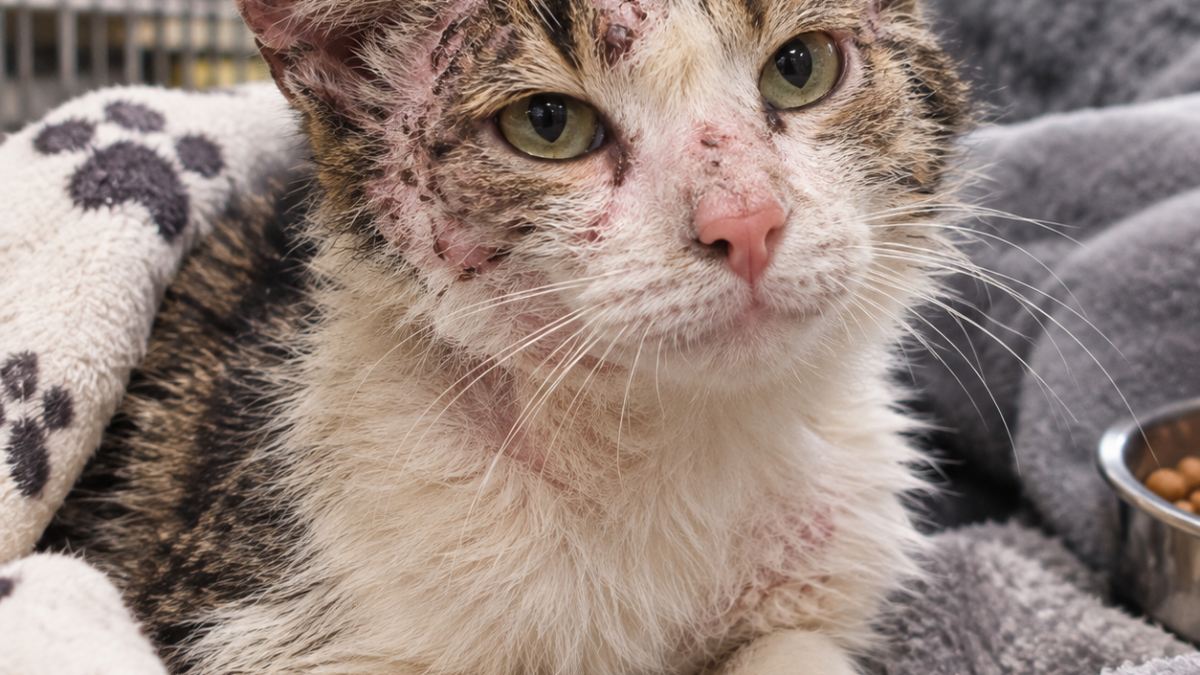
I Found a Tiny Kitten Shaking Beneath a Trash Can—Six Days Later His First Meow Broke Me, and Hundreds Wanted the Cat No One Could Touch
The kitten hiding beneath the trash can was so terrified of people that the first thing he did when I reached for him was sink his teeth into my hand hard enough to draw blood, and for nearly a week he would rather starve than trust me enough to eat.
Six days later, wrapped against my chest in a ridiculous hoodie pouch, that same little animal looked up at me and made the first real meow I had ever heard from him—and by then I knew giving him away was going to hurt more than every bite and scratch combined.
Then his rescue video spread across the country, hundreds of strangers begged to adopt him, and one family drove for hours to prove that sometimes the greatest act of love is not keeping the animal you saved but becoming the reason he finally learns the world is safe enough to leave you.
I almost walked past him.
That is the part I still think about.
If I had been looking at my phone, I probably would have.
If I had parked three spaces farther down, I might never have seen him.
If the wind had pushed the plastic grocery bag against the trash cans a few seconds earlier, the movement might have frightened him deeper beneath the dumpster enclosure where I could not see.
There was nothing dramatic about that afternoon.
No storm.
No screaming.
No injured animal lying in the middle of a road.
I had stopped behind a strip of small businesses because I needed to throw away several bags of cardboard and old supplies from a cleaning job.
The back lot was ugly in the ordinary way back lots are ugly.
Cracked pavement.
Oil stains.
A row of green trash cans.
A grease bin from the restaurant next door.
Two shopping carts someone had abandoned against a chain-link fence.
The air smelled like hot asphalt, fried food, and garbage that had spent too many hours in the sun.
I carried the first bag toward the dumpster.
That was when I saw the eyes.
Two enormous round eyes.
Low to the ground.
Watching me from beneath one of the trash cans.
I stopped.
For a second, I honestly did not know what I was looking at.
Then the tiny face moved.
Gray-brown fur.
Triangular ears.
A little nose almost black with dirt.
A kitten.
He was so small that his entire body fit beneath the lowest part of the trash can frame.
Only his face and one front paw were visible.
“Oh.”
The kitten flattened himself immediately.
“Hey.”
That was stupid.
Of course.
As if a frightened kitten living under trash recognized hey as a diplomatic opening.
He did not run.
PART2:
That worried me more than if he had.
A healthy feral kitten old enough to move usually bolts when a strange human walks directly toward him.
This one stayed frozen.
Either he had nowhere to go or he was too frightened to decide where to go.
I crouched several feet away.
“Hi, little guy.”
His pupils were enormous.
I could see every breath moving his narrow sides.
Fast.
Too fast.
His ears had flattened almost completely.
I looked around.
No mother cat.
No other kittens.
No food bowl.
No water.
Nothing.
I waited.
Maybe his mother was nearby.
Maybe I had stumbled between them.
PART3:
I backed away and stood behind my car for several minutes.
The kitten did not move.
A delivery van came around the building.
The engine noise made him shrink farther under the can.
The driver unloaded boxes and disappeared.
Still no adult cat.
I went into the nearest business and asked the cashier if anyone had seen kittens outside.
She shook her head.
“There are cats back there sometimes.”
“Anybody feeding them?”
“Not that I know of.”
“How long?”
She shrugged.
“Cats come and go.”
That answer did not help.
I bought a small can of tuna because it was the only cat-adjacent food I could find.
When I returned, the kitten was still there.
Same position.
Same eyes.
I opened the tuna.
The smell reached me immediately.
Surely it reached him.
I put a little on a paper plate and slid it toward the trash can.
He did not move.
I stepped back.
Nothing.
Five minutes.
Nothing.
Ten.
Nothing.
His head turned slightly toward the smell.
But he would not come out.
I sat on the curb.
“You’re making this difficult.”
The kitten stared.
“Just so we’re clear, I have plans.”
He did not appear concerned.
The truth was, I had almost no plans.
But telling a stray kitten that gives him too much negotiating power.
I waited another ten minutes.
Still nothing.
Then I saw flies landing near the tuna.
The afternoon heat was getting worse.
The kitten’s breathing remained fast.
I began wondering whether he was dehydrated.
Or injured.
Or simply terrified.
I called a friend named Melissa who volunteered with a local cat rescue.
“I found a kitten.”
“That sentence never ends well for me.”
“He’s under a trash can.”
“Mom around?”
“Not that I can see.”
“How old?”
“I don’t know.”
“Eyes open?”
“Yes.”
“Walking?”
“I haven’t seen him walk.”
“Ears up?”
“They would be if he wasn’t trying to flatten them off his head.”
Melissa sighed.
“Can you send me a picture?”
I did.
Her reply came almost immediately.
“He looks maybe six or seven weeks.”
“Can he survive alone?”
“Maybe. Doesn’t mean he should.”
“What do I do?”
“Wait for mom if you can.”
“I’ve been here almost half an hour.”
“Give it longer.”
“How long?”
“An hour, maybe two.”
I looked at the kitten.
“Two hours?”
“You called the cat person.”
Fair.
So I waited.
I moved farther away.
Sat in my car with the windows down.
Watched.
The kitten did not touch the tuna.
No mother appeared.
Once, he crept forward half an inch.
Then a car door slammed and he disappeared backward again.
After an hour and fifteen minutes, I walked toward him.
“Okay.”
He flattened.
“You’re going to hate this.”
I found an old towel in my trunk.
Work gloves too.
I should have worn the gloves.
This is one of several moments in the story where better judgment was available and I chose not to use it.
I thought:
He is tiny.
How bad can a tiny kitten be?
Anyone who has ever handled a terrified feral kitten is laughing right now.
I crouched.
Moved the food away.
Then reached slowly toward him with the towel.
He did not hiss.
That made me think we were making progress.
We were not.
The second my fingers crossed his invisible boundary, he exploded.
There is no other word.
One moment he was a frightened dust ball.
The next he was teeth, claws, fur, noise, and pure survival instinct.
He bit the side of my index finger.
Hard.
I jerked back.
He held on for an impossible fraction of a second.
Then released and struck with both front paws.
“OW!”
I nearly fell backward.
The kitten shot from beneath the trash can and ran behind the dumpster.
Blood appeared instantly on my finger.
“Okay!”
He hissed.
It was the first sound I had heard from him.
A tiny, furious hiss.
I looked at my hand.
Two punctures.
Not catastrophic.
Definitely painful.
“You know what?”
Another hiss.
“I deserved that.”
He had no reason to believe my hands meant safety.
For all I knew, human hands were exactly what had taught him to be afraid.
I called Melissa again.
“He bit me.”
“Wash it immediately.”
“Already doing that.”
“Soap. A lot.”
“Yes.”
“Deep?”
“Not very.”
“You still need to watch it. Cat bites can get infected.”
“Thank you for the optimism.”
“Can you catch him?”
“Define catch.”
She laughed.
“Use the towel.”
“I did.”
“Better.”
“I thought I was being gentle.”
“He thought you were a mountain lion.”
“Apparently.”
“Do you have a carrier?”
I did.
An old plastic one from a cat I had fostered years earlier.
It was at home.
I drove there, cleaned and covered the bite, grabbed the carrier, thicker gloves, another towel, a small bowl, bottled water, and returned.
The kitten had gone back beneath the same trash can.
That broke my heart a little.
After everything, after I had scared him badly enough to make him flee, the safest place he knew was still beneath a garbage container.
I set the carrier nearby.
Opened it.
Placed food inside.
Waited.
Nothing.
Of course.
I eventually used the towel properly.
Slowly.
Blocking escape routes.
Guiding rather than grabbing.
He screamed.
He clawed the towel.
He twisted with strength no six-week-old creature should possess.
But I got him wrapped.
For one second, his face stuck out from the towel like the angriest burrito on earth.
Then he tried to bite my thumb.
“You are unbelievable.”
He hissed.
I lowered him into the carrier.
Closed the door.
He slammed himself into the back corner.
I sat beside the carrier.
My heart was racing almost as fast as his.
“I’m sorry.”
He hissed again.
“I know.”
At the time I thought I was apologizing for frightening him.
Later, I realized I was apologizing for everything.
Whatever had happened before me.
Whatever had put something that small beneath a trash can expecting every approaching hand to hurt.
I took him to Melissa’s rescue clinic that evening.
He weighed one pound, twelve ounces.
A little underweight.
Dehydrated.
Fleas.
Ear mites.
A small scrape beneath his chin.
No broken bones.
No obvious major illness.
His belly suggested parasites, which was common.
No microchip, not that anyone expected one.
The veterinarian estimated him between six and eight weeks.
Young enough to be socialized.
Old enough for fear to be deeply established.
When the vet reached toward him, he hissed.
Then slapped the glove.
The vet pulled back.
“Well.”
“What?”
“He has opinions.”
“That’s the polite version.”
“He’s frightened.”
“I know.”
“He’s not mean.”
“I know.”
That distinction mattered to me from the beginning.
He was not aggressive because something inside him was bad.
He was defensive because fear was working exactly as nature designed it to work.
Small animal.
Unknown environment.
Large predators with hands.
Fight.
Run.
Hide.
He had tried hiding.
I removed the hiding place.
So he fought.
The veterinarian gave me medication for parasites and instructions for flea treatment safe for his size.
She said:
“Keep him contained initially.”
“Carrier?”
“Larger crate if you have one.”
“Why?”
“Give him a predictable space.”
“I don’t want him to feel imprisoned.”
“He already feels unsafe. A smaller predictable environment can be less overwhelming than an entire room.”
That made sense.
I borrowed a medium dog crate from Melissa.
Set it up in my spare bedroom.
Soft towel.
Small litter tray.
Water.
Food.
A cardboard box turned sideways so he could hide.
The kitten pressed himself into the box and did not come out.
I sat several feet away.
“I’m going to call you something.”
No response.
“I can’t keep saying kitten.”
Nothing.
“Trash?”
His eyes appeared.
“No.”
“Dumpster?”
A hiss.
“Fair.”
I had been thinking about names during the drive.
For reasons I cannot explain, Church came into my mind.
Maybe because the little abandoned building across from the parking lot had once been a church.
Maybe because the word sounded calm.
Maybe because naming animals is irrational.
“Church.”
The kitten stared.
“You look like a Church.”
He absolutely did not.
But the name stayed.
That first night, Church did not eat.
Not one bite.
I left wet food.
Dry kitten kibble softened with water.
A little plain chicken.
Nothing.
He did not drink while I was there either.
Every time I entered, he hid.
If I moved toward the crate, he hissed.
If my hand came near the bars, one paw shot out.
Fast.
Sharp.
I slept badly.
At 2:00 a.m., I checked.
Food untouched.
At 4:30, again.
Nothing.
In the morning, I called the veterinarian.
“He still hasn’t eaten.”
“How long since rescue?”
“Maybe fifteen hours.”
“Keep offering.”
“What if he doesn’t?”
“Kittens can’t go too long. Monitor him closely.”
That word again.
Monitor.
It sounds so calm.
Monitor means stare at a one-pound animal and imagine every possible thing going wrong.
I tried sitting near the crate without looking at him.
I worked on my laptop.
Read emails aloud.
Watched videos with the volume low.
Church remained inside the cardboard box.
At noon, I caught him peeking.
I pretended not to notice.
At two, I put food on a spoon and extended it slowly.
He hissed.
I withdrew.
At four, I tried again.
Nothing.
By evening, worry replaced patience.
I called Melissa.
“He has to eat.”
“Yes.”
“He won’t.”
“Have you tried syringe feeding?”
“The vet said not unless instructed because I might aspirate him.”
“Right.”
“I’m going back.”
The veterinarian checked him again.
Still stable.
But dehydration remained a concern.
She gave fluids under the skin.
Church hated everyone involved.
He screamed.
I almost cried.
The vet said:
“Sometimes fear suppresses appetite.”
“What do I do?”
“Reduce pressure.”
“That sounds like doing nothing.”
“Sometimes doing less is doing something.”
I hated that advice.
Because I wanted a task.
A solution.
Something I could force.
But trust cannot be forced.
Neither can hunger, apparently.
The next morning, I tried hand-feeding again.
Church refused.
I wrapped him in the towel.
Not tightly enough to frighten him more.
Just enough to contain the claws.
His head remained free.
He looked furious.
“Listen.”
He hissed.
“I know.”
Another hiss.
“If you bite me again, we’re going to have a very unhealthy relationship.”
He opened his mouth.
“Okay. Bad phrasing.”
I put a little food on my fingertip.
He turned away.
I touched a tiny amount near his lip.
He licked automatically.
Then froze.
I tried again.
Lick.
His eyes stayed huge.
Another tiny amount.
Lick.
The measuring cup came later.
A small plastic cup from my kitchen, the kind used for medicine or tiny portions.
I placed wet food inside and held it near his mouth while he remained wrapped.
He resisted.
Then licked.
Then took one small mouthful.
I nearly shouted.
I stopped myself.
Church ate four bites.
That was all.
It felt like winning the lottery.
The next feeding went worse.
The one after that better.
For four or five days, our routine was absurd.
Towel.
Kitten.
Tiny cup.
My scratched hands.
Church glaring at me like I was violating several international treaties.
I had adopted two cats only a few days before finding him.
That part complicated everything.
Their names were Maple and Theo.
Maple was a four-year-old tortoiseshell who believed every surface in the house belonged to her.
Theo was two, white with gray patches, friendly to everyone and intelligent only in brief unpredictable flashes.
I had spent months deciding whether to adopt again.
Then somehow adopted two bonded cats.
I had promised myself:
That’s it.
Two.
Responsible adult.
No more.
Four days later, I found Church beneath a trash can.
Because apparently the universe enjoys irony.
Maple knew immediately something was happening in the spare room.
She sat outside the door staring.
Theo pushed one paw underneath.
Church hissed from across the room.
Theo jumped backward three feet and looked betrayed.
“Good,” I told him.
“Learn boundaries.”
I kept them separated.
Church needed quarantine anyway until parasites and illness risks were addressed.
That helped.
The spare bedroom became his entire world.
Every morning I entered slowly.
Same voice.
Same movements.
Same food location.
Same towel.
I stopped reaching suddenly.
I stopped trying to pet him.
I let him watch.
On day three, he remained outside the cardboard box while I changed his water.
Progress.
He hissed the entire time.
Still progress.
On day four, he sniffed my hand instead of striking.
Then bit my finger.
Not hard.
Almost exploratory.
I pulled back.
“Mixed signals, Church.”
His ears relaxed half an inch.
On day five, I placed the food cup down instead of holding it.
He approached after I moved two feet away.
He sniffed.
Then retreated.
I waited.
He returned.
Licked.
I held my breath.
He ate three bites.
Stopped.
Looked at me.
Ate more.
I started crying.
This is embarrassing.
I had known the kitten less than a week.
He was eating from plastic.
And I was sitting on a spare-bedroom floor crying like someone had proposed marriage.
“Oh my God.”
Church froze.
“Sorry.”
He continued.
I texted Melissa:
HE IS EATING FROM THE CUP ON HIS OWN.
She replied:
CONGRATULATIONS ON YOUR SON GRADUATING COLLEGE.
It felt like that.
Day six was the bowl.
A real bowl.
Small ceramic dish.
I put the food down.
Sat across the room.
Church emerged.
Sniffed.
Ate.
No towel.
No measuring cup.
No hand-feeding.
Just a kitten eating from a bowl.
I filmed ten seconds because I needed proof that it happened.
In the video you can hear me whisper:
“Oh my God, he’s eating from the bowl.”
Church looks up, annoyed.
Then returns to dinner.
That clip later became one of the most watched moments in his story.
Not the rescue.
Not the biting.
A scared kitten eating.
People understood what it meant.
Trust often looks boring from outside.
A bowl.
A relaxed tail.
A blink.
A body that stops preparing to run.
The first week changed me too.
I stopped thinking of progress as affection.
That was important.
Church did not owe me cuddles because I fed him.
He did not owe me gratitude because I took him from the parking lot.
The goal was not to make him love me.
The goal was to make him safe enough to choose what came next.
So I started paying attention to smaller things.
He groomed himself while I was in the room.
He slept with his body stretched instead of curled tightly.
He played with a string after I left it near his box.
Then he played while I was still there.
He stopped hissing every single time I stood.
Then came the hoodie.
I wish there were a more dignified turning point.
There was not.
I saw an advertisement online for a ridiculous sweatshirt designed for cat owners.
It had a large pouch across the stomach.
A cat could sit inside it like a kangaroo.
I laughed.
Then bought it.
When it arrived, Maple climbed inside immediately because Maple believed all purchases were hers.
Theo tried getting in while Maple was still inside.
That ended badly.
I washed the hoodie before using it with Church.
By then he allowed me to pick him up briefly if wrapped in a blanket.
His body still went tense.
But he no longer fought every second.
One evening, I put on the hoodie.
Sat on the floor.
Wrapped Church gently.
Then settled him into the pouch.
He froze.
I froze.
His head stuck out.
His ears were halfway back.
I expected claws.
Nothing.
I put one hand lightly over the outside of the pouch.
Warmth spread through the fabric.
Church shifted.
Then lowered his body.
Five minutes passed.
I did not move.
Ten.
His eyes began closing.
I could barely believe it.
This kitten who had bitten me beneath a trash can was falling asleep against my stomach.
I whispered:
“You’re okay.”
His eyes opened.
Then he made a sound.
Tiny.
High.
One simple:
“Meow.”
I stared down.
Church stared up.
“Was that you?”
Another little meow.
Not a hiss.
Not a growl.
Not the scream he used during medicine.
A normal kitten meow.
I laughed.
Then cried.
Again.
Apparently rescuing Church turned me into a person who cried at basic mammalian functions.
“You meowed.”
Church blinked.
I touched one finger to his forehead.
Slowly.
He leaned.
Barely.
Into my finger.
That was the moment.
Not when I caught him.
Not when he ate.
That tiny lean.
That little meow.
Something had changed.
Church had started realizing my hands might do things other than trap him.
He did not become fearless after that.
People later saw edited clips and assumed it happened overnight.
It did not.
There were setbacks.
One day I dropped a metal bowl.
Church disappeared beneath the bed for two hours.
A delivery person knocked loudly and he panicked.
The first time I opened an umbrella near the hallway, he ran so fast he skidded into a laundry basket.
Once I reached over him too quickly and he scratched my wrist badly enough to bleed.
I never punished him.
Not because I was saintly.
Because punishment would have been absurd.
He was communicating.
I scared him.
His body responded.
My job was to become more predictable.
Slowly, Church began playing on the bed.
At first only at night.
Then while I sat there.
A feather wand transformed him.
The frightened animal vanished for thirty seconds at a time.
He became a kitten.
Pouncing.
Missing.
Falling sideways.
Attacking the blanket.
Chasing his own tail as though shocked to discover it existed.
That may have been the most painful part emotionally.
Seeing what fear had been covering.
He was not naturally angry.
He was young.
Curious.
Ridiculous.
One afternoon, he climbed onto my leg voluntarily.
He stayed three seconds.
Then ran.
I texted Melissa.
HE TOUCHED ME ON PURPOSE.
She replied:
PLEASE GET A HOBBY.
I had one.
Apparently it was Church.
By the third week, his fur looked completely different.
Clean.
Soft.
His eyes still appeared enormous, but no longer because his pupils were permanently blown wide with fear.
He had faint tabby markings I had not noticed beneath the dirt.
A little M on his forehead.
White hairs around his mouth.
His paws were too large for his body.
The veterinarian laughed when she saw him.
“This is the same animal?”
“No.”
Church hid behind my arm.
She smiled.
“Still dramatic.”
“Extremely.”
His medical tests came back well.
Parasites treated.
Weight improving.
No serious disease.
He was ready, eventually, for adoption.
That word hurt.
Adoption.
I knew from the beginning I could not keep him.
Maple and Theo were still adjusting.
Three cats might have been possible physically.
But responsible rescue is not just asking whether another animal can fit inside the house.
It is:
Can I afford veterinary emergencies for all of them?
Do I have enough space?
Will the resident animals tolerate another cat?
Can I give each appropriate attention?
What happens if something changes?
Maple had already made her opinion clear.
During a controlled scent introduction beneath the door, she hissed for forty-five seconds like an engine losing pressure.
Theo was curious.
Maple was not negotiating.
Church deserved a home that was chosen for him, not squeezed around my reluctance to say goodbye.
I knew that.
I hated it.
The first adoption post went online on a Sunday.
I wrote honestly.
Found beneath trash can.
Terrified.
Required intensive socialization.
Now eating normally.
Playful.
Still cautious with sudden movement.
Needs patient home.
Indoor only.
Veterinary references preferred.
No declawing.
Proper introductions to resident animals.
I added photos.
One from the parking lot.
Eyes beneath the trash can.
One from the first day in the crate.
One wrapped like an angry burrito.
One sleeping in the hoodie.
One playing with the feather toy.
Then a video.
The first meow.
I expected a few messages.
Maybe ten.
By Monday morning there were more than one hundred.
By Tuesday, hundreds.
People wanted Church.
People from other states.
People offering to fly.
One person said she would “take him today no questions asked.”
That immediately disqualified her.
Questions were the point.
Another wrote:
I NEED THIS BABY.
Need was not a qualification.
Some messages were lovely but unrealistic.
“I’ve never had a cat, but my three-year-old loves kittens.”
No.
“My husky LOVES cats.”
Define loves.
“I want him as a surprise for my girlfriend.”
Absolutely not.
“I can pick him up tonight.”
No.
Rescue is strange.
You spend weeks begging the universe to care about one animal.
Then too many people care at once and suddenly you become suspicious of everyone.
I built an application.
Housing.
Pets.
Vet history.
Indoor/outdoor plans.
Who lives in home.
What happens during travel.
What if Church hides for weeks.
What if he scratches.
What if he does not cuddle immediately.
Some applicants disappeared after the questions.
Good.
The best people usually answered more than I asked.
One woman named Amanda kept appearing.
Her first message was long.
She lived three and a half hours away with her husband, Daniel, and two children, eleven and fourteen.
They had lost their seventeen-year-old cat eight months earlier.
They had waited before considering another.
Their home had one calm adult cat named Sophie.
They had a veterinary clinic they had used for twelve years.
Every cat they had ever owned had been indoor-only.
They had a spare room available for decompression.
Amanda had worked remotely since before remote work became common.
She understood Church might regress during transition.
She sent photographs of the spare room.
Not staged.
Normal.
A window.
A low bed.
Cat tree.
Hide boxes.
Food station.
She wrote:
We are not looking for a kitten who will instantly cuddle us. We are looking for Church, whatever Church needs to be at first.
That line stayed with me.
I replied.
We talked for forty minutes.
Then an hour the next day.
She asked good questions.
Not:
Is he cute in person?
But:
What scares him?
How does he recover after a startle?
Does he prefer covered hiding spaces?
Does he play more confidently before or after meals?
How does he respond when someone enters the room while he is eating?
Those are the questions of someone thinking about the animal rather than the idea of the animal.
Still, I hesitated.
Because I had become attached.
I disguised attachment as caution.
Maybe I should wait another week.
Maybe Church needed more socialization.
Maybe I should see how he did around Maple.
Maybe I should—
Melissa called me out.
“You’re stalling.”
“I’m screening.”
“You have screened that woman harder than some federal agencies.”
“Church has special needs.”
“He has normal scared-kitten needs now.”
“He bit me.”
“Three weeks ago.”
“He could regress.”
“Yes.”
“They live far away.”
“Three and a half hours.”
“What if—”
“You don’t want to give him away.”
Silence.
Melissa softened.
“That’s okay.”
“No, it’s not.”
“It is.”
“I knew I couldn’t keep him.”
“Knowing doesn’t remove attachment.”
I sat on the floor while Church attacked my shoelace.
“What if he thinks I abandoned him?”
“He’s a kitten.”
“That doesn’t answer me.”
“He will notice change.”
I hated that.
“He may be scared.”
Worse.
“He may hide.”
I looked at Church.
Melissa continued:
“And then, if you’ve chosen well, he will learn another person is safe.”
I understood.
That was the goal.
Not that I become the only safe human in Church’s world.
That would not be rescue.
That would be dependency.
I approved Amanda’s application.
She cried on the phone.
I almost withdrew it because her crying made me cry.
The pickup was scheduled for Saturday.
Friday night was terrible.
Church slept in the hoodie.
I sat on the couch.
Maple watched us from the opposite cushion with the expression of someone witnessing bad judgment.
Theo tried to climb into the pouch too.
Church hissed.
Theo left.
I touched Church’s head.
“You’re going tomorrow.”
He purred.
His purr had developed only recently.
Quiet.
Rumbly.
“You don’t know what that means.”
He kneaded the sweatshirt.
“They’re good people.”
Church closed his eyes.
“I checked.”
Nothing.
“I checked too much, apparently.”
He slept.
I stayed awake.
That is one of the cruel contradictions of fostering.
Success feels like loss.
If you fail, the animal stays because no one else wants him.
If you succeed, someone comes to take him.
Saturday morning, I packed a bag.
His food.
Favorite toy.
The towel he had hidden under.
The tiny measuring cup.
Not because he needed it.
Because I could not throw it away.
I wrote his schedule.
Veterinary records.
Medication completed.
Microchip transfer form.
Behavior notes.
I put his feather toy on top.
Then took it out.
Then put it back.
I was behaving like a parent packing a child for college.
Church was barely two pounds.
At noon, a blue SUV pulled into my driveway.
Amanda got out first.
Then Daniel.
Their daughter, Lily, came with them.
Their son stayed home with Sophie because they did not want the resident cat left alone all day after a long trip.
That detail impressed me.
Amanda saw Church through the window.
She put both hands over her mouth.
Then looked at me.
“I’m not going to rush him.”
Good.
We sat in the living room.
Church hid behind me.
Amanda did not reach.
She talked quietly.
Not baby voice.
Normal.
After ten minutes, Church peeked.
After fifteen, he emerged.
He sniffed Daniel’s shoe.
Daniel remained perfectly still.
Lily sat cross-legged.
Church looked at her.
She turned her gaze away deliberately.
“She’s been practicing not staring,” Amanda whispered.
That almost broke me.
Church walked toward Lily.
Sniffed her knee.
Then climbed partly into her lap.
I stared.
Traitor.
Three weeks I had been bitten, scratched, screamed at, deprived of sleep.
This child gets a lap visit in twenty minutes.
Lily’s eyes filled.
She whispered:
“Hi.”
Church curled.
Not fully asleep.
Close.
Amanda looked at me.
“Oh my God.”
I laughed while crying.
“He’s supposed to be difficult.”
Daniel smiled.
“Maybe you’re bad at cats.”
“Get out of my house.”
We all laughed.
The tension broke.
Then Church did something worse.
Amanda sat beside Lily.
Church stood.
Walked across her daughter.
Climbed into Amanda’s arms.
And relaxed.
Completely.
His head rested beneath her chin.
His eyes closed.
Amanda did not move.
She looked at me.
“I promise.”
That was all she said.
I knew what she meant.
I promise I will be patient.
I promise I will not punish fear.
I promise he will be indoors.
I promise I will call the veterinarian.
I promise I will not give him away the first time he hides.
I promise the trust you built will not be wasted.
I nodded.
“Okay.”
Signing the transfer paperwork hurt more than catching him.
I had expected that.
Still hurt.
When it was time, I placed Church in his carrier.
He meowed.
I cried.
Amanda cried.
Lily cried.
Daniel stood there surrounded by crying women and a confused kitten, reconsidering every life choice that had brought him into my living room.
At the door, Amanda hugged me.
“Thank you.”
“Don’t.”
“What?”
“If you thank me, I’m going to make this worse.”
She laughed.
“We’ll send pictures.”
“Too many.”
“Every day.”
“Good.”
Church meowed from carrier.
I crouched.
Put two fingers against door.
He sniffed them.
No bite.
No hiss.
Just one tiny paw touching the plastic grate.
“Be good.”
Church meowed.
“Or don’t.”
Another meow.
“They’ll love you anyway.”
Then they left.
I stood in the driveway until the blue SUV disappeared.
When I went inside, the house felt wrong.
The spare room was the worst.
Empty crate.
Food dish.
Cardboard box with scratches along one side.
The hoodie on my bed.
I sat down.
Maple entered.
She sniffed the doorway.
Then walked away with absolutely no concern.
Theo searched for Church for maybe five minutes.
Then found a bottle cap.
Life continued.
I cried anyway.
Amanda sent the first picture forty minutes later.
Church asleep in Lily’s lap in the back seat.
The second came when they arrived home.
Carrier open in spare room.
Church hiding inside.
Perfect.
They did not pull him out.
They left the door open.
Food nearby.
Water.
Litter.
Hide box.
Amanda texted:
We are leaving him alone for a while.
I replied:
GOOD.
Two hours later:
He ate.
I stared at those words.
He ate.
Not six days.
Two hours.
That was what I wanted.
He had learned.
Not just that I was safe.
That humans could be safe.
The next morning, a video arrived.
Church chasing the feather toy across the spare-room bed.
Day three:
Church asleep beside Amanda’s laptop.
Day five:
Church touching noses with Sophie through a carefully managed barrier.
Week two:
Church and Sophie eating on opposite sides of a baby gate.
Week three:
Church asleep on Daniel’s chest.
The same kitten who had nearly removed my finger.
I saved every picture.
Months later, Amanda sent one where Church had grown long and lean.
His ears looked too large.
He slept upside down between Lily and Sophie.
Caption:
HE OWNS THE HOUSE.
Good.
That was the correct outcome.
For a while, I thought that was the entire story.
Tiny kitten under trash can.
Rescue.
Socialization.
Adoption.
Beautiful ending.
Then, three months after Church went home, I got a message from a woman named Renee.
I almost deleted it.
Her profile had no photo.
The message said:
I think I know where your kitten came from.
My stomach tightened.
I replied:
What do you mean?
She asked whether Church had been found behind the strip mall on Hastings Road.
Yes.
Near the restaurant dumpsters?
Yes.
She sent a photograph.
A mother cat.
Gray tabby.
Lying on a porch.
Three kittens nursing.
One kitten had the same oversized ears and pale marking beneath the chin.
Church.
I knew immediately.
“When was this?”
Renee replied:
About two weeks before you found him.
I called.
Renee lived in an apartment complex behind the strip mall.
The mother cat belonged—or partly belonged—to a tenant named Carla.
“Partly?”
Renee sighed.
“You know people who say a cat is theirs until the cat needs anything?”
Yes.
Carla fed the mother sometimes.
Let her inside.
Never spayed her.
The cat had litter after litter.
Carla gave away kittens through social media.
Some free.
Some for “rehoming fees.”
Church had been part of the latest litter.
“What happened?”
“I don’t know exactly.”
Renee hesitated.
“Carla moved.”
“When?”
“About the same week you found him.”
“What happened to the cats?”
“She said she gave them away.”
“All of them?”
“That’s what she said.”
“Did you believe her?”
“No.”
Renee had seen the mother cat wandering after Carla left.
Two kittens disappeared.
One was taken in by another resident.
Church vanished.
Then someone in the apartment complex recognized him from my rescue video.
I felt sick.
“Do you think she dumped him?”
“I don’t know.”
That mattered.
We did not know.
Suspicion is not evidence.
I contacted the property manager.
At first, he refused to discuss a former tenant.
Fair.
Then I explained I was trying to locate the mother cat and possible littermates, not start an internet mob.
That got further.
The manager said security cameras might still have old footage if it had not been overwritten.
Most was gone.
But one camera near the rear exit had been preserved because of an unrelated vandalism complaint.
The footage showed Carla’s car leaving the complex the morning before I found Church.
Nothing unusual.
Then, four minutes later, the vehicle appeared behind the strip mall.
It stopped near the dumpsters.
A woman got out.
She carried a cardboard box.
Set it beside the trash enclosure.
She returned to car.
Drove away.
The camera angle was too distant to see inside the box.
I sat staring at the screen.
Renee cried when I showed her.
“That was him.”
“Maybe.”
“What else would it be?”
“I don’t know.”
We needed more.
The next day, a restaurant employee remembered finding a torn box near the dumpster.
No kitten inside.
He had thrown it away.
Another resident from Carla’s old complex came forward privately.
She said Carla had complained that the final kittens “weren’t worth the trouble.”
One was difficult to handle.
“He scratched everybody.”
My hands went cold.
Church.
Maybe.
Still not proof.
Then came the message that changed my anger into something more useful.
Carla herself contacted me.
Someone had sent her the viral rescue post.
Her message said:
That is my kitten. You need to return him.
I stared at it.
Three months earlier, hundreds of people had wanted Church.
Now someone claiming ownership appeared after he was safe, socialized, vaccinated, neutered, microchipped, and living with a family.
I did not answer emotionally.
I asked:
What is his original name?
She said:
Tiger.
Church had never responded to Tiger.
Not decisive.
I asked for veterinary records.
None.
Vaccinations?
None.
Photographs?
She sent two.
One was the same nursing photo Renee had sent.
The other showed several kittens in a laundry basket.
Church likely among them.
She wrote:
I was going to sell him for $150 before he disappeared.
Disappeared.
I asked:
How did he disappear?
No answer.
I asked again.
She replied:
He got out when I was moving.
Then why did the security camera show you leaving a box near the dumpsters?
Silence.
Ten minutes.
Twenty.
Then:
You had no right to post my business online.
I had not posted anything about her.
Not yet.
I replied:
I have not identified you publicly.
Another message:
He was my property.
That sentence made me angrier than anything.
Not because animals are not legally treated as property in many contexts.
Because of everything around it.
He was my property.
No concern for how he was.
No question about whether he was healthy.
No question about his home.
No:
Is he happy?
Is he okay?
Just ownership.
I forwarded everything to the local animal-control officer who had agreed to review the abandonment concern.
Carla stopped answering me.
The investigation was not dramatic.
No police raid.
No handcuffs at midnight.
No courtroom packed with reporters.
Real animal-welfare enforcement is usually less cinematic.
Statements.
Footage.
Dates.
Messages.
Municipal code.
Evidence.
What investigators could support was that multiple cats had been left behind at the apartment property during Carla’s move, including the mother cat, and that she had failed to arrange adequate care.
The dumpster footage and her changing explanations strengthened concern about Church.
Carla was cited under local animal-abandonment provisions and prohibited from reclaiming Church while the case was reviewed.
She eventually surrendered any claim.
The mother cat was trapped by Renee and a rescue volunteer.
She was spayed.
Vaccinated.
Treated.
Then adopted by Renee.
One surviving littermate was found with another tenant.
Also fixed.
That mattered to me almost as much as Church.
Because rescuing one kitten is wonderful.
Stopping the cycle is better.
I did not make Carla famous.
People encouraged me.
Post her name.
Show her face.
Destroy her.
I refused.
Not because what happened was acceptable.
Because justice is not the same thing as turning thousands of strangers loose on somebody.
The facts went where they belonged.
Animal control.
Property management.
Rescue network.
The mother cat got care.
Church remained protected.
That was enough.
Amanda knew everything.
When I told her someone had claimed Church, she went silent.
Then asked:
“Can they take him?”
“No.”
“Are you sure?”
“Yes.”
“Do I need a lawyer?”
“Probably not.”
“I’ll get one.”
I laughed.
“I love you.”
She laughed too.
“I love your stupid kitten.”
Church meowed in the background.
“Our stupid kitten,” she corrected.
That mattered.
By then, I no longer felt like I had given Church away.
I had extended his family.
Not ownership.
Family.
I had been the bridge.
The person between the trash can and Amanda’s house.
For a while, I thought bridges mattered only because they carried something across.
Then Church taught me they also have to let it go.
A year after I found him, Amanda invited me to visit.
I drove three and a half hours.
Church met me at the door.
Not literally.
He heard voices and came around the corner.
I crouched.
“Hey.”
He stopped.
Looked at me.
For half a second, I wondered if he remembered.
Then he walked over.
Sniffed my fingers.
Rubbed his face against my hand.
I cried instantly.
Amanda laughed.
“You made it six seconds.”
“Shut up.”
Church climbed into my lap.
He was huge compared with the kitten I remembered.
Not actually huge.
Normal cat.
But in my mind he was still one pound, twelve ounces.
The scars on my hand had almost disappeared.
The emotional ones, apparently, had not.
Lily came downstairs.
“She likes you.”
“He.”
“Sorry. He likes you.”
“I bribed him with food for a week.”
Church purred.
I put on the old hoodie.
Yes, I brought it.
Amanda laughed so hard she had to sit down.
“Absolutely not.”
“I need to test something.”
Church was far too big for the pouch.
He tried anyway.
Half his body fit.
His back legs hung out.
He looked offended.
We took a picture.
It remains my favorite photograph of him.
Not because it is beautiful.
Because the kitten who once froze beneath a trash can was voluntarily trying to crawl into the same ridiculous pouch that had held him when he first learned physical closeness did not have to mean danger.
That evening, Church slept on the couch between Amanda and Daniel.
Sophie occupied the armrest.
Lily showed me dozens of videos.
Church stealing socks.
Church chasing ice cubes.
Church sitting in the bathtub after showers.
Church sleeping with one paw over his eyes.
He had a life I was not part of.
That hurt for about one second.
Then it felt wonderful.
That was the point.
Rescue should create a life that no longer depends on the rescuer.
I went home the next morning.
Church did not cry when I left.
I was glad.
Truly.
He belonged there.
Years have passed now.
Church is no longer tiny.
Amanda still sends pictures.
Not every day anymore.
Life gets busy.
I do not need every day.
Sometimes months pass.
Then suddenly my phone lights up.
Church sleeping beneath a Christmas tree.
Church at the veterinarian.
Church lying beside Sophie.
Church wearing a ridiculous bow tie.
Church sitting inside an empty cardboard box even though he owns several expensive beds.
He became exactly what I wanted him to become.
Ordinary.
Loved.
Safe enough to be annoying.
Safe enough to complain.
Safe enough to sleep deeply.
Safe enough to trust people he had not known beneath that trash can.
That is the part of rescue people often miss.
They think success is the dramatic moment.
The hand reaches in.
The animal comes out.
Music.
Tears.
Transformation.
But the real work happens afterward.
The first meal.
The second.
The medication.
Cleaning diarrhea at two in the morning.
Getting scratched.
Waiting.
Sitting on the floor pretending not to stare.
Teaching an animal that footsteps do not predict danger.
That a closing door does not mean abandonment.
That hands can bring food.
That voices can be gentle.
That sleep is allowed.
And then, sometimes, after all of that, doing the hardest thing.
Handing the leash.
The carrier.
The records.
The animal you fought for.
To someone else.
People still ask:
“How did you give him up?”
I usually answer:
“Badly.”
Because I cried.
A lot.
I checked my phone constantly.
I stared at his empty room.
I wondered whether he thought I had betrayed him.
I considered calling Amanda and saying I had changed my mind.
I did not.
Because love is not always proved by keeping.
Sometimes love is proved by recognizing that your role in someone’s life was temporary and still mattered completely.
Church did not need me forever.
He needed me beneath a trash can.
Then in a crate.
Then with a measuring cup.
Then inside a ridiculous hoodie.
Then when the bowl was frightening.
Then when hands were frightening.
Then until another family could hold him and he no longer believed every touch was a threat.
That was my part.
Amanda’s part began where mine ended.
Maybe one day somebody else’s part will begin too.
That is life.
We hand living things forward.
The rescued animals.
The children.
The people we love.
Nothing stays entirely ours.
I kept the tiny measuring cup.
I know.
Ridiculous.
It sits in a kitchen drawer behind the normal measuring spoons.
Every few months I see it.
A scratched little plastic cup.
Worth almost nothing.
And I remember a furious kitten wrapped in a towel, glaring at me while refusing to eat.
I remember whispering:
“Come on, Church.”
I remember the first lick.
The first bite of food.
The first bowl.
The first meow.
The first time he leaned into my finger instead of biting it.
Those moments were small.
That is why they mattered.
Fear rarely disappears with one grand gesture.
Trust is built from tiny repetitions.
Food arrives.
Nothing bad happens.
A hand approaches.
Nothing bad happens.
A voice speaks.
Nothing bad happens.
A blanket wraps around you.
You remain safe.
A person leaves.
They return.
Again.
Again.
Again.
Until the nervous system begins changing its prediction.
Maybe this time I will not be hurt.
That is trust.
Not forgetting what happened.
Learning something else can happen too.
Church taught me that before I had language for it.
He did not become brave because I told him the world was kind.
He became brave because, for enough consecutive days, his experience stopped proving the opposite.
There is something almost sacred in that.
Not because I saved him.
I dislike that word more now.
Saved.
Too final.
Too heroic.
I interrupted one bad trajectory.
That is all.
A kitten was under a trash can.
I noticed.
I stayed.
I got bitten.
I came back.
I fed him.
Other people helped.
A veterinarian treated him.
Melissa coached me.
Amanda drove for hours.
Her family opened their home.
Renee helped find his mother.
Animal control dealt with the abandonment.
A network of ordinary people changed one small animal’s life.
No single hero.
That feels truer.
And if I had walked past?
I do think about it.
Maybe someone else would have found him.
Maybe his mother would have returned.
Maybe he would have survived.
Maybe not.
Those questions go nowhere useful.
The only fact I have is this:
I looked down.
Two big round eyes looked back.
And I stopped.
Everything came from stopping.
That has changed how I move through the world.
Not dramatically.
I am not rescuing animals from every parking lot.
But I notice more.
The cardboard box near the road.
The dog wandering without a collar.
The old cat at the shelter nobody is looking at.
The neighbor who says she has not seen her usual stray in three days.
Attention is not the same as responsibility for everything.
I had to learn that too.
But attention is where responsibility begins.
You cannot help what you refuse to see.
Church had been invisible beneath trash.
Small enough to ignore.
Frightened enough to push help away.
Those are often the animals people call difficult.
The ones who hiss.
Scratch.
Hide.
Bite.
The ones who do not perform gratitude.
The ones who look terrible in adoption rooms because they flatten themselves beneath blankets instead of reaching through bars.
People say:
“He doesn’t like me.”
Maybe.
Or maybe he does not know you.
Maybe every important lesson in his short life has told him closeness is dangerous.
Trusting you would be irrational.
So do not ask for trust on day one.
Ask for a chance to show what happens on day two.
Then three.
Then six.
Church taught me that too.
His first real meow was not evidence that I had conquered him.
It was evidence that his repertoire had expanded.
He no longer needed every sound to say:
Stay away.
There was finally room for another message.
I’m here.
Maybe:
I want something.
Maybe:
Feed me.
Maybe:
Don’t stop touching my head.
It did not matter.
He had discovered communication that did not require defending himself.
I still remember the exact sound.
Small.
Almost questioning.
I cried as though he had spoken my name.
Years later, when I visited Amanda again, Church meowed constantly.
At food.
At doors.
At Sophie.
At birds.
At his own reflection once.
I told him:
“You know, there was a time I would’ve given anything to hear you make that sound.”
He screamed because Amanda had opened a can of food.
“Regretting it now.”
Amanda laughed.
Church did not care.
That was success.
Not a perfect cat.
A secure one.
There is a difference.
Secure enough to demand.
Secure enough to refuse.
Secure enough to sleep with his belly exposed.
Secure enough to trust that the people in the room will still be there when he wakes.
The final time I saw Church as a kitten was in Amanda’s arms at my front door.
I thought the image would haunt me.
It does, but not the way I expected.
His body relaxed.
Eyes closing.
A person he had met less than an hour earlier holding him.
At first, I felt replaced.
That is embarrassing to admit.
I had spent weeks earning every inch of trust.
She arrived.
Held him.
He slept.
But later I understood what I was seeing.
I had not been replaced.
I had succeeded.
Church had learned enough from me to risk trusting her.
That was the gift.
I was not the destination.
I was proof the next person might be safe.
And Amanda proved it again.
Then Daniel.
Then Lily.
Then Sophie in her own feline way.
Trust multiplied.
That is what healing can look like.
Not attachment to one rescuer forever.
An expanding circle of people and experiences that no longer confirm the original fear.
If I could speak to the kitten under that trash can now, I would not say:
Everything will be okay.
Because I could not have known.
I would not say:
You’ll never be scared again.
He was scared many times after that.
I would not say:
I’m going to keep you forever.
I didn’t.
I would say:
You don’t have to trust me yet.
I’ll still be here when you’re ready to try.
That is probably the most honest promise I made him.
And somehow, it was enough.
Sometimes the animals who need love most are the least able to accept it when it first arrives.
They bite the hand reaching toward them.
They hide from the food.
They turn every touch into a fight.
Not because they are ungrateful.
Because fear got there first.
Church showed me that patience is not waiting passively for fear to disappear.
Patience is building a different pattern while fear is still present.
The bowl arrives.
The hand stays gentle.
The door opens.
The door closes.
The person comes back.
One day the hiss becomes a meow.
One day the claws remain tucked in.
One day the kitten falls asleep in your arms.
And one day, if you are very lucky, he falls asleep in somebody else’s arms too.
That last part may hurt the most.
It may also be the clearest proof that all the other days mattered.
I found Church beneath a trash can because he had learned to hide from a world that frightened him.
I watched him leave in the arms of a family who had driven hours because he had learned that the world might contain people worth trusting.
Everything between those two moments was scratches, medicine, ruined towels, too little sleep, tiny meals, ridiculous clothing, worry, laughter, and repetition.
I would do all of it again.
The bite.
The blood.
The hissing.
The measuring cup.
The sleepless nights.
The goodbye.
Especially the goodbye.
Because I used to think the hardest part of rescuing an animal was getting close enough to save him.
Church taught me I was wrong.
Sometimes the hardest part is getting close enough to love him, helping him become brave enough to love someone else, and then opening your hands when the right family finally arrives.
He may not have stayed with me forever.
But for a frightened little kitten who once believed every hand was dangerous, forever was never the promise he needed.
He only needed enough safe days in a row to discover that his story did not have to end beneath a trash can.
And I was lucky enough to be there when he finally came out.








