I Adopted Two Senior Cats No One Wanted—Then They Dug Through My Dead Husband’s Things and Exposed What My Daughter Had Done
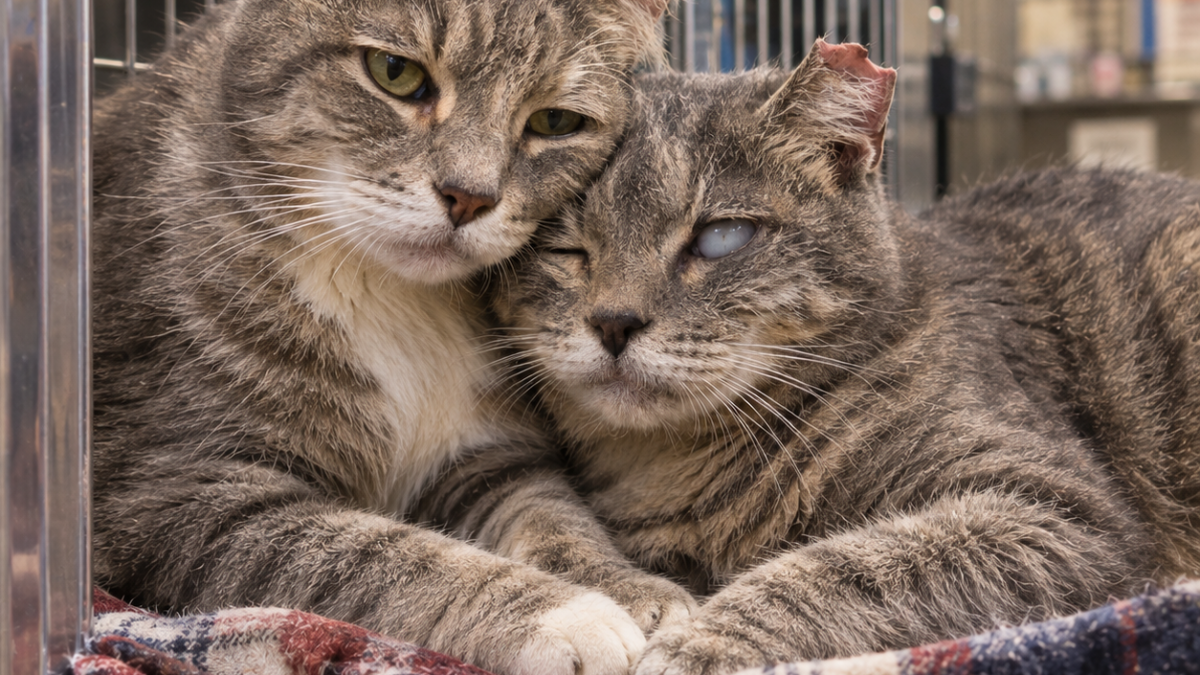
I Adopted Two Senior Cats No One Wanted—Then They Dug Through My Dead Husband’s Things and Exposed What My Daughter Had Done.
I thought the cruelest thing grief had done was leave me alone in a house still shaped like my husband—until I came home and discovered my daughter had quietly begun packing thirty years of him into donation boxes.
The two unwanted senior cats I had adopted were the first to realize something was missing, and when they clawed through those boxes searching for his scent, they uncovered a betrayal my daughter had convinced herself was an act of love.
But hidden inside my husband’s locked office was one final message neither of us knew existed, and when Megan finally read what her father had written about me before he died, the truth broke our family open in a way no one in that room would ever forget.
After my husband died, the house did not become peaceful.
People use that word sometimes when they talk about widowhood.
Peaceful.
Quiet.
Still.
They mean well.
But there is a kind of quiet that has nothing to do with peace.
It is the refrigerator clicking on at two in the morning and making you turn your head because for half a second you think someone has walked into the kitchen.
It is a floorboard settling in the hallway and your heart reacting before your brain remembers there is nobody coming.
It is leaving the television running in a room you are not using because hearing strangers talk feels less frightening than hearing the walls.
My husband, David, had been part of every ordinary sound in that house for thirty years.
He cleared his throat before telling a story.
Every story.
Even stories I had already heard twenty times.
He whistled while making coffee, badly and always half a note flat.
He complained about weather forecasts as if the meteorologists had personally arranged the rain.
He lost his glasses approximately six times a day.
There were glasses beside the bed, glasses in his truck, glasses on the bathroom sink, and one memorable pair I found inside the refrigerator next to the mustard.
When I asked how they got there, David stared at them for a long time and said, with complete seriousness, “That is concerning.”
I laughed for ten straight minutes.
I would have given anything to find another pair in the refrigerator after he died.
Cancer took him slowly enough for us to understand what was happening and quickly enough that understanding it never helped.
Fourteen months.
That was the distance between the first doctor saying, “We found something,” and the hospice nurse quietly turning off the oxygen machine.
Fourteen months of appointments.
Scans.
Infusions.
Hope.
Bad news.
Better news.
Worse news.
Days when he ate scrambled eggs and argued with the television and almost looked like himself.
Days when lifting a coffee mug exhausted him.
Near the end, I slept in a chair beside the hospital bed they had brought into our living room because David refused to die anywhere except home.
He said hospitals smelled like wet plastic.
I told him that did not make sense.
He said dying did not make sense either, but apparently we were doing that.
That was David.
He could joke about anything except my cooking.
He believed criticism of my cooking might actually kill him faster.
Our daughter Megan was there when he died.
She was forty-one then.
Married.
Two children.
A job that somehow required her to answer emails at every hour of the day.
She had David’s chin, my eyes, and both our worst habits.
She organized when she was frightened.
That mattered later.
At the time, I simply thought she was being useful.
After the funeral, she arranged food in my refrigerator by expiration date.
She made lists of thank-you cards.
She wrote the names of people who had brought casseroles on pieces of masking tape.
She changed the batteries in the smoke detectors.
She called the insurance company.
PART2:
She put all David’s medications in a grocery bag and took them to the pharmacy disposal box because I could not bear to touch them.
She handled the things that had edges.
I handled almost nothing.
For the first week, people filled the house.
Neighbors.
Church friends.
Former coworkers.
Relatives I had not seen in years.
They brought ham, potato salad, flowers, banana bread, sympathy cards, and stories about David.
Everyone said the same things.
He was a good man.
He loved you so much.
Call if you need anything.
Anything at all.
They meant it.
I know they did.
Then life, which can be cruel without intending to be, resumed.
People returned to jobs.
Soccer practice.
Dentist appointments.
Birthdays.
Grocery stores.
The house emptied.
PART3:
By the third week, I could go an entire day without another human being stepping through the door.
Megan called every evening.
At first, she disguised the calls as casual conversation.
“Did you see that storm coming?”
“Did Mrs. Reynolds ever get her fence repaired?”
“Did you find that recipe Aunt Carol wanted?”
Then the questions changed.
“Did you eat?”
“Yes.”
“What?”
“Food.”
“Mom.”
“A sandwich.”
“When?”
“Today.”
“What kind?”
“Megan, are you auditing me?”
She sighed.
“Did you go outside?”
“Yes.”
“To get the mail does not count.”
“Who appointed you director of outside?”
“Mom.”
“I stood in actual sunlight.”
“You know what I mean.”
I did.
One evening, maybe six weeks after the funeral, she became quiet.
I was sitting on the couch with David’s recliner across from me.
I had not moved it.
I had not sat in it.
I had not allowed anyone else to sit there either, although I had never said that out loud.
Megan said, “Mom, I’m worried about you.”
“I’m fine.”
“You say that like it’s a legal requirement.”
“I am.”
“No.”
I did not answer.
She took a breath.
Then she said something that irritated me because I knew it was true.
“You sound like you’re fading.”
That sentence stayed with me.
I heard it while brushing my teeth.
While putting dishes away.
While standing in the laundry room holding one of David’s old T-shirts I had found mixed with mine.
Fading.
A few days later, Megan asked if I would go to the county animal rescue with her.
“No.”
“You like animals.”
“I do.”
“So?”
“I’m not getting a dog.”
“I didn’t say dog.”
“I’m not getting anything.”
“Then we’ll look.”
“I know how looking works.”
She laughed.
“Apparently not, because you haven’t looked at anything except Dad’s recliner for two months.”
That hurt.
She apologized immediately.
I knew she had not meant it the way it sounded.
But grief gives words sharper edges.
Three days later, mostly because I wanted her to stop asking, I agreed.
The shelter sat on the edge of town in a low brick building behind a tire store.
The parking lot was cracked.
Two flowerpots by the entrance held plants that looked as tired as I felt.
Inside, everything smelled like bleach, newspaper, laundry detergent, and animal fur.
Dogs barked somewhere behind a set of swinging doors.
A puppy squealed.
A woman at the desk smiled at us with the exhausted warmth of someone who had spent the morning cleaning things no one should have to clean before coffee.
“We’re just looking,” I said immediately.
Megan smiled at her.
“She says that now.”
I glared at my daughter.
The shelter worker laughed.
“Cats are this way.”
Most of the cats were young.
Kittens climbed cage doors.
A calico reached through the bars and tried to grab Megan’s sleeve.
A huge orange cat rolled dramatically onto his back the second anyone looked at him.
People stopped there first.
Young.
Pretty.
Funny.
Easy.
Then I saw the bottom kennel in the far corner.
Two gray tabbies were curled together.
They were not beautiful in the way adoption posters prefer.
They were old-looking.
Not ancient.
Just worn.
The first had a white patch beneath his chin and thick stripes across his forehead.
The second had one cloudy eye, a ragged left ear, and the solemn expression of an animal who had learned not to expect good news.
They were pressed together so tightly they seemed to be keeping each other upright.
I crouched.
Neither moved.
A shelter worker named Denise came over.
“Those are Theo and Frankie.”
“How old?”
“Nine.”
“Brothers?”
“As far as we know.”
The white-chinned one lifted his head.
“Theo,” Denise said.
The cloudy-eyed one remained pressed into him.
“That’s Frankie.”
“How long have they been here?”
Denise hesitated.
“Four months.”
My chest tightened.
“Why?”
“You know how it is.”
I did not.
She saw that.
“They’re older. They need to stay together. Frankie has some early kidney issues. Theo needs dental work eventually. Most adopters come looking for one cat, usually younger.”
“What happened to their owner?”
Denise looked toward them.
“Older gentleman. His name was Leonard. He had a stroke.”
“Did he die?”
“Not immediately. He went into long-term care.”
“And the family?”
“They tried.”
There was something in the way she said that.
“What does that mean?”
Denise leaned against the kennel.
“His son took Theo. His daughter took Frankie.”
I looked at her.
“They separated them?”
“For six days.”
“What happened?”
“Frankie stopped eating. Theo screamed at night and tore up a bedroom door.”
I looked back into the kennel.
Theo had begun licking the top of Frankie’s head.
Slowly.
Once.
Twice.
Again.
Denise continued.
“The family brought them here and asked us to keep them together.”
I swallowed.
“So somebody has to take both.”
“That’s the goal.”
“What happens if nobody does?”
Megan shifted beside me.
I wish I had not asked.
Denise was careful.
“We keep trying.”
“That wasn’t my question.”
“No.”
She glanced down the hall.
“We’re not at capacity today.”
Today.
One word.
I understood all the words around it.
I stared at those two old cats.
Frankie leaned harder into Theo.
Theo kept washing the top of his brother’s head.
I thought of David’s hand searching for mine beneath the hospital blanket near the end.
His fingers had been weak.
He barely had the strength to squeeze.
But every time he woke, he checked whether I was there.
I remember one night opening my eyes at three in the morning and finding him awake.
“What?” I whispered.
“Nothing.”
“Why are you staring at me?”
“Making sure.”
“Making sure what?”
“You didn’t leave.”
I told him I wasn’t going anywhere.
Then one morning, he went somewhere I could not follow.
I heard my own voice before I knew what I was saying.
“What if someone only wants one?”
Denise’s face softened.
“We discourage that.”
“Discourage?”
“We won’t intentionally separate a bonded pair unless there’s a medical or safety reason.”
Theo began licking Frankie again.
Something inside me gave way.
Not dramatically.
There was no flash of destiny.
No magical certainty.
I just looked at those two worn-out animals clinging to the only familiar thing they had left in the world, and I recognized them.
Maybe grief recognizes grief.
Maybe loneliness does too.
Megan touched my shoulder.
“Mom?”
I stood.
My knees hurt.
My face was wet.
I had not realized I was crying.
“Get the paperwork.”
Megan’s eyes widened.
“For both?”
I looked at her.
“If you ask me that again, I’m leaving you here.”
She laughed and cried at the same time.
The ride home was the first car ride since David died that did not feel like something was missing.
Theo complained from his carrier.
Frankie made tiny worried sounds.
Megan kept turning the radio down to listen to them.
“You know,” she said, “Dad would love this.”
“Your father once claimed he didn’t like cats.”
“He also spent twenty minutes cutting turkey into tiny pieces for Aunt Linda’s cat.”
“He said the cat looked underfed.”
“It weighed seventeen pounds.”
“He was easily manipulated.”
“So are you.”
“I can still open this door and put you out.”
“You can’t drive. I’m driving.”
“Then I’ll put myself out.”
For the first time in weeks, Megan laughed the way she used to laugh with her father.
I looked out the window so she would not see me crying.
When we reached home, I opened both carriers in the living room.
Theo came out first.
Of course he did.
He took three steps, sniffed the rug, looked back at Frankie, then continued.
Frankie remained inside for almost ten minutes.
Theo explored the coffee table.
The curtains.
The base of the stairs.
Then he stopped beside David’s recliner.
I was standing in the kitchen doorway.
Theo sniffed the bottom edge of the chair.
Walked around it.
Then crawled underneath.
He lay down.
Just like that.
Frankie finally left the carrier.
He went directly to Theo.
That nearly finished me before the first hour.
The first night, I closed my bedroom door out of habit.
At 1:17 in the morning, scratching woke me.
Soft.
Persistent.
Scratch.
Pause.
Scratch.
I opened the door.
Theo and Frankie sat side by side.
Looking up at me.
“What?”
Theo walked past me.
Frankie followed.
“Apparently I don’t have a vote.”
Theo jumped onto the bed.
Frankie tried, missed, then looked offended.
I lifted him.
That was the first time I held either cat.
He weighed almost nothing.
He stiffened for one second, then allowed me to place him on the mattress.
Theo settled near my feet.
Frankie circled twice.
Then lay down on David’s side of the bed.
Not near it.
Not between us.
His side.
In the slight dip the mattress still held.
I sat there staring.
Then whispered, “You too?”
Frankie blinked.
That was how the house began to wake up.
Not all at once.
Grief did not leave.
Nothing replaced David.
I need to say that because people sometimes turn healing into a betrayal of whoever died.
Theo and Frankie did not fill David’s place.
They created new places.
There is a difference.
They gave mornings a schedule.
At 6:12, Theo screamed for breakfast.
Not 6:15.
Not 6:10.
6:12.
I know because I checked.
If I ignored him, Frankie sat silently beside the bed and stared at me until guilt accomplished what noise could not.
They gave afternoons movement.
Theo chased bottle caps.
Frankie discovered the warm square of sunlight beside the dining room window.
They gave evenings expectation.
When I went to get the mail, both cats waited inside the door.
Twenty yards to the mailbox.
That was all.
But when I came back, two living creatures noticed.
I had not understood how much I missed being noticed.
They found David’s places.
Every one of them.
Theo slept beneath the recliner.
Frankie preferred David’s side of the bed.
Both sat on the rug where David had put on his shoes every evening before walking out to check the mailbox.
Then came the strangest ritual.
At approximately 5:30 every afternoon, Theo began sitting at the front window.
Frankie joined him.
They stared down the driveway.
That had been David’s arrival time for twenty-seven years before retirement.
5:30.
Sometimes 5:25 if traffic was light.
5:40 if he stopped for gas.
I never taught the cats that.
How could I?
Still, every evening, there they were.
Two old cats keeping an appointment with a man they had never met.
The first time I noticed, I sat on the couch and cried until my face hurt.
Megan called that evening.
She heard it immediately.
“What happened?”
“Nothing.”
“Mom.”
“The cats sit at the window.”
Silence.
“What?”
“At five-thirty.”
Another silence.
Megan understood.
“Oh.”
“I know it doesn’t mean anything.”
“I didn’t say that.”
“They probably hear the school bus.”
“Maybe.”
I looked at them.
Theo’s tail curled around Frankie.
“They look like they’re waiting.”
Megan’s voice changed.
“Dad always came home then.”
“I know.”
We were both quiet.
Then she asked, “Are you okay?”
I almost said yes.
Instead I said, “No.”
That was new.
For months, I had answered every question with fine.
I’m fine.
Everything’s fine.
Leave me alone.
No had more truth in it.
“No,” I said again. “But I’m here.”
Megan began crying.
“So am I.”
For a while, that seemed to bring us closer.
She visited every Sunday.
Sometimes she brought groceries.
Sometimes she came empty-handed, which I preferred.
Theo eventually decided her lap belonged to him.
Frankie took longer.
Megan sat on the floor one afternoon for forty minutes waiting for him to approach.
When he finally sniffed her fingers, she looked at me as if she had been knighted.
“He likes me.”
“He tolerates you.”
“Same thing.”
“Not remotely.”
“You’re jealous.”
“Of what?”
“My relationship with your cat.”
“Go home.”
She laughed.
It should have stayed that simple.
But grief had changed Megan too.
I did not understand how much at first.
She had watched her father disappear by inches.
Every visit during his last year had come with uncertainty.
Would he be stronger today?
Would he be in bed?
Would he know what day it was?
Would the doctor call?
Would this be the last Christmas?
The last birthday?
The last conversation?
Megan dealt with fear by planning.
Planning made her feel ahead of loss.
So once she decided I was improving, she began planning me.
At first, her suggestions sounded harmless.
“We should put another railing by the back steps.”
Fine.
“Maybe I can help organize the garage.”
Not yet.
“Do you really need that huge dining table?”
Yes.
“You never use the upstairs guest room.”
It is allowed to exist unused.
“There are really nice condos closer to us.”
No.
She never said, “You need to move.”
Not then.
She said things like, “Eventually.”
“Someday.”
“Just so we have options.”
The word options began to feel like a threat.
One Sunday she stood in my kitchen while Theo yelled at me for being three minutes late with dinner.
“You sound better,” she said.
“I’m being verbally abused by a nine-year-old cat.”
“I mean you.”
I opened a can.
“I’m still sad.”
“I didn’t say you weren’t.”
She watched me divide the food.
“You laugh now.”
“Occasionally.”
“You open the curtains.”
“Apparently I had forgotten windows existed.”
She smiled.
Then her face changed.
“This might be a good time.”
My hand stopped.
“A good time for what?”
“To think about next steps.”
“Whose steps?”
“Mom.”
“No.”
“You don’t even know what I’m going to say.”
“I know exactly what you’re going to say.”
She sat at the kitchen table.
I remained standing.
“The house is a lot.”
“So?”
“The yard.”
“I have someone mow it.”
“The stairs.”
“My knees still work.”
“Most days.”
That irritated me.
She saw it.
“I’m not insulting you.”
“It feels remarkably similar.”
“I’m worried.”
“And I’m tired of being somebody’s worry.”
“That isn’t fair.”
“No. It isn’t.”
We stared at each other.
Theo stopped eating.
That should tell you how tense the room had become.
Megan lowered her voice.
“Dad would not want you trapped here.”
There are sentences people say without realizing they have stepped onto sacred ground.
That was one.
“Do not use your father as leverage.”
“I’m not.”
“You are.”
“I knew him too.”
“I know.”
“Sometimes I feel like you forget that.”
That stopped me.
Her eyes had filled.
“He was my dad.”
“I know.”
“I watched him die too.”
“I know.”
“Then why do you act like this house belongs only to your grief?”
I had no answer.
Megan grabbed her purse.
“I shouldn’t have said that.”
“No.”
“I’m sorry.”
She left before either of us could make things worse.
Theo came to the doorway.
Frankie stayed beneath the chair.
I hated the argument.
I hated Megan.
For maybe thirty seconds.
Then I hated myself for hating her.
That is family grief.
Everybody is injured by the same explosion, then gets angry because the other person bleeds differently.
We apologized the next morning.
Sort of.
Megan texted:
Sorry about yesterday.
I wrote:
Me too.
Neither of us addressed the actual problem.
That was our first mistake.
The second came six weeks later.
I had an eye appointment in the next town.
Routine.
Drops.
Lights.
A doctor telling me my vision was “excellent for my age,” a phrase I did not appreciate.
Megan insisted on driving because my eyes would be dilated.
She picked me up at nine.
Before we left, I put fresh water out for Theo and Frankie.
“Be good.”
Theo looked at me.
Frankie looked at Theo.
Megan said, “They’re cats.”
“They understand.”
“They understand tuna.”
“Which is more than some people understand.”
She rolled her eyes.
The appointment lasted nearly two hours.
Afterward, Megan suggested lunch.
I wanted to go home.
She persuaded me.
“Mom, they can survive another hour.”
“Frankie eats lunch at one.”
“He does not eat lunch.”
“He believes he does.”
“You created that problem.”
“I created happiness.”
“You created feline obesity.”
“He weighs nine pounds.”
“Fine. Tiny happiness.”
We went to a little restaurant near the clinic.
I had soup.
Megan had a turkey sandwich.
We talked about my grandson Ethan’s soccer season.
Her neighbor’s dead oak tree.
A leak in her dishwasher.
Normal things.
I remember sitting there thinking maybe I had been unfair.
Maybe all her suggestions were fear.
Maybe she looked at me in that house and imagined another phone call telling her someone she loved had fallen and she had not been there.
Maybe I could make small changes.
Not moving.
But changes.
I considered telling her that.
I never got the chance.
When we turned into my driveway, I knew something was wrong.
The curtains were completely open.
I left them halfway.
Always.
David liked them fully open.
I liked them half.
Thirty years of marriage had apparently hinged on curtain negotiations.
I stared at the windows.
“What?”
Megan asked.
“The curtains.”
She kept her eyes forward.
That was the first warning.
I opened the front door.
The house smelled like lemon cleaner.
Strongly.
My heart began pounding.
David’s wool coat was gone from the hall tree.
I turned.
“Megan.”
She set my purse down carefully.
“Before you get upset—”
That phrase has never once prevented anybody from becoming upset.
“What did you do?”
“I had some time while you were with the doctor.”
“What?”
“I came back.”
I stared at her.
“You left me at the clinic?”
“For forty minutes. You were in testing.”
My vision was still blurry.
Maybe that made everything worse.
The living room looked wrong.
Not empty.
Edited.
The blanket from David’s recliner was gone.
His crossword books.
The ceramic dish where he threw coins, screws, receipts, and once an entire set of truck keys.
Gone.
The old reading glasses.
Gone.
His photograph from the end table had been moved.
Not removed.
Moved.
A foot to the left.
Somehow that made me angrier.
“What did you do?”
Megan stepped closer.
“I packed a few things.”
“Where?”
“Mostly the hall closet.”
I opened it.
Three large donation bags.
Two boxes.
A plastic storage container.
Everything inside me went cold.
One bag had David’s slippers visible near the opening.
A box held flannel shirts.
His winter scarf.
The shaving mug his father had given him.
The blanket from his chair.
His worn leather work gloves.
A stack of old birthday cards.
The stupid baseball cap I had threatened to burn for twenty years because the brim was permanently crooked.
Neat.
Folded.
Reduced.
I heard a sound behind me.
Frankie.
He stood in the hallway.
Theo came beside him.
Both cats stared into the closet.
Theo walked forward.
Sniffed the first box.
Then climbed inside.
Frankie followed.
“Megan.”
“Mom, please.”
Theo began digging.
At first, I thought he was trying to burrow beneath the clothes.
Then he hooked one of David’s slippers with both paws and pulled.
Frankie buried his face in the blanket.
He inhaled.
Then made a sound I had never heard from him before.
A low, broken cry.
Not loud.
That was worse.
Theo pulled again.
The slipper fell onto the floor.
He shoved his face inside it.
I sat down.
Not gracefully.
My legs simply stopped holding me.
I landed against the wall.
The cats kept searching.
Through shirts.
Blankets.
The scarf.
Frankie climbed fully into the box and pressed his face into the fabric.
Theo clawed at the side.
They were looking for something.
Someone.
I knew that was irrational.
They had never met David.
But scent lives in fabric longer than memory lives in some people.
Watching those two old cats tear through the box broke something in me.
I began sobbing.
Megan knelt.
“Mom.”
“You did this?”
“I thought—”
“While I was gone?”
“I was trying to help.”
“Help who?”
“You.”
“No.”
She recoiled.
“No. You were helping yourself.”
Her face changed.
“That is not fair.”
“You couldn’t stand walking into this house and seeing your father everywhere, so you started erasing him.”
“I did not erase Dad.”
“You put him in garbage bags.”
“They’re donation bags.”
That sentence did not help.
I laughed once.
It sounded terrible.
“Wonderful distinction.”
“Mom.”
“You brought strangers in here?”
She froze.
There.
A tiny pause.
My stomach dropped.
“What?”
“Megan.”
She looked away.
“Who came into my house?”
“No one, exactly.”
“What does ‘exactly’ mean?”
“There was a woman.”
My voice became very calm.
That is how I get when I am furious.
“What woman?”
“A senior transition consultant.”
I stared at her.
“A what?”
“She helps families plan.”
“What families?”
“Families dealing with—”
“Widows?”
“She helps with downsizing, estate organization, safety, housing options—”
“You brought an estate person into my house while I was at a doctor’s appointment?”
“Only for twenty minutes.”
I felt humiliated in my own hallway.
A stranger walking past David’s chair.
Looking into rooms.
Calculating square footage.
Judging what stayed.
What went.
Where the old widow might be relocated.
“Did she go upstairs?”
“No.”
“Did she enter his office?”
“She tried. It was locked.”
Thank God.
I had locked David’s office after he died because opening the door hurt too much.
The key remained in my jewelry box.
Megan continued quickly.
“She was not here to take anything. She just explained options.”
“Options.”
“I knew you’d refuse if I asked.”
There it was.
The whole betrayal in one sentence.
“You knew I would say no.”
“Because you say no to everything.”
“So you waited until I couldn’t see properly and brought a stranger into my house?”
“I did this because I am scared!”
Theo jumped from the box.
Frankie flattened himself against the blanket.
Megan and I both stopped.
She lowered her voice.
Tears appeared.
“I am scared, Mom.”
I could not soften yet.
Not enough.
“Then be scared in your own house.”
Her face crumpled.
“That’s cruel.”
“You crossed a line.”
“I know.”
“No, you don’t.”
“I was trying to make sure you’re safe.”
“I am not a piece of furniture you get to relocate.”
“I never said you were.”
“You didn’t have to.”
I pointed toward the boxes.
“This says it for you.”
Megan cried.
Real crying.
I had seen fake tears in my life.
These were not those.
“I walk in here,” she said, “and I still expect him to be sitting in that chair.”
My anger faltered.
She wiped her face.
“I still hear his voice every time I come up the driveway.”
I said nothing.
“I sit in my car after I leave and cry because I don’t want you to know.”
Her hands shook.
“I hated that hospital bed. I hated those oxygen tanks. I hated the pill bottles. I hated every phone call from you because I thought it was going to be the call.”
“Megan—”
“And now I call you and if you don’t answer, my brain goes there again.”
Her voice cracked.
“You think I’m trying to get rid of Dad?”
She looked around.
“I’m trying to stop losing him every Sunday.”
That hurt because I understood it.
But understanding harm does not make the harm disappear.
“I’m sorry,” I said quietly. “I’m sorry this house hurts you.”
She cried harder.
“But it is still my house to hurt in.”
Silence.
Frankie remained inside the box.
Theo sat beside him.
I pointed toward the bags.
“Put it back.”
Megan looked at them.
“All of it?”
“All of it.”
She nodded.
We worked for nearly two hours.
Not speaking much.
The blanket returned to the recliner.
The ceramic dish returned to the end table.
The glasses.
The crossword books.
The slippers.
The coat.
The scarf.
Every stupid, ordinary thing.
Theo followed us like an inspector.
Frankie remained anxious.
When Megan picked up one flannel shirt, she stopped.
It was blue.
David wore it every fall.
She held it against her chest.
Then pressed her face into it.
Her shoulders began shaking.
I looked away.
Some grief deserves privacy even when it belongs to the person who wounded you.
Eventually, she hung the shirt in the closet.
“I’m sorry,” she whispered.
I did not answer.
Not because I wanted to punish her.
Because I did not know which answer was true.
That night, Theo and Frankie barely ate.
At two in the morning, I woke and found both curled on David’s robe at the foot of the bed.
I did not remember putting the robe there.
Maybe Megan had.
Maybe I had.
It did not matter.
The next morning, Frankie refused breakfast.
Theo ate half his food and walked to his brother.
Touched noses.
Returned to me.
Then went back to Frankie.
By noon, Frankie had vomited twice and was hiding in the corner beside the dresser.
I knew old cats could have delicate stomachs.
I also knew Frankie.
Something was wrong.
I called the veterinarian.
Dr. Claire Morrison had worked at the clinic for twenty years.
She examined Frankie, ran blood tests, checked his kidneys, gave him fluids, and asked, “Any unusual stress?”
I hesitated.
“Yes.”
“What changed?”
“Everything familiar in my house disappeared for a few hours yesterday.”
Dr. Morrison looked at me.
“Furniture?”
“Things.”
“People?”
“My daughter was there.”
I told her what happened.
Not every detail.
Enough.
She stroked Frankie’s head.
“For senior animals, especially bonded animals with a history of losing a home, environmental change can be significant.”
“So this could be stress?”
“His kidney values are stable. I don’t see an obstruction. Stress is possible.”
I felt vindicated.
Then hated myself for feeling vindicated.
I did not want evidence against my daughter.
I wanted Frankie well.
Dr. Morrison continued.
“They lost their previous owner, correct?”
“Yes.”
“Then they were separated.”
“Six days.”
“Animals don’t understand property, but they understand continuity. Smell. Routine. Territory. Each other.”
She looked at me.
“Older animals often tolerate change less easily because predictability becomes part of how they feel safe.”
I stared at Frankie.
“Stability.”
“Yes.”
I nodded.
“People need that too.”
Dr. Morrison smiled faintly.
“Usually.”
Frankie came home with anti-nausea medicine and instructions to monitor him.
Theo met the carrier at the front door.
He pushed his nose against the grate.
Frankie answered with one tired sound.
I stood there watching them reunite after four hours apart.
Four hours.
That was all.
Yet Theo reacted like Frankie had returned from war.
That evening, Megan texted.
How is Frankie?
I wrote:
Vet thinks stress may have contributed. He should be okay.
A minute later:
I’m so sorry.
Then:
For all of it.
I did not answer.
Ten minutes later:
Can I come by?
I stared at the message.
Theo sat beside Frankie.
The house had become quiet again.
But not the old dead quiet.
This was waiting quiet.
Finally, I wrote:
Yes.
Megan arrived carrying the blue flannel shirt.
“I found this in my car.”
I stared.
“You took it?”
“Not intentionally.”
She looked horrified.
“I think when I carried the box out, it fell onto the seat. I didn’t see it.”
I took the shirt.
Then I noticed something in the pocket.
An envelope.
Yellowed at one edge.
I pulled it out.
My name was written across the front.
Not in Megan’s handwriting.
David’s.
My hands went numb.
Megan saw it.
“What is that?”
“I don’t know.”
The handwriting was unmistakable.
He wrote my name with the same ugly capital J he had used for thirty years.
Janet.
I sat down.
Theo jumped onto the couch beside me.
Megan remained standing.
“Open it.”
“I can’t.”
“Mom.”
“Not yet.”
I turned the envelope over.
Sealed.
David had written something to me and hidden it inside a shirt pocket.
Had he forgotten?
Had he meant me to find it?
Why that shirt?
Why now?
I put the envelope on the table.
Megan sat across from me.
Neither of us touched it.
Eventually she whispered, “Dad wrote that.”
“Yes.”
“You’re not going to open it?”
“Yes.”
“When?”
“I don’t know.”
She laughed once through tears.
“You’re impossible.”
“You’re intrusive.”
“That is fair.”
That was the beginning of our repair.
Not forgiveness.
Not yet.
Repair.
Megan stopped making plans for me.
At least without permission.
I stopped saying “fine” when I was not.
We made rules.
No entering the house when I was not home unless there was an emergency.
No packing.
No donation bags.
No consultants.
No photographs for real estate people.
No discussions about moving unless I started them.
If we sorted David’s belongings, we did it together.
I decided when.
I decided how much.
I decided when we stopped.
A week later, I called her.
“Bathroom drawer.”
“What?”
“You wanted to help.”
“With Dad’s things?”
“One drawer.”
She came over.
We opened the bottom bathroom drawer.
Expired medication.
Old razors.
A comb missing four teeth.
Two unopened hotel soaps.
A tube of athlete’s-foot cream that had expired during the Obama administration.
Megan held it up.
“Can this go?”
“Yes.”
“Are you sure?”
“Yes.”
“Should I ask the cream?”
“Do not ruin this.”
She laughed.
We filled one small bag.
Then I said, “Enough.”
Megan immediately closed the drawer.
No sigh.
No persuasion.
No “while we’re here.”
Just:
“Okay.”
That tiny word healed more than she knew.
The envelope remained unopened in my desk.
For three months.
Every few days, I looked at it.
Sometimes I touched it.
Once I carried it to the kitchen and set it beside my coffee.
Then returned it unopened.
I did not know why I was afraid.
Maybe because unopened meant David still had something left to say.
Once I opened it, there would be one fewer future sentence from him.
Theo and Frankie continued changing the house.
Frankie recovered.
Theo became obsessed with warm laundry.
He climbed into every basket.
One afternoon, I nearly folded him into a bath towel.
Frankie developed the habit of tapping my shin when he wanted attention.
One tap.
Wait.
Another.
If ignored, claws.
He was polite but committed.
At five-thirty, they still sat at the window.
Eventually I began sitting with them.
Three bodies facing the driveway.
Not expecting David.
Just remembering that for decades, someone had come home that way.
There is dignity in remembering without pretending.
Megan came over one Sunday with Ethan and her younger son, Lucas.
The boys adored the cats.
Theo tolerated everything.
Frankie tolerated almost nothing.
Lucas sat on the rug building blocks while Frankie watched from beneath the coffee table.
At one point Lucas asked, “Grandma, why do you still have Grandpa’s shoes?”
Megan immediately looked at me.
I smiled.
“Because I haven’t decided what to do with them.”
“Are you going to wear them?”
“No.”
“Then why keep them?”
Children ask the questions adults circle around.
I considered it.
“Because sometimes deciding later is still a decision.”
Lucas thought about that for maybe three seconds.
Then said, “Theo stole my block.”
Conversation over.
That evening, after everyone left, I went upstairs.
David’s office door waited at the end of the hall.
I had not entered in almost a year.
Not really.
I had opened the door twice.
Looked.
Closed it.
Theo had begun pawing at it.
He sat there several times a day.
Frankie often joined him.
I finally said, “You two have absolutely no respect for boundaries.”
Theo scratched the door.
I retrieved the key.
The lock clicked.
My stomach tightened.
The room smelled like paper.
Dust.
Wood.
And faintly, impossibly, David.
His desk remained exactly as he had left it.
Pens in a mug.
Three envelopes.
A yellow legal pad.
A coffee ring.
A sweater over the chair.
His reading lamp.
One of his many pairs of glasses.
I gripped the doorframe.
“No.”
Theo walked past me.
Of course.
Frankie followed.
Theo jumped onto the desk chair.
Frankie went directly to the sweater.
He kneaded it twice.
Then lay down.
I stood in the doorway.
“You make everything look so easy.”
Theo began cleaning himself.
“You’re very wise for somebody who ate dental floss last week.”
He ignored me.
I stepped inside.
One step.
Then another.
I sat in the chair opposite David’s desk.
My hand landed near the coffee stain.
I used to nag him about that stain.
“Use a coaster.”
“I am.”
“That is a legal pad.”
“Legal coaster.”
“You’re impossible.”
“Thirty years and you’re just noticing?”
I put my hand over the stain.
That was when I finally broke.
Not funeral crying.
Not the polite crying you do when people are holding your hands.
Not the sudden tears when a song comes on.
This was animal grief.
Sound came out of me I did not recognize.
I bent forward.
My chest hurt.
My face hurt.
I said his name.
Once.
Then again.
“David.”
Theo jumped onto the desk.
He bumped his head against my wrist.
Frankie remained curled into the sweater.
I cried until I could not.
When it ended, I felt emptied.
Not healed.
Emptied.
There is relief in emptiness sometimes.
I stayed in that room for almost two hours.
Then I noticed the legal pad.
Three lines in David’s handwriting.
Megan—
If you find this before your mother does, don’t panic.
There’s another letter for her.
I stared.
My pulse accelerated.
I picked up the pad.
Nothing below it.
I turned the page.
Blank.
Another.
Blank.
I searched the desk.
Drawers.
Folders.
Nothing.
Then I remembered the envelope in my desk.
Janet.
My name.
My letter.
Another letter for Megan.
I called her.
She answered immediately.
“Everything okay?”
“I need you to come over.”
“What happened?”
“Nothing.”
“Mom, when somebody says ‘nothing’ like that—”
“Come over.”
She arrived twenty minutes later.
I was sitting in David’s office.
The first thing she saw was me behind his desk.
She stopped.
“You opened it.”
“Yes.”
Her eyes filled.
Then she noticed the legal pad.
“What’s that?”
I handed it to her.
She read the three lines.
Looked at me.
“There’s a letter for me?”
“Apparently.”
“Where?”
“I don’t know.”
We searched.
For an hour.
Desk drawers.
Bookcases.
File cabinets.
David’s old briefcase.
Boxes.
Nothing.
Theo followed us.
Frankie slept on the sweater.
Megan sat on the floor.
“What if he never finished it?”
“Possible.”
“He was sick.”
“Yes.”
She looked devastated.
I understood.
A promise of final words is almost cruel if the words are missing.
Then Theo knocked over the mug of pens.
“Great,” Megan said.
Pens scattered.
One rolled beneath the desk.
She reached under.
Her fingers stopped.
“What?”
“There’s something taped under here.”
My heart jumped.
Megan crawled halfway beneath the desk.
She pulled out a white envelope.
Her name.
Megan.
She sat on the floor.
Did not open it.
Now I understood my own fear.
“Take your time.”
She laughed nervously.
“You kept yours three months.”
“Yes.”
“I’m not that patient.”
Her fingers shook as she opened it.
The letter was two pages.
She began reading silently.
Halfway down the first page, her face changed.
She covered her mouth.
“What?”
She shook her head.
Continued.
Then started sobbing.
I moved toward her.
She handed me the pages.
“I can’t.”
I looked down.
David’s handwriting grew worse near the bottom.
The letter had been written during the last month of his life.
Megan,
If you are reading this, then either I have died or I have finally become organized, and we both know which one is more likely.
She laughed through her tears when I read that aloud.
I continued.
Take care of your mother, but be careful what you mean by “take care.”
You and I are alike. We fix things when we’re scared.
Your mother does not need fixing.
That line stopped me.
Megan began crying harder.
I kept reading.
She will say she is fine when she isn’t. She will pretend she doesn’t need anybody because needing people embarrasses her.
Call her anyway.
Visit anyway.
Make her eat something green occasionally.
But do not treat her like she died with me.
She has spent most of her adult life taking care of other people.
Give her the dignity of deciding what comes next.
If she wants to keep my ugly recliner forever, let her.
I looked toward the living room.
Megan whispered, “Oh my God.”
The letter continued.
If she wants to sell the house tomorrow, help her.
If she wants to stay there until she is ninety-five and torment you with plumbing repairs, help her with that too.
Do not rush her because you are hurting.
You will both be hurting.
That does not make either of you the boss of the other one’s grief.
Megan put her face in her hands.
I could barely read the final paragraph.
And one more thing.
Do not confuse being useful with being present.
I made that mistake more than once.
Sometimes the person you love does not need a plan.
Sometimes they need you to sit in the same room and admit that it hurts.
I love you.
I am proud of you.
Take care of your mother.
But remember she is still Janet.
Dad
For several minutes, neither of us spoke.
Theo sat beside the letter.
Frankie slept on David’s sweater as if nothing extraordinary had happened.
Megan looked devastated.
“He knew.”
“Your father knew everything when it was no longer useful.”
She laughed weakly.
Then her face crumpled again.
“I did exactly what he told me not to do.”
“You were scared.”
“That doesn’t excuse it.”
“No.”
She looked at me.
That answer surprised her.
I reached for her hand.
“It explains it.”
She squeezed my fingers.
“I’m sorry.”
“I know.”
“No.”
She shook her head.
“I need to say it without defending myself.”
I waited.
“I am sorry I came into your house without permission.”
Tears ran down her face.
“I am sorry I brought that woman here.”
I nodded.
“I’m sorry I packed Dad’s things because I wanted to stop feeling what I felt when I saw them.”
Her voice cracked.
“And I am sorry I treated your grief like something I could organize.”
That was the apology I had needed.
Not because it punished her.
Because it named what happened.
“I forgive you.”
Megan bowed her head.
I moved beside her.
She leaned against me.
Then Theo, who had the emotional timing of an ambulance driver, climbed directly into her lap.
She laughed.
“Seriously?”
Theo circled once.
Settled.
Megan stroked him.
“Traitor.”
I smiled.
“Minister of reconciliation.”
We stayed in David’s office until evening.
For the first time, Megan told me things about the last year of his illness I had not known.
How she sometimes sat in the grocery store parking lot and cried before coming over because she wanted to look cheerful for us.
How she hated herself for feeling relieved on the day he died because the suffering had stopped.
How guilty that relief made her.
I told her something nobody had known either.
“I felt relieved too.”
She stared.
“You did?”
“Yes.”
“Mom.”
“He was hurting.”
“I know.”
“I loved him enough to want him here forever, and I loved him enough to be relieved he didn’t have to stay like that.”
Megan’s eyes filled.
“I thought I was terrible.”
“So did I.”
She laughed quietly.
“Dad probably would’ve called us both idiots.”
“He would have said it more diplomatically.”
“No, he wouldn’t.”
She was right.
That night we opened my letter.
Together.
I had expected romance.
Something beautiful.
David was incapable of remaining serious for an entire page.
Janet,
If Megan found hers first, she is probably crying.
Tell her I said that is allowed.
If you found yours first, you have probably waited three months to open it because you are stubborn.
I looked at Megan.
She stared at me.
“You waited exactly three months.”
“Your father was irritating.”
We continued.
I know you are afraid of the house becoming empty.
I am too.
That was the sentence that undid me.
He had written it while alive.
While lying twenty feet away from that office in a hospital bed.
He knew he was leaving.
He was afraid for me.
The letter continued.
But empty is not the same as finished.
Please remember that.
Keep what you want.
Give away what you want.
Stay.
Leave.
Paint the walls purple just to make Megan nervous.
But do not turn this house into a museum for me.
I lived here.
That is enough.
If something new comes through the door, let it.
A person.
An animal.
A bad piece of furniture.
Whatever.
Life will feel disloyal at first.
It isn’t.
You gave me thirty years.
Do not give my absence the rest.
I stopped reading.
Megan took my hand.
Neither of us spoke.
Eventually I finished.
I love you.
I have loved you in every room of this house, including the laundry room, although you know I hated the wallpaper.
You were the best thing that happened to me.
Stay Janet.
Please.
David
Theo meowed.
Megan wiped her face.
“Dad hated that wallpaper.”
“He selected it.”
“He denied that for twenty years.”
“He was a coward.”
We laughed.
Really laughed.
In David’s office.
For the first time since he died, laughter in that room did not feel disrespectful.
It felt like he had left the door open.
The months after that did not turn into some perfect healing montage.
I did not wake one morning cured of grief.
Megan and I still argued.
Theo still screamed at 6:12.
Frankie still required medicine.
The plumbing still broke.
The yard still grew faster than I wanted.
But something fundamental changed.
Megan stopped managing me.
I stopped making her guess what I needed.
We talked.
Sometimes badly.
But honestly.
When she worried about the stairs, I listened instead of treating concern like an insult.
When I told her I was not ready to move, she believed me.
We installed a second railing.
My idea.
We hired someone to clean the gutters.
Her idea.
I signed updated medical documents so Megan would not have to guess about my wishes in an emergency.
Our idea.
A year earlier, every practical conversation had sounded like an attempt to remove me from my own life.
Now practicality could exist beside dignity.
That difference changed everything.
The senior transition consultant called once.
I answered.
“Mrs. Parker? This is Elaine. I met briefly with your daughter some months ago.”
“I remember.”
There was a pause.
“I wanted to apologize. I did not realize you had not agreed to the consultation.”
I appreciated that.
“Thank you.”
“I should have confirmed with you directly.”
“Yes.”
Another pause.
“If you ever decide you do want help, on your terms, my number is the same.”
That mattered too.
“Thank you.”
I never called.
But I kept the number.
Choice feels different when it actually belongs to you.
At the shelter, I began volunteering once a week.
That surprised everybody, including me.
Denise showed me how to clean kennels.
How to introduce myself to frightened cats.
How to sit near them without reaching.
I spent most of my time with seniors.
The ones people walked past.
The fourteen-year-old calico with thyroid disease.
The eleven-year-old black cat whose owner had gone into a nursing home.
A twelve-year-old orange tom with arthritis and a face like an angry retired judge.
I understood them.
Not because old animals are magical.
Because I knew what it felt like to become less convenient.
To have other people look at your age and immediately imagine limitations.
To need more time.
More patience.
More medicine.
More gentleness.
People often asked why anyone would adopt a nine-year-old cat.
I eventually developed an answer.
“Because nine is not dead.”
Some laughed.
I never did.
Theo and Frankie became minor celebrities at the shelter because Denise used their photograph for a senior-adoption poster.
The picture showed them asleep together on David’s recliner.
Underneath it:
BONDED DOESN’T MEAN BURDEN.
Megan cried when she saw it.
I pretended not to.
Six months after the disaster with the boxes, we sorted David’s clothes again.
This time, I initiated it.
Megan arrived with no bags.
I laughed.
“You’re not prepared.”
“You told me no surprise bags.”
“I did.”
“So now I am aggressively unprepared.”
We made three piles.
Keep.
Donate.
Not today.
Not today was by far the largest.
That was fine.
I kept the blue flannel shirt.
The crooked baseball cap.
The winter coat.
One pair of slippers.
I donated twelve shirts, six pairs of pants, two jackets, and enough ties to outfit a disappointing wedding band.
Halfway through, I found a sweater David had not worn in fifteen years.
“Donate.”
Megan stared at me.
“That easily?”
“I hated this sweater when he was alive. Death did not improve it.”
She laughed until she cried.
I laughed too.
That day, grief became something else for a little while.
Not lighter exactly.
More breathable.
Megan took one of David’s shirts home.
Not the blue one.
A green flannel.
“I want Ethan to have it when he’s older.”
“Fine.”
“Are you sure?”
“Yes.”
“Really?”
“Megan.”
“Right. Sorry.”
Respect still required practice.
One autumn evening, almost two years after David died, I sat by the front window with Theo and Frankie.
5:30.
Same ritual.
Leaves had begun turning.
The driveway was empty.
Theo’s muzzle had grown lighter.
Frankie’s cloudy eye had worsened.
They were eleven now.
Older.
Slower.
Theo needed a little stool to reach the couch.
Frankie took daily medication.
They cost more in veterinary bills than my first car had cost.
I loved them absurdly.
Megan pulled into the driveway at 5:34.
Theo stood.
Frankie stood.
Both hurried toward the door.
Megan entered carrying groceries.
“You bought food.”
“You said you needed milk.”
“I said I might need milk.”
“That sounds like needing milk.”
She set the bags down.
Theo rubbed against her ankle.
Frankie approached more slowly.
Megan crouched.
“Well, hello, gentlemen.”
She had become one of their people.
That mattered.
While she put groceries away, I sat at the kitchen table watching her.
“What?”
she asked.
“Nothing.”
“That is suspicious.”
“I was thinking.”
“Even worse.”
I smiled.
“You know, I might sell this place someday.”
She froze.
Then deliberately continued unpacking groceries.
“Okay.”
That was all.
No excitement.
No brochures.
No websites.
No sudden plan.
I almost laughed.
“You have nothing to say?”
“You said might.”
“Yes.”
“So we can talk if you want to.”
“I’m thinking maybe something smaller eventually.”
“Okay.”
“Single story.”
“Makes sense.”
“Closer to you.”
She stopped.
Turned.
Her eyes were wet.
“But not too close.”
She laughed.
“Obviously.”
“I have standards.”
“I know.”
“What about the cats?”
“Where you go, they go.”
I nodded.
That was the answer.
Not because I was moving.
I did not.
Not then.
But for the first time, imagining leaving the house did not feel like abandoning David.
I understood something I had not been ready to understand when Megan first began talking about downsizing.
She had been wrong to push.
I had also been wrong to believe staying was the only way to honor him.
The point was never the house.
The point was choice.
Maybe I would stay until I died.
Maybe I would leave next spring.
Either decision could be love.
Either decision could be grief.
Either decision could be life.
That winter, a storm knocked out power for fourteen hours.
Megan wanted me to stay at her house.
I said no.
Then the temperature dropped.
I reconsidered.
Growth.
I packed medicine, clothes, Theo, and Frankie.
At Megan’s house, the cats inspected everything.
Theo claimed a guest-room chair.
Frankie slept beside me.
At breakfast, Ethan asked, “Grandma, if you move here, can the cats stay in my room?”
“I am not moving here.”
“Mom said maybe.”
I looked at Megan.
She raised both hands.
“I said nothing.”
“Good.”
Ethan looked disappointed.
“The cats can visit.”
“Okay.”
Then Frankie stole a piece of bacon from his plate.
The matter was settled.
In spring, I finally repainted the laundry room.
The wallpaper David hated.
Yellow flowers.
Hideous.
I stood there with a scraper, suddenly emotional.
Megan noticed.
“Want to stop?”
I considered.
“No.”
“You sure?”
“Yes.”
She handed me the scraper.
We worked.
When the last strip came off, I expected sadness.
Instead I felt relief.
David was not in the wallpaper.
That sounds obvious.
It had taken me almost three years to understand.
He was not in the chair.
Or the coat.
Or the coffee stain.
Those things carried memory.
But memory was not imprisonment.
I could change the wall.
Keep the shirt.
Donate the tie.
Sit in the recliner.
Move the recliner.
Stay.
Leave.
Laugh.
Cry.
None of it undid thirty years.
Love that real is not that fragile.
Theo taught me that in his own strange way.
One afternoon, I moved David’s recliner six feet across the living room because the light was better near the window.
Theo stood where the chair had been.
Stared at the empty carpet.
Looked at me.
Then looked toward the chair.
I waited for a crisis.
Theo walked to the new location.
Crawled underneath.
Went to sleep.
I laughed.
Frankie followed.
Of course.
That night I called Megan.
“You know what?”
“What?”
“Maybe the cats are smarter than both of us.”
“That was established a long time ago.”
“They didn’t care where the chair was.”
“They cared that it was still there.”
I thought about that.
Maybe that was grief too.
Things can move.
Love remains recognizable.
Years later, I would think about the day I first saw Theo and Frankie in that bottom shelter kennel.
Two old cats pressed together.
Overlooked because adopting them required accepting age, expense, and a future that might be shorter than people wanted.
I had gone there believing I had nothing left to give.
That was the lie grief had told me.
I had food.
A house.
A lap.
Medicine money.
A quiet voice.
A place on the bed.
A place beneath a chair.
I had time.
Not unlimited time.
Nobody does.
But enough.
They had come into my home carrying their own history of loss.
An owner gone.
A family unable to keep them.
Six days separated.
Months in a kennel.
They did not need me to erase that history.
They needed somewhere safe enough to continue after it.
So did I.
That was what Megan had misunderstood when she packed David’s things.
She thought healing meant reducing evidence of pain.
Removing triggers.
Clearing rooms.
Making the house less haunted.
What Theo and Frankie taught both of us was almost the opposite.
Healing was not destroying the places love had touched.
It was learning to live among them without becoming trapped inside them.
Sometimes that meant keeping a robe.
Sometimes donating a sweater.
Sometimes opening a locked office.
Sometimes sitting in it and sobbing until you could breathe again.
Sometimes moving the chair six feet toward the sunlight.
And sometimes it meant allowing two unwanted old cats to lie down in the middle of everything you were afraid to touch.
Frankie’s favorite place remained David’s side of the bed.
Theo still waited at the window at 5:30.
But eventually the ritual changed.
When Megan’s car came up the driveway, their tails rose.
They were no longer waiting only for a ghost.
They were waiting for someone living.
So was I.
That might be the part people misunderstand most about grief.
Moving forward does not mean moving away.
You can carry someone and still walk.
You can keep a memory without building your life around an absence.
You can love the dead faithfully and still become curious about tomorrow.
David had tried to tell me that.
Empty is not the same as finished.
For a long time, I thought the empty house was proof that my best years had ended.
Then two gray cats nobody wanted came through my door.
They shed on my furniture.
Woke me before sunrise.
Cost me a ridiculous amount of money.
Vomited in inconvenient places.
Stole food.
Yelled about dinner.
Turned my husband’s recliner into communal property.
And somehow, without understanding a single thing about marriage or cancer or widowhood, they exposed every lie I had started believing about myself.
That I was finished.
That I was only somebody’s widow now.
That being older meant my life should become smaller.
That needing stability made me weak.
That keeping memories meant I was stuck.
That joy after David would somehow insult the joy I had with him.
They exposed Megan’s fear too.
Her need to organize what frightened her.
Her belief that if she could plan far enough ahead, she might never again be surprised by loss.
And they forced us to confront each other before grief hardened into resentment.
I sometimes wonder what would have happened if Theo and Frankie had not dug through those boxes.
Maybe Megan and I would still have fought.
Maybe I would have discovered what she had done eventually.
But there was something about seeing those two old animals searching frantically through David’s clothes that stripped away every polite excuse.
They understood only one thing.
Something familiar had disappeared.
They wanted it back.
So did I.
Not David.
I knew better.
I wanted control of my own grieving.
My own house.
My own timeline.
My own remaining life.
Megan had to learn to give me that.
I had to learn that receiving help did not automatically surrender it.
And David, stubborn man that he was, managed to referee the argument from beyond the grave with two letters taped beneath a desk and hidden inside a shirt.
Typical.
He always did like having the last word.
Theo and Frankie are older now.
Much older.
Frankie’s medication has increased.
Theo sometimes misjudges the couch and pretends afterward that he meant to land on the floor.
Their faces have gone silver.
They sleep more.
They move slower.
The world would call them senior cats.
At the shelter, that label once made people pass them by.
In my house, it means I watch them more carefully.
Soft food.
Warmer blankets.
Shorter jumps.
More veterinary visits.
More patience.
More time sitting still with a hand resting on warm fur.
I know what is coming someday.
That is part of loving older animals.
You adopt them knowing goodbye may arrive sooner.
People sometimes ask how I can bear that.
I usually say the same thing.
“Shorter does not mean smaller.”
Nine years old did not make Theo and Frankie less worthy of adoption.
Eighty years old will not make me less worthy of deciding my own life.
Thirty years with David did not become meaningless because the thirty-first year came without him.
Worth is not measured by how much future remains.
Sometimes it is measured by what we do with the part that remains.
Last month, Megan came over while I was sitting with the cats at the window.
5:30.
She sat beside me.
No groceries.
No plans.
No folders.
Just Megan.
Theo climbed into her lap.
Frankie leaned against my leg.
For several minutes, nobody spoke.
Then Megan said, “Dad was right.”
“That narrows nothing down. Your father believed he was right about everything.”
She smiled.
“About being present.”
I looked at her.
She stroked Theo’s head.
“I used to think if I wasn’t doing something, I wasn’t helping.”
“I know.”
“I’m getting better.”
“You are.”
She looked suspicious.
“That sounded sincere.”
“Don’t get used to it.”
She laughed.
We sat until the light outside changed.
Then Theo jumped down and demanded dinner.
Frankie followed.
Megan stood.
“I’ll help.”
“With what?”
“Nothing unless asked.”
“Very good.”
She saluted.
I watched her walk into the kitchen.
The house was noisy.
Cabinet doors.
Cat bowls.
Megan complaining because Theo was trying to climb her leg.
The faucet running.
Frankie meowing.
A spoon hitting the counter.
Ordinary sounds.
Living sounds.
Three years earlier, I had left the television running because silence frightened me.
Now I sometimes turned it off just so I could hear the house.
Not because David had returned.
He had not.
That truth no longer destroyed me every time I admitted it.
I listened because life had returned.
Different life.
Smaller in some ways.
Larger in others.
Mine.
I still have David’s blue flannel shirt.
The envelope is stored with our marriage certificate.
His letter is in the drawer beside my bed.
Megan has hers framed privately in her office, though she would deny that if you asked because she thinks framing it is sentimental.
The recliner remains by the window.
The coffee stain is still on David’s desk.
I never cleaned it.
Not because I cannot.
Because I decided not to.
That difference matters.
The old shelter photograph of Theo and Frankie hangs in the hallway.
They are curled together in that bottom kennel.
Two animals most people walked past.
Every time I see it, I think of the question I asked that day.
“What if someone only takes one?”
I am still ashamed I asked.
But maybe I needed to hear the answer.
Some lives are built together.
Some grief is survived together.
Sometimes the most merciful thing you can do is refuse to separate what love spent years joining.
That does not mean refusing change.
It means honoring connection.
David taught me that.
Megan had to relearn it.
Theo and Frankie lived it every day.
People at the shelter still tell others I rescued them.
I correct them less now.
Arguing gets tiring.
But between us, that is not what happened.
I signed adoption papers.
I bought food.
I paid veterinary bills.
I gave them a house.
That part is true.
But they came into a place that had stopped feeling like a home.
They found the empty places.
David’s chair.
His side of the bed.
The patch of rug where he put on his shoes.
The window where the driveway could be watched every evening.
They found every place where love had left an imprint.
Then they did something I had been terrified to do.
They used those places.
They slept there.
Played there.
Waited there.
Lived there.
They did not treat memory like something too sacred to touch.
They treated it like part of the house.
When Megan packed David’s things away, Theo and Frankie dug through the boxes until what had been hidden came back into the open.
Clothes.
Grief.
Anger.
Fear.
A father’s letter.
A daughter’s pain.
A widow’s right to remain a whole person.
They made us look at all of it.
Then, when we were finished fighting and crying and explaining ourselves, those two old cats did what old souls do better than most people.
They stayed.
That is the thing I understand now.
Staying does not mean refusing to move.
Theo moved when the chair moved.
Frankie adjusted when we changed the room.
I changed too.
Megan changed.
The house changed.
Life changed.
But none of us had to erase what came before in order to make room for what came next.
Love does not require that.
Grief does not require that.
Age does not require that.
And healing certainly does not.
One evening not long ago, I walked into David’s office and found Theo asleep in his chair.
Frankie was curled on the old sweater.
Sunlight came through the window.
The coffee ring was visible on the desk.
For a second, the room looked almost exactly as it had years earlier.
Almost.
Then Theo snored.
A ridiculous tiny sound.
I started laughing.
No guilt followed.
That surprised me.
I stood there waiting for it.
Nothing.
Just warmth.
I touched the edge of David’s desk.
“Did you hear that?”
Of course, nobody answered.
I smiled anyway.
Maybe that is healing.
Not forgetting the person who used to answer.
Not pretending you no longer wish they could.
Just realizing silence does not always mean emptiness anymore.
I turned off the office light.
Theo woke and followed me.
Frankie came behind him.
Three old souls walking slowly down the hallway.
The house creaked.
The refrigerator clicked on.
Somewhere outside, a car door shut.
I heard Megan laughing in the kitchen because she had arrived early and Theo had apparently missed dinner by forty-five seconds.
I walked toward the sound.
And for the first time in a long time, I did not feel like I was walking away from David.
I felt like I was carrying him with me.
That is what those two unwanted cats gave back to my empty house.
Not my husband.
Nothing could do that.
They gave the rooms permission to hold more than one kind of love.
They gave my daughter and me the courage to stop managing grief and finally speak it.
They gave me a reason to open doors I had locked.
They reminded me that old lives are still lives, that worn things are not automatically finished, and that slower does not mean less valuable.
Most of all, they taught me that love can remain without becoming a prison.
Theo and Frankie searched through the things David had touched.
Then they laid down inside them.
For a long time, I thought that meant they were showing me how to hold on.
I understand it differently now.
They were showing me how to stay close to what I loved without being buried beneath it.
And eventually, after all the silence, all the boxes, all the anger, all the tears, and all the terrible fear of living in a world where David no longer did, I learned to do the same.








