HOA Tried to Foreclose on My Lake House—Then Learned Its $6M Mortgage Was Held by My Bank
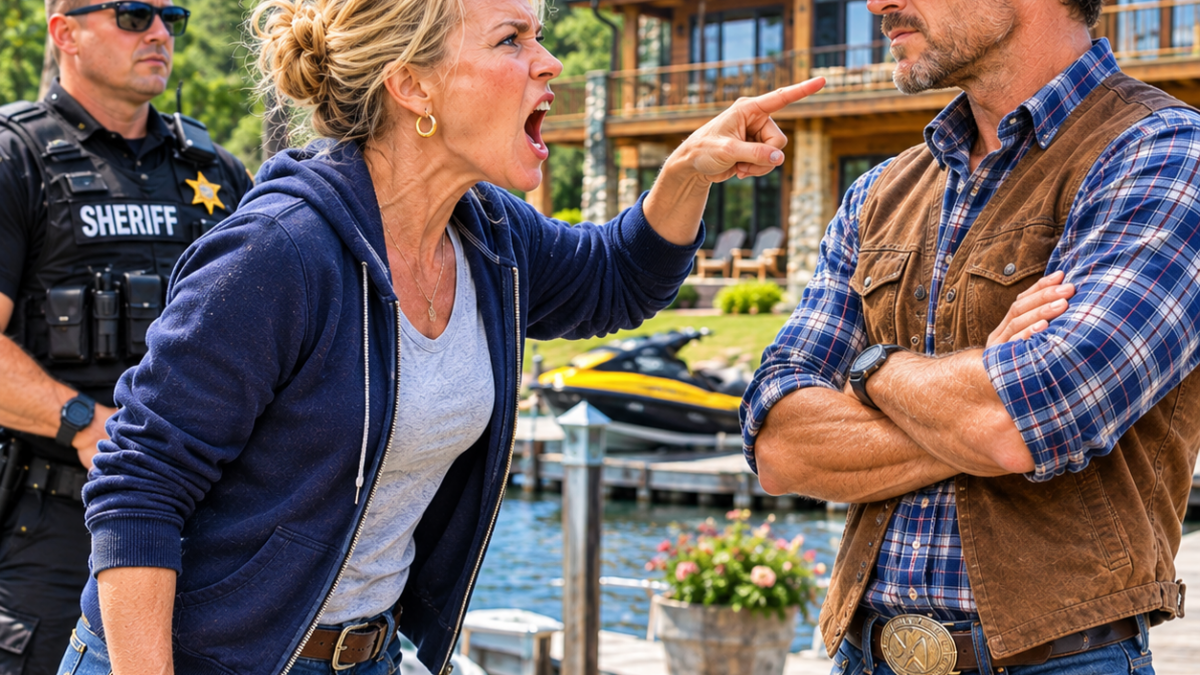
HOA Tried to Foreclose on My Lake House—Then Learned Its $6M Mortgage Was Held by My Bank
“SIGN OVER THE LAKE HOUSE BY NOON TOMORROW, DANIEL, OR PINE HARBOR WILL TAKE IT AT FORECLOSURE AND YOU’LL WALK AWAY WITH NOTHING!” Patricia Whitmore snapped as she shoved a $92,300 lien packet across the table.
She had spent months inventing HOA fines against a house that had never belonged to her association, then tried to trade away the fake debt if I surrendered nearly four acres of family lakefront property.
Then the lender she had invited into the room opened Pine Harbor’s $6 million mortgage file, looked at me, and quietly said, “Mr. Lawson, I think we have a much bigger problem than this foreclosure.”
Patricia Whitmore was still smiling when Michael Grant entered the conference room.
That smile is the part I remember.
Not because it lasted long.
Because of how certain it looked.
Patricia had brought two Pine Harbor board members, the community manager, and the HOA’s attorney to what she apparently believed would be my surrender meeting.
My attorney, Rebecca Hayes, sat beside me.
On the table between us was a foreclosure packet claiming Pine Harbor Estates had the right to sell my lake house over $92,300 in unpaid assessments, penalties, legal fees, shoreline violations, and other charges I had never legally owed.
Patricia tapped the packet with one manicured finger.
“You have until noon tomorrow.”
Rebecca answered before I could.
“No, he doesn’t.”
Patricia smiled at her.
“The sale process is already moving.”
“The lien is being challenged.”
“And we believe it is valid.”
“You believe a lot of things.”
Patricia’s smile tightened.
Then the conference room door opened.
Michael Grant walked in carrying a thick banking file.
Patricia leaned back.
“Good. The lender is here.”
Michael looked first at Patricia.
Then Rebecca.
Then me.
He stopped.
“Mr. Lawson?”
Patricia’s smile froze.
I stood.
“Morning, Michael.”
We shook hands.
PART2:
One of the board members looked from him to me.
Patricia frowned.
“You two know each other?”
Michael gave the kind of careful answer bankers give when they know a room has suddenly become more complicated than expected.
“Yes.”
He set the file down.
“Mr. Lawson is chairman and majority owner of Franklin County Bank.”
Nobody spoke.
Patricia looked at me.
Then Michael.
Then the file.
Her attorney shifted in his chair.
I did not own some giant Wall Street bank.
Franklin County Bank was a regional institution my grandfather had helped start decades earlier.
Twelve branches across two states.
Home loans.
Farm loans.
Commercial real estate.
Small business accounts.
My family still controlled the bank.
I had spent most of my adult life working there, first in loan operations, then commercial banking, eventually becoming chairman after my father retired.
What Patricia apparently had not known was that Pine Harbor Estates had borrowed a little over $6 million from that same bank.
The loan was secured by common HOA assets.
Clubhouse.
Pool.
Main marina.
Maintenance property.
Sections of shoreline.
Private roads.
Other association-owned land.
And because my private lake house sat beside Pine Harbor, I had deliberately stayed out of the loan approval process.
Conflict disclosure.
Independent credit committee.
Separate loan officers.
Normal banking procedure.
I could not approve Pine Harbor’s loan.
I could not cancel it because I disliked Patricia.
I could not wake up angry one morning and take her clubhouse.
That mattered.
It would matter even more later.
Michael opened the banking file.
Patricia recovered enough to speak.
“We’re here about Mr. Lawson’s delinquent property.”
Michael looked at her.
“Before we discuss Mr. Lawson’s property, we need to discuss Pine Harbor’s mortgage.”
Her attorney leaned forward.
“What specifically?”
Michael opened the first page.
“The outstanding balance remains approximately six million dollars.”
Patricia nodded.
“We’re current.”
“You are.”
Relief flickered across her face.
Then Michael continued.
“But our review indicates Pine Harbor may have represented property rights as collateral that were specifically excluded from the original agreement.”
Patricia looked at her attorney.
Rebecca looked at me.
Michael turned another page.
“There is also a notification issue. Your loan agreement requires lender notice before certain liens, ownership changes, shoreline transfers, or collateral modifications involving designated parcels.”
He looked directly at Patricia.
“We have no record of any notice regarding Mr. Lawson’s house.”
Patricia straightened.
“His property became subject to Pine Harbor authority because of unpaid assessments.”
Michael closed the folder halfway.
“Then somebody needs to explain why Pine Harbor’s own original loan application told the bank his parcel was privately owned and outside the association.”
Silence.
Michael pulled out a survey.
Four years old.
Prepared when Pine Harbor refinanced.
My lake house was marked in yellow.
Beside it:
PRIVATE NON-HOA PARCEL — EXCLUDED.
Patricia stared.
“That survey is outdated.”
Michael tapped the bottom.
“Your signature is on the certification.”
Her face changed.
Then he pointed toward another strip near my western boundary.
“And there’s more.”
That was when the meeting stopped being about whether Patricia could take my house.
And started becoming about whether Pine Harbor actually owned some of the property it had already mortgaged to my bank.
My name is Daniel Lawson.
The lake house had been in my family since 1977.
Back then, Cedar Lake looked nothing like it did now.
My grandfather, Henry Lawson, bought the original property when much of the shoreline was woods, farmland, and scattered fishing cabins.
He built a simple two-bedroom house near the western side.
Nothing luxurious.
Screened porch.
Small dock.
Boathouse.
Gravel parking.
My father later improved it.
Rebuilt the dock.
Added better insulation.
Expanded the porch.
But the place never became some glossy million-dollar vacation home.
It remained ours.
I learned to swim there.
Caught my first fish there.
Spent summers fixing an outboard motor beside my father.
My mother taught my sister to make biscuits in that kitchen.
After my parents grew older, they used it less.
After Dad died, the property eventually came to me.
By then Pine Harbor Estates surrounded much of the southern and eastern shoreline.
Nearly two hundred homes.
Large clubhouse.
Pool.
Tennis courts.
Walking trails.
Private beach.
Marina.
Some homes worth over a million dollars.
My old lake house sat between newer HOA parcels like a piece of another era.
That was never a problem at first.
The original developer knew my grandfather had refused to sell.
Then my father refused.
Later, I refused.
So Pine Harbor was built around us.
Separate entrance road.
Separate driveway.
Private dock.
Private shoreline.
No HOA declaration.
No membership.
No assessments.
Everyone seemed to understand.
Until Patricia became president.
The first letter looked almost harmless.
My dock railing did not comply with updated Pine Harbor lakefront design standards.
I assumed somebody had made a clerical mistake.
I called management.
Susan Bell answered.
I gave her the address.
She hesitated.
“Your property shows as adjacent lakefront.”
“What does that mean?”
“I’m not sure.”
“Is it inside Pine Harbor?”
Another pause.
“I’ll transfer you to Ms. Whitmore.”
Patricia came on.
I explained the obvious.
The house was not in the HOA.
She told me Pine Harbor maintained authority over anything affecting the “shared shoreline appearance.”
I asked for a deed, covenant, easement, declaration, or recorded agreement.
She said management would send documentation.
Nothing arrived.
Instead, another violation letter came.
Dock lighting.
Then another.
Boathouse color.
Then gravel parking.
Then landscaping.
Every time I answered the same way.
Please provide the recorded document making my parcel subject to Pine Harbor HOA.
They never did.
Eventually they claimed I owed three years of shoreline maintenance assessments.
$8,400.
That was when I sent everything to Rebecca.
She checked the county records.
My house was exactly what I had said.
Private.
Outside Pine Harbor.
No membership obligation.
No assessment obligation.
Rebecca sent a formal letter.
The $8,400 disappeared.
For six months, peace.
Then Pine Harbor announced a marina expansion.
Twenty new slips.
Larger fuel dock.
Waterfront restaurant.
Additional parking.
The expansion bordered my property.
One afternoon, Patricia arrived at my house personally.
She brought community manager Robert Collins.
This time she was friendly.
Too friendly.
She complimented my porch.
Asked about family history.
Talked about lake values.
Then finally said:
“Pine Harbor would like to purchase your property.”
“All of it?”
“House, dock, boathouse, acreage.”
“How much?”
“Eight hundred fifty thousand.”
I almost smiled.
The property was worth more.
But price was irrelevant.
“No.”
She blinked.
“You haven’t considered the offer.”
“I’ve considered selling this place many times over the years.”
“And?”
“I don’t want to.”
She looked toward the lake.
“The neighborhood is changing.”
“I noticed.”
“This parcel may become increasingly difficult to maintain as a private island inside a planned community.”
“I’m not an island.”
“You know what I mean.”
I did.
Before leaving, she said:
“You should think about whether keeping one old private property surrounded by HOA land is worth the complications.”
Rebecca did not like that sentence when I repeated it later.
Neither did I.
Two months later, the violations came back.
More of them.
Dock appearance.
Guest use.
Boat storage.
Lighting.
Erosion.
Parking.
Landscaping.
The claimed balance climbed.
Ten thousand.
Eighteen.
Twenty-seven.
Rebecca disputed everything.
Then Pine Harbor produced what it called an old lake-management agreement signed by my father twelve years earlier.
The document supposedly gave Pine Harbor permanent authority over dock standards, shoreline appearance, road access, and special lakefront assessments.
Dad’s signature was there.
That stopped me.
It looked real.
Rebecca asked whether I still had his property papers.
I did.
Boxes.
Tax bills.
Insurance.
Repair invoices.
Letters with the original developer.
Eventually we found a document signed by Dad around the same time.
Temporary shoreline access.
Pine Harbor had needed to repair erosion beside neighboring land.
Dad allowed workers to cross ten feet of his shoreline.
For fourteen days.
Rebecca put the two signatures side by side.
Same loop.
Same break.
Same angle.
Too same.
She sent them to an examiner.
The answer came two weeks later.
The signature on Pine Harbor’s “permanent lake-management agreement” was an exact copied image from Dad’s fourteen-day permission.
Someone had taken a real signature and placed it beneath different terms.
Rebecca demanded the HOA withdraw everything.
Patricia refused.
Then the fake balance jumped again.
Eventually Pine Harbor filed a lien for $74,600.
Later, penalties and legal fees pushed the claimed amount to $92,300.
Then came the foreclosure notice.
Thirty days.
Public sale.
My family lake house.
Based on a debt created by an HOA that had no authority over the land.
Rebecca filed immediately for a court order stopping the sale.
Around the same time, one Pine Harbor board member contacted me privately.
Frank Miller.
He had voted against Patricia on several issues.
We met away from the neighborhood.
He brought board minutes and marina plans.
That was when I learned why my land mattered so much.
The expansion design did not work without it.
My property solved three problems at once.
Parking.
Restaurant placement.
Shoreline access.
An internal estimate showed the project’s value increasing by roughly $4.2 million if Pine Harbor controlled my land.
Without it, the planned expansion was probably not economically practical.
Then Frank showed me a preliminary drawing.
My house was gone.
Not marked “future acquisition.”
Not “private parcel.”
Gone.
In its place:
Parking lot.
Part of a restaurant patio.
Expanded marina.
The map called the area Pine Harbor West Shore Facility.
I stared.
“They drew the project like they already own my house.”
Frank nodded.
“Patricia told the board acquisition was advanced.”
“I told her no.”
“I know.”
“She offered $850,000. I rejected it.”
Frank looked uncomfortable.
“I don’t think everyone knows that.”
The pattern became obvious.
Tell the board the owner is almost ready.
Tell consultants the shoreline is controlled.
Create fines.
Create debt.
File lien.
Threaten foreclosure.
Make surrender look inevitable.
Then Patricia requested the settlement conference.
That was the morning Michael walked in with Pine Harbor’s mortgage file.
And discovered the problem extended beyond my house.
The original loan survey excluded my property.
But two years later, Pine Harbor filed an updated collateral schedule.
The western boundary had moved.
Just enough to swallow part of my shoreline.
Patricia had signed the certification.
Michael asked who prepared the update.
Patricia answered:
“The management company.”
Robert Collins immediately shook his head.
“No.”
Everyone looked at him.
Patricia stared.
Robert swallowed.
“The management company did not change that description.”
Her attorney warned:
“Robert, be careful.”
“I am being careful.”
Michael asked:
“Where did the updated schedule come from?”
Robert looked at Patricia.
“The president’s office.”
Michael opened another document.
Pine Harbor had certified that everything listed as collateral was legally owned or controlled by the HOA.
If false, the bank was required to review the loan.
Not instant foreclosure.
Not seizure.
Review.
That distinction mattered.
Then Rebecca searched the county database.
One marina maintenance parcel beside my western boundary had been pledged as HOA collateral.
But she could not find a deed showing Pine Harbor owned it.
Patricia insisted the database was wrong.
Rebecca requested historical records.
Minutes later, the county called.
An old deed had been found.
Patricia relaxed.
“I told you.”
Rebecca listened.
Then her expression changed.
“The deed does not transfer the parcel to Pine Harbor.”
Patricia’s smile disappeared.
“Who does it transfer to?”
Rebecca looked at me.
“Daniel.”
My stomach tightened.
“The parcel was sold twenty-three years ago.”
“To who?”
“Your grandfather.”
Nobody moved.
The strip contained part of the marina parking area.
Maintenance building.
Several slips.
Service entrance.
Land Pine Harbor had pledged as part of its six-million-dollar mortgage.
And according to the first deed anyone had located, it belonged to my family.
Then Robert said:
“There’s something else.”
Patricia snapped:
“Robert.”
He ignored her.
“The marina fuel-system construction started yesterday.”
Outside the clubhouse window, an excavator was already digging into the disputed tract.
We went straight outside.
A contractor had opened a trench.
Rebecca showed the superintendent the county deed.
He immediately shut the machine down.
No argument.
No theatrics.
He had been told Pine Harbor owned the land.
We did not blame him for relying on the permit documents he had been given.
That became my rule through everything that followed.
Do not punish people for somebody else’s paperwork.
The title search took two days.
A senior examiner rebuilt the property history.
My grandfather’s deed was valid.
No later deed from him.
None from Dad.
None from Mom.
None from me.
The parcel—M17—had remained within our estate chain.
Its separate legal description had simply been lost inside later tax mapping.
The assessor had absorbed its value into my larger lake property, so taxes were still being collected.
Ownership remained.
A fresh survey showed exactly what sat on it.
Part of the maintenance building.
Thirty-one marina parking spaces.
Service entrance.
Sixteen slips extending from the shoreline.
A pump station.
Part of the trail.
Frank looked sick.
“We’ve been using Daniel’s land for years.”
Apparently.
Then the bank found a deeper problem.
When Pine Harbor originally took the six-million-dollar mortgage, the title company had flagged M17 as unresolved.
The bank’s title policy excluded it.
So far, that was responsible.
But two years later, Pine Harbor submitted a certification saying the issue had been cured.
Attached was a deed supposedly transferring M17 from Cedar Lake Development Company to Pine Harbor.
One problem.
Cedar Lake Development had dissolved seven years before the supposed transfer.
A dissolved company cannot casually sell land without lawful successor authority.
The deed had been signed by Thomas Whitmore.
Patricia’s husband.
He described himself as successor asset manager for the old developer.
Thomas really had done some cleanup work involving leftover developer assets.
But Rebecca found no court order, corporate resolution, bankruptcy authorization, or recorded authority allowing him to sell M17.
Even worse, M17 had stopped belonging to the developer twenty-three years earlier when my grandfather bought it.
No level of successor authority could transfer land the company no longer owned.
The board hired independent counsel.
That was when things started changing inside Pine Harbor.
Frank demanded outside review.
Residents began asking questions.
Patricia lost control of the room for the first time.
An old surveyor email surfaced.
Three years earlier, Pine Harbor had been warned that M17 contained conflicting ownership references.
Patricia received the email.
So did Thomas.
The surveyor recommended a full title search.
They never ordered one.
Two months later, Thomas signed the successor deed.
The problem that should have been investigated had instead been papered over.
Then the board learned Patricia had started drawing heavily from HOA reserves for the marina project.
Engineering.
Consultants.
Design.
Legal work.
Pre-construction expenses.
Almost $900,000.
One transfer stood out.
$240,000 to Lakeshore Acquisition Partners.
Owner:
Thomas Whitmore.
Patricia’s husband.
The company had been hired to help acquire my lake house.
And the contract included a $350,000 success fee if Pine Harbor obtained my property before the marina financing closed.
Patricia had never disclosed that arrangement to the full board.
The room changed after that.
This was no longer an aggressive HOA president fighting with one difficult neighbor.
Her family had a financial interest in acquiring my property.
The board froze payments.
Independent auditors came in.
Patricia stepped away temporarily on advice of counsel.
Then the marina maintenance building burned.
Michael called me after dark.
“Daniel, are you at the lake house?”
“Yes.”
“Don’t go down to the marina.”
“Why?”
“Fire.”
I stepped onto the porch.
Across the water, orange light flickered along Pine Harbor’s western shoreline.
Sirens followed.
The building partly on M17 was burning.
Nobody was hurt.
That was the first thing that mattered.
Then Robert called.
“The records room is in there.”
“What records?”
“Title files. Loan papers. Property maps.”
The fire burned nearly three hours.
Part of the roof collapsed.
The records room was blackened.
Then Robert said the security system had been disabled fifteen minutes before the alarm.
And Patricia’s access code had opened the records room shortly before that.
Her attorney immediately warned everyone not to jump to conclusions.
He was right.
An access log did not prove arson.
Codes can be shared.
Systems can fail.
People enter rooms without setting fires.
Investigators took over.
Then Robert remembered the offsite backup.
Pine Harbor’s management system copied files to an external cloud archive every night.
Paper could burn.
Digital records remained.
By morning, the auditors had secured the backup.
One folder changed everything.
LAWSON CONSOLIDATION PLAN.
Created eighteen months earlier.
My lake house.
M17.
Western marina.
Several shoreline pieces.
All shown as one future property block.
Three possible acquisition methods were listed.
Voluntary purchase.
Assessment enforcement.
Lien foreclosure.
The document existed before I supposedly owed Pine Harbor anything.
Beside the foreclosure option:
BEST OUTCOME IF OWNER REFUSES PRIVATE SALE.
I felt cold reading it.
The fines had not simply escalated from a disagreement.
Foreclosure was one of the planned acquisition routes.
Metadata showed Patricia created the file.
Thomas later edited it.
Another folder covered M17.
A checklist included:
Resolve Western title weakness through possession continuity.
Future acquisition of Lawson parcel eliminates dispute.
It finally made sense.
Pine Harbor had a hidden title problem.
My grandfather’s land sat under part of their marina.
They had refinanced.
Ignored the title warning.
Created a questionable deed.
Then years later, taking my main lake-house parcel would solve multiple problems.
Expand the marina.
Control the shoreline.
And make the old boundary problem disappear into one consolidated property.
Then Thomas agreed to answer questions through attorneys.
He admitted Patricia pressured him to resolve M17 quickly because the six-million-dollar refinancing needed stronger collateral.
He remembered the warning.
He skipped the full title search anyway.
Why?
Delay.
The refinance needed to close.
Emails showed Patricia knew.
One from four years earlier said:
Need M17 inside package or valuation weakens. Another Lawson claim unlikely.
They knew the Lawson name was connected to the parcel.
They assumed we would never challenge the marina.
Then came a newer email.
Patricia to Thomas:
If we secure main Lawson house, M17 issue disappears into unified shoreline.
Thomas:
Only if acquisition is clean.
Patricia:
Lien route may get us there.
Rebecca read that line twice.
So did I.
The fake assessments.
The fake agreement using Dad’s copied signature.
The lien.
The foreclosure.
My house was not only valuable for the marina project.
Taking it could hide the old collateral defect.
Then investigators and auditors found the next layer.
Thomas’s company had a secret $1 option to acquire M17 and other western shoreline parcels from Pine Harbor.
The document carried Patricia’s real signature.
And what looked like Treasurer William Scott’s signature.
William stared at it.
“I never signed that.”
An examiner compared the image against routine reserve-account paperwork.
Exact copy.
Another copied signature.
Pine Harbor had supposedly given Patricia’s husband a private option over property already pledged to Franklin County Bank.
No lender consent.
The bank issued a formal notice.
Thirty days to explain and cure.
Residents panicked.
Rumors claimed my bank was about to take their homes.
I went to the clubhouse.
“Your houses are not collateral for Pine Harbor’s commercial mortgage.”
People quieted.
“The bank is not trying to take your homes. Pine Harbor is current on payments. There is a process.”
A woman asked:
“Can they take the clubhouse?”
“Not because of one letter tomorrow morning.”
I wanted them to understand the difference between accountability and revenge.
I also wanted something else clear.
I was not making Pine Harbor’s credit decisions.
The bank had removed me from those decisions years earlier because of my adjacent ownership interest.
Michael later explained the same thing.
Independent officers handled the review.
That protected Pine Harbor.
It protected me.
And frankly, it protected the truth.
If I had used my position to punish Patricia, every legitimate document problem could have been dismissed as retaliation.
Then investigators found a second loan.
Lakeshore Acquisition Partners—Thomas’s company—had borrowed $900,000 from a private lender.
The collateral package included supposed future rights over Pine Harbor’s western marina.
M17.
And my lake house.
An appraisal described my property as pending transfer to borrower-controlled shoreline portfolio.
I had never agreed to sell.
Then we found the purchase agreement.
Sale price:
$1.5 million.
Buyer:
Lakeshore Acquisition Partners.
Seller:
Daniel Lawson.
My signature appeared at the bottom.
It was not mine.
Rebecca stared at it.
“Where did they get this?”
Then I remembered.
Two years earlier I had donated to a Pine Harbor marina charity fundraiser.
I signed the sponsorship form.
We obtained it.
Same signature.
Copied.
Again.
A charity donation form had been used to create a fake purchase agreement for my house.
That fake purchase agreement helped Thomas borrow $900,000.
The sheriff’s financial investigators became involved.
Server backups were seized.
Then one email appeared.
Patricia:
Daniel will fight HOA foreclosure.
Thomas:
Bank pressure may make him fold.
Patricia:
He doesn’t know lender exposure.
Thomas:
Neither does board.
I almost laughed.
They thought the six-million-dollar mortgage would become pressure against me.
But the email continued.
Patricia:
Need fire records gone first?
Thomas:
Not by message.
Nobody in Rebecca’s office spoke for several seconds.
The fire investigation suddenly looked different.
Still not proof by itself.
But evidence investigators needed.
Then fire reconstruction crews found a steel cabinet beneath the damaged records-room floor.
Locked.
Built into concrete.
Police opened it under warrant.
Inside were originals.
The questionable M17 deed.
The $1 option.
The fake purchase agreement for my house.
Blank forms.
Scanned signature sheets.
A handwritten marina map.
My house was circled.
Beside it:
FORECLOSE BEFORE BANK REVIEW.
Then another folder.
FRANKLIN COUNTY BANK CONTROL PLAN.
Michael opened it with investigators present.
Loan officers.
Branch managers.
Board contacts.
My name.
DANIEL LAWSON — CHAIRMAN.
Rebecca looked at me.
“They knew.”
They had known for more than a year that I controlled the bank holding Pine Harbor’s mortgage.
Which raised a different question.
Why target me anyway?
The answer sat on the next page.
Pine Harbor’s six-million-dollar mortgage had a major renewal date twenty-one days away.
Handwritten note:
Need Lawson property before renewal or collateral gap exposed.
That was the real deadline.
They needed my house before the bank reopened the collateral file.
If they controlled the entire western shoreline, the M17 defect became easier to bury.
The renewal committee was formed without me.
I did not attend.
Did not vote.
Did not call anyone privately.
Pine Harbor kept paying its mortgage.
Its dues collections were strong.
The clubhouse, pool, roads, main marina, and other common assets still had significant value.
The new board cooperated.
Frank became acting president after Patricia’s removal.
He sent homeowners an honest letter.
The problems were serious.
But Pine Harbor was not collapsing.
Then came my lien hearing.
By that point the new board no longer defended Patricia’s assessment claim.
Rebecca showed the judge my deed.
The HOA declaration.
The original bank survey marking my property PRIVATE NON-HOA PARCEL — EXCLUDED.
The copied signature from Dad’s fourteen-day shoreline permission.
The fake purchase agreement with my signature copied from a charity form.
Pine Harbor’s independent attorney stood.
The judge asked:
“Does the association oppose releasing the lien?”
“No, Your Honor.”
That was it.
The lien was released.
The foreclosure canceled.
The $92,300 disappeared.
Outside the courthouse Rebecca asked:
“You okay?”
“Yes.”
“You don’t look happy.”
“I’m too tired to be happy.”
She smiled.
“That happens.”
Then we resolved M17.
The title evidence was clear.
My family owned it.
Pine Harbor had been using it for years.
I could have demanded everything removed.
Parking.
Maintenance building section.
Service entrance.
Sixteen slips.
Pump station.
Walking trail.
I did not.
Those facilities served ordinary residents who had no idea Patricia and Thomas had built their plans on bad title work.
Destroying their marina would not restore my house.
It would be revenge.
I wanted boundaries.
Compensation.
A recorded agreement.
No future expansion.
So I granted Pine Harbor a permanent easement over the existing facilities.
Existing only.
No restaurant.
No fuel system.
No new slips.
No additional parking.
No new buildings.
No widening.
My main house remained completely separate.
If Pine Harbor ever wanted more, they would have to ask.
Like anyone else.
Then came the mortgage renewal.
The bank found three major problems.
Collateral included land the HOA did not own.
A secret option had been granted without lender consent.
Reserve funds had been depleted by marina spending not properly approved by the board.
Serious.
But Pine Harbor was not missing payments.
So Franklin County Bank did not demand immediate payoff.
It offered conditional renewal.
Correct the collateral.
Cancel the secret option.
Rebuild reserves.
Submit to independent audits.
Get lender approval before major collateral changes.
Obtain a new appraisal.
The new appraisal came in lower.
Not catastrophically lower.
But enough to show the old shoreline claims had inflated the picture.
The debt was restructured.
Maturity extended.
Controls tightened.
Pine Harbor kept its clubhouse.
Its pool.
Its marina.
Its roads.
Nobody lost a home.
That mattered more to me than humiliating Patricia.
The fire case took longer.
Investigators eventually established that Patricia had entered the records room.
But the strongest evidence about the fire pointed toward Thomas.
A second company phone connected to Pine Harbor’s Wi-Fi while security was disabled.
A traffic camera caught his truck near the marina.
A loading-area camera caught his reflection carrying a maintenance container inside.
He left without it.
The same type of solvent later appeared in the burned shred bin.
Patricia’s email about whether records needed to be gone remained part of the investigation.
I stopped trying to predict every charge.
That was for prosecutors and courts.
Thomas faced allegations involving fraudulent documents, financial misconduct, false property filings, and the fire.
Patricia faced her own charges and civil claims tied to the assessment scheme, lien process, undisclosed contracts, and related conduct.
Some matters were resolved through negotiation.
Others required hearings.
Real consequences take longer than viral stories make them look.
The secret $1 option was invalidated.
The fake purchase agreement for my house was formally declared invalid.
Summit Capital pursued its own claims involving the $900,000 loan.
The marina maintenance building was repaired.
Because part of it sat on M17, Pine Harbor had to request access from me first.
This time, they asked.
Engineers sent plans.
Rebecca reviewed them.
I approved work inside the existing footprint.
No expansion.
No surprise fuel line.
No invented property rights.
Six months later, Frank invited me to the marina reopening.
I planned to skip it.
Then my niece Madison said:
“You should go.”
“Why?”
“They tried to steal your lake house and now you get free food.”
I could not argue with that.
The reopening was ordinary.
Burgers.
Children near the pool.
Boats moving in and out.
Residents talking.
The repaired maintenance building looked almost exactly as it had before.
I liked that.
A neighborhood should not have to look broken forever because its leaders made bad decisions.
David Morrison found me near the water.
Months earlier, he had accused me of using my bank to destroy Pine Harbor.
He held out a soda.
“Peace offering.”
“We already made peace.”
“Then free soda.”
“Better.”
We watched boats leave the marina.
He told me property values had not collapsed.
The new board published monthly financial reports.
More people attended meetings.
Residents actually read budgets now.
David laughed.
“Patricia may have accidentally taught everybody to pay attention.”
He was probably right.
Pine Harbor rewrote its controls.
Contracts involving board members or family required disclosure.
No special assessment could be created outside adopted rules.
No lien without outside legal review and documented board approval.
Any land purchase required an independent title report.
Mortgage collateral changes required lender consent.
And property outside Pine Harbor had to be clearly marked outside Pine Harbor.
Rules that sounded obvious.
Good rules often do.
Frank did not remain president.
Six months was enough for him.
Residents elected Susan Parker, a retired accountant who had become one of the loudest voices for transparency.
Her first major action was creating a public contract register.
Her second was removing the old marina plans that showed my house as Pine Harbor property.
She sent me one copy.
I framed it beside the order releasing the lien.
Not because I liked the drawing.
Because it reminded me how easily somebody’s future plan can start pretending to be present truth.
On that page, my house did not exist.
Parking.
Restaurant.
Marina.
Fuel dock.
That was all.
But drawings do not erase people.
Fines do not create ownership.
Liens do not turn false debt into real consent.
And confidence does not replace title.
The following spring, I repaired the porch.
Replaced several dock boards.
Repainted the boathouse.
Madison picked blue.
I looked at the paint and said:
“I don’t know. Might violate Pine Harbor shoreline standards.”
She laughed so hard she almost dropped the roller.
That became a family joke.
Every time we changed anything at the lake house, somebody asked whether the HOA had approved it.
Nobody needed the answer.
They never had authority there.
Eventually Pine Harbor’s six-million-dollar mortgage became boring again.
That may have been the best outcome possible.
Payments continued.
Reserves recovered.
The association later refinanced under cleaner terms.
No secret options.
No fake collateral.
No imaginary shoreline.
Franklin County Bank remained involved for a time.
I continued recusing myself from decisions connected to Pine Harbor.
After everything that happened, that separation mattered more than ever.
People still tell me the funniest part of the story was Patricia inviting her lender into the room and discovering the bank holding her HOA’s $6 million mortgage belonged to my family.
I admit it.
That part was funny.
She had spent months threatening to take my lake house.
Then she walked into a conference room expecting the lender to support her.
Instead, Michael recognized me and explained who I was.
Her face changed instantly.
But that was never the real victory.
If I had used the bank to punish Pine Harbor, I would have proved something ugly about power.
That whoever holds the bigger weapon gets the property.
Patricia already believed that.
I did not.
The bank did not need to take my side.
The documents did.
My deed.
My grandfather’s deed.
The original mortgage survey.
The title search.
The copied signatures.
The emails.
The server backup.
The steel cabinet beneath the burned floor.
Truth did not need me to shout.
It needed people willing to check.
Patricia’s biggest mistake was not threatening a man connected to her lender.
It was believing enough paperwork could replace ownership.
She thought enough fines could turn refusal into consent.
She thought a lien could turn fake debt into a real sale.
She thought a mortgage map could turn someone else’s shoreline into HOA collateral.
She thought my family’s land could disappear if enough people behaved as though Pine Harbor already owned it.
She was wrong.
The lake house is still mine.
M17 is still mine.
Pine Harbor has a recorded easement for its existing marina facilities.
Nothing more.
The lien is gone.
The foreclosure is gone.
The fake purchase agreement is gone.
The shoreline maps now show exactly where Pine Harbor ends and my property begins.
Sometimes I walk that boundary near sunset.
The marina lights come on.
Boats return.
Families walk toward the clubhouse.
The repaired maintenance building sits where it always did.
Nothing about the view feels hostile anymore.
That matters.
I never wanted Pine Harbor destroyed.
I wanted them to stop trying to take what was mine.
There is a difference.
My grandfather used to say a good neighbor knows two things:
When to offer help.
And where the fence is.
Pine Harbor forgot the second part.
For a while, Patricia believed the fence could be moved with enough paper.
Then somebody finally checked the title.
So when people ask what happened to the HOA that tried to take my lake house, I keep the answer simple.
They created fines.
Filed a lien.
Scheduled foreclosure.
Designed a marina over my property.
Then called the lender behind their $6 million mortgage expecting support.
That lender happened to be my bank.
But the line I remember most came after the surprise.
Michael opened Pine Harbor’s original mortgage survey.
Pointed directly at my house.
And read the words Pine Harbor itself had certified years earlier:
“Private non-HOA parcel excluded.”
Everything after that was just people finally admitting what had been true the entire time.








