HOA President Offered Me $20,000 for My Inherited Lake—Then I Found the $240,000 Oil Proposal She Hid From Me
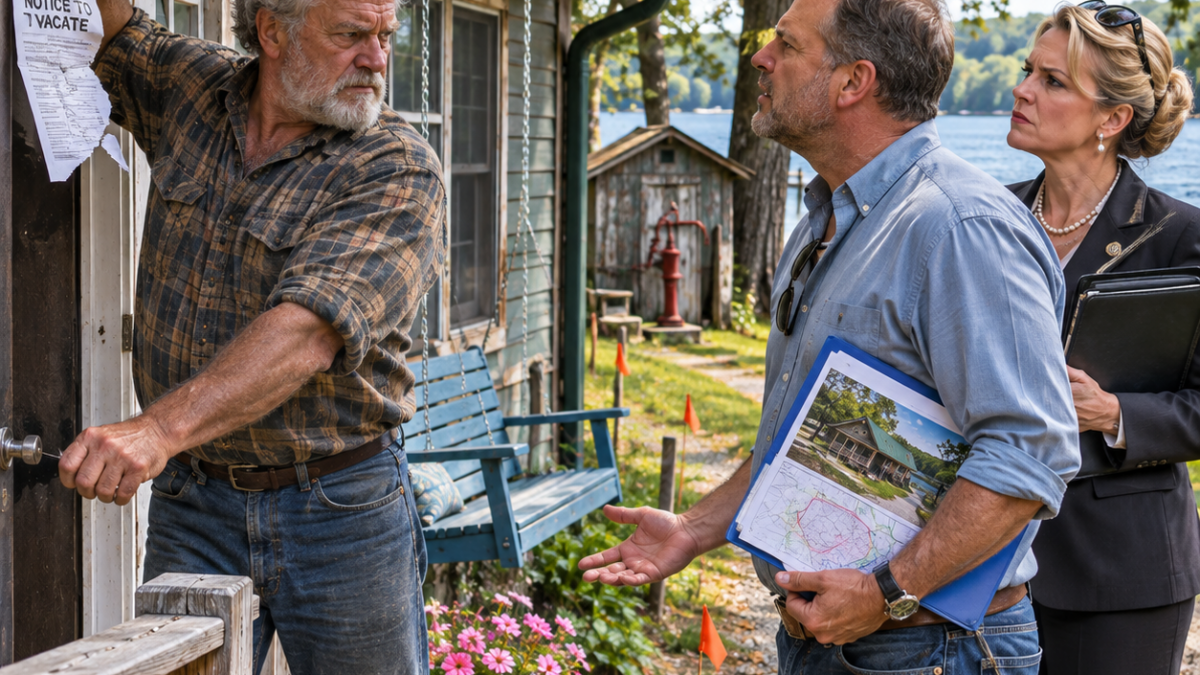
HOA President Offered Me $20,000 for My Inherited Lake—Then I Found the $240,000 Oil Proposal She Hid From Me.
The HOA president sat at my kitchen table telling me my late father’s sixty-four-acre lake was an expensive burden worth only $20,000, while a report her own association had secretly commissioned showed there might be something valuable beneath the water she was so desperate to buy.
She had already frightened me with nearly $48,000 in supposed repair costs, told my neighbors I wanted to dump the property, and quietly removed the underground study from the packet I was given before asking me to sign away every oil, gas, and mineral right my father had spent decades protecting.
Then I found a second document dated before her offer—a proposal involving twelve times the money she had put on my table—and suddenly the question was no longer whether I could afford to keep Dad’s lake, but how far Diane Foster had gone to make sure I never understood what I actually owned.
The HOA’s $20,000 offer was lying on my kitchen table when I opened the report they had tried to hide from me.
My father’s lake was outlined in red on page seven.
All sixty-four acres.
Thirty-eight acres of water.
The strip of woods along the far bank.
The old gravel access lane.
The fishing shed Dad had built from rough cedar boards in 1983.
The earth dam on the southern edge.
And the crooked dock where he had taught my daughter Paige to bait a hook when she was seven years old.
Across from me, Diane Foster stopped tapping her pen.
She had been doing it for almost five minutes.
Tap.
Tap.
Tap.
The sound had begun to irritate me.
Now it stopped.
Her eyes dropped from my face to the document in front of me.
“Where did you get that?”
That was the first honest thing Diane had said all morning.
Not because the question itself was remarkable.
Because she looked afraid of the answer.
I placed one hand flat across the report.
“From the company you paid to write it.”
Diane leaned forward.
Not far.
Enough that I noticed.
“May I see that?”
“No.”
Her eyebrows lifted.
“Owen.”
“You brought your own copy?”
“No.”
“Then you don’t need mine.”
She sat back.
For the previous week, Diane Foster had described my inheritance using one word more than any other.
Burden.
The lake was a burden.
The dam was a burden.
The taxes were a burden.
The access lane was a burden.
The shore maintenance was a burden.
PART2:
Even the fishing shed, which my father had kept standing with more stubbornness than carpentry skill, had somehow become part of the burden.
Now the same woman who had spent seven days explaining why I should be grateful to receive $20,000 for sixty-four acres suddenly seemed very interested in a thirty-two-page geological report she had never mentioned.
“That report doesn’t prove there’s oil,” she said.
I looked down at the title again.
PRELIMINARY OIL AND GAS POTENTIAL REVIEW.
“No.”
I turned one page.
“It doesn’t.”
“Then you understand why it wasn’t relevant.”
“If it wasn’t relevant, why did your board pay for it?”
She did not answer.
I turned another page.
“And why did your purchase offer ask me to transfer all oil, gas, and mineral rights?”
Her eyes moved toward the yellow folder beside her elbow.
The same yellow folder she had put on my porch eight days earlier.
I noticed that.
People look at the thing they wish they had control over.
The report was under my hand.
The offer was not.
So Diane looked at the offer.
I turned to the last page of the geological study.
Prepared for Cedar Point Homeowners Association.
Date.
Twelve days before Diane first came to my house asking to buy the property.
I said:
“You had this before you offered me twenty thousand dollars.”
She folded her hands.
“Owen, you’re misunderstanding what that document is.”
“Then explain it.”
“It’s preliminary.”
“I know.”
“It contains no guarantee.”
“I know.”
“There was no drilling.”
“I know.”
“There may be nothing economically recoverable beneath that lake.”
“I know.”
Every answer seemed to irritate her more.
Because I was not making the mistake she had apparently expected me to make.
I was not shouting:
I’m rich.
I was asking:
Why didn’t you tell me?
Those are very different questions.
I was sixty-three that spring.
Most of my working life had been spent repairing farm equipment.
Tractors.
Hydraulic pumps.
Hay balers.
Combines.
Old diesel engines that farmers kept alive five years longer than anybody who built them had intended.
Machines taught me something paperwork rarely does.
If a man tells you the engine is bad, ask him which part.
If he says the whole thing, he probably has not looked closely enough.
A bearing can fail.
A hose can split.
A seal can leak.
You diagnose before replacing.
But I was not a land lawyer.
I was not a geologist.
I did not know mineral law.
And seven weeks after burying my father, I was tired enough that a confident woman with a neat folder and a deadline nearly convinced me I needed to escape a problem I had not yet understood.
Dad’s name was Walter Ames.
He died at eighty-seven.
Not dramatically.
No accident.
No hospital scandal.
No final speech.
His heart simply got tired.
He had lived alone in the house beside the lake for almost twenty years after my mother died.
The house and the lake parcel were separate deeds.
Both came to me.
The house was easy to understand.
Three bedrooms.
Two baths.
Old roof.
New furnace.
A kitchen Mom had remodeled in 1998 and Dad had refused to change because, according to him, “the cabinets still open.”
The lake was different.
It had been part of my childhood so completely that I had never thought of it as property.
It was simply Dad’s lake.
We fished there.
Cut weeds.
Patched dock boards.
Burned brush.
Cleared the spillway.
Paige caught her first bass there.
My wife Ellen, before cancer took her nine years earlier, once dropped my father’s entire tackle tray off the dock and blamed the wind.
Dad blamed her for fifteen years.
The lake was family history with taxes attached.
Seven weeks after Dad died, Diane Foster drove up my gravel lane in a white Lexus and put a yellow folder on the porch railing.
She was fifty-eight.
HOA president of Cedar Point.
Always dressed as though she had somewhere more important to be afterward.
Pressed slacks.
Light sweater.
Good shoes.
Gold watch.
Hair cut exactly the same way every six weeks.
Cedar Point was the residential development bordering the northern and eastern edges of Dad’s lake.
Forty-two houses.
Mostly newer than his property.
Dad’s land predated the HOA.
That fact had annoyed more than one board over the years.
Residents used the lake only by Dad’s permission.
Fishing from the bank.
Occasional canoe.
Walking the shore.
He allowed it because he liked people.
Up to a point.
Diane had tested that point several times.
She opened the yellow folder on my porch.
“I know this is a difficult time, Owen.”
That was how she started.
People who are about to ask you for something often begin by discussing your grief.
I said:
“I’m getting through it.”
“I’m sure.”
She looked toward the water.
“Your father left you quite a responsibility.”
I said nothing.
She removed a document.
“We’d like to make things easier.”
“How?”
“The association is prepared to purchase the lake parcel.”
I looked at her.
“Purchase it?”
“Yes.”
“For what?”
“The lake and surrounding parcel.”
She slid the document toward me.
Purchase price:
$20,000.
I read it twice.
“For sixty-four acres?”
“Most of it is water.”
“Thirty-eight acres are water.”
“Exactly.”
“That leaves twenty-six acres that aren’t.”
“Much of that is wooded or shoreline.”
I looked at her.
She smiled sympathetically.
“Land underwater is not like buildable land, Owen.”
“I know.”
“The association would take over maintenance.”
“I didn’t ask anyone to.”
“No.”
She touched my arm lightly.
“We came to help.”
I disliked that sentence immediately.
Not enough to understand why.
She opened another page.
EXPECTED LAKE EXPENSES.
Brush clearing.
Access-lane repairs.
Dam inspection.
Tree work.
Insurance considerations.
Possible spillway reconstruction.
Total:
$47,600.
That number worked exactly the way numbers like that are designed to work.
It skipped over reasoning and went directly into fear.
I had just paid funeral expenses.
Estate expenses.
Property taxes were coming.
Dad’s truck needed repair.
The house roof would not last forever.
I did not have forty-seven thousand dollars sitting around for a lake.
“Who inspected the spillway?”
“It’s an early estimate.”
“By whom?”
“Our board has been gathering information.”
“That isn’t what I asked.”
Her smile tightened.
“Owen, these are planning figures.”
“So nobody inspected it?”
“I didn’t say that.”
“Who did?”
She closed the folder halfway.
“The point is that maintaining the parcel carries risk.”
That was the first moment I should have stopped trusting the conversation.
Instead, I kept reading.
At the bottom of the offer was a sentence.
Sale includes all oil, gas, mineral, subsurface, access, and appurtenant rights owned by seller.
I read it twice.
“Why does this mention oil?”
“Standard wording.”
“Standard for what?”
“Real estate.”
“You’ve bought lakes before?”
She exhaled.
“No.”
“Then how do you know it’s standard?”
“Our attorney prepared it.”
I looked at the deadline.
Friday.
Eight days.
“You need an answer by Friday?”
“The board has budget planning.”
“I haven’t even had the property appraised.”
“The offer accounts for that.”
“You don’t have an appraisal either.”
“We have information.”
That sentence bothered me later.
At the time, I missed it.
I kept the folder.
I did not sign.
Before Diane left, she pointed at the expiration date.
“We do need to know whether you’re serious.”
“I didn’t ask you to buy it.”
“No.”
She put on her sunglasses.
“But sometimes families inherit things they don’t realize are going to become expensive.”
Then she drove away.
I carried the folder inside.
Dad’s house was still half frozen in the week after his death.
Not temperature.
Memory.
His boots by the back door.
A chipped blue mug beside the sink.
Reading glasses on the table.
A flannel shirt hanging from a chair.
Every object felt like something I was not yet authorized to move.
I placed the HOA offer on his desk.
Then I read it three times.
The mineral-rights sentence kept pulling my eye back.
I knew enough to know surface ownership and mineral ownership could be separate.
Farmers talk.
Landowners talk.
Somebody owns ground.
Somebody else owns gas beneath it.
Royalties.
Old leases.
Reservations.
I did not know what Dad owned.
That uncertainty bothered me.
I called Diane.
“Why does the offer include mineral rights?”
“I told you. Standard language.”
“Do I own them?”
“How would I know?”
“You’re asking me to sell them.”
“You’re welcome to get advice.”
“Did the HOA?”
Pause.
“Our attorney reviewed the transaction.”
That was not the same question.
After hanging up, I called the lawyer handling Dad’s estate.
He told me determining mineral ownership would require a separate land-record review.
He could refer me to someone.
“It’ll cost money.”
“How much?”
“Depends how far back they need to go.”
I almost said forget it.
Then looked at the $20,000 offer.
“Send me the name.”
That evening, I opened Dad’s green metal property box.
If you had ever met my father, the box would have explained him.
Ugly.
Heavy.
Functional.
Handle pinched your fingers.
Inside:
tax receipts.
surveys.
old deeds.
insurance papers.
dam inspection notes.
receipts from lumber purchases dating back to years nobody should keep lumber receipts from.
A thick envelope labeled LAKE.
And a brown notebook.
Dad wrote everything down.
Water levels.
Rainfall.
Dock repairs.
Names of people allowed to fish.
One entry:
Ruth grandson borrowed pole. Returned.
Another:
Paige 3 bass, one good one, released all.
Another:
Diane asked about selling again. Told her no again.
Previous autumn.
I stopped.
Again.
Dad had never told me.
I read it twice.
Diane’s offer was not a new idea created because she worried I might struggle with an inheritance.
She had wanted the lake while Dad was alive.
Dad had refused.
Then Dad died.
Seven weeks later, Diane arrived with twenty thousand dollars and a forty-seven-thousand-dollar repair estimate.
That did not prove dishonesty.
But it changed the shape of the conversation.
Next morning, I called Russell Pike.
Russell had worked on farm ponds, drainage systems, culverts and small dams for decades.
Dad trusted him.
That meant something.
He met me at the southern spillway wearing rubber boots and a canvas jacket that smelled faintly like diesel fuel.
I showed him Diane’s expense page.
He read it.
Then walked the dam.
Slowly.
He used a shovel handle to probe one washed area.
Inspected brush.
Looked at the spillway.
Checked erosion.
Finally:
“I’m not an engineer.”
“I know.”
“So don’t tell anybody I gave you an engineering report.”
“I won’t.”
“I see maintenance.”
“What kind?”
“Brush.”
He pointed.
“Lane washout.”
Another point.
“Some vegetation on the downstream face I’d clear.”
“What about the spillway?”
“Needs a proper look eventually.”
“Forty-seven thousand?”
He laughed once.
“Maybe.”
“That’s helpful.”
“Could be more.”
“Less helpful.”
“Could be less.”
“What do I actually know?”
“You know nobody should give you a replacement number before deciding what needs replacing.”
That was language I understood.
Diagnose first.
Parts second.
“What do I owe you?”
He waved me off.
“No.”
“Russell.”
“One-eighty.”
“For walking around?”
“For thirty years learning what I’m looking at while walking around.”
Fair.
I paid him.
He wrote notes.
No immediate emergency.
Recommended maintenance.
Professional inspection later.
Nothing supporting panic.
On the walk back, I stopped at Dad’s dock.
Two benches.
One faced the lake.
One faced the path.
Dad built the second after his knees got bad.
He told me:
“Water gets boring if you stare long enough.”
I said:
“Then why own a lake?”
“So I can watch who’s coming to bother me.”
That was Dad.
I sat on the bench.
Looked at the water.
The lake needed work.
Diane had not invented that.
But work and burden are not the same word.
That distinction started becoming important.
Monday, Paige came to help sort paperwork.
She was thirty-one.
More practical than I am.
Her mother used to say Paige inherited my stubbornness and Ellen’s intelligence, which seemed unfair to me but accurate.
She found the HOA offer.
“Twenty thousand?”
“Yep.”
“For all of it?”
“Yep.”
“And you’re considering?”
“I’m checking.”
She looked at the Friday deadline.
Then at me.
“Dad.”
“What?”
“Don’t sell Grandpa’s lake because you’re tired this week.”
“I’m not.”
“You’ve looked at that deadline six times.”
“I need to answer.”
“No.”
“What?”
“They need an answer.”
She tapped the date.
“You don’t.”
I stared.
She was right.
Diane had chosen Friday.
I had begun treating it like law.
That afternoon, I emailed the HOA office.
Requested:
all inspection reports,
written estimates,
surveys,
studies,
and documents used to support the offer or valuation.
The office manager, Audrey, replied.
She would gather records “approved for release by the board.”
Approved for release.
Another phrase that bothered me.
Next afternoon, I received a PDF.
Fourteen pages.
Map.
Photographs.
Maintenance summary.
Offer.
No signed inspection.
No engineering report.
No document explaining the $47,600.
At the bottom of one map:
Base map supplied by Redstone Geo Services.
I assumed surveying.
Then saw a reference:
See attached subsurface review.
I turned the page.
Nothing.
Next page:
ATTACHMENT WITHHELD.
I called Audrey.
“What attachment?”
Pause.
“I was told that portion is confidential.”
“Does it concern my land?”
“I believe so.”
“Then why is it confidential from me?”
“I didn’t prepare the packet, Owen.”
Her voice tightened.
I realized I was directing anger at the wrong person.
“Sorry.”
“It’s okay.”
“No. It’s not your decision.”
“No.”
“Would you send my question to the board?”
“Yes.”
“What is the report?”
“I can’t tell you more than what’s on the file.”
Fair.
After hanging up, I searched Redstone Geo Services.
Not a landscaping company.
Not dam repair.
Geological consulting.
Subsurface mapping.
Oil and gas records.
Old wells.
Mineral assessments.
I sat back.
Oil.
There was the word from Diane’s “standard” purchase clause.
I called Redstone.
A receptionist transferred me to Scott Hayes.
Geologist.
I gave the reference number.
He asked:
“Are you the property owner?”
“Yes.”
“Were you provided the report?”
“No.”
Pause.
“I can’t release client work without authorization.”
“I understand.”
“But I can check distribution instructions.”
“What do you need?”
“Proof of current ownership.”
I sent estate documents and the map.
Then spent the afternoon in Dad’s shed trying to repair an old mower.
I removed the same bolt twice.
That is how distracted I was.
Around seven, Audrey emailed.
Board would not provide the missing attachment.
Reason:
It does not affect the association’s valuation of the surface property.
Surface property.
I printed that sentence.
Then pulled out Diane’s purchase offer.
All oil, gas, mineral and subsurface rights.
If underground rights had nothing to do with their valuation, why did they need them included?
I emailed that exact question.
Diane called.
Of course.
People avoiding paper trails prefer phones.
“You’re making a simple purchase very difficult.”
“I’m asking what you’re buying.”
“We’re buying the parcel.”
“And minerals.”
“If you own them.”
“Why?”
“It’s normal to avoid split ownership.”
“Did you order an oil study?”
Pause.
“A preliminary review.”
“Why hide it?”
“You would misunderstand it.”
That sentence made me angry.
Not the report.
The assumption.
“I can read.”
“Owen, that isn’t what I meant.”
“What did you mean?”
“People see the word oil and imagine a fortune.”
“I haven’t.”
“You’re calling contractors.”
“The contractor contacted my property.”
“If you keep interfering with the association’s due diligence, the board may withdraw the offer.”
There it was.
Threat disguised as leverage.
For a moment, it worked.
Twenty thousand dollars suddenly felt fragile.
What if I lost it?
What if Diane was right?
What if repairs really were fifty thousand?
What if the property had no practical value?
What if I was spending money I did not have just to discover Dad left me a liability?
Then I looked at the brown notebook.
Diane asked about selling again. Told her no again.
Dad had not panicked.
“I haven’t accepted anything.”
“No.”
“You can withdraw it.”
Silence.
Then:
“That would be unfortunate.”
“Maybe.”
I hung up.
Next morning, Scott Hayes called.
“I checked the distribution terms.”
“And?”
“The association commissioned an early review of underground records around your lake.”
“Oil?”
“Oil and gas potential.”
I gripped the desk.
“Does that mean there’s oil?”
“No.”
Immediate.
Firm.
“I want that clear.”
“Understood.”
“No drilling was done.”
“Okay.”
“We reviewed public and proprietary records, regional geology, nearby wells.”
“Okay.”
“The report identifies potential worth further investigation.”
“Potential.”
“Yes.”
“Not value.”
“Correct.”
“Can I get it?”
“Yes.”
I was not expecting that.
“Why?”
“Our distribution list provided a copy to the lake parcel owner once ownership was confirmed.”
“Who put that in?”
“Part of the work order.”
“Then why didn’t they give it to me?”
“You were not identified as the current owner when the project began.”
“What about now?”
“The client has confirmed your ownership.”
The PDF arrived.
Thirty-two pages.
I went directly to the map.
Dad’s lake.
Red outline.
Rock layers beneath.
Old well locations nearby.
A note pointing toward a formation described as potentially oil-bearing.
I understood maybe one word in four.
But the title required no geology degree.
PRELIMINARY OIL AND GAS POTENTIAL REVIEW.
Client:
CEDAR POINT HOMEOWNERS ASSOCIATION.
Date:
Twelve days before Diane’s offer.
I saved it twice.
Printed it.
Then found Appendix B.
Ownership chart.
Lake parcel.
Historical deed references.
One sentence:
MINERAL OWNERSHIP UNRESOLVED. PROPOSED BUYER SHOULD CONFIRM PRIOR TO ACQUISITION.
I sat there.
The HOA had not only studied what might lie beneath the lake.
Their own report had warned them to determine who owned it.
I looked at the twenty-thousand-dollar offer.
Now I had a second problem.
What did Dad actually own?
That afternoon, I called Helen Brooks.
Land attorney.
Direct.
Efficient.
The kind of person who could make “recorded instrument” sound like a weapon.
I emailed the offer and geological report.
“I need an answer before Friday.”
“Why?”
“The offer expires.”
“Have you signed?”
“No.”
“An option?”
“No.”
“Contract?”
“No.”
“Then Friday is their deadline.”
Pause.
“It does not have to be yours.”
Paige had said almost the same thing.
Sometimes you need to pay $325 an hour before advice feels official.
Helen asked for a $600 deposit.
I winced.
Paid it.
Then sent every deed I found.
One from 1978 covered the lake parcel.
Buried inside legal description:
One-half mineral interest reserved by prior owner.
I read it.
Half.
Maybe Dad owned only half.
Maybe I had paid a lawyer to discover I was chasing a theoretical oil deposit mostly owned by someone else.
I almost called Helen.
Then remembered Russell.
Diagnose.
Do not guess.
I sent the deed.
Then continued through Dad’s notebook.
Near the back:
Calvin Reed — papers finished. Keep receipt.
I searched the green box.
Nothing.
No Reed.
No receipt.
I sent Helen a photograph of the notebook entry.
Then went outside and cut brush along the spillway because brush made sense.
Two handles.
One blade.
Cut low.
Move branch.
Progress.
Halfway through, I saw Ruth Mercer approaching with her grandson.
Ruth lived in Cedar Point.
Dad had let her grandson fish Sundays.
The boy held a tackle box Dad had repaired with blue nylon cord.
Ruth stopped.
“We can leave.”
“Why?”
“I wasn’t sure the arrangement continued.”
“Fish.”
The boy smiled.
“Stay clear of the spillway.”
“Okay.”
Ruth hesitated.
“Are you selling?”
“I haven’t decided to sell anything.”
“Oh.”
Not relief.
Confusion.
“What were you told?”
She glanced toward her grandson.
“At the budget meeting, Diane said the HOA was buying the lake so residents wouldn’t lose access.”
I stood.
“She said I wanted to sell?”
“She said you didn’t want the maintenance.”
Sap dried on my fingers.
“Did she mention a geological report?”
“What geological report?”
There it was.
Diane had one story for me.
Burden.
Costs.
Risk.
Another for residents.
Access.
Community protection.
And apparently no story for anyone about oil.
That afternoon, I emailed Audrey.
Did the full board receive the thirty-two-page Redstone report?
No answer.
Then the phone rang.
Glenn Mercer.
HOA treasurer.
No relation to Ruth.
“I got your question from Audrey.”
“Okay.”
“What thirty-two-page report?”
I sat down.
“The geological study.”
“What geological study?”
“Redstone.”
Silence.
“We approved Redstone.”
“For what?”
“Diane said property review before acquisition.”
“Did she tell you oil and gas?”
More silence.
Then paper moving.
“I need to call you back.”
Twenty minutes later:
“Owen.”
“Yeah?”
“The invoice says lake acquisition review.”
“You have the report?”
“No.”
“Did you get a summary?”
“Maintenance and purchase cost.”
“Anything about mineral potential?”
“No.”
I said:
“I’m not forwarding the report without checking whether I’m allowed.”
“Fair.”
“I’ll ask Redstone to send the board’s copy directly.”
“Please.”
That conversation mattered.
I was angry enough to want to dump everything online.
But anger makes people sloppy.
I did not need sloppy.
I needed facts.
Next morning, Redstone confirmed Glenn was a board officer and sent him the association’s copy.
Then Helen called.
“I found Calvin Reed.”
I sat on Dad’s back step.
“And?”
“Your father purchased the reserved half mineral interest in 1996.”
I stopped breathing for a second.
“You found the deed?”
“Recorded mineral deed.”
“It isn’t in his box.”
“Doesn’t matter.”
She explained.
A recorded transfer does not disappear because Dad misplaced his copy.
The deed showed Walter Ames acquired the remaining half.
“I’m checking for later transfers or leases before saying final.”
“So maybe all of it.”
“It appears he reunified the mineral estate.”
I looked toward the lake.
Dad had done that almost thirty years earlier.
Never mentioned it.
Or maybe he had and I had been too busy.
Paige was a baby.
My repair shop had been one missed payment from closing.
Ellen and I had been exhausted.
Dad could have explained mineral deeds for an hour and I probably would have nodded while thinking about invoices.
He handled it.
Recorded it.
Wrote a line in a notebook.
Papers finished.
Keep receipt.
Dad believed paperwork mattered only if it prevented future trouble.
Turns out he was right.
I called Scott again.
“Fifteen minutes.”
“That’s what you get.”
“I’m not asking what the lake is worth.”
“Good.”
“I want to understand what your study says.”
He explained nearby well records.
Geological layers.
Potential continuity of an oil-bearing formation.
No guarantee.
No reserve estimate.
No economic model.
No drilling proposal.
No promise.
“Could there be oil?”
“Yes.”
“Could there be none?”
“Yes.”
“Could oil exist and still be unprofitable?”
“Absolutely.”
That was important.
I wrote every answer.
Then asked:
“Why did Cedar Point order this?”
“Request said it supported a proposed purchase.”
“Did they say I had agreed to sell?”
“They said they were negotiating with the owner.”
Generous.
Before hanging up, Scott said:
“One more thing.”
“What?”
“Our report recommended seller obtain independent advice if mineral rights were part of a transaction.”
I flipped pages.
Found it.
There.
The very document Diane kept from me said I should get advice.
Thursday evening, Glenn asked me to come to the HOA office.
Audrey was there.
Carol Benton, another board member.
Glenn had board minutes.
“The board authorized an offer up to twenty thousand.”
“I know.”
“Subject to property review and clear ownership.”
“Okay.”
“So Diane did have authority to make an offer.”
“Fine.”
I appreciated that.
Truth does not need every fact to help you.
Then Glenn showed me the summary presented to the board.
Expected upkeep.
Repair exposure.
No identified income potential sufficient to offset costs.
Carol read it.
Then looked at Scott’s report.
“These were the same week?”
“Yes.”
“Why didn’t we see this?”
Audrey had brought an email.
From Diane.
Instruction:
Remove underground review from owner packet. It will unnecessarily complicate a simple cash acquisition.
I read it twice.
Not misunderstood.
Not accidentally omitted.
Removed.
Carol looked sick.
Glenn angry.
Audrey nervous.
She worked under Diane.
That mattered.
I asked:
“May I have a copy?”
Glenn nodded.
“Yes.”
Then Audrey said:
“There’s another attachment in the correspondence.”
“What?”
“I’m waiting on permission from the sender.”
“What kind?”
“A proposal.”
“For?”
“Your property.”
Friday morning, Diane came to my kitchen with a pen.
Fresh copy of the offer.
She sat where she had sat the previous week.
Dad’s chair across from her was empty.
I had placed the geological report on the table.
Diane opened the offer.
“If you’ll initial here—”
I opened Redstone.
Her pen stopped.
“Where did you get that?”
“From the company you paid.”
Back to where I began.
She called it preliminary.
I agreed.
She said it proved no oil.
I agreed.
She said there was no guaranteed income.
I agreed.
Finally she snapped:
“Then what exactly is your issue?”
“You hid it.”
Her mouth closed.
“You asked me to sell rights discussed in this report.”
“We were negotiating.”
“Negotiation requires both sides knowing what’s being negotiated.”
“You could have hired an adviser.”
“I did after I found the missing attachment.”
She folded her hands.
“The offer remains twenty thousand.”
“I’m not accepting.”
Her face changed.
The helpful expression disappeared.
“You may regret that when the bills start.”
“Possibly.”
I looked toward Dad’s notebook.
“But they’ll be decisions I make with the information in front of me.”
She collected her pen.
Offer.
Bag.
Stood.
“You’re letting speculation cloud judgment.”
“No.”
“I’m refusing to let your deadline make it for me.”
She left.
My phone buzzed before her Lexus reached the road.
Email from Audrey.
Permission received.
Attachment:
CEDAR POINT LAKE MINERAL LEASE — PRELIMINARY TERMS.
I opened it.
Northfield Energy.
Proposed upfront lease payment:
$240,000.
I read the number three times.
Two hundred forty thousand dollars.
Twelve times the HOA’s purchase price.
Dated four days before Diane told me the lake could never pay for itself.
I called Paige.
“They had a proposal for two-forty.”
“From who?”
“Oil company.”
“For the lake?”
“For mineral lease.”
Silence.
Then:
“Read the whole thing.”
“I see the number.”
“Dad.”
I stopped.
“Read what comes after it.”
She was right again.
Conditions.
Title review.
Final terms.
Company approval.
No guarantee of drilling.
No guarantee of production.
No guarantee of royalty income.
Not a check.
Not a sale price.
Interest.
Potential.
Leverage.
And Diane had known.
I sent it to Helen.
She called immediately.
“Do not accuse Diane of pocketing $240,000.”
“I wasn’t—”
“You were thinking it.”
I was.
“Why not?”
“Because this is association correspondence.”
“So?”
“So an association could receive lease proceeds if it owned the rights.”
“Could Diane personally?”
“Nothing here says that.”
“She hid it.”
“Yes.”
“That’s enough?”
“That’s already serious.”
Helen had a gift for protecting me from my favorite bad ideas.
I called Northfield’s main office.
Not the number in the proposal.
Verified Andrew Ellis worked there.
He came on the line.
I gave proposal number.
“That concerns Cedar Point.”
“It concerns my lake.”
Pause.
“Your name?”
“Owen Ames.”
I explained inheritance.
No sale.
No option.
No contract.
Andrew became careful.
Very careful.
“Have you granted Cedar Point authority to negotiate mineral rights?”
“No.”
“Signed anything?”
“No.”
He asked for a written statement and Helen’s contact.
I sent both.
Then asked:
“Why were you negotiating with an HOA that didn’t own the minerals?”
“Preliminary terms can be discussed before acquisition closes.”
“Did they tell you I knew?”
“We were told the seller had been informed that mineral leasing was part of the plan.”
I looked at Diane’s empty chair.
“That was false.”
Andrew did not defend anyone.
He said Northfield would preserve communication.
No further discussions with Cedar Point unless ownership changed.
That helped.
It did not solve everything.
Glenn called.
He had seen the proposal.
“I never approved lease talks.”
“Who did?”
“Diane says she was exploring options to offset maintenance.”
“That would have been useful information before you offered twenty thousand.”
“I agree.”
I was not ready to make him feel better.
“You approved the offer.”
“Yes.”
“You sent me costs nobody verified.”
“Yes.”
“I nearly believed all of it.”
He was quiet.
Then:
“Bring everything Monday.”
“Where?”
“Clubhouse.”
“Why?”
“Board meeting.”
“What time?”
“Seven.”
Saturday morning, three messages woke me.
Are you putting an oil rig beside our homes?
Are they draining the lake?
Please call me before reading the neighborhood page.
That last was Ruth.
I called.
Diane had posted an HOA update.
Cedar Point had attempted to preserve community access to the lake.
Owner rejected assistance after learning of possible oil income.
Board concerned about industrial development near homes.
Map attached.
Red outline.
No geological uncertainty.
No mention of Northfield approaching the HOA first.
No mention that Diane had hidden the report.
No mention that I had approved nothing.
I was furious.
I opened the neighborhood page.
Started writing.
Diane Foster tried to steal my property for $20,000 so she could pocket $240,000—
Paige walked behind me.
Read it.
“Don’t post that.”
“She hid—”
“Do you know she was going to pocket anything?”
“No.”
“Then don’t say it.”
“She lied.”
“Say what you can prove.”
I deleted everything.
New statement.
I have not agreed to sell the lake.
I have not signed an oil lease.
I have not authorized drilling.
The HOA received a preliminary oil-and-gas review and a conditional mineral lease proposal before making its $20,000 offer to me.
Those documents were not included in the information provided to me.
I am reviewing the property and will make decisions after independent professional advice.
Dates included.
Nothing more.
I asked Audrey to distribute it through the same HOA mailing list Diane had used.
She called.
“Diane says no.”
“She used the list to discuss my property.”
“I know.”
“You don’t need to fight her for me.”
Silence.
“I would like the records to mean what they say.”
That sentence stayed with me.
Glenn approved distribution.
By Sunday afternoon, messages changed.
Less:
Are you drilling?
More:
Why didn’t the board know?
That mattered.
Ruth came with her grandson.
He stood holding the repaired tackle box.
“Are you putting a machine by the shed?”
“No.”
“Grandma says maybe.”
“Your grandma says nobody knows.”
He nodded.
“Correct.”
“We found information about rock underground.”
“Oil?”
“Maybe.”
“Are you gonna get rich?”
Ruth closed her eyes.
I laughed.
“No idea.”
“Can we fish?”
“Yes.”
That answer was easier.
He ran toward the bank.
Ruth sat on Dad’s second bench.
“People are scared.”
“I know.”
“They bought houses expecting a lake.”
“I know.”
“Trucks and drilling sound different.”
“I know.”
“You should tell them that Monday.”
“I will.”
That conversation helped me.
I had been thinking of Cedar Point residents as people Diane manipulated.
They were.
But they were also homeowners protecting what they loved.
Fear does not become stupid just because somebody exploited it.
Sunday evening, Helen sent final ownership findings.
Dad owned the entire mineral interest when he died.
No later sale.
No active lease found.
Estate transferred it to me.
All of it.
I printed the letter.
Placed it beside the 1996 Reed deed.
Dad had done exactly what his notebook said.
Papers finished.
The review cost $925 total.
Russell cost $180.
I had spent $1,105 understanding an offer that was supposedly designed to “make things easy.”
Helen asked:
“Do you want to discuss litigation?”
“I want Diane exposed.”
“That is not a legal outcome.”
“I want the pressure stopped.”
“Better.”
“I want the record corrected.”
“Better.”
“I want them out of my property negotiations.”
“Good.”
She told me to write what I actually needed.
My list:
No sale.
No authority for HOA to negotiate mineral rights.
Full correction to residents.
Preservation of records.
Full disclosure to board.
That was shorter than the angry speech in my head.
Sunday night, I walked to the dock with Dad’s notebook.
For the first time all week, I stopped reading it like evidence.
I read it like Dad.
Paige caught three fish.
Dock hinge repaired.
Ruth grandson returned rod.
Water high after storm.
Bench loose.
Ordinary life.
Oil had turned the lake into numbers.
Twenty thousand.
Forty-seven thousand six hundred.
Two hundred forty thousand.
Dad’s notebook turned it back into a place.
That mattered.
I found another line below Calvin Reed.
Amount.
Check number.
Dad had even recorded what he paid for the mineral half.
He had made decisions I barely knew existed.
Monday morning, Andrew from Northfield sent written clarification.
$240,000 was a proposed upfront lease payment.
Not a lake purchase price.
Not guaranteed oil income.
Not evidence of a producing reserve.
Conditional.
No final agreement.
No Northfield authority to negotiate without the owner.
I printed it.
Then arranged the entire sequence.
Redstone report.
Northfield proposal.
HOA $20,000 offer.
Packet with attachment removed.
My written request.
Diane’s removal instruction.
Ownership findings.
Northfield clarification.
Dates.
I left Dad’s fishing photographs at home.
They explained emotion.
Not misconduct.
At 6:30, Paige drove me to the Cedar Point clubhouse.
The room was already almost full.
Ruth sat near the back.
Audrey at a side table with laptop.
Glenn and Carol at the front.
Diane stood beside a large photograph of the lake mounted on foam board.
Across the top:
PROTECTING CEDAR POINT.
I almost laughed.
Instead, I sat.
Folder on my knees.
Paige leaned over.
“You don’t have to win every argument.”
“I know.”
“Just finish the important ones.”
At seven, Glenn opened.
Diane insisted on speaking first.
She described maintenance costs.
Public access.
Potential liability.
Possible development risks.
Some of it was reasonable.
That made the dishonesty worse.
A dishonest argument is easiest to spot when everything is false.
Diane’s contained enough truth to sound responsible.
She said:
“We attempted to secure a community asset before speculative private profit changed this neighborhood forever.”
I raised my hand.
Glenn nodded.
“The oil report does not guarantee anything.”
Diane looked surprised.
“No.”
I continued.
“It does not guarantee oil.”
“No.”
“It does not guarantee a profitable well.”
“No.”
“It does not guarantee two hundred forty thousand dollars.”
Residents murmured.
Diane stiffened.
I stood.
“I’m not here to claim I own a fortune.”
Silence.
“I’m here because the HOA told me the lake had no meaningful income potential while someone representing the HOA was already discussing a $240,000 mineral lease proposal tied to acquiring my rights.”
Carol held Andrew’s clarification.
Diane said:
“That proposal was conditional.”
“I know.”
“Then stop presenting it as money.”
“I’m not.”
I held up the paper.
“I brought the conditions.”
Glenn asked:
“Why wasn’t this proposal given to the board before we approved the purchase offer?”
Diane looked at him.
“I intended to present it once ownership was secured.”
“With whose authority?”
“I was exploring opportunities.”
“Using association funds?”
“For the association’s benefit.”
I opened the email.
Audrey displayed it on the projector.
Remove underground review from owner packet. It will unnecessarily complicate a simple cash acquisition.
The room went quiet.
Diane looked toward Audrey.
Then me.
“You were free to hire an adviser.”
“I did.”
“Exactly.”
“After I found out the packet was incomplete.”
Diane turned toward the residents.
“If every preliminary idea has to be disclosed before negotiation, the association can never get a favorable price.”
That sentence changed the room.
Not dramatically.
People leaned.
Glenn said:
“Favorable to whom?”
“To the association.”
“At the seller’s expense?”
“That is what negotiation is.”
Carol spoke.
“Not when the board approving the offer is also missing the information.”
Diane looked at her.
“The proposal was not final.”
“Neither was your repair estimate.”
I said it quietly.
Everybody heard.
“You gave me that.”
Someone in the back:
“That’s true.”
Glenn lifted the maintenance summary.
“No identified income potential sufficient to offset expected upkeep.”
Then lifted Northfield proposal.
“These existed at the same time.”
Diane said:
“Potential is not income.”
Glenn nodded.
“Then the summary should have said potential was uncertain.”
Carol added:
“Not that there was none.”
For the first time, Diane had to answer both audiences at once.
The seller.
The board.
The residents.
Different stories collapse when everybody enters the same room.
She turned toward Audrey.
“I asked for a simple packet.”
Audrey’s face went pale.
“I never told anyone to destroy records.”
I saw what she was doing.
Before Audrey had to defend herself, I spoke.
“No records were destroyed.”
Diane looked at me.
“They were withheld.”
I pointed at the screen.
“Your instruction is there.”
Audrey looked at me.
Small nod.
Diane pushed back her chair.
“I will not sit here and be accused of stealing.”
“No one said you stole money.”
That surprised her.
I continued.
“No property changed hands.”
“Exactly.”
“Because I stopped and asked questions.”
I placed the unsigned purchase offer on the table.
“The lake is not for sale to Cedar Point.”
Audrey began typing.
“I want that in the minutes.”
Glenn said:
“It will be.”
“The association has no authority to negotiate leases involving my mineral rights.”
“Understood.”
“I want a correction sent to everyone who received the notice implying I had decided to pursue oil development.”
Glenn nodded.
“I want Redstone’s report, Northfield’s proposal and all related correspondence preserved.”
Carol:
“Yes.”
“That’s all.”
I sat.
Paige whispered:
“That was shorter than I expected.”
“I’m tired.”
Then residents began asking questions.
If HOA bought the lake, who paid dam costs?
All owners through association.
Had board reviewed environmental risk?
No.
Had board reviewed Northfield terms?
No.
Had board approved Diane talking to Northfield?
No.
Would oil development damage water?
Unknown.
Could I drill tomorrow?
No.
Had I signed anything?
No.
One man stood.
“I don’t care about the HOA politics.”
Fair.
“I care if trucks start going behind my house.”
Also fair.
I stood again.
“One minute.”
Glenn nodded.
“I have not signed an oil lease.”
The man watched.
“I have not approved drilling.”
A woman asked:
“Are you going to?”
“I don’t know.”
Honest answer.
That made people uncomfortable.
But honest uncertainty is better than a comforting lie.
“I’m reviewing what the property is and what I own.”
I looked around.
“The report suggests something worth studying.”
“Not a guaranteed well.”
“Not guaranteed money.”
“And if I ever consider a proposal, water, access, roads and neighborhood impact will be part of what I review.”
Ruth nodded.
I continued.
“My daughter learned to fish there.”
“Your kids use that shore because my father let them.”
“I am not forgetting the lake because somebody put a big number on a page.”
The tension lowered.
Not gone.
Lower.
The board recessed.
Paige handed me water.
“You finished the important ones.”
“Almost.”
When they reconvened, votes came.
End the HOA purchase attempt.
Passed.
Withdraw Diane’s neighborhood notice.
Passed.
Remove Diane as HOA president under the board’s authority.
Passed.
Her board seat would go to membership vote later.
Diane stared straight ahead.
Then said:
“You are throwing away an opportunity.”
Glenn gathered his papers.
“We are stopping a transaction we did not have the facts to approve.”
Nobody cheered.
I was glad.
The room divided into small conversations.
Several people apologized for messages.
I accepted.
One man still worried about drilling.
“So do I.”
We shook hands.
Two days later, every Cedar Point homeowner received a correction.
I printed mine.
It stated:
I had never agreed to sell.
The HOA had received an oil-and-gas review before offering to purchase.
A preliminary lease proposal had also existed.
Neither had been provided to me with the original purchase packet.
I had authorized no drilling.
I put the correction in my folder.
Then removed the folder from the kitchen table.
For the first time in almost two weeks, I ate dinner without moving evidence out of the way.
That should have felt like victory.
Mostly it felt quiet.
Quiet can be harder than conflict.
When emails stopped, I still owned a lake.
Actual problems remained.
Lane erosion.
Brush.
Taxes.
Dock repairs.
Dam.
I called Russell.
“Want to walk it again?”
“You selling?”
“No.”
“Then sure.”
This time, I carried no HOA estimate.
We measured.
Marked.
Photographed.
He recommended a licensed engineer for the dam.
I hired one.
Cost money.
Real inspection.
Real measurements.
Conclusion:
Routine maintenance.
Some erosion control.
Vegetation removal.
Periodic monitoring.
No evidence supporting immediate full spillway reconstruction.
Not free.
Manageable.
Paige helped build an annual budget.
I could perform some work.
Save for others.
The lake was work.
But possible.
Helen asked whether I wanted reimbursement demand for the $1,105 I spent investigating.
I thought.
Russell’s inspection was useful.
Helen’s mineral review was useful.
Those costs existed because Diane pushed me, yes.
But the knowledge remained mine.
“I want the record corrected.”
“It is.”
“I want pressure stopped.”
“It is.”
“Then no lawsuit.”
“That is your decision.”
She sent one final letter.
No sale.
No option.
No HOA authority.
No mineral rights conveyed.
Glenn acknowledged in writing.
Three weeks later, members voted Diane off the board entirely.
The association’s attorney reviewed the file.
No evidence Diane personally received Northfield money.
No completed lease.
No payment.
That mattered.
I had nearly accused her of pocketing money.
I would have been wrong.
The truth was bad enough.
She concealed material information to push a purchase at a price I might otherwise reject.
The new board adopted disclosure rules.
Full reports to all directors.
Income opportunities tied to acquisitions must be disclosed before votes.
Major property purchases required independent valuation.
Audrey kept her job.
Glenn called to tell me.
“I thought you’d want to know.”
“I do.”
She deserved that.
A week later, Northfield contacted Helen.
Andrew wanted to know whether I would discuss a lease directly.
Same approximate payment possible.
Subject to title.
Terms.
Company review.
I could have said no immediately.
Part of me wanted to.
To prove this had never been about oil.
Then I realized that would still be letting Diane influence my decisions.
I did not owe Diane a refusal.
I did not owe Northfield a yes.
I owed myself information.
So I met them.
Paige came.
Andrew brought maps.
No tricks.
He explained.
Possible road access.
Testing.
Environmental requirements.
Lease term.
Assignment.
Surface-use protections.
Water monitoring.
What happened if no drilling ever occurred.
What happened if company sold the lease.
What could be negotiated.
What could not.
I asked questions I would not have known to ask two weeks earlier.
At the end, Andrew did not slide a pen across the table.
He said:
“Take it home.”
That alone made it feel different.
I did.
Read.
Helen explained sections.
I walked the shoreline.
Looked at the gravel lane as equipment access instead of Dad’s old truck path.
Looked toward Ruth’s fishing spot.
The dock.
The woods.
Twenty-four decades? No, don’t overstate.
A $240,000 upfront payment is a lot of money.
More than Dad ever made in several years combined.
Enough to fix the house.
Replace my truck.
Put money aside for Paige.
Make lake maintenance trivial for a while.
But money does not answer every question.
Eventually, I declined.
Not because oil was evil.
Not because Northfield was dishonest.
Because I did not want to tie the mineral rights up under those terms while a company decided what it might do.
I could afford the lake without the lease.
That mattered.
Andrew thanked me.
Closed the proposal.
No rig appeared.
No check arrived.
No sudden fortune.
That ending disappointed people when they later heard the story.
They wanted:
HOA offered $20,000, man discovered $10 million in oil.
That did not happen.
Real property stories are rarely that clean.
I did not become rich.
I kept the right to decide.
That was what Diane had almost taken.
Not oil.
Choice.
Near the end of summer, I was replacing a dock board when Diane came down the path.
She stopped ten feet away.
At least she had learned that much.
“I heard you turned Northfield down.”
“I did.”
She shook her head.
“After everything you put us through.”
I set the drill down.
“Everything I put you through?”
“The association could have used that income.”
“Then you could have brought me an honest proposal.”
“We were trying to secure the property first.”
“For twenty thousand.”
“It was a legal offer.”
“I never said it wasn’t.”
“You could have accepted.”
“I could have.”
She looked across the lake.
“Your father was difficult about this place too.”
I picked up the old board.
“He said no when he meant no.”
Diane left.
No apology.
I had once imagined I needed one.
By then, I did not.
Apologies are useful.
But documentation is better when someone refuses.
In September, I opened Dad’s brown notebook.
New page.
Dam inspection date.
Brush cleared.
Lane gravel added.
Dock boards replaced.
Location of recorded mineral deeds.
Helen’s letter.
Engineer’s report.
Paige stood in the kitchen doorway.
“You’re becoming Grandpa.”
“That is an insult.”
“It is absolutely not.”
She walked over.
Read the page.
“Write good things too.”
“What?”
“All you have is work.”
“That’s what the notebook’s for.”
“No.”
She flipped backward.
“Grandpa wrote my fish.”
I looked.
Paige 3 bass, one good one.
She smiled.
“See?”
So I added:
Sunday — Ruth’s grandson caught a bass from west bank. Released.
Next line:
Paige brought sandwiches. Ate on dock.
Then:
Good afternoon on water.
That became the last sentence that day.
The dock still leans.
Fishing shed needs paint.
Taxes still come.
Brush grows whether anyone feels sentimental.
The lake does not care that my father loved it.
Ownership is maintenance.
Dad knew that.
Diane was right about one thing.
The lake was responsibility.
Where she went wrong was assuming responsibility meant burden.
Or maybe pretending it did because she needed me frightened enough to sell.
There is a difference between being warned and being pressured.
There is a difference between negotiation and concealment.
There is a difference between uncertainty and ignorance deliberately maintained.
I nearly learned those differences twenty thousand dollars too late.
Sometimes I sit on Dad’s second bench.
The one facing the path.
For years, I thought he put it there because his knees hurt.
Maybe that was all.
Maybe not.
From that bench, you see people coming before they reach you.
Dad valued that.
I do too now.
The first time Diane came with her yellow folder, I had been looking at the water.
I did not see what was coming.
By the end, I had learned to look both directions.
At what was visible.
And what was hidden beneath it.
That lesson applies to land.
Machines.
People.
Offers.
A cracked hose tells you something.
So does a missing attachment.
A deadline tells you something.
So does a sentence about “standard” mineral rights in a supposedly simple lake purchase.
The clue does not always prove wrongdoing.
It tells you where to look next.
That was all I did.
I looked.
Asked.
Paid for advice.
Waited when people wanted speed.
Refused to replace somebody else’s exaggeration with my own.
And eventually, all the stories Diane had told had to exist in one room at the same time.
The lake was worthless.
The lake needed protection.
The lake could not support itself.
The HOA needed mineral rights.
The oil study did not matter.
The mineral lease proposal somehow mattered enough to pursue.
Those contradictions did more than anger ever could.
I still keep the original $20,000 offer.
Not framed.
Not displayed.
Inside the green metal box that pinches your fingers.
Dad’s box.
Beside the mineral deed.
Redstone report.
Northfield proposal.
HOA correction.
Engineer’s report.
I added a label.
LAKE — CURRENT.
Paige laughed.
“Very creative.”
“Your grandfather used ‘lake.’”
“Runs in the family.”
Maybe it does.
One afternoon last month, Ruth’s grandson—older now, taller—caught another fish.
He carried it toward me in a wet landing net.
“Mr. Ames!”
“What?”
“Look.”
Bass.
Decent one.
Paige happened to be there.
She took a photograph.
The boy lowered the fish.
It disappeared beneath the water.
Ripples spread.
Gone.
He asked:
“Is there really oil under there?”
I looked across the lake.
“Maybe.”
“Will you ever know?”
“Maybe.”
“Doesn’t that bother you?”
I thought.
“No.”
He looked confused.
“Why?”
“Because I know who gets to decide what happens next.”
That answer satisfied me more than any dollar figure ever did.
The HOA offered me $20,000 for my father’s lake.
They had a report they did not want me to see.
They had a preliminary $240,000 lease proposal they had not told their own board enough about.
They had repair estimates that looked frightening until somebody qualified actually inspected the property.
They had a deadline.
A story.
A plan.
What they did not have was my signature.
That was the only thing that ultimately mattered.
Dad left me sixty-four acres.
Thirty-eight under water.
An old shed.
A leaning dock.
A dam that needs watching.
A gravel lane that washes out in heavy rain.
Trees.
Brush.
Fish.
Paperwork.
Mineral rights he quietly bought back in 1996.
And one lesson I wish he had written more clearly in the notebook.
Maybe he thought I should already know.
If somebody is rushing you to give up something they insist is worthless, stop asking why you should sell.
Start asking why they want to buy.
Then read everything they hoped you would never see.








