HOA Karen Turned My Cattle Auction Yard Into VIP Parking—So I Sent All 90 Buyers Into Her Gala and Exposed the Deal Behind It
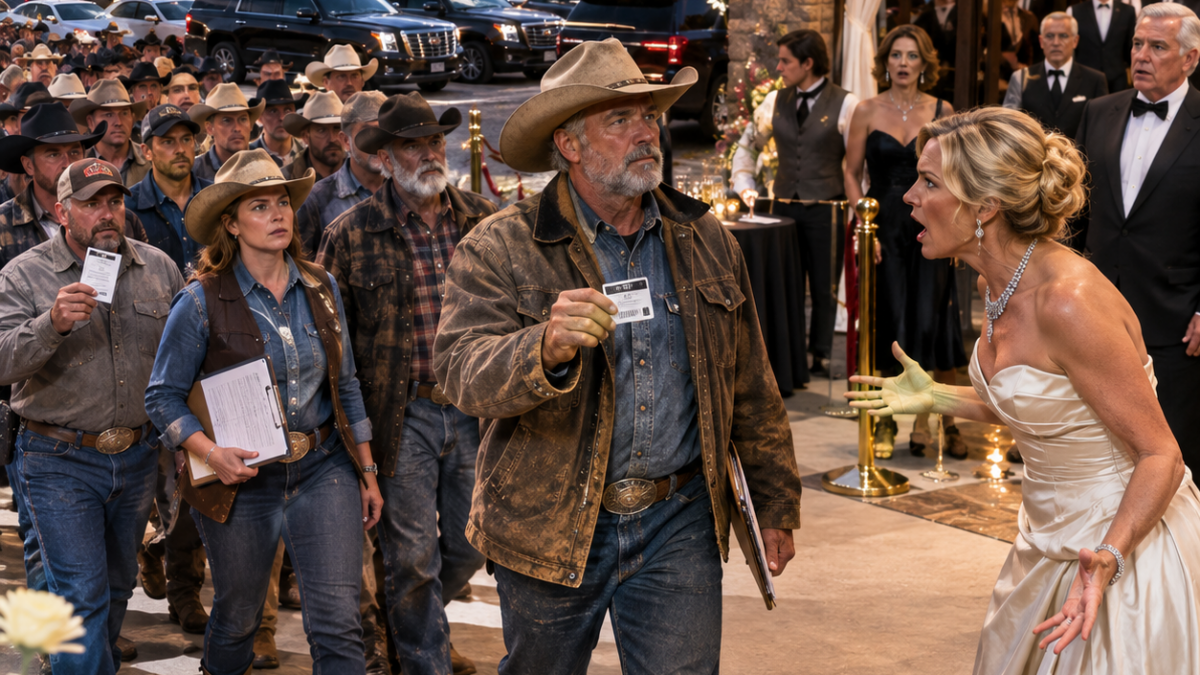
HOA Karen Turned My Cattle Auction Yard Into VIP Parking—So I Sent All 90 Buyers Into Her Gala and Exposed the Deal Behind It
By six o’clock, 163 luxury cars were parked across Silas Merritt’s livestock lanes, thirty-seven ranch families had more than $2 million in cattle trapped behind valet fencing, and HOA president Tessa Brackett stood at his gate in a white gala dress telling him his sixteen-year-old auction business was canceled for the night.
Tessa laughed when Silas warned her that ninety registered cattle buyers were waiting to spend money, because she had already decided those buyers would disappear down the highway before anyone discovered she had used their company names to make her real-estate project look legitimate.
Instead, Silas opened the gala’s own public registration page, sent all ninety buyers straight through Tessa’s front door as lawful “agricultural partners,” and by the time her donors realized the men in dusty boots were the very businesses she had falsely claimed supported her development, the parking theft was no longer the biggest secret in the room.
At twenty minutes to six on a Saturday evening, Silas Merritt turned onto Red Creek Road and knew something was wrong before he reached his gate.
The traffic was too clean.
That was the first thing.
Red Creek Livestock Exchange had operated in Bryer County, Wyoming, for sixteen years, and sale nights had a recognizable kind of disorder.
Stock trailers.
Mud.
Diesel smoke.
Pickup trucks with ranch names lettered across the doors.
Drivers leaning out of windows.
Men waving one another backward.
Cattle shifting inside trailers.
The occasional impatient horn from somebody who should have known better than to hurry livestock.
Silas understood that traffic.
He could hear it from his office and tell whether unloading was going well.
This traffic was different.
Black SUVs.
Pearl-white sedans.
Low sports cars that had never seen a gravel ranch road willingly.
They were lined up in polished rows beneath temporary floodlights.
Valets in dark trousers and pressed vests moved between them with radios.
A woman in a silver dress stepped out of an SUV and handed over her keys without looking at the ground.
Behind her came a couple in formal evening wear.
Then another.
Then another.
Silas slowed his truck.
For several seconds, he honestly wondered whether he had turned onto the wrong road.
Then he saw the sign stretched across his front gate.
JUNIPER CREST HERITAGE GALA
Beneath it:
EXCLUSIVE VIP PARKING
Silas stopped in the road.
PART2:
He was fifty-one years old and had spent most of his life around cattle markets.
His father had bought and sold feeder calves.
His grandfather had hauled livestock before air-conditioned cabs existed.
Silas knew what panic felt like.
A loose bull.
A trailer jackknifing.
A gate giving way.
An animal down in a crowded pen.
This was not panic.
This was disbelief.
The auction yard belonged to him.
Not Juniper Crest.
Not the county.
Not an event company.
Not some developer.
Him.
He pulled onto the shoulder because his own driveway was blocked by a valet stand.
Then he got out.
The first thing he saw inside was a Bentley parked sideways across the scale lane.
The second was a row of SUVs blocking the wide turnaround where semi trailers needed room to swing before backing into the loading chutes.
The third was temporary decorative fencing.
Placed directly across a livestock lane that had to remain clear during every sale.
Silas walked toward the nearest parking worker.
Young man.
Maybe twenty-four.
Clipboard.
Radio.
Already sweating through his collar.
“Who’s in charge?”
PART3:
The man looked at him.
“Parking?”
“Yes.”
“I am on this section.”
“Who authorized you to put cars here?”
The manager glanced at the gate.
“We have the approved traffic plan.”
“Show me.”
The young man clearly expected Silas to be a difficult guest.
He opened the clipboard and pulled out a laminated map.
County approval seal.
Traffic arrows.
Temporary signage.
Detours along the public road.
On the map, Red Creek Livestock Exchange was shaded blue.
AUXILIARY EVENT PARKING
Silas stared.
“Where did you get this?”
“Event organizers.”
“Who told you this property was available?”
“I don’t know, sir.”
“I never approved this.”
The manager’s expression changed.
“You’re with the venue?”
“I own it.”
Silence.
Then a voice behind him.
“Your auction is canceled, Mr. Merritt.”
Silas turned.
Tessa Brackett walked toward him from the gravel path leading uphill toward Juniper Crest.
White evening gown.
Gold earrings.
Hair pinned perfectly.
Two private security guards flanking her.
The Juniper Crest HOA sat above Red Creek on a hill overlooking the valley.
The neighborhood was the kind developers advertised with phrases like western elegance and heritage living.
Stone entrance pillars.
Decorative fencing.
Large houses.
Private streets.
Landscaping that required more irrigation than some ranches used for cattle water.
Tessa had been president for almost five years.
She had built her influence carefully.
First through committees.
Then budgets.
Then event planning.
Then development advocacy.
By the time Silas paid much attention, people inside Juniper Crest talked about her less like a board president and more like a mayor.
She seemed to like that.
Silas did not.
But until that evening, their conflicts had been mostly irritating.
Noise complaints about truck brakes.
Complaints about dust.
One letter about the “visual impact” of livestock trailers.
A suggestion that Red Creek stop early on weekends.
Silas had answered politely.
The exchange had been operating lawfully long before Juniper Crest expanded toward it.
He had assumed that would be the end.
Apparently Tessa had assumed something else.
She stopped ten feet away.
“You should have received notice.”
“I received nothing.”
“The county approved our event circulation plan.”
Silas held up the paper.
“This approves traffic on the county road.”
“And auxiliary parking.”
“On my land?”
“The yard is being used temporarily.”
“By who?”
“The association.”
“Why?”
“We’re hosting donors, investors, and regional partners.”
“That is not an answer.”
She smiled.
“We needed overflow capacity.”
“Then rent a field.”
“Your yard is already paved and lit.”
Silas looked at her.
“You understand that does not make it yours.”
Tessa’s smile tightened.
“The auction will have to move to tomorrow.”
Silas almost laughed.
“You think cattle auctions work like brunch reservations?”
“Your animals can wait one night.”
Silas looked past her.
At the lanes.
At the parked cars.
At the temporary fences.
Then back.
“There are fourteen livestock trucks still trying to get into this yard.”
“They are being redirected.”
“To where?”
“The county shoulder temporarily.”
Silas took one step closer.
“You have 163 cars parked across my scale lane, loading chutes, and turnaround.”
“Your people should have coordinated.”
“With who?”
“Our event team.”
“No one asked us.”
Tessa shrugged.
“We have permits.”
“You have a road-traffic permit.”
“We have everything we need.”
Silas pointed toward his barns.
“Inside those barns are 382 head of breeding cattle belonging to thirty-seven ranch families.”
Tessa said nothing.
“Ninety registered buyers are supposed to start bidding in less than half an hour.”
Still nothing.
“Those trucks need these lanes.”
She looked at the parking rows.
Then at him.
“Your cattle can wait one night.”
Her voice turned almost amused.
“Our guests cannot.”
That was when Silas understood.
Not mistake.
Not poor planning.
Choice.
She knew.
And she had decided a working cattle market mattered less than one evening of wealthy donors.
He kept his voice level.
“Clear one lane.”
“No.”
“One lane from the county road to the chutes.”
“We cannot disrupt the VIP experience.”
Silas looked at the security guards.
Tessa did too.
“Do not allow livestock trucks into the VIP section.”
One guard hesitated.
Silas looked at him.
“You’re standing on my property.”
The guard glanced at Tessa.
She answered for him.
“This area is under event control tonight.”
Silas said:
“No, it isn’t.”
Then he heard his name.
“Silas!”
Mabel Sutter came hurrying from the sale barn.
Sixty-three.
Gray hair twisted up badly.
Reading glasses on top of her head.
Buyer cards clutched against her chest.
She had managed Red Creek’s operations for more than eleven years.
Nothing surprised Mabel.
Cattle broke gates.
Buyers missed flights.
Computers froze.
Weather destroyed schedules.
Once an auctioneer lost his voice halfway through a bred-cow sale and Mabel found a substitute in fourteen minutes.
Silas had never seen her look rattled.
She looked rattled now.
“Three semis are stacked on the county road.”
“I know.”
“Two more are coming.”
“I know.”
“The sellers are getting ugly.”
“I know.”
“We’ve got twenty minutes.”
Silas looked at the clock above the barn door.
5:40.
Twenty minutes until the opening bell.
He followed Mabel toward the office.
Behind them, the Juniper Crest gala pavilion glowed on the hill.
White tents.
String lights.
Music drifting faintly down the slope.
Silas stopped halfway.
A second line beneath the parking banner caught his eye.
Smaller gold letters.
VIP AGRICULTURAL PARTNER RECEPTION
He read it twice.
Mabel noticed.
“What?”
Silas looked from the words to the buyer cards in her hands.
“How many registered tonight?”
“Ninety.”
“All checked in?”
“Eighty-three physically. Seven remote.”
“Full company information?”
“You know we do.”
“Print the full roster.”
Mabel frowned.
“Why?”
“Just do it.”
At six o’clock, the opening bell rang.
The sound echoed through a sale barn that should have been alive.
Usually the first few lots came through quickly.
Auctioneer warming up.
Buyers settling.
Ranchers leaning against rails.
Tonight, the auctioneer stood behind his podium with nothing entering the ring.
The loading lanes were blocked.
Silas took the microphone.
“Ladies and gentlemen, we are pausing the opening while we resolve a transport-access problem.”
The room erupted.
Not shouting at first.
Questions.
Then voices rising.
A rancher named Earl Matson had hauled cows almost 230 miles.
“You telling me I’m hauling them home?”
“No.”
“Then how are we selling?”
“I’m working on it.”
Another rancher said:
“I’ve got a note due Monday.”
A third:
“My driver’s hours are almost gone.”
Silas knew.
Every animal in those pens represented more than cattle.
Feed.
Fuel.
Breeding decisions.
Veterinary bills.
Land payments.
Family labor.
Thirty-seven ranchers had planned their cash flow around that sale.
Some had already borrowed against it.
At the back of the ring, Bo Hensley caught Silas by the elbow.
Bo was one of the largest order buyers in the region.
He represented feedlots and ranches across Wyoming, Montana, and Nebraska.
Fifty-eight.
Large man.
Quiet voice.
When Bo spoke softly, people listened harder.
“How long?”
“I don’t know.”
“That’s bad.”
“I know.”
“If this sale goes down tonight, some buyers will go to Rock Springs next month.”
“I know.”
“Some won’t come back.”
Silas looked toward the empty ring.
“I know.”
Bo studied him.
“You have a plan?”
“Working on one.”
“That means no.”
“For now.”
Bo nodded.
“I’ll give you an hour.”
Then he walked away.
Silas went into the yard.
Mabel had discovered the valets had dragged portable fencing across the primary truck lane.
A driver named Cal Ames stood beside his rig, face red.
“I’m moving that fence.”
“No.”
“I have cattle sitting in this trailer.”
“I know.”
“I’m not leaving them on the road because some rich people need cocktails.”
“I know.”
Cal grabbed one panel.
Silas caught his shoulder.
“Don’t.”
“Silas—”
“If you move it and somebody gets hurt, we become the story.”
Cal looked toward the luxury cars.
“This is your property.”
“Yes.”
“Then why are we standing here?”
“Because a loaded cattle trailer and a Mercedes are a bad way to settle a property dispute.”
Cal breathed hard.
Then let go.
Silas made three decisions.
First:
All livestock already unloaded stayed in secure pens.
Water checked.
Hay.
No unnecessary movement.
Second:
Every rancher documented arrival time, trucking charges, extra feed, driver delay, and every additional cost caused by the blockage.
Third:
Mabel started calling other licensed facilities.
Not announcing anything.
Just finding options.
Silas called Tessa.
She answered immediately.
“Have you reconsidered being reasonable?”
“I need one truck lane.”
“No.”
“One lane.”
“No.”
“Clear the scale and chute access.”
“The gala ends at eleven.”
“The sale started at six.”
Tessa sighed.
“Silas, the association is willing to compensate you.”
“How?”
“Two thousand dollars.”
He thought he misheard.
“For what?”
“To remain closed until morning.”
Silas looked through the office window at 382 cattle.
“Two thousand.”
“Yes.”
“You cannot rent a business you have already shut down.”
“This doesn’t need to become ugly.”
“It became ugly when you put cars on private land.”
“None of your buyers care about this squabble.”
Silas said nothing.
“They’ll be halfway home before the gala ends.”
That line stayed.
Tessa laughed softly.
“Take the money.”
Silas hung up.
He turned.
“Mabel.”
She was at the printer.
“Full registration file?”
She handed it over.
Ninety names.
Companies.
Phone numbers.
Buyer credentials.
Silas opened the gala website.
Public page.
Schedule.
Awards.
Sponsors.
Reception.
Then he found it.
AGRICULTURAL PARTNERS — WELCOME
Below:
REGISTERED LIVESTOCK BUYERS INVITED
Open registration.
Still active.
He stared.
Tessa had built the door herself.
Mabel leaned over.
“No.”
Silas smiled.
“Yes.”
“What are you thinking?”
“Nothing illegal.”
“That sentence worries me.”
Silas clicked registration.
Valid.
Name.
Business.
Buyer credential.
Confirmation.
Mabel said:
“You want to register our buyers for her party?”
“I want to give them a choice.”
“All ninety?”
“She thinks they don’t care.”
Mabel started laughing.
Not because it was funny.
Because she suddenly understood.
Silas gathered buyers and ranchers in the sale office.
Burnt coffee.
Diesel smell.
Dust.
People angry enough to turn any suggestion into an argument.
Silas stood at the counter.
“I am not asking anybody here to pick a fight.”
Bo folded his arms.
“That’s an interesting opening.”
Silas continued.
“The gala advertises a public agricultural partner reception.”
He held up the page.
“Registered livestock buyers invited.”
Someone laughed.
Another:
“You want us to crash her fundraiser?”
“No.”
“Sounds like it.”
“You register lawfully.”
He pointed.
“You go as invited agricultural guests.”
“What for?”
“To meet the woman who decided your auction didn’t matter.”
Several people started talking.
Silas raised a hand.
“No signs.”
“No shouting.”
“No touching cars.”
“No confrontation.”
“You carry your buyer registration and your business records.”
“If someone asks why you’re there, you tell the truth.”
Bo stared at him.
“You want us to go drink champagne instead of buy cattle?”
Silas met his eyes.
“I want you to meet the woman who decided you weren’t coming here tonight.”
The room quieted.
A younger buyer said:
“What does that accomplish?”
“Maybe nothing.”
Silas did not oversell it.
“If you want to leave, leave.”
“No hard feelings.”
“If you have another market to get to, go.”
“But if a private association can cancel a working sale without asking the landowner, I think everybody losing money deserves to hear the explanation directly.”
Mabel confirmed the portal.
Open.
Legitimate.
No false identities.
No hidden access.
By 7:05, ninety confirmations had landed.
Every registered buyer.
Some because they were angry.
Some curious.
Some because Bo Hensley registered and nobody wanted to miss what came next.
Silas sent Tessa one text.
My buyers are coming to your gala.
Her answer:
They are not on my VIP list.
Silas looked at the confirmation screen.
Typed:
They are now.
Up on the hill, the Juniper Crest pavilion looked like a different world.
White linen.
Silver candlesticks.
String quartet.
Waiters with trays.
Real-estate executives.
Donors.
Local officials.
Investors.
A giant screen cycled through renderings of future development.
REGIONAL GROWTH
RURAL HERITAGE
NEW INVESTMENT
Agriculture appeared everywhere.
Decorative hay bales.
Framed photographs of ranches.
Old branding irons mounted artistically on wood.
A staged saddle near the reception area.
Tessa’s event celebrated western heritage with almost no working ranchers present.
Then ninety of them began walking up the hill.
Not all ranchers.
Buyers.
Order representatives.
Feedlot agents.
Cattle-company owners.
Men and women who spent their professional lives putting actual prices on actual livestock.
Boots.
Jeans.
Western shirts.
Work jackets.
Some changed shirts.
Most did not.
Silas joined them from a legal staging area near the public road.
His commercial attorney, Elliot Rourke, arrived from town carrying a leather folder.
“You sure about this?”
Silas showed him the gala registration page.
Elliot read.
Then:
“That is a very badly designed invitation if they don’t want cattle buyers.”
“Exactly.”
At check-in, confirmations scanned clean.
One.
Two.
Ten.
Twenty.
The hostess maintained her smile through approximately fifteen.
By thirty, concern.
By fifty, quiet conversations into headsets.
By ninety, the event coordinator looked as though she had discovered the concept of agricultural commerce personally.
The reception area labeled AGRICULTURAL PARTNERS had been designed for decoration.
A few cocktail tables.
Hay bales.
Framed cattle photos.
No one had expected ninety legitimate cattle buyers.
Tessa saw Silas.
Her face changed.
She crossed the ballroom quickly.
“Cancel these registrations.”
The event manager looked at the tablet.
“They’re valid.”
“I said cancel them.”
“The agricultural reception was publicly open to registered buyers.”
“I control the event.”
“We are administering ticketing under the published terms.”
“Then close the agricultural reception.”
“There are already confirmed attendees inside.”
Tessa stared at Silas.
He said nothing.
She turned to him.
“Private room.”
Elliot followed.
“No.”
Tessa looked at him.
“Who are you?”
“Elliot Rourke. Counsel for Red Creek.”
That made the sweetness return.
“Wonderful.”
Inside a meeting room, Tessa shut the door.
Her smile disappeared.
“Twenty-five thousand.”
Silas leaned back.
“For?”
“You take your people and leave.”
“My people?”
“The buyers.”
“They registered.”
“You know exactly what you’re doing.”
“I do.”
“You’re disrupting a charitable event.”
“You parked 163 cars on my auction yard.”
“I have a permit.”
Elliot said:
“Show me.”
Tessa slapped the traffic plan onto the table.
Elliot read.
Turned the page.
Then again.
He passed it to Silas.
Silas already knew.
Elliot said:
“This regulates traffic flow on public roads.”
Tessa’s jaw tightened.
“It includes auxiliary parking.”
“It identifies auxiliary parking.”
“It does not grant access to private property.”
“The county approved the map.”
“The county approving road circulation does not mean the county gave away Mr. Merritt’s land.”
Tessa looked at Silas.
“Twenty-five thousand.”
“No.”
“Fifty.”
“No.”
“You’re making a mistake.”
Silas asked:
“Who told the traffic planners I agreed?”
Silence.
“Name.”
Tessa checked her phone.
“You should focus on saving your auction.”
“I am.”
He stood.
Outside, something else was happening.
Lydia Cross, Juniper Crest’s vice president, had been monitoring the agricultural guests.
Lydia was not close to Tessa.
Not anymore.
For months, she had been uneasy about the president’s expanding control.
But she still believed most of the problem was personality.
Too aggressive.
Too secretive.
Too certain.
Not corruption.
Then she saw a slide.
AGRICULTURAL MARKET SUPPORT
Logos.
Company names.
Commercial numbers.
Projected cattle purchases.
Lydia called Tessa from the hallway.
“Why does the presentation say these buyers support our plan?”
Tessa said:
“Not now.”
“I’m asking you.”
“They’re regional partners.”
“Have they agreed?”
“Keep the board out of this tonight.”
The call ended.
Lydia stared at the screen.
Then walked toward the agricultural reception.
Silas returned to the main hall.
The presentation shifted.
REGIONAL AGRICULTURAL PARTNERS
He scanned logos.
One company name stopped him.
Hensley Livestock Purchasing.
Bo’s company.
Silas knew Bo had never partnered with Juniper Crest.
Another.
Prairie Star Feeders.
Another.
North Range Cattle.
Names he knew.
Businesses from Red Creek’s own buyer network.
Silas picked up a sponsor packet.
Flipped pages.
Then stopped.
A table.
PROJECTED COMMERCIAL COMMITMENTS
Company.
Annual cattle purchases.
Regional buying volume.
Numbers.
It was written carefully.
Not always explicitly saying “signed commitment.”
But arranged to make donors believe these firms had aligned with Juniper Crest’s development.
Silas felt something colder than anger.
He called Bo.
Bo read the packet.
His face reddened.
“They used my company?”
“Yes.”
“I’ve never talked to these people.”
“I know.”
“Where did they get my numbers?”
“That’s what I want to know.”
Mabel arrived with her laptop.
She compared the names against Red Creek’s registration data.
Overlap.
Too strong.
Several figures resembled commercial information previously shared for a regional agricultural fair.
Not secret data exactly.
But intended for another purpose.
Silas looked toward Tessa.
Now he understood her confidence.
The gala and the auction were scheduled simultaneously.
The buyers whose names appeared in the packet were supposed to be down the hill bidding on cattle.
None would be at the gala to object.
Their absence looked like consent.
Their companies gave the project credibility.
Rural legitimacy.
Tessa could tell donors:
Agriculture supports us.
And no real agricultural buyer would be in the room to say:
No, we don’t.
Silas did not storm the stage.
That would have been emotionally satisfying and strategically stupid.
He asked each buyer to locate his or her company.
Then confirm in writing:
Had the company authorized Juniper Crest to use its name?
Had it endorsed the project?
Had it authorized the stated commercial figures?
Had it committed future purchases?
Had it agreed to sponsorship?
Elliot drafted a simple statement.
Mabel printed copies.
People signed voluntarily.
One.
Ten.
Thirty.
Sixty.
Ninety.
None had authorized the claims.
Across the ballroom, Tessa noticed.
Pens.
Papers.
Buyers clustered.
She understood before anyone told her.
She waved over the master of ceremonies.
“Move the sponsorship announcement.”
“What?”
“Now.”
“It’s scheduled after—”
“Now.”
Stage staff scrambled.
The printed program told Silas why.
A major donation pledge depended on the perception of broad regional support.
Tessa wanted the announcement completed before the room turned.
Lights dimmed.
She walked onto the stage.
White dress glowing beneath the spotlight.
Voice warm.
Practiced.
She welcomed donors.
Praised Juniper Crest.
Praised Bryer County’s heritage.
Then:
“Our vision has earned the support of livestock-buying partners throughout this entire region.”
Applause.
Ninety buyers sat below her.
Silas looked at Bo.
One nod.
Bo stood.
Hat in one hand.
His voice did not need a microphone.
“Ma’am.”
Tessa paused.
“My name is Bo Hensley.”
Silas watched recognition flicker across her face.
Bo continued.
“My company is listed in your sponsor packet.”
Tessa smiled.
“We’re delighted to have you.”
Bo held up the booklet.
“When exactly did my company agree to support this project?”
Silence.
Real silence.
The kind where silverware stops.
Tessa said:
“We appreciate the agricultural community’s participation.”
“That isn’t what I asked.”
“Mr. Hensley, we’ll be happy to discuss—”
A second buyer stood.
“Prairie Star Feeders.”
A third.
“North Range.”
Then another.
One after another.
No shouting.
No insult.
Just:
“I never approved this.”
“My company did not authorize these figures.”
“We came to buy cattle.”
“We were not consulted.”
“I have no agreement with Juniper Crest.”
Quiet voices destroyed the presentation faster than anger could have.
Silas walked to the public Q&A microphone.
“My name is Silas Merritt.”
Tessa’s face tightened.
“I own Red Creek Livestock Exchange.”
He turned so the room could see him.
“For sixteen years, Red Creek has operated down the hill from this neighborhood.”
He held up photographs.
“Tonight, 163 vehicles from this gala are parked across my private livestock transport lanes.”
Another document.
“Three hundred eighty-two head of cattle belonging to thirty-seven ranch families are waiting behind those cars.”
Another.
“Ninety registered buyers came to Bryer County tonight to attend that auction.”
He looked toward the buyers.
“They are sitting in this room.”
No one applauded.
That helped.
It made the moment serious.
Silas held up the traffic plan.
“This is the permit your event organizer gave me.”
Elliot had marked the relevant sections.
“It controls traffic on public roads.”
“It does not authorize Juniper Crest to use Red Creek property.”
Tessa reached for the podium microphone.
“This man is attempting to sabotage a charitable event because of a parking misunderstanding.”
Bo lifted his buyer card.
“We came to buy cattle.”
Then the sponsor packet.
“She used our names to sell a story.”
Guests began reading.
Not glancing now.
Reading.
Russell Baird stood from a front donor table.
Representative of West Row Development.
His firm was underwriting a significant portion of the evening.
Russell was careful.
Professional.
Exactly the kind of man who hated surprises involving money.
He asked:
“How was the auction yard approved for use?”
Tessa answered:
“Administrative coordination.”
“With the landowner?”
“Yes.”
Silas said:
“No.”
Russell looked at her.
Tessa said:
“It was understood.”
Silas:
“No.”
The lead sponsor’s representative stood next.
“Until this is clarified, I think the donation announcement should be suspended.”
That changed the energy completely.
Tessa’s hands tightened around the podium.
Then a stage technician, nervous and apparently unaware he should stop, clicked the next slide.
The giant screen changed.
Silas froze.
It was Red Creek.
Or what used to be Red Creek.
Architectural rendering.
Same parcel shape.
Same road.
Same barn footprint.
But his auction yard was gone.
In its place:
Boutique storefronts.
Landscape plaza.
Rooftop restaurant.
Parking structure.
Commercial buildings tied aesthetically to Juniper Crest.
Silas stared.
His sale barn erased.
Pens erased.
Loading chutes erased.
The land he owned presented publicly as somebody else’s future.
The room began murmuring.
Silas did not look at Tessa.
He looked at the rendering.
For the first time, he understood the parking lot was not the real story.
It was rehearsal.
Russell approached him afterward.
“Can we speak privately?”
Elliot came too.
Inside a side lounge, Russell closed the door.
“I want to be clear.”
“Please.”
“West Row does not own your property.”
“I know.”
“We have no purchase agreement.”
“I know.”
“No option.”
“No.”
“No right of first refusal.”
“Correct.”
Russell opened his briefcase.
“We were given a development proposal.”
He laid out a copy he was authorized to share.
Commercial district.
Juniper Crest expansion.
Land assembly.
Red Creek parcel included.
Silas read.
Then reached the financial assumptions.
Projected Red Creek revenue decline.
One failed auction.
Then a second.
Buyer migration.
Cash-flow stress.
Reduced sale volume.
Potential acquisition at depressed valuation.
Silas read the page again.
Elliot leaned closer.
“Where did this forecast come from?”
Russell shook his head.
“Provided as part of the proposal.”
Silas looked up.
“They planned failed auctions.”
Russell did not answer directly.
“The materials described Red Creek as likely to close.”
“Based on what?”
“Projected operational disruption.”
Silas stared at the words.
Tonight was not bad parking.
Tonight was the first disruption.
Tessa had blocked the sale.
If buyers left angry, Red Creek lost trust.
Another disruption later.
Maybe another.
Eventually the business weakened.
Then an offer.
Low enough to look insulting today.
Maybe lifesaving later.
Russell continued.
“There is something else.”
He looked uncomfortable.
“West Row was introduced to a consulting company associated with Ms. Brackett.”
Elliot asked:
“What role?”
“Development facilitation.”
“Compensation?”
“Success-based.”
Silas leaned back.
“How substantial?”
“Enough that it should have been disclosed if the HOA was acting on behalf of homeowners.”
Lydia Cross stood in the doorway.
She had heard the last part.
Her face went pale.
“Our homeowners?”
Russell looked at her.
“The proposal presented the HOA as the local coordinating partner.”
Lydia stepped inside.
“Did the board approve this?”
“I can’t answer that.”
She looked toward Silas.
Then Elliot.
Then the paper.
The personal stake changed everything.
Tessa was not only pushing a development vision.
She stood to benefit financially if the land assembly succeeded.
And Red Creek was the biggest obstacle.
Lydia turned toward the door.
Tessa appeared there.
“What are you doing?”
Lydia held up the proposal.
“You tell me.”
“This is confidential.”
“Why?”
“It’s preliminary.”
“Did the board approve using Red Creek in a land plan?”
“We discussed growth.”
“Did the board approve a consulting deal tied to you?”
Tessa’s face hardened.
“Not here.”
“Did we?”
“Lydia.”
“Did we?”
Tessa ignored her.
Looked at Silas.
“This is exactly why business negotiations are not handled in public.”
Silas stared at her.
“You weren’t trying to borrow my parking lot.”
No answer.
“You were trying to make me sell the whole place.”
For several seconds, the room held.
Then Tessa smiled again.
Not warm.
Not embarrassed.
Cold.
“You still don’t have an auction tonight.”
The words hit.
Because she was right.
Exposing a scheme did not sell one cow.
Thirty-seven ranch families remained unpaid.
Three hundred eighty-two cattle remained in pens.
Ninety buyers could still leave.
Silas’s phone rang.
Mabel.
He answered.
“Tell me.”
Her voice came fast.
“Fairgrounds called back.”
Silas stood straighter.
“And?”
“Bryer County Fairgrounds can host a licensed additional sale tomorrow morning.”
He closed his eyes.
“Conditions?”
“A lot.”
“Good.”
“Good?”
“Means they’re serious.”
Mabel listed them.
Licensed facility operator.
State livestock market approval.
Inspection.
Transport plan.
Holding capacity.
Staff.
Paperwork.
Drivers.
Timing.
Remote bidding options.
Silas looked at Tessa.
“Keep going.”
When the call ended, he walked out onto the pavilion terrace.
Cold Wyoming air.
Lights below.
His own yard still full of luxury cars.
He called Deirdre Malloy.
State livestock market inspector.
She answered.
“Silas.”
“I need a favor.”
“No.”
“You don’t know what it is.”
“If it involves moving an auction overnight, no.”
He smiled despite himself.
“It involves moving an auction overnight.”
Silence.
Then:
“Tell me.”
He did.
Deirdre asked practical questions.
Holding conditions.
Animal water.
Truck hours.
Facility licensing.
Staffing.
Biosecurity.
She did not care about Tessa.
Good.
Silas did not want cattle welfare mixed with revenge.
“If one animal gets hurt because you rush this,” she said, “I shut the move down.”
“You should.”
“Send the plan.”
“Mabel’s building it.”
“Nothing moves until I approve.”
“Understood.”
Elliot prepared formal demand letters.
Stop occupying Red Creek.
Clear private property.
Preserve records.
If necessary, seek emergency relief.
Silas returned to the auction yard.
He found the valet manager near the key stand.
The young man looked miserable.
“I didn’t know.”
“I believe you.”
“We were given the map.”
“I know.”
“What do you want?”
“Clear the yard.”
“We can’t move 163 cars without guest authorization.”
“Then start contacting guests.”
“Tessa told us not to.”
Silas handed him proof of ownership.
Elliot’s formal demand.
Photographs showing operational livestock lanes.
Then said:
“If one driver gets confused and backs a loaded trailer into a car, whose insurer gets the first call?”
The manager looked at the documents.
Then toward the hill.
Silas added:
“I’m not asking you to create chaos.”
“I want a safe corridor.”
“Owners collect vehicles.”
“No livestock truck moves while cars are pulling out.”
“You coordinate.”
“We coordinate.”
The manager called his supervisor.
The answer changed once insurance risk entered the conversation.
The valet company would not continue parking cars on disputed private land after the owner objected.
Release began.
Groups.
Radio coordination.
Guest messages.
Please collect your vehicle at the front circle.
At the pavilion, phones started buzzing.
Guests stood.
One table.
Then another.
Tessa saw the notification.
She came outside.
White gown gathered in both hands.
“Stop moving those vehicles.”
The manager shook his head.
“We have ownership documentation.”
“You work for us.”
“We cannot knowingly continue occupying disputed private property.”
“I am instructing you—”
“Our insurer instructed us to clear.”
That ended it.
Insurance outranked Tessa.
Guests started leaving.
The gala thinned.
The night she had protected at the expense of Red Creek began collapsing because of the parking lot itself.
Silas did not stay to watch.
Back at the sale office, Mabel had made fresh coffee.
She handed him a cup.
“What’s happening up there?”
“Donors are collecting cars.”
“Good.”
“No time.”
She slid a yellow pad toward him.
“Fairgrounds operator wants final numbers.”
They worked.
Pens.
382 cattle.
Truck sequence.
Drivers.
Rest periods.
Inspection times.
Extra feed.
Water.
Insurance.
Staff overtime.
Auctioneer.
Buyer registration transfer.
Remote bidding.
Seller consent.
Silas’s reserve account.
Every line mattered.
He refused to turn the rescue of his business into another irresponsible act.
At 10:15, the last major block of VIP vehicles cleared the main transport lane.
Silas could have resumed part of the auction.
He chose not to.
Too late.
Too disrupted.
Drivers exhausted.
Buyers scattered between hill and yard.
Animals stressed from delay.
A rushed night sale would create more risk.
Instead, he called all ninety buyers back to the agricultural reception area.
The gala had largely emptied.
Formal tables abandoned.
Decorative hay bales still there.
String quartet gone.
Waiters clearing glasses.
Ninety cattle buyers sat on folding chairs.
Tessa stood near the back.
Arms crossed.
Silas stepped forward.
“I have a sale option.”
People quieted.
“Tomorrow morning.”
Groans.
Questions.
He raised a hand.
“Bryer County Fairgrounds.”
“Licensed facility.”
“Deirdre Malloy’s office is reviewing transport and inspection.”
“Mabel will explain cattle handling.”
“Red Creek will use reserve funds to cover as much extra trucking as we reasonably can.”
“We will disclose every added cost.”
“No seller is forced to move cattle.”
“No buyer is required to participate.”
“Remote bidding will be available.”
Bo asked:
“Why didn’t you tell us two hours ago?”
Silas answered immediately.
“Because I didn’t have a safe place to sell cattle two hours ago.”
Bo watched him.
Silas continued.
“I wasn’t going to promise a sale until I knew we could hold one legally and safely.”
That answer mattered.
Bo nodded.
Then stood.
“Hensley’s in.”
One buyer after another.
Some staying overnight.
Some remote.
Some changing travel plans.
Some calling offices back home.
By the end, all ninety had a way to participate.
Not promises to buy.
Participation.
That was enough to keep the market alive.
Then Lydia entered with two Juniper Crest board members.
Documents in hand.
She stood before the buyers.
“We reviewed tonight’s records.”
Tessa moved forward.
“Lydia.”
Lydia ignored her.
“The Juniper Crest board formally voted before this event not to use Red Creek Livestock Exchange as overflow parking because no land-use agreement existed.”
The room changed.
Silas looked at Tessa.
She had not only ignored him.
She had ignored her own board.
Lydia continued.
“The event proceeded anyway.”
Tessa said:
“Emergency logistics required adjustment.”
“No.”
Lydia held up minutes.
“The vote was clear.”
Then:
“We also identified event-service contracts connected to a private company tied to Ms. Brackett.”
Murmurs.
Lydia raised a hand.
“We are not declaring wrongdoing tonight.”
That was important.
“Those contracts will be reviewed by counsel and the appropriate processes.”
“But effective immediately, the board is suspending Ms. Brackett’s unilateral event authority pending review.”
Tessa exploded.
“You cannot do that.”
The board member beside Lydia said:
“We just did.”
Tessa turned on Silas.
“This is what you wanted.”
“No.”
“You brought ninety people into my event to humiliate me.”
Silas picked up the folder.
Placed it on the table.
Buyer registrations.
Time-stamped photos.
163 cars.
Traffic plan.
Signed statements.
Sponsor packet.
Alternative sale plan.
Voluntary buyer confirmations.
He looked at her.
“You counted on ninety buyers walking away.”
Then:
“Instead, ninety buyers walked into your gala.”
Russell Baird stood near the doorway.
“West Row Development is suspending all negotiations connected to this project until property ownership, HOA authority, and representations of agricultural support are verified.”
The lead sponsor representative followed.
“Our pledged support is suspended pending review.”
That was the real collapse.
Trust.
Money.
Tessa’s plan needed both.
No one in that room declared her guilty of fraud.
No one needed to.
The proposal had lost momentum.
Her donors were leaving.
Her development partner stepped back.
Her own board had suspended her authority.
And the auction she wanted dead had a licensed venue for the morning.
Mabel’s phone rang.
She answered.
Then smiled.
“Fairgrounds final confirmation.”
Silas turned to the buyers.
“Ladies and gentlemen.”
Everyone looked.
“Tomorrow morning, we’re selling cattle.”
Applause.
Not wild.
Not vengeful.
Relieved.
That meant more.
Over by the stage, the screen still displayed the architectural rendering.
Red Creek erased.
Tessa stood beneath it.
Alone.
At 4:30 the next morning, trucks began moving.
No one had slept enough.
Drivers checked loads.
Cattle inspected.
Paperwork matched.
Mabel carried three clipboards and threatened anyone who touched the wrong one.
Deirdre Malloy met the first convoy at the fairgrounds.
She examined facilities before accepting animals.
Water.
Pens.
Gates.
Handling.
Records.
She looked at Silas.
“You cut one corner and I shut you down.”
“I know.”
“You look terrible.”
“So do you.”
“I’m not the one who got his auction turned into valet parking.”
“Fair.”
She almost smiled.
The cattle came in.
382 head.
One load at a time.
No rushing.
No injury.
By eight-thirty, buyers began registering.
Silas stood beside Mabel.
Every empty chair in the stands tightened his stomach.
Then Bo Hensley walked in.
Hat.
Coffee.
Buyer number.
“Morning.”
“You came.”
“I said I would.”
Others followed.
Some in person.
Others logged into remote bidding.
All ninety participated one way or another.
The opening lots were soft.
That frightened the ranchers.
Travel stress.
Venue change.
Uncertainty.
A few prices came in below expectations.
Earl Matson leaned toward Silas.
“This is what she cost us.”
“Wait.”
“For what?”
“The cattle.”
Silas watched.
Top breeding heifers entered.
Bo opened.
Another buyer countered.
Then another.
Numbers climbed.
The auctioneer found rhythm.
The ring woke up.
By late morning, Red Creek had sold roughly $2.26 million in cattle.
Not perfect.
Not free.
Extra trucking.
Facility rent.
Overtime.
Feed.
Administrative costs.
Some stress-related discounting.
Actual losses remained.
But the ranchers got checks.
Thirty-seven families went home with their sale proceeds.
The buyer network stayed intact.
Red Creek’s reputation survived.
That was the victory.
Not the gala.
Not Tessa’s embarrassment.
The sale.
In the weeks that followed, Elliot built Red Creek’s claims around documented losses.
Not outrage.
Receipts.
Truck invoices.
Facility costs.
Staff overtime.
Lost operational time.
Event interference.
Property use.
Restoration.
Silas refused to invent numbers.
“If we’re going after them,” he told Elliot, “we go after what happened.”
“Nothing more.”
“Exactly.”
Juniper Crest held an emergency meeting.
Homeowners learned their board had voted against using Red Creek.
They learned Tessa ignored the vote.
They learned a development proposal treated neighboring private land as if acquisition were inevitable.
They learned Tessa’s private company had potential financial interests in the deal.
They learned agricultural firms had been presented as supporters without authorization.
Some residents were furious at Silas.
At first.
Then Lydia displayed the minutes.
The event contracts.
The traffic documents.
The sponsor packet.
The anger shifted.
Following the association’s internal rules, homeowners voted Tessa out as president.
Any questions involving her private transactions and potential personal liability remained subject to proper legal and financial review.
Silas did not demand Juniper Crest be dissolved.
People suggested it.
He refused.
“Why punish 104 households because one president overreached?”
“They elected her,” Bo said.
“So?”
“They enabled her.”
“Some did.”
“You’re being generous.”
“No.”
Silas looked toward the hill.
“I’m being accurate.”
That distinction mattered.
Most Juniper Crest residents had not parked cars at Red Creek.
Most had not seen the development proposal.
Many did not know the board had rejected the parking plan.
Some were guilty of trusting Tessa too easily.
That was not the same as being responsible for every decision she made.
Silas wanted his land restored.
Losses addressed.
Rules clarified.
Then he did something nobody expected.
He approached the new HOA board.
Juniper Crest owned an undeveloped landscaped strip along the public road.
It had been planned as an arrival area for future neighborhood events.
Wide enough for vehicles.
Separate from private streets.
Silas made an offer.
Twelve-year lease.
Fair market rate.
Red Creek would build a registered buyer waiting area and turnaround.
Separate entrance.
Approved traffic plan.
No neighborhood access.
No cattle in residential streets.
Juniper Crest received steady lease income.
Red Creek gained overflow capacity it had needed for years.
Lydia stared at him.
“You want to lease land from us.”
“Yes.”
“After all this.”
“Yes.”
“Why?”
“Because the location works.”
She laughed.
“That’s it?”
“What do you want me to say?”
“I thought you hated us.”
“I hate bad contracts.”
Silas slid the proposal across the table.
“This is a good one.”
The board reviewed.
Lawyers.
Traffic engineers.
Insurance.
Public access.
Ingress.
Egress.
Eventually homeowners voted.
Approved.
As part of the broader resolution, Red Creek’s claims against the association could be settled within agreed limits once his actual losses and property issues were addressed.
Any private liability tied to Tessa remained separate.
That mattered.
Settlement with the HOA did not erase questions about decisions made for personal benefit.
Months later, the new lot opened.
A sign stood at the entrance.
RED CREEK LIVESTOCK EXCHANGE
Below:
REGISTERED BUYER VIP PARKING
Mabel saw it and laughed so hard she had to grab the door handle of Silas’s truck.
“You did not.”
“I did.”
“You put VIP on it.”
“Accurate.”
Bo Hensley arrived in a battered pickup with a dented tailgate.
He pulled into the first marked space.
Mabel said:
“That thing has never been VIP anywhere.”
Bo got out.
“She’s got character.”
Silas looked at the lot.
No Lamborghinis.
No valets.
Pickups.
Stock trailers.
Semis.
Working vehicles.
Mabel shook her head.
“You really turned their future gala entrance into cattle-buyer parking.”
Silas smiled.
“They wanted my buyers off my property.”
He looked toward the Juniper Crest land.
“Now they’re paying customers next door.”
A dark SUV slowed on the public road.
Tessa.
Silas recognized her.
She looked toward the sign.
Then toward the exchange.
Nobody waved.
Nobody shouted.
Nobody ran toward the road.
Silas turned back to the barn.
The bell rang.
Another sale beginning.
That was enough.
Over time, the full shape of what happened became clearer.
Tessa’s mistake was not simply arrogance.
Arrogant people make bad parking decisions every day.
Her deeper mistake was treating other people’s work as scenery.
At the gala, agriculture existed as branding.
Hay bales.
Photographs.
A western theme.
Words like heritage and partnership.
But the actual market below the hill was inconvenient.
Noisy.
Dirty.
Large trucks.
Real money.
Real risk.
People who could contradict her.
She wanted the image of ranching without the ranchers.
The economic credibility of cattle buyers without allowing those buyers to speak.
The land beneath Red Creek without the owner who had spent sixteen years building a business there.
That was why the gala exposed her so completely.
The ninety buyers did not need signs.
They did not need to chant.
They merely had to exist in the same room as the claims being made about them.
Reality was enough.
Silas thought about Bo’s question for months.
Why did you not tell us about the fairgrounds plan earlier?
Because I needed a safe place before I promised a sale.
That became the line he repeated most often afterward.
His father had taught him something similar.
Never sell cattle you cannot deliver.
Never promise a truck before you have a driver.
Never tell ranchers “everything is fine” when it isn’t.
Trust is slow to build.
Fast to lose.
Tessa had gambled on that too.
One failed sale.
Maybe buyers drift.
Another.
Maybe ranchers consign elsewhere.
Revenue declines.
Then a development proposal describing the market as doomed begins looking prophetic.
That was the part that chilled Silas more than any parking dispute.
If he had lost his temper and rammed a barricade?
She wins.
If a truck hit a guest’s car?
She wins.
If frightened cattle were injured?
She wins.
If he resumed the sale unsafely?
She wins.
If buyers got disgusted and left?
She wins.
If ranchers blamed Red Creek?
She wins.
Her plan depended on making him act like the reckless rural businessman her development materials needed him to be.
He refused.
That restraint saved more than reputation.
It preserved evidence.
Time stamps.
Buyer commitments.
Photos.
Statements.
Costs.
Voluntary registrations.
Every later claim rested on the fact that Silas had not turned anger into chaos.
Elliot told him once:
“You know the best thing you did that night?”
“What?”
“Not touch a single VIP car.”
Silas laughed.
“That’s legal advice?”
“Absolutely.”
“I thought the best thing was moving 382 cattle.”
“That was second.”
The Juniper Crest board changed after Tessa.
Not magically.
They still argued.
Some homeowners still resented Red Creek.
Some complained about truck noise.
Silas still received letters.
But the letters changed.
Specific.
Documented.
No assumption that HOA rules governed Red Creek.
When Juniper Crest wanted to schedule another large event two years later, Lydia called Silas months in advance.
“We’re expecting approximately four hundred guests.”
“Okay.”
“We’d like to coordinate road timing.”
“Send schedule.”
“No parking request.”
“Good.”
“We learned.”
Silas smiled.
“Apparently.”
They coordinated.
No crisis.
That kind of boring cooperation felt almost luxurious.
The buyer parking lease worked.
Juniper Crest earned revenue.
Red Creek reduced congestion.
County traffic officials liked the separation.
One of the strange consequences of Tessa’s scheme was that a real problem—crowded sale-night vehicle staging—finally got solved through a legitimate agreement.
That was how Silas preferred things.
If you want to use someone’s land, ask.
If they say yes, write a contract.
If they say no, find another solution.
Everything after that is usually somebody trying to make entitlement sound complicated.
The architectural rendering from the gala disappeared from Juniper Crest materials.
West Row Development did not proceed with the land assembly under the original proposal.
Russell Baird met Silas once afterward.
Coffee.
Nothing formal.
“I owe you an apology.”
“For?”
“We should have verified land control sooner.”
“Yes.”
Russell nodded.
“I expected you to make that easier.”
“I’m not interested in helping adults avoid obvious questions.”
“Fair.”
Russell looked toward the barns.
“Would you ever sell?”
Silas smiled.
“Maybe.”
That surprised him.
“Really?”
“Everything changes eventually.”
“What number?”
Silas shook his head.
“You’re already making the mistake.”
“What?”
“Assuming a possible future sale means someone else gets to decide when.”
Russell smiled.
“Fair.”
Silas was not sentimental about land ownership for its own sake.
Red Creek might someday belong to someone else.
Maybe his niece.
Maybe another livestock operator.
Maybe a buyer.
That was not the point.
The point was consent.
A future he chose was different from one somebody manufactured through sabotage.
Tessa had tried to create desperation and then call the resulting sale voluntary.
That was not negotiation.
It was pressure disguised as market forces.
Silas understood markets.
He had spent his entire adult life inside one.
A fair market required real choice.
That night, Tessa wanted him to have none.
He remembered her white dress more clearly than he wanted to.
Not because it symbolized anything profound.
Because it was absurdly clean.
She stood on dirty gravel amid 163 cars parked where manure and cattle trailers normally passed, and not one speck of mud touched her hem.
At least at first.
Later, when she hurried outside to stop the valet company, the bottom of the gown picked up brown dust.
Mabel noticed.
Of course Mabel noticed.
Weeks later she said:
“Best part of the night.”
“What?”
“Her dress.”
Silas looked at her.
“Mabel.”
“It was white.”
“So?”
“She spent the whole evening pretending dirt didn’t exist.”
Mabel sipped coffee.
“Then she had to walk through it.”
Silas tried not to laugh.
Failed.
That was the only version of revenge Mabel allowed herself.
Life at Red Creek returned to rhythms Tessa had treated as disposable.
Early consignments.
Veterinary checks.
Buyer registrations.
Auction chant.
Coffee.
Invoices.
Hay.
Mud.
A buyer arguing over five dollars.
A rancher insisting his calves looked better than they did.
Semi trailers arriving after midnight.
Mabel yelling at someone for parking in the wrong lane.
All of it.
Ordinary.
That was what Silas had fought for.
Not to win a gala.
To keep ordinary people’s work from being erased by somebody else’s development rendering.
The thirty-seven ranch families became part of Red Creek folklore.
Not because they were heroes.
Because they stayed.
Some were angry at Silas that night.
One nearly left.
Another told him the fairgrounds plan was insane.
Then the next morning, checks went out.
Years later, Earl Matson still reminded Silas:
“My cows sold twenty minutes later than they should’ve.”
Silas would answer:
“They sold twelve hours later.”
“Exactly.”
“You got paid.”
“Not the point.”
“What’s the point?”
Earl would smile.
“Never let a rich lady park on your chutes.”
Practical wisdom.
Bo Hensley became the unofficial narrator of the gala story.
His version grew slightly with time.
Silas corrected him.
“There were ninety buyers.”
“I said ninety.”
“You said a hundred.”
“Sounds better.”
“No.”
“People round.”
“Not in my business.”
“You sound like Elliot.”
“Good.”
Bo would roll his eyes.
But when younger buyers asked what happened, Bo always got the important part right.
“We didn’t storm a party.”
“We registered.”
“She invited agricultural buyers.”
“So we went.”
That distinction mattered.
Tessa later claimed the buyers had been brought to intimidate guests.
The documentation said otherwise.
Public registration.
Valid confirmations.
Peaceful attendance.
Business records.
Questions.
No threats.
No property damage.
No disruption beyond speech and scrutiny.
Sometimes the strongest response to exclusion is to use the door someone forgot they opened.
Silas kept the original registration printout.
Ninety names.
Not framed.
Filed.
He also kept a copy of the sponsor packet.
It still bothered him.
His buyers transformed into numbers on somebody else’s pitch.
Commercial credibility borrowed without permission.
That was the betrayal underneath the parking.
Physical trespass was obvious.
163 cars.
Anybody could see it.
Reputational trespass was quieter.
Using somebody’s name.
Volume.
History.
Business.
Making it seem like they stood behind a plan they had never seen.
That kind of appropriation could move money without anyone noticing.
Until the people whose names were printed walked into the room.
Lydia Cross once asked Silas whether he thought Tessa truly believed the development would help Bryer County.
Silas said:
“Probably.”
That surprised her.
“You think she believed herself?”
“Most people do.”
“But she lied.”
“Yes.”
“Used private information.”
“Yes.”
“Ignored the board.”
“Yes.”
“Had a financial interest.”
“Yes.”
“Then how can she think she was helping?”
Silas looked toward the auction ring.
“Because people can convince themselves a good outcome excuses bad methods.”
Lydia was quiet.
He continued.
“She wanted a commercial district.”
“Maybe she thought that meant jobs.”
“Property values.”
“Growth.”
“All of that can be real.”
Then:
“But when somebody’s standing between you and the future you want, it becomes easy to call them backward.”
Lydia nodded slowly.
“Tessa called Red Creek obsolete.”
“Exactly.”
Silas had read that word later in the proposal.
Obsolete.
The market had sold $2.26 million in cattle the morning after she tried to break it.
Obsolete was convenient.
It helped investors imagine the land already empty.
A business becomes easier to erase once language declares it dying.
Silas never forgot that.
Years later, a reporter writing about rural land pressure asked him:
“Do you consider yourself anti-development?”
“No.”
“Anti-HOA?”
“No.”
“Then what were you fighting?”
Silas thought.
“Someone else writing my ending before I agreed the story was over.”
The reporter smiled.
“That’s good.”
“It’s not a slogan.”
“It is now.”
Silas regretted talking to reporters.
The new VIP buyer lot became unexpectedly popular.
Not because of the sign.
Because it worked.
Buyers could stage without blocking trailers.
Semis had cleaner turning radius.
County-road congestion dropped.
Juniper Crest received lease payments.
The arrangement was reviewed every few years.
No drama.
By year five, nobody remembered that the land had originally been planned as a gala arrival lawn.
Except Mabel.
She remembered everything.
One spring morning, she found Silas repainting the VIP sign.
“You’re really committed to that joke.”
“It’s fading.”
“The letters or the joke?”
“Both.”
She held the ladder while he worked.
“Think Tessa knows the lease is still going?”
“Probably.”
“Think she hates it?”
“Don’t care.”
Mabel looked toward the road.
“That is disappointingly mature.”
“I’m getting old.”
“You were old sixteen years ago.”
“Thank you.”
The bell rang from the barn.
They went inside.
Time did what it always does.
People moved.
Board members changed.
Buyers retired.
New ones registered.
Ranch children became ranch operators.
One of the twenty-year-old assistants working the gate eventually asked:
“Is it true the HOA once stole the whole yard?”
“No.”
Mabel answered before Silas could.
“They borrowed it without asking.”
“That’s called stealing.”
Silas said:
“They used it.”
“Without permission.”
“Yes.”
“Stealing.”
Silas shook his head.
“Property law is more specific than Mabel.”
“Property law is boring.”
The young man laughed.
“Did you really send ninety buyers into a fancy gala?”
“Yes.”
“Did they wreck it?”
“No.”
“Fight?”
“No.”
“Yell?”
“No.”
“What did they do?”
Silas looked toward Bo Hensley, older now, walking toward the ring.
“They asked who gave permission to use their names.”
The young man frowned.
“That’s it?”
“That was enough.”
He looked disappointed.
People like explosions.
Sometimes accountability is a man standing up in a ballroom and saying:
“When did I agree to this?”
That question can be more destructive to a lie than shouting.
Because lies built for audiences depend on nobody asking for the source.
Silas learned that Tessa’s plan was not brilliant.
It was layered.
Each layer depended on the previous one being accepted without scrutiny.
The traffic plan looked official.
Therefore the parking must be authorized.
The sponsor packet looked polished.
Therefore the partnerships must be real.
The architectural rendering looked professional.
Therefore the land must be under control.
The revenue forecast looked analytical.
Therefore Red Creek must actually be failing.
The consulting firm looked legitimate.
Therefore Tessa’s financial stake must be proper.
None of those conclusions followed automatically.
But in a ballroom full of people seeing each document for thirty seconds, professionalism can become a substitute for verification.
Silas had spent sixteen years in a market where nobody bought a cow because the brochure looked impressive.
You looked.
You asked.
You inspected.
You knew who owned it.
You knew what you were bidding on.
Tessa had built a development pitch for people who assumed somebody else had already asked those questions.
The ninety buyers changed that.
They came from a culture where every transaction eventually reaches the same point:
What exactly are you selling?
And do you own it?
Tessa did not own Red Creek.
That should have ended the plan before it began.
Instead, she tried to make ownership temporary through economic pressure.
That was the injustice Silas could never reduce to parking.
She had tried to manufacture failure.
Imagine a rancher poisoning another rancher’s well, then offering to buy his cattle cheaply because production had fallen.
The methods were different.
The logic was similar.
Create weakness.
Then call the sale voluntary.
That was why the fairgrounds auction mattered so much.
Had it failed, Tessa’s forecast might have begun coming true.
Instead, ninety buyers showed up.
$2.26 million changed hands.
The market proved it was not dying.
The next sale at Red Creek was one of the busiest in its history.
Not because of sympathy.
Silas hated sympathy business.
Buyers came because cattle were there.
Ranchers consigned because buyers were there.
The exchange worked.
That was the best rebuttal to the rendering.
Years after Tessa left, a different developer approached Silas with an actual purchase offer.
Formal.
Private.
No threats.
No interference.
The number was high.
Very high.
Silas spent a week studying it.
Mabel panicked.
“You’re not selling.”
“I might.”
“No.”
“Mabel.”
“You can’t.”
“I can.”
“What happens to Red Creek?”
“Depends.”
She stared at him.
“After everything?”
Silas smiled.
“That’s exactly why I can consider it.”
She did not understand.
He explained.
“The problem was never selling.”
“The problem was somebody trying to make the decision for me.”
Mabel sat.
“So you’re selling?”
“No.”
“Then why did you make me angry?”
“Entertainment.”
She threw a pen at him.
He declined the offer.
Not because Red Creek had to exist forever.
Because the buyer wanted the land more than the business and could not provide a transition Silas liked.
Maybe one day.
Not that day.
Choice remained his.
That was justice in its quietest form.
Tessa’s later financial and legal troubles never became Red Creek entertainment.
Silas did not attend review meetings unless asked.
He did not follow gossip.
He did not post about her.
Questions around her private company, event contracts, authority, and personal exposure moved through the procedures meant to handle them.
Some matters resolved internally.
Some legally.
Some financially.
Silas cared about documented losses and land restoration.
The rest was not his identity.
That distinction protected him.
It is easy for injustice to become the most interesting thing that ever happened to a person.
Silas refused.
He had cattle to sell.
That answer annoyed interviewers.
They wanted:
How did revenge feel?
He said:
“Expensive.”
They wanted:
Did you enjoy watching her gala collapse?
“Not really.”
They wanted:
What was the most satisfying moment?
“The opening bid the next morning.”
That always disappointed them.
But it was true.
When the first heifer entered the fairgrounds ring, Silas’s stomach had twisted.
The opening numbers were low.
For a moment he thought Tessa had won anyway.
Then Bo raised his card.
Another buyer countered.
The auctioneer accelerated.
Prices climbed.
The market came alive.
That was the moment.
Everything else was exposure.
That was survival.
Thirty-seven families depended on checks.
A gala scandal did not pay feed bills.
A completed auction did.
Silas kept that perspective as Red Creek grew.
The exchange expanded remote bidding.
Added better staging.
Improved emergency plans.
Signed mutual-aid agreements with the fairgrounds so future disruptions could be handled faster.
No one liked admitting Tessa’s attack revealed weaknesses.
It did.
Red Creek had been too dependent on one physical yard.
Silas fixed that.
Backup facility protocols.
Digital records.
Transport contingency.
Emergency buyer communications.
Mabel said:
“I hate that she made us better.”
Silas answered:
“She didn’t.”
“What?”
“We did.”
That mattered.
Bad people do not deserve credit for what their targets build afterward.
The injury may reveal the weakness.
The repair belongs to the people who make it.
Juniper Crest improved too.
The board adopted stronger conflict-of-interest rules.
Outside review for major land-development proposals.
Clear authority limits.
No event contractor could represent private neighboring land as available without written agreement.
Lydia once joked:
“We now have a policy saying don’t steal your neighbor’s parking lot.”
Silas replied:
“Seems obvious.”
“So did I.”
The relationship between Red Creek and Juniper Crest never became sentimental.
No joint barbecue.
No staged photograph.
No “community healing” banner.
Silas preferred practical peace.
They shared one county road.
Sometimes traffic planning.
Sometimes drainage.
Sometimes noise discussions.
Boundaries understood.
That was enough.
One winter evening, Silas stood in the new buyer lot after a sale.
Snow beginning.
Bo’s truck gone.
Mabel locking the office.
The gold letters on the VIP sign reflected headlights.
He remembered the first banner.
JUNIPER CREST HERITAGE GALA — EXCLUSIVE VIP PARKING
His land labeled by someone else.
Then this.
RED CREEK LIVESTOCK EXCHANGE — REGISTERED BUYER VIP PARKING
Leased properly.
Paid for.
Approved.
Same three letters.
VIP.
Different meaning.
Mabel came up beside him.
“Still funny.”
“Little.”
“You should charge extra to park in the first space.”
“No.”
“VIP fee.”
“No.”
“Missed opportunity.”
Silas smiled.
Tessa’s scheme had depended on defining value from the top of the hill.
Her guests were VIPs.
Cattle buyers were traffic.
Luxury vehicles deserved space.
Livestock trailers could wait.
Donors mattered.
Ranchers could reschedule.
The development rendering mattered.
The working market occupying the land did not.
Silas turned that hierarchy upside down without shouting.
He gave the phrase VIP back to people who actually kept the local cattle economy functioning.
Not because they were glamorous.
Because their presence mattered to Red Creek.
There is always somebody willing to tell working people their work is ugly until the land beneath it becomes valuable.
Then suddenly somebody wants the property.
Warehouses.
Repair shops.
Feed stores.
Small farms.
Livestock yards.
They are called outdated right before somebody draws luxury buildings over them.
Silas did not believe every old business deserved permanent protection.
Some close.
Some should.
Markets change.
But “obsolete” cannot be honestly determined by the person sabotaging the business.
That was Tessa’s fundamental fraud of logic.
She interfered with Red Creek.
Then used projected decline from interference as evidence the business was declining naturally.
Create the problem.
Forecast the consequence.
Buy the victim.
Silas would explain that to anybody who asked.
Not dramatically.
Like a cattle man explaining weight loss.
Cause.
Effect.
Someone once asked why Tessa targeted the auction night instead of simply offering to buy the land.
Silas answered:
“She knew the answer.”
“What answer?”
“No.”
That was all.
She had approached the future as if refusal were a temporary technical problem.
Some people hear no and negotiate.
Some hear no and look for pressure.
Tessa chose pressure.
The ninety buyers were never part of her calculation because she saw them as numbers.
That was her fatal mistake.
Names in a spreadsheet become people when they walk into the room.
Bo Hensley became a man with a hat in his hand saying:
When did I agree?
The cattle companies became representatives standing one after another.
The “agricultural market support” became ninety signatures saying:
We did not authorize this.
Her polished story depended on absence.
Silas made the absent people present.
Nothing more.
Sometimes that is all accountability requires.
Years later, when Silas finally began planning his own retirement, he gathered several younger managers in the office.
Mabel had reduced her hours but refused to stop coming in.
The exchange had become more valuable.
Not just the land.
The business.
Buyer network.
Reputation.
Systems.
Silas told them:
“If you remember one thing from the gala mess, don’t remember the party.”
One manager laughed.
“What should we remember?”
“Never let somebody create urgency and force you into a decision before you know what you have.”
He pointed toward the yard.
“Cattle get loose.”
“Markets move.”
“Trucks break.”
“People get angry.”
“Slow down enough to know the real problem.”
Mabel said from the corner:
“And always check if the enemy has an open registration portal.”
Everyone laughed.
Silas did too.
“Also that.”
The story became funny because enough years passed.
At the time, it was not.
At six o’clock that Saturday, Silas had stood inside a business he built and wondered whether sixteen years of trust were about to disappear because somebody in a white gown decided her guests mattered more.
That fear was real.
He had not known the fairgrounds would say yes.
He had not known all ninety buyers would stay.
He had not known Tessa’s sponsor packet would expose unauthorized claims.
He had not known the board had voted against the parking plan.
He had not known about her private financial interest.
He had only known cattle were waiting.
And that he could not solve a dangerous situation by becoming dangerous himself.
That was the choice that shaped everything afterward.
He could have ripped down the valet fencing.
His land.
He could have tried towing cars.
He could have ordered trucks through.
He could have started a fight.
Instead:
Water the cattle.
Document costs.
Find another licensed yard.
Preserve buyer relationships.
Use the legal public entrance to the gala.
Ask questions.
Move vehicles safely.
Hold the sale correctly.
Everything else came from those choices.
Tessa’s plan was built on forcing Silas into reaction.
He responded instead.
There is a difference.
Reaction belongs to the person provoking you.
Response belongs to you.
That was what his father had taught him around livestock too.
Never let a frightened animal make you frightened.
Slow hands.
Clear gate.
Know the exit.
Silas did the same with Tessa.
By the end, she was the one reacting.
She rushed the sponsorship announcement.
Tried cancelling valid registrations.
Offered money.
Demanded valets stop.
Attacked Lydia.
Accused Silas.
Every move made the evidence clearer.
He had not humiliated her.
She had exposed herself trying to prevent scrutiny.
That is why, whenever somebody retold the story as:
Silas crashed Tessa’s gala,
he corrected them.
“No.”
“What would you call it?”
“I attended.”
“With ninety buyers.”
“They were invited.”
“By you.”
“By the registration page.”
“You knew what would happen.”
“I hoped.”
“What?”
“That somebody would ask questions.”
They did.
And the first question was enough.
When did my company agree?
A good question can destroy a bad presentation.
A good document can destroy a bad permit claim.
A real auction can destroy a forecast of failure.
A valid lease can turn a stolen parking dispute into a lawful partnership.
The story ended years later not with Tessa in a courtroom or Silas giving a speech.
It ended every sale night.
Buyers pulling legally into the new lot.
Trailers moving freely through Red Creek.
Cattle entering the ring.
The bell sounding.
Mabel checking paperwork.
Bo or his younger representatives raising a card.
Work continuing.
One morning, Silas arrived before sunrise.
Fog sat low over the valley.
Juniper Crest lights still glowed on the hill.
Red Creek was quiet.
He walked through the empty yard.
The same lanes that had once held 163 luxury cars.
Concrete.
Steel railings.
Loading chutes.
Nothing glamorous.
He could almost see that night layered over it.
White gown.
Valet cones.
Black SUVs.
The banner.
Then he heard a truck on the road.
A livestock trailer.
First consignment of the day.
Silas opened the gate.
The driver leaned out.
“Where do buyers park now?”
Silas pointed toward Juniper Crest’s leased strip.
“VIP lot.”
The driver laughed.
“VIP?”
“You’ll see the sign.”
He drove on.
Silas stood at the gate.
For sixteen years before Tessa, Red Creek had survived because people knew where to come.
For years after her, it survived because those same people chose to keep coming.
That was the part no rendering could reproduce.
A market is not concrete.
Not barns.
Not parking.
Not even cattle.
It is trust moving between people.
Rancher believes buyer will show.
Buyer believes cattle will be there.
Seller believes auctioneer will run the ring fairly.
Driver believes the chute will be clear.
Bank believes the check will clear.
Break enough of those beliefs and a business disappears.
Tessa understood that well enough to try.
She just misunderstood who controlled it.
Not her.
Not Silas alone.
The ninety buyers did.
The thirty-seven ranch families did.
Mabel did.
The drivers did.
The people who came back the next morning did.
That was why the final sale mattered more than her final downfall.
At the fairgrounds, nobody bought cattle to punish Tessa.
They bought because the cattle were worth buying.
That was stronger.
Silas did not need charity.
He needed the market to function.
It did.
When the sun rose that morning, 382 head moved through a licensed ring.
Ninety buyers participated.
Roughly $2.26 million in cattle sold.
Checks went out.
Red Creek lived.
Everything else became paperwork.
And years later, when somebody asked Silas what Tessa Brackett’s biggest mistake had been, he never said stealing the parking lot.
He never said using buyer names.
He never said ignoring her board.
He never even said trying to force him into a land sale.
He said:
“She thought the buyers were just names on my ledger.”
Then he would look toward the VIP lot next door.
Pickups.
Stock trailers.
Semis.
People.
“She forgot they could walk into the room.”








