HOA Karen Turned My 114-Year-Old Barn Into a 300-Guest Wedding Venue—Then the Fire Marshal Shut It Down Mid-Ceremony
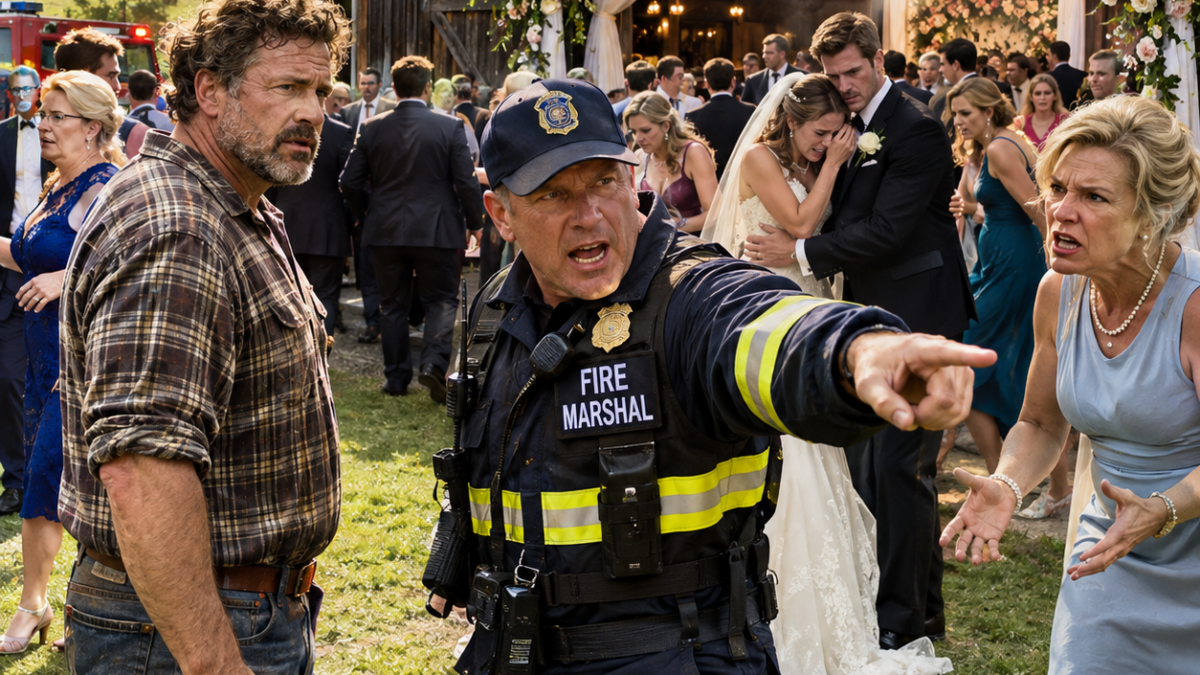
HOA Karen Turned My 114-Year-Old Barn Into a 300-Guest Wedding Venue—Then the Fire Marshal Evacuated 300 Guests.
Three hundred wedding guests were already seated beneath chandeliers hanging from the beams of Silas Reic’s 114-year-old Pennsylvania barn when a caterer smelled burning plastic behind the bridal wall and the county fire marshal discovered that the HOA had hidden an emergency exit behind flowers, padlocked another door, and packed nearly four times the declared crowd inside.
For four days, HOA President Marjorie Vickery had publicly called Silas greedy, heartless, and jealous while using a forged copy of his signature to convince a bride, vendors, insurers, and county officials that he had willingly turned his family’s agricultural barn into a luxury wedding venue.
But when the guests were finally standing safely in Silas’s pasture and investigators uncovered twelve future wedding contracts worth roughly $684,000, everyone realized Marjorie had not simply trespassed on a farmer’s land—she had built an entire private business on a building she did not own and arranged the paperwork so that if someone got hurt, Silas would take the blame.
Silas Reic knew something was wrong before he saw the smoke.
It was the cars.
Black SUVs.
Luxury sedans.
A white limousine with ribbons tied to the mirrors.
Vehicles lined both sides of the gravel road stretching from Bellweather Farm almost all the way to the county highway.
On any normal Sunday afternoon in late May, the only traffic along that lane would have been Silas’s pickup, a produce hauler, and maybe one of the neighbors driving slowly enough to wave.
That afternoon, men in dark suits were directing traffic.
Women in bright dresses stepped carefully over the gravel in expensive heels.
A string quartet played somewhere inside the barn.
Silas stood beside the gate and stared at a property that had belonged to his family for four generations.
He barely recognized it.
The barn had been built in 1912 by his great-grandfather.
White oak beams.
Hand-cut mortise-and-tenon joints.
Wide timber doors large enough for hay wagons.
Its siding had been replaced over the years, sections repaired after storms, roof panels patched after hail, but the bones of the building remained the same.
It had never been beautiful in the polished way people used that word online.
It smelled like hay, old wood, grease, dust, and earth.
To Silas, that was beautiful enough.
Now white curtains hung from floor to rafters.
Hundreds of glass bulbs crossed overhead.
A red carpet ran down the center aisle.
Fresh flowers covered the walls.
And above the main entrance hung a gold sign.
THE VICKERY GRAND BARN
Silas stared at it.
His jaw tightened.
They had even spelled Marjorie’s last name into the building as though she had inherited it.
Two security guards approached.
Behind them came Marjorie Vickery.
Fifty-two.
Perfectly styled blond hair.
Pale blue cocktail dress.
Gold bracelet.
A radio clipped to one hand.
PART2:
She walked toward Silas with the confidence of a woman who believed the event around her proved she had already won.
“Mr. Reic.”
He looked past her.
The barn doors had been repainted.
The iron latch his father installed twenty-seven years earlier was gone.
A brass lock had replaced it.
Silas could see inside.
His seed drill was missing.
So was the hay rake.
His grandfather’s restored Farmall tractor had been moved from the north bay.
A champagne bar occupied the space.
Rows of white chairs filled the center.
Hundreds of people.
Marjorie followed his gaze.
“You need to leave.”
Silas looked at her.
“This is my farm.”
“This is a private wedding.”
“In my barn.”
A few nearby guests turned.
Phones lifted.
Marjorie smiled in the patronizing way she used at HOA meetings whenever somebody challenged her.
“Mr. Reic, we have authorization for this event.”
“No, you don’t.”
“We have everything required.”
“You have nothing from me.”
One guard stepped forward.
PART3:
“Sir, we’re going to have to ask you to return to the road.”
Silas did not move.
“I’m standing on land my father left me.”
The guard hesitated.
Marjorie raised her voice just enough for guests to hear.
“This is exactly what we’ve been dealing with all week.”
Heads turned.
A man near the entrance began recording.
Marjorie gestured toward Silas.
“Mr. Reic agreed to cooperate with the event and then decided at the last minute that he should receive additional compensation.”
Silas stared at her.
“That’s a lie.”
A murmur moved through the guests.
Marjorie sighed.
“Please don’t make a scene.”
Silas might have answered.
Then a young caterer stopped near a decorative wall built along the east side of the barn.
She was carrying a tray of champagne.
Her face tightened.
She sniffed.
Looked behind the partition.
Then said:
“Does anybody else smell that?”
The quartet kept playing.
Another server approached.
“What?”
“Burning.”
Silas’s head snapped toward the wall.
He knew what was behind it.
Old electrical conduit.
A junction box.
A line feeding the loft.
He had seen temporary cables running through there two days earlier.
The caterer stepped backward.
A thin gray haze curled above the curtain.
“Smoke.”
The music stopped.
The first scream came from somewhere near the rear chairs.
Not panic yet.
Surprise.
Then a voice carried through the crowd.
“Everybody stay where you are.”
A tall man in a dark county emergency jacket entered through the main doors.
Fire Marshal Everett Sloan.
Forty-nine.
Gray at the temples.
Former Navy damage-control specialist before joining county fire services.
Silas knew him only by reputation.
Everett did not waste time asking who had paid for the flowers.
He looked at exits.
Occupancy.
Electrical cables.
Crowd flow.
Within thirty seconds, he pointed toward the east wall.
“Where is that exit?”
Marjorie answered:
“There’s no exit there.”
Silas said:
“Yes, there is.”
Everett looked at him.
Silas pointed behind the flowers.
“Six-foot service door.”
A firefighter pulled back part of the floral wall.
The metal push bar appeared behind it.
Blocked.
Everett’s expression changed.
He looked toward the south side.
“Other secondary exit?”
A firefighter checked.
“Padlocked from outside.”
Everett turned toward Marjorie.
“How many people are in this building?”
“Approximately three hundred.”
His eyes narrowed.
“What does your event filing list?”
Marjorie hesitated.
Silas answered.
“Eighty.”
Everett looked at him again.
“You the owner?”
“Yes.”
“You approve this event?”
“No.”
Marjorie rushed forward.
“Marshal Sloan, there is a great deal of confusion here.”
Everett raised one hand.
The room fell quiet.
His voice carried above every whisper.
“Everyone outside.”
Marjorie’s face changed.
“What?”
“This building is being evacuated.”
“The ceremony starts in eight minutes.”
“Then the ceremony is not starting in this building.”
“You don’t understand what this wedding cost.”
Everett looked directly at her.
“My job is to protect three hundred lives, not your investment.”
That was when Marjorie’s confidence cracked.
Not completely.
Not yet.
But Silas saw it.
Around them, guests began standing.
Some irritated.
Some frightened.
Others still thought it was a temporary interruption.
Firefighters directed the first rows toward the front doors.
Everett pointed to Silas.
“You know another safe exit?”
“The west doors.”
“Accessible?”
“If nobody parked outside them.”
“Show me.”
Silas led him through the equipment side.
A decorative curtain had hidden the west section from guests, but the huge timber doors remained usable.
He removed a retaining pin.
Pushed one door.
It resisted.
Old hinges complained.
Then daylight opened across the barn floor.
Beyond the doors lay open pasture.
No parked cars.
No floral arch.
No catering truck.
Everett immediately redirected part of the crowd.
“Use this side.”
Silas opened the farm gate beyond it.
Guests streamed onto grass.
Women lifted dresses.
Men carried children.
An elderly woman clung to her husband’s arm.
A bridesmaid in a green dress stopped beside Silas.
“Is there actually a fire?”
“Electrical smoke.”
Her face went pale.
She hurried onward.
Within minutes, the elegant wedding had become something completely different.
Three hundred formal guests standing in a hay field.
Firefighters inside.
Deputies at the entrance.
The bride nowhere in sight.
Marjorie moved from person to person trying to control the narrative.
“This is a technical issue.”
“Everything was inspected.”
“The owner has been harassing the event.”
“This is precautionary.”
Then she saw Silas.
She crossed the lawn fast.
“You have no idea what you’ve caused me.”
He looked around.
Three hundred people were alive.
“That’s where you’re wrong.”
She came closer.
“You called them.”
“Yes.”
“You deliberately destroyed this wedding.”
“No.”
“You wanted revenge.”
Silas’s voice remained quiet.
“I wanted everyone out of a barn you had no right to fill.”
Marjorie lowered her voice.
“You think this ends with an evacuation?”
“No.”
Silas looked at the gold sign over his own doors.
“I think it starts with one.”
Four days earlier, none of the chandeliers existed.
On Wednesday morning, Silas had been lying under a tractor with hydraulic fluid on one sleeve when his phone rang.
The caller was Dale Morgan from the produce-hauling company.
“Silas?”
“Yeah.”
“You hosting something?”
Silas slid halfway out from beneath the tractor.
“What?”
“There’s a gate crew down by the barn.”
“Gate?”
“Decorative thing.”
“They’ve got my truck blocked.”
Silas sat up.
“What crew?”
“No idea.”
“Guys in matching shirts.”
“One told me the road’s closed for an event installation.”
Silas looked toward the barn from the machine shed.
“Stay there.”
He drove down in his pickup expecting some contractor had confused addresses.
Bellweather Farm bordered Brier Glen Estates along the south line.
The HOA neighborhood consisted of large brick homes, stone entrance pillars, ornamental ponds, and streets named after trees that had been removed to build the subdivision.
For years, the farm and neighborhood had tolerated one another.
Mostly.
Residents complained about tractor noise.
Silas complained about people walking dogs through planted fields.
The HOA had once asked him to replace his wire boundary fence with decorative black aluminum.
He declined.
They sent a second letter.
He ignored it.
Eventually they stopped.
Marjorie Vickery became HOA president three years earlier.
Problems increased almost immediately.
She liked projects.
Neighborhood branding.
Entrance lighting.
Seasonal banners.
Architectural consistency.
She once told Silas his machinery shed created a “negative visual transition” from the community.
Silas answered:
“It’s a farm.”
She did not find that persuasive.
When he reached the barn that Wednesday, six service trucks were already there.
Workers carried folding chairs inside.
Another crew unloaded rolled carpet.
Electricians strung temporary cables.
A man measured the front doors.
Silas parked across the lane.
“What are you doing?”
The foreman looked up.
“Event installation.”
“Whose event?”
“HOA.”
“This isn’t HOA property.”
The foreman glanced at his clipboard.
“I’ve got authorization.”
“Show me.”
The man flipped through papers.
Then frowned.
“You should call the coordinator.”
“Who?”
He handed Silas a business card.
VICKERY EVENTS & ESTATE EXPERIENCES
Silas stared.
Not the HOA.
Private company.
A logo beneath the name resembled the Brier Glen HOA logo closely enough that somebody could assume they were connected.
Fifteen minutes later, Marjorie’s white Mercedes SUV appeared.
She stepped out wearing sunglasses and a cream jacket.
“Silas.”
She smiled brightly.
“I was going to stop by.”
“When?”
She ignored that.
“Doesn’t it look wonderful already?”
Silas looked toward the workers carrying furniture into his barn.
“Get them out.”
Her smile slipped.
“Excuse me?”
“Everyone.”
“Out.”
She laughed.
“This is temporary.”
“You’re trespassing.”
“Silas, please.”
She lowered her sunglasses.
“The association is preparing promotional materials.”
“What materials?”
“Lifestyle photography.”
“Community marketing.”
“That barn has become an eyesore beside a luxury development.”
Silas stared.
“You’re inside my eyesore without permission.”
“We are improving it.”
“I didn’t ask you to improve it.”
“You should.”
“No.”
Her voice cooled.
“You don’t understand what a property like this could become.”
“It’s already what I need.”
“A storage barn?”
“Yes.”
She gestured toward the community beyond the trees.
“You have a gated neighborhood full of high-income families next door.”
“Congratulations.”
“You could monetize the property.”
“I farm it.”
“That’s exactly the narrow thinking I’m talking about.”
Silas stepped closer.
“Remove your people.”
“Today.”
“Restore anything you changed.”
“And return whatever you’ve moved.”
Marjorie stared at him.
Then smiled again.
“If you interfere with contracted work after vendors have already been retained, you may create substantial liability.”
Silas almost laughed.
“Liability for what?”
“Cancellation expenses.”
“You hired people to work inside my barn.”
“Yes.”
“Without asking me.”
Her eyes hardened.
“We’ll let counsel deal with that.”
She turned.
Silas called after her.
“Marjorie.”
She stopped.
“If one chair is still here by sunset, I’m calling the county.”
She drove away.
The chairs remained.
Silas entered the barn.
Then he realized how much worse things were.
His seed drill had been dragged into the field.
The hay rake sat beside it.
Both uncovered.
Rain was forecast.
His grandfather’s restored tractor had been moved under a tree.
An old timber panel on the east wall had been removed.
A crew had drilled mounting brackets into beams.
A temporary electrical feed ran from a generator outside into the barn’s decades-old system.
Silas took photographs.
Every angle.
Every cable.
Every machine.
Every hole.
Then he called the county building office.
Filed a written complaint.
Called the sheriff’s non-emergency number.
Sent Marjorie a written demand.
Her response arrived twenty minutes later.
Silas, this is preparation for a photographic promotion, not an “event.” Your reaction is disproportionate and is creating unnecessary expense.
He read it twice.
Then walked back inside.
A rolled white runner lay near the aisle.
Part had unfolded.
Gold lettering showed.
KENDALL & DUSTIN
Silas stared.
Nobody printed names on a promotional photo-shoot carpet.
That night, he searched the business name on Marjorie’s card.
A polished website appeared.
Photographs of barns.
Wine glasses.
Couples dancing beneath string lights.
Then a page:
THE VICKERY GRAND BARN
Silas leaned closer to the laptop.
His barn.
Edited photographs made the siding brighter.
The rafters had been digitally filled with chandeliers.
A description read:
A restored heritage estate venue adjoining the prestigious Brier Glen community. Capacity up to 300 guests.
His stomach dropped.
He scrolled.
Wedding packages.
Gold package.
Platinum.
Estate weekend.
Bridal suite.
Exclusive grounds.
Then:
THIS SUNDAY — PRIVATE WEDDING — FULLY BOOKED
Silas stared at the number.
300 guests.
He looked out his kitchen window toward the barn.
They had not invaded his property for photographs.
They had sold it.
At eight the next morning, Silas stood inside the county permit office with his deed.
A clerk named Monica searched the system.
“There is an event filing.”
“Where?”
She rotated her screen.
Address similar to Bellweather Farm.
But not exact.
The property was listed as an HOA accessory building.
Maximum occupancy:
Silas placed the website printout on the counter.
“Three hundred.”
Monica frowned.
“That’s not what was filed.”
“The building isn’t owned by the HOA either.”
He handed her the deed.
Her expression changed.
“Did you sign owner authorization?”
“No.”
“There should be one attached.”
She searched.
Then stopped.
“Yes.”
“What?”
“We have one.”
Silas leaned forward.
“With my signature?”
“It appears so.”
“I never signed anything.”
Monica looked at him.
“Then we need to flag this.”
She printed the filing.
Silas read it.
The attached owner authorization was not visible in the public packet yet, but Monica initiated a review.
He filed an emergency complaint.
Occupancy discrepancy.
Unapproved change of use.
Electrical concerns.
Ownership dispute.
He left believing bureaucracy would now catch up.
Marjorie moved faster.
By Thursday afternoon, every Brier Glen resident received an email.
IMPORTANT COMMUNITY NOTICE
It accused a neighboring farmer of obstructing a “historic restoration project” that would enhance property values and benefit the neighborhood.
It did not mention weddings.
It did not mention three hundred guests.
It described Silas as “unexpectedly withdrawing prior cooperation.”
By five, residents began arriving at his gate.
The first couple was angry.
“You agreed to this.”
“No.”
“Marjorie said—”
“I don’t care what she said.”
A man in golf clothes pointed toward Silas’s barn.
“That place has looked terrible for years.”
Silas stared.
“Then don’t look at it.”
“You live beside a residential community.”
“You built a residential community beside a farm.”
More neighbors came.
Some calmer.
One woman asked to see the deed.
Silas showed her.
She left uncertain.
Another accused him of wanting more money.
Silas asked:
“Money from whom?”
She had no answer.
Then security guards appeared near the barn.
Black uniforms.
Private company.
They blocked the lane.
Silas called the sheriff.
Two deputies arrived.
He showed them the deed.
Marjorie arrived twenty minutes later.
Different personality.
Apologetic.
Warm.
“This has all gotten out of hand.”
She told deputies the workers had misunderstood the schedule.
She ordered several tables removed.
Promised all activity would pause until paperwork was clarified.
The deputies documented the dispute.
Told everyone to avoid confrontation.
Then left.
Silas watched the patrol vehicle disappear.
One guard remained beside the barn.
Holding keys.
Silas pointed.
“My lock?”
The guard said nothing.
“Give me the keys.”
“Ma’am told me security stays.”
“This is my barn.”
The guard walked away.
That night, the county emailed Silas.
Mr. Reic, our review has located a property-owner authorization bearing your name and signature. Please contact us immediately.
Silas stared until the screen dimmed.
Friday morning, Monica slid the photocopy across the county counter.
COMMERCIAL EVENT PROPERTY AUTHORIZATION
Property owner:
SILAS REIC
Venue partner.
Authorized.
Signature below.
It looked like his.
Almost.
Silas stared.
Then noticed the final stroke.
The downward hook.
A tiny smear.
Memory returned.
Two years earlier.
Fence dispute with Brier Glen.
He had emailed the HOA office a scanned tractor-parts receipt because it showed the date equipment had been used near the disputed line.
He had signed that receipt hurriedly on his truck hood.
The final letter dipped down.
Ink smeared.
Exactly like this.
Someone had copied the signature.
His stomach went cold.
Monica placed another document beside it.
Insurance certificate.
Additional insured:
Silas Reic / Bellweather Farm Venue Partnership
He felt physically ill.
“If somebody gets hurt Sunday…”
Monica did not finish.
She didn’t need to.
The paperwork was designed to make Silas part of the business.
Not merely a passive owner.
A venue partner.
A man who had approved occupancy.
If a guest fell.
If a beam failed.
If a fire started.
Marjorie had created documents that could point toward him.
Silas drove directly to Harlan Whitcomb.
Harlan was sixty-one.
Property attorney.
Old family acquaintance.
He had handled Silas’s father’s estate.
He read the authorization.
Then the insurance certificate.
Then removed his glasses.
“You did not sign this?”
“No.”
“Never authorized the HOA?”
“No.”
“Never authorized Vickery Events?”
“Never heard of it until Wednesday.”
Harlan leaned back.
“This is no longer a property dispute.”
“I know.”
“Do not contact Marjorie except in writing.”
“Fine.”
“Do not physically interfere with vendors.”
“Fine.”
“Do not remove equipment that isn’t yours unless we establish procedure.”
“It’s in my barn.”
“I understand.”
Harlan pointed.
“But right now she is trying to build a story in which you are the unpredictable landowner sabotaging an event you previously approved.”
Silas’s jaw tightened.
“So what do I do?”
“Build the boring story.”
“What?”
“Documents.”
“Dates.”
“Photographs.”
“Certified notices.”
“County filings.”
“Insurance notification.”
“Police reports.”
“Boring wins cases.”
Within two hours, Harlan sent sworn denials to the county.
Notified the insurer that Silas had never authorized use.
Requested preservation of all paperwork.
Filed notice of suspected forgery.
Marjorie called.
Silas answered because Harlan had told him he could, provided he did not argue.
Her voice was calm.
“You’re making this extremely expensive.”
“Good.”
“Do you understand the contractual exposure if Sunday is canceled?”
“No.”
“You could face claims approaching two hundred thousand dollars from this event alone.”
“I didn’t contract with anyone.”
“You signed authorization.”
“No.”
“Your signature exists.”
“A stolen signature doesn’t give you the right to steal a building.”
Silas hung up.
That afternoon, the bride arrived.
White sundress.
Red eyes.
Kendall Price.
Thirty-one.
Her fiancé, Dustin Farr, came behind her.
Thirty-five.
Tall.
Angry.
They stood on Silas’s porch.
Kendall said:
“Please don’t destroy my wedding.”
Silas looked at her.
That was when he understood how carefully Marjorie had built the human shield around herself.
If Silas stopped the event, he would not appear to be defending property.
He would appear to be hurting a bride.
“Come in.”
They sat at his kitchen table.
Kendall’s hands shook.
“We’ve planned this for almost two years.”
Silas listened.
Her grandmother was flying from Ohio.
Her father had recently completed cancer treatment.
The wedding mattered partly because everyone feared how quickly time could change things.
Flowers paid.
Catering paid.
Band paid.
Transportation.
Photographer.
Decor.
Venue deposit.
She and Dustin had spent nearly all their savings.
“Marjorie showed us your authorization.”
Silas pulled the county copy from his folder.
“This?”
Kendall nodded.
“That isn’t my signature.”
Dustin leaned forward.
“It looks exactly like it.”
“It was copied.”
“You expect us to believe someone forged this?”
“Yes.”
Dustin’s jaw hardened.
“Three days before our wedding.”
Silas did not react.
He went to a cabinet.
Brought photographs.
Not current ones.
Old ones.
Barn before decoration.
Cracked wiring.
Nailed side door.
Timber braces.
Agricultural equipment.
Dust.
Loft.
He spread them across the table.
“Kendall, this is what you rented.”
Her face changed.
“What?”
“There is no sprinkler system.”
“No approved public-assembly occupancy.”
“No bridal suite.”
“The electrical service isn’t designed for what they’re installing.”
“The exit behind the east wall has been partly unusable for years.”
Dustin looked from picture to picture.
“Marjorie said you renovated.”
“I didn’t.”
Kendall whispered:
“The website says fully restored.”
“It isn’t.”
“She said you’d been paid.”
“I haven’t.”
Dustin’s anger began shifting.
Not gone.
Uncertain.
Silas wrote three names on a piece of paper.
Licensed venues within twenty miles.
“Call them.”
“Why?”
“In case Sunday needs to move.”
Kendall stared.
“You think it will.”
“I think you should have a backup.”
Her phone rang.
Marjorie.
Kendall answered on speaker.
“Kendall, where are you?”
“At Mr. Reic’s.”
Silence.
Then Marjorie’s voice became sweet.
“Oh, sweetheart.”
Silas almost laughed.
“I told you not to let him frighten you.”
Kendall looked at Silas.
Marjorie continued.
“He is attempting to renegotiate compensation at the last minute.”
Silas said:
“That’s false.”
Marjorie ignored him.
“Kendall, leave the property.”
“We’re handling this.”
Dustin stood.
“Did he sign the agreement?”
“Absolutely.”
“Do you have a county permit for three hundred people?”
Marjorie paused.
“We have all necessary approvals.”
“That wasn’t the question.”
Her tone cooled.
“Dustin, I understand you’re stressed.”
“Please trust the professionals.”
The call ended.
Kendall stood.
Her face had hardened.
Silas expected questions.
Instead, she walked out.
Dustin followed.
That night a video circulated.
Dustin confronting Silas outside.
Except the clip had been edited.
Everything about forged documents was missing.
Everything about fire safety was missing.
All viewers saw was a wealthy-looking bride crying and a farmer refusing to “honor” a wedding.
Silas’s phone filled with messages.
Greedy bastard.
You should be ashamed.
Let the girl have her wedding.
You’re destroying someone’s life over a barn.
He deleted nothing.
Answered nothing.
Harlan said:
“Good.”
“Feels terrible.”
“Good legal strategy often does.”
Saturday morning, Silas found the wedding planner.
Pearl Bexley.
Thirty-eight.
Independent coordinator.
Efficient.
Not part of Marjorie’s company.
Silas asked to meet.
Pearl arrived skeptical.
Then he showed her the deed.
Permit.
Photographs.
Eighty-person filing.
Three-hundred-person contract.
Her expression changed.
“This isn’t what they sent me.”
“What did they send?”
“Renovation certificates.”
“Electrical approval.”
“Insurance.”
Silas looked at Harlan.
Pearl pulled out her laptop.
Some documents looked official.
Some not.
One electrical certificate listed a contractor Silas knew.
Finn Ralston.
He called him.
Finn answered immediately.
“I never approved that barn for occupancy.”
Pearl’s face went white.
“What?”
“I inspected it last fall.”
“For what?”
“Marjorie asked what would be needed to make it an event space.”
“And?”
“I told her extensive work.”
“Structural engineer.”
“New service.”
“Emergency lighting.”
“Exit work.”
“Fire system review.”
“Did you sign a completion certificate?”
“No.”
Pearl looked sick.
She promised to check her booking system.
Just before midnight, she called Silas.
“Kendall isn’t the only one.”
Silas sat upright in bed.
“How many?”
Pearl was silent.
“Pearl.”
“Eleven more.”
The next morning, before dawn, Pearl met Silas and Harlan at a highway diner.
She brought printouts.
Twelve wedding contracts.
Dates extending eighteen months.
Deposits.
Packages.
Venue fees.
Decor packages.
Service charges.
Projected total deposits already collected or scheduled:
Approximately $684,000.
Silas leaned back.
“Six hundred eighty-four thousand dollars.”
Pearl nodded.
“Some funds have already been used for vendor deposits.”
“Some appear transferred internally.”
“To where?”
“I don’t know.”
Harlan’s face tightened.
Marjorie had turned his barn into an eighteen-month business pipeline.
Silas suddenly understood why she refused to back down.
Kendall’s wedding was not one event.
It was proof the venue existed.
If Sunday succeeded, photographs would market the next eleven.
Cancellation could expose everything.
Silas looked at Pearl.
“Do the other couples know?”
“No.”
“Don’t post their names.”
Pearl looked surprised.
“They’re victims.”
“Exactly.”
Silas said:
“I won’t have them humiliated online because Marjorie used them.”
Harlan nodded.
They moved to preserve records.
Notify couples discreetly.
Seek emergency court intervention.
Protect deposit funds from being moved.
By noon, Marjorie realized Pearl was asking questions.
Pearl was removed as lead coordinator.
Vendor communications stopped.
An email announced “temporary suspension pending administrative review.”
The barn became quiet.
Saturday afternoon, Silas drove out.
No workers.
No music.
No chairs entering.
He stood inside.
For the first time since Wednesday, he believed perhaps the wedding had been stopped.
He was wrong.
Sunday.
6:03 a.m.
His phone buzzed.
A flower-delivery driver sent a photograph.
The barn glowed.
Rows of chairs.
Arch.
Lights.
Decor.
They brought everything back. Wedding is on. 300 guests expected.
Silas was dressed in three minutes.
Marjorie had used the private service road through Brier Glen.
Trucks entered from the subdivision side.
No activity visible from Silas’s main farm entrance.
The operation had been rebuilt before county offices opened.
Silas called emergency dispatch.
Then the sheriff.
Then fire safety.
Marjorie sent security to block him.
He did not touch them.
By noon, Finn arrived.
He had left tools earlier in the week.
He entered the barn.
Followed the temporary electrical feed.
His face went white.
“Who connected this?”
A contractor shrugged.
Finn crouched near the panel.
The temporary feed was badly undersized for the combined lighting, catering equipment, sound system, heaters, refrigeration, and decorative installations.
“This cannot run full load.”
An event manager said:
“We were told it’s fine.”
“By who?”
“Vickery.”
Finn pulled out his phone.
“I warned her.”
Silas arrived.
Finn told him:
“If they power everything simultaneously, something is going to overheat.”
“Fire?”
“Possible.”
“Trip first?”
“Should.”
“Will?”
Finn looked at the old wiring.
“I wouldn’t bet three hundred lives on it.”
They warned staff.
Marjorie appeared.
“Everything has been inspected.”
Finn stared.
“Not by me.”
“You’re a subcontractor.”
“I’m the electrician whose name is on the preliminary survey you keep showing people.”
Marjorie’s smile vanished.
“You’re spreading panic.”
“I’m refusing liability.”
“If you interfere with this event, our attorneys will contact you.”
Finn shook his head.
“Good.”
At 1:45, guests began entering.
Silas stood beyond the fence.
Kendall appeared at a window.
Already wearing her gown.
She saw him.
Her face fell.
A few minutes later, she came outside.
Veil in hand.
“Why are you still here?”
“Because nothing’s fixed.”
She closed her eyes.
“Marjorie told me the county cleared it.”
“She lied.”
Kendall looked toward the barn.
“My grandmother is inside.”
Silas softened.
“This isn’t about my property anymore.”
“Then what?”
“Everyone in there.”
Pearl, attending now only as a guest, appeared.
Kendall grabbed her arm.
“Check.”
Pearl nodded.
Marjorie intercepted them.
“Kendall.”
The bride turned.
“Is there a valid permit for three hundred people?”
Marjorie’s expression stayed calm.
“This is your wedding day.”
“Answer me.”
“You have paid professionals handling this.”
“I asked you a question.”
Marjorie stepped closer.
“You are about to walk down the aisle.”
“Do not let Silas destroy this for you.”
Kendall looked toward her father.
Then inside.
Years of planning.
Thousands of dollars.
Family gathered.
Everything she imagined.
That was the cruelest part of Marjorie’s scheme.
Stopping now required the bride herself to feel responsible for destroying her own dream.
Before Kendall could decide, a server called Finn.
“Something smells hot.”
“Where?”
“Behind bridal wall.”
Finn ran.
Minutes later:
Smoke.
Then Everett Sloan arrived.
And everything finally stopped.
At 2:42 p.m., the fire marshal gave the evacuation order.
By 2:58, nearly everyone was out.
Silas helped firefighters open the west doors.
Dustin directed elderly guests toward the gravel path.
Kendall stood in the pasture in her wedding dress holding her veil in both hands.
She looked toward the barn.
Then toward Marjorie.
Understanding arrived slowly.
Painfully.
A deputy examined Silas’s folder.
Deed.
Notices.
Written objections.
County complaint.
Fire warning.
Insurance denial.
Kendall watched.
Then Marjorie shouted to the crowd:
“This evacuation is retaliation.”
Silas did not answer.
She pointed at him.
“He owns the building.”
“The condition of that barn is his responsibility.”
The deputy looked at Silas.
Silas said:
“Read the dates.”
The deputy did.
Every warning predated the event.
Then Pearl saw two staff members carrying a box of documents and a laptop toward the parking lot.
She moved quickly.
“Officer.”
A deputy turned.
“That equipment came from the operations table.”
Marjorie shouted:
“Those are private business records.”
Pearl said:
“They relate to the venue.”
Silas did not grab anything.
He called Harlan.
Asked deputies to document removal.
A caterer photographed the scene.
Meanwhile, firefighters traced the smoke.
Temporary electrical connection behind the bridal partition.
Overheated wiring insulation.
No open flame yet.
Close.
Too close.
Everett shut the building.
Posted notice.
No public occupancy until cleared.
Once every guest was accounted for, Silas entered.
Wilted flowers.
Half-filled glasses.
Empty chairs.
Smoke smell.
Music equipment silent.
Finn stood beneath the loft.
Looking upward.
“What?”
Silas followed his eyes.
Something was missing.
Two major timber braces.
Cut out.
Not covered.
Removed.
Silas stopped.
“Where are they?”
Finn’s voice went low.
“I told her not to touch them.”
Silas looked at him.
“Personally?”
“In writing.”
The next morning, Harlan’s conference room filled.
Silas.
Finn.
Pearl.
County investigator.
Fire Marshal Everett Sloan.
Finn opened his report.
Dated months earlier.
Clear warnings:
Structural bracing must remain until engineer evaluation.
Existing service inadequate.
Public occupancy requires life-safety upgrades.
Exits may not be blocked.
No large event until code review completed.
Then Pearl produced emails.
Internal.
Marjorie to decorators.
Remove the braces interfering with chandelier sightline.
Another:
East exit ruins bridal-suite layout. Cover with floral wall.
Another:
Do not delay Sunday event over preliminary electrical concerns.
Then the sentence that changed the investigation:
THE WEDDING GOES FORWARD. I WILL NOT LOSE THIS CONTRACT OVER AN OLD FARM BUILDING.
Everett read it.
Then looked at the investigator.
Nobody spoke.
This was no longer ignorance.
Marjorie had been warned.
Clearly.
In writing.
She continued.
Two days later, Beatrice Hollis came forward.
HOA treasurer.
Fifty-seven.
Bookkeeper by profession.
She had been asking questions for months.
Maintenance expenses had increased.
Payments to contractors.
Landscaping codes.
“Community improvement.”
But invoices did not match neighborhood work.
Money had funded barn renovations.
HOA money.
Homeowners’ dues.
Meanwhile, wedding deposits went into Vickery Events & Estate Experiences.
Marjorie’s private company.
Silas finally saw the full structure.
Brier Glen homeowners financed improvements.
Marjorie’s company sold weddings.
Silas’s barn provided the asset.
His forged signature provided legal cover.
If the business succeeded, Marjorie profited.
If someone got hurt, documents made Silas look like a partner.
He sat quietly after Beatrice finished.
Harlan said:
“You okay?”
“No.”
That was enough.
The emergency HOA meeting happened Friday night.
More than a hundred homeowners packed the clubhouse.
Marjorie arrived in a white blazer.
Still president.
Still determined.
She began:
“What happened Sunday was an unfortunate technical incident deliberately exaggerated by outside parties—”
Beatrice stood.
“I have the invoices.”
The room changed.
She distributed copies.
HOA expenditures.
Barn contractor payments.
Side-by-side.
Whispers grew.
Silas spoke next.
Not dramatically.
He laid his deed on a projector.
Then the forged authorization.
Then the original signature source.
Then the county complaint.
Finn’s report circulated.
Pearl explained the wedding contracts.
Twelve.
$684,000.
A man in the back shouted:
“You used our dues to build your company?”
Marjorie answered:
“No.”
Another homeowner:
“Then explain these checks.”
She blamed the management company.
The contractor.
Pearl.
Silas.
Administrative misunderstanding.
Every explanation collided with another document.
Finally her attorney stepped into the hallway to answer a call.
When he returned, his face was gray.
He whispered to her.
Marjorie stopped speaking.
Investigators had formally opened fraud and forgery inquiries.
For the first time, Silas saw fear.
Not anger.
Fear.
Homeowners began leaving.
One by one.
People who had stood at Silas’s gate days earlier now walked past Marjorie without speaking.
She remained at the front of the room.
Alone.
The legal process took months.
Not days.
That mattered.
Reality did not deliver justice overnight.
Investigators traced digital files.
Business registrations.
Bank transfers.
Email accounts.
Metadata.
The copied signature.
A forensic document examiner confirmed Silas had not signed the authorization.
Evidence established that the signature image had been inserted digitally from an older scanned document.
Financial records connected Vickery Events directly to the deposits.
HOA funds had been improperly used for unauthorized improvements.
Vendors filed claims.
Couples demanded refunds.
The insurer denied that Silas had knowingly participated.
Criminal charges followed for conduct investigators could actually prove.
Forgery.
Fraud.
Misuse of funds.
Related financial offenses.
Civil claims came separately.
Marjorie’s event company collapsed.
Assets were frozen where legally possible.
Then sold under court supervision as cases resolved.
The $684,000 became part of a restitution process.
Not every victim recovered everything immediately.
But money that could be traced was distributed under court orders.
Marjorie eventually accepted a plea agreement.
Prison.
Restitution.
Prohibition from controlling certain financial organizations during supervision.
The headlines were smaller than people expected.
No dramatic television trial.
No screaming arrest in the clubhouse.
Silas preferred that.
Documents had defeated her.
Harlan had been right.
Boring won.
Brier Glen replaced the entire HOA board.
Beatrice stayed as treasurer.
New rules required disclosures for private business interests.
Major expenditures required matching work orders.
Projects outside association boundaries required homeowner approval.
Independent audit.
Open records.
No officer could sign contracts connected to a business they controlled without full disclosure and vote.
Some residents visited Silas.
Apologized.
One man who had called him greedy stood at the farm gate holding a bottle of bourbon.
“I was wrong.”
Silas looked at it.
“I don’t drink bourbon.”
The man looked embarrassed.
Silas took it anyway.
“Still appreciate the apology.”
The barn required months of repair.
New braces.
Structural evaluation.
Electrical work.
Doors restored.
Damage repaired.
Finn oversaw parts of the technical work.
Everett inspected life-safety corrections even though Silas had no intention of opening to the public.
“Why do I need all this if it’s just agricultural again?”
Everett answered:
“Because people cut pieces out of a 114-year-old building.”
Fair.
Silas restored the barn for farm use.
No chandeliers.
No bridal suite.
No champagne bar.
The old Farmall returned to the north bay.
Seed drill under roof.
Hay rake where it belonged.
The gold Vickery sign went into evidence.
Eventually Silas got it back.
He cut it into four pieces.
Used one as a drip tray under a leaking hydraulic pump.
Harlan laughed for five full minutes when he saw it.
But one thing remained unresolved.
Kendall and Dustin.
Their wedding had never happened.
After the evacuation, several venues offered reduced rates.
Some offered free dates.
Local businesses wanted to help.
Kendall refused.
For months she could not think about weddings without seeing firefighters.
Her grandmother had been frightened badly during evacuation.
Her father blamed himself for trusting Marjorie.
Dustin became angry every time somebody mentioned deposits.
They stayed engaged.
But stopped planning.
Pearl told Silas.
He thought about it for two days.
Then called Kendall.
She answered cautiously.
“Mr. Reic?”
“Silas.”
“Okay.”
“Pearl tells me you haven’t married Dustin yet.”
A pause.
“That’s a strange opening.”
“I’m not good at phone calls.”
She laughed.
First time he heard that from her.
“What do you need?”
“Nothing.”
Silas looked out toward the meadow west of the barn.
“Would you still marry him here?”
Silence.
“What?”
“Not in the barn.”
“Field.”
“Open meadow.”
“Small ceremony.”
“Proper permits.”
“Licensed vendors.”
“Everything inspected.”
Kendall said nothing.
Silas continued:
“You don’t pay me.”
“Why would you do that?”
“Because I never had a problem with your wedding.”
He looked toward the repaired barn.
“I had a problem with somebody stealing my barn.”
Kendall began crying.
“After everything I said to you?”
“You believed paperwork.”
“I called you greedy.”
“So did half the county.”
“I told Dustin you were trying to extort us.”
“You were lied to.”
“That doesn’t make it okay.”
“No.”
Silas paused.
“But it makes it understandable.”
She asked:
“Are you sure?”
“No.”
He smiled.
“Ask me tomorrow.”
She called the next day.
“Yes.”
The ceremony took place in early October.
Seventy-four guests.
Not three hundred.
Kendall wanted immediate family and closest friends only.
Pearl coordinated.
Every vendor licensed.
Temporary electrical service properly installed.
Portable restrooms.
Parking plan.
Weather backup at a nearby community hall.
Everett reviewed the site.
He joked:
“If I smell burning plastic, I’m leaving.”
Silas said:
“You’ll be the first one I follow.”
The ceremony happened in the meadow.
No chandeliers.
No gold sign.
No red carpet.
Wooden chairs.
Wildflowers.
Simple arch.
The old barn stood in the distance under the last of the restoration scaffolding.
Kendall walked down the aisle holding her father’s arm.
Dustin cried.
Kendall laughed at him.
Then cried too.
Silas watched from the edge.
He had not planned to stay.
Pearl forced him.
“You’re part of this story.”
“I don’t like stories.”
“Too late.”
Before the ceremony, Kendall approached him.
She handed him an envelope.
Inside:
A photograph.
Bellweather Barn before Marjorie.
Plain siding.
Old doors.
Farm equipment visible.
Morning light.
An elderly wedding guest had apparently taken the picture months before while driving past.
On the back:
Thank you for saving the day we thought you ruined.
Silas read it twice.
Kendall said:
“I mean that.”
“You saved yourselves.”
“No.”
She looked toward the barn.
“You were the first person willing to become the villain in everybody else’s story long enough to stop something dangerous.”
Silas did not know what to say.
So he nodded.
That evening, Kendall and Dustin danced under string lights in the open meadow.
Safe.
Legal.
No blocked exits.
No stolen land.
When the music ended, Silas walked back to the barn.
He stood inside alone.
The restored braces were darker than the old wood.
New scars inside an old building.
He did not mind.
His great-grandfather’s barn had survived storms.
Economic collapse.
Two world wars.
Three generations of family arguments.
One disastrous attempt to turn it into an Instagram wedding empire.
It would survive.
Weeks later, a hay wagon rolled toward the doors.
Silas opened them.
Evening light crossed the floor.
The old gold sign was gone.
Above the entrance hung a plain wooden board.
BELLWEATHER FARM
Below it:
PRIVATE PROPERTY
Nothing elegant.
Nothing marketable.
Exactly right.
Silas parked the wagon.
Shut off the tractor.
Looked up at the beams.
Then smiled.
For months people had asked him the same question.
Why hadn’t he simply blocked the road?
Why not chain the doors?
Why not tear the wedding apart himself Wednesday morning?
Why involve counties, attorneys, fire marshals, deputies, courts?
The answer was simple.
Marjorie wanted him angry.
Anger would have helped her.
If Silas had smashed the decorations, shoved guards, threatened workers, or dragged chairs into the road, she could have made the story about him.
Unstable farmer.
Bitter neighbor.
Man sabotaging a bride.
Instead, he took photographs.
Filed complaints.
Kept receipts.
Saved emails.
Called officials.
Waited.
That was harder.
It also worked.
Because arrogance creates its own evidence when given enough room.
Marjorie forged the authorization.
Then threatened him in writing.
Then ignored Finn’s report.
Then told crews to remove structural braces.
Then covered an exit.
Then exceeded the declared occupancy.
Then ordered the wedding forward.
Then tried to move records during evacuation.
Each decision protected the previous lie by creating a larger one.
By the end, Silas hardly needed to explain what she had done.
Her own records explained it.
A year after the wedding that almost happened, Silas received a letter from one of the eleven other couples.
Their refund had arrived.
Not every dollar.
Enough.
They had married elsewhere.
The bride wrote:
We were angry at you at first because we thought your complaint had cost us our venue. Later we realized your complaint kept us from walking into a building we never should have rented. Thank you for refusing to stay quiet.
Silas kept that letter.
Not framed.
Just in a drawer.
He also kept Kendall’s photograph on the office wall.
Sometimes people visiting the farm asked about it.
He usually said:
“Long story.”
If they insisted, he told the short version.
“HOA president tried to rent my barn.”
“They couldn’t.”
The real version was more complicated.
It was about ownership.
Not only property ownership.
Responsibility.
Truth.
Reputation.
Marjorie had assumed all four could be borrowed.
She borrowed the HOA’s reputation to sell weddings.
Borrowed homeowner money to fund renovations.
Borrowed Silas’s signature to create permission.
Borrowed his liability to protect herself.
Borrowed the bride’s trust to pressure him.
Borrowed public outrage to silence questions.
For several days, it worked.
That was the frightening part.
People believed the polished website.
The gold lettering.
The smiling woman in the expensive jacket.
The official-looking paperwork.
They looked at Silas, covered in tractor grease, and decided they already understood who was telling the truth.
Kendall later admitted that.
“When I first saw you, I thought Marjorie was right.”
Silas asked:
“Why?”
She looked embarrassed.
“Because you looked angry.”
“I was.”
“And she looked calm.”
Silas smiled.
“That’s not evidence.”
“I know that now.”
Maybe that was another thing the fire marshal saved that afternoon.
Not just three hundred people from a dangerous building.
Certainty.
The easy kind.
The kind that decides who is right based on who looks polished.
Everett Sloan visited Bellweather Farm sometimes afterward.
Never socially enough to call it friendship.
He inspected neighboring properties and stopped for coffee if Silas was outside.
One afternoon he stood inside the restored barn.
Looked toward the repaired east exit.
“They really put flowers over that.”
“Yes.”
“And padlocked the other.”
“Yes.”
Everett shook his head.
“People think fires kill because flames move fast.”
“What kills?”
“Panic.”
“Smoke.”
“Blocked exits.”
“People moving toward the same doorway.”
He looked toward the massive west doors Silas had opened during the evacuation.
“You gave us another exit.”
“It was already there.”
“You knew where.”
Silas shrugged.
“It’s my barn.”
Everett smiled.
“Exactly.”
That sentence stayed with Silas.
It’s my barn.
Simple.
That had been the beginning.
Not greed.
Not pride.
Not revenge.
Ownership meant responsibility.
Marjorie had wanted the benefits without the responsibility.
Silas had the responsibility whether he wanted it or not.
That was why he could not walk away.
Years later, the barn still stood.
No weddings.
People asked.
He always said no.
Once, Kendall joked:
“You’re wasting a fortune.”
Silas answered:
“I hear weddings are dangerous.”
She laughed.
The Vickery scandal faded.
New stories replaced it.
Brier Glen property values did not collapse, despite Marjorie’s warnings.
The community survived.
The new board became boring.
Silas considered that a compliment.
Beatrice stayed treasurer for three years.
Then retired from HOA work entirely.
Pearl built her own event-planning company and became known for personally verifying venue permits before accepting contracts.
Finn’s business grew.
Everett’s evacuation report was used in regional fire-safety training because it illustrated how decorative renovations can turn old buildings into traps when occupancy and exit requirements are ignored.
Harlan continued charging Silas more than Silas believed any lawyer should be legally allowed to charge.
Silas continued paying him because Harlan reminded him:
“You once told me boring wins.”
“Yes.”
“My invoices are extremely boring.”
“Unfortunately.”
Kendall and Dustin had a daughter two years after their meadow wedding.
They named her Rose.
On her first birthday, Kendall brought her to Bellweather Farm.
Silas showed her the tractor.
Rose immediately tried to eat grass.
Dustin said:
“She gets that from her mother’s side.”
Kendall hit his arm.
They stood outside the barn.
Rose reached toward the old wooden doors.
Kendall looked at Silas.
“Do you ever think about what could’ve happened?”
He knew what she meant.
Smoke.
Three hundred people.
Blocked exits.
Old wood.
Electrical overload.
A locked side door.
He looked toward the meadow.
“Not much.”
“Really?”
“I think about what did happen.”
“What?”
“Everyone got out.”
That was enough.
Silas had learned something through the entire mess.
There were two kinds of imagination.
One warned you before disaster.
What if those wires overheat?
What if the exit is blocked?
What if three hundred people panic?
That imagination saves lives.
Then there was the other kind.
What if the caterer had not smelled smoke?
What if Everett arrived ten minutes later?
What if the west doors were blocked too?
What if someone fell?
What if the timber braces failed?
Silas refused to live there.
He had enough real work.
Fields.
Equipment.
Bills.
Weather.
Life.
One spring morning, nearly five years after Marjorie first sent crews into the barn, Silas was repairing a planter when a white SUV stopped near the gate.
Not Marjorie.
A young couple stepped out.
They had recently bought a home in Brier Glen.
The woman introduced herself.
“We heard the story about the barn.”
Silas wiped his hands.
“Which version?”
She laughed.
“Probably the exaggerated one.”
Her husband pointed.
“Can we see it?”
Silas looked toward the barn.
“Why?”
“My wife’s parents are visiting.”
“She loves old buildings.”
Silas considered.
Then nodded.
“No events.”
“We’re not getting married.”
“Good.”
He showed them inside.
No decorations.
No chandeliers.
Farm equipment.
Dust in sunlight.
They stared up at the beams.
The woman touched one repaired brace.
“This is where they cut it?”
“Yes.”
“Why?”
“Chandelier.”
She looked shocked.
“They cut a structural brace for a chandelier?”
“Two.”
Her husband shook his head.
“That’s insane.”
Silas looked around.
“No.”
“What?”
“It made sense if your only goal was selling the picture.”
They looked at him.
“That was the problem.”
Silas had spent years thinking about that.
Marjorie was not stupid.
That would have made the story easier.
She was capable.
Organized.
Persuasive.
She understood contracts.
People.
Marketing.
Money.
She simply allowed one goal to become more important than every boundary around it.
Sell the wedding.
Then protect the contract.
Then protect the money.
Then protect the lie.
At each step, another rule became inconvenient.
Ownership.
Safety.
Truth.
Eventually people.
That is how disasters are often built.
Not with one enormous evil decision.
With a chain of smaller choices made by someone who keeps saying:
Just this once.
Just until Sunday.
Just one wall.
Just one signature.
Just one blocked door.
Then the bill arrives all at once.
For Marjorie, it arrived when three hundred guests walked into a pasture and watched firefighters close a barn she never owned.
Silas never celebrated her prison sentence.
People expected him to.
Dustin once asked:
“Didn’t you feel good when she went away?”
“No.”
“Why not?”
Silas considered.
“Because none of this was worth happening just to watch somebody get punished.”
He pointed toward the restored barn.
“I would’ve preferred she never touched it.”
That answer disappointed people looking for revenge.
But Silas was not interested in revenge.
He wanted his property back.
Safe.
Whole.
He wanted victims repaid.
He wanted the truth recorded.
He got most of that.
Enough.
The farm office still has Kendall’s photograph.
The original barn.
Before gold letters.
Before white curtains.
Before smoke.
On the back:
Thank you for saving the day we thought you’d ruined.
Silas occasionally turns it over and reads that sentence.
Not because he needs gratitude.
Because it reminds him how badly truth can look at first.
For four days, Silas was the villain.
The angry farmer.
The man ruining a bride’s wedding.
The neighbor fighting progress.
People shouted at his gate.
Strangers called him greedy.
Videos spread.
Marjorie smiled.
And Silas kept filing paperwork.
Then the smoke appeared.
The fire marshal opened one hidden exit.
Found another locked.
Looked at the crowd.
And truth stopped being an argument.
It became a safety order.
Everybody out.
That was the moment Marjorie’s version began collapsing.
Not because Silas shouted louder.
Because reality finally became impossible to decorate.
The barn was not a luxury venue.
It was an agricultural building dressed like one.
The permission was not genuine.
The ownership was not hers.
The electrical system was not safe.
The occupancy filing did not match the crowd.
The exits were not usable.
The braces were not decorative.
The money was not clean.
The business was not legitimate.
And Silas was not the man ruining the wedding.
He was the man who had spent four days trying to prevent three hundred people from walking into a lie.
The following harvest season, Silas stood at the barn doors while a wagon of hay rolled in.
Sunset turned the fields gold.
The newly repaired timbers caught the light differently from the old ones.
He liked that.
Repairs should not pretend damage never happened.
They should simply make the structure strong again.
He guided the wagon inside.
Closed the doors.
Then looked at the plain sign:
BELLWEATHER FARM — PRIVATE PROPERTY
Nothing elegant.
Nothing branded.
No woman’s name written in gold.
Exactly the way he wanted it.
Silas smiled.
Marjorie had tried to build an empire out of a barn she did not own.
In the end, the only thing she built successfully was the case against herself.








