HOA Karen Tried to Seize My Permitted Farm Well at Midnight—Then Her Hidden Water Reports Cost the HOA $268,400
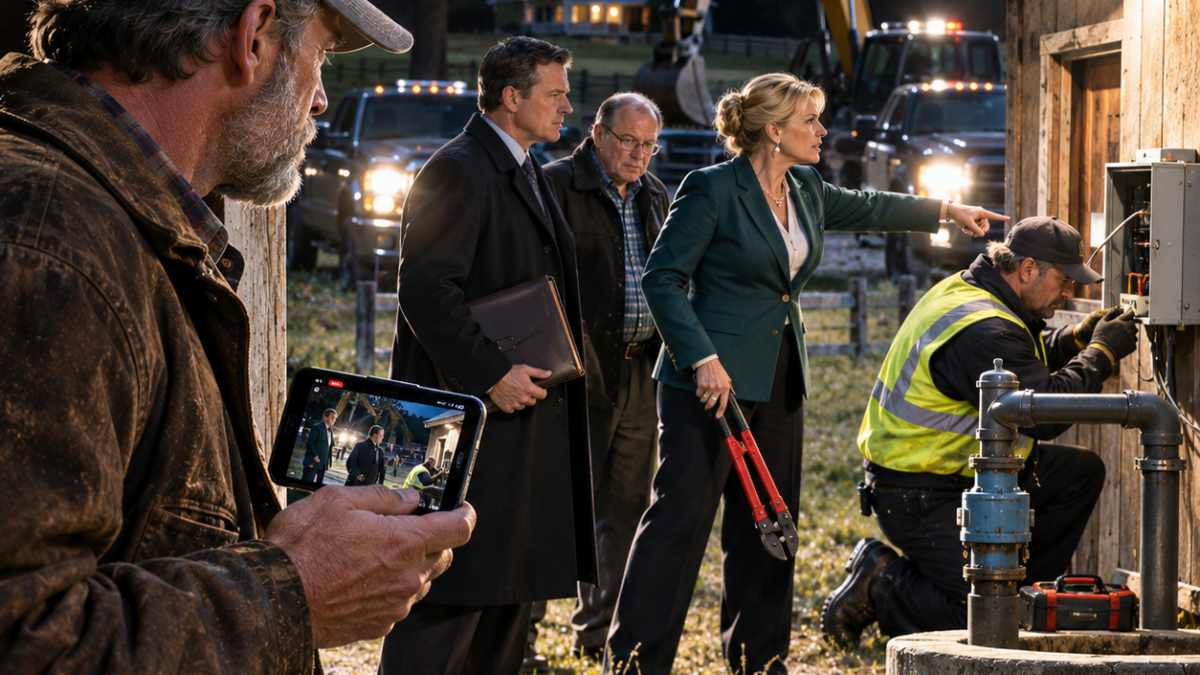
HOA Karen Tried to Seize My Permitted Farm Well at Midnight—Then Her Hidden Water Reports Cost the HOA $268,400.
At 11:42 p.m., four trucks and an excavator rolled onto my farm while the HOA president stood beside my well house holding bolt cutters and a document labeled NOTICE OF SEIZURE.
She thought she was about to take control of the only clean well in the valley, but she had no idea that four trail cameras were recording every word and a sheriff’s deputy was already watching the live feed.
What scared me most wasn’t the machinery or the fake lien she had filed against my land—it was the confidential water report hidden inside her own clubhouse that finally explained why she needed my well so badly.
My name is Jonah Ridley.
I was fifty-eight years old when the president of Stonegate Hollow Estates tried to seize a well that sat almost half a mile inside my farm.
But the story didn’t start with bolt cutters.
It started with drought.
Three summers earlier, our valley stopped looking like the place my father had spent forty years farming.
The creek behind the south field disappeared first.
One week there was still enough water moving between the stones for minnows.
The next week there were isolated pools.
By August, nothing remained except cracked mud and a narrow scar winding through brown grass.
My corn curled inward.
The pasture went yellow.
I sold twelve head of cattle early because I couldn’t justify hauling enough water to keep them.
Every morning I walked the fields with the same sick feeling.
My father, Tom Ridley, had survived bad years.
Floods.
Frost.
A tornado that took half a barn.
A drought in 1988 that he still talked about until the year he died.
He always said:
“A farm doesn’t belong to the man whose name is on the deed. It belongs to whoever is willing to keep it alive long enough for the next person.”
Dad had been gone seven years.
There was no next person yet.
Just me.
And I refused to become the Ridley who lost the land because I was too stubborn to admit rain wasn’t coming.
I needed water.
But I needed it legally.
That mattered.
Our county sat over a regulated aquifer.
You didn’t simply hire a man with a drill rig and tell him to keep going until something came up wet.
There were permits.
Setback requirements.
Well-construction standards.
Water-use classifications.
State review.
So I hired a licensed hydrogeologist first.
Then a licensed drilling contractor.
We selected a location near the north field, far from septic systems, fuel storage, and the old livestock lot.
I submitted the application to the state water resources division.
And then I waited.
Six weeks.
Longest six weeks of that summer.
Every day the fields got worse.
Then the envelope arrived.
STATE WATER WITHDRAWAL AND WELL CONSTRUCTION PERMIT.
APPROVED.
I read the permit twice.
Then a third time.
PART2:
I was so relieved I put it in a cheap wooden frame and hung it in the barn office.
Dad would have laughed.
He framed family photographs.
I framed government paperwork.
But that piece of paper meant the farm had a chance.
The drill crew arrived on a Tuesday.
The first hundred feet gave us nothing useful.
Two hundred.
Still mostly dry formation.
At three hundred, the driller climbed down and said:
“We’re getting close.”
“How close?”
He shrugged.
“Close in geology can mean twenty feet or two hundred.”
I hated him for that answer.
At 340 feet, everything changed.
Water came up clear and cold.
The driller tested the flow.
Then tested it again.
He looked at me.
“You’ve got a good one.”
“How good?”
“More than enough for what’s on your permit.”
I stood beside the rig with mud on my boots.
And cried.
Not politely.
Not one dignified tear.
I cried like a twelve-year-old kid.
The driller pretended not to notice.
Good man.
For the first time in two years, I could picture green fields again.
Two days later, Maureen Castellan arrived.
Teal sedan.
Pearl earrings.
Cream blouse.
Dark green jacket.
She drove halfway up my gravel lane without calling, parked beside the drill rig, and stepped out holding a leather folder.
I knew who she was.
Everyone did.
Maureen was president of Stonegate Hollow Estates, the upscale subdivision bordering the eastern edge of my farm.
Stonegate had been built in 2001 on land that once belonged to a dairy family.
Forty-two large homes.
Stone entrance.
Decorative ponds.
Private walking trails.
Clubhouse.
HOA.
My property wasn’t part of it.
Never had been.
Maureen looked at the well casing sticking above the ground.
Then at me.
“Mr. Ridley?”
“Morning.”
“I’m Maureen Castellan, president of Stonegate Hollow.”
“I know.”
Her eyes moved toward the drilling equipment.
“This is an unauthorized structure.”
I waited.
She waited.
Finally I said:
“Unauthorized by who?”
“The association.”
“This isn’t association land.”
“The well affects the community aquifer.”
“That doesn’t make my farm part of your HOA.”
She smiled.
It was the kind of smile that does not make you feel better.
“Our covenants regulate groundwater use affecting Stonegate.”
“On Stonegate property.”
“They’re broader than that.”
“No.”
Her expression cooled.
“Have you reviewed them?”
“I’ve reviewed my deed.”
“You may want to have counsel review the regional water provisions.”
“I had the state review my well application.”
I pointed toward the barn.
“Permit’s approved.”
She didn’t ask to see it.
That was the first thing that bothered me.
If Maureen truly believed I had drilled illegally, the permit should have mattered.
Instead she looked at the well again and asked:
“What is the production rate?”
I frowned.
“Why?”
“For impact analysis.”
“How deep is the well?”
“Permit information.”
“What aquifer zone did you reach?”
I stared at her.
“You came here to tell me the well is unauthorized, but you’re more interested in how much water it makes.”
Her face tightened.
“I’m trying to determine the extent of the problem.”
“The state already did.”
She closed her folder.
“We’ll be in touch.”
The next morning, I found a notice taped to my gate.
STONEGATE HOLLOW ESTATES HOMEOWNERS ASSOCIATION.
NOTICE OF UNAUTHORIZED WATER STRUCTURE.
TEN DAYS TO CAP AND ABANDON WELL.
FINE:
$500 PER DAY THEREAFTER.
I laughed.
Then I stopped laughing.
Because official-looking paper has a way of making nonsense feel expensive.
I pulled my deed.
Title insurance.
Survey.
Every recorded restriction I had.
Read them all.
No Stonegate covenant.
No groundwater easement.
No HOA authority.
Nothing.
That evening, someone walked up my drive.
Galloway Pierce.
Seventy-one.
Widow.
She lived in Stonegate near its western boundary.
Everyone called her Galloway because she hated her first name, Margaret.
She stopped near the porch.
“Jonah?”
“Everything okay?”
She looked behind her.
Then lowered her voice.
“Ask Maureen why the HOA stopped testing our water.”
I stared at her.
“What?”
“Our community well.”
“What about it?”
“The yearly reports stopped getting posted.”
“When?”
“More than a year ago.”
“Maybe they changed reporting systems.”
She shook her head.
“No.”
“You ask the board?”
“Twice.”
“What did they say?”
“Nothing important.”
She looked toward the well site.
Then back at me.
“She’s scared of something.”
“Maureen?”
“Yes.”
“Why would my well scare her?”
“That’s what you need to find out.”
Then Galloway turned and walked home.
I stood on the porch watching her.
The question stayed with me.
Why would an HOA care this much about a farm well it didn’t own?
The fines began three days later.
$500.
Then another.
Then another.
I mailed back one response.
NOT AN HOA MEMBER. PROPERTY OUTSIDE STONEGATE COVENANTS. WELL PERMIT ATTACHED.
No effect.
Then I received a fourteen-page letter from Preston Vale.
Stonegate’s attorney.
He used phrases like:
Shared aquifer interference.
Community resource rights.
Constructive encroachment.
Equitable water entitlement.
Regulatory nuisance.
The letter threatened:
Daily fines.
Court action.
A lien.
Recovery of attorney fees.
Injunction.
I knew half of it was intimidation.
The other half scared me anyway.
That’s what legal letters are good at.
You can know someone is bluffing and still lose sleep wondering what happens if they aren’t.
So I called Tessa Brandt.
Water-rights attorney.
She had an office thirty miles away and the reputation of a woman who could read a deed faster than most people could read a menu.
I brought everything.
Permit.
Deed.
Stonegate notices.
Preston’s letter.
Original subdivision plats.
Tessa read quietly.
Twenty minutes.
Then she asked:
“When did your family acquire this parcel?”
“Dad bought it in 1987.”
“When was Stonegate created?”
“2001.”
She flipped another page.
“Your deed is not subject to their declaration.”
“I know.”
“I’m confirming.”
“Good.”
She read the water permit.
“Valid.”
“Yes.”
“Any shared-well agreement?”
“No.”
“Water district?”
“No.”
“Irrigation compact?”
“No.”
She leaned back.
“Jonah.”
“Yes?”
“They don’t have a legal claim to your property through the HOA documents you’ve shown me.”
Relief hit me.
For about three seconds.
Then Tessa asked:
“So why are they acting like they desperately need this well?”
I thought about Galloway.
“Their own water.”
“What about it?”
“I don’t know.”
“Find out.”
That night, my pump stopped.
No warning.
No pressure.
I checked the breaker.
Fine.
Then walked to the well house with a flashlight.
Opened the panel.
Three control wires had been cut.
Clean.
Not chewed.
Not corroded.
Cut.
I stood there staring.
Somebody had entered my farm after dark.
Opened the well controls.
And disabled the pump.
I called Deputy Cal Bishop.
He came out twenty minutes later.
Photographed the panel.
Boot prints.
Gate.
Fence.
Nothing obvious.
“You have cameras?”
“Not here.”
“Get some.”
The next morning, I bought four trail cameras.
Good ones.
Infrared.
Motion detection.
Cellular upload.
I placed them around the well house and approaches.
One watched the panel.
One watched the lane.
One covered the fence line.
One looked across the field.
Two nights later, a camera triggered at 1:18 a.m.
I opened the video.
A hooded figure.
Gloves.
Wire cutters.
The person approached the repaired control box.
Stopped.
Looked around.
Then moved behind the well house.
Face never visible.
But near the edge of the frame sat a beige pickup.
Stonegate Hollow parking sticker in the rear window.
No readable plate.
I sent the footage to Deputy Bishop.
He watched it twice.
Rubbed his jaw.
“Do you recognize the truck?”
“No.”
“Face?”
“No.”
“Plate?”
“No.”
“So I can’t tie this to a specific person yet.”
“I know.”
He looked at me.
“But this isn’t random.”
“No.”
“Keep the cameras running.”
“I will.”
“If somebody comes back, call us before you confront them.”
“I’m not planning to confront anyone.”
Cal gave me a look.
“What?”
“You’re a farmer.”
“That doesn’t mean I’m stupid.”
“It means you own tools.”
Fair.
The next afternoon, Maureen returned.
Different approach.
No warning letter.
No folder.
She was almost friendly.
“Jonah.”
“Maureen.”
“I’d like to resolve this.”
“So would I.”
She placed an envelope on the hood of her sedan.
“Fifteen thousand dollars.”
“For?”
“The well.”
I stared.
“You want to buy my well?”
“Stonegate will acquire the infrastructure and assume responsibility for it.”
“It’s on my property.”
“We can create a utility parcel or easement.”
“What happens to my farm?”
“We can negotiate continued agricultural access.”
I almost laughed.
“You want to buy my own water system and sell me permission to use it?”
“That isn’t what I said.”
“It’s close.”
She pushed the envelope toward me.
“Fifteen thousand. Confidential agreement. No further dispute.”
“NDA?”
“Yes.”
“Why?”
“Because this situation has created unnecessary tension.”
I looked toward the well.
A hole in the ground.
Pump.
Casing.
Pressure equipment.
Useful.
But fifteen thousand dollars offered by an HOA that supposedly wanted it capped?
Nobody pays that much to eliminate something they call worthless.
I slid the envelope back.
“Not for sale.”
Her smile disappeared.
Instantly.
“Think carefully.”
“I did.”
“You have no idea how complicated this can become.”
“Then explain it.”
She put the envelope into her bag.
“We’ll do this the hard way.”
She left.
I watched the teal sedan disappear down my lane.
The hard way had already been planned.
A week later, the county clerk called me.
Not because clerks normally warn property owners.
Because I had filed a standing request through Tessa for any new title instrument involving my parcel.
“Mr. Ridley?”
“Yes?”
“A lien was recorded against your farm this morning.”
My stomach dropped.
“By who?”
“Stonegate Hollow Estates.”
“For what?”
The clerk hesitated.
“Water usage assessments.”
“How much?”
“Eighty-six thousand dollars.”
I sat down.
“What?”
The filing claimed I owed Stonegate:
Unauthorized aquifer extraction charges.
Environmental mitigation.
Community water impact fees.
Attorney expenses.
Penalties.
Eighty-six thousand dollars.
A lien against a farm outside their HOA.
Tessa called it what it was.
“An attack on title.”
“Can they do that?”
“People can file things.”
“That wasn’t my question.”
“Whether it survives is different.”
She began preparing a challenge immediately.
Then Galloway came to my house again.
This time she carried a thick folder.
Her hands were shaking.
“I made copies.”
“Copies of what?”
“The clubhouse records.”
I stared.
“Galloway.”
“I was sorting committee files.”
“Are you supposed to have these?”
“I’m on the community health committee.”
That helped.
“Where did they come from?”
“Locked cabinet.”
“How did you get into it?”
She looked embarrassed.
“Maureen left the key in the drawer.”
I closed my eyes.
“Please tell me you didn’t break into anything.”
“No.”
“Steal anything?”
“No.”
“I copied documents I’m allowed to review as a committee member.”
“Good.”
She placed the folder down.
Then whispered:
“They knew.”
I opened it.
Water testing.
STONEGATE COMMUNITY WELL.
Nitrate.
Bacteria.
Chemical analysis.
Sampling dates.
Eighteen months earlier.
Then another.
Then another.
Nitrate levels above the stated regulatory threshold.
Pages stamped:
CONFIDENTIAL — BOARD REVIEW ONLY.
One report recommended immediate follow-up testing.
Another recommended resident notification and alternative drinking-water planning if results were confirmed.
I felt cold.
“How many people are using this well?”
“Forty-two families.”
“Do they know?”
She shook her head.
“Told us everything was fine.”
I called Tessa.
She came to my farm that evening.
Spread the reports across Dad’s old dining table.
Read every page.
Then again.
Finally:
“Their well is failing.”
“Can we prove that from these?”
“We can prove these reports say there was a serious problem requiring follow-up.”
She tapped the dates.
“Whether the current water is unsafe needs official testing.”
“Why hide it?”
“Property values.”
“Liability.”
“Maybe.”
She looked toward my north field.
“Or because they knew replacing their source would be expensive.”
Then everything clicked.
Stonegate did not want my well because mine was illegal.
They wanted it because mine worked.
Clear water.
Permitted.
High production.
And apparently one of the best available sources nearby.
The fine notices.
The NDA.
The lien.
The sabotage.
All of it looked different now.
They weren’t trying to protect an aquifer from me.
They were trying to gain control over my well before someone discovered what was wrong with theirs.
Tessa immediately sent the water reports to the proper state officials through formal channels.
Not Facebook.
Not neighbors.
Not rumors.
Health department.
Water resources division.
She also challenged the lien.
Then we waited.
That waiting lasted four days.
On the fifth night, at 11:42 p.m., headlights crossed my field.
One truck.
Then another.
Then another.
Four total.
Behind them:
A small excavator on a trailer.
My phone lit up with camera alerts.
I was already awake.
After the earlier sabotage, I slept lightly.
I opened the live feed.
Maureen stepped out of the first vehicle.
Teal coat over dark clothes.
Bolt cutters.
Preston Vale stood beside the second truck.
Long coat.
Folder.
The HOA treasurer, Neil Pruitt, got out carrying a flashlight.
A contractor unloaded the excavator.
I stared at the screen.
Then called Deputy Bishop.
“Cal.”
“What’s happening?”
“They’re back.”
“How many?”
“Four vehicles plus an excavator.”
“Anyone armed?”
“Not that I can see.”
“Stay inside.”
“They’re at the well.”
“Jonah.”
“I’m in the barn.”
“Do not confront them.”
I sent him the live camera link.
He opened it.
I heard his voice change.
“Is that Castellan?”
“Yes.”
“What is she holding?”
“Bolt cutters.”
Then Maureen lifted a document toward one camera.
Maybe unintentionally.
NOTICE OF SEIZURE.
She told the contractor:
“Once access is open, disconnect the system.”
Preston said something I couldn’t hear.
Maureen answered louder.
“Cap it tonight.”
Neil looked nervous.
“Shouldn’t we wait until morning?”
“No.”
“We never voted on—”
“Neil.”
He stopped.
Maureen pointed toward the well house.
“This has gone far enough.”
Then:
“Pour concrete if you have to.”
I felt every muscle in my body tighten.
Cal said over the phone:
“Jonah, stay where you are.”
I wanted to.
I really did.
Then Maureen put the bolt cutters around my lock.
Snap.
Something in me changed.
I walked out of the barn.
Phone recording.
Cal was still connected.
The contractors saw me first.
They stopped.
Maureen turned.
“Mr. Ridley.”
I kept walking.
“Evening.”
“You have been served with a seizure notice.”
“By who?”
“The Stonegate Hollow board.”
“Stonegate doesn’t own this land.”
“We have a lien.”
“That isn’t a court order.”
Preston stepped forward.
“You should direct questions to counsel.”
“I’m directing one to you.”
I pointed toward the excavator.
“What legal authority lets an HOA excavate a permitted private well at midnight?”
Preston’s mouth tightened.
Maureen raised the bolt cutters.
“You have interfered with community water rights.”
I lifted my phone.
“Go ahead.”
She stared.
“What?”
“Keep going.”
The contractors looked at each other.
I said:
“You’re on four cameras.”
Then I held up the phone.
“And the sheriff’s office is watching live.”
Maureen froze.
Only for a second.
Then she recovered.
“I am HOA president.”
Her voice shook slightly.
“I have authority.”
Headlights appeared at the end of my lane.
Red and blue lights came on.
Deputy Bishop stopped behind the trucks.
Got out.
No rush.
No shouting.
He looked at Maureen.
Then the broken lock.
Then the excavator.
“Ma’am.”
She lifted her chin.
“I can explain.”
Cal pointed at the bolt cutters.
“Put those down.”
“They belong to me.”
“Put them down now.”
Her hand trembled.
She lowered them.
For the first time since I met Maureen Castellan, I saw fear.
Cal separated everyone.
Asked names.
Photographed the vehicles.
Collected copies of the alleged seizure notice.
Asked who authorized the operation.
Neil Pruitt cracked first.
He stared at the ground.
“She told us it was legal.”
Maureen said sharply:
“Neil.”
Cal held up one hand.
“Mrs. Castellan, let him answer.”
Neil continued.
“She said the board approved emergency control of the well.”
“Did the board vote?”
Neil looked toward Maureen.
“No.”
Preston interrupted.
“This conversation should stop until my client receives counsel.”
Cal looked at him.
“You’re the HOA attorney?”
“Yes.”
“Are you representing everyone here?”
Preston hesitated.
Important hesitation.
“No.”
Neil’s eyes widened.
That was the moment he realized the lawyer standing beside him might not be his lawyer.
The contractor said:
“We were told this was a lawful utility seizure.”
Cal asked:
“By who?”
He pointed toward Maureen.
Then Preston.
The excavator never left the trailer.
Nobody poured concrete.
Nobody touched the pump.
By 2:00 a.m., the property was quiet again.
Except for my broken lock.
At sunrise, State Water Inspector Ray Kamura arrived.
Tablet.
Binder.
Field equipment.
He inspected the casing.
Seal.
Pump.
Permit number.
Electrical panel.
Then the damaged lock.
I showed him the earlier cut wires.
Camera footage.
He took notes.
Finally:
“Mr. Ridley.”
“Yes?”
“This well is properly permitted based on the records I have.”
“Thank you.”
He looked toward the broken lock.
“And tampering with a permitted well system can trigger state enforcement.”
“How serious?”
He looked at me.
“Potentially expensive.”
That was the understatement of the year.
Tessa filed our counterclaim that morning.
Trespass.
Property damage.
Well tampering.
Fraudulent lien.
Slander of title.
Attorney fees.
Injunctive relief.
Damages.
She also demanded immediate release of the $86,000 lien.
Preston Vale called her twice.
According to Tessa, the first conversation was angry.
The second was polite.
Then he stopped calling.
“What does that mean?” I asked.
“It means he finally read everything.”
“Is silence good?”
“Silence is what lawyers do when they realize the floor beneath them may not be structural.”
I liked that.
Court came several weeks later.
The room was full.
Farm neighbors on one side.
Stonegate residents on the other.
Galloway sat in the second row holding her purse in both hands.
Maureen wore a fresh teal blazer.
Pearls.
Perfect hair.
If she was nervous, she hid it well.
Neil Pruitt sat farther back.
Alone.
Preston Vale represented the HOA.
Maureen also had separate counsel by then.
Smart.
Tessa leaned toward me.
“Let them talk first.”
Judge Helen Marsh entered.
Everyone stood.
The HOA argued that my well interfered with a shared aquifer serving Stonegate.
They argued emergency necessity.
Community welfare.
Historical groundwater reliance.
They argued the lien reflected legitimate costs caused by my extraction.
Tessa wrote notes.
Never interrupted except when necessary.
Then our turn.
She began with the simplest evidence.
My deed.
Stonegate development:
No covenant.
No HOA membership.
No recorded water easement.
Then my state permit.
Approved.
Well inspection.
Compliant.
Then the lien.
Tessa asked:
“What statutory or contractual authority allowed Stonegate Hollow HOA to assess Mr. Ridley $86,000?”
Preston gave a long answer.
Judge Marsh asked:
“Where is the recorded agreement?”
Silence.
He referenced groundwater impact language in Stonegate’s declaration.
Tessa answered:
“Binding Stonegate lots.”
Judge Marsh looked at him.
“Is Mr. Ridley’s parcel a Stonegate lot?”
“No.”
That problem never improved for them.
Then Tessa played the night footage.
11:42 p.m.
Trucks.
Excavator.
Bolt cutters.
Maureen.
Preston.
Neil.
The courtroom watched Maureen cut my lock.
Listened to:
“Cap it tonight.”
Then:
“Pour concrete if you have to.”
Nobody moved.
Maureen stared straight ahead.
Preston’s jaw tightened.
Then Tessa introduced the confidential water reports.
That was when Maureen’s face changed.
Her attorney stood immediately.
“Objection.”
Judge Marsh looked at the documents.
“Basis?”
“Improper acquisition. Confidential association material.”
Tessa explained Galloway’s committee role and the chain by which the reports had been copied and later produced through formal discovery.
The judge allowed them subject to authentication.
Then Ray Kamura testified.
He explained what the reports meant.
Not that every Stonegate tap was automatically dangerous on every date.
He was careful.
But the tests showed elevated nitrate readings serious enough to require follow-up, regulatory attention, and corrective action.
He confirmed my well permit was valid.
Then Galloway testified.
Her voice shook.
She described asking about the missing test results.
Being dismissed.
Seeing reports marked confidential.
Residents never being told the full story.
Then Tessa asked:
“Mrs. Pierce, why did you bring these records to Mr. Ridley?”
Galloway looked toward the Stonegate residents.
“Because children drink that water.”
Nothing dramatic needed to follow that.
Then Neil Pruitt stood.
Not literally from the witness stand at first.
He whispered to his attorney.
His attorney approached Tessa.
Then the judge.
After a recess, Neil agreed to testify under oath.
He had brought a flash drive.
Emails.
Board communications.
Draft lien language.
Vendor discussions.
One email from Maureen read:
DO NOT RELEASE THE FULL WATER REPORT UNTIL WE CONTROL THE RIDLEY SOURCE.
Another:
THE FARM WELL MUST BE BROUGHT UNDER STONEGATE CONTROL BEFORE THE STATE GETS INVOLVED.
Another instructed Preston’s office to pursue the lien aggressively.
Another referred to:
FIXING THE RIDLEY PROBLEM.
Neil testified that the board had never formally voted to seize my well.
Maureen had represented the midnight operation as an emergency enforcement action already authorized by counsel.
Preston’s face went rigid.
His attorney requested a recess.
Maureen turned toward Neil.
“You coward.”
Judge Marsh looked up.
“Mrs. Castellan.”
Maureen stopped.
The judge’s voice never became loud.
It didn’t need to.
By that point, the case had changed completely.
The question was no longer:
Did Jonah Ridley drill an improper well?
The documents answered that.
No.
The question was:
Why had an HOA with no authority over my farm tried so hard to control it?
The answer was sitting in its own confidential water files.
Judge Marsh voided the lien.
Declared the HOA fines unenforceable against my parcel.
Confirmed that Stonegate’s governing documents did not give the association authority over my farm well.
She issued permanent restrictions against entering or interfering with the well without lawful authority.
The financial consequences were worse.
Damages.
Title-related losses.
Property damage.
Legal fees.
Enforcement costs.
State penalties associated with the water and tampering violations.
By the time the orders were totaled, Stonegate Hollow and responsible parties were facing $268,400.
Maureen sat motionless.
Her mouth opened once.
Nothing came out.
But I wasn’t celebrating.
Because forty-two families still had a water problem.
That was the part nobody could sue away.
Within days, Stonegate homeowners demanded an emergency meeting.
The clubhouse overflowed.
Maureen tried to defend herself.
She said she had been protecting property values.
Someone shouted:
“By hiding nitrate reports?”
She said she was trying to avoid panic.
Another resident:
“My children drink that water.”
She blamed advisors.
Then contractors.
Then misunderstanding.
Neil’s emails were already circulating among attorneys.
The room wasn’t interested.
A removal vote began.
Maureen resigned before it finished.
The state health department ordered immediate testing of Stonegate’s system.
Bottled-water guidance followed for affected households while officials confirmed current conditions.
The HOA had to develop a remediation plan.
Treatment.
Retesting.
Possible upgrades.
Whatever the engineers and regulators ultimately required.
People were frightened.
And I understood why.
You can replace a roof.
Repair a gate.
Fight about landscaping.
Water is different.
People drink it without thinking.
Children fill cups from kitchen faucets.
Grandparents swallow medication with it.
Families make baby formula with it.
Trust is built into the act.
When that trust disappears, everything in the house feels different.
Galloway came to my porch the day after the emergency meeting.
She looked exhausted.
“They’re handing out bottled water.”
“Good.”
“Some people are scared to shower.”
“I’m sure the state will give them guidance.”
She nodded.
Then looked toward my north field.
“Your water is clean?”
“Latest tests say yes.”
She swallowed.
“Jonah…”
I already knew.
“Say it.”
“Could Stonegate buy water from you temporarily?”
I looked at the barn.
Dad’s old hat still hung on a nail beside the office door.
I knew exactly what he would have said.
Not because Dad was soft.
He wasn’t.
But he never punished thirsty people for decisions made by somebody sitting in an office.
I called Tessa.
“You’re going to hate this.”
“I already do.”
“I want to share water.”
“With Stonegate?”
“Temporarily.”
Silence.
Then:
“Legally?”
“Yes.”
“Metered?”
“Yes.”
“Permitted?”
“Yes.”
“Written agreement?”
“Yes.”
“Then I hate it less.”
We did everything properly.
State approval.
Temporary water-sharing agreement.
Defined volume.
Testing.
Liability.
Cost reimbursement.
Termination conditions.
Stonegate could draw clean water while its own system was being repaired and brought back into compliance.
The new HOA board signed.
No handshake-only deal.
No midnight equipment.
No secret lien.
Paperwork.
Public vote.
Recorded terms where necessary.
Galloway was the first Stonegate resident I personally saw fill a container.
She brought two blue jugs.
I opened the temporary filling station near the barn.
Water ran clear.
She held one jug beneath the spigot.
When it filled, she turned toward me.
Tears in her eyes.
“I’m sorry.”
“For what?”
“For believing Maureen when she said you were stealing our water.”
“You didn’t file the lien.”
“I still believed her.”
“Most people believe whoever has the clipboard.”
She laughed through the tears.
Then I cried too.
Couldn’t help it.
Dad’s farm had nearly died from drought.
Now the well that saved it was helping the people whose HOA tried to take it.
There was something almost too neat about that.
Real life rarely gives you a moment that clean.
This one did.
The financial fallout took longer.
Stonegate’s insurance covered some portions.
Other amounts came from reserve funds.
Certain penalties were assessed directly.
Attorneys fought over who was personally responsible for which actions.
Preston Vale faced professional scrutiny over his role in the lien and midnight operation.
He maintained that he had relied on information provided by his client.
Maureen’s attorneys blamed board confusion.
Neil cooperated.
I stopped following every argument.
Tessa handled mine.
All I wanted was:
Clear title.
My well protected.
My legal expenses paid.
My property repaired.
No HOA claim hanging over my farm.
We got that.
The $86,000 lien disappeared from the county record.
A formal release was filed.
Tessa made me frame that too.
It joined the well permit in the barn office.
Two pieces of paper.
One proving the state had given me permission to drill.
The other proving Stonegate never had permission to take it.
Maureen’s story didn’t end with one courtroom hearing.
There were investigations into the hidden reports and the financial decisions surrounding the HOA’s water system.
I won’t pretend every accusation people made afterward was proven.
Some residents claimed Maureen had known for years that the well would fail.
I never saw evidence supporting that far back.
Others said she had planned from the beginning to steal my farm.
That wasn’t true either.
The documents showed escalation.
First the water problem.
Then secrecy.
Then my new well.
Then notices.
Then the purchase offer.
Then the lien.
Then the attempted seizure.
Bad decisions growing around the first bad decision.
That was enough.
Several months later, Stonegate completed major repairs and treatment upgrades.
The state required repeated testing.
Numbers improved.
Then stabilized within required limits.
The temporary water-sharing arrangement ended only after regulators confirmed their system could safely resume normal service.
The last tanker left my farm on a cool Friday afternoon.
The new HOA president, Daniel Mercer, came to the barn.
“Jonah.”
“Daniel.”
“We’re done.”
“State signed off?”
He held up the letter.
“Yesterday.”
I read it.
Then handed it back.
“Congratulations.”
He smiled.
“That might be the first time anyone congratulated an HOA on water treatment.”
“You earned it.”
He looked toward my well house.
New lock.
Repaired panel.
Camera still mounted above it.
“We owe you.”
“No.”
“Yes.”
“You paid under the agreement.”
“That’s not what I mean.”
I knew.
“You don’t owe me gratitude for water.”
“We owe you for not treating residents the way Maureen treated you.”
I considered that.
“Then don’t let the next board become Maureen.”
Daniel nodded.
“We changed the rules.”
Independent water testing posted directly to homeowners.
Automatic release of safety reports.
No board president could suppress a health notice.
Major emergency expenditures required documented votes.
Related-party contracts had to be disclosed.
And no HOA officer was ever again allowed to create some homemade “seizure notice” and convince themselves that stationery turned it into law.
Good rules.
Boring.
Necessary.
One evening, almost a year after the midnight incident, I saw Maureen at the far end of my fence.
Alone.
No teal sedan.
No folder.
No pearls.
She stood outside the property line.
That mattered.
I walked over.
“Maureen.”
She nodded.
“Jonah.”
“What are you doing here?”
“Leaving.”
“Stonegate?”
“Yes.”
I waited.
She looked across my fields.
Green that year.
The well had done its job.
“I used to think that water belonged to whoever could control access to it.”
I said nothing.
She continued:
“Stonegate was going to fall apart.”
“Because of the well?”
“Because of everything.”
She looked tired.
“Home values. Lawsuits. Families leaving. Board members blaming me.”
“Did you hide the reports?”
She closed her eyes for a second.
“Yes.”
No lawyer.
No courtroom.
Just one word.
“Why?”
“I thought we could fix it quietly.”
“You didn’t.”
“I know.”
“When did my well become part of that plan?”
Her eyes moved toward the well house.
“When I learned how strong the flow was.”
There it was.
“You wanted it.”
“We needed it.”
“Those are different things.”
“I know that now.”
“You offered fifteen thousand.”
“I thought you’d take it.”
“And when I didn’t?”
She looked at the dirt.
“I panicked.”
“You filed an $86,000 lien.”
“Yes.”
“Then came here at midnight.”
“Yes.”
“With an excavator.”
Her mouth tightened.
“I thought if we controlled the source, we could control the crisis.”
I looked at her.
“Control only lasts until the truth shows up.”
She nodded.
No argument.
Then she left.
I never saw her again.
Years later, the well still runs.
I replaced the pump once.
Had the casing inspected twice.
Every water test goes into a binder.
Copies in the barn.
Copies with Tessa.
She says I’m paranoid.
I tell her paranoia is cheaper than litigation.
Galloway still lives in Stonegate.
She’s older now.
Walks slower.
Every summer she brings tomatoes.
Too many tomatoes.
Last July, she sat on my porch drinking iced tea.
She looked across the fields.
“Remember when Maureen called that thing unauthorized?”
She pointed toward the well.
“Every day.”
“Best unauthorized well in the county.”
“State says otherwise.”
She laughed.
Then asked:
“Do you regret sharing the water?”
“No.”
“Even after everything?”
“The residents didn’t cut my lock.”
“Some supported her.”
“Some believed her.”
“Same thing.”
“No.”
I looked at her.
“That difference matters.”
Galloway considered it.
Then nodded.
She had been one of the people who taught me that.
Forty-two families had lived under Maureen’s decisions.
They weren’t Maureen.
Their children certainly weren’t.
My father would have understood.
Dad could hold a grudge against a man for twenty years.
But he’d still pull that man’s truck out of a ditch in a snowstorm.
When I was young, I once asked him why.
He said:
“You can decide what you think of somebody after you get him home alive.”
That was Dad.
Hard boundaries.
Soft heart.
I didn’t always manage the balance as well as he did.
But I tried.
The strangest thing about the whole fight was how close I came to being scared into giving up.
That fourteen-page legal letter almost worked.
The fines almost worked.
The lien terrified me.
When the county clerk said $86,000, I remember thinking:
Maybe I should take the fifteen thousand.
Maybe I should let them have the well.
Maybe preserving the farm meant surrendering part of it.
Fear does that.
Makes bad deals look responsible.
That is why people like Maureen use paperwork before they use excavators.
A threatening letter is quieter than a machine.
A lien is quieter than bolt cutters.
A fine is quieter than trespassing.
But the purpose can be the same.
Convince somebody resistance costs more than surrender.
What stopped it?
Paperwork too.
My permit.
My deed.
The water reports.
Camera footage.
The recorded lien.
Neil’s emails.
State inspection.
The same boring documents used to threaten me became the things that protected me.
Dad always hated bureaucracy.
He used to say permits were how government proved it knew how to own a stapler.
But if he had been standing in that courtroom, he would have understood why I framed mine.
The farm looks different now.
Green.
The creek returned after two wet years, though I no longer trust it as the only source.
I rotate irrigation carefully.
Monitor groundwater.
Follow my permit.
The well never became “endless” the way it felt that first day.
No water is endless.
That is another thing the whole fight taught me.
A good aquifer can still be damaged.
A community system can still fail.
And when people hide problems instead of dealing with them, every gallon becomes political.
It shouldn’t.
Water should be boring too.
Turn the tap.
Drink.
That’s the goal.
A few years after the lawsuit, a new family moved into Stonegate.
Young couple.
Two little boys.
The father stopped at my gate one afternoon.
“Mr. Ridley?”
“Yes?”
“I’m Aaron Cole.”
He pointed toward Stonegate.
“Just moved in.”
“Welcome.”
He looked embarrassed.
“I heard the well story.”
“Which version?”
He laughed.
“The one where the HOA tried to steal your entire farm with an excavator.”
“Already wrong.”
“I figured.”
He held up a folder.
“This might sound strange.”
“Try me.”
“I’m on the new water committee.”
I groaned.
“What?”
“Nothing.”
“We want to compare our annual test results to the surrounding groundwater samples.”
“Good.”
“Daniel said you keep records.”
“I do.”
“Would you share your recent lab reports?”
I stared at him.
Years earlier, Stonegate tried to hide its water information from everyone.
Now a committee member was standing at my gate asking openly to compare data.
“Come inside.”
We spread reports on Dad’s old kitchen table.
Nitrate.
Minerals.
Bacteria.
Static water level.
Pump tests.
Aaron took notes.
Asked intelligent questions.
When he left, he said:
“Thank you.”
“For?”
“Not hating Stonegate forever.”
I thought about that.
“Hating forty-two houses sounds exhausting.”
He smiled.
Then left.
That evening I went to the barn.
Dad’s hat still hung on the same nail.
Faded brown felt.
Sweat marks around the band.
I touched the brim.
The framed permit hung beneath it.
Beside that:
RELEASE OF LIEN.
I still had the first $500 HOA fine too.
Tamara told me to throw it away.
I didn’t.
Some souvenirs are useful.
Not because you want to stay angry.
Because memory gets soft.
Years pass.
People start telling you:
It probably wasn’t that bad.
Maybe you misunderstood.
Maybe everybody overreacted.
Then you look at the paper.
CAP THE WELL WITHIN TEN DAYS.
$500 PER DAY.
You remember.
The same with the midnight footage.
I almost never watch it.
But I kept the original files.
11:42:13.
Maureen entering frame.
11:46:02.
Bolt cutters.
11:48:19.
Lock breaks.
11:49:07.
“Cap it.”
11:49:22.
“Pour concrete if you have to.”
Facts.
Time-stamped.
No memory needed.
People sometimes ask if I planned that night.
If I intentionally baited them by refusing to sell.
No.
That version gives me too much credit and Maureen too little responsibility.
I protected the well because somebody had already sabotaged it.
I installed cameras because Deputy Bishop told me to.
When the trucks arrived, I called him because that was the safe thing to do.
Maureen chose midnight.
She chose bolt cutters.
She chose the excavator.
She chose to keep going after the reports existed, after the lien was challenged, after she had been told my land was outside Stonegate.
Those were her choices.
The cameras only preserved them.
That distinction matters.
Truth doesn’t create misconduct by recording it.
It just makes denial harder afterward.
Deputy Bishop retired two years later.
At his retirement barbecue, he saw me.
“Ridley.”
“Bishop.”
“You staying out of trouble?”
“Mostly.”
“How’s the well?”
“Still where I left it.”
He laughed.
“Good.”
Then he looked serious.
“You know that was one of the stranger calls of my career.”
“Midnight HOA excavation?”
“Top five.”
“What beats it?”
“You don’t want to know.”
“I probably do.”
“You definitely don’t.”
He took a drink.
Then:
“You did one thing right.”
“Only one?”
“You called before walking out.”
“I still walked out.”
“Yeah.”
He frowned.
“I didn’t say you were smart.”
Fair.
“What would’ve happened if they started digging before you arrived?”
“We were coming in.”
“You watched the stream?”
“Whole thing.”
“Could you hear Maureen?”
“Enough.”
He shook his head.
“When she said she had authority because she was HOA president…”
He laughed.
“I nearly dropped my phone.”
I smiled.
“She believed it.”
“That was the problem.”
Exactly.
Maureen’s real mistake wasn’t that she wanted water.
Wanting a reliable water source for forty-two families was understandable.
Her mistake was believing urgency created authority.
That because her community needed something, she had the right to take it from somebody else.
Because the residents needed safe water:
My permit became inconvenient.
My deed became inconvenient.
My refusal became inconvenient.
Then the lien became a tool.
Then the “seizure notice.”
Then bolt cutters.
That is how abuse often grows.
Not in one huge leap.
In small justifications.
We need this.
Therefore we should have it.
We should have it.
Therefore he is wrong to refuse.
He refuses.
Therefore he is harming us.
He is harming us.
Therefore we are justified stopping him.
By the end, Maureen could stand beside an excavator at midnight and convince herself she was enforcing rules instead of trespassing.
That frightened me more than the machine.
Years later, Stonegate’s new board invited me to a community meeting about drought planning.
I almost declined.
Galloway called.
“Go.”
“Why?”
“Because they need somebody who remembers when everything went stupid.”
So I went.
The clubhouse looked exactly the way it had during court season.
Same fireplace.
Same rows of chairs.
Different board.
Aaron presented a water-resilience plan.
Storage.
Conservation triggers.
Emergency supply agreements.
Transparent testing.
Then he asked me to say something.
I stood.
Forty-two families looking at me.
Some had lived there during Maureen.
Others were new.
I said:
“I don’t have a speech.”
Galloway called from the front:
“Good.”
Everyone laughed.
I continued.
“Three things.”
“Test your water.”
“Publish the results.”
“And if you need something from your neighbor, ask before you bring an excavator.”
More laughter.
That was it.
Afterward, one woman approached.
Maybe my age.
“I was one of the homeowners who supported Maureen.”
I didn’t know what to say.
She continued.
“I thought you were stealing from the aquifer.”
“I know.”
“She told us your well was lowering ours.”
“I know.”
“I signed a petition.”
“That was your right.”
She looked uncomfortable.
“I’m sorry.”
I nodded.
“Thank you.”
“Were you angry with us?”
“Yes.”
She looked surprised.
I smiled.
“For a while.”
“That’s fair.”
“It passed.”
That was true.
Anger is useful fuel.
Terrible permanent residence.
Dad taught me that too.
The lawsuit money didn’t make me rich.
The $268,400 number sounded enormous when it appeared in headlines.
But it represented multiple categories.
Damage.
Legal costs.
Title issues.
Penalties.
Enforcement expenses.
By the time lawyers, repairs, and other obligations were sorted out, nobody drove away with a cartoon sack of cash.
I got my losses covered.
My title cleared.
My well protected.
That was enough.
The bigger cost to Stonegate was trust.
You can rebuild reserves.
You can replace a pump.
You can treat a well.
Trust takes longer.
The new board spent years publishing everything because residents no longer accepted:
Don’t worry about it.
Good.
They shouldn’t.
One spring morning, I walked out to the well house.
Sun coming over the eastern ridge.
Stonegate roofs visible through the trees.
My fields green.
I opened the door.
Checked pressure.
Everything normal.
On the wall, I had mounted one small sign.
Not for visitors.
For me.
Dad used to say it.
I wrote it myself:
DO IT RIGHT THE FIRST TIME, BECAUSE THE SECOND TIME WILL HAVE LAWYERS.
He never actually said the lawyers part.
I added that.
Tessa deserves credit.
Or blame.
I stood there listening to the pump.
Water moving beneath my feet.
Three hundred forty feet down.
Same water Maureen once thought she could control with a notice.
Same well she offered fifteen thousand dollars for.
Same casing she tried to reach with an excavator.
Still mine.
Still permitted.
Still serving the farm.
And for a short time, when neighbors genuinely needed it, serving them too.
That was the ending Dad would have wanted.
Not the fine.
Not Maureen losing her position.
Not even the $268,400.
Water going where it was needed.
Legally.
Openly.
With everyone understanding whose land they were standing on.
That mattered.
Because ownership without responsibility becomes selfishness.
Responsibility without ownership becomes entitlement.
The only way people live beside each other is by respecting both.
Maureen forgot that.
For a while, I nearly forgot the first half myself.
I wanted to lock everything.
No Stonegate resident ever crosses my gate again.
No favors.
No sharing.
No trust.
Then Galloway showed up with empty water jugs.
And I remembered the forty-two families were not the woman with bolt cutters.
That is why the story ends differently than it could have.
Stonegate got its own system fixed.
I kept my well.
Nobody seized anything.
Nobody owns anyone else’s water.
The lien is gone.
The fines are gone.
The hidden reports aren’t hidden anymore.
Every current test result is available to Stonegate residents.
And my north field is greener than it had been in years.
Sometimes, just before sunrise, I stand beside the barn.
Dad’s old hat hangs inside behind me.
The pump kicks on.
I hear water move through the lines.
And I think about that first day at 340 feet when I cried because I believed the well had saved the farm.
I was right.
I just didn’t know it would have to save anything else.
The night Maureen came for it, she thought control came from a paper labeled NOTICE OF SEIZURE.
It didn’t.
The real power was in the paperwork she hoped nobody would read.
My deed.
My permit.
Her water reports.
Her emails.
Her lien.
The cameras.
The timestamps.
Truth is rarely dramatic when it first appears.
Sometimes it looks like a nitrate number on a confidential report.
Sometimes it looks like a permit framed in a barn.
Sometimes it looks like a seventy-one-year-old widow standing on your porch with shaking hands and a folder nobody was supposed to see.
And sometimes it waits quietly until 11:42 at night, when somebody with bolt cutters finally gives it everything it needs.








