HOA Karen Staged a Warehouse Collapse to Steal My $6.8M Property—Then Firefighters Found Her Crew Still Inside
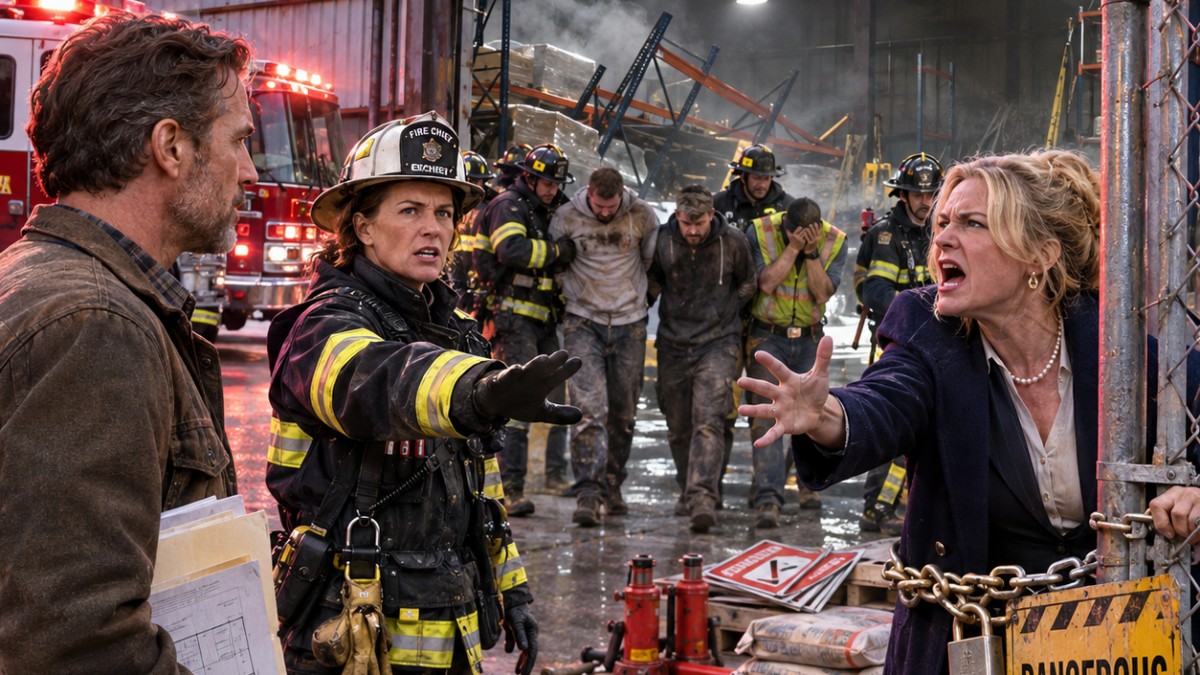
HOA Karen Staged a Warehouse Collapse to Steal My $6.8M Property—Then Firefighters Found Her Crew Still Inside.
At 4:17 in the morning, HOA president Blythe Rourke announced that Gideon Mercer’s 34,000-square-foot warehouse had collapsed, chained his gates shut, and told an entire neighborhood she was taking emergency control of a property worth nearly three times what she had offered him.
There was only one problem: the steel frame was still standing, and when firefighters ignored Blythe’s orders to stay outside, they found four men trapped inside with smoke canisters, hydraulic jacks, removed bolts, fake emergency signs, and documents showing the warehouse was supposed to be in someone else’s possession by noon.
By the time investigators followed the money, the woman who had spent months humiliating Gideon as a greedy threat to 104 families would have to explain why homeowners’ own dues had financed the fake disaster—and why her private company stood to collect $380,000 if Gideon finally lost everything.
At 4:19 that morning, Gideon Mercer woke to the sound he hated most.
Not an alarm clock.
Not a phone call.
A security alert.
The high, mechanical tone came from the tablet charging on his nightstand.
For half a second, he did not know where he was.
Then the second alert came.
WAREHOUSE MAIN ALARM.
ZONE 3.
SMOKE / ACCESS BREACH.
Gideon sat upright.
He was forty-seven years old, broad-shouldered, usually calm under pressure, and had spent nearly twenty years managing industrial construction projects before taking the risk that had changed his life.
Four years earlier, he had used most of his savings and a commercial loan to buy an aging warehouse on the edge of an old industrial district.
It had been ugly when he bought it.
Leaking roof.
Bad electrical system.
Cracked loading-bay pavement.
Outdated lighting.
Offices that smelled like mildew and nicotine.
But Gideon understood buildings.
He understood steel.
Concrete.
Loads.
Water intrusion.
Electrical systems.
Contractors.
He understood the difference between a structure that looked bad and one that was dangerous.
So he rebuilt it.
Not cosmetically.
Properly.
Roof repairs.
New wiring.
Updated fire suppression.
Reinforced doors.
Security cameras.
Drainage improvements.
Structural review.
PART2:
By the time he finished, all 34,000 square feet had become useful storage and light-industrial space.
Eleven small businesses rented from him.
A custom furniture maker.
A restaurant supply company.
A local moving company.
An appliance distributor.
A seasonal event-rental business.
A small flooring contractor.
None of them were glamorous.
That was the point.
They were ordinary businesses employing ordinary people.
Their rent paid Gideon’s mortgage.
His building kept their inventory dry and their workers employed.
That warehouse was not a trophy.
It was an ecosystem.
And somebody had been trying to destroy it for weeks.
Gideon grabbed his phone.
Three missed alerts.
Then a call.
His night guard, Russ Halbert.
Gideon answered while pulling on jeans.
“Russ?”
“I’m not there.”
“What?”
“Relief guy took over at midnight. He called me five minutes ago.”
“What happened?”
PART3:
“Alarm. Smoke. Something came down inside.”
“Fire?”
“Don’t know.”
“Anyone inside?”
“Shouldn’t be.”
That word stopped Gideon.
Shouldn’t.
Not nobody.
Shouldn’t.
“Where’s Marcus?”
“Outside. Fire department’s coming.”
Gideon was already moving.
“Call him back. Tell him nobody goes in alone.”
“He knows.”
“I’m on my way.”
He hung up.
A second call arrived.
Unknown number.
He ignored it.
Then he saw the security-camera thumbnail.
Gray smoke drifting from the east side.
A flashing emergency vehicle beginning to enter the access lane.
And something else.
His front gate.
Closed.
Not just closed.
Chained.
Gideon zoomed.
A heavy chain wrapped through the bars.
There had never been a chain there.
He was out of the house in less than three minutes.
By the time he reached the industrial road, sirens filled the darkness.
Red and white light rolled across wet asphalt.
Three fire engines.
Two police cruisers.
Neighbors gathering behind the fence in coats, slippers, bathrobes.
Smoke hung low above the east roofline.
Gideon pulled toward his own gate and saw the sign.
Bright yellow.
Fresh.
Bolted to the fence.
DANGEROUS STRUCTURE — HOA EMERGENCY CONTROL
For several seconds, Gideon simply stared.
Then he saw Blythe Rourke.
Silverbrook Estates sat directly east of the warehouse, separated by a chain-link fence and a narrow drainage easement.
One hundred four expensive homes.
Trimmed hedges.
Matching mailboxes.
Architectural rules.
Pool.
Clubhouse.
And for the last six years, an HOA dominated by fifty-two-year-old Blythe Rourke.
Blythe had the kind of confidence that made people assume she must possess authority even when she did not.
She dressed like every conversation might become a board meeting.
Pressed blazers.
Low heels.
Hair that never seemed affected by wind.
She was famous inside Silverbrook for violations.
Wrong shade of beige.
Garbage can visible after collection day.
Basketball hoop three feet outside the approved location.
Holiday lights still up on January 16.
People joked about her.
Until the joke affected them.
For the past year, Blythe had been pushing outward.
Letters to adjacent property owners.
Complaints about traffic.
Noise.
Fences.
Landscaping.
Anything she could frame as affecting “community standards.”
Gideon had tolerated most of it because the warehouse was legally outside the HOA.
Then six days earlier, she had crossed the line.
He remembered the morning clearly.
Three men in dark green HOA security polos stood beside the east wall with a measuring tape.
Gideon had parked his truck and walked toward them.
“Can I help you?”
None answered.
Then Blythe stepped out from behind a white SUV.
Navy blazer.
Tablet in hand.
“Mr. Mercer.”
“Ms. Rourke.”
“We’re conducting a safety review.”
“No, you’re not.”
Her smile barely moved.
“Your east wall is showing signs of structural distress.”
Gideon looked at the brick facade.
There was an old hairline crack in one section of decorative masonry.
It had existed for years.
Engineers had documented it.
It was cosmetic.
“That wall has already been inspected.”
“By whom?”
“People who inspect buildings.”
One of the security men almost smiled.
Blythe did not.
“The structure is dangerously close to residential homes.”
“It’s exactly where it was when your neighborhood was built.”
“That doesn’t make it safe.”
“Who authorized you to inspect my property?”
“The HOA has an obligation to protect its residents.”
“Inside Silverbrook.”
“Hazards don’t respect property lines.”
“That sentence doesn’t give you jurisdiction.”
Gideon watched her expression.
No embarrassment.
No retreat.
Instead:
“We’re prepared to resolve this cooperatively.”
“How?”
“The association is willing to purchase the property.”
That surprised him enough to silence him.
“The warehouse?”
“Yes.”
“It isn’t for sale.”
“Everything has a price.”
“Not this.”
“Two-point-four million.”
Gideon almost laughed.
His most recent professional appraisal put the warehouse at $6.8 million.
And that was before lease values were fully considered.
“Two-point-four?”
“Cash-compatible transaction. Rapid close.”
“You’re offering roughly a third of market value.”
“We’re offering certainty.”
“Certainty about what?”
Blythe looked toward the brick wall.
“What happens if the city decides your building is unsafe.”
The threat was not subtle.
Gideon stepped closer.
“You don’t own my warehouse.”
“No.”
“You don’t own this lot.”
“No.”
“You don’t even own the ground your security people are standing on.”
That was true.
They were on Gideon’s side of the boundary.
Blythe smiled.
“Unsafe buildings can be shut down much faster than owners expect.”
That was when Gideon first noticed the stranger beside her.
Lean.
Reflective vest.
Camera.
He was photographing the crack.
But not normally.
Low angles.
Tight crops.
Getting close enough that the narrow line in the veneer looked enormous through forced perspective.
Gideon asked:
“Who are you?”
The man did not answer.
“City inspector?”
No.
“County?”
Silence.
“Engineer?”
Blythe stepped between them.
“He’s part of our safety team.”
“Name.”
The man finally said:
“Colton.”
“Last name.”
“Not relevant.”
Gideon looked at Blythe.
“Get off my property.”
She held his eyes.
“You can cooperate today, Mr. Mercer, or lose this property tomorrow.”
That afternoon, the envelope appeared beneath his office door.
HOA letterhead.
Red text.
FINAL SAFETY WARNING — 48 HOURS
No legal citation.
No municipal seal.
No inspector name.
No authority.
Gideon had filed it.
Then Blythe called an emergency HOA meeting.
Nearly sixty residents attended.
Gideon learned about it from one of his tenants, whose sister lived in Silverbrook.
On the projector, Blythe displayed Colton’s photographs.
The tiny cosmetic crack became a canyon.
Low-angle shots made the brick appear separated from the wall.
Blythe told residents Gideon had ignored repeated warnings.
She told them the warehouse might collapse toward the homes along Silverbrook’s eastern edge.
She said children could be at risk.
Property values could fall.
Insurance could become complicated.
Then she circulated a petition demanding government closure.
More than forty people signed.
Not because forty people had inspected the warehouse.
Because one confident woman showed them a frightening photograph and told them danger was coming.
The next morning, Gideon went to the county building department.
The clerk pulled his file.
Clean.
No closure order.
No outstanding structural violation.
No inspection finding the warehouse unsafe.
“Yes, we received a petition.”
“From Silverbrook?”
“Yes.”
“Does it do anything?”
“It requests review.”
“Does it close my building?”
“No.”
“Does the HOA have authority to close it?”
The clerk looked almost amused.
“No.”
Gideon printed the file.
He believed facts would end the argument.
He underestimated Blythe.
Noise complaints followed.
Delivery complaints.
Anonymous calls.
Someone began parking across the access road and photographing every truck.
Then Gideon’s tenants began receiving letters.
The furniture maker, Paul Avers, walked into Gideon’s office holding one.
“Tell me this is garbage.”
Gideon read it.
Silverbrook HOA letterhead.
Warning that the warehouse was under “active safety review.”
Advising tenants that stored goods could be at risk.
“It’s garbage.”
“Are you sure?”
“Yes.”
“Because I’ve got eighty thousand dollars in finished orders in here.”
“The building is safe.”
“My insurer asked me if there’s an investigation.”
“There’s a complaint.”
“That’s not the same thing.”
“I know that.”
Paul looked worried.
His business employed seven people.
He was not interested in property-line philosophy.
He wanted to know whether he could deliver furniture next month.
Gideon printed the county record and gave him a copy.
“Nothing has changed.”
Paul nodded.
But the seed had been planted.
That was Blythe’s real attack.
Not one dramatic order.
Doubt.
Enough doubt that tenants asked questions.
Banks asked questions.
Insurers asked questions.
The restaurant supply company called the next day.
Then the moving company.
The warehouse stayed physically intact while its reputation began cracking.
Inside Silverbrook, another crack was forming.
Treasurer Tessa Calder had trusted Blythe for years.
Tessa was forty-three.
Careful.
Methodical.
The type of person who reconciled accounts to the penny and kept printed copies even when everyone told her cloud storage was enough.
She was not anti-HOA.
Quite the opposite.
She believed associations worked when people followed process.
That was why the $120,000 transfer bothered her.
Blythe came into the HOA office and asked Tessa to move the money from reserves into a new account.
Emergency Property Risk Assessment.
Tessa asked:
“Vendor?”
“Confidential.”
“Contract?”
“The board discussed it.”
“When?”
“Executive session.”
“I was at the executive session.”
Blythe’s expression sharpened.
“Not the entire discussion.”
Tessa knew that made no sense.
She was treasurer.
Financial authorization was her job.
But Blythe had controlled the board for years.
People learned not to challenge small irregularities because every challenge became a war.
So Tessa processed the transfer.
Then printed the record.
And kept it.
At the next public meeting, Gideon attended.
He carried a folder.
Deed.
Title.
Certified boundary map.
County inspection record.
He waited through forty minutes of pool-maintenance discussion and mailbox complaints.
Then open floor began.
Blythe called his name with the expression of someone inviting an enemy to demonstrate his own guilt.
Gideon walked to the front.
Placed the boundary map on the table.
“My warehouse is not part of Silverbrook Estates.”
Murmurs.
He pointed.
“Here is the recorded HOA boundary.”
Then another line.
“Here is my parcel.”
Clear separation.
“Your rules stop here.”
He tapped the map.
“My building begins here.”
Silence.
Several homeowners leaned forward.
One board member adjusted his glasses.
Blythe did not challenge the map.
That told Gideon she already knew.
Instead, she turned to the audience.
“Mr. Mercer is technically correct about the boundary.”
Technically.
The word changed the room.
“But safety is not technical.”
Gideon stared.
She continued.
“If a wall collapses onto our homes, will his deed stop it?”
“No,” someone said.
“If children are injured, will a property line comfort their parents?”
A woman near the second row muttered:
“Exactly.”
Blythe looked toward Gideon.
“He earns rent from businesses operating next to our families.”
Gideon said:
“And?”
“Some people may believe income is worth more than safety.”
There it was.
The transformation.
Gideon was no longer a property owner defending legal boundaries.
He was a greedy landlord endangering children.
A woman called:
“If you cared, you’d get it inspected.”
“It has been inspected.”
“By who?”
“The county file is right here.”
Blythe raised her hand.
“Let’s maintain order.”
Gideon realized arguing emotionally would only help her.
He gathered his documents.
Before leaving, he said:
“If you believe the building is unsafe, use the legal process.”
Blythe smiled.
“We intend to.”
That evening, the email arrived.
Subject:
STRUCTURAL HAZARD ASSESSMENT — MERCER WAREHOUSE
The report looked professional.
Letterhead.
Photographs.
Engineering language.
Load pathways.
Failure risk.
Emergency recommendations.
It claimed the east wall showed critical deterioration and that a partial collapse could occur within seventy-two hours.
Gideon read it twice.
Then reached the final page.
Professional seal.
Signature.
Everett Sloane, P.E.
Gideon knew the name.
Everett had an excellent reputation.
Fifty-nine.
Structural engineer.
Commercial work all over the county.
He had never been inside Gideon’s warehouse.
Gideon drove forty minutes to Everett’s office the next morning.
No appointment.
He put the report on the desk.
Everett read the first page.
Then the second.
His face changed.
“Where did you get this?”
“HOA.”
“I didn’t write this.”
“I know.”
“How?”
“You’ve never inspected my building.”
Everett turned to the signature page.
His face went pale.
Then angry.
He opened a filing cabinet.
Pulled out an old project folder.
Different building.
Four years earlier.
He placed the original signature page beside the HOA report.
Same signature.
Not just similar.
Identical.
Same tiny upward hook.
Same pressure variation.
Same accidental smudge at the edge of the seal.
Someone had scanned it.
Copied it.
Pasted it onto a fabricated report.
Everett said quietly:
“They stole my seal.”
Gideon looked at him.
“You want to inspect the warehouse?”
Everett did.
That afternoon, he spent three hours inside.
Steel columns.
Roof framing.
Foundations.
Connections.
Anchor points.
Masonry.
He photographed everything.
Then he crouched beside the famous crack.
“This is veneer.”
“I know.”
“Decorative.”
“I know.”
“Doesn’t carry the building.”
“I know.”
Everett looked at him.
“I’m saying this for the report.”
The steel frame was structurally independent of the brick facade.
The crack looked ugly from the right angle.
Nothing more.
Everett’s formal assessment found no evidence matching the catastrophic claims.
That mattered.
But something else mattered more.
They had documented the condition before anybody could alter it.
That night, Gideon reviewed two weeks of camera footage.
He found the white work truck.
1:03 a.m.
Two nights.
Same vehicle.
Same reflective vest.
Colton.
Walking the fence.
Looking at cameras.
Noting angles.
Pausing near the side door.
Gideon searched public licensing records.
Colton Briggs.
Thirty-eight.
Demolition and site-clearing contractor.
Several projects connected to one company.
Strickland Ventures.
Owner:
Nolan Strickland.
Fifty-six.
Developer.
Gideon searched county filings, planning documents, and HOA meeting minutes.
One line jumped out.
Discussion with Nolan Strickland regarding future commercial redevelopment along eastern neighborhood boundary.
Eastern boundary.
The warehouse.
Then Russ Halbert came into Gideon’s office.
Russ had been a warehouse foreman for years before shifting into operations.
Reliable.
Not easily rattled.
“A guy approached me last week.”
“Who?”
“HOA guy. Maybe contractor.”
“What did he want?”
“Asked which part of the warehouse was empty overnight.”
Gideon stared.
“What did you say?”
“Nothing.”
“Exact words?”
Russ thought.
“He said, ‘When does the east section usually clear out?’”
That ended the idea that this was merely political harassment.
Somebody was studying access.
Occupancy.
Cameras.
Doors.
Gideon called Delia Voss.
Real estate attorney.
Forty-nine.
Precise to the point of intimidation.
Her first question was not:
What did they say?
It was:
“What can you prove?”
Gideon sent everything.
Threat letters.
County records.
Fake engineering report.
Everett’s statement.
Security video.
Colton’s licensing record.
HOA minutes.
Delia reviewed it.
Then:
“Preserve everything.”
“Already copying cameras.”
“Off-site?”
“Tonight.”
“Do it now.”
He did.
Formal evidence-preservation notices went out.
Blythe.
HOA.
Nolan.
Colton’s company.
County.
Relevant vendors.
No one could later claim emails or files disappeared routinely.
That evening, Everett called.
“I’ve been looking at the photograph of Colton at the east wall.”
“And?”
“He wasn’t documenting failure.”
“What was he doing?”
“Looking for a place where damage could be made to look convincing.”
The next two days became pressure from every direction.
Two strangers appeared near the east fence after midnight carrying equipment cases and a rolled blueprint.
They disappeared before security reached them.
One went directly toward the rarely used side door.
Not searching.
Knowing.
Then Gideon’s bank called.
The loan was due for refinancing in forty-five days.
“We’ve received information suggesting a structural issue.”
“From who?”
“We can’t discuss complainants.”
“Do you have an inspection?”
“No.”
“I do.”
“Send it.”
“Today.”
“Please.”
Commercial lenders dislike uncertainty.
Uncertainty changes risk.
Risk changes terms.
Terms can kill a business.
The same day, a major retailer postponed a delivery.
A tenant asked for written assurance that operations would continue.
For the first time, Blythe’s campaign cost Gideon real money.
That afternoon, Nolan Strickland arrived.
Silver sedan.
Dark suit.
Silver cufflinks.
The kind of man who entered a room as though someone had already agreed to meet him.
“Gideon.”
“Mr. Strickland.”
“I’ve heard you’re having a difficult week.”
Gideon almost laughed.
“Have you?”
“Banks get nervous.”
“Mine called.”
“Tenants too.”
“Some.”
Nolan sat without being invited.
“I can solve this.”
He placed a purchase agreement on the desk.
Price:
$2.4 million.
Exact same offer Blythe had made.
“Interesting coincidence.”
Nolan smiled.
“Market reality.”
“My appraisal says $6.8 million.”
“Your appraisal assumes an operating warehouse.”
“And?”
“If the city closes it, valuation changes.”
Gideon opened the contract.
Most looked normal.
Then came access.
Pre-closing possession rights.
Buyer contractors.
Keys.
Alarm codes.
Immediate site access.
Gideon looked up.
“You want control before you own it.”
“Due diligence.”
“You want contractors inside before closing.”
“Standard.”
“No.”
“Read the full offer.”
“I did.”
“It expires in forty-eight hours.”
“Then in forty-nine hours it’ll be expired.”
Nolan’s expression cooled.
“Some opportunities disappear when government gets involved.”
“That supposed to scare me?”
“No.”
He stood.
“Just reality.”
After he left, Delia reviewed the contract.
“Don’t sign.”
“I wasn’t going to.”
“This is aggressive.”
“What part?”
“Access language. Control rights. Remedies if closure occurs.”
“What are they trying to do?”
“Best case? Corner you financially.”
“And worst?”
Delia looked at him.
“I don’t know yet.”
That scared Gideon more than a clear answer.
He sent formal notices.
No HOA entry.
No contractor access.
No transfer agreement.
No private safety order had legal force.
Blythe replied within an hour.
If anyone is hurt when that building comes down, the blood will be on your hands.
Gideon forwarded it to Delia.
She replied:
Preserved. Do not answer.
Inside Silverbrook, Tessa stayed late reconciling accounts.
That night, she heard voices behind the conference-room door.
Blythe.
Nolan.
Tessa was not trying to spy.
She stopped because she heard Gideon’s name.
“He won’t sign,” Blythe said.
Then Nolan:
“Then we make the building worthless.”
Tessa froze.
A pause.
Then Nolan again:
“Everything has to happen before noon.”
Tessa backed away.
Left the office.
Did not confront them.
She went home.
Barely slept.
The next morning, a neighborhood-wide notice appeared.
EMERGENCY STRUCTURAL RESPONSE TEAM
No vendor name.
No county authorization.
No city authorization.
Just HOA language saying a private emergency team had been hired to protect residents from a possible warehouse collapse.
Gideon reviewed access credentials.
One former short-term tenant had failed to return two subcontractor credentials.
He deactivated them.
Reset alarm codes.
Doubled overnight patrols.
Reinforced the east fence.
Tessa reviewed finances.
Payments split below board-approval thresholds.
Different vendor descriptions.
Same connected companies.
Then a reference to $1.6 million in escrow.
Commercial development.
Not approved by homeowners.
She printed everything.
Locked it in her desk.
That afternoon, Everett and Gideon inspected the east wall again.
Everett crouched.
Touched mortar.
His expression changed.
“What?”
“Fresh disturbance.”
“Where?”
“Here.”
Several bricks near the bottom had been loosened.
Anchors tampered with.
Not enough to threaten the steel frame.
Enough for a dramatic facade failure.
Gideon felt anger rise.
Not fear anymore.
Anger.
“Can we repair it?”
“Yes.”
“Now?”
“Photograph first.”
They documented.
Then Everett said:
“Close this bay.”
Gideon did more.
Every high-value shipment moved away from the east side.
Tenant goods relocated toward center bays.
East section sealed.
No workers.
No inventory.
That decision later saved him from a much worse disaster.
At 2:00 a.m., a service truck stopped behind the warehouse.
Four men exited.
They cut through the older west fence.
Waited for patrol to pass.
Forced the side door.
Colton Briggs led them.
Inside their equipment cases:
Smoke canisters.
Pry bars.
Hydraulic jacks.
Crushed brick.
Printed emergency signs.
Tools.
A staged collapse kit.
The plan depended on the east bay looking catastrophic.
Broken veneer.
Smoke.
Crushed tenant goods.
Warning signs.
Emergency confusion.
A building officials might close before anyone understood what happened.
But the east bays were empty.
Nothing dramatic to crush.
No inventory.
No workers.
No visual catastrophe.
So Colton changed the plan.
He moved deeper.
Toward twenty-foot tenant shelving.
Interior racking.
Structural-looking elements an outsider might mistake for part of the building.
They began loosening bolts.
One worker later told investigators he objected.
“This isn’t what we were told.”
Colton said:
“Just create enough damage to get it closed.”
They removed more.
The shelving became unstable.
Colton called someone.
The phone records later showed repeated contact with Blythe.
He said the situation was getting dangerous.
He wanted to stop.
The answer came back:
No delays.
The building had to be condemned that morning.
Before noon.
At just before four, a final bolt came out.
The racking folded.
Metal screamed.
Pallets fell.
Boxes burst.
A neighboring section shifted.
Dust filled the center aisle.
Almost simultaneously, loosened decorative brick on the east facade came down.
The alarm triggered.
Smoke canisters began pouring gray smoke.
Blythe called 911.
She reported a warehouse collapse.
Said the entire structure might fail.
Then gave the detail that would later destroy her credibility.
She said she had personally confirmed nobody was inside.
A truck driver in the neighboring freight yard saw flashlights moving behind warehouse windows.
Then heard someone screaming.
He called 911 too.
4:17 a.m.
Firefighters came for a collapse.
They found a crime scene.
When Gideon reached the gate, Blythe was already controlling the narrative.
“The building has failed.”
“Nobody goes inside.”
“The HOA has assumed emergency control.”
“Mr. Mercer ignored us.”
“Residents must stay back.”
She spoke loudly enough for neighbors to hear.
Several were filming.
Gideon did not argue.
He walked to the nearest police officer.
“That lock isn’t mine.”
The officer looked.
“That sign?”
“Not mine.”
“HOA?”
“Has no legal authority over the property.”
“Owner?”
“Me.”
“Anyone supposed to be inside?”
“No authorized worker.”
Then Fire Chief Marla Whitcomb arrived.
Forty-five.
Sharp-eyed.
Command presence without theatrics.
She looked at the facade debris.
Smoke.
Roofline.
Doors.
Then asked:
“Owner?”
Gideon stepped forward.
“I am.”
“Floor plan?”
“In my truck.”
“Fire suppression layout?”
“With it.”
“Hazardous materials?”
“Normal tenant inventory. East bays cleared yesterday.”
“Any people?”
“None authorized.”
Blythe pushed forward.
“There is nobody inside.”
Marla looked at her.
“Who are you?”
“Blythe Rourke, president of Silverbrook Estates.”
“Are you owner?”
“No.”
“Building manager?”
“No.”
“Our emergency response team—”
Marla cut in.
“Are you fire command?”
Blythe blinked.
“No.”
“Then stay behind the line.”
Blythe tried again.
“The structure is unstable.”
“We’ll assess.”
“No one should enter.”
Marla’s radio crackled.
Dispatch relayed the second caller.
Flashlights.
Possible trapped person.
Possible shouting.
Blythe stepped in front of the gate.
“This property is under HOA emergency control.”
Marla stared at her.
“Ma’am, your HOA does not command a fire scene.”
Blythe stiffened.
“Step away from the gate.”
Gideon returned with a laminated floor plan.
Marla studied it.
Side exits.
Column lines.
Interior aisles.
Then came the crash.
Deep inside.
Metal shifting.
Then a human scream.
The entire yard changed.
Marla shouted:
“Cut the gate.”
Firefighters moved.
Blythe grabbed one firefighter’s sleeve.
“The building is settling!”
He pulled free.
Lieutenant Harlan Pike, police investigator, had been watching.
Forty-one.
Quiet.
Notebook already open.
He stepped beside Blythe.
“How do you know what’s happening inside?”
She stared.
“My contractors—”
“Your contractors?”
“Yes.”
“What contractors?”
She realized too late.
Harlan wrote it down.
“Don’t leave.”
Inside, the rescue team moved through dust thick enough to reduce visibility to feet.
The steel frame still stood.
The real danger came from collapsed storage racking.
They found movement.
Four men.
Not tenants.
Not employees.
Colton coughing near the front.
One worker trapped under twisted shelving.
Firefighters stabilized the steel.
Lifted.
Freed his leg.
Removed the injured man first.
Then the others.
Outside, neighbors watched.
Blythe’s face changed with each man who appeared.
Colton.
Worker two.
Worker three.
Worker four.
None in warehouse uniforms.
Harlan asked the first:
“What were you doing inside?”
“Inspection.”
The second:
“Emergency stabilization.”
The injured one said nothing.
Firefighters continued searching.
Then they found the objects.
Smoke canisters.
Not fire debris.
Placed devices.
Hydraulic jacks.
Removed bolts collected neatly in a plastic bin.
Bags of brick rubble carried in.
Fake signs for an “HOA Emergency Response Unit.”
Unused signs stacked against the wall.
Marla ordered crews to disturb nothing beyond rescue and safety needs.
“This is now evidence.”
The steel building had not collapsed.
The decorative brick facade had.
Interior racking had been deliberately compromised.
Blythe had announced a disaster before firefighters understood what had happened because she already knew what she expected them to find.
Colton saw the department camera.
His face went white.
“Turn that off.”
Marla looked at him.
“What?”
“This wasn’t supposed to happen.”
“Then explain to police what was supposed to happen.”
Colton’s eyes moved across the yard.
Then found Gideon.
Recognition.
Gideon recognized him too.
The man photographing the wall.
The man mapping the cameras.
The contractor tied to Nolan Strickland.
Blythe began moving toward her SUV.
Harlan stepped in front of her.
“Stay here.”
“What?”
“You’re not leaving yet.”
“I have residents to manage.”
“You can manage them from here.”
Officers processed the rescued men.
One worker had a thick manila envelope inside his jacket.
The contents turned a bizarre scene into a plan.
Draft possession agreement.
Demolition schedule.
Access-transfer documents.
Blythe’s signature.
And one line:
POSSESSION OF MERCER WAREHOUSE PROPERTY — COMPLETE BY 12:00 P.M.
That day.
Gideon had signed nothing.
Harlan showed him a lawful copy on the hood of Marla’s vehicle.
Gideon read:
“Emergency possession transfer. Silverbrook redevelopment project.”
He looked at Blythe.
Then at the smoke.
Then at the fake signs.
“She didn’t report an accident.”
Harlan said nothing.
Gideon finished:
“She ordered one.”
By nine that morning, half of Silverbrook knew.
Rumors changed every ten minutes.
Warehouse collapsed.
Warehouse didn’t collapse.
Men trapped.
Burglars.
Contractors.
HOA rescue team.
Sabotage.
Blythe still had supporters.
That was the astonishing part.
She gathered several board members near the fence.
“These men were there to prevent exactly what happened.”
Someone asked:
“Why were they inside before the fire department?”
“Emergency assessment.”
“Who authorized them?”
“The HOA.”
Gideon heard and almost laughed.
Blythe produced another document.
Embossed seal.
EMERGENCY PROPERTY ADMINISTRATION NOTICE
She announced Silverbrook had temporarily assumed control of the warehouse.
Delia Voss arrived minutes later.
Read it once.
Then handed it back.
“This is not a court order.”
“It is an association emergency action.”
“Your association governs property inside Silverbrook.”
“This affects our homes.”
“That does not transfer ownership.”
“The building is unsafe.”
“Then county officials can restrict occupancy.”
“Exactly.”
Delia pointed at the paper.
“Restriction is not ownership.”
A senior county building official arrived.
He confirmed it publicly.
Even if the warehouse were closed for inspection, Silverbrook gained no control over the property.
Blythe’s paper was simply something the HOA had printed.
Then phone data began coming in.
Colton.
Blythe.
Repeated contacts all week.
Gideon requested formal control of the evidence process.
No HOA employee inside.
No private contractor touching the site.
Harlan posted an officer.
Blythe screamed toward Gideon:
“Your building collapsed!”
Gideon looked at the pile of decorative brick.
Then at the standing steel columns.
“No.”
“What?”
“My building didn’t collapse.”
He looked at her.
“Your story did.”
That line spread through Silverbrook before lunch.
Blythe lost control.
She demanded Gideon be arrested.
Marla stepped forward.
“In front of everyone,” she told Harlan, “my team found four adult males inside, contrary to Ms. Rourke’s statement to dispatch that the structure was empty.”
Blythe went silent.
Then made one more mistake.
She ordered HOA security guards to block county inspectors from the gate.
“Hold the line.”
The youngest guard looked at Harlan.
Then Blythe.
Then immediately stepped backward.
“I’m not doing that.”
The other two followed.
Harlan faced Blythe.
Based on the evidence recovered, contractor statements, forged documents, and documents bearing her signature, she was detained and arrested on suspicion of offenses including conspiracy to trespass, property destruction, and fraud.
Blythe stared.
Then laughed once.
“You’re serious?”
“Yes.”
“I am president of Silverbrook Estates.”
Harlan handcuffed her.
“That isn’t a law-enforcement title.”
“You cannot do this.”
“I can.”
Neighbors who had signed her petition watched.
Some recorded.
Some looked away.
Blythe twisted toward the crowd.
Then saw Nolan Strickland.
He had arrived quietly.
Standing near the back.
She looked at him.
Not angrily.
Desperately.
As if one word from him could restore the world she thought she controlled.
Nolan turned his face away.
The cruiser left.
Tessa Calder crossed the asphalt carrying a folder.
She walked straight to Gideon.
“You’re going to want to see where the money came from.”
That was when Gideon understood Blythe’s arrest was not the end.
It was the door.
Two days later, Tessa sat in Delia’s conference room.
Bank statements.
Invoices.
Board minutes.
Payment ledgers.
Everything she had legal access to as treasurer.
Investigators received copies.
The $120,000 “Emergency Property Risk Assessment” transfer had gone to Colton’s company.
Other invoices connected to surveillance.
Fake assessment work.
Site preparation.
Then the $1.6 million escrow.
Nolan’s redevelopment plan.
Total projected value:
$9.4 million.
Gideon’s warehouse was not an obstacle beside the project.
It was the project.
Renderings showed the building transformed.
Luxury event center.
Gallery.
Rooftop terrace.
High-end retail suites.
The existing steel shell made the redevelopment attractive.
Demolish portions.
Reuse others.
Location near Silverbrook’s affluent residents.
Parking.
Access.
Value.
But the plan had one fatal problem.
Gideon owned the building.
And he had refused to sell.
Nolan had already made commitments to outside investors.
Blythe had promised the property would become available.
Then investigators found the success agreement.
Rourke Advisory Group.
Consulting fee upon successful warehouse acquisition and redevelopment:
$380,000.
Blythe controlled Rourke Advisory Group.
She had never disclosed it to homeowners.
That was the motive.
Not safety.
Not children.
Not falling brick.
$380,000.
Power.
A development deal.
A warehouse purchased cheaply after financial distress.
They were not trying to prove Gideon’s building was unsafe.
They were trying to make ownership unbearable.
The plan became clear in sequence.
Create fear.
Pressure county.
Pressure tenants.
Pressure lender.
Forge engineering evidence.
Damage facade.
Stage collapse.
Force emergency closure.
Create financial panic.
Offer $2.4 million.
Gain possession.
Complete acquisition before noon.
A man facing a frozen refinance, lost tenants, an unsafe-building label, and a warehouse full of damaged goods might sign almost anything.
They had underestimated two things.
Gideon documented.
And the east bay was empty.
Moving tenant inventory forced Colton deeper into the warehouse.
The fake disaster became a real one.
His own crew nearly died.
The special Silverbrook meeting overflowed.
Homeowners lined the walls.
Attorneys attended.
Investigators stood in the back.
Blythe was gone.
Her supporters had become remarkably quiet.
Gideon was invited to speak.
He almost declined.
Delia said:
“Go.”
“Why?”
“They need to hear facts from you, not rumors.”
“I don’t owe them anything.”
“No.”
“Then why?”
“Because some of them were manipulated with their own money.”
Gideon went.
He did not insult Blythe.
Did not call the residents idiots.
Did not remind the woman in the second row that she had called him greedy.
He laid out evidence.
Threatening notice.
Boundary map.
Clean county file.
Fake structural report.
Everett’s original signature comparison.
Security footage of Colton.
Tenant letters.
Purchase offer.
Pre-closing access clauses.
Smoke canisters.
Removed bolts.
Fake emergency signs.
Possession schedule.
Phone records.
HOA payments.
Then he looked at the room.
“She told you I was dangerous.”
No one moved.
“She told you I cared more about rent than your families.”
The woman who had called him greedy lowered her eyes.
Gideon continued.
“She spent your money creating the danger herself.”
Silence.
Not dramatic silence.
Ashamed silence.
Tessa stood.
“As treasurer, I move that Silverbrook hire an independent forensic auditor to review every payment approved by Blythe Rourke during her tenure.”
Someone seconded.
Vote.
Unanimous.
Delia went to court.
Temporary protective order.
No interference with Gideon’s property.
No transaction based on disputed transfer documents.
Evidence preservation.
No HOA agents inside without legal authorization.
No contractor access.
The judge made one thing clear.
Protective relief did not decide criminal guilt.
It did not decide final damages.
Those required process.
Evidence.
Trial or settlement.
Gideon appreciated that.
He had spent weeks watching Blythe treat accusation as fact.
He did not want justice to become the same thing in reverse.
Nolan became a formal subject of investigation.
His lawyers argued he had not known the contractors would create dangerous conditions.
Phone records and financial documents told investigators where to look.
Blythe tried shifting blame.
Colton acted independently.
Nolan pressured her.
She misunderstood.
Emergency response got out of control.
Then investigators recovered her messages.
Faster.
No delays.
Need closure before noon.
Owner won’t cooperate.
Create emergency.
The exact wording varied.
The pattern did not.
Colton cooperated.
Not because he suddenly became noble.
Because he had been trapped beneath a disaster he helped create and saw where loyalty had taken him.
He handed over messages.
Payment records.
Planning notes.
Schedules.
His cooperation was considered later.
It did not erase his role.
The injured worker required surgery.
That consequence mattered too.
The men had entered illegally and participated in damaging the warehouse.
They were still human beings.
Marla’s firefighters had gone inside because rescue comes before judgment.
Gideon visited the injured worker once.
Delia advised against discussing the case.
So Gideon said only:
“I’m glad you got out.”
The man looked ashamed.
“I’m sorry.”
Gideon nodded.
Then left.
Silverbrook removed Blythe.
Formal vote.
Clear majority.
Board members tied to her decisions were replaced.
Independent audit.
Financial controls.
No more single-person transfers beneath approval thresholds.
No more “confidential” vendors without documentation.
The $9.4 million redevelopment project collapsed.
Not physically.
Financially.
Investors backed away.
Escrow became disputed.
Recovery claims started.
Homeowners learned some of their reserve money had been diverted toward a scheme that could now cost them more.
Anger shifted.
Not toward Gideon.
Toward the person who had told them fear justified anything.
One evening, the woman who had called him greedy came to the warehouse.
Her name was Diane Pritchard.
She stood outside his office.
“I owe you an apology.”
“You don’t owe me anything.”
“I called you greedy.”
“I remember.”
She winced.
“I believed her.”
“I know.”
“That doesn’t excuse it.”
“No.”
She looked surprised by the answer.
Gideon continued:
“You didn’t inspect my building.”
“No.”
“You saw a picture.”
“Yes.”
“You trusted someone you elected.”
“Yes.”
“That part is understandable.”
She swallowed.
“The rest?”
“You accused someone you didn’t know.”
She nodded.
“Yes.”
“Don’t do it next time.”
She almost smiled.
“Fair.”
That was enough for Gideon.
He had no interest in making neighbors crawl.
Blythe had already shown what happens when power becomes humiliation.
He wanted facts.
Repairs.
Business restored.
Accountability.
The legal process lasted months.
Criminal charges followed where prosecutors believed evidence supported them.
Fraud.
Forgery related to the engineering report.
Conspiracy connected to property damage.
Other allegations were handled separately or remained disputed.
Nolan faced civil claims and financial scrutiny.
Colton and his crew faced responsibility according to individual roles.
The process was slower than the internet would later make it sound.
No single dramatic hearing solved everything.
Motions.
Depositions.
Invoices.
Engineering reports.
Insurance.
Settlement conferences.
Criminal proceedings.
Audits.
Bank recovery claims.
Months.
Gideon kept working.
That was the part nobody found exciting.
He met contractors.
Reviewed repair bids.
Spoke to tenants.
Rebuilt racking.
Repaired facade.
Replaced damaged inventory.
Negotiated delivery schedules.
Talked to insurers.
Talked to his lender.
Sent more documents than he thought could exist.
Everett Sloane supervised the structural assessment.
Every steel column.
Every connection.
Every section affected by the staged damage.
County inspectors came.
Fire officials came.
Insurance engineers came.
Nobody relied on a photograph.
They looked.
Measured.
Documented.
The warehouse was repairable.
More importantly, the core structure remained safe.
When the county issued its formal certification allowing full use, Gideon framed the letter.
Russ saw it in the office.
“You framed a building inspection.”
“Yes.”
“That’s sad.”
“Get out.”
“I’m serious.”
“Leave.”
Russ laughed.
Tenants returned one by one.
Some had never fully left.
Paul Avers brought furniture inventory back into the east bay after repairs.
The restaurant supply company resumed normal storage.
The retailer who postponed the large delivery called.
“Can you take it next Thursday?”
Gideon looked at the framed letter.
“Yes.”
The warehouse became ordinary again.
Forklifts.
Trucks.
Invoices.
Coffee.
Loading schedules.
Ordinary felt extraordinary.
Financial recovery came through judgments and court-approved settlements.
Documented repairs.
Lost rent.
Canceled deliveries.
Other provable losses.
Gideon did not get every dollar he believed the scheme had cost him.
Almost nobody in litigation does.
But he recovered enough to stabilize.
Silverbrook homeowners received mechanisms to pursue recovery of misused dues.
Blythe lost a significant portion of her assets satisfying obligations established through the legal process.
Rourke Advisory Group—the company built to collect her $380,000 success fee—became part of the financial reckoning.
She lost the presidency.
The company.
The authority.
The ability to send letters on Silverbrook letterhead and assume fear would make people obey.
Months after the fire-scene morning, Marla Whitcomb came by during a follow-up inspection.
She stood with Gideon in the rebuilt center aisle.
New racking.
Fresh bolts.
Clean concrete.
“You know what bothers me?” she asked.
“What?”
“If we’d listened to her.”
Gideon knew.
“Four guys.”
Marla nodded.
“If I held my crew outside because she said the structure was empty…”
She looked up at the twenty-foot racks.
“The injured one might not have made it through another shift.”
Gideon looked toward the east wall.
“Thank you.”
“For what?”
“Going in.”
“That’s the job.”
“She tried to stop you.”
“Lots of people try to tell firefighters how to run a scene.”
“She grabbed one of your guys.”
“That was new.”
Gideon smiled.
Then:
“And the camera.”
Marla nodded.
Department scene documentation had captured conditions from the beginning.
Before contractors could clean.
Before HOA staff could remove signs.
Before anyone could reconstruct a different story.
“Truth likes timestamps,” she said.
Gideon laughed.
“That should be on a mug.”
“Don’t.”
Several months later, the county emergency management office began looking for storage near the residential district.
Generators.
Portable lighting.
Rescue equipment.
Disaster supplies.
Marla mentioned the warehouse.
At first, Gideon thought she was joking.
“You want to store county emergency equipment in the dangerous building?”
Marla smiled.
“Certified dangerous building.”
He considered it.
Then said yes.
Not free.
Not symbolic.
A lawful lease.
Insurance.
Inspections.
Defined square footage.
Proper access.
Everything Blythe had refused to respect.
The county rented part of the warehouse.
The irony spread quickly.
Silverbrook residents noticed county emergency trucks occasionally entering Gideon’s yard.
The building once described as a threat to the neighborhood now stored equipment intended to protect that same neighborhood during storms and disasters.
When the new sign went up, Tessa visited.
She had resigned as treasurer after helping with the audit.
Not because she was accused of wrongdoing.
Because she was exhausted.
She stood with Gideon outside the gate.
The yellow HOA emergency-control sign was long gone.
The illegal chain gone.
A plain private-property notice replaced it.
County lease information posted correctly near the relevant entrance.
Tessa looked across toward Silverbrook.
Quiet streets.
Landscaping.
Normal.
“Blythe said this place would be gone in a week.”
Gideon looked at the warehouse.
Steel straight against the blue sky.
He smiled.
“She was right about one thing.”
Tessa looked at him.
“What?”
“Something was going to collapse.”
She raised an eyebrow.
Gideon nodded toward Silverbrook.
“Her entire empire.”
Tessa laughed.
It was not triumph exactly.
More release.
Because empires built on intimidation often look permanent right until the moment everyone realizes the authority underneath them was mostly borrowed.
Blythe’s had been borrowed from people who trusted her.
Homeowners.
Board members.
Vendors.
Security guards.
Once that trust disappeared, the title meant almost nothing.
The warehouse had never belonged to her.
The bank had never transferred it.
The county had never condemned it.
The HOA had never possessed authority over it.
What she possessed was confidence.
And for a long time, confidence had been enough to make other people move.
Gideon thought about that often.
The measuring tape beside his east wall.
The fake letter.
The meeting where residents called him greedy.
The forged engineering report.
The loan officer asking whether his building was dangerous.
Nolan’s $2.4 million contract sitting on his desk.
Each step was designed to make reality feel less important than pressure.
That was the entire scheme.
If Gideon became frightened enough, maybe he would sign.
If tenants became frightened enough, maybe they would leave.
If the bank became frightened enough, maybe it would refuse refinancing.
If neighbors became frightened enough, maybe they would demand government action.
If emergency crews became frightened enough by the appearance of collapse, maybe they would accept Blythe’s narrative before evidence caught up.
Fear was the tool.
That is why documentation mattered.
Not because paperwork is glamorous.
Because facts are slow.
Fear is fast.
A photograph of a crack travels faster than an engineering report explaining that the crack is cosmetic.
A rumor about a collapsing warehouse spreads faster than a structural analysis.
A woman shouting “danger” at four in the morning may be heard before the property owner calmly explains a boundary map.
So Gideon had learned to preserve.
The deed.
The inspections.
The video.
The engineer’s report.
The payment records.
The camera footage.
The timestamps.
The truth did not win because it was louder.
It won because enough of it survived long enough to be compared against the lie.
One year after the staged collapse, Silverbrook held another annual meeting.
The new board invited Gideon.
He almost declined.
Tessa persuaded him.
“You should see it.”
“Why?”
“Because everything is boring now.”
That got him.
Boring was good.
He went.
The meeting began with landscaping.
Then pool maintenance.
Then reserve funding.
Then a proposed bylaw change requiring independent legal review before the HOA took any action involving neighboring non-HOA property.
Someone asked Gideon to speak.
He stood.
No folder this time.
No dramatic evidence.
He said:
“I don’t have much to add.”
People waited.
“The most important change you can make is simple.”
“What?”
“Know where your authority ends.”
The room stayed quiet.
He continued:
“That applies to boards.”
“Owners.”
“Me.”
“Government.”
“Everyone.”
One resident asked:
“Do you still blame the neighborhood?”
Gideon considered.
“No.”
“Not at all?”
“I blame people who did specific things.”
That distinction mattered.
“Some of you signed a petition because you thought a building was unsafe.”
A few people looked uncomfortable.
“That isn’t a crime.”
Then:
“But fear makes it easy to stop asking questions.”
The woman who had apologized nodded.
Gideon sat down.
No applause.
He did not need any.
Afterward, an older homeowner approached.
“I never signed.”
Gideon smiled.
“Okay.”
“I just want you to know.”
“I believe you.”
“I thought Blythe was crazy.”
“Apparently you were ahead of the market.”
The man laughed.
Life became normal.
That was justice too.
Not only convictions.
Not only money.
Normality restored after someone tried to turn your ordinary property into a battlefield.
Gideon’s mornings returned to invoices.
Truck schedules.
Coffee.
He replaced the west fence where Colton’s crew had cut through.
Installed better lighting.
Upgraded access control.
Not out of paranoia.
Out of experience.
Russ teased him.
“You planning for an invasion?”
“No.”
“Looks like Fort Knox.”
“Fort Knox has more gold.”
“You have restaurant tables.”
“Exactly.”
Everett visited occasionally.
Once he stood beside the repaired decorative brick.
“You know what I hate?”
“What?”
“People will look at this now and think it was structural.”
“Some still do.”
“I’m an engineer. This offends me personally.”
Gideon laughed.
Everett’s forged signature case had changed his own business practices too.
He added digital verification methods to reports.
Clients could authenticate seals.
His professional association used the incident in a continuing-education seminar about document fraud.
A fake report intended to destroy one property ended up strengthening procedures across several firms.
Tessa moved on from the HOA entirely.
She started working for a local nonprofit as finance director.
Less political.
More paperwork.
She loved it.
“I like organizations where moving $120,000 requires actual documentation.”
Gideon said:
“High standards.”
“Apparently.”
Colton’s story was less clean.
He cooperated.
He also had to live with what he had done.
One of his workers was seriously injured because he kept executing a plan after he knew it was becoming dangerous.
That fact followed him.
Cooperation mattered legally.
It did not erase memory.
Nolan’s polished confidence disappeared as litigation and investigations accumulated.
Investors sued.
Agreements unraveled.
The redevelopment was never built.
The warehouse remained what it had been before Blythe decided it should become something more profitable to her.
Storage.
Work.
Small business.
It was almost funny.
All that destruction because ordinary use was less exciting than a luxury event center.
Blythe’s dream included rooftop cocktails.
Gallery lighting.
High-end shops.
People posing for photographs beneath steel beams.
Gideon preferred forklifts.
One morning, two years later, he stood inside the east bay while Paul Avers unloaded finished dining tables.
Sun came through the high windows.
A forklift beeped.
Someone shouted:
“Clear!”
Nothing cinematic.
Gideon looked toward the repaired brick wall.
Then toward the place the center racking had collapsed.
The concrete still had faint marks.
He could have resurfaced the floor.
He never did.
Not as a memorial.
Because industrial floors get marked.
That was all.
But sometimes he stopped there.
4:17.
He would remember.
Blythe shouting that nobody could enter.
Firefighters cutting the gate.
The first worker emerging through smoke.
The manila envelope.
The noon possession deadline.
Then he would keep walking.
That was important.
A person can win a case and still let the case occupy too much of his life.
Gideon refused.
He had tenants.
Work.
Friends.
A warehouse.
He did not want to spend the next twenty years being the man Blythe tried to rob.
He wanted to be Gideon Mercer.
Owner of a building she failed to take.
Those are different identities.
Years later, people still occasionally told the story badly.
“Wasn’t there an HOA lady who tried burning your warehouse?”
“No.”
“They set it on fire.”
“No.”
“They blew up the wall.”
“No.”
“Didn’t firefighters arrest everyone?”
“No.”
He would correct them.
Because exaggeration had been Blythe’s weapon.
He had no interest in inheriting it.
There had been no full structural collapse.
The steel frame remained standing.
Smoke canisters created the appearance of a fire emergency.
The facade was sabotaged.
Interior racking was dangerously compromised and fell.
Four men were found inside.
One was injured.
Evidence showed a plan to create a closure and seize financial leverage.
That was bad enough.
Truth did not require decoration.
The irony was already perfect.
Blythe wanted firefighters to stay outside because firefighters were supposed to validate the emergency from a distance.
Smoke.
Broken brick.
Danger signs.
HOA president screaming.
A frightened neighborhood.
Maybe officials would establish a perimeter, close the site, and accept her team’s framing long enough for the possession scheme to move forward.
Instead, firefighters did what firefighters do when somebody may be trapped.
They went in.
They found the people who were never supposed to be found.
They found the tools.
The smoke canisters.
The removed bolts.
The fake signs.
Then the camera preserved the scene.
Blythe’s plan depended on nobody looking too closely.
The entire case collapsed because professionals did.
That became Gideon’s strongest memory.
Not the handcuffs.
Not the meeting.
Not the money.
The moment Marla said:
“Your HOA doesn’t command a fire scene.”
One sentence.
A boundary.
Clear.
There are boundaries everywhere.
Property lines.
Legal authority.
Board power.
Emergency command.
Financial approval.
Professional licensing.
Blythe’s downfall began because she treated every boundary as negotiable if she was confident enough.
First Gideon’s property line.
Then the board’s financial rules.
Then Everett’s engineering seal.
Then contractor access.
Then county authority.
Then the fire scene.
Each time, she assumed urgency would excuse overreach.
Safety.
Emergency.
Community.
Risk.
Words became tools for making limits sound irresponsible.
That is what Gideon warned Silverbrook about afterward.
“Be careful when someone tells you there isn’t time to verify.”
Urgency is sometimes real.
Firefighters understand that better than anyone.
But real emergencies do not require fake authority.
They require competence.
Blythe had staged urgency because urgency makes people surrender judgment.
Her mistake was staging it around people trained to verify conditions under pressure.
Marla looked.
Harlan asked questions.
Everett measured.
Delia read.
Tessa reconciled.
Gideon documented.
No single hero.
Just people doing their actual jobs.
That was enough.
Years after the case ended, Silverbrook replaced the east boundary landscaping.
The old view toward Gideon’s warehouse became partly hidden by trees.
A new board member called him first.
“We’re planting along our side.”
“Okay.”
“Some roots may eventually reach the drainage easement.”
“Send the plan.”
They did.
He reviewed it.
One species was too aggressive near underground drainage.
He suggested another.
They changed it.
No threats.
No emergency meeting.
No fake engineers.
No midnight contractors.
That interaction took eleven emails and one phone call.
Boring.
Perfect.
Gideon printed the final plan only because Tessa had infected him with recordkeeping.
The county emergency-storage lease renewed.
Generators sat inside the warehouse.
Portable floodlights.
Water barriers.
Rescue supplies.
During a severe storm one spring, Silverbrook lost power.
County crews opened Gideon’s emergency-storage bay.
Generators rolled out.
One was deployed to the Silverbrook clubhouse, which had been designated a temporary cooling and charging center.
Gideon heard about it the next day.
He laughed.
Russ asked:
“What?”
“Nothing.”
“Tell me.”
“Blythe wanted to bulldoze this place into an event center.”
“So?”
“Now the warehouse is keeping her old clubhouse powered.”
Russ looked toward the ceiling.
“That’s almost too neat.”
“I know.”
“Did you plan that?”
“No.”
“Sure.”
Gideon smiled.
Life occasionally writes better irony than people do.
He never saw Blythe again after the legal proceedings concluded.
That was fine.
He did not need a confrontation.
No final speech.
No moment where she admitted everything.
People often imagine closure as the antagonist understanding why they were wrong.
That gives too much power to the antagonist.
Gideon’s closure came from opening his gate in the morning with his own key.
Seeing trucks enter.
Hearing tenants work.
Looking at the framed safety certification.
Knowing the property remained his because he refused to let another person’s certainty replace the law.
The last time Tessa visited, they stood near the front fence again.
The sun was low.
Silverbrook quiet.
She said:
“Do you ever think about selling?”
“The warehouse?”
“Yes.”
“Sometimes.”
“Seriously?”
“Everything has a price.”
Tessa laughed.
“Blythe would love hearing that.”
“Her number was still wrong.”
“How much?”
Gideon looked at the building.
“More than $2.4 million.”
“Helpful.”
“If I sell one day, it’ll be because I decide.”
That was the whole point.
Ownership does not mean property can never change.
It means change requires the owner’s consent or lawful authority.
Blythe had confused wanting something with having a right to it.
The difference cost her almost everything she had built.
Her title.
Her company.
Her money.
Her reputation.
Most importantly, the unquestioned obedience she had mistaken for permanent power.
Gideon did eventually replace the framed county certification.
Not remove it.
Upgrade the frame.
Russ mocked him for that too.
One afternoon, Gideon found a small object beneath a filing cabinet while moving furniture.
A bright yellow piece of plastic.
Part of the old fake HOA EMERGENCY CONTROL sign.
He held it.
For a second, he considered keeping it.
Souvenir.
Then threw it away.
That surprised him.
Once, he would have kept every piece of evidence forever.
By then, official records existed where they needed to exist.
Court files.
Insurance files.
Police evidence.
Audit records.
He did not need Blythe’s fake sign occupying his office.
He preferred the real one outside.
MERCER WAREHOUSE
AUTHORIZED ACCESS ONLY
Plain.
Legal.
Boring.
True.
And if anyone had told Gideon, on the morning Blythe first stood beside his east wall with three security guards and a measuring tape, that six days later she would be handcuffed while firefighters carried her own contractors out of a disaster they staged, he would not have believed them.
Not because it was impossible.
Because ordinary people rarely expect someone else’s entitlement to escalate that far.
That is how schemes like Blythe’s gain momentum.
Each step feels only slightly worse than the last.
A letter.
A complaint.
A photograph.
A rumor.
A petition.
A forged report.
A purchase offer.
Surveillance.
Tampering.
Trespass.
Then four men at two in the morning loosening bolts beneath twenty-foot shelving.
Nobody begins by saying:
We are going to create a fake industrial emergency and nearly kill our own contractors.
They begin with:
He won’t cooperate.
Then:
We need leverage.
Then:
Just make it look dangerous.
Then:
No delays.
By the time everyone understands what the plan has become, stopping feels more dangerous than continuing.
Colton learned that beneath collapsing steel.
Tessa learned it outside a conference-room door.
Silverbrook learned it from an audit.
Gideon learned it when he saw a chain on his own gate.
Power rarely announces the moment it becomes abuse.
Someone has to notice.
Someone has to say:
No.
You do not own this.
You do not have authority here.
You cannot forge that signature.
You cannot spend that money.
You cannot block firefighters.
You cannot turn fear into a deed.
That was why the final outcome satisfied Gideon more than revenge ever could.
The warehouse stayed.
The businesses stayed.
The neighborhood stayed.
The law did not require anyone to destroy Silverbrook because Blythe abused its name.
The homeowners cleaned their own house.
New board.
Audit.
Controls.
Transparency.
Gideon repaired his.
New racking.
New facade.
Better security.
And the same steel frame Blythe had publicly declared moments from collapse remained standing year after year.
Eventually the repaired brick aged enough that no one could tell where the fake disaster began.
Rain darkened it.
Sun faded it.
Dust settled.
The building absorbed the event and kept functioning.
Maybe that was the best symbol.
Not a dramatic monument.
A warehouse doing its job.
Because Blythe had wanted Gideon’s property to become evidence of her power.
Instead, it became proof of its limits.
The morning after the county emergency-management sign was installed, Gideon arrived early.
Sunlight hit the loading bays.
One delivery truck waited at the gate.
He unlocked it.
No chain.
No padlock from someone else.
No yellow warning.
The driver rolled down the window.
“Morning.”
“Morning.”
“You open?”
Gideon looked at the warehouse.
Solid.
Busy.
His.
“Yeah.”
He stepped aside.
“We’re open.”
And somewhere across the fence, Silverbrook was waking up too.
Coffee makers.
School buses.
Garbage cans.
People living ordinary lives beneath rules that had finally been forced back inside their proper boundaries.
Blythe had promised Gideon he could cooperate and keep his property—or resist and lose it.
She had been wrong.
He resisted.
He documented.
He waited.
And the building never stopped belonging to him.
The only thing that truly collapsed before noon was the lie that she ever had the power to take it.








