HOA Karen Sold 400 Hunting Passes to My Private Lake for $80,000—Then Game Wardens Rolled In on Opening Morning and Asked Who Gave Her Permission
HOA Karen Sold 400 Hunting Passes to My Private Lake for $80,000—Then Game Wardens Rolled In on Opening Morning and Asked Who Gave Her Permission
The first game warden stepped out of his truck before sunrise, raised one hand toward nearly a hundred hunters gathered along my gravel road, and shouted, “Nobody moves past that gate.”
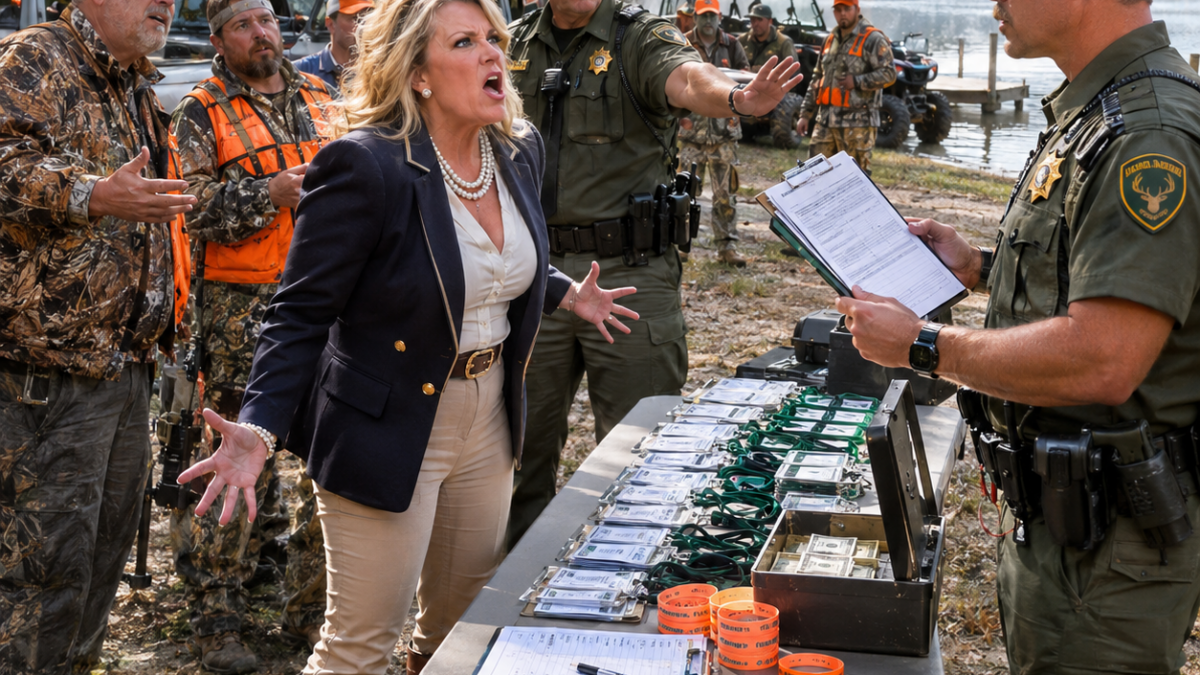
Behind him, three more state conservation trucks and two sheriff’s vehicles rolled into position while HOA president Linda Patterson stood beside a folding table covered in green and gold wristbands she had sold for access to land she did not own.
Then Officer James Walker held up a hunting authorization carrying my signature and asked Linda who had given her permission to sell four hundred passes around Willow Creek Lake—and when she pointed straight at me, I realized the signature on his paper had been stolen from a completely different document.
My name is Daniel Brooks.
I’m forty-six years old.
And Willow Creek Lake has been in my family since the 1970s.
The lake itself covers about ninety acres.
Around it are roughly three hundred more acres of woods, meadow, marsh, old logging trails, and enough rough ground that my father used to joke you could lose a tractor before lunch and still hear it running after dark.
My grandfather bought the property first.
Dad took care of it after him.
When Dad died four years ago, it came to me.
It wasn’t a resort.
There was no marina.
No golf course.
No fancy lodge.
Just an old cabin.
A wooden fishing dock.
Two storage sheds.
A gravel road from the county highway.
Bass.
Bluegill.
Northern pike.
Wild turkeys.
Whitetail deer.
And memories I valued more than anybody else could possibly price.
My daughter Sophie loved the place most.
She was twelve when Dad died.
He had taught her to fish using an old red tackle box with his name scratched into the lid.
After his funeral, Sophie sat beside me on the dock with her feet hanging above the water.
She looked across the lake and said:
“Dad?”
“Yeah?”
“Don’t ever let them turn Grandpa’s lake into one of those places where you have to buy a ticket just to sit here.”
I laughed a little.
Then saw she was serious.
“I won’t.”
“Promise?”
“I promise.”
At the time, I had no idea anybody would actually try.
Across the county road from my southern property line stood Pine Ridge Estates.
Seventy-eight homes.
Clubhouse.
Pool.
Landscaped entrance.
Homeowners association.
PART2:
The development had gone in about ten years earlier.
My land wasn’t part of it.
Their lots ended at a long wooden fence near my tree line.
The developer once asked Dad to sell Willow Creek Lake.
Dad said no.
Then they offered to buy shoreline access.
Dad said no again.
But Dad wasn’t unfriendly.
If somebody from Pine Ridge knocked and politely asked to fish, he’d sometimes say yes.
If a child wanted to see the lake, he’d walk them down himself.
Once, when a neighbor’s dog broke through thin ice, Dad helped pull it out.
Generous.
But careful.
That distinction became everything.
Linda Patterson became HOA president the spring before this happened.
Late fifties.
Short blond hair.
Expensive sunglasses.
Clipboard almost permanently under one arm.
She spoke like every conversation had already been voted on before you arrived.
The first time we met, she walked straight to my cabin.
I was replacing a rotten porch board.
She didn’t introduce herself.
She looked at the lake.
Then said:
PART3:
“We need to discuss community access.”
I set my hammer down.
“To what?”
“The lake.”
“This lake?”
She looked amused.
“Yes, Daniel.”
“This is private property.”
“We know.”
“Then there’s nothing to discuss.”
She smiled.
“Pine Ridge Estates was marketed as a lake community.”
“Then somebody marketed it incorrectly.”
That smile tightened.
“Our residents pay substantial dues.”
“I believe you.”
“They expect certain amenities.”
I pointed across the road.
“You have a clubhouse.”
“Yes.”
“Pool.”
“Yes.”
“Walking paths.”
“Yes.”
“And I have a lake.”
She adjusted her sunglasses.
“Your father was more cooperative.”
That irritated me more than I expected.
“My father was generous.”
“Exactly.”
“That isn’t the same as giving your HOA property rights.”
She wrote something on the clipboard.
“We’ll revisit this.”
I thought that was the end.
Three months later, I found a green ribbon tied around a maple near the southern fence.
Then another.
Then another.
Twenty-three total.
They followed one of Dad’s old logging trails toward the lake.
Someone had painted a white arrow on a rock.
I followed the ribbons about two hundred yards into my property.
In a clearing stood a wooden stake.
Attached to it:
PINE RIDGE OUTDOOR RECREATION AREA
COMING THIS FALL
I photographed it.
Then drove directly to the clubhouse.
Linda sat with two board members.
Gary Mills, treasurer.
Susan Reed, secretary.
I placed my phone on the table.
“Who put this on my land?”
Gary leaned closer.
“That’s part of the recreation project.”
“Your recreation project is two hundred yards inside my property.”
Linda folded her hands.
“We were going to contact you.”
“Before or after you put the sign up?”
Susan looked uncomfortable.
Linda didn’t.
“We’ve been exploring recreational opportunities.”
“Explore them on land you own.”
Gary cleared his throat.
“It’s only a trail.”
“A trail leading to my lake.”
Linda said:
“Your father let residents use that area.”
“When they asked.”
“That’s your interpretation.”
“No. That’s literally what happened.”
She slid my phone back.
“We’ll have legal review it.”
“Remove the ribbons.”
“We’ll discuss it.”
“Remove the sign.”
Three days later, the sign disappeared.
The ribbons stayed.
I took them down myself.
That was my first warning that Linda wasn’t simply trying to reopen an old walking path.
I didn’t understand what she was really building.
Two weeks later, a red pickup stopped outside my main gate.
Driver wore camouflage.
Mid-thirties.
He rolled down his window.
“Is this Pine Ridge hunting access?”
I stared.
“Pine Ridge what?”
“Hunting area.”
“There is no hunting area.”
“My brother bought a pass.”
That got my attention.
“From who?”
“Pine Ridge HOA.”
He reached into the truck and handed me a flyer.
Professional print.
Green background.
Photograph of Willow Creek Lake at sunset.
My lake.
Across the top:
PINE RIDGE EXCLUSIVE LAKE & FOREST HUNTING ACCESS
The flyer promised:
Marked deer zones.
Private forest trails.
Lakeside parking.
Managed access.
Opening-day check-in.
Price:
$125.
Limited availability:
400 passes.
I read the number again.
“Where did you get this?”
“My brother found it online.”
“Did you buy one?”
“Not yet.”
“Don’t.”
He frowned.
“Why?”
“Because Pine Ridge doesn’t own one inch of the hunting land they’re advertising.”
“Seriously?”
“Seriously.”
He looked through my gate.
“They told my brother he had a spot near the lake.”
“What’s your name?”
“Mike Harris.”
I asked for the website.
He gave it to me.
Before leaving, he said:
“My brother already paid.”
That was the moment the problem changed.
Linda wasn’t merely claiming community access.
She was selling my property.
I opened the website at the cabin.
It looked legitimate.
Beautiful photographs.
Online registration.
Rules.
Maps.
A big button:
PURCHASE YOUR PASS.
The page claimed Pine Ridge Estates had secured exclusive recreational hunting rights around Willow Creek Lake.
There were parking areas.
One beside my dock.
Another beside my storage sheds.
Another at an old western logging turnout.
All mine.
Then six hunting zones.
Zone A:
Northern ridge.
Zone B:
Creek corridor.
Zone C:
Meadow.
That meadow mattered.
Sophie and I watched deer there.
There was a big oak tree near the edge where Dad used to hang a birdhouse every spring.
Zones D, E, F:
Western shoreline.
Linda wasn’t selling access to some disputed border strip.
She was selling almost my entire property.
I screenshot everything.
Then called.
She answered after four rings.
“Daniel.”
“Are you selling hunting passes to Willow Creek?”
Pause.
“We’re offering a managed recreational program.”
“On my land.”
“The association has been working on this for months.”
“You’re selling passes?”
“We believe Pine Ridge has established recreational access.”
“Walking permission doesn’t give you hunting rights.”
“That’s for attorneys to determine.”
“You listed my dock as parking.”
“It’s a shared recreational feature.”
“No.”
“Daniel—”
“No.”
I looked out the window toward the lake.
Two ducks drifted past the dock.
“You stop selling those passes.”
“We’ve already accepted registrations.”
“How many?”
“That’s private.”
“People are paying you to enter my property.”
“Our opening day is October fifth.”
Six weeks away.
Then she said:
“I suggest you cooperate before then.”
I stared at the phone.
“Nobody has permission to hunt here.”
“We’ll see what the board decides.”
Click.
I almost drove to the clubhouse.
Instead, I called Sophie.
She was seventeen now.
Soccer.
School.
Part-time job.
Still came to the lake nearly every weekend.
When I told her, she went quiet.
“Are people going to hunt the deer by Grandpa’s meadow?”
“No.”
“How do you know?”
“Because I’m going to stop it.”
“There’s a doe with two fawns there.”
“I know.”
“And those trails aren’t safe for hundreds of people.”
She was right.
Northern ridge was steep.
Western side had marsh.
Old logging paths disappeared into brush.
Even if legal hunting had been planned properly, bringing large numbers of strangers onto unfamiliar private land without permission was reckless.
The next morning I went to the county courthouse.
Deed.
Tax records.
Recorded map.
Nothing had changed.
Pine Ridge owned its neighborhood.
I owned Willow Creek Lake and the surrounding property.
No recorded HOA hunting right.
No hunting easement.
No transfer.
I bought certified copies.
Then went to Rachel Bennett.
She’d handled Dad’s estate.
I showed her the website.
She frowned.
“They’ve already taken money?”
“At least one person.”
“You signed anything?”
“No.”
“Your father?”
“Not that I’m aware of.”
Rachel read the map again.
“They have a serious problem.”
“Can you stop it?”
“We send formal demand first.”
She drafted:
Stop advertising.
Stop selling.
Stop directing people onto the property.
Preserve records.
Notify buyers.
Remove unauthorized equipment.
$600 legal bill.
The cabin water pump had been grinding.
That $600 had been part of the replacement money.
I paid anyway.
Four days later, Linda answered.
Three paragraphs.
Pine Ridge allegedly had long-standing recreational rights.
Hunting program allegedly fell within those rights.
I was allegedly interfering with a legitimate community program.
Rachel called.
“She didn’t answer the important question.”
“Which?”
“Who authorized her to sell hunting access?”
“Nobody.”
“Exactly.”
That weekend I checked the old logging trail.
Fresh tire tracks.
Six wooden posts.
Orange marking tape.
Sign:
HUNTING ZONE C
AUTHORIZED PASSHOLDERS ONLY.
A man with a measuring wheel emerged from the trees.
Green work shirt.
Clipboard.
“Can I help you?”
“Marking zones.”
“For who?”
“Pine Ridge.”
“Linda hire you?”
“Yes.”
I introduced myself.
His face changed.
“Daniel Brooks?”
“Yes.”
He looked down at the paperwork.
Then showed me.
PINE RIDGE HUNTING ACCESS PROJECT.
PROPERTY OWNER APPROVAL:
DANIEL BROOKS.
OWNER CONSENT ON FILE.
My stomach tightened.
“Did you see my consent?”
“No.”
“Because there isn’t one.”
To his credit, he stopped immediately.
He gave me the supervisor’s information.
Then said:
“You might check the northern trail. Another crew was out there.”
I did.
First hunting stand was bolted into an oak.
Second farther uphill.
Third beside Sophie’s meadow.
Dad’s oak.
I stood underneath it.
Metal bracket.
Bolts drilled into the tree.
Old nail holes from Dad’s birdhouse still visible higher up.
That’s when I called the Michigan Department of Natural Resources.
The first person who answered transferred me to the local conservation officer.
Officer James Walker.
I sent him:
Deed.
Maps.
Website screenshots.
Flyer.
Photographs.
Work order.
He called that afternoon.
“Mr. Brooks, has anyone hunted yet?”
“Not that I’ve seen.”
“Do not confront hunters yourself.”
“Understood.”
“Some buyers may honestly believe they’ve purchased lawful access.”
That mattered.
I’d been thinking:
Trespassers.
Walker reminded me they might also be victims.
People could have booked motels.
Bought equipment.
Taken vacation days.
Planned first hunting trips with children.
They didn’t create Linda’s paperwork.
He told me to leave the stands temporarily so officers could document them.
I agreed.
Monday morning, Mike Harris called.
“You need to see my brother’s packet.”
“What happened?”
“He got the pass.”
“What else?”
“Map. Wristband. Rules.”
Pause.
“And a signed permission sheet.”
My hand tightened.
“Signed by who?”
“You.”
Six photos arrived.
Green wristband.
Receipt.
Hunting map.
Welcome letter.
Rules.
Then:
LANDOWNER HUNTING ACCESS AUTHORIZATION.
My full name.
Daniel Brooks.
Signature below.
It looked like mine.
Not vaguely.
Closely.
Long curve on the B.
Same angle.
Same spacing.
Date:
September 12.
I knew exactly where I’d been September 12.
Hospital.
Sophie’s knee surgery.
I had:
Parking receipt.
Hospital texts.
Photographs.
Messages.
I called Rachel.
“There’s a document with my signature.”
“Did you sign it?”
“No.”
“Send it.”
Ten minutes later:
“This changes things.”
“Why?”
“So far, Linda could claim misunderstanding.”
“And now?”
“If someone fabricated landowner authorization, that’s different.”
I studied the signature.
Then remembered something.
Months earlier, Linda had asked for insurance documentation after one neighborhood visitor fell near the dock.
I refused to sign her form.
Instead, I emailed an old visitor-permission note Dad had used.
My signature was on the bottom.
I found the sent email.
Printed it.
Placed it beside the hunting authorization.
Identical.
Not similar.
Identical.
Even the tiny ink break in the D.
My signature image had been lifted.
Copied.
Placed onto the hunting authorization.
I sent both to Walker.
He called.
“That’s important.”
“Can you prove it?”
“We can establish that the same signature image appears to have been reused. We still need the original file and who created it.”
Then:
“How many passes sold?”
“Linda won’t say.”
Mike’s brother was in an online group.
PINE RIDGE FALL HUNTERS.
That evening, Mike sent a screenshot.
Linda’s post:
ALL 400 PASSES SOLD!
OPENING DAY OCTOBER 5
CHECK-IN 5:30 A.M.
At $125 each:
$50,000.
I stared at the number.
Forwarded it.
Walker called twenty minutes later.
“Come to the field office tomorrow.”
“Why?”
“The authorization has a state permit reference.”
“I saw that.”
“We checked it.”
“Fake?”
“The number is real.”
Pause.
“But not for your property.”
The next morning, Walker showed me the state record.
The number belonged to Miller Creek Preserve.
Twelve miles north.
Forty acres.
State-managed conservation project.
Nothing to do with:
Willow Creek.
Pine Ridge.
Commercial hunting passes.
Someone had taken a real number and attached it to a false authorization.
Then Walker showed me another problem.
Linda’s updated hunting map included a “backup emergency exit” running across my northern boundary into state forest.
I hadn’t noticed it at first.
Sophie did.
That night she pointed at the map.
“Dad, why does this trail go through the marsh?”
I leaned closer.
The green line crossed an old wooden bridge Dad had built years earlier.
Except calling it a bridge was generous.
Two boards missing.
Support sinking.
We hadn’t driven anything over it in years.
Yet Linda’s map labeled it:
EMERGENCY VEHICLE ACCESS.
I sent photographs to Walker.
Fresh orange tape nearby showed somebody had actually marked the route.
This wasn’t just unauthorized.
It was badly planned.
Then I met Frank Dawson.
The man Linda hired to manage the hunting program.
He drove onto my northern trail in a utility vehicle.
I recognized him from a website photo.
Brown jacket.
Baseball cap.
He shut off the engine when he saw me.
“You Daniel Brooks?”
“Yes.”
“I’m Frank.”
“I know.”
“I don’t want trouble.”
“Then you’re in the wrong place.”
He glanced at my camera.
“Linda told me you approved this.”
“She lied.”
“She showed me an agreement.”
“My signature was copied.”
Frank stared.
“What?”
“I never signed a hunting agreement.”
He looked genuinely shaken.
“Linda said you were getting twenty percent.”
I almost laughed.
“Of what?”
“The program.”
“She told you I was her business partner?”
“Silent partner.”
“How much are you getting?”
He hesitated.
“Three thousand up front.”
“And?”
“Two thousand after opening day.”
Five thousand dollars to manage a hunting operation on property he had never verified.
I asked:
“You think four hundred hunters can safely use this place?”
“They aren’t all hunting opening day.”
That was new.
He explained.
Groups of twenty.
Assigned dates.
Assigned zones.
Opening day mostly check-in and orientation.
That made operational sense.
Still illegal.
Then he handed me the schedule.
Pass numbers.
Groups.
Zones.
Something jumped out.
First eighty:
VIP.
“No date restrictions?”
“No.”
“All zones?”
“Yes.”
“How much?”
Frank looked uncomfortable.
“Five hundred.”
I did the math.
Eighty VIP passes.
$500.
$40,000.
Remaining 320 passes.
$125.
Another $40,000.
Total:
$80,000.
Linda’s public announcement about 400 passes had concealed the premium tier.
Frank said:
“She told me the extra money was for trail improvements.”
I looked around.
Signs.
Ribbons.
Three tree stands.
Not forty thousand dollars worth.
“Frank.”
“Yeah?”
“You need to talk to the game wardens.”
Long pause.
“I think you’re right.”
He gave me his number.
Later, Mike found a VIP buyer online.
Robert Jenkins.
Gold pass.
Receipt:
$500.
Payment to:
PINE RIDGE OUTDOOR ADVENTURES.
Now we had proof of at least one premium sale.
Then Linda responded to Rachel’s second legal demand.
This time she attached something new.
RECREATIONAL USE AGREEMENT.
Date:
August 18, 2016.
Signed:
William Brooks.
My father.
For one terrible minute, I wondered whether Dad had done something I didn’t know about.
The agreement mentioned:
Outdoor recreation.
Forest trails.
Seasonal wildlife activities.
Linda claimed it authorized hunting.
I went straight to Dad’s old filing cabinet.
Folder:
There was the developer’s letter.
August 10.
Requesting a walking trail.
Dad’s reply.
August 15.
He’d consider allowing limited pedestrian use.
No permanent rights.
Revocable permission.
Then a yellow envelope.
Inside:
The original recreational agreement.
Same title.
Same date.
Same signatures.
But not the same text.
Dad’s version said:
One marked trail.
Daylight walking only.
No hunting.
No camping.
No motor vehicles.
No commercial activities.
And:
THIS PERMISSION MAY NOT BE SOLD, TRANSFERRED, OR USED FOR ANY PAID ACTIVITY.
At the bottom, Dad had handwritten:
ONE TRAIL ONLY.
NO MONEY.
NO HUNTING.
I compared Linda’s copy.
The hunting prohibition was gone.
Commercial-use prohibition gone.
Rachel noticed something even worse.
Dad’s original:
Three pages.
Linda’s version:
Two.
Page two—the page containing most restrictions—had simply disappeared.
On Linda’s last page, the original page number three had been covered and replaced with a two.
This wasn’t just someone misunderstanding an old agreement.
Somebody had changed the document itself.
That night Frank texted me.
Photograph from HOA clubhouse.
Long table.
Green wristbands.
Gold wristbands.
Boxes of maps.
Linda and Gary standing behind them.
His message:
LINDA SAYS OPENING DAY IS HAPPENING NO MATTER WHAT.
Then:
SHE’S MOVING CHECK-IN TO YOUR SOUTH GATE.
My south gate.
Main private entrance.
The same gate Sophie and I used every weekend.
I called Frank.
“Don’t help her.”
“I already quit.”
“Good.”
“She hired another crew.”
“For what?”
“Ticket booth. Lights. Parking signs.”
“When?”
“Tonight or tomorrow.”
Rachel filed for emergency relief.
Walker was notified.
Then he called me.
“Don’t go to the gate tonight.”
“Why?”
“Crew is already there.”
My hand went toward my truck keys.
“That’s my land.”
“I know.”
“I’m going down.”
“Daniel.”
I stopped.
“Let us handle it.”
I looked at Dad’s handwritten note.
NO MONEY.
NO HUNTING.
I set the keys down.
At 10:43, Walker called.
Crew had left.
But they abandoned a large sign:
PINE RIDGE HUNTING OPENING DAY
400 REGISTERED GUESTS
CHECK-IN AT WILLOW CREEK LAKE
One worker also told officers Linda had hired private security for opening morning.
My gate.
Her security.
Her customers.
Her wristbands.
Her maps.
She didn’t need to legally win before opening day.
She only needed four hundred paying customers to believe she’d already won.
Rachel got us an emergency hearing four days before opening day.
Judge Patricia Warren.
Small courtroom.
Linda arrived in cream suit.
Gary behind her.
Attorney beside them.
Rachel presented:
My deed.
Property map.
Dad’s original agreement.
Linda’s altered copy.
Sales website.
Regular passes.
VIP receipt.
$80,000 schedule.
False authorization with my copied signature.
Hospital records proving where I was September 12.
Judge Warren compared Dad’s original agreement with Linda’s version.
“Counsel.”
HOA lawyer stood.
“Why are these documents different?”
He said:
“My client believes its copy reflects the parties’ understanding.”
Judge looked at him.
“That isn’t what I asked.”
Silence.
“This original prohibits hunting and commercial use.”
She held up Linda’s copy.
“Those restrictions are absent.”
Another pause.
“Can you explain why?”
He looked at Linda.
“We have not established the source of the discrepancy.”
Then the false hunting authorization.
Judge looked at me.
“Mr. Brooks, did you sign this?”
“No, ma’am.”
“Authorize the HOA to sell hunting passes?”
“No.”
“Receive any money?”
“No.”
She asked their lawyer:
“Do you have the original signed authorization?”
“No, Your Honor.”
“Your client relies on a document the named landowner denies signing, yet cannot produce the original?”
He shifted.
“We are attempting to locate it.”
Frank testified too.
Linda told him I approved.
Linda told him I was getting twenty percent.
He admitted he never spoke to me before entering the land.
Judge asked:
“Should you have?”
Frank lowered his eyes.
“Yes.”
That honesty probably saved him a lot of trouble later.
Judge Warren issued the temporary order.
Pine Ridge Estates could not:
Conduct hunting event on my property.
Authorize hunters onto the land.
Use my name to advertise permission.
Sell further access.
Interfere with my gates.
And critically:
They had to make reasonable efforts to contact all four hundred customers and tell them the passes did not authorize hunting on my property.
HOA attorney complained about the short notice.
Judge Warren looked at him.
“Your client managed to sell four hundred passes.”
Pause.
“I expect it can contact four hundred customers.”
Outside the courtroom, Rachel said:
“Don’t celebrate yet.”
“We stopped opening day.”
“Legally.”
That one word mattered.
Wednesday morning—
Two days before opening day—
Kevin Miller called.
He and his thirteen-year-old son Tyler had bought regular passes.
“Daniel.”
“What?”
“Linda sent another message.”
My stomach sank.
He read:
PINE RIDGE OUTDOOR ADVENTURES WISHES TO ASSURE ALL REGISTERED GUESTS THAT OPENING DAY CHECK-IN WILL PROCEED AS SCHEDULED.
TEMPORARY LEGAL CONCERNS ARE BEING ADDRESSED.
PLEASE BRING PASS AND PHOTO IDENTIFICATION.
After the court order.
After the judge specifically told her to notify buyers it was unauthorized.
Linda told them to come anyway.
Rachel notified the court.
Walker and Officer Sarah Collins met with me.
They coordinated with the sheriff.
They wouldn’t tell me operational details.
Good.
They didn’t need me interfering.
Walker said:
“Keep your gate locked.”
“I will.”
“Stay near the cabin opening morning unless we call.”
“Okay.”
“Do not argue with hunters.”
“Understood.”
Then Collins told me something else.
The $80,000 had not gone into Pine Ridge HOA’s regular operating account.
Payment company records showed the money deposited into a separate account under:
PINE RIDGE OUTDOOR ADVENTURES.
Business address:
Linda Patterson’s home.
Walker raised a hand before I jumped to conclusions.
“We’re establishing control and how funds were used.”
Fair.
Business registration described:
Guided outdoor recreation services.
It did not give anyone ownership rights.
Then Thursday came.
More screenshots.
Linda:
OPENING DAY TOMORROW.
ALL PASSHOLDERS WELCOME.
CHECK-IN 5:30 A.M.
Frank called.
“VIP buyers have a special tour.”
“All eighty?”
“Yes.”
“Where?”
“Premium zones.”
Sophie’s meadow included.
That night, Sophie brought Grandpa’s red tackle box to the cabin.
She placed it on the table.
“Why’d you bring that?”
“Because we’re fishing when this is over.”
I smiled.
“Good plan.”
She pulled out an old photo.
Dad with Sophie at eight years old.
Fish in her hands.
His arm around her shoulders.
“I don’t want to lose this place.”
“We aren’t giving it away.”
“Promise?”
I thought carefully.
“I promise I’ll keep fighting for it.”
At 4:30 Friday morning, my alarm rang.
Three messages from Mike.
First:
People already driving toward Pine Ridge.
Second:
Linda checking passes.
Third:
Photograph.
Headlights stretched along the county road.
4:41 a.m.
I stepped outside.
Willow Creek Lake was black and still behind the cabin.
Owl in the woods.
Then engines.
Many.
Kevin messaged:
WE’RE AT THE COUNTY ROAD. TRUCKS EVERYWHERE.
Frank:
LINDA’S HERE. GREEN JACKET. TABLES. GOLD WRISTBANDS.
I called Walker.
“She’s checking people in.”
“We know.”
“Are you coming?”
“We’re nearby.”
At 5:27, Kevin:
LINDA JUST TOLD EVERYONE THE LANDOWNER AGREED TO OPEN THE GATE AT 6.
I stared toward my locked gate.
At 5:32—
Loudspeaker.
Heavy engines.
Blue-white lights filtering through trees.
State conservation trucks.
My phone rang.
Walker.
“We’re at the entrance.”
“Okay.”
“Bring your deed and the original agreement.”
I grabbed the folder Sophie had labeled:
GRANDPA’S LAKE.
As I drove slowly toward the south gate, a loudspeaker echoed through the woods.
“THIS IS THE MICHIGAN DEPARTMENT OF NATURAL RESOURCES.”
Then:
“THIS HUNTING EVENT IS NOT AUTHORIZED.”
And:
“EVERYONE REMAIN OUTSIDE THE PRIVATE PROPERTY GATE.”
By the time I arrived, the road was packed.
Pickups.
SUVs.
Coolers.
Orange vests.
Green wristbands.
Gold VIP wristbands.
Families.
Children.
Nearly a hundred people had shown up early.
Four conservation trucks.
Two sheriff vehicles.
Walker stood near Linda’s folding table.
Collins spoke with hunters.
Other wardens checked passes.
Linda’s face was red.
“This is a private event!”
Walker held up one of her passes.
“Mrs. Patterson.”
She stopped.
“Who gave you permission to sell hunting access to this property?”
Linda pointed directly at me.
“He did.”
Every face turned.
I stepped out holding my map and folder.
“That is a complete lie.”
Walker pulled out the hunting authorization.
“Interesting.”
He turned it toward Linda.
“Because somebody submitted paperwork claiming Mr. Brooks signed over hunting rights.”
He showed me the signature.
Same stolen signature.
Date:
September 12.
Sophie in surgery.
Walker asked:
“Mrs. Patterson, where did this document come from?”
“My attorney handled paperwork.”
“Which attorney?”
She hesitated.
Gave the name of the lawyer from the hearing.
“Did you personally submit this?”
“I don’t remember.”
“Did you authorize the sale of four hundred hunting passes?”
“Yes.”
“Why?”
“Because the association had authority.”
“According to whom?”
“Our legal committee.”
Six weeks earlier Linda had controlled every sentence.
Now responsibility suddenly belonged to committees.
Walker didn’t debate.
He pointed at the table.
“This check-in operation is closed.”
Linda’s mouth opened.
“Do not issue another wristband.”
“You have no authority—”
“We’re investigating possible wildlife violations and false information associated with this hunting program.”
He continued:
“And there is an active court order prohibiting the event on Mr. Brooks’s property.”
Linda folded her arms.
“That order is temporary.”
Walker said:
“It is still an order.”
A man near the front raised his hand.
“What does that mean for our passes?”
Walker faced the crowd.
“They do not give you permission to hunt on Mr. Brooks’s property.”
Voices exploded.
“I paid five hundred!”
“We drove three hours!”
“My son missed school!”
“What about refunds?”
Linda raised both hands.
“Everybody calm down.”
One hunter shouted:
“If this is a misunderstanding, why are game wardens shutting you down?”
Linda had no answer.
I had imagined this moment many times.
I thought I’d enjoy it.
I didn’t.
I saw:
Fathers.
Mothers.
Teenagers.
People who had packed coolers at three in the morning.
Bought licenses.
Booked hotels.
Taken days off.
Some had paid $125.
Some $500.
They had trusted an official-looking website.
Officer Collins came over.
“Mr. Brooks, this is your entrance?”
“Yes.”
“Gate stayed locked?”
“Yes.”
“Bring the deed?”
I handed it over.
Dad’s original agreement too.
Then:
Hospital appointment papers.
Parking receipt.
Original digital photo of Sophie in bed with the knee brace.
Collins checked dates.
Behind us, Linda told a deputy:
“You can’t leave these people here.”
“We’re directing traffic back to the county road.”
“Make him open the gate.”
Deputy looked toward me.
Then Linda.
“No.”
One word.
It hit her harder than a speech.
She marched toward me.
“Daniel, you’re embarrassing this entire community.”
I looked at her.
“You sold four hundred hunting passes to land you don’t own.”
“We had an agreement.”
“My father gave walking permission.”
“You know what he intended.”
“You removed the page that banned hunting and paid access.”
For one second—
Her expression changed.
Then:
“You don’t know what you’re talking about.”
“I have the original.”
“It’s old.”
“So is the deed.”
“Your father wanted the community to enjoy this place.”
“He let neighbors walk one trail.”
I held up Frank’s schedule.
“You turned that into an eighty-thousand-dollar business.”
Someone nearby gasped.
“Eighty thousand?”
Linda spun around.
“That’s not accurate.”
I read:
“Three hundred twenty regular passes at one twenty-five.”
Then:
“Eighty VIP passes at five hundred.”
I looked at the gold wristbands.
“That’s eighty thousand.”
A woman raised her wrist.
“I paid five hundred.”
Another:
“So did I.”
Walker stepped between us.
“That’s enough.”
He directed Linda back toward the table.
Then the officers did something I respected.
They didn’t treat every passholder like a criminal.
Most had been deceived.
They checked:
Receipts.
Pass numbers.
Maps.
Statements.
People packed equipment.
Sheriff deputies moved vehicles out in groups so the county road didn’t jam.
A few shouted.
Most looked disappointed.
Kevin found me.
Tyler beside him.
“Daniel.”
“Yeah?”
“I guess you were telling the truth.”
“I wish I wasn’t.”
Tyler looked through the gate.
“The deer okay?”
I smiled.
“They’re fine.”
He nodded.
Kevin shook my hand.
“I’m sorry.”
“You bought something you thought was legitimate.”
He looked at the table.
“She better refund everybody.”
“I agree.”
Then I noticed movement behind the event setup.
Linda.
Gary.
Black SUV.
Gary loading cardboard boxes.
Maps.
Registration sheets.
Wristbands.
I told Walker:
“They’re moving event records.”
He radioed Collins.
She approached.
Gary stopped.
Linda shut the SUV door.
“These are association records.”
Collins said:
“We need to identify what relates to the hunting program and preserve required records.”
Linda protested.
Then Collins saw an open box.
Gold envelopes.
VIP00001.
VIP00002.
VIP00003.
A hunter stepped forward.
Robert Jenkins.
VIP number seventeen.
He showed his packet.
$500 receipt.
Premium map.
Letter promising:
Priority access.
All-zone hunting privileges.
Private guided tour.
Guaranteed lakeside opportunity.
Then he showed another page.
WILLOW CREEK LAKE OWNER DANIEL BROOKS HAS PARTNERED WITH PINE RIDGE OUTDOOR ADVENTURES.
Below it—
A photograph of me.
Holding a bass.
Standing beside Dad’s dock.
Sophie had taken that picture two summers earlier.
I’d posted it online.
Linda had used my face.
Robert stared.
“You weren’t involved?”
“No.”
“You didn’t know about this page?”
“No.”
“She called you a silent partner.”
I felt sick.
My name.
My signature.
My photograph.
My father’s altered agreement.
My land.
Every layer designed to make the same lie look real.
By 7:30, most regular passholders had left.
VIP buyers remained.
They wanted money.
A woman in a green jacket confronted Linda.
“I paid five hundred because you told me the landowner approved this.”
“There’s a legal disagreement.”
“You used his picture.”
Silence.
“You said we had season access.”
Linda said:
“My attorney will contact everyone.”
“I don’t want your attorney.”
The woman held up the receipt.
“I want my money.”
Officers kept people from crowding Linda.
At 8:15, Walker came to me.
“No hunting is happening here today.”
I finally breathed.
Then Collins showed me something else.
Payment authorization.
My name.
My stolen signature.
It authorized Pine Ridge Outdoor Adventures to collect money on behalf of the property owner.
“Did you sign this?”
“No.”
“Authorize Linda to collect for you?”
“No.”
“Agree to twenty percent?”
“No.”
“Open a business account with her?”
“No.”
She wrote everything.
This wasn’t one bad document anymore.
It was a system.
By 9:00, the last hunters were leaving.
Tables came down.
Road cleared.
Linda stood beside her SUV.
Walker approached.
“We need to speak with you about the documents and your role.”
“Am I under arrest?”
“Not at this moment.”
“Then I’m leaving.”
He didn’t pretend otherwise.
“You may leave unless otherwise detained.”
Then:
“But this investigation is continuing.”
Linda looked at me.
“This isn’t over.”
I said nothing.
She and Gary drove away.
For the first time in six weeks, the gate was quiet.
Opening day was over.
No hunting.
No injuries.
No confrontation with armed passholders.
No one had crossed the private gate.
That was success.
The rest took months.
The Monday after opening day, we were back before Judge Warren.
Issue:
Linda’s violation of the temporary order.
Judge reviewed:
Her post-court message telling buyers to arrive.
Opening-day tables.
Wristbands.
Crowd.
Check-in activity.
The order had plainly prohibited conducting the hunting event.
It had plainly required customer notification.
Linda admitted she authorized the message.
Judge asked:
“Were you aware of my order?”
“Yes.”
“Then why did you tell customers to come?”
Linda answered:
“I was trying to prevent financial losses.”
Judge stared at her.
“You believed financial losses allowed you to disregard the order?”
Linda tried:
“I thought check-in could still occur as long as nobody hunted.”
Judge lowered her pen.
“Mrs. Patterson, a court order is not a suggestion.”
She found Linda in civil contempt.
$5,000 sanction.
Further compliance requirements.
Event remained prohibited.
Rachel then presented my enforcement expenses.
Legal work.
Emergency filings.
Signs.
Locks.
Document preparation.
The judge didn’t reimburse everything.
Some expenses belonged to the broader dispute.
But she ordered Linda to pay $2,400 toward costs directly caused by violating the temporary order.
That mattered.
Not because it made me whole.
It didn’t.
Because for the first time, ignoring rules was costing the person who had spent months trying to make everyone else pay.
Meanwhile, Pine Ridge homeowners began discovering what Linda had done.
The $80,000 hunting revenue wasn’t sitting neatly inside the normal HOA account.
Investigators traced payments through Pine Ridge Outdoor Adventures.
The HOA board commissioned an independent accounting review.
Susan called me.
She sounded exhausted.
“The board didn’t know about all of this.”
“You approved some of it.”
“Yes.”
That mattered.
She didn’t deny it.
She told me Linda had described hunting access as already settled.
She presented altered documents.
She claimed permanent rights could be negotiated.
The board never authorized her to turn my property into an unrestricted commercial hunting operation.
Then Susan said:
“My husband used to fish with your father.”
I stayed quiet.
“He always said William Brooks was the kindest man around the lake.”
She swallowed.
“I’m sorry we let Linda turn that kindness into this.”
That hit me harder than the legal language.
Because Dad had been kind.
Linda interpreted kindness as weakness.
But Pine Ridge wasn’t Linda.
The people living there had to decide what kind of neighbor they wanted to be after she was gone.
Investigators kept working.
Payment records confirmed:
400 passes.
320 regular at $125.
80 VIP at $500.
$80,000 total.
They examined:
False hunting authorization.
Copied signature.
Payment authorization.
Altered recreational agreement.
State permit reference.
Business account.
Transfers.
I wasn’t involved in every detail.
Nor should I have been.
Weeks passed without updates.
Buyers began recovering money.
Some through card disputes.
Some through payment reversals.
Some through HOA repayment arrangements.
Not everybody got money back at the same speed.
Kevin called one afternoon.
“We got it.”
“What?”
“Both passes refunded.”
“Every dollar?”
“Every dollar.”
I smiled.
“Good.”
“Tyler wants me to tell you he’s glad the deer weren’t disturbed.”
I laughed.
“Tell him I agree.”
Then Kevin said:
“Thanks for not treating us like criminals.”
“You were lied to.”
“You were angry.”
“Yes.”
“Just not at us.”
“Exactly.”
Later, Officer Walker asked me to come to the field office.
He had a folder.
“The investigation has reached charging stage.”
I sat.
“What does that mean?”
“Prosecutor reviewed the evidence.”
“And?”
“Charges have been authorized involving false documents and money collected through the hunting program.”
“Linda?”
“Yes.”
He was careful.
“Charges are not convictions.”
I nodded.
He explained that investigators had confirmed the signature image on the hunting authorization matched the image from the old permission note.
Reused without my permission.
The evidence also tied Linda to the business account receiving pass payments.
Other transfers were reviewed separately.
I didn’t know every financial detail.
I didn’t need to.
Several months later, Linda entered a plea agreement.
She accepted responsibility for offenses involving false documentation and misleading buyers about the authority behind the hunting passes.
The court imposed:
Restitution for verified remaining losses.
Probation.
Other conditions under the agreement.
She did not owe me $80,000.
That money belonged to the customers who had paid it.
I was glad the court treated it that way.
I wanted my expenses addressed.
I did not want other people’s refund money.
My remaining civil case with Pine Ridge lasted longer.
By then, the new board had completely changed its position.
Susan and the HOA attorney met Rachel and me.
No threats.
No fake maps.
No “community rights” speeches.
They put a proposed agreement on the table.
It stated:
Pine Ridge Estates does not own Willow Creek Lake.
It does not own the surrounding forest.
Dad’s recreational agreement permits only limited walking use described in the original document.
No hunting.
No commercial access.
No paid activities.
No permanent easement.
No advertising my lake as a community amenity.
Any future access requires my written permission.
Remaining stands.
Signs.
Ribbons.
Equipment—
Removed.
I read every page.
Then:
“What about my expenses?”
Susan said the board had approved another $6,000 settlement payment toward my documented civil costs.
Separate from the $2,400 court-ordered enforcement payment.
Rachel explained the release terms.
I thought about:
Legal bills.
Delayed water pump.
Lost work.
Weeks of stress.
Six thousand dollars wasn’t some enormous jackpot.
It wasn’t supposed to be.
The real value was the written boundary.
I added one condition.
“Every homeowner gets notice.”
Susan nodded.
“What notice?”
“That my lake is private.”
“Okay.”
“And no vague language.”
She waited.
“No ‘shared outdoor resource.’”
“Agreed.”
“No ‘historic recreation area.’”
“Agreed.”
“No ‘community partnership.’”
I looked at her.
“Private property. HOA cannot sell access.”
She nodded.
“We’ll write exactly that.”
We signed.
The core dispute ended.
I drove home.
Stopped at the hardware store.
Bought something I’d postponed for months.
New water pump.
Nothing dramatic.
Nobody applauded.
No game wardens.
No lawyer.
Just a box.
I installed it Saturday morning.
Sophie stood in the kitchen.
“Ready?”
I turned on the faucet.
Clean water.
No grinding.
No rattling.
She smiled.
“Grandpa would’ve told you to replace that six months ago.”
“He would have.”
Then she held up the old red tackle box.
“Fishing?”
“Absolutely.”
We walked down.
The lake was quiet.
No hunting-zone signs.
No orange ribbons.
No green wristbands.
No strangers waiting at the gate.
Dad’s oak stood beside the meadow.
The hunting stand had been removed.
A small birdhouse hung there again.
Sophie took out Dad’s old brass lure.
“Can I use it?”
“Of course.”
We sat.
Cast.
Waited.
After a while she asked:
“Dad?”
“Yeah?”
“Do you think Linda understood why we fought?”
“I don’t know.”
“Was it just because we owned the land?”
I looked across the water.
“The deed mattered.”
She waited.
“The money mattered.”
Another pause.
“The fake signatures mattered.”
“So what was it?”
“It was being able to say no.”
She frowned slightly.
“Grandpa shared this place.”
“Exactly.”
“He let people fish.”
“Yes.”
“He let neighbors walk.”
“Yes.”
“Then why—”
“Because he chose when.”
She understood.
“We weren’t fighting because we hate sharing.”
“No.”
“We were fighting because she didn’t ask.”
I smiled.
“Exactly.”
A few minutes later, her rod bent hard.
“Dad.”
She started reeling.
“Tip up.”
“I know!”
Large bass broke the surface.
She laughed.
Nearly lost it.
I grabbed the net.
We landed it.
Not enormous.
Big enough.
She held it while I took a photograph.
Same dock.
Same lake.
Same red tackle box nearby.
Then she released the fish.
It disappeared beneath the water.
“Grandpa would’ve liked that.”
“He would’ve loved it.”
A month later, Susan sent me Pine Ridge’s new governance rules.
Major outside-property projects required verified written permission from the actual owner.
Significant contracts required more than one board member’s review.
No HOA officer could create a paid outside recreational program without recorded board authorization and proof of property rights.
The residents also organized a cleanup.
Not on my property.
On their own public trail.
That made me happy.
They had learned the right lesson.
The problem was never that people wanted to enjoy the outdoors.
The problem was believing desire created ownership.
Kevin later sent me a picture.
He and Tyler stood beside a public wildlife-area sign.
Tyler held binoculars.
Message underneath:
FOUND A GOOD PLACE TO WATCH DEER.
NO FAKE PASS REQUIRED.
I laughed.
Sent back a photo of Sophie with the bass.
Two families dragged into the same lie—
Finally outside enjoying the land without somebody selling them a promise that wasn’t theirs to sell.
I still think about opening morning.
The line of headlights.
Green wristbands.
Gold VIP passes.
Children sitting on tailgates.
Linda behind the folding table like she controlled the entire woods.
And the moment Walker held up that false authorization.
She had spent six weeks constructing authority.
Website.
Maps.
Passes.
Wristbands.
State reference number.
Altered agreement.
My copied signature.
My photograph.
A business account.
A security plan.
A premium hunting schedule.
Every layer made the next lie easier to believe.
Then game wardens arrived.
Not to help manage her event.
To stop it.
That distinction showed on her face before anybody said another word.
In the end, Linda lost the HOA presidency.
She faced the contempt sanction for ignoring the court.
She had to answer criminal charges connected to the false paperwork and hunting-pass operation.
Buyers were given ways to recover their money.
The HOA abandoned its claim to my land.
And everything returned to the rule Dad had understood from the beginning.
Ask first.
That’s all.
These days, my south gate stays locked unless I’m expecting somebody.
Beside it is a wooden sign.
Nothing dramatic.
No warning about lawyers.
No mention of police.
No threat.
It says:
WILLOW CREEK LAKE
PRIVATE PROPERTY
PLEASE ASK BEFORE ENTERING
Underneath, in smaller letters:
GOOD NEIGHBORS ARE ALWAYS WELCOME.
I refused to let Linda turn me into somebody who hated everybody across the road.
I still help neighbors.
I still let friends fish.
Sometimes a family asks politely whether they can sit on the dock and watch the sunset.
Sometimes I say yes.
Sometimes I say no.
That’s the point.
They ask.
I decide.
Nobody prints a wristband.
Nobody sells a pass.
Last Sunday, Sophie and I walked back from the meadow.
She stopped beneath Grandpa’s oak.
“Dad.”
“What?”
She pointed.
A small bird sat on the birdhouse.
Then disappeared through the round opening.
Sophie smiled.
“Somebody moved in.”
I laughed.
“Looks like it.”
She slipped her hand into mine the way she used to when she was little.
We stood there watching that tree.
After months of lawyers, game wardens, court orders, legal bills, forged documents, eighty thousand dollars in pass sales, and four hundred strangers being told my family lake belonged to somebody else—
That was the ending I wanted.
Not Linda in trouble.
Not money.
Not headlines.
My daughter standing beside me on the land her grandfather loved.
A bird inside his old tree.
The lake still private.
The gate still ours.
And nobody—not the HOA, not a business, not a board president with a clipboard—could make Sophie buy a ticket just to sit beside Grandpa’s water.
I had promised her that years earlier.
Opening day was the morning I finally proved I intended to keep it.








