HOA Karen Sold 400 Hunting Passes to My 9,200-Acre Forest—Then Game Wardens Found My Forged Signature on Every One
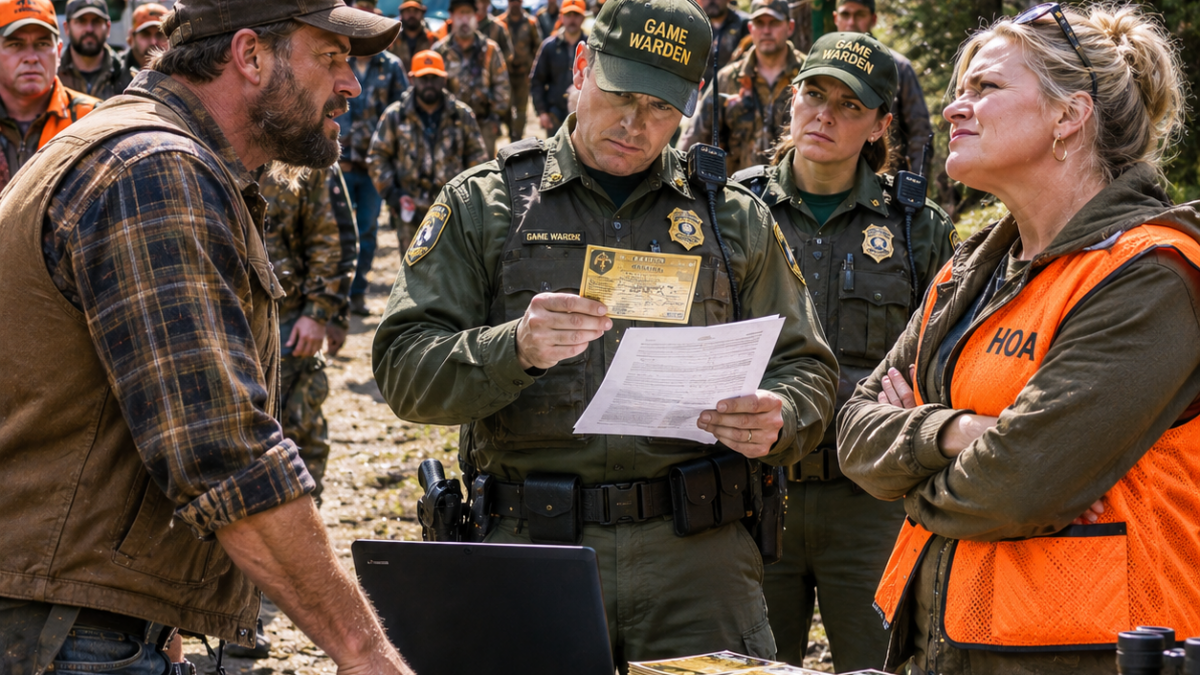
HOA Karen Sold 400 Hunting Passes to My 9,200-Acre Forest—Then Game Wardens Found My Forged Signature on Every One
At sunrise, thirty-seven pickup trucks were already lined up outside my 9,200-acre Wisconsin forest, and every hunter was carrying a gold access pass bearing a signature that looked exactly like mine.
The HOA president standing at my gate told me four hundred paying hunters had more rights to my land than I did—but when a rifle cracked somewhere beyond the lake, a state game warden called and asked why my name appeared on permits I had never signed.
What looked like a fight over fake hunting passes soon exposed a former employee selling my private forest maps, a forged ten-year agreement, and an $8.4 million loan scheme that would collapse only after the woman behind it tried to erase the evidence in front of the wardens.
Blaine Hargrove had owned Black Alder Lake Forest for exactly four months when someone else began selling it.
Not the trees.
Not the timber rights.
Not the shoreline.
Something harder to notice until strangers arrived carrying rifles.
Access.
He discovered it at 5:47 on a Saturday morning.
Blaine had left the small cabin near the eastern gate with coffee in one hand and a clipboard under his arm, expecting to spend the first light checking erosion markers along the lake.
Instead, he stopped his truck before he even reached the gate.
Pickup trucks stretched all the way down East Road.
Thirty-seven of them.
Some with trailers.
Some with deer stands strapped into the beds.
Men in camouflage stood beside open tailgates checking rifles, tightening boots, drinking coffee, and talking with the excitement of people who believed they had paid for a weekend in the woods.
For several seconds Blaine simply stared.
Then he saw the banner.
His own small sign—
BLACK ALDER LAKE FOREST
PRIVATE PROPERTY
ACCESS BY WRITTEN PERMISSION
—was gone.
In its place stood a glossy professional banner mounted between steel posts.
CEDAR RISE EXCLUSIVE HUNTING GROUNDS
AUTHORIZED MEMBERS ONLY
Blaine set his coffee in the cup holder.
“Not a chance.”
He drove forward.
A man in an orange vest tried to stop him.
“Registration’s over there.”
“I’m not registering.”
“Everyone has to register.”
Blaine pointed past him.
“I own the road.”
The volunteer laughed.
Then stopped when Blaine didn’t.
At the registration table stood Darlene Whitcomb.
Blaine knew her.
PART2:
Everybody living near Black Alder knew her.
Fifty-two.
President of the Cedar Rise Homeowners Association.
Perfectly styled blond hair beneath a blaze-orange cap.
Reflective vest.
Radio clipped to her shoulder.
Clipboard in hand.
Cedar Rise was a sixty-eight-home development along Black Alder’s southern boundary.
The houses were nice.
The people, mostly ordinary.
The problem was Darlene.
She had introduced herself two weeks after Blaine closed on the forest.
She called it a courtesy visit.
Then spent forty minutes explaining what she believed the previous owner had “traditionally allowed.”
ATVs on certain roads.
Fishing access.
Holiday bonfires.
Hunting.
Blaine had reviewed the deed before buying the land.
None of those rights existed.
He told her so.
Darlene smiled and said:
“We’ll revisit it.”
Apparently this was her idea of revisiting.
She saw Blaine approaching and smiled.
Not surprised.
Waiting.
“Mr. Hargrove.”
“What are you doing?”
PART3:
Darlene lifted her clipboard.
“Opening day.”
“Opening day of what?”
“Our seasonal conservation hunt.”
Blaine looked around.
“My land?”
“Black Alder recreational zone.”
“My land.”
“Historically accessible land.”
Blaine stepped closer.
“You have thirty seconds to explain why there are armed strangers standing outside my gate.”
Darlene did not flinch.
She removed a gold plastic pass from a binder.
It carried a QR code.
Cedar Rise logo.
Season dates.
Zone number.
And across the bottom:
AUTHORIZED BY LANDOWNER.
BLAINE HARGROVE.
Blaine stared.
His signature was there.
Not an obvious fake.
Someone had copied it from something.
Carefully.
“You forged my name.”
Darlene laughed.
“Please don’t make accusations you can’t support.”
“I never signed this.”
“You may own the trees, Mr. Hargrove.”
She held the card between two fingers.
“But you don’t own the hunting rights anymore.”
Blaine almost smiled.
“That sentence doesn’t even make legal sense.”
“It will when you read the agreement.”
“What agreement?”
“The Cedar Rise conservation partnership.”
“There is no partnership.”
“There are four hundred customers who disagree.”
Blaine’s expression changed.
“How many?”
“Four hundred.”
“How much did you charge?”
“One thousand three hundred fifty dollars per seasonal pass.”
Blaine did the math immediately.
$540,000.
He looked at her.
“You sold half a million dollars in hunting access on land you don’t own?”
“You keep using that phrase.”
“Because I own it.”
Darlene leaned slightly closer.
“And four hundred paying hunters have more rights in practice than one owner who thinks he can shut down access people have used for generations.”
A voice behind Blaine interrupted.
“I’d like an answer too.”
Blaine turned.
A hunter stood holding his phone.
Mid-forties.
Heavy jacket.
Gray beard.
Calm, but angry.
“My name’s Dustin Ralston.”
He held up an electronic receipt.
“I drove two hundred seventeen miles.”
He showed Blaine the screen.
$1,350.
Cedar Rise Outdoors LLC.
Black Alder Premium Hunting Package.
The attached map covered the entire forest.
All 9,200 acres.
Blaine scrolled.
Stand locations.
Access roads.
Restricted wetland zones listed as hunting areas.
Interior logging routes.
Then the contract.
At the bottom:
Landowner authorization.
His signature.
Dustin said:
“You telling me that isn’t yours?”
“It looks like mine.”
Dustin’s face hardened.
“That wasn’t my question.”
“No.”
Blaine handed the phone back.
“I did not sign it.”
Other hunters had started gathering.
A man asked:
“So who did?”
“I don’t know.”
Darlene raised her voice.
“Everyone has valid access.”
Blaine turned.
“No one enters my forest until this gets sorted out.”
“You can’t revoke sold permits on opening morning.”
“I didn’t sell them.”
“You’re disrupting a lawful business.”
“It isn’t your business to sell.”
Darlene picked up her radio.
“North group, proceed.”
Blaine stepped toward her.
“Tell them to stop.”
She smiled.
“No.”
Then the rifle fired.
One shot.
Far away.
Across the lake.
Everyone went silent.
Blaine’s stomach dropped.
Someone was already inside.
His crew sometimes walked those interior roads before sunrise.
Surveyors.
Forestry technicians.
Wetland crews.
There were no designated safe hunting sectors because Blaine had never authorized hunting.
Another hunter whispered:
“Jesus.”
Blaine turned to the crowd.
“Unload your rifles.”
Darlene shouted:
“You do not take orders from him.”
Blaine ignored her.
“If you haven’t entered the woods yet, move your trucks to the gravel pullout on the county road.”
Nobody moved at first.
Then Dustin unloaded his rifle.
The sound of the action opening changed the mood.
Another man followed.
Then another.
Blaine pulled out his phone.
He called the Wisconsin wildlife enforcement line.
Before he finished explaining, another call came through.
Unknown regional number.
He answered.
“Blaine Hargrove?”
“Yes.”
“Gideon Mallory. State game warden.”
Blaine looked toward Darlene.
“What can I do for you?”
“I’m looking at something called a Cedar Rise Exclusive Hunting Pass.”
Blaine closed his eyes briefly.
“Yeah.”
“A sporting goods clerk forwarded one this morning because the state emblem printed on it looked wrong.”
“It is wrong.”
“There’s a landowner authorization signature.”
“I know.”
“It appears to be yours.”
“It’s forged.”
Silence.
Then Gideon’s voice changed.
“Did you personally authorize any of these four hundred people to hunt Black Alder?”
“Not one.”
Another pause.
“Then nobody goes into that forest.”
“One already did.”
“Shots?”
“One.”
“Where?”
“Lake side.”
“I’m coming.”
Game wardens arrived twenty-six minutes later.
By then, Blaine had convinced most hunters to move their vehicles.
Darlene had spent the entire time telling them Blaine was trying to steal their money.
Gideon Mallory ignored her initially.
He was fifty-eight, lean, gray-haired, with the patient expression of someone who had spent thirty years listening to people explain why wildlife laws should make exceptions specifically for them.
He examined Blaine’s deed information.
The gold pass.
The electronic receipt.
The printed hunting map.
Then he looked at Darlene.
“Where is the landowner agreement?”
“Our counsel has it.”
“I’d like a copy.”
“You’ll have to request it formally.”
Gideon nodded.
“Fine.”
He turned to Blaine.
“Nobody hunts today.”
Darlene stepped forward.
“You don’t have authority to cancel a private hunt.”
Gideon looked at her.
“I have authority to investigate hunting activity where landowner consent is disputed.”
“The land has historic public access.”
“That’s not the same as hunting permission.”
“It may be.”
Gideon’s expression did not change.
“Then your attorney can show me.”
Darlene smiled.
“He will.”
Blaine watched her.
She was too confident.
That bothered him.
By Sunday morning, he understood why.
His land attorney, Greer Talbott, had driven in from Madison.
Forty-one.
Calm.
Meticulous.
The kind of attorney who marked documents with five colors and never raised her voice because she did not need volume to make people uncomfortable.
She spread the title history across Blaine’s dining table.
“You own the forest.”
“I know.”
“Entire fee title.”
“I know.”
“No hunting lease.”
“I know.”
“No recorded recreational lease.”
“Greer.”
She looked at him.
“But.”
There it was.
Blaine sat.
Greer opened an older file.
“The prior forestry company had access programs.”
“Wildlife surveys.”
“Yes.”
“University researchers.”
“Yes.”
“Volunteer restoration.”
“Yes.”
“Nothing commercial.”
“Correct.”
Blaine leaned back.
“So why do I hear a ‘but’?”
“Because old access documents exist.”
“And Darlene found one.”
“I think she found something.”
Three hours later, Darlene held a press conference.
She stood beneath the stone CEDAR RISE entrance sign with residents behind her and accused Blaine of stealing a community tradition.
The headline appeared online before lunch:
NEW LANDOWNER BLOCKS HISTORIC FOREST ACCESS
By evening, local radio was calling him an outsider.
That was technically true.
Blaine had moved from Michigan.
What the radio hosts omitted was that he had spent twenty years managing forests professionally.
He bought Black Alder because the timber company that owned it wanted out.
The forest had been harvested hard decades earlier.
Old access roads eroded into creeks.
The lake shoreline needed restoration.
Wetlands had been damaged.
Blaine planned to spend years fixing it.
None of that fit into a radio argument.
A caller said:
“Rich guy buys woods and suddenly locals can’t use them.”
Blaine laughed when Greer played it.
“Rich?”
“You own 9,200 acres.”
“I also own 9,200 acres of drainage problems.”
“That doesn’t sound as good on radio.”
Two days later Blaine’s insurance company called.
If unauthorized hunting continued, coverage on his forestry operations could be suspended.
That changed things.
Not because he cared more about insurance than safety.
Because without insurance, his crews stopped.
Restoration stopped.
Everything stopped.
Darlene’s fraud could damage the forest even without another hunter firing a shot.
Greer asked:
“What do you want to do?”
Blaine stared at the map.
“Verify everything.”
“No emotional decisions?”
“No.”
“No chains across roads?”
“Not yet.”
“Good.”
He hired an independent surveyor.
Greer demanded every agreement Darlene claimed existed.
Then Blaine did something Darlene apparently did not expect.
He contacted the hunters.
Not with threats.
With an offer.
If you bought a pass, send the paperwork.
Receipt.
Contract.
Map.
Emails.
Anything.
Greer’s office would review it without charge.
Within one week, sixty-three hunters responded.
Most were angry.
Some threatened lawsuits.
A few apologized.
Then Blaine noticed something more disturbing than his forged signature.
The maps.
They were excellent.
Too excellent.
One showed an abandoned logging spur in the northwest interior.
Blaine himself had needed old forestry GPS layers to locate it.
Another placed a stand beside a narrow creek crossing invisible from satellite imagery.
Another used a service road closed for nine years.
Greer stared at the map.
“Someone knew the property.”
“Yes.”
“How well?”
“Very.”
Blaine thought of one man.
Wayland Dorsey.
Black Alder’s former land manager.
Fifty-four.
Worked for the forestry company for nearly seventeen years.
He had given Blaine the property transition tour after the sale.
Roads.
Culverts.
Monitoring sites.
Security gates.
Wayland knew everything.
Blaine called.
“Wayland.”
“Blaine. Heard you’ve got excitement up there.”
“You could call it that.”
Wayland laughed.
“What do you need?”
“Old road data.”
“What about it?”
“Did anyone ever get copies?”
“Researchers.”
“HOA?”
“Not that I remember.”
“Darlene Whitcomb?”
Silence.
Tiny.
But there.
“Who?”
“Cedar Rise president.”
“Name sounds familiar.”
“How?”
“Probably meetings over the years.”
“Did you give her maps?”
“No.”
“Gate codes?”
“Absolutely not.”
“Anything?”
“I turned everything over when the sale closed.”
Wayland sounded mildly offended.
“Passwords. Keys. Records. All of it.”
Blaine let the silence hang.
“Okay.”
“You think I’m involved?”
“I didn’t say that.”
“You didn’t need to.”
Wayland laughed again.
“Good luck.”
Two days later, an envelope arrived at Greer’s office.
No return address.
Inside:
BLACK ALDER HISTORICAL RECREATIONAL ACCESS AGREEMENT.
County stamp.
Old.
Greer called Blaine.
“We found her truth.”
“My what?”
“The small piece of truth she’s building the big lie around.”
The agreement was real.
During the Great Depression, Black Alder’s original timber owner granted local residents access to a 1.8-mile lakeshore footpath leading to a fishing point and a natural spring.
The easement had never been extinguished.
It ran with the land.
Blaine could not legally close it.
He read the document twice.
“So Darlene does have public access.”
Greer shook her head.
“No.”
“She has evidence of public walking access.”
“Exactly.”
“No hunting.”
“No.”
“No vehicles.”
“No.”
“No commercial use.”
“No.”
“No blinds.”
“No.”
“No access beyond the path.”
“Correct.”
Blaine leaned back.
“One mile of truth.”
“Used to sell 9,200 acres of lie.”
Darlene brought the 1931 document to a county administrative hearing.
She held it up like a trophy.
“Mr. Hargrove has concealed legally protected public access.”
Greer whispered:
“Don’t deny what’s true.”
Blaine stood when called.
“Yes.”
Darlene looked surprised.
Blaine continued.
“The public has a recorded walking right.”
He displayed the survey.
Exactly 1.8 miles.
Six to twelve feet wide depending on historic plat interpretation.
Shoreline only.
Fishing point.
Spring.
“That trail will remain open.”
Darlene’s face changed.
“But?”
The hearing officer asked.
Blaine nodded.
“But it does not grant hunting rights.”
He placed one of Darlene’s maps beside the easement.
Her hunting zones covered nearly all 9,200 acres.
“The public easement is here.”
Tiny red line.
“The sold hunting access is everywhere.”
The hearing officer looked at Darlene.
“Ms. Whitcomb, what authority allowed the association to convert a pedestrian easement into commercial hunting access?”
Darlene began explaining tradition.
The officer interrupted.
“Legal authority.”
Silence.
Greer did not smile.
Neither did Blaine.
The county ordered the walking route preserved.
Nothing more.
Partial victory.
But Darlene kept selling.
That same afternoon, one of Blaine’s wetland cameras triggered.
Three men.
Lumber.
Camouflage netting.
ATV.
Building hunting blinds in a restored marsh almost a mile from the historic footpath.
Blaine drove out at sunrise with Hank Pruitt, his forestry crew lead.
They found three blinds.
Fresh tire ruts.
Pulled fencing.
Orange survey flags bearing the Cedar Rise logo.
Two hunters were already inside one blind.
Blaine approached slowly.
“Morning.”
One man raised his hands away from the rifle.
“We have passes.”
“I know.”
He showed his phone.
The Cedar Rise hunting application had updated at 2:15 that morning.
AUTHORIZED STAND.
Blaine checked the coordinates.
Exact location.
“Who sent this?”
“App.”
“Who told you to use this road?”
“The map.”
“What road?”
The hunter pointed.
The old monitoring lane.
Blaine’s stomach tightened.
That road did not exist on public maps.
Gideon arrived with two wardens.
He checked licenses.
Then passes.
Then told the hunters politely but firmly to leave.
Nobody was arrested.
Blaine preferred it that way.
The hunters had been deceived.
But while photographing the blind, Blaine found a contractor label stapled inside.
Cedar Rise maintenance contractor.
Hank walked back toward the tire tracks.
“These came through the service gate.”
Blaine nodded.
Only one gate led to that lane.
Electronic code.
He checked the logs.
Opened 11:46 p.m.
Old administrator credential.
Credential name:
W. DORSEY.
Blaine stared.
Hank said:
“Well.”
“Not yet.”
“What?”
“I’m not accusing him until we can prove who entered the code.”
“It’s his account.”
“Accounts are evidence.”
Blaine closed the laptop.
“Not conclusions.”
He had every legacy credential canceled.
Logs preserved.
Codes changed.
Then Dustin called.
“I found something.”
The hunter who had once threatened to sue Blaine now sounded embarrassed.
“What?”
“Original confirmation email.”
“And?”
“They specifically told us not to contact you.”
“Why?”
“Says all landowner arrangements had been handled at management level.”
Management.
Not ownership.
That word mattered.
Three hours after Greer sent a formal cease-and-desist, Cedar Rise’s attorney responded.
They demanded $540,000 from Blaine.
Exactly the gross value of all 400 passes.
Damages for interfering with a lawful commercial operation.
That afternoon Darlene posted a new notice:
ALL HUNTING RIGHTS PERSONALLY GUARANTEED BY LANDOWNER BLAINE HARGROVE.
Below it:
His forged signature.
Again.
Blaine stared at the screen.
“She’s doubling down.”
Greer said:
“She can’t retreat.”
“Why?”
“We need to find out.”
The answer came from inside Cedar Rise.
Faye Norwood.
Fifty-seven.
Association treasurer for nine years.
She requested a private meeting.
She arrived carrying two binders.
“I voted for Darlene.”
Those were her first words.
Blaine said nothing.
“I believed the program would help the neighborhood.”
“What program?”
“The recreation initiative.”
Faye opened the first binder.
“I thought Cedar Rise was selling memberships.”
“On my property.”
“I was told access was legal.”
She looked ashamed.
“I should have checked.”
“Keep going.”
She opened account summaries.
“The problem is the money.”
“What about it?”
“The hunting-pass revenue never entered the HOA operating account.”
Greer leaned forward.
“Where did it go?”
“Cedar Rise Outdoors LLC.”
“Who owns it?”
Faye hesitated.
“Darlene has controlling interest.”
Blaine stared.
“So the HOA spent money promoting the program.”
“Yes.”
“How much?”
“At least sixty-three thousand dollars.”
“And Darlene’s private company collected the sales.”
“Yes.”
“Board approval?”
“I can’t find any.”
“Meeting minutes?”
“Nothing valid.”
Faye looked sick.
“I started checking because of your lawsuit threat.”
“I never threatened the HOA.”
“I know that now.”
She opened another file.
“Then I found the lodge.”
Cedar Rise Lodge was an old timber-frame community building overlooking the southern lake.
Blaine had seen it from the water.
Large.
Beautiful.
Valuable.
“What about it?”
“Darlene has been trying to renovate it.”
“That’s HOA property.”
“Yes.”
“How much?”
Faye pushed a document across.
$8,400,000.
Blaine looked up.
“Eight point four million?”
“Loan.”
“For renovating one lodge?”
“Luxury hunting resort.”
Blaine looked at Greer.
Greer’s expression changed.
Faye continued.
“I opposed it.”
“The neighborhood cannot service that debt.”
“But last month Darlene announced the bank had approved financing in principle.”
“With what income?”
Faye looked at him.
“That’s what I couldn’t understand.”
Then Blaine understood.
Four hundred hunters.
$1,350 each.
$540,000 in presold access.
Proof of demand.
Not merely money.
Evidence.
He stood.
“The passes aren’t the business.”
Greer said:
“They’re underwriting evidence.”
Faye whispered:
“For the loan.”
The next document proved it.
A transaction calendar.
THURSDAY—FINAL LOAN VERIFICATION—$8,400,000.
Greer contacted the bank.
The bank would not discuss a borrower’s file.
Until Blaine provided proof that his signature had supposedly guaranteed a major asset within the loan.
Then fraud control became interested very quickly.
Bryn Sloane handled the review.
Thirty-nine.
Risk specialist.
He placed a contract on the table.
EXCLUSIVE 10-YEAR HUNTING ACCESS AGREEMENT
BLACK ALDER LAKE FOREST
Blaine read it.
Ten years.
All 9,200 acres.
Commercial hunting.
Lodging packages.
Guided services.
Development rights around several staging zones.
Final page.
His signature.
Forged.
Bryn asked:
“Have you ever seen this document?”
“No.”
“Signed anything similar?”
“No.”
“Authorized Cedar Rise Outdoors LLC?”
“No.”
“Discussed a ten-year hunting lease with Ms. Whitcomb?”
“Never.”
Bryn closed the folder.
“Then our verification process stops today.”
The full scheme came into focus.
Darlene planned to turn Cedar Rise Lodge into a luxury hunting resort.
But the HOA’s lodge alone did not justify an $8.4 million loan.
The value proposition was access to Black Alder.
Thousands of private acres.
Four hundred paying hunters demonstrated demand.
The forged ten-year agreement demonstrated future revenue.
If the loan closed, the lodge could be moved into a private operating arrangement tied to Darlene’s company.
The homeowners carried risk.
Darlene controlled the commercial operation.
And Blaine’s land made the entire thing look valuable.
Darlene called him that evening.
First direct call since opening morning.
“Blaine.”
“Darlene.”
“We should settle this.”
“No.”
“You haven’t heard my proposal.”
“I don’t need to.”
“One year.”
He frowned.
“What?”
“Legalize the hunting program for one year.”
“No.”
“I’ll pay you.”
“No.”
“Sign a temporary agreement.”
“No.”
“Withdraw the complaints.”
“No.”
“Blaine, be reasonable.”
He almost laughed.
“You forged my name.”
“That hasn’t been proven.”
“You sold my property.”
“Access.”
“You submitted a fake ten-year agreement to a bank.”
Silence.
A dangerous silence.
“How do you know about the bank?”
Blaine smiled without humor.
“Good night, Darlene.”
He hung up.
The next morning she announced a grand opening hunt.
Every pass holder invited.
Photos.
Media.
Full operation.
Blaine understood the strategy immediately.
If hundreds of hunters entered Black Alder, Darlene could show the bank and county that her “program” was real despite the dispute.
Manufacture reality through spectacle.
Gideon called.
“We have enough to move.”
“When?”
“Tomorrow.”
Blaine looked toward the gate.
“Then tomorrow nobody gets hurt.”
They set up a verification area outside the forest.
Public gravel lot.
County road.
Wardens.
Greer.
Blaine.
Forestry staff.
Dustin representing pass holders.
Every buyer received one message:
BRING YOUR RECEIPT.
BRING YOUR PASS.
NOBODY SHOULD LOSE MONEY BECAUSE SOMEONE LIED ABOUT OWNING MY LAND.
At 5:50 the next morning, trucks began arriving.
Not angry this time.
Confused.
Suspicious.
Some embarrassed.
Dustin stood beside Blaine.
“You could have just called all of us trespassers.”
“Wouldn’t have been accurate.”
“Some people went in.”
“After warning, yes.”
“But most?”
“Bought something they believed was real.”
Dustin looked at him.
“I threatened to sue you.”
“I remember.”
“Sorry.”
Blaine nodded.
“Keep the paperwork.”
“Why?”
“You may need it to get your money back.”
At 6:03, Darlene arrived.
Orange vest.
Volunteers.
Radio.
Same performance as opening day.
She climbed onto a pickup tailgate.
“Everyone proceed to the north gate.”
Nobody moved.
Her expression changed.
“You have valid passes.”
A hunter shouted:
“Why does the owner say his signature’s fake?”
Another:
“Why doesn’t the state recognize these?”
Another:
“Where did the money go?”
Darlene raised her voice.
“HISTORIC PUBLIC ACCESS!”
Blaine stepped forward.
“Yes.”
The crowd quieted.
“Yes, there is historic public access.”
Darlene stared.
Blaine held up the survey.
“One walking trail.”
“One point eight miles.”
“Along the lake.”
“No commercial hunting.”
“No ATVs.”
“No blinds.”
“No access to the other 9,198 acres.”
Someone laughed.
Darlene shouted:
“He’s twisting it.”
Faye walked out of the crowd.
She carried HOA records.
“No.”
Darlene froze.
Faye opened the binder.
“The board never approved the hunting program.”
“Faye.”
“There is no valid vote.”
“Stop.”
“The minutes submitted with the bank package describe a meeting that never had quorum.”
Murmurs spread.
Greer added:
“The bank is reviewing the ten-year hunting agreement for suspected forgery.”
Darlene’s face went white.
“Bank?”
Someone shouted.
“What bank?”
Another:
“What ten-year agreement?”
Darlene grabbed her radio.
“Open north logging gate.”
No answer.
She tried again.
“OPEN THE GATE.”
Blaine said quietly:
“Codes changed.”
She looked at him with pure hatred.
“You think you won?”
“No.”
Blaine glanced at Gideon.
“I think you’re about to explain yourself.”
Before Gideon moved, a white service truck appeared.
Wayland Dorsey stepped out.
Blaine felt his stomach tighten.
Wayland walked forward carrying his phone.
“I can prove the access is legitimate.”
Darlene’s expression brightened.
Finally.
Her rescue.
Wayland addressed the crowd.
“I managed Black Alder for seventeen years.”
“I coordinated public recreation.”
“I know every access arrangement on that property.”
He displayed an old agreement.
Darlene pointed at Blaine.
“Tell him.”
Wayland said:
“The previous owner authorized these routes.”
For a moment the crowd shifted.
Blaine took the phone.
Read.
Date wrong.
Scope wrong.
Formatting wrong.
He handed it to Greer.
She frowned immediately.
Gideon stepped forward.
“Mr. Dorsey.”
Wayland turned.
The warden held a folder.
“We finished reviewing the forest access logs this morning.”
Wayland’s expression changed.
Just slightly.
Gideon continued.
“The administrator credential assigned to you accessed the property system after your contract ended.”
“I surrendered those credentials.”
“Not electronically.”
“Someone must have—”
“We also recovered data showing that account exported internal road layers.”
Silence.
“Logging roads.”
“Monitoring routes.”
“Gate locations.”
“Hunting stand coordinates.”
Darlene slowly stepped away from Wayland.
Gideon continued.
“Those data were later uploaded into Cedar Rise Outdoors’ hunting system.”
Wayland’s jaw tightened.
“This is ridiculous.”
“We also have communications concerning the ten-year access agreement.”
Blaine watched Darlene.
For the first time since this began, she looked afraid.
Gideon said:
“Investigators have evidence that you assisted in drafting it.”
Wayland looked toward Darlene.
Mistake.
Everyone saw it.
Gideon continued.
“In return, you were promised one hundred ten thousand dollars in consulting compensation and a future profit share.”
The crowd erupted.
Dustin stared at Wayland.
“You sold maps to land you didn’t own?”
Wayland shouted:
“I managed that property for seventeen years.”
Blaine stepped forward.
“Managed.”
Wayland looked at him.
“You managed it.”
Blaine said again.
“You never owned it.”
Darlene started backing toward her SUV.
Gideon turned.
“Ms. Whitcomb.”
She stopped.
“Do you know why we’re here?”
“You’re helping him sabotage a lawful enterprise.”
“Do you know the ten-year agreement is being investigated as a forgery?”
“I have counsel.”
“Good.”
Gideon nodded.
“You’ll need counsel.”
Darlene pointed at Blaine.
“Arrest him!”
Nobody moved.
“He defrauded four hundred customers!”
Gideon’s expression remained almost bored.
“No.”
“He’s destroying contracts.”
“No.”
“He—”
“Darlene.”
For the first time, Gideon used her first name.
“Stop talking.”
An investigator approached.
Then another.
Gideon said:
“We have an arrest warrant.”
The crowd became completely silent.
Darlene looked around.
At the hunters.
At Faye.
At Blaine.
At Wayland.
Then at the tablet in her hands.
She turned away.
Started tapping.
Fast.
Gideon saw it.
“Put the tablet down.”
She kept tapping.
“Ms. Whitcomb.”
Faster.
A warden moved.
Darlene pulled the tablet against her chest.
“No.”
“Give me the device.”
“You don’t have—”
The investigator produced the order.
“We do.”
She turned.
For one second Blaine thought she might run.
She did not.
She tried to delete.
Gideon took the tablet from her before she could finish.
The screen still showed the Cedar Rise Outdoors application.
Pass database.
Customer records.
Four hundred entries.
One through four hundred.
The gold cards.
The forged authorization.
Everything.
Darlene Whitcomb was arrested in the gravel lot where she had planned to stage photographs proving her business was legitimate.
No one cheered.
Blaine was glad.
There was nothing entertaining about hundreds of people realizing they had been used.
Dustin looked at his gold pass.
“So all four hundred of us bought nothing.”
Blaine shook his head.
“You bought evidence.”
Dustin looked confused.
“Evidence?”
“For her loan.”
Dustin stared toward Cedar Rise.
Blaine continued.
“She wasn’t just selling hunting weekends.”
“She was using all of you to prove demand for an eight-point-four-million-dollar resort project.”
Dustin’s expression went blank.
“She nearly used us to take something bigger.”
“Yes.”
Wayland was detained too.
The investigators secured the tablet.
Emails.
Payment databases.
Financial records.
Gate logs.
Maps.
Contracts.
Phones.
Everything before anybody could change the story again.
As the patrol vehicle carrying Darlene pulled away, Faye’s phone rang.
She answered.
Listened.
Then looked at Blaine.
“The HOA attorney.”
“What?”
“Homeowners are panicking.”
“About?”
“The lodge.”
Blaine looked across the lake.
Cedar Rise Lodge sat beyond the trees.
Faye continued.
“They’re afraid the fraud investigation could drag it into litigation.”
Greer asked:
“Is the lodge collateral?”
“Partly.”
Faye looked at Blaine.
“They want to know if you’re going to sue the association.”
Blaine said nothing.
“Are you?”
He watched the patrol car disappear.
“Depends.”
“On what?”
“Whether the homeowners were her partners.”
He looked at Faye.
“Or her next victims.”
The investigation answered that over the following weeks.
Most homeowners knew nothing.
Darlene had manipulated meeting records.
Used private entities.
Redirected HOA funds.
Created board authorizations that never validly existed.
Some documents listed attendees who had not attended.
The $8.4 million financing died immediately.
Without verified hunting rights, the resort revenue model collapsed.
Without valid board authorization, the proposed lodge transaction collapsed.
Without the loan, Cedar Rise Outdoors had no project.
The company became what it had always really been.
Paper wrapped around fraud.
Recoverable money from the pass sales was frozen.
Refund claims began.
Dustin received his $1,350 months later.
Not everyone recovered everything immediately.
Some disputes took longer.
But the hunters were formally treated as fraud victims rather than automatic trespassers unless they had knowingly entered after being told their passes were invalid.
That distinction mattered to Blaine.
Cedar Rise called a special election.
Darlene’s allies resigned.
The board was replaced.
Faye became interim president only after refusing the position twice.
She visited Blaine at the forest cabin after the vote.
“I owe you an apology.”
“You personally?”
“The association.”
“That’s different.”
“We spent months treating you like the enemy.”
“Some did.”
“You could sue us.”
“Yes.”
Faye swallowed.
“Are you going to?”
Blaine looked out the window.
The lake was gray.
Cold.
Quiet.
“No.”
Faye blinked.
“No?”
“I’ll sue people who personally harmed me if Greer thinks it’s necessary.”
“But I’m not taking sixty-eight families’ lodge because your president used them.”
Faye sat down.
“You could.”
“That’s not the same as should.”
She looked at him.
“What about the trail?”
“What about it?”
“Some residents want us to help close it.”
“Why?”
“They think the easement started everything.”
Blaine laughed quietly.
“No.”
“Darlene started it.”
“The easement is lawful.”
“So you’ll leave it?”
“It isn’t mine to erase.”
Faye seemed surprised.
Blaine looked at her.
“I spent the whole year arguing that ownership means something.”
“I don’t get to become a hypocrite because another legal right inconveniences me.”
The 1.8-mile trail remained open.
Blaine paid to mark its boundaries clearly.
Cedar Rise’s new board offered to split maintenance costs.
He accepted.
Then Blaine surprised everyone again.
He invited Dustin and several other pass holders back.
Not to hunt.
To work.
Black Alder’s wetland restoration program needed adult volunteers to monitor bird nesting, invasive plants, shoreline erosion, and wildlife movement.
Dustin stared at the invitation.
“You want the same people who nearly hunted illegally on your property monitoring wildlife?”
“You didn’t know.”
“I threatened to sue you.”
“You apologized.”
Dustin smiled.
“You hold grudges badly.”
“I’m busy.”
The first volunteer day began at seven in the morning.
No rifles.
No gold passes.
Clipboards.
GPS units.
Coffee.
Dustin arrived wearing the same blaze-orange cap he had worn opening morning.
Blaine looked at it.
“You hunting survey stakes?”
“Safety first.”
They walked into the forest.
Months passed.
The western wetland recovered.
Blinds removed.
ATV ruts repaired.
Protective fencing replaced.
Wayland’s legacy access codes disappeared permanently.
Every physical key was cataloged.
Every digital credential assigned to a named user.
No shared administrator codes.
No old employee accounts.
Blaine had learned that sometimes the weakest gate was not steel.
It was memory.
“This is how we used to do it.”
“Everybody knows the code.”
“He worked here forever.”
“We trust her.”
Those sentences built vulnerabilities faster than broken locks.
The Cedar Rise Lodge survived.
The homeowners kept it.
Under the new board, the luxury hunting resort plan disappeared.
The building became something smaller.
Better.
Nature workshops.
Forestry talks.
Adult conservation classes.
Community meetings.
Blaine gave one presentation.
Only one.
Title:
WHO OWNS ACCESS?
Dustin sat in the front row.
Faye introduced him.
Blaine walked to the podium holding one of Darlene’s gold passes.
He placed it on the table.
“A receipt proves you bought something.”
He paused.
“It does not prove the seller owned what they sold.”
People laughed.
Then Blaine explained property rights.
Easements.
Permission.
Public rights.
Private rights.
Why lawful access needed precision.
Why a landowner could be wrong.
Why the public could be right.
Why both could happen on the same property at the same time.
The 1931 trail proved that.
The forest belonged to Blaine.
The footpath did not belong exclusively to him.
Both statements were true.
That idea became important to him.
Darlene had depended on people believing every dispute required one side to own everything and the other side to own nothing.
Reality was narrower.
Rights had boundaries.
The fraud worked because she blurred them.
A walking easement became “public access.”
Public access became “historic hunting rights.”
Historic hunting rights became commercial permissions.
Commercial permissions became future revenue.
Future revenue became an $8.4 million loan.
One vague phrase stretched far enough could become a fortune.
Until somebody measured it.
Exactly.
One point eight miles.
That was all.
Darlene’s legal proceedings lasted far longer than the arrest.
Blaine attended only when required.
He never enjoyed seeing her in court.
The woman who had stood at his gate in an orange vest telling him four hundred customers had more rights than one owner now sat quietly beside her attorney while prosecutors described forged documents, misdirected funds, false representations, and attempts to destroy electronic records.
There was no cinematic confession.
No moment when she turned toward Blaine and admitted everything.
Real cases rarely provided that satisfaction.
There were motions.
Delays.
Evidence hearings.
Financial tracing.
Restitution calculations.
Wayland’s case moved separately.
His communications filled in what everyone suspected.
He had not simply sold Darlene a map.
He had helped build credibility.
He knew how the previous company’s paperwork looked.
How authorization language was phrased.
Where roads were.
Which trails appeared official.
Which old agreements could be distorted.
How Blaine signed transition documents.
Investigators believed that was likely where the copied signature had originated.
One legitimate closing document.
One real signature.
Then duplicated onto lies.
Wayland’s promised $110,000 became a symbol around Black Alder.
People would mention it as though that number explained him.
Blaine never thought it did.
Wayland had earned a good salary for years.
The money mattered.
But something else had mattered too.
Entitlement.
Wayland had managed Black Alder so long that he stopped emotionally distinguishing between knowing the land and owning it.
That mistake echoed Darlene’s.
She managed Cedar Rise.
Therefore Cedar Rise became hers to use.
Wayland managed Black Alder.
Therefore Black Alder became his to monetize.
Authority became ownership in their minds.
It wasn’t.
Six months after the arrest, Blaine stood at East Gate just after sunrise.
Same season of light.
Different morning.
No trucks.
No rifles.
No registration table.
No banner.
Only mist drifting above Black Alder Lake.
The public footpath now had new wooden markers.
PUBLIC WALKING EASEMENT
PLEASE REMAIN ON MARKED TRAIL
Beyond it:
BLACK ALDER LAKE FOREST
PRIVATE LAND
WRITTEN OWNER PERMISSION REQUIRED BEYOND PUBLIC TRAIL
Precise.
No dramatic language.
Just boundaries.
A pickup truck approached.
Dustin.
He climbed out holding something.
The gold pass.
“You kept that?”
“Evidence.”
“The case is over for you.”
“Souvenir.”
Blaine shook his head.
“Worst souvenir I’ve ever seen.”
Dustin looked at it.
“One thousand three hundred fifty dollars.”
“You got refunded.”
“I know.”
“Then throw it away.”
“No.”
Dustin smiled.
“I’m framing it.”
“Why?”
“So next time someone sells me something expensive, I remember to ask whether they own it.”
Blaine laughed.
“Keep it.”
Dustin tucked the card into his jacket.
They walked toward the shoreline.
Dustin asked:
“You ever regret buying this place?”
Blaine looked around.
Old-growth pine.
Wetland.
Lake.
Nine thousand two hundred acres of problems, responsibility, beauty, and work.
“Ask me after tax season.”
Dustin laughed.
Then:
“Seriously.”
Blaine thought.
“No.”
“You spent your first year fighting an HOA president.”
“Part of it.”
“Fraud investigation.”
“Yes.”
“Insurance mess.”
“Yes.”
“Bank.”
“Yes.”
“Court.”
“Yes.”
“Four hundred angry hunters.”
“Some were angrier than others.”
“I was pretty angry.”
“You threatened to sue me before breakfast.”
Dustin grinned.
“I was hungry.”
They reached the water.
Mist moved in slow ribbons.
A pair of ducks crossed the lake.
No gunfire followed.
That silence mattered.
Blaine had bought Black Alder because he believed land could be managed for longer than one person’s lifetime.
That philosophy sounded abstract when he signed the purchase papers.
It felt different now.
Ownership was temporary.
Stewardship was temporary.
Even control was temporary.
What mattered was what you handed forward.
Clean water.
Healthy forest.
Clear records.
Legal boundaries people understood.
Systems that did not depend on one person remembering what another person promised ten years ago.
Darlene had almost converted vagueness into $8.4 million.
Blaine’s answer had been precision.
Survey the line.
Verify the deed.
Open the lawful trail.
Close the unlawful road.
Separate victims from trespassers.
Separate public rights from private fraud.
Separate homeowners from their president.
Separate what was true from what was merely printed on official-looking paper.
That was why the arrest was never the part he remembered most.
People who heard the story always focused on that.
Game wardens arresting an HOA president.
The tablet.
The four hundred passes.
The patrol vehicle.
Darlene screaming for them to arrest him instead.
Dramatic.
Memorable.
But Blaine remembered the first hunter who unloaded his rifle after hearing the signature might be fake.
Dustin.
One decision.
That had changed the crowd.
He remembered Faye opening the books because something felt wrong.
Greer refusing to deny the 1931 easement merely because it complicated their case.
Gideon distinguishing people who had been deceived from people deliberately breaking the law.
Those were smaller moments.
They mattered more.
A fraud on Darlene’s scale did not survive because one person was persuasive.
It survived because everyone saw only one piece.
Hunters saw legitimate-looking passes.
The HOA saw a recreation program.
The bank saw future revenue.
Wayland saw consulting money.
Residents saw property-value promises.
County officials saw an old easement.
Nobody initially saw the whole machine.
Until they started sharing documents.
That was what destroyed it.
Not anger.
Records.
Receipts.
Emails.
Gate logs.
Survey maps.
Account statements.
Meeting minutes.
A seventy-five-year-old public easement.
A forged ten-year contract.
A former manager’s old login.
Truth assembled one page at a time.
The final court judgment arrived months later.
Blaine read Greer’s summary.
Restitution.
Financial penalties.
Criminal consequences.
Restrictions.
Wayland faced consequences of his own.
The language was dry.
Blaine preferred it that way.
Darlene had lived by dramatic claims.
The truth did not need them.
Greer called.
“You satisfied?”
“With what?”
“The outcome.”
Blaine looked through the cabin window.
“Mostly.”
“That doesn’t sound celebratory.”
“I didn’t buy this place to win lawsuits.”
“What did you buy it for?”
He watched sunlight touch the lake.
“To grow trees.”
Greer laughed.
“You picked a strange way to do it.”
A year after the opening-day disaster, Black Alder hosted its first official volunteer forest-monitoring weekend.
Forty-three adults attended.
Some from Cedar Rise.
Several former pass holders.
Dustin.
Faye.
Hank.
Gideon stopped by in the afternoon.
No one paid for access.
Everyone signed a clear agreement.
Specific roads.
Specific dates.
Specific activities.
No hunting.
No vague language.
Blaine made Greer review the form.
Twice.
She added three paragraphs.
Of course she did.
At lunch, Dustin held up his old gold pass.
“Anyone want to buy hunting rights?”
Everyone laughed.
Blaine pointed at him.
“You’re getting removed from the volunteer list.”
“Historic public access.”
“That is not what that means.”
Faye laughed harder than anyone.
Later that afternoon, Blaine stood on a hill above the lake watching volunteers record shoreline conditions.
He realized he no longer associated crowds with danger.
That surprised him.
For months, trucks at a gate had meant conflict.
People carrying documents had meant another lie.
Cedar Rise had meant Darlene.
Now the neighborhood was just neighbors again.
Imperfect.
Sometimes annoying.
Mostly ordinary.
That mattered too.
One dishonest president did not become sixty-eight guilty homeowners simply because blaming everybody would have been easier.
Blaine had refused that simplification from the beginning.
The same way he refused to call all four hundred hunters criminals.
The same way he admitted the walking easement existed.
Ownership did not give him permission to lie about other people’s rights.
Their fraud did not give them permission to lie about his.
That principle had survived everything.
On the first anniversary of Darlene’s arrest, Blaine drove East Road before dawn.
No reason.
Habit.
He stopped where the registration table had once stood.
For a moment he could see it again.
Gold cards.
Orange vests.
Rifles.
Darlene smiling.
“You may own the trees, Mr. Hargrove, but you don’t own the hunting rights anymore.”
He remembered how absurd the sentence sounded.
Then how frightening it became when he saw his own signature.
A person could forge paper.
A person could forge authority.
A person could even temporarily forge reality if enough people believed the paperwork.
But ownership, real legal rights, eventually came back to evidence.
That was the lesson.
Not that property owners always win.
Blaine had not won everything.
He had to honor the public trail.
He had to accept that part of his forest carried a right older than he was.
And he was glad he had.
Because his case against Darlene became stronger the moment he stopped arguing that everything belonged only to him.
He defended exactly what was his.
No more.
No less.
That precision left Darlene nowhere to hide.
She could no longer say he denied public access.
He didn’t.
Could no longer say he denied historic rights.
He didn’t.
Could no longer say he opposed recreation.
He didn’t.
He opposed one thing.
Selling what you did not own.
That was simple enough for everyone to understand.
Blaine got out of his truck.
Morning air.
Cold.
Clean.
He walked to the lake.
The mist was lifting.
Behind him, the new signs stood straight along the trail.
Ahead of him stretched 9,200 acres he had bought to protect.
Darlene had sold access to them four hundred times.
Wayland had sold knowledge about them.
A bank had almost loaned millions against rights that did not exist.
Hundreds of people had nearly walked into the woods believing a gold card gave them permission.
But the forest remained.
No resort.
No commercial hunt.
No forged ten-year contract.
The public footpath remained too.
Because that right had been real.
Blaine liked that ending better than total victory.
Real rights stayed.
Fake ones disappeared.
A truck slowed behind him.
Dustin leaned out the window.
“You coming?”
“Where?”
“Wetland survey.”
Blaine checked the time.
“You’re early.”
“So were those thirty-seven trucks.”
Blaine stared at him.
Dustin grinned.
“Too soon?”
“Probably forever.”
He climbed into the truck anyway.
As they drove toward the western marsh, Blaine looked once at the gate in the side mirror.
No orange vest.
No registration table.
No banner.
Nothing being sold.
Exactly as it should be.
He had bought 9,200 acres of forest.
Darlene Whitcomb had sold the right to hunt on it four hundred times.
Wayland Dorsey had sold the secrets that made her lie believable.
And an $8.4 million resort scheme had almost been built on a signature Blaine never wrote.
In the end, however, every forged agreement, fake pass, altered map, and fabricated promise ran into the same problem.
None of them could change who actually owned the land.
And after everything was over, the only thing Darlene truly owned was the fraud that carried her name into court.








