HOA Karen Sold 14 of My Vintage Christmas Bells to a Luxury Hotel and Sent 4 to Be Melted—Then the Judge Hit Her With a $510K Restoration Bill
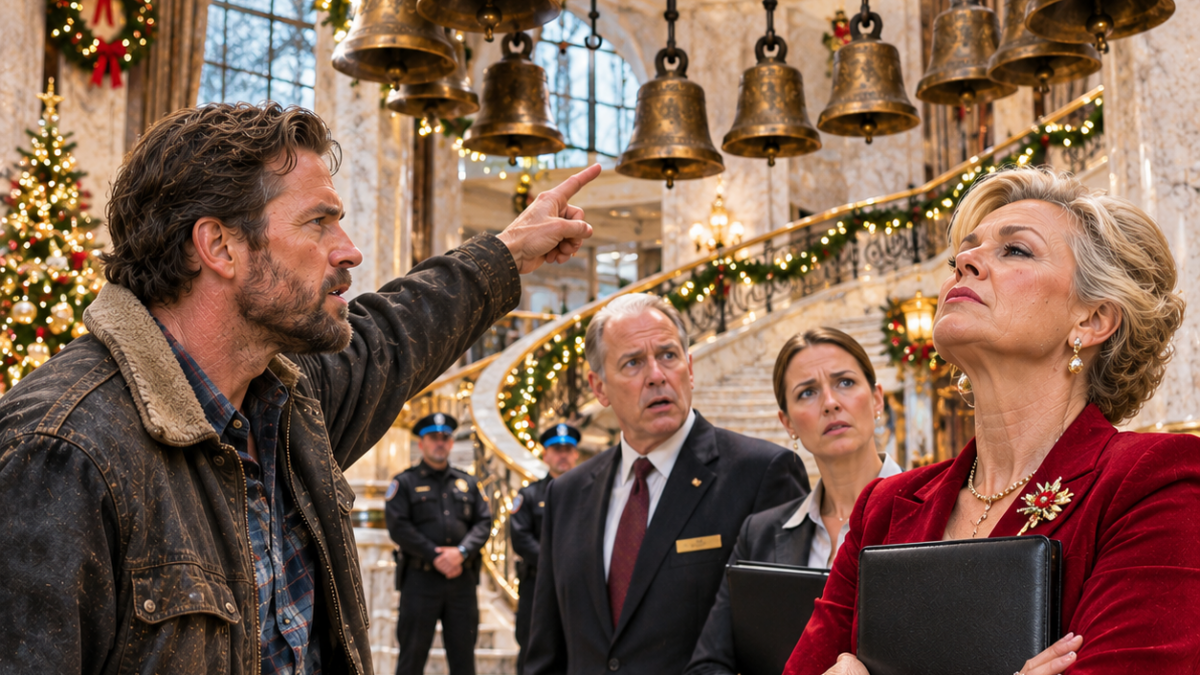
HOA Karen Sold 14 of My Vintage Christmas Bells to a Luxury Hotel and Sent 4 to Be Melted—Then the Judge Hit Her With a $510K Restoration Bill.
I came home three weeks before Christmas and found all eighteen antique bells my family had protected for generations ripped out of their tower, their ropes cut, their iron mounts broken, and an HOA notice taped to my workshop claiming they had been “disposed of” for public safety.
That same night, I watched a television commercial showing fourteen of those bells hanging above the marble staircase of a luxury hotel while HOA president Corinne Voss smiled beneath them and took credit for bringing Cedar Hollow’s “historic Christmas tradition” to its new home.
But when the hotel struck the first bell, I heard one note that was wrong—and that single damaged note became the first clue to how far Corinne had gone, where the other four bells had disappeared, and why somebody had copied my signature onto a document I had never seen.
The first thing I heard when I came home for Christmas was nothing.
That was how I knew something was wrong.
My name is Brandon Winslow.
I was forty-three years old that December, and for as long as I could remember, you could hear Hawthorne Bell House before you could see it.
Eighteen bronze bells hung in the tower above my workshop.
The oldest had been cast in 1910.
The newest in 1932.
Different foundries.
Different sizes.
Different histories.
But over the years, generations of my family had tuned and maintained them until all eighteen worked together as one instrument.
At dawn, they could sound soft enough to roll through the valley without waking half the town.
At Christmas, they filled the ridge.
Not electronic chimes.
Not recordings.
Real bronze.
Real clappers.
Real vibration traveling through timber, snow, and winter air.
I had been away eighteen days.
A machine shop in Vermont still manufactured replacement parts using old milling techniques I needed for the tower’s antique drive system.
I left Cedar Hollow after Thanksgiving.
Returned December seventh.
Tired.
Cold.
Happy to be home.
When my truck turned onto the gravel lane, I automatically rolled the window down.
I always did.
The evening bell should have sounded.
Nothing.
I kept driving.
Still nothing.
By the time I reached the workshop, I had stopped breathing normally.
I parked.
Got out.
Looked up.
The tower was empty.
Every bell was gone.
I just stood there.
Eighteen openings.
Eighteen hanging positions.
Empty against a gray Pennsylvania sky.
PART2:
For several seconds, my brain refused to process what my eyes were seeing.
Then I ran inside.
The ropes hung from the ceiling.
Cut.
Not untied.
Not disconnected properly.
Cut clean through.
Their ends moved slightly in the draft.
I followed the damage toward the tower base.
Oak floorboards were scarred by heavy wheels.
A lift.
Maybe two.
Steel brackets had been twisted.
One guide arm was bent downward.
The maintenance-room door had been pried open.
Someone had replaced my lock with a new padlock.
And taped to the door was a notice.
ASHFORD RIDGE HOMEOWNERS ASSOCIATION.
CHRISTMAS SAFETY INITIATIVE.
HAZARDOUS DECORATIVE STRUCTURE REMOVAL.
Signed:
CORINNE VOSS, PRESIDENT.
I read it once.
Then again.
The notice claimed the bells were “deteriorating decorative fixtures” presenting a danger to the surrounding community.
It said they had been removed and “disposed of.”
Disposed of.
My family had maintained those bells for generations.
Every one had a registry entry.
Foundry number.
Casting date.
Weight.
Repair history.
Tuning notes.
Inspection records.
Insurance photographs.
I had personally inspected the drive system before leaving for Vermont.
A licensed engineer had inspected the tower four months earlier.
And Corinne Voss had just called eighteen historic bells abandoned decorations.
I dialed her number.
My hands were shaking so badly I almost dropped the phone.
She answered on the second ring.
“Brandon.”
She knew.
No hello.
No surprise.
“Where are my bells?”
A pause.
Then the voice I knew from HOA meetings.
Sweet.
Controlled.
Almost cheerful.
“Those bells represented a significant safety problem.”
“Where are they?”
“The association acted under its community protection responsibilities.”
“Corinne.”
“Yes?”
“Where are my bells?”
She sighed.
“Brandon, nobody needed eighteen rusting pieces of junk clanging over neighborhood property values.”
I closed my eyes.
“They are bronze.”
“That’s hardly the point.”
“Hawthorne Bell House isn’t part of Ashford Ridge.”
“The tower affects Ashford Ridge.”
“That doesn’t make it yours.”
“The bells were transferred lawfully.”
I froze.
“Transferred to who?”
“You no longer have authority over them.”
“Where are they?”
The call ended.
I stared at the phone.
Every instinct told me to drive directly to the HOA clubhouse.
Bang on the door.
Find Corinne.
Demand answers.
That was probably exactly what she expected.
So I didn’t.
Instead, I photographed everything.
Cut ropes.
Damaged floor.
Pried door.
New lock.
Lift marks.
Bent guides.
Broken bolts.
Empty tower.
The notice.
Then I found the maintenance video I had recorded the morning before leaving for Vermont.
I always filmed the tower before major trips.
Not because I expected theft.
Because the system was old.
If something failed while I was away, I wanted a reference showing how it looked when I left.
The video showed every bell.
Every support.
Every connection.
Clean.
Intact.
Functional.
By contrast, what remained after the removal looked brutal.
Several bolts had been sheared instead of loosened.
The old drive linkage had been cracked.
Clapper guides bent.
Two cast-iron supports fractured.
Whoever removed those bells had used speed instead of knowledge.
This wasn’t simply missing property.
The entire instrument had been damaged.
Before I could figure out my next move, Corinne moved first.
An email went to every Ashford Ridge household.
I received three screenshots from neighbors within an hour.
The subject:
EMERGENCY CHRISTMAS SAFETY ACTION COMPLETED.
Corinne wrote that the HOA had intervened after years of concern over a hazardous, neglected bell tower adjacent to the community.
She claimed the owner had failed to address deterioration.
She said the association had removed the dangerous fixtures before winter weather could cause an accident.
Then:
We regret that certain individuals may attempt to politicize this responsible action during the Christmas season.
Certain individuals.
Me.
My phone started buzzing.
One neighbor asked whether the tower was really dangerous.
Another told me the HOA was only trying to keep people safe.
One message said:
Please don’t turn Christmas into a lawsuit.
I hadn’t even spoken publicly.
Corinne had already made me the villain.
Then I saw the hotel commercial.
Silvercrest Grand Hotel had opened that fall at the edge of Cedar Hollow.
Glass.
Limestone.
Massive lobby.
Three hundred VIP guests expected for its first Christmas gala.
The television camera moved through the lobby.
Decorated trees.
White flowers.
Gold ribbons.
Then up the grand staircase.
I stood in my workshop staring at the screen.
Above the stairs was a gilded steel spiral.
Suspended from it:
Bronze bells.
Mine.
I recognized bell number three first.
Raised laurel pattern around the shoulder.
Then number ten.
Distinct casting seam.
Then the broad scalloped lip on one of the 1920s bells.
The announcer said:
“An exclusive Christmas experience featuring the historic bells of Cedar Hollow.”
I felt physically sick.
The bells weren’t disposed of.
They had been sold.
The next morning, Ashford Ridge called an emergency meeting.
I arrived carrying a folder.
Deed.
Survey.
Engineer’s inspection.
Bell inventory.
Photographs.
Corinne stood beside a projector.
Fifty-six.
Silver hair arranged perfectly.
Dark red jacket.
Pearls.
She had prepared a presentation.
First slide:
Close-up of rust.
Second:
A crack in timber magnified until it looked like the Grand Canyon.
Third:
A weathered bolt.
Corinne faced the room.
“This is what our families have been living beside.”
I raised my hand.
She ignored me.
Then she displayed a cost sheet.
EMERGENCY REMOVAL AND HAZARD MITIGATION:
$36,000.
She expected me to pay it.
That finally got me out of my chair.
“Corinne.”
She looked at me.
“I have the floor.”
“No. You have my property.”
Murmurs.
I held up the engineer’s report.
“This tower was inspected four months ago.”
She smiled.
“Your private consultant.”
“A licensed structural engineer.”
“Paid by you.”
“Yes. That’s normally how inspections work.”
A few people laughed.
Corinne didn’t.
“The cracks in your photographs are documented maintenance items.”
“Residents had safety concerns.”
“Then why did you sell the bells?”
She paused.
Small.
But noticeable.
“I did not sell anything personally.”
“Where did they go?”
“The association lawfully transferred hazardous materials.”
“To a luxury hotel?”
The room changed.
Some board members looked at one another.
Corinne switched slides.
A property map appeared.
She pointed to a narrow lane behind my workshop.
“This easement gives Ashford Ridge access rights adjacent to Hawthorne Bell House.”
I stared.
“That is a vehicle and utility easement.”
“It permits association intervention where community safety is involved.”
“No.”
She smiled.
“Perhaps you should read your documents more carefully.”
I knew what she was doing.
The original recorded easement was in the county file.
Not in my hand.
Without it, I was simply arguing.
She had slides.
A microphone.
The HOA seal.
People tend to trust whoever looks prepared.
Then Vera Haskins cleared her throat.
HOA treasurer.
Sixty-three.
Quiet.
Always sat at the end of the table.
“Corinne?”
“Yes, Vera?”
“If the bells were disposed of…”
Corinne’s expression tightened.
“…why didn’t the board receive an itemized liquidation record?”
Silence.
Vera continued.
“And where did the proceeds go?”
Corinne cut her off.
“This is not the time for internal accounting.”
“It’s a financial question.”
“The discussion is closed.”
I looked at Vera.
She looked down.
But the question stayed in the room.
Before leaving, I turned toward the secretary.
“Please record something in the minutes.”
Corinne said:
“We’re adjourned.”
I ignored her.
“Please record that President Voss stated the HOA had authority to remove and transfer all eighteen bells.”
The secretary looked at Corinne.
Then at me.
I added:
“And please record that she relied on the shared access easement as part of that authority.”
Corinne said sharply:
“That is unnecessary.”
“Then it shouldn’t bother you.”
The secretary wrote.
I thanked her.
That was the first useful thing I did.
Because memories change.
Minutes don’t change as easily.
Back at the workshop, I opened the fireproof cabinet.
Inside was the original bell registry.
Leather-bound.
My grandfather started it.
My father continued it.
I had updated it.
Each bell had a page.
Bell 1.
Foundry number.
Weight.
Diameter.
Pitch.
Repair history.
Bell 2.
And so on.
I kept a photocopy in another drawer.
Backup.
The original was there.
The copy was gone.
I stared at the empty drawer.
Someone who entered my workshop had not only taken the bells.
They had removed a document connecting those bells to Hawthorne Bell House.
That was not an accident.
My phone buzzed.
Unknown number.
Text:
LOOK AT WHAT THE HOTEL PAID.
ASK CORINNE WHERE THE MONEY WENT.
I replied:
WHO IS THIS?
No answer.
Two days later, I walked into Silvercrest Grand Hotel.
The place looked like someone had spent a fortune trying to make Christmas look expensive.
Marble.
Glass.
Gold.
White lights.
Florists everywhere.
And above the staircase:
My bells.
I counted.
Once.
Then again.
Fourteen.
Only fourteen.
I knew eighteen had left my tower.
Where were the other four?
A woman approached.
Tall.
Charcoal suit.
“Can I help you?”
“Are you the manager?”
“General manager. Lenora Whitford.”
I introduced myself.
Then pointed upward.
“Those belong to me.”
Lenora didn’t laugh.
That helped.
She invited me into a side office.
I explained.
She listened.
Then opened a transaction file.
“Silvercrest purchased this collection from Ashford Ridge HOA.”
“How much?”
She hesitated.
“Mr. Winslow—”
“How much?”
“One hundred eighty-six thousand dollars.”
I sat back.
Corinne wanted me to pay $36,000 for removal.
Then sold my bells for $186,000.
Lenora continued.
“We were provided a bill of sale and authorization.”
“Signed by who?”
“The association.”
“They never owned them.”
“We were also provided documentation indicating the association had authority to dispose of the collection.”
“What documentation?”
“I can’t release the entire file without counsel.”
“Then have counsel look at my deed.”
I placed copies on the desk.
“Those bells were never HOA property.”
Lenora studied me.
I could see her calculating.
If I was wrong, I was an angry former owner disrupting a hotel.
If I was right, the centerpiece of her Christmas season was stolen property.
Before she could answer, the door opened.
A man stepped inside.
Forties.
Slick hair.
Expensive watch.
“Nolan Breck.”
Procurement director.
He didn’t shake my hand.
“I’ve been briefed.”
“Good.”
“Our acquisition was lawful.”
“No.”
“Our legal team reviewed the transfer.”
“Then your legal team was given false documents.”
Nolan smiled.
“You’re making a serious allegation.”
“I’m making an ownership claim.”
“Against a hotel that paid market value in good faith.”
“Good faith doesn’t give somebody title to property the seller never owned.”
Nolan looked toward Lenora.
“This meeting is over.”
He called security.
Two guards arrived.
Professional.
Polite.
I didn’t resist.
That would have made his life easier.
As they walked me beneath the staircase, a technician on a lift activated the bell system.
One bell struck.
I stopped.
The guard almost walked into me.
The sound hung in the lobby.
Sharp.
Thin.
Wrong.
I knew that bell.
I had heard it thousands of times.
At dawn.
At dusk.
At funerals.
At weddings.
Every Christmas Eve since I was a child.
It should have produced a deep fundamental tone with a warm hum beneath it.
Instead, the note felt cut off.
Too bright.
Too shallow.
Someone had changed the bronze.
I turned.
“Stop the test.”
Nolan stood near the stairs.
“What?”
“Tell them to stop striking those bells.”
“This display has been professionally installed.”
“One of them has been altered.”
He laughed.
“That’s enough.”
“Bronze has been removed.”
“You can leave voluntarily or security can escort you.”
I raised my phone.
Photographed every bell I could see.
Position.
Mounts.
Order.
Then left.
The next morning, the hotel’s lawyer sent me a letter instructing me not to interfere with operations or approach the display without authorization.
Good.
Another record.
I called Tamsin Greer.
Property litigator in Harrisburg.
People described her as sharp-tongued.
That was inaccurate.
Her tongue was fine.
Her patience was sharp.
I explained everything.
She listened.
Then said:
“You touched anything at the hotel?”
“No.”
“Threatened anybody?”
“No.”
“Posted accusations online?”
“No.”
“Excellent.”
“Why?”
“Because Corinne wants you angry and stupid.”
“Comforting.”
“She needs you to become the problem.”
“I’m trying not to.”
“Keep trying.”
My second call went to Miles Fenwick.
Acoustic engineer.
Historic bell specialist.
He had helped me tune Hawthorne ten years earlier.
I sent him two recordings.
One from the hotel.
One from our previous Christmas concert.
He called that night.
“Brandon.”
“Yes?”
“Someone changed that bell.”
“How sure?”
“Very.”
“How?”
“I need physical inspection.”
“But?”
“But the partials don’t match the archive.”
“English.”
“The overtone structure has shifted.”
“Meaning metal was removed?”
“Possibly ground.”
I sat down.
“So proving ownership isn’t enough.”
“No.”
Miles’s voice hardened.
“You need to stop them from doing anything else.”
Tamsin filed for an emergency preservation order within forty-eight hours.
No sale.
No relocation.
No further modification.
The preliminary hearing should have been straightforward.
Then Corinne’s attorney handed the judge a three-page agreement.
Tamsin read it.
Her expression changed.
She handed it to me.
Page one:
Festival improvement project.
Page two:
Authority to remove, transfer, sell, or dispose of antique fixtures at Hawthorne Bell House.
Page three:
My signature.
I stared.
It was mine.
Not similar.
Mine.
The looping B.
Slanted W.
Tiny flourish at the end.
My stomach dropped.
Corinne’s lawyer told Judge Harold Price that I had authorized the transfer.
Then regretted it after realizing how valuable the bells looked at Silvercrest.
Nolan Breck testified briefly.
He said the hotel relied on the agreement when purchasing the collection.
Judge Price studied everything.
Then said ownership and consent could not be resolved that morning.
I felt sick.
But he continued.
Because the bells were antique and alteration could cause irreversible loss, the court granted the preservation order.
Silvercrest could not modify them.
Move them.
Sell them.
Corinne couldn’t dispose of any remaining pieces.
All parties had to preserve records.
Outside court, I leaned against a column.
“We lost.”
Tamsin grabbed my shoulder.
“No.”
“The bells are still there.”
“Yes.”
“That’s losing.”
“No, Brandon.”
She pointed toward the courtroom.
“That hotel cannot touch another gram of bronze without answering to Judge Price.”
I looked at her.
“And every email Corinne sent about this deal just became evidence.”
I still hated it.
But she was right.
That night, I put the supposed agreement under a magnifying lamp.
Something bothered me about page three.
Margins.
Font weight.
Spacing.
Then I remembered.
Spring of 2024.
The HOA needed temporary access behind my workshop while electricians inspected lines for the neighborhood’s holiday-light event.
Two days.
I signed a short access agreement.
Nothing about bells.
Nothing about fixtures.
Nothing about ownership.
I searched my email until after midnight.
Found the scan.
Opened both documents.
My old access agreement.
The new transfer agreement.
Enlarged the signatures.
My heart started pounding.
They weren’t just similar.
They were identical to the pixel.
Same pen skip.
Same tiny ink smear.
Same angle.
Same imperfection.
Someone had copied my signature from the old document.
Then placed it beneath new language.
Tamsin listened to me explain.
Then said:
“Do not call Corinne.”
“I wasn’t—”
“You were.”
Maybe.
“We need a forensic document examiner.”
The court authorized discovery.
We obtained the original 2024 access agreement from HOA records.
Email chain.
Metadata.
A forensic examiner compared files.
His conclusion was brutal.
The signature page in the transfer agreement contained compression artifacts identical to those in the earlier scanned access document.
The new first and second pages were created later.
On a different system.
The document had been assembled.
Not executed.
My signature had been transplanted.
When the report reached Corinne’s attorney, Corinne called me herself.
First time since the bells disappeared.
No sweet voice.
“Brandon.”
“Corinne.”
“I’m prepared to resolve this.”
“That’s new.”
“You can receive compensation.”
“For?”
“Your inconvenience.”
“My bells.”
“A few thousand dollars now. The hotel keeps the display through Christmas. Afterward, everyone reassesses.”
“No.”
“Don’t be emotional.”
“I’m not.”
“You’re going to destroy the town’s Christmas season over antique decorations.”
“They’re mine.”
“You left them deteriorating.”
“No.”
“The tower is unsafe.”
“No.”
“This litigation is damaging Ashford Ridge property values.”
“That sounds like an HOA problem.”
Her voice changed.
Cold.
“We will countersue.”
“Talk to Tamsin.”
Then I hung up.
I wasn’t afraid anymore.
Because Corinne was.
Two nights later, Vera Haskins came to my workshop.
Heavy coat.
No makeup.
Nervous.
“I can’t keep doing this.”
She handed me an envelope.
Inside:
HOA ledger copies.
Silvercrest payment:
$186,000.
But instead of appearing as ordinary HOA asset-sale proceeds, most of the money moved out.
Consulting fees.
Event coordination.
Heritage procurement.
Recipient:
VOSS HERITAGE EVENTS LLC.
Registered agent:
Corinne Voss.
I looked at Vera.
“She paid herself?”
“I don’t know what she calls it.”
“Did the board approve this?”
“No.”
“Did you?”
“No.”
“Why didn’t you say something?”
Her eyes filled.
“I tried.”
I remembered the meeting.
She had.
Corinne shut her down.
Tamsin refused to celebrate.
“A ledger is useful.”
“But?”
“I want bank records.”
“It shows the transfers.”
“It shows what somebody entered into a ledger.”
She pointed at me.
“We prove. We do not assume.”
That sentence became our rule.
Then the shipping manifests arrived.
Fourteen bells to Silvercrest.
Four bells somewhere else.
Morrow Industrial Foundry.
Forty miles north.
I stared at the foundry numbers.
I knew them.
Bells 4, 7, 12, and 16.
I called.
A woman answered.
“Celia Morrow.”
I explained.
Read the numbers.
Long pause.
Then:
“We have them.”
I sat down.
“Intact?”
“Bodies appear intact.”
“Where?”
“Bronze stock area.”
“What does that mean?”
“They were received as surplus metal.”
My throat tightened.
“What happens to surplus metal?”
Another pause.
“Melt cycle.”
“When?”
“End of the week.”
I couldn’t speak for a second.
“Celia, those are historic bells.”
“I understand what you’re telling me.”
“They were stolen.”
“I cannot determine that over the phone.”
“Please pull them.”
“I have paperwork authorizing disposal.”
“They’re mine.”
“I’m sorry.”
Her voice softened.
“But if I stop processing inventory every time someone calls claiming ownership, I lose my business.”
“What do you need?”
“Court order.”
I called Tamsin.
She filed that afternoon.
Shipping manifest.
Registry.
Photographs.
Forensic signature report.
Celia’s declaration confirming the melt schedule.
Judge Price heard us the next morning.
I asked to speak.
Tamsin nodded.
I stood.
“These bells are not replaceable commodities.”
Judge Price listened.
“They were cast more than ninety years ago.”
I continued.
“They were hand-tuned into an eighteen-bell set.”
I looked at him.
“If those four are melted, someone can cast four new bells.”
Pause.
“But they will never be those four bells.”
Judge Price granted the order.
The four bells were to be segregated.
Preserved.
No processing.
No alteration.
Celia called an hour later.
“They’re out.”
I closed my eyes.
“Thank you.”
“Don’t thank me.”
She laughed.
“Thank your judge.”
The next day, Miles and I drove north.
Four bells lay on wooden pallets in a separate bay.
Wrapped in moving blankets.
Court notice taped to the door.
I walked toward the smallest.
Kneeling, I placed my hand against the cold bronze.
For a moment, I couldn’t speak.
One clapper was gone.
Ripped out.
But the bell body remained intact.
Miles photographed everything.
Celia gave us the disposal paperwork.
HOA letterhead.
Instructions:
PROCESS AS SCRAP.
PAYMENT TO:
VOSS HERITAGE EVENTS LLC.
Signed:
CORINNE VOSS.
That was when I understood.
The hotel’s designers only wanted fourteen bells for the spiral.
Instead of returning the other four, Corinne sold them by weight.
She had sold my property once to the hotel.
Then sold the leftovers again as scrap.
And if Tamsin had moved a few days slower, four pieces of my family’s history would have become anonymous molten bronze.
Before we left, Celia lit a cigarette outside the loading dock.
“There’s something else.”
“What?”
“When this shipment was arranged, someone called.”
“Corinne?”
“No.”
“Who?”
“Nolan Breck.”
My stomach tightened.
“What did he want?”
“He asked us to describe them as mixed bronze surplus.”
“Why?”
“He specifically said not to mention Hawthorne Bell House or historic bells.”
Miles and I looked at each other.
The hotel might not be innocent.
Corinne’s next move was public pressure.
Another HOA email.
She accused me of single-handedly ruining Cedar Hollow Christmas.
Claimed Silvercrest’s gala might be canceled.
Said the community’s traditional Christmas concert had been lost because I refused to cooperate.
People started stopping me in stores.
“Can’t you settle after Christmas?”
“Just let them use the bells for two weeks.”
“Why does it matter where they hang?”
It mattered because they were being damaged.
Because four had almost been melted.
Because someone had forged my authorization.
But Corinne understood something important.
Christmas creates emotional leverage.
Nobody wants to be the man who “ruined Christmas.”
Then she attacked the tower.
A private inspection firm issued a glossy report declaring Hawthorne Bell House structurally unsafe.
Corinne sent it to township zoning.
If the tower were condemned, even winning the bells back might not bring the music back.
That was when I decided to stop hiding inside legal filings.
I organized a technical open house.
Not a rally.
Not an anti-HOA meeting.
Technical presentation.
Private property.
Proper township paperwork.
I invited:
Ashford Ridge homeowners.
Historical society.
People who had attended Christmas concerts.
Local preservationists.
Miles.
An independent structural engineer.
About forty people came.
I stood beneath the empty tower.
“This is what I can prove.”
First:
My deed and survey.
Hawthorne Bell House was mine.
Outside the HOA.
Second:
The licensed engineer’s inspection from four months before removal.
Maintenance needed.
No emergency finding.
Third:
Post-removal damage.
Broken mounts.
Cracked supports.
Sheared bolts.
Bent hardware.
Then I played the recording from the previous Christmas.
Eighteen bells filled the workshop.
Deep.
Warm.
Layered.
Some people closed their eyes.
Miles stepped forward.
He explained acoustic fingerprints.
How bell tone comes from the entire bronze body.
How removing small amounts of metal shifts harmonics.
Then he played the hotel recording.
Wrong note.
Even people who knew nothing about acoustics could hear it after he explained what to listen for.
Our independent engineer spoke next.
The tower needed repair.
Yes.
But the most severe new damage came from bell removal.
Not long-term deterioration.
Nothing justified condemnation.
Halfway through the presentation, Corinne appeared.
Two board members behind her.
“This gathering needs to stop.”
I almost laughed.
“Why?”
“Unpermitted event.”
I held up the township approval.
“Wrong again.”
People turned toward her.
She stood in the doorway.
Red-faced.
For once, no projector.
No gavel.
No control.
She left.
That night, Tamsin and I sat at my workbench.
“I don’t want only the bells back.”
“I know.”
“I want the whole chain.”
She looked at me.
“Explain.”
“Who knew what.”
“When.”
“Where the money moved.”
“Why the hotel ignored ownership.”
“Everything.”
Tamsin nodded.
“Then we preserve everything.”
Demands went out.
HOA.
Voss Heritage Events.
Silvercrest.
Emails.
Texts.
Procurement files.
Appraisals.
Vendor records.
Three days later, Lenora Whitford called me.
“Mr. Winslow.”
“Lenora.”
“I need you to come to the hotel.”
“Why?”
“Our compliance team found something.”
“Can Tamsin come?”
“I was going to request that.”
Silvercrest’s gala was December sixteenth.
When we arrived that afternoon, the lobby was being transformed.
Flowers.
Lighting.
Champagne stations.
Three hundred VIP guests expected.
Corinne’s name appeared on the program.
Special acknowledgment:
CORINNE VOSS
ASHFORD RIDGE HOA PRESIDENT
COMMUNITY HERITAGE PARTNER.
Behind closed doors upstairs, Lenora laid documents across a conference table.
The first was an appraisal warning.
Weeks before the purchase.
The hotel’s own outside appraiser wrote:
HOA CANNOT DOCUMENT CLEAR TITLE TO BELL COLLECTION.
DO NOT PROCEED WITHOUT VERIFIED OWNERSHIP.
I looked at Lenora.
“Nolan saw this?”
“Yes.”
“He bought them anyway?”
“Yes.”
Second document.
Email from Nolan to a junior employee:
REMOVE PRIOR OWNER NAME FROM CATALOG COPY. PROVENANCE ISSUE WILL ONLY SLOW DEAL.
Third.
Email from Corinne.
She proposed using my old maintenance/access agreement as authority for the transaction.
Nolan’s reply:
PERFECT.
One word.
Enough.
Lenora looked sick.
“Nolan was suspended this morning.”
I said nothing.
“Our executive board was never shown these communications.”
Tamsin asked:
“Will Silvercrest produce them formally?”
“Yes.”
“Allow court-supervised inspection?”
“Yes.”
“Preserve the installation?”
“Yes.”
Lenora looked at me.
“I’m sorry.”
I believed her.
Not because hotels are noble.
Because her face looked like someone who had just discovered her own company had walked into a fraud.
The court-supervised inspection took place hours before the gala.
Miles rode the lift.
Bell by bell.
Foundry numbers.
Casting marks.
Repair history.
Number nine.
My favorite piece of evidence.
Six years earlier, I had repaired a hairline fracture near the lip with a custom bronze alloy.
Filed it smooth.
From the floor, invisible.
Up close, under strong light, a faint seam remained.
Miles found it.
Photographed it.
Scanned it.
Mine.
Then he found grinding marks.
Fresh.
Three bells.
Bronze shaved from their inner surfaces so they would fit the hotel’s decorative mounting geometry.
That explained the wrong note.
They had altered the instrument to fit the decoration.
Corinne arrived in a red cocktail dress.
She stopped when she saw us beneath the display.
“What is happening?”
Lenora answered.
“Court-authorized examination.”
Corinne’s face tightened.
I asked Lenora:
“Can we safely play the first sequence?”
Miles approved a short controlled strike.
The technician tapped the panel.
First note.
Second.
Third.
Fourth.
Fifth.
Then nothing.
The old Cedar Hollow Carol had been written for eighteen voices.
With only fourteen bells installed, the melody collapsed into a gap.
A missing phrase.
A musical sentence with words removed.
I turned toward Corinne.
Hotel executives nearby.
Court observer.
Several early guests.
I kept my voice quiet.
“If you were saving these bells…”
She looked at me.
“…why did you authorize four of them to be melted?”
Her chin lifted.
“I signed a routine disposal document for surplus material.”
Tamsin handed me the copy produced in discovery.
I held it out.
Four foundry numbers.
Her signature.
Payment to Voss Heritage Events LLC.
“These?”
Corinne looked at it.
Then toward Lenora.
“Nolan handled the transaction.”
Lenora’s expression hardened.
“Nolan is suspended.”
Corinne blinked.
“He pressured the HOA.”
“That isn’t what the emails show.”
“He told us the hotel needed—”
Lenora cut her off.
“Silvercrest will cooperate with the court.”
For the first time, Corinne’s composure cracked completely.
Within an hour, her speech disappeared from the gala program.
The bell installation was roped off.
Covered in black cloth.
The event became:
SILVERCREST WINTER GARDEN CELEBRATION.
No “historic bells.”
No Corinne.
She walked through the revolving doors while hotel guests watched.
Outside, Tamsin buttoned her coat.
“We can recover them now.”
I looked through the glass.
The spiral looked like a funeral display beneath the black cloth.
“But?”
Tamsin followed my eyes.
“Restoring what they broke is going to be expensive.”
She was right.
Judge Price expanded the preservation order to all eighteen bells.
Fourteen at Silvercrest.
Four at Morrow Foundry.
Supervised removal.
Crating.
Climate-controlled conservation workshop.
When the last bell arrived, I had all eighteen again.
But possession wasn’t restoration.
The yokes were damaged.
Clappers missing or bent.
Mounting hardware destroyed.
Bronze ground away.
The tower drive system cracked.
Supports fractured.
Miles estimated months.
The lawsuit continued into May.
Corinne’s defense remained remarkably consistent.
She said she saved the bells.
Her attorney described me as an absentee owner who had left a deteriorating structure unattended.
He said the hotel provided a dignified public home.
He argued the bells had gained cultural exposure.
As though theft becomes preservation if enough rich people photograph it.
Then Tamsin presented our case.
Three days.
Six categories of evidence.
First:
Ownership.
Deed.
Survey.
Bell registry.
Historic photographs.
Foundry records.
My family owned Hawthorne Bell House and every one of the eighteen bells.
Second:
The actual 2024 access agreement.
Two days.
Technical lane access.
No authority to remove anything.
No property transfer.
Third:
Forensic document analysis.
My signature had been copied from that agreement.
The supposed transfer document was assembled later.
Judge Price asked the examiner:
“Are you saying Mr. Winslow did not sign this document?”
The examiner answered:
“I am saying the signature image originated from a different scanned document.”
That was stronger.
Fourth:
Shipping records.
Fourteen bells to Silvercrest.
Four to Morrow.
Fifth:
Physical damage.
Miles.
Structural engineer.
Conservators.
Photographs before removal.
Hotel grinding.
Broken yokes.
Damaged clappers.
Cracked tower mechanism.
Sixth:
Money.
That was where Corinne’s case finally collapsed.
Subpoenaed bank statements showed Silvercrest’s $186,000 payment.
Then transfers.
Voss Heritage Events LLC.
Consulting.
Heritage coordination.
Asset liquidation.
Additional scrap remittance from the four bells sent to Morrow.
Vera Haskins testified.
Quietly.
Clearly.
“No board vote authorized payment to Voss Heritage Events.”
Corinne’s attorney asked:
“Could the president approve event-related expenses?”
“Within limits.”
“Could consulting be legitimate?”
“Yes.”
“Was Mrs. Voss president?”
“Yes.”
Then Tamsin asked:
“Did the board authorize Mrs. Voss to sell Brandon Winslow’s bells?”
“No.”
“Did the board receive the proceeds?”
“No.”
“Did Mrs. Voss disclose her ownership of Voss Heritage Events before the transfers?”
“No.”
Celia Morrow testified next.
Corinne’s signed disposal order.
Four foundry numbers.
Payment instructions.
Then Nolan’s request to conceal provenance.
Lenora testified about the suppressed appraisal.
The warning.
Nolan’s email.
Corinne’s suggestion to use my old access agreement.
Nolan’s “perfect.”
By the end, the only remaining question was money.
Restoration estimates were not guessed.
Miles prepared one set.
Two independent conservators prepared others.
A court-appointed expert reviewed them.
Safe bell recovery, rigging, specialized transport:
$112,000.
Bell bodies, yokes, and clappers:
$148,000.
Acoustic retuning and certification:
$96,000.
Tower supports and antique drive mechanism:
$124,000.
Conservation documentation and technical oversight:
$30,000.
Total:
$510,000.
Corinne’s lawyer attacked the number.
Called it excessive.
Asked why century-old bells needed specialized treatment.
One conservator answered:
“Because ordinary repairs are how part of the damage occurred.”
That ended that line of questioning quickly.
Judge Price issued his ruling in late May.
Warm afternoon.
Windows open slightly.
I remember birds outside.
Strange thing to remember.
He found Corinne had no authority to sell the bells.
The purported transfer authorization was fraudulent.
Her actions caused the removal.
Sale.
Scrap shipment.
Physical alteration.
Tower damage.
He held Corinne Voss and Voss Heritage Events LLC jointly liable for the proven $510,000 restoration cost.
Then he said something I had not expected.
The judgment could not be shifted onto Ashford Ridge homeowners through a special assessment.
The homeowners had not approved the scheme.
They had not received the proceeds.
They were not going to pay Corinne’s bill.
I looked toward Vera.
She closed her eyes.
Relief.
Silvercrest had already negotiated its own separate settlement covering the hotel’s role.
Nolan’s conduct.
Recovery expenses.
Other liability.
The hotel’s payment did not erase Corinne’s restoration obligation.
Outside court, Corinne approached.
Attorney beside her.
“Brandon.”
I stopped.
“We can settle this.”
“It’s already settled.”
“I mean the judgment.”
She named a much smaller number.
Enough to make someone tired of litigation think twice.
I shook my head.
“That won’t restore the bells.”
Her mouth twisted.
“They’re old bells.”
I looked at her.
“They were never worth this much.”
That sentence told me she still understood nothing.
“You didn’t have to understand their value.”
She waited.
“You only had to respect that they weren’t yours.”
I walked away.
Tamsin caught up.
“That was dramatic.”
“Sorry.”
“No.”
She smiled.
“I liked it.”
Then she became serious.
“A judgment isn’t money in your account.”
“I know.”
“Collection can take months.”
“I know.”
“Restoration may take longer.”
“I know.”
That evening, I visited the conservation workshop.
All eighteen bells sat in crates under soft lights.
I touched bell number nine.
The bronze repair seam was still there.
The hotel’s grinding damage was elsewhere.
I wondered whether they would ever sound the same.
Courts can order money.
They cannot order history to reverse itself.
That frightened me more than the lawsuit.
Collection began that summer.
Voss Heritage Events accounts were frozen through proper procedures.
Available funds were applied.
Corinne’s assets entered the ordinary judgment-enforcement process.
She tried through counsel to argue that the HOA general fund should pay because she acted as president.
Judge Price rejected that.
Whatever authority she had as HOA president did not include selling private property with a fabricated document and routing proceeds through her own company.
The bill stayed hers.
Ashford Ridge called a special meeting in August.
Vera stood at the front.
No dramatic slides.
Just numbers.
Bank transfers.
Board authorizations.
Missing approvals.
Conflicts.
The homeowners voted overwhelmingly to remove Corinne as president.
She sat in the back.
Staring forward.
When the result was announced, she stood.
Left.
Nobody followed.
Then came the decision I hadn’t expected.
What happens to the bells after restoration?
A preservation society offered museum placement.
Safe.
Controlled.
Protected.
Silvercrest, desperate to repair its reputation, offered to build a permanent gallery.
Free conservation.
Security.
Insurance.
I said no.
Both times.
Not because museums are bad.
Not because the hotel couldn’t learn.
Because the bells were built to ring.
Not sit behind velvet rope.
Not become a luxury lobby attraction again.
I wanted people to hear them.
Lenora understood.
Then I proposed something different.
Silvercrest would turn the former spiral-display area into an open restoration studio.
Temporary.
Visitors could watch conservators repairing the actual damage.
No claim that the hotel “owned” the bells.
No exclusive Christmas acquisition language.
The placard would tell the truth.
UNLAWFULLY TRANSFERRED HISTORIC BELLS UNDERGOING COURT-ORDERED RESTORATION.
Lenora read my draft.
“That’s uncomfortable.”
“Yes.”
She smiled faintly.
“Good.”
The hotel board approved it.
For months, people walked through Silvercrest and watched craftspeople rebuild yokes.
Forge clappers.
Repair fittings.
Document bronze damage.
Miles demonstrated acoustic testing.
Children pressed against the viewing glass.
Older residents recognized bells they had heard their entire lives.
The hotel that once tried to display the sound of Cedar Hollow as something it had purchased became the place where people watched that sound being repaired.
One bell at a time, they came home.
Bell 4.
Bell 7.
Bell 12.
Bell 16.
The four from the foundry arrived first after conservation.
Then the hotel bells.
Each was inspected before installation.
Tower supports rebuilt.
New mounts forged to original specifications.
Old drive mechanism repaired where possible.
Reproduced where necessary.
Miles spent three nights in the tower near the end.
Spectral analyzer.
Microphones.
Tools.
Coffee.
He was miserable.
Which meant things were going well.
On the third night, he climbed down.
I was waiting.
“Well?”
He packed one cable.
“Miles.”
Another cable.
“Are you doing this intentionally?”
“Yes.”
I stared.
He finally smiled.
“They’re ready.”
I sat down.
“Ready ready?”
“Brandon.”
“Yes?”
“Go home and sleep.”
I didn’t.
Christmas Eve arrived exactly one year after the season everything had gone silent.
Snow started in the afternoon.
By dusk, the Hawthorne yard was full.
Vera came.
Wool scarf.
Hands tucked into pockets.
Lenora came.
No legal department.
No contract.
Celia Morrow drove down from the foundry.
Miles stood near the tower.
Residents who had once told me to stop causing trouble came too.
A few apologized.
Most didn’t need to.
Their faces did.
I walked to the playing console.
No speech.
I didn’t want one.
I looked up.
Bell number nine hung where it had always hung.
My old bronze patch remained visible if you knew where to look.
We preserved it.
Not because it was pretty.
Because restoration shouldn’t erase history just to make something appear untouched.
I placed my hands on the levers.
First bell.
Deep.
Warm.
The tone rolled across the snow.
Second.
Third.
Fourth.
Then the whole arrangement began.
The Cedar Hollow Carol.
Eighteen voices.
No gap.
No missing phrase.
No thin hotel note.
The sound moved across the roofs of Ashford Ridge.
Across the road.
Through the winter trees.
All the way toward the glowing windows of Silvercrest Grand Hotel.
I kept playing.
At some point, I couldn’t see the console clearly.
Tears.
I kept going anyway.
When the final chord faded, nobody spoke for several seconds.
That was the best part.
Silence after a real bell isn’t empty.
The bronze keeps vibrating.
You feel the sound even after your ears stop hearing it.
Then people applauded.
I looked toward Vera.
She was crying.
Lenora too.
Miles pretended something was in his eye.
Celia made no attempt to pretend.
Later that night, after everyone left, I sat alone at my workbench.
The bell registry lay open.
Same old leather cover.
Same handwriting from generations of Winslows.
I turned to the conservation section.
Then wrote:
Recovered after unlawful sale.
Restored under court order.
Returned to Hawthorne Bell House.
Never offered for sale again.
I stopped.
Then added the date.
December 24.
Closed the ledger.
Turned off the workshop lights.
Outside, snow had covered most of the footprints.
I stood beneath the tower.
The bells were still faintly humming.
Corinne had thought they were decorations.
The hotel had thought they were an attraction.
Nolan thought provenance was an inconvenience.
The foundry almost saw them as scrap.
They were wrong in different ways.
But the mistake underneath all of it was the same.
They confused price with ownership.
Silvercrest paid $186,000.
That did not make the bells theirs.
Corinne sold them.
That did not make them hers to sell.
Four bells had scrap value.
That did not turn them into scrap.
And Judge Price ordered $510,000 in restoration.
That did not mean the bells were “worth” exactly $510,000.
That number was what it cost to repair damage that never should have happened.
There are things money can measure.
Transport.
Labor.
Bronze work.
Engineering.
Rigging.
Acoustic tuning.
Legal documentation.
Then there are things it cannot.
The sound of a bell your grandfather heard as a boy.
The exact vibration you remember from Christmas Eve.
The repair mark your own hands put into bronze six years earlier.
A town hearing eighteen notes return after a year of silence.
Corinne never understood that.
Maybe she never would.
A few months after the Christmas concert, I saw her once.
Hardware store.
She was buying paint.
No pearls.
No HOA badge.
No audience.
We ended up in the same checkout line.
She noticed me.
“Brandon.”
“Corinne.”
She looked tired.
“The bells sound good.”
I hadn’t expected that.
“Yes.”
Long pause.
“I heard them from my house.”
I nodded.
Another pause.
Then:
“I still think the tower needed work.”
“It did.”
She looked surprised.
“You admit that?”
“I always did.”
“But you fought the inspection.”
“I fought your claim that maintenance gave you ownership.”
Her eyes lowered.
“I thought the hotel would preserve them.”
“You sent four to a foundry.”
Her face tightened.
“The hotel didn’t want them.”
“They weren’t yours to discard.”
“I know.”
First time I had heard her say it.
I looked at her.
She continued:
“I thought if the bells were somewhere public, people would see what I’d done for Cedar Hollow.”
There it was.
Not safety.
Not really.
Recognition.
“I wanted the Christmas project to matter.”
“It mattered.”
“Not the way I wanted.”
“No.”
The cashier called her forward.
Corinne picked up her paint.
Before leaving, she said:
“I’m sorry about the bells.”
Not the money.
Not the lawsuit.
The bells.
I nodded.
“Thank you.”
That was all.
I didn’t forgive everything in the middle of a hardware store.
Life isn’t that tidy.
But I appreciated the sentence.
Ashford Ridge changed after Corinne.
Vera refused the presidency.
“I’ve had enough excitement.”
Smart.
A younger board member named Daniel Cross took over temporarily.
The HOA commissioned a full financial audit.
More controls.
No president could approve large transfers alone.
Related-party vendors required disclosure.
Property actions required title review.
And the shared lane easement that Corinne had tried to stretch into authority over my tower?
The board obtained the actual recorded copy.
Put it in the permanent records.
Vehicle access.
Utilities.
Nothing else.
Exactly what I had said.
No one argued anymore.
Silvercrest changed too.
Nolan Breck was fired after the internal investigation.
The hotel settled claims tied to its role.
Lenora introduced procurement changes requiring verified provenance for historic property.
That sounds obvious.
Apparently it wasn’t.
The restoration studio eventually closed after the last bell returned.
In its place, Silvercrest built a smaller exhibit.
No original bells.
Photographs.
Conservation tools.
Copies of historical records.
One audio station playing the restored Christmas concert.
The main placard read:
THE HAWTHORNE BELLS REMAIN THE PRIVATE PROPERTY OF HAWTHORNE BELL HOUSE.
I approved that sentence.
The hotel asked whether it could call the display:
THE BELLS SILVERCREST SAVED.
I said no.
They did not ask twice.
Miles continued inspecting my bells annually.
The first inspection after restoration lasted almost eight hours.
He climbed down filthy.
“You know what your problem is?”
“Which one?”
“You own eighteen antique machines that people mistakenly think are musical instruments.”
“They are musical instruments.”
“They are machines that make music.”
“What’s the distinction?”
“Machines require maintenance.”
“So do musicians.”
He thought about it.
“Fair.”
We drank coffee.
Then he said:
“Number nine will never be exactly what it was.”
I knew.
“The grinding?”
“Yes.”
“You retuned it.”
“As far as physically possible.”
“Does it still belong?”
Miles looked offended.
“Of course.”
That answer mattered.
Restoration is not time travel.
Some damage remains.
Bell nine sounded right again within the ensemble.
But Miles could detect a slight difference in its overtone structure.
So could I if I listened alone.
At first, that bothered me.
Then I stopped wishing the scar away.
Because Hawthorne Bell House had scars too.
New supports.
Repaired drive system.
Replacement hardware.
The restored instrument was not untouched.
It survived.
There is a difference.
A year later, a group of schoolchildren toured the workshop.
One boy pointed at bell nine.
“Why does that one have a line?”
I explained the bronze repair from before the theft.
Then the later restoration.
He asked:
“Why didn’t you make it invisible?”
I smiled.
“We could have hidden some of it.”
“So why didn’t you?”
“Because it happened.”
He frowned.
“That’s it?”
“That’s enough.”
He accepted that better than adults usually do.
Every December, we still play the old carol.
No tickets.
No VIP tables.
No hotel package.
People stand in the yard.
Bring coffee.
Children get bored halfway through and play in the snow.
Someone always parks badly.
Someone always complains about the cold.
Perfect.
The first year after the lawsuit, Silvercrest sent a limousine.
I called Lenora.
“What is this?”
“For you.”
“Why?”
“We thought transportation might be a nice gesture.”
“I own a truck.”
“I know.”
“Send it back.”
She laughed.
We became friends eventually.
Strange outcome.
She once asked me whether I blamed the hotel.
“Yes.”
She blinked.
“I expected a diplomatic answer.”
“You asked.”
“Do you still?”
“Less.”
“Why less?”
“Because you fixed what you could.”
She nodded.
“Fair.”
The hotel had ignored warning signs through Nolan.
That was real.
But once Lenora understood, she preserved evidence.
Stopped further damage.
Cooperated.
Settled.
Changed policy.
People deserve accountability.
They also deserve credit when their behavior changes.
Corinne’s judgment took time to collect.
Tamsin warned me.
Assets don’t magically convert into restoration checks because a judge says $510,000.
Voss Heritage funds.
Property liens.
Payment schedules.
Insurance fights.
Asset sales.
Months.
Eventually enough was secured to fund the restoration completely under the court-approved plan.
That was what mattered.
I never bought a sports car.
Never went on some victory vacation.
The money went where the judgment said it should.
Bronze.
Iron.
Wood.
Engineering.
Labor.
Transport.
Documentation.
Back into eighteen bells.
Sometimes people hear “$510,000 judgment” and imagine winning the lottery.
I won the privilege of paying specialists to repair what somebody else broke.
Different experience.
The real victory was hearing them ring.
One winter morning several years later, I found Vera standing near the workshop.
She looked up at the tower.
“You ever think about what would’ve happened if you hadn’t heard the wrong note?”
I did.
“Eventually we would have found the grinding.”
“Maybe.”
“The ownership records were enough.”
“For the fourteen.”
She looked at me.
“What about the four?”
That stopped me.
If I had not reacted quickly…
If we had waited until after Christmas…
If the shipping manifests arrived a week later…
Four bells might have entered the melt furnace.
Bronze doesn’t remember what shape it used to be.
That thought still bothers me.
Vera said:
“Corinne thought getting rid of four would make the sale cleaner.”
“Probably.”
“She almost succeeded.”
“Yes.”
We stood quietly.
Then Vera asked:
“Why could you hear the difference when nobody else did?”
I looked at the tower.
“Because I knew what it was supposed to sound like.”
That might be the whole story.
Corinne looked at the bells and saw old decorations.
Nolan looked at them and saw a hotel feature.
The foundry saw bronze weight.
I heard eighteen individual voices.
If you know something well enough, damage announces itself.
One wrong note.
One missing page.
One unexplained transfer.
One signature too perfect to be real.
One sentence in tiny type:
Remaining items subject to disposal.
Small things.
That is how the truth entered.
Not with some dramatic confession.
Corinne never walked into court and announced:
Yes, I stole the bells.
Nolan never admitted:
Yes, I knew.
We didn’t need them to.
Documents spoke.
Metal spoke.
Bank records spoke.
Acoustics spoke.
Four foundry numbers sitting on a shipping manifest spoke.
And the wrong note in a hotel lobby spoke first.
Years later, I still roll down my truck window when I turn onto Hawthorne Lane.
Habit.
Even when no scheduled chime is due.
I listen.
The tower appears through the trees.
Ropes inside.
Console below.
Eighteen bells above.
Sometimes silence.
Sometimes wind.
Then on evenings when they ring, the sound reaches the road before the house.
Exactly as it did when I was a child.
Not exactly the same.
I know that now.
Nothing restored is exactly what it was before it was broken.
But all eighteen are there.
That is enough.
On Christmas Eve, after the concert, I still open the bell registry.
Check the entries.
Foundry numbers.
Repairs.
Conservation status.
At the bottom of the restoration page is the line I wrote that first night:
Recovered after unlawful sale.
Restored by court order.
Never offered for sale again.
I have never changed it.
No hotel.
No HOA.
No collector.
No museum.
No amount.
They belong where they can ring.
Corinne once thought she could sell the sound of Christmas.
She sold eighteen bells she didn’t own, sent four toward a furnace, copied my signature to make the transaction look legal, and routed the proceeds through her own company.
In the end, Judge Price did not order her to understand why the bells mattered.
Courts cannot order understanding.
He ordered something more practical.
He ordered her to pay the full cost of putting back what she had damaged.
$510,000.
And every Christmas Eve, when all eighteen bells sound together again above Hawthorne Bell House, I hear exactly where that money went.








