HOA Karen Rented Out My Lakefront Barn Behind My Back—Then the Bride Handed Me a Contract With My Signature on It
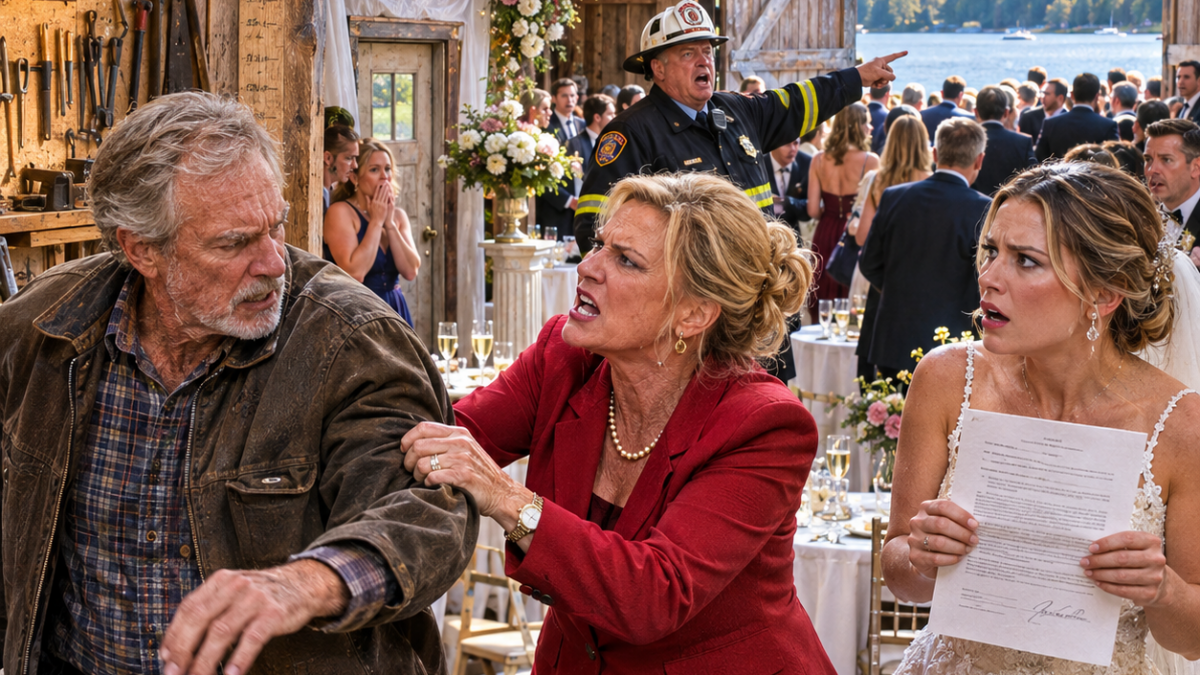
HOA Karen Rented Out My Lakefront Barn Behind My Back—Then the Bride Handed Me a Contract With My Signature on It.
Six days before the wedding, I found a delivery truck full of white chairs at my private lakefront barn, and that was how I learned our HOA president had secretly rented out a building she did not own, taken thousands of dollars from a bride and groom, and promised three hundred guests a reception under my roof.
I changed the locks, notified the sheriff, contacted the fire marshal, and made Patricia Bell sign a revised plan moving the reception to the HOA lawn, but on the wedding day she sent a crew to cut through my new lock anyway and marched the guests straight into a workshop with bad exits, extension cords, food warmers, and my dead father’s tools still hanging on the walls.
Then the fire marshal stopped the music and ordered everyone outside, the bride handed me a rental contract bearing a signature that looked exactly like mine, and I realized Patricia had not merely trespassed on my property—she had taken an old permission form from the HOA files and used my name to sell something I had never agreed to give her.
My name is Frank Mercer.
I was sixty-six when Patricia Bell decided my barn was hers.
Not legally.
Not on paper.
Not even according to the HOA bylaws she spent six years waving in everyone else’s face.
She simply decided it.
And I have learned that some people do not need ownership documents to feel entitled to something.
They only need enough confidence and enough people around them who have grown accustomed to hearing them say yes for everyone else.
My house sat at the southern end of Willow Point, a private lake community in northern Wisconsin.
Forty-seven homes.
One clubhouse.
Two community docks.
A narrow shared road running along the water.
Most of the neighborhood belonged to the Willow Point Homeowners Association.
My house did too.
The barn did not.
That difference had existed longer than Patricia, longer than the HOA, and nearly as long as I had.
My father bought the original lakefront parcel in 1974.
Back then there was almost nothing around it except pines, water, and a gravel road that turned into mud whenever it rained hard.
Dad repaired fishing boats.
Small motors.
Wooden hulls.
Dock hardware.
Anything that came in from the lake broken.
The barn was where he worked.
Long timber frame.
Stone foundation.
Two wide sliding doors facing the road.
A covered porch facing the water.
One narrow side entrance that always swelled when humidity rose.
Inside were rafters blackened by fifty years of dust.
Lumber racks.
Old pulleys.
A cast-iron vise.
Shelves my father and I built when I was seventeen.
And one workbench that weighed more than some compact cars.
When developers later bought most of the surrounding acreage, Dad sold pieces.
But not the barn.
Not the strip of shoreline beneath it.
He kept those separate.
The original deed reflected it.
The survey reflected it.
The tax parcels reflected it.
The HOA knew it.
Patricia Bell knew it too.
I had explained it to her twice.
PART2:
The first time was after she suggested the association should store paddleboards inside.
The second was when she proposed “community access” to the porch during a July fireworks party.
Both times I said the same thing.
“No.”
Not angrily.
Just no.
I thought that was enough.
It wasn’t.
The problem started on a Monday morning.
I was repairing the hinge on a kitchen cabinet when I heard a diesel engine outside.
A box truck had stopped at the barn gate.
Behind it were two workers unfastening straps around stacks of white folding chairs.
I walked down.
“Can I help you?”
The driver looked relieved.
“You Frank?”
“Yes.”
“Great.”
He held up his phone.
“Do you want these inside the barn or under the covered porch?”
I looked at the chairs.
Then at him.
“Neither.”
He frowned.
“Mercer Landing?”
PART3:
“That’s the old name.”
“Lakefront barn?”
“Yes.”
“Saturday wedding?”
“No.”
He stared.
I stared back.
Then he checked his order.
“Bell Lakeside Events.”
That name meant nothing to me.
Below it:
OWNER WILL PROVIDE ACCESS.
I said:
“I’m the owner.”
The driver looked at me again.
“And I didn’t order chairs.”
The two workers stopped.
The driver stepped aside and called the number listed on his sheet.
Five minutes later, a white SUV came down the shared road.
Patricia Bell got out wearing large sunglasses and the kind of smile people use when they expect you to help them cover a mistake.
“Oh, good.”
She shut the door.
“You’re home.”
I pointed at the truck.
“Why are wedding chairs at my barn?”
“They’re early.”
“That wasn’t my question.”
Her smile tightened.
“They were supposed to come Friday.”
“Patricia.”
“What?”
“Why are wedding chairs at my barn?”
She glanced toward the driver.
“Can you give us a minute?”
I answered before he could.
“No.”
The driver stopped.
Patricia looked at me.
“He needs to hear this.”
I turned to him.
“Nothing gets unloaded.”
The driver nodded immediately.
“Understood.”
Then I looked back at Patricia.
“Now explain.”
She removed her sunglasses.
“It’s one wedding.”
“No.”
“Frank.”
“No.”
“You don’t even know what I’m asking.”
“You rented my barn.”
She sighed.
“The couple lost their venue.”
“And?”
“We’re helping them.”
“We?”
“Bell Lakeside Events.”
“Who is Bell Lakeside Events?”
“My company.”
That surprised me.
Not because Patricia having a business surprised me.
Because I knew the HOA had never authorized an events company.
“You own an event company?”
“Yes.”
“And you rented my barn through it?”
“It’s not like that.”
“How is it?”
She folded her arms.
“We discussed community events last spring.”
“We discussed putting a refreshment table on my lawn during the lake cleanup.”
“You agreed to community use.”
“For one table.”
“Outside.”
“For one afternoon.”
She glanced at the truck.
“This isn’t the time to argue over wording.”
I almost laughed.
“It is exactly the time.”
The driver looked uncomfortable.
Patricia said:
“There are people counting on this.”
“Then they should have asked me.”
She lowered her voice.
“You know how hard it is to find a lake venue on short notice.”
“I don’t care.”
“That sounds cruel.”
“No.”
“It sounds like the building isn’t yours.”
I pointed toward the barn.
“That is my father’s barn.”
“It’s sitting empty half the time.”
“It’s not empty.”
“Frank.”
“I use it.”
“For woodworking.”
“Yes.”
“For storing old tools.”
“Yes.”
“You could clear it.”
“No.”
She sighed again.
“How many people?” I asked.
She looked away.
“How many?”
“It’s a decent-sized wedding.”
“That is not a number.”
“I don’t have the final count.”
That should have worried me more.
Instead I focused on what I could control.
“You do not have permission to use the barn.”
She opened her mouth.
“Or the porch.”
Another breath.
“Or the yard.”
“Frank—”
“No wedding here.”
The delivery driver asked whether I would sign a refusal note.
I read it.
Signed.
Asked him to email me a copy.
Then watched the truck pull away.
Patricia stood beside her SUV.
“You’re putting me in a terrible position.”
“No.”
“You put yourself there.”
She put her sunglasses back on.
“I’ll handle it.”
“Give me the couple’s phone number.”
“No.”
“Why?”
“Because you’ll scare them.”
“They’re going to be more scared if three hundred people show up Saturday.”
That was when she looked at me.
Only for a second.
But enough.
“Three hundred?”
She said nothing.
“Patricia.”
“I said I’ll handle it.”
Then she got in the SUV and left.
I walked into the barn.
Until that moment, it had still felt like mine.
Then suddenly everything looked vulnerable.
The shelves.
Dad’s tools.
The old drill press.
The corner where Rachel’s height marks were penciled into the wall.
The side door.
That damn side door.
It had stuck since spring.
Not permanently.
Just enough that you had to lift slightly while pulling.
I had left a chalk mark near the latch to remind myself to plane the edge.
Fine for me.
Not fine for hundreds of people.
There were no public restrooms.
No emergency lighting.
The electrical system was adequate for woodworking equipment because I knew which circuits carried what.
That was different from plugging in:
Speakers.
Catering warmers.
String lights.
Coffee urns.
DJ equipment.
Decorative lighting.
Whatever else people put into a wedding reception.
I photographed the entire building.
Doors.
Tools.
Workbenches.
Side door.
Lumber racks.
Floor.
Then I sent Patricia an email.
No phone call.
No ambiguity.
Patricia,
You do not have permission to use the barn, porch, yard, or lakefront parcel for any wedding, reception, commercial event, or gathering.
Please confirm in writing that the planned wedding has been moved.
Frank Mercer
I copied the HOA office.
The next morning, Denise called.
Denise worked mornings at the association office.
Quiet woman.
Efficient.
She handled dues payments, mailbox complaints, clubhouse scheduling, dock keys.
“Frank.”
“Denise.”
“I saw your email.”
“Good.”
“I checked the association calendar.”
“And?”
“There is no wedding booked through the HOA.”
I looked toward the barn.
“Then why is Patricia sending chairs there?”
“I don’t know.”
“What about Bell Lakeside Events?”
Pause.
“That’s Patricia’s private company.”
“So the board doesn’t own it.”
“No.”
“Is the HOA involved?”
“Not that I can find.”
That was the first clean answer anybody gave me.
Then I asked something that made my stomach tighten.
“Does the office still have a key to my barn?”
Silence.
Years earlier, Dad had allowed the HOA to keep lake-cleanup supplies inside a small exterior cupboard built against the barn.
Trash bags.
Gloves.
Grabbers.
The old key opened both that cupboard and the main barn lock.
Dad trusted people.
When he died, I should have changed it.
“Denise?”
“I’m checking.”
Keyboard.
Then:
“The key envelope was signed out last Thursday.”
“By who?”
Another pause.
“Patricia.”
“Reason?”
“Community storage inspection.”
I closed my eyes.
“Write down that she has no permission to enter the barn.”
“I will.”
“And I’m changing the lock.”
I called a locksmith.
One hundred forty-five dollars.
New cylinder.
New keys.
I kept the old lock in a plastic bag.
That afternoon, my daughter Rachel came over.
She was thirty-nine then.
She grew up in that barn almost as much as I had.
She found me locking Dad’s small hand tools into a cabinet.
“Why are you doing that?”
“Wedding.”
She looked toward the doors.
“She’s still trying?”
“I don’t know what she’s trying.”
Rachel picked up Dad’s wooden ruler.
One edge was worn smooth from decades in his apron pocket.
She turned toward the back wall.
Her childhood height marks were still there.
Rachel age 6.
Rachel age 7.
Rachel age 8.
Then gaps.
Then my grandson’s first mark beneath them.
“Don’t let her cover this.”
“I’m trying not to let her inside.”
We photographed everything.
Not because the tools were priceless.
Most weren’t.
Because they belonged to our family.
That mattered.
When we finished, Rachel searched Bell Lakeside Events.
She went quiet.
“What?”
“Dad.”
She turned the phone.
There was my barn.
Photographed from the lake at sunset.
Except somebody had digitally added strings of lights.
Round tables.
Lanterns.
The listing read:
EXCLUSIVE WATERFRONT CELEBRATIONS AT MERCER LANDING.
I stared.
Mercer Landing.
Dad’s old boat repair business.
They had taken his name too.
Rachel scrolled.
Interior photographs.
One showed white curtains hiding my lumber racks.
Another showed the workbench partly covered.
“She’s been inside.”
“Yes.”
“With the key.”
“Yes.”
The page said:
BOOKINGS OPEN.
I called.
Patricia answered in a bright business voice.
“Bell Lakeside Events.”
“It’s Frank.”
Her voice changed.
“Oh.”
“Remove my barn.”
“I told you I’m handling it.”
“You’re advertising my property.”
“The page is old.”
“It says bookings open.”
“I can’t redesign a website every time you get nervous.”
I laughed.
“Nervous?”
“Frank.”
“Take it down.”
Then I asked again:
“Bride’s phone number.”
“I’m not giving you client information.”
“Then tell her yourself.”
“I am.”
“Today.”
“I said I am.”
I left a message through the business page stating that I owned the property and had not authorized any event.
Rachel saved screenshots first.
That evening, I called the county building office.
Not the police.
Not a lawyer.
Building inspection.
I asked:
“Has my barn ever been approved as a commercial event venue?”
The clerk checked.
“No.”
“For assembly use?”
“No.”
“For three hundred people?”
She stopped.
“Three hundred?”
“That’s what I’m hearing.”
She gave me the fire marshal’s office number.
I left a message.
Address.
Barn use.
Possible guest count.
Date.
Then waited.
Wednesday morning, Bell Lakeside Events suddenly showed the venue as unavailable.
Denise called.
“The board members say they never approved the wedding.”
“Good.”
“She’s been told to return the key.”
“Also good.”
For three hours, I believed the problem was ending.
Then a dusty blue car came into my driveway.
A young woman stepped out.
Notebook in one hand.
Phone in the other.
She looked exhausted.
“Mr. Mercer?”
“That’s me.”
“I’m Natalie.”
The name meant nothing.
“Patricia said you wanted to meet before Saturday.”
I put down the board I was sanding.
“What did Patricia tell you about Saturday?”
“That you had concerns about parking.”
I stared.
Natalie looked nervous.
“Is something wrong?”
There are moments when you can choose drama or clarity.
I chose clarity.
“I have not rented this barn to anyone.”
She stopped breathing for a second.
Then:
“What?”
“I never agreed to host your wedding.”
Her face went white.
She opened her notebook.
Pulled out a receipt.
Bell Lakeside Events.
$8,400.
Paid in full.
“Patricia said you were her partner.”
“No.”
“She said you didn’t like handling bookings.”
“No.”
“She said the barn belonged to your family but she managed events here.”
“No.”
Her eyes filled.
She blinked hard.
“Our venue had a pipe burst.”
“I’m sorry.”
“She said she was helping us.”
“I believe she said that.”
I sat on the bench beside the barn.
After a moment, Natalie sat too.
“How many guests?”
“Three hundred.”
I looked at the barn.
Three hundred.
That number felt different when confirmed.
“She told you this building was approved?”
“Yes.”
“She showed you inside?”
“Yes.”
“When?”
“Two weeks ago.”
I turned.
“What?”
“We toured it.”
“I wasn’t here.”
“She said you were traveling.”
I was.
Visiting my brother in Minnesota.
Natalie continued.
“There were curtains up.”
“She said your workshop things would be removed before the wedding.”
My father’s workbench had not moved in fifty years.
Patricia had promised to move it.
That was the moment anger finally arrived.
Not loud.
Cold.
Natalie handed me her phone.
Message from Patricia that morning:
Venue ready. Owner concerns resolved.
Then another arrived while we sat there.
OWNER UNAVAILABLE FRIDAY. ACCESS TEAM WILL MEET YOU AT 8. BRING REPLACEMENT LOCK AS DISCUSSED.
Attached:
A photograph of my new lock.
Taken that morning.
I stood.
Walked to the barn.
The lock was still there.
But somebody had come onto my property and photographed it close enough to show the scratch beside the plate.
That was no longer misunderstanding.
That was preparation.
Natalie whispered:
“I feel stupid.”
I turned.
“No.”
“I paid her.”
“She represented herself as authorized.”
“She had reviews.”
“Photos.”
“A contract.”
“That doesn’t make you stupid.”
She covered her face.
“I’m supposed to get married Saturday.”
“I know.”
“Everything is booked.”
“I know.”
“What do we do?”
That was the question Patricia should have been answering.
Instead, the bride was asking the man whose barn had been stolen on paper.
“I don’t know yet.”
I told her the truth.
“But you need to stop relying on Patricia.”
Natalie called Adam.
He arrived twenty minutes later.
Calmer.
Protective.
He crouched beside her first.
Then shook my hand.
He read every document I had.
Delivery refusal.
My email.
Denise’s message.
Advertisement.
Then he showed me their contract.
MERCER LANDING.
My address.
Bell Lakeside Events listed as booking company.
One clause said Patricia acted with permission of the owner.
“Where’s the owner approval?”
I asked.
Adam searched.
“Separate attachment.”
“Do you have it?”
“No.”
“She said it would be in the final packet.”
“Request it.”
He did.
Then Natalie called Patricia.
Speakerphone.
“We’re at the barn.”
Patricia answered immediately.
“Good.”
“I hope Frank explained parking.”
“He says you don’t have permission.”
Pause.
“Put him on.”
“You’re on speaker.”
I said:
“I saw the message about replacing my lock.”
“That’s for the storage cupboard.”
“The picture is my barn door.”
“The crew needs access.”
“No.”
“Frank, we cannot keep doing this.”
“There is nothing to keep doing.”
“You do not have permission.”
Patricia’s voice softened.
“Natalie, I’m sorry you’re being dragged into a business disagreement.”
Adam leaned toward the phone.
“Send us the owner approval.”
“I will.”
I said:
“And do not send anyone here to cut my lock.”
She hung up.
That evening I made a sheriff’s report.
Deputy Luis Ramirez called.
I explained everything.
Old key.
New lock.
Wedding.
Replacement-lock message.
He asked:
“Anyone inside now?”
“No.”
“Lock damaged?”
“No.”
“Then if workers show up, tell them to leave.”
“And if they don’t?”
“Call us.”
I wanted more.
A deputy sitting there until Saturday.
A court order.
Something final.
Instead I got a report number.
The next morning, the fire marshal’s office returned my call.
A woman named Joan asked about the building.
“What is it normally used for?”
“Workshop.”
“Commercial events?”
“No.”
“Occupancy?”
“Never had an assembly occupancy.”
“Guest bathrooms?”
“No.”
“Emergency exits?”
“Main double doors.”
“One side door.”
“Condition?”
“Sticks in humid weather.”
“How many people expected?”
“Three hundred.”
Pause.
“Inside?”
“Yes.”
She asked for photographs.
I sent everything Rachel and I had taken.
Especially the side door.
Especially the chalk mark.
Especially the workshop setup.
I also made it very clear:
I had not approved the event.
Friday morning, two men arrived in a pickup.
One carried a tool bag.
The other carried a new lock.
I was already outside.
“Who sent you?”
“Patricia Bell.”
“Then read this.”
I handed them the refusal.
Showed them the notice I had posted on the barn:
PRIVATE PROPERTY.
NO EVENT AUTHORIZED.
The older man introduced himself as Rick.
He looked at my key ring.
Then at the new lock in his employee’s hand.
“She said the owner lost the keys.”
“I am the owner.”
Rick stared at me.
Then put the replacement lock back in the truck.
“We’re not touching it.”
I asked him to send me the work request.
He hesitated.
“I don’t want trouble.”
“You were sent here to open somebody else’s building.”
“That trouble already exists.”
He nodded.
Ten minutes later, the message arrived.
OWNER KEYS MISSING.
ACCESS REQUIRED FOR SCHEDULED EVENT PREPARATION.
I forwarded it to Ramirez.
Fire marshal.
Adam.
Adam called.
“She told us the wedding was moved.”
“Where?”
“HOA lawn.”
“That’s what she told me too.”
Denise confirmed the board was considering use of the clubhouse lawn with tents.
The clubhouse itself could not hold three hundred.
But an outdoor ceremony and tented dinner might work if properly permitted.
Natalie sent me the revised plan Friday evening.
Clubhouse lawn.
Outdoor tents.
My barn specifically excluded.
Patricia’s signature at the bottom.
I stared at it for a long time.
Then sent it to the fire marshal’s office.
Same information.
Same paper trail.
For the first time all week, I slept.
Saturday came.
White tents appeared across the lake.
Music tests.
Delivery vans.
Shuttle buses.
Everything went to the clubhouse.
Nothing came down my drive.
Rachel arrived before noon.
We checked the barn together.
Lock intact.
Inside:
Dad’s ruler.
Workbench.
Height marks.
Tools.
Exactly where they belonged.
At two, the ceremony began.
Music carried across the water.
Rachel stood on my porch.
“I hope she gets one peaceful hour.”
“So do I.”
I meant it.
Natalie and Adam had done nothing wrong.
I wanted them married.
I wanted their families happy.
I wanted Patricia out of my property.
Those things were not contradictory.
Then, late afternoon, a black van turned off the shared road toward my barn.
Behind it came a pickup.
I stood.
A man in an event shirt got out.
Another opened the pickup.
Power tool.
I walked fast.
“Stop.”
The man turned.
Patricia stepped out from behind the van.
“We have an agreement.”
“No.”
She held up a packet.
“You signed venue authorization.”
“Tell him to put that tool down.”
Patricia stepped into my path.
Not touching.
Just blocking.
I stopped several feet away.
I was not giving her a story about an angry property owner shoving an HOA president.
“Tell him to stop.”
The power tool started.
I called the sheriff.
Rachel recorded.
The lock screamed under the cutting wheel.
Metal fell.
I felt something in me go still.
Not panic.
Not rage.
Clarity.
Patricia handed the crew a new padlock.
Then my barn doors rolled open.
Beyond the trees, wedding music ended.
Guests began walking toward us.
Hundreds.
Following a woman carrying a sign:
RECEPTION.
I told dispatch:
“They cut my lock.”
“People are entering.”
“I have a previous report.”
“I’m not confronting them physically.”
The first guests reached the doors.
I raised my hand.
“Please wait.”
A man stopped.
A woman in heels looked confused.
“This building is not approved for your reception.”
Patricia smiled broadly.
“It’s an old disagreement.”
Then to the guests:
“Please go inside.”
I stepped aside from the doorway.
Not because I was surrendering.
Because blocking the main entrance while hundreds of people crowded behind me would have been stupid.
Rachel went toward the approaching guests.
“Please wait on the lawn.”
Patricia turned.
“Don’t upset our guests.”
Rachel said:
“They’re already going to be upset.”
Then looked directly at her.
“Tell them the truth.”
Inside, the event crew moved fast.
White cloth over shelves.
Tables.
Glasses.
Decorations.
Extension cords.
Food warmers.
Someone rolled a rack toward the back wall.
The building began disappearing under somebody else’s wedding.
I called the fire marshal emergency number.
“This is Frank Mercer.”
“Address?”
I gave it.
“The event I reported has moved into the barn.”
“Any active fire?”
“No.”
“How many?”
“Three hundred invited.”
“People inside now?”
“Yes.”
“Do not obstruct exits.”
“Understood.”
“Marshal Harland is being contacted.”
I ended the call.
A woman named Kelly was directing guests.
I asked:
“Who told you to move here?”
She showed me her phone.
Message from Patricia:
Barn ready. Lawn tents cocktail only. Reception inside as planned.
This had been planned.
Not a weather decision.
Not catering panic.
Planned.
Natalie arrived.
Adam beside her.
She saw the barn doors.
Stopped.
“No.”
Patricia moved toward her.
“The caterer needed more shelter.”
Natalie stepped back.
“We agreed on the tents.”
“Everything is under control.”
Adam moved between them.
“Don’t touch her.”
Then Deputy Ramirez arrived.
I handed him the folder.
Pointed to the cut lock.
Patricia handed him her packet.
“We have a contract.”
Ramirez read.
Then:
“Frank, you’re saying you didn’t sign this?”
“I haven’t even seen it.”
Before he could show me, someone inside shouted.
“Door won’t open!”
A guest was pulling at the side door.
It moved three inches.
Stopped.
Outside, a folded table had been leaned against the wall too close to it.
Inside, a flower stand narrowed the approach.
I moved the table.
Kelly moved the flower stand.
The door still stuck.
Humidity.
Swollen frame.
Chalk mark.
Exactly the issue I had photographed.
Marshal David Harland arrived as I explained.
He did not argue with Patricia.
Did not ask whether the bride was upset.
He walked inside.
Looked.
Counted.
Main doors.
Side exit.
Tables.
Cords.
Food equipment.
Crowd density.
Then asked Kelly for the guest count.
“All three hundred checked in.”
“Plus staff?”
“Yes.”
The marshal looked around.
Then:
“Stop the music.”
The speakers cut.
Three hundred conversations lowered.
He raised his voice.
“Ladies and gentlemen, everyone needs to exit this building.”
People stared.
“There is no active fire.”
He continued.
“Leave through the main doors.”
“Do not stop for coats.”
“Do not move tables.”
“Please proceed outside.”
The room changed.
Not panic.
Confusion.
Then movement.
Guests began leaving.
Patricia grabbed my sleeve.
“Tell him you approved this.”
I pulled away.
“I told you not to let anyone in here.”
Natalie heard.
She turned.
Flowers against her waist.
Her face looked empty.
Then:
“Why did we pay you?”
She was looking at me.
I said:
“You didn’t.”
Patricia stepped between us.
“Natalie—”
But Natalie already had something in her purse.
Folded paper.
She held it toward me.
Rental agreement.
My barn address at the top.
Bell Lakeside Events.
Three hundred guests.
Representation that the venue was safe.
Then the owner authorization page.
My name.
My signature.
Except I had never signed it.
I stared.
It looked real.
That scared me more than a bad forgery would have.
Natalie watched my face.
“You didn’t sign?”
“No.”
Patricia reached for it.
Ramirez stopped her.
“Let him finish.”
I read the sentence above my signature.
I authorize Bell Lakeside Events to use the barn and surrounding grounds for a private wedding reception of up to 300 guests and confirm that the premises are suitable for such use.
No date.
My signature below it.
I recognized every loop.
Every angle.
Even the small black ink mark under the final letter.
“What is this?”
Patricia said:
“The permission you gave the association.”
“No.”
“You signed event access.”
“I signed something for cleanup volunteers.”
“Permission carries over.”
“No.”
Marshal Harland returned.
“The building stays closed for the reception.”
Patricia pointed at me.
“He left that side door defective.”
Harland looked toward the chalk mark.
“He reported the door to our office before your event.”
Patricia went silent.
I wish I could say I felt victorious.
I didn’t.
The bride stood outside.
Her wedding guests were scattered across the lawn.
Older relatives needed chairs.
Caterers did not know where to take the food.
People had traveled hundreds of miles.
None of them chose this.
I told Kelly:
“Once the marshal allows staff back in, bring out enough chairs for older guests.”
“The grass along my drive is level.”
“Keep the driveway clear.”
Rachel brought water.
Neighbors helped.
No reception.
No party on my lawn.
Just somewhere for people to sit while they figured out what came next.
Natalie sat with an older woman.
Flowers across her knees.
I walked over.
“I’m sorry.”
She looked up.
“You warned us.”
“I wish I’d stopped it sooner.”
Adam stood behind her.
“We should’ve walked away Friday.”
“You had a signed plan moving the event.”
He stared toward Patricia.
“She kept telling us how much money we’d lose.”
I understood.
That was the trap.
Deposits.
Travel.
Food.
Cake.
Family.
Clothes.
Every day closer to the wedding made leaving Patricia more expensive.
So every time they questioned her, she used sunk cost as leverage.
By evening, the guests left on shuttles.
Adam’s family found a nearby hall willing to take as many as possible.
The caterer moved food.
They ate.
Some danced.
Not the wedding reception they paid for.
But the marriage survived the venue.
Back at my barn, Ramirez photographed the cut lock.
Rachel sent him her original video.
Kelly sent crew messages.
Marshal Harland documented the occupancy issue and exit problem.
Then the equipment came out.
Slowly.
I stood by the door.
Kelly asked permission before removing each curtain.
Behind one sheet, the height marks appeared.
She stopped.
“Your kids?”
“My daughter.”
“Every summer.”
She looked at the pencil lines.
“I’m sorry we covered them.”
“You didn’t know.”
“Patricia said this place wasn’t used anymore.”
I looked at the workbench.
Lumber.
Tools.
A half-built cabinet.
“She didn’t ask.”
After the last vendor left, Rachel and I inspected damage.
Scratches near the main doors.
Screws driven into timber posts.
Workbench corner chipped.
Floor scuffed.
Lock destroyed.
Nothing catastrophic.
Everything violating.
There is something strange about seeing your property damaged by strangers who did not know they were trespassing.
I could not even be angry at most of them.
They had been hired.
Directed.
Misled.
The wrong person had given them permission.
Rachel secured the door with a spare lock.
Then we copied every document.
Two places.
Cloud backup.
External drive.
Original phone videos preserved.
At nearly midnight I sat in my kitchen.
I wrote a neighborhood post.
I called Patricia a liar.
A fraud.
Said she forged my signature.
Rachel read it.
Then asked:
“Do you know how she made the page?”
“No.”
“Then don’t say more than you know.”
I stared.
She was right.
I deleted it.
Instead, I sent Denise a factual statement.
My lock was cut.
Guests entered without my permission.
Fire marshal cleared the building.
A document had been presented bearing a signature I had not placed on that wedding agreement.
Those facts were enough.
Monday evening, the HOA held a special meeting.
Before it, Adam sent me the complete “final venue packet” Patricia had emailed during the ceremony.
I printed the signature page.
Then printed the old spring cleanup permission form Denise had given me.
I put them side by side.
That was when I saw it.
Not just the signature.
The tiny black dot under the last letter.
The dot came from my pen skipping when I signed the original form.
I remembered tapping it against the paper.
There it was.
Same location.
Same size.
Same shadow along the paper edge.
Same scan artifact.
My signature had not been imitated.
It had been copied.
From the cleanup form.
On the original:
Permission for volunteers to place a refreshment table on my lawn during one spring cleanup afternoon.
On Patricia’s version:
Permission to rent my barn to three hundred wedding guests.
Same signature image.
Different words above it.
I called Ramirez.
Sent both.
He asked for originals.
Denise brought the original cleanup form to the board meeting.
Patricia arrived with her own stack.
Natalie and Adam attended too.
The board allowed it.
Patricia began immediately.
“Frank’s signature is right there.”
She pushed the wedding agreement forward.
Denise placed the cleanup form beside it.
Then the email showing Patricia had requested the old permission document from HOA records one week before the wedding.
The board chairman was Walter Jenkins.
Until then I knew him mainly as the man who complained about leaves in the clubhouse gutters.
He looked at both signatures.
Then at Patricia.
“Explain this.”
She leaned forward.
Her eyes found the black dot.
The confidence shifted.
“What?”
“These signatures are identical.”
“They’re his signature.”
“Pixel for pixel?”
She said nothing.
Walter continued:
“But the text above them is different.”
Patricia looked toward Denise.
“The office prepared those.”
Denise shook her head.
“I sent you a copy of Frank’s cleanup permission.”
“That’s all.”
“I never created a wedding authorization.”
Walter waited.
Patricia turned to me.
“You knew we were trying to help Natalie.”
Natalie stood.
“Then why did you charge us eight thousand four hundred dollars?”
Silence.
“Why did you say Frank was your business partner?”
Patricia opened her mouth.
Natalie continued.
“Why did you tell us Friday we were using the tents?”
Adam placed one hand against her chair.
Not restraining.
Just there.
Patricia said:
“I had vendor commitments.”
Adam answered:
“Then show us the bills.”
Walter looked at him.
Adam continued.
“The chair company says they still haven’t been paid.”
That was new.
Patricia looked around the room.
“I had costs.”
Walter tapped the original form.
“One question.”
“Did Frank ever sign permission for your company to hold this wedding inside his barn?”
Patricia stared.
“He signed event permission.”
I said:
“Read it.”
She looked at me.
“Read the original.”
Walter slid it toward her.
Patricia read aloud.
Permission granted to Willow Point HOA volunteers to place one refreshment table on lakefront lawn adjacent to barn during annual spring cleanup…
Her voice became quieter.
Walter asked:
“Did you use the signature from this document on the wedding agreement?”
Patricia said:
“I used permission already granted.”
Denise wrote it down.
You could hear the pen.
Walter leaned back.
“This board never authorized Bell Lakeside Events to use Frank’s property.”
Patricia lifted her chin.
“You were happy when I brought income into this community.”
Denise asked:
“For whom?”
Nobody answered.
That was the real question.
The HOA had not received Natalie and Adam’s $8,400.
Bell Lakeside Events had.
Patricia’s company.
The board voted to remove Patricia as president immediately.
A membership meeting would decide her board seat.
Keys secured.
Records preserved.
No vendor instructions without board approval.
Then Walter turned to me.
“What do you want the association to do?”
I had thought about it.
“Correct the story.”
He nodded.
“In writing.”
“Say I never rented my barn.”
“Yes.”
“Say I did not cancel a wedding I had previously approved.”
“Yes.”
“And say the fire marshal cleared the building because it wasn’t approved for the crowd that was put inside.”
Walter nodded again.
“Anything else?”
“Return every key connected to my property.”
Denise placed the old key envelope on the table.
I took it.
The key no longer opened anything.
Good.
Natalie asked:
“What about our money?”
Walter’s expression changed.
“The association didn’t receive it.”
Her shoulders dropped.
Exposing the lie did not put $8,400 back into her account.
That mattered.
Justice does not always arrive in the order people need it.
After the meeting, Patricia stopped me.
“We could have handled this privately.”
I stared.
“I tried.”
“You embarrassed me in front of everyone.”
“You brought three hundred people into my barn.”
“You made it public.”
“You put my address on wedding contracts.”
She looked past me toward Natalie and Adam.
I walked away.
The next morning, the HOA sent a correction to every homeowner.
Frank Mercer did not authorize the wedding reception.
The association did not own the barn.
The board had not approved Bell Lakeside Events’ use.
The event was cleared by the fire marshal due to building-use and exit concerns.
My phone rang all day.
Neighbors apologizing.
“I thought you changed your mind.”
“I thought you took their money.”
“I thought you were being difficult.”
I told everyone the same thing.
“The records are available.”
I stopped arguing.
Documents were better.
The sheriff’s investigation continued.
Ramirez collected:
Original cleanup form.
Wedding agreement.
Rachel’s video.
Kelly’s crew messages.
Rick’s lock work order.
Cut lock.
Denise’s emails.
Key log.
Advertisements.
I signed my statement.
Then waited.
The barn repairs came first.
Lock replacement and hardware:
$390.
First lock change:
$145.
Floor and wood repairs:
$610.
Total documented property damage:
$1,145.
The workbench corner bothered me more than all of it.
I fixed that myself.
Small oak patch.
Hand-shaped.
Not invisible.
I could have stained the whole bench to disguise it.
I didn’t.
Dad’s bench already carried scars.
One more did not erase it.
A week later, Natalie and Adam visited.
They brought a photograph.
Ceremony on the clubhouse lawn.
Simple arch.
Lake behind them.
They looked happy.
Really happy.
“I wanted you to know the whole day wasn’t ruined.”
Natalie said.
I studied the picture.
“I’m glad.”
Adam explained his family had found a hall.
Not enough seats.
Some guests left.
Music played through somebody’s phone.
His aunt cut the cake with a serving knife from the kitchen.
Natalie laughed.
“It was ridiculous.”
“But we got married.”
That mattered.
They had disputed the $8,400 charge through their card company.
I gave them copies of the HOA correction and police report.
Later, the card issuer reversed the full venue charge.
It did not repay every extra cost they had incurred.
But they got the principal money back.
Before leaving, Natalie asked:
“Can I see the wall?”
“What wall?”
“The height marks.”
Rachel must have told her.
I took them inside.
Natalie stood before the pencil lines.
Rachel age seven.
Age eight.
Age nine.
My grandson below.
She touched nothing.
“Patricia said this building wasn’t used.”
I looked around.
Tools.
Workbench.
Cabinet project.
“She never asked.”
Patricia later offered to pay half my repair costs.
Condition:
I sign a statement saying the entry resulted from a misunderstanding.
I refused.
I was willing to settle money.
Not rewrite facts.
A local attorney helped me send a demand.
$1,145 repairs.
Plus $250 consultation.
$1,395 total.
Patricia rejected it.
I filed small claims.
By then, HOA members had removed her from the board entirely.
Bell Lakeside Events removed my barn from its website.
At the hearing, Patricia still argued I should have let the reception finish.
The judge looked at her.
“After the fire marshal ordered the building cleared?”
She said:
“If everyone had stayed calm, there was no danger.”
I did not respond.
My turn came.
I showed:
Written refusal.
Lock photograph.
Replacement-lock work request.
Video of crew cutting my lock.
Invoices.
Repair photos.
I did not ask the judge to decide whether Patricia was selfish.
Or arrogant.
Or dishonest.
I asked for money tied to provable damage.
He awarded:
$1,145.
Plus filing fee.
Not the attorney consultation.
Less than I asked.
Fair enough.
Patricia paid.
Months later, I received notice that the criminal matter had resolved.
She pleaded guilty to charges connected to the false document and property damage.
Probation.
Community service.
Stay-away condition from my property unless I gave written permission.
At sentencing, Patricia said:
“I was trying to keep my business from failing.”
I believed her.
At least partly.
That explained desperation.
It did not excuse anything.
You do not save your business by placing it inside someone else’s building.
You do not save a wedding by using another man’s name.
You do not create permission by cutting a lock.
The judge understood that.
So did Natalie.
So did Adam.
So did I.
Outside the courtroom, Adam shook my hand.
Natalie said:
“I think I can stop checking my email every time my phone makes a sound.”
I understood exactly.
The HOA changed its rules.
Private property keys could not be signed out by one board member alone.
Any permission had to list:
Property.
Purpose.
Date.
Duration.
A board member’s private business relationship had to be disclosed before association involvement.
I ended the old storage-cupboard arrangement.
Cleanup gloves moved to the clubhouse.
Trash bags moved there too.
Some people expected me to stop helping the neighborhood.
I didn’t.
The following spring, I carried a folding table to the public landing.
Rachel helped hand out water.
I spent three hours pulling bottles and fishing line from reeds.
My barn stayed locked.
That was the difference.
Helping is voluntary.
Entitlement is when someone decides your help belongs to them.
Later that afternoon, Rachel brought my grandson inside the barn.
He stood against the back wall.
His previous mark was below his shoulder now.
Rachel placed Dad’s old ruler across his head.
“Stand straight.”
He stretched upward.
“Not that straight.”
I laughed.
I made the new pencil line.
Added the date.
Then stepped back.
Dad’s marks.
Rachel’s marks.
My grandson’s.
Generations on one piece of timber.
Outside, the lake was calm.
Inside, the workbench held a half-finished cabinet.
The oak patch on the corner was still visible.
I ran my thumb across it.
Once, that flaw bothered me.
Then I realized something.
It told the truth too.
Someone had tried to turn the barn into something it wasn’t.
A commercial venue.
A product.
A photograph on a website.
A place Patricia could sell by the hour.
But the barn had survived.
The workbench survived.
The wall survived.
The pencil marks survived.
And most importantly, the ownership survived.
That may sound obvious.
You would think the sentence “you cannot rent out a building you do not own” would not require police reports, a fire marshal, a board removal, a copied signature investigation, and a small-claims judge.
Apparently it did.
Patricia’s biggest mistake was not assuming I would eventually cooperate.
It was assuming the building itself was unused simply because its value did not produce revenue.
She looked at an old barn and saw empty space.
I looked at it and saw my father.
My daughter’s childhood.
My own hands learning to use a plane.
Sunday afternoons repairing boats.
The smell of cedar.
Pencil marks.
A workbench scarred by fifty years of honest work.
Not everything valuable needs to become a venue.
Not every waterfront view needs to become a business.
Not every open door is an invitation.
And not every signature means what someone wants it to mean simply because they paste new words above it.
The fire marshal did not ruin Natalie and Adam’s wedding.
I didn’t either.
The problem began long before those three hundred guests walked toward my doors.
It began the moment Patricia decided asking permission might produce an answer she did not like.
So she skipped the question.
Everything after that was the cost.
The first chair truck.
The old spare key.
The fake advertisement.
The private tour.
The replacement-lock message.
The revised plan she never meant to follow.
The cutting wheel at my door.
The crowd inside.
The blocked exit.
The copied signature.
None of it was one big mistake.
It was a chain of deliberate smaller choices.
That was what eventually destroyed her story.
Because lies can survive arguments.
They have a much harder time surviving timelines.
Six days before the wedding, I told the chair company no.
Five days before, I changed the lock.
Four days before, I notified the fire marshal.
Three days before, Natalie learned I had never rented the barn.
Two days before, Patricia sent someone to replace my lock.
One day before, she signed a revised plan keeping the reception outside.
And on the wedding day, she cut my lock anyway.
There was no misunderstanding left.
Only evidence.
The HOA eventually elected a quieter president.
Denise stayed.
Walter remained on the board.
Nobody tried to use my barn again.
Sometimes neighbors asked whether I would ever consider renting it legitimately.
I always answered:
“No.”
Not because weddings are bad.
Not because I hated Natalie and Adam.
I liked them.
They were victims too.
I simply did not want the barn turned into a place where strangers arrived believing money gave them temporary ownership of memories they could not see.
The barn was not a museum either.
I still worked there.
Still spilled sawdust.
Still swore when boards warped.
Still left coffee on the workbench and forgot where I put it.
That was the point.
It was alive.
Years later, Natalie sent me a Christmas card.
Photo of her, Adam, and a baby girl.
At the bottom she wrote:
She’ll hear the barn story someday.
I laughed.
Then wrote back:
Tell her the important part is that her parents still got married.
Because that was true too.
Patricia did not get to own the ending.
She had caused damage.
But she did not get Natalie and Adam’s marriage.
She did not get my barn.
She did not get my family history.
She did not even get the story she tried to create about me being the unreasonable owner who ruined a wedding.
Records corrected that.
Time corrected the rest.
Now, whenever I close the barn at night, I still check the lock twice.
Maybe habit.
Maybe something left over from that week.
I turn off the lights.
Stand outside.
Listen to the lake.
Then slide the doors shut myself.
That part matters more than I expected.
Because for a few days, Patricia behaved as though the question of who opened and closed those doors belonged to her.
It never did.
It belonged to the owner.
And after everything was over—the wedding, the evacuation, the police reports, the copied signature, the hearings, the repairs, the apologies—I was finally back where I started.
Standing in front of my father’s barn.
Key in my own hand.
Deciding for myself when the doors opened.
And when they stayed closed.








