HOA Karen Rented Out My Lake Cabin Without Permission—Then Her Own Guests Showed the Deputy the Booking She Used to Keep Me Out
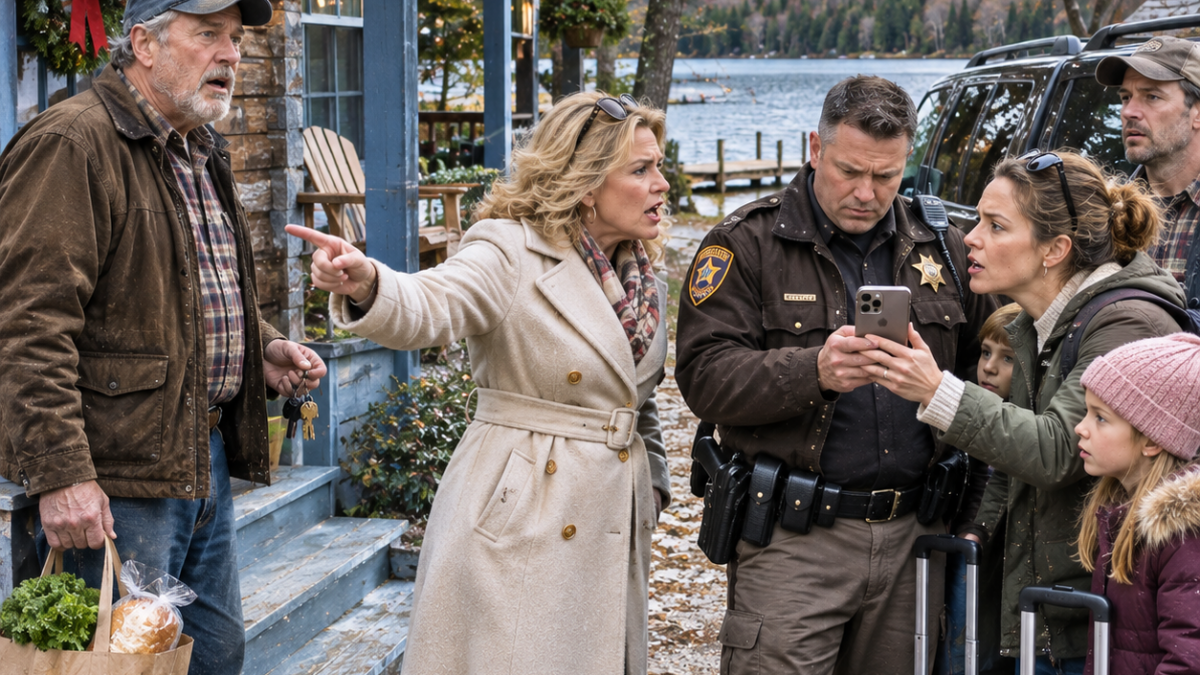
HOA Karen Rented Out My Lake Cabin Without Permission—Then Her Own Guests Showed the Deputy the Booking She Used to Keep Me Out.
HOA President Amelia Grant called 911 while I stood on the porch of the lake cabin I had owned for nineteen years, told the dispatcher I was trying to break into an occupied rental, and demanded that deputies remove me before the paying guests could see what she had done.
The problem for Amelia was that the frightened family beside the suitcases had a $1,140 booking confirmation showing my blue front door, my late wife’s yellow mixing bowl, and Amelia’s own name beneath the word HOST—and one message telling them exactly what to do if “an older man” appeared and claimed he owned the house.
By the time the deputy finished reading it, I realized Amelia had not mistaken my cabin for an HOA rental at all; she had used my emergency key, photographed my private rooms, scheduled cleaners, accepted future bookings, and prepared strangers in advance to help keep me out of my own home.
The first clue was a black lockbox.
Small.
Cheap.
Four number wheels.
The kind people hang beside vacation rentals so guests can let themselves in without ever meeting the owner.
It appeared on my porch eight days before Amelia Grant called the police on me.
At the time, I thought it was irritating.
Not frightening.
My name is Warren Ellis.
I was sixty-six years old then, retired after thirty-eight years repairing commercial refrigeration systems throughout western Pennsylvania.
Restaurants.
Grocery stores.
Nursing homes.
School cafeterias.
If it had compressors, coils, refrigerant lines, or a freezer full of food somebody would lose money on if I failed, I had probably worked on it.
That job taught me two habits I never lost.
First, do not panic because something looks wrong.
Second, do not touch the thing that looks wrong until you understand why it is there.
That was why I photographed the lockbox before I laid a finger on it.
It had been attached to the porch rail beside a wooden fish painted blue and orange by my grandson Mason during summer camp.
Mason had painted one eye nearly twice the size of the other.
My wife Joan used to laugh every time she passed it.
“He looks surprised to discover he’s a fish.”
Joan had been gone three years.
Cancer.
Forty-one years married.
There are people who tell you a house eventually stops feeling like the person who died.
I do not think that is true.
Not completely.
Joan was still everywhere.
Her yellow ceramic mixing bowl sat above the stove.
PART2:
A green quilt she made during the first winter after we bought the cabin lay across the guest bed.
Inside the pantry door were pencil marks showing our grandchildren’s heights.
Some marks were mine.
Some Joan’s.
She wrote the dates smaller than I did.
Her handwriting leaned slightly to the right.
I had never painted over them.
Never would.
The cabin itself sat on the southern edge of Lake Marlow, outside a small Pennsylvania town where vacation homes and year-round residents existed side by side.
Two bedrooms.
Stone fireplace.
Blue front door Joan chose because she said every lake house should have at least one color that made people happy before they went inside.
Small private dock.
Not luxurious.
Not an investment property.
Home.
Most of the year I lived there.
During the coldest stretches of winter, I sometimes stayed a few nights at my daughter Rachel’s house because she worked night shifts at the hospital and needed help with the children.
That was how Amelia had started building her story.
A little truth.
Then another little truth.
Then a lie poured between them until nobody could tell where one stopped and the next began.
Amelia was president of the Lake Briar Homeowners Association.
People called it an HOA even though our development was more complicated than the newer suburban ones.
Some properties were year-round cabins.
Others seasonal.
PART3:
Some owners participated in a voluntary guest-rental program the association had created to generate income while people were away.
I never joined.
Never wanted to.
Joan and I had discussed it once.
She had looked around our kitchen.
At the yellow bowl.
Family photographs.
Her recipe box.
Then said:
“I don’t want strangers opening my cupboards.”
That ended the discussion.
After she died, I felt even more strongly about it.
The cabin had too much memory inside.
It was not inventory.
Still, the HOA had an emergency-key program.
Years earlier, Joan and I had left one spare in a sealed envelope at the association office.
Purpose clearly written:
Emergency access for incidents affecting the property.
Frozen pipe.
Water leak.
Fire.
Storm damage.
Not guests.
Not cleaners.
Not revenue.
That distinction would become very important.
But on the morning I found the lockbox, I did not yet suspect the emergency key.
I called Amelia.
She answered on the fourth ring.
“Lake Briar office.”
“Amelia, it’s Warren Ellis.”
“Morning, Warren.”
“Did the HOA put a black lockbox on my porch?”
Pause.
“Yes.”
“Why?”
“For the exterior-work program.”
“What exterior work?”
“Gutter inspections.”
I remembered the notice.
Owners could request an exterior inspection and receive estimates before winter repair work.
I had checked the participation box.
Exterior.
Nothing inside.
“I didn’t give anybody a key.”
“The box doesn’t necessarily contain a house key.”
“What does it contain?”
“A service tag.”
“What kind?”
“The contractor scans it to identify enrolled properties.”
I looked at the lockbox.
“That sounds like something they could do with a sticker.”
Amelia laughed lightly.
“It’s the system they use.”
“Take it off when they’re finished.”
“Of course.”
I could have stopped there.
Most people would have.
The explanation was awkward but plausible.
Service companies use strange systems now.
QR codes.
Digital tags.
Key safes.
Remote access.
I had been retired long enough to accept that half of modern convenience looked unnecessary to me.
Still, old habits.
Look before touching.
I emailed the gutter company listed on the HOA notice.
Simple question.
Does your crew use black combination lockboxes attached to enrolled properties?
I added:
No person has permission to enter my cabin.
The reply came that evening.
Mr. Ellis,
Our company does not use lockboxes for exterior inspections.
We have not yet visited your property.
No interior access is required.
Thank you.
I forwarded the email to Amelia.
Her reply came the following morning.
Administrative mix-up. I will handle it.
By noon, the lockbox was gone.
I saved everything.
Photograph.
Email.
Her answer.
At the time, I thought I had caught Amelia doing what she always did.
Managing too much.
Speaking before checking.
Treating association business as though every house existed inside her personal filing cabinet.
I did not yet understand the lockbox had already served its real purpose.
Two days later, I was sitting on the porch replacing a cracked handle on an old tackle box when a cleaning-company van stopped at the bottom of my steps.
A woman got out carrying a canvas bag and a mop bucket.
Mid-forties.
Brown ponytail.
Company polo.
She climbed halfway up the steps.
“Are you almost finished?”
I looked at the screwdriver in my hand.
“With what?”
She glanced toward the cabin.
“Checking out.”
I put the screwdriver down.
“I live here.”
Her face changed.
She pulled out her phone.
“Cabin fourteen?”
“That’s my lot number.”
She showed me the screen.
TURNOVER CLEAN — 11:00 A.M.
My address.
Two-bedroom lake cabin.
At the bottom:
Site contact: Amelia Grant.
I felt my pulse in my neck.
“Who ordered this?”
“The neighborhood office.”
“Have you cleaned here before?”
“No, sir.”
“I’m covering another worker’s route.”
Her name was Nicole.
She looked increasingly uncomfortable.
I could tell she thought I was about to blame her.
“I know this isn’t your fault.”
She relaxed slightly.
“Can you send me that work order?”
“I’d have to ask my supervisor.”
“Please do.”
She called from the porch.
Explained.
Her supervisor agreed to send the section showing address, job description, date, and contact.
Nicole packed nothing.
Had not entered.
Before she left, she said:
“I’m sorry.”
“You didn’t do anything.”
That became something I had to remind myself often during the next month.
A lot of decent people were being handed bad instructions.
The cleaner.
The locksmith.
The guests.
Even some board members.
Anger wants one simple enemy.
Evidence is usually less tidy.
I called Amelia.
She sighed when she heard my voice.
“Warren, the cleaning was for the guest cottage.”
The HOA owned a small two-room cottage beside the clubhouse.
It had been closed since a winter pipe burst.
“That’s on Pine Loop.”
“I know.”
“My cabin is on Lake Shore Drive.”
“The addresses were mixed in the scheduling system.”
“They aren’t even similar.”
“It was a clerical mistake.”
“Did you advertise my cabin for rent?”
“No.”
“Have you accepted money from anyone to stay here?”
“Of course not.”
“Are you sure?”
“Yes.”
I sent the same questions by email.
I wanted writing.
Not memory.
Her answer was one sentence:
Your property is not enrolled in any rental program.
I printed it.
Then I checked every door.
Every window.
Nothing looked disturbed.
Front lock normal.
Back door normal.
No broken latches.
No obvious missing items.
I was almost ready to believe this had become two unrelated mistakes.
Then I remembered the emergency key.
The next morning, I drove to the clubhouse.
Ruth worked the office.
Part-time.
Probably sixty.
Kind woman who knew everyone’s mailing address and almost nothing about the political fights Amelia enjoyed.
I said:
“I need to see the envelope with my emergency key.”
Ruth opened a locked cabinet behind the desk.
Alphabetized envelopes.
ELLIS, WARREN & JOAN.
She removed mine.
The seal had been opened.
Inside was nothing.
Ruth looked twice as if the key might materialize if she checked carefully enough.
“It’s empty.”
“I see that.”
“Amelia may have it.”
“Why?”
“I don’t know.”
She checked a paper log.
There.
Previous week.
ELLIS — contractor access.
Signed:
A. Grant.
I asked:
“Can I have a copy?”
Ruth hesitated.
“Is something wrong?”
“I’m trying to determine that.”
She photocopied the page.
I wrote a short notice.
Effective immediately, I revoke all permission for the association to hold or use any key to my property.
Ruth dated my copy.
That afternoon, I paid a locksmith $260 to replace both exterior locks.
Could have done the job myself.
I had tools.
Experience.
I paid because I wanted a receipt from an independent company showing exactly when the old access ended.
Another old work habit.
Documentation creates timelines.
Amelia called while I swept metal shavings off the porch.
“You could have spoken to me before involving office staff.”
“I did speak to you.”
“That key was being used for contractor access.”
“The gutter contractor says he did not need a key.”
“I manage dozens of service requests, Warren.”
“I cannot remember every detail instantly.”
“I changed the locks.”
Silence.
Not long.
Important.
“You changed them?”
“Yes.”
“Without notifying anyone?”
“It’s my cabin.”
The call ended shortly after.
I should have understood her reaction.
Instead, I told myself the important part was finished.
No usable key.
No lockbox.
No cleaners.
Problem stopped.
Thursday morning I went to Rachel’s house.
She had two overnight shifts.
I stayed with Mason and his younger sister.
Before leaving my cabin, I checked every window.
Took the little wooden fish off its porch hook because the string had frayed.
Mason would help me replace it.
Saturday afternoon, I drove home.
Stopped for groceries.
Milk.
Bread.
Coffee.
A packet of picture cord.
Rachel sent leftover soup in a plastic container.
I turned into my gravel driveway just after three.
Dark minivan.
Two suitcases.
A man in a baseball cap stood at my blue door holding his phone near the lock.
A woman got out of passenger side.
A boy about twelve stood beside her holding a new fishing rod still wrapped in plastic.
I parked.
Got out.
“Can I help you?”
The man turned.
“We’re trying to check in.”
“Check in where?”
He pointed at my cabin.
“We rented it for the weekend.”
There are moments when anger arrives before understanding.
This was not one.
Understanding came first.
Lockbox.
Cleaning order.
Missing key.
Amelia.
Then the anger.
Cold.
Steady.
“Can I see the booking?”
The woman stepped closer.
“Of course.”
Before she could unlock her phone, Amelia came quickly down the path from the clubhouse.
“Warren.”
She raised one hand.
“Stop right there.”
I looked at her.
“You told me there was no rental.”
“This is not the time.”
“It is exactly the time.”
The woman beside the suitcases asked:
“Amelia, is this the owner?”
Amelia ignored her.
“Warren, leave until we sort this out.”
I took my new key from my pocket.
“I’m putting my groceries inside.”
“Do not enter.”
I looked at her.
Then inserted my key.
It turned.
The blue door opened.
Amelia’s face changed.
That was the first time I saw real fear.
Not concern.
Not irritation.
Fear.
She pulled out her phone.
Dialed 911.
I could hear her.
“There is a man attempting to force entry into an occupied rental.”
I turned slowly.
An occupied rental.
My house.
My key.
My groceries.
My wife’s bowl above the stove.
She continued:
“He refuses to leave.”
That was when I made one decision I am still proud of.
I did not shout.
I stepped inside long enough to set the grocery bag down.
Then I came back onto the porch.
The family had moved away from Amelia.
The woman introduced herself.
“I’m Megan.”
She pointed.
“My husband Paul.”
“Our son Luke.”
“We didn’t know.”
“I believe you.”
Luke looked scared.
I pulled a porch chair away from the door.
“He can sit.”
Paul thanked me.
Amelia told them:
“Please return to your vehicle.”
Megan ignored her.
Good.
Deputy Ross arrived within fifteen minutes.
He did what good deputies should.
Separated statements.
Did not decide based on whoever spoke first.
Amelia spoke anyway.
“This man is interfering with a valid guest reservation.”
Ross looked at me.
I handed him my driver’s license.
Address matched.
“I own the cabin.”
“How long?”
“Nineteen years.”
“Do you rent it?”
“No.”
“Ever?”
“No.”
Amelia interrupted.
“There is an association guest program.”
Ross raised a hand.
“I’ll get there.”
Then Megan said:
“Deputy, you need to see this.”
She handed him her phone.
Booking.
Three nights.
$1,140.
Photographs.
Exterior.
Blue door.
Dock.
Living room.
Kitchen.
My eyes stopped at one photo.
Joan’s yellow mixing bowl.
Above the stove.
Exactly where it had always been.
Someone had been inside.
Recently.
Ross scrolled.
HOST:
Amelia Grant.
Then the check-in messages.
One dated that morning.
If an older man appears and claims he owns the property, do not let him enter. Contact me immediately. He has been informed of the rental arrangement and may attempt to interfere.
Ross stopped.
Read again.
Then looked at Amelia.
“Why were your guests told to keep the property owner outside?”
“He’s confused about an agreement.”
“I’m not confused.”
I opened my email.
Showed Ross Amelia’s message.
Your property is not enrolled in any rental program.
Then the emergency-key log.
Then my cancellation of access.
Ross read slowly.
“Ms. Grant, do you have a signed rental agreement?”
“It’s at the office.”
“Please get it.”
She left.
Paul sat on lower step.
“We drove five hours.”
He looked toward Luke.
“Birthday weekend.”
I noticed fishing rod again.
“How old?”
Luke answered:
“Twelve.”
“Ever fished a lake?”
“Only once.”
I looked toward the dock.
“Let’s get the adult problem sorted first.”
“Then maybe.”
Megan scrolled further.
Her face changed.
“There’s more.”
She showed me a message chain from Friday.
Issue with original lock.
Worker scheduled after check-in.
Attached work order:
INSTALL GUEST KEYPAD.
REMOVE EXISTING DEADBOLT.
Date:
Saturday.
4:00 p.m.
I checked my watch.
3:48.
Someone was coming in twelve minutes to remove the lock I had installed two days earlier.
I handed the phone to Ross.
“You hired this person?”
“No.”
“Receipt for your lock?”
I showed him.
Company.
Address.
Thursday date.
Ross nodded.
Paul asked:
“Should I call the worker?”
“Let him arrive.”
Ross said.
“I’ll speak to him.”
At 4:02, a white van turned into my driveway.
A man named Dale stepped out carrying a toolbox.
“Keypad installation?”
Ross met him halfway.
I introduced myself.
Showed ID.
Receipt.
Dale looked from me to Amelia, who had returned carrying a blue folder.
He put the toolbox back in his van.
“I’m not changing anything with ownership disputed.”
Amelia said:
“It isn’t disputed.”
“He owns it, but the booking—”
Dale stopped her.
“Then he’s the person I need authorization from.”
I said:
“You do not have it.”
“Job cancelled.”
I asked him to preserve work order.
Messages.
Contact info.
Ross asked too.
Dale handed over his business card and left.
My new lock remained.
Small victory.
Amelia gave Ross a document.
Emergency Property Access Authorization.
My signature.
Old.
Real.
Joan’s too.
The form we had signed years earlier.
Ross read it.
“This says emergency access.”
“It allows association management of access.”
“For emergency conditions.”
Amelia produced another page.
Voluntary guest program.
Owners could enroll cabins when away.
At bottom:
Owner approval.
Blank.
Ross held it toward her.
“Where is Mr. Ellis’s signed enrollment?”
“Office records may be incomplete.”
That sentence told the truth accidentally.
Records were complete enough to take money.
Complete enough to schedule cleaners.
Complete enough to arrange a keypad.
Complete enough to instruct paying guests to deny me access.
But somehow incomplete only where my permission should have existed.
Ross told Amelia he would not remove me.
He would document the complaint.
Booking money and claimed authority required investigation.
Then he asked:
“Mr. Ellis, do you want the guests removed from your property?”
Megan reached for suitcase.
I said:
“Not like that.”
She stopped.
“They didn’t cause this.”
I looked at Paul.
“Sit here while you find somewhere else.”
Amelia offered the HOA guest cottage.
I asked:
“The one with the burst pipe?”
She said:
“It is suitable.”
Paul looked at her.
“We paid for that cabin.”
Private dock.
Kitchen.
Three nights.
Megan opened booking app.
Late guest cancellation would cost most of their payment.
“You need to cancel as host.”
She told Amelia.
“I’ll handle it.”
“When?”
Paul asked.
“There are procedures.”
Then Amelia left.
Ross gave us incident number.
Asked for documents.
Megan promised full message history.
Then he drove away.
I put groceries away.
Milk warm.
Soup leaning sideways.
I stood with both hands on kitchen counter.
One thought repeating.
She called 911 on me.
Not because she was surprised.
Not because she genuinely believed I was a trespasser.
Her message to Megan existed before I arrived.
She expected me.
Had prepared for me.
The 911 call was part of the plan.
Outside, Paul called hotels.
Megan argued with booking support.
Luke sat with fishing rod.
I called a small lodge on north end of lake.
Owner, Ed, knew me from refrigeration repair days.
One room left.
Two beds.
No kitchen.
Clean.
Near water.
I asked him to hold it.
Paul asked price.
Then looked at phone.
Their $1,140 was still tied up.
“I’ll cover first night.”
“No.”
He said.
“You shouldn’t pay for this.”
“I know.”
Megan looked at Luke.
“We’ll repay you.”
“We’ll work it out.”
I nodded toward fishing rod.
“I’d rather his birthday have one thing worth remembering.”
Before they left, Luke and Paul walked with me to dock.
We took plastic off rod.
No hook.
Practice weight.
Luke made three terrible casts.
Fourth went beyond end of dock.
His face changed.
Grin.
There he was.
Twelve again.
Not a kid watching adults argue over fraud and police calls.
Paul stood beside me.
“I believed her because everything looked official.”
“Neighborhood logo.”
“Booking page.”
“Instructions.”
“That was the point.”
He nodded.
Then showed me full message thread.
“I’ll send everything.”
He could have left.
He owed me nothing.
Instead, he helped build the record.
That kindness mattered later more than he probably understood.
The booking had been created three weeks earlier.
Three weeks.
Before the lockbox appeared.
Amelia had described my home as:
Owner-approved accommodation managed through Lake Briar guest program.
She promised personal items would be removed before arrival.
A key would be waiting in black lockbox.
Then the photo.
My porch.
Wooden fish.
Same box I photographed.
Same foam strip behind it.
I had found proof of the rental eight days before the guests arrived and did not know what I was looking at.
That bothered me.
Then I studied the interior photographs.
Yellow bowl.
Living room.
Guest room.
One book on side table.
A fishing memoir I had bought that spring.
Those were not old listing photos.
Someone had entered recently.
Sunday morning, I photographed every room.
Then noticed changes.
Joan’s green quilt missing from guest bed.
Found folded in hall closet beneath plain white sheets.
I did not own those sheets.
New matching towels.
Paper laundry bands.
Someone had begun converting my home.
Preparing it.
I photographed before touching.
Then pantry door.
Grandchildren’s pencil marks.
Still there.
I put my palm against them.
For first time, this became more than property.
I pictured a cleaner sanding marks away.
Removing photographs.
Packing Joan’s belongings into boxes because someone had decided memories were “personal items” that interfered with guest presentation.
I called Nicole’s supervisor.
Beth.
Asked whether anyone had entered earlier.
She checked.
“Yes.”
“Setup visit last week.”
“Inside?”
“Yes.”
“Who provided access?”
“Site manager.”
“Name?”
“Amelia Grant.”
I asked records preserved.
Beth agreed to speak with company owner.
Later she sent them.
Before that, I contacted booking platform.
Unauthorized listing report.
They wanted deed.
Identification.
Proof.
I supplied it.
The listing remained live for hours.
I resisted checking every five minutes.
Monday morning I went to clubhouse.
Ruth looked nervous.
“I heard about Saturday.”
“Which version?”
She winced.
I apologized.
Not her fault.
“Guest-program records for my address.”
She could provide blank enrollment form.
Booking accounts controlled by Amelia.
“Does board know?”
“I’m not sure what they’ve been told.”
She gave contact information for two other board members.
I sent them:
Amelia’s written denial.
Emergency-key form.
Key log.
Booking confirmation.
911 incident number.
My request was simple.
Stop offering my home.
Preserve records.
Return key.
One board member, Dennis Ward, replied.
He would investigate.
Another asked:
“Could you have given verbal approval at some point?”
I stared at question.
Then typed:
No.
Nothing else.
Tuesday, Megan received refund.
Paul repaid lodge cost.
Megan sent screenshot showing listing removed.
For ten minutes, I relaxed.
Then Ruth called.
Low voice.
“Amelia asked me to prepare arrival envelopes.”
“For cottage?”
“No.”
“Your address.”
I stood.
“The listing is removed.”
“These reservations aren’t all through that listing.”
Some guests had paid directly through HOA program.
A schedule existed.
Dennis forwarded portion later.
Megan and Paul.
Fishing couple next Friday.
Family later in month.
Then:
Six-week reservation.
PAID IN FULL.
Office note:
Owner objections are being handled. Do not cancel confirmed arrivals.
I read it twice.
My objections were being handled.
As if I were defective plumbing.
A paperwork problem.
I had changed locks.
Proved ownership.
Deputy refused to remove me.
Amelia was still selling access.
I called Dennis.
“You knew about this?”
“I knew about one booking.”
“How many did she tell you?”
“One mistaken reservation.”
I read note aloud.
Silence.
“Does that sound mistaken?”
“No.”
“Contact every guest.”
“Today.”
“I’ll speak with Amelia.”
“No.”
“Speak to guests.”
He said he understood.
I had learned understanding was cheap.
Doing mattered.
That afternoon I rehung Mason’s wooden fish with new cord.
It turned slightly in lake breeze.
He was supposed to visit that weekend.
I pictured strangers on porch.
Him asking why their bags were inside Grandma’s house.
That was the moment I called a lawyer.
Rebecca Lane.
Office above pharmacy.
Property disputes.
Early fifties.
Quiet voice.
Sharp questions.
I brought two folders.
Ownership.
Evidence.
She spent five minutes on deed.
Thirty on Amelia.
“Ever rented through HOA?”
“No.”
“Received rental income?”
“No.”
“Allowed cleaners?”
“No.”
“Signed anything beyond emergency key and gutter inspection?”
“No.”
“Verbal agreement?”
“No.”
Rebecca set Amelia’s email beside booking schedule.
“We need them stopped before next arrival.”
“I’ve been asking.”
“I know.”
“Now we make request enforceable.”
She explained injunction.
Stop advertising.
Stop renting.
Stop authorizing entry.
Stop lock changes.
Preserve records.
I paid $1,800 retainer.
Money set aside for new refrigerator.
My old one was fifteen years old.
Still running because I had rebuilt it twice.
I had promised myself never again to crawl behind it.
Apparently I had made too many optimistic promises in retirement.
Rebecca sent formal demand.
Deadline Wednesday noon.
Confirm:
All future guests notified.
All bookings canceled.
No cleaners.
No locksmiths.
No entry arrangements.
Records preserved.
That afternoon, padded envelope behind porch chair.
Inside:
My old emergency key.
No note.
I photographed it.
Then sealed in evidence bag.
Useless now.
But important.
A returned key does not tell you whether copies exist.
Beth from cleaning company called.
Owner authorized release of setup records.
Photographs.
Work order.
I sat before opening.
Bedroom.
Plain white sheets.
Joan’s quilt folded in closet.
Anniversary photograph face-down on shelf.
My breath caught.
I walked to living room.
Photograph was back beside lamp.
Slightly farther left than usual.
Fortieth anniversary.
Joan in blue dress.
Me in tie she hated.
Someone had moved it so vacation guests would not see us.
Then put it back imperfectly.
Work order instructions:
Remove personal items from guest photography.
Items too large to remove may remain pending preparation of owner storage area.
Owner storage area.
My home.
My wife’s things.
My clothes.
My groceries.
All being described as clutter awaiting storage.
I called Beth.
“What storage area?”
“That’s what site manager told cleaner.”
“Did cleaner question it?”
Beth paused.
“There is a note.”
Cleaner had asked about personal photographs, clothing, food.
Amelia said owner was staying with relatives and had agreed to leave belongings until first rental settled.
She had taken something true.
I sometimes stayed with Rachel.
Then built false permission around it.
Wednesday Dennis called.
Board had ordered Amelia to stop taking new reservations.
“What about existing?”
“The difficult issue.”
“For whom?”
“Money has been used.”
I looked across lake.
“For what?”
“Association cottage repairs.”
Silence.
The HOA had damaged cottage.
Amelia rented my dry cabin to help finance repairs.
“How much?”
“We’re still tracing.”
“Was it approved?”
“Board approved using income from guest program.”
“We believed listed cabins were enrolled.”
“You believed because?”
“Amelia said owner approvals were on file.”
“Ask for mine.”
“We did.”
“And?”
Silence.
I did not need answer.
Dennis said board wanted meeting.
Amelia proposed temporary hosting agreement.
Finish existing bookings.
Pay me share.
I laughed once.
Not amused.
“No.”
“Warren—”
“No.”
“My home is not inventory you need to sell because you spent money.”
“I understand.”
“Tell Rebecca whatever you propose.”
“No agreement by phone.”
Deadline passed.
No complete guest confirmations.
Rebecca filed.
My daughter called.
I changed visit from Friday to Sunday because another unauthorized arrival might come.
She offered staying away all weekend.
“No.”
Too sharp.
She waited.
“I don’t want this becoming a place we’re afraid to use.”
“Sunday then.”
“I’ll bring dinner.”
Simple.
She asked what I needed.
That felt almost radical after days of people deciding for me.
HOA meeting at six.
Rebecca beside me.
Dennis.
Ruth.
Claire, another board member.
Amelia with blue folder.
At each seat:
TEMPORARY HOSTING AGREEMENT.
I read.
Continue confirmed rentals.
I receive percentage.
Accept cabin condition after each stay unless damages reported quickly.
I slid it back.
Amelia sighed.
“We are trying to find a practical solution.”
“Practical solution is stop renting my home.”
“Guests have plans.”
“So do I.”
“You stay with your daughter regularly.”
Rebecca spoke:
“Mr. Ellis is not required to vacate his residence because your association accepted unauthorized payments.”
Amelia talked about cottage repair deposits.
Plumbing.
Flooring.
Contractors.
Dennis interrupted.
“Show us Warren’s enrollment.”
Emergency-key form.
Again.
Claire read heading.
“Rental enrollment.”
Amelia said:
“Participation was discussed verbally.”
“When?”
Rebecca asked.
“During gutter inspection conversations.”
I placed printed email on table.
YOUR PROPERTY IS NOT ENROLLED IN ANY RENTAL PROGRAM.
“That was after lockbox.”
I said.
“After cleaning visit.”
“You told me no rental existed.”
“You told guests I might interfere.”
“You ordered a locksmith to remove my new lock.”
“Which part was still being processed?”
Amelia’s face hardened.
“You’re making this personal.”
Ruth spoke quietly.
“It is his home.”
Everyone turned.
Ruth kept eyes on table.
“I handled key cabinet.”
“I should have checked contractor-access reason more closely.”
“But that emergency key was not rental permission.”
She placed log.
Amelia signature.
Nicole company records.
Dale work order.
Evidence chain.
No speeches required.
Claire asked:
“Can we refund guests?”
Dennis said not all immediately.
Claire answered:
“Then that is the board’s problem.”
“Not where Warren sleeps.”
They voted.
Cancel bookings.
Passed.
Suspend Amelia’s access to guest-program account.
Passed.
Ruth would contact every guest.
Dennis verify.
I felt my shoulders drop.
Not ending.
Progress.
Next morning, six-week guest contacted.
Angry.
Reasonable.
He had paid in full.
Fishing couple not answering.
Possibly traveling.
I taped neutral notice inside porch window:
PRIVATE RESIDENCE.
NO RENTALS AUTHORIZED.
IF YOU HOLD A BOOKING, CONTACT ASSOCIATION OFFICE.
Ruth’s number.
No accusations.
Then Paul called.
Megan had provided full statement to Deputy Ross.
He found another message.
Friday evening.
After Amelia knew I changed locks.
IF WARREN RETURNS, DO NOT ACCEPT HIS CLAIM THAT THE STAY WAS CANCELED. HE HAS BEEN INFORMED OF THE BOOKING. I WILL ATTEND AND HAVE HIM REMOVED IF NECESSARY.
I read aloud.
Paul said:
“She didn’t call the deputy because she suddenly got confused.”
“No.”
“She planned it.”
“Yes.”
I sent to Rebecca.
Ross.
Then sat at kitchen table.
Court hearing Friday morning.
Amelia hired own attorney.
Claim:
honest belief in verbal permission.
Rebecca placed two pages together.
One to me:
No rental program.
One to guests:
Do not believe Warren; I will have him removed.
Judge read both.
Then looked at Amelia.
“Before we discuss misunderstanding, explain why you told the owner one thing and instructed paying guests to act on the opposite.”
Amelia turned to attorney.
He stood.
“My client’s messages were poorly worded.”
“She was attempting to prevent confrontation.”
Judge looked down.
“By promising to have the owner removed?”
Attorney paused.
Amelia interrupted.
“He knew the cabin was being prepared.”
Rebecca touched my sleeve.
Stay seated.
Judge:
“What do you mean?”
“He saw lockbox.”
“He spoke with cleaner.”
“And what did he do?”
Silence.
Rebecca rose.
“He objected.”
She laid out timeline.
Questioned lockbox.
Explicitly denied interior access.
Asked whether home was rented.
Received written denial.
Canceled emergency-key permission.
Changed locks.
“These are objections, Your Honor.”
“They are not consent.”
Amelia’s lawyer mentioned conversations not documented.
Judge asked:
“When did verbal agreement occur?”
No clear date.
Amelia said I once mentioned cabin sat empty while I stayed with daughter.
True.
I answered judge:
“Sometimes I’m away.”
“I never said they could rent it.”
“Did you receive rental income?”
“No.”
“Approve guests?”
“No.”
“Authorize lock replacement?”
“No.”
Judge reviewed documents.
Emergency key:
limited.
Gutter inspection:
exterior.
Rental enrollment:
blank.
Order granted.
HOA and Amelia barred from:
Advertising cabin.
Accepting bookings.
Giving entry permission.
Changing locks.
Arranging cleaners.
Records preserved.
Guests notified.
Remaining damages later.
I wrote restrictions down although Rebecca would send copy.
After weeks of other people explaining what they thought they could do with my cabin, I wanted the court’s words in front of me.
Hallway.
Amelia said:
“This could have been settled without all this.”
I stopped.
“You could have stopped when I asked about the lockbox.”
Rebecca stood beside me.
Amelia said nothing.
Outside, I called Rachel.
“Order is in place.”
“Kids can come?”
“Yes.”
Easiest yes in weeks.
Home shortly after noon.
Porch empty.
Blue door closed.
Fish turning gently.
I put court papers inside.
Walked dock.
Sat.
No phone.
No documents.
Lake.
Then tires.
Fishing couple.
Truck.
Small boat trailer.
Man holding printed reservation.
“Mr. Ellis?”
“Yes.”
They had driven since morning.
Wife saw notice.
“We’re not asking you to leave.”
She said.
“We just need to know where to go.”
I thanked her.
Ruth answered immediately.
Board had arranged motel near public launch.
Refund.
Alternative lodging paid by association.
This time, system took responsibility.
They left without argument.
That was last unauthorized arrival.
I did not know then.
For weeks, every slowing vehicle made me look toward porch.
Ruth worked list.
Refunds.
Calls.
Emails.
Six-week tenant found furnished apartment.
Fishing families rebooked elsewhere.
The HOA used funds to return money.
Cottage repairs paused.
That was appropriate.
You do not fill a financial hole created by unauthorized rentals by demanding the victim continue supplying the asset.
Deputy Ross kept investigating.
Booking records.
Key log.
911 recording.
Lock work order.
Messages.
Cleaning records.
He had me repeat Saturday carefully.
Where parked.
What said.
How door opened.
I answered.
The guests had never entered.
Their code failed because I changed lock.
I used my key.
Put groceries inside.
Waited outside.
The 911 call described:
Man forcing entry into occupied rental.
Reality:
Homeowner returning to empty home while guests remained outside.
Those were not two interpretations.
They were two different events.
Weeks later, Rebecca and I discussed civil settlement.
Expenses.
$260 locks.
Attorney fees.
Cleaning inspection.
Security review.
Property documentation.
No fantasy number.
No emotional jackpot.
I told her about things without receipts.
Checking porch before opening curtain.
Wondering who touched Joan’s belongings.
Seeing anniversary photo face-down.
Rebecca listened.
Then:
“We can discuss non-economic harm.”
“But we keep claim credible.”
I agreed.
Paul had reimbursed lodge room.
We removed it.
No double recovery.
Settlement paid documented costs and agreed legal fees.
Amelia paid portion directly.
Association paid remainder, then pursued internal claims separately.
Final order kept protections permanent.
No huge damages trial.
No million-dollar check.
I wanted that clear.
I did not “win” a fortune.
I kept my home.
Recovered supported costs.
Stopped unauthorized rental.
Made sure it could not happen again.
That was enough.
Amelia’s board position ended before criminal matter.
Association members held removal vote.
Dennis presented records.
Claire explained guest refunds.
Ruth produced key log.
I attended.
Did not speak.
I had already spoken through evidence.
Question was not whether I was friendly.
Not whether cabin would make attractive rental.
Not whether HOA needed money.
Question:
Can a president use an emergency key to enter an owner’s home, sell stays without consent, then call police when owner returns?
Members voted Amelia out.
Later, Amelia pleaded guilty to making a false report.
Other allegations were reviewed through prosecutor and civil process.
I was not part of every discussion.
I will not pretend I know what I do not.
Sentence included probation.
Community service.
Fine.
No prison.
Some neighbors wanted more.
Some said enough.
I stopped needing consensus.
Record was clear.
Bookings gone.
Court order permanent.
Amelia no longer controlled office.
My home was mine again.
HOA changed policies.
Separate enrollment required.
Property specifically named.
Dates listed.
Owner receives every booking.
Payments/refunds reviewed by two people.
Emergency keys completely separated from rental program.
Ruth asked:
“Want to leave another spare?”
“No.”
She smiled.
“I expected that.”
My spare went to Rachel.
That did not mean I trusted nobody.
It meant I chose who had access.
That distinction became the entire lesson.
A month later, Nicole and Beth returned for white linens.
I had bagged them.
Nicole stood just inside doorway.
“I’m glad you were here that day.”
“So am I.”
She looked toward Joan’s photograph.
“We ask more questions now.”
“When personal belongings are still in place.”
“Good.”
I did not want her carrying shame for someone else’s scheme.
But I wanted her to remember clean paperwork can authorize a dirty job.
Beth handed me corrected service record.
OWNER OCCUPIED.
DIRECT OWNER APPROVAL REQUIRED FOR ALL FUTURE WORK.
I filed it.
Then I did something that felt larger than it should.
Closed the folder.
Put it in cabinet.
For weeks, evidence lived on kitchen table.
Stacks.
Printouts.
Screenshots.
Receipts.
I moved it out of daily life.
That was when cabin began feeling like home again.
Late summer, Paul and Megan returned.
Stayed at fishing lodge.
Paul called first.
Asked whether Luke could fish my dock.
Asked what day.
What time.
That simple courtesy made me smile.
They arrived with sandwiches and a small box.
Luke had chosen a new fishing lure for me.
“For letting us fish.”
I said:
“You already paid me back.”
“This isn’t money.”
“Fair.”
Mason joined later.
Within ten minutes, the boys were arguing about best side of dock.
Megan sat on porch with Rachel.
Paul helped untangle line.
Nobody carried booking confirmation.
Nobody expected me to pack.
Near evening, I went inside for drinking glasses.
Found Mason beside pantry door.
“Mom says I’m taller.”
“Stand straight.”
I put pencil over head.
Made small mark above last.
He turned.
“That much?”
“That much.”
Below:
Older marks.
Joan’s handwriting.
Small dates.
I put pencil away.
Through open door I heard laughter.
Boat knocking gently against dock.
Cabin full of people.
For first time in months, that felt right.
They were there because I invited them.
That was the difference Amelia never seemed to understand.
A house can be empty without being available.
A key can exist without granting permission.
An owner can travel without surrendering possession.
A spare bed is not public inventory.
A lake view is not a business opportunity simply because someone else thinks it should be.
And an association president does not become the owner of everyone’s choices because she controls an office.
Years later, people still told the story badly.
“Remember when Amelia accidentally rented Warren’s cabin?”
Not accidental.
I corrected them.
“She called the cops on you?”
Yes.
“She tried to have you arrested?”
I never said that.
She called 911 and falsely described what was happening.
Those distinctions matter.
Some versions became more dramatic.
She had a whole rental empire.
She stole dozens of cabins.
She forged deeds.
No evidence for that.
The truth was enough.
She took an emergency-access system intended to protect owners.
Used it to access my home.
Allowed interior preparation.
Photographed private rooms.
Accepted money.
Scheduled guests.
Ordered my replacement lock removed.
Denied all of it to me.
Then prepared paying strangers in advance to resist my ownership claim.
And when I came home exactly as she expected, she called law enforcement.
No embellishment necessary.
The incident changed the neighborhood.
Not dramatically overnight.
Slowly.
Owners started reading forms.
People asked where emergency keys were stored.
Several removed theirs.
Others kept them but required dual authorization.
Rental participants demanded dashboards showing bookings.
Board meetings became more boring.
That was excellent.
Boring governance is underrated.
No one person controlled:
Guest calendar.
Payments.
Keys.
Maintenance.
Board records.
Amelia had accumulated too many functions because people thought efficiency meant trust.
Afterward, the association accepted inefficiency.
Checks.
Signatures.
Redundancy.
Someone complained:
“Everything takes longer.”
Dennis replied:
“That is occasionally the point.”
I liked him more after that.
The HOA guest cottage reopened eventually.
Proper repairs.
Proper budget.
Guests who stayed there knew it belonged to association.
No confusion.
One winter, Ruth called because freeze alarm indicated low temperature at my cabin while I was at Rachel’s.
“Do you want someone inside?”
She asked.
Notice the question.
“Not yet.”
I checked smart thermostat.
Battery issue.
Heat functioning.
I drove home myself next morning.
Nothing wrong.
Ruth had not used an emergency key.
Did not have one.
That was good.
Permission should not be presumed because action would be convenient.
My refrigerator finally died too.
Completely.
Compressor shorted.
I stood in kitchen listening to silence.
For thirty-eight years, silence from refrigerator meant work.
Now it meant:
Buy a new one.
Rachel came over.
“You’re not fixing that.”
“I could.”
“No.”
“It’s probably relay plus—”
“You promised.”
I looked at old machine.
Then laughed.
“Fine.”
New refrigerator.
First major thing I bought with money I originally planned to spend before Amelia consumed legal fees.
The delivery men asked where old one went.
“Out.”
No ceremony.
Not everything needs saving.
Joan would have agreed.
The yellow bowl returned to top of new refrigerator cabinet afterward.
Same place.
I considered moving it.
Did not.
The photograph that disturbed me most from Amelia’s listing was not bedroom.
Not dock.
Yellow bowl.
Why?
Because it proved someone had stood inside my kitchen and decided the most ordinary part of Joan’s life could be used to sell a weekend.
When the civil case ended, I asked booking company to permanently remove photographs associated with unauthorized listing.
They did.
I saved screenshots for records.
Then stopped looking.
The internet forgot faster than I did.
That was probably healthy.
Luke continued visiting once or twice a summer.
Not every year.
Life gets busy.
One year, he caught his first decent bass from my dock.
Released it.
Mason complained Luke had taken “his spot.”
They argued.
I sat between them.
Perfect.
Megan once asked:
“Does it ever feel strange having us here after how we met?”
“No.”
“Why not?”
“Because you ask.”
That was the whole difference.
Invitation.
People think property rights are about fences.
Deeds.
Locks.
Court orders.
They are.
But emotionally, ownership often comes down to one question:
Who decides?
Amelia took that from me.
Temporarily.
She decided when strangers entered.
What personal objects moved.
When cleaners came.
When my locks should change.
Where I should sleep during rentals.
Whether my claim to my own home should be believed.
The court order restored something deeper than access.
Choice.
Afterward, I became more protective of choice in small things.
When Rachel asked whether she could store boxes in my shed, I said yes.
Because she asked.
When Mason wanted to bring three friends for fishing, I made him ask first.
When HOA wanted exterior tree inspection, they sent permission form.
I signed only what I wanted.
That is not paranoia.
That is consent.
Amelia had treated consent as inconvenient paperwork standing between association and money.
The judge treated it as the missing fact that decided everything.
That stayed with me.
Emergency key form.
Real signature.
Limited purpose.
Guest enrollment.
Blank.
Her entire argument tried to make one signature travel from one document to another.
But permission does not spread simply because somebody wants it to.
I signed for emergencies.
Not rentals.
I agreed to gutter inspection.
Not interior photography.
I sometimes stayed with my daughter.
Not therefore vacant.
I left a spare key.
Not therefore surrendered control.
Those details sound obvious once stated.
They were less obvious when Amelia wrapped them in official logos, association authority, schedules, invoices, and booking software.
That was what made her scheme work as long as it did.
It looked organized.
People confuse organization with legitimacy.
Paul said it on porch.
“I believed her because it looked official.”
So did Nicole.
So did Dale until he met me.
So did board members who assumed owner approvals existed.
A bad decision can travel far when every person sees only one clean piece of paperwork.
That is why I stopped blaming every participant.
The better question was:
Who knew enough of whole story to understand the paperwork was false?
Amelia did.
Her messages proved it.
She told me no rental.
Told guests opposite.
Knew locks changed.
Ordered them changed again.
Told them I might claim ownership.
Promised to have me removed.
That was knowledge.
Intent.
No confusion.
No clerical mistake.
That was why the false-report plea mattered more to me than a bigger civil award would have.
The record finally called the thing what it was.
False.
There is dignity in correct words.
Years after all this, I turned seventy.
Rachel organized small dinner at cabin.
Family only.
Paul and Megan were not there.
Neighbors not.
No big party.
Mason brought girlfriend.
He was almost as tall as pantry door’s top marks.
We measured him anyway.
He laughed.
“You’ve already got one from last year.”
“Stand straight.”
He did.
New line.
Rachel said:
“Dad, he is nineteen.”
“And taller.”
Joan’s old marks below.
Mine above.
Life continuing up the wood.
That night after everyone left, I sat on porch.
Blue fish moved in breeze.
Lake dark.
I thought about strangers who almost spent six weeks inside.
Not angrily.
Just wondered what they would have seen.
Would they notice pencil marks?
Yellow bowl?
Joan’s quilt?
Would they understand they were living inside someone’s memories?
Probably not.
Why would they?
Guests had been told it was rental.
That was why consent matters.
Without it, even innocent use becomes violation.
A person cannot respect boundaries they were told do not exist.
Megan’s family acted decently because once they learned truth, they stopped treating booking as stronger than ownership.
That seems obvious.
It was one of most generous things anyone did.
They could have argued.
Demanded I honor reservation because they paid.
Called me unreasonable.
Instead Megan said:
“We didn’t know.”
Then helped prove it.
That is why they became welcome guests later.
Not because they had a booking.
Because after learning they had no right to be there, they respected the person who did.
There is something else I remember.
The moment Ross asked:
“Do you want these guests to leave your property?”
That was the first time all afternoon someone put decision back in my hands.
I said:
“Not like that.”
Not because I owed them hospitality.
Because I wanted to choose kindness freely.
Choice changes meaning.
Forced generosity is not generosity.
Required sacrifice is not hospitality.
Amelia tried to sell my willingness to be elsewhere.
I decided to help a family after they were stranded.
Those actions might look similar from outside—my home not being available to me for their stay—but one would have been coercion.
The other would have been mine.
I never gave them cabin.
I did give Luke my dock for twenty minutes.
That memory became good.
Despite everything.
Maybe that is why I treasure it.
It proved Amelia did not get to own entire afternoon either.
She created chaos.
But not every thing that happened belonged to her.
Luke learned to cast.
Paul chose honesty.
Megan preserved evidence.
Dale refused unauthorized work.
Ross did not accept the loudest story.
Ruth eventually stood up.
Dennis changed his position when evidence changed.
Claire named the correct financial problem.
Rebecca kept me from turning anger into bad decisions.
A lot of people did one right thing.
That is how a bad system gets repaired.
Not one hero.
A chain.
Same way a bad scheme can grow through people not checking.
The difference is whether, once you see the problem, you keep passing it forward or stop it.
Amelia passed misuse forward.
Others eventually stopped it.
I still have the original black lockbox photograph.
I have thought about deleting it.
Never did.
It sits in digital folder with court order.
Not because I enjoy reliving any of this.
Because that photograph reminds me how ordinary the beginning looked.
Four little number wheels.
Foam strip.
Beside Mason’s ridiculous fish.
Nothing dramatic.
Abuse of authority often arrives disguised as administration.
A form.
A key.
A scheduling error.
A cleaning order.
A “temporary” arrangement.
A convenient interpretation of consent.
If you ignore every small thing because each one alone seems too minor to fight, eventually you may be standing on your porch while a stranger tells police you do not belong inside.
That is not a reason to become suspicious of everyone.
It is a reason to ask simple questions early.
Whose box?
Whose key?
Who authorized?
Where is signed agreement?
When did I consent?
Show me.
Those questions saved me time later.
Not enough time.
But some.
And the most important one came from Judge:
If this was a misunderstanding, why did you tell owner one thing and guests another?
There was never a good answer.
Because there was no misunderstanding.
There was only a plan that depended on me staying away long enough.
Amelia assumed my routine.
Winter nights at Rachel’s.
Truck gone.
Cabin visible from common dock.
She thought absence was predictable.
What she did not predict was me changing locks.
Coming home Saturday.
Documenting.
Megan refusing to follow instruction blindly.
Ross reading.
Ruth keeping log.
The whole scheme depended on everyone accepting her version separately.
Once the versions were placed next to each other, it fell apart.
That is what evidence does.
It makes contradictions sit at same table.
Her email:
No rental program.
Her guest message:
Do not believe Warren.
Her key log:
Contractor access.
Cleaner order:
Prepare guest property.
Her court claim:
Verbal consent.
My written revocation:
No access.
Her story changed because each earlier version stopped working.
Documents did not.
That was why Rebecca told me to keep calm.
At first, I thought calm meant letting Amelia get away with things.
It did not.
Calm meant not providing a new argument that distracted from hers.
If I had thrown her off porch:
Now story about aggression.
If I had smashed lockbox:
Destroyed evidence.
If I had threatened guests:
Made them defensive.
If I had attacked locksmith:
Lost neutral witness.
If I had forced way into “rental” while deputy arrived:
Bad optics.
Instead:
Photograph.
Email.
Receipt.
Log.
Notice.
Message.
Dates.
That is not glamorous.
Neither is fixing refrigeration.
But systems fail at connections.
Find connection.
Trace it.
Document.
Repair.
Same mindset.
By seventy-two, I stopped attending HOA meetings unless necessary.
New leadership mostly worked.
Ruth retired.
Dennis moved.
Claire became president for one term and then refused second.
Good choice.
The guest program survived.
With proper consent.
Some cabin owners liked income.
Nothing wrong with that.
Consent made it legitimate.
Cottage eventually became profitable enough to fund maintenance without borrowing anyone else’s home.
People joked that my case “professionalized” the program.
I did not want credit.
I wanted quiet.
I got it.
Mostly.
One afternoon, a new couple moved into development.
They stopped by because someone told them I had lived there long time.
Asked about emergency-key form.
“Would you sign it?”
The husband asked.
I laughed.
“No.”
His wife said:
“Because of what happened?”
“Yes.”
“Do you think nobody should?”
“No.”
I surprised them.
“If your basement floods while you’re in Florida, emergency access can save house.”
“But I would want clear custody.”
“Access log.”
“Dual approval.”
“Notification.”
“Purpose.”
“Never tie same key system to rentals.”
The husband said:
“So it wasn’t the key itself.”
“No.”
“It was somebody deciding what permission meant.”
Exactly.
Tools are neutral.
Authority is not.
Keys open doors.
They do not grant ownership.
Booking software collects money.
It does not create consent.
HOA offices coordinate.
They do not inherit residents’ homes.
Police respond to calls.
They do not automatically validate caller’s story.
Every system depends on people respecting boundaries built into it.
Amelia treated boundaries as obstacles.
That was the real problem.
The last time I saw her was at grocery store.
Several years later.
I was near produce.
She turned corner.
Stopped.
So did I.
She looked older.
So did I.
For a second I expected anger.
Mine or hers.
Instead, awkwardness.
She said:
“Warren.”
“Amelia.”
Pause.
Then:
“I heard Rachel’s son got married.”
“Mason.”
“Yes.”
“He did.”
She nodded.
I almost walked away.
Then she said:
“I was under a lot of pressure when all that happened.”
There it was.
Not apology.
Context.
Maybe she needed to say it.
I answered:
“So was I.”
She looked down.
Then:
“I handled it badly.”
That was understatement.
I could have listed everything.
Emergency key.
Cleaning.
Rental money.
I did not.
“You handled my home like it belonged to you.”
She met my eyes.
“Yes.”
First time.
No qualification.
I nodded.
“That was the problem.”
She said:
“I’m sorry.”
I believed she was sorry.
Whether for what she did or what it cost her, I do not know.
By then I did not need to decide.
“I hear you.”
Then we went opposite directions.
No reconciliation.
No hug.
No invitation.
Forgiveness and access are not same thing either.
You can let anger go without handing someone another key.
That may be the cleanest thing I learned.
Today, the cabin still has the blue door.
Same wooden fish.
Faded.
One eye still ridiculous.
Yellow bowl above stove.
Green quilt repaired twice.
Pantry marks.
Joan’s handwriting.
Mason added his wife’s niece one summer.
New generation.
I pretended to object.
Did not.
My spare key remains with Rachel.
Not HOA.
Sometimes I leave cabin for weeks.
Travel.
Visit family.
Nothing inside changes because I am away.
Nobody schedules cleaners.
Nobody photographs bedrooms.
Nobody promises strangers dock access.
Absence no longer feels like vulnerability.
That took time.
For months after case, every unfamiliar vehicle made me tense.
Every email from association felt threatening.
Eventually normal returned.
That was the ending I wanted.
Not revenge.
Normal.
A person should be able to leave his home and expect it to remain his when he returns.
Simple.
Amelia turned that into a legal fight.
We turned it back into a normal fact.
The famous part of story is still Saturday afternoon.
Suitcases.
Deputy.
Booking screen.
People like that reversal.
The HOA president calls police.
Then guests prove homeowner right.
Yes.
It was satisfying in a strange way.
But the moment I remember most came later.
Not court.
Not vote.
Not plea.
It was evening with Luke and Mason on dock.
Megan on porch.
Rachel laughing.
I walked into pantry.
Made new pencil mark.
Cabin full of invited people.
That was restoration.
Not empty house.
Not locked house.
Not protected by fear.
A home being used exactly the way its owner chose.
That is what Amelia took temporarily.
That is what I got back.
When people ask what I won, they usually mean money.
I tell them:
“Nothing exciting.”
Legal costs.
Documented expenses.
Protections.
Then they look disappointed.
They expect dramatic payoff.
But there are victories worth more than a check.
I can unlock my own door.
I decide who crosses it.
I decide when I leave.
I decide when I return.
I decide who sleeps in the guest room.
I decide whose photograph stays beside the lamp.
I decide whether Joan’s quilt belongs on bed or in closet.
I decide whether Mason’s fish hangs on porch.
I decide who gets the spare key.
For nineteen years before Amelia, those rights felt so ordinary I never thought about them.
Afterward, ordinary became precious.
The day she called 911, Amelia believed official-looking paperwork would outweigh lived reality.
She had a booking.
A guest program.
An emergency form.
A folder.
A story.
I had something much less complicated.
A deed.
A key.
And the truth.
The truth took longer.
Required witnesses.
Emails.
Lawyer.
Court.
But it held.
And the family Amelia had placed between us—the strangers she expected would help force me out—ended up being the first people to show the deputy exactly how deliberate her plan was.
She had told them not to trust the older man who might come home.
Instead, Megan trusted what she could see.
Paul preserved the messages.
Luke sat on my porch holding a fishing rod while adults untangled a fraud he had nothing to do with.
Years later, that family came back.
This time no booking.
No host named Amelia.
No assumption.
Paul called.
Asked.
I said yes.
That is what permission looks like.
Simple.
No blue folder required.
No emergency key.
No HOA vote.
Just one person asking another:
“Would this be okay?”
And the owner answering for himself.
That is why, when I think about Amelia calling 911 on me at my own lake cabin, I do not remember the police car first.
I remember Megan holding out her phone.
The deputy scrolling.
My blue door on screen.
Joan’s yellow bowl.
Amelia’s name beneath HOST.
And then that message telling complete strangers what to do if an older man appeared and said the house was his.
She had prepared everybody for my return except me.
But she made one mistake.
She assumed a reservation could make strangers part of her story.
Instead, they became witnesses to mine.
And once all of us were standing on that porch together, there was nowhere left for her lie to stay hidden.








