HOA Karen Rented Out My Lake Cabin and Called 911 When I Came Home—Then Her Paying Guests Handed the Deputy the Messages She Never Expected Me to See
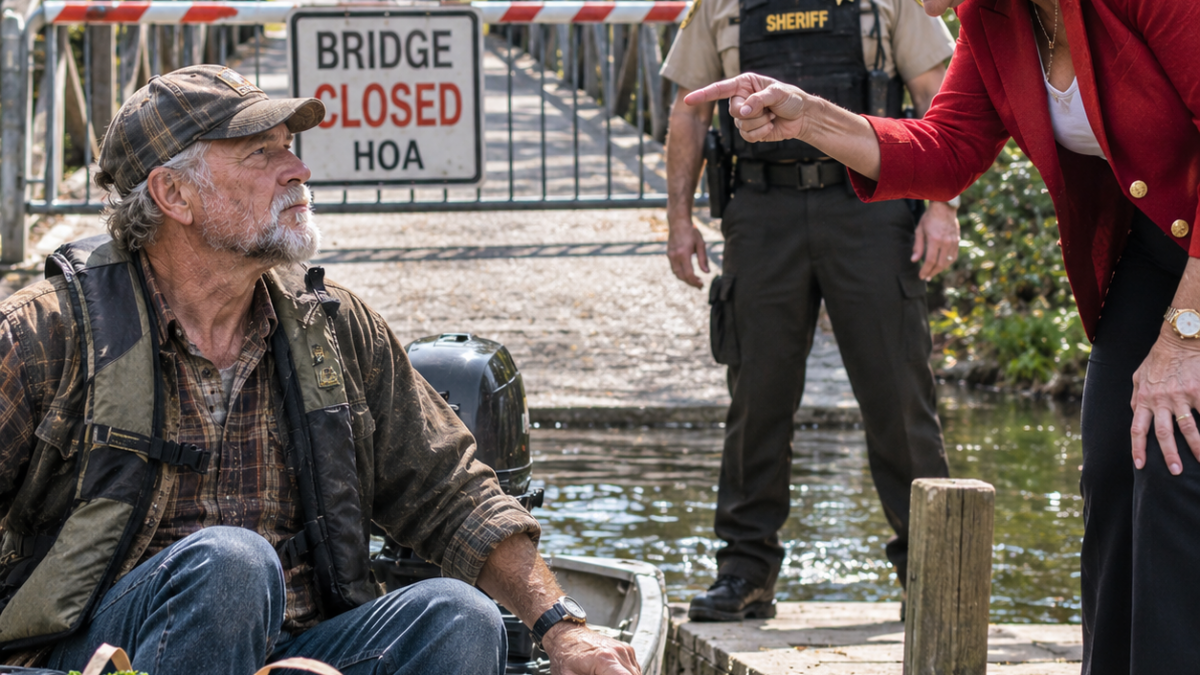
HOA Karen Rented Out My Lake Cabin and Called 911 When I Came Home—Then Her Paying Guests Handed the Deputy the Messages She Never Expected Me to See.
The HOA president called 911 and told the dispatcher I was forcing my way into an occupied vacation rental, even though I was standing on the porch of the lake cabin I had owned for nineteen years with my own key in my hand.
Then the family she had rented it to showed the deputy a $1,140 booking in Amelia Grant’s name—and a private message warning them that if “an older man” appeared, they were not to let me inside.
What Amelia did not know was that I had already changed my locks, copied the HOA’s emergency-key log, saved her written denial that my cabin was being rented, and was about to discover she had secretly sold weeks of stays in my home to pay for repairs to property the HOA actually owned.
My name is Warren Ellis.
I was sixty-six when somebody tried to turn my home into a vacation rental while I was still living in it.
Not a second home.
Not an investment property.
Not a place I visited twice a year.
My home.
Most of it, anyway.
In winter I sometimes stayed with my daughter Claire for a few days at a time because she worked overnight shifts at the hospital and needed help with the kids.
But the cabin was where my mail came.
Where my clothes hung.
Where my medicine sat above the kitchen sink.
Where my late wife Joan’s yellow mixing bowl still rested on the shelf above the stove because I had never found a good enough reason to move it.
The cabin sat on Lake Briar in western North Carolina, tucked inside a small private community called Pine Harbor.
Twenty-seven cabins.
A clubhouse.
A shared boat ramp.
Walking paths.
One small guest cottage near the association office.
Most people called it an HOA because that was easier than saying Pine Harbor Property Owners Association every time somebody wanted to argue about docks, gutters, or the color of a shed.
Joan and I bought our place nineteen years earlier.
Back then the porch was unfinished.
The kitchen cabinets were brown.
The roof leaked near the chimney.
The lake view made all of that irrelevant.
Joan stood in the living room on the first day, arms folded, looking through the sliding glass door at the water.
“This is it.”
I said:
“This is expensive.”
“This is it.”
“The roof needs work.”
“This is it.”
“We haven’t even seen the septic report.”
She looked at me.
“Warren.”
I bought the cabin.
That was marriage.
Joan painted the front door blue.
Not navy.
Not powder blue.
A bright lake blue she called “happy blue.”
I called it “too blue.”
She painted it anyway.
Years later, after cancer had taken most of her strength, she still sat on the porch telling me the door needed another coat.
“It’s fading.”
“So am I.”
“Don’t be dramatic.”
“You’re the one worried about paint.”
“It matters.”
PART2:
She died four years before Amelia Grant called the sheriff on me.
After Joan was gone, I changed very little.
Not because I wanted the cabin to become a museum.
I just did not see the point.
Her mixing bowl stayed.
Her handwritten recipe cards remained in the second drawer.
A framed photograph from our fortieth anniversary sat beside the lamp.
Inside the pantry door were pencil marks showing the grandchildren’s heights.
Some were mine.
Most were Joan’s.
Our youngest grandson, Ben, had once painted a wooden fish at summer camp.
One eye was twice the size of the other.
Joan hung it beside the front door and said:
“He looks surprised to be a fish.”
The fish stayed too.
Those things become important after somebody dies.
To everyone else they look like clutter.
To you, they are evidence.
Proof that a life happened there.
Amelia Grant never understood that.
Or maybe she did and decided it did not matter.
Amelia was fifty-nine.
HOA president for almost four years.
Former real-estate office manager.
PART3:
Always dressed as if somebody might unexpectedly take her photograph.
Clean white SUV.
Expensive sunglasses.
Notebook in one hand.
Phone in the other.
She was not stupid.
That is important.
People later described her as foolish because she got caught.
She was not foolish.
She was organized.
Confident.
Very good at making other people feel as if whatever she wanted had already been decided.
The first sign that something was wrong appeared eight days before she called 911.
A black lockbox.
Four little number wheels.
It was attached to the porch rail beside Ben’s wooden fish.
I had returned from the hardware store and saw it immediately.
My first thought was that some contractor had left it.
Pine Harbor had recently sent homeowners a notice about optional gutter inspections.
The association had negotiated a bulk rate.
I had checked a box allowing an exterior inspection.
Exterior.
That word mattered later.
I spent thirty-eight years repairing commercial refrigeration systems.
Restaurant freezers.
Grocery-store cases.
Industrial walk-ins.
The work taught me a habit.
When something is somewhere it should not be, do not touch it until you understand why.
So I photographed the lockbox.
Wide shot.
Close-up.
Mounting point.
Number wheels.
Then I called Amelia.
She answered quickly.
“Warren.”
“Did the HOA put a lockbox on my porch?”
“Yes.”
“Why?”
“For the exterior contractor.”
“What contractor?”
“The gutter program.”
I looked at the box.
“The gutter contractor needs a lockbox?”
“It contains a service identification tag.”
“What kind of tag?”
“A scan code.”
“Why does it have four number wheels?”
Pause.
“Standard housing.”
That answer sounded possible.
Not good.
Possible.
I said:
“Nobody has permission to enter the cabin.”
“Of course.”
“I agreed to an outside inspection.”
“That’s what this is.”
“Then remove it when they’re finished.”
“Certainly.”
After the call, I found the contractor’s email address on the HOA notice.
I wrote:
My cabin is Lot 14. A lockbox has been attached to my porch in connection with your gutter inspection. Please confirm it belongs to your crew. No one has permission to enter the cabin.
They replied that evening.
Mr. Ellis,
Our company does not use lockboxes for exterior inspections. We have not yet visited your property.
I read the email twice.
Then forwarded it to Amelia.
No accusation.
Just:
Please explain.
She replied the following morning.
Administrative mix-up. I will handle it.
By lunch, the lockbox was gone.
I should have pushed harder.
I did not.
I had spent decades around offices and contractors.
People made mistakes.
Wrong work order.
Wrong address.
Wrong equipment.
Most strange things have boring explanations.
Two days later, I was sitting on the porch replacing a cracked handle on an old tackle box when a white cleaning van stopped in my driveway.
A woman got out carrying a canvas tote and mop bucket.
She climbed the steps.
“Are you almost finished?”
I looked at the tackle box.
“With this?”
“No.”
She checked her phone.
“Checking out.”
I put the screwdriver down.
“I live here.”
She froze.
“What?”
“This is my house.”
She looked from me to the blue door.
Then back at the phone.
“Cabin fourteen?”
“That’s my lot number.”
She showed me the screen.
TURNOVER CLEAN.
11:00 A.M.
CABIN 14.
At the bottom:
SITE CONTACT — AMELIA GRANT.
I could feel my pulse in my neck.
“Who booked this?”
“The neighborhood office.”
“Have you been inside before?”
“No.”
She looked embarrassed.
“I’m covering for another cleaner.”
Her name was Nicole.
She kept apologizing.
I told her:
“You haven’t done anything wrong.”
That mattered to me.
When you are angry, it is easy to grab the nearest person and make them responsible for the entire machine.
Nicole had a mop bucket.
She did not create the work order.
“Could you send me that?”
“I don’t know if I’m allowed.”
“Call your supervisor.”
She did.
Her supervisor agreed to send me a cropped copy showing the address, work description, and contact information.
Nicole left without opening the tote.
I called Amelia.
“Why is a cleaner at my house?”
“What cleaner?”
“Nicole.”
Pause.
“Oh.”
That single word told me she knew exactly which cleaner.
She recovered.
“That was intended for the guest cottage.”
Pine Harbor owned a small two-bedroom cottage beside the clubhouse.
A pipe had burst there over winter.
Water damage.
Drywall.
Flooring.
It had been closed for months.
I said:
“The guest cottage and my cabin are on different roads.”
“The addresses are close in the booking system.”
“No, they aren’t.”
“It was a clerical mistake.”
“Have you advertised my cabin?”
“No.”
“Accepted money for anyone to stay here?”
“Of course not.”
I wrote those questions in an email after we hung up.
Not because I expected a different answer.
Because Sam—my son-in-law, who worked in insurance—had once told me:
“If somebody gives you an answer that matters, make them repeat it in writing.”
Amelia replied:
Your property is not enrolled in any rental program.
One sentence.
I printed it.
Then I checked every lock.
Front door.
Back door.
Windows.
Nothing looked disturbed.
The spare key in my kitchen drawer was still there.
Then I remembered the other key.
Years earlier, Joan and I had chosen to leave an emergency key with the HOA office.
A lot of owners did.
Cabins froze.
Pipes burst.
Storms knocked trees through roofs.
If you lived elsewhere part-time, having a key nearby made sense.
Our form allowed entry for emergencies involving the property.
Frozen pipe.
Smoke.
Water leak.
Electrical emergency.
It did not say:
Vacation guests.
Cleaners.
Photographers.
Locksmiths.
Or Amelia Grant.
I drove to the clubhouse.
Ruth Mason worked the front desk three days a week.
Seventy-two.
Widowed.
Part-time because, according to her, retirement had made her husband’s ghost too loud around the house.
She pulled open the emergency-key cabinet.
My envelope was there.
LOT 14 — ELLIS.
She opened it.
Empty.
Ruth looked inside again as if a key might appear.
“That’s odd.”
“Who has it?”
She checked the paper log.
Her expression changed.
“Amelia signed it out.”
“When?”
“Last week.”
“Reason?”
She turned the sheet.
Contractor access.
“What contractor?”
“No company listed.”
“Copy this page for me.”
Ruth looked toward Amelia’s closed office door.
“Is there a problem?”
“I’m trying to find out.”
She copied it.
I handed her a written note.
Effective immediately, I revoke the HOA’s authority to hold or use any key for Lot 14. Return any existing key and do not authorize entry by any person without my direct written consent.
“Date my copy.”
She did.
That afternoon, I paid a locksmith two hundred sixty dollars to replace both exterior locks.
Could I have done it myself?
Yes.
I repaired refrigeration units for nearly four decades.
I could replace a deadbolt.
But I wanted a receipt.
A company record.
A date.
Proof that from Thursday forward, the only working keys belonged to me.
The locksmith handed me four.
One went in my pocket.
Three went into the kitchen drawer.
Nobody else got one.
Amelia called while I was sweeping metal shavings from the porch.
“You could have spoken to me before involving Ruth.”
“I did speak to you.”
“The emergency key was used for contractor access.”
“The contractor says he never needed it.”
“I arrange many jobs, Warren.”
“That does not explain why my key left the office.”
“I cannot remember every detail.”
“I changed the locks.”
Silence.
Not long.
Enough.
“You changed them?”
“Yes.”
“Without notifying the association?”
I laughed.
“It’s my cabin.”
She hung up two minutes later.
I should have treated her reaction as confession.
Instead I thought:
Good.
Whatever this was, new locks ended it.
I underestimated her.
Thursday afternoon I went to Claire’s house.
She was working night shifts.
I stayed with my grandchildren until Saturday.
Before leaving, I checked every window.
Locked both doors.
Looked at the porch.
Ben’s wooden fish had a frayed string.
I took it down and put it in my coat pocket.
“I’ll make him fix his own terrible artwork,” I told Joan’s photograph.
Talking to dead spouses is not unusual after enough years together.
You stop expecting answers.
That does not mean you stop talking.
Saturday afternoon, I stopped at the grocery store.
Milk.
Eggs.
Bread.
Coffee.
A small package of picture cord for Ben’s fish.
Claire sent leftover soup in a plastic container.
I turned into my drive a few minutes after three.
A dark minivan was parked near my steps.
Two suitcases stood on the gravel.
A man in a baseball cap was holding his phone near my front door.
A woman stood beside him.
A boy around twelve held a brand-new fishing rod still wrapped in plastic.
I parked.
Got out.
“Can I help you?”
The man turned.
“We’re trying to check in.”
I looked at my cabin.
“Check in where?”
He pointed.
“Here.”
My hands went cold.
The woman smiled uncertainly.
“We rented the cabin for the weekend.”
I looked at the suitcases.
The fishing rod.
The minivan.
Then the blue door Joan painted.
“From who?”
The man held up his phone.
Before he could answer, Amelia came down the path from the clubhouse.
Fast.
“Warren.”
That tone.
Not hello.
Warning.
“Stop right there.”
I turned.
“You told me there was no rental.”
“This is not the time.”
“It is exactly the time.”
The woman beside the luggage looked at Amelia.
“Wait.”
“Are you saying this is the owner?”
Amelia did not answer.
That was the first moment the guests realized they might not be standing where they thought they were.
Amelia stepped closer to me.
“You need to leave while we resolve this.”
I almost thought I misheard.
“Leave?”
“Yes.”
“My house?”
“You are disrupting a confirmed reservation.”
I took my new key from my pocket.
“I’m putting my groceries inside.”
The key turned.
That seemed to scare her.
Not the arguing.
Not the guests.
The key.
She had expected it not to work.
Amelia took out her phone.
Called 911.
I heard her say:
“There’s a man forcing entry into an occupied vacation rental.”
I stood in the doorway.
Groceries in my hand.
My own key still in the lock.
She continued:
“He refuses to leave.”
I set the groceries inside.
Then stepped back onto the porch.
I was angry enough that my hands shook.
But I did not want a deputy arriving to find an older man screaming while a frightened family stood beside luggage.
So I sat.
The woman introduced herself quietly.
“Megan.”
She pointed.
“My husband, Paul.”
Then her son.
“Luke.”
“I’m Warren.”
“We didn’t know.”
“I believe you.”
Luke held the fishing rod against his chest.
I pulled a porch chair away from the door.
“He can sit.”
Paul thanked me.
Amelia told them to stay by the van.
Megan ignored her.
That changed everything later.
Deputy Aaron Ross arrived twelve minutes after the call.
He separated us.
Good police work.
He did not assume the loudest person was right.
Amelia went first.
She told him there was a valid rental.
That I had returned unexpectedly.
That I was interfering with paying guests.
Then Ross came to me.
“Identification?”
I gave it.
Address matched.
“Do you own the property?”
“Yes.”
“Proof?”
I had county records on my phone.
The deed.
Tax bill.
Utility account.
Ross looked.
Then Megan stepped forward.
“I think you need to see our booking.”
She handed him her phone.
Three nights.
Saturday through Tuesday morning.
$1,140.
HOST:
AMELIA GRANT.
Photographs.
My porch.
My dock.
My living room.
My kitchen.
Then Joan’s yellow mixing bowl.
That photograph knocked the breath out of me.
Somebody had been inside.
Not only inside.
Photographing my home for strangers.
Ross scrolled.
Then stopped.
His expression changed.
He turned the screen toward me.
Message from Amelia.
Sent that morning.
If an older man named Warren appears at the property, do not allow him inside. He may claim there is an ownership dispute. Contact me immediately. The booking remains valid.
I read it twice.
Amelia had known I might return.
Had prepared complete strangers to keep me out.
Ross looked at her.
“Why did you send this?”
She crossed her arms.
“He has become confused about an arrangement.”
“I’m standing right here.”
Ross glanced at me.
“Let me handle it.”
Fair.
He asked Amelia:
“What written agreement authorizes you to rent this address?”
“It’s in the office.”
“Bring it.”
She hesitated.
Then walked away.
While she was gone, Paul sat on the bottom step.
“We drove five hours.”
He looked miserable.
“It’s Luke’s birthday.”
I looked at the boy.
New fishing rod.
He had probably spent the entire drive imagining the lake.
This family was not my enemy.
They had paid.
Received confirmation.
Followed instructions.
I said:
“I’m sorry.”
Paul shook his head.
“This isn’t your fault.”
Megan was still scrolling through her booking.
Then:
“Warren.”
“What?”
“There’s another message.”
She showed me.
The previous evening.
Due to an issue with the original lock, a technician will attend after check-in to restore the guest keypad.
Attached service order.
REMOVE EXISTING DEADBOLT.
INSTALL SMART KEYPAD.
Saturday.
4:00 p.m.
I checked my watch.
3:48.
My mouth went dry.
“There’s a locksmith coming to remove the lock I installed Thursday.”
Ross took the phone.
“You hired a locksmith?”
“I hired the new lock.”
“Receipt?”
I showed him.
Company.
Date.
Address.
He nodded.
At 3:57, a white service van arrived.
Perfect timing.
A man named Dale got out carrying a small tool case.
He saw the patrol vehicle.
Saw everyone on the porch.
Stopped.
“Keypad install?”
Ross approached.
I went with him.
“I’m the homeowner.”
Dale looked between us.
I showed him ID.
Lock receipt.
He put the tool case back inside the van.
“I’m not touching anything until ownership is clear.”
Amelia returned in time to hear that.
“It is clear.”
Dale looked at her.
“He owns it?”
“Yes, but—”
“Then I need his permission.”
“I don’t give it.”
Dale nodded.
“Job canceled.”
Amelia stepped closer.
“This is association-managed guest property.”
Dale said:
“You can fight about that with him.”
“He’s the homeowner.”
Then he gave Ross his contact information.
Saved his service order.
Drove away.
My lock remained.
That felt like a small victory.
Then Amelia handed Ross a blue folder.
“This is the authorization.”
I knew the first page.
Emergency property access form.
Joan’s signature.
Mine.
Years old.
Ross read.
“Emergency access.”
“Yes.”
“This allows you to enter for leaks, fires, freezing pipes.”
“The board expanded the guest program.”
“Where does he agree to that?”
She produced another page.
Guest rental enrollment form.
Owners could opt in.
HOA handled marketing.
Bookings.
Cleaning.
Management fee.
At the bottom:
OWNER APPROVAL.
Blank.
Ross held it toward her.
“Where is the signed version?”
“Our records are incomplete.”
That answer did more damage than any argument I could have made.
Complete enough to take $1,140.
Complete enough to photograph my kitchen.
Complete enough to instruct guests to keep me outside.
Complete enough to order my new lock removed.
But somehow not complete enough to show my permission.
Ross closed the folder.
“I’m not removing Mr. Ellis from his property.”
Amelia’s face hardened.
“This is a civil dispute.”
“Maybe.”
“But the documents you showed me do not authorize you to rent his cabin.”
Then Ross looked at me.
“Do you want these guests removed?”
Megan reached for her suitcase.
Paul stood.
Luke picked up his rod.
I said:
“Not like that.”
They stopped.
“They didn’t cause this.”
I looked at Ross.
“They can wait here while they find somewhere else.”
He nodded.
Amelia suggested the HOA cottage.
I asked:
“The one with flood damage?”
“It’s suitable.”
Paul shook his head.
“We paid for this.”
Private dock.
Kitchen.
Three nights.
Megan tried to cancel through the booking platform.
The app warned:
Guest cancellation at this stage may result in forfeiture of most payment.
She showed Amelia.
“You cancel it.”
Amelia said:
“There are procedures.”
Megan stared at her.
“You took our money for a house you don’t own.”
That was the first time anyone said it that plainly.
Amelia left.
Ross gave us an incident number.
Asked me to send emails.
Asked Megan for booking messages.
Then drove away.
I called an old customer.
Earl Mason owned a fishing lodge on the north shore.
I had repaired his restaurant freezer years earlier.
He had one room left.
Two beds.
No kitchen.
Close to the water.
I reserved it.
Paul asked the price.
His money was still tied up.
I offered to cover the first night.
He refused.
Then Megan looked at Luke.
I said:
“Let me do it.”
“I want him to remember something besides adults arguing on a porch.”
That settled it.
Before they left, I took Luke to my dock.
His father came.
We unwrapped the fishing rod.
Put a practice weight on the line.
No hook.
Luke made three terrible casts.
Fourth went twenty feet beyond the dock.
His face changed.
That grin mattered.
Paul stood beside me.
“I believed her because everything looked official.”
“I know.”
“HOA name.”
“Booking page.”
“Instructions.”
“That was the point.”
He nodded.
Then handed me his phone.
“I’ll send everything.”
He could have left.
He could have decided this mess belonged to somebody else.
Instead he spent twenty minutes at my picnic table helping me preserve the evidence.
That kindness helped expose what Amelia had done.
After they drove away, I read the booking from beginning to end.
Created three weeks earlier.
Before the lockbox.
My cabin described as:
OWNER-APPROVED LAKEFRONT ACCOMMODATION.
Private dock.
Full kitchen.
Quiet cove.
Association-managed.
The check-in photographs included the lockbox.
Same one I photographed.
Same porch rail.
Same foam strip.
Amelia had told me it was a contractor tag.
Lie.
The interior photos were worse.
A hardcover fishing book on the side table was something I had bought that spring.
That meant the photos were recent.
Somebody had entered with my emergency key.
Then I noticed the bedrooms.
Plain white bedding.
Joan’s green quilt missing.
Sunday morning, I searched.
Found the quilt folded in the hall closet beneath white sheets I did not own.
New towels too.
Hotel-style.
Paper bands.
I photographed everything.
Then checked the pantry door.
Grandchildren’s height marks.
Still there.
I rested my hand against the wood.
That was when anger became something else.
I imagined a cleaner wiping those lines away.
Someone moving Joan’s bowl.
A stranger sleeping beneath the photograph from our anniversary.
Amelia had not rented a structure.
She had sold temporary access to my life.
I called Nicole’s supervisor.
“Did your company enter before Saturday?”
She checked.
“Yes.”
“When?”
“Setup clean last week.”
“Who gave access?”
“Site manager.”
“Name?”
“Amelia Grant.”
There it was.
I asked her to preserve the work order and photographs.
She would need company approval to release them.
Fine.
Preserve them.
I reported the rental listing to the booking platform.
That required proof of ownership.
ID.
Deed.
Utility account.
Everything.
I submitted.
Monday morning, I went back to the clubhouse.
Ruth looked uneasy.
“I heard about Saturday.”
“Which version?”
She winced.
I apologized.
Not her fault.
I asked for every guest-program document connected to my address.
Ruth could provide the blank enrollment form.
The booking system itself was controlled by Amelia.
“Does the board know she rented my cabin?”
“I don’t know.”
“Can you help me tell them?”
Ruth gave me the contact information for the other board members.
Dennis Ward.
Clare Holloway.
I sent them a packet.
Amelia’s written denial.
Emergency-key log.
Blank rental form.
Megan’s booking.
The 911 incident number.
Locksmith order.
My request was simple.
Stop offering my property.
Preserve all records.
Return every key or copy.
Dennis replied:
I am looking into this immediately.
Clare asked:
“Did you ever give verbal permission?”
I stared at that question.
Then answered:
No.
Nothing else.
Tuesday, Megan confirmed the platform had refunded the $1,140.
Paul reimbursed me for the lodge room despite my protests.
Then Megan sent a screenshot.
The listing had been removed.
For ten minutes I felt relief.
Then Ruth called.
Low voice.
“Warren.”
“Yes?”
“Amelia asked me to prepare arrival envelopes for your address.”
I stood.
“What?”
“There are direct bookings.”
“The online listing is gone.”
“Not all bookings came through that platform.”
“How many?”
“I don’t know.”
“Find out.”
An hour later, Dennis sent me the reservation schedule.
I printed it.
Paul and Megan’s weekend.
Fishing couple arriving Friday.
Family later in the month.
Then a six-week reservation.
Paid in full.
Six weeks.
Somebody was scheduled to live in my cabin for six weeks.
At the bottom:
OWNER OBJECTIONS ARE BEING HANDLED.
DO NOT CANCEL CONFIRMED ARRIVALS.
I sat at my kitchen table reading that line until the words stopped looking real.
Owner objections.
I owned the cabin.
My objection should have ended the matter.
Instead it had become an operational inconvenience.
I called Dennis.
“I didn’t know there were this many.”
“How many did you think?”
“One mistaken booking.”
“That’s what Amelia told you.”
“Yes.”
“Read the note at the bottom.”
He did.
Silence.
“Does that look accidental?”
“No.”
“Tell every guest.”
“I’ll speak with Amelia.”
“No.”
I was done with that sentence.
“Speak to the guests.”
“They are driving toward a house they cannot enter.”
“I understand.”
“Understanding is not enough.”
I hung up.
Then I called a lawyer.
Rebecca Lane.
Office above a pharmacy downtown.
Property disputes.
Small firm.
No polished conference room.
Good.
I brought two folders.
Folder one:
My ownership.
Rebecca spent ten minutes.
“Clear.”
Folder two:
Amelia.
She spent forty-five.
Lockbox.
Cleaner.
Key log.
Written denial.
New locks.
Booking.
Locksmith.
Future schedule.
She placed the schedule beside Amelia’s email.
Your property is not enrolled in any rental program.
Then the schedule:
Six-week paid stay.
Rebecca looked at me.
“She needs to stop.”
“I’ve been saying that.”
“Now we say it differently.”
I paid an $1,800 retainer.
That money had been earmarked for a new refrigerator.
My current refrigerator was old enough to vote.
But after thirty-eight years repairing refrigeration equipment, I could keep it alive with spite and spare parts.
Rebecca sent formal demand.
Noon Wednesday deadline.
Cancel all bookings.
Notify all guests.
No cleaners.
No locksmiths.
No entry.
Preserve records.
Return keys.
If not:
Court.
Tuesday afternoon I found a padded envelope behind my porch chair.
Inside:
My original emergency key.
No note.
No apology.
I photographed it before touching it.
The key did not matter anymore.
Locks had changed.
What mattered was copies.
I had no way to know whether Amelia had made one.
Later that day, Nicole’s supervisor Beth called.
Company owner had approved release of records involving my cabin.
Photos arrived.
First:
My bed made with white sheets.
Second:
Joan’s green quilt folded in the hall closet.
Third:
Our fortieth-anniversary photograph placed face-down on a shelf.
I stood so quickly the chair hit the wall.
I checked.
The photo was upright now.
But moved slightly from where I kept it.
Someone had moved my wife’s face out of a rental photograph because she made the room look too personal.
Then returned it.
That detail hurt worse than the locks.
Beth read the cleaner’s notes.
PERSONAL ITEMS TO BE MOVED OUT OF GUEST PHOTOS.
LARGER ITEMS REMAIN UNTIL OWNER STORAGE AREA IS READY.
“What owner storage area?”
“That’s what Amelia told our staff.”
The cleaner had questioned the clothing.
Groceries.
Family photographs.
Amelia’s explanation:
Owner temporarily staying with relatives. Personal items will be removed once first rental is settled.
She took a true fact—that I sometimes stayed with my daughter—and built a lie around it.
Wednesday, Dennis called.
“The board has ordered Amelia to stop new reservations.”
“What about existing ones?”
Pause.
“The money is complicated.”
“For who?”
“It’s already been used.”
I gripped the counter.
“Used for what?”
“Repairs.”
“To what?”
“The guest cottage.”
For several seconds I said nothing.
The HOA’s own cottage had flooded.
Instead of waiting until it was repaired, Amelia had substituted my cabin without permission.
Rented my home.
Used the revenue to repair theirs.
“How much?”
“We’re auditing.”
“Was this approved?”
“The board approved using guest-program income for cottage repairs.”
“Did the board know the income came from my house?”
“We believed every cabin on the schedule had enrollment forms.”
“Who told you?”
“Amelia.”
“Did you check?”
Silence.
“No.”
There was the institutional failure.
Amelia acted.
The board trusted.
Guests paid.
Nobody checked the one piece of paper that mattered.
My signature.
Dennis invited me to a board meeting that night.
Rebecca came.
Amelia had placed a document at every chair.
TEMPORARY HOSTING AGREEMENT.
It offered me part of the already-collected rental revenue if I allowed existing stays.
It also included language about accepting the condition of the property after guest use unless damage was reported quickly.
I pushed it back.
Amelia sighed.
“We need a practical solution.”
“The practical solution is stop renting my home.”
“Guests have plans.”
“So do I.”
“You stay with your daughter often.”
Rebecca spoke before I did.
“Mr. Ellis is not required to vacate his residence because your association sold occupancy it did not own.”
Amelia looked annoyed.
She began explaining the cottage repairs.
Flooring deposit.
Plumber.
Contractor schedule.
Dennis interrupted.
“Show us Warren’s rental enrollment.”
Amelia produced the emergency-key form again.
Clare read the heading aloud.
“Emergency Property Access Authorization.”
Then set it aside.
“The rental form.”
Amelia claimed we had discussed participation verbally.
Rebecca asked:
“When?”
“During conversations about the gutter program.”
I took out the email.
Your property is not enrolled in any rental program.
Placed it on the table.
“That was after the lockbox.”
Dennis read.
Then Clare.
Amelia said:
“I meant permanent status was still processing.”
I stared.
“You told me no rental existed.”
“You told guests I was likely to interfere.”
“You ordered a locksmith to remove my lock.”
“What exactly was processing?”
She snapped:
“You are making this personal.”
Ruth spoke for the first time.
“It is his home.”
The room went quiet.
Amelia turned.
Ruth looked nervous.
But continued.
“I manage the key cabinet.”
“This form was not rental permission.”
She laid the log on the table.
Amelia’s signature.
CONTRACTOR ACCESS.
Nicole’s records.
Interior setup.
Dale’s locksmith order.
Booking messages.
None depended on personalities.
Documents have a way of draining oxygen from excuses.
Clare asked:
“Can we refund everyone?”
Dennis looked uncomfortable.
“Not immediately without moving funds.”
“Then move funds.”
“The cottage project—”
Clare cut him off.
“That is our problem.”
Then she looked at me.
“Not where Warren sleeps.”
The board voted.
Cancel every unauthorized booking.
Suspend Amelia’s access to guest accounts.
Ruth would contact every guest.
Dennis would verify.
Preserve all records.
Amelia voted no.
She lost.
Progress.
Not ending.
Thursday morning, Ruth called.
The six-week renter had been reached.
Furious.
Understandably.
He had paid in full because Amelia gave him a discount.
The board began arranging refund.
The fishing couple due Friday had not responded.
They might already be traveling.
I put a sign inside my porch window.
PRIVATE HOME.
NO RENTALS AUTHORIZED.
IF YOU HOLD A BOOKING FOR THIS ADDRESS, CONTACT PINE HARBOR OFFICE.
No accusations.
No Amelia.
Just truth.
Then Paul called.
Deputy Ross had requested his statement.
While reviewing the booking, Paul found another message hidden under check-in information.
Friday evening.
After Amelia knew I had changed the locks.
If Warren returns, do not accept his claim that the stay has been canceled. He has been informed of the booking. I will attend and have him removed if necessary.
I read it slowly.
She had not called 911 in confusion.
She had planned the confrontation.
She knew I objected.
Knew I owned the property.
Knew the locks had changed.
Prepared the guests to reject me.
Then called police when I appeared.
I sent it to Rebecca.
And Ross.
Court hearing Friday morning.
The HOA agreed to most restrictions before we entered the courtroom.
Amelia had hired her own attorney.
Her filing said she had honestly believed I gave verbal permission.
Rebecca placed two pages side by side.
Page one:
Amelia to Warren:
Your property is not enrolled in any rental program.
Page two:
Amelia to guests:
Do not believe Warren if he says the booking is invalid. I will have him removed.
The judge read both.
His name was Judge Thomas Avery.
Gray hair.
Measured voice.
He looked toward Amelia.
“Before we address any alleged misunderstanding, explain why you told the owner one thing and instructed paying guests to act on the opposite.”
Amelia whispered with her lawyer.
He stood.
“My client concedes that certain messages were poorly worded.”
Judge Avery looked at the guest message.
“Promising to remove the homeowner from his own property is a wording problem?”
Silence.
Amelia spoke.
“He knew the cabin was being prepared.”
Rebecca touched my sleeve.
Stay seated.
The judge asked:
“What do you mean?”
“He saw the lockbox.”
“He spoke to the cleaner.”
Judge Avery looked at me.
“What did you do when you saw the lockbox?”
“I called her.”
“And?”
“She said gutter contractor.”
“What did you do after the cleaner?”
“I asked whether my home was being rented.”
“What answer?”
I handed Rebecca the email.
She submitted it.
No rental program.
The judge asked Amelia for a date when I allegedly agreed.
She could not provide one.
Witness?
None.
Signed agreement?
Blank.
Payment to me?
None.
Rental proceeds?
HOA account.
Permission for lock replacement?
None.
Permission for interior entry?
None.
Judge Avery said:
“An owner mentioning that he sometimes stays with his daughter is not authorization to commercialize his residence.”
Then he granted the order.
Amelia and the HOA were prohibited from:
Advertising my cabin.
Accepting bookings.
Representing that guests could enter.
Sending cleaners without permission.
Changing locks.
Using emergency keys for nonemergency purposes.
All guest records preserved.
All remaining reservations notified.
I wrote every line.
Rebecca would send the official copy.
Still, I wrote them.
After weeks of people deciding what they could do with my door, I wanted the words in front of me.
In the hallway, Amelia said:
“This could have been settled without all this.”
I stopped.
Rebecca beside me.
“You could have stopped when I asked about the lockbox.”
Amelia said nothing.
I left.
Called Claire.
“The order is in.”
“So the kids can come Sunday?”
“Yes.”
The easiest answer I had given in two weeks.
When I reached the cabin, the porch was empty.
Door closed.
Ben’s wooden fish moved slightly in the breeze.
I put the court order on the kitchen table.
Then walked toward the dock.
Five minutes later:
Tires.
My whole body tightened.
Truck.
Small fishing boat on trailer.
Older couple.
The fishing reservation.
The man stepped out holding printed confirmation.
“Mr. Ellis?”
“Yes.”
He looked toward the sign.
“We’ve been driving since early morning.”
His wife stepped out.
“We’re not asking you to leave.”
Thank God for that sentence.
“We need to know where we’re supposed to go.”
I called Ruth.
Handed the phone over.
This time the HOA had arranged backup lodging.
Motel near public boat launch.
Association paying.
Refund scheduled.
The husband handed my phone back.
“I’m sorry they put you through this.”
“I’m sorry they sent you here.”
He folded the reservation.
Drove away.
That was the last stranger who ever arrived expecting to sleep in my home.
For weeks, I still looked up when vehicles slowed.
That is what people do not understand about violations of home.
Once somebody has treated your door as negotiable, your nervous system remembers longer than the lawsuit.
Ruth worked through every reservation.
Refunds.
Calls.
Alternate lodging.
The six-week renter found a furnished apartment.
The association used reserve funds to repay guests while it sorted out the money spent on the cottage.
Repairs paused.
Contractors complained.
I felt sorry for the contractors.
Not responsible.
My house was not an account the HOA could spend.
Deputy Ross’s investigation continued.
Booking records.
911 recording.
Locksmith order.
Emergency-key log.
Guest messages.
Cleaning orders.
My statements.
Megan and Paul’s statements.
The 911 call described:
Man forcing entry into occupied rental.
Reality:
Owner unlocking home with his own key while guests remained outside because their promised access code did not work.
That distinction eventually mattered.
Then came the public meeting.
News inside Pine Harbor had spread.
People wanted answers.
Some defended Amelia.
She had tried to keep the guest program functioning while the cottage was damaged.
She had saved the HOA money.
Maybe Warren had verbally agreed and forgotten.
That last rumor irritated Claire more than me.
“Dad, they’re saying you’re confused.”
“I am confused.”
“Dad.”
“I’m confused why anyone believes Amelia.”
Not the same thing.
Rebecca advised me to attend.
Not speak unless necessary.
The clubhouse was full.
Dennis presented the timeline.
Lockbox.
Emergency key withdrawal.
Cleaning order.
Unauthorized photographs.
Bookings.
Locksmith.
Court order.
Then Clare explained the finances.
Over $18,000 had been collected through reservations involving my cabin.
Some future stays.
Some completed?
That stopped me.
“Completed?”
Clare looked uncomfortable.
“Yes.”
“How many?”
“Two.”
Before I knew.
My stomach turned.
“When?”
One weekend while I had stayed at Claire’s.
Another midweek stretch the previous month.
Strangers had already slept in my house.
Before I noticed the lockbox.
That was the most violating revelation of the entire story.
Amelia had used my emergency key.
Cleaners prepared the rooms.
Guests entered.
Then cleaners reset everything.
I came home afterward and never knew.
Claire, sitting behind me, whispered:
“Oh my God.”
I thought about Joan’s photograph.
The quilt.
The pantry.
My bedroom.
Somebody had paid to live inside my memories.
I stood.
Rebecca touched my arm.
Not to stop me.
Remind me.
Stay controlled.
I looked at Amelia.
“You already rented it.”
She said nothing.
“How many people were in my house?”
Dennis said:
“Warren—”
“No.”
I looked at Amelia.
“You answer.”
Her lawyer was not there.
This was HOA governance.
Not court.
She said:
“Two bookings.”
“How many people?”
“I don’t remember.”
“You remember enough to take the money.”
The room went silent.
One homeowner said:
“That’s enough, Amelia.”
Another:
“Did Warren get paid?”
“No.”
“Did he know?”
“No.”
“Then what are we discussing?”
The membership voted to remove Amelia as president under the bylaws.
Not unanimously.
Close.
Ruth brought the key records.
Clare brought booking records.
Dennis brought court order.
I gave no speech.
There was nothing useful to add.
Later, prosecutors reviewed the 911 report.
Amelia eventually pleaded guilty to making a false report.
No dramatic prison sentence.
Probation.
Community service.
Fine.
Some charges people expected never came.
I refused to exaggerate.
The criminal case belonged to prosecutors.
The civil case belonged to us.
Rebecca negotiated settlement.
My lock expense.
Legal fees.
Professional cleaning.
Security inspection.
Other documented costs.
Part paid by association.
Part by Amelia.
Permanent court restrictions remained.
No giant jackpot.
No million-dollar revenge.
I kept my home.
Recovered what we could support.
Stopped the behavior.
That was enough.
Amelia approached me once after everything ended.
Parking lot outside a grocery store.
“Warren.”
I stopped.
She looked older.
Maybe I did too.
“I never thought this would become what it became.”
I said:
“What did you think would happen?”
“The cabin sat empty frequently.”
“So?”
“The HOA needed income.”
“So?”
“You were with your daughter.”
I stared.
“That is not abandonment.”
“I know that now.”
“No.”
“You knew then.”
She looked away.
I continued.
“You knew when I asked about the lockbox.”
“You knew when I changed the locks.”
“You knew when you warned the guests about me.”
“You knew when you called 911.”
She said nothing.
Then:
“I thought if the program worked, you might agree afterward.”
There it was.
The whole mentality.
Use first.
Permission later.
If everybody benefits, the owner becomes unreasonable for objecting.
I said:
“My wife died in that house.”
Her face changed.
“I know.”
“No.”
“You knew she was dead.”
“That’s different.”
I looked toward the parking lot.
“Her bowl is still above the stove.”
“Her handwriting is inside the pantry.”
“Our anniversary picture was moved so strangers could see a cleaner rental photo.”
Amelia swallowed.
“I’m sorry.”
I believed she regretted consequences.
I did not know whether she understood the violation.
Maybe eventually.
I said:
“The problem was never that you rented a cabin.”
“It was that you decided mine belonged to you whenever I wasn’t standing inside it.”
Then I left.
The HOA changed the guest program.
Every participating owner signed a separate agreement.
Specific property.
Specific terms.
Owners received each booking.
Two-person approval for refunds and payments.
Emergency keys completely separated from rental operations.
No more vague verbal participation.
Ruth asked:
“Do you want to leave another emergency key?”
“No, thank you.”
She smiled.
“I thought that might be the answer.”
My daughter has one now.
That is not refusing trust.
It is choosing where trust lives.
Nicole and Beth returned one afternoon to retrieve the white linens.
I had bagged them.
Nicole stood inside my doorway.
Joan’s photograph was back beside the lamp.
“I’m glad you were home the day I came.”
“So am I.”
“We changed our procedures.”
“How?”
“If a property still has clothing, food, family photographs, medications, anything that suggests someone lives there, cleaners verify directly with an owner before doing rental setup.”
“Good.”
She looked ashamed.
I did not want that.
“You followed a work order.”
“I should have asked more.”
“Next time you will.”
She nodded.
That was enough.
Summer came.
The cabin began feeling like home again.
Not evidence.
That took time.
At first every room held a question.
Who touched this?
Who opened that?
Who slept here?
Eventually ordinary life covered the intrusion.
Grandchildren.
Meals.
Fishing gear.
Wet towels.
Coffee.
The refrigerator making a noise I refused to admit meant it finally needed replacing.
Then Paul called.
“Warren?”
“Yes.”
“It’s Paul.”
“I know.”
“We’re coming back near the lake.”
I laughed.
“That sounds dangerous.”
“Different lodging.”
“Good.”
“Fishing lodge.”
“Smarter.”
Then:
“Would it be okay if Luke used your dock?”
He asked.
That mattered.
Not assumed.
Asked.
“What time?”
“Whatever works for you.”
“Saturday afternoon.”
“Perfect.”
They arrived carrying sandwiches and a small box.
Luke had grown.
Not much.
Enough.
Inside the box:
Fishing lure.
“For letting me fish.”
I thanked him.
Ben arrived later.
Within ten minutes the boys were arguing about which side of the dock had better fish.
Megan sat on the porch with Claire.
Paul helped untangle line.
Nobody had booking papers.
Nobody expected a key.
Nobody told me where to sleep.
Near evening, I went inside for glasses.
Ben stood by the pantry.
“Mom says I’m taller.”
“Stand straight.”
He leaned against the door.
I used a pencil.
Made a new mark.
Above Joan’s last one.
He turned.
“That much?”
“That much.”
The older marks ran below.
Names.
Dates.
Tiny lives measured in graphite.
Joan’s handwriting.
I put the pencil back.
Through the open door came laughter.
Dock ropes tapping wood.
A boat moving softly against water.
The cabin was full of people.
That felt right.
People later asked me whether I stopped trusting the HOA.
No.
I stopped treating an organization as if trust could replace procedure.
Organizations need rules precisely because people convince themselves exceptions are harmless.
Amelia did not break into my house in the middle of the night wearing gloves.
She used forms.
Keys.
Booking software.
Work orders.
A lockbox.
A cleaning company.
A locksmith.
Then a 911 call.
Every step looked official when viewed alone.
That was what made it dangerous.
The lockbox had an explanation.
The cleaner had an explanation.
The missing key had an explanation.
The guests had an explanation.
The locksmith had an explanation.
Only when we put them together did the truth become impossible to ignore.
That is why I kept records.
Photograph.
Email.
Receipt.
Key log.
Work order.
Booking message.
Every small fact.
People sometimes think documenting a dispute is paranoid.
Usually it is boring.
Until somebody lies.
Then boring becomes useful.
The sentence that mattered most in the whole mess was not spoken by a judge.
Not by Deputy Ross.
Not by Rebecca.
It was written by Amelia herself.
Your property is not enrolled in any rental program.
One sentence.
She sent it because she thought it would quiet me.
Instead, it became the paper that followed her through every later explanation.
When she claimed verbal permission:
Email.
When she claimed misunderstanding:
Email.
When she said I knew about the bookings:
Email.
When she said I had agreed to preparations:
Email.
You do not always need a dramatic confession.
Sometimes you just need somebody’s lie written down before they invent the next one.
The other sentence that stayed with me came from Megan.
We’re not asking you to leave.
She said it when the second pair of unauthorized guests arrived weeks later.
Actually, another woman said something similar, but Megan had already shown me the same kindness that first afternoon.
The guests could have treated me as the obstacle.
They did not.
Paul could have argued that his $1,140 entitled him to my cabin.
He did not.
Luke could have remembered his birthday as the weekend an angry old man threw his family out.
Instead he remembered casting from my dock.
That mattered because conflict has a way of assigning people teams.
Owner.
Guest.
HOA.
Police.
Cleaner.
Contractor.
But most of the people in my story were not enemies.
Nicole was doing a job.
Dale refused to change a lock once he understood ownership.
Ruth kept records.
Dennis admitted the board had failed.
Clare insisted refunds were the HOA’s problem, not mine.
Megan and Paul preserved evidence.
Ross listened before deciding.
Rebecca turned anger into enforceable language.
Even the later fishing couple did not demand what they had paid for from me.
They asked where they should go.
That left one person repeatedly choosing deception.
Amelia.
That is how the truth finally separated itself from confusion.
Today the blue door is still blue.
I repainted it last spring.
Same color Joan chose.
Happy blue.
I finally replaced the refrigerator.
The old one had survived twenty-three years, four compressor relays, two fan motors, one thermostat, and more profanity than any appliance deserves.
Claire said:
“Mom would be proud.”
I said:
“Your mother would ask why I waited so long.”
“Also true.”
Joan’s yellow bowl remains above the stove.
The anniversary picture stays beside the lamp.
Her green quilt is back on the spare bed.
The pantry door still carries the height marks.
Ben’s crooked wooden fish hangs outside.
I replaced the string again last month.
The lake looks the same.
Morning fog.
Bass near the dock.
Geese that believe the lawn belongs to them.
Pine Harbor’s guest cottage eventually reopened after repairs.
People rent it.
Legally.
Owners who join the program receive money.
Legally.
Guests arrive with confirmed access to property actually offered to them.
Imagine that.
The HOA survived.
That may surprise people who love stories where the entire organization collapses.
It did not need to collapse.
It needed rules.
Amelia was removed.
Others stepped in.
The association apologized.
Policies changed.
Life continued.
That is usually what justice looks like outside movies.
Not an explosion.
A correction.
Sometimes a costly one.
I never received a giant check.
Amelia did not go to prison for twenty years.
The HOA was not dissolved.
Nobody handed me the clubhouse.
What I got was better.
My key controlled my door.
My name controlled permission.
My cabin stopped appearing on rental calendars.
No stranger could arrive holding a confirmation that mattered more than my deed.
And nobody at Pine Harbor ever again treated an emergency key as permission to decide what happened inside someone else’s home.
There is one thing I still keep.
The first photograph of the black lockbox.
It is printed.
Inside the folder Rebecca helped me build.
Next to it:
Amelia’s email.
Your property is not enrolled in any rental program.
Then Megan’s booking.
Amelia Grant — Host.
Then the message:
If Warren returns, do not accept his claim that the stay was cancelled.
Three documents.
Three different stories.
All written by the same person.
That folder stays in a cabinet now.
Not on my kitchen table.
Not beside my chair.
Cabinet.
Closed.
That distinction matters.
For weeks, the dispute lived in every room.
Eventually I put it away.
The cabin became a home again.
One evening this fall, I sat on the porch while Ben was fishing.
He is older now.
Longer arms.
Less patience.
He asked:
“Grandpa?”
“What?”
“Is this the place where that HOA lady called the cops on you?”
Kids have a gift for reducing months of legal conflict to one sentence.
“Yes.”
“Because you came home?”
“Yes.”
“That’s stupid.”
“Yes.”
He kept fishing.
Then:
“Were you scared?”
I thought.
Angry was easier.
Humiliated.
Violated.
All true.
But scared?
“Yes.”
He looked surprised.
“Of her?”
“No.”
“Of what?”
I looked at the blue door.
“That somebody could make paperwork look official enough that people might stop asking whether it was true.”
He did not fully understand.
He is young.
I hope it takes him a while.
Then he said:
“But the family showed the deputy their phone.”
“Yes.”
“And you had your emails.”
“Yes.”
“So she got caught.”
“Eventually.”
Ben cast again.
The lure landed near the reeds.
He said:
“Then always save screenshots.”
I laughed.
“Apparently that’s the family wisdom now.”
Joan would have hated that.
Her wisdom was prettier.
Ask permission.
Keep your word.
Do not make people feel unwelcome in their own home.
Those lessons should have been enough.
But Amelia ignored them.
So we needed screenshots.
I still think about that first Saturday.
Megan’s suitcases.
Paul holding his phone.
Luke with the fishing rod.
Amelia standing on the path.
Me holding groceries.
Deputy Ross arriving.
In another version of that afternoon, I could have screamed at the guests.
They could have screamed back.
Ross might have arrived to chaos.
Amelia could have pointed and said:
See?
He’s unstable.
Instead, Megan handed over the booking.
The record spoke.
And right there, on my own porch, the story began moving away from whatever Amelia wanted people to believe.
The most powerful thing those guests did was not take my side.
They showed the truth.
That was enough.
The booking showed my address.
My photographs.
Amelia as host.
The message showed intent.
The later locksmith order showed preparation.
The emergency key log showed access.
The cleaning records showed entry.
The future schedule showed it was not a one-time error.
The money trail showed motive.
The written denial showed deception.
The 911 recording showed escalation.
One fact led to another.
Until the woman who said I was confused was the only person left whose story changed every time a new document appeared.
That is why I do not tell people I beat an HOA.
That sounds too simple.
I protected a boundary.
Not the property line.
Something more basic.
The boundary between asking and taking.
Between managing common property and controlling somebody’s private home.
Between possessing an emergency key and possessing authority.
Between a guest reservation and ownership.
Between somebody being away and somebody being gone.
Amelia treated those differences as technicalities.
They were everything.
My cabin sat empty sometimes.
That did not make it abandoned.
I stayed with my daughter sometimes.
That did not mean I moved.
My wife was dead.
That did not make the memories inside available for staging.
The HOA had a key.
That did not make it theirs.
The association needed money.
That did not make my home an asset on their balance sheet.
Guests had paid.
That did not create rights Amelia never possessed.
And calling 911 did not turn her story into truth.
A home does not stop belonging to you because you are not standing inside it.
Consent does not appear because somebody thinks you probably would have agreed.
And permission cannot be manufactured from silence.
People ask what I would do differently.
I would have checked the emergency-key log the day I found the lockbox.
Maybe the whole thing would have ended sooner.
Maybe not.
Amelia already had bookings.
Already had photographs.
Already had plans.
Perhaps confrontation was inevitable.
But I know this:
The moment somebody gives you an answer that does not make sense, do not argue louder.
Write it down.
Ask again.
Save the reply.
Because truth has a way of looking weak in the beginning.
It is usually just one photograph.
One receipt.
One line in a key log.
One guest holding a phone.
Meanwhile the lie arrives wearing authority.
It has a logo.
A clipboard.
A booking page.
A board title.
A 911 dispatcher listening.
That can be intimidating.
But authority and truth are not the same thing.
Amelia Grant learned that on my porch.
She called the deputy expecting him to remove me.
Instead, the people she had deceived handed him the booking.
And once he read the message telling them to keep the homeowner outside, the question stopped being whether I belonged there.
It became why the HOA president had sold my home, prepared strangers to challenge its owner, and called the police when the owner came back.
That was a much harder question for her.
She never found a good answer.
I did.
My answer is hanging beside the door.
A badly painted wooden fish with one enormous eye.
Below it is the same blue porch Joan chose nineteen years ago.
Inside, her bowl is still above the stove.
The grandchildren’s height marks are still on the pantry.
The key in my pocket still fits the lock.
And when I come home now, nobody asks for a booking number.
Nobody asks me to leave.
Nobody tells me there are procedures.
I unlock the door.
I walk inside.
Because it is mine.
That was all I ever wanted.








