HOA Karen Moved Into My House While I Was Working in Alaska—Then I Came Home Five Days Before Her Big Meeting
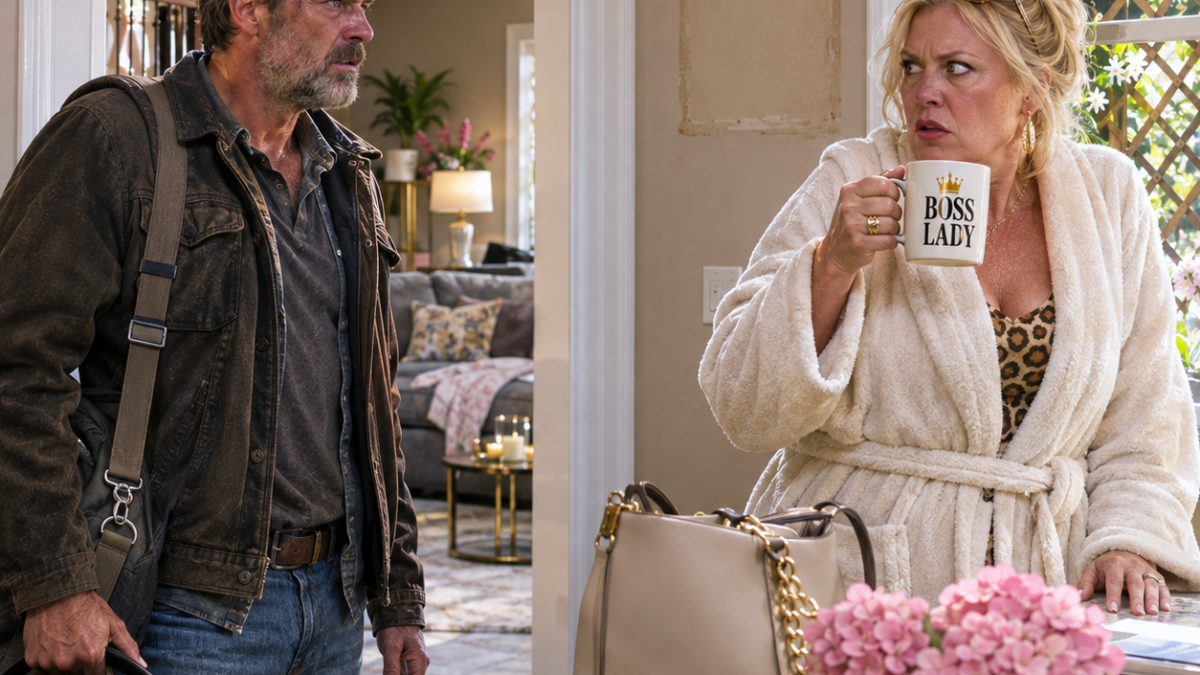
HOA Karen Moved Into My House While I Was Working in Alaska—Then I Came Home Five Days Before Her Big Meeting.
For five months, HOA president Brenda Calloway used an emergency lockbox key to enter my home, throw out my dead wife’s belongings, redecorate our rooms, sleep in the bed where Ellen took her last breath, and rent the property to strangers for $185 a night while telling the neighborhood I had “abandoned” it.
She thought I was 4,000 miles away in Alaska with no idea what was happening, but every lockbox entry, every Airbnb guest, every piece of furniture she moved, and the moment she dropped my wife’s cedar memory box into a trash bag had been recorded by cameras she never knew existed.
When I finally walked into my own kitchen and found Brenda standing there in a bathrobe drinking coffee from a mug that said BOSS LADY, I did not call the police, shout, or throw her out—I let her keep talking, because in five days she was going to stand in front of sixty-seven neighbors and discover exactly how much of her life I had already documented.
“Get out of my house.”
Brenda Calloway turned slowly from my kitchen counter.
She was wearing a white bathrobe.
Not mine.
Not Ellen’s.
Hers.
Her blonde hair was pinned loosely behind her head, and a pair of expensive sunglasses rested beside a half-empty water glass on the counter like she had spent the night at a resort.
In one hand she held a ceramic coffee mug.
Black letters.
BOSS LADY.
She looked at me over the rim.
Then lowered it.
For approximately two seconds, neither of us spoke.
I had imagined this moment during five months of Arctic nights.
In some versions, Brenda screamed.
In others, she ran.
In one particularly satisfying version, she dropped that ridiculous mug and it shattered on the tile Ellen had picked herself from a flooring warehouse outside Savannah.
Reality was quieter.
Brenda stared.
Her face passed through four emotions so quickly I could almost count them.
Shock.
Fear.
Calculation.
Then indignation.
The last one won.
“Your house?”
She actually laughed.
A short, breathless sound.
“Don’t make me laugh, Garrett.”
I was still wearing the same Carhartt jacket I had traveled home in.
Fort Wainwright dust on the sleeves.
Bridge sealant ground into one cuff.
PART2:
Twenty-two hours of flights, layovers, rental-car counters, and the strange warm Georgia air after five months of Alaska still clung to me.
I stood in my own kitchen.
My own house.
And Brenda Calloway spoke to me as if I were trespassing.
“You abandoned this place for five months.”
“I was working.”
“You disappeared.”
“I told the HOA where I was going.”
“You left the property unattended.”
“I hired a lawn service.”
“Which was inadequate.”
“I put my mail on hold.”
“Which proves nothing.”
“I installed cameras.”
That last sentence changed her face.
Only slightly.
But I saw it.
Brenda set the mug down.
“You always were dramatic.”
I looked around the kitchen.
Ellen’s blue ceramic fruit bowl was gone.
The old wooden stool by the pantry had been replaced by a white barstool that looked like it belonged in a furniture catalog nobody actually sits in.
A scented candle burned beside the sink.
VANILLA CASHMERE.
Ellen hated scented candles.
Said they made houses smell like somebody was trying to hide a crime.
I almost laughed at the memory.
“Where are my wife’s paintings?”
Brenda folded her arms.
“Which paintings?”
“You know exactly which paintings.”
She sighed.
That sigh.
The sigh of a woman inconvenienced by somebody else’s grief.
“Garrett, this home was not suitable for short-term occupancy in its previous condition.”
I stared at her.
“Short-term occupancy.”
“The board authorized emergency measures.”
“Is that what you call Airbnb now?”
The color left her face.
Then returned.
“I don’t know what you think you saw.”
“My house online.”
“You’re confused.”
“Twenty-three reviews.”
She stopped.
“Four-point-seven stars.”
Nothing.
“B Calloway.”
Her jaw tightened.
I stepped one pace closer.
Not threatening.
Just enough that she understood I was not confused.
“Where are Ellen’s paintings?”
Brenda looked toward the hallway.
Then back.
“That clutter?”
My hands went cold.
She continued.
“I removed items that made the house unsuitable for guests.”
“Removed?”
“Yes.”
“Where?”
A tiny pause.
That was when I knew.
“Brenda.”
She rolled her eyes.
“I threw some of it out.”
There are moments when anger is hot.
A flash.
Heartbeat.
Hands shaking.
The kind of anger that makes people shout and break things.
This was not that.
Something inside me went completely cold.
My wife had been dead nineteen months.
Nineteen months.
And during every one of those months, I had protected the physical evidence that she had existed inside that house.
Her watercolor brushes remained in a ceramic jar upstairs.
Her journals.
Her scarf.
The paintings.
Especially the paintings.
Ellen was not famous.
She did not sell in galleries.
Most of her work had never left our walls.
She painted because color made sense to her.
Marsh grass.
Thunderclouds.
Shrimp boats.
Tybee Island at low tide.
Spanish moss.
The way Savannah looked after rain.
Her work mattered to exactly three groups of people.
Her.
Me.
Anyone who had loved her.
Financial value:
almost nothing.
Actual value:
there was no number.
“You threw them away.”
Brenda shrugged.
“Nobody is paying $185 a night to sleep next to some dead woman’s junk.”
That sentence became evidence later.
At the time, it became something else.
A dividing line.
Before those words, I had still thought there might be some bizarre administrative explanation she believed justified what she had done.
After them, I stopped wondering whether Brenda understood boundaries.
She understood them.
She simply thought hers mattered more.
I looked at the clock above the hallway.
Round white frame.
Black hands.
Seven forty-three.
Inside that clock was a camera.
Six feet from Brenda.
Cloud backup.
Continuous recording.
She did not know.
I said:
“Say that again.”
“What?”
“About my wife.”
“I’m not doing this.”
“You already did.”
Brenda straightened her robe.
“This house had seven maintenance violations.”
“Name them.”
“I don’t have to justify HOA action to you in your kitchen.”
“My kitchen?”
Her eyes narrowed.
“You know what I mean.”
“I don’t think you do.”
She grabbed the mug.
“You should be thanking me.”
“For what?”
“I fixed this place.”
“You stole it.”
“Don’t be ridiculous.”
“You moved into my house.”
“Emergency occupancy.”
“You rented it.”
“Cost recovery.”
“You threw away my wife’s belongings.”
“Debris removal.”
The vocabulary almost impressed me.
People can rename anything if they need to live with themselves.
Trespass becomes emergency access.
Theft becomes cleanup.
Fraud becomes cost recovery.
Occupation becomes maintenance.
Brenda had spent nine years turning nouns into excuses.
She had no idea I had spent five months turning every excuse back into evidence.
My name is Garrett Thornton.
I am sixty-two years old.
Structural engineer.
Army Corps contractor.
Bridges.
Airfields.
Reinforced foundations.
Places where soil fails, water moves, steel flexes, and if you miscalculate load, somebody eventually pays for it.
I have spent most of my adult life studying why structures fail.
Weak design.
Hidden defects.
Overloading.
Corrosion.
Bad assumptions.
People are not that different.
Brenda’s structure had one fatal weakness.
She had gone too long without anyone checking her math.
Magnolia Bluff Estates was the kind of neighborhood people move into after saying they are tired of chaos.
Gated entry.
Live oaks.
Spanish moss.
Columns.
Wraparound porches.
Brick paths.
HOA sign larger than the street sign.
That last detail should have warned me.
Ellen loved the place immediately.
Four years before her death, we drove through Magnolia Bluff looking at houses.
She barely made it inside ours before deciding.
There was a jasmine trellis along the front porch.
The flowers had opened.
Ellen stopped.
Closed her eyes.
Breathed in.
“This is it.”
“We haven’t seen the kitchen.”
“Don’t care.”
“The foundation?”
“You’re an engineer.”
“That’s not an answer.”
“This is where I want to be.”
So that was where we were.
Ellen painted upstairs.
Guest room became studio.
East-facing windows.
Morning light.
She used to call it honey light.
“It pours,” she would say.
“It doesn’t shine.”
I never understood what that meant until after she died and I started standing in the room alone at sunrise.
It did look like honey.
She painted until cancer made holding brushes difficult.
Then painted anyway.
The final piece she completed was a marsh scene from Tybee Island.
Soft blues.
Green-gray grass.
Three birds so small you had to stand close.
I hung it downstairs.
Where morning light reached it.
Cancer took fourteen months.
The last week, Ellen came home.
Hospice bed in our bedroom.
Jasmine blooming outside.
Tuesday afternoon in March.
I held her hand.
She had barely spoken all morning.
Around four, her eyes opened.
Window cracked.
She breathed in.
Then whispered:
“I can smell it.”
“What?”
She looked toward the window.
“Jasmine.”
Those were the last words.
After she died, I kept the house too still.
I know that now.
I did not move the brushes.
Did not donate clothes.
Did not repaint.
People called it grief.
It was.
People suggested counseling.
Eventually, I went.
But grief is not a maintenance issue.
You do not fix it by removing the object causing the leak.
Sometimes you simply learn where the water runs.
My work helped.
The Corps assignment in Alaska came nineteen months after Ellen’s death.
Fort Wainwright.
Five months.
Bridge work over a river that freezes most of the year.
The money would wipe out what remained of Ellen’s medical debt.
I accepted.
Before leaving, I secured everything.
Mail hold.
Lawn service.
Thermostat.
Water shutoffs documented.
Neighbor contact.
Four security cameras.
Two obvious.
Porch.
Garage.
Two hidden.
Smoke detector downstairs.
Clock upstairs.
That was an old habit from military infrastructure work.
Document everything.
Trust records more than recollection.
My neighbor Lorraine Kessler—not related to Brenda—agreed to keep an eye on the place.
Lorraine was seventy-one.
Four-foot-eleven.
Widowed twice.
Owned more floral notebooks than any human should.
Brought peach cobbler the first day we moved in.
“Watch the house?”
“Honey.”
She patted my arm.
“I’ll watch it like it insulted my grandchildren.”
That sounded sufficient.
Then there was Brenda.
HOA president.
Nine years.
Blonde hair that did not move in weather.
Linen blazers.
Yoga pants.
Gucci sunglasses.
Pearl Lexus RX.
The day Ellen and I moved in, Brenda brought a casserole and a clipboard.
The casserole was fine.
The clipboard was not.
A week before Alaska, Brenda sent a certified violation.
Jasmine trellis too tall.
I read the CC&Rs.
No trellis restriction.
None.
Emailed exact sections.
No reply.
Then I flew north.
Two weeks later, Lorraine called.
Eleven at night Alaska time.
“Garrett.”
“What happened?”
“Brenda went in your house.”
I sat up.
“How?”
“Lockbox key.”
Some HOA management systems maintain emergency access for owners who opt into lockboxes.
We had one from years before because of storm-response rules.
I had forgotten it.
“How long?”
“Twenty minutes.”
“Anything damaged?”
“Not that I saw.”
I was annoyed.
Not alarmed.
Burst pipe check.
HVAC.
Storm concern.
Possible.
“Thank you.”
Two weeks later Lorraine called again.
“She came back.”
“How many times?”
“Third I’ve seen.”
I stopped.
“And this time she had Pottery Barn bags.”
Nobody checks a gas leak with Pottery Barn bags.
I opened the camera system.
There.
Brenda.
Front door.
Lockbox key.
Shopping bags.
Tape measure.
She walked through every room.
Measured windows.
Opened closets.
Photographed walls.
Sat on my sofa.
Made a call.
I rewound.
First visit:
photos.
thermostat.
closets.
Second:
notes.
garage.
Third:
measurements.
This was not emergency maintenance.
It was planning.
I could have called Savannah police immediately.
Called Brenda.
Called the management company.
Changed access.
Instead, I did what years of engineering had trained me to do.
I watched.
Not because I wanted her to continue.
Because I did not yet understand what I was looking at.
The first crack in a concrete beam does not tell you the whole failure mechanism.
You map it.
Measure it.
Find the load.
Week six gave me the load.
White cargo van.
Two men.
Eight in the morning.
Brenda arrived ten minutes later.
Unlocked my house.
Then directed them inside.
For three hours they removed my furniture.
Ellen’s sofa.
The reclaimed-oak side table I built.
Curtains.
Lamps.
Paintings.
Replaced them with rental furniture.
Gray sectional.
Glass table.
Gold-letter pillows.
BLESSED.
GRATEFUL.
Brenda stood in the room.
“Move the loveseat by the window.”
The worker did.
“Light’s better there.”
I watched from a government barracks room in Alaska.
My hands were shaking.
I called Lorraine.
“I need help.”
“Say it.”
“Watch who comes.”
“Already am.”
“Write dates.”
“Already am.”
“Cars.”
“Garrett.”
“What?”
“That woman is moving into your house.”
“I know.”
I pulled up Georgia law.
Then stopped pretending I could lawyer myself.
Still, I read enough to understand categories.
Trespass.
Conversion.
Fraud.
Property interference.
Fiduciary duty.
Then I started a cloud folder.
CALLOWAY.
Clip.
Date.
Time.
Description.
Week eight, Brenda moved in.
Morning arrivals.
Tote bags.
Food.
Clothes.
Then nights.
She sat on my porch.
Used my kitchen.
Watched television.
Watered lawn.
That almost made me laugh.
She had taken my house but maintained the grass.
Then I found Airbnb.
Tuesday night.
Instant coffee.
Snow rattling windows.
I searched my address.
There it was.
My house.
$185 a night.
B Calloway.
“Charming Southern colonial.”
Original hardwood.
Wraparound porch.
Twenty-three reviews.
Four-point-seven stars.
One guest complimented “the host’s exquisite eye for design.”
I stared for a long time.
Then screenshotted everything.
Calendar.
Rates.
Reviews.
Photos.
Several photos included my wife’s house without anything of my wife left visible.
That hurt more than I expected.
Then came Thursday.
Smoke-detector camera.
Master bedroom.
Brenda opened closet.
Reached top shelf.
Pulled down cedar box.
My cedar box.
Ellen’s journals.
Blue scarf.
Paintings.
Cards.
Brenda opened it.
Looked.
Wrinkled her nose.
Dwight Hargrove stood behind her.
HOA vice president.
Silver hair.
Cardigan.
Professional grandfather appearance.
Brenda said:
“Nobody’s going to rent a room full of dead woman’s junk.”
Dwight laughed.
Then Brenda dropped the box into a black garbage bag.
Dwight tied it.
Carried it away.
It was thirty-two below zero outside my barracks.
I sat at the desk.
No sound.
No dramatic breakdown.
Just both hands around the edge of the metal desk.
I called Lorraine.
Three in the morning Georgia.
Second ring.
“Garrett?”
“Trash pickup tomorrow?”
“Seven.”
“Go to my bins before they come.”
“What am I looking for?”
“Black bag.”
Pause.
“Cedar box.”
Lorraine’s voice changed.
“Oh, honey.”
“Please.”
She found it at dawn.
Called crying.
“I got it.”
I closed my eyes.
“All of it?”
“Paintings wrinkled.”
“Journal?”
“Yes.”
“Blue scarf?”
“Yes.”
She breathed.
“What kind of person throws away a dead woman’s memories?”
“The kind who sends emails.”
That afternoon, Brenda sent an HOA blast.
SUBJECT: COMMUNITY UPDATE — 1847 WISTERIA LANE.
The homeowner had been “deployed overseas.”
The home had been renovated.
Short-term rentals would offset maintenance.
Deployed.
I was building a bridge.
But the email did something extraordinary.
It put her conduct in writing.
Sent to sixty-four households.
Timestamped.
Documented.
I later hired Janet Prescott.
Real-estate attorney in Savannah.
I sent forty-two clips.
Screenshots.
Airbnb listing.
HOA email.
Lockbox logs request.
Ellen’s box footage.
Janet called back within an hour.
“This is a pattern.”
I had started suspecting that too.
Nobody becomes this comfortable occupying someone else’s house on their first attempt.
So I searched old Airbnb pages.
Cached listings.
Archived results.
Magnolia Bluff addresses.
Found two.
1823 Wisteria.
Ostrander house.
1809 Wisteria.
Bowen house.
Both under B Calloway.
Both later sold below comparable market values.
I found Vince Ostrander.
Jacksonville.
Retired postal employee.
He called four minutes after my message.
“We went to Tallahassee.”
“How long?”
“Six weeks.”
“Came back?”
“Locks changed.”
Brenda claimed HOA emergency abandonment protocol.
Photos.
Crack in driveway.
Garden hose.
Bird droppings.
She moved furniture.
Threw away their dog’s ashes.
Tammy Ostrander came on the phone.
“Bailey.”
She said the name once.
“Golden retriever.”
Her voice broke.
“Fourteen years.”
Brenda put him in the trash.
The Ostranders fought four months.
Lawyers.
Fabricated reports.
Invoices.
They ran out of money.
Sold.
Then Phil Bowen.
Electrician.
Training in Louisiana three months.
Returned home.
Seven-year-old son’s bedroom gone.
Spider-Man bedding.
Books.
Toys.
Replaced by queen bed.
White hotel linens.
His son asked:
“Dad, where did my room go?”
Phil lasted two months.
Sold.
Three homes.
Same method.
Owner away.
Lockbox.
“Emergency.”
Furniture removed.
Rental listing.
Fees.
Fines.
Pressure.
Sale.
Brenda did not stumble into a scheme.
She developed a process.
Janet organized it.
Victims.
Dates.
Entries.
Money.
Airbnb income.
Lockbox records.
Witnesses.
Lorraine’s notebook became absurdly valuable.
Every date.
Weather.
Guest car.
License plate.
Departure.
“She has better field notes than some inspectors,” I told Janet.
Janet said:
“Never underestimate angry retired women.”
Fair.
Airbnb records eventually showed thousands in rent.
My house.
Ostrander house.
Bowen house.
Lockbox logs showed repeated access.
Not emergency visits.
Commutes.
We contacted the other families.
Vince:
yes.
Phil Bowen:
silence.
Then:
“My son still asks about his Spider-Man blanket.”
Pause.
“I’m in.”
Janet contacted prosecutors.
I still had weeks left in Alaska.
She advised me:
Do not confront Brenda.
Do not announce.
Do not cut access yet.
Document.
That was hard.
Every night, strangers slept in the bed where Ellen died.
Every night I watched suitcases enter.
Guests smile.
Brenda collect.
One couple drank wine on our porch beneath Ellen’s jasmine.
They had no idea.
They were not villains.
They had booked a rental.
That made watching harder.
Three weeks.
Work by day.
Case at night.
Concrete over permafrost.
Camera footage afterward.
Dates.
Times.
Screenshots.
Witness statements.
Lockbox logs.
Then the special HOA meeting.
Magnolia Bluff required enough homeowner signatures.
Lorraine collected more than necessary.
She went door to door.
Seventy-one.
Four-foot-eleven.
Floral notebook.
Nobody stood a chance.
Meeting scheduled Saturday.
Two days after I returned.
Media tipped.
Authorities coordinated.
I flew home Thursday.
Only Lorraine knew.
Savannah air hit me like wet cloth.
Warm.
Salt.
Magnolia.
After Alaska, it felt unreal.
I parked at Lorraine’s.
Walked home after midnight.
Used my own key.
Inside:
not my home.
Gray furniture.
Cheap vanilla.
Gold script.
LIVE LAUGH LOVE where Ellen’s Tybee painting had hung.
I stood there.
Thirty seconds.
Then upstairs.
Master bedroom.
Brenda’s clothes in Ellen’s closet.
Gucci sunglasses.
Lipstick glass.
Book titled Living Your Best Life.
I looked at our bed.
Ellen’s last afternoon.
Jasmine.
Hand.
Final squeeze.
Brenda was sleeping there now.
I photographed everything.
Then returned to Lorraine’s.
Slept under a lavender-smelling quilt.
Next morning:
back to my house.
Door unlocked.
Coffee machine.
Brenda.
Bathrobe.
BOSS LADY mug.
“Get out of my house.”
That was where our confrontation began.
It ended twenty minutes later.
Not with police.
With Brenda storming out.
Before leaving, she told me:
“You’re going to regret the way you handled this.”
I looked at the clock camera.
“I doubt that.”
Two hours later:
email.
EMERGENCY ASSESSMENT.
$8,500.
Unauthorized modifications requiring remediation.
They were charging me for Brenda’s renovations.
Furniture she purchased.
Paint she chose.
Curtains.
I sent Janet the email.
She called laughing.
Actually laughing.
“What?”
“Garrett.”
“What?”
“She just invoiced you for evidence.”
“I know.”
“Tell them thank you.”
The meeting was five days away.
Five days.
Brenda spent them attacking.
Monday:
HOA blast.
Garrett abandoned property.
Returned hostile.
Threatened board officers.
Tuesday:
county structural complaint.
Possible foundation issue.
I invited inspector.
He found nothing.
Closed it.
Saved referral.
Wednesday:
Dwight walked neighborhood spreading claims I was unstable.
Lorraine corrected people.
Thursday:
Brenda brought locksmith.
Locksmith asked:
“You own house?”
“I’m HOA president.”
He packed tools.
“Not what I asked.”
Left.
Camera captured it.
Then tow truck.
She tried removing my registered vehicle.
Driver checked plate.
Address matched property.
Left.
By Friday, Brenda had tried fines, inspections, rumors, locks, towing.
Every move created more records.
Lorraine brought biscuits and gravy.
“Eat.”
“I’m not hungry.”
“Do I look like I care?”
I ate.
Saturday.
Magnolia Bluff clubhouse.
Sixty-seven homeowners.
More than I had ever seen.
WTOC crew in back.
Deputy Wiggins in polo shirt.
Plain clothes.
Janet sat beside me.
Lorraine front row.
Floral notebook.
Brenda at board table.
White blazer.
Dwight beside her.
Pete Calloway several rows back near exit.
Brenda opened with trash-can violations.
Four minutes on visible bins.
Two-hundred-dollar fine.
Even then.
She needed power to feel normal.
Then special business.
“Community security concerns.”
I raised my hand.
“Madam President, I request the floor.”
Brenda smiled.
“Public comment will occur—”
“He has the floor.”
Lorraine.
Voice like church bell.
“Section nine, paragraph three. Any owner may address special-session business.”
Applause.
Brenda’s smile stayed.
Eyes changed.
I walked forward.
Laptop.
Projector.
No speech first.
Just:
“Five months ago, I left for Alaska.”
Slide one.
House.
“Before leaving, I installed security cameras.”
First clip.
Brenda entering.
Lockbox.
Measuring tape.
The room became quiet.
Second clip.
Workers removing furniture.
Brenda directing.
“Loveseat by the window.”
Third.
Airbnb listing.
$185.
Calendar.
Reviews.
Murmur.
Brenda’s hand moved toward her microphone.
Janet touched my arm.
Keep going.
Fourth clip.
Bedroom.
Cedar box.
Brenda opening it.
“Dead woman’s junk.”
The room broke.
Gasps.
One woman cried.
Lorraine did not move.
She had already lived that morning at the trash cans.
Then lockbox logs.
Forty-seven entries.
Ostrander.
Bowen.
Deleted listings.
Testimony.
Vince described coming home to changed locks.
Tammy described Bailey’s ashes.
Phil described his son’s missing room.
By then nobody looked at me.
They looked at Brenda.
That distinction mattered.
I was no longer asking people to believe my version.
Her actions were speaking.
Brenda stood.
Chair scraped.
“This is defamation.”
Nobody answered.
“These recordings are illegal.”
I looked at Janet.
She nodded.
I said:
“They were recorded in my home.”
Brenda’s face reddened.
“You had no right to record guests.”
Janet stood.
“Brenda, stop talking.”
Wrong person.
Right advice.
Brenda ignored her.
“You cannot use private recordings in an HOA meeting!”
I looked directly at her.
“You threw away my wife’s paintings.”
Silence.
“Her journal.”
“Her scarf.”
“You slept in the bed where she died.”
Brenda opened her mouth.
I continued.
“You charged strangers $185 a night to sleep there.”
Nobody moved.
Deputy Wiggins stepped forward.
Slow.
No drama.
“Mrs. Calloway.”
Brenda looked.
“I have a warrant.”
That was when Pete stood.
Brenda turned.
“Pete?”
He froze.
“Pete, do something.”
He did nothing.
Wiggins placed cuffs on Brenda.
The click sounded louder because the room had gone completely silent.
He read charges.
Trespass.
Theft.
Fraud-related allegations.
The exact counts changed later.
That day, all anyone heard was:
arrest.
Brenda looked at me.
Not sad.
Not sorry.
Furious.
“You planned this.”
I said:
“No.”
She stopped.
“You did.”
“I documented it.”
That was the truth.
Planning implies I caused the behavior.
I did not.
Brenda did.
I simply stopped interrupting her long enough for everyone else to see.
She was led out.
Dwight tried slipping toward back.
Lorraine stood.
Four-foot-eleven.
“Sit down, Dwight.”
He did.
That may still be my favorite moment.
The legal process lasted months.
Not eleven minutes.
People online later compressed it.
They always do.
Arrest becomes conviction.
Charges become facts.
Real cases are slower.
Lawyers.
Records.
Negotiations.
Brenda eventually reached a plea agreement.
Probation.
Community service.
Restitution.
HOA-office ban.
Tax problems from rental income followed separately.
Pete resigned from his local position under ethics pressure.
Dwight was removed from the board.
The HOA reorganized.
Term limits.
Transparent financial reporting.
Lockbox access review.
Meetings streamed.
And Lorraine?
They made her first chair of the access-review committee.
She accepted on one condition.
“No meetings before ten.”
The board agreed.
Smartest vote they ever took.
Vince and Tammy eventually moved back near Magnolia Bluff.
Fair-price home.
Magnolia tree.
Ceramic urn on mantel.
They did not tell me whether Bailey’s replacement ashes were inside.
I did not ask.
Phil Bowen rebuilt his life too.
His son got another Spider-Man room.
Blue walls.
Matching pillowcase.
Phil sent me a picture.
Kid grinning.
That photograph mattered more than any arrest photo.
As for Ellen’s cedar box—
Lorraine had kept it on her dining-room table for months.
Wrapped in dish towel.
When she returned it, I could barely open it.
The watercolors were wrinkled.
Journal bent.
Blue scarf smelled like lavender and cedar from Lorraine’s linen closet instead of Ellen.
That hurt.
I held it.
Long time.
Then placed everything back.
One painting had water damage along a corner.
I had it professionally conserved.
Tybee marsh went back on the living-room wall.
I removed LIVE LAUGH LOVE personally.
Put it in garbage.
No ceremony.
The gray sectional went too.
Glass table.
Blessed pillows.
Hotel curtains.
Not because they were ugly.
They were.
But because they belonged to the violation.
I found Ellen’s old blue sofa in storage.
Brenda’s crew had not thrown it away.
Just moved it.
Two dents.
One scratch.
I brought it home.
Sat.
It smelled like warehouse.
No memory smell left.
That made me sadder than I expected.
Still, I kept it.
Home does not return instantly because wrong furniture leaves.
It comes back slowly.
Object by object.
Routine by routine.
First morning:
coffee.
My mug.
Porch.
Jasmine.
Second:
Ellen’s painting catches morning light.
Third:
brush jar upstairs.
Fourth:
blue scarf back in cedar box.
Eventually, the house felt like mine again.
Not hers.
Mine.
Ours.
Mine now.
That last word took time.
After restitution, I took part of what I recovered and created the Homeowner Shield Fund.
Twenty thousand dollars.
Legal assistance for people facing HOA abuse who could not afford counsel.
Janet volunteered.
Lorraine became treasurer.
Of course she did.
Her books were handwritten first in a floral notebook before being entered into the actual accounting software.
I asked:
“Why?”
She said:
“Computers lie.”
“No, people using computers lie.”
“Exactly.”
Can’t argue.
First year:
eleven families.
Four Georgia counties.
Not every case dramatic.
Most were not.
Improper fines.
Threatened liens.
Bad elections.
Access disputes.
Selective enforcement.
The kind of boring abuse that becomes devastating because legal help costs money.
That was what Brenda had relied on with Ostrander and Bowen.
Make resistance expensive enough and people stop resisting.
We tried to change that equation.
I did not become an anti-HOA crusader.
That surprises people.
I believe shared communities need rules.
Road maintenance.
Storm drainage.
Common landscaping.
Financial management.
Rules are not automatically oppression.
Power without accountability is the problem.
Access without consent.
Boards without records.
Officers who confuse responsibility with ownership.
Brenda did not become Brenda because an HOA existed.
The HOA simply gave her a tool.
For years nobody checked how she used it.
I had cameras.
Lorraine had notebook.
Janet had law.
Others before me had none of those things at the right time.
That is why I dislike stories where victory gets explained as courage.
Vince Ostrander was not less courageous than I was.
He fought four months.
Phil Bowen was not weak.
He was raising a seven-year-old alone.
They ran out of resources.
That is different.
Systems matter because courage alone should not be the admission price for basic rights.
A year after everything ended, I was sitting on the porch when Lorraine arrived carrying cobbler.
Sunday tradition.
She sat.
Looked at the jasmine.
“You know Ellen would be mad.”
“At what?”
“You waited too long to repaint the guest room.”
I laughed.
“She hated beige.”
“It’s beige.”
“She chose that beige.”
“Then she had poor judgment.”
“Watch yourself.”
Lorraine smiled.
We ate cobbler.
After a while she said:
“You doing okay?”
I looked toward the trellis.
Jasmine opened.
“I think so.”
“That’s not an answer.”
“It’s the one I’ve got.”
She nodded.
Good enough.
The WTOC story aired.
Three minutes forty seconds.
The clip of Brenda throwing away the cedar box became the part people remembered.
News stations love a visual.
So do people.
Thousands of comments.
Some cruel toward Brenda.
Some wanted enormous prison sentences.
Some asked why I waited.
Some accused the entire story of being impossible because no HOA could legally do any of it.
That last point misunderstood the story.
People do illegal things while holding official titles every day.
An HOA president cannot magically make unlawful conduct lawful.
That was the problem.
Brenda’s authority was narrower than she claimed.
People assumed because she had keys, letterhead, meetings, and a blazer, she must have a legal basis.
Sometimes all institutional abuse needs is confidence plus everyone else’s exhaustion.
I had been exhausted too.
After Ellen died, I did not want another battle.
That was part of why Brenda chose me.
Widower.
Away for work.
House quiet.
Good target.
She miscalculated one thing.
Engineers are professionally annoying.
Give us a pattern and enough documentation, and we will eventually build a spreadsheet.
I am proud of that.
People ask why I installed hidden cameras before leaving.
Nothing prophetic.
Job habit.
Military sites taught me redundancy.
Visible cameras deter.
Hidden cameras tell you what happens after somebody believes visible coverage is the only coverage.
I did not expect my HOA president to move in.
Nobody plans for that.
But once she did, the principle held.
Document.
Preserve originals.
Cloud backup.
Do not edit the only copy.
Keep timelines.
Get counsel.
Let experts tell you what laws actually apply.
That last one matters.
I read plenty myself.
Some conclusions were wrong.
Janet corrected me more than once.
Anger makes everyone an amateur lawyer.
Use real ones when stakes matter.
The most difficult moment was not the meeting.
Not seeing Brenda in my kitchen.
It was watching Ellen’s cedar box go into the trash.
I replayed that clip exactly once after the case ended.
Never again.
I keep it archived.
Evidence.
But I do not need it in memory.
I already remember.
Instead, I keep another video on my phone.
Older.
Ellen upstairs.
Painting.
She did not know I was recording.
Morning light.
Brush.
Jasmine visible through window.
She stops.
Looks at me.
“You’re filming?”
“Yes.”
“Why?”
“You look happy.”
She laughs.
“Put that down and bring me coffee.”
That is the footage I watch.
Not Brenda.
That distinction became important.
For months, Brenda occupied too much mental space.
Even after she left my house.
I knew her emails.
Expressions.
Voice.
I could reproduce her phrases.
Emergency occupancy.
Community standards.
Maintenance costs.
She had taken enough.
I stopped letting her remain inside my head for free.
Ellen belonged there more.
So did Lorraine.
So did the jasmine.
The house did not become a museum.
Eventually I changed things.
That surprised people.
I repainted the upstairs guest room.
Not beige.
Soft blue.
Packed some of Ellen’s clothes.
Donated some.
Kept the scarf.
Kept the brushes.
Moved one painting.
That felt like betrayal first.
Then relief.
Grief can accidentally turn preservation into paralysis.
Brenda had no right to throw Ellen away.
I still had a right to keep living.
Those are not contradictions.
The cedar box remains on my dresser.
Not the top closet shelf anymore.
I see it.
Sometimes open.
Sometimes months pass.
The journal remains inside.
I have read portions.
Not all.
Some things still feel private even after death.
Maybe someday.
The jasmine trellis survived every HOA dispute.
Brenda never removed it.
Ironically, it outlasted her presidency.
Every spring, flowers open.
Same smell.
The last thing Ellen noticed.
That could make it unbearable.
Instead, it makes home recognizable.
A scent can do that.
One Sunday Lorraine came over and found me repairing the trellis.
“You better not make it taller.”
I looked at her.
She smiled.
“HOA standards.”
I threw a rag at her.
She caught it.
Seventy-two now.
Still dangerous.
The new HOA president is a man named Samuel Ortiz.
Accountant.
Quiet.
Probably boring.
I mean that as highest praise.
He emails agendas.
Publishes minutes.
Explains budget.
Asks permission.
Ridiculous concept.
Once, he came to my door.
“Garrett, community wants to inspect drainage behind your rear fence.”
“When?”
“Whenever works.”
“Tuesday.”
“Morning?”
“Ten.”
“Need access to house?”
“No.”
“Good.”
He smiled.
“Trust me, I know.”
Magnolia Bluff became less dramatic.
Property values did not collapse.
Nobody’s trash cans overthrew civilization.
No rebellion of trellises.
People still argued about paint.
Fine.
Healthy communities argue.
They just need procedures strong enough that disagreement does not become conquest.
The Homeowner Shield Fund grew.
Donations.
Small.
Some from people who saw news story.
One anonymous check:
$5,000.
Memo:
For Spider-Man bedrooms.
I knew exactly what that meant.
We used it helping a single mother contest an improper lien.
Phil Bowen cried when I told him.
Not ashamed.
Just quiet.
His son is older now.
Still likes Spider-Man, though apparently “not little-kid Spider-Man.”
Whatever that means.
Vince and Tammy visit Savannah occasionally.
Tammy planted magnolia.
The tree is doing well.
Life after harm is ordinary.
That is important.
No permanent climax.
No forever courtroom.
You go back to groceries.
Bills.
Repairing porch rails.
Coffee.
That is justice too.
Getting your boring life back.
Brenda eventually moved.
One-bedroom apartment.
No porch.
I heard that through someone else.
I do not know if she changed.
I hope she did.
Not for me.
For whatever people she lives beside now.
Punishment without change wastes part of its purpose.
I do not need to hate her forever.
I also do not owe forgiveness in any sentimental form.
Boundaries can remain after anger leaves.
If Brenda knocked tomorrow, I would not invite her inside.
That is not cruelty.
That is memory doing its job.
Sometimes people ask:
“If you knew what she was doing, why not stop it in month one?”
Fair question.
Part answer:
At first I did not know scale.
Then counsel told me pattern mattered.
Then investigation required patience.
But there is another answer.
I wanted certainty.
That comes from my profession.
I hate claims built on assumption.
One clip could be explained.
Maybe emergency check.
Two visits:
bad judgment.
Furniture move:
clearer.
Airbnb:
much clearer.
Other victims:
pattern.
Financial records:
motive and benefit.
Lockbox logs:
scale.
I did not want to be right emotionally.
I wanted to be right structurally.
Every column supporting the same conclusion.
That is how I build cases in my head.
It is also how I build bridges.
Redundancy.
If one piece fails, structure stands.
At the HOA meeting, Brenda could claim one video was taken out of context.
Fine.
Then twenty others.
Could claim Airbnb misunderstanding.
Fine.
Then payment records.
Could claim emergency authority.
Fine.
Then repeated prior properties.
Could attack me.
Fine.
Then Vince.
Phil.
Lorraine.
Lockbox logs.
Her own email.
Evidence was not one dramatic recording.
It was a system.
That is what ended her system.
Not my anger.
That is the lesson I actually carried forward.
Do not build your whole case on one perfect moment.
Reality rarely gives one.
Build layers.
Especially against people who rely on confusion.
That is what Brenda had done for years.
She created enough paperwork that victims could not tell which part mattered.
Fake inspection.
Invoice.
Violation.
Board minutes.
Assessment.
Threat.
Attorney letter.
Eventually people stopped challenging details because volume felt like authority.
I did the opposite.
Reduced everything.
Who owns house?
Me.
Who authorized entry?
No one.
Who collected rental money?
Brenda.
Whose belongings were removed?
Mine.
Which records show access?
These.
Which other owners report same behavior?
These.
Complex systems become manageable when you return to basic load paths.
Where does force travel?
Where does money travel?
Who had access?
Who benefited?
I wish Vince had known sooner.
I wish Phil Bowen had.
We cannot change that.
But their stories prevented Brenda from reducing mine to misunderstanding.
Mine prevented theirs from being forgotten as isolated disputes.
Sometimes justice arrives because several people’s unfinished stories finally meet.
That happened in Magnolia Bluff.
The last conversation I had about Brenda came from a young homeowner at a Shield Fund event.
Twenty-nine.
First house.
HOA had cited a wheelchair ramp.
Not same case.
Nothing like Brenda.
But he was frightened.
“They sent letter.”
“Okay.”
“They say attorney.”
“Okay.”
“I don’t know what to do.”
“First?”
He waited.
“Read your documents.”
“Then?”
“Save everything.”
“Then?”
“Ask them to identify the exact authority they’re relying on.”
“And if they won’t?”
“Get help before deadlines.”
He looked disappointed.
“What about cameras?”
“Maybe.”
“What about exposing them?”
“Later, if needed.”
He frowned.
“I thought you destroyed your HOA president.”
“No.”
That word bothered me.
Destroyed.
I said:
“She destroyed her position.”
He waited.
“I preserved evidence.”
Different.
That matters because revenge is intoxicating.
It feels active.
Documentation feels boring.
Revenge can make you careless.
Evidence rewards patience.
Brenda’s biggest mistake was believing my patience meant weakness.
Mine would have been letting patience become revenge.
Janet prevented that several times.
There were emails I wanted to send.
She deleted them.
Statements I wanted to make.
She shortened them.
Accusations I believed but could not prove.
She removed them.
Strong cases do not need exaggeration.
If facts are enough, let them be enough.
The day after the meeting, I made coffee.
My house.
My kitchen.
My mug.
Not BOSS LADY.
I do not know what happened to Brenda’s mug.
Maybe she took it.
Maybe evidence.
Maybe trash.
I hope trash.
I carried coffee to front porch.
Sat.
Jasmine blooming.
Lorraine came across yard without being invited.
Of course.
She sat.
No words for several minutes.
Then:
“You going back to Alaska?”
“No.”
“Contract done?”
“Yes.”
“What now?”
I looked at house.
“Fix what she changed.”
Lorraine nodded.
“You know.”
“What?”
“Ellen would tell you not to put everything back exactly.”
I stared.
“She liked changing furniture.”
That was true.
“She once made me move a sofa three times in one afternoon.”
“I remember.”
“She said you complained the entire time.”
“I did.”
“She enjoyed it.”
Also true.
Lorraine smiled.
“Maybe don’t let Brenda turn Ellen into another rulebook.”
I hated good advice delivered before breakfast.
But she was right.
So I restored what mattered.
Not every detail.
Ellen’s paintings.
Yes.
Cedar box.
Yes.
Studio.
Mostly.
Living room?
I changed some things.
Bought a new chair.
Blue.
Not Ellen’s choice.
Mine.
First new furniture I had chosen alone in thirty years.
I sat in it the first night.
Felt guilty.
Then comfortable.
Then guilty about feeling comfortable.
Grief is ridiculous.
Eventually just comfortable.
The house became mine without becoming less ours.
That is probably what Ellen would have wanted.
I cannot prove it.
Some things do not need exhibits.
The jasmine still climbs the porch.
When it gets too tall, I trim it.
Within HOA rules that never actually restricted it.
Sometimes I think about the first certified letter Brenda sent.
Trellis violation.
What if I had simply cut it down?
Would she have chosen somebody else?
Maybe.
Would I have saved myself trouble?
Maybe.
But then every spring, the last thing Ellen smelled would be gone because a woman with a clipboard invented a rule.
No.
Some fights are worth inconvenience.
Not because objects are sacred.
Because yielding without reason teaches the wrong person the wrong lesson.
Brenda learned for nine years that people eventually yielded.
Vince did.
Phil did.
Not because they agreed.
Because continuing cost too much.
When I did not yield, she escalated.
Her escalation exposed her.
That is common with unchecked power.
It survives by appearing inevitable.
Resistance creates friction.
Friction creates heat.
Heat reveals weak connections.
Engineer talking again.
I cannot help it.
The story people repeat is:
HOA Karen moved into my house while I was away, rented it on Airbnb, threw away my wife’s things, then I came home and had her arrested.
That version fits a headline.
The truth is longer.
My wife died.
I could not let go.
I went to Alaska to pay her medical debt.
A neighbor watched.
A woman abused access.
Other families had been harmed before me.
One little floral notebook became more useful than years of official meeting minutes.
Three victims told stories together.
An attorney built structure.
A prosecutor took evidence seriously.
A community finally looked.
And after all of it, the thing I wanted most was not to watch Brenda lose.
It was to sit in my own house and smell jasmine without wondering who had used my bed as a rental.
That was victory.
Quiet.
No cameras.
No handcuffs.
No applause.
Coffee.
Porch.
Jasmine.
Home.
Sometimes I open the cedar box.
The blue scarf sits folded.
Ellen’s journal beneath it.
Watercolors wrapped in acid-free paper now.
I touch the scarf.
Close box.
That is enough.
Her Tybee painting hangs where it belongs.
Morning light hits around eight-thirty.
Honey light.
I finally understand what she meant.
Every now and then a Shield Fund family sends a photograph after winning some ordinary dispute.
Gate repaired.
Fine removed.
Ramp approved.
Lien released.
One image stays on my desk.
Not Brenda.
Not meeting.
Not arrest.
Phil Bowen’s son.
Spider-Man bedroom.
Big grin.
That is why the whole thing mattered.
Rights are abstract until you see what happens when somebody takes them.
A room.
A pet’s ashes.
A painting.
A memory box.
A house.
A child’s sense that home will still be home when he comes back.
Those are not small things.
Brenda treated homes like assets she could optimize.
Occupancy.
Revenue.
Maintenance.
I understand assets.
I work in infrastructure.
But a home is also memory arranged in physical space.
Move one chair?
Fine.
Throw away a dead dog’s ashes?
You altered something numbers cannot value.
Paint over a child’s bedroom?
You changed more than a wall.
Remove a widow’s paintings?
You are not redecorating.
That was what Brenda never understood.
Or did not care to.
Either way, consequence arrived.
Magnolia Bluff is quieter now.
The HOA sign remains too large.
Some traditions apparently survive reform.
Lorraine says she is going to replace it at night with one half the size.
I told her that would be vandalism.
She said:
“Only if you catch me.”
I reminded her I have cameras.
She called me a snitch.
Seventy-three.
Still dangerous.
Every Sunday:
peach cobbler.
Every spring:
jasmine.
Every morning I am home:
coffee.
Sometimes I stand inside Ellen’s old studio and look east.
Light pours through glass.
Honey.
On the wall, I hung a small framed copy of the HOA email that claimed I was “deployed overseas.”
Not out of anger.
It makes me laugh now.
I was in Alaska in steel-toed boots arguing with frozen concrete while Brenda imagined herself managing an international deployment.
Below it:
one line I wrote.
DOCUMENT EVERYTHING.
That is the lesson.
Not because everyone is Brenda.
Most people are not.
Not because every HOA is corrupt.
Most are boring.
Good.
But authority should never be allowed to exist only as assertion.
Ask for the rule.
Ask for the vote.
Ask for the records.
Ask who has access.
Ask where money went.
And if somebody enters your house while you are gone, redecorates your grief, rents your memories to strangers, and then has the nerve to stand in your kitchen holding a mug that says BOSS LADY—
do not let the mug decide who has power.
The deed matters.
The footage matters.
The records matter.
The truth matters.
And sometimes the strongest thing you can do is not throw the person out the first moment you see them.
Sometimes you stand still.
Let them talk.
Let the camera run.
Because five days later, there may be sixty-seven neighbors in one room who deserve to hear exactly what the person running their community says when she thinks nobody important is listening.








