HOA Karen Locked the Only Bridge to My Home—So I Came Back by Boat and Made the Sheriff Ask Who Had Really Condemned My House
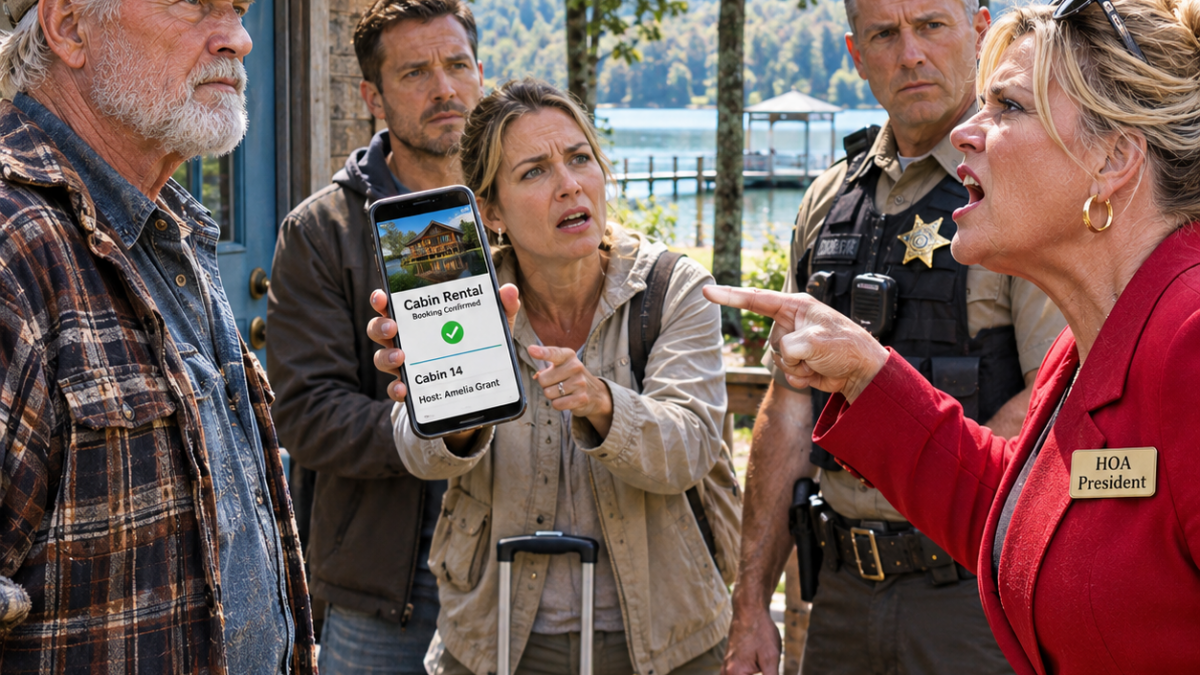
HOA Karen Locked the Only Bridge to My Home—So I Came Back by Boat and Made the Sheriff Ask Who Had Really Condemned My House.
The HOA president chained shut the only bridge to my home after I refused to sign over my shoreline for her dock project, then called the sheriff when I came back across the lake by boat carrying nothing more dangerous than groceries, work boots, and a new porch light for my wife.
When the deputy arrived, Linda Shaw suddenly produced a second notice claiming my entire house was unsafe to occupy—even though no building inspector, engineer, fire marshal, or county official had ever stepped inside it.
What she did not know was that her own email offered to reopen the supposedly dangerous bridge the moment I signed away my yard, and once a real engineer, the HOA treasurer, and a judge saw that contradiction, the steel gate she used to trap me out of my home became the piece of evidence that ended her control of the neighborhood.
Linda Shaw called the sheriff while I was tying my boat to my own dock.
I remember that part because it was so ridiculous that for a few seconds I honestly thought she was bluffing.
She stood across the narrow channel beside the new steel gate she had ordered installed over the only bridge connecting my house to the road.
One hand held her phone.
The other pointed at me.
“He came by water,” she told the dispatcher.
I looped the rope around the dock post.
“Yes,” Linda said louder. “He’s here now.”
In my boat were two bags of groceries, my work boots, a box containing a porch light, and a gallon of milk that had already spent more time in October sunshine than I was comfortable with.
I looked across the water.
“Linda.”
She covered the phone.
“You were told to stay out.”
“No.”
“Yes, you were.”
“I was told the bridge was closed.”
“Same thing.”
“No, it isn’t.”
I stepped onto my dock.
She pointed harder.
“Do not go inside that house.”
I almost laughed.
“It’s my house.”
“The property is restricted.”
“That wasn’t on your sign.”
“It is now.”
That should have been the moment I realized the bridge was never the point.
But I was still trying to treat the situation like a machine problem.
Find the bad part.
Remove it.
Replace it.
Test the system.
Turn it back on.
That works with boilers.
Furnaces.
Heat pumps.
Water heaters.
PART2:
It does not work as cleanly with people who change the explanation every time the old one stops helping them.
My name is Jack Bennett.
I was sixty-one years old that fall, retired after thirty-seven years working commercial heating and mechanical systems around the county.
My wife Carol and I had lived on Eagle Point for twenty-two years.
The house wasn’t large.
Two bedrooms downstairs.
One small loft room our grandchildren claimed whenever they stayed over.
Stone fireplace.
Screened porch facing the lake.
Old oak floors that creaked near the kitchen.
Nothing about the place would have impressed an architect.
Everything about it mattered to us.
Carol had painted pencil marks along the pantry door frame showing how tall our grandchildren were each summer.
I had replaced the kitchen cabinets myself using oak doors salvaged from a school renovation.
The porch had taken me three summers because I refused to pay for lumber all at once.
Carol’s raised garden beds sat along the south side of the house.
I built them high because her knees had gotten bad.
Later, when her eyesight began failing from macular degeneration, I added reflective tape along the edges so she could see where one bed ended and the walkway began.
That was the kind of house it was.
Not expensive things.
Adjusted things.
Things that had been changed to fit us.
The bridge was part of it.
Eagle Point wasn’t technically an island.
Water wrapped around three sides.
PART3:
Marsh and steep woods blocked the fourth.
The only road connection was a narrow wooden bridge crossing a channel perhaps seventy feet wide.
Single lane.
No shoulder.
Wood deck over steel beams.
Low railings.
The bridge belonged to Lake Briar Homeowners Association.
Our deed included a permanent recorded right to cross it.
We paid a yearly portion of maintenance.
For twenty-two years, the arrangement had been boring.
Boring is underrated.
Garbage truck crossed Tuesday.
Delivery vans crossed whenever.
Our daughter Beth crossed with the grandchildren.
Repairmen crossed.
I crossed.
Carol crossed.
Nobody thought about it.
That changed when Linda Shaw became HOA president.
Linda had lived in Lake Briar six years.
She liked systems.
Or rather, she liked being the person at the center of them.
She reorganized committees.
Rewrote newsletters.
Created neighborhood “standards reviews.”
Put signs beside the pool.
Measured guest parking.
Started speaking at board meetings in a tone usually reserved for airport emergency announcements.
She was not stupid.
That made everything harder.
Linda understood paperwork just well enough to make ordinary people assume she understood more.
Our trouble began with a dock.
Lake Briar had a common dock near the clubhouse.
Old.
Short.
Mostly used by kayaks and small fishing boats.
Linda wanted a new one.
Longer.
Floating slips.
Covered section.
Lighting.
Something that looked good in real-estate photographs.
I did not object.
Their dock.
Their money.
Their choice.
Then one Thursday afternoon, I found a yellow envelope under the windshield wiper of my truck near the neighborhood mail shelter.
Linda stood beside her white Lexus.
“That’s for you.”
Inside was a form.
TEMPORARY SHORELINE ACCESS AGREEMENT.
The HOA wanted to use part of our yard as a construction staging area.
Lumber.
Small tracked machine.
Tools.
Material access to the water.
“How long?”
“Three weeks at most.”
I looked at the sketch.
The shaded staging rectangle covered half Carol’s raised garden.
“What happens to this?”
Linda glanced.
“They’ll work around it.”
“The machine is drawn on top of it.”
“It’s a rough plan, Jack.”
I had been hearing that phrase from Linda for years.
Rough plan.
Preliminary schedule.
Temporary adjustment.
Somehow Linda’s temporary adjustments had a habit of becoming everyone else’s permanent inconvenience.
“How much land do they actually need?”
“The contractor will determine that.”
“Then I’ll meet the contractor.”
“The board already approved the schedule.”
“The board approved using my land?”
“The board approved the project.”
“Different question.”
Her mouth tightened.
“You’re the only person holding this up.”
“I’m the only person whose yard you’re asking for.”
I took the form home.
Read every line.
I am not a lawyer.
I understand mechanical diagrams faster than legal ones.
Still, some things do not require a law degree.
One clause gave the association permission to use the area for:
dock construction and associated present or future improvement activities.
Future.
Another said I assumed certain risks associated with equipment access.
Another allowed schedule changes.
No firm completion date.
No restoration standard.
No daily access guarantee for Carol and me.
I wrote across the top:
NOT APPROVED.
Then emailed Linda a photograph.
Underneath:
I am willing to discuss a smaller defined work area with the contractor if the dates, restoration obligations, daily vehicle access, and limits on future use are put in writing.
Her response arrived the following morning.
We will review other options.
I thought that settled it.
I should have known better.
The next day, a man in an orange vest walked across our bridge.
He stopped twice.
Photographed the railings.
Then knelt near the house-side approach.
I watched from the porch.
After five minutes, I went down.
“Can I help you?”
He stood.
“Dale Mercer.”
He pointed toward the clubhouse side.
“I’m with Shoreline Construction.”
“The dock?”
“Yes, sir.”
“You inspecting the bridge?”
“No.”
“Then what are you doing?”
“Checking access for equipment.”
That made sense.
The dock plan included a compact machine on a trailer.
Much heavier than a pickup.
Dale pointed at one corner board where the bridge deck met gravel.
“This one’s lifting.”
I knew.
A bolt had backed out.
I had tightened it once over winter.
Dale stepped on the corner.
It moved.
“I wouldn’t bring a loaded equipment trailer across without having someone confirm the bridge’s capacity.”
“Do you think it’s unsafe for my truck?”
“I didn’t say that.”
“Good.”
“I don’t inspect bridges.”
“Also good.”
He smiled.
I liked him immediately.
People who know the limit of their expertise are easier to trust than people who announce expertise before being asked.
I replaced the loose bolt that afternoon.
Photographed before and after.
Sent the photos to Dale’s office.
By Friday morning, Linda had turned one loose approach board into an emergency.
Subject line:
EMERGENCY BRIDGE REVIEW.
Recent safety concerns required the HOA to “control bridge access until a full evaluation could be arranged.”
I called.
“What full evaluation?”
“The contractor identified damage.”
“Dale identified a loose board.”
“A bridge component.”
“I fixed it.”
“You’re not qualified to clear the bridge.”
“Neither is Dale.”
Silence.
“He told me himself.”
Linda said:
“The board can’t risk liability.”
“Fine.”
I agreed.
That surprised her.
“Bring in an engineer.”
“We’re arranging it.”
“When?”
“Soon.”
“Carol has an appointment Monday.”
“I understand.”
I should have said:
Put that in writing.
Instead, I went to the filing cabinet.
Our deed referenced a bridge agreement recorded when the development had been built.
The HOA owned the structure.
We had a permanent right of ingress and egress.
Our property paid a maintenance share.
Temporary closures were allowed for necessary repair and emergencies.
But the agreement also required reasonable access planning for our residence.
I scanned it.
Sent it to Linda and the other two board members.
Tom Wilson.
Treasurer.
Susan Pike.
Secretary.
My email was simple.
Please provide:
- The inspection or report supporting restricted access.
- The name of the qualified person assessing the bridge.
- The planned inspection date.
- The temporary access arrangement for our residence.
Tom replied:
Linda is coordinating this.
Susan did not reply.
Carol watched me print everything.
“Dock?”
“I hope not.”
She looked over her glasses.
Carol could say a lot without speaking.
“You think it is.”
“I think the timing is convenient.”
We had been married thirty-nine years.
She knew when I was understating something.
Saturday morning, I drove Carol to Beth’s house.
They planned shopping and dinner.
I would pick Carol up that evening.
Her eyesight had worsened over the year.
The porch fixture flickered.
Twice that week she had paused at the top step because the shadows blended together.
So after dropping her off, I went to the hardware store.
Bought a brighter LED fixture.
Wide spread.
Warm light.
Also groceries.
Milk.
Bread.
Eggs.
Coffee.
Soup.
Then drove home.
Or tried.
The steel gate was across the bridge.
Brand new.
Two galvanized posts anchored into concrete blocks.
Chain.
Padlock.
A white work truck remained nearby.
One worker packed tools.
I got out.
“What is this?”
He looked toward the clubhouse path.
“Bridge closure.”
“Who ordered it?”
He pointed.
Linda was walking toward us.
Clipboard.
Always clipboard.
“Open the gate.”
“Bridge is closed for safety.”
“Where’s the inspection?”
“Further review is required.”
“Who reviewed it?”
She pointed at a laminated notice.
HOA ACCESS RESTRICTION.
No engineer.
No date.
No report number.
No repair schedule.
“Carol comes home tonight.”
“She can stay with Beth.”
The ease of it made my hands shake.
“You don’t decide where my wife sleeps.”
“If you’d worked with the board earlier—”
I stopped.
“What does that mean?”
Linda looked toward the lake.
“We’ll discuss temporary access Monday.”
“No.”
“What?”
“Explain what my garden has to do with the bridge.”
“I didn’t say it did.”
“You just did.”
“No, Jack. You’re being emotional.”
That phrase.
People use it when they want facts to sound like temperament.
I took pictures.
Gate.
Chain.
Sign.
Linda.
She frowned.
“Recording me is unnecessary.”
“Maybe.”
I called Beth.
Explained.
She wanted to come.
“Stay with Carol.”
“What are you going to do?”
“I’m going home.”
“How?”
I looked across the water.
My aluminum fishing boat sat tied at my dock.
Useless from this side.
Then I thought of Bill.
Bill Carter lived across the cove.
Fifteen years as neighbors.
We traded tools.
Cut storm limbs.
Argued about baseball.
He was one of those men who never said:
Anything you need.
He simply showed up holding the right thing.
I called.
“Can you give me a ride?”
“Truck die?”
“No.”
I explained.
Silence.
Then:
“Public landing?”
“Yeah.”
“Twenty minutes.”
No speech.
I drove to the public launch.
Bought a parking pass.
Saved the receipt.
That sounds small.
It mattered later.
Bill arrived in his fishing boat.
We loaded groceries.
Porch light.
My boots.
Halfway across, he said:
“I’ll stay while you uncover yours.”
“Thanks.”
“Don’t thank me yet. Your battery’s probably dead.”
“It isn’t.”
“You said that last spring.”
We rounded Eagle Point.
My house appeared.
Linda remained by the bridge.
She saw us.
Phone came out.
By the time Bill touched my dock, she was already calling the sheriff.
I stepped onto my own property.
Carried groceries up.
Came back.
Tied the boat.
That was where this story began.
Twenty minutes later, Deputy Owen Price arrived on the mainland side.
Mid-forties.
Brown uniform.
Calm face.
Linda met him.
Handed him folded paper.
Owen read.
Then looked across the channel.
“Mr. Bennett?”
“Yes.”
“This notice says the residence is unsafe to occupy.”
I stared.
“What?”
Linda folded her arms.
Until that moment the claim had been:
bridge concern.
Now:
unsafe house.
“Hold that up.”
Owen did.
PROPERTY SAFETY RESTRICTION.
My address.
Occupancy prohibited pending board clearance.
“Who inspected my house?”
Linda answered:
“The property cannot be safely occupied without reliable emergency access.”
“That isn’t the same thing.”
“It is a safety issue.”
Owen looked at her.
“Was this issued by county building?”
“The association issued it.”
“Fire marshal?”
“No.”
“Engineer?”
“The bridge is under review.”
“I asked about the house.”
Linda’s face tightened.
“The board has responsibility to protect residents.”
Owen asked again.
“Did any governmental authority declare this residence unsafe?”
“No.”
I handed him my driver’s license across the gap later after he walked onto the bridge far enough to see documents safely without crossing the gate.
Bill explained he brought me by boat.
I showed the deed on my phone.
Owen photographed Linda’s notice.
Then:
“I don’t have a legal basis to remove Mr. Bennett from his own residence because he arrived by water.”
Linda’s expression changed.
“He’s violating a closure.”
“The bridge is closed.”
Owen pointed.
“He didn’t cross it.”
“The property is restricted.”
“By whom?”
“The board.”
“Ma’am, without a lawful condemnation order, I’m not treating this house as prohibited occupancy.”
I did not cheer.
I wanted the gate opened.
Owen didn’t do that either.
“The bridge dispute needs proper review.”
He gave me an incident number.
“Keep this.”
I did.
Linda left without looking at me.
Bill and I uncovered my boat.
Battery worked.
I made sure to mention that.
He ignored me.
We checked fuel.
Running lights.
Then my phone buzzed.
Email.
Linda.
TEMPORARY ACCESS PROPOSAL.
Page one:
Gate may be opened for controlled household vehicle access.
Page two:
Conditioned upon signed shoreline construction-use agreement.
I read it twice.
No engineer had inspected the bridge between Linda calling it unsafe and sending the email.
No repairs.
Nothing changed physically.
But if I signed over the yard, apparently my pickup became safe enough to cross.
I handed the phone to Bill.
“Read.”
He did.
Then looked toward the gate.
“She says the bridge is dangerous.”
“Yes.”
“And she’ll open it if you give them the garden.”
“Yes.”
“Save this somewhere.”
I forwarded it to Beth.
My desktop inside the house.
Printed two copies.
One in the bridge folder.
One on the kitchen table.
Then called Linda.
“I sent you a reasonable solution.”
“Can the bridge carry my truck?”
“Controlled access would be permitted.”
“What makes the bridge physically safer after I sign that agreement?”
Pause.
“The contractor needs access.”
“That’s not what I asked.”
“The projects are connected.”
“No.”
I looked through the window.
Carol’s garden.
Raised cedar beds.
Late tomatoes.
Rosemary.
Basil turning woody.
“My right to reach my house and your dock project are two separate things.”
“The board will discuss it Monday.”
Click.
I wrote down the conversation immediately.
Not as transcript.
Notes.
Date.
Time.
My exact recollection.
Because anger sharpens some words and distorts others.
I wanted records, not revenge.
That evening, Bill carried the groceries inside.
He opened the freezer.
“Your ice cream is soup.”
I stared.
The carton shifted.
Something about that nearly made me lose my temper.
Not the gate.
Not Linda.
Ice cream.
Because ordinary inconvenience is where abuse of power becomes personal.
Carol’s eye drops at Beth’s.
My truck outside.
Milk transported by boat.
Melted ice cream.
Another person deciding our household schedule because she wanted cheaper dock construction.
Bill put the carton in the freezer.
“Call Carol.”
I did.
She wanted to know:
“Are you home?”
“Yes.”
“House okay?”
“Yes.”
“Bridge?”
“No.”
I explained.
Deputy.
Email.
Boat.
She was quiet.
“Don’t sign it because of me.”
“I wasn’t.”
“You might.”
“No.”
“Jack.”
I closed my eyes.
She knew me.
I was the man who fixed things by accepting inconvenience.
Someone needed furnace service Christmas Eve?
I went.
Daughter needed money?
Transfer.
Neighbor needed generator?
Take it.
Carol needed home?
Part of me was already considering signing a bad agreement just to stop the conflict.
She heard it in my silence.
“I’m fine at Beth’s.”
“I know.”
“Do this right.”
That sentence changed the week.
Sunday morning, Beth called.
Carol needed:
Eye drops.
Brown shoes.
Cardigan.
Small lumbar pillow.
I packed everything.
Took boat to public landing.
Tied.
Walked to truck.
Paid overnight parking.
Saved receipt.
At Beth’s, Carol sat by window.
She smiled at the pillow.
“You remembered.”
“You wrote a list.”
She found the cardigan.
“That wasn’t on the list.”
“I am capable of independent thought.”
“Sometimes.”
I sat.
Monday appointment.
Beth could drive.
She had to move a work meeting.
Nobody complained.
That made me angrier.
The problem was spreading through other people’s lives.
Before I left, Beth asked:
“Have you called a lawyer?”
“No.”
“Why?”
“I want the bridge checked first.”
“Those aren’t mutually exclusive.”
I looked at my daughter.
“Who taught you that phrase?”
“You.”
Fair.
Back at the public landing, Dale called.
The dock contractor.
“Mr. Bennett?”
“Dale.”
“I got your messages.”
“Did you recommend closing the bridge to my truck?”
“No.”
“Did you say my house was unsafe?”
“No, sir.”
“What did you say?”
“I said we should not take our equipment trailer across until someone checked capacity. I noted the loose approach board.”
“Anything about normal vehicle access?”
“No.”
“Will you put that in writing?”
Pause.
“I can send my site notes.”
“I’m not asking you to declare anything safe.”
“I understand.”
“I need what you actually said.”
His email arrived that afternoon.
Construction-access review.
Heavy equipment not recommended without engineering assessment.
Loose approach board.
And one line I had not seen before:
ALTERNATIVE: ACCESS COMMON DOCK SITE FROM ASSOCIATION LAWN WITH SMALLER EQUIPMENT.
There was another option.
More expensive maybe.
Slower.
But my garden wasn’t necessary.
I forwarded the notes to the board.
Three questions.
Who ordered full closure?
What qualified recommendation supported it?
Why was reopening tied to shoreline permission?
Tom Wilson replied.
He was the treasurer.
His email came at 8:47 p.m.
Jack,
The board approved a temporary barrier while Linda arranged professional review. I understood the restriction to concern construction/heavy equipment. I did not approve a residence occupancy notice. I have not seen the access condition you attached.
That was the first crack.
Carol said:
“So now they fix it.”
I wanted to believe her.
Monday morning, I met Nancy Brooks.
Licensed bridge engineer.
$650 initial site visit.
Money I should not have needed to spend because the HOA owned the bridge.
I paid anyway.
There are moments when being right costs more than getting an answer.
Nancy arrived at the mainland gate carrying tools, measuring equipment, camera, notebook.
Linda appeared within twenty minutes.
“You should have waited for our contractor.”
Nancy looked up.
“Which engineer did you retain?”
“Shoreline Construction.”
“They build docks.”
Linda frowned.
“They identified the concern.”
“Who is assessing the bridge?”
“We’re arranging it.”
Nancy returned to work.
That was my favorite thing about her.
Linda’s tone had no effect.
Nancy treated her like background weather.
She checked beams from both banks.
Measured.
Photographed.
Reviewed maintenance files.
Near my side, she found a split in a timber cap beside a fastener.
She showed me.
Real damage.
My stomach dropped.
For days I had suspected Linda manufactured everything.
Now part of her safety concern was legitimate.
Nancy must have read my face.
“A real repair need doesn’t validate every action someone takes around it.”
I nodded.
That sentence became important.
Because fairness is hardest when the person abusing a situation is accidentally right about one part.
The bridge did need work.
That did not mean Linda could use it as leverage.
Nancy told me:
“No vehicles until I complete review.”
I hated hearing it.
Accepted it.
I had paid for an honest answer, not a favorable one.
Carol called after her eye appointment.
I told her.
“Then fix it.”
“I know.”
“Jack?”
“What?”
“Don’t let Linda make you ashamed of being careful.”
She knew.
Part of me feared admitting damage would let Linda say:
See?
I was right.
But a split timber does not grant somebody rights to a garden.
I called attorney Peter Lawson.
Video consultation.
Sent:
deed.
bridge agreement.
Linda’s notices.
Dale’s notes.
temporary-access proposal.
Peter read.
Then said:
“You don’t have to prove the bridge is perfect.”
Good.
“You need to show the association is making actual safety decisions based on actual conditions rather than conditioning necessary access on unrelated land rights.”
Exactly.
He sent formal demand:
Separate bridge safety from dock project.
Provide repair plan.
Preserve pedestrian access if safe.
No demolition without engineering plan.
I paid $1,200 retainer.
Our week’s unexpected costs now approached $2,000.
Parking.
Engineer.
Attorney.
Boat fuel.
Not catastrophic.
Still money we had saved for house repairs.
The new porch light remained in its box by the kitchen door.
Tuesday morning, Nancy called.
She had found last year’s maintenance records.
The split timber was not new.
Previous inspection note recommended a repair estimate.
“There is an estimate in the file.”
“Was repair done?”
“No evidence of it.”
So the HOA had known.
Before Linda wanted my shoreline.
Before Dale.
Before the emergency.
The defect sat in a folder until it became useful.
Nancy said:
“I expect this can be repaired with limited work.”
“How long?”
“I won’t promise before contractor confirms materials.”
Reliable people say “I don’t know” more often than unreliable ones.
An hour later, Dale called.
“Our crew is scheduled at the bridge tomorrow.”
“For repair?”
“First phase.”
“What first phase?”
“Deck removal.”
I sat down.
“When do replacement materials arrive?”
Silence.
“Dale.”
“The order hasn’t been released.”
“Why?”
“Our office shows pending site-access approval.”
“My shoreline form.”
“Yes.”
I stood.
“You’re scheduled to remove the bridge deck before replacement material is even ordered?”
“That’s why I’m calling.”
He emailed schedule.
Wednesday:
REMOVE DECKING / PROVIDE ACCESS TO STRUCTURAL AREA.
Replacement:
TO BE SCHEDULED AFTER SITE ACCESS APPROVAL AND MATERIAL DELIVERY.
No return date.
Nothing.
If they took the deck up, gate or no gate, Carol and I had no road home.
And restoration was tied to the paper I refused to sign.
I called Dale.
“Don’t remove one board.”
“I’ve already asked office to hold.”
“Who signed the work order?”
“Linda Shaw.”
I called Peter.
Read schedule.
“Forward it now.”
Nancy too.
Entire board.
My email:
Do not remove my only road access until an approved repair method, replacement materials, qualified oversight, and a firm restoration plan exist.
Tom called within fifteen minutes.
“I didn’t know they were starting.”
“You own the bridge.”
“I know.”
“Somebody on the board needs to know what you’ve hired people to do.”
“We approved repairs.”
“Then find the vote.”
Silence.
“Find what you actually approved.”
I was tired of protecting his comfort.
Nancy called near dusk.
“No deck removal under that schedule.”
“You told them?”
“Yes.”
“Good.”
“My inspection is not approval for that work.”
She explained.
Open only what repair requires.
Support structure first.
Materials present.
No improvisation.
Her preliminary report permitted pedestrian crossing.
One person at a time.
Light loads.
No vehicles.
The handrails were stable.
The association needed to allow walking access through the gate.
Peter sent the report to HOA counsel.
By nine that night:
Pedestrian access confirmed.
Demolition suspended.
Tom met me next morning with a key.
He opened the gate.
“It stays locked against vehicles.”
“I know.”
Then he handed me the key.
For the first time in days, I walked across my own bridge without a boat, a parking receipt, or permission from Linda.
I drove to Beth’s.
Carol had packed.
I carried her bag first.
Then walked beside her across the bridge.
At the center she paused.
Looked toward my dock.
“That’s the route you took?”
“Yeah.”
“Bill?”
“First trip.”
She nodded.
Then continued.
When we reached the porch, she put one hand against the door frame.
A tiny gesture.
That nearly broke me.
I had spent days arguing about rights.
Access.
Easements.
Engineering.
The thing I had really been fighting for was this.
My wife touching her own door frame.
Going home.
That afternoon, I installed the porch light.
Shut breaker.
Removed old fixture.
Connected wires.
Mounted bracket.
Two screws.
Simple work.
When I switched it on, the steps filled with steady warm light.
Carol stood in doorway.
“Much better.”
I sat beside her.
Truck still beyond the locked bridge.
No deliveries.
No repair date.
But we were home.
I let that be enough for one evening.
Thursday morning, Nancy’s final recommendation arrived.
Repair split timber cap.
Localized opening of deck only where required.
Work possible from bridge and banks.
Heavy equipment did not need access through our garden.
Expected construction time:
Two working days once materials onsite.
Full closure during active repair.
Post-repair inspection before vehicle use resumed.
I emailed Peter:
Carol and I agree to vacate during the actual two-day repair once materials, crew, and schedule are confirmed. Bridge-repair crew may access the narrow bank area Nancy identifies. This permission does not extend to common-dock construction or material storage.
That distinction mattered.
I was not refusing work.
I was refusing blank permission.
Thursday evening, HOA meeting.
Packed clubhouse.
Linda had two display boards.
One showed the new dock.
The other showed my garden covered in a shaded rectangle:
WORK AREA.
I sat front row.
Carol stayed home.
“One of us should enjoy the house,” she said.
Tom opened meeting.
“Linda, explain combined work order.”
She stood.
“Bundling dock and bridge work reduces mobilization costs.”
Tom opened old records.
“This estimate from last fall covers bridge repair separately.”
“Outdated.”
“Did we request an updated version?”
“We pursued a more efficient project.”
Susan Pike interrupted.
“When did we vote to combine them?”
Linda pointed at old meeting minutes.
Tom read aloud.
Motion authorized:
Solicitation of proposals for bridge maintenance and common dock improvements.
Not combined contract.
Not my land.
Not open-ended closure.
Linda said:
“The board trusted me to manage implementation.”
Susan placed my email on table.
“Jack offered to discuss limited use.”
“He rejected the form.”
“That’s not the same as refusing discussion.”
I stayed quiet.
For the first time, other board members were asking Linda questions I had been asking alone.
Then Tom opened financial statements.
The association had collected dedicated bridge-maintenance money for years.
My contributions included.
Enough funds existed for the repair and engineering.
Linda had folded those reserves into the combined project budget.
The bridge repair was helping make the dock numbers work.
Tom tapped page.
“We can separate this.”
Linda shook her head.
“We have contractual obligations.”
“Show us.”
She produced contract.
Tom read.
His expression changed.
Susan leaned closer.
“What?”
Linda had signed it herself.
Combined dock and bridge scope.
Deposit.
Cancellation fee.
Projected construction start.
The HOA would owe money if it backed out.
Susan asked:
“Did the contractor know Jack had not granted land access?”
Linda said:
“I expected to obtain it.”
I stood.
“You expected to obtain it how?”
Linda glared.
“Please wait for member comments.”
“You locked the only bridge to my house.”
“The bridge required repair.”
“Then offered to open it if I signed.”
“Controlled access.”
“Without any repair.”
The room became quiet.
Linda said:
“Community improvements cost money, Jack.”
“My home isn’t payment.”
Someone in the back said:
“He’s right.”
Linda snapped:
“This is not an open discussion.”
Tom held up Nancy’s plan.
“Bridge can be repaired separately.”
Susan nodded.
“I move we retain the bridge company under Nancy’s scope and table dock work.”
Tom seconded.
The third board member wanted legal review of cancellation fee.
Vote postponed.
Of course.
After everything, still another delay.
Peter warned me.
Proof does not force speed.
Next morning, HOA lawyer said board needed time.
Peter asked:
“Do you want emergency court relief?”
“Yes.”
We filed.
Not to declare bridge safe.
Important.
Nancy herself said vehicles should remain off.
We asked the court to:
prevent access from being conditioned on dock permission.
stop open-ended demolition.
require defined repair plan.
preserve lawful pedestrian access.
Hearing set following week.
During waiting:
Carol and I walked.
Bill helped with heavier items.
Packages left at gate.
I moved them by hand cart.
Nothing cinematic.
That was the cruelty of it.
No emergency every minute.
Just life made unnecessarily harder because one person was using a legitimate maintenance issue as leverage for something unrelated.
At the hearing, Nancy testified first.
Calm.
Professional.
Yes, bridge needed repair.
Yes, vehicle restriction appropriate.
No, findings did not justify removal of entire deck.
No, my garden was unnecessary for the repair she designed.
HOA lawyer said board acted for safety.
Peter introduced Linda’s temporary-access email.
Judge read page one.
Then page two.
He looked at Linda.
“You were willing to open the gate for Mr. Bennett’s vehicle if he signed the shoreline agreement?”
“Under controlled conditions.”
“Was any repair scheduled before that opening?”
“The contractor would proceed.”
“Did signing the shoreline agreement alter the bridge’s condition?”
Linda looked toward counsel.
The judge repeated:
“Did the signature itself make the bridge safer?”
“No.”
Nancy remained seated nearby.
Judge asked:
“Was shoreline storage required for the bridge repair you recommended?”
“No, Your Honor.”
“Was it required for inspection?”
“No.”
Peter placed financial statement and separate repair proposal beside Linda’s combined contract.
The judge looked at everything.
Then at her.
“Why is restoration of access to this residence waiting on permission for a different project?”
Linda whispered to her attorney.
He whispered back.
For once, she could not end the call.
Could not say:
Monday.
Could not point at a gate.
Could not call me emotional.
The judge waited.
Finally Linda said:
“The association cannot afford to waste money.”
He looked at the reserve statement.
“There are funds for bridge repair.”
“Yes.”
“The additional cost concerns the dock contract you signed.”
“Yes.”
“So the delay is no longer primarily about bridge safety.”
Linda started to respond.
Her lawyer stood.
“The association would welcome clear direction from the court.”
That sentence told me everything.
The HOA’s own attorney was done defending her choices.
Peter explained what we wanted.
Real repair.
Real closure when necessary.
Real access when safe.
No barter involving my land.
Judge looked at me.
“You agree to temporary full closure during actual construction?”
“Yes, Your Honor.”
“You will allow the bridge crew reasonable access to your bank as identified by the engineer?”
“Yes.”
“And you’ll stay elsewhere during the period no crossing is possible?”
“Carol and I will stay with our daughter once materials are onsite and the work is ready.”
He nodded.
Then ruled.
Vehicles could remain restricted until repair and inspection.
Pedestrian access remained available under Nancy’s conditions.
HOA could not condition access on dock permission.
No demolition under the open-ended schedule.
Firm repair plan within three business days.
That date mattered.
First deadline Linda could not move.
Outside courthouse, Tom caught up.
“We’re meeting tonight.”
“To discuss?”
“To hire the bridge company.”
“Send me the signed order.”
He nodded.
That night:
Board approved separate repair.
Linda objected.
Other members outvoted her.
Tom emailed signed work order before ten.
Materials.
Dates.
Price.
Inspection.
No boards removed until replacement timber and hardware onsite.
Carol watched me read.
“Does it say everything?”
“Yes.”
She put her hand on mine.
“Then stop reading for tonight.”
I did.
The contractor was Mike Hanley.
Broad shoulders.
Mud on boots.
The best thing about him was he checked drawings before answering.
We walked my bank.
He marked narrow work strip.
Not garden.
Not whole yard.
“What if you find more damage?”
“We stop.”
“Then?”
“Call Nancy.”
“No guessing?”
“No guessing with someone’s only bridge.”
I liked him.
I signed limited access.
Bridge repair.
Specific dates.
Specific area.
Anything else required written approval.
Monday afternoon, replacement timber arrived.
Tom met delivery.
Mike checked dimensions.
Photographed.
Hardware boxes opened.
Counted.
Only then did I pack.
Carol included her pillow.
“Not forgetting it twice.”
We walked across.
Crew locked access for work.
I looked back at house.
Leaving felt different.
Because we understood why.
Who was working.
What was being repaired.
When we expected return.
Who would call if the plan changed.
That was all I had wanted.
Tuesday:
Mike sent photographs.
Crew supported beams.
Opened required deck section.
Removed split timber.
Damage visible.
Real.
Carol looked at photo.
“That needed fixing.”
“Yes.”
We let that truth exist.
Without letting it excuse Linda.
Wednesday afternoon, Mike called.
“Found worn wood near bearing.”
My stomach tightened.
“Schedule?”
“May add hours.”
“What are you doing?”
“Cleaning it back. Nancy reviewed photos.”
“Good.”
No argument.
No leverage.
No threat.
Just a real problem handled as a real problem.
Thursday, Nancy inspected.
Measured.
Checked fasteners.
Reviewed repair before final closure.
Then handed Tom written clearance:
Ordinary vehicle use permitted under posted weight.
Heavy construction equipment requires separate approval.
Tom removed chain.
Looked at me.
“It’s open.”
I called Carol.
“Get your coat.”
She was waiting outside Beth’s when I arrived.
Bag beside her.
Beth brought pillow.
We thanked her.
Every ride.
Every changed meeting.
Every meal.
Every time she acted like the disruption wasn’t a burden.
Then Carol and I drove home.
At the bridge, I slowed.
New boards pale against old deck.
Carol rested her hand on door.
“Go on, Jack.”
Truck crossed.
Nothing dramatic happened.
No crowd.
No applause.
No television cameras.
We drove up our own driveway.
That normal moment meant more to me than any courtroom order.
The legal cleanup continued.
Peter insisted on final written agreement.
No future board president could pull Linda’s fake notice from a file and pretend it had authority.
Final terms:
Our permanent crossing rights reaffirmed.
Emergency restrictions must rely on genuine documented safety concerns.
Necessary repairs may require closure.
Reasonable notice when possible.
Reasonable residential access arrangements.
No condition tying our access to shoreline use.
The house-condemnation notice formally withdrawn.
Correction sent to board.
Sheriff’s office.
Deputy Owen Price called.
“I wanted you to know your incident file has the correction.”
“Thank you.”
He had not opened the bridge.
Had not solved the HOA.
But the day Linda called him, he asked the question that prevented her fake paper from becoming accepted truth.
Who condemned the house?
Sometimes one correct question is enough to stop authority from multiplying.
Costs settled later.
HOA reimbursed Nancy’s initial inspection.
Reasonable legal fees.
Documented parking.
Bridge repair paid through maintenance funds under the existing cost arrangement.
I still paid my proper share.
That mattered.
I did not want a free bridge.
I wanted a fair bridge.
The cancellation fee on Linda’s combined dock contract became separate.
Eventually she reimbursed the association for much of the loss connected to the unauthorized commitment as part of settlement.
The neighborhood held a members meeting.
Vote to remove Linda.
I attended.
Did not speak.
Tom presented:
old estimate.
bridge reserve.
combined contract.
unsigned shoreline form.
Linda’s offer to open gate if I signed.
demolition schedule without replacement materials.
Members asked.
Linda answered for a while.
Then stopped.
Vote removed her.
She left before meeting ended.
I did not follow.
There was nothing I needed from her.
No apology.
No confession.
Nothing.
The dock project was redesigned.
Work from association lawn.
Smaller equipment.
Longer schedule.
Higher cost.
No garden.
Dale stopped by weeks later.
Cap in hand.
“I should’ve made sure my notes reached you sooner.”
“You sent them when I asked.”
“I knew something felt wrong when I saw that deck-removal schedule.”
“You called.”
He nodded.
I showed him Carol’s garden.
Late tomatoes red.
He smiled.
“Would’ve been a shame to park on these.”
“Yes.”
Bill came over with a hardware-store bag.
Inside:
Bright orange floating key ring.
“For the boat.”
I laughed.
“So next time you use it, it can be for fishing.”
I put the key on it.
That evening, Carol and I took coffee onto porch.
New light cast broad circle over steps.
Bridge quiet across channel.
Fresh boards.
A car appeared.
Beth.
Grandchildren.
They crossed without stopping.
No gate.
No phone call.
No one deciding whether they were permitted to visit.
Kids jumped out.
Ran toward garden.
Carol stood.
I stayed seated for a few seconds.
Watched.
There are victories that look like headlines.
Judge rules.
Board president removed.
HOA pays fees.
Contract canceled.
Those mattered.
But the thing I remember most is the grandchildren crossing without slowing down.
That was what Linda had misunderstood from the beginning.
The bridge was not just wood and steel.
It was medicine arriving.
Groceries.
Our daughter.
Grandchildren.
A doctor visit.
A porch light.
A way home.
She treated access like leverage because, to her, the bridge was an item on a project plan.
To us, it was the difference between living in our house and being allowed to visit it.
People later asked why I bothered coming home by boat that first Saturday.
Why not stay at Beth’s until Monday?
Why escalate?
I didn’t come by boat to prove a point.
I came because my groceries were in the truck.
Because Carol’s new porch light was in the box.
Because I wanted to sleep in my own bed.
Because the HOA had closed a bridge.
Not my life.
And once Linda saw me tying that boat to my own dock, she called the sheriff because I had exposed the weakness in her whole argument.
If the bridge alone made my house unsafe, then signing away my shoreline could not make it safe.
If the property itself was condemned, she needed someone with actual authority to say so.
If the bridge truly required repair, then the repair needed an engineer, materials, a plan, and a schedule—not a blank signature on a dock agreement.
The boat did not win the case.
Paper did.
Dale’s notes.
Tom’s email.
Nancy’s report.
The old maintenance estimate.
Linda’s conditional reopening offer.
Her combined contract.
The demolition schedule.
The recorded bridge agreement.
Receipts.
Dates.
Names.
Real authority separated from invented authority.
That was what won.
Years working mechanical systems taught me something useful.
When a furnace stops working, you do not replace every part until the problem disappears.
You isolate.
Fuel?
Power?
Airflow?
Ignition?
Controls?
Find where the system changes from normal to wrong.
Linda tried to make everything one problem.
Bridge.
Dock.
Garden.
Safety.
House.
Access.
Contract.
Money.
The moment we separated them, her leverage disappeared.
Bridge damage?
Repair it.
Dock project?
Separate decision.
Garden access?
Requires permission.
Vehicle restriction?
Follow engineering.
House occupancy?
Not HOA condemnation authority.
Contract penalty?
Board governance issue.
One by one.
No drama required.
That is why the question Deputy Price asked mattered so much.
Who inspected the house?
Nobody.
It is why Nancy mattered.
Is the bridge safe?
Not fully.
Does that mean my garden is necessary?
No.
It is why the judge mattered.
What changes physically when Jack signs the shoreline form?
Nothing.
Power often survives by making unrelated things sound inseparable.
If you want this, give me that.
If you object, you’re difficult.
If you ask questions, you’re delaying progress.
If you refuse one form, you must be against all repairs.
I wasn’t against repairs.
I was against being cornered.
There is a difference.
Linda never understood that until people stopped letting her define the words.
Two years later, the bridge got another inspection.
Routine.
Nancy still did it.
Minor maintenance.
No crisis.
No gate.
The HOA posted the report to every household that relied on the crossing.
Tom remained on the board another term, then left voluntarily.
Susan became president.
First meeting she told everyone:
“If I ever tell you something is an emergency, ask me for the document.”
People laughed.
She wasn’t joking.
The common dock was eventually built.
Smaller than Linda’s plan.
It looks fine.
I have tied my boat there twice.
The first time, Bill said:
“You realize this is the dock that nearly got you arrested?”
“I was not nearly arrested.”
“They called the sheriff.”
“He told her to leave me alone.”
“Details.”
Carol’s eyesight continued declining.
The new porch light helped for another year.
Eventually we added rail lighting.
Then contrasting tape on the steps.
Later, Beth convinced us to install a second handrail.
Carol complained.
Then used it every day.
The garden beds remained.
She stopped doing as much work herself.
Grandchildren help now.
Poorly.
They pick tomatoes too early.
Carol complains.
Then makes sandwiches anyway.
One afternoon, our oldest grandson asked why a small section of the bridge boards looked newer.
I said:
“Repair.”
He asked:
“Was it broken?”
“Part of it.”
“Did it fall?”
“No.”
“Then how did you know?”
“Someone looked.”
“Why?”
I glanced at Carol.
She smiled.
“Long story.”
The boy said:
“I like long stories.”
So I told him.
Not every detail.
No court filings.
No account statements.
I told him the important parts.
The HOA needed work space.
I said not without clear terms.
Bridge had damage.
They closed it badly.
I came home by boat.
People argued.
An engineer checked.
The bridge got fixed.
He listened.
Then asked:
“Was Linda evil?”
Kids like clean categories.
I thought about it.
“No.”
He seemed disappointed.
“She did bad things.”
“Yes.”
“Then why not evil?”
“Because if you think only evil people abuse power, you won’t notice ordinary people doing it.”
He frowned.
Too young maybe.
I continued.
“She wanted a project done.”
“Okay.”
“She decided her project mattered more than our home.”
He nodded.
“Then every time somebody questioned her, she changed the rules to stay in control.”
“So she was a bully.”
“That’s closer.”
He looked at the bridge.
“Did you hate her?”
“For a while.”
“Do you now?”
I thought.
“No.”
“Why?”
“Too much work.”
He laughed.
That was true.
Anger had been useful.
It made me pay attention.
Hatred had no job afterward.
Linda moved away from Lake Briar about a year after being removed from the board.
I saw her once before she left.
Grocery store.
Frozen foods.
She saw me.
I saw her.
For a moment we both pretended not to.
Then she said:
“Jack.”
“Linda.”
She looked older.
Probably I did too.
“I heard Carol’s doing okay.”
“She is.”
Pause.
“The bridge looks good.”
“It does.”
Another pause.
“I never meant for things to go as far as they did.”
There it was.
The apology that isn’t one.
I could have argued.
Instead:
“They did.”
She looked down.
“I was trying to save the association money.”
“I know.”
“The contractor made it sound easy.”
“I know.”
“I thought you’d sign.”
“I know.”
That surprised her.
I continued.
“The problem wasn’t that you wanted me to sign.”
She looked at me.
“The problem was what you were willing to do after I said no.”
She did not answer.
I left with frozen peas.
That was our last conversation.
I do not know whether she understood.
I no longer needed her to.
The bridge still stands.
Carol and I still sit on the porch.
Sometimes I watch cars cross.
Delivery van.
Beth.
Neighbor.
Contractor.
Nothing happens.
That is how infrastructure should feel.
Boring.
Reliable.
Unremarkable.
The orange floating key ring Bill bought me hangs near the back door.
We still use the boat.
Mostly fishing now.
Exactly as he intended.
And every so often, when I pull away from the dock and look back at the house, I remember that Saturday.
Linda across the channel.
Phone pointed at me.
Steel gate behind her.
Her voice:
He came by water.
As if water were evidence of guilt.
It wasn’t.
It was simply the route she had forgotten she couldn’t control.
She had blocked the only bridge home.
So I found another way in.
The rest of the story was making sure she never got to decide that meant the home was no longer mine.








