HOA Karen Hit Me With 60 Violations and $14,400 in Fines—Then the Judge Learned My Property Was Never in Her HOA
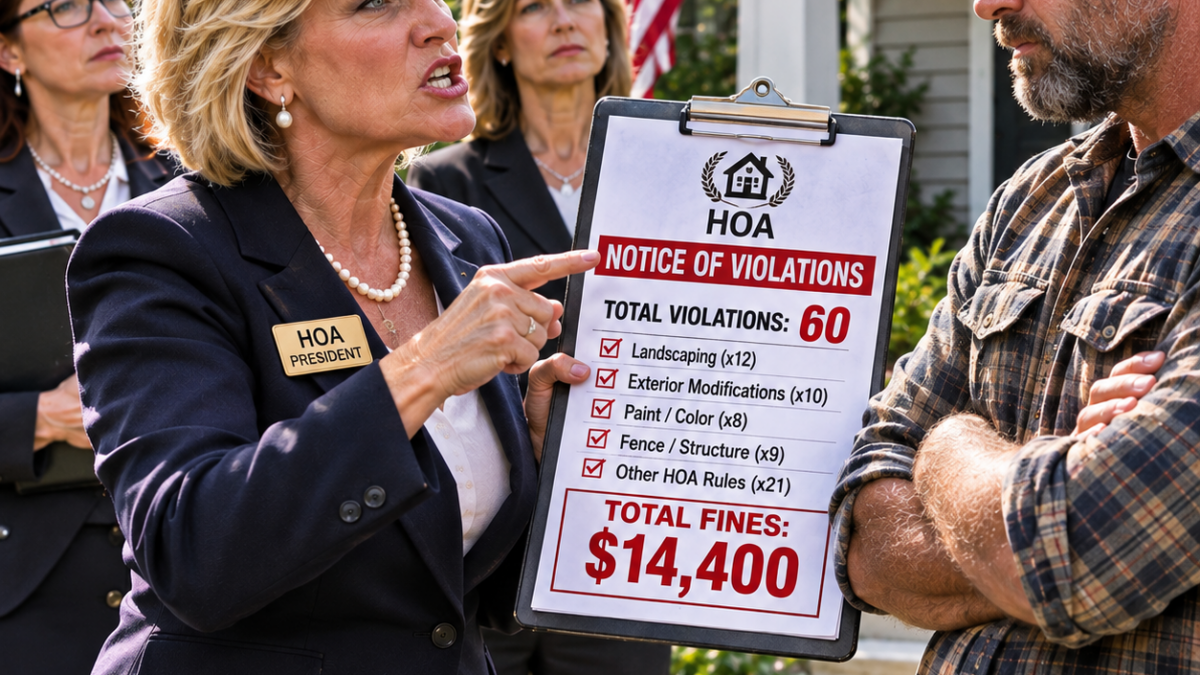
HOA Karen Hit Me With 60 Violations and $14,400 in Fines—Then the Judge Learned My Property Was Never in Her HOA.
For twelve straight months, HOA president Colleen Whitfield buried Sterling Vance beneath sixty violation notices, $14,400 in fines, public humiliation, a false police complaint, and a campaign designed to convince an entire North Carolina neighborhood that he was the one man who did not belong there.
Sterling answered every letter calmly, photographed every interaction, paid dues he believed he owed, and never told Colleen that the retired Army Corps engineer she had chosen to bully had finally pulled the original 1998 subdivision plat and discovered one devastating fact: his 1.2-acre homestead was Parcel 0-A, explicitly outside Briarcliff Estates, meaning her HOA had never possessed one inch of authority over him.
Then Colleen came to his porch after dark, screamed that a man like him would never be equal to the people on her street, slapped him across the face in front of two cameras she had not noticed, and walked into court seventeen days later carrying a color-coded binder of sixty violations that would become evidence against the only person who had ever believed it gave her power.
Sterling Vance fixed things.
That was how people who knew him best described him.
Broken cabinet hinge?
Sterling fixed it.
A fence that leaned after a Carolina thunderstorm?
He would bring a level, two post braces, and a thermos of coffee before you finished asking.
A drainage problem?
Give him twenty minutes, a measuring rod, and a legal pad.
A property boundary nobody could understand because the deed had been written in language from another century?
That was not even a problem.
That was entertainment.
For twenty years Sterling had served with the United States Army Corps of Engineers, measuring land, reading terrain, drawing lines across places most Americans would never see except in photographs.
He had surveyed mountain roads.
Floodplains.
Construction sites.
Temporary bases.
River crossings.
Places where being wrong by twelve inches could create a problem costing millions of dollars.
After retiring from military service, he spent another twenty years building a small consulting practice from his garage in Caldwell County, North Carolina.
Nothing flashy.
A desk.
Two monitors.
Surveying equipment.
Filing cabinets.
Stacks of plat maps.
Enough work to stay busy without spending the rest of his life chasing deadlines.
At fifty-six, he had reached the age when a man begins to understand that peace is not the absence of activity.
Peace is being allowed to choose your activity.
Sterling chose woodworking.
Every Saturday morning, unless weather or a client interfered, he went into the workshop behind the house.
The smell was always the same.
Sawdust.
Machine oil.
Coffee.
Sometimes walnut.
Sometimes oak.
Smooth jazz played from a portable radio old enough to have survived two military deployments and a cross-country move.
Sterling owned newer speakers.
He preferred the old radio.
PART2:
Some things earned their place by lasting.
The house had earned its place too.
A 1940s Craftsman bungalow on 1.2 acres at the corner of Ridgecrest Lane.
Original hardwood floors.
Wide porch.
Low roofline.
Deep overhangs.
Old brick chimney.
Nothing about it screamed wealth.
That was why Sterling and his wife Nadine loved it.
They bought the place five years before the trouble began.
Their forever home.
Nadine’s words.
The morning they moved in, before half the boxes were unloaded, she drove to a nursery and came back with a young magnolia tree.
Sterling stood on the porch watching her wrestle it from the trunk.
“What are you doing?”
“Planting something.”
“I can see that.”
“Then why did you ask?”
That was Nadine.
Practical.
Dry.
Never wasting a good opportunity to make Sterling feel foolish.
She chose the front yard.
Not directly centered.
Slightly left of the porch steps.
Sterling asked why there.
“Because perfect symmetry looks like a cemetery.”
He stopped questioning the location.
They planted it together.
Nadine pressed soil around the roots with both hands and said:
“It’ll bloom every spring and remind us we made it.”
She lived long enough to see the first bloom.
Not the second.
Pancreatic cancer.
Fourteen months from diagnosis to funeral.
Sterling had measured continents and construction projects his entire adult life.
Nothing prepared him for the mathematics of cancer.
Fourteen months.
Six rounds of treatment.
Hospital rooms.
Prescription schedules.
Weight loss.
Good scans.
Bad scans.
Hope changing shape every few weeks.
Nadine never became poetic about dying.
Sterling loved her for that.
Her last clear conversation with him happened from a hospital bed.
She was weak enough that lifting her hand required effort.
She still grabbed his wrist.
“Sterling.”
“I’m here.”
“Don’t you ever let anybody make you leave that house.”
He tried to smile.
“Who’s making me leave?”
“I’m serious.”
“So am I.”
She looked directly at him.
“Promise.”
“I promise.”
Nadine nodded once.
That was enough.
Sterling Vance did not break promises.
So after the funeral he stayed.
Even when every room remembered her.
Even when he removed the porch swing because hearing the chains move in the wind made him turn his head expecting to see her.
Even when he spent several months sleeping only on his side because her half of the bed looked too empty from his back.
He stayed.
He maintained the place with almost military precision.
Mulch refreshed.
Porch boards oiled.
Trim painted every spring.
Grass cut cleanly.
Gutters cleared.
Magnolia pruned carefully.
His property was probably the best-maintained piece of land on Ridgecrest Lane.
And somehow that became a problem.
It started on a Saturday morning.
Sterling was in the workshop shaping a walnut board for a bookshelf.
He heard footsteps on the porch.
For half a second the sound reminded him of the old swing chains.
Then he remembered the swing had been gone three years.
He set down the hand plane.
Wiped his palms on a shop rag.
Walked around the garage.
A woman stood at his front door.
Fifty-two.
Blonde bob with silver streaks.
Reading glasses hanging from a pearl chain.
Linen blazer.
Pressed slacks.
Clipboard against her chest.
Friendly real-estate-agent smile.
The kind of smile designed to tell you the conversation was pleasant before you had agreed.
“Mr. Vance?”
“Yes, ma’am.”
“I’m Colleen Whitfield.”
She extended a hand.
“President of the Briarcliff Estates Homeowners Association.”
Sterling shook it.
“I just wanted to stop by and welcome you to our little community.”
Sterling had lived there two years.
He considered correcting her.
Decided not to.
“Thank you.”
“We love having new faces.”
Pause.
“Though I did want to mention a few tiny things.”
There it was.
Clipboard turned.
Three violations.
Mailbox paint color not approved.
Trash cans allegedly visible from the road on a non-collection day.
Unauthorized structure visible through his garage window.
Sterling stared at the last one.
“My shelving?”
Colleen looked toward the workshop.
“If improvements are visible from common areas, they can affect neighborhood aesthetics.”
“It’s inside my garage.”
“But visible.”
Sterling glanced back at the garage.
You had to stand almost where Colleen stood and look through one particular section of window to see the shelving.
He looked at her again.
“I appreciate you stopping by.”
The response confused her.
No argument.
No apology.
No fear.
Just polite dismissal.
She smiled.
“You’ll learn how we do things here.”
Her heels clicked down the walkway.
Sterling watched her leave.
Then looked at the notice.
Header:
BRIARCLIFF ESTATES HOMEOWNERS ASSOCIATION
LOTS 1 THROUGH 120.
He noticed it.
Then forgot it.
Later, he would think about how many disasters begin with a fact you see before you understand its importance.
Lots 1 through 120.
Violation number one.
Fifty-nine still coming.
The next eight arrived within six weeks.
Garden hose left on driveway.
Holiday wreath displayed two days after the approved seasonal window.
Pickup truck parked six inches too close to sidewalk.
Recycling container visible from public right-of-way.
A temporary ladder leaning against the workshop for too many hours.
A flower bed border that supposedly differed from approved material standards.
Each envelope looked the same.
Briarcliff logo.
Professional formatting.
Real sections from real covenants.
The letters were not sloppy.
That was what made them effective.
Colleen knew how to weaponize professionalism.
“Per Section 4.3(B)…”
“As a friendly reminder…”
“In the interest of maintaining the character of our community…”
Sterling began to hate the word character.
He corrected everything.
Not because he believed every notice was reasonable.
Because he wanted a clean record.
Trash cans stayed outside eleven extra minutes because waste pickup had been late.
He photographed them inside garage at 7:02.
Wreath?
The covenants said seasonal decorations but did not define an exact removal date.
Sterling removed it anyway.
Truck?
He measured distance.
Moved six inches.
He responded to every notice in writing.
Polite.
Photographs.
Time stamps.
Relevant rule.
Correction.
No sarcasm.
No anger.
By violation eleven, his property looked less like a home and more like a suburban compliance demonstration.
Then the neighborhood cookout happened.
Third Saturday in June.
Every house on Ridgecrest Lane received a flyer.
Except Sterling’s.
He found out because he smelled charcoal.
He was on porch eating leftover meatloaf.
Music drifted from the community green.
Children yelling.
Adults laughing.
Someone’s sprinkler clicking nearby.
Sterling sat alone and listened.
He could have walked over.
Nobody had physically barred him.
But exclusion works because the excluded person knows showing up uninvited will be used as proof he did not understand the rules.
At the cookout, Colleen sat with a red plastic cup.
Garrett Price, Sterling’s next-door neighbor, stood twelve feet away eating baked beans.
Garrett was sixty-one.
Retired electrician.
He and Sterling exchanged tools, checked each other’s houses during trips, and occasionally drank beer on Saturdays.
He heard Colleen say:
“I’m sure he’s a perfectly nice man.”
She did not use Sterling’s name.
She did not need to.
“But some people just aren’t used to this kind of community.”
A neighbor asked:
“What do you mean?”
Colleen smiled.
“It’s an adjustment.”
Then:
“You know what I mean.”
Garrett did.
So did everyone else.
He looked at his baked beans.
Then his phone.
He said nothing.
That silence bothered him later.
At the time, it was easier.
Sterling learned about the comment days later.
Not from Garrett.
From another neighbor.
He still did not confront Colleen.
He went to his desk.
Opened a manila folder.
Wrote:
HOA CORRESPONDENCE.
He began organizing everything chronologically.
Date.
Complaint.
Response.
Photograph.
Result.
Then he wrote a formal request for a meeting before the full board.
Selective enforcement.
Disparate treatment.
Concerns about harassment.
He cited provisions in governing documents.
He referenced federal fair-housing protections.
He requested that all future enforcement involving his property be reviewed by the board rather than the president alone.
Certified mail.
Delivery confirmed.
The meeting never happened.
Sterling assumed the board ignored him.
That was not exactly true.
Board secretary Dawn Prescott retrieved the letter.
Colleen’s closest ally.
She intercepted it before distribution.
Garrett Price happened to be in the Food Lion parking lot when he saw Dawn hand Colleen an envelope.
He recognized Sterling’s return-address label.
Colleen read.
Folded.
Placed it in purse.
No meeting.
No board distribution.
Garrett watched.
Again he said nothing.
Not yet.
That night Sterling called his daughter.
Brianna.
Attorney in Charlotte.
“Dad, this is harassment.”
“It’s a nuisance.”
“You have eleven violations in what, two months?”
“Six weeks.”
“That’s worse.”
“I’ve dealt with worse.”
“You were in the Army.”
“So?”
“This isn’t the Army. You don’t have to absorb everything just because you can.”
Sterling looked toward front window.
Magnolia leaves moving under streetlight.
“I’m not just taking it.”
“What are you doing?”
“Keeping records.”
Brianna knew her father.
That answer calmed her slightly.
After hanging up, Sterling walked onto the porch.
Stopped where the swing used to be.
Magnolia rustled.
He said quietly:
“I promised you, Nadine.”
The violations accelerated.
Colleen created the Briarcliff Beautification Committee.
Three retirees.
Matching visors.
A shared online spreadsheet for reporting neighborhood problems.
On paper:
Community aesthetics.
In practice:
Surveillance.
Ninety percent of reports targeted Sterling.
The remaining ten percent were distributed across other homes just enough to create an appearance of neutrality.
Then came Facebook.
Community Standards Update.
Colleen wrote that “some residents” had accumulated multiple violations and continued disregarding the standards that made Briarcliff special.
No name.
No address.
Everyone knew.
Forty-two likes.
Clapping emojis.
Sterling read it once.
Closed the app.
He told himself social media did not matter.
Then the county code-enforcement truck arrived.
Complaint:
Unlicensed commercial business operating in residential property.
Sterling’s surveying consultancy.
Inspector stepped out already looking apologetic.
Sterling invited him inside.
Made coffee.
Handed him the county home-occupation permit obtained five years earlier.
Inspector compared address.
Permit.
Business classification.
Everything legal.
He finished coffee.
“Looks fine.”
Complaint dismissed.
No citation.
No violation.
But Sterling lost a morning.
Across street, a neighbor watched through curtains.
Delivery driver later asked whether “everything was okay with the county.”
That was how harassment worked.
Even when false complaints failed officially, suspicion remained socially.
Sterling began waking at two in morning.
Not dramatic insomnia.
Quiet.
Eyes open.
Listening.
Mail became an event.
He checked before coffee.
Again after dinner.
Blood pressure rose six points.
His doctor advised less stress.
Sterling almost laughed.
Instead:
“Yes, sir.”
Then he did what Sterling Vance always did when emotion became unmanageable.
He measured.
He submitted a formal request for HOA enforcement records.
Violation histories.
He built a spreadsheet.
Every household.
Every notice.
Type.
Date.
Fine.
Repeat offense.
Color-coded.
The result was ugly.
Sterling had received four times as many violations as anyone else in Briarcliff.
The next-highest household had built an unpermitted deck.
Sterling’s offenses included garden hose placement.
He analyzed frequency.
Severity.
Who reported.
Who approved.
Pattern.
Then he looked at Colleen’s own property.
County GIS.
Satellite imagery.
Permits.
Storage shed behind her house.
No architectural approval.
No county building permit.
Sterling smiled for first time in days.
Not because he had revenge.
Because he had comparison.
He filed a complaint.
Certified mail.
Same process Colleen used against him.
Then he bypassed Dawn.
Sent copies of his selective-enforcement spreadsheet directly to every board member’s home address.
Five envelopes.
Five certified receipts.
No interception.
That evening, something else bothered him.
The original HOA notice header.
Lots 1 through 120.
Sterling opened county GIS.
His house sat at corner of Ridgecrest.
He zoomed.
Then zoomed again.
Something looked wrong.
Not wrong exactly.
Different.
His parcel did not align with subdivision lots the way he expected.
He opened his deed.
Ran a finger along legal description.
Metes and bounds.
Bearings.
Distances.
No lot number.
He frowned.
Then closed everything.
Not because it was unimportant.
Because he was not ready to chase a theory without documents.
A surveyor learns to distrust excitement.
Measure first.
The county complaint against Colleen’s shed arrived Friday.
Saturday at 8:15 a.m., Colleen appeared on Sterling’s lawn.
No clipboard.
No blazer.
No pearl chain.
Just anger.
Sterling sat on porch with coffee.
She walked across grass.
He set mug down.
“You filed a complaint against me.”
Not a question.
“I filed a code-enforcement report.”
“You know exactly what I mean.”
“Same process you used regarding my business.”
“That is not the same thing.”
“Why?”
“I am president of this association.”
Sterling said nothing.
“I protect this neighborhood.”
Still nothing.
“You are a troublemaker.”
She stepped closer.
“That is all you’ve been since you showed up.”
“I’ve been here five years.”
“And every year this street gets worse.”
Sterling watched.
“You think people don’t see it?”
Her finger rose.
Pointed at his chest.
“People like you move into a nice community and don’t understand how things work.”
Across street, Doug Henderson washed a car with his wife.
Both stopped.
Sterling asked:
“What do you mean by people like me?”
Colleen froze.
Only a second.
Enough.
“This was a good neighborhood.”
Her voice tightened.
“A safe neighborhood.”
Pause.
“A clean neighborhood.”
Sterling waited.
“Before?”
She stared.
Mockingbird screamed from magnolia.
“Before what, Mrs. Whitfield?”
Doug Henderson’s sponge dropped into bucket.
Colleen knew.
The mask had slipped far enough that everyone saw what was behind it.
“Don’t twist my words.”
“I didn’t.”
“You are harassing me.”
“You came to my house.”
“I can call the police.”
“You’re standing on my property.”
She turned.
Walked away.
Heels punching concrete.
Sterling’s pulse stayed steady until she reached sidewalk.
Then Garrett’s neighbor Doug crossed street.
Sterling expected:
She was out of line.
Instead:
“You know, Sterling, sometimes it’s easier to go along.”
Sterling looked at him.
Doug stared toward his own driveway.
“She has connections.”
“That all?”
“I’m just saying.”
Then he returned to washing car.
Sterling went inside.
Closed door.
Sat at kitchen table.
Hands flat.
For first time in months, eyes filled.
He picked up a framed photograph of Nadine.
Savannah anniversary trip.
She was laughing beside river.
He whispered:
“She was going to say it.”
He swallowed.
“Before people like me moved in.”
Phone rang in Brianna’s office.
She answered.
“Dad?”
“I need a favor.”
“What happened?”
He told her.
Not every word.
Enough.
Brianna listened.
Then said:
“I want you to order a complete boundary survey.”
Sterling almost smiled.
“Baby, I am a surveyor.”
“Then act like one.”
That annoyed him.
Which was why it worked.
The next morning, Sterling filed a formal mediation request through the county’s alternative-dispute process.
Good-faith attempt.
Neutral setting.
Documented.
Board voted three to two to decline.
Colleen.
Dawn.
One ally.
No.
Sterling received refusal.
Filed it.
That night he spread documents across dining table.
Deed.
Closing package.
Title policy.
Original county records.
Yellow kitchen light.
He stopped behaving like a homeowner being harassed.
He became Sterling Vance, surveyor.
His deed described property by metes and bounds.
No subdivision lot number.
No reference to Briarcliff Estates.
That alone was unusual enough to keep going.
He pulled recorded 1998 plat.
Briarcliff Estates.
Old tobacco farmland divided into 120 lots.
Lot 1.
Lot 2.
Through 120.
Four streets.
Ridgecrest Lane.
Sterling’s property appeared at corner.
But not as Lot 121.
Not as any Briarcliff lot.
Parcel 0-A.
Existing homestead.
The house predated subdivision by forty years.
The plat boundary ran around it.
Explicit exclusion.
Sterling leaned closer.
Opened covenants.
Page one.
Paragraph three.
Applicability.
Lots 1 through 120 of Briarcliff Estates as recorded in Plat Book 14, Page 312.
He read sentence three times.
Lots 1 through 120.
Parcel 0-A was not a lot.
Not within plat.
Not referenced.
Not bound.
The HOA had no jurisdiction.
None.
Sterling stared at documents.
For years he had paid dues.
Five years.
$4,250.
Because previous owner had apparently paid voluntarily after Briarcliff expanded around the property and closing paperwork treated association membership as assumption rather than recorded covenant.
Nobody checked deeply.
Sterling had.
Now.
Sixty violations.
$14,400 in fines.
Worthless.
Not excessive.
Not selectively enforced within an HOA.
Issued by an organization with no recorded authority over his parcel at all.
Sterling did not laugh.
Did not fist-pump.
He said one word.
“Nadine.”
Then called Brianna.
She listened.
Silence.
Then a laugh.
Slow.
Disbelieving.
“Dad.”
“What?”
“She has been fining someone who isn’t even in her HOA.”
“Looks that way.”
“You’ve been paying dues?”
“Yes.”
“For five years?”
“Yes.”
“Dad.”
“I know.”
“That is a lawsuit.”
“I know.”
“Are you filing tomorrow?”
Sterling looked at stack.
“No.”
Long pause.
“Why?”
“Because she’s not done yet.”
Brianna understood her father.
Then laughed again.
“You’re going to let her keep going?”
“I’m going to let her choose.”
“Dad.”
“Yes?”
“Please install cameras.”
That Sterling agreed with immediately.
For first time in months, he slept through night.
Next morning he wrote three columns.
Phase One.
Phase Two.
Phase Three.
Phase One:
Document everything.
Ring doorbell.
Two security cameras.
Front yard.
Porch.
Property line.
Cloud storage.
Every future interaction recorded.
Phase Two:
Let Colleen escalate.
This was hardest.
He wanted to send plat.
Wanted to watch her reaction.
Brianna explained legal math.
Every new fine issued after Sterling’s discovery would show continued pattern.
Every letter.
Every threat.
Every attempt to lien property.
Sterling taped three words above bathroom mirror.
LET HER DIG.
Phase Three:
Lawyer.
Brianna referred him to Nolan Crawford.
Charlotte real-estate litigator.
Fifty.
Quiet.
Lean.
Read everything twice.
Sterling carried a banker’s box into office.
Crawford spent two hours.
Deed.
Plat.
Covenants.
Sixty notices.
Dues receipts.
Selective-enforcement spreadsheet.
Mediation refusal.
County complaints.
When finished, Crawford removed glasses.
“Mr. Vance.”
“Yes?”
“I’ve handled HOA overreach for twenty-two years.”
Sterling waited.
“I have never seen anyone fined sixty times by an HOA they don’t belong to.”
“So what do we do?”
“Declaratory judgment first.”
He tapped plat.
“Court declaration that parcel isn’t subject to covenants.”
Then dues.
“Recovery.”
Then pattern.
“Harassment.”
Then discriminatory enforcement allegations.
Then fraudulent collection.
Sterling listened.
“When?”
Crawford raised eyebrow.
“You told Brianna they’re planning a lien?”
“October fifteenth.”
Crawford thought.
“We file October tenth.”
“Five days before?”
“Exactly.”
Sterling nodded.
Now witnesses.
Garrett Price came first.
Sat at Sterling’s kitchen table.
Coffee untouched.
He admitted hearing Colleen on phone outside clubhouse months earlier.
“I don’t care what it takes.”
Her words.
“I want him out of this neighborhood.”
Then:
“He is dragging down the value of every house on this street.”
About the most carefully maintained home on Ridgecrest.
Garrett signed affidavit.
Hand shook.
Sterling did not shame him for waiting.
Next:
Edith Calloway.
Seventy-four.
Widowed six months.
Fined $200 for memorial wreaths after husband died.
“She called them unsightly.”
Edith’s voice remained steady.
“My husband’s name was on those wreaths.”
Statement signed.
Davis family.
Other neighbors.
Pattern grew.
Sterling also commissioned an independent certified boundary survey from former Army Corps colleague with no local connection.
No conflict claims.
Survey conclusion:
Parcel 0-A outside Briarcliff plat.
Full stop.
Banker’s box became heavy.
Plat.
Deed.
Survey.
Sixty notices.
Dues.
Affidavits.
Brianna wrote label:
WHITFIELD VS. REALITY.
Sterling tried to remove it.
She put it back.
October 10.
Crawford filed.
Sterling Vance versus Briarcliff Estates HOA, Colleen Whitfield, Dawn Prescott.
Twenty-two pages.
Attached front:
1998 subdivision plat.
That evening Sterling touched magnolia bark.
“Almost, Nadine.”
Colleen did not know yet.
She believed she still controlled board.
Neighborhood.
Rules.
Lien meeting.
Then she escalated exactly as Brianna predicted.
False police complaint.
Colleen called sheriff’s office.
Claimed Sterling had threatened her during last confrontation.
Aggressive.
Intimidating.
“I don’t feel safe.”
Deputy Roy Collier arrived.
Forty-five.
Crew cut.
Sterling could tell from his posture he had already heard a version.
Deputy explained complaint.
Sterling invited him inside.
Opened laptop.
Played porch recording.
Colleen entering property.
Shouting.
Finger raised.
Sterling standing.
No threats.
No movement toward her.
Collier watched.
When video ended, he shifted.
“I don’t see a threat.”
“No, sir.”
Sterling waited.
“What you see is Mrs. Whitfield entering my property and making statements I believe were discriminatory.”
Collier nodded vaguely.
“Will you file a report regarding her conduct?”
“That sounds more civil.”
Sterling had heard phrase.
Civil matter.
The universal door through which inconvenient problems were often sent.
Deputy left.
No action.
Sterling saved interaction summary.
Next came email.
Subject:
NEIGHBORHOOD SAFETY CONCERN.
Colleen wrote about “an individual” threatening HOA leadership.
Asked residents to remain vigilant.
Lock doors.
Report suspicious behavior.
No name.
Everyone knew.
Sterling saw a neighbor cross street rather than pass his property.
Saw delivery driver hesitate.
Public stigma had changed daily life.
He filed screenshots.
Then emergency board session.
No notice to Sterling.
Lien vote moved forward from October 15 to October 12.
Three to two.
Dawn seconded.
Then Colleen sent another mass email.
This time name.
Sterling Vance.
Full address.
List of violations.
“Community safety.”
“Property-value protection.”
Crawford called Sterling.
“You see this?”
“Yes.”
“She just distributed your personal enforcement history to the neighborhood.”
“Yes.”
“Do not respond.”
Sterling looked at bathroom mirror.
“Wasn’t planning to.”
Crawford made a dry sound.
“She is digging with a tablespoon.”
Sterling said:
“Let her.”
October 11.
Process server arrived at Colleen’s home.
Blue-backed complaint.
Twenty-two pages.
She read on porch.
Page one.
Steady.
Middle.
Hands began trembling.
Fraud.
Conversion.
Discrimination allegations.
Return of dues.
Punitive damages.
Declaratory judgment.
By last page, staple rattled.
Colleen did not call attorney.
Not immediately.
She got in car.
Told sixteen-year-old son Connor:
“Get in.”
They drove to Ridgecrest.
7:40 p.m.
Dusk.
Sterling washed dishes.
Car door slammed.
Heels fast on concrete.
Ring camera activated at twelve feet.
Colleen pounded door.
Sterling dried hands.
Opened.
Stayed behind threshold.
Colleen stood on porch.
Mascara slightly smeared.
Jaw tight.
Lawsuit crushed in one hand.
“You think you can sue me?”
“Mrs. Whitfield, you should speak to counsel.”
“Me?”
Her voice rose.
“You are suing me?”
“I am asking you to leave my property.”
“I held this community together while people like you—”
She stopped.
Sterling’s expression did not change.
“People like me?”
“Yes.”
Connor sat in passenger seat.
Visible through car window.
Colleen continued.
“You move into a place like this and think money makes you equal.”
Sterling said nothing.
“It doesn’t.”
Porch camera recorded every syllable.
“You will never be equal here.”
Sterling’s hands remained at sides.
“This was a safe street.”
Another camera watched from garage eave.
“Children played outside.”
Her voice sharpened.
“Then you show up with your junk and your music and act like the world owes you something.”
“I’d like you to leave.”
“Your property?”
She laughed.
High.
Jagged.
“You don’t deserve this property.”
Sterling felt something inside him become perfectly still.
“You don’t deserve to breathe the same air as the people on this street.”
Still he said nothing.
Colleen stepped closer.
“You are nothing.”
Sterling’s eyes watered.
Not because he was frightened.
Not exactly.
Because Nadine had loved this porch.
Because he’d spent a year being treated like an intruder in the home she asked him never to leave.
Because every polite letter and every silence and every neighbor crossing street had been leading here.
Colleen screamed:
“Say something!”
Then slapped him.
Open hand.
Full force.
Crack carried across yard.
Sterling’s head turned.
Cheek caught against teeth.
Copper taste.
Left ear ringing.
He did not step back.
Did not lift fist.
Did not touch her.
Three seconds.
Then he slowly turned his face back.
Raised one hand.
Open palm.
Pointed upward.
Ring camera.
Red recording light.
“You just assaulted me on my own property.”
Colleen looked.
Then Sterling pointed toward garage eave.
Second camera.
“With your son watching.”
Color left her face.
Her hand dropped.
She backed away.
Heel caught step.
Grabbed railing.
For first time all year, Sterling saw Colleen Whitfield completely without certainty.
She walked to car.
Did not turn.
Connor stared down at shoes.
Eyes red.
His mother got in.
He never looked at her.
Tail lights disappeared.
Sterling closed door.
Sat at kitchen table.
Touched cheek.
Then looked at Nadine’s photograph.
For several minutes he said nothing.
Everything recorded.
Video already backed up before Colleen reached stop sign.
Crawford received it that night.
Brianna did too.
Her response contained one sentence:
Dad, do not delete anything.
He did not.
The next morning, neighborhood changed.
Edith Calloway replied to Colleen’s email chain.
Reply all.
“I have been quiet long enough.”
She described memorial-wreath fine.
Said Colleen had targeted Sterling from day he arrived.
Then:
“I watched.”
“Many of you watched.”
“I am ashamed of my silence and ashamed of yours.”
Three neighbors replied immediately.
Then more private messages.
Garrett Price walked over.
“I should’ve said something at that cookout.”
Sterling looked at him.
“You’re saying something now.”
Colleen hired Russell Bennett.
Litigator.
Aggressive.
He took case quickly.
Too quickly.
Filed counterclaim accusing Sterling of intimidation and harassment.
What Bennett did not do thoroughly enough was examine threshold issue.
Was Sterling actually an HOA member?
That omission would define courtroom.
October 28.
Caldwell County Courthouse.
Courtroom 3B.
Standing-room only.
Board members.
Dawn Prescott.
Garrett Price.
Edith.
Reporter from local newspaper.
Brianna arranged coverage.
Connor Whitfield sat alone in back.
Hoodie.
Eyes down.
Judge Ruth Eddington entered at nine.
Reading glasses.
No smile.
Room silent.
Colleen sat at respondent table.
Navy blazer.
Hair perfect.
In front of her:
Binder.
Sixty violations.
Tabbed.
Color-coded.
Months of work.
$14,400.
A monument to authority she believed undeniable.
Russell Bennett presented first.
Professional.
Organized.
Violation one.
Two.
Seven.
Fifteen.
Thirty-three.
Photographs.
Notices.
Accumulated fines.
He called Sterling chronic noncompliant resident.
Asked court to enforce fines and authorize lien.
Twenty-two minutes.
When Bennett sat, Colleen straightened blazer.
Small nod.
She believed volume of paper equaled strength.
Then Nolan Crawford stood.
He did not approach binder.
Did not discuss garden hose.
Wreath.
Truck.
Mailbox.
Nothing.
Buttoned jacket.
One step toward bench.
“Your Honor, before addressing merits of any alleged violations, we need to address a threshold issue.”
Judge looked over glasses.
“What issue?”
“Jurisdiction.”
One word.
Bennett looked up.
Colleen tilted head.
Crawford placed first document.
Certified 1998 subdivision plat.
Lots 1 through 120.
Second.
Sterling’s recorded deed.
Parcel 0-A.
Metes and bounds.
No Briarcliff lot.
Third.
Recorded CC&Rs.
Page one.
Paragraph three.
Application exclusively to lots 1 through 120.
Crawford let judge read.
Then:
“Mr. Vance’s property is Parcel 0-A.”
He pointed.
“Existing homestead excluded from Briarcliff Estates when subdivision was platted.”
Silence.
“It is not within platted boundaries.”
Bennett started flipping pages.
“It is not referenced by the covenants.”
More pages.
“The Briarcliff Estates HOA has no recorded jurisdiction over Mr. Vance’s property.”
Colleen stared.
“It never has.”
The room went still.
Not merely quiet.
Still.
Crawford continued:
“Therefore every alleged violation, every fine, and every dollar of dues collected from Mr. Vance was imposed by an organization with no covenant authority over his land.”
Bennett leaned toward Colleen.
Whispered.
Urgent.
She looked at binder.
Then him.
Then plat.
Her lips moved.
Nothing came out.
Judge Eddington looked directly at Colleen.
“Ms. Whitfield.”
Colleen swallowed.
“Is Mr. Vance’s property referenced in the recorded covenants before this court?”
“We’ve always considered—”
“That is not my question.”
Judge’s voice remained calm.
“Is Parcel 0-A included in the recorded covenants?”
Colleen looked at Bennett.
He did not answer for her.
“Everyone on Ridgecrest is part of Briarcliff.”
Judge Eddington leaned slightly forward.
“Yes or no?”
Clock ticked.
Once.
Twice.
Three times.
Colleen’s face lost color.
Old paper.
“No.”
That was moment everyone remembered.
Not shouting.
Not slap.
Pale face.
Sixty violations.
Twelve months.
Fourteen thousand four hundred dollars.
No jurisdiction.
Binder suddenly transformed.
It was no longer proof Sterling disobeyed.
It was documentation of how many times Colleen exercised power she never had.
Crawford was not finished.
He asked permission to play video.
Television screen lit.
October 11.
7:40 p.m.
Sterling’s porch.
Colleen’s voice filled courtroom.
“You think your money makes you equal.”
People shifted.
“You’ll never be equal here.”
No one shifted now.
Then:
“You don’t deserve this property.”
Then:
“You are nothing.”
Then slap.
Crack through speakers.
A board member covered mouth.
Reporter stopped writing for a second.
Dawn stared at floor.
Sterling on screen pointed at camera.
No retaliation.
No threat.
Crawford let video end.
Five seconds silence.
Then:
“This is not a case about neighborhood aesthetics.”
He turned slightly toward bench.
“This is a documented campaign by an HOA president against a homeowner whose property was never subject to the association’s authority.”
Another pause.
“When he challenged that authority, the campaign escalated.”
False police allegation.
Neighborhood safety email.
Public enforcement history.
Porch assault.
“We request declaratory judgment.”
Return of dues.
Damages.
Additional relief.
Referral to relevant agencies for investigation of discriminatory enforcement allegations.
Judge looked at Sterling.
Then Colleen.
Connor stood in back.
Walked toward door.
He did not look at mother.
Door closed softly.
The sound seemed louder than courtroom arguments.
Judge ruled on jurisdictional issue that afternoon.
Parcel 0-A not subject to Briarcliff Estates covenants.
All sixty violations void.
All fines void.
HOA ordered to return $4,250 in dues with applicable interest.
Lien request denied.
Sterling’s separate civil claims continued.
Three weeks later, settlement.
$85,000 covering harassment-related civil claims, emotional distress, battery, and defamation allegations.
Colleen personally responsible for additional $15,000 punitive component under settlement structure.
The Ring footage led to criminal assault charge.
She eventually entered no-contest plea.
Probation.
Community service.
Permanent record.
She resigned HOA presidency.
Dawn resigned two days later.
Remaining board issued public apology.
A fair-housing investigation opened regarding discriminatory enforcement pattern described in evidence.
Deputy Collier’s handling received administrative review.
Russell Bennett withdrew from continued dispute after learning full boundary record.
And the binder?
The binder remained.
Sixty violations.
Color-coded.
Tab after tab.
Colleen had built it believing quantity created legitimacy.
Instead it documented persistence.
Frequency.
Targeting.
Escalation.
The thing she meant to use against Sterling became central evidence showing what she had done.
Garrett Price came over that evening with two beers.
Sat on porch step.
October air cool.
Wood smoke somewhere down road.
Magnolia leaves moving.
For several minutes neither spoke.
Garrett finally said:
“I’m sorry.”
Sterling opened beer.
“For what?”
“You know.”
“I want to hear you say it.”
Garrett nodded.
“I should have spoken sooner.”
Sterling looked down street.
“I watched her do it.”
Pause.
“I heard what she said at cookout.”
Another.
“I saw Dawn take your letter.”
“I know.”
“You knew?”
“Eventually.”
Garrett shook head.
“I was scared of getting involved.”
“I know.”
“That doesn’t make it right.”
“No.”
Garrett waited.
Sterling took sip.
“You spoke when it counted.”
Garrett looked at him.
“That enough?”
Sterling thought.
“It has to be.”
They sat until bottles empty.
Streetlights came on.
Screen door somewhere slammed.
Dog barked.
For first time in a year, Ridgecrest sounded ordinary.
That weekend Brianna came from Charlotte.
Found Sterling in hallway holding Nadine’s Savannah photograph.
It had spent three years in linen closet because he could not look at it long enough to hang.
Brianna stood beside him.
“You okay?”
“No.”
He smiled.
“But closer.”
He hung photograph above fireplace.
Stepped back.
Nadine laughing by river.
“There she is,” Brianna said.
Sterling nodded.
“There she is.”
Next Saturday, Sterling drove to woodworking supply store.
Bought white oak.
He could have purchased finished porch swing.
Instead built one.
Measured.
Cut.
Planed.
Sanded.
Joined.
Two seats wide.
He mounted it where old swing had hung.
First time he sat, chains creaked.
He closed eyes.
Sound almost same.
Not exactly.
Nothing returns exactly.
That is not point.
Some things return differently and still become home.
Part of settlement funded something Sterling had not originally planned.
Nadine Vance Community Land Trust.
Small nonprofit.
Free or subsidized boundary surveys and title reviews for first-time homeowners and elderly residents vulnerable to property or HOA disputes.
Quarterly Know Your Rights workshop at county library.
Nolan Crawford volunteered.
First workshop:
Forty-three people.
Sterling held up copy of recorded plat.
“This cost about fifteen dollars to retrieve.”
He looked around room.
“It changed my life.”
Then:
“Know what you own.”
“Know what documents actually bind it.”
“Do not assume somebody has authority because they use official-looking letterhead.”
He did not tell people every HOA was evil.
That would have been dishonest.
He explained most work because homeowners knowingly bought into recorded covenants.
His case was unusual.
A preexisting parcel surrounded by later subdivision.
A title assumption nobody corrected.
A president who treated voluntary payments as jurisdiction.
The lesson was not:
Ignore HOA notices.
The lesson:
Verify.
Months later, doorbell rang on quiet Saturday.
Sterling opened.
Young Black couple.
Little girl in yellow dress touching magnolia bark.
Parents held violation notice.
They had moved into Lot 84.
Actually inside HOA.
Their faces carried familiar mix.
Embarrassment.
Confusion.
Fear.
“We heard you help people understand these.”
Sterling looked at notice.
Then at them.
First genuine smile in long time.
“Come in.”
They sat at kitchen table.
Sterling read violation.
This one was legitimate.
Fence modification without architectural approval.
He explained.
“Does that mean we’re in trouble?”
“No.”
“It means there is a process.”
He helped them draft response.
That moment mattered.
Sterling did not turn his experience into permission to treat every HOA as enemy.
He turned it into knowledge.
That was Nadine’s influence too.
She hated wasted suffering.
“If something bad happens,” she used to say, “at least steal a lesson from it.”
Sterling stole several.
The first was obvious.
Read the deed.
Not the summary.
Not listing.
Not welcome packet.
Not invoice.
Recorded deed.
The second:
Read plat.
Boundaries are facts before they become arguments.
The third:
Keep records.
Sterling’s patience would have looked like weakness if nothing had been documented.
Instead every calm response became evidence.
The fourth:
Do not confuse silence with strategy.
Sterling was silent while building case.
Several neighbors were silent because discomfort was easier than courage.
Those are not same.
Garrett understood that.
Edith understood.
Doug Henderson eventually did too.
Months later, Doug crossed street while Sterling trimmed magnolia.
“Can I say something?”
Sterling lowered clippers.
Doug looked uncomfortable.
“I told you to go along.”
“Yes.”
“I was wrong.”
“Yes.”
No comforting lie.
Doug nodded.
“I should’ve said something that morning.”
“Yes.”
“You going to make me work for forgiveness?”
Sterling almost smiled.
“Depends.”
“On?”
“You own a ladder?”
Doug did.
They cleaned gutters together.
That was Sterling.
He did not need people groveling forever.
He needed them to stop pretending silence was neutral.
The neighborhood changed after Colleen.
Not magically.
People remained people.
Some who liked her blamed Sterling for “destroying community.”
A few insisted dispute could have been handled privately.
Sterling laughed at that.
He had requested meeting.
Mediation.
Written review.
Every private route.
Colleen blocked them.
When people say conflict should remain private, sometimes they mean the person with less power should remain quiet.
Sterling learned difference.
New HOA board audited enforcement.
Several fines to other homeowners were reversed.
Beautification Committee dissolved.
Dawn’s record handling reviewed.
Policies changed.
Board communications required distribution to all directors rather than routing through president.
Complaints logged.
Mediation encouraged.
Privacy provisions strengthened.
Boring reforms.
Good reforms.
No one became famous.
No parade.
Sterling preferred that.
News coverage lasted a few cycles.
Local headline focused on bizarre fact:
MAN FINED 60 TIMES BY HOA THAT NEVER CONTROLLED HIS PROPERTY.
Sterling hated wording.
Not wrong.
Just reductive.
He had been husband.
Soldier.
Engineer.
Surveyor.
Father.
Widower.
Consultant.
Neighbor.
Then internet briefly turned him into:
HOA Guy.
Brianna thought it funny.
“You’re a meme.”
“I don’t know what that means.”
“That’s why it’s funnier.”
He refused television interviews after first local piece.
Not because ashamed.
Because he had said what mattered.
Documents.
Boundaries.
Discrimination.
Accountability.
He did not want porch slap replayed endlessly for entertainment.
That was pain, not content.
Connor Whitfield contacted him months later.
That surprised Sterling.
Email.
Short.
Mr. Vance,
I don’t expect you to answer. I’m sorry for what my mother did. I was there. I should have said something. I didn’t know what to do.
Sterling read three times.
Sixteen-year-old boy.
He imagined passenger seat.
Eyes down.
Watching parent become someone impossible to defend.
Sterling replied.
Connor,
You were a child watching an adult make choices. Those choices were hers, not yours. Build your own life carefully.
—S. Vance
No more.
Enough.
Colleen never apologized.
Sterling stopped waiting.
An apology is useful only if you still need the speaker to validate reality.
Sterling had deed.
Plat.
Court order.
Video.
Witnesses.
He no longer needed Colleen’s agreement about what happened.
That freedom surprised him.
For months he had wanted to hear:
I was wrong.
Then realized he had something stronger.
Proof.
Nadine’s magnolia bloomed heavily next spring.
White flowers.
Sterling stood beneath it one morning holding coffee.
Porch swing creaked behind him.
He thought of her original promise.
Bloom every spring to remind them they’d made it.
“We made it,” he said.
Not happily ever after.
That phrase is childish.
He still missed her.
Still woke some nights.
Still touched empty side of bed sometimes.
Still heard porch creak and expected old swing.
But house remained.
His house.
Not Briarcliff’s.
Not Colleen’s.
His.
That mattered because promise had been specific.
Don’t let anyone make you leave.
He hadn’t.
There was irony Sterling appreciated only later.
Colleen’s first notice carried header:
Lots 1 through 120.
Answer had been printed at top of violation number one.
Sterling had held it.
Read it.
Filed it.
For a year.
The entire time, the document itself quietly admitted limitation.
Lots 1 through 120.
Sterling wasn’t a lot.
He was Parcel 0-A.
Sometimes truth is present before we know which sentence matters.
That became Sterling’s favorite point at workshops.
“Don’t only read accusation.”
“Read authority.”
If letter says:
Under Section X—
read Section X.
If organization says:
Your property is bound—
ask where recorded.
If someone says:
Everyone knows—
ask for document.
Confidence is not evidence.
Colleen was confident.
For twelve months, confidence worked.
Neighbors believed.
Board obeyed.
Sterling paid dues.
County inspector came.
Deputy came.
Social pressure formed.
Confidence moves people.
Until it meets recorded fact.
That is why she went pale in court.
Not because judge shouted.
Judge barely raised voice.
Not because Sterling gave dramatic speech.
He did not.
Not because binder vanished.
It sat right there.
She went pale because one question removed the stage.
Is his property in the covenants?
Yes or no.
No.
Everything after that was gravity.
Sixty violations fell at once.
$14,400 disappeared as enforceable fines.
Five years of dues reversed.
Her strongest exhibit became evidence of persistence without jurisdiction.
Then video showed motive and conduct.
Colleen had spent year building a case.
Just not the case she thought.
Sterling often told workshop attendees:
“Never interrupt somebody who is documenting their own misconduct.”
Brianna corrected him.
“Dad, that’s not legal advice.”
He smiled.
“No.”
“It’s terrible advice if someone’s in danger.”
“Yes.”
“Please stop telling old people that.”
“Fine.”
So he changed it:
“If safe, document.”
Brianna approved.
That became another lesson.
Strategy should never become obsession.
Sterling’s patience worked because he had lawyer.
Cameras.
Support.
If Colleen had posed physical danger earlier, waiting would not have been smart.
The porch slap proved escalation can become violent.
He understood.
He never romanticized taking abuse for evidence.
He told people:
“You don’t owe anybody your safety just to build stronger case.”
Important.
His situation happened one way.
Others differ.
The land trust reflected that nuance.
Survey first.
Attorney if needed.
Mediation.
Documentation.
Safety.
No internet bravado.
Sterling hated online advice telling homeowners:
“Tell HOA to pound sand.”
Maybe eventually.
First know whether they legally control your property.
Because sometimes they do.
Sterling’s did not.
That was exceptional fact.
He taught precision.
An engineer cannot help it.
One afternoon about year later, Sterling found the original sixty notices in storage.
He spread them across workshop table.
Neat.
Lavender-ish white paper.
Briarcliff logo.
Dates.
Rules.
He thought about shredding.
Then stopped.
He selected first.
Header.
Lots 1 through 120.
Framed it.
Not because nostalgic.
Because funny.
Brianna visited.
Saw frame.
“Dad.”
“What?”
“You framed a violation?”
“Yes.”
“That is deeply weird.”
“It says answer.”
She read header.
Understood.
Started laughing.
Sterling hung it in workshop beside old Army Corps map.
Tiny reminder:
Read top line.
The $85,000 settlement did not make Sterling rich.
Legal fees.
Trust funding.
Taxes and costs.
Repairs.
He was comfortable before.
Comfortable after.
Money was not central victory.
Court declaration was.
He could stop checking mailbox like it contained danger.
That took longer than expected.
Months after case ended, an envelope with Briarcliff logo made his pulse jump.
New board apology.
Then newsletter.
Then ordinary notice about roadwork that technically did not apply to his parcel.
His body still reacted.
Harassment rewires routine.
People underestimate.
You can win case and still hear ghost footsteps.
Therapy helped.
Brianna suggested.
Sterling resisted.
Veteran logic.
“I’m fine.”
“Your blood pressure says otherwise.”
“I walk.”
“Talk to somebody.”
He eventually did.
Not because broken.
Because he had spent year swallowing anger.
Counselor asked why he never screamed.
Sterling answered:
“Didn’t want to give her ammunition.”
“And after she was gone?”
He had no answer.
That was the work.
The porch swing helped too.
Some evenings Garrett joined him.
Sometimes nobody.
Sometimes Sterling played jazz from old radio.
Nadine’s photograph visible through window.
Magnolia.
Quiet.
That was what he had wanted before Colleen.
Not victory.
Quiet.
Winning mattered because it returned quiet.
That distinction is important.
Revenge seeks other person’s pain.
Justice seeks restoration.
Sterling would be lying if he said he felt nothing when Colleen’s binder collapsed in court.
He did.
A dark little satisfaction.
Human.
But lasting satisfaction came later.
Sleeping.
Woodworking.
Helping couple with Lot 84.
That is restoration.
Edith Calloway became regular at workshops.
She spoke about memorial wreaths.
Not because $200 fine was biggest injustice.
Because grief makes objects sacred in private ways.
Sterling understood.
Porch swing.
Magnolia.
House.
Edith’s wreath.
HOA rules can regulate appearance.
They should be applied with humanity.
New board eventually adopted bereavement exception for memorial displays.
Small reform.
Edith cried when passed.
Sterling did too.
Quietly.
He thought of Nadine.
What if Colleen had ordered magnolia removed?
Maybe that’s why he fought so hard once motive became clear.
A home after spouse dies becomes map of shared life.
Move chair and memory changes.
Paint wall and light changes.
Plant tree and years accumulate.
To another person it is landscaping.
To widow or widower, evidence.
Colleen never saw Sterling’s home that way.
She saw property value.
Street standard.
Control.
And eventually race.
The source of hostility became unmistakable when her language crossed what she had hidden before.
Sterling had sensed it.
Neighbors had sensed it.
Court finally heard it.
That part mattered because selective enforcement can be statistically obvious long before discriminatory motive is spoken aloud.
Sterling’s spreadsheet showed pattern.
Colleen’s porch words supplied context.
Together stronger.
Numbers plus behavior.
That was another reason Sterling used data first.
Feelings can be dismissed.
Patterns harder.
He never told people data is neutral.
Someone chooses what to measure.
But if accusations involve repeated enforcement, count.
Who gets notices?
For what?
How often?
Compared to whom?
Sterling’s four-times rate became meaningful.
Then evidence of comments.
That is how cases become more than:
He said.
She said.
Colleen tried to make everything about standards.
Sterling showed standards had become instruments.
Rules are not automatically fair because written.
Enforcement matters.
Context.
Consistency.
Authority.
All.
Sterling’s property outside HOA made jurisdiction issue simplest.
But even if inside, selective enforcement pattern would still matter.
Crawford explained at workshops.
Residents listened.
Some discovered they had legitimate violations.
Fine.
Knowing rights does not mean escaping obligations.
Sterling himself laughed when young couple with fence issue expected him to attack HOA.
“No.”
He pointed.
“You are Lot 84.”
“Yes.”
“You signed closing documents?”
“Yes.”
“Then let’s solve actual problem.”
They filed architectural application.
Fence approved with minor modification.
No lawsuit.
No drama.
The couple later volunteered for land trust.
Good outcome.
Not every disagreement needs war.
Sterling became almost allergic to sensational conflict despite becoming subject of one.
He wanted people to use smallest tool that solves problem.
Email.
Meeting.
Mediation.
Survey.
Attorney.
Court only if necessary.
Colleen made smaller tools fail.
She intercepted.
Refused.
Escalated.
Then court became necessary.
That sequence protected Sterling morally and legally.
He had tried.
He could show.
Good faith.
Again documentation.
Brianna eventually teased:
“You love paper more than people.”
Sterling answered:
“Paper lies less.”
She laughed.
“Lawyer says that’s not true.”
Fair.
Paper can lie.
Colleen’s notices did.
But recorded authoritative paper, properly verified, creates stable reference.
Sterling amended:
“Paper gives people something specific to argue about.”
Brianna approved.
His workshop changed after case.
More community maps.
Old plats.
Pro bono projects.
Less furniture for sale.
Sterling still made shelves.
Porch tables.
One white oak rocking chair for Edith.
Refused payment.
She brought pie.
Trade accepted.
At land trust’s first anniversary, Brianna gave short speech.
She said her father had spent career drawing lines but the year with Briarcliff taught him why boundaries matter beyond land.
Personal boundary.
Institutional authority.
Legal jurisdiction.
Community responsibility.
Sterling hated speech because it was too flattering.
Afterward:
“You made me sound wise.”
“You are sometimes.”
“Fix it next year.”
“No.”
Nadine would have enjoyed Brianna.
She always did.
Sterling imagined her sitting in back making faces during speech.
Grief softened.
Not gone.
Softened.
The magnolia grew.
Branches reached farther.
Porch swing shaded in afternoons.
Neighborhood children sometimes asked why Sterling’s house did not follow certain HOA decoration rules.
Halloween especially.
Briarcliff limited displays after date.
Sterling’s parcel did not.
One year Brianna convinced him to leave plastic skeleton on porch until November 10.
Colleen would have exploded.
Sterling objected on aesthetic grounds.
Brianna called it freedom.
They compromised November 3.
Rights do not require bad taste.
Sterling insisted.
Garrett laughed.
Life became light enough for jokes about HOA.
That was healing.
The white oak swing became social center.
Garrett.
Edith.
Young couple from Lot 84.
Sometimes Crawford after workshops.
Nobody expected Sterling, once isolated from cookout, to become gathering point.
That irony pleased him.
Colleen tried to mark him outsider.
Her campaign forced neighbors to decide whether they would continue allowing one person to define belonging.
Many had failed at first.
Some corrected.
Community rebuilt around accountability.
Not everyone.
A few never spoke.
Sterling stopped needing unanimity.
That was maturity too.
You do not need every neighbor to like you.
You need basic rights respected.
Belonging cannot depend on universal approval.
Nadine had known that.
She chose house at edge of subdivision partly because space.
“She liked neighbors,” Sterling told someone once.
“She just didn’t want to hear them chew.”
Accurate.
He wished she had been there for court.
Then immediately knew she would have hated courtroom.
She would have wanted settlement six months earlier.
She was practical.
Maybe she would say:
“You spent how much on attorneys to prove what a fifteen-dollar plat showed?”
Then hug him.
That was Nadine.
Sterling kept promise.
That was enough.
Years later, if someone asked him what moment changed case, most expected answer:
Finding plat.
Or slap.
Or court.
Sterling gave different answer.
The cookout.
Why?
Because that was when he realized rules were not whole problem.
Exclusion was.
The notices created paper pressure.
Cookout revealed social goal.
Make him feel he did not belong.
Once Sterling understood conflict was about belonging, he stopped trying to earn approval through perfect compliance.
That had been trap.
He thought if yard perfect, notices stop.
No.
Target remained target because problem was not hose.
Not truck.
Not wreath.
It was Sterling.
That realization hurt.
Also freed.
You cannot satisfy rule invented to keep moving.
So stop chasing approval.
Start checking authority.
That is why “act like a surveyor” mattered.
Brianna redirected father from emotional treadmill to factual terrain.
He knew terrain.
That gave him footing.
Everyone needs a domain where they remember competence.
Harassment can make capable people feel confused.
Sterling was excellent at property law-adjacent documents.
Still Colleen’s confidence made him doubt home.
Until he returned to expertise.
That lesson generalizes.
When somebody destabilizes you, find verifiable.
People.
Documents.
Skills.
Not their narrative.
Sterling’s narrative became:
I own this home.
I promised Nadine.
The recorded plat agrees.
Everything else noise.
He did not need to prove worthiness to Colleen.
Court did not decide whether Sterling was good neighbor.
It decided jurisdiction.
That simplicity saved him.
Colleen wanted character trial.
Community standards.
Safety.
Property values.
Court asked:
Is parcel bound?
No.
That is why legal boundaries can protect against social prejudice.
Not perfectly.
But sometimes decisively.
The neighborhood newspaper ran follow-up one year later about land trust.
Sterling agreed only if story focused resources.
Article photo:
Sterling holding plat at library.
No porch slap screenshot.
Good.
Headline:
LOCAL SURVEYOR TURNS HOA DISPUTE INTO FREE TITLE-REVIEW PROGRAM.
Sterling liked that better.
Transformation.
Not humiliation.
Colleen moved away eventually.
Not immediately.
Months.
Sold home.
No dramatic farewell.
Sterling saw moving truck.
Did not watch.
Garrett called.
“You know she’s leaving?”
“Yes.”
“You don’t want to come outside?”
“No.”
“Why not?”
Sterling looked at walnut board in workshop.
“I have work.”
That may have been final victory.
Colleen no longer worth walking to window.
He shaped board.
Jazz.
Sawdust.
Normal Saturday.
Her truck left.
Sterling did not know exact minute.
He liked that.
Nadine’s magnolia bloomed again.
Every spring.
The house remained imperfect.
One porch rail needed replacement.
Kitchen floor squeaked near stove.
Workshop roof developed leak.
Sterling fixed each.
Fixing things was what he did.
But he learned some things cannot be fixed by making them prettier.
Sometimes system needs challenged.
Sometimes neighbor needs to speak.
Sometimes legal line needs redrawn into public view.
Sometimes the person holding clipboard needs asked:
Who gave you authority?
And sometimes answer is:
Nobody.
Sterling’s sixty violations remained archived digitally.
He never looked often.
The framed first notice was enough.
Lots 1 through 120.
He was Parcel 0-A.
One day little girl from Lot 84 visited with parents.
She saw framed notice.
“What’s that?”
Sterling crouched.
“A mistake.”
“Why’d you frame a mistake?”
Good question.
He thought.
“Because sometimes mistakes teach you where to look.”
She accepted.
Children often accept wisdom faster than adults.
Then she asked about magnolia.
He told her Nadine planted.
“Where is she?”
Sterling looked at tree.
“She died.”
Girl considered.
“Tree didn’t.”
“No.”
“That’s good.”
“Yes.”
“It is.”
She ran back to parents.
Sterling stood.
Touched bark.
Life becomes strange collection of sentences.
Don’t let anyone make you leave that house.
Act like a surveyor.
Let her dig.
Jurisdiction.
No.
There she is.
Tree didn’t.
Each carried him somewhere.
If Sterling had to reduce entire story to one lesson, he would resist.
Engineers dislike single-cause explanations.
But perhaps:
Belonging is not something a bully gets to grant.
Colleen spent year telling him in dozens of ways:
You do not belong.
Ironically, legally, he did not belong to her HOA.
That did not mean he did not belong on street.
He belonged to his home.
To memory.
To property.
To community on his own terms.
She confused HOA membership with human legitimacy.
Court separated.
Parcel outside Briarcliff.
Man inside his own life.
That was final reversal.
The sixty violations did not prove Sterling was bad homeowner.
They proved Colleen kept reaching outside her authority.
The $14,400 did not prove debt.
It proved how far invented power could escalate when nobody checked.
The binder did not bury Sterling.
It preserved Colleen’s pattern.
The slap did not break him.
It revealed her.
And the house?
Still there.
Wide porch.
Original hardwoods.
Workshop out back.
Magnolia tree leaning into spring light.
White oak swing where old one used to hang.
Some evenings Sterling sits alone.
Others Garrett joins.
Sometimes Brianna.
Sometimes nobody.
He plays old radio.
Jazz low.
Traffic distant.
HOA street beyond corner remains ordinary.
If wind moves branches just right, swing chains creak.
Sterling still occasionally hears Nadine in that sound.
Not literally.
He knows difference.
Memory is enough.
He looks at tree she planted.
House she chose.
Porch she loved.
And thinks of courtroom.
Colleen’s pale face.
Judge’s question.
Parcel 0-A.
Then he usually stops.
Because winning the case is no longer most important thing that happened there.
He stayed.
That was promise.
That was victory.
Everything else was paperwork.








