HOA Karen Held a 150-Guest Wedding on My Farm With a Forged Permit—Then 4,000 Gallons of Manure Hit the Field.
HOA Karen Held a 150-Guest Wedding on My Farm With a Forged Permit—Then 4,000 Gallons of Manure Hit the Field.
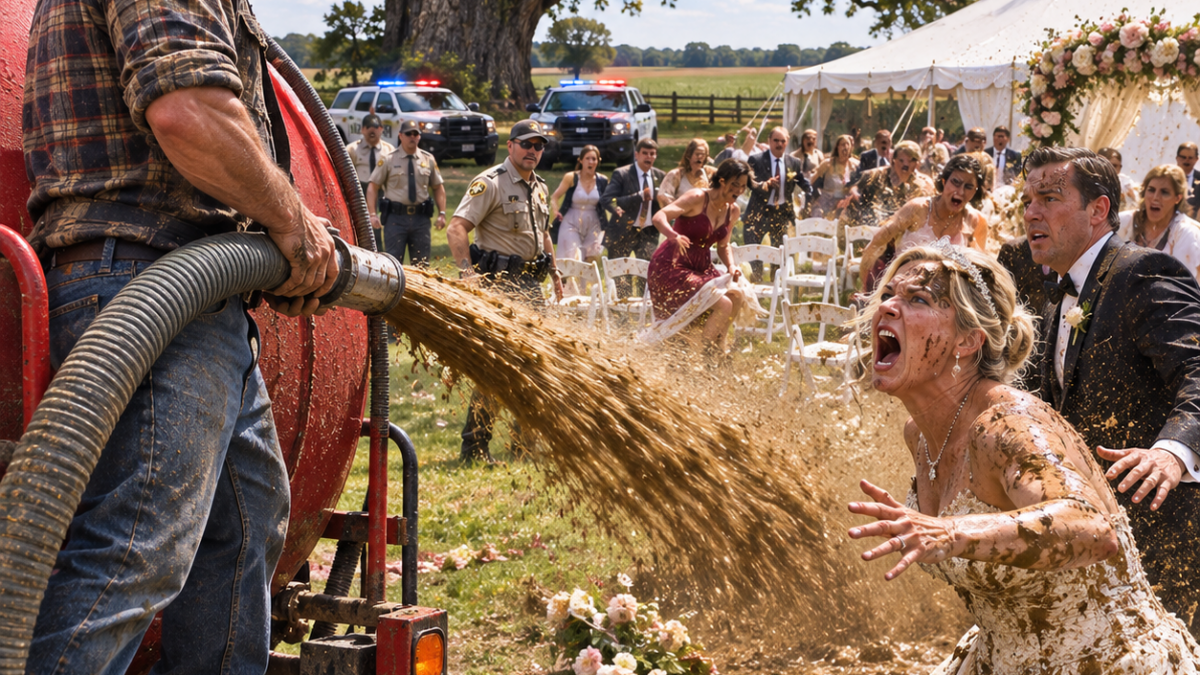
At exactly 2:14 on a Saturday afternoon, 150 wedding guests were scrambling off my east pasture in dresses and suits while two sheriff’s cruisers sat beside my fence and the bride screamed that I was ruining the most important day of her life.
She had spent months planning a wedding beneath the oak where I proposed to my late wife, forged my signature on an event permit dated the same day I buried Margaret, and even drove metal flower hooks into the tree that had carried our initials for thirty years.
What Brenda Whitlock never bothered to check was that the pasture she had stolen for her ceremony was still an active Ohio farm field—and according to my filed nutrient-management plan, four thousand gallons of manure were legally scheduled to be spread there that afternoon.
My name is Walter Harland.
Most people call me Walt.
I was fifty-four years old when an HOA president decided the prettiest part of my farm belonged to her because she wanted it badly enough.
I wish that sentence sounded more ridiculous than it actually was.
My family had farmed that land for ninety years.
Two hundred forty acres in western Ohio.
Corn.
Soybeans.
Hay.
A small dairy herd.
Nothing fancy.
My grandfather bought the first eighty acres during the Depression.
My father expanded it.
I added the rest after Margaret and I married.
By the time this happened, I knew nearly every drainage ditch, fence post, tile line, and bad patch of soil by memory.
Farmers do that.
You stop seeing acreage as numbers.
That low ground near the creek?
Too wet after heavy rain.
South forty?
Best corn.
Hill behind the machine shed?
Dries fast in spring.
East pasture?
Margaret.
That was hers.
Not legally.
Legally, all of it was mine.
PART2:
Emotionally, the east pasture belonged to the two of us.
There was an oak near the center.
Huge.
Older than the farmhouse.
Probably older than my grandfather.
Thirty years before all this, I had taken Margaret beneath that tree with a picnic basket and a ring I could barely afford.
I had planned a speech.
Forgot every word.
She looked at me and said:
“Are you going to ask me something or kneel there until your pants get dirty?”
So I asked.
She laughed.
Then cried.
Then said yes.
A year later, we carved our initials into a low section of bark.
W + M.
I know now arborists hate people carving trees.
We were twenty-four.
Forgive us.
The oak survived.
So did the initials.
Marriage.
Two children.
Bad harvests.
Good harvests.
PART3:
My father’s funeral.
Her mother’s funeral.
College bills.
One kitchen fire.
Two tractors I should never have bought.
And eventually cancer.
Margaret died two years before Brenda’s wedding.
Pancreatic.
Eight months from diagnosis to funeral.
People tell you grief changes with time.
That is true.
They often forget to mention that time also changes around grief.
The first month lasted three years.
The next year disappeared.
I kept farming because cows do not care whether you are grieving.
Corn still needs planting.
Equipment still breaks.
Bills arrive.
Life is rude that way.
Every Sunday evening after Margaret died, I carried coffee to the oak.
Sat beneath it.
Sometimes talked to her.
Sometimes didn’t.
Nobody knew.
Not my children.
Not neighbors.
Certainly not Brenda Whitlock.
That privacy became important later.
Three years before Margaret died, a developer bought land along my eastern boundary.
He built Maple Ridge Estates.
One hundred seventy-two houses.
Decorative stone entrance.
Curved streets.
Identical black mailboxes.
Perfect lawns.
Community pool.
Walking trails.
Most of the residents were decent people.
They knew they had bought homes beside a working farm.
Some even liked it.
Kids waved at combines.
Parents bought sweet corn from me in summer.
One family brought their son over every spring just to watch calves.
I had no problem with Maple Ridge.
My farm had been there first.
Their houses came later.
People adapted.
Then Brenda Whitlock became HOA president.
Brenda was fifty-seven.
Blond hair.
Sharp blue eyes.
Always wearing a blazer.
Always carrying a clipboard.
She had the kind of smile that looked friendly until you disagreed with her.
The first letter came three weeks after her election.
Pink paper.
FRIENDLY COMMUNITY NOTICE.
It informed me that “agricultural odors originating from adjacent property” were negatively affecting residents’ outdoor enjoyment.
I read it.
Pinned it above the workbench.
The second letter complained about tractor noise before seven in the morning.
Third:
Rooster.
Fourth:
Dust.
Fifth:
Appearance of farm equipment visible from Meadow Lane.
That one was my favorite.
My tractor was apparently offensive because people could see it from their houses.
I never answered.
For one simple reason.
I was not in Maple Ridge’s HOA.
Never had been.
The subdivision ended at my fence.
Ohio law also protects normal agricultural operations under various right-to-farm principles and local agricultural protections when properly conducted.
Brenda’s bylaws could regulate Maple Ridge.
They could not turn my farm into an extension of their landscaping committee.
Eventually Brenda stopped writing.
She came herself.
Tuesday afternoon.
White SUV.
Cream blazer.
Clipboard.
I was repairing a planter in the machine shed.
She walked straight down my driveway.
No call.
No appointment.
“Mr. Harland.”
“Walt.”
She looked around.
“Do you have a minute?”
“Already using it.”
She ignored that.
“We’ve received numerous complaints.”
“About?”
“The condition of your property.”
I looked around.
“Which condition?”
“General appearance.”
“It’s a farm.”
“I understand.”
“You don’t sound like you do.”
Her smile thinned.
“Property values in Maple Ridge are significant.”
“So is my property.”
“Your operations affect ours.”
“And your houses affect my deer population.”
That confused her.
I continued working.
She said:
“I’m asking for cooperation.”
“With what?”
“Reduced early-morning equipment use.”
“No.”
“Improved screening.”
“No.”
“Odor mitigation.”
I looked at her.
“Tell the cows.”
Her face hardened.
“This attitude is exactly why people are frustrated.”
“Brenda.”
She blinked.
“You built houses next to a farm.”
“I didn’t build them.”
“Your residents bought next to one.”
“That doesn’t mean you can ignore reasonable community standards.”
“They’re not my community standards.”
She stepped closer.
“Everything changes eventually, Walt.”
“Corn still grows the same.”
“I always get what I want.”
That sentence.
She said it quietly.
Almost pleasantly.
“You’ll see.”
Then she walked back to her SUV.
I remember watching her leave.
Thinking:
What a strange woman.
Then I went back to the planter.
That was mistake number one.
I should have treated the sentence as a warning.
For months, nothing happened.
Then September came.
Harvest approaching.
Margaret’s oak beginning to turn.
One afternoon, I saw three strangers standing in the east pasture.
One had a measuring wheel.
Another carried a drone.
The third took photographs of the oak.
I drove over in the side-by-side.
They saw me.
Immediately started packing equipment.
“Can I help you?”
No answer.
“What are you doing?”
One man said:
“Site measurements.”
“For who?”
Silence.
“Who gave you permission to be here?”
They climbed into a pickup.
Drove away.
No logo.
No explanation.
I took down the plate number.
Called the sheriff.
Deputy said they could document the complaint, but without more information there wasn’t much else yet.
I replaced the gate chain.
Added NO TRESPASSING signs.
Then, four days later, Dale Pruitt pulled into my driveway.
Dale was our volunteer fire chief.
We had known each other since high school.
He walked into the machine shed without saying hello.
That alone told me something was wrong.
“What?”
He removed his cap.
“My cousin owns Buckeye Tent and Event.”
“Okay.”
“They got a delivery next month.”
“Good for them.”
“Address is your east pasture.”
I stopped.
“What?”
“Wedding tent.”
I stared.
“Whose?”
Dale looked uncomfortable.
“Brenda Whitlock.”
I actually laughed.
He did not.
“You serious?”
“Yes.”
“That’s my field.”
“I know.”
“What date?”
“October eighteenth.”
I grabbed my phone.
Search.
Brenda Whitlock.
Trent Doway.
Wedding website.
There it was.
SATURDAY, OCTOBER 18.
CEREMONY — 2:00 P.M.
Reception to follow.
Venue:
HARLAND MEADOW.
I had never heard of Harland Meadow.
Apparently I owned it.
The website featured a photograph.
Margaret’s oak.
Taken from the south.
Golden evening light.
Someone had edited out my fence.
Caption:
A private countryside ceremony beneath a historic Ohio oak.
One hundred fifty guests.
Parking instructions.
Shuttle details.
Dress code.
I stared so long Dale touched my shoulder.
“Walt.”
“They named my field.”
“I know.”
“They invented a venue.”
“I know.”
I drove to Brenda’s house.
Not called.
Drove.
Knocked.
She opened the door holding coffee.
Smiled.
“Walt.”
“You’re holding a wedding on my land.”
No surprise.
That told me everything.
She leaned against the doorway.
“We’ve already discussed access.”
“No, we haven’t.”
“You agreed months ago.”
“No.”
She smiled.
“Come inside.”
I should not have.
I did.
She walked to a desk.
Opened a folder.
Placed one sheet in front of me.
TEMPORARY EVENT LAND USE AUTHORIZATION.
Property:
Harland East Meadow.
Event:
Private wedding.
Owner authorization:
Walter J. Harland.
Signature at bottom.
Mine.
Or something close enough that I felt physically sick.
I know my signature.
This looked like it.
A little too clean.
But close.
Notarized.
Then I saw the date.
March 6.
Two years earlier.
I stared.
March 6.
Margaret’s funeral.
I read it again.
Brenda watched me.
“What’s wrong?”
I looked up.
“You picked the wrong date.”
“What?”
“I buried my wife that day.”
Her expression barely changed.
“That doesn’t prove anything.”
“I never signed this.”
“It’s notarized.”
“I was at Greenlawn Cemetery.”
“You could have signed before or after.”
“No.”
“You’ll have to prove that.”
I stared.
She continued:
“A judge is going to believe a notarized document over a grieving widower trying to change his mind.”
There are sentences that make you angry.
Then there are sentences that empty anger out and replace it with something colder.
This was the second kind.
I picked up the paper.
She pulled it away.
“Copy only.”
“Who notarized it?”
“Everything is valid.”
“That wasn’t my question.”
She smiled again.
“See you at the wedding.”
I left.
Called Ruth Okafor.
Ruth was an agricultural and property attorney in Columbus.
I had used her twice before.
Once for a drainage dispute.
Once for a land contract.
She arrived at my farm the next morning.
Read the event permit.
Looked at the signature.
The notary.
The date.
Then said:
“This is probably forgery.”
“Probably?”
“I’m your lawyer. I don’t get to say definitely because I’m angry.”
“I’m definitely angry.”
“I noticed.”
“How fast can we stop it?”
“When is wedding?”
“Saturday.”
She looked at her calendar.
“Four days.”
“That’s why she waited.”
Ruth nodded.
“Likely.”
“Can we get a judge?”
“We can try.”
“What about sheriff?”
“Forgery investigation can begin.”
“But stopping the event?”
“We need court relief or clear enough evidence that law enforcement is comfortable treating them as trespassers.”
I hated that answer.
Ruth sent a cease-and-desist immediately.
Certified email.
Hand delivery.
Deputy Mike Callahan accompanied service because tension was obvious.
Brenda read the letter on her porch.
Then tore it in half.
In front of Mike.
He later told me:
“That was unnecessarily theatrical.”
I asked:
“Can you stop her?”
“Not from planning.”
“What if she comes onto the property?”
“If you clearly revoke any claimed consent and they enter anyway, document it. Call us.”
“She has a forged permit.”
“Ruth’s challenging it.”
“And until a judge rules?”
Mike sighed.
“Some of this is civil until it isn’t.”
That phrase made me furious.
Not at Mike.
At the situation.
Thursday morning, trucks arrived.
Tent company.
Rental company.
Florist.
Portable restroom service.
They came through my east gate because somebody had cut my new chain.
I called the sheriff.
Mike arrived.
So did Ruth.
We informed every contractor that I disputed the permit and did not consent to their presence.
Most stopped.
Then Brenda arrived with her attorney on speakerphone and insisted the permit remained valid until invalidated.
Contractors became nervous.
Some left.
Some waited.
Then Mike noticed the cut chain.
That got documented.
The setup proceeded unevenly while Ruth pushed for an emergency hearing.
I felt like a stranger on my own property.
White chairs appeared.
Tables.
Tent framing.
Electrical cords.
Decorative lanterns.
Then I saw the oak.
Metal hooks.
Driven into the bark.
Three on one side.
Two on another.
Supporting floral wire.
One had been hammered less than six inches from our initials.
W + M.
I walked toward it.
Put my hand against the bark.
Fresh wounds.
Light wood exposed.
A little sap.
The field disappeared.
The wedding disappeared.
Everything disappeared except Margaret.
Standing there thirty years earlier.
Laughing because I forgot my speech.
Cancer.
Hospital.
Her hand getting smaller inside mine.
The funeral.
Empty house.
Sunday coffee.
All of it came back at once.
I touched the damaged bark.
Then I cried.
No dramatic collapse.
No yelling.
Just tears.
Dale stood behind me.
He said nothing for a while.
Then put one hand on my shoulder.
“Walt.”
“They nailed into her tree.”
“I know.”
“She didn’t even ask.”
“I know.”
I wiped my face.
“I want all of it gone.”
“Then do it right.”
I looked at him.
“Do it by the book.”
That mattered.
Because anger offers simple solutions.
A tractor could have flattened every chair.
My loader could have carried the tent to the road.
I could have chained their trucks to my dozer.
All bad ideas.
All satisfying for approximately thirty seconds.
Then expensive.
Maybe criminal.
Maybe dangerous.
Margaret would have hated every one.
So I waited.
That night, sleep never came.
At 2:48 a.m., I got up.
Pulled on boots.
Walked toward the manure lagoon.
The dairy generated more manure than anyone outside farming likes to think about.
We managed it under a nutrient-management plan.
Storage.
Application rates.
Fields.
Timing.
Weather.
Soil conditions.
Everything documented.
The lagoon was near capacity.
Fall application had been scheduled before freezing weather.
I went into the farm office.
Pulled the nutrient plan.
East pasture.
Application window:
Saturday.
Approximately 4,000 gallons in that section.
I stared.
Then checked the weather.
Dry.
No heavy rain forecast.
Ground conditions acceptable.
Field listed.
Rate compliant.
The application had been planned weeks before Brenda’s wedding setup.
I called Dale at 3:12.
He answered:
“Someone dying?”
“No.”
“Then why are you calling?”
“Manure.”
Silence.
“What?”
“I’m scheduled to spread east pasture Saturday.”
Longer silence.
Then:
“Walt.”
“Legally.”
“Walt.”
“Already filed.”
“I can hear you smiling.”
“I am not smiling.”
“You absolutely are.”
I called Ruth at seven.
She was less amused.
“Do not spray people.”
“I know.”
“Do not threaten to spray people.”
“I know.”
“Do not aim agricultural application at personal property for retaliation.”
“I know.”
“Do not say anything stupid on camera.”
“That one may be harder.”
“Walt.”
I laughed.
Then became serious.
“What can I do?”
“Continue lawful farming operations if they are genuinely scheduled and compliant.”
“They are.”
“Give clear notice.”
“How much?”
“As much as possible.”
“Post signs?”
“Yes.”
“Tell guests?”
“Yes.”
“Give reasonable time to leave?”
“Absolutely.”
“Sheriff?”
“Notify them.”
“Fire chief?”
“If you’re using that tanker, yes.”
The tanker was an old red fire engine I bought surplus and converted for manure and water handling.
Ugly.
Useful.
Dale had helped rebuild the pump.
Four thousand gallons behind the cab.
Not elegant.
Very effective.
Friday afternoon, we got good news.
The court scheduled an emergency review Saturday morning.
Bad news:
Not until 10:30.
Wedding at two.
Ruth believed we had strong evidence the permit was forged.
But until the judge acted, we had to keep documentation clean.
Saturday arrived.
Clear sky.
Fifty-nine degrees in the morning.
Low sixties by afternoon.
Perfect wedding weather.
Brenda must have thought God endorsed her venue.
At eight, vendors arrived.
At nine, florist.
At ten, caterer.
Guests started after noon.
Cars lined the road.
Women in dresses stepped carefully through grass.
Men complained about their shoes.
People took photographs beneath Margaret’s oak.
I stood at my gate.
Every person who entered heard the same thing.
“This is private active farmland.”
Some stopped.
“This event is disputed.”
More confusion.
“A nutrient application is scheduled for two o’clock.”
One woman stared.
“Manure?”
“Yes, ma’am.”
She turned toward her husband.
“We’re leaving.”
Others called Brenda.
She told them I was bluffing.
I posted signs:
ACTIVE AGRICULTURAL FIELD
SCHEDULED NUTRIENT APPLICATION — 2:00 P.M.
PRIVATE PROPERTY
LANDOWNER HAS NOT CONSENTED TO EVENT USE
Every twenty yards.
Brenda started removing them.
I replaced them.
She tore one down in front of Mike Callahan after he arrived.
He picked it up.
Put it back.
“Leave those.”
“He’s harassing my guests.”
“He’s notifying them.”
“He cannot spread manure during a wedding.”
Mike looked at me.
“Walt?”
I handed him the nutrient plan.
Application records.
Field map.
Weather log.
Ruth’s letter.
Pending court filing.
Mike read.
Then looked at Brenda.
“He can conduct lawful agricultural work on his farm.”
“This isn’t a farm today.”
I laughed.
That was perhaps the dumbest thing she ever said.
“What?”
She pointed toward the tent.
“This is an event venue.”
I said:
“No.”
She ignored me.
“It has been converted for temporary private use.”
Mike looked around at the cows visible across the fence.
“Ma’am.”
She folded her arms.
“Arrest him if he tries.”
“For farming?”
“For threatening people with manure.”
Ruth had anticipated that.
I said:
“I am not spraying any person.”
Mike nodded.
“I heard him warn everyone to leave.”
Brenda’s voice rose.
“This is my wedding.”
“On his property.”
“I have a permit.”
“Under dispute.”
“It is notarized.”
Mike said:
“And investigators are looking at that.”
Her face changed.
Just a little.
Then Dale arrived.
Two volunteer firefighters.
Not to participate in anything.
Safety standby.
The red tanker rolled behind them.
Guests stared.
Someone started filming.
Of course.
Everything becomes content eventually.
I parked the tanker at the north end of the pasture.
No hose active.
No pressure.
Just parked.
Brenda marched over.
“You are not bringing that disgusting thing near my ceremony.”
“My field.”
“Not today.”
“Especially today.”
“Walt.”
I pointed at the sign.
“Two o’clock.”
“You wouldn’t dare.”
“Everyone has notice.”
“You are insane.”
“No.”
I looked at the oak.
“I’m done being polite.”
Then a black SUV arrived.
Trent Doway stepped out.
The groom.
Forty-something.
Tall.
Dark suit.
He looked confused more than angry.
He came toward us.
“Brenda.”
She turned.
“Everything’s fine.”
He pointed toward the signs.
“What is this?”
“Walt is upset.”
“Who is Walt?”
I raised a hand.
“Landowner.”
Trent looked at me.
Then Brenda.
“What?”
She grabbed his arm.
“He’s disputing an old agreement.”
“Old agreement?”
I pulled a copy from my folder.
Ruth had given me permission to show it.
“Event permit.”
Trent took it.
Read.
“Your signature?”
“Forged.”
Brenda snapped:
“Allegedly.”
I handed him another paper.
Margaret’s obituary.
Funeral date highlighted.
Trent compared dates.
His face changed.
“What am I looking at?”
I said:
“This permit says I signed away use of this field on the same day I buried my wife.”
Trent looked at Brenda.
“You told me you leased this venue.”
“I did.”
“You told me Harland Meadow belonged to the HOA.”
“It practically does.”
I laughed.
Trent did not.
“Practically?”
“It’s adjacent common landscape.”
“No, it isn’t.”
I pointed toward the fence.
“Maple Ridge ends there.”
Trent turned back to her.
“You said the HOA owned the meadow.”
She lowered her voice.
“Can we not do this now?”
“When?”
“After the ceremony.”
He stared at her.
Then at Margaret’s oak.
“The tree?”
“My wife’s.”
He saw the initials.
The hooks.
Flower arch.
His face shifted again.
“You knew?”
Brenda grabbed his sleeve.
“Trent.”
He pulled away.
“What else did you lie about?”
“Nothing.”
He looked at me.
“Is any part of this venue ours?”
“No.”
That was when Trent became the first person in wedding clothes to act sensibly.
He turned toward the guests.
Raised his voice.
“Everybody.”
People looked.
“We need to leave the field.”
Brenda shouted:
“No!”
Trent ignored her.
“Please take your belongings and move to the parking area.”
The bridesmaids froze.
One asked:
“What’s happening?”
Trent said:
“This property isn’t ours.”
Brenda grabbed his arm again.
“You are humiliating me.”
He looked at her.
“You lied to me.”
Then Ruth called.
10:58 had become 1:17 before the judge issued the emergency order.
I answered.
“Walt.”
“Yes?”
“We got it.”
I closed my eyes.
“What exactly?”
“Temporary restraining order.”
“Event authorization likely invalid pending full hearing.”
“Possession?”
“Yours.”
“Removal?”
“The defendants and their invitees are ordered to leave your property.”
“Can you send it?”
“Already emailed Mike.”
I looked toward Deputy Callahan.
His phone buzzed.
He read.
Then walked toward Brenda.
“Ma’am.”
She saw his face.
“No.”
“This event has to leave the property.”
“You cannot do this.”
“Court order.”
“My wedding starts in forty minutes.”
“You need to move.”
“I have one hundred fifty guests.”
“Then you should start now.”
Chaos.
But controlled chaos.
Tables abandoned.
Guests carried purses.
Photographers packed.
Caterer rolled equipment away.
Bridesmaids cried.
Children treated it like an adventure.
Older relatives looked furious.
Mostly at Brenda.
Trent organized people toward the gravel parking area.
I walked the field with the bullhorn.
Not yelling.
“Please clear the active agricultural area.”
Again.
“Please remain outside the fenced pasture.”
Again.
“Application begins at two.”
Some guests hurried.
Others filmed.
By 1:52, almost everybody was beyond the fence.
Brenda remained beneath the oak.
Wedding dress now.
I had not seen her change.
White gown.
Mud around the hem.
She stood among empty chairs and flowers.
Trent was outside the fence.
Watching.
“Brenda.”
She ignored him.
Mike approached.
“Ma’am, you need to leave.”
She screamed:
“This is my wedding!”
Mike stayed calm.
“This is his field.”
“I paid for everything.”
“That doesn’t make the property yours.”
She pointed at me.
“He’s doing this to hurt me.”
I answered:
“No.”
She spun.
“You planned this!”
“The manure schedule was filed before your wedding.”
“You expect me to believe that?”
Mike held the paperwork.
“I’ve seen it.”
She looked at the tanker.
Then me.
“You wouldn’t dare.”
I glanced at Margaret’s oak.
Damaged bark.
Flowers wired against the trunk.
Thirty years of initials.
I said:
“Farm land.”
Then pointed at the signs.
“Farm rules.”
Maybe not my best line.
Dale still quotes it.
At 1:58, Mike escorted Brenda beyond the fence.
Not arrested.
Not dragged.
Simply made her comply with the court order.
Every person was now outside the application area.
At 2:00, I started the tanker.
Dale checked the safety perimeter.
No people.
No animals.
No vehicles inside the application zone.
At 2:07, we pressurized the spread system.
At 2:14, I opened the valve.
Four thousand gallons.
Not all in one explosive cinematic wave.
That is not how responsible manure application works.
But the first broad stream arced across the empty field exactly where rows of white chairs had been standing minutes before.
Brown liquid hit grass.
The smell arrived seconds later.
People outside the fence groaned.
Some laughed.
Some covered their noses.
I followed the planned application pattern.
Across the north section.
Turn.
Back south.
Controlled rate.
No runoff.
No spraying roads.
No targeting anybody.
Just a working farm doing exactly what its management plan said it would do.
The abandoned floral arch did not survive gracefully.
Neither did several decorations vendors had not removed.
I avoided the oak.
Completely.
Not one drop hit Margaret’s tree.
That mattered.
Brenda stood beyond the fence.
Wedding dress.
Face red.
She screamed:
“You ruined everything!”
I kept driving.
Trent stood twenty feet away from her.
He said nothing.
Dale watched from beside the fire truck.
I caught his shoulders moving.
“You laughing?”
“No.”
“You are.”
“Safety cough.”
“Sure.”
The manure smell spread across the east pasture.
Then across the edge of Maple Ridge.
Several residents later complained.
The new board politely informed them:
Normal agricultural operation.
I kept that letter.
But the wedding was only the beginning.
The forged permit mattered more.
The notary named on it was Elaine Whitlock.
Brenda’s cousin.
Elaine had an active commission.
That initially made the document look stronger.
Then investigators interviewed her.
Her story changed twice.
First:
She witnessed my signature.
Impossible.
Second:
Brenda brought a document supposedly already signed, and Elaine merely acknowledged it.
Also improper.
Then phone records showed Elaine had been at a resort in Kentucky on March 6.
Not Ohio.
The notarization was false too.
Investigators found my actual signature source later.
A farm-maintenance agreement I had signed years earlier with a contractor who also serviced Maple Ridge.
A scanned copy existed in HOA records.
Someone had lifted the signature.
Dropped it onto the fake event authorization.
The wedding website exposed another problem.
Brenda had not merely planned her own ceremony.
She had created “Harland Meadow” as an event venue months earlier.
Marketing photos.
Packages.
Pricing.
I found three prior inquiries.
Two deposits.
She had apparently planned to use my pasture for future events too.
Without telling me.
Why?
Money.
The HOA had been struggling financially after clubhouse repairs.
Brenda decided the meadow could generate event income.
Except the meadow was not theirs.
So she solved the ownership problem with paperwork.
Fake paperwork.
The full hearing came two weeks later.
Judge Rebecca Sloan.
Ruth presented:
My deed.
County parcel map.
Farm-use records.
Cease-and-desist.
Court notice.
Funeral documentation.
Digital signature analysis.
Notary evidence.
Photographs of the oak damage.
Gate chain.
Wedding advertising.
Brenda’s lawyer tried to frame it as a misunderstanding over historic shared use.
The judge looked at the wedding website.
“Harland Meadow?”
“Yes, Your Honor.”
“Who created that name?”
Silence.
“Was there ever a recorded lease?”
“No.”
“Recorded easement?”
“No.”
“Purchase?”
“No.”
“Written permission from Mr. Harland?”
Only the forged permit.
Brenda’s attorney stopped relying on it quickly.
The judge confirmed what should have been obvious.
My pasture remained mine.
The HOA had no ownership.
No event rights.
No implied venue rights.
No authority to enter.
Then came the tree.
An arborist assessed the hook damage.
Fortunately, none of the penetrations were deep enough to threaten the oak.
We cleaned the wounds properly.
Removed metal.
Monitored infection.
The initials remained.
That was all I cared about.
Brenda faced investigation for forgery-related conduct, false notarization arrangements, trespass, and financial irregularities connected to the event deposits.
The HOA board suspended her immediately.
Emergency meeting.
Packed.
I attended only because Dale insisted.
Brenda sat in front.
No wedding dress.
No blazer either.
Gray sweater.
Looked smaller.
Board vice president opened.
“We need to discuss unauthorized use of private property.”
A resident interrupted:
“You mean Walt’s farm.”
“Yes.”
Another:
“Did HOA money pay for this wedding?”
Silence.
That question changed the meeting.
Financial records showed some event infrastructure had been billed through HOA “community beautification.”
Temporary lighting.
Site preparation.
Vegetation trimming.
Portable power.
Some wedding-related costs had been mixed with association expenses.
Not all.
Enough.
Residents became furious.
One woman stood.
“I paid dues for your flower arch?”
Brenda said:
“The improvements were intended for future community events.”
“On land we don’t own?”
No answer.
The board voted to remove her.
Overwhelming.
Her cousin Elaine surrendered her notary commission during the investigation and faced consequences of her own.
The criminal process took months.
No dramatic sentencing the following week.
Real cases never move that fast.
Brenda eventually accepted a plea arrangement involving restitution, fraud-related charges, and restrictions arising from the falsified document scheme.
The HOA settled my civil claims.
Fence damage.
Crop loss.
Tree treatment.
Legal costs.
Trespass.
Restoration.
The vendors mostly got paid through insurance and settlement funds after proving they had relied on Brenda’s representations.
That mattered to me.
The tent company had not known.
Florist had not known.
Caterer had not known.
Even most guests had not known.
They were embarrassed enough.
I did not want innocent people financially destroyed because Brenda lied.
Trent came to my farm about a month after the wedding.
Pickup.
No Brenda.
Flowers.
That felt strange.
He stood at my porch holding a bouquet.
“Mr. Harland.”
“Walt.”
“These aren’t for you.”
“Glad we cleared that up.”
He looked toward the east pasture.
“For Margaret.”
I stopped.
He had learned her name.
“I’m sorry.”
“You didn’t forge anything.”
“I should’ve checked.”
“Why would a groom run a title search on a wedding venue?”
He gave a tired laugh.
“Maybe I will next time.”
Next time.
That answered the question I had not asked.
“No wedding?”
He shook his head.
“We ended it.”
I nodded.
No satisfaction.
Just sadness.
Trent continued:
“I believed her.”
“Most people did.”
“She said the farm had been difficult for years.”
“I probably was.”
“She said you agreed and changed your mind because you hated the HOA.”
“I don’t hate the HOA.”
He looked surprised.
“I hate people telling me what I agreed to.”
He nodded.
Then:
“Can I put these by the tree?”
I looked at the flowers.
“No hooks.”
He actually laughed.
“No hooks.”
We walked out together.
He placed the bouquet beneath the oak.
Then saw the initials.
W + M.
“What was she like?”
That surprised me.
“Margaret?”
“Yes.”
I thought.
“Funniest person I knew.”
“Brenda told me you were bitter.”
I looked at him.
“Maybe I am.”
He shook his head.
“No.”
Then left.
That bouquet stayed under the oak until the petals dried.
I buried them near the roots.
Dale mocked me.
“You getting sentimental?”
“Go inspect a hydrant.”
He laughed.
After the case, neighbors from Maple Ridge did something I did not expect.
They came over.
Not all.
Maybe forty.
Work gloves.
Shovels.
One Saturday morning.
I walked outside and found them repairing fence line.
“What are you doing?”
A woman named Melissa Reed said:
“Fixing what our HOA damaged.”
“It isn’t your fault.”
“We know.”
“Then go home.”
“No.”
I looked at Dale.
He was unloading lumber.
“You organized this?”
“Maybe.”
“Traitor.”
We repaired the gate.
Reseeded worn areas.
Removed event debris.
The firefighters helped build a bench from white oak boards.
They placed it beneath Margaret’s tree.
Simple.
Heavy.
No plaque.
I liked that.
The first Sunday after it was installed, I carried coffee out.
Sat.
For the first time in months, I did not see the wedding.
Didn’t see chairs.
Didn’t see Brenda.
Didn’t see damaged bark.
Just Margaret.
At least the version of her in my memory.
Twenty-four.
Laughing.
Asking whether I planned to kneel forever.
I said:
“You would’ve hated all that.”
Wind.
Leaves.
Nothing else.
Then:
“You would’ve liked the manure part.”
I could almost hear her laughing.
The HOA changed after Brenda.
New president.
Elected openly.
A man named Howard Klein.
Retired high-school principal.
His first action involving my farm was to walk over and introduce himself.
“Mr. Harland.”
“Walt.”
“I want to make something clear.”
“What?”
“We know your farm is not subject to our covenants.”
“That’s a strong start.”
He smiled.
“If residents complain about normal farm operations, we’ll remind them where they live.”
“I like you.”
“Let’s not move too fast.”
Fair.
He also asked if I would allow an educational farm day for neighborhood children.
Notice the word:
Asked.
I said yes.
Once a year, twenty or thirty kids visit.
Cows.
Tractor.
Corn.
Safety talk.
No weddings.
Absolutely no weddings.
One little girl asked:
“Is this the poop truck?”
Her mother turned red.
I said:
“Yes.”
Best part of the tour.
The red tanker became famous locally.
People called it the Wedding Wagon.
I hated that.
Dale had WEDDING WAGON printed on a magnetic sign and stuck it to the side during my birthday.
I removed it.
He put it back.
I removed it again.
He welded a bracket.
I threatened his fire department budget.
I have no authority over his budget.
He knew that.
The internet version of the story became ridiculous.
People claimed I sprayed the bride.
False.
Claimed guests were covered head to toe.
False.
Claimed police helped.
Definitely false.
Claimed I pumped manure directly through the wedding tent while people were eating.
Never happened.
Reality was already satisfying enough.
Everybody received warning.
Court ordered them off the land.
People cleared the field.
Then I performed a lawful agricultural application on my property according to an existing plan.
Did I enjoy the timing?
Yes.
I am not going to lie.
But I did not endanger people.
That distinction matters.
Anger does not give you a license to hurt someone.
Property rights do not turn revenge into law.
The thing that beat Brenda was never manure.
It was paperwork.
Deed.
Parcel map.
Funeral records.
Phone data.
Forensic document evidence.
Notary records.
Court order.
The tanker was merely punctuation.
That is less cinematic.
More important.
Brenda thought the fake permit gave her power because it looked official.
She had a signature.
Notary stamp.
Date.
Event website.
Vendors.
Guests.
Money spent.
By Saturday afternoon, she thought reality itself had shifted to accommodate her.
She had chairs.
Therefore venue.
Tent.
Therefore venue.
Bride.
Therefore wedding.
One hundred fifty guests.
Therefore nobody would dare stop her.
She was counting on the same principle people use when they build something illegally:
Surely nobody will undo it once it becomes inconvenient enough.
That was her mistake.
An inconvenience does not become a right merely because it is expensive.
A wedding does not become legal because guests have arrived.
A forged signature does not become real because a florist decorated around it.
And a farm does not stop being a farm because somebody puts white chairs in the grass.
That last part seemed hardest for her to understand.
After everything ended, I returned to normal spreading.
Planting.
Harvest.
Winter maintenance.
The smell remained.
Rooster still crowed.
Tractors still started early.
Maple Ridge somehow survived.
Property values did not collapse.
People did not flee because cows existed.
In fact, several residents later told me living beside an actual farm was why they bought there.
Imagine that.
Brenda had spent years trying to hide the thing other people considered part of the neighborhood’s charm.
That is another problem with control.
You begin assuming your preference is universal.
She hated manure smell.
Therefore everyone hated it.
She disliked tractor noise.
Therefore it was a nuisance.
She wanted an oak tree wedding.
Therefore the field must become a venue.
She never asked.
That was the pattern.
Never asked.
Told.
Directed.
Declared.
Signed for other people.
Eventually literally signed for me.
That is where arrogance becomes fraud.
The forged permit is still with my attorney’s archived case file.
I kept a copy.
Sometimes I look at the date.
March 6.
Margaret’s funeral.
That date used to hurt me.
Now it makes me angry in a quieter way.
Brenda selected it because she probably thought grief made the perfect cover.
Maybe she had found the obituary.
Maybe she assumed nobody would remember exactly what paperwork I might have signed that day.
But grief does strange things to memory.
I remember that day perfectly.
Cold rain.
Margaret’s sister wearing blue.
My son forgetting his umbrella.
The minister’s hands shaking.
Mud on my boots.
The sound of dirt hitting the casket.
I remember standing beside the grave until everybody else left.
I remember coming home.
Sitting in the kitchen without turning on a light.
I remember every minute.
I did not sign a wedding permit.
That is the terrible irony.
Brenda picked the one date I could prove emotionally before lawyers ever proved it digitally.
Years passed.
Margaret’s oak healed.
Trees are good at that if damage is limited.
The hook marks darkened.
Bark formed around them.
Our initials remain.
Less sharp now.
Still there.
The bench weathered silver.
I replaced one board last spring.
Dale sat beside me while I worked.
“You know what everybody gets wrong?”
“What?”
“They think the manure was the best part.”
“What was?”
I pointed toward the oak.
“This.”
He nodded.
“Tree surviving?”
“Yes.”
That was the part.
Not ruining a wedding.
Not exposing Brenda.
Not winning court.
Keeping something alive.
That tree mattered because Margaret had touched it.
Because thirty years of weather could not erase two letters.
Because Brenda tried to turn it into decoration and failed.
She saw a picturesque oak.
I saw a life.
That difference was everything.
A young couple from Maple Ridge once approached me years later.
Nervous.
I knew immediately what they wanted.
“Mr. Harland.”
“Walt.”
“We have a weird question.”
“No weddings.”
They laughed.
“Not exactly.”
The young man said:
“We want to get engaged.”
I looked at him.
“And?”
“She loves that tree.”
His girlfriend turned red.
“You want to propose under Margaret’s oak?”
“If that’s disrespectful, forget it.”
I looked toward the tree.
For a second, old anger surfaced.
Then something else.
Margaret would have said yes.
Not to him.
Hopefully.
To the idea.
I said:
“One condition.”
“What?”
“No nails.”
They laughed.
“Deal.”
He proposed there the following Sunday.
I stayed at the house.
Gave them privacy.
She said yes.
Later they left a small bouquet on the bench.
No wire.
No hooks.
Nothing attached to the tree.
Just flowers.
I sat there that evening.
Looked at them.
“See?”
I said to Margaret.
“People can ask.”
Wind moved through the leaves.
I smiled.
That became the lesson I cared about most.
Not law.
Not manure.
Not HOA politics.
Ask.
It is amazing how many disasters are prevented by one small question.
Can we use your field?
No.
Done.
Can we take pictures beneath your tree?
Maybe.
Can we hold a small ceremony?
No.
Can we propose?
Yes.
Consent simplifies things.
Brenda believed asking risked hearing no.
So she removed the question.
That created everything that followed.
The forgery.
Trespass.
Court.
Police.
Broken relationship.
Lost presidency.
Criminal case.
Destroyed wedding.
All because she preferred a fake yes to an honest no.
Farmers understand no better than most people.
Weather says no.
Soil says no.
Markets say no.
Machinery says no at extremely expensive times.
You adapt.
Brenda never learned to adapt.
She learned to override.
That works until you meet something bigger than your authority.
A deed.
A judge.
A boundary.
Or sometimes four thousand gallons of livestock manure listed in a nutrient plan.
I’m older now.
Still farm.
Less acreage personally.
My son handles more of the operation.
He hates that I still climb equipment.
I tell him he hated being told what to do when he was twenty.
He says:
“You’re seventy now.”
Technicality.
The Wedding Wagon finally retired.
Pump failed.
Tank rusted.
We replaced it with a newer spreader.
Dale held a funeral.
I did not attend.
He sent photographs.
Someone put white flowers on the hood.
I told him he needed hobbies.
He said:
“This is my hobby.”
Disturbing.
I kept one thing from the old tanker.
The valve handle.
Red.
Worn.
It hangs in the machine shed.
Underneath, Dale put a small wooden sign:
FARM RULES.
I left that one too.
Every October eighteenth, someone in my family makes a joke.
“Big anniversary.”
“Need flowers?”
“Book the meadow?”
I threaten disinheritance.
Nobody believes me.
The truth is, that day no longer feels like Brenda’s wedding.
That is probably the best ending.
Events lose power when ordinary life continues afterward.
Grass grew.
Cows grazed.
Leaves fell.
Snow covered the pasture.
Spring returned.
The oak budded.
Farm work continued.
Brenda’s giant disaster became one strange weekend in a ninety-year-old farm history.
That perspective helped.
Land outlives drama.
People arrive convinced everything revolves around them.
Then seasons move.
The field stays.
Sometimes I think about that moment at 2:14.
Not because of the smell.
Because of the silence immediately before I opened the valve.
Wedding gone.
Guests outside the fence.
Court order in Mike’s hand.
Dale checking the perimeter.
The oak standing alone among decorations.
I looked at it.
For a second, I almost canceled the whole application.
Not because Brenda deserved mercy.
Because I worried Margaret would think I had turned something sacred into revenge.
Then I remembered what Margaret actually believed.
She hated bullies.
She hated waste.
She hated pretension.
And she grew up on a farm.
She understood manure.
I think she would have told me:
“Spread the field, Walt. It needs nitrogen.”
So I did.
Legally.
Safely.
On schedule.
And with considerably more satisfaction than usual.
People sometimes tell me:
“You ruined her wedding.”
No.
Brenda ruined her wedding when she built it on a lie.
The manure only made leaving seem like an excellent idea.
What mattered happened before that.
A woman decided my grief could be used as cover.
She copied my signature.
Invented permission.
Turned my wife’s tree into wedding décor.
And assumed I would surrender because challenging her would be inconvenient.
She underestimated three things.
Records.
Farm law.
And how stubborn a widowed farmer can become when you put metal hooks into the tree where he proposed.
I never wanted revenge.
Not really.
I wanted the field back.
I wanted the hooks out.
I wanted Margaret’s initials left alone.
I wanted Brenda to learn that wanting something does not make it yours.
Years later, the oak is still there.
So are W + M.
The bark around them is thicker now.
The letters are less perfect.
That feels right.
Marriage was never perfect either.
Neither was grief.
Neither am I.
But the tree stayed.
Every Sunday evening, I still bring coffee.
Sit on the bench.
Sometimes Maple Ridge is quiet enough that I can hear cows chewing across the fence.
Sometimes children play.
Sometimes a mower runs.
Life.
Ordinary life.
The best kind.
And whenever somebody tells the story about the HOA president who tried to hold a wedding on my farm and got surprised by four thousand gallons of manure, they always laugh at the same part.
I usually laugh too.
But afterward, I look toward Margaret’s oak.
Because the manure was never the reason I stood my ground.
That tree was.
The field was.
The simple right to say:
This is mine.
You may ask.
You may not take.
And no amount of white chairs, flowers, notarized lies, or wedding guests can turn somebody else’s property into yours.
Sometimes justice arrives through a courtroom.
Sometimes it arrives through an audit.
And sometimes, after every warning has been given and every guest is safely behind the fence, justice smells exactly like a working Ohio farm.








