HOA Karen Crushed 60 Handmade Snow Globes on Christmas Eve—Then a Judge Ordered Her Personally to Pay $780,000
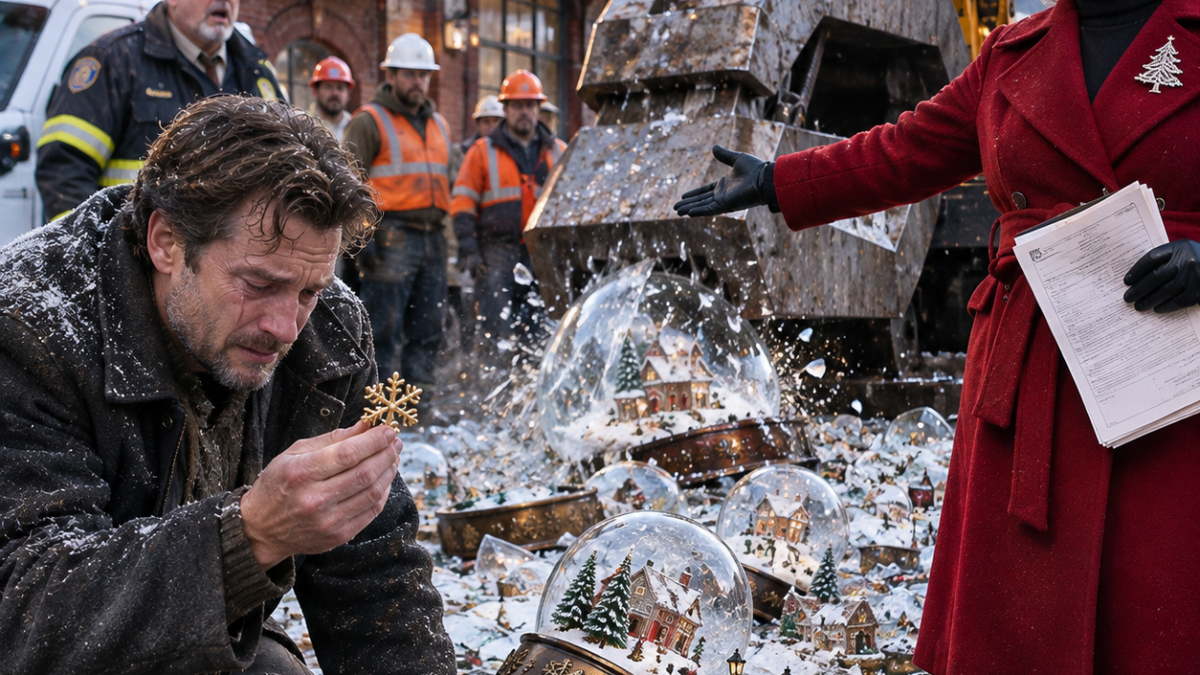
HOA Karen Crushed 60 Handmade Snow Globes on Christmas Eve—Then a Judge Ordered Her Personally to Pay $780,000.
At 7:14 on Christmas Eve, Thomas Brantley watched a hydraulic crusher turn eight years of his life into glittering shards while HOA President Karen Straoud stood in a red wool coat and calmly told him his “little snow globes” were gone for good.
Karen claimed the city had declared his sixty-piece Christmas exhibit hazardous, billed Thomas $18,400 for destroying his own artwork, and offered to erase the charge only if he signed away every right to sue her.
What she did not know was that Thomas had recorded her taking responsibility, the city inspector was already driving toward the scene, and the one brass snowflake Thomas pulled from the wreckage would eventually sit in a courtroom while a judge ordered Karen—not the HOA—to pay $780,000.
The first snow globe died with a sound Thomas Brantley would remember for the rest of his life.
Not a delicate crack.
Not the bright little pop people expected when glass broke.
It was a deep mechanical groan followed by a violent burst of glass, water, glycerin, brass, painted wood, and artificial snow beneath thousands of pounds of hydraulic pressure.
Inside that globe had been a miniature nineteenth-century railway station.
Thomas had spent nearly four months building it.
The station walls were walnut veneer no thicker than a playing card.
The clock face was hand-painted.
The benches were cast in bronze.
A tiny train moved around the platform when a brass crank beneath the base was turned.
At midnight on Christmas Eve, Thomas had intended to activate the mechanism for the first official audience.
Instead, at 7:14 that morning, a worker in an orange safety vest lifted the globe from its display cradle, carried it across the frozen loading apron of Hearthstone Arts Depot, and tipped it into the steel jaws of a mobile industrial crusher.
The train station folded inward.
Glass exploded across wet pavement.
The tiny bronze clock disappeared beneath twisting metal.
Thomas was twenty-five minutes away when it happened.
He was driving too fast.
He knew it.
His phone sat on speaker mode in the cup holder while Walter “Walt” Grady, the depot’s seventy-two-year-old night caretaker, spoke in a voice Thomas had never heard from him before.
“They’re breaking them.”
Thomas gripped the steering wheel.
“What?”
“The globes.”
“What do you mean breaking them?”
“There’s some kind of crusher out here.”
“Who?”
“People from the festival.”
“Walt, listen to me.”
PART2:
Thomas changed lanes hard enough that someone honked.
“Do not touch anything.”
“I tried stopping them.”
“Don’t.”
“Thomas—”
“Do not put yourself between those machines and anybody working them.”
Another crash came through the phone.
Thomas flinched.
“What was that?”
Walt did not answer immediately.
Then:
“One of the big ones.”
Thomas knew which.
There were only eleven large-format pieces in the collection.
Each nearly three feet high.
Each too heavy for one person to move safely.
“What are they saying?”
“They say the city ordered it.”
“That’s impossible.”
“There’s a woman here.”
“What woman?”
“Red coat.”
Thomas felt cold despite the heater blowing against his hands.
Karen.
He did not need Walt to say the name.
He knew.
“Karen Straoud?”
PART3:
“I think so.”
Thomas pressed harder on the accelerator.
The monitoring alert had reached his phone at 6:52.
UNSCHEDULED HEAVY EQUIPMENT DETECTED.
LOADING BAY ACCESS ACTIVATED.
He had assumed a delivery truck entered the wrong yard.
Then the depot security line connected and all he heard was glass breaking.
He had left his house without properly tying his boots.
He was still wearing the sweater he slept in beneath his winter coat.
He had forgotten gloves.
None of that mattered.
“Call the police.”
Walt said:
“I did.”
“Call Graham Sutter too.”
“The city inspector?”
“Yes.”
“Tell him someone is using his closure notice to destroy the exhibit.”
Another crash.
Thomas shut his eyes for half a second.
He saw the collection as it had looked the previous evening.
Sixty Winters.
Sixty separate worlds.
Eight years.
Not mass-produced Christmas decorations.
Not retail snow globes.
Sculptures.
Mechanical art built inside glass.
Thomas had started the first one when he was thirty-one.
He had not intended to make sixty.
The first was a gift for his mother after she developed cancer.
She loved old Christmas villages.
Instead of buying one, Thomas made a small winter street inside a glass dome.
Tiny bakery.
Two lampposts.
Snow-covered cobblestones.
When the base was wound, lights appeared one by one in the windows.
His mother kept it beside her bed through her final Christmas.
After she died, Thomas could not stop building.
One became five.
Five became twelve.
He began combining his professional restoration skills with miniature mechanical design.
Collectors noticed.
A gallery asked to show several.
A magazine wrote about him.
Eventually, the idea became a complete exhibition.
Sixty Winters.
Sixty interpretations of winter memory.
Factories.
Railways.
Village streets.
Lakes.
Workshops.
Churches.
An old movie theater.
A farmhouse during a snowstorm.
Each globe had a number.
Build journal.
Provenance record.
Independent appraisal.
Photographs documenting every stage from raw material to finished piece.
Thomas was not sentimental about documentation.
He was obsessive.
People sometimes teased him about it.
He photographed solder joints.
Saved receipts for specialized glass.
Logged the date every mechanism was tested.
Recorded shipping dimensions.
Maintained backups in three locations.
His mother once told him:
“You don’t trust anything to simply exist, do you?”
He had answered:
“Things break.”
That sentence returned to him now.
Things break.
But not like this.
He turned onto the access road leading toward Hearthstone Arts Depot.
The old railway station had been converted into an exhibition hall years earlier.
Brick walls.
Tall arched windows.
Original iron columns.
Loading yard behind it.
Next door and slightly uphill, Evergreen Terrace HOA had expanded its annual Christmas festival into a regional attraction.
Lights.
Food stalls.
Entertainment.
Sponsors.
VIP pavilion.
Artificial snow machines.
It had become large enough that people stopped calling it a neighborhood event.
Karen Straoud treated it like a corporation.
Thomas saw the trucks before he saw the crusher.
Three.
Then the orange arm rising.
Dropping.
Rising again.
He parked crookedly.
Left the door open.
Ran.
Frozen gravel slid beneath his boots.
“STOP!”
Nobody heard him at first.
The machine came down.
Another globe disappeared.
“STOP THE MACHINE!”
Workers turned.
Walt stood near the loading dock looking sick.
And there was Karen.
Tailored red wool coat.
Black gloves.
Silver pine-tree brooch.
Hair perfectly arranged.
She looked as though she had arrived for a Christmas-card photograph rather than the destruction of someone else’s property.
Thomas ran past her.
One worker lifted another globe.
“Put that down.”
The man froze.
Karen raised one gloved hand.
“Continue.”
The worker looked between them.
Thomas stepped forward.
“That is my property.”
Karen’s expression barely changed.
“It has been declared hazardous.”
“No.”
“It has.”
“The city issued a temporary closure.”
“Due to a chemical hazard caused by your exhibit.”
“You do not have demolition authority.”
Karen gave him a thin smile.
“Thomas, this discussion is over.”
Behind her, the crusher operator moved.
Thomas shouted:
“Shut it down.”
Karen said:
“Proceed.”
The jaws closed.
Glass burst.
Thomas stopped moving.
Something inside him went still.
Not calm.
The opposite.
A level of anger so intense that his body seemed to understand movement would be dangerous.
He looked around.
The pavement glittered.
Not beautifully.
Broken domes.
Twisted miniature buildings.
Bent mechanisms.
Shredded display bases.
Liquid spreading beneath the debris and turning to slush.
Sixty pieces.
Or nearly.
He counted what remained upright.
None.
It was over.
That realization hit harder than the sound.
He had arrived too late.
Karen stepped beside him.
“Your little snow globes are gone, Thomas.”
He looked at her.
“And the neighborhood is better without them.”
He did not answer.
He walked into the wreckage.
Carefully.
Glass crunched beneath his boots.
He saw part of a brass bridge.
A tiny painted roof.
The detached face of a miniature station clock.
Then something near the edge of the pavement caught light.
A brass snowflake.
Small.
Bent.
He crouched.
Picked it up.
Turned it over.
37 OF 60.
Last Train Home.
The globe Walt had described.
Thomas closed his hand around it.
Karen approached carrying papers.
She held one out.
“Official notice.”
Thomas took it.
EVERGREEN TERRACE HOA
EMERGENCY HAZARDOUS MATERIAL REMOVAL
Below:
Owner responsible for disposal and sanitation costs.
Thomas looked at the amount.
$18,400.
He almost laughed.
Instead, he slipped his phone farther out of his coat pocket.
The recording app was already running.
He had started it when Walt said Karen was present.
Not because Thomas expected a confession.
Because Thomas recorded disputes.
Calls.
Inspections.
Condition reports.
Habit.
Karen had always told him that obsession with records made him difficult.
Now he asked:
“Who authorized you to destroy private artwork?”
Karen answered instantly.
“I did.”
Thomas kept his eyes on her.
“You personally authorized the crusher?”
“Yes.”
“And you would do it again?”
Her chin rose.
“I would.”
The phone captured every word.
Thomas said:
“Why?”
“Because you refused to cooperate.”
There it was.
Not safety.
Not city orders.
Cooperate.
Karen continued:
“You were given an opportunity to remove this exhibit voluntarily.”
“I told you in writing no one could touch the collection.”
“And the city determined it was unsafe.”
“Temporary closure.”
She waved the distinction away.
“The result is the same.”
“No.”
Thomas looked toward the wreckage.
“It isn’t.”
A vehicle turned onto the access road.
White city SUV.
Karen saw it.
Her face changed.
Not much.
Enough.
The certainty disappeared.
She turned toward the workers.
“The emergency order required immediate hazard elimination.”
Her voice became louder.
Official.
“The contractor was instructed to ensure public safety.”
Thomas almost admired the speed of the transformation.
Almost.
The city SUV stopped.
Graham Sutter stepped out.
Fifty-one.
Broad shoulders.
Gray beard.
Heavy winter jacket with municipal inspection patch.
He took three steps.
Stopped.
Looked at the crusher.
Then at the debris.
Then at Karen.
No one spoke.
Even the workers seemed to realize something had gone wrong.
Graham finally said:
“Who told you my closure notice authorized demolition?”
Karen’s expression hardened.
“Your notice declared the area hazardous.”
“It suspended visitor access.”
“There was chemical contamination.”
“Which was being investigated.”
“The public was at risk.”
Graham pointed toward the crushed collection.
“Where does my order say destroy private property?”
Karen did not answer.
Thomas took out his phone.
Photographed the machine.
License plate.
Company name.
CALLAWAY INDUSTRIAL SERVICES.
He photographed the workers.
Work order folder.
Display cases.
That was another strange detail.
Every reinforced display case had been carefully opened.
Unlatched.
Moved aside.
Stacked neatly.
If this had truly been an emergency involving leaking chemical-filled artwork, why protect the empty cases before destroying the contents?
Thomas said nothing.
He photographed everything.
Police arrived next.
Questions.
Documents.
Arguments.
The crew manager was Reed Callaway.
Forty-three.
Lean.
Weathered hands.
He did not look like someone eager to be involved in an HOA feud.
When Graham said there was no demolition order, Reed removed his hard hat.
“You’re saying the city didn’t authorize this?”
“Correct.”
Reed looked toward Karen.
She said:
“You had a written work order.”
“I did.”
“Then follow it.”
Reed shook his head.
“The machine is done.”
Karen’s mouth tightened.
Thomas heard that.
Stored it.
Later, Reed would remember the exact moment his instincts told him the job was wrong.
That morning, however, nobody yet understood how wrong.
Nine days earlier, Hearthstone Arts Depot had smelled like fresh pine boards, dust, and warm electrical wiring.
Thomas was finishing installation.
Sixty Winters occupied the main hall.
Twenty globes along each side.
Twenty through the center.
Large pieces spaced near structural columns.
Lighting dim.
Individual spotlights illuminating the suspended flakes inside each dome.
When several mechanisms ran together, the room filled with tiny movement.
Train wheels.
Church bells.
Workshop lights.
A water wheel turning beneath false snow.
The exhibition opening was scheduled for Christmas Eve afternoon.
Not because Thomas loved spectacle.
Because Willowmere Cultural Trust believed the date would attract collectors, tourists, and foundation representatives already in the region for holiday events.
Revenue would support Thomas’s traveling exhibition and a craftsmanship preservation program.
Everything had been inspected.
Cases engineered.
Electrical systems approved.
Anti-vibration mounts tested.
The depot lease signed.
Insurance active.
Thomas had planned for everything he could imagine.
He had not planned for Karen Straoud wanting the collection.
Karen came during a pre-opening walkthrough.
Two HOA board members followed.
Thomas recognized her.
Everybody near Evergreen Terrace did.
Six years as HOA president.
Festival chair.
Community fundraiser.
Owner of a private event company called Straoud Holiday Productions—though Thomas did not yet understand how important that would become.
Karen moved between the globes with genuine interest.
Thomas could tell.
She understood presentation.
Maybe not construction.
But she understood commercial appeal.
She stopped at Winter Bridge.
Nearly three feet tall.
Miniature stone bridge crossing a silver river.
When the mechanism turned, lanterns illuminated one by one while a tiny sleigh crossed the far bank.
Karen said:
“This is extraordinary.”
Thomas thanked her.
“Move it to my festival.”
He thought she was joking.
She was not.
“The VIP pavilion opens the same night.”
“My exhibit opens here.”
“I know.”
“We can combine them.”
Thomas shook his head.
“The Cultural Trust contract is exclusive to this venue during the holiday exhibition.”
Karen smiled.
“Contracts can be amended.”
Then she produced a folder.
That told Thomas the conversation had been planned.
Inside was a proposal.
Straoud Holiday Productions would take control of:
Exhibition placement.
Ticketing.
VIP access.
Photography rights.
Seasonal image licensing.
Pricing.
Collector introductions.
Merchandise approvals.
Thomas read it twice.
Karen stood patiently.
“This could put your work in front of serious money.”
“My work already has buyers.”
“Not this level.”
“I’m not interested.”
“You haven’t negotiated.”
“I don’t need to.”
Her expression cooled.
Thomas handed the folder back.
“The collection stays here.”
Karen looked around.
“You realize the festival will bring several times the traffic this depot can.”
“Probably.”
“You’re turning down exposure.”
“I’m protecting control.”
Karen smiled without warmth.
“You may own the artwork.”
She stepped closer.
“But you don’t control what happens around it.”
Thomas remembered the sentence later.
At the time, it sounded petty.
Within forty-eight hours, a huge Evergreen Terrace Christmas Festival billboard appeared directly in front of Hearthstone’s public entrance.
Not technically on depot property.
Close enough to block much of the exhibition signage.
Thomas complained.
No response.
Then the HOA emailed him.
HOLIDAY SAFETY COMPLIANCE REVIEW.
The depot was not HOA property.
Karen knew it.
So she attacked the shared service lane.
Visitor flow.
Safety.
Chemical contents.
Electrical mechanisms.
Emergency access.
Thomas answered every complaint.
Fluid composition:
Purified water and pharmaceutical-grade glycerin.
Electrical safety report.
Reinforced case engineering.
Insurance.
Fire egress.
Weight loads.
Nothing failed.
City inspector Graham Sutter visited.
He examined everything.
“This is probably the safest Christmas display I’ve seen this year.”
Thomas said:
“Can I get that in writing?”
Graham laughed.
“You really do document everything.”
“Yes.”
Graham sent an email confirming no major concerns.
Thomas forwarded it to Karen.
Her reply:
NOTED.
Two nights later, Thomas saw workers moving an artificial snow machine near the loading bay.
Festival jackets.
Large wheeled unit.
Container hoses.
He watched through the rear glass.
Did not think much of it.
The festival had dozens of machines.
The shared service area was busy.
That detail almost disappeared from memory.
Three days before opening, Karen held an emergency HOA meeting.
Later, board members would testify that she claimed the snow-globe fluid could leak, create dangerous floors, and expose festival visitors.
Two board members objected.
Hearthstone was outside HOA jurisdiction.
Karen answered:
“The hazard can migrate.”
She began filing city complaints.
Repeatedly.
Graham returned.
Nothing.
Then, December 23.
A janitor found a pale liquid spreading across concrete near the loading bay.
Sharp odor.
Not normal water.
Graham arrived.
Thomas arrived.
The source was unclear.
Graham did what a competent inspector should.
Closed visitor access temporarily.
Clean the area.
Identify source.
Reinspection next morning.
Thomas accepted that.
Opening could be delayed.
Safety first.
He hired professional cleaners.
Requested laboratory testing.
Sent an email to every party:
No artwork may be moved, altered, or handled without Thomas Brantley’s written approval and trained art handlers.
Karen received it.
Opened it.
At 5:05 the next morning, someone used the loading access code.
Callaway Industrial arrived.
By 7:14, the collection was being crushed.
That was the sequence.
And the more Thomas looked at it, the less accidental it seemed.
Two days after Christmas, Karen sent him the $18,400 bill.
Attached:
SETTLEMENT AND RELEASE.
Sign a statement acknowledging the exhibit had been removed because of hazardous conditions.
Waive all claims.
HOA waives disposal invoice.
Thomas read it at his studio.
Then called Maris Pritchard.
Maris was forty-two.
Litigator.
Art and property disputes.
Quiet enough that people often underestimated how aggressively she was thinking.
She sat across from Thomas.
Read the notice.
Read the release.
Listened to the recording.
Then:
“Do you still have the original phone file?”
“Yes.”
“Backed up?”
“Three copies.”
“Good.”
“Security footage?”
“Cultural Trust has it.”
“Get a preservation request out today.”
“Contractor?”
“Also today.”
“HOA?”
“Yes.”
“City?”
“Yes.”
Thomas asked:
“Can she really bill me for destroying my property?”
Maris looked over her glasses.
“Anybody can send an invoice.”
“That doesn’t make it lawful.”
Thomas almost smiled.
Maris continued.
“From now on, do not argue publicly.”
“She’s telling everyone my work was dangerous.”
“I know.”
“She’s destroying my reputation.”
“Then we document that too.”
“She needs to be stopped.”
“She will be easier to stop if you don’t help her create a distraction.”
That became their rule.
No emotional public war.
Evidence.
They preserved the loading yard.
Photographs.
Measurements.
Samples.
Numbered fragments.
Every salvageable component.
Nadine Mercer joined the case as independent conservator.
Forty-seven.
Known for restoring antique mechanical art.
She spent two days in winter boots moving through debris.
Her conclusion was brutal.
Most works were total losses.
Handblown domes shattered beyond restoration.
Bronze mechanisms warped.
Wood components pulverized.
Gear trains twisted.
Several bases crushed so completely identification depended on serial fragments.
Thomas asked:
“Could I rebuild them?”
Nadine answered carefully.
“You can create new works.”
“That is not the same as restoring these.”
Then she pointed toward the display cases.
All intact.
Removed before destruction.
“That’s the part I can’t ignore.”
“What?”
“If workers genuinely believed these globes were leaking dangerous chemicals, they would not carefully open sixty protective cases, remove the objects, preserve the cases, then crush the contents.”
Thomas stared.
“It takes more work.”
“Exactly.”
“This wasn’t emergency disposal.”
“No.”
“It was planned destruction.”
Meanwhile Karen talked.
Chamber of Commerce.
Festival sponsors.
Neighborhood email.
She described Thomas as reckless.
Said he ignored safety.
Suggested his collection had threatened families.
Within two weeks, two future exhibition partners suspended negotiations.
One gallery wrote:
Pending clarification regarding safety and insurance concerns.
Thomas sat at his workbench reading it.
Eight years of art had been destroyed in minutes.
His next year was beginning to disappear too.
Then an envelope arrived.
No return address.
Inside:
A page from a presentation.
SILVERPINE GRAND HOTEL
SNOW GLASS NIGHTS
Luxury holiday experience.
Illuminated glass domes.
Miniature winter scenes.
Artificial snow.
At the top, handwritten:
FIND OUT WHAT KAREN PROMISED THE HOTEL.
Thomas stared.
He called Maris.
Then began researching.
Straoud Holiday Productions.
Karen’s private event company.
Separate entity from Evergreen Terrace HOA.
That distinction mattered.
Public filings showed Karen controlled it.
Silverpine Grand Hotel had hired Straoud Holiday Productions for its launch season.
Thomas contacted Daphne Ellery, the hotel’s general manager.
She initially refused to discuss the contract.
Thomas met her anyway.
Placed photographs of the destroyed collection on the conference table.
Not for manipulation.
Context.
Daphne’s face changed.
“What is this?”
“What Karen ordered destroyed on Christmas Eve.”
Daphne looked from photograph to photograph.
Thomas showed her the promotional slide.
“Did your hotel ask her to eliminate competing exhibitions?”
Daphne’s head snapped up.
“No.”
“Did she promise you none would operate nearby?”
Silence.
Then:
“She said Snow Glass Nights would be the only major winter-glass attraction operating in the district during opening season.”
Thomas leaned back.
“That promise was in writing?”
“I need counsel before I answer.”
“Fair.”
She called counsel.
The next meeting included lawyers.
Silverpine eventually produced documents voluntarily where appropriate.
Karen had indeed promised commercial exclusivity she did not control.
The hotel had never asked her to destroy anything.
Never asked her to pressure Hearthstone.
Never gave her legal authority.
Karen had made the guarantee to close a sponsorship agreement.
If Thomas’s exhibit opened, her promise became false.
Money was at risk.
Motive.
Maris said:
“Now we know why she cared.”
Thomas said:
“She offered to control my exhibit first.”
“And when you refused…”
“Paperwork.”
“Then closure.”
“Then crusher.”
Maris nodded.
“We still prove each link.”
That night Karen called Thomas.
Private number.
“Seventy-five thousand.”
Thomas almost laughed.
“For what?”
“Settlement.”
“Of what?”
“You stop this lawsuit.”
“Confidentiality.”
“You stop talking about me.”
“I haven’t been talking about you.”
“You’ve been talking to the hotel.”
Thomas said nothing.
Karen continued:
“You should understand when an opportunity is generous.”
“Is that what this is?”
“Take it.”
“No.”
Pause.
Then the warm tone vanished.
“You should have taken the money while I was offering it.”
Click.
Thomas saved the call log.
Wrote down the conversation.
One hour later, Nadine called.
“Thomas.”
“What?”
“The spill sample.”
He sat straighter.
“What about it?”
“It is not your globe fluid.”
Silence.
“Are you sure?”
“Your documented formula is purified water and glycerin.”
“Yes.”
“This contains dye compounds and additives.”
“What kind?”
“Commercial artificial snow solution.”
Thomas saw the workers again.
Festival jackets.
Snow machine.
Loading bay.
He went to Hearthstone the next morning.
Pulled camera archives.
Hours.
Frame by frame.
At 2:00 a.m. December 23, a festival contractor van stopped near the logistics area.
Two workers unloaded equipment.
Large container.
Stayed eleven minutes.
Camera did not show anyone pouring anything.
Thomas wanted certainty.
Maris refused to let him turn suspicion into a claim they could not prove.
“We know the spill composition.”
“We know their equipment was there.”
“We do not know who caused the spill.”
“Yet.”
Preservation demands.
Equipment logs.
Chemical inventory.
Shift schedules.
A technician eventually confirmed event equipment had been staged in that area despite official plans placing it elsewhere.
He would not say who spilled anything.
He had not seen it.
That honesty helped.
Maris told Thomas:
“We do not need to prove the spill was fabricated to prove unauthorized destruction.”
“But if it was—”
“It shows how far they may have gone.”
“May.”
“Yes.”
“Use that word.”
Thomas hated legal caution.
Then learned why it mattered.
Karen exaggerated.
Maris did not.
Over time, credibility becomes cumulative.
Then came the preservation emergency.
Electronic records at Straoud Holiday Productions were nearing automatic deletion.
Routine policy.
Not necessarily sinister.
Still dangerous.
Maris filed quickly.
Court ordered preservation.
Emails.
Contracts.
Dispatch logs.
Work orders.
Access records.
Internal messages.
Nothing relevant deleted.
Karen called it harassment.
HOA board began asking questions.
Treasurer Lydia Fenwick had avoided conflict with Karen for six years.
Not anymore.
At a board meeting, she asked:
“Where is the resolution authorizing destruction?”
Karen said:
“Emergency authority.”
“Where is it in the bylaws?”
“We had a public safety obligation.”
“Where are the minutes?”
Karen changed subject.
Lydia repeated:
“Where are the minutes?”
There were none.
Then Reed Callaway produced records.
His company did not want liability for a destruction order they believed had been authorized.
Subpoena.
Contract.
Dispatch notes.
Recorded confirmation logs.
One field supervisor had asked before beginning:
“Are these HOA-owned materials?”
Dispatch called client.
Client answered.
Authority confirmed.
Proceed with destruction.
Maris called Thomas one evening.
“We found the actual customer.”
“The HOA?”
“No.”
Thomas stopped.
“Who?”
“Straoud Holiday Productions.”
Karen’s company.
The contract was unambiguous.
CLIENT:
STRAOUD HOLIDAY PRODUCTIONS.
WORK DESCRIPTION:
Remove decorative materials no longer permitted on site.
DESTROY BEFORE EVENT COMMENCEMENT.
Electronic signature:
KAREN STRAOUD.
The contractor’s coordinator questioned ownership.
Karen personally confirmed she had authority.
Thomas’s written objection from the night before existed.
Records showed she opened the email.
That was the center of the case.
Karen had not misunderstood.
She had not watched a contractor exceed instructions.
She had ordered destruction through her private company while using her HOA title and a city safety notice to make it appear official.
The structure she created as protection became evidence against her.
Lydia called a special HOA session.
Board members reviewed the contract.
Silence.
One director said:
“This wasn’t us.”
Karen replied:
“I acted as president.”
The HOA attorney said:
“You contracted through a private company.”
“I was protecting association interests.”
“That does not make the contract an HOA act.”
“Then the association will indemnify me.”
The attorney paused.
“Intentional unauthorized destruction may not be covered.”
That was when Karen understood the financial danger personally.
She had assumed homeowners would absorb it.
Insurance.
Reserve fund.
Association counsel.
Instead, the paperwork pointed back to her.
Straoud Holiday Productions.
Her signature.
Her instruction.
Karen offered $175,000.
Installments.
Confidentiality.
Dismissal.
Seal records.
Thomas nearly accepted.
He was tired.
His studio still contained boxes of broken components.
Every legal meeting pulled him away from new work.
His savings were being consumed.
The collection was gone.
No judgment would recreate eight years.
Maris did not tell him what to do.
She showed numbers.
Independent pre-loss appraisals.
Exhibition contracts.
Equipment value.
Lost profit.
Cleanup.
Professional assessments.
“Settlement is not cowardice.”
She said.
“If you want this over, take it.”
Thomas looked at the brass snowflake.
37 OF 60.
“What would you do?”
“I’m your lawyer.”
“That is not an answer.”
“It is the correct one.”
Thomas smiled faintly.
Then:
“If I accept, she buys silence for less than the documented loss.”
“Yes.”
“Does she admit anything?”
“No.”
“Then no.”
Eight months after Christmas Eve, trial began.
Judge Judith Waverly.
Sixty-one.
Silver hair.
No patience for performance.
Karen entered in charcoal.
Thomas entered carrying one small wooden evidence box.
Maris’s opening was restrained.
“This case is about authority.”
“Ownership.”
“And documented loss.”
No dramatic video first.
No tears.
Graham Sutter testified.
Temporary closure.
No demolition.
No destruction authorization.
No authority given to HOA.
Karen’s emergency defense weakened immediately.
Nadine testified.
Fluid mismatch.
Conservator assessment.
Display cases deliberately opened.
The defense emphasized no one saw anybody deliberately create the spill.
Maris conceded that.
“Yes.”
“No eyewitness observed the liquid being poured.”
Then:
“And does Mr. Brantley need to prove who created the puddle in order to establish who ordered sixty artworks destroyed?”
“No.”
That kept the trial focused.
Reed Callaway testified next.
Contract.
Client.
Work description.
Dispatch concern.
Karen’s confirmation.
The log was admitted.
Karen’s attorney called it a misunderstanding.
Maris displayed Thomas’s email.
Every artifact remains privately owned.
No authorization to move or destroy.
Received.
Opened.
Karen’s misunderstanding defense narrowed to almost nothing.
Then value.
This was where Karen expected victory.
Snow globes.
She had called them that from the beginning because the phrase sounded cheap.
Tourist souvenirs.
Gift-shop objects.
Maris used Karen’s phrase against her.
“If these were worthless decorations, why did Straoud Holiday Productions first seek exclusive control over their exhibition?”
Karen’s attorney objected.
The contract came in through proper foundation.
Rights.
Pricing.
Image use.
VIP display.
Commercial interest.
Then independent appraisals dated before conflict.
Not created for litigation.
That mattered.
Certificates.
Build journals.
Photographs.
Collector offers.
Traveling exhibition documentation.
Thomas testified.
He described construction.
Materials.
Hours.
Design.
Not emotionally at first.
Technically.
Then Maris asked:
“Did you bring anything from the destroyed collection?”
Thomas opened the small wooden box.
Brass snowflake.
37 OF 60.
Judge Waverly looked.
Thomas held it carefully.
“This was mounted at the top of Last Train Home.”
“What was that piece?”
He described it.
Sleeping mountain town.
Passenger car.
Hand crank.
Station lights.
Brass snowflake.
“How long did it take?”
“Four months.”
“Can you make another?”
“I can make a new piece.”
“Can you restore the destroyed original?”
“No.”
Karen’s attorney stood for cross.
“You never sold Last Train Home, correct?”
“Correct.”
“So its value is hypothetical.”
“No.”
“Did anyone pay you the appraised amount?”
“The collection was not offered for individual sale.”
“So no.”
“No completed sale.”
The attorney smiled slightly.
“Then isn’t the appraisal simply an opinion?”
Thomas answered:
“Professional valuation is an opinion supported by evidence.”
The attorney did not expect that phrasing.
“You’re not an appraiser.”
“No.”
Maris later introduced three written pre-incident collector offers.
Within appraisal ranges.
Independent market interest.
The defense shifted.
Could Thomas rebuild them?
Thomas said:
“Making something new does not return what was destroyed.”
Nadine confirmed.
One-of-a-kind work.
Originality.
Provenance.
Labor.
Market evidence.
Then damages.
Artwork:
$612,000.
Display systems and reinforced cases:
$88,000.
Cleanup and mandatory remediation:
$22,000.
Lost net profit from signed contracts, calculated separately:
$58,000.
Total:
$780,000.
No emotional-distress number.
No punitive fantasy added into this calculation.
Proven losses.
Karen took the stand.
That was where her own temperament hurt her.
She began controlled.
Safety.
Public responsibility.
Urgency.
Then Maris asked:
“If safety was your sole concern, why did your private company seek commercial control of the collection nine days earlier?”
Karen:
“Because cooperation would have solved the issue.”
“What safety issue existed then?”
“The size and fragility.”
“The city had already inspected the installation.”
“Standards can change.”
“Did you tell Silverpine Grand there would be no competing winter-glass exhibition?”
Karen paused.
“Commercial discussions are complex.”
“Yes or no.”
“My company presented an exclusivity concept.”
“Did you have authority to guarantee Thomas Brantley would not exhibit at Hearthstone?”
“I believed the matter could be resolved.”
“How?”
Karen’s attorney objected.
Overruled.
Karen said:
“Through negotiation.”
“When Mr. Brantley declined?”
“We pursued safety review.”
“When the safety review found the exhibit compliant?”
“Then the spill occurred.”
“And after a temporary closure, you ordered destruction.”
Karen’s voice sharpened.
“I acted to protect people.”
Maris placed the work order before her.
“Why does it say ‘destroy before event commencement’?”
“Because dangerous material had to be removed.”
“Why not store the globes intact?”
“No safe storage was available.”
“Why were their protective cases removed first?”
Karen hesitated.
“Contractor procedure.”
Reed had already testified it was in the job instructions to preserve reusable display hardware.
Maris asked:
“Who intended to reuse the cases?”
Karen’s attorney stood.
Objection.
The court sustained.
Maris moved on.
She did not need every answer.
The documents were already doing the work.
Then Karen lost patience.
Thomas was describing one of the destroyed works.
Karen interrupted:
“They were snow globes.”
Judge Waverly looked over.
Karen continued:
“Christmas decorations.”
Her attorney touched her arm.
Too late.
Thomas stopped.
The courtroom went quiet.
Judge Waverly said:
“Ms. Straoud, you will not interrupt testimony.”
Karen apologized.
Barely.
That moment never appeared in the formal calculation.
But everyone in the room saw the same thing.
Contempt.
Not concern.
Not emergency judgment.
Contempt for the work.
Thomas finished testifying.
He never called Karen evil.
Never demanded she suffer.
When asked why he rejected settlement:
“I wanted the loss evaluated on evidence.”
“Not on what she personally thought my work was worth.”
Judge Waverly took the matter under advisement.
Weeks later, ruling.
Thomas sat beside Maris.
Karen sat across the aisle.
The judge reviewed authority.
Ownership.
Notice.
Contract.
Private company.
Dispatch log.
Pre-incident appraisals.
Commercial agreements.
Proven damages.
Then:
“The court finds Karen Straoud personally liable for the unauthorized destruction of plaintiff’s property and the economic losses proven in the record.”
Karen’s face changed.
Not dramatically.
Color left it.
Judge Waverly continued:
“Judgment is entered in favor of Thomas Brantley in the amount of seven hundred eighty thousand dollars.”
Thomas closed his hand around the brass snowflake.
No smile.
No cheer.
Eight years still did not come back.
Money and restoration are different things.
Outside court, reporters waited.
Thomas avoided most.
Inside, Daphne Ellery approached.
Silverpine Grand envelope.
Five words:
A PROPOSAL FOR NEXT CHRISTMAS.
Thomas opened it later.
The hotel offered sponsorship.
Rebuild.
Headline exhibition.
Large budget.
Exclusive partnership.
Thomas read every page.
Then called Daphne.
“I won’t sign exclusivity.”
Pause.
“What would you sign?”
“Regional travel rights.”
“Community admission days.”
“Independent venues.”
“Educational programs.”
“And the hotel still sponsors?”
“Yes.”
Daphne said:
“Send me your version.”
He did.
She agreed.
Meanwhile, Evergreen Terrace removed Karen as president.
The board formally stated no vote had authorized destruction.
Association counsel separated the HOA from Karen’s private contracting activity.
Straoud Holiday Productions lost major agreements.
Silverpine terminated.
Other partners followed.
Judgment collection proceeded lawfully.
Karen’s personal assets became exposed where permitted.
Part of her property had to be sold.
The remaining judgment did not vanish because she lost office.
That distinction mattered.
Thomas had never wanted homeowners who had no role in the destruction to finance Karen’s private decision.
Lydia Fenwick became interim HOA president.
Her first policy proposal required dual authorization and outside legal review before any HOA action involving third-party property.
At the meeting, one resident complained:
“This is excessive.”
Lydia answered:
“We crushed sixty artworks on Christmas Eve because one person decided she had authority she did not have.”
Nobody argued after that.
Thomas returned to work.
Rebuilding hurt more than he expected.
At first, he thought making new pieces would feel like recovery.
Instead, every tool reminded him of what was gone.
He would pick up a brass gear and remember a mechanism crushed in the loading yard.
Blow a new glass dome and see shards.
Turn a miniature train wheel and hear hydraulic metal.
For three weeks, he barely worked.
Nadine visited.
Found him sitting in the studio.
“You’re stuck.”
“I’m tired.”
“No.”
“You’re trying to recreate them.”
Thomas looked up.
“Of course.”
“That’s the problem.”
He frowned.
Nadine continued:
“You cannot rebuild an original as if destruction did not happen.”
“What do you suggest?”
“Make the next collection belong to what happened after.”
Thomas hated the advice.
Then realized she was right.
He stopped making copies.
The new Sixty Winters became different.
One piece showed a village repairing a burned workshop.
Another, a railway emerging from a snow tunnel into sunrise.
Another, an old glassmaker teaching a child.
One called Open Door showed a miniature gallery with every door propped wide.
The hotel funded.
Hearthstone hosted.
Independent venues joined.
Free admission days became popular.
Students came.
Craft guilds participated.
Glassblowers.
Metalworkers.
Woodcarvers.
Watchmakers.
The destruction had threatened to erase Thomas’s career.
Instead, the rebuilding widened it.
Thomas was careful about that idea.
He hated people saying:
“Everything happens for a reason.”
No.
Karen’s act was not necessary.
The collection did not need to be destroyed for Thomas to grow.
Harm does not become good because survivors create something afterward.
The rebuilding was Thomas’s achievement.
Not Karen’s gift.
He said that whenever journalists tried to romanticize it.
One year after the crusher, Hearthstone Arts Depot reopened Sixty Winters.
Fifty-nine new globes.
The sixtieth pedestal looked almost empty.
People approached.
Clear glass dome.
Dark stone base.
Inside:
One bent brass snowflake.
37 OF 60.
No miniature city.
No train.
No glittering village.
Just the fragment.
Title:
THE WINTER THAT COULD NOT BE ERASED.
Plaque:
YOU CAN BREAK THE GLASS.
YOU CANNOT ERASE THE HANDS THAT MADE IT.
Visitors stood longer at that one than almost any other.
Not because it moved.
It did not.
Because absence had become part of the work.
Thomas stood near the entrance.
Daphne beside him.
Lydia from Evergreen Terrace came quietly.
So did Graham Sutter.
Reed Callaway attended too.
He had changed company policy after the case.
Written proof of ownership authority required before third-party destruction jobs.
He approached Thomas awkwardly.
“I’m sorry.”
Thomas knew Reed had said it before.
Still:
“I know.”
“I should’ve stopped when my supervisor questioned ownership.”
“Yes.”
Reed accepted the answer.
No automatic forgiveness speech.
Responsibility mattered.
He had followed an order that should have triggered more concern.
He had also preserved records and testified truthfully.
Both facts could coexist.
Graham looked at the sixty displays.
“I still hate Christmas inspections.”
Thomas smiled.
“You were the one person who did his job correctly.”
“Tell that to my blood pressure.”
They laughed.
At 7:14 that morning, exactly one year after the first globe entered the crusher, Thomas had been alone in the hall.
He stood before the brass snowflake.
No ceremony.
No media.
He thought about his mother.
The first globe.
Eight years.
Christmas Eve.
Karen’s red coat.
“You little snow globes are gone.”
He had replayed that sentence too many times.
At first, it enraged him.
Later, it sounded small.
Because Karen had misunderstood what she destroyed.
She thought value lived entirely in objects.
Break objects.
Break career.
Break leverage.
Make silence.
But craft survives through knowledge.
Hands.
Records.
Memory.
Technique.
Students.
New work.
Karen could crush sixty finished pieces.
She could not crush Thomas’s ability to make sixty-one.
That was what the sixty-first piece became.
Not officially part of Sixty Winters.
Thomas built it the following spring.
Small globe.
No public commission.
Inside was a miniature workshop.
One man at a bench.
Broken glass in a bin behind him.
New glass in his hands.
He called it:
THE NEXT ONE.
It stayed in his studio.
Never sold.
Years passed.
Karen appealed portions of the judgment through normal legal channels.
Some procedural issues took time.
But the central finding remained.
Personally ordered.
Unauthorized.
Documented.
Her name stopped appearing on festival materials.
Evergreen Terrace continued holding Christmas events under new leadership.
Smaller.
Less theatrical.
Ironically, one year they invited local artists to exhibit.
Lydia asked Thomas whether he would participate.
He declined.
Politely.
“Too much history?”
She asked.
“Some.”
“Fair.”
Then Thomas added:
“But I’ll send two students.”
That surprised her.
“Why?”
“Because they didn’t do anything wrong.”
He meant the residents.
That mattered.
Thomas refused to turn Evergreen Terrace into a single villain.
Karen made decisions.
Some board members enabled her.
Others stayed quiet too long.
But hundreds of residents were simply people living in houses.
Collective punishment was the same kind of power abuse Thomas had fought.
Two of his apprentices exhibited that year.
Glass ornaments.
Mechanical winter scenes.
Sold out.
Lydia sent Thomas a photograph.
He smiled.
Then returned to work.
Maris remained his attorney.
Mostly because after the case, galleries began sending Thomas contracts that were increasingly complicated.
One afternoon she called.
“You’ve become expensive.”
“What?”
“My billing.”
“That sounds like your problem.”
“No.”
“Your success is creating documents.”
“Unfortunate.”
She laughed.
Then:
“You still have the snowflake?”
“At Hearthstone.”
“Good.”
“Why?”
“Nothing.”
“Just thinking about evidence.”
Thomas understood.
Objects carry different meanings depending on when you hold them.
On Christmas Eve, the snowflake was wreckage.
In Maris’s office, evidence.
In court, proof of identity and loss.
In the new exhibition, memory.
Same brass.
Different role.
That fascinated Thomas.
He began incorporating recovered materials into workshops.
Not from destroyed Sixty Winters pieces beyond what was legally cleared and appropriate.
But damaged restoration scraps.
Broken clockwork.
Cracked nonvaluable glass.
He taught students:
“Broken does not always mean useless.”
Then:
“Do not confuse that with saying breaking things is acceptable.”
Students laughed.
He was particular about the distinction.
One student asked:
“Did you hate Karen?”
Thomas paused.
The room quieted.
“At first.”
“What about now?”
“I don’t spend enough time thinking about her to call it hate.”
“That sounds like forgiveness.”
“No.”
“What is it?”
Thomas adjusted a small mechanism.
“Distance.”
That answer became another quote someone repeated online.
Thomas disliked that too.
He was becoming a person people quoted.
He preferred gears.
Five years after the incident, Hearthstone asked to acquire the brass-snowflake piece permanently.
Thomas agreed on one condition.
The display label could not turn it into a triumph story.
No:
ARTIST DEFEATS HOA.
No:
$780,000 SNOW GLOBE.
The label read:
Fragment recovered from Last Train Home, No. 37 of the original Sixty Winters collection, destroyed December 24.
New work created the following year.
That was enough.
People who wanted the court story could learn it elsewhere.
The art deserved to remain art.
Karen eventually left Evergreen Terrace.
Thomas heard through someone else.
Sold her house.
Moved.
He did not ask where.
Straoud Holiday Productions dissolved.
Her name occasionally appeared in old search results related to the lawsuit.
Thomas stopped checking.
One afternoon, nearly seven years after the destruction, he was at Silverpine Grand installing a temporary winter exhibition when Daphne approached.
“There’s someone asking for you.”
“Collector?”
“No.”
“Reporter?”
“No.”
Thomas looked.
Across the lobby stood Karen.
Older.
Hair shorter.
No red coat.
No entourage.
Thomas’s first instinct was to leave.
Then he decided he did not want to be the one forced out of a room.
He walked over.
Karen looked at the installation.
“You rebuilt.”
“Yes.”
“I know.”
Silence.
Thomas waited.
Karen said:
“I thought you would take the first settlement.”
“I didn’t.”
“I thought the HOA would cover everything.”
“I know.”
Her face tightened.
“I lost almost everything.”
Thomas did not answer.
She looked directly at him.
“Does that make you happy?”
Years earlier, he might have said yes.
Instead:
“No.”
Karen seemed surprised.
Thomas continued:
“It also doesn’t make me sorry.”
That landed.
She looked away.
“I convinced myself the exhibit was costing me the hotel contract.”
“It wasn’t yours to remove.”
“I know that now.”
“You knew then.”
Karen flinched.
That was the point Thomas would not soften.
She had received his email.
She had answered the contractor’s question.
She had given the order.
This was not ignorance corrected by hindsight.
It was a choice.
Karen said:
“I thought I could fix everything after.”
“How?”
“Pay you.”
“Control the story.”
“Move on.”
Thomas almost smiled.
“That was your problem.”
“What?”
“You thought every consequence could be managed after you got what you wanted.”
Karen looked at the floor.
Then:
“I am sorry.”
Thomas believed she meant it.
At least in that moment.
He did not know whether she was sorry for the globes or sorry for what happened to her afterward.
Maybe both.
He said:
“I heard you.”
Not:
I forgive you.
Not:
It’s okay.
It was not okay.
She nodded.
Walked away.
Thomas never saw her again.
Later Daphne asked:
“What was that?”
“Old business.”
She recognized the understatement.
“Very old business?”
“Seven years.”
“Resolved?”
Thomas looked toward the glass domes glowing across the lobby.
“Yes.”
That was true enough.
Resolution does not mean restoration.
It means the conflict no longer controls the future.
Thomas had a future.
That was the part Karen failed to destroy.
Sixty Winters continued touring.
Not every year.
Thomas created other collections.
Summer mechanical gardens.
Miniature city nights.
A series based on old American workshops.
He trained apprentices.
Published technical notes.
Helped establish a fund for traditional craft preservation using a portion of sponsorship revenue.
The $780,000 judgment became less important over time.
Not financially.
It mattered enormously.
It paid legitimate losses.
Helped rebuild.
Helped keep his studio alive.
But publicly, people remembered the number too much.
Reporters loved it.
$780,000 SNOW GLOBES.
Thomas hated the phrase.
It made it sound as though the case was about a lucky payday.
The original works had been independently appraised before anyone imagined litigation.
The display systems had documented costs.
Cleanup had invoices.
Lost profit came from signed contracts.
The total was not punishment invented from anger.
It was proof.
That difference mattered.
At a lecture years later, someone asked:
“If Karen had offered you $780,000 the day after, would you have taken it?”
Thomas thought.
“Without admitting what happened?”
“Yes.”
“Probably not.”
The audience murmured.
He explained:
“Money solves loss.”
“It doesn’t automatically solve falsehood.”
“She was telling everyone the collection was dangerous and that she had legal authority.”
“If I took money while confirming that story, I would have been helping her rewrite what happened.”
Another student asked:
“So it was about justice?”
Thomas smiled.
“That word is bigger than I’m comfortable with.”
“It was about the record being accurate.”
That was Thomas.
Precise even about morality.
Christmas Eve became strange for him after the case.
For several years, he woke before 7:14.
Could not help it.
At first, he dreaded the time.
Then developed a ritual.
Coffee.
Studio.
One new piece on the bench.
At 7:14, he turned on the light.
Not a memorial.
A beginning.
Leah—his sister, who lived in Oregon—once asked why.
Thomas said:
“I’d rather connect the time to making something.”
She understood.
Eventually, 7:14 stopped hurting.
Not completely.
Enough.
On the tenth anniversary, Hearthstone held no special event.
Thomas requested that.
No retrospective about destruction.
Instead, they hosted a free workshop.
Sixty students.
One for each original globe.
Glass.
Metal.
Miniature design.
Safety.
History.
At the end, Thomas stood before them.
The brass snowflake visible in the gallery behind him.
He said:
“People will tell you art is fragile.”
“They’re right.”
“Glass breaks.”
“Wood burns.”
“Metal bends.”
“Paper rots.”
“But fragility is not the same as weakness.”
He held up his hands.
“What matters is whether the knowledge survives the object.”
Then he smiled slightly.
“And whether you keep good records.”
The adults laughed.
Thomas was serious.
Always photograph your work.
Keep contracts.
Back up files.
Know who owns what.
Never assume a title gives someone authority.
If a document says temporary closure, read temporary closure.
If somebody tells you destruction was necessary, ask who authorized it.
If someone offers to erase a bill in exchange for silence, call a lawyer.
Practical lessons.
Not inspirational slogans.
That was the legacy he wanted.
After the workshop, one sixteen-year-old student stayed behind.
She had built a tiny brass tree inside a cracked practice dome.
“Mr. Brantley?”
“Yes?”
“Why didn’t you make Last Train Home again?”
Thomas looked toward the snowflake.
“Because it was gone.”
“But you knew how.”
“I knew how to make another train.”
“That isn’t the same thing.”
She considered.
“So the empty globe is sad.”
“Maybe.”
“I like it.”
“Why?”
“Because it proves something happened.”
Thomas smiled.
Exactly.
People often want healing to erase evidence of injury.
Thomas had learned the opposite.
Sometimes the scar is part of the truthful restoration.
That was why the sixty-first space remained simple.
Clear dome.
Dark stone.
Bent snowflake.
No attempt to hide.
Karen had crushed the collection because she wanted to remove a competing reality.
Her event.
Her promise.
Her control.
Thomas’s exhibit contradicted the story she had sold.
So she tried to erase it physically.
The final piece did the opposite.
It preserved the evidence of erasure.
That was more powerful than rebuilding Last Train Home perfectly.
The story eventually became local legend.
Like local legends, it grew inaccurate.
Some versions said Karen drove the crusher herself.
She did not.
Some claimed police arrested her at the depot.
They did not.
Some said Thomas received $780,000 cash the next morning.
Absolutely not.
Civil litigation took time.
Collection took time.
Some versions said the snow-globe fluid was poison.
It was water and glycerin.
Some claimed the HOA was bankrupted.
It was not.
Thomas corrected these stories when he heard them.
Truth did not need improvement.
The actual facts were enough.
An HOA president wanted commercial control of an artist’s collection.
He refused.
She applied pressure.
A legitimate temporary safety closure occurred after a suspicious spill.
She used that closure as cover to order destruction through her private company.
She had received direct notice she lacked permission.
The contractor questioned ownership.
She told them to proceed.
Sixty one-of-a-kind works were destroyed.
Evidence proved value.
A court entered judgment.
$780,000.
Personally.
Everything else was decoration.
Years later, Thomas still had Karen’s original violation notice.
$18,400.
Hazardous disposal.
Waiver offer.
He kept it beside the final judgment.
Students sometimes saw both.
Thomas would place them side by side.
“One person wrote this.”
He pointed at the HOA invoice.
“One court wrote this.”
Judgment.
“The difference?”
A student once answered:
“Authority.”
Thomas smiled.
“Yes.”
That was the entire story in one word.
Karen had influence.
Title.
Money.
Contacts.
Confidence.
But influence is not authority.
HOA president did not mean owner.
Festival chair did not mean city inspector.
Private company did not mean public agency.
A temporary closure did not mean demolition permit.
Confidence did not transform false paperwork into lawful power.
Karen’s entire downfall began with confusing those things.
Thomas’s entire case succeeded because he did not.
He asked:
Who authorized you?
Then he preserved the answer.
That question stayed with him.
Who authorized you?
It was simple.
Almost dull.
But power often depends on people being too intimidated to ask.
Thomas asked.
Graham asked.
Lydia asked.
Reed’s worker asked.
Each question cracked something.
Karen’s control had always relied on everybody assuming someone else had approved what she wanted.
The crusher operator assumed the work order was legal.
The contractor assumed the client had disposal rights.
Festival workers assumed the city demanded action.
HOA residents assumed the board authorized Karen.
Sponsors assumed she could guarantee exclusivity.
Each person saw one piece.
Karen lived inside the gaps between them.
Then the lawsuit connected the pieces.
That was why documentation mattered.
Paper does not become impressed by confidence.
An email either exists or it does not.
A signature belongs somewhere.
A contract names a client.
A closure notice contains words.
An appraisal has a date.
A camera has a timestamp.
A dispatch log remembers what people later wish they had not said.
Thomas had spent his career preserving fragile things.
In the end, he preserved facts the same way.
Carefully.
Piece by piece.
One Christmas Eve morning, a woman in a red coat had stood beside a machine and told him:
“Your little snow globes are gone.”
For a while, she was right.
The original Sixty Winters was gone.
No court changed that.
No check resurrected Last Train Home.
No apology restored eight years.
But Karen had believed destruction was the end of the story.
That was where she was wrong.
The hands remained.
The records remained.
The witnesses remained.
The truth remained.
And when Sixty Winters returned one year later, visitors walked through Hearthstone Arts Depot while sixty winter worlds glowed beneath glass.
Fifty-nine were new.
The last held only one bent brass snowflake.
37 OF 60.
People leaned close.
Read the plaque.
You can break the glass.
You cannot erase the hands that made it.
Thomas stood near the old station doors while snow began falling outside.
Real snow.
No machines.
No chemicals.
No contracts.
Just winter.
A reporter approached.
“Mr. Brantley?”
Thomas turned.
“Do you feel like you won?”
He looked across the hall.
Children pointing at tiny trains.
Older craftsmen studying mechanisms.
A couple standing silently before the snowflake.
Artists talking.
Visitors entering freely.
“What do you mean by won?”
“Karen was ordered to pay $780,000.”
“Her company collapsed.”
“She lost the HOA presidency.”
“Your exhibition is bigger than before.”
Thomas considered.
Then said:
“I didn’t want her money.”
The reporter waited.
“I wanted my work to be safe.”
“When she made that impossible, I wanted her to stop calling destruction a public service.”
“Did the ruling accomplish that?”
“Yes.”
“Then you won?”
Thomas looked toward the sixty displays.
“No.”
He smiled faintly.
“I kept going.”
The reporter lowered the microphone.
Thomas walked toward the final globe.
The hall was closing.
Visitors drifting out.
Christmas chimes fading.
He stood before the brass snowflake.
Ten years earlier, he had picked it from frozen pavement while a hydraulic crusher destroyed everything around him.
He had believed it was a fragment of something finished.
Now it belonged to something that continued.
That was the part Karen never understood.
Art was not only the object.
Neither was a life.
Neither was a career.
Neither was reputation.
Break one expression of it and, if the person survives with the ability and freedom to continue, something else can still be made.
Thomas touched the glass lightly.
Outside, snow covered the tracks beyond the depot.
He remembered the first sound.
The crusher.
The burst.
Karen’s voice.
Your little snow globes are gone.
Thomas looked around at the glowing hall.
Tiny trains moving.
Workshop windows lighting.
Miniature bells sounding.
Dozens of strangers leaning toward glass worlds that existed because he chose to keep building after someone tried to make destruction final.
He smiled.
Then, so quietly no one else heard him, Thomas answered the sentence he had carried for years.
“No, Karen.”
“They weren’t.”








