HOA Karen Called 911 to Have Me Arrested for Shooting on My Own Ranch—Then Deputies Found Her Cameras Buried Behind My Range
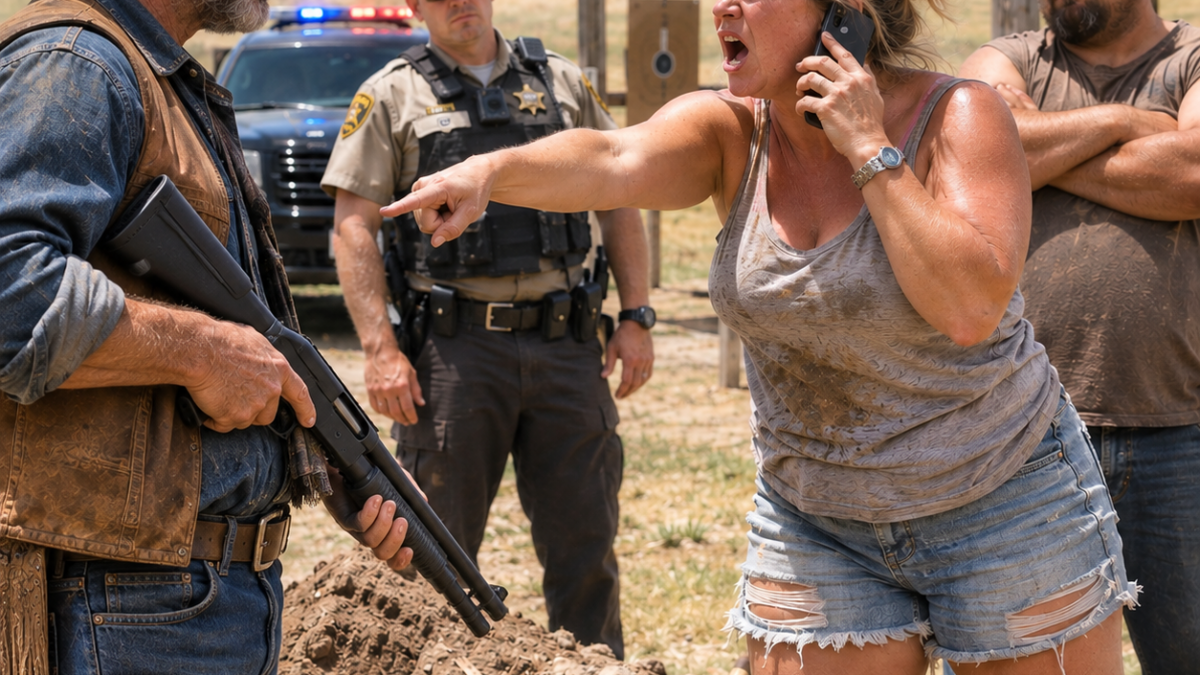
HOA Karen Called 911 to Have Me Arrested for Shooting on My Own Ranch—Then Deputies Found Her Cameras Buried Behind My Range
Three sheriff’s vehicles and an ambulance came through my ranch gate after the HOA president told 911 I was firing a rifle toward her neighborhood, but when deputies reached my private range, every target and every safety marker showed I had been shooting in the opposite direction.
Karen Whitmore kept demanding that they arrest me until a deputy walked behind my backstop and came back carrying a hidden camera marked SILVER OAKS COMMUNITY SECURITY—then found two more buried on my land.
But the camera system was only the first thing deputies uncovered, because one recording box contained a file called RANGE INCIDENT PLAN, and the last line explained why somebody needed my legal shooting range to look dangerous before Monday morning.
The first sheriff’s SUV came through my ranch gate at 9:17 on a Saturday morning.
Two more vehicles followed it.
Then an ambulance.
I had not called for any of them.
I was standing beside my old equipment barn when Deputy Laura Mitchell stepped out of the first cruiser and called my name.
“William Dawson?”
“That’s me.”
My hands were visible.
The rifle I had been using was unloaded and sitting on a wooden bench about twenty feet away.
The bolt was open.
My ammunition box was closed.
At the far end of the range, three paper targets were still attached to their frames.
Bright orange safety flags marked the entrance.
A large sign beside the gate said:
PRIVATE RANGE — CLOSED DURING USE.
Nothing about what I had been doing was hidden.
Then Karen Whitmore came running down the gravel road behind the sheriff’s vehicles.
She pointed directly at me.
“That’s him!”
Laura turned.
Karen kept coming.
“He’s the one firing the gun. You need to arrest him before somebody gets hurt.”
I looked at Karen.
Then at Laura.
Then toward the dirt backstop almost two hundred yards west of us.
Silver Oaks Estates sat east of my ranch.
My range faced west.
That detail would become very important.
Laura held up one hand.
“Mrs. Whitmore, stay back while I figure out what happened.”
Karen stopped.
Barely.
“I made the call.”
“I understand.”
“I’m the HOA president.”
PART2:
“That does not change where I need you to stand.”
Karen looked offended.
That was Karen’s normal reaction whenever somebody treated her title like a volunteer position instead of a government office.
Laura turned back to me.
“We received a report of repeated gunfire, threats toward nearby residents, and a man walking around with a rifle.”
I pointed slowly toward the bench.
“The rifle is there.”
“Loaded?”
“No.”
“Were you shooting this morning?”
“Yes.”
“How many rounds?”
“Maybe twelve. Maybe fifteen. I was testing a scope.”
Karen shouted from behind the patrol car.
“He fired at least twenty rounds.”
I looked at her.
“That isn’t true.”
“He was firing toward our homes.”
“No.”
“You could hear it everywhere.”
“Hearing it is not the same as knowing where it was aimed.”
Karen stepped forward again.
Laura looked over.
PART3:
“Ma’am.”
Karen stopped.
Then she pointed toward me.
“He threatened residents too.”
That was new.
Laura’s expression changed.
“Mr. Dawson, did you threaten Mrs. Whitmore this morning?”
“No.”
“Did you point your firearm at her?”
“No.”
“Did you tell her you would shoot anyone who entered your property?”
“No.”
Karen shouted:
“He said trespassers could get hurt.”
I looked at Laura.
“Three months ago, I told her this is a working ranch and people who ignore private-property signs can get hurt. Cattle. Machinery. Equipment. Active range. That was after her security patrol drove through one of my gates without permission.”
Karen folded her arms.
“Same thing.”
Laura shook her head.
“No. It isn’t.”
One deputy walked downrange.
Another moved along the southern fence.
Laura asked:
“Do you have cameras around the range?”
“Three.”
“Recording?”
“Yes.”
“Sound?”
“Yes.”
For half a second, Karen’s face changed.
Only slightly.
But I saw it.
Laura saw it too.
Then the deputy coming back from the berm raised one hand.
“Laura.”
He was holding something in a clear evidence bag.
At first, I thought he had found one of my cartridge cases.
Then I saw the shape.
Small.
Black.
Rectangular.
A camera.
Laura walked over.
The deputy turned the bag.
A white property sticker was attached to the bottom.
SILVER OAKS COMMUNITY SECURITY.
I stared at it.
“What is that doing here?”
Karen said nothing.
Laura looked toward the fence.
“This was inside Mr. Dawson’s property?”
“About thirty yards.”
Another deputy called out from behind the berm.
“Found another.”
Then:
“Make that two more.”
Three cameras.
Hidden around my private shooting range.
Not facing Silver Oaks.
Facing me.
The firing bench.
The targets.
The access road.
Laura turned slowly toward Karen.
Karen looked toward Scott Wallace, the head of Silver Oaks security, who was not yet there.
Then one deputy touched his radio.
“Dispatch pulled the 911 audio.”
Laura listened through her earpiece.
Her eyes narrowed.
She looked directly at Karen.
“Mrs. Whitmore.”
Karen swallowed.
“According to dispatch, you said Mr. Dawson was firing into Silver Oaks and had already shot one of your security cameras.”
Karen opened her mouth.
Laura raised the evidence bag.
“This camera hasn’t been shot.”
Nobody spoke.
Then the deputy behind the berm found something else.
A metal box.
Mud-covered.
Partially buried.
Several wires connected it to the camera positions.
On the lid was another Silver Oaks security label.
Across the top, in black marker:
MONITOR DAWSON.
BUILD CASE.
I felt something cold move through my stomach.
Laura looked at the box.
Then at me.
Then Karen.
“Mrs. Whitmore…”
Karen had stopped demanding my arrest.
Laura’s voice stayed calm.
“Why is your HOA secretly recording this man on his private property?”
Karen did not answer.
That was the moment I knew the gunshots were about to become the smallest part of the story.
My name is William Dawson.
I was fifty-four when all of this happened.
Dawson Ranch sat outside Fort Collins, Colorado, and covered a little over 260 acres.
My grandfather bought the first section more than sixty years earlier.
My father added land when neighboring parcels became available.
By the time I inherited responsibility for it, the ranch was large enough to support cattle, hay production, a small orchard, and a constant supply of equipment that seemed determined to break only when the weather was worst.
It was not some movie ranch.
Most mornings did not involve horses silhouetted against mountains.
Most mornings involved mud.
Water tanks.
Fence repairs.
Feed.
Diesel.
Veterinary bills.
Old tractors.
And my dog Rusty barking at wind, rabbits, birds, delivery trucks, and occasionally his own reflection in the mudroom door.
My wife Rachel died six years earlier after a long illness.
Our daughter Jennifer lived in Denver with her husband and two children.
Our son David lived about forty minutes away and came to help whenever his construction schedule allowed.
The ranch was quiet most days.
That was why I liked it.
The shooting range had existed for almost thirty years.
My father built the first version against a natural dirt slope on the western side.
Later, we improved it.
Higher dirt berm.
Covered bench.
Marked safety area.
Paper targets.
A few steel targets placed only in safe positions.
Nothing complicated.
Nothing pointed toward a public road.
Nothing pointed toward Silver Oaks.
Before Silver Oaks existed, the nearest house in that direction was almost a mile away.
Even after development, the nearest neighborhood home was more than half a mile from the range, separated by pasture, trees, elevation changes, and the fact that my range faced the opposite direction.
I grew up around firearms.
That meant I did not treat them casually.
No alcohol.
No shooting if cattle were near the range.
No shooting if workers were beyond the berm.
No firing after dark.
No random shooting.
If anyone entered the marked safety area, everything stopped.
I did not shoot every day.
Sometimes I went weeks without using the range.
Sometimes months.
Before hunting season, I checked rifles.
David sometimes came over.
My ranching neighbor Frank Miller sometimes joined me.
That had happened for years without drama.
Then Mountain Ridge Communities bought the Peterson farm east of us.
Three years later, Silver Oaks Estates appeared.
One hundred eighty homes.
Walking trails.
Clubhouse.
Pool.
Tennis courts.
Decorative entrance.
Marketing signs promising:
RURAL LUXURY LIVING.
Frank read that sign one afternoon and laughed.
“What the hell is rural luxury living?”
“Apparently living next to us without owning cows.”
He nodded.
“Sounds expensive.”
Construction itself caused few problems.
Mountain Ridge asked before using my property.
One subcontractor damaged a fence.
They repaired it.
Heavy rain destroyed part of their access road one year, and they paid me for temporary use of one of my gravel lanes.
That was how neighbors should work.
Ask.
Agree.
Respect the answer.
Then homeowners took control of the HOA.
That was when I met Karen Whitmore.
Our first disagreement had nothing to do with guns.
It involved my tractor.
I had left it beside the south hay field overnight during cutting season.
The next morning, a white SUV came fifty feet down my ranch road.
Karen lowered her window.
“Are you William Dawson?”
“That depends.”
She did not laugh.
“I’m Karen Whitmore. President of Silver Oaks Estates.”
“Nice to meet you.”
She pointed toward the tractor.
“Residents can see that from the walking trail.”
I looked at it.
Then at the ranch.
“I imagine they can.”
“We’re trying to maintain a clean rural view.”
“That is a rural view.”
She frowned.
“I mean an attractive rural view.”
“The tractor makes the hay.”
“I understand.”
I was not convinced.
She asked if I could park heavy equipment behind my barn whenever it was not actively being used.
“No.”
“Why not?”
“Because during hay season it stays close to the field.”
“Residents paid a great deal for their homes.”
“I’m sure.”
“They were promised peaceful country surroundings.”
“They have them.”
“The equipment can be visually disruptive.”
I looked around.
Cattle.
Barn.
Hay field.
Tractor.
“You bought houses next to a working ranch.”
That was the beginning.
Nothing dramatic.
No threats.
No screaming.
Just two people with very different ideas of what “country living” meant.
The first shooting complaint came later.
David and I were checking two hunting rifles on a Saturday afternoon.
Maybe fifteen rounds over forty minutes.
At 3:20, a Silver Oaks security vehicle stopped at my gate.
Scott Wallace got out.
Late forties.
Former private security manager.
Red polo with SILVER OAKS SECURITY embroidered over the chest.
He introduced himself as head of community security.
Not police.
Private HOA employee.
“We received noise complaints.”
“I’m sure you did.”
“How often do you shoot?”
“Depends.”
“Could you provide a schedule?”
“No.”
“It would help us notify residents.”
“I don’t need to schedule legal activity on my ranch with your HOA.”
He wrote something down.
“Could you avoid weekends?”
“No.”
“Early mornings?”
“I already do.”
“Evenings?”
“I don’t shoot after dark.”
Scott looked toward the western ridge.
“Can I inspect the range?”
“No.”
“For safety.”
“No.”
“Why?”
“Because you’re private HOA security and this is my ranch.”
He did not like that.
Still, he left.
A week later, a letter arrived.
COURTESY REQUEST — FIREARM DISCHARGE.
Silver Oaks asked me to discontinue recreational shooting because the sound disturbed neighborhood peace and could affect property values.
I called the management company.
Susan Parker answered.
I gave her my address.
Long pause.
“You’re not in Silver Oaks.”
“Correct.”
“I’m not sure why you received this.”
“Your president probably knows.”
Susan apologized and noted the file.
I thought that would end it.
Then Karen and Scott came to my gate together.
Karen said several families felt unsafe hearing gunfire.
I actually understood that.
If you did not grow up around rural shooting, hearing rifle fire could make you uncomfortable.
So I explained.
Direction.
Berm.
Distance.
Safety rules.
County jurisdiction.
Then I made an offer.
“If you have a large community event, give me some notice. I can probably avoid shooting during it.”
That was cooperation.
Karen heard admission.
“So you agree the range affects us.”
“I agree sound travels.”
“Then relocate it.”
“No.”
“Farther from our homes.”
“It already faces away from your homes.”
“The sound still carries.”
“Yes.”
“So move it.”
“No.”
Karen’s face tightened.
“You keep saying no.”
“That’s because you keep asking me to surrender things you don’t control.”
Scott stepped in.
“We’re not trying to control you.”
I looked at him.
“Then stop trying.”
That conversation ended without shouting.
But something changed.
A week later, a Silver Oaks resident named Linda Harris came to my gate with her teenage son, Noah.
She apologized for showing up unannounced.
Then said Noah was nervous about the gunfire.
Instead of complaining, she wanted to understand.
That impressed me.
I invited them to the range on a day it was inactive.
I showed them the firing direction.
Berm.
Pasture.
Distance from Silver Oaks.
I did not hand Noah a weapon.
Did not turn it into some political speech.
I just showed them the physical layout.
Linda looked toward the neighborhood.
“This is nothing like Karen described.”
“What did she describe?”
She hesitated.
“People firing guns near our property line.”
The range was nowhere near their property line.
Noah asked whether gunfire could scare dogs.
“Yes.”
That gave me an idea.
Frank knew several Silver Oaks residents.
Before planned shooting, I started texting him.
Range active 2–3.
Nothing official.
Just courtesy.
Frank shared it in a private neighborhood group.
Residents with nervous dogs could bring them inside.
Parents who disliked the noise could plan around it.
Complaints almost disappeared.
For six weeks.
Then Karen ordered Frank to stop posting my messages.
He called me.
“She says I’m normalizing unauthorized shooting.”
“Unauthorized by who?”
“That was my question.”
The county had no problem with the range.
I lived outside city limits.
The range had existed long before the neighborhood.
Karen had once again confused disapproval with authority.
Frank continued sharing the messages privately.
Karen became angrier.
Then I received a cease-and-desist letter.
Not a courtesy request.
The HOA claimed my shooting created a nuisance affecting member safety.
My property attorney, Rebecca Hayes, read it.
Rebecca was calm in the way people become calm when somebody else has made a legally interesting mistake.
She wrote back.
Dawson Ranch was not subject to Silver Oaks covenants.
The HOA had no governing power over my property.
If a resident believed I violated public law, they could contact the sheriff or county.
Silver Oaks could not extend private HOA authority across my fence.
Silver Oaks attorney Charles Bennett answered.
He disagreed with parts of Rebecca’s nuisance analysis.
But he confirmed the important thing.
Silver Oaks had no direct covenant enforcement authority over Dawson Ranch.
Karen responded by calling everybody else.
County inspection.
No violation.
Animal control complaint claiming gunfire endangered livestock.
My livestock.
That went nowhere.
Fire department complaint alleging explosive activity.
There were no explosives.
Noise complaint to sheriff.
A deputy visited.
I explained the range.
He looked at the berm.
Told me to keep following my safety procedures.
I could not prove Karen personally made every complaint.
I did not assume she did.
But timing was becoming difficult to ignore.
Then Silver Oaks installed cameras along its western walking trail.
Their property.
Their cameras.
One camera faced my ranch entrance.
I disliked it.
Still legal.
I let it go.
Then Frank called one afternoon.
“You’ve got company.”
“Where?”
“Old windbreak.”
I drove out.
Scott Wallace and another Silver Oaks security employee stood inside my fence.
They had a ladder.
I stopped twenty yards away.
“What are you doing?”
“Checking camera coverage.”
“You’re on my property.”
Scott looked down as though the dirt had moved beneath him.
“We’re only a few feet over.”
“That is still over.”
“We need to see whether the trail camera covers the boundary.”
“Then check it from your boundary.”
He sighed.
“You make everything difficult.”
“No, Scott. I make the line simple.”
They left.
I inspected the fence.
A small black mounting bracket had been screwed into one of my wooden posts.
No camera yet.
Just the mount.
I photographed it.
Removed it.
Sent everything to Rebecca.
Another letter.
No Silver Oaks equipment on Dawson Ranch.
No security employees entering.
No surveillance devices on my fences, trees, buildings, posts, or land.
Charles replied that he would advise the board.
Then everything went quiet.
For almost two months.
No Karen.
No Scott.
No letters.
No complaints.
Too quiet, I would later realize.
At the time, I thought people had finally accepted reality.
Then I noticed disturbed dirt behind the range berm.
Small patch.
Nothing obvious.
A week later, another patch appeared.
I assumed coyotes.
Then a silver SUV sat along the county road for nearly an hour while David and I were shooting.
It left when we finished.
Could have been anybody.
Then Frank sent me a screenshot from the Silver Oaks community page.
Karen had posted:
We continue documenting ongoing firearm-related safety concerns affecting our western homes.
Documenting.
That word stayed with me.
“What are they documenting?” I asked Frank.
“No idea.”
“Photos?”
“Probably.”
“From where?”
“No idea.”
Then he lowered his voice.
“They have a closed security committee.”
“Who?”
“Karen. Scott. Two board members.”
“What are they doing?”
“Building a legal case, I think.”
People have a right to document concerns.
They have a right to hire lawyers.
I had nothing to hide.
Still, Rebecca told me to start documenting too.
So I did.
Dates.
Times.
People present.
Number of rounds.
Weather.
Unusual vehicles.
Complaints.
I installed another camera covering the firing bench and one covering the range access road.
Records solve arguments.
That Saturday, I planned to test a new scope.
I sent Frank a message.
Range active 8:30–9:30.
Thumbs-up response.
No cattle nearby.
Backstop clear.
Safety flag raised.
Gate closed.
At 8:42, I fired my first round.
At 8:44, another.
Then several more over the next twenty minutes.
At 9:06, I noticed Karen’s white SUV parked on the Silver Oaks side near the walking trail.
She stood outside holding her phone.
I stopped firing.
I wanted to know what she was doing.
My own camera captured something I did not see.
At 8:01 that morning—forty-one minutes before I fired—Scott Wallace entered my property from the south fence.
He carried a small bag.
He walked directly behind the berm.
Crouched.
Adjusted one of the hidden cameras.
Checked the buried recorder.
Then left.
At 9:11, Karen called 911.
At 9:17, the sheriff arrived.
And deputies began finding Silver Oaks equipment buried on my ranch.
Scott returned while Laura was still questioning Karen.
He approached from the south.
When he saw deputies holding the buried equipment, he stopped.
Then turned.
Laura called out.
“Mr. Wallace?”
Scott kept walking.
A deputy caught up.
He did not run.
Said he had been inspecting the walking trail.
Laura asked:
“Did you install cameras on Dawson Ranch?”
“No.”
She held one up.
“Silver Oaks property tag.”
“Equipment goes missing.”
Then a deputy found a plastic bag behind the berm.
Several spent rifle cases.
Different caliber from what I had fired.
Old.
Dirty.
Placed together.
Laura asked:
“Yours?”
“No.”
Scott said:
“Maybe he forgot.”
“I know what I shoot on my own range.”
Then deputies found a torn strip of red fabric beside the cartridges.
Same bright red as Silver Oaks security uniforms.
Scott wore a red security shirt beneath his jacket.
Laura looked from Scott to the cartridges to the cameras.
“Nobody leaves.”
Karen immediately protested.
“I called you to arrest him, not us.”
Laura turned.
“You called 911 saying rounds were being fired toward homes. I have no evidence of that. I do have evidence HOA surveillance equipment was placed on private property.”
“I did not put those cameras there.”
“Then we will find out who did.”
David pulled up our footage.
8:01 a.m.
Scott crossing the fence.
Bag in hand.
Walking to the exact place deputies found the foreign cartridge cases.
Adjusting a hidden camera.
Checking the recorder.
Laura watched twice.
Scott stopped talking.
Karen stared at him.
Then she asked quietly:
“What did you do?”
That surprised me.
It sounded real.
Karen might have known about surveillance.
I was beginning to believe she did.
But Scott planting evidence appeared to shock her too.
Nobody was arrested that morning.
Not me.
Not Karen.
Not Scott.
Evidence collected.
Statements taken.
Lawyers contacted.
I thought the worst part was finished.
At 4:38 that afternoon, Laura came back.
She had a county investigator and the full 911 audio.
She played one section.
Karen’s voice.
“He is firing at our security cameras now. I can see one has been hit.”
Dispatcher:
“Are you in a safe location?”
“Yes. He doesn’t know we have cameras on his side.”
Laura stopped the recording.
My side.
Karen knew cameras existed on my side of the property line before deputies found them.
She had pretended otherwise that morning.
Laura continued.
Karen:
“We need him stopped today. We finally have enough.”
Dispatcher:
“Enough for what?”
Pause.
“To shut that range down.”
Laura stopped it.
“So this was about closing my range?”
“Maybe.”
“Maybe?”
She opened a file recovered from the buried recorder.
RANGE INCIDENT PLAN.
First page:
Document repeated shooting.
Establish homeowner fear.
Capture apparent unsafe discharge.
Report immediate danger.
Request law-enforcement intervention.
Seek emergency injunction.
Final line:
ONCE RANGE IS CLOSED, BEGIN WESTERN ACCESS NEGOTIATION.
I stared.
“What western access?”
Second page.
Map.
Silver Oaks east.
My ranch center.
Peterson property west.
A proposed emergency and utility road crossed Dawson Ranch.
Directly through my shooting range.
Through the berm.
If the range remained, the road could not follow that route.
Laura pointed at a company name.
Mountain Ridge Communities.
The developer that had built Silver Oaks.
“They bought Peterson land west of you.”
“When?”
“Six months ago.”
Three hundred acres.
New subdivision.
Ninety-two homes.
Future name:
SILVER OAKS WEST.
The easiest road and utility connection crossed my ranch.
Nobody had asked me.
Nobody had purchased an easement.
Nobody had even mentioned it.
Another deputy arrived.
He had driven to the Peterson property.
Construction crews.
Survey stakes.
Utility markers.
Temporary road.
One stake at my fence.
Another inside.
Then he showed a photograph.
Large development sign:
FUTURE HOME OF SILVER OAKS WEST — 92 HOMES.
SECONDARY EMERGENCY ACCESS COMING SOON.
Coming through land they did not own.
Then Laura’s radio crackled.
A survey crew farther south had paperwork.
Access agreement.
Signed by the landowner.
“Which landowner?”
Laura looked at me.
“You.”
I had signed nothing.
We drove over.
Survey crew leader Thomas Reed immediately stopped when I told him.
He did not argue.
Did not threaten.
Did not say the developer had more lawyers than I did.
He called his supervisor and pulled his workers back.
That mattered.
The agreement looked legitimate.
My full name.
Correct address.
Forty-foot corridor.
Surveying.
Utility testing.
Future emergency-road construction.
Signature looked close to mine.
Not mine.
Witness:
Paul Norton.
Electronic approval:
Front Range Development Services.
The email sending it said:
NEIGHBOR COORDINATION HAS BEEN COMPLETED.
Nobody had coordinated anything.
Thomas apologized.
I told him:
“You stopped. That’s what matters.”
His direct contact at Mountain Ridge was Douglas Price, regional development director.
Douglas arrived with attorney Charles Bennett.
Rebecca arrived soon after.
Douglas explained Mountain Ridge had purchased Peterson land for the ninety-two-home development.
The western road was, according to him, one of several possibilities.
Rebecca pointed toward the huge sign announcing SECONDARY ACCESS COMING SOON.
“That sounds less than possible.”
Douglas admitted marketing had moved ahead of final approvals.
Rebecca asked:
“Where did the Dawson agreement come from?”
“Front Range Development Services.”
“Who handled it?”
“Paul Norton.”
“Did you personally see Mr. Dawson sign?”
“No.”
“Talk to him?”
“No.”
“Email him?”
“No.”
“Call?”
“No.”
“Then why did your company spend money planning a road across his land without ever speaking to him?”
Douglas had no good answer.
Paul had been hired to coordinate surrounding properties.
Paul reported that I had agreed.
Laura called Paul.
No answer.
Again.
Nothing.
Then Rebecca noticed the signature date.
Tuesday.
10:18 a.m.
I remembered that Tuesday.
I had been at a livestock auction almost two hours away.
Frank and Jason Miller had been with me.
Receipts.
Credit-card records.
Parking stub.
Probably security cameras.
Not complete proof by itself.
Very useful.
Then Laura asked:
“Did Mountain Ridge pay Mr. Dawson anything?”
Douglas checked.
“Yes. Twenty-five thousand dollar access fee.”
“Where?”
Electronic transfer.
Not my bank.
Account:
DAWSON AGRICULTURAL HOLDINGS LLC.
I had never heard of it.
Rebecca looked at me.
“You own that?”
“No.”
“Ever create it?”
“No.”
Douglas’s face changed.
His company had paid someone pretending to be me.
The road project stopped.
Surveying stopped.
Everything stopped.
At that point, I had hidden cameras.
Planted cartridge cases.
A false 911 report.
Forged land agreement.
Fake company.
Missing $25,000.
Rebecca warned me:
“Do not assume one person did everything.”
That became important.
Karen could be connected to the cameras.
Scott could be connected to evidence.
Paul could be connected to forged land documents.
Mountain Ridge could have failed to verify.
Several people could be doing different wrong things for different reasons.
Follow records.
Not anger.
For days, the ranch went quiet.
I stopped shooting voluntarily.
Not because Karen had won.
Because my range had become evidence.
David helped with fence posts.
Frank brought lunch.
Rusty chased rabbits and failed.
Linda Harris came with Noah.
She looked uncomfortable.
“I owe you an apology.”
“For what?”
“I believed Karen.”
“You came here before and asked questions.”
“She told everyone you were firing toward homes.”
“I know.”
“She said deputies had warned you.”
“They didn’t.”
Linda looked toward the range.
“I should’ve asked again.”
“You’re asking now.”
That was enough.
Silver Oaks held an emergency board meeting.
Karen’s authority over security matters involving my ranch was suspended.
Scott was placed on administrative leave.
The HOA hired an independent attorney because Charles Bennett’s work with both Silver Oaks and Mountain Ridge created too many overlapping questions.
Then I received something unexpected.
An apology.
From the HOA board.
They confirmed Silver Oaks had no authority over my ranch.
No authority over my range.
No authority over my lawful firearms use beyond whatever rights any ordinary neighbor had under public law.
They acknowledged hidden Silver Oaks cameras had been found on my land.
Promised cooperation.
I appreciated it.
Rebecca would not let me sign anything.
“Appreciation and settlement are different.”
She was right.
The county inspected my range again.
Measured berm.
Checked direction.
Distances.
Roads.
Houses.
Result:
No immediate public-safety violation.
The range faced west.
Silver Oaks was east.
Karen’s claim that I had been firing into the neighborhood was physically unsupported.
Then forensic testing of Scott’s planted cartridge cases came back.
Wrong caliber.
Older oxidation.
Dirt suggesting they had sat somewhere else for a long time.
Investigators checked Silver Oaks Security storage.
An evidence drawer contained old items found around HOA common areas.
Fireworks.
Tools.
Gate cards.
Spent cartridges found years earlier near a county road.
One evidence bag matching the planted caliber was missing.
Scott had access.
Then Karen’s call came under closer review.
She admitted approving surveillance of the range.
But claimed she believed cameras were on HOA land using long lenses.
Emails partly supported her.
Karen to Scott:
Need closer angle. Current footage won’t establish direction.
Scott:
Can solve.
Karen:
Do not cross the fence.
That helped her.
Then two weeks later:
Scott:
New positions working. Range coverage much better.
Karen:
Good. Keep it quiet until we have enough.
She did not ask where “new positions” were.
Convenient ignorance.
But no email said:
Put cameras on William Dawson’s ranch.
That distinction mattered.
Metadata from RANGE INCIDENT PLAN showed Scott created the original file.
Early version:
Nuisance complaints.
Documentation.
Court action.
No road.
Later version included:
WESTERN ACCESS NEGOTIATION.
Edited from a Front Range Development Services computer.
Paul Norton.
That connected Scott’s HOA campaign to the future road project.
Then financial investigators looked at Dawson Agricultural Holdings LLC.
Created three months earlier.
Registered agent:
Paul Norton.
Business address:
Rented mailbox in Denver.
Owner:
William Dawson.
My ranch address.
My birth year.
Enough information to look convincing.
The fake company received Mountain Ridge’s $25,000.
Then:
$10,000 to Front Range Development Services.
$5,000 to High Country Consulting LLC.
$8,000 cash withdrawal.
$2,000 remaining.
High Country Consulting belonged to Scott Wallace.
Scott had received money tied to a fake agreement using my identity.
Silver Oaks fired him.
Not because every criminal question was resolved.
Because accepting undisclosed consulting money while serving as security director violated his employment agreement.
Karen resigned as HOA president.
Not yet from the board.
Some residents cheered.
I did not.
Public humiliation was not what I wanted.
If Karen lied to 911, handle it properly.
If Scott committed fraud, prove it.
If Paul stole my identity, prove it.
I wanted boundaries.
Not blood.
Mountain Ridge halted all access work.
Douglas sent written confirmation:
Nobody enters Dawson Ranch without direct written authorization from me or Rebecca.
Exactly how this should have begun.
Then Douglas requested a meeting.
I almost refused.
Rebecca told me to listen.
Douglas came with a new attorney.
“We were deceived.”
“By Paul?”
“Yes.”
“Scott?”
“Partly.”
“Karen?”
He hesitated.
“We did not deal directly with Karen regarding the access agreement.”
Mountain Ridge still needed a second emergency route for ninety-two homes.
Another route existed two miles north.
More expensive.
Needed a bridge.
My land remained the easier choice.
Then Douglas did something nobody had done.
He asked.
“Would you consider selling an easement?”
I laughed once.
“Not while the investigation is open.”
“Fair.”
“Someday? Maybe.”
He nodded.
No threats.
No false HOA rules.
No pretending.
Then I asked:
“Why does your proposed route go through my range?”
“Ground conditions.”
“What?”
“It’s elevated and well drained. Road construction is cheaper there.”
“That’s it?”
“Our marketing people disliked the range too.”
“Of course.”
“But engineering picked the route because of cost.”
Important difference.
The road problem likely created motivation to remove my range.
The range did not create the need for the road.
Then Paul Norton was located.
Not hiding.
Hospital in Denver after a minor car accident.
He agreed to speak through an attorney.
Paul admitted creating Dawson Agricultural Holdings.
Admitted forging my access agreement.
Admitted copying my signature from a recorded land document.
Admitted taking Mountain Ridge’s payment through the fake company.
Admitted paying Scott $5,000.
His motive?
Project bonus.
Paul believed I would eventually accept money rather than fight.
Scott told him I would never agree while the range existed.
So they created “permission” first.
That is not how property ownership works.
Then investigators asked about Karen.
Paul said:
“She knew we were trying to get Dawson under control.”
I hated that phrase.
Karen knew people wanted my range closed.
Knew a western connection became easier if it closed.
Knew surveillance was happening.
But Paul said she did not know he forged my signature.
Did not know about the fake company.
Did not know about the $25,000.
No evidence she knew Scott planted cartridges.
That helped separate the roles.
Then detectives obtained Karen’s text messages from the morning of the 911 call.
8:55.
Karen:
He’s shooting now.
Scott:
Keep watching.
9:03.
Karen:
Can’t tell direction from here.
Scott:
Say you can.
9:07.
Karen:
I’m not lying to 911.
Scott:
We need response while active.
9:09.
Karen:
If I call what exactly am I reporting?
Scott:
Shots toward neighborhood. Camera hit. Immediate threat.
Karen:
That isn’t what I saw.
That message helped her.
Then:
9:10.
Scott:
If we wait he stops and deputies see nothing. We lose chance again.
9:11.
Karen:
Fine. I’ll call.
There it was.
She knew those claims were not what she had personally observed.
She called anyway.
Maybe she trusted Scott.
Maybe she convinced herself he had evidence.
Maybe she wanted deputies there badly enough to repeat whatever gave the call urgency.
Whatever the reason, she crossed the line.
The district attorney began reviewing the false report.
Silver Oaks released the messages to residents after legal review.
Karen resigned completely the next morning.
In her letter, she said fear and pressure affected her judgment.
She admitted repeating information she had not verified.
That apology mattered.
Did not erase anything.
Still mattered.
I thought things were cooling down.
Then Laura called on a Friday evening.
“William, don’t go to the range.”
“Why?”
“Fire department is responding.”
“Fire?”
“No.”
Pause.
“Explosion.”
I was already outside.
Gray smoke rose from behind the western berm.
Fire trucks came through the ranch road.
Sheriff’s vehicles followed.
Nobody knew what had exploded.
Utility contractor Thomas Reed arrived.
The blast came from a buried line.
Not mine.
Pressurized gas line used for construction equipment.
Recently installed.
Inside my land.
Douglas arrived.
I looked at him.
“You said construction stopped.”
“It did.”
“Then what is that?”
He looked as shocked as I was.
The pipe manufacturer date:
Six weeks earlier.
Around when hidden cameras began.
The line crossed from Peterson land beneath my fence and ended near the berm beside a buried metal cabinet.
Inside:
Control valve.
Pressure regulator.
Electronics.
Front Range Development Services inventory sticker.
Paul’s company.
Then Laura found an instruction sheet.
TEST EVENT.
SATURDAY 0900 LOCK.
PRESSURE PULSE.
CAMERA CAPTURE.
EMERGENCY RESPONSE OBSERVATION.
The same Saturday Karen called 911.
Controller logs showed a command at 9:04 while I was firing.
Someone had triggered a pressure pulse below the berm.
It was supposed to create a sharp underground bang.
Hidden cameras would record me shooting.
Residents would hear a much louder blast.
Karen would call.
Deputies would arrive.
Scott could say:
See? The range is unsafe.
But the valve malfunctioned.
Pressure stayed trapped.
Weeks later, something failed.
That was the explosion we were looking at.
A staged incident that failed at the time and became dangerous evidence later.
Remote trigger user:
SWallace.
Scott.
Then Laura scrolled.
Second account had approved the test.
Douglas Price.
Douglas stared.
“That’s impossible.”
Laura did not accuse him.
“Who else could use your login?”
“No one.”
Pause.
“My project assistant sometimes did.”
Mountain Ridge preserved its systems.
Digital review found Douglas’s credentials were used remotely the night before the planned test.
Douglas was at a planning dinner.
Receipts.
Photographs.
Witnesses.
The login came from Front Range Development Services.
Paul’s network.
Then Mountain Ridge IT found an old email.
Paul sent Douglas a link to a fake document portal.
Douglas entered his credentials.
Paul captured them.
A fake digital door.
Douglas typed his key.
Paul stole it.
Mountain Ridge still failed badly.
Weak security.
No direct landowner verification.
Too much trust in Paul.
But evidence did not show Douglas personally approved a hidden pressure device.
Again:
Different failures.
Different responsibility.
The western part of my range stayed closed until the pipe was removed.
That made me angrier than almost anything.
My family had used that place safely for decades.
The people claiming to protect neighborhood safety had secretly buried a pressurized device under it.
The danger came from the plan to make me look dangerous.
David found me replacing damaged target stands.
“You okay?”
“Yes.”
“That means no.”
“You learned that from your mother.”
“You taught me.”
Fair.
He looked around.
“You know you don’t have to reopen tomorrow just to prove something.”
I stopped.
He was right.
Part of me wanted the range open immediately because closing it felt like letting Karen, Scott, and Paul win.
That was ego.
Patience was not surrender.
Sometimes patience is control.
Silver Oaks dissolved the closed security committee.
New acting president Robert Jenkins prohibited HOA security from investigating outside HOA property.
Complaints involving my ranch would go to public authorities.
Two western trail cameras were removed because they mostly watched me.
One remained covering the actual trail and parking area.
I had no problem with that.
I did not hate cameras.
I hated cameras buried on my land.
Paul cooperated more.
He admitted stealing Douglas’s login.
Admitted approving the pressure sequence through Douglas’s account.
Admitted helping pay Scott.
But said he only intended a low-pressure pulse.
Scott increased the pressure for a stronger effect.
That matched everything investigators were learning about Scott.
Every bad idea became worse in his hands.
Cameras became trespass.
Documentation became planted evidence.
A pressure pulse became a dangerous buried system.
Paul said Karen knew they were building a nuisance case.
Knew the range being closed would help the road.
Did not know about the underground equipment.
Did not know about the fake access agreement.
Did not know about Dawson Agricultural Holdings.
That fit.
Karen did enough wrong without assigning her crimes no evidence supported.
Then Laura asked Paul:
“Why was the western road so important?”
“Utilities.”
That changed everything.
Not simply emergency access.
Road surface was only the visible part.
Water.
Fiber.
Sewer force main.
Electrical service.
Mountain Ridge’s western subdivision would be far cheaper if utilities crossed my ranch.
Alternate route required a creek crossing.
Two extra pumping stations.
Almost two additional miles of trenching.
Estimated extra cost:
More than four million dollars.
Now the fake $25,000 access fee looked insulting.
Not because I believed I deserved four million.
Because nobody had told me what my land was actually worth to the project.
Rebecca said:
“They were pressuring you over a corridor far more valuable than the paperwork suggested.”
Maybe an honest conversation could have happened.
Instead:
Fake company.
Fake signature.
Fake access.
Douglas requested another meeting.
Mountain Ridge general counsel came.
New engineering director.
Rebecca beside me.
Douglas started:
“We should have contacted you directly before spending one dollar on this route.”
“Yes.”
“We relied on Paul.”
“Yes.”
“That was our failure.”
“Yes.”
Front Range Development Services was terminated.
All related contractors suspended pending review.
No western route would proceed without a new agreement signed directly and verified against title.
Then Douglas asked:
“Would you ever consider negotiation?”
I looked at Rebecca.
She stayed silent.
My decision.
“Maybe.”
Douglas seemed surprised.
“After everything?”
“The land is mine.”
“Yes.”
“That means I get to say no.”
“Yes.”
“It also means I get to say yes if a deal makes sense.”
That mattered to me.
If I let Scott’s crimes force me to reject every future proposal forever, Scott would still be controlling my decisions.
Not happening.
Mountain Ridge drew a different concept.
South of the range.
No crossing through the berm.
Utilities in a buried corridor farther from barns.
Improved ranch gate.
Drainage work.
No number yet.
Independent appraisal first.
No handshake.
No promise.
Just honest starting point.
Then Karen called.
I almost ignored it.
“William?”
“What do you want?”
“I heard the range might remain.”
“Probably.”
Pause.
“I’m glad.”
That surprised me.
“You spent months trying to shut it down.”
“I know.”
“Then why are you glad?”
“Because I don’t want Scott’s plan to work.”
She sounded different.
Quieter.
Then:
“I owe you an apology.”
“For which part?”
“The 911 call.”
I waited.
“I knew I hadn’t seen a camera get shot.”
“Yes.”
“I repeated what Scott told me because I wanted deputies there before you stopped shooting.”
“Yes.”
“I told myself if the range was really safe, police would figure that out.”
“That is not what emergency reporting is for.”
“I know.”
Silence.
Then:
“I was wrong.”
Specific apology.
Not vague regret.
I believed she meant it.
It did not erase months of pressure.
Did not make us friends.
I told her:
“I hope you do better after this.”
She started crying quietly.
I did not know what to do with that.
So I ended the call politely.
The district attorney later charged Karen over the false emergency report.
She avoided jail through an agreement.
Probation.
Fines.
Community service.
Reimbursement for some emergency response costs.
Public-safety program about misuse of 911.
Some residents thought it was too light.
Others thought she should face nothing because Scott manipulated her.
Both were too simple.
Scott manipulated her.
Karen still chose to repeat claims she knew she had not witnessed.
Both things could be true.
Scott’s case was worse.
Much worse.
Hidden cameras.
Trespass.
Planted cartridges.
Undisclosed payments.
Staged pressure system.
Fraud.
Property scheme.
But even then, the story was not finished.
The county finally cleared the range.
Everything buried was removed.
Berm repaired.
Reinspection passed.
I decided the first day back would be boring.
Me.
David.
Paper targets.
Safety check.
Orange flag.
I texted Frank:
Range active 2–3.
He replied:
Got it.
Linda texted:
Thanks for the heads-up.
Normal.
I fired one round.
Waited.
Nothing.
No SUV.
No deputies.
No hidden camera.
No underground bang.
Just a controlled shot traveling across my own pasture and fading.
David smiled.
“Feels weird?”
“A little.”
We finished after forty minutes.
Three days later, Jason called from the south pasture.
“William, heavy equipment at the western fence.”
My stomach tightened.
“Mountain Ridge?”
“Looks like it.”
“They’re not allowed on the ranch.”
“They aren’t.”
Pause.
“Yet.”
Two excavators.
Trenching machine.
Utility pipe.
Survey stakes.
Douglas was there.
He looked confused.
“I didn’t authorize this.”
Contractor supervisor showed us a work order.
EMERGENCY UTILITY STABILIZATION.
County-style approval stamp.
Claimed the gas-line explosion created an urgent need to trench across my ranch.
Laura checked with county emergency management.
Fake.
No order.
No authorization.
Crew shut down.
Then one worker said:
“We were also told to remove the old berm.”
I stared.
“Why?”
“Contaminated soil.”
No contamination report existed.
He opened the project file.
Photo of my shooting range.
Red X across the berm.
Instruction:
DEMOLISH BEFORE OWNER OBTAINS INJUNCTION.
Sender:
Front Range Development Services.
But Paul was already cooperating with investigators and had no authority.
Timestamp:
That morning.
Account:
P. Norton Admin.
Paul was sitting with his attorney when it was sent.
Someone still had stolen credentials.
Then Douglas opened a new file that had appeared in Mountain Ridge’s western project system.
FINAL ACCESS SOLUTION.
Photographs.
Recent.
Very recent.
One showed David and me shooting three days earlier.
Surveillance had started again.
Then a map.
Updated route curved around the range.
The honest route.
For one second, good.
Then note:
OWNER MAY ACCEPT REVISED ROUTE.
IF AGREEMENT REACHED, EASTERN PARCEL VALUE INCREASES SUBSTANTIALLY.
DO NOT ALLOW DAWSON TO CONTROL TRANSACTION.
“What does that mean?”
Douglas looked disturbed.
“I don’t know.”
Another attachment.
Purchase agreement.
Not easement.
Entire ranch.
260 acres.
Buyer:
HIGH PLAINS LAND HOLDINGS LLC.
Offer:
$3.2 million.
Never heard of them.
Rebecca searched company records.
Ownership hidden behind another entity.
She kept digging.
Registered agent connection:
Scott Wallace.
My stomach dropped.
Scott was not simply an HOA security director obsessed with shutting down a range.
He was positioning a company to buy my ranch.
Then Laura received a call.
Scott missed a required investigator meeting.
Attorney could not reach him.
Phone off.
Truck gone.
Before anyone processed that, Jason shouted:
“William!”
Smoke rose near the north pasture.
Hay shed.
My radio came alive.
Frank:
“Fire at the hay shed!”
Then another voice.
Male.
Calm.
Unknown.
“Don’t bother with the barn.”
Everybody froze.
The voice continued.
“Check your house.”
My ranch house sat almost a mile away.
My security app sent an alert.
Front door open.
Office motion.
Safe-room sensor.
Then camera footage loaded.
Face.
Scott Wallace.
Inside my house.
Feed went black.
Everything in me wanted to get into my truck.
Laura grabbed my arm.
“Fire crews are going to the barn. Deputies are going to your house. You are not charging into either situation.”
I hated that she was right.
Jason and Frank went toward the hay shed.
Fire department entered through the south gate.
Laura and two deputies moved toward my house.
I followed only where they allowed.
Last camera frame showed Scott entering with a backpack.
The radio message meant he wanted me to know.
Maybe to scare me.
Maybe pull me away from the fire.
Maybe lure me into confronting him so another dangerous scene could be created.
I was done reacting the way he wanted.
Deputies surrounded the house.
Nobody knew whether he was armed.
My firearms were locked in a safe.
That did not mean Scott had nothing.
Laura used the patrol speaker.
“Scott Wallace, sheriff’s office. Come outside with empty hands.”
Silence.
Smoke drifted from the distant hay shed.
Jason radioed:
“Cattle moved. Fire crews have it contained on one side.”
Good.
House silent.
Then an upstairs window opened.
My bedroom.
A black backpack came out.
Landed on porch roof.
Slid into grass.
Window closed.
Scott remained inside.
Laura called again.
Nothing.
Then front door slowly opened.
Scott walked out.
Empty hands.
He looked exhausted.
Not wild.
Not angry.
Finished.
Deputies ordered him down.
He obeyed.
No tackle.
No gunfire.
No dramatic fight.
Handcuffs.
Search.
Patrol vehicle.
I expected satisfaction.
Mostly I felt tired.
Deputies cleared the house.
No second person.
Safe untouched.
Rusty had been with Jason at the barn.
Thank God.
The backpack Scott threw out contained documents from my office.
Property surveys.
Old deeds.
Tax records.
Insurance.
Copy of my father’s estate paperwork.
He had broken into my house looking for ownership documents.
Then investigators found a flash drive.
Files from High Plains Land Holdings.
Company created six months earlier.
Before Karen’s 911 call.
Before cameras were discovered.
Before the staged pressure test failed.
Scott’s interest in my ranch went back much further.
Rebecca found why.
High Plains had an option agreement with Western Crest Development Partners.
If Scott’s company acquired my ranch or controlling development rights before year-end, Western Crest would pay him an assignment fee.
$750,000.
There was his motive.
Not simply neighborhood safety.
Money.
A lot of it.
Scott did not necessarily need all 260 acres.
He needed enough control over the right corridor.
Road.
Utilities.
Purchase option.
Anything that gave him development leverage.
Closing my range helped.
Making me look reckless helped.
Creating property complaints helped.
Fake access agreement helped.
Everything pushed toward control.
Then came the hay fire.
Scott denied starting it.
At first, possible.
He had been inside my house when the fire began.
Firefighters contained it before it reached the cattle barn.
About sixty hay bales destroyed.
One side of the shed damaged.
No animals hurt.
Fire marshal found an electronic ignition device near the back wall.
Remote controlled.
Scott did not need to be physically there.
His phone contained a control application.
Command sent eight minutes before he entered my house.
ACTIVATE OUTPUT CHANNEL 3.
The receiver beside the hay matched channel three.
Scott claimed he only intended smoke.
A distraction.
That explanation did not help.
You do not light dry hay and control what happens.
Wind decides.
Fuel decides.
Chance decides.
That was Scott’s pattern.
“Small” dishonest ideas became dangerous.
Pressure device meant to create one bang later exploded.
Hidden cameras meant to build nuisance documentation became illegal surveillance.
Fake access papers became identity fraud.
Hay smoke became fire.
Then investigators finally answered the question everybody kept asking.
How much did Karen know?
She knew the HOA wanted the range shut down.
She knew Western access became easier if it disappeared.
She knew Scott was aggressively monitoring me.
She knew cameras were closer than I had approved because she told 911 I did not know cameras were “on my side.”
She repeated claims she knew she had not witnessed.
Those were her decisions.
But:
No evidence Karen knew Scott created High Plains Land Holdings.
No evidence she knew about the $750,000 assignment fee.
No evidence she knew Paul forged my signature.
No evidence she knew Paul stole Douglas’s credentials.
No evidence she knew about the buried pressure system.
No evidence she knew Scott planned to break into my home.
No evidence she knew about the hay fire.
That mattered.
Karen had done enough wrong.
Truth did not need extra villainy added to it.
Scott faced a mountain of charges.
Trespass.
Illegal surveillance.
Evidence staging.
Fraud.
Identity-related offenses.
Property damage.
Pressure-device scheme.
Fire.
Breaking and entering.
Broader land scheme.
Paul faced fraud and identity-related charges.
Forged agreements.
Fake company.
Stolen credentials.
Financial transfers.
His cooperation reduced his eventual outcome.
Did not erase responsibility.
Douglas and Mountain Ridge were investigated too.
Investigators found Douglas had been careless.
Extremely careless.
He trusted Paul.
Allowed weak credentials.
Let planning advance without ever speaking to the landowner whose property the plan required.
But they found no proof he knowingly approved forged documents or staged incidents.
Mountain Ridge paid civil consequences.
Insurance.
Settlement.
Douglas was removed from property-acquisition work for a long period.
Not every failure is a crime.
Some are simply expensive lessons.
Then Mountain Ridge paused Silver Oaks West.
Rebuilt the project from zero.
Real title review.
Real utility study.
No Scott.
No Paul.
No Front Range Development Services.
The northern route with the expensive bridge returned to the table.
It cost more.
But required no forged signatures.
That was a strong selling point.
Months later, Douglas contacted Rebecca.
“Would William still discuss an easement?”
I said yes.
Frank could not believe it.
“You’re still willing to deal with them?”
“Yes.”
“After everything?”
“The company did not burn my hay shed.”
“They hired Paul.”
“They did.”
“They trusted bad information.”
“They did.”
“You could make them build the expensive northern route.”
“I could.”
“Why don’t you?”
“Because I want to hear the offer.”
Frank shook his head.
“You’re strange.”
Maybe.
But anger was not going to make every future decision for me.
Ownership means I get to say no.
It also means I get to say yes.
Nobody earns permanent control over me just because they once tried to take it.
Mountain Ridge brought a new route.
South of the shooting range.
No berm removal.
No firing-bench relocation.
Utilities farther from barns.
Emergency road initially locked and controlled by fire and county services.
No neighborhood shortcut.
That addressed real safety needs without erasing my range.
Then money.
First honest offer:
$480,000.
Permanent utility and emergency-road easement.
Rebecca told me to get an independent appraisal.
We did.
The corridor’s project value was much higher because it saved Mountain Ridge millions.
That did not mean I deserved every dollar they saved.
It did mean $480,000 was low.
We negotiated.
Slowly.
No pressure.
No hidden cameras.
No staged emergency.
No false 911 call.
No fake paperwork.
Final agreement:
$825,000.
Mountain Ridge would also replace two miles of aging ranch fence near the corridor.
Build a heavy-duty cattle underpass beneath the emergency road.
Improve drainage.
Pay survey and legal costs.
And Rebecca insisted on one sentence appearing repeatedly:
DAWSON RANCH SHALL NOT BECOME SUBJECT TO SILVER OAKS ESTATES HOA COVENANTS, CONTROL, MEMBERSHIP, OR ENFORCEMENT BY REASON OF THIS AGREEMENT.
I liked that sentence.
A lot.
Frank read the contract.
“They could’ve done this from the beginning.”
“Yes.”
“That is the stupidest part.”
“Yes.”
Months of manipulation over something I was eventually willing to negotiate honestly.
That became the biggest lesson.
Respect is cheaper than control.
The shooting range reopened fully.
County inspected it again.
No unsafe condition.
No illegal operation.
I voluntarily added one improvement.
A taller sound-reduction wall near the firing bench.
Not because Karen demanded it.
Because Linda once told me her dog hated sudden noise, and the improvement was reasonable.
Good neighbors make reasonable adjustments without surrendering their rights.
Kindness is not submission.
I also kept sending courtesy notices.
Range active 2–3.
Residents appreciated them.
One family with a child sensitive to loud noise used the messages to plan quiet indoor time.
That made me glad.
Cooperation worked once the power fight ended.
Silver Oaks elected Robert Jenkins president.
The closed security committee disappeared permanently.
No HOA surveillance outside association property.
No private security “investigations” across fences.
External complaints went directly to real authorities.
Karen eventually moved away.
Before she left, she came to my gate once.
No clipboard.
No white SUV parked dramatically across anything.
She stood there quietly.
“I wanted to say goodbye.”
I nodded.
She looked toward the range.
“I’m sorry.”
“You already apologized for the call.”
“For more than that.”
I waited.
“I spent months thinking if I believed the range was a problem strongly enough, that gave me the right to make it stop.”
“That was the problem.”
“I know.”
“You also trusted Scott when the facts stopped matching what you wanted.”
“I know.”
“You called anyway.”
“Yes.”
She looked toward the pasture.
“I’m sorry.”
That did not make us friends.
It allowed the conversation to end.
I wished her well.
She left.
I never saw her again.
The criminal cases took more than a year.
Scott eventually pleaded guilty to multiple serious charges rather than face trial on every count.
He received a substantial prison sentence because evidence tied him to surveillance, fraud, staged safety incidents, property damage, the fire, and the land scheme.
Paul pleaded guilty too.
Lower sentence due to cooperation.
Still real consequences.
The fake Dawson Agricultural Holdings company was dissolved.
The recovered money was returned as part of the legal process.
My name was removed from fraudulent business records.
The false access agreement was formally invalidated.
Every associated notice was removed.
Rebecca made sure my title was clean.
Very clean.
She knew my deed history better than I did by then.
The hay shed was rebuilt before winter.
Slightly larger.
Fire-resistant wall between hay storage and the main barn.
Jason said at least one useful thing came from the whole mess.
His son Tyler asked whether we could add a refrigerator.
I said no.
He added one anyway.
That became our next argument.
Normal problems felt wonderful.
The emergency road took nearly a year.
Mountain Ridge crews gave notice before entering.
Every stake matched the easement.
Every trench stayed inside the corridor.
The cattle underpass worked better than expected.
The first time the herd walked beneath the new road, Frank stood beside me.
“Well.”
“What?”
“You sold them the road.”
“Easement.”
“You’re still saying that?”
“Until you learn.”
He laughed.
The shooting range stayed exactly where it was.
That mattered more than I expected.
Not because I needed to shoot every weekend.
Because it proved negotiation did not require one side to erase the other.
The road curved.
The range remained.
Silver Oaks gained emergency access.
Mountain Ridge got utilities.
I got paid fairly.
Everybody received something useful.
Nobody needed a forged document.
Nobody needed a staged explosion.
Nobody needed hidden cameras.
Nobody needed a false 911 call.
Years later, people still ask about the morning Karen Whitmore called the sheriff because she heard gunshots on my ranch.
That part really happened.
She stood behind three patrol vehicles pointing at me and demanding deputies arrest the dangerous rancher.
Instead, a deputy found an HOA camera hidden behind my backstop.
Then another.
Then another.
Then a buried recorder.
Then planted cartridge cases.
Then RANGE INCIDENT PLAN.
Then a road map.
Then a forged access agreement.
Then a fake company in my name.
Then a stolen $25,000 payment.
Then a pressure device.
Then Scott’s secret land company.
Then the $750,000 assignment deal.
Karen had called 911 expecting the spotlight to land on me.
Instead, the call brought enough legitimate investigators onto the ranch that everything hidden around my range began coming into view.
That is how it ended badly for her.
Not because I got revenge.
Not because I had her dragged away screaming.
She was never hauled off my property in handcuffs.
Silver Oaks did not collapse.
I did not destroy the HOA.
I did not sue every homeowner.
It ended badly because Karen made a false emergency report in an effort to control something outside her authority.
And that decision exposed a much larger operation she had allowed herself to become connected to.
She lost her position.
Faced legal consequences.
Moved away.
And publicly admitted she reported facts she had not actually witnessed.
That was enough of an ending for her.
Scott and Paul had their own endings.
Mine was quieter.
One Saturday afternoon, David came over with my grandson Caleb.
Caleb was finally old enough for his first proper safety lesson at the range.
We did not begin by shooting.
We began with rules.
Safe direction.
Respect.
Why you never make assumptions.
Why the berm matters.
Why the people around you matter more than whatever target is in front of you.
He looked toward the new emergency road in the distance.
“Grandpa?”
“Yeah?”
“Is that where the bad people wanted to build?”
I thought about it.
“No.”
He frowned.
“Then where?”
“The road isn’t what was bad.”
“What was?”
“How they tried to get it.”
Caleb considered that.
I am not sure how much he understood.
Maybe enough.
We put up paper targets.
Before starting, I sent Frank the same message I had been sending for years.
Range active 2–3.
His reply arrived almost immediately.
Try not to start an HOA investigation.
I laughed.
Raised the orange safety flag.
Then we started.
No sheriff came through my gate.
No HOA SUV stopped beside the walking trail.
No hidden camera moved in the grass.
No fake evidence waited behind the berm.
No underground device shook beneath my boots.
No one called 911.
There were only controlled shots striking paper.
Cattle moving somewhere beyond the pasture.
Wind passing through the grass.
And my grandson asking far too many questions.
Perfect sounds.
Perfect afternoon.
The ranch remained mine.
The range remained mine.
Silver Oaks remained next door.
And after everything that happened, that simple boundary was finally enough.








