HOA Karen Built a Whole Stage on My Farm—So I Shut Down Her 400-Person Festival and Exposed the Fake Deed Behind It
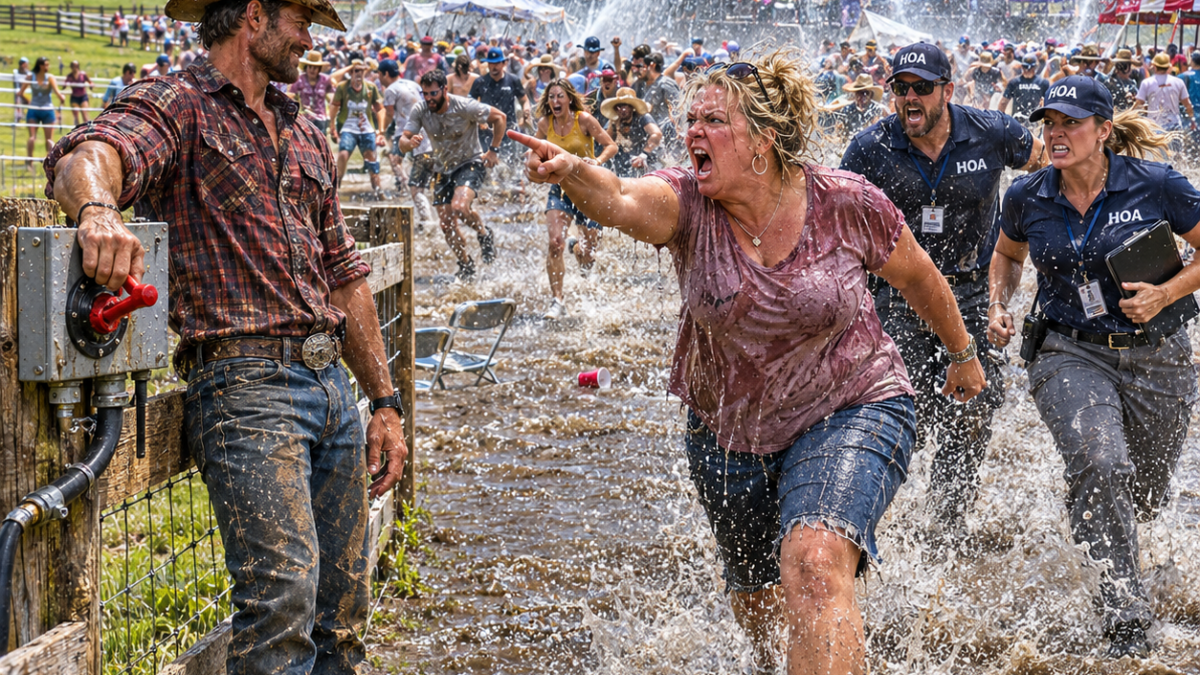
HOA Karen Built a Whole Stage on My Farm—So I Shut Down Her 400-Person Festival and Exposed the Fake Deed Behind It
**“YOU’RE REALLY GOING TO SHUT DOWN A CHARITY EVENT IN FRONT OF FOUR HUNDRED PEOPLE, NATHAN? THIS FIELD BELONGS TO PINE HAVEN, AND YOU’RE ABOUT TO HUMILIATE YOURSELF!” HOA president Brenda Wallace shouted from the giant wooden stage she had ordered built in the middle of my farm after I had already told her—in writing—she did not have permission to put so much as a folding chair there.**
**I didn’t storm the stage or drive my tractor through the crowd; I handed the sound technician my deed, let the fire marshal discover the electrical system was permitted for a completely different property, and watched the sheriff calmly tell hundreds of confused families that their HOA had no legal right to keep the festival running on my land.**
**Then, as the music died and vendors began packing up, Brenda pulled a newly recorded deed from her bag, smiled at me, and said, “You don’t even own this field anymore”—and when my lawyer saw that the document supposedly transferred twenty-seven acres of my farm to Pine Haven using my father’s signature, she stopped smiling too.**
My name is Nathan Cole.
Four months before an HOA president built a concert stage on my pasture, I thought the biggest problem on my farm was a leaking barn roof.
I owned eighty-six acres outside a small Tennessee town.
My grandfather, Raymond Cole, bought the first part of the property in 1964.
My father added another twenty acres later.
When my parents retired to Florida, I bought the farm from them.
We used to run cattle more seriously.
By the time I took over, I mostly grew hay, kept six horses, maintained the old barns, and leased one section to a neighboring farmer named Thomas Walker.
The place was not glamorous.
It was a working farm.
Red barn.
Old fences.
Gravel road.
Creek.
Pastures.
Oak trees.
Mud when it rained.
Dust when it didn’t.
I liked it exactly that way.
Pine Haven Estates sat along my eastern property line.
About 180 homes.
Clubhouse.
Pool.
Tennis court.
Stone entrance.
Perfect landscaping.
My farm had existed decades before Pine Haven.
It had never joined the HOA.
No covenants.
No dues.
No architectural committee.
No Pine Haven authority over my barns, fences, horses, hay, road, or grass.
For years, that created no problem.
Some residents bought eggs from me.
Children waved when I drove the tractor.
Susan Parker sometimes brought her grandchildren to see the horses.
She always asked first.
Frank Miller grew more tomatoes than any human being should reasonably possess and regularly brought me bags of them.
That was the relationship I liked.
Ask.
Respect the answer.
Be neighborly.
Then Brenda Wallace became HOA president.
I want to be fair about Brenda.
She was not a cartoon villain from the first day.
She organized food drives.
Helped an elderly resident after a storm damaged his roof.
Pushed Pine Haven to replace outdated playground equipment.
She cared about how the neighborhood looked.
She cared about its reputation.
PART2:
The problem was that somewhere along the way, she began treating anything visible from Pine Haven as something Pine Haven should control.
Our first argument was almost funny.
The clubhouse pool overlooked part of my southern pasture.
Residents could see my fence.
Hay bales.
Tractor shed.
Sometimes cattle.
Brenda emailed asking whether I would install a decorative privacy fence.
I said no.
My existing farm fence worked.
She offered to split the cost.
Still no.
Then she asked if I would repaint the barn a “neutral color.”
The barn was red.
It had been red longer than Brenda had been alive.
I told her I liked it red.
Two weeks later:
EXTERIOR COMPLIANCE NOTICE.
My barn supposedly violated Pine Haven visual standards.
I laughed.
Then called Rebecca Hayes, the attorney who had handled my farm purchase.
She read the notice.
“Did you secretly join an HOA without telling me?”
“No.”
“Then frame this.”
“What?”
“It’s funny.”
She sent Pine Haven a short letter explaining my property was not subject to its covenants.
The violation disappeared.
I thought that was the end.
Then Pine Haven announced its Summer Celebration.
Food.
Music.
Games.
Local vendors.
Charity fundraiser for the volunteer fire department.
I actually thought it sounded nice.
Then Frank stopped at my farm.
“Did you agree to the festival?”
“What festival?”
“The Pine Haven one.”
“I know there’s a festival.”
“The field.”
“What field?”
He pointed toward my lower pasture.
“Your field.”
That was how I learned Pine Haven planned to hold most of its event on my property.
Frank showed me the newsletter.
Clubhouse lawn.
Pool parking.
And a big green area labeled:
COMMUNITY MEADOW.
The “community meadow” was my lower pasture.
I called Brenda.
“There’s a mistake in your festival map.”
“No mistake.”
“The community meadow is my pasture.”
“That area has always been used by Pine Haven.”
“No, it hasn’t.”
“Residents walk there.”
“Some do because I let them.”
“We’re only using a small portion.”
Her map showed almost twelve acres.
Food trucks.
Vendor tents.
Inflatables.
Parking.
A concert stage.
That was not small.
I said no.
Brenda went silent.
Then:
“The festival has already been announced.”
“That isn’t my fault.”
“We have deposits.”
“Also not my fault.”
“The fire department charity is depending on this.”
That one bothered me.
My family had supported the volunteer fire department for years.
Brenda knew it.
So I offered a compromise.
Three acres beside the county road.
Overflow parking only.
No stage.
No food trucks.
No construction.
No alcohol.
Insurance required.
Repair any grass damage.
Free.
Brenda said it was not enough.
Then she asked whether I would lease the full twelve acres for the weekend.
I said maybe.
Rebecca drafted a simple event license.
One weekend.
Pine Haven carries insurance.
No permanent structures.
No digging.
No heavy equipment without approval.
Event ends at 10 p.m.
Trash removed.
Damage repaired.
Price:
One dollar.
I did not want their money.
I wanted boundaries.
Brenda never signed it.
Instead, she sent her own version.
Five years.
Not one weekend.
Five years of Pine Haven control over the field for “community events and related activities.”
Temporary and semi-permanent structures.
Parking improvements.
Electrical service.
Storage.
Landscaping.
Future recreational enhancements.
I called Rebecca.
“She turned a weekend festival into a five-year land-use agreement.”
Rebecca laughed once.
“Do not sign that.”
“I wasn’t planning to.”
I rejected it.
Brenda told me I was being unreasonable.
Then the newsletter changed.
Festival location:
PINE HAVEN COMMUNITY GROUNDS.
No mention of my farm.
I assumed they moved it.
For two weeks, nothing happened.
I cut hay.
Fixed part of the barn roof.
Helped Susan’s grandson find a lost dog.
Then Frank brought tomatoes.
We talked about the festival.
He said several board members believed it would stay entirely inside Pine Haven.
“Did Brenda show you my agreement?”
“What agreement?”
“The one-dollar event license.”
Frank stared at me.
“You offered the field?”
“I offered three acres first. Then the larger area under a one-weekend license.”
“She told the board you refused all access.”
That bothered me.
I had been willing to help.
I simply did not want my generosity turned into permanent control.
I sent Frank the agreement.
By the next morning, two other board members had called.
So had Susan.
People were beginning to realize Brenda’s version was incomplete.
Brenda responded by telling me all festival communication had to go through HOA counsel.
Fine.
Rebecca could talk to their lawyer.
Then orange survey flags appeared in my pasture.
I pulled them out.
Next day:
More flags.
I checked my camera.
A survey crew had entered through the Pine Haven side.
I stopped them politely.
Supervisor:
David Collins.
He showed me his work order.
Client:
Pine Haven HOA.
Project:
Community Event Lawn.
I showed him my certified survey.
David compared the maps.
His expression changed.
“This boundary is different from what we were given.”
His map moved Pine Haven’s boundary nearly three hundred feet into my farm.
Conveniently capturing most of the festival area.
“Where did you get that?”
“HOA office.”
He stopped work.
Again:
Contractor not the problem.
He had been given bad information.
Rebecca ordered a new certified survey.
Result:
Exactly what my deed already showed.
Lower pasture:
Mine.
Every inch.
Pine Haven’s recorded subdivision ended at my eastern fence.
No community meadow.
No event lawn.
No twelve-acre HOA parcel.
Their attorney acknowledged the survey.
That should have ended it.
Brenda switched arguments.
Historical recreational easement.
“Show us.”
Nothing.
Then:
Original developer agreement with my father.
Dad denied it.
Then:
Residents had used the field openly for more than ten years.
That was partly true.
Because Dad and I let them.
Rebecca found old emails from Dad.
Pine Haven residents were welcome to walk near the creek if they closed gates and stayed away from livestock.
Permission.
Not ownership.
Then one Thursday afternoon I came home and found a flatbed truck at the pasture entrance.
Steel framing.
Wood panels.
Lighting trusses.
Speakers.
Power equipment.
“Where are you going?”
“Pine Haven stage site.”
“There is no Pine Haven stage site here.”
Driver checked the address.
My farm.
I refused entry.
He left.
I called Brenda.
“You tried delivering a stage to my property.”
“Wrong entrance.”
“Where is it actually going?”
“HOA property.”
Lie.
Saturday morning, Thomas Walker called at six.
“There’s machinery in your lower pasture.”
I drove down.
Someone had temporarily removed part of my fence from the Pine Haven side.
Workers were assembling a real stage.
Large platform.
Steel roof.
Lighting.
Speakers.
Power distribution.
Support stakes already hammered into my ground.
I walked to the supervisor.
William Foster.
I showed him the survey.
His face dropped.
“We were told Pine Haven owns this.”
“They don’t.”
He called his office.
Work stopped.
Brenda arrived fifteen minutes later.
“You cannot keep interrupting HOA contractors.”
“They are standing on my farm.”
“This land is disputed.”
“No. Your claim is disputed. The certified survey isn’t.”
“Our attorney is handling it.”
“Court order?”
None.
“Recorded easement?”
None.
“Deed?”
None.
Then Brenda looked at me.
“You’re going to regret making this difficult.”
Rebecca arrived.
She told the crew not to continue without written authority.
William agreed.
Workers left.
Brenda stood in the pasture watching them go.
I thought the stage was dead.
Monday morning:
Pine Haven recorded a property claim.
Twenty-seven acres.
Not twelve.
Twenty-seven.
Based on a supposed 2016 land-use transfer agreement signed by my father, Robert Cole.
According to the document, Dad transferred the land to Pine Haven in exchange for road and drainage improvements.
I called him.
He laughed.
“I never gave Pine Haven twenty-seven acres.”
“Did you sign anything in 2016?”
“Drainage permission.”
That got Rebecca’s attention.
Major storm.
Blocked drainage.
Pine Haven needed temporary access across the lower pasture to replace a culvert.
Dad gave them two weeks.
No transfer.
No sale.
He found the original agreement.
His signature at the bottom.
Rebecca compared it with Pine Haven’s “land transfer.”
Identical signature image.
Copied.
Now this was not just Brenda overreaching.
Somebody had created a property document.
We sent everything to Pine Haven’s attorney.
He asked Brenda for the original.
She said it came from archived developer files.
Where?
She did not know.
Then the stage crew returned.
Different company.
Nighttime.
Through Pine Haven.
By sunrise, the stage was almost complete.
My cameras caught trucks.
Workers.
Brenda herself walking around with a flashlight at 11:40 p.m.
I called the sheriff.
The deputy documented everything but explained the recorded property claim made part of the dispute civil until a court could review it.
Rebecca immediately filed for emergency relief.
Hearing:
Monday.
Festival:
Sunday.
One day earlier.
Deliberate.
By Saturday afternoon:
Tents.
Food trucks.
Portable toilets.
Temporary fencing.
Generators.
Advertising.
PINE HAVEN SUMMER CELEBRATION.
I wanted to block the pasture with tractors.
Rebecca said no.
I wanted to dismantle the stage.
Rebecca said absolutely not.
“Why should I let them do this?”
“You aren’t letting them. You have objected repeatedly.”
“They’re building on my land.”
“And documenting every warning helps us.”
“That doesn’t help my grass.”
“No.”
She smiled.
“But it helps the judge.”
I hated that answer.
Still listened.
Sunday came.
Families began arriving before noon.
Folding chairs.
Children.
Strollers.
Most had no idea there was a property dispute.
That mattered.
They were not people trying to steal my farm.
They were neighbors attending what their HOA told them was a legitimate charity festival.
I did not yell.
Did not threaten anyone.
Rebecca contacted the sheriff.
And the fire marshal.
The event permit listed Pine Haven clubhouse grounds.
Not my pasture.
The stage permit referenced an HOA parcel.
Not mine.
Temporary electrical approval applied only to equipment located inside Pine Haven.
Not the generator network installed on my farm.
Now the issue was more than disputed ownership.
The event itself was outside its permitted site.
2:15:
Music started.
2:40:
Brenda walked onto the stage.
2:46:
I drove into my lower pasture.
Rebecca beside me.
Sheriff’s vehicle behind us.
Fire marshal behind him.
No horn.
No tractor.
No dramatic charge through the crowd.
I parked beside the sound table.
Handed the technician my deed and the sheriff’s notice.
He looked at everything.
Then shut the music off.
The fire marshal inspected the electrical setup.
Wrong location.
Never inspected there.
Shutdown order.
The sheriff approached Brenda.
“The property owner has not authorized this event to continue.”
Brenda screamed that Pine Haven had legal rights.
Rebecca asked:
“Show them.”
Brenda waved the disputed 2016 agreement.
The deputy said the court would decide that Monday.
For Sunday:
The event could not continue on an unpermitted site over the owner’s objection.
People started leaving.
Some angry.
Some embarrassed.
Several apologized.
I said the same thing repeatedly.
“You didn’t know.”
That mattered to me.
Frank approached with a folding chair.
“I’m sorry.”
“Not your fault.”
“It feels like it.”
“It isn’t.”
Then Brenda came off the stage.
Face red.
“You ruined a charity fundraiser.”
“No.”
I stayed calm.
“You built a stage on my farm after I told you no.”
“You embarrassed Pine Haven.”
“You chose the location.”
“This is community property.”
Rebecca stepped forward.
“No, it isn’t.”
Brenda smiled.
Confident.
Almost relieved.
“I was hoping Nathan would make this mistake.”
She reached into her bag.
Pulled out a folder.
Rebecca opened it.
Not the 2016 agreement.
A warranty deed.
Recorded three days earlier.
Seller:
Robert Cole.
Buyer:
Pine Haven Community Association.
Property:
Twenty-seven acres.
Including my lower pasture.
I stared at Dad’s signature.
Rebecca looked at the recording stamp.
“Where did you get this?”
Brenda folded her arms.
“From the county record where it belongs.”
My phone rang.
Dad.
His voice was shaking.
“Nathan, somebody came to my house.”
“What?”
“Two men from a title company.”
“When?”
“This morning.”
“What did they want?”
“They wanted me to confirm a deed.”
Rebecca moved closer.
“What did you tell them?”
“I never sold Pine Haven anything.”
Then Dad said:
“Nathan, the signature they showed me came from the papers I signed when I sold the farm to you.”
Not the 2016 drainage agreement.
A newer signature source.
Someone had gone searching for a cleaner version.
Brenda started walking away.
Sheriff told her to stop.
“I’ve done nothing wrong.”
Maybe she had not created it.
Maybe she genuinely believed it.
We did not know yet.
Evidence first.
Then Rebecca examined the legal description.
Her expression changed.
“Nathan.”
“What?”
“This isn’t about your festival field.”
Twenty-seven acres extended south.
Across the creek.
Past my hay barn.
To the only gravel road connecting my house and northern pasture to the county highway.
“If this deed were real, Pine Haven would control your farm road.”
Then Frank looked beyond the abandoned stage.
Several men in safety vests stood near my gravel road.
Survey equipment.
Orange paint.
Fresh stakes.
They had not come for a concert.
I walked over.
Project sheet:
PINE HAVEN SOUTH CONNECTOR.
Two-lane road across the twenty-seven acres.
Through my existing farm road.
Then south into more than three hundred acres owned by:
Wallace Development Group.
Brenda’s husband Richard.
The festival field was not the prize.
It was the beginning of a road.
The proposed connector crossed my lower pasture, creek, and gravel road before entering Richard’s development land.
Frank stared.
“The board never approved this.”
Brenda called it “future planning.”
Rebecca pointed at the active survey crew.
“Future ideas usually don’t require construction centerlines.”
Sheriff stopped the survey.
Workers cooperated.
Once again:
Contractors had been handed papers and told Pine Haven owned the land.
Families continued leaving.
Food vendors packed.
Children asked what happened.
I hated seeing it.
One food truck owner, David Parker, had purchased hundreds of dollars in supplies.
“I’m not blaming you,” he said. “I just wish somebody told us.”
I asked whether Pine Haven guaranteed his fee.
“No.”
That bothered me.
Brenda had risked vendors’ money too.
I told David to document his losses.
Rebecca immediately warned me not to personally promise payment for something the HOA caused.
Fair.
The fire department had already received donations.
I made it clear I did not want those returned.
The charity was innocent.
The deed was not.
Rebecca explained that a recorded document can create chaos even when fake.
Recording offices do not hold a trial each time a deed is submitted.
We needed a judge to freeze it.
Otherwise Pine Haven could theoretically attempt leases, loans, easements, or construction while the title dispute remained open.
Monday courthouse:
Packed.
Brenda sat with Pine Haven attorney Charles Benton.
Richard sat behind her.
Different lawyer.
Rebecca leaned toward me.
“Husband and wife with separate counsel.”
“Meaning?”
“Somebody already sees conflicting interests.”
Dad testified by video.
Judge asked:
“Did you sell twenty-seven acres to Pine Haven?”
“No.”
“Did you sign this deed?”
“No.”
“Did you ever intend to transfer this land?”
“No.”
Then the signature.
Dad acknowledged it was his.
Rebecca produced the original closing paperwork.
Identical image.
Same tiny break.
Same angle.
Same shape.
Document expert explained:
Real handwritten signatures vary.
Perfect duplication indicates copying.
Then came the notary.
Linda Harper.
Real Tennessee notary.
She had never met Dad.
Never notarized the deed.
Her license number was real.
The seal image had been copied from an older public document.
Judge looked at Pine Haven’s lawyer.
“Is your client asking me to recognize this deed?”
Charles stood.
“Not at this time, Your Honor.”
Brenda started to speak.
He stopped her.
Probably the smartest thing anyone at Pine Haven had done that week.
Judge froze everything.
No construction.
No road work.
No event structures except controlled removal.
No sale.
No lease.
No new easements.
No utility installation.
No reliance on the disputed deed.
Then Rebecca raised the South Connector.
Richard’s attorney said Wallace Development had no active work on my property.
Rebecca showed photographs.
Survey crew.
Road stakes.
Festival layout.
Project plan.
Judge ordered Wallace Development completely off my land without written permission.
Six hours later, Frank called.
“Brenda’s suspended.”
“From the board?”
“From presidential duties. Investigation first.”
Jennifer Collins became acting president.
That was reasonable.
Brenda using a questionable deed did not automatically prove she created it.
Facts still mattered.
Tuesday:
Stage came down.
This time:
Written removal agreement.
Insurance.
No new digging.
Grass restoration.
Everything signed.
Pine Haven residents came to help clean.
Susan picked up cups.
Frank carried barriers.
David returned with leftover food and fed volunteers.
The terrible festival became a cleanup day.
I let them help.
Kindness does not erase wrongdoing.
But it can keep wrongdoing from poisoning everybody around it.
Then Rebecca investigated Wallace Development.
Richard controlled 312 acres south of my farm.
Project:
WALLACE RIDGE.
142 proposed homes.
Clubhouse.
Walking trails.
Small commercial corner.
One huge problem:
Road access.
The southern county lane was narrow, steep, winding, expensive to improve.
The easiest route to a major road went north.
Across my farm.
Through Pine Haven.
Estimated alternative road upgrades:
Millions.
Suddenly my twenty-seven acres were more valuable as an access corridor than as farmland.
Motive.
Still not authorship.
Then the county recorder produced electronic filing details.
The fake deed had been sent through a legitimate document-processing service.
Client account:
Pine Haven Community Association.
Submission email:
A shared HOA property account.
Technology logs:
Sent late at night from Pine Haven’s office.
User login:
B. Wallace.
Brenda.
Stronger.
Still not complete.
Metadata from the deed file:
Computer identifier tied to Richard Wallace’s development office.
Now both were inside the chain.
Then the HOA accountant checked records.
No $480,000 payment to my father.
Yet the fake deed claimed consideration of $480,000.
No check.
No wire.
No closing statement.
No board resolution.
No property-tax adjustment.
Nothing.
Then Jennifer found a memo Brenda had circulated months earlier:
**Historic land transfer needs administrative correction before summer activation.**
Summer activation.
The festival.
Another message:
Brenda:
**COMMUNITY USE SHOULD HAPPEN BEFORE NATHAN PUSHES BACK.**
Richard:
**STAGE WILL HELP ESTABLISH PRACTICAL POSSESSION.**
I stared at it.
Rebecca slowly nodded.
“If Brenda had signed your one-dollar event license, Pine Haven would have admitted you owned the property.”
That was why she rejected it.
My generous offer was dangerous.
It documented reality.
Brenda needed the event to look like Pine Haven using land it already controlled.
The stage itself had been placed exactly where the South Connector would enter the twenty-seven-acre strip.
Festival parking mirrored the future intersection.
Vendor lane followed future road alignment.
Portable toilet service route matched another access path.
Then the county planning office produced Richard’s email from one week before the festival:
**Festival operations will demonstrate temporary traffic capacity across Phase One connector area.**
There it was.
The party was partly a traffic test.
Hundreds of people.
Cars.
Food trucks.
Emergency access.
Vendor movement.
All across my farm.
Without telling me.
Pine Haven residents were furious when Frank explained it.
Most did not even know Wallace Ridge existed.
Many did not want another 142 homes sending traffic through their neighborhood.
Residents overwhelmingly rejected future Wallace Ridge traffic through Pine Haven without a full homeowner vote.
Richard’s route became even harder.
Then surveyor Thomas Reed called.
“I’ve been walking the twenty-seven acres.”
“Good news?”
“No.”
I met him near the creek.
Orange paint on trees.
Metal removal tags.
Construction clearing marks.
The South Connector needed a new concrete bridge there.
No county permit.
But that was not the worst part.
Thomas pulled back temporary landscape fabric.
Underneath:
Compacted gravel.
Road base.
Already installed.
Hidden beneath soil and grass matting.
We followed it.
Nearly half a mile through my farm.
Richard had already begun building.
Farther south:
Two acres of trees cleared.
Forty-foot corridor.
Excavators.
Drainage pipe.
Concrete bridge supports.
Construction had been hidden behind thick woods where I rarely drove.
An operator named Robert Jenkins shut down when I told him I owned the land.
He showed me a work packet.
Same twenty-seven-acre claim.
Plus another document.
Temporary construction easement.
Sixty feet beyond the disputed land.
Signed by:
Nathan Cole.
Me.
I had never signed it.
Another copied signature.
Sheriff arrived.
Work stopped.
No immediate arrests.
Again:
Contractors had relied on documents.
Then Thomas moved toward the creek.
“Everybody back!”
A deep crack had opened along the bank.
The temporary road crossing narrowed the channel.
Rain upstream had increased flow.
Water was backing up.
Then one temporary pipe shifted.
Water blasted through.
Creek level jumped.
The center of the illegal crossing collapsed.
A wall of muddy water broke through.
Toward my lower pasture.
Toward Pine Haven.
It carried gravel.
Fence posts.
Branches.
Road material.
Water swept across the same field where Brenda’s stage had stood days earlier.
The wide pasture slowed it.
Not enough.
My old drainage ditch connected toward Pine Haven’s storm system.
Frank called.
“Water’s coming through the west channel.”
“Move people off the low streets.”
No questions.
He moved.
Jennifer issued an emergency message.
Cars moved uphill.
Families left low areas.
Fire department arrived.
County public works opened downstream drainage controls.
For almost an hour, everyone watched.
Thankfully, it was smaller than feared.
Two backyards flooded.
One basement took around six inches.
A storage shed shifted.
No house destroyed.
Nobody injured.
That mattered more than everything.
The contractor turned over every document.
He was angry at Wallace Development.
“They told us title was clean.”
Rebecca nodded.
“They told everyone that.”
County environmental engineers inspected the crossing.
No waterway permit.
No floodplain review.
No inspection.
Channel narrowed by almost forty percent.
One bridge support placed in the legal floodway.
It looked like a project built under the assumption nobody would inspect until it was too expensive to undo.
Build first.
Explain later.
The same strategy again.
Residents helped clean up.
I let them.
Brenda built the plan.
They did not.
Dad came up from Florida.
We walked the damaged field.
He stared at the old stage area.
“They really built a concert stage here?”
“Whole thing.”
“And you scattered everybody?”
“I shut the event down.”
Dad smiled.
“Your grandfather would’ve driven a tractor through it.”
“Rebecca would’ve killed him.”
“Probably.”
Then I showed him the hidden road.
His smile disappeared.
He noticed cedar posts.
“Those are Raymond’s.”
My grandfather’s old boundary markers.
Some still had faded yellow paint.
Several had been removed by construction.
Others buried.
My land had never been some forgotten meadow.
My family had marked it.
Worked it.
Fenced it.
Maintained it.
Then Dad remembered something about the 2016 drainage work.
The contractor then had been connected to Brenda’s father-in-law, George Wallace.
The Wallace family had possessed Dad’s real temporary drainage permission for years.
That gave investigators a plausible source for the copied signature.
Then the forensic report arrived.
The fake 2016 land-transfer agreement had been created on a modern computer.
Its wording partly came from Dad’s old drainage agreement.
But the twenty-seven-acre legal description came from a Wallace Development survey created only eighteen months earlier.
Same strange punctuation.
Same wrong abbreviation.
Same error.
They copied their own mistake.
Then Richard’s email:
**NEED CLEAN OWNERSHIP PAPER BEFORE CONNECTOR GRADING.**
Brenda:
**OLD DRAINAGE DOCUMENT GIVES US ENOUGH HISTORY.**
Richard:
**HISTORY IS NOT TITLE.**
Brenda:
**I KNOW.**
That changed everything.
She knew.
Then:
Richard:
**CAN RECONSTRUCT FROM PRIOR FAMILY SIGNATURE.**
Three days later:
Fake land-transfer agreement appeared in Pine Haven archives.
Court preservation order produced Richard’s project files.
Folder:
SOUTH ACCESS.
Draft deed one:
No signature.
Draft two:
Dad’s old drainage signature.
Final:
Cleaner signature copied from my farm closing papers.
Someone had improved the forgery.
Metadata:
Richard’s user account.
Brenda’s HOA messages then supplied the last bridge.
Richard sent her the final deed.
**USE THIS FOR ACTIVATION.**
Brenda replied:
**WILL FILE BEFORE FESTIVAL.**
No misunderstanding.
No archive surprise.
No old forgotten deed.
Pine Haven’s board removed Brenda permanently.
Six to one.
Brenda cast the only vote against removal.
All HOA ties to Wallace Development were suspended.
South Connector dead as far as Pine Haven was concerned.
Jennifer became acting president.
First new rule:
No claim over outside property without independent legal review.
Second:
No private-land event without signed permission from the real owner.
Frank told me those rules were necessary.
I told him they seemed obvious.
“Apparently obvious things need bylaws.”
Fair.
The fake deed was marked disputed and later voided.
My title insurer confirmed the legitimate chain.
Eighty-six acres.
Mine.
No twenty-seven-acre transfer.
Then Rebecca asked whether I wanted to sue Pine Haven itself aggressively.
That was complicated.
The HOA had been used.
The stage had been funded under the HOA name.
Some surveys had been paid from HOA money.
But the full board had been misled.
Residents did not approve the South Connector.
So we separated claims.
Festival damage.
Fence repair.
Grass restoration.
Unauthorized stage installation.
Those could be handled through HOA insurance and reserve funds.
Forgery.
Hidden road.
Fake construction easements.
South Connector.
Those claims focused on Brenda, Richard, Wallace Development, and directly involved parties.
Punish responsibility.
Not an entire neighborhood.
Wallace Development’s insurer estimated creek cleanup and restoration alone at roughly $230,000.
Then Richard’s lenders discovered his cheapest route no longer existed.
Alternative southern access:
Around $4.7 million in upgrades.
Investors paused.
One left.
Contractor bills slowed.
Then Richard called me.
Rebecca put him on speaker.
“Nathan, I want to settle.”
“Through lawyers.”
“I’m calling as a neighbor.”
“You don’t live near me.”
Pause.
“Fine. As someone who wants this over.”
“What do you want?”
“I’ll abandon the connector.”
“You already lost it.”
“I’ll pay creek damage.”
“You’re already responsible.”
“I’ll buy the twenty-seven acres.”
“No.”
“Listen first.”
“No.”
“Five million.”
I stayed quiet.
“Five million for the land and permanent access.”
“No.”
“Six.”
“No.”
“Seven.”
“No.”
His tone changed.
“You’re turning down seven million dollars over farmland.”
That sentence told me everything.
To Richard:
Farmland.
To me:
My road.
My creek.
My barn.
My family’s history.
My control over what happens here.
“Build your road on your own land.”
I ended the call.
Rebecca smiled.
“Seven million.”
“I know.”
“You didn’t even counter.”
“No.”
“I’m a lawyer. I enjoy counters.”
For about one afternoon, that was funny.
Then Thomas found another hidden problem.
Buried pipe under the South Connector route.
Old.
Large.
Possibly agricultural.
Heavy equipment had driven over it.
“What does it carry?”
“We don’t know.”
“Of course.”
Then Thomas added:
“It’s pressurized.”
That stopped me.
Dad remembered.
Old irrigation main.
Grandpa once pumped water from a farm pond through several fields.
We had not used it in years.
Yet now it carried clean water south.
Toward Wallace Ridge.
Someone had reactivated it.
Wallace contractors had installed a new pump connection.
No easement.
No permission.
Water meter showed more than two million gallons over roughly six months.
Dust control.
Concrete.
Grading.
Construction.
Richard was using water from my farm to build the development that needed my land.
Then the damaged pipe failed.
Clear pressurized water burst through the ground.
Pressure increased instead of falling.
Automatic booster pump on Richard’s side was pushing backward into my old line.
Another section failed.
Soil under the illegal bridge supports washed away.
One concrete column tilted.
Then collapsed into the creek.
Road base sank.
An excavator tipped toward the washed-out trench.
And beneath the collapsing earth, something else appeared.
Concrete chamber.
Old.
Steel door.
Faded letters:
COLE FARM STORAGE.
Then:
DANGER — FUEL SYSTEM.
Dad’s face changed.
“My grandfather had diesel storage down here.”
Nobody had thought about it in decades.
Old concrete underground room.
Steel tanks.
Installed in the late 1960s.
Eventually drained and abandoned.
Or believed drained.
Firefighters tested the soil.
Meters beeped.
Water from the broken irrigation system was entering the old vault.
Thomas looked toward the creek.
“If there’s diesel residue or sludge inside, water could push it out.”
Seconds later:
Dark liquid.
Then smell.
Diesel.
Old and strong.
The vault wall cracked.
Black fuel-water mixture poured toward the creek.
For the second time in weeks, Pine Haven received an emergency warning because of work that never should have existed on my farm.
Containment booms went in.
Absorbent pads.
Pumps.
Environmental teams.
Residents were told to keep away from the creek.
Two ducks were found with oil on their feathers and taken for cleaning.
Thankfully:
No drinking water affected.
No homes evacuated.
Most heavy contamination captured before reaching Pine Haven’s lower pond.
The environmental investigator told me:
“This is not automatically your fault because it’s on your land.”
“I understand.”
“It was your family’s system.”
“I understand that too.”
I cooperated fully.
Cleanup first.
Blame later.
Engineering investigation showed the fuel vault had remained stable for decades.
Wallace Development road work damaged support around it.
Construction loads cracked the surrounding structure.
Then unauthorized water pressure forced water inside.
The flood worsened everything.
Wallace Development complained the fuel vault had not been disclosed.
Technically true.
I had not known about it.
Rebecca’s answer was better.
“You cannot complain that a landowner failed to warn you about something buried beneath a road you had no right to build.”
Then investigators discovered Wallace engineers had actually detected an underground void before construction.
Project notes:
POSSIBLE AGRICULTURAL STORAGE.
Engineer recommended investigation.
Richard wrote:
**PROCEED AROUND IT. NO DELAY.**
That email hurt him.
He knew something was there.
He chose speed.
Again:
Momentum.
Build enough.
Spend enough.
Make stopping painful.
Except this time the strategy had opened a fuel vault.
Cleanup lasted weeks.
Contaminated soil removed.
Old tanks extracted.
Creek tested repeatedly.
Most immediate remediation costs went to Wallace Development’s insurer because their construction caused the release.
My insurance covered part of historical tank removal.
I paid a smaller share myself.
That felt fair.
The old system was part of my family’s land.
Being right about the boundary did not mean pretending I had no responsibility for anything.
That mattered to Pine Haven residents.
Susan later told me people expected me to fight every dollar.
I didn’t.
Protecting yourself is not the same as refusing your own share.
Eventually:
Creek restored.
Bank stabilized.
Illegal bridge supports removed.
Hidden road base excavated.
Temporary pipe removed.
Wallace signs gone.
Grass reseeded.
The southern pasture looked awful for a while.
But it was mine again.
Then the judge formally voided the fake twenty-seven-acre deed.
No evidence Dad ever sold anything.
Signature copied.
Notary information misused.
Legal description pulled from Wallace Development’s modern survey.
County record corrected.
Clean title restored.
I framed the order.
Rebecca said I would.
She was right.
It hangs beside Grandpa Raymond’s farm photo.
The fake temporary easement with my copied signature was void too.
Wallace Development had:
No road.
No bridge right.
No construction corridor.
No water line.
No utility easement.
If Richard wanted to develop Wallace Ridge, he had to use the southern county lane and legally upgrade it.
Expensive.
But legal.
His problem.
Brenda’s evidence was handled separately.
She knowingly rejected my one-dollar festival license because signing it would admit I owned the land.
She told Pine Haven residents my father had sold them the pasture.
She helped file the false deed before the festival.
She used the event to create the appearance of community possession.
Richard’s files contained the deed drafts.
Richard’s company built the hidden road.
Richard’s contractors tied into my irrigation.
Richard’s development financially benefited.
Brenda used the HOA to help establish and disguise parts of that plan.
Related conduct.
Not identical conduct.
Their legal consequences were handled separately.
Months.
Hearings.
Insurance disputes.
Civil claims.
Restitution.
Criminal proceedings tied to false property records and unauthorized construction.
No instant movie ending.
Brenda lost every Pine Haven leadership role permanently.
She remained a homeowner.
Some residents wanted her forced out.
I did not.
Owning a house and serving as HOA president are different rights.
If rules matter, they matter when you are angry too.
Richard’s Wallace Ridge project collapsed financially.
No cheap northern route.
Nearly five million dollars in alternative road work.
Environmental cleanup.
Lenders learning about the fake deed.
Investors walking away.
Wallace Development eventually sold part of the southern property to cover debt.
Years later, another developer bought the remainder.
They came to see me once.
“Would you sell an access strip?”
“No.”
“Okay. Thank you.”
They left.
Fifteen minutes.
No fake deed.
No midnight construction.
No festival stage.
No flood.
No fuel spill.
Sometimes the difference between a business transaction and a disaster is somebody accepting the word no.
Pine Haven changed too.
Jennifer finished Brenda’s term.
Frank became president the following year after residents practically forced him to run.
His entire campaign speech lasted around three minutes.
“I’ll show you the documents before I ask you to vote.”
He won easily.
New rules:
No outside property use without verified written permission.
No related-party contract without disclosure.
No major development agreements hidden in executive files.
No event permit listing one parcel while the event occurs on another.
No “historic community use” claim without actual recorded rights.
Frank jokingly called one of them the Nathan Rule.
I told him to rename it.
Eventually he did.
Pine Haven insurance paid festival damage.
My fence was replaced.
Pasture reseeded.
Stage holes repaired.
Temporary electrical trench restored.
Vendors received partial compensation.
David recovered most of his costs.
The volunteer fire department kept every legitimate donation.
The next summer, Pine Haven held another fundraiser.
Inside Pine Haven.
Their clubhouse grounds.
Their property.
Fully permitted.
Small stage.
Food trucks.
Games.
Frank invited me.
I almost declined.
Susan called.
“You are coming.”
That was not a question.
So I went.
At one point Frank handed me the microphone.
I handed it back immediately.
He laughed.
“You scattered the last festival. At least say hello at this one.”
“No.”
The crowd laughed.
By then the image of Brenda standing on a giant stage in my pasture while I drove in with the sheriff behind me had become Pine Haven legend.
Kids told the story like I had personally unplugged the speakers.
I didn’t.
The sound technician did.
After seeing the deed.
The fire marshal shut down the electricity.
After seeing the permit.
The sheriff stopped the event.
After reviewing the ownership dispute.
I did not storm a stage.
I did not threaten four hundred people.
I did not drive a tractor through tents.
Slow, boring systems ended it.
Documents.
Permits.
Survey.
Sheriff.
Fire marshal.
Less exciting than revenge.
Much safer.
Dad eventually went back to Florida.
Before leaving, we walked the lower pasture.
Grass had returned.
No stage.
No South Connector stakes.
No trucks.
No banners.
“You keeping the field?”
“Yes.”
“Good.”
“Why?”
“Seven million would’ve ruined you.”
I laughed.
“You think seven million dollars would ruin me?”
“No.”
He looked toward the southern woods.
“But every time you saw a hundred cars driving through here, you’d remember you sold something you never wanted to sell.”
He was right.
Money matters.
So does knowing what you value before someone offers enough to make you forget.
I kept the pasture.
Kept the creek.
Kept the road.
Repaired my old farm bridge.
Planted ten oak trees near where the South Connector had begun.
Not as a dramatic statement.
I like oaks.
Frank joked Pine Haven would need permission before looking at them.
He was learning.
My relationship with Pine Haven changed too.
Before everything:
I thought of it as one thing.
HOA.
Rules.
Brenda.
Complaints.
After:
Frank.
Susan.
Jennifer.
David.
Parents.
Retirees.
Teenagers who picked flood debris from my pasture.
Most had never wanted my land.
They wanted a nice neighborhood.
They trusted the wrong people.
That distinction saved me a lot of bitterness.
Susan still brings her grandchildren to see my horses.
She asks first.
Frank still gives me too many tomatoes.
Residents occasionally walk near the creek.
They ask.
I usually say yes.
Kindness did not disappear because somebody abused it.
It just became clearer.
Dad once gave Pine Haven temporary drainage access because their homes were at risk.
Kindness.
Someone later tried turning that permission into ownership.
Wrong.
I offered an entire festival field for one dollar because a charity fundraiser could help people.
Kindness.
Brenda rejected it because written permission ruined the ownership story she wanted to create.
Wrong.
I allowed Pine Haven volunteers back after the flood.
Kindness.
I still pursued the people who forged documents and damaged my land.
Boundaries.
Both can exist.
About a year after everything ended, Frank came to my barn carrying something wrapped in an old blanket.
“What is that?”
“Gift.”
“I don’t like HOA gifts.”
“You’ll like this one.”
He unwrapped a wooden board.
Piece of the original festival stage.
One contractor had saved it when the structure came down.
Someone painted across it:
**NATHAN’S FARM — ASK FIRST**
I stared.
“You are not putting that on my property.”
Frank laughed.
“It’s already on your property.”
“Leave.”
He laughed harder.
I kept it.
It hangs inside the barn now.
Visitors ask about it.
Then I tell the story.
How an HOA president decided my pasture was “community grounds.”
How she rejected a one-dollar permission agreement.
How she built an entire concert stage anyway.
How more than four hundred people showed up.
How the fire marshal killed the music.
How the sheriff ended the event.
How a fake deed led us to a hidden development road.
How that road caused a flood.
How the flood helped expose an old fuel vault.
How one ridiculous festival revealed a development plan worth far more than any charity fundraiser.
People usually ask the same question.
“Did it feel good watching everybody leave?”
No.
Not really.
Watching children carry chairs back to cars did not feel good.
Watching food vendors lose sales did not feel good.
Watching Frank realize his own HOA had misled him did not feel good.
I never wanted the festival destroyed.
I wanted my no respected.
Brenda could have held almost the same event legally.
The offer was sitting in her inbox.
One dollar.
One weekend.
Insurance.
Cleanup.
That was all.
But permission was exactly what she did not want.
Permission would have meant acknowledging the land belonged to me.
She needed something else.
She needed the festival to look like proof Pine Haven already possessed the field.
That choice scattered the event.
Not me.
Pine Haven still holds its summer fundraiser every year.
Sometimes I hear the music from the hill.
It comes from the clubhouse lawn now.
Their land.
Their stage.
Their rules.
My pasture stays quiet.
Horses graze where four hundred people once stood.
Grass covers the holes where stage supports went into the ground.
The South Connector is gone.
The creek runs normally.
Grandpa’s old cedar posts still mark the southern boundary.
Every legitimate deed now says what it should have said all along.
Nathan Cole owns the farm.
Pine Haven owns Pine Haven.
Wallace Development owns whatever land it legally kept.
No one needs fake paperwork.
No one needs midnight construction.
No one needs a concert stage to prove possession.
It took a festival, a lawsuit, a flood, a fuel spill, millions of dollars in failed development plans, and a mountain of legal bills to reach something my grandfather could have explained in one sentence.
Ask before using someone else’s property.
And if they say no—
accept it.








