HOA Claimed My 340-Acre Inherited Valley as Their Community Park—Then the Judge Read My Grandfather’s 1961 Deed
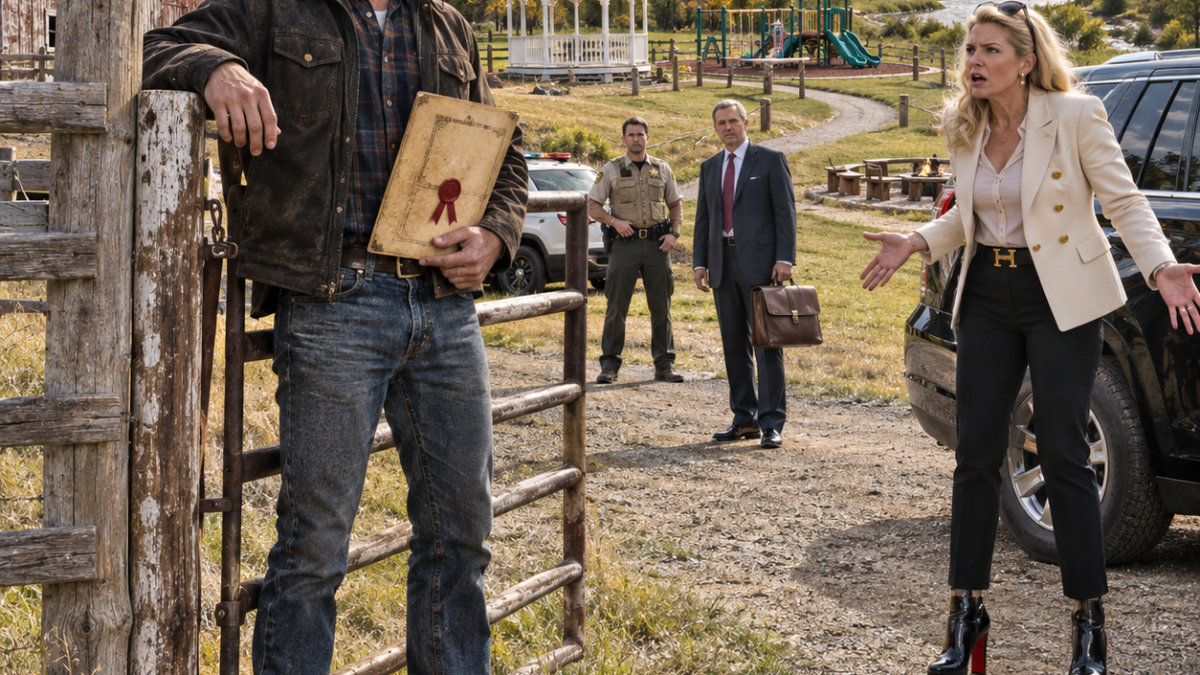
HOA Claimed My 340-Acre Inherited Valley as Their Community Park—Then the Judge Read My Grandfather’s 1961 Deed.
I drove back to Montana to inherit the 340-acre valley my grandfather had protected for sixty-three years and discovered an HOA had built a playground, gazebo, kayak launch, fire pit, donation box, and more than two miles of trails across it—then its president handed me a cease-and-desist and ordered me off my own inheritance.
Tammy Bridwell told nearly three hundred families that I was an out-of-state heir trying to steal “their” beloved valley, filed an adverse-possession claim over every acre, tried to annex the property through her husband’s seat on the county planning commission, and even sent an excavator toward the barn where my father’s childhood height marks were still penciled into the cedar boards.
What she did not understand was that my family had paid the property taxes every single year since 1961, the developer had signed a recorded easement explicitly forbidding every park and trail the HOA had built, and when the judge finally saw the deed, sixty-three years of tax receipts, the fraudulent annexation vote, and nighttime camera footage of Tammy’s husband vandalizing my barn, the story stopped being about “community access” and became a question of who had been trespassing all along.
My name is Garrett Holloway.
Until six weeks before Tammy Bridwell told me to get off my own land, I had not set foot in Gallatin County, Montana, in twenty-five years.
That is not something I am proud of.
There are reasons.
Some are good.
Most are just reasons people tell themselves long enough that they become habits.
I left when I was nineteen.
My father died in a rollover accident on the ranch road.
Same road I eventually drove back in on.
He had been hauling fencing posts after an early rain.
A rear tire slipped at the shoulder.
The truck rolled twice down an embankment.
I was in the barn when I heard my mother scream from the porch.
That sound followed me longer than the funeral did.
For months afterward I could not walk near the barn without seeing the red Ford.
Could not hear Cottonwood Creek without hearing my mother.
Could not look at the road without seeing skid marks.
So I did what nineteen-year-olds sometimes call starting over when what they really mean is running.
I went to Oregon.
Civil engineering degree.
Portland.
Drainage systems.
Stormwater design.
Transportation projects.
Eventually my own consulting work.
I built a competent life.
A respectable one.
I married.
I had a son.
Colton.
Six years old when all this happened.
I told myself I would return to Montana someday.
At first someday meant Thanksgiving.
Then spring.
Then after the next project.
Then after my grandfather slowed down.
Then after Colton was old enough to appreciate it.
PART2:
Someday became a word I used so often that it stopped containing an actual date.
My grandfather, Clayton Holloway, never pushed.
That made the guilt worse.
He would call.
“How’s Oregon?”
“Wet.”
“You still designing pipes?”
“Drainage systems.”
“Pipes.”
“Yes, Grandpa.”
“How’s the boy?”
“Good.”
“Bring him out sometime.”
“I will.”
“Okay.”
Never:
When?
Never:
You promised.
Never:
Your father would be disappointed.
Clayton did not manipulate people.
He let them disappoint themselves.
Then he died at eighty-nine.
Alone in the farmhouse he built in 1961.
The attorney called me on a Tuesday.
I remember because I was reviewing a municipal culvert replacement outside Beaverton when my phone rang.
The attorney spoke gently.
There was a will.
The house.
Equipment.
Several old vehicles.
And 340 acres of valley between the Bridger Mountains and the Gallatin River.
Mine.
I drove three hours from the airport after landing in Bozeman.
The closer I got, the more familiar everything became.
Not visually.
Viscerally.
Mountains.
Light.
The particular dry smell of late-season grass.
A fence line angled wrong beside the county road.
Cottonwoods.
Then the ranch road.
I slowed.
My hands tightened on the steering wheel before I realized.
Same road.
Same embankment.
Different truck.
Twenty-five years.
I kept going.
The farmhouse appeared through trees.
Gray weathered siding.
Green metal roof my grandfather installed after a hailstorm.
Deep porch.
One stone chimney.
Cottonwoods behind it moving in the wind.
I parked.
For several seconds I could not get out.
Then I heard the screen door.
It moved slightly in the breeze.
Squeak.
Same hinge.
Same sound.
I was eleven again.
Coming inside muddy.
My grandmother yelling not to track dirt.
My father laughing.
Grandpa at the kitchen table.
It is strange what grief preserves.
Not major speeches.
Door hinges.
Boots.
The boots were still beside the entrance.
Clayton’s.
Dry mud in the tread.
His old felt hat hung on the peg.
I put my hand on the doorframe.
“I should have come sooner.”
The house did not answer.
Of course it didn’t.
The valley did.
Just not the way I expected.
I walked through the house first.
Everything smelled like cedar, dust, old coffee, and the faint mineral scent of well water.
My grandfather’s bed made.
Newspaper stacked beside chair.
A mug in sink.
Then I stepped through the back door.
The South Meadow had been where he ran cattle.
Forty head when I was a kid.
Grass.
Fencing.
One watering trough.
Nothing else.
Now there was a playground.
Bright yellow slide.
Blue climbing structure.
Rubber mulch.
Benches.
A little sign with the Ridgecrest Meadows HOA logo.
I stood there trying to make the image reconcile with memory.
It didn’t.
Beyond it stood a white gazebo.
Not small.
Wedding-gazebo size.
String lights.
Picnic tables.
Flower planters.
A gravel trail crossed the meadow.
Wooden post:
RIDGECREST NATURE TRAIL
MILE 0.3
I followed it.
Another sign.
Then another.
Fire pit near tree line.
Circular benches.
Kayak launch at creek bend.
A rack for life jackets.
A metal donation box bolted to post.
HELP US MAINTAIN YOUR COMMUNITY VALLEY
SUGGESTED ANNUAL DONATION: $20
I read it twice.
Then laughed once.
Not because funny.
Because my body needed something to do with disbelief.
Twenty dollars.
To use my grandfather’s land.
I walked for two hours.
Trails.
Bridges.
Trail markers.
Trash cans.
Dog-waste stations.
A small wooden platform overlooking the creek.
Everything professionally built.
Everything maintained.
Everything on Holloway land.
Not beside.
Not near.
On.
I had the deed in my jacket pocket.
The attorney had given me certified copy.
Legal description.
340 acres.
Boundaries clear.
I knew property lines because I am a civil engineer and because Clayton taught them when I was a boy.
He would take me along fence lines.
“Know where your ground stops.”
“Why?”
“Because somebody else always has an idea where theirs starts.”
I had thought it was one of his old-man sayings.
Turns out old men sometimes repeat things because younger people have not yet lived long enough to understand them.
I reached the gazebo.
One picnic table had coffee cup on it.
Fresh.
Someone had been there recently.
Then gravel crunched.
Black Cadillac Escalade came down access lane.
Glossy enough to look absurd against mud.
It stopped.
Driver’s door opened.
Out stepped Tammy Bridwell.
I did not know her name yet.
I remember appearance because she seemed assembled for another environment.
Platinum-blonde hair.
Gray designer sweater.
Hermès belt.
Chanel sunglasses pushed onto head.
Red-soled ankle boots sinking slightly into meadow mud.
She looked around at playground as though checking contractors had followed her instructions.
Then at me.
“You must be Clayton’s grandson.”
No hello.
No handshake.
“Garrett.”
“I’m Tammy Bridwell.”
She said the name as if I might have heard it on radio.
“President of Ridgecrest Meadows.”
She spread one hand.
“And guardian of this valley.”
Guardian.
Of my valley.
I looked at playground.
“You built all this?”
“Community did.”
“On whose land?”
Her smile appeared.
Not warm.
Administrative.
“Well, that’s actually why I came.”
She walked back to Escalade.
Removed a cream envelope.
Embossed gold HOA logo.
Four pages.
CEASE AND DESIST.
It instructed me not to fence, alter, restrict, close, interfere with, or otherwise disrupt access to any “established community amenity” within Ridgecrest Valley.
At bottom:
ANY ATTEMPT TO DISRUPT ESTABLISHED COMMUNITY USE WILL RESULT IN IMMEDIATE LEGAL ACTION.
I folded it.
Put it in jacket beside deed.
“Tammy.”
“Yes?”
“This is my property.”
“Your grandfather was a sweet man.”
That sentence already irritated me.
“But he understood the valley belonged to the community now.”
“No.”
She tilted head.
“He did.”
“No, he didn’t.”
“He allowed residents to use it for more than a decade.”
“That doesn’t make it yours.”
“You’ve been gone twenty-five years.”
“I still own it.”
“You inherited dirt.”
There was contempt in the word.
“Your grandfather was a senile old man who couldn’t even mow his own pasture toward the end.”
My jaw tightened.
She pointed toward playground.
“We built the amenities.”
“We paved trails.”
“We maintain everything.”
“We made this valley worth something.”
I stared at her.
“You built it without permission.”
“You should be thanking us.”
“For trespassing?”
She laughed.
“Please.”
I pulled deed partly from pocket.
“I have the deed.”
Tammy barely looked.
“Deeds don’t beat people, sweetheart.”
Then smiled.
“I have three hundred families behind me.”
She had 287.
But three hundred sounded better.
She stepped closer.
“You’re one person.”
“That matters.”
“You’re an outsider.”
“That doesn’t change title.”
“It changes reality.”
She turned.
Red soles disappeared into Escalade.
Before closing door, she said:
“Get off the community valley before I call the cops.”
I looked at my grandfather’s meadow.
“My grandfather bought this land in 1961.”
“Your grandfather is dead.”
Door shut.
Cadillac pulled away.
Dust.
I stood still until sound faded.
Then took out phone.
Called Phil Carver.
Real-estate attorney in Bozeman.
Recommended by estate lawyer.
I told him everything.
Long pause.
Then:
“Let me get this straight.”
“Okay.”
“They built a park on land you own.”
“Yes.”
“And HOA president just gave you a cease-and-desist ordering you not to interfere with their use.”
“Yes.”
Another pause.
“Garrett.”
“Yeah?”
“These people have absolutely no idea what they just started.”
That was first time I smiled.
Phil explained adverse possession basics.
Montana has specific statutory requirements.
Open use alone is not magic.
There are requirements involving duration, hostility, and crucially taxes in the source story’s legal framing.
The Holloway family had paid property taxes every year.
Sixty-three consecutive years.
HOA:
Zero.
Their twelve years of using my grandfather’s pasture did not become ownership because residents liked gazebo.
But Phil warned:
“Do not ignore anything they file.”
“Why?”
“Bad claims still become dangerous if unanswered.”
He was right.
Three days later, first violation notice arrived.
Hand-delivered by Brenda Moss.
HOA secretary.
She knocked twice.
Left envelope.
Barn cited as Category Three Structural Hazard under Ridgecrest Community Code 14.7.
Fine:
$500 per day.
Second next morning.
Well house cited as uninspected water facility.
$500 daily.
Third:
Ranch fencing failed community aesthetic requirements.
Running cattle fence apparently incompatible with wrought-iron-and-limestone look of Ridgecrest.
By end of week:
$2,400 per day.
For structures on property not inside HOA.
I called Phil.
He laughed this time.
Actually laughed.
“She can’t fine you.”
“I know.”
“You’re not a member.”
“I know.”
“Your property was never annexed.”
“I know.”
“Then file them.”
I did.
Every notice.
Every envelope.
Photos.
Dates.
Times.
No angry response.
Because Phil said something important:
“She isn’t relying on legal authority yet.”
“What is she relying on?”
“Pressure.”
He was right again.
Thursday night, Tammy held emergency HOA meeting at her house.
Earl Stanton told me.
Seventy-two.
Neighbor east of valley.
Rancher forty years.
He still knew people in subdivision.
“She served charcuterie.”
“What?”
“And prosecco.”
“Why are you telling me that?”
“Because I want you to understand level of emergency.”
I laughed.
Then he told me about PowerPoint.
THE HOLLOWAY THREAT.
Twelve slides.
Aerial photo.
Red circles.
“Endangered community spaces.”
Legal options.
Then final slide:
Photograph of me beside my truck at ranch gate.
Taken without me knowing.
Caption:
OUTSIDE THREAT TO OUR COMMUNITY.
I sat quietly.
Earl watched.
“You okay?”
“No.”
“Good.”
“Why good?”
“Means you’re not stupid.”
Tammy had turned me into villain before I had removed a single bench.
Then her husband spoke.
Wade Bridwell.
Gallatin County Planning Commission.
Polo shirt.
Pressed khakis.
Perfect hair.
Wine glass in hand.
Earl repeated his words:
“As a planning commission member, I can assure you the valley will be annexed into Ridgecrest jurisdiction by spring.”
Annexed.
That changed everything.
This was not just HOA president improvising.
Wade was using government position.
The goal:
Absorb 340 acres into Ridgecrest.
Give HOA leverage.
Zoning.
Assessments.
Restrictions.
Maybe eventually acquisition.
I sat on Clayton’s porch that night with black coffee.
Cold wind.
Cottonwoods creaking.
Coyote somewhere beyond tree line.
I opened laptop.
Started reading Montana annexation statutes and ethics rules.
By midnight:
Three pages notes.
One key issue.
Conflict of interest.
If Wade voted on annexation study directly benefiting wife’s HOA without disclosure, that could undermine process.
I wrote it.
Underlined twice.
Did not call Tammy.
Did not post.
Did not threaten.
I kept reading.
Next week, drove through Ridgecrest.
287 homes.
Similar roofs.
Similar mailboxes.
White SUVs.
Gray crossovers.
Entrance monument:
RIDGECREST MEADOWS
WHERE COMMUNITY COMES HOME
Under it:
SAVE OUR VALLEY.
SIGN THE PETITION AT TAMMYBRIDWELL.COM
She had built a website.
Of course.
Two weeks later, certified letter from county clerk.
Formal adverse-possession claim.
All 340 acres.
HOA claimed twelve continuous years of open, notorious, hostile maintenance.
Forty-six pages exhibits.
Playground.
Gazebo.
Trails.
Fire pit.
Kayak launch.
Donation box.
Every unauthorized improvement became evidence they supposedly owned it.
I read filing in truck twice.
Precise.
Aggressive.
Dangerous if ignored.
Phil called.
“You have sixty days to respond.”
“What if I didn’t?”
“Potential default.”
“So she can win by silence.”
“That’s exactly what she’s counting on.”
Out-of-state heir.
No local knowledge.
Maybe overwhelmed.
Maybe sells.
Maybe does not answer.
But I had tax records.
Sixty-three years.
Holloway family paid every year.
HOA:
Nothing.
Their claim had enormous problem.
Phil wanted to keep that quiet until response strategy ready.
Meanwhile Tammy launched public campaign.
SAVE OUR VALLEY.
147 signatures.
Six-foot banner.
Newspaper interview.
She called me an “out-of-state heir trying to take away the heart of our community.”
That phrasing worked.
People believed.
Why wouldn’t they?
For twelve years they had used playground.
Trails.
Gazebo.
Some bought homes partly because brochure promised access.
They were not all thieves.
Many had been sold a lie.
That distinction became important later.
At time, seeing flyers in coffee shops infuriated me.
One afternoon I walked into Bozeman cafe.
A stack beside register.
SAVE RIDGECREST VALLEY.
“Beloved community treasure threatened by single out-of-state heir.”
I picked one up.
Barista smiled.
“Have you signed?”
I looked at her.
“No.”
“It’s really sad.”
“What is?”
“This guy’s grandfather died and now he’s trying to shut everything down.”
I almost told her.
I was guy.
Instead:
“Sounds complicated.”
She nodded.
“Greed.”
I paid for Americano.
Left.
That conversation stayed.
Narrative had moved ahead of facts.
Tammy called reporter first.
Built website first.
Held fundraiser first.
Claimed “community” before I claimed “property.”
Public opinion rewards whoever tells story fastest.
Legal ownership does not.
I drove to Earl’s.
He poured bourbon into mason jars.
No pretension.
“What did Grandpa say about all this?”
Earl looked toward mountains.
“He fought them.”
“How?”
“Letters.”
“Meetings.”
“Called developer.”
“Did they have permission?”
“No.”
“Never?”
“Never.”
He looked at me.
“Clayton told them to stop twice.”
“He got old.”
“Couldn’t fight.”
“They kept building.”
That hurt more than Tammy.
I had imagined Grandpa quietly tolerated.
Maybe liked families.
Maybe informally permitted.
No.
He objected.
Was ignored because old.
Because alone.
Because everyone assumed time would turn theft into tradition.
That night I searched barn.
Found wooden box under workbench.
Fence pliers.
Saddle oil.
Old bolts.
Three handwritten letters.
Addressed to Ridgecrest Meadows HOA.
Requesting removal of unauthorized structures.
Never sent.
Maybe he became ill.
Maybe discouraged.
Under them:
One addressed to me.
Garrett.
I sat on barn floor before opening.
His handwriting had worsened.
I kept this valley for you.
I always believed you’d come home.
That was most painful sentence anyone had written to me.
Twenty-five years.
He believed.
I had not.
I held letter a long time.
Then called Phil.
“File response.”
“We will.”
“And start pulling everything on Pinnacle Development Group.”
“Why Pinnacle?”
“Because somebody sold these people valley access they didn’t own.”
Phil paused.
“Now you’re thinking correctly.”
The morning they came for barn began at 6:30.
Low mechanical rumble.
I was making coffee.
Looked through window.
Two flatbeds.
Excavator crawling off trailer.
Tracks chewing frozen pasture.
Four workers.
Orange vests.
Hard hats.
Tammy standing beside black Escalade sixty yards away.
White Moncler puffer.
Crocodile boots.
Phone.
Starbucks.
She pointed.
“Start with the barn.”
My grandfather built that barn in 1967.
With friends.
My father helped as boy.
Inside one wall, pencil lines recorded my height.
Age seven.
Ten.
Thirteen.
I walked toward crew recording.
Foreman met halfway.
“Sir, we were told these are condemned.”
“By who?”
He held paper.
Official-looking county seal.
Emergency demolition authorization.
Signed:
Harlan Weeks.
County building inspector.
I knew enough engineering and code procedure to be suspicious.
Emergency demolition normally needs more than an inspector’s casual note.
Court order or proper imminent-danger certification.
“Who gave you this?”
“HOA arranged.”
“Do not touch that building.”
“Sir—”
“I own it.”
He looked at Tammy.
She lifted coffee.
“Garrett, honey, this is for everyone’s safety.”
I called 911.
Then Phil.
Tammy shouted:
“That barn could collapse on a child.”
There were no children within three hundred yards.
Private ranch.
Dawn.
Deputy Lewis Vega arrived twelve minutes later.
He read paper.
Then again.
Looked at foreman.
Then Tammy.
“Ma’am, this is not valid demolition order.”
Her smile stayed.
Grip on Starbucks tightened.
“Officer, I’m president of Ridgecrest—”
“This isn’t Ridgecrest Meadows.”
“It’s private property.”
Contractor packed up.
Twenty minutes.
Tammy left.
But not before damage.
Steel saw had already cut through three cedar planks.
I walked inside.
The cuts crossed height marks.
Garrett age 7.
Gone partly.
Age 10.
Gone.
Age 13.
Section lying in sawdust.
For some reason that hit harder than playground.
Land can be restored.
Board replaced.
But my father’s pencil marks were direct physical link to childhood.
Someone had cut through them because a woman wanted better view.
I stood until frost melted around boots.
Then picked cedar pieces.
Bagged.
Photographed.
Property damage report.
Tracks.
Ruts.
Cut boards.
Chain of evidence.
Phil had said it enough:
Everything dated.
Everything duplicated.
Everything stored in more than one place.
No charges that day.
Tammy insulated herself.
Verbal instruction.
Someone else signed paper.
Contractors said they relied on authorization.
But pattern grew.
Then Phil called Tuesday.
Excited.
“Come in.”
“Why?”
“Bring coffee.”
His desk covered records.
Corporate filings.
Plat maps.
Scanned document.
Recorded easement agreement from 2012.
Parties:
Clayton Holloway.
Pinnacle Development Group.
Developer that built Ridgecrest.
Three pages.
Limited right-of-way.
Southeast corner.
Single access road to county road.
That was all.
Then explicit language:
No additional structures, improvements, amenities, recreational facilities, trails, or other installations on Holloway land.
Pinnacle had signed.
Clayton had signed.
County recorded.
Then Phil showed sales brochures.
Glossy.
Ridgecrest Meadows.
EXCLUSIVE VALLEY ACCESS.
COMMUNITY PARK.
PANORAMIC MOUNTAIN VIEWS.
NATURE TRAILS THROUGH PRISTINE MEADOWLAND.
Amenities built on Grandpa’s property.
Promised to buyers despite agreement saying they could not.
My stomach turned.
“Tammy knows?”
Phil looked at me.
“As HOA president, she had access to governing documents and recorded easements transferred with association records.”
“Can we prove she saw it?”
“Likely.”
Later we could.
Minutes.
Emails.
References.
She knew valley was private.
She knew amenities unauthorized.
Still built more.
Still posted.
Still claimed.
Still sued.
The homeowners may have been victims of developer misrepresentation.
Tammy no longer looked innocent.
Then stormwater.
Ridgecrest drainage system routed runoff from 287 homes onto my land.
No permit.
No engineering study covering impact.
Creek bank eroding.
Potential Montana Water Quality Act issue.
I sat in Phil’s office.
Afternoon light through blinds.
Everything Tammy built her authority on began to look hollow.
“What now?”
Phil smiled.
“We build case.”
“And?”
“Let her keep digging.”
I hated phrase.
Would learn its value.
Strategy:
Quiet-title action.
Trespass and property-damage claims.
DEQ complaint.
Attorney-general consumer-fraud referral against Pinnacle.
Independent survey.
Cal Peterson out of Helena spent four days.
GPS.
Steel pins with orange caps.
Boundaries.
The pounding of survey pins into Montana soil sounded better than music.
Certified findings:
Playground on Holloway property.
Gazebo.
2.3 miles trails.
Fire pit.
Kayak launch.
Stormwater outfall.
All.
I installed eight trail cameras.
Infrared.
Motion.
Timestamp.
Some obvious.
Some not.
Public-record request to planning commission.
Minutes.
Votes.
Wade’s conflict disclosures.
If any.
Earl agreed testimony.
Clayton objected to use.
Critical.
Adverse possession built around hostile use.
If owner repeatedly objects, the factual story changes dramatically.
Tammy kept decorating.
Facebook post:
Just ordered the cutest new gazebo lights from Pottery Barn! Our valley will look stunning for summer party.
Forty-three likes.
Twelve hearts.
My land.
Lawsuit pending.
I screenshotted.
Sent Phil.
He replied:
Perfect.
I asked why.
“Because she’s documenting continued unauthorized improvement after dispute is known.”
There it was again.
Evidence.
Weeks quiet.
Surface only.
Tammy posted sunsets from gazebo.
“Our beautiful valley.”
Petition links.
I drove past daily.
Joggers.
Families.
Kids.
Coffee cups.
People living normal lives on land they genuinely believed was part of neighborhood.
That made anger complicated.
I could not hate a mother because her children played on slide someone else lied about.
Tammy I could dislike just fine.
Pinnacle too.
But residents?
Some hostile.
Some misled.
Many had never read easement.
Why would they?
Waiting became hardest.
Every morning I watched use.
Every morning Grandpa’s letter sat in shirt pocket.
Phil kept saying:
“Let case work.”
Then vandalism.
Wednesday night.
Next morning barn wall:
GO HOME OUTSIDER.
Red spray paint.
Two-foot letters.
Three cameras ripped.
Cables cut.
Roofing nails placed deliberately across ranch road tire tracks.
Sixteen.
I heard hiss before I saw.
But vandals found three cameras.
Missed five.
One inside birdhouse.
Timestamp:
11:47 p.m.
Black Escalade.
Headlights off.
Wade Bridwell.
Dark hoodie.
Plastic bag.
Spray can.
Six minutes.
His face clear infrared.
The planning commissioner.
Husband of HOA president.
Spray-painting dead man’s barn.
I backed up footage three places.
Sent Phil.
Deputy Vega.
Trespass.
Property damage.
Tampering concerns.
Then Tammy posted safety alert.
“The man currently occupying Holloway Ranch…”
Occupying.
I owned it.
“…seen walking valley alone at night carrying flashlights and unknown equipment.”
That equipment:
Survey gear.
Camera checks.
Property maintenance.
“Several families report feeling unsafe.”
Comments turned ugly.
Sketchy.
Creepy.
Outsider.
Why is he walking at night?
Because I live there.
Newspaper story next.
HEIR CLAIMS VALLEY; COMMUNITY FIGHTS BACK.
Tammy first quote.
“This valley has been the soul of our neighborhood for over a decade.”
A mother:
“My kids learned to ride bikes on that trail. It’s the reason we bought this house.”
That quote hurt because it was sincere.
Her children really did.
She really bought believing access.
The villain in her story was me because she did not yet know developer deceived her.
That distinction stopped me from responding recklessly.
Then fundraiser.
PROTECT OUR VALLEY GALA.
Tammy’s house.
Cocktail attire.
$75 entry.
DJ.
Champagne tower.
Invitation photograph of my valley.
THIS IS OUR HOME.
HELP US DEFEND IT.
One hundred fifty attended.
Raised $11,200.
Legal fund.
Bass reached farmhouse through valley.
Grilled steak smell.
People partying to fund lawsuit to take land.
I sat at kitchen table.
Grandpa’s letter beside me.
Did nothing publicly.
Saved screenshots.
Next morning Phil filed quiet-title and trespass actions.
FOIA response due four days.
I repaired cameras.
Added more.
Reinforced house locks.
Walked property at dawn.
Dusk.
Not because necessary.
Because walking it was my right.
Fourth evening, sunset turned Bridgers pink.
Then orange.
Then purple.
I thought about Grandpa watching same view for sixty years while people slowly treated his land as theirs.
How many nights had he sat alone?
How many times had he thought nobody would help?
I had left him.
That guilt could have broken me.
Instead it hardened something useful.
I was not leaving again.
FOIA response arrived Monday.
Planning Commission minutes.
November 14.
Preliminary annexation study.
Vote:
4–3.
Wade Bridwell voted yes.
Deciding vote.
No conflict disclosure.
Nothing in minutes acknowledging wife was president of HOA requesting annexation.
Phil filed ethics complaint same day.
Three days later:
Counterclaim.
Ridgecrest HOA.
Grayling & Cole.
High-dollar litigation firm.
Declaratory judgment seeking adverse possession over all 340 acres.
Forty-one pages.
Twelve years stewardship.
Community identity.
Reliance.
Improvements.
Emotional framing.
Tax requirement problem remained.
Recorded easement remained.
Grandpa’s objections remained.
Phil read.
“Let them spend.”
“They’re trying to take my land.”
“I know.”
“You seem cheerful.”
“Because expensive paper doesn’t repair missing elements.”
Meanwhile Wade lobbied county commissioners about condemnation.
Blighted structures.
Public recreational use.
Eminent-domain concept.
Courts from Tammy.
Government from Wade.
Two-front pressure.
Then settlement offer.
Brenda Moss delivered.
Heavy cream monogram:
TB.
Chanel No. 5.
$40,000.
For full transfer of 340 acres.
Land valued roughly thousands per acre.
Offer around $118 an acre.
Letter ended:
You don’t belong here.
TB.
I actually considered framing.
Called Phil.
He said:
“Frame it after we file it.”
“Why?”
“Bad-faith negotiation evidence.”
Even insults had evidentiary value.
DEQ report came same week.
Illegal stormwater routing.
No permits.
No proper engineering review.
Years of creek-bank erosion and residential runoff.
Fine around $185,000 in source narrative.
Attorney General opened consumer-fraud investigation against Pinnacle.
287 families potentially sold premium “valley access” developer had no right to offer.
Pressure shifted.
Walls closing around everyone except deed holder.
Night before hearing, I sat alone in barn.
Ran hand over surviving height marks.
Shallow pencil grooves.
Garrett age eight.
Eleven.
Some survived.
Some gone.
Grandpa’s letter.
Owl in rafters.
Old hay.
Motor oil.
Wind.
Tomorrow, one way or another, judge would decide whose story the documents supported.
Gallatin County Courthouse.
Bozeman.
Limestone.
Tall windows.
Quiet authority.
Hall outside courtroom 2B packed.
Sixty-three Ridgecrest residents.
Some matching SAVE OUR VALLEY shirts.
Earl sat behind me.
Deputy Vega uniform.
Gazette reporter.
TV cameraman.
Tammy entered like charity event.
Cream Valentino blazer.
Pearls.
Hair perfect.
Her attorneys with leather briefcases.
She smiled at supporters.
Don’t worry.
I’ve got this.
She did not.
HOA attorney presented first.
Polished.
Twelve years.
Children.
Playground.
Photos.
Community.
He said “community” twenty-two times.
Never centered title.
Then Phil stood.
One brown accordion folder.
No PowerPoint.
No dramatic opening.
First:
1961 deed.
Holloway family ownership.
Second:
Sixty-three years property-tax payments.
Every year.
Receipts.
Canceled checks.
HOA:
Zero.
Third:
2012 recorded easement.
Limited access road.
Explicit prohibition against additional structures, improvements, or amenities.
Phil read.
Held signatures.
“Both parties understood.”
“Only one honored.”
Fourth:
Pinnacle brochures promising amenities they lacked legal authority to provide.
Fifth:
Cal Peterson certified survey.
Playground.
Gazebo.
2.3 miles trails.
Fire pit.
Kayak launch.
Stormwater.
All on Holloway land.
Sixth:
Video.
Courtroom monitor.
11:47 p.m.
Escalade.
Wade in hoodie.
Spray can.
GO HOME OUTSIDER.
Six minutes.
The silence afterward was different from legal listening.
People recalculating.
Wade stared floor.
Tammy turned toward him.
Their attorney suddenly interested in briefcase.
Seventh:
FOIA minutes.
Wade deciding annexation vote.
No conflict disclosure.
Eighth:
DEQ report.
Illegal stormwater.
Fine.
Phil closed folder.
Then said:
“Your Honor, this is not adverse possession.”
He looked toward HOA table.
“This is organized encroachment with HOA letterhead.”
Judge Patricia Calloway took eleven minutes.
Longest eleven minutes of my adult life.
She returned.
Adverse-possession claim:
Denied in full.
Holloway family title confirmed.
HOA ordered to remove unauthorized structures within ninety days.
Damages:
$127,000.
Pinnacle referred to state attorney general proceedings.
Wade referred to county ethics board.
Then she looked directly at Tammy.
“Mrs. Bridwell.”
Tammy sat very still.
“Squatting on someone’s inheritance and calling it community does not make you neighbors.”
Pause.
“It makes you trespassers with a newsletter.”
Nobody moved.
Then Earl started clapping.
Slow.
One pair rancher’s hands.
I turned.
Wanted him to stop.
Then another resident clapped.
Then another.
Not Tammy loyalists.
People realizing they had been deceived.
I did not feel triumphant.
Mostly relieved.
And sad.
Because playground full of children’s memories would come down.
Those children had not forged deed.
The court could be right and loss still feel complicated.
Tammy stood.
Smoothed blazer.
Walked out.
Heels faster than arrival.
Wade six steps behind.
Head down.
Outside, reporter stopped me.
“Mr. Holloway, any comment?”
Camera.
I looked through courthouse windows toward distant mountains.
“My grandfather kept that valley for sixty-three years.”
I swallowed.
“Through drought.”
“Recessions.”
“Losing his son.”
“He kept it because he believed someone in his family would come back and take care of it.”
Then:
“All I did was show up and tell the truth.”
That became evening-news closing line.
Three days later, national outlets picked story.
Property-rights legal blog.
Comments brutal toward Tammy.
I stopped reading quickly.
Removal began.
Playground first.
Slides.
Rubber mulch.
Families watched from subdivision.
Some cried.
I understood.
Gazebo took longer.
Built well.
Trails plowed.
Signs stacked.
Fire pit filled.
Kayak launch removed.
I watched some.
Not all.
It felt like surgery.
Necessary.
Still painful to watch every incision.
Six weeks after ruling, Ridgecrest held election.
Tammy removed:
89 to 4.
Brenda Moss resigned next day.
Wade resigned Planning Commission before ethics process completed.
His statement said:
Spend more time with family.
Infrared video made that phrase awkward.
Pinnacle faced class action from 112 Ridgecrest homeowners.
People had paid premium prices for access developer could not legally provide.
Attorney-general investigation continued.
Rick Lundgren tried settlement.
Tammy moved through town differently.
I saw her once in grocery store.
Dark jeans.
North Face jacket.
New Balance sneakers.
No red soles.
No designer belt.
She saw me.
Picked up basket.
Turned down different aisle.
No confrontation.
Good.
I had enough.
The valley healed faster than expected.
By late spring grass pushed through old trail beds.
Creek bank stabilization began after stormwater changes.
Two mule deer returned South Meadow.
First in years, Earl said.
I established Holloway Valley Conservation Trust.
Two hundred acres placed under permanent conservation easement.
Not all 340.
I wanted working ranch flexibility on remainder.
Partnered with Montana State Extension.
Agricultural education for local children.
Ranching.
Water conservation.
Soil.
Watersheds.
Every other Saturday.
Free.
Waiting list grew to forty-seven.
Then I did something some people could not understand.
I created public trail access.
Legal.
Three miles along creek.
Maintained by trust.
Recorded easement.
Clear boundaries.
Sign:
HOLLOWAY VALLEY TRAIL
PUBLIC ACCESS BY PERMISSION OF THE HOLLOWAY VALLEY CONSERVATION TRUST
Permission.
That word became everything.
Tammy never understood it.
Community does not mean everyone gets whatever they have used long enough.
Community starts with asking.
Respect.
Agreement.
You can share land.
Trails.
Creek.
Views.
But generosity without consent is not community.
It is taking.
Some Ridgecrest families came.
People who signed petition.
Attended fundraiser.
Wore shirts in court.
Now they arrived quietly.
One father brought two kids.
At trailhead he shook my hand.
“We didn’t know.”
I looked at him.
I believed him.
Not everybody.
But him.
“I’m sorry.”
“Thank you.”
His kids ran ahead.
That felt better than lawsuit.
I repaired barn that summer.
Replaced cut cedar planks.
Resealed roof.
Saved every height mark that survived.
Could not recreate lost ones honestly.
I considered drawing them back.
Didn’t.
History should not be faked just because we miss it.
Then one Saturday in August, I stood Colton against wall.
Six years old.
Barefoot.
He tried to stand taller.
“Heels down.”
“I am.”
“You’re lifting.”
“No.”
I drew line.
COLTON — AGE 6.
First new mark.
Earl came that evening.
Bourbon.
Two clean glasses.
We sat porch.
Light turned valley gold.
Cottonwoods long shadows.
Creek copper.
“Clayton would be proud.”
I looked down.
“He kept it for you.”
Then:
“You kept it for your boy.”
Wind moved through trees.
Meadowlark sang.
I wanted that to be enough.
But rebuilding my relationship with valley took longer than court.
For months, I woke expecting engines.
Escalade.
Certified letter.
Camera alert.
Legal victory does not instantly convince nervous system danger ended.
I walked property lines compulsively.
Checked survey markers.
Opened county records repeatedly.
Phil told me stop.
“They’re not changing overnight.”
“I know.”
“Then sleep.”
“Working on it.”
I started therapy.
Yes.
Civil engineer.
Montana ranch family.
Man who spent twenty-five years avoiding grief.
Turns out none of that made me immune.
First sessions were about Tammy.
Eventually my father.
That was real issue.
I had left because he died.
Then stayed away from Grandfather because returning meant walking through memory.
When Clayton wrote:
I always believed you’d come home,
I interpreted as accusation.
Therapist asked:
“Did he write anything accusing?”
“No.”
“What exactly did he say?”
“He kept valley.”
“For you.”
“Yes.”
“Believed you’d come home.”
“Yes.”
“Where’s accusation?”
I did not like question.
Maybe letter was love.
Not guilt.
That took time.
Colton helped without knowing.
Children occupy space in present.
They do not let adults romanticize pain uninterrupted.
“Dad, can we fish?”
“Dad, can I drive ATV?”
“No.”
“Grandpa let you.”
“How do you know?”
“Earl.”
Traitor.
The valley became place for my son instead of only dead relatives.
That saved it in another sense.
I learned Ridgecrest residents’ stories too.
Pinnacle’s deception had consequences.
Some homeowners believed valley amenities were part of property value.
Their purchase brochures explicitly showed them.
They paid premiums.
Families planned.
One mother told me she had chosen house because her autistic son loved quiet trail.
When trail temporarily closed during litigation, he struggled.
She was not angry at me after court.
She was angry at Pinnacle.
Still, harm was real.
That influenced public trail decision.
Phil initially asked:
“You sure?”
“Yes.”
“You fought to close unauthorized access.”
“I fought to control it.”
Difference.
Ownership includes right to share.
I wanted trail.
Properly.
Environmental review.
Maintenance plan.
Liability structure.
Respect for habitat.
No playground in cattle meadow without permission.
No donation box pretending to maintain “community valley.”
No gazebo creeping outward every year.
Clear.
People followed.
Most do when rules legitimate.
Tammy had treated permission as weakness.
If Clayton did not physically remove gazebo, she interpreted as consent.
If old man could not enforce, she treated capacity as ownership transfer.
That is morally ugly.
Legally, court rejected.
The old handwritten letters mattered emotionally, though never sent.
They showed he objected.
Earl’s testimony too.
No surrender.
Just exhaustion.
That changed how I think about elderly landowners.
Silence can mean inability.
Not permission.
The Holloway Valley Trust now helps older ranchers document property boundaries.
Not a giant program.
Local.
We pay for survey consultations.
Record easements.
Explain access agreements.
Because I learned how quickly informal use becomes “everyone knows.”
Everyone knows is dangerous phrase around land.
Write it.
That became my rule.
If neighbor gets access:
Write.
If trail:
Write.
If utility:
Write.
If temporary:
Write end date.
Memory changes.
Owners die.
Boards change.
A handshake can turn into forty-six-page adverse-possession exhibit.
I do not blame Grandpa for trusting people initially.
But I learned.
The 2012 easement saved us in a different way.
It showed Pinnacle knew limitations.
That document undermined innocent-mistake story.
Developer marketed beyond rights.
Tammy later had records.
Knowledge matters.
People ask why the HOA built amenities if easement forbade.
Power.
Momentum.
Maybe initial developer told residents things.
Maybe HOA added gradually.
One bench.
Trail maintenance.
Then gazebo.
Then playground.
Each prior encroachment normalized next.
Nobody woke up and said:
Let’s steal 340 acres.
They acted as if access was already theirs.
That is how some property conflicts grow.
Habit becomes entitlement.
Entitlement becomes paperwork.
Paperwork becomes lawsuit.
Tammy’s biggest error was believing number of users outweighed title.
“Three hundred families behind me.”
Judge did not count families.
She read deed.
Rights are not popularity contests.
That is comforting when you are one person facing many.
Also dangerous if owner abuses people.
Law needs balance.
In this case title clear.
Taxes paid.
Easement clear.
No claim.
The adverse-possession tax requirement in source story was devastating because HOA paid nothing.
Imagine their exhibits.
Children smiling.
Trails.
Fundraisers.
Then one line:
Who paid property tax?
Holloways.
Every year.
Sometimes boring fact beats emotional slideshow.
That became one of my favorite lessons.
Tammy performed ownership.
Photos.
Posts.
Gazebo lights.
Galas.
I documented ownership.
Deed.
Tax.
Survey.
Easement.
Performance wins social media.
Documents win court.
Not always.
But here.
Wade’s vandalism footage changed public opinion faster than any legal brief.
People who had defended HOA saw planning commissioner in hoodie spray GO HOME OUTSIDER.
Hard to spin.
Tammy tried privately.
Said he was “emotionally overwhelmed.”
Sure.
Six minutes with spray can.
Roofing nails in road.
No.
Accountability followed.
What hurt most was not paint.
It was seeing neighbor authority reduced to intimidation.
Wade had government role.
People trusted.
Then used darkness.
The ethics complaint mattered.
He resigned before conclusion, but minutes preserved.
Four-to-three vote.
His vote decisive.
No disclosed conflict.
Government process depends disclosure.
I work infrastructure.
Engineers disclose conflicts.
You do not design project you secretly benefit from without scrutiny.
Basic.
Wade knew.
Ignored.
That is why I refused private settlement requiring silence about public records.
Pinnacle offered later.
Money plus confidentiality.
Phil looked at me.
I said no to broad gag.
We negotiated.
Some settlement details remain private.
Public findings stayed public.
Because homeowners deserved know.
Again, community not enemy.
They needed truth about what was sold.
The $127,000 court damages did not make me rich.
It covered harm.
Property damage.
Trespass-related impacts under source story.
Legal costs were significant.
Trust work cost more.
But money was less important than clean title.
Quiet title is beautifully named.
Quiet.
Not flashy.
It quiets competing claims.
After judgment, I printed certified copy.
Placed beside Grandpa’s deed.
Same safe.
Then modern court order.
Two generations of paper saying same thing.
Holloway.
That soothed something.
My father’s height marks remain incomplete.
Three sections gone.
I saved cut pieces.
Reinstalled where possible behind new boards.
Not visible.
I know they are there.
Some preservation does not need display.
Colton’s mark starts new section.
One day maybe more.
I do not pressure him.
He may hate ranch.
At six he loves creek.
At sixteen who knows.
I will not use Grandpa’s hope as chain.
If Colton leaves, fine.
Land trust protects much.
I learned love and obligation must be distinguished.
Grandpa believed I’d return.
He did not force.
That generosity allowed return to mean something when it happened.
I told Colton:
“This could be yours one day.”
He asked:
“Playground?”
“No.”
“Can we build one?”
I laughed.
“Maybe.”
“Why did you make them take old one?”
“Because they didn’t ask.”
“Can we ask ourselves?”
That is six-year-old legal reasoning.
“Apparently.”
Maybe one day.
A small one near house.
With permit.
Children are relentless.
Tammy’s fundraiser became neighborhood embarrassment.
Champagne tower.
Save Our Valley.
$11,200.
After court, HOA voted to refund unused legal fund contributions where possible.
Some money already spent.
Residents furious.
New board commissioned independent audit.
That was healthy.
Transparency.
Tammy resigned after removal.
Brenda Moss resigned.
A school administrator became president.
First promise:
No personal website.
Good start.
HOA revised policies.
Any claim concerning neighboring land requires independent title review.
Planning-commission lobbying disclosed.
External counsel reviews.
No unilateral “community amenity” expansion.
Useful.
I attended first few meetings as invited property owner, not member.
Important.
I am not in HOA.
Never want to be.
But neighbor.
Different.
You can cooperate without surrendering independence.
New board helped maintain legal public trail access.
Trust invoices them for agreed share.
Contracts.
Insurance.
Everyone signs.
Boring.
Healthy.
Tammy’s complaint letters stayed in my file.
The $40,000 offer too.
Phil did convince me to frame a copy.
It hangs in his office, not my barn.
Under it he put small brass plate:
GENEROUS OFFER.
Lawyers have weird humor.
I kept cease-and-desist.
First day.
“Do not restrict access.”
Sometimes I read and think how absurd.
Then remember it scared me.
Important not to laugh away fear after victory.
At the time, I had just inherited land, felt guilty, knew nobody local except Earl and attorney.
Then powerful-looking HOA president tells me 300 families versus one.
Even with deed, you can doubt.
Social certainty is powerful.
People ask:
“Why didn’t you just throw them out immediately?”
Because playground.
Families.
Legal claims.
Safety.
Process.
You do not bulldoze playground while litigation unresolved because angry.
That would create own liability.
Phil kept me from emotional mistakes.
Get lawyer early.
Best money I spent.
Not because attorneys magical.
Because conflict distorts judgment.
Need person whose identity not tied to land.
Phil looked at papers.
Not Grandpa.
Not father.
Not guilt.
Useful.
Earl gave emotional truth.
Phil legal.
Cal survey.
Vega documentation.
DEQ environmental.
Each role.
No single hero.
Internet likes lone heir defeats HOA.
Actually network.
That’s how real cases work.
I would have failed alone.
That humbled me.
The trust’s agricultural program expanded.
Kids learn grazing management.
Riparian protection.
Soil health.
Water.
They also learn property boundaries.
I show survey pin.
Ask:
“What happens if fence not exactly boundary?”
One child:
“Cow gets arrested?”
Not quite.
We laugh.
Then discuss.
Education should be practical.
Some Ridgecrest kids return every season.
Their parents once signed petition.
No issue.
Children do not inherit adult mistakes unless taught to.
One girl asked about gazebo.
“Was it pretty?”
“Yes.”
“Do you miss it?”
I thought.
“No.”
Then:
“Maybe a little.”
It was pretty.
Built wrong place.
Both true.
We later built small open shelter on trust property near authorized public trail.
Not replica.
Simple.
Wood.
No string lights initially.
Ridgecrest families donated labor.
Permission granted.
Plans approved.
When first completed, Earl looked.
“Looks like gazebo.”
“It’s a shelter.”
“Sure.”
I laughed.
Perhaps community still got place.
Just through respect.
Tammy never understood that my answer was not no forever.
It was:
Ask.
Her assumption robbed everyone.
If HOA approached Grandpa in 2012:
Can we build small trail under documented easement?
Maybe.
He might say no.
Maybe yes.
But they chose bypass.
Then fought to preserve theft.
That escalated.
Permission is cheaper than litigation.
Another practical lesson.
Pinnacle’s class action with homeowners took longer.
I gave deposition.
Brochures.
Easement.
Grandpa objections.
I felt for buyers.
Some resale values affected temporarily.
Developer had to answer.
Again, property deception spreads harm beyond original owner.
Bad title representations create downstream victims.
That is why title work matters.
Civil engineering taught me foundation.
Legal property similar.
If foundation false, expensive structure above does not cure.
Tammy thought twelve years of amenities created ownership.
No.
It created twelve years of complication.
The valley itself healed.
Trail scars softened.
Grass.
Wildflowers.
Creek stabilized after stormwater rerouting.
Mule deer.
Birds.
Some authorized trail remains now, so not all old path erased.
We selected route reducing erosion.
Sustainable grade.
Drainage dips.
Engineer’s fingerprints.
Dad would laugh I came home and designed drainage anyway.
I told Earl.
He said:
“You left Montana to design drainage in Oregon just to come back and design drainage in Montana.”
Yes.
Life enjoys circular jokes.
I built small office in old tack room.
Laptop.
Plans.
Trust records.
When wind moves, barn boards creak.
Sometimes I touch repaired wall.
Height marks.
Father.
Grief changed.
Not gone.
No longer reason to run.
I visited accident site finally.
Twenty-five years.
Parked truck.
Walked embankment.
Nothing dramatic.
Trees grew.
Road repaved.
No evidence.
I expected revelation.
None.
I stood.
Said:
“I’m sorry.”
To Dad.
Myself.
Then left.
That mattered more privately than court.
Returning to valley forced old grief because I could not defend Grandpa’s land while avoiding history embedded in it.
Tammy accidentally brought me home fully.
I will never thank her.
But effect exists.
The source title says judge ruled in my favor.
True.
But judge did more than favor me.
She recognized a straightforward hierarchy:
Recorded ownership.
Tax payments.
Limited easement.
Unauthorized structures.
Conflict.
Damage.
Tammy wanted moral vote.
Judge gave legal answer.
That is what courts should do.
Not count likes.
Not measure attachment.
Apply law.
Her line about “trespassers with a newsletter” became famous locally.
People printed mugs.
I hate.
Earl owns one.
Of course.
He drinks bourbon from it sometimes just to annoy.
“That’s not bourbon glass.”
“Judge-certified.”
Ridiculous.
Humor keeps story from hardening into identity.
I do not want be man who spends rest of life talking about Tammy.
I have valley.
Colton.
Work.
Trust.
Trail.
That is enough.
I still see occasional “Save Our Valley” old yard signs in garages when visiting Ridgecrest.
People kept for irony.
Some shame.
One homeowner brought his to me.
“Want it?”
“No.”
“Burn it?”
“No.”
“What should I do?”
“Recycle.”
He laughed.
Sometimes mundane answer best.
We do not need ritual destruction of every symbol.
Move on.
Tammy moved away eventually.
I heard Arizona.
Maybe not.
Did not verify.
Not my business.
Her old house sold.
New owners introduced themselves.
I welcomed.
No inherited feud.
That principle matters.
Property history can hold wrongdoing without assigning guilt to next buyer.
I want Colton to learn.
Otherwise people repeat collective punishment.
Pinnacle CEO Rick Lundgren eventually reached settlement with homeowners under terms partly confidential.
AG investigation resolved issues I was not involved in directly.
I stopped tracking.
Again:
Attention reclaimed.
The Holloway Valley Conservation Trust’s public trail sign became one of my favorite things.
Not because my name.
It says:
PUBLIC ACCESS BY PERMISSION.
Two words.
By permission.
A father from Ridgecrest asked why emphasize.
I told story.
He nodded.
“You wanted everyone to know it can be revoked?”
“No.”
“Then?”
“I want everyone to remember sharing is a choice.”
That creates gratitude.
When people know they are guests, most behave better.
Trash decreased.
Donations increased voluntarily.
No $20 box demanding.
Trust accepts online maintenance donations.
Transparent budget.
People contribute because use.
Not because someone pretends ownership.
That is actual community.
The first Heritage Day we held brought farmers, Ridgecrest residents, school kids.
Earl grilled.
I gave five-minute talk.
I hate speeches.
I told them Grandpa bought land in 1961.
Kept.
Allowed road easement in 2012.
Objected to unauthorized expansion.
Then:
“We’re not here to celebrate winning a lawsuit.”
“We’re here because valley is still here.”
That was enough.
Colton released trout fry with extension team.
Got pants wet.
Perfect.
At sunset, people left.
No champagne tower.
Trash collected.
Trail quiet.
I sat porch.
Screen door squeaked.
Yes, same hinge.
I had repaired but refused replace.
That sound once represented guilt.
Now home.
I understand Clayton better.
He kept boots by door.
Letters under workbench.
Maybe he believed if he held things long enough somebody would return.
He was right.
Barely.
If Tammy had waited another year?
If Grandpa died and I sold quickly without inspecting?
Maybe HOA would negotiate.
Maybe claim.
Maybe developer purchase.
His faith in me was risk.
I am grateful.
Also humbled.
That is why trust reduces dependence on one heir.
Conservation easement on 200 acres ensures not simply my mood.
I chose legal structure.
Grandpa’s experience taught.
Write.
Record.
Survive.
The remaining acres include house, working areas, flexibility.
Balance.
Colton may decide.
I may change.
Institutions can help but need oversight too.
Trust board includes local rancher, extension rep, attorney, family seat, Ridgecrest observer without land authority.
Transparency.
No one person “guardian of valley.”
That title taught enough.
Tammy called herself guardian.
Real guardianship does not start with claiming someone else’s deed.
It starts responsibility.
I learned.
The most painful object remains Grandpa’s unsent letter to me.
I keep original in archival sleeve.
I read less often.
At first weekly.
Then monthly.
Now maybe anniversary.
I kept this valley for you. I always believed you’d come home.
He did not write:
You failed me.
That was my addition.
I removed.
Sometimes healing means editing interpretation, not memory.
I came home late.
Still came.
That is true.
The barn wall now has:
Garrett age marks old.
Colton age six.
Seven.
Eight perhaps someday.
Each pencil line new.
The old missing sections stay blank.
Colton once asked:
“Why not draw yours back?”
“Because I don’t know exact.”
“You can guess.”
“I don’t want fake history.”
He considered.
Then:
“Can I draw where mine is?”
“Yes.”
He added tiny star next to his line.
Technically unauthorized modification.
I allowed.
Property rights.
The judge’s ruling sits in safe.
Court-certified.
I do not reread.
No need.
Tax bills continue yearly.
I pay early now.
Almost ceremonial.
County sends.
I smile.
HOA never paid.
Tammy’s adverse-possession claim turned their zero tax history into weakness.
My grandfather’s boring habit of paying on time for sixty-three years became courtroom shield.
Ordinary responsibility accumulates power.
People overlook because no drama.
He never posted.
Never gala.
Never website.
Paid taxes.
Kept deed.
Signed easement.
Those quiet actions beat polished campaign.
That is why I distrust spectacle now.
Tammy’s strongest arena was spectacle.
PowerPoint.
Petition.
Website.
Fundraiser.
Newspaper.
Designer clothes.
Crowds.
In court, spectacle shrank.
Brown folder.
Documents.
Judge.
Simple.
She looked smaller because facts do not care about presentation.
I do not say clothes make person bad.
Of course not.
But she used appearance as authority.
That stopped working.
Wade’s vandalism was opposite performance.
Dark hoodie.
Night.
He thought invisibility.
Cameras.
Again, facts.
I tell Colton:
“Assume you’re recorded if you’re doing something stupid.”
Not noble moral lesson.
Effective.
He says okay.
At six, low risk.
Wait until teenager.
Earl remains near.
Seventy-something.
Still bourbon.
Still sharp.
He says Grandpa would have handled Tammy differently.
“How?”
“Shotgun on porch.”
“That’s not funny.”
“Clayton was old school.”
“Still not funny.”
He laughs.
Probably exaggerates.
Maybe.
I am glad we used court.
Violence would have destroyed everything.
Land disputes can escalate dangerously.
Documents slower.
Safer.
This matters.
My advice to anyone reading who faces similar conflict:
Do not physically remove structures before legal advice.
Do not threaten.
Do not assume adverse possession rules from internet.
They vary.
Do not rely on title alone without understanding easements, taxes, recorded interests.
Get survey.
Get attorney.
Save every letter.
Back up cameras.
Respond to court deadlines.
Because Tammy’s claim was bad but default judgment risk was real if I ignored.
Silence could have been interpreted procedurally.
Phil’s warning saved.
Bad lawsuit requires good response.
I wish legal system cheaper.
It was expensive.
Damages helped.
Not everyone can afford.
Trust now provides local grants for property-title defense partly because of that.
Access to justice matters.
Clayton might not have fought because age, money, exhaustion.
I had career resources.
That imbalance should not determine ownership.
We try small.
One survey at a time.
The first grant went to elderly widow whose neighbor had moved fence ten feet over years.
Not HOA.
Same principle.
Survey confirmed.
Resolved without court.
That felt as good as my ruling.
Maybe better.
No villain.
Just correction.
That is sustainable community.
Ridgecrest eventually rebranded valley relationship.
They stopped calling “our valley.”
Newsletters say “Holloway Valley.”
Trail partnership.
Subtle.
Language matters.
Ownership respected.
One issue came when new resident complained cows smelled near trail.
New HOA president forwarded disclosure.
Working ranch adjacent.
No fine.
No letter to me.
Handled.
Progress.
I laughed.
History does teach.
The gazebo string lights Tammy ordered never got used for her summer party.
They were returned.
I know because invoice credit appeared in audit.
Earl wanted them for barn.
I refused.
Too much symbolism.
He bought cheap ones.
Now his porch looks like brewery.
Not my problem.
The playground equipment was donated to a rural school after removal.
I insisted if structurally safe.
Children still use.
That helped my guilt.
Unauthorized on land did not mean equipment evil.
Reuse.
Gazebo materials partly repurposed into extension-program shelter.
Again.
We did not destroy for theater.
Restoration with usefulness.
Tammy would probably hate.
Fine.
The donation box was funniest.
Court order returned to HOA.
They did not want.
I kept temporarily as evidence.
Colton uses for toy dinosaurs.
“Community valley fund.”
I shake head.
Life transforms symbols.
One day maybe forget origin.
Good.
I don’t need resentment inherited.
If Colton knows only:
Grandpa Clayton protected land.
Dad came back.
People sorted mistake.
Better.
He does not need carry Tammy.
Neither do I.
The cottonwoods still hiss.
That sound from first return.
I stood on porch knowing I should have come sooner.
Now I hear each night.
Sometimes screen door squeaks.
Colton yells from yard.
Creek.
Wind.
No playground in South Meadow now.
Just grass.
Cattle returned to part.
Authorized trail bends along creek farther west.
Families walk.
A sign reminds permission.
There is room for both.
That is what Tammy could never imagine.
She saw binary:
Community owns valley or Garrett keeps everyone out.
No.
Ownership can include generosity.
But generosity must remain owner’s choice.
Consent makes difference.
The judge did not “give” me valley.
Important.
She recognized it was already mine.
People say:
Judge awarded him land.
No.
Deed did that.
Inheritance did.
Court quieted false claim.
Words matter.
She did award damages and removal.
But title preexisted.
I repeat because property stories often frame court as magical transfer.
No.
Court said Tammy’s story did not beat sixty-three years recorded ownership.
That is more satisfying.
At one workshop, someone asked:
“What if three hundred families need land more than one guy?”
Interesting.
Property law not pure moral arithmetic.
If public need legitimate, governments have processes.
Eminent domain with standards and compensation, depending law.
Wade tried manipulate that too.
But HOA cannot simply vote private land into communal ownership.
Community attachment alone not title.
If society wants different rule, legislature and constitution structure.
Not Tammy website.
That matters for everybody.
Otherwise numbers decide rights.
Today you are majority.
Tomorrow not.
Stable rules protect.
I learned civil engineering and law share philosophy.
Loads.
Boundaries.
Capacity.
If you ignore, structure fails.
Tammy built social bridge without checking foundation.
Collapse.
Grandpa’s deed was bedrock.
I like metaphors.
Occupational hazard.
Phil says stop giving legal seminars.
I still do.
Not as lawyer.
As landowner.
We disagree on details.
Friends now.
He brings coffee better than courthouse.
His framed $40,000 offer still hangs.
Clients ask.
He tells story.
I charge royalty?
No.
Maybe.
Earl says I should.
The damaged cedar planks are stored above barn loft.
I eventually decided not hidden.
I mounted one with visible age mark and saw cut.
Small plaque:
KEEP RECORDS.
That’s it.
Not GO HOME OUTSIDER.
Not Tammy.
Lesson.
Colton asks why.
He will understand later.
For now he just knows Dad is weird about paper.
Good.
The last time a Ridgecrest resident accidentally crossed fence off trail, camera alerted.
Teenager taking shortcut.
I walked out.
He froze.
“Sorry.”
I said:
“Trail is fifty yards that way.”
He moved.
No fine.
No lawsuit.
No PowerPoint.
Boundaries can be enforced proportionally.
Another lesson.
Tammy escalated everything because conflict gave status.
Healthy systems de-escalate ordinary mistakes.
Reserve court for real disputes.
I learned from bad example.
Wade’s spray paint eventually removed.
Barn resealed.
Faint red remains under certain light in grain.
I considered sanding deeper.
Stopped.
Wood has history.
Not all scars need disappear.
You can repair function without erasing evidence of survival.
Again metaphor.
I am becoming Grandpa.
Colton will mock.
Fine.
Earl once asked if I forgive Tammy.
I said:
“I don’t think about her enough to know.”
He nodded.
Best answer.
Forgiveness not mandatory performance.
I am no longer angry daily.
That is enough.
I do not want apology.
I do not want coffee.
I want distance.
She has it.
Peace.
The valley is worth millions, probably more as surrounding development grows.
I get letters from developers.
I file.
Some respectful.
One offered conservation-compatible arrangement for edge parcel.
We considered.
No rush.
Ownership means ability to say maybe.
Not knee-jerk no.
Grandpa kept land for family, not fossilization.
Trust protects core.
We can make thoughtful choices.
I wish he had explained more.
Maybe he assumed I would learn.
I did.
Late.
Still.
The Holloway Valley Trail gets busiest in September.
Aspens.
Cool air.
Families.
One morning I walked opposite direction.
A woman recognized.
“Are you Garrett?”
“Yes.”
“Thank you for opening this.”
That felt strange.
“You’re welcome.”
“My kids love it.”
I looked at them.
Maybe same kind of family who once used unauthorized trail.
Now legal.
Asked.
Maintained.
No tension.
This is what community should have been from start.
The irony:
Tammy’s claim that only her leadership could preserve valley was false.
After she left, access improved in lawful way.
Environmental damage repaired.
Ownership secure.
Public trail preserved.
Agricultural education added.
Less conflict.
Good leadership often looks less dramatic.
The trust board meets four times yearly.
Minutes public.
No prosecco.
Usually terrible coffee.
Perfect.
Colton sometimes colors under table.
He hears words:
Easement.
Liability.
Habitat.
Maybe absorbing.
Someday he may become something else.
Fine.
The first anniversary of ruling, I drove to courthouse.
Not ceremony.
Needed recorded copy for trust.
I stood outside courtroom 2B.
Hall empty.
Remembered Save Our Valley shirts.
Tammy’s heels.
Earl clap.
Then kept walking.
No need revisit.
Victory had moved to valley.
That is where it belongs.
The property-tax bill came month later.
I paid.
Printed receipt.
Filed behind previous sixty-three years.
Sixty-four.
Then sixty-five.
Continuity.
One day someone may rely on that stack.
Maybe Colton.
Maybe trust.
Records are messages to future people.
Dad’s height marks say:
You were here.
Grandpa’s deed:
We owned.
Tax receipts:
We maintained claim.
Easement:
We set terms.
My court order:
We defended.
Trail agreement:
We shared.
That is history written in different mediums.
Tammy tried to write her own using playground.
Court did not accept as title.
Still, those structures represented residents’ memories.
We salvaged where possible.
History need not choose one story exclusively.
Legal truth:
Trespass.
Human truth:
Kids loved playground.
Both.
Mature resolution acknowledges.
That is why I never blamed the mother quoted in paper.
Her child learned bike there.
That’s real.
Pinnacle betrayed her too.
Maybe more residents realized after class action.
One sent apology letter.
I keep.
Not as evidence.
As reminder people can update beliefs.
It said:
We thought you were taking something from us. I understand now we were using something taken from you.
Powerful.
No designer paper.
Plain notebook.
That meant more than gala.
I wrote back:
Thank you.
Trail is open.
That was enough.
The phrase “outsider” lost sting.
I had been gone twenty-five years.
In some social sense, yes, outsider.
Property did not depend residency.
Belonging more complicated.
I had to rebuild community.
Earl.
Neighbors.
Trust.
School programs.
Now local.
But I never claim twenty-five years away irrelevant emotionally.
People had built routines while I was gone.
Their surprise understandable.
Their legal claim not.
Two truths.
If I had stayed, maybe none happened.
Maybe Grandpa less alone.
That guilt remains some.
Therapy helped convert into responsibility:
Be here now.
Cannot edit past.
I repair barn.
Walk land.
Raise son.
That is what I can do.
Colton asked once:
“Why’d you leave Grandpa?”
“I was sad.”
“Why didn’t you come back?”
“I was still sad.”
Kids accept simple truths.
“Are you sad now?”
“Sometimes.”
“Are we leaving?”
“No.”
He nodded.
Went fishing.
Enough.
The valley does not need me forever.
Just stewardship while mine.
That is less burden than legacy as ownership identity.
Grandpa gave me land.
I owe care.
Not martyrdom.
Trust structures future.
The judge ruling in my favor was a legal climax.
Personal climax came later when I stopped treating valley as tomb.
When Colton’s height mark went on barn.
When kids returned under permitted trail.
When creek bank stabilized.
When mule deer returned.
When screen door squeak stopped hurting.
Those are wins.
Tammy probably never sees.
Fine.
Courtroom line became meme.
“Trespassers with a newsletter.”
Funny.
But my favorite line came from Grandpa:
I always believed you’d come home.
No insult.
No threat.
Faith.
That is why I stayed.
If anybody asks what this story is really about, it is not an HOA losing.
It is about what happens when habit gets mistaken for ownership.
When community language gets used to erase consent.
When an elderly man’s inability to fight is mistaken for surrender.
When a developer sells promises he did not own.
When a public official forgets conflict rules.
When an heir finally comes home with deed.
And when paper—boring, recorded, tax-paid, signed paper—outlasts every confident speech.
Tammy told me:
“Deeds don’t beat people, sweetheart.”
She was wrong.
A deed did not beat her because paper has magic.
It beat her because law recognized rights that crowds could not vote away.
The 1961 deed.
Sixty-three years taxes.
2012 easement.
Survey.
Camera.
Minutes.
All aligned.
Her side had:
A playground.
A petition.
A fundraiser.
A website.
A story.
Stories matter.
But when the question is ownership, documents matter more.
That is the lesson Clayton left me without ever writing it.
Know where your ground stops.
Because somebody else always has an idea where theirs starts.
I finally understand.
Last fall, Colton and I walked South Meadow.
No rubber mulch.
No gazebo.
Grass shoulder-high in places.
Cattle farther east.
Authorized trail visible near creek with hikers moving quietly.
Bridger Mountains snow-dusted.
He stopped near old playground location.
“Was the slide here?”
“About.”
“Can you tell?”
“No.”
He looked at grass.
“It’s gone.”
“Yeah.”
“That’s weird.”
“How?”
“Something huge can be here and then not.”
Kids sometimes invent philosophy by accident.
I looked over meadow.
“That’s land.”
He shrugged.
Then ran toward creek.
I stayed.
Cottonwoods moving.
Grandpa’s house behind.
Barn repaired.
New height mark.
Old scars.
The valley looked like itself again.
Not 1961.
Not before Ridgecrest.
Not untouched.
Nothing returns exactly.
But ours.
Shared where we choose.
Protected where we choose.
Documented.
Respected.
I put my hand into jacket pocket.
Grandpa’s original letter was not there anymore.
Too fragile.
Kept safe.
But I knew words.
I kept this valley for you.
I always believed you’d come home.
I looked toward Colton.
Then mountains.
“I did, Grandpa.”
The wind moved through cottonwoods.
The screen door squeaked behind me.
And for the first time in twenty-five years, I did not hear my father’s accident.
I heard home.








