His Family Moved Away and Left Him Behind—Seven Months Later, the Woman Who Chased Him Through a Stranger’s Yard Signed the Papers Herself
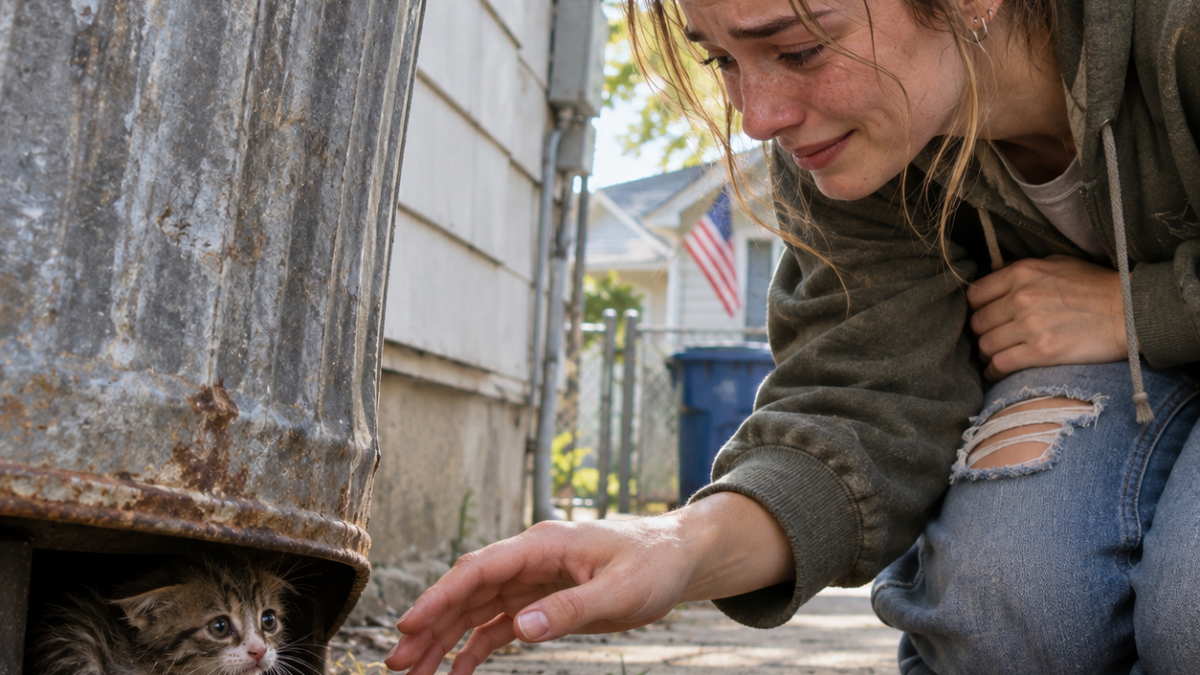
His Family Moved Away and Left Him Behind—Seven Months Later, the Woman Who Chased Him Through a Stranger’s Yard Signed the Papers Herself
Aries had once slept inside a family’s home, eaten from their bowls, and trusted the hands that reached for him—until the day those same people packed their belongings, drove away, and left him outside as if he had never belonged to them at all.
By the time I found him hiding on a stranger’s back porch, mange had eaten through patches of his fur, scars covered his face, and the gentle little cat who once loved people screamed and fought because somewhere along the way he had learned that a human hand could disappear without warning.
Seven months after I carried him out of that yard promising that someone would choose him, I stood outside his shelter room holding yet another failed adoption application and realized the person I had been waiting for might have been standing beside him from the very beginning.
My name is Tessa Morgan.
I was forty-three when I first met Aries, and by then I had already spent enough years in animal rescue to know that abandonment rarely looks dramatic from the outside.
There is usually no thunderstorm.
No sad music.
No handwritten note tucked beneath a collar.
Most of the time, abandonment looks ordinary.
A moving truck.
An empty driveway.
A family car disappearing around a corner.
A bowl left beside a porch.
A cat sitting near a front door that will never open again.
That was how Aries lost his home.
Not because nobody had ever wanted him.
That almost would have been easier to understand.
He had been adopted as a tiny kitten.
There were pictures.
I saw them later.
Aries asleep across a little girl’s chest.
Aries sitting on a windowsill wearing a red collar too big for him.
Aries curled beneath a Christmas tree.
Aries stretched across a couch while someone’s hand scratched his chin.
He had been somebody’s cat.
That fact made everything that happened afterward harder to forgive.
The first call came from a woman named Margaret Ellis.
PART2:
She lived in a quiet neighborhood outside Lancaster, Pennsylvania, the kind of place where every yard had a mailbox on a wooden post and everybody seemed to know which neighbor left for work first.
Margaret called our rescue late on a Tuesday afternoon.
“There’s a cat behind the Wilson house.”
I was answering emails while eating crackers over the kitchen sink.
“There are probably several cats behind several houses.”
“No, this one belonged there.”
That got my attention.
“What do you mean?”
“The family moved.”
“When?”
“Almost three months ago.”
“And the cat?”
“They left him.”
I stopped chewing.
“You’re sure?”
“Yes.”
“They had a little orange-and-white cat.”
“I remember him from when he was a kitten.”
“He’s been hanging around ever since.”
“Anybody feeding him?”
“Sometimes.”
“Can anyone touch him?”
“No.”
“Condition?”
PART3:
Margaret hesitated.
“Bad.”
“How bad?”
“He’s losing fur.”
“His face looks… I don’t know.”
“Rough.”
I put the crackers down.
“What’s the address?”
The Wilson house sat near the end of a cul-de-sac.
Empty now.
Curtains gone.
Grass taller than every neighboring lawn.
A FOR SALE sign tilted near the mailbox.
I parked two houses down because frightened cats often disappear the moment an unfamiliar vehicle stops directly in front of them.
Margaret met me outside.
She was sixty-seven, silver hair tied behind her head, garden gloves still tucked into one pocket.
“That’s where he used to live.”
She pointed toward the empty house.
“Where is he now?”
“Usually behind the Martins’ place.”
“Do they know?”
“They’ve seen him.”
“Can we check?”
Margaret nodded.
That began nearly two hours of knocking on doors.
Animal rescue sounds heroic when people tell the story afterward.
In reality, much of it involves standing on porches saying things like:
“Hi, sorry to bother you, have you seen an orange cat?”
Some people were helpful.
Some barely opened their doors.
One man said he hated cats and hoped we removed “the thing” because it had been sleeping beneath his deck.
A teenager showed me a phone video from the previous week.
Aries crossing a driveway at night.
Thin.
Low to the ground.
Moving quickly.
Another neighbor had seen him behind a trash bin.
A woman named Dana Martin finally said:
“He’s on my porch right now.”
I almost did not believe her.
She led me through the house.
“Don’t go out the back door.”
“Why?”
“He’ll run.”
We looked through the kitchen window.
Aries was asleep against the back wall.
At least, I thought he was asleep.
Then one ear moved.
He was curled tightly beneath a patio chair.
Even through glass, I could see the damage.
Patches of missing fur.
Scabbing around his ears.
Thin shoulders.
One side of his face marked with old scratches.
Dana whispered:
“Oh, poor little guy.”
I nodded.
“How long has he been using your porch?”
“A few weeks.”
“You feed him?”
“Sometimes.”
“Why sometimes?”
“He disappears.”
“And my husband is allergic.”
“Fair.”
I looked around the yard.
Fence on three sides.
Gate on the fourth.
Good.
Not perfect.
Good enough.
I called my rescue partner, Jules Carter.
“Bring the trap.”
“How bad?”
“Bad enough.”
“On my way.”
While we waited, I watched Aries through the window.
He woke completely.
Licked one paw.
Scratched violently behind his ear.
Then stopped and looked toward the glass.
Our eyes met.
He bolted beneath the porch bench.
That was my first real look at him.
Those eyes.
Wide.
Green.
Terrified.
Not wild.
There is a difference.
Feral cats usually look at humans as unfamiliar danger.
Aries looked at us as familiar danger.
He knew people.
That was worse.
When Jules arrived, we set a humane trap with tuna.
Aries would not go near it.
We moved it.
Changed bait.
Covered it.
Waited.
An hour.
Then another.
He circled twice.
Retreated every time.
Eventually the evening cooled.
We could not leave him overnight in that condition without trying something else.
Dana gave us permission to close the yard gate.
Jules positioned herself on one side.
I stayed near the porch.
We moved slowly.
No running at first.
No cornering.
Just trying to guide him toward the open carrier we had placed against a narrow passage.
Aries understood immediately.
He darted beneath a bush.
Then across the yard.
Then behind an outdoor storage box.
I crouched ten feet away.
“Aries.”
The name came from Margaret.
Apparently that was what the family had called him.
The cat froze.
His ears moved.
I said it again.
“Aries.”
He turned his head.
That hurt me more than I expected.
He still knew the name they had given him.
I took a small container of food from my bag.
Opened it.
The smell reached him.
He did not approach.
But he stopped moving.
“That’s okay.”
I sat on the grass.
“You don’t know me.”
Jules sat too.
Nobody looked directly at him.
We waited.
Eventually Aries crept forward.
One step.
Stop.
Another.
His body stayed low.
He looked ready to disappear at any movement.
I placed a spoonful of food several feet away.
Backed up.
He approached.
Ate.
Fast.
Then looked at me.
I placed another spoonful closer.
He came again.
I remember thinking:
This is going to work.
That thought lasted maybe thirty seconds.
A neighbor’s dog barked behind the fence.
Aries panicked.
He shot past me.
Jules moved toward the gate.
Aries changed direction.
The next several minutes were ugly.
There is no graceful way to catch a terrified cat who has decided capture means death.
He ran.
We blocked.
He cried.
Not angry meowing.
High, frightened cries.
The sound of an animal convinced something terrible is happening.
“Easy.”
I kept saying it.
“Easy, baby.”
Aries did not believe me.
At one point he backed himself against the fence.
His mouth opened.
He growled.
The sound was small but determined.
I could see his whole body shaking.
I stopped.
Jules stopped.
Nobody moved.
Aries stared at us.
I whispered:
“We’re not going to hurt you.”
That sentence is meaningless to an animal whose life has taught him otherwise.
I knew that.
Still said it.
He tried to run again.
This time he went toward the carrier.
I moved.
Fast.
One hand on the towel.
One around his body.
Aries screamed.
Claws caught my sleeve.
I wrapped him securely.
Not crushing.
Containing.
He twisted.
Growled.
Cried.
Then, all at once, went still.
That frightened me more.
“Got him.”
Jules opened the carrier.
I lowered him inside.
Door closed.
Aries pressed himself into the far corner.
His chest moved rapidly.
I knelt.
“I’m sorry.”
Jules looked at me.
“You got him.”
“I scared him half to death.”
“You also got him off the street.”
Both things were true.
Rescue is sometimes like that.
You can be doing the right thing and still look terrifying to the creature you are trying to save.
I carried Aries to the van.
Margaret stood by the driveway.
Her eyes filled.
“That’s him?”
“Yes.”
“He looks awful.”
“He’s going to a vet.”
Margaret touched the carrier lightly.
Aries hissed.
She pulled back.
“He used to sit in their front window.”
I looked toward the empty Wilson house.
“Did they tell anyone they were leaving him?”
“No.”
“Did they ask anybody to take him?”
“Not that I know.”
“Shelter?”
“No.”
“Rescue?”
“No.”
Margaret shook her head.
“They just left.”
I looked at Aries.
He had his face turned toward the back of the carrier.
Nine months earlier, maybe a year, somebody had taken him home as a kitten.
Bought food.
Probably toys.
Maybe posted pictures.
Then one day, apparently, they decided the next chapter of their life did not include him.
So they closed the door.
That was all.
We took Aries to Willow Creek Veterinary Center.
Dr. Samantha Reyes examined him after hours.
Samantha had the patience of someone who understood that frightened animals rarely read medical schedules.
Aries growled whenever she approached.
He tried to hide beneath the towel.
She did not force more than necessary.
“Skin scraping first.”
Results confirmed mange.
Severe.
Secondary infection in several areas.
Old scars across his muzzle and cheeks.
His ears were inflamed.
He was underweight.
Dehydrated.
No major fractures.
No immediate internal problems.
“That’s something.”
Jules said.
Samantha nodded.
“He’s had a hard time.”
“How old?”
“Maybe a year.”
“Could be younger.”
“Teeth look good.”
She looked toward me.
“Was he owned?”
“Yes.”
Then I told her.
She closed her eyes for one second.
Veterinarians hear everything.
Still, some things reach them.
“They moved?”
“Yes.”
“And left him outside?”
“Yes.”
Samantha’s jaw tightened.
“No shelter call?”
“No.”
“No surrender?”
“No.”
She looked at Aries.
“Okay.”
Not okay.
But that is what people say when anger has nowhere useful to go.
The first treatment was simple in theory.
Medication.
Skin care.
Nutrition.
Isolation from other rescue cats until we knew exactly what infections we were dealing with.
In practice, Aries made every step difficult.
Not because he was mean.
He was terrified.
The first time I tried to apply medication near his ear, he growled so deeply that Jules looked through the doorway and said:
“That came out of him?”
“Yes.”
“He weighs eight pounds.”
“I know.”
Aries swatted.
Retreated.
Pressed into the corner.
His eyes looked enormous.
I stopped.
Waited.
Offered food.
He would not take it from my hand.
Fine.
I set it down.
Backed away.
He ate when I left.
That became our first routine.
Food.
Distance.
Medication when necessary.
No unnecessary touching.
I sat in his room every day.
Sometimes for an hour.
I answered emails.
Read.
Talked.
Did not stare at him.
At first Aries stayed inside a covered bed.
Then he began sitting near the opening.
Then halfway out.
One afternoon I entered and found him on the windowsill.
He jumped down immediately.
But I had seen him.
“Caught you.”
Aries glared.
“You like windows.”
He looked away.
“Good to know.”
His treatment began working.
The constant itching eased.
Skin inflammation decreased.
New fur appeared in thin patches.
The sores stopped looking angry.
And as his body hurt less, his behavior started changing.
That mattered.
People sometimes separate physical pain and behavior as if animals do.
They do not.
Pain changes patience.
It changes sleep.
It changes what touch means.
A hand approaching inflamed skin does not feel like affection.
It feels like another threat.
As Aries became more comfortable physically, he had room for curiosity again.
The first breakthrough happened with chin scratches.
I did not plan it.
I was changing his water.
He was sitting several feet away.
I moved slowly.
He sniffed my wrist.
I froze.
Aries sniffed again.
Then, somehow, his chin ended up near my finger.
I scratched once.
He stiffened.
I stopped.
He pushed his chin toward me.
I scratched again.
His eyes narrowed.
Not fear.
Pleasure.
“Oh.”
I whispered.
“There you are.”
He allowed maybe five seconds.
Then moved away.
That night I texted Jules:
ARIES ACCEPTED CHIN SCRATCHES.
She replied:
CALL THE GOVERNOR.
The next day, he accepted ten seconds.
Within a week he purred.
Quietly.
Almost reluctantly.
As if he did not want us getting the wrong idea.
I laughed.
“You’re a fraud.”
Aries blinked.
“You’ve been pretending to hate me.”
Purr.
“Absolutely dishonest.”
That became our relationship.
I talked.
Aries pretended not to care.
Then followed me.
He began waiting near the room door.
Not close.
But visible.
When I entered with food, he meowed.
The first normal meow I had heard from him.
No panic.
No crying.
Just:
Where is breakfast?
That sound nearly made me cry.
Jules found me sitting beside him one morning.
Aries had his eyes completely closed while I scratched beneath his chin.
She whispered:
“Look at him.”
“I know.”
“Show them your pretty eyes, Aries.”
He opened one eye.
Jules laughed.
“There.”
I said:
“He was enjoying himself until you made it weird.”
Aries closed his eyes again.
That cat had so much affection inside him.
That was what became heartbreaking in a new way.
His old family had not destroyed his ability to love people.
They had simply buried it beneath fear.
When he finally understood we were staying, affection came back almost embarrassingly fast.
He head-butted my hand.
Rubbed against my legs.
Climbed into laps.
Demanded chin scratches.
He would lean his entire body against my chest and close his eyes as though he could not get close enough.
I started saying:
“You love too much for somebody who claims not to trust humans.”
The contradiction was only apparent.
Aries wanted people.
He was afraid of losing them.
Those are not opposite things.
Sometimes they are the same wound.
After two months, his skin looked dramatically better.
The raw patches were gone.
Fur had returned over his shoulders.
His face still carried scars.
They never disappeared completely.
But instead of making him look broken, they eventually became simply part of him.
One scar crossed the bridge of his nose.
Another small line sat near the left eye.
His nose itself was black and unusually round.
Jules loved it.
“His black nose is ridiculous.”
“You say that every day.”
“Look at it.”
“I’ve seen it.”
“Look again.”
Aries stared at us.
“He knows we’re discussing him.”
“Good.”
Once he was medically cleared, we began adoption promotion.
I expected interest.
He was young.
Handsome.
Affectionate.
Good litter-box habits.
Loved people once introduced properly.
We posted photographs.
One showed him lying on his back with paws curled against his chest.
Another showed his eyes closed during chin scratches.
Caption:
ARIES IS READY FOR HIS SECOND CHANCE.
Applications came.
First one looked promising.
Young couple.
Quiet apartment.
No other animals.
Good references.
They visited.
Aries hid for fifteen minutes.
Eventually came out.
Sniffed the woman.
Accepted a treat.
Then the man asked:
“Will his face always look like that?”
I felt my stomach tighten.
“What do you mean?”
“The scars.”
“Yes.”
“Probably.”
The man looked at his girlfriend.
She looked uncomfortable.
They left.
The next morning they withdrew.
Reason:
LOOKING FOR A HEALTHIER-APPEARING CAT.
I stared at the email longer than necessary.
Aries sat on my desk beside the keyboard.
“You look fine.”
He head-butted my wrist.
I deleted the message.
Second applicant had three young children.
Nice family.
But the children were loud and fast.
Aries hid beneath a shelf and would not come out.
The parents were understanding.
They chose another cat better suited to the home.
That one did not hurt.
A good adoption is not about forcing the animal someone wants into the home they have.
Third applicant loved Aries.
Older woman.
Retired teacher.
Visited twice.
Aries climbed into her lap during the second visit.
I thought:
This is it.
Then her landlord refused the pet.
Application closed.
Fourth person wanted a cat who could live immediately with two large dogs.
We had no reliable information about Aries and dogs.
After everything he had endured outside, I was not gambling with him just to make an adoption happen.
No.
Fifth application stopped responding.
Sixth scheduled a visit and never came.
Seven months passed.
That sounds like nothing when written.
In rescue, seven months is a long time.
Every week, another cat arrived.
Every month, another left.
Kittens were adopted almost instantly.
Families came in saying:
“We’d really like a young cat.”
Aries was young.
Then they saw a tiny kitten.
Conversation over.
Aries watched carriers leave.
I know we should be cautious about assigning human narratives to animals.
I know cats do not sit calculating:
Why did they choose him instead of me?
Still, patterns affect them.
Rooms change.
People come.
Other cats disappear.
Aries remained.
At first I told him:
“Your person is coming.”
Then:
“Soon.”
Then I stopped saying it out loud.
We received an application from a man named Nolan.
Thirty-two.
Worked from home.
Sounded excellent.
Visited.
Aries loved him.
He held Aries for twenty minutes.
Said:
“I think he’s perfect.”
I went home smiling.
The next afternoon:
Nolan called.
His girlfriend had changed her mind.
She wanted a kitten.
I thanked him.
Hung up.
Sat in my car.
Cried.
Not because Nolan had done something terrible.
People change their minds.
Better before adoption than afterward.
But I kept seeing Aries abandoned the first time.
I was becoming irrationally afraid that every rejection repeated it.
Jules noticed.
“You’re taking these personally.”
“I know.”
“You cannot make somebody adopt him.”
“I know.”
“He’s safe.”
“I know.”
“He’s loved.”
“I know.”
“So breathe.”
“I hate when you’re reasonable.”
“Most people do.”
Then came the worst application.
A family with one teenage daughter.
Beautiful home.
Previous cat lived eighteen years.
Veterinary reference excellent.
They visited twice.
Aries loved the daughter, Lily.
He followed her around the room.
Climbed onto the couch beside her.
She whispered:
“Can we take him today?”
Her mother laughed.
“Paperwork first.”
I went home thinking:
Finally.
The next morning they approved the adoption.
We scheduled pickup for Saturday.
Friday afternoon, Lily’s father called.
His job had been transferred.
They might need to move across the country within months.
They decided not to adopt.
I understood.
I even respected the decision.
Still, I went into Aries’s room afterward and sat beside him.
He climbed into my lap.
I buried my face against his neck.
“Seven months, buddy.”
He purred.
“Do you know how ridiculous this is?”
Purr.
“You’re adorable.”
Purr.
“You’re medically stable.”
Purr.
“You’re affectionate.”
Aries placed one paw against my chin.
“Your interview skills need work.”
That evening, I took him home with me for an overnight foster break.
Not unusual.
We sometimes moved long-term shelter animals into foster homes temporarily to decompress.
Aries had visited my house before.
But something felt different that night.
I set his carrier in the spare room.
Opened it.
He walked out.
No crouching.
No hiding.
He inspected the bed.
Window.
Hallway.
Then looked at me.
“Don’t get ideas.”
He walked past me.
Into the living room.
I followed.
“Aries.”
He jumped onto the couch.
Curled against one cushion.
Closed his eyes.
I stood there.
“You are very confident for a guest.”
One eye opened.
Then closed.
I laughed.
That night he slept at the foot of my bed.
At 3:00 a.m., I woke with something pressed against my shoulder.
Aries.
He had moved.
He was curled beside me.
I lay still.
That old fear crossed my mind.
The rescue rule I had repeated for years:
Do not foster-fail every animal you love.
If rescuers kept every animal that touched them, we would have no room to help the next one.
I believed that.
Still do.
Aries purred in the dark.
I whispered:
“You’re going back tomorrow.”
He put one paw against my arm.
“This is manipulative.”
Purr.
Saturday morning, I returned him to the rescue.
He walked into his room.
Looked around.
Then at me.
I shut the door.
That image stayed with me all day.
A month later, we received another application.
I almost refused to become hopeful.
The couple lived forty-five minutes away.
No children.
One calm older cat.
Excellent home.
They visited.
Aries behaved beautifully.
The woman held him.
He purred.
The man scratched his chin.
They smiled.
They left saying:
“We love him.”
I told Jules:
“No excitement.”
She nodded.
“No excitement.”
We were both excited.
Two days later, the email arrived.
They had adopted a kitten from another shelter.
I read it standing beside Aries’s room.
He was sitting on the other side of the glass.
Watching me.
Something inside me snapped.
Not dramatically.
Quietly.
The same way loneliness or grief sometimes changes direction without warning.
I printed the application.
Then stared at the adoption form on my desk.
Blank.
Applicant name.
Address.
Household.
Veterinary reference.
Rescue experience.
I knew every question.
I had processed hundreds.
Jules walked into the office.
“What are you doing?”
“Nothing.”
She looked at the form.
Then at me.
“Oh.”
“No.”
“Tessa.”
“I said no.”
“You’re filling out an application.”
“I’m considering something.”
“You have been considering something for four months.”
“I run a rescue.”
“Yes.”
“I can’t keep every cat.”
“Correct.”
“I already have two cats.”
“Both tolerate him.”
“And a dog.”
“Who ignores him.”
“I travel for transports.”
“He travels better than half our volunteers.”
I glared.
Jules smiled.
“Submit it.”
“No.”
“Why?”
“Because I don’t want to make an emotional decision just because other people didn’t adopt him.”
“Good.”
“Then don’t.”
I looked at her.
“That is the opposite of what you just said.”
“No.”
“Take twenty-four hours.”
“Ask yourself whether you want Aries because you feel sorry for him or because he already belongs in your life.”
Then she left.
I hated her.
That night I went home without Aries.
My house felt wrong.
That was new.
I had lived there for nine years.
It had never felt wrong without him before.
Now his absence had shape.
I looked at the couch.
The cushion where he slept during foster nights.
Empty.
My own cats, Fern and Biscuit, were sleeping in separate chairs as usual.
My dog Hazel snored near the kitchen.
The house was not empty.
But Aries was missing from it.
I made dinner.
Could not eat.
At 8:30, I opened his adoption profile on my phone.
Photographs.
Scars.
Black nose.
Green eyes.
Under STATUS:
AVAILABLE.
I had written that word myself.
Available.
Waiting.
Still unchosen.
At 9:07, I texted Jules:
I HATE YOU.
She replied:
APPLICATION IS IN THE TOP DRAWER.
I drove back to the rescue.
I wish I could say there was some grand emotional certainty.
There was not.
I sat at the desk for nearly forty minutes.
I asked myself every responsible question I would ask another adopter.
Could I afford him?
Yes.
Could I provide lifelong veterinary care?
Yes.
Was my home stable?
Yes.
Would my resident animals accept him?
We had tested carefully.
Yes.
Was I adopting because I felt guilty?
Partly.
That bothered me.
Was guilt the only reason?
No.
That mattered.
Did I want him?
I looked through the office window toward his room.
Aries was asleep.
Yes.
Did I want him when he was healthy?
Yes.
Would I want him if medical problems returned?
Yes.
Would I still want him five years from now when the dramatic rescue story was old?
Yes.
Did he already feel like my cat?
I put the pen down.
That was the question.
Yes.
I wrote:
TESSA MORGAN.
Under applicant name.
Then I laughed.
“You’re ridiculous.”
No one answered.
I completed the application.
Every field.
Signed it.
Dated.
Put it on Jules’s desk.
The next morning I arrived early.
Jules was already there.
She held the form.
“Are you sure?”
That was exactly what I had asked hundreds of people.
Now I understood why it mattered.
“I think so.”
“That is not yes.”
I took a breath.
“Yes.”
“Absolutely?”
“Yes.”
“You know you don’t get a rescue-worker exemption from the adoption fee.”
“I would be offended if I did.”
“You know we still need board approval because you’re staff.”
“Yes.”
“And you’re not allowed to approve yourself.”
“I know.”
She smiled.
“Then I vote yes.”
Our director, Mara, looked at the application later.
She asked the same question.
“Sure?”
“Yes.”
“You’ve thought?”
“For seven months.”
Mara laughed.
“Fair.”
Approval came that afternoon.
We made no public announcement immediately.
I wanted Aries home first.
I went into his room carrying the same carrier we had used on rescue day.
He saw it.
Backed away.
That hurt.
“Yeah.”
“I know.”
The carrier still represented capture.
Vet.
Unknown places.
I put it down.
Opened the door.
Placed food inside.
Waited.
Aries approached cautiously.
Sniffed.
Then entered.
No chasing.
No crying.
I closed the carrier.
He meowed once.
“Different trip this time.”
I carried him outside.
Jules stood at the van.
“Want me to film?”
“No.”
“You sure?”
“Yes.”
“This one is mine.”
She understood.
I drove home.
Aries cried for the first ten minutes.
Then settled.
At a red light I put two fingers through the carrier bars.
He rubbed his face against them.
“I know.”
“Almost there.”
When we reached my house, I carried him inside.
Set the carrier in the living room.
Opened it.
Aries stayed inside.
That surprised me.
He had been there many times.
I sat on the floor.
“Take your time.”
Thirty seconds.
Then his nose appeared.
One paw.
Another.
He stepped out.
Hazel, my old mixed-breed dog, watched from across the room.
Fern sat on the windowsill.
Biscuit pretended none of this concerned him.
Aries looked at everything.
Then walked directly toward the couch.
Jumped onto the cushion.
Turned twice.
Lay down.
Just like his foster overnight.
His eyes closed.
I laughed.
“Immediately?”
He began purring.
I sat beside him.
Something inside my chest released.
Not excitement exactly.
Recognition.
This was not new to him.
That was the remarkable thing.
He did not act like a cat entering unfamiliar territory.
He behaved like a cat returning to a place he already understood.
I scratched beneath his chin.
“Aries.”
His eyes stayed closed.
“You’re home.”
That sentence made me cry.
Not because it was poetic.
Because I suddenly remembered the empty Wilson house.
The one he had returned to for months.
The porch.
The door that never opened.
His first home had disappeared while he was still waiting for it.
Now I could promise one thing.
Mine would not disappear without him.
I leaned down.
“I’m not leaving you behind.”
Aries opened his eyes.
He could not understand the sentence.
I knew.
I said it anyway.
“I’m not.”
The first week was surprisingly easy.
Aries already knew the house.
He knew Hazel.
Fern tolerated him.
Biscuit spent two days offended, then decided Aries could exist as long as nobody expected enthusiasm.
Aries discovered the kitchen.
Then the kitchen table.
Then that the table was forbidden.
Then that rules apparently applied only when I was looking.
He loved food.
Not normal love.
Absolute commitment.
If he heard a can open anywhere in the house, he appeared.
I once opened canned tomatoes.
Aries came running.
“Not cat food.”
He sniffed.
Looked disappointed.
“You’re not even pretending dignity.”
He followed me to the pantry.
Because of his history, I worried about food insecurity.
For months he had lived outside.
Meals uncertain.
The rescue had given him regular food for seven months, but old scarcity habits remained.
He ate quickly.
Sometimes too quickly.
So I used slow feeders.
Small meals.
Routine.
Breakfast at seven.
Dinner at six.
Treat before bed.
Consistency mattered.
Within a few months he stopped inhaling everything as if it might vanish.
One morning I found kibble still in his bowl from the night before.
I stood there staring.
Aries looked at me.
“You left food.”
He blinked.
That small thing moved me.
A cat leaving food behind because he trusted there would be more later.
Security is often invisible until you know what insecurity looked like first.
He became affectionate beyond reason.
Lap.
Chest.
Shoulder.
If I sat, Aries arrived.
If I worked, he sat beside the keyboard.
If I lay on the couch, he climbed onto my stomach.
If I went to the bathroom, apparently privacy had ended when I signed the adoption form.
He waited outside the shower.
Followed me to laundry.
Slept beside my pillow.
The cat who had once screamed when I caught him now reached for my hand if I stopped petting him.
That contrast never stopped hurting.
One night, a storm knocked the power out.
The house went black.
Aries panicked.
I heard him running.
Something fell.
Then silence.
I found him beneath the bed.
Eyes huge.
I sat on the floor.
Did not reach.
“Hey.”
Lightning flashed.
Aries flattened himself.
I stayed.
Ten minutes.
Twenty.
Eventually his nose appeared.
Then his head.
He crawled toward me.
Pressed against my leg.
That became another milestone.
Fear had once told him:
Run from people.
Now fear told him:
Find Tessa.
I touched his back.
“Good boy.”
He climbed into my lap.
Outside, thunder rolled.
Inside, he purred.
I thought about the family who had left him.
For months, I had been angry at them in a simple way.
They abandoned him.
Bad people.
End of story.
Then one afternoon, almost a year after I adopted Aries, a woman contacted the rescue.
Her name was Melanie Wilson.
Same last name as the family who had lived in the empty house.
Message:
I believe you rescued our former cat Aries.
I stared at the screen.
My body went cold.
She continued.
I know you probably hate us.
You have every reason.
I am not asking for him back.
I just want to explain what happened and know whether he survived.
I did hate her.
Or thought I did.
My first impulse was not kind.
You left him.
Explanation complete.
I closed the email.
Opened it again.
Read.
Closed.
Jules found me in the office.
“What happened?”
I turned the monitor.
She read.
“Oh.”
“What do I do?”
“What do you want to do?”
“Tell her never to contact us again.”
“Then why haven’t you?”
Because some part of me needed to know.
Not for forgiveness.
For completeness.
I replied:
Aries survived. He was treated for severe mange, infection, malnutrition, and multiple scars. He spent seven months in rescue care and is now permanently adopted. He is safe.
Melanie responded within minutes.
Thank God.
Then:
May I tell you what happened?
I waited an hour.
Then wrote:
You can tell me. It does not change that he was abandoned.
Her reply was long.
The Wilson family had been evicted.
Not a planned move.
Melanie’s husband lost his job.
Bills piled up.
They were given limited time to leave.
The rental they found did not allow animals.
She claimed she had called two shelters.
Both were full.
Asked relatives.
No one would take Aries.
The day they moved, her husband said they would leave Aries with food and return within forty-eight hours after finding somewhere temporary.
They never did.
Their car broke down.
They moved farther away.
Then shame took over.
Every day made returning harder.
Weeks passed.
Melanie said she believed neighbors were feeding him.
Eventually she convinced herself that Aries had probably found another home.
I read the email three times.
Then became even angrier.
Not because everything was false.
Some of it might have been true.
Poverty is real.
Housing restrictions are real.
Shelters are full.
People make desperate decisions.
But there had been options.
Call more rescues.
Knock on doors.
Ask the veterinarian.
Ask the new landlord for temporary accommodation.
Surrender him directly to somebody.
Return.
Anything besides leaving a domestic cat outside and choosing not to verify what happened.
I replied:
I understand you were under serious pressure. I am sorry your family went through that. But Aries waited at that house. He did not “find another home.” He became sick and injured while trying to survive. Your circumstances explain why you felt trapped. They do not make leaving him acceptable.
I almost deleted that last sentence.
Did not.
Melanie responded the next day.
You’re right.
No defense.
No argument.
Just:
You’re right.
Then she asked:
Is he happy?
I looked toward the rescue office window.
Aries was not there.
He was home.
Probably sleeping on my couch as though he paid the mortgage.
I sent one photograph.
Aries on his back.
Eyes closed.
Fur full and healthy.
Black nose pointed toward the camera.
I did not send my address.
No identifying details.
Melanie replied:
He looks like himself again.
That sentence broke something in me.
Because it confirmed what I had suspected.
There had been a sweet cat before the frightened one.
Someone had known him.
Someone had watched him sleep peacefully before life went wrong.
I did not forgive the abandonment.
But hatred became harder to maintain as a simple shape.
People can love an animal and still fail them terribly.
That may be one of the most painful truths in rescue.
Cruelty is easy to classify.
Failure mixed with love is messier.
Melanie never asked for Aries back.
She never contacted me again after one final message:
Thank you for giving him the life we should have protected.
I saved it.
Not because I needed gratitude.
Because accountability matters.
Aries knew none of this.
Good.
His life no longer depended on old explanations.
He had moved on more successfully than any of us.
Two years after his adoption, he developed a strange habit.
Every morning at exactly 6:40, he waited near my bedroom door.
Not for breakfast.
Breakfast was seven.
At 6:40, I made coffee.
Aries followed me.
I would sit by the kitchen window while the house was quiet.
He climbed into the chair beside me.
We watched birds.
That became our routine.
I wondered if he remembered another window from another house.
Maybe.
Cats carry histories we cannot question them about.
I stopped needing to know.
He was present.
That was enough.
One spring morning, a moving truck appeared across the street.
Our neighbors were relocating.
Workers carried boxes.
Furniture.
Mattresses.
Aries sat in the front window.
Watching.
Something about his body changed.
He crouched.
Tail tucked close.
I noticed immediately.
“Hey.”
He stared at the truck.
A couch came through the neighbors’ door.
Then suitcases.
Aries jumped down.
Ran toward me.
He pressed against my legs.
I froze.
Was I imagining the connection?
Maybe.
But I crouched.
“It’s not us.”
Aries looked toward the window.
“We’re not moving.”
Then I corrected myself.
Because promises should be honest.
“Not today.”
“And if we ever do…”
I put my hand beneath his chin.
“You’re coming.”
His eyes closed.
That became the rule I said whenever boxes appeared.
Christmas decorations.
Donation drives.
Anything that looked like packing.
“You’re coming.”
Maybe ridiculous.
Maybe comforting only to me.
Still.
He always rubbed his face against my hand.
Years went by.
Aries became one of those cats everybody at the rescue knew even after he stopped living there.
Volunteers asked about him.
New staff heard the story.
Jules visited and immediately said:
“You’re fat.”
Aries stared.
“He is not fat.”
“He has a neck roll.”
“He was starving.”
“Four years ago.”
“He’s healing.”
“With calories?”
“Yes.”
Jules laughed.
Aries walked directly into her lap.
Traitor.
His scars remained.
Less visible beneath full fur.
His face became handsome in a slightly battered way.
The black nose still looked absurdly cute.
His eyes stayed green.
During chin scratches, he closed them completely.
Every time.
I would whisper:
“You enjoying yourself?”
Purr.
“Eyes closed all the way.”
Purr.
Sometimes I thought about the seven months nobody chose him.
At first, I regretted them.
Why did I wait?
Why did he need seven more months inside rescue before I realized?
Then I stopped framing that time as wasted.
Those months mattered.
He healed physically.
Learned predictable routines.
Met many people.
Recovered enough trust that adoption became possible.
And I needed those months too.
I needed to know I was not taking him because of one emotional rescue day.
I watched him become himself.
Then chose that self.
There is a difference.
Five years after I first found him, Aries became sick.
Nothing dramatic at first.
Less appetite.
Sleeping more.
Weight loss.
Bloodwork showed early kidney disease.
Manageable.
Diet.
Fluids eventually.
Medication.
I panicked more than necessary.
Samantha, his veterinarian from the beginning, looked at me.
“Tessa.”
“I know.”
“He is not dying today.”
“I know.”
“He might have years.”
“I know.”
“Do you?”
“No.”
She smiled.
“Thought so.”
We managed it.
Aries hated subcutaneous fluids.
Then discovered treats followed.
His moral objections weakened.
He aged.
Slowly.
The cat once described as “still available” became the center of my home.
Fern died at sixteen.
Biscuit at fourteen.
Hazel at thirteen.
Each loss changed the household.
Aries remained.
Eventually it was just us.
That felt strangely familiar.
Except now the quiet was different from loneliness.
I had friends.
Rescue work.
People.
Aries.
One winter evening, I sat on the couch with paperwork.
Aries climbed beside me.
Older now.
Thinner.
Still scarred.
Still black-nosed.
He put his head against my arm.
I thought about the first day.
Back porch.
Mange.
Crying.
Running from my hands.
I whispered:
“You made this difficult.”
Aries purred.
“Seven months.”
Purr.
“Multiple failed applications.”
Purr.
“I had to fill out my own paperwork.”
He opened one eye.
“No remorse.”
The eye closed again.
A year later, the rescue held an adoption event.
I brought Aries.
Not because he was available.
Because long-term success stories helped frightened adopters understand what patience could create.
He wore a small blue harness.
Sat in my lap.
People asked:
“Can we adopt him?”
“No.”
“Absolutely not.”
Jules laughed from the next table.
“See?”
“I told you she was a foster failure.”
“I prefer adoption professional.”
“You filled out the form.”
“I did.”
One little boy approached.
“Why does his face have marks?”
“Old scars.”
“Did somebody hurt him?”
“He had a difficult time before he came here.”
The boy touched his own cheek.
“Does it hurt now?”
“No.”
“Can I pet him?”
“Let him sniff you.”
Aries sniffed.
Then pushed his forehead beneath the boy’s hand.
The child smiled.
“He likes me.”
“Yes.”
The boy’s family later adopted a shy adult cat who had been waiting five months.
I do not claim Aries caused that.
Maybe he helped.
That was enough.
As Aries got older, I started thinking about the word forever.
Forever home.
Rescue people use it constantly.
It is beautiful.
Also impossible.
No home lasts forever.
People die.
Animals die.
Families change.
The real promise is not forever in time.
It is:
For as long as you are mine, you will not be intentionally discarded.
If life changes, I will make decisions that protect you.
If I move, you come.
If I get sick, I make a plan.
If I cannot care for you, I place you safely.
You do not become disposable because circumstances become inconvenient.
That is the promise Aries should have received the first time.
It was the promise I tried to keep the second.
At eleven, he developed arthritis.
At twelve, thyroid problems.
At thirteen, his kidneys worsened.
Samantha and I adjusted medications.
Fluids twice weekly.
Special food.
Aries remained affectionate.
Less jumping.
More sleeping.
I placed steps beside the couch.
He ignored them for two months, then decided they were acceptable.
One autumn morning, he stopped eating.
I knew.
Not immediately what it meant.
But I knew we had crossed into something different.
Samantha examined him.
Bloodwork.
Ultrasound.
Kidneys failing.
Not reversible.
We had options to support him temporarily.
Maybe weeks.
Maybe a little longer.
I took him home.
He slept by the kitchen window.
I made coffee at 6:40.
Sat beside him.
Birds outside.
Same routine.
For three days he ate almost nothing.
He still purred when I touched his chin.
That felt unfair.
How could an animal feel so sick and still make that sound?
On the fourth morning, he tried to stand and could not keep his balance.
I called Samantha.
She did not make me say the whole sentence.
“I’ll come.”
Home euthanasia.
I had arranged many.
Still, when it was my cat, every professional belief became personal terror.
What if it was too soon?
What if tomorrow would have been better?
What if he still wanted more time?
Samantha sat on my living-room floor.
Aries lay on his favorite blanket.
She said:
“He’s tired.”
I nodded.
“You’re not taking good days away from him.”
“You’re preventing the bad ones from becoming all he has left.”
I cried.
Aries lifted his head.
I scratched beneath his chin.
His eyes closed.
All the way.
Just like always.
“You enjoying yourself?”
Tiny purr.
Samantha waited.
No rush.
I held him.
The first sedative relaxed his body.
He pressed his face against my wrist.
I whispered:
“Remember that porch?”
Of course he did not understand.
“I chased you everywhere.”
Purr.
“You screamed at me.”
His breathing slowed.
“I promised somebody would choose you.”
I could barely speak.
“I’m sorry it took me seven months to realize I meant me.”
Samantha looked down.
Crying too.
I continued.
“You were never hard to love.”
“That wasn’t the problem.”
“You were just waiting for somebody who knew how to stay.”
The final medication went in.
Aries exhaled.
His body softened.
I kept my hand against him.
The little purr stopped.
Then his heart did.
The house became impossibly quiet.
I sat there for a long time.
Samantha eventually asked whether I wanted more time.
“Yes.”
So she waited in the kitchen.
I held Aries.
The cat who had once fought so desperately against my hands now rested completely inside them.
That circle nearly broke me.
The first time I caught him, he thought I was taking his freedom.
The last time I held him, I was trying to give him peace.
Both times, love looked painful from the outside.
After he died, I found his original intake photograph.
Mange.
Scars.
Eyes wide.
Then his adoption picture.
Healthy.
Relaxed.
Eyes closed under my hand.
I put them beside each other.
Same cat.
Different world.
I did not post a dramatic goodbye immediately.
I could not.
For weeks, people asked:
“How’s Aries?”
I answered:
“He’s gone.”
Each time hurt.
Eventually, I wrote his story for the rescue newsletter.
No call for donations.
No slogan.
Just Aries.
Abandoned.
Found.
Terrified.
Healed.
Waited.
Adopted.
Loved.
Died old.
That final phrase mattered.
Died old.
The first time I saw him behind the Martins’ porch, I did not know whether he would survive the month.
He got twelve more years with me.
He slept in beds.
He ate enough to become mildly embarrassing.
He watched birds.
He endured medication with theatrical resentment.
He slept beside my pillow.
He met hundreds of people.
He taught volunteers patience.
He became somebody’s cat again.
Mine.
The Wilson house changed owners long ago.
I drove past once after Aries died.
Not intentionally.
A transport route took me through the neighborhood.
The yard was beautiful.
New family.
Children’s bikes.
Flowers on the porch.
I slowed.
The back porch where we found Aries was hidden from the road.
Still, I remembered it.
I expected anger.
Instead, mostly gratitude.
Not toward the family who left him.
Toward the fact that somebody called.
Margaret noticed.
Dana let us into her yard.
Jules came with the trap.
Samantha treated him.
A chain of ordinary people refused to look away.
That is rescue most of the time.
Not one hero.
Many small decisions.
I turned onto the next road.
Kept driving.
Aries no longer belonged to that address.
He had not for years.
His real home was inside a house where his fur still clung to one blanket after he died.
I found it weeks later.
Orange hair.
I sat on the floor holding the blanket like something precious.
Rescue changes your understanding of what matters.
A hair.
An empty bowl.
A scratch on furniture.
Things that once looked like mess become evidence.
He was here.
That is what grief keeps trying to prove.
He was here.
A year after Aries died, another abandoned cat came into the rescue.
Black-and-white male.
Four years old.
Found after an eviction.
Terrified.
Would not let anyone touch him.
A volunteer said:
“He hates people.”
I looked at the cat.
“No.”
“What?”
“He’s scared.”
“How do you know?”
I thought about Aries.
“Because those are different things.”
We sat with that cat.
Weeks.
He improved.
Not exactly like Aries.
No two animals do.
Eventually he accepted touch.
Then a home.
I watched him leave in a carrier with an older couple.
I cried.
Jules looked at me.
“You’re getting soft.”
“I’ve always been soft.”
“True.”
Then she pointed toward the empty room.
“You okay?”
“Yes.”
And I was.
Aries had not made abandonment stories easier.
He had made me understand what recovery can look like.
Not forgetting.
Not instant trust.
Not pretending harm never happened.
Safety repeated until the body stops expecting danger every time the door opens.
That is what we gave Aries.
That is what he gave back.
People often focus on the seven months he waited.
I understand.
It sounds heartbreaking.
A sweet cat available for adoption while applications failed one after another.
But when I remember those months now, I see something else too.
Seven months of breakfast arriving.
Seven months of clean bedding.
Seven months of medication when needed.
Seven months of hands becoming predictable.
Seven months of people saying his name and not disappearing.
Waiting was not nothing.
It was recovery.
Would I change it?
If I could have brought him home sooner, probably.
I wish he had never been abandoned at all.
But there is no useful life in rewriting what cannot be rewritten.
The reality is simpler.
A family once chose Aries.
Then failed him.
A neighborhood kept him alive long enough for rescue to find him.
We caught him even though he was terrified.
We treated his body.
He repaired the rest slowly.
People applied.
People changed their minds.
Plans failed.
Months passed.
Then one night he slept beside me and I finally understood that I was no longer waiting for his family to arrive.
I was his family.
Adoption day did not create that bond.
It named it.
That is why the paperwork felt almost funny.
TESSA MORGAN.
Applicant.
As if I needed a form to tell me I already knew the exact sound Aries made when he wanted breakfast.
As if references could explain how he slept when it rained.
As if an approval committee could discover what had already happened quietly between us.
Still, the form mattered.
Promises deserve paperwork sometimes.
Aries’s first family had treated belonging like something temporary.
I wanted his second belonging recorded.
Official.
No ambiguity.
Mine.
Home.
Years after his adoption, the rescue used his before-and-after photographs in volunteer training.
Not publicly at first.
Internally.
The first photograph was difficult.
The second almost unbelievable.
New volunteers sometimes asked:
“Is that really the same cat?”
“Yes.”
“What changed?”
Everyone expected:
Medication.
Food.
Mange treatment.
Those mattered.
But I usually answered:
“Predictability.”
They looked confused.
So I explained.
A frightened animal learns through repetition.
The door opens.
Nothing bad happens.
Food arrives.
Nobody takes it.
A hand appears.
It stops when you pull away.
You sleep.
You wake.
Same room.
Same people.
Tomorrow happens.
Then another tomorrow.
Eventually safety becomes less surprising.
Aries had once learned that people disappear.
We spent months teaching him that some do not.
I think that was the deepest wound.
Not the mange.
Not even the scars.
Uncertainty.
The knowledge, burned into him somehow, that a home could vanish.
Maybe that is why, even years later, he sometimes followed me from room to room when I packed a bag.
If I prepared for an overnight rescue transport, he sat on the suitcase.
I would lift him off.
He climbed back.
“You cannot come.”
He stared.
“I’m returning tomorrow.”
Stare.
“Promise.”
Eventually I started leaving my sweatshirt on the bed.
When I returned, Aries usually slept on it.
I do not know whether that helped him.
It helped me.
The last sweatshirt he slept on remained unwashed for weeks after his death.
Eventually I washed it.
That felt like another goodbye.
Tiny things.
That is what grief becomes.
The dramatic loss happens once.
Then dozens of smaller losses follow.
First morning without breakfast.
First night without his weight beside me.
First time opening a can and nobody running into the kitchen.
First moving box without Aries climbing into it.
First storm without him under the bed.
Then one day, memory hurts a little less than absence.
You begin remembering the funny things first.
Aries with food on his forehead because he shoved his whole face into the bowl.
Aries trying to steal Hazel’s bed even though Hazel outweighed him by sixty pounds.
Aries closing his eyes during chin scratches so completely that Jules would ask:
“You still alive?”
Purr.
Aries chirping at birds.
Aries sitting directly on adoption paperwork that belonged to another cat.
Aries falling asleep with one paw in his water bowl.
Those are the pieces I carry now.
Not only the back porch.
That matters.
Abandoned animals deserve stories larger than the worst thing humans did to them.
Aries was not “the cat whose family left him.”
That happened to him.
It was not all he was.
He was greedy.
Affectionate.
Suspicious of vacuum cleaners.
Possessive about one green blanket.
Embarrassingly fond of chin scratches.
He hated closed doors.
Loved cardboard boxes.
Could detect chicken being opened from three rooms away.
He once knocked an entire bowl of dry food onto the floor, then sat in the middle of it looking victorious.
He was a complete life.
Not a symbol.
Not an inspirational lesson.
A cat.
My cat.
That is why I still hesitate when people say:
“You saved Aries.”
We rescued him from the street.
Yes.
Samantha treated him.
Yes.
I adopted him.
Yes.
But the word saved can sound too clean.
As if one person reaches down and the story is fixed.
Aries did most of the hard work.
He had to decide, again and again, whether to trust.
He had to let Samantha touch skin that hurt.
He had to eat when he was frightened.
He had to sleep in an unfamiliar room.
He had to watch people come and go.
He had to risk affection after affection had once ended in abandonment.
We created conditions.
Aries stepped into them.
That was his courage.
By the end, he trusted so completely that during his final morning he slept in my arms while Samantha prepared the medication.
That trust was not something I gave him.
It was something he rebuilt.
And perhaps that is why his story still matters to me more than many happier, easier rescues.
Some animals arrive ready to love everybody.
Aries arrived convinced that love was temporary.
Then he changed his mind.
Slowly.
Carefully.
Completely.
I keep his adoption certificate in the top drawer of my desk at the rescue.
I do not need it there.
But sometimes when an application fails for another long-term animal, I open the drawer.
ARIES MORGAN.
ADOPTED.
I remember seven months.
I remember thinking nobody would choose him.
Then I remember that sometimes the right person is not late.
Sometimes they simply have not realized they are the right person yet.
That does not mean every rescuer should adopt every difficult case.
Absolutely not.
Good rescue requires knowing limits.
But Aries taught me to ask a better question.
Not:
Why hasn’t anyone chosen this animal?
Sometimes:
Has this animal already chosen somewhere, and have we been too busy looking outward to notice?
Aries had been telling me long before I signed anything.
The foster nights.
The couch.
The bed.
The way he looked for me.
The way my own house felt wrong without him.
I was the slow one.
He knew.
When I finally brought him home permanently, I remember saying:
“You’re home.”
Now, years after losing him, I understand that sentence differently.
Home was not my address.
Not the couch.
Not the kitchen window.
Home was the certainty that when the door closed at night, he was still included on the inside.
That is what his first family took from him.
That is what I spent the rest of his life trying to return.
And I believe I did.
Not perfectly.
No one loves perfectly.
But enough.
More than enough.
The last photograph I have of Aries was taken two weeks before he died.
Morning light.
Kitchen window.
He is sitting on the chair beside mine.
Older.
Thin.
Face soft.
Eyes almost closed.
Outside, a cardinal is perched on the feeder.
Aries is looking toward it.
His scars are still visible if you know where to look.
So is the black nose Jules teased him about for twelve years.
There is nothing dramatic about the photograph.
That is why I love it.
An abandoned cat watching birds from his own window.
That was the ending I wanted for him.
Not applause.
Not viral attention.
Not somebody calling him a survivor.
A window.
A routine.
A person nearby.
Food coming later.
Tomorrow expected.
Safety becoming boring.
That is home.
Aries had spent enough of his life learning what it felt like to be left behind.
I wanted the rest of it to feel ordinary.
And it did.
For twelve years, it did.
He slept.
Ate.
Purred.
Aged.
Complained.
Loved.
Was loved.
Then one morning, when his body had finally carried him as far as it could, he died in the same kind of arms he once fought desperately to escape.
People may hear that and think the ending is sad.
It was.
It still is.
But sadness is not the opposite of a good ending.
Sometimes sadness is simply what remains when something good lasted long enough to matter.
Aries had been abandoned once.
He was never abandoned again.
And after everything that frightened little cat survived, that is the promise I am proudest to have kept.








