Four Months After I Buried My 16-Year-Old Son, Two Orphaned Puppies Made Me Laugh Again—Then the Shelter Found His Name in an Old File
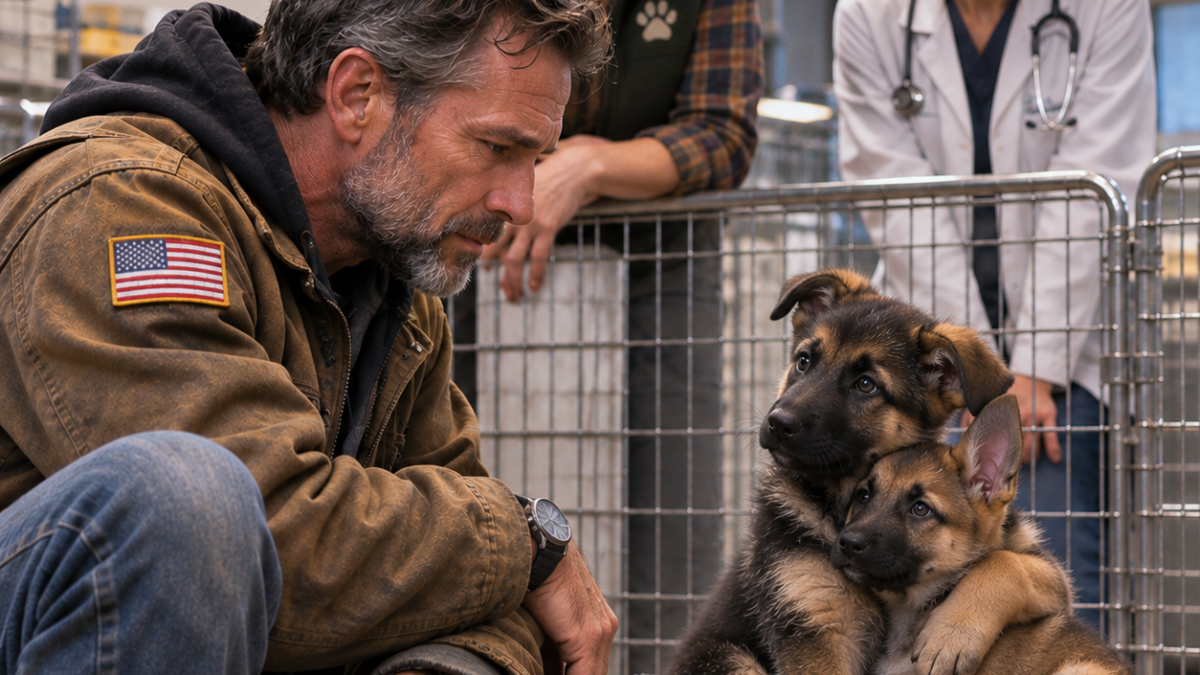
Four Months After I Buried My 16-Year-Old Son, Two Orphaned Puppies Made Me Laugh Again—Then the Shelter Found His Name in an Old File.
Four months after I buried my sixteen-year-old son, two orphaned Belgian Malinois puppies made me laugh for three seconds—and I spent the next ten minutes gripping my kitchen counter because enjoying anything felt like betraying him.
I told myself Ren and Cinder were only staying for three nights, but after I returned them to the shelter, the silence in my house felt worse than it had before they came.
Then Northlight Canine Rescue called about an old volunteer file they were digitizing, and when Tessa read the name on the first page—Noah Holloway—I learned my son had been making plans for that shelter long before either of us knew he would never get the dog I kept promising him “when things settle down.”
The first time I laughed after my son died, two puppies were fighting over a dish towel.
Ren had one end.
Cinder had the other.
Neither possessed enough judgment to understand that the dish towel was not a toy, and both possessed enough confidence to believe victory was inevitable.
Ren backed away.
Cinder pulled harder.
Her rear paws slid across the kitchen floor.
For one second she looked offended by gravity.
Then Cinder lost his footing too.
They collapsed into each other in a heap of paws and ears.
Ren rolled over.
Cinder stood on the towel and looked around as if trying to identify who had created the problem.
I laughed.
Not politely.
Not a breath through my nose.
A real laugh.
Short.
Sharp.
Alive.
It escaped before I could stop it.
Then I realized what I had done.
My hand went to the counter.
I gripped the edge hard enough that my knuckles hurt.
The puppies resumed their argument behind me.
I stared through the kitchen window at frost along the glass.
My son had been dead four months.
And for approximately three seconds, I had forgotten to be devastated.
That was the arithmetic grief taught me.
Three seconds of joy equaled guilt.
A meal finished without crying felt suspicious.
A night of decent sleep felt disloyal.
An ordinary conversation in which nobody said Noah’s name could feel like evidence that the world was successfully learning how to exist without him.
My name is Reed Holloway.
I was fifty that winter.
Retired Navy.
Licensed electrician.
Stonepine Valley, Utah.
For most of my adult life, usefulness had been the easiest part of me.
Electrical fire?
Call Reed.
Generator failure?
Call Reed.
PART2:
Panel tripping at midnight?
Call Reed.
During my years in the Navy, emergencies had rules.
Secure the scene.
Identify the problem.
Stabilize what you can.
Communicate.
Move.
Then Noah got sick.
Two years of treatment taught me the most humiliating lesson of my life.
You can remain calm.
You can listen carefully.
You can ask good questions.
You can drive through snow.
You can memorize medication schedules.
You can learn laboratory values you never wanted to know.
PART3:
You can become the father every nurse describes as incredibly organized.
And none of that guarantees you can save your child.
Noah died at sixteen.
His mother, Elise, and I had divorced several years before his diagnosis.
We had not been enemies.
We had simply become two people who were better at solving practical problems than explaining why we no longer knew how to live together.
Then Noah became ill.
Suddenly we were partners again.
Appointments.
Insurance.
Treatment decisions.
Schedules.
School arrangements.
Medication.
His good days.
His bad days.
The weeks we allowed ourselves to believe a scan meant something larger than it did.
The nights when neither of us said what we were afraid of because saying it might make the fear more real.
After he died, Elise wanted to talk about him.
I wanted to organize things.
I returned borrowed medical equipment.
Cancelled appointments.
Paid final bills.
Wrote down names from casserole dishes.
Thanked people.
Was dependable.
I did not open Noah’s bedroom.
Elise would call.
Sometimes I answered.
She would say:
“I remembered something Noah did.”
And I would feel the conversation moving toward a place where I had no tools.
So I would say I had an early job.
Or somebody was at the door.
Or I would call back.
I almost never called back.
By January, I had become extraordinarily reliable in every way that did not require another human being to know me.
Then Northlight Canine Rescue called.
The nursery heating circuit had become unreliable.
A snowstorm was coming.
Their usual electrical contractor was out of town.
I nearly declined.
Not because I disliked animals.
Because Noah had wanted a dog.
Badly.
Before he became ill, we talked about it constantly.
He wanted something large enough to hike with.
Something smart.
Something that looked, in his words, “like it had a job even when unemployed.”
He spent hours looking at shelter listings.
German Shepherds.
Malinois mixes.
Heelers.
One afternoon in the hospital, he had a photograph of an enormous-eared puppy displayed on his tablet when I arrived.
“No.”
He looked offended.
“I didn’t say anything.”
“You were about to.”
“I’m respecting your decision.”
“Thank you.”
He changed the photograph.
Same puppy.
Sleeping.
A nurse passing the doorway laughed.
So did I.
“When things settle,” I told him.
“When you’re stronger.”
“When we know what next month looks like.”
I kept using the future as though it were a bank account with unlimited credit.
Next month kept arriving.
The dog never did.
So when Northlight called, my first thought was no.
My second was that puppies did not deserve to freeze because my son had died.
I drove there.
Tessa Monroe met me inside.
Fifty-eight.
Silver hair.
Practical shoes.
No expression of pity when she recognized my name.
Stonepine Valley was not large enough for Noah’s death to remain private.
Most people knew.
Tessa only said:
“Panel’s through here.”
I liked her immediately.
The nursery smelled of clean bedding, disinfectant, puppy food, and warm air that was not quite warm enough.
Two Belgian Malinois puppies lay against the far side of a pen.
One dark.
One smaller.
The smaller female had an ear that rose halfway and then apparently lost confidence.
Their mother had died the previous week.
Tessa explained that only because noise mattered while I worked.
“I’m here for the heater.”
“I know.”
She looked at me.
“I’m telling you why we’re keeping the room quiet.”
Fair.
Dr. Camille Hart came in while I was testing voltage.
She was the rescue’s veterinarian.
She checked a feeding chart.
Crouched near the puppies.
The female pressed closer to her brother.
A dish of softened food sat nearby.
Mostly untouched.
“Still not enough,” Camille said.
I kept working.
Something in the circuit had overheated.
The original connection was poor.
Further testing revealed a component I wanted replaced rather than trusted.
I muttered something unkind about whoever had installed it.
Tiny nails scraped behind me.
I looked around.
The female puppy had stood.
Her brother followed.
Camille quietly repositioned the food dish.
She did not coax them.
Did not touch them.
I returned to the panel.
Several minutes later, Tessa stopped speaking.
I noticed the silence.
Turned.
Both puppies were eating.
The darker one paused.
Looked at me.
I looked away.
He returned to his food.
“What?”
I asked.
Camille said:
“Nothing yet.”
“I dislike that answer.”
“I’m withholding a conclusion.”
“You sound pleased with yourself.”
“You should appreciate restraint.”
I did.
The immediate fault was repaired.
Replacement part would arrive the next day.
When I packed my tools, the female puppy walked to the side of the pen nearest me.
The male sat several feet behind her.
Tessa said:
“That’s Ren.”
She pointed to the darker puppy.
“Cinder.”
Ren made a tiny sound.
Not a bark.
Almost a question.
“They’re puppies,” I said.
“Correct.”
“They watch people.”
“Also correct.”
I picked up the tool case.
“They’ll watch somebody else tomorrow.”
Tessa did not challenge me.
Outside, snow was beginning to settle on my truck.
I sat behind the wheel.
Keys in my hand.
Looked toward the nursery window.
Then drove home.
The house was warm.
Perfectly quiet.
I heated soup.
Ate standing at the counter.
Upstairs, Noah’s bedroom door remained closed.
I walked past it.
That night, I dreamed about him.
Not sick.
Fifteen.
Sitting in my truck outside the hospital with his camera against his chest.
He had become obsessed with photographing birds during treatment.
There was a small pond near one clinic.
When he felt well enough, we parked there.
He would wait for hawks.
Crows.
Magpies.
Anything.
In the dream, I frightened away a bird by shifting in the driver’s seat.
Noah whispered:
“You move too much, Dad.”
“I’m breathing.”
“Too aggressively.”
“You’re very demanding for someone using my truck.”
“Art requires sacrifice.”
I laughed.
Then woke up.
For the first time in months, the last picture in my mind was not Noah’s hospital bed.
It was his irritated face because I had scared away a crow.
I lay still.
The memory hurt.
But it was not the same hurt.
At seven, I collected the replacement part.
At eight-ten, I returned to Northlight.
Ren recognized my tool case before she appeared to recognize me.
I put it on the floor.
She stood.
Cinder watched her.
Then stood too.
Camille noticed.
I pretended not to.
“How are they?”
“Improving slowly.”
“That’s good.”
“Yes.”
She stopped there.
No prediction.
No sentimental conclusion.
I appreciated it.
While I worked, they ate.
Not continuously.
Not magically.
A few bites.
Wander.
Return.
More food.
Camille wrote down every gram.
Then she sat near the counter.
“You’re helping.”
“I’m repairing a circuit.”
“I mean your behavior.”
“Unfriendly?”
“Predictable.”
I looked at her.
“You’re not reaching for them.”
“Because I’m working.”
“You’re not asking them to feel better because you’re here.”
“That would be unreasonable.”
Camille nodded.
“Yes.”
Then:
“Pressure sometimes comes wrapped in kindness.”
I returned to the wiring.
But the sentence stayed.
People had been kind since Noah died.
Almost unbearably kind.
They asked what I needed.
I did not know.
They told me I was strong.
I did not want to be.
They told me Noah would want me to keep living.
I had always wondered how they had become qualified to speak for him.
People brought food and stood in my kitchen waiting for a reaction big enough to reassure them the food had helped.
They did not mean harm.
But grief made gratitude heavy.
Ren and Cinder wanted nothing from me except consistency.
No speech.
No performance.
No reassurance.
The heater repair took longer than expected.
By evening, snow had made travel unpleasant.
Most volunteers went home.
I remained with Tessa and the overnight staff.
Camille checked the puppies.
Their dish was nearly empty.
Then a tray fell in the adjoining room.
Metal hit tile.
The crash went through my body before my mind understood it.
For one second, Northlight disappeared.
I was somewhere else.
Years earlier.
Deployment.
Metal.
Dust.
A voice calling a name that never answered.
My hand locked around the screwdriver.
Ren scrambled backward.
Cinder dropped low.
Both stared at the doorway.
“Easy.”
The word came from me.
I was not sure who I meant.
Them.
Me.
All three.
Camille stepped into the doorway.
“Everybody’s here.”
Nothing else.
No question.
I breathed.
Later I sat in a plastic chair while the electrical system ran through final checks.
Ren slept against a folded blanket.
Cinder watched me until his head lowered.
For four months, silence had been dangerous.
Quiet rooms filled themselves with the final week of Noah’s life.
That nursery was quiet differently.
Two small bodies breathed inside it.
The heat worked.
Nothing needed solving.
I fell asleep in the chair for twenty minutes.
When I woke, a cup of coffee sat beside me.
Tessa had left it.
No comment.
Two days later she called.
A water pipe had ruptured in another part of the shelter.
No animals hurt.
Several rooms unusable.
Nearby foster homes had taken most displaced dogs.
Ren and Cinder remained.
“No,” I said.
Tessa paused.
“I haven’t asked yet.”
“You were going to.”
“Yes.”
“No.”
“All right.”
She did not argue.
I stared at my kitchen wall.
That silence was unfair.
“Three nights?”
Tessa said:
“That was going to be my question.”
“Three.”
“Possibly.”
“You said three.”
“I said we’d review circumstances.”
“You’re already changing the contract.”
“There is no contract, Reed.”
I almost smiled.
Almost.
“What do they need?”
Before the puppies entered my house, Northlight inspected it.
I found this mildly insulting.
Then Tessa pointed to the open container of ice melt beside the door.
“They are young enough to believe this is food.”
I moved it.
Camille arrived with two crates.
Bedding.
Food.
Scale.
Written feeding instructions.
Medication information.
Emergency contacts.
Two separate routines.
I frowned.
“They stay together.”
“They’re littermates.”
“So?”
“So we want attachment without dependence.”
She explained that each puppy needed individual handling, rest, feeding observation, and short periods apart.
The goal was two healthy dogs.
Not one nervous unit made of two bodies.
I read every page.
Camille watched.
“Questions?”
“Several.”
“Excellent.”
Ren entered my house as though she had been given title to it.
Cinder entered as though he had been hired to inspect the structure first.
Ren investigated furniture.
Cinder watched Ren survive the furniture.
Ren found a chair interesting.
Cinder found me interesting.
At midnight, I carried Ren toward her crate.
One paw rested against my wrist.
I stopped.
Noah had fallen asleep in the truck once after a fishing trip.
Eight years old.
Sunburned nose.
Mud on one shoe.
His hand had curled around my thumb while I carried him inside.
The memory hit so hard my knees weakened.
Ren’s paw slid away.
Then she snored.
Tiny.
Completely undignified.
I stood beside the crate until I could breathe again.
Morning arrived.
Two puppies needed breakfast.
Grief had not gone anywhere.
Responsibility had arrived beside it.
I could make breakfast.
That was enough.
The first morning took twice the schedule.
Ren stood in her water.
Cinder refused food because a chair scraped.
My phone rang.
Client.
“Any chance you can come early?”
Normally, yes.
I had built most of my adult life around being useful immediately.
I looked at the clock.
Two puppies.
Feeding chart.
Wet floor.
“I can be there at the time we scheduled.”
The client said:
“Sure.”
That was it.
No disappointment.
No collapsed business relationship.
No disaster.
The world survived a boundary I had believed would inconvenience everyone.
At noon, Tessa called.
I reported weights.
Amounts eaten.
Water.
Stool.
Ren’s offensive relationship with the water dish.
Tessa listened.
Then:
“How are you?”
I nearly ended the conversation.
Instead:
“Tired.”
“They’re puppies.”
“I’ve noticed.”
“Use Sandra.”
Sandra lived next door.
Retired teacher.
She had agreed to emergency backup.
I had not intended to call.
Needing help still felt like a personal defect.
But I called.
Sandra arrived.
Reviewed the instructions.
Then pointed toward the back door.
“Go.”
“Where?”
“Outside.”
“This is my house.”
“Congratulations. Leave it for twenty minutes.”
I walked beneath the pines.
Did not watch the time continuously.
When I returned, both puppies slept.
Someone else had cared for something I cared about.
And nothing terrible had happened.
That was a lesson grief had made me forget.
Then came the dish towel.
Ren stole it.
Cinder joined.
They fell.
I laughed.
Then I gripped the counter.
My hands shook.
I called Elise.
She answered with my name.
“Reed?”
Silence.
“Reed?”
“I laughed.”
“At something?”
“The puppies.”
“Tessa told me you were fostering.”
“I didn’t mean to.”
“Foster?”
“Laugh.”
Elise inhaled.
“Oh.”
“It felt wrong.”
She was quiet.
Then:
“I laughed last week.”
I closed my eyes.
“At what?”
“A terrible television show.”
She almost laughed again remembering it.
“Then I cried so hard I couldn’t see the screen.”
Neither of us spoke.
For months, we had been grieving the same boy separately.
Each quietly believing the other had received instructions we had missed.
“I don’t know how to do this,” I said.
“Neither do I.”
Most useful sentence either of us had spoken since September.
That afternoon, Ren followed me upstairs.
I wanted a blanket.
The latch on Noah’s bedroom had not caught.
Ren pushed the door with her nose.
“Out.”
Too sharp.
She froze.
Cinder behind her froze too.
Their bodies changed instantly.
I hated myself.
“Sorry.”
They did not understand the word.
They understood the tone.
I moved to close the door.
Then saw Noah’s gray hoodie over the chair.
His camera on the desk.
Paperback book open beside the bed.
I had treated the room as though it contained a catastrophe.
It also contained homework.
Dirty socks.
Camera batteries.
A half-finished model aircraft.
A seventeen-dollar desk lamp he insisted was better than the expensive one.
I lowered myself onto the carpet.
Ren remained near the doorway.
Cinder settled beside my leg.
Nothing miraculous happened.
They did not discover a letter.
Noah had not left a secret message beneath the bed.
Ren chewed her toy.
Cinder became bored.
The ordinary sounds helped.
I looked around.
My son had lived here.
That fact had become buried beneath the fact that he died somewhere else.
I stayed until my knee hurt.
Then closed the door.
Gently.
Knowing I could open it again.
By the third morning, I knew the feeding schedule without reading it.
I knew the sound Ren made before she needed outside.
I knew Cinder waited at the back door until I stepped aside.
Knowing them felt dangerous.
Attachment had become synonymous with eventual loss.
At ten, Tessa called.
Repairs complete.
The puppies could return.
“Four o’clock.”
I hung up.
Opened the cabinet beneath the sink.
Two stainless-steel bowls.
I had bought them with groceries.
One labeled:
REN.
The other:
CINDER.
Apparently, I had been making decisions without admitting they were decisions.
At four, I drove them back.
Camille weighed both.
Reviewed my records.
“Good progress.”
She flipped through pages.
“Most fosters write ‘ate well.’”
“That isn’t information.”
“It is technically information.”
“Not enough.”
She almost smiled.
The puppies returned to their pen.
Ren pressed to the side nearest me.
Cinder watched the doorway.
I put on my coat.
“Everything’s here.”
“Thank you,” Tessa said.
She did not ask whether I wanted to stay.
I appreciated that.
I also resented her for it.
At the door, Camille lifted the bowls.
“You leaving these?”
“Keep them.”
Then I left before my voice did something embarrassing.
My house was immaculate.
No bedding.
No bowls.
No small feet.
No reason to remove my boots at the back door.
I stood in the kitchen.
The refrigerator hummed.
At the puppies’ normal feeding time, I looked at my watch automatically.
Nothing needed feeding.
For months, I had told myself silence protected me.
That evening, it felt empty.
I went upstairs.
Opened Noah’s room.
Touched his camera strap.
“I don’t know what I’m doing, kid.”
No answer.
I opened the desk drawer where he kept memory cards.
There was a notebook.
Camera settings.
Bird names.
Terrible jokes.
A list:
THINGS DAD SAYS WHILE DRIVING.
Number one:
“That guy’s in a hurry to meet a tree.”
Number two:
“We left early so we wouldn’t have to do that.”
I heard Noah imitating me.
The third entry ended halfway through because the pencil had apparently broken.
No final message.
No wisdom for the grieving father he did not expect to leave behind.
Just evidence that my kid thought I was funny.
I sat on his bed and cried.
Later, I photographed the page.
Sent it to Elise.
She replied with an audio recording.
Noah had apparently recorded her arguing with a frozen printer.
“You useless piece of—”
Then Noah’s laughter in the background.
Uncontrolled.
Hiccuping.
Alive.
I listened twice.
The pain was different.
Still pain.
But with space inside it.
I had spent four months remembering mostly how Noah died.
The room reminded me he had lived.
I remained there until after dark.
The next morning, I drove to Northlight.
I told myself I had left a screwdriver.
I had not.
Tessa stood behind reception.
“Lose something?”
“Possibly.”
“What?”
I looked toward the nursery.
“My judgment.”
She nodded.
“Common.”
“Are they okay?”
“Yes.”
“Eating?”
“Yes.”
“Weights?”
“Up.”
“Both?”
“Yes.”
I stared at her.
Tessa waited.
“I can take them another week.”
She did not smile.
That was one reason I trusted her.
“You can apply to extend the foster.”
“That sounded intentionally bureaucratic.”
“It is.”
“Fine.”
Camille reviewed the plan.
“We’ll keep working on individual confidence.”
“I know.”
“They may not ultimately need to be adopted together.”
That sentence bothered me.
I did not know why yet.
“Okay.”
“You’re making a face.”
“I’m fifty. That happens naturally.”
She ignored me.
“Fostering is not a promise of adoption.”
“I know.”
“And attachment doesn’t create an obligation to keep either one.”
“I know.”
“Good.”
I signed.
Ren saw the tool case I had deliberately brought.
She stood.
Cinder did too.
I did not tell them they were coming home.
Dogs do not need speeches about futures humans have not decided.
They needed a ride.
That week became two.
Then three.
I continued electrical work.
Ren continued believing all objects existed to be investigated.
Cinder continued preferring a risk assessment.
We practiced brief separations.
One puppy stayed with Sandra.
The other walked with me.
Then switch.
Ren learned the world remained available when Cinder was not directly beside her.
Cinder learned I did not disappear when Ren did.
Camille called it building individual resilience.
I called it scheduling complexity.
She refused to use my terminology.
Elise began calling more.
Sometimes we talked about the puppies.
Sometimes Noah.
Sometimes nothing important.
One Sunday she asked:
“Can I come over?”
I almost said not today.
Then:
“Yes.”
She arrived carrying a grocery bag.
Inside were two durable puppy toys.
“I asked Tessa what they couldn’t destroy.”
“Tessa lied.”
“That’s what Sandra said.”
Ren greeted Elise immediately.
Cinder waited.
Elise sat on the floor.
Did not reach.
Cinder eventually came near.
She looked at me.
“You learned something.”
“About what?”
“Waiting.”
I almost argued.
Did not.
We drank coffee.
Elise looked toward the stairs.
“You opened his room.”
“Yes.”
“How?”
“Ren opened it.”
“Of course.”
“I yelled.”
“At the puppy?”
“Yes.”
Elise smiled sadly.
“Noah would have found that very funny.”
“I know.”
That was the first time one of us said what Noah would have thought without it sounding like a moral instruction.
Not:
Noah would want you happy.
Not:
Noah would want you to move on.
Just:
He would have laughed.
We could know that.
He had left sufficient evidence.
Elise went upstairs.
I followed.
We stood inside Noah’s room together for the first time since before the funeral.
She touched the gray hoodie.
“He hated this.”
“He wore it constantly.”
“Exactly.”
She sat on the bed.
“I need to tell you something.”
Every muscle in my body tightened.
Grief teaches you that sentences beginning that way rarely improve your day.
“What?”
“Last year, when he had that six-week stretch where his counts were better…”
I waited.
“He contacted Northlight.”
I stared at her.
“What?”
“He wanted to volunteer.”
“At the shelter?”
“Yes.”
“You knew?”
“I signed the parental consent form.”
I sat in the desk chair.
“What did he want to do?”
“Photography.”
That made sense immediately.
Too much sense.
“Why didn’t you tell me?”
“I thought he did.”
“He didn’t.”
Elise looked toward the camera.
“He said he was going to.”
“He never mentioned it.”
“He might have changed his mind.”
“Did he go?”
“No.”
“Why?”
“Treatment changed again.”
That answer sat between us.
Another plan swallowed by illness.
I felt anger rising.
Not at Elise exactly.
At lost time.
At Noah.
At myself.
At every future-tense sentence I had used.
“You should have told me.”
“I know.”
“Why didn’t you?”
“Because after he died, every new thing I told you seemed to hurt you.”
“That wasn’t your decision.”
“No.”
She looked at me.
“But you stopped answering.”
That was true.
I stood.
Walked to the window.
“I would have wanted to know.”
“I know that now.”
The puppies made noise downstairs.
A crash.
Then Sandra’s voice through the open back door:
“Nothing expensive!”
Elise almost smiled.
I did not.
“Was there an application?”
“I assume so.”
“Do they still have it?”
“I don’t know.”
I looked at her.
“Did Tessa know?”
“No.”
“She never mentioned it.”
“It was over a year ago. Different volunteer coordinator.”
I nodded.
Then something bothered me.
“Why didn’t Noah finish?”
“He was supposed to attend an orientation.”
“And?”
“His neutrophils dropped.”
I knew exactly which week.
Hospital.
Fever.
Another postponement.
Of course.
I sat again.
Elise said:
“He wasn’t trying to get around you about the dog.”
“I didn’t think that.”
“Yes, you did.”
I looked at her.
“He knew we’d agreed not to adopt during treatment.”
“He hated that agreement.”
“He hated vegetables too.”
“He still understood it.”
Elise opened one of Noah’s notebooks.
“He told me if he couldn’t have a dog yet, he could help somebody else’s dog get adopted.”
I closed my eyes.
“That sounds like him.”
“Yes.”
For several days, I considered asking Tessa.
I did not.
The possibility of seeing Noah’s name in another place felt like standing outside his bedroom door again.
Knowing I could open it did not mean I always wanted to.
Then Northlight called me first.
Tessa.
“Are you working?”
“Yes.”
“Can you talk?”
“Depends.”
“We’re digitizing old volunteer records.”
Everything in me stopped.
Tessa continued carefully.
“We found a file.”
I leaned against the side of my truck.
“What file?”
“You should come here.”
“If this is about Noah, tell me now.”
Silence.
Then:
“Yes.”
The drive to Northlight took nineteen minutes.
I remember because I checked twice.
The same road I had driven the day the heater failed.
The same parking lot.
Same nursery window.
But I walked through the entrance feeling like the building itself had changed.
Tessa waited in her office.
Camille sat nearby.
On the desk lay a paper folder.
Old volunteer application.
Name:
NOAH HOLLOWAY.
Age at application:
Proposed role:
Youth media / adoption photography assistant.
Parent authorization:
Elise Mercer-Holloway.
I touched his name.
Not the paper.
Just the ink with one fingertip.
“Where was this?”
“Archived box from our old outreach office.”
“Why now?”
“We’re moving everything into the new system.”
Tessa opened the folder.
There were six pages.
Emergency contact.
Health disclosure.
Availability.
A note explaining that participation required medical clearance because Noah was in active treatment.
Three small printed photographs.
A magpie.
A dog behind a neighbor’s fence.
A ridiculous close-up of my left hand holding a fishing lure.
I laughed once through my nose.
“That picture irritated me for weeks.”
Tessa waited.
Then she turned to the last page.
The volunteer coordinator had asked applicants:
WHY DO YOU WANT TO HELP AT NORTHLIGHT?
Noah’s handwriting.
Uneven because treatment had affected his hands some days.
I read.
I like taking pictures of animals because they don’t know what their face is doing.
I stopped.
That was Noah.
Absolutely Noah.
I continued.
People decide fast when they see rescue dogs online. I want to take pictures where scared dogs don’t look scary just because they are scared.
My vision blurred.
The next line:
My dad thinks being useful means fixing something. I’m trying to prove taking a picture can count.
I covered my mouth.
Tessa looked away.
Camille stared at the floor.
I read the final paragraph.
I can’t have a dog right now because treatment makes schedules complicated. When things settle down, my dad says we can talk about it again. Until then I want to help dogs find somebody.
I put the page down.
For months, “when things settle down” had been one of the phrases I hated most.
I heard my own voice every time.
When you’re stronger.
Next month.
After treatment.
Later.
Noah had written it without anger.
Not accusing me.
Not leaving a guilt trap.
Just repeating what he believed.
The future was still available when he filled out that application.
Tessa said:
“There’s more.”
I did not want more.
I nodded anyway.
Attached to the application was an email exchange.
The volunteer coordinator had told Noah that dogs could be difficult to photograph.
He replied:
That’s fine. Birds are worse.
Another email:
Some animals will not come near volunteers quickly.
Noah:
Also fine. Sitting is one of the main things hospitals teach you.
I laughed.
Then cried so fast the laugh barely ended.
The final email was from the coordinator.
Orientation date proposed.
Noah replied:
I might have treatment that week. Can I confirm later?
The file ended there.
No follow-up.
No grand final message.
No secret destiny.
His blood counts had fallen.
The orientation never happened.
Tessa said:
“We didn’t know.”
“I know.”
“I’m sorry nobody connected your name.”
“How would you?”
“Holloway.”
“There are other Holloways.”
“Still.”
“No.”
I looked at her.
“This isn’t anybody’s mistake.”
That surprised me.
Months earlier, I would have needed somebody to blame.
But this was simply one more thing illness interrupted.
Tessa pushed the file toward me.
“You can have a copy.”
I looked through the office window toward the nursery.
Ren and Cinder were being weighed.
Cinder looked deeply offended.
Ren attempted to lick the scale.
I asked:
“Did Noah ever meet any animals here?”
“We checked.”
Tessa shook her head.
“No evidence he attended orientation.”
“Good.”
She looked puzzled.
“Why good?”
“Because I don’t want this to become something it isn’t.”
I pointed toward the puppies.
“He didn’t choose them.”
“No.”
“He didn’t send them.”
“No.”
“They’re not some cosmic message.”
“No.”
I breathed.
“They’re puppies.”
“Yes.”
“And Noah wanted to volunteer here.”
“Yes.”
“Those things can matter without being the same thing.”
Tessa nodded.
“Exactly.”
I took the copy home.
Put it on Noah’s desk.
Did not frame it.
Did not turn it into scripture.
The next evening, Elise came.
I gave her the pages.
She read the line about usefulness.
Then looked at me.
“He got you.”
“He did.”
“You do think that.”
“Think what?”
“That if you can’t fix it, you’re not helping.”
“That is objectively untrue.”
Elise raised one eyebrow.
I sighed.
“Fine.”
She read the paragraph again.
“When things settle down.”
“I know.”
“I’m sorry.”
“For what?”
“That phrase.”
“It wasn’t your phrase.”
“It became ours.”
I sat on the floor.
Ren wandered in.
Cinder followed.
Elise said:
“You didn’t fail him because the dog never happened.”
I looked away.
“I know.”
“Do you?”
“No.”
She sat beside me.
For months, the sentence I carried was:
I should have gotten him the dog.
As if a dog could have defeated cancer.
As if saying yes sooner would have rewritten the ending.
As if fatherhood could be measured by one postponed promise.
Elise spoke quietly.
“He knew why we waited.”
“He still wanted one.”
“Yes.”
“I should have—”
“Maybe.”
I looked at her.
That was not the answer I expected.
Elise continued:
“Maybe we could have done it.”
“Thanks.”
“Or maybe treatment would have made it impossible.”
I said nothing.
“We don’t get to rerun it.”
“I know.”
“And I’m not going to tell you that every choice was perfect because he died.”
Her voice broke.
“I made choices I question too.”
I looked at her.
“What choices?”
“Does it matter?”
“Yes.”
“No.”
She smiled sadly.
“See?”
We sat with that.
No absolution.
No verdict.
Only two parents who had made decisions with the information they possessed and now had a lifetime to imagine alternatives.
Ren climbed partly into my lap.
She had become too large to do it gracefully.
Cinder settled against Elise.
Elise looked down.
“They’re getting big.”
“Unfortunately.”
“Keeping them?”
“I’m fostering.”
“That wasn’t the question.”
I hated when people knew me too well.
“I don’t know.”
Camille had warned me not to let grief make the decision.
That irritated me because grief participated in every decision.
She clarified:
“You don’t need to prove recovery by adopting them.”
“I know.”
“You also don’t need to prove loyalty to Noah by returning them.”
That one stayed.
Northlight began listing the puppies for adoption.
Not because they wanted to take them from me.
Because they were medically stable and old enough to begin finding permanent homes.
Tessa sent me the draft profiles.
REN:
Curious, high-energy, confident with new environments, benefits from structured independent training.
CINDER:
Observant, thoughtful, slower to warm, deeply engaged once comfortable, benefits from predictable handling.
I read them.
“They make them sound employable.”
Tessa said:
“You’re welcome to rewrite them.”
That gave me an idea I pretended I had not immediately stolen from Noah.
I took his camera out of the room.
Battery dead.
Of course.
I charged it.
The next day, I photographed Ren.
Badly.
She moved constantly.
Half the frames were ears.
One contained nothing but tail.
Cinder was worse differently.
Every time I raised the camera, he looked away.
I heard Noah:
You move too much, Dad.
So I stopped moving.
Sat on the ground.
Waited.
Ren eventually forgot the camera.
Cinder did too.
I photographed Ren watching snow fall from the porch.
Cinder sitting beside my boot.
Ren with one ear forward, one sideways.
Cinder carrying a pinecone far too large for him.
Nothing posed.
Nothing sad.
The images were good.
Not technically extraordinary.
Good because they looked like the dogs I knew.
Tessa put them online.
Applications increased.
I hated that.
Then felt ashamed for hating it.
This was the point.
A couple named Morgan and Luis came to meet Ren.
They had experience with working breeds.
Fenced property.
Training plan.
Time.
Ren adored them.
Traitor.
I watched from across the room.
Camille asked:
“You okay?”
“No.”
“That’s allowed.”
“They’re excellent.”
“Yes.”
“I dislike them.”
“That’s less reasonable.”
“I know.”
Cinder had another potential adopter.
Retired search-and-rescue volunteer.
Also excellent.
Something inside me panicked.
Not because the homes were wrong.
Because suddenly the temporary thing I kept calling temporary had an ending.
That night, I sat in Noah’s room.
His volunteer application lay on the desk.
I read the sentence:
I want to help dogs find somebody.
I said aloud:
“Very convenient, kid.”
No answer.
The next morning, I called Tessa.
“I need to talk.”
“About?”
“The applications.”
“All right.”
“I want to adopt them.”
Silence.
“Both?”
“Yes.”
Another silence.
“That is not an automatic yes.”
“I know.”
“You need to be evaluated like anybody else.”
“I know.”
“Your grief does not give you priority.”
“I know.”
“Being their foster does matter because we have behavioral information.”
“I know.”
“Stop saying you know.”
“I know.”
Tessa sighed.
“Come in.”
Camille interviewed me.
Not gently.
“Why both?”
“Because I love both.”
“That answer is insufficient.”
“I assumed you’d say that.”
“Ren and Cinder are different dogs.”
“I know.”
“If one were adopted tomorrow, which would you keep?”
I hated the question.
“I don’t know.”
“Then think.”
I did.
Ren brought motion into the house.
Cinder brought stillness.
Ren pulled me outside.
Cinder waited beside closed doors.
Neither replaced Noah.
Neither represented him.
I could imagine Ren leaving and still love Cinder.
I could imagine Cinder leaving and still love Ren.
That mattered.
“I’m not adopting a pair,” I said finally.
Camille waited.
“I’m applying to adopt Ren.”
Pause.
“And separately applying to adopt Cinder.”
She nodded.
“Better answer.”
The home assessment repeated.
Finances.
Schedule.
Exercise.
Training.
Backup care.
My work hours.
Breed needs.
Separate crates.
Individual training plans.
Potential sibling conflict as they matured.
No romance.
No assumption that love solved management.
Sandra agreed to remain backup.
Elise agreed too.
That surprised me.
“You?”
She looked offended.
“I raised Noah with you for sixteen years.”
“Puppies are different.”
“Puppies can’t argue about curfew.”
“Ren absolutely can.”
Northlight approved both adoptions.
The Morgan family was disappointed.
I called them myself.
I expected anger.
Morgan said:
“We liked her.”
“I know.”
“But she already has her person.”
I looked toward Ren.
“No.”
“What?”
“She has several people.”
Then I understood that was true.
Me.
Sandra.
Elise.
Tessa.
Camille.
Northlight volunteers.
Love had stopped looking like one person preventing all loss.
The adoption became official on a Thursday.
No ceremony.
Tessa signed.
I signed.
Camille handed me medical files.
Then a separate envelope.
“What’s this?”
“Noah’s application copy.”
“I already have one.”
“This is the original scan package. We found something else attached when records finished importing.”
My heart changed rhythm.
“What?”
“A photo metadata sheet.”
Noah had submitted three images electronically in addition to the printed copies.
One was the magpie.
One the neighbor’s dog.
The third was a photograph I had never seen.
Me.
I was sitting on the tailgate of my truck.
Fishing hat.
Looking away.
Noah had caught me laughing at something outside frame.
I barely recognized my own face.
On the submission form, under IMAGE DESCRIPTION, Noah had typed:
My dad. He hates pictures of himself because he says he always looks tired. This is what he looks like when he forgets somebody has a camera.
I sat down.
Tessa quietly left the room.
I stared at the picture.
Noah had photographed me the same way he wanted to photograph shelter dogs.
Not when I was aware.
Not when I was performing.
When I had forgotten to guard my face.
I thought about the kitchen.
Dish towel.
Three-second laugh.
The guilt.
Maybe I had been thinking about laughter incorrectly.
It was not evidence that Noah mattered less.
It was evidence the part of me he had once photographed still existed.
That realization did not heal me.
I distrust stories that use the word heal as though grief were a wound eventually closed.
Noah remained dead.
That fact did not improve.
There were mornings I woke and remembered before opening my eyes.
Birthdays became unbearable.
The first anniversary knocked me flat for a week.
Sometimes Ren would do something ridiculous and I would laugh.
Sometimes I would still feel guilty.
The difference was that guilt stopped getting the final word.
Cinder became enormous.
Ren became faster than common sense.
They required training.
Exercise.
Structure.
Patience.
They destroyed one shoe.
Two dog beds.
A garden hose.
A corner of a blanket Elise had specifically told me was expensive.
I became angry.
Then normal.
Then guilty for being normal.
Then increasingly tired of grading every emotion against death.
Elise and I became friends in a way we had not managed while married.
That sounds more elegant than it was.
Sometimes we fought.
Sometimes one of us said the wrong thing.
Sometimes I disappeared for a day.
Sometimes she pushed too hard.
But we stopped pretending grief needed to be private to be dignified.
On Noah’s seventeenth birthday, Elise came to the house.
We made the chocolate cake he liked.
Too much frosting.
Ren stole part of a paper towel.
Cinder slept beneath the table.
We lit no symbolic candle.
We simply ate cake.
At one point Elise laughed.
Then covered her mouth.
I saw it.
She saw me seeing it.
For one second, four months earlier returned.
The kitchen counter.
Dish towel.
Guilt.
I said:
“Don’t.”
Her eyes filled.
“I know.”
“No.”
I shook my head.
“Don’t apologize.”
She lowered her hand.
We kept eating.
A few weeks later, Tessa called.
“Need an electrician.”
“Actual electrician or suspicious foster recruitment?”
“Actual.”
“Good.”
“Also our photographer cancelled.”
I sighed.
“Tessa.”
“You own a camera.”
“Noah owned a camera.”
“You use it.”
“Poorly.”
“Better than our phones.”
I went.
Fixed a light.
Then photographed three dogs.
An elderly cattle dog.
A shepherd mix.
A frightened hound that stayed in the back of the kennel.
For the hound, I sat.
Waited.
Remembered Noah’s application.
Scared dogs don’t look scary just because they are scared.
Eventually the dog looked sideways.
One ear lifted.
I took the photograph.
A family adopted him nine days later.
Tessa showed me the email.
I stared at it longer than necessary.
“You helped.”
“I took a picture.”
“Yes.”
I laughed softly.
“My son would be unbearable about this.”
“Why?”
“He was trying to prove that counted as useful.”
Tessa smiled.
“Seems he did.”
I began volunteering twice a month.
Not because Noah had failed to.
Not to finish his life for him.
That distinction mattered.
I did it because I liked it.
For months I felt guilty admitting that.
Eventually I stopped.
The rescue placed a small photo workstation in a storage room.
Computer.
Card reader.
Backdrop.
No plaque with Noah’s name.
I did not want one.
Noah was not a project.
He was my son.
His application stayed in his room.
The photograph he took of me went into a frame downstairs.
That surprised Elise.
“You’re displaying a picture of yourself?”
“I’m evolving.”
“Disturbing.”
Ren and Cinder grew.
At one year, they looked almost nothing like the frightened puppies from the nursery.
Ren remained reckless.
Cinder remained thoughtful.
They trained separately several days a week.
We hiked.
I learned working-breed ownership was mostly the management of intelligent animals who had invented personal hobbies you did not approve.
Ren’s hobby was carrying objects.
Cinder’s was monitoring neighbors.
Neither was permitted to pursue these professionally.
One afternoon, we hiked to the pond where Noah used to photograph birds.
I brought his camera.
Not intentionally at first.
It had simply become mine to use.
That sentence took almost a year to say without feeling wrong.
The pond was partly frozen.
A magpie landed on a branch.
I raised the camera.
Ren moved.
Bird flew.
I lowered it.
“You move too much.”
The words came out automatically.
Noah’s words.
I laughed.
Then stood there with tears freezing against my face.
Cinder came beside me.
Ren looked for the bird she had personally offended.
I did not ask the moment to become meaningful.
It already was.
Later, I called Elise.
“Took them to the pond.”
She knew which one.
“How was it?”
“Ren frightened a magpie.”
Elise laughed.
“Noah would hate her.”
“Correct.”
“You okay?”
I looked across the ice.
“No.”
Pause.
Then:
“Yes.”
Both answers were true.
That became another thing grief taught me.
Two contradictory things can exist without cancelling each other.
I missed Noah.
I loved Ren.
I missed Noah.
I loved Cinder.
I wished I had gotten Noah a dog.
I understood why we waited.
I was angry.
I was grateful.
I could laugh.
I could cry five minutes later.
None invalidated the rest.
On the first anniversary of Noah’s death, I expected the house to become impossible.
I took the day off.
Elise came in the morning.
We went to the cemetery.
Stayed twelve minutes.
Not because twelve had significance.
Because it was cold.
Back home, we opened Noah’s room.
Not as a shrine.
Not as a project.
We sorted nothing.
I showed Elise the original Northlight application again.
She touched the page where he wrote about being useful.
“He was making fun of you.”
“I know.”
“Lovingly.”
“Debatable.”
She smiled.
Then found the photograph of me in the truck.
“You really looked happy.”
“I probably was.”
“You were.”
“How do you know?”
“I remember that fishing trip.”
I looked at her.
“You were there?”
“The day before.”
She pointed.
“That hat was his.”
I looked at the photograph again.
I had forgotten that.
Memory is not an archive.
It is reconstruction.
Pieces disappear.
Others dominate.
For months, the hospital had swallowed everything.
Now smaller memories returned.
Noah eating French fries in my truck.
Noah complaining that Utah had too many mountains blocking sunsets.
Noah mocking my music.
Noah asking if electricians developed a supernatural ability to find light switches in dark rooms.
Noah alive.
That evening, Ren carried one of his old socks downstairs.
I had apparently left the closet open.
I froze.
She stood in the hallway.
Sock hanging from her mouth.
For a second, rage came.
Then I saw the situation.
A dog had found a sock.
That was all.
I held out my hand.
“Give.”
Ren considered felony escape.
Then dropped it.
I picked up the sock.
Smelled laundry detergent.
Nothing dramatic.
I returned it upstairs.
Closed the drawer.
Came back down.
Elise watched me.
“You okay?”
“Yes.”
“Really?”
“No.”
She nodded.
That was enough.
Northlight kept Noah’s application in its digitized archive.
I asked them not to turn it into a public story.
Tessa agreed.
Later, with my permission and Elise’s, one sentence from his application was used internally during volunteer photography orientation:
People decide fast when they see rescue dogs online.
No name attached.
No memorial slide.
Just the idea.
I liked that.
Useful without becoming sacred.
Two years after Noah died, I stood inside Northlight’s renovated nursery repairing another outlet.
Ren and Cinder were at home.
Adults now.
Tessa came in holding coffee.
“Feels familiar.”
“Your electrical system continues trying to support my career.”
“That’s our mission.”
The nursery was warmer than the first day.
Three puppies slept in a pen.
Different dogs.
Different story.
Tessa asked:
“Do you ever think about the coincidence?”
“What coincidence?”
“Those two arriving when you did.”
I tightened the outlet cover.
“No.”
“That was too fast.”
“I think about it.”
“And?”
I put the screwdriver down.
“I used to want it to mean something.”
“Like Noah sent them?”
“Yes.”
“You don’t anymore?”
“No.”
Tessa nodded.
“Why?”
“Because they don’t need to be messages.”
I looked toward the sleeping puppies.
“Ren is allowed to be Ren.”
“Cinder is allowed to be Cinder.”
“And Noah?”
I smiled.
“Noah gets to be Noah.”
Tessa handed me the coffee.
“That sounds healthier.”
“Don’t ruin it by evaluating me.”
She laughed.
The truth was less cinematic than the story people sometimes wanted.
My son did not arrange two orphaned puppies from beyond death.
The shelter did not discover that he had secretly chosen them.
There was no note predicting they would arrive.
No miraculous chain.
No final request that I adopt them.
What Northlight found was an unfinished volunteer application.
A fifteen-year-old boy with a camera.
A plan for a future he expected to have.
He wanted to photograph frightened animals honestly enough that strangers might see something worth loving.
Then treatment interrupted him.
He never came.
Months later, after his death, I arrived for an electrical repair.
I met two puppies.
I fostered them.
I laughed.
I felt guilty.
I returned them.
I missed them.
Then I chose them.
Those were ordinary human decisions.
That was why they mattered.
If Noah’s application had never been found, I still would have loved Ren and Cinder.
If Ren and Cinder had been adopted elsewhere, Noah’s application still would have mattered.
The stories touched.
They did not need to become destiny.
On Noah’s eighteenth birthday, Elise and I drove to Northlight.
Not to mourn.
Tessa had asked me to photograph a new group of dogs.
Elise carried equipment.
She was terrible at it.
“Lens cap.”
“What?”
“The lens cap is still on.”
“I knew that.”
“You absolutely did not.”
Somewhere in the room, a volunteer laughed.
For a moment I heard Noah.
Not literally.
Memory.
That distinction no longer disappointed me.
A frightened shepherd mix sat at the back of a run.
I lowered myself onto the floor.
Did not reach.
Did not coax.
Just waited.
Elise sat beside me.
After several minutes, the dog moved closer.
Not much.
Enough.
I raised the camera only when he looked away from it.
Click.
One frame.
Then another.
Later, when I reviewed the photographs, the best image showed the dog looking slightly to the side.
No dramatic smile.
No perfect posture.
Just cautious curiosity.
I uploaded it.
Under description, I typed:
Quiet dog. Needs time. Watches before approaching. Give him room and he will tell you when he is ready.
Then I stopped.
Because the sentence could have described me two years earlier.
I almost deleted it.
Did not.
That dog was adopted by a woman named Leah.
She sent Northlight a photo three months later.
He was asleep on her couch.
Tessa forwarded it to me.
I showed Elise.
Then placed the phone on Noah’s desk beside his old application.
I thought about the sentence he wrote:
My dad thinks being useful means fixing something.
He had been right.
For decades, usefulness meant repair.
Wire the circuit.
Restore power.
Stop the failure.
Make the thing work.
Noah’s illness shattered that definition.
I could not fix him.
For a long time, I thought that meant I had failed at the only form of love I understood.
The puppies taught me another version.
Feed breakfast.
Sit nearby.
Do not force.
Notice.
Come back tomorrow.
Let someone help.
Open the door.
Take the picture.
Laugh when something is funny.
None of those actions fixed death.
They still counted.
One winter evening, years after Northlight found Noah’s name, I sat in the kitchen.
Ren slept beneath the table.
Cinder lay against the wall where he could see both doors.
The dish towels were kept in a drawer now.
We had learned.
Snow moved past the windows.
Noah’s photograph of me hung near the hallway.
The one where I had forgotten the camera existed.
I looked happy.
For a long time, that image had frightened me.
Now I understood why.
It proved happiness had existed before Noah died.
And therefore might exist after.
Not replacing him.
Not diminishing him.
Existing beside the missing.
That evening Elise called.
“What are you doing?”
“Nothing.”
“Sounds healthy.”
“Very.”
“Dogs?”
“Sleeping.”
“Miracle.”
I looked at Ren.
She opened one eye.
“Temporary.”
Elise laughed.
I laughed too.
No guilt arrived immediately.
That still surprised me sometimes.
After we hung up, I went upstairs.
Noah’s room was open.
I kept it that way more often now.
His camera equipment had moved.
Some books donated.
Clothes sorted with Elise.
Not erased.
Changed.
His old volunteer application remained inside the desk drawer.
I took it out.
Read the final paragraph again.
When things settle down, my dad says we can talk about getting a dog.
I used to read that sentence as an accusation.
Then as tragedy.
Now I read what was actually there.
A fifteen-year-old believed he had time.
So did I.
We were both wrong.
That did not make the love before the mistake worthless.
It did not make every postponed decision a betrayal.
And it did not make every good thing that happened afterward an apology I owed him.
I returned the application to the drawer.
Downstairs, something hit the floor.
Then silence.
The specific silence of dogs pretending nothing had happened.
I walked into the kitchen.
Cinder stood beside an overturned wastebasket.
Ren sat three feet away with a paper towel in her mouth.
Both stared at me.
I looked at them.
Then at the mess.
Then at the photograph Noah had taken of me years earlier.
I started laughing.
Ren wagged.
Cinder looked offended.
And this time, I did not grab the counter.
I did not apologize.
I did not count the seconds.
I simply laughed until I had to wipe my eyes.
Because my son had died.
Because my son had lived.
Because two ridiculous dogs were standing in my kitchen.
And because all three things could belong to the same life.








