Forty-Five Bikers Learned Sign Language forr the Deaf Girl Everyone Talked Over—Thenn She Gave Hammer Back the Sister He Lost The little deaf girl asked the same question three times while forty-five bikers watched her hands, and none of us understood enough to answer. Then Ray “Hammer” Dawson—the biggest, quietest, most feared man in our club—closed his untouched coffee, stood up, and made a promise that eventually forced every one of us to learn a language none of us had ever thought we would need. We believed we were learning sign language so an eight-year-old girl would stop being ignored, but none of us knew she was about to uncover the one wound Hammer had hidden inside his vest for nearly forty years. My name is Calvin Mercer. The club called me Preacher. Hammer was our road captain. Six-foot-four. Nearly three hundred pounds. Shaved head. Gray beard. Tattooed arms. The kind of man who could quiet a room simply by becoming still. People saw him and made assumptions. They were usually wrong. Hammer owned a motorcycle garage just off Route 66 near Flagstaff. He charged wealthy riders full price and somehow always found a reason to undercharge veterans, widows, single mothers, and anyone traveling with a kid. He also carried an old blue book inside his leather vest. Always. The cover showed faded drawings of hands. Yellow tape held the spine together. Nobody knew why he carried it. Nobody asked twice. Then we met Lily Bennett. That Saturday, forty-five of us stopped at Miller’s Diner after a cold morning ride. Helmets lined the wall. Coffee covered the table. Bear complained about his pancakes. Tiny complained about Bear complaining. Hammer sat at the end. Black coffee in front of him. Untouched. That should have told me something. Across the diner, an eight-year-old girl sat alone in a booth. Dark curls. Yellow dress. Purple backpack. Hearing devices behind both ears. A server brought her strawberry ice cream. The girl looked up and signed something. The server froze. “I’m sorry, honey?” The girl signed again. Slower. The server smiled helplessly and placed a spoon beside the bowl. The girl shook her head. Signed again. Two boys nearby started copying her hand movements. Badly. One laughed. The girl saw them. People forget that not hearing cruelty doesn’t mean you can’t recognize it. She pushed the ice cream away. That was when Hammer set down his coffee. He stared at her hands. Then at the old blue book hidden beneath his vest. I saw his jaw tighten. The girl signed the same question again. Nobody understood. Finally she looked toward her mother behind the counter. Sarah Bennett. Thirty-four. Working too fast. Too tired. Trying to carry an entire diner and an entire life at once. Sarah rushed over. She signed to Lily. Lily answered immediately. Sarah’s face changed. “What did she ask?” I said. Sarah hesitated. “She wants to know why nobody talks to her.” Nobody at our table laughed after that. Not Bear. Not Tiny. Not me. Hammer stood. Walked to Lily’s booth. Then crouched so he was level with her. He didn’t know enough sign language to answer. I knew that because he tried. His hands moved awkwardly. One simple sign. Lily’s eyes widened. She signed something back. Hammer looked at Sarah. “What’d she say?” Sarah smiled. “She asked if you understand her.” Hammer looked at Lily. Then shook his head. “No.” Lily’s face fell. That was when Hammer did something I had never seen him do. He pulled the old blue book from inside his vest. Set it on the table. Opened it. American Sign Language. Children’s edition. Pages worn nearly soft. Lily stared at it. Hammer stared at her. Then he pointed to himself. Pointed to the book. And said: “I’ll learn.” By the following Saturday, forty-five bikers were sitting inside Hammer’s garage trying to sign hello, hungry, bathroom, scared, safe, and friend without accidentally insulting anyone. It was the strangest club meeting we had ever held. Hammer took every lesson seriously. Too seriously. And one afternoon, Lily noticed something inside the front cover of that battered blue book. A name. Written in a child’s handwriting. She touched it. Looked at Hammer. Then signed a question. Sarah translated. “Who is Emily Dawson?” Hammer went completely still. For nearly forty years, nobody in our club had heard that name. And the answer he finally gave us changed everything we thought we knew about why he had carried that book all those miles.
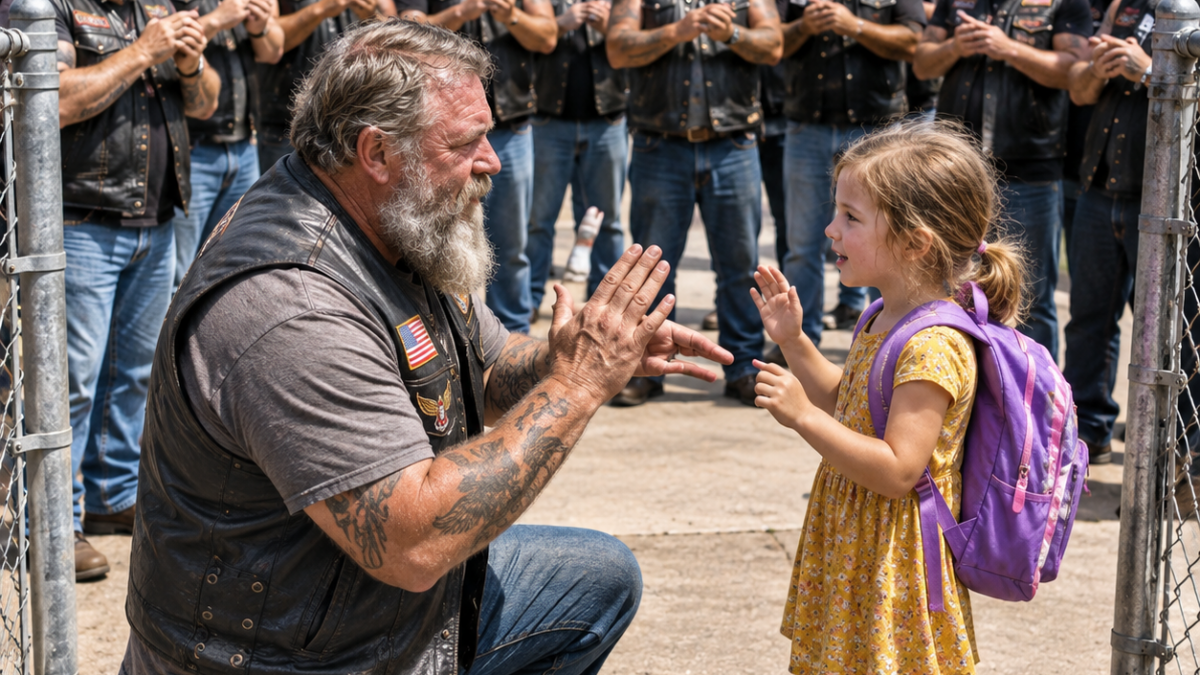
Forty-Five Bikers Learned Sign Language for the Deaf Girl Everyone Talked Over—Then She Gave Hammer Back the Sister He Lost
The little deaf girl asked the same question three times while forty-five bikers watched her hands, and none of us understood enough to answer.
Then Ray “Hammer” Dawson—the biggest, quietest, most feared man in our club—closed his untouched coffee, stood up, and made a promise that eventually forced every one of us to learn a language none of us had ever thought we would need.
We believed we were learning sign language so an eight-year-old girl would stop being ignored, but none of us knew she was about to uncover the one wound Hammer had hidden inside his vest for nearly forty years.
My name is Calvin Mercer.
The club called me Preacher.
Hammer was our road captain.
Six-foot-four.
Nearly three hundred pounds.
Shaved head.
Gray beard.
Tattooed arms.
The kind of man who could quiet a room simply by becoming still.
People saw him and made assumptions.
They were usually wrong.
Hammer owned a motorcycle garage just off Route 66 near Flagstaff.
He charged wealthy riders full price and somehow always found a reason to undercharge veterans, widows, single mothers, and anyone traveling with a kid.
He also carried an old blue book inside his leather vest.
Always.
The cover showed faded drawings of hands.
Yellow tape held the spine together.
Nobody knew why he carried it.
Nobody asked twice.
Then we met Lily Bennett.
That Saturday, forty-five of us stopped at Miller’s Diner after a cold morning ride.
Helmets lined the wall.
Coffee covered the table.
Bear complained about his pancakes.
Tiny complained about Bear complaining.
Hammer sat at the end.
Black coffee in front of him.
Untouched.
That should have told me something.
Across the diner, an eight-year-old girl sat alone in a booth.
Dark curls.
Yellow dress.
Purple backpack.
Hearing devices behind both ears.
A server brought her strawberry ice cream.
The girl looked up and signed something.
The server froze.
“I’m sorry, honey?”
The girl signed again.
Slower.
The server smiled helplessly and placed a spoon beside the bowl.
The girl shook her head.
Signed again.
Two boys nearby started copying her hand movements.
Badly.
One laughed.
The girl saw them.
People forget that not hearing cruelty doesn’t mean you can’t recognize it.
She pushed the ice cream away.
That was when Hammer set down his coffee.
He stared at her hands.
Then at the old blue book hidden beneath his vest.
I saw his jaw tighten.
The girl signed the same question again.
Nobody understood.
Finally she looked toward her mother behind the counter.
Sarah Bennett.
Thirty-four.
Working too fast.
Too tired.
Trying to carry an entire diner and an entire life at once.
Sarah rushed over.
She signed to Lily.
Lily answered immediately.
Sarah’s face changed.
“What did she ask?” I said.
Sarah hesitated.
“She wants to know why nobody talks to her.”
Nobody at our table laughed after that.
Not Bear.
Not Tiny.
Not me.
Hammer stood.
Walked to Lily’s booth.
Then crouched so he was level with her.
He didn’t know enough sign language to answer.
I knew that because he tried.
His hands moved awkwardly.
One simple sign.
Lily’s eyes widened.
PART2:
She signed something back.
Hammer looked at Sarah.
“What’d she say?”
Sarah smiled.
“She asked if you understand her.”
Hammer looked at Lily.
Then shook his head.
“No.”
Lily’s face fell.
That was when Hammer did something I had never seen him do.
He pulled the old blue book from inside his vest.
Set it on the table.
Opened it.
American Sign Language.
Children’s edition.
Pages worn nearly soft.
Lily stared at it.
Hammer stared at her.
Then he pointed to himself.
Pointed to the book.
And said:
“I’ll learn.”
By the following Saturday, forty-five bikers were sitting inside Hammer’s garage trying to sign hello, hungry, bathroom, scared, safe, and friend without accidentally insulting anyone.
It was the strangest club meeting we had ever held.
Hammer took every lesson seriously.
Too seriously.
And one afternoon, Lily noticed something inside the front cover of that battered blue book.
A name.
Written in a child’s handwriting.
She touched it.
Looked at Hammer.
Then signed a question.
Sarah translated.
“Who is Emily Dawson?”
Hammer went completely still.
For nearly forty years, nobody in our club had heard that name.
And the answer he finally gave us changed everything we thought we knew about why he had carried that book all those miles.








