Everyone Said 152 Grams Was Too Small to Save—But I Refused to Give Up on the Kitten Crying Outside My Shop
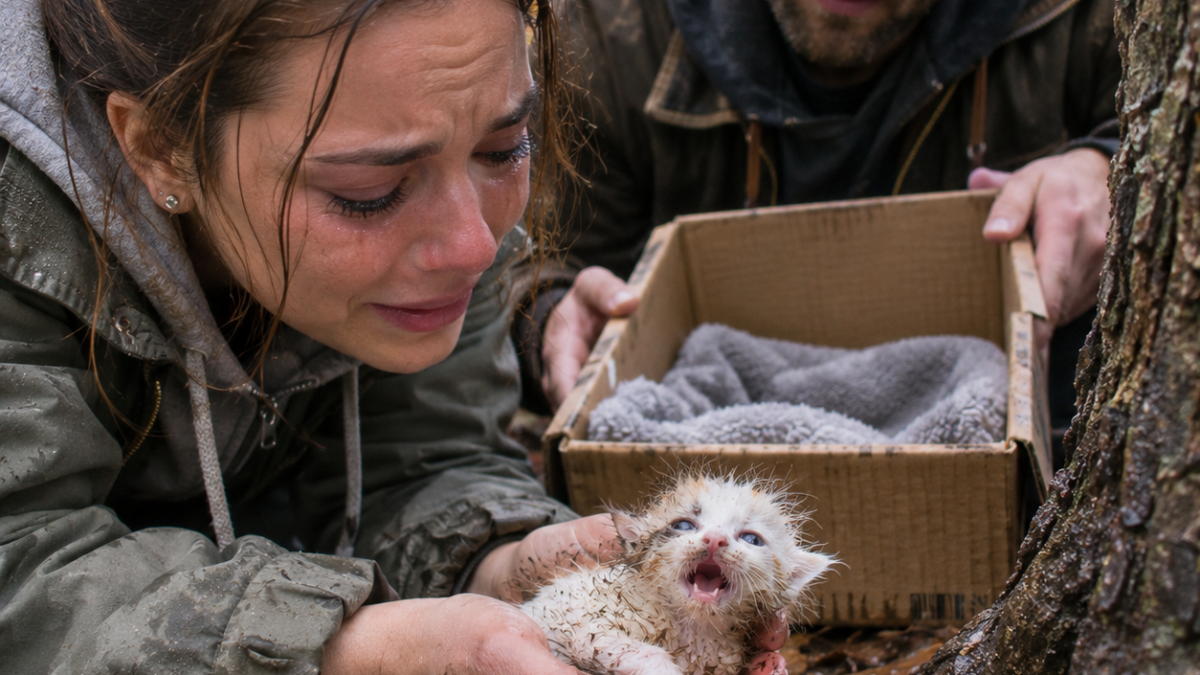
Everyone Said 152 Grams Was Too Small to Save—But I Refused to Give Up on the Kitten Crying Outside My Shop.
The kitten outside my shop was so small that when I lifted her from the leaves, her entire body disappeared into my palm, four pink paws trembling against skin that felt warmer than she did.
At the veterinary clinic, the scale stopped at 152 grams, her screening showed a weak positive for feline distemper, and the vet warned us that she was too tiny for the usual medication and would have to rely heavily on her own strength.
Then she started losing weight, dropping another thirteen grams overnight, and suddenly every bottle she refused, every loose stool, and every hour she slept felt like it might decide whether she would still be breathing when I checked on her again.
It began with a sound so faint that I almost dismissed it.
A little cry.
Thin.
High.
Easy to confuse with something farther away.
I was outside my shop when I heard it.
At first, I looked toward the road.
Nothing.
A few cars passed.
People moved in and out of nearby businesses.
Normal afternoon.
Then I heard it again.
Meow.
I stopped.
This time I knew.
Kitten.
Somewhere close.
I followed the sound toward a large tree near the side of the road.
The closer I got, the louder the crying became.
Not strong crying.
Desperate crying.
The kind that sounded as though the animal had already been calling for a long time.
I stepped around the trunk.
And there she was.
Curled in a mess of leaves and mud at the base of the tree.
For a second I did not move.
She was so small that my brain needed a moment to understand what I was looking at.
A kitten.
Barely more than a handful.
Her fur was filthy.
Mud clung to her belly.
Her little body was hunched tightly against itself as if she had been trying to hold onto whatever warmth remained.
She was close to the road.
Too close.
When she saw me, she raised her head.
Then cried harder.
That sound went straight through me.
Before I could say anything, my husband understood what was happening.
He turned toward the shop.
“I’ll get a box.”
Then he ran.
PART2:
I crouched beside the kitten.
I did not know where her mother was.
I looked around.
Under bushes.
Behind the tree.
Toward the road.
Nothing.
No adult cat appeared.
No littermates answered.
Only the little kitten.
I reached down with one finger and touched the top of her head.
Cold.
Not cool.
Cold.
She tucked herself even tighter.
“Hey, little one.”
She cried.
I stroked her again.
There was almost nothing beneath the fur.
Tiny skull.
Tiny ears.
PART3:
Tiny shoulders.
The whole body seemed unfinished.
When I finally slid my hand beneath her, she barely resisted.
I lifted her.
She weighed almost nothing.
That is the part I remember most clearly.
Not the mud.
Not even the crying.
The weight.
Or the lack of it.
She sat in the middle of my palm like a ball of wet cotton.
Her four paws were pink underneath.
I remember looking at them and realizing she was a girl.
A tiny girl.
So tiny that I became afraid of squeezing too hard simply by holding her.
My husband came back carrying a cardboard box.
He had put something soft inside.
I lowered her carefully.
The moment my hand moved away, she curled up again.
He looked at me.
“Can she survive?”
I did not know.
That was the truth.
“I’m going next door.”
There was a pet shop nearby.
I hurried over carrying the question with me.
Not:
What should I buy?
Not:
What kind of food?
The first thing I needed answered was:
Could a kitten this small even live?
The pet-shop owner listened.
Then brought out goat-milk formula and a tiny feeding bottle.
I looked at the bottle.
Looked back toward the shop where my husband was watching the kitten.
Then asked the question directly.
“Can a kitten that small survive?”
The owner smiled.
“Feed her well. She’ll be fine.”
It was probably meant as encouragement.
He could not promise me anything.
Nobody could.
But at that moment I needed one person to say survival was possible.
Those words gave me enough hope to move to the next step.
I returned with formula.
The kitten looked terrible.
Mud dried across parts of her coat.
Her fur stuck together.
She was weak.
Yet every now and then, one tiny paw kicked.
Then another.
A little movement.
A little protest.
It was enough to make me smile.
“She’s a mess.”
My husband looked down.
“A very small mess.”
“And very cute.”
That was undeniable.
We brought her home.
Neither of us had planned to raise a newborn kitten.
We had no carefully prepared neonatal setup.
No perfect bottle station.
No nursery waiting.
We had a box.
Goat milk.
A bottle.
And a kitten who needed food immediately.
My husband held her.
I prepared the formula.
Then came the first problem.
She did not know how to use the bottle.
I touched the nipple to her mouth.
She opened.
Sucked twice.
Stopped.
I repositioned it.
Two more weak sucks.
Then she pushed it away.
Milk ran across her mouth.
I wiped her.
Tried again.
Same thing.
All that crying.
All that hunger.
And still she could barely get anything down.
That frightened me.
A kitten that size did not have reserves.
Every missed feeding mattered.
I tried changing the angle.
Tried touching a drop to her lips.
Tried letting her smell it.
My husband took over.
Same result.
She wanted food.
We could see that.
She simply had not figured out how to drink from what we were offering.
Eventually she burrowed into the sleeve of a gray piece of clothing.
Almost her whole body disappeared.
Only the eyes remained visible.
Two little eyes looking out from fabric.
For a few seconds she looked comfortable.
Then I remembered how cold she had been outside.
“We need the vet.”
We took her to the nearby clinic.
I held the box carefully the entire way.
Every bump felt too large.
Every turn made me look inside.
Still breathing.
Still there.
At the clinic, the staff examined her.
They ran a feline distemper screening.
Weak positive.
Those two words immediately filled the room.
Weak positive.
Not a clear answer.
Not nothing.
The vet also said her digestive system was not working quite right.
Then came another problem.
She was too small for the medication they would normally consider.
She would have to rely heavily on supportive care and her own ability to fight.
I stared at her.
She did not look like something capable of fighting anything.
Then they put her on the scale.
152 grams.
I looked at the number.
Then the kitten.
Then back at the number.
“Only 152?”
Yes.
I was suddenly afraid to touch her.
Of course I had already carried her.
Fed her.
Held her.
But seeing the number made her fragility measurable.
One hundred fifty-two grams.
Less than the weight of so many ordinary objects people hold without thinking.
Yet inside that tiny body:
A heart.
Lungs.
Stomach.
Brain.
Fear.
Hunger.
A whole little life.
The vet said her stool looked normal at that point.
That was good.
I grabbed onto that piece of good news immediately.
Normal stool.
Something working.
One thing I could stop worrying about for at least a moment.
When we went home, my husband became an engineer.
He found an old foam box.
Cut a square opening into the lid.
Added mesh so air could circulate while keeping the little kitten contained and protected.
He adjusted the bedding.
Checked the edges.
Made sure nothing could catch her claws.
It was not pretty.
It was perfect.
Her first real bed.
While he worked, I tried feeding her again.
Every drop felt important.
One swallow.
Another.
Pause.
Come on.
One more.
My entire attention narrowed to her mouth.
The tiny movement of her throat.
The amount disappearing from the bottle.
Every sip became evidence that she was still trying.
That night, we put her in the little foam-box bed.
She curled into the warmth.
For the first time since I had found her, she seemed deeply asleep rather than simply exhausted.
I set alarms.
Every few hours.
Feed.
Warm.
Help her eliminate.
Because she was still too young to reliably go to the bathroom on her own.
After each feeding, I carefully wiped and stimulated her bottom.
The first time I did it, I remember thinking:
This is what raising something this young really means.
Not cute photographs.
Not tiny paws.
Not emotional rescue videos.
It is waking while everyone else sleeps.
Measuring milk.
Cleaning.
Watching stool.
Checking body temperature.
Listening to breathing.
Doing the same thing again a few hours later.
I only allowed myself to doze off when she seemed settled.
Then the alarm would ring.
I would sit up immediately.
Before I was fully awake, the first thought was:
Kitten.
I would lean over the box.
Look.
Sometimes she was sleeping so still that fear shot through me.
Then her chest moved.
Tiny rise.
Tiny fall.
I could breathe again.
The next morning, something about her looked different.
Not dramatically.
Nobody else might have noticed.
But I had spent the whole night staring at her.
Her body looked a little rounder.
The fur was still messy.
Her eyes were brighter.
She lifted her head more easily.
I picked her up.
She fit into my palm exactly as before.
Yet she somehow felt more present.
Less like something disappearing.
More like a kitten.
She looked at us.
And I had the strangest feeling that after only one night, she already knew our smell.
Our hands.
Our voices.
Maybe that was imagination.
I did not care.
I looked at her and made the decision fully.
“We’re going to raise you.”
Not:
We will keep you alive tonight.
Not:
We will see what happens.
I wanted to raise her well.
Whatever that required.
I filled a hot-water bottle.
Wrapped it so she would not be burned.
Placed it where it could warm the little bed.
That night, she slept deeply.
Almost peacefully.
I should have felt relieved.
Then I weighed her.
The number was lower.
Thirteen grams lower.
I checked again.
Same result.
My stomach dropped.
When an adult animal loses thirteen grams, nobody notices.
When you begin at 152 grams, thirteen grams is terrifying.
I had spent the night feeding.
Waking.
Wiping.
Warming.
Trying.
And she had lost weight anyway.
Suddenly every encouraging word I had heard disappeared from my mind.
All I could remember were the frightening ones.
Too small.
Weak positive.
Difficult.
Kittens this tiny rarely make it.
People began telling me what they had heard.
A kitten that small had very poor odds.
A kitten that weak could suddenly fade.
A kitten with digestive problems could decline fast.
I looked at her.
Still breathing.
That was all I needed.
“I’m not giving up while you’re still trying.”
My husband did not give up either.
He bought a feeding syringe.
Maybe the bottle was the problem.
Maybe she could take small controlled amounts more easily.
We tried goat milk.
Tiny amount.
Pause.
Another.
She still was not taking enough.
We adjusted.
Tried again.
Good thing we had also added a heating pad beneath part of the bedding.
Warmth mattered.
At least she would not waste all her energy trying to keep herself from becoming cold.
Two days became a feeding experiment.
Bottle after bottle.
Nipple after nipple.
We searched for designs other people recommended.
Different shapes.
Different flow rates.
Different sizes.
Soon the counter looked ridiculous.
A line of tiny bottles.
Clear.
Colored.
Long nipples.
Short nipples.
Soft nipples.
Firm nipples.
My husband looked at them.
“If she survives, she’s going to be very spoiled.”
“She already is.”
The kitten disagreed with nearly every option.
Suck.
Stop.
Chew.
Turn away.
Milk on chin.
Try again.
Then we offered the white bottle.
She latched.
Not two weak sucks.
Really latched.
I froze.
“Don’t move.”
My husband looked at me.
“I’m not moving.”
The kitten sucked.
Again.
Again.
Again.
Her little cheeks moved.
Her throat swallowed.
Milk actually disappeared from the bottle.
I almost cried.
After two days of trying to convince this tiny kitten that bottles contained food, she had finally chosen one.
The white bottle.
Apparently we had all been wrong.
She had standards.
From then on, feeding changed.
I could finally watch her drink instead of fighting to get each drop inside.
She sucked with concentration.
Little paws moving.
Tiny body relaxing as her stomach filled.
There was something deeply satisfying about seeing milk disappear.
Food meant energy.
Energy meant growth.
Growth meant time.
We put her on the scale.
158 grams.
I stared.
Then checked.
Nineteen grams above her lowest point.
“Nineteen!”
My husband smiled.
“She’s growing.”
I wanted to scream from happiness.
Instead I picked her up.
“Little one, you’re really doing it.”
She rolled onto her back.
Four little paws pointing upward.
Completely unaware that two adults were celebrating a number smaller than a cup of water.
Every sleepless hour suddenly felt worth it.
The alarms.
The bottles.
The worry.
The warm-water bottle.
The wiping.
The fear every time she became still.
Worth it.
Then the next problem arrived.
Yellow watery stool.
The first time I saw it, my heart dropped.
The weak positive test immediately returned to my mind.
Feline distemper.
Again.
Again.
Again.
I could not stop hearing it.
The joy from 158 grams vanished.
That night I barely slept.
I kept checking her.
Checking the bedding.
Checking the stool.
Checking whether she would drink.
Every loose stool felt like confirmation of my worst fear.
By dawn, I could not stand waiting.
Box in my arms.
Back to the veterinary clinic.
The drive felt endless.
Probably only minutes.
It might as well have been hours.
I remember looking at the box over and over.
“Stay with me.”
At the clinic, they examined her again.
More questions.
More waiting.
Then:
It was not feline distemper causing the diarrhea.
My legs actually felt weak with relief.
The formula was likely contributing to the digestive problem.
The vet recommended lactose-free goat-milk formula.
That sounded like the most beautiful product in existence.
We brought it home.
I mixed a small amount carefully.
Correct temperature.
Correct concentration.
White bottle.
The kitten drank.
Then afterward, she went completely limp in my hand.
For one terrifying second, I panicked.
Then I realized:
She was relaxed.
Full.
Half asleep.
Her little legs splayed outward.
Eyes almost closed.
The expression on her face was so dazed that she looked drunk.
I laughed.
Not a nervous laugh.
A real one.
I filmed her.
Could not stop laughing.
After days of fear, seeing something simply funny felt almost shocking.
She looked ridiculous.
Tiny belly full.
Four legs spread.
Face blank.
I kept replaying the video.
That was the first time the story stopped being entirely about survival.
She had become funny.
At night she would crawl a few inches.
Then suddenly stop.
Flop down.
Sleep.
No warning.
By daylight, the details of her face became clearer.
Round blue eyes.
Tiny ears.
White fur around her mouth.
It looked like she was wearing a little bib.
I could sit beside her and watch for far too long.
She would blink.
Stretch.
Yawn.
Make a tiny sound.
Nothing important.
Everything important.
After her evening feeding, she refused to release the white bottle immediately.
Both paws held it.
I gently pulled.
She clung tighter.
“You’re done.”
No.
Apparently not.
Eventually she let go.
We put her on the scale.
Eight grams more than the day before.
Only eight.
If someone had told me a week earlier that eight grams could change my mood, I would have laughed.
Now:
Eight grams felt enormous.
Every gram counted.
The weight on my chest eased slightly.
Her voice changed too.
The meows grew louder.
Stronger.
More demanding.
She was becoming physically powerful enough to complain properly.
One morning I heard movement inside the foam box.
Then scratching.
Then a little face appeared at the square mesh opening my husband had cut.
She had hooked her front paws onto the edge and pulled herself upward.
Her head popped into view.
Blue eyes looking around.
I laughed.
“Where are you going?”
She tried climbing higher.
Her strength was increasing.
She rolled onto her back more often.
Grabbed one paw with the other.
Chewed at her toes.
Kicked.
Played with nothing.
Those behaviors seemed so ordinary.
That was why they were beautiful.
A sick kitten lies still.
A stronger kitten causes trouble.
I wanted trouble.
My husband and son decided she needed a scratching post.
She was far too small to seriously need one.
That did not stop them.
They found cardboard.
Cut it into strips.
Wound the strips together.
Taped.
Adjusted.
One held the pieces.
One wrapped.
I stood nearby watching.
My son took the job seriously.
My husband explained what he was doing as if building a piece of professional furniture.
The kitten slept through much of the construction.
“She can’t even use that yet.”
My husband shrugged.
“She will.”
Those two words affected me.
She will.
Not:
If she survives.
Not:
Maybe someday.
She will.
He was already imagining her bigger.
That meant he believed too.
Our son had helped so much that we let him choose her name.
We had written different possibilities on small pieces of paper.
Folded them.
Mixed them.
He picked one.
Slowly opened it.
The name inside:
Nuannuan.
Warmth.
The meaning felt perfect.
This kitten had entered our lives cold enough to tremble in my hand.
Now her whole existence revolved around keeping her warm.
Heating pad.
Hot-water bottle.
Fleece.
Hands.
Milk.
Home.
“Nuannuan.”
I said it aloud.
The kitten did not react.
Again.
“Nuannuan.”
Nothing.
Perfect.
The name belonged to her anyway.
But even while we celebrated giving her a name, one worry remained.
Diarrhea.
It improved.
Then changed.
Then returned.
Every stool became a report card.
By day six, Nuannuan barely resembled the kitten outside the shop.
Her fur had begun fluffing.
Her face looked rounder.
Her eyes clearer.
She had the beginnings of an actual kitten expression instead of the exhausted look of something simply enduring.
Feeding became a game.
She hugged the bottle.
Kicked her paws.
Sometimes stopped sucking just to bite the nipple.
Then went back.
One minute frantic.
The next:
Asleep.
No gradual transition.
She could go from tiny chaos to complete unconsciousness in seconds.
I bought a fleece sleeping sack.
Placed her inside.
Only her head showed.
The sight nearly destroyed me.
A tiny white-and-gray face peeking from green fleece.
Safe.
Warm.
Then one day:
Normal stool.
I looked at it longer than any human should ever look at cat poop.
Then called my husband.
“It’s normal.”
He came over.
We both stared.
Parenthood changes your standards for celebration.
My heart finally relaxed.
A proper playpen arrived.
My husband opened the instruction manual.
White frame.
Clear side panels.
Clips.
Boards.
Pieces everywhere.
He read every step.
Connected each part.
Our son wanted to help.
There were no safe pieces left for him to assemble.
So he stood behind his father and began rubbing his back as encouragement.
I started laughing.
“What are you doing?”
“Helping.”
Apparently emotional support counted.
My husband kept working.
Click.
Panel.
Clip.
Another panel.
Finally:
A proper little home.
White frame.
Clear walls.
Soft mat below.
Heating pad arranged safely.
Nuannuan’s green-and-white sleeping sack inside.
I stood looking at it.
Something about seeing her real enclosure gave me peace.
The foam box had saved her.
It had been improvised because we did not know whether she would need it for one night or many.
The playpen felt different.
It said:
We expect you to be here tomorrow.
And the next day.
And after that.
Next came parasite treatment and her first real bath.
When I examined her carefully, I found fleas.
Several.
My heart broke again.
Of course.
She had been outside.
Cold.
Dirty.
Alone.
Yet seeing those tiny parasites on such a tiny body made me angry in a way that was not rational.
Had she not already dealt with enough?
We followed the treatment instructions carefully.
Then bath time.
I expected disaster.
Many cats act as though water is a personal betrayal.
Nuannuan stood in the shallow warm water.
Perfectly still.
No climbing up my arm.
No frantic scrambling.
She simply allowed me to wash her.
I rubbed gently.
Around the neck.
Back.
Legs.
Belly.
The water collected dirt we had somehow still missed.
She looked smaller when wet.
Almost impossibly small.
Again.
I thought about the tree.
Mud.
Leaves.
That first day.
Then I rinsed.
Wrapped her in a towel.
Dried her.
Slowly her fur expanded.
The wet little creature became a clean white-and-gray fluffball.
I held her in my palm.
Still light.
Still tiny.
But not fragile in the same way.
Her eyes shone.
She looked directly at me.
Then the scale.
197 grams.
I stared.
“197.”
My husband looked over.
“How much?”
“One hundred ninety-seven!”
From 152.
Down to 139.
Then upward.
More.
More.
Now 197.
I wanted to photograph the number.
Record it.
Tell everyone.
Nuannuan had other plans.
I looked away for one second.
She stepped off the scale.
Just walked away.
Tail raised.
Patrolling the tile floor as if she had personally conquered a continent.
“Hey!”
She kept going.
There was something almost insulting about the confidence.
A kitten I once barely dared touch now behaved as though weighing herself was beneath her.
Her new playpen made her uncertain at first.
I placed her inside.
She looked around.
Clear walls.
More space.
Different smells.
She looked up.
Meowed loudly.
I crouched nearby.
“It’s yours.”
She did not seem convinced.
Then she noticed the litter box.
That became more interesting than fear.
She walked over.
Sniffed.
Pawed at the litter.
Investigated.
Then peed.
A large puddle relative to her size.
I laughed.
Apparently the house had passed inspection.
My husband lowered his hand flat inside the playpen.
Nuannuan approached.
Sniffed one finger.
Then the next.
She placed a paw on his hand.
Then another.
Hooked both front paws over him.
Climbed directly into his palm.
He froze.
“Look.”
“I’m looking.”
She settled there.
Tiny body in his large hand.
The same kitten who once seemed almost weightless now actively climbed toward us.
My husband fed her.
I sat beside them and touched her feet.
Pink toe beans.
Soft.
Warm.
I could not stop.
One little toe.
Another.
Perfect.
She finished her milk.
Then came the familiar bottle-drunk expression.
Eyes unfocused.
Body loose.
My husband cupped her face gently between his fingers.
She did not pull away.
Just stared.
Half asleep.
Completely safe.
We returned her to the fleece sack.
She lay inside with only her head visible.
Round blue eyes following me.
I sat beside the playpen.
She watched.
Then yawned.
A tiny mouth opening far wider than seemed physically possible.
Afterward:
One soft meow.
I reached through.
Touched one finger to a pink toe bean.
She did not move away.
I thought about how close I had come to never knowing any of this.
If I had ignored the first faint cry outside my shop.
If I had assumed the kitten belonged to somebody.
If I had decided she was too small.
If I had believed 152 grams meant hopeless.
If we had stopped trying when she would not take the first bottle.
If we had given up after she dropped thirteen grams.
If I had let the weak-positive result convince me that nothing we did mattered.
There would have been no white bottle.
No foam box.
No scratching post built by my husband and son.
No name drawn from a folded piece of paper.
No green fleece sack.
No 197 grams.
No tiny kitten marching across the floor with her tail raised.
People like rescue stories because they often look simple after the fact.
Animal in danger.
Person rescues animal.
Animal gets better.
Happy ending.
Living through it does not feel simple.
It feels like uncertainty.
You do not know the ending while you are heating milk at two in the morning.
You do not know the ending when the scale shows thirteen grams lost.
You do not know the ending while staring at yellow diarrhea and remembering the words “weak positive.”
You do not know the ending when the kitten refuses every nipple you buy.
You only know what you can do next.
Warm her.
Feed her.
Weigh her.
Clean her.
Try another bottle.
Set another alarm.
Go back to the vet.
Change formula.
Watch.
Wait.
Try again.
That was how Nuannuan survived those days.
Not through one dramatic miracle.
Through hundreds of small decisions.
My husband building a bed.
My son helping with the scratching post.
Someone at the pet shop saying:
“Feed her well.”
A veterinarian helping us distinguish one digestive problem from something more frightening.
A white bottle that finally worked.
A heating pad.
A scale.
An alarm clock.
A hand.
One gram.
Then another.
Then another.
I learned to stop dismissing small improvements.
Before Nuannuan, eight grams would have meant nothing to me.
After her:
Eight grams was hope.
Normal poop was joy.
A louder meow was strength.
A kitten climbing onto the edge of a box was progress.
A raised tail meant confidence.
A successful pee in the litter box deserved celebration.
That sounds ridiculous unless you have cared for something whose life felt measured in hours.
Nuannuan changed the way I looked at survival.
Survival is often pictured as dramatic strength.
An animal fighting.
Running.
Refusing to surrender.
Nuannuan’s strength did not look like that at first.
It looked like two sucks from a bottle.
Then stopping.
It looked like lying inside a gray sleeve with only her eyes visible.
It looked like sleeping on a warm bottle because she did not have enough energy to do much else.
It looked like breathing.
Sometimes that is enough.
People told me kittens that small rarely survive.
Maybe statistically they were right.
I did not argue.
I simply could not use that fact to decide what this particular kitten deserved.
She was still alive.
As long as she was breathing and not beyond help, I wanted to give her the opportunity to show us what she could do.
And she did.
Slowly.
Then suddenly.
By day six, the kitten who once curled into mud was waving her paws while drinking.
By the time she reached 197 grams, she was stepping off the scale without permission and exploring.
The change happened quickly enough that sometimes photographs from the first day did not look real to me.
That was Nuannuan?
That muddy thing?
Those frightened eyes?
That tiny body beneath the tree?
Same kitten.
I still thought about where she came from.
Why she was alone.
Where her mother was.
Whether other kittens existed.
I had no answers.
Sometimes rescue gives you a beginning without a backstory.
You only know the moment your lives cross.
For us:
A faint meow outside my shop.
That was the beginning.
Not the beginning of Nuannuan’s life.
Only the beginning of the part I could know.
And perhaps that was enough.
One afternoon after feeding her, I placed Nuannuan back inside the playpen.
She wandered toward the clear wall.
Looked through it at us.
Then returned to her sleeping sack.
She kneaded the fleece a few times.
Circled.
Lay down.
My husband was nearby.
Our son was playing.
The scratching post waited in the corner even though she was still too small to use it properly.
The white bottle sat washed on the counter.
Formula ready for the next feeding.
I looked around and realized something.
The house had changed around her.
Not dramatically.
There were just little signs.
A heating pad.
A bottle rack.
Formula.
Pee pads.
Blankets.
Scale.
Playpen.
Scratch toy.
Everything organized around a creature smaller than two hundred grams.
How does something so small occupy so much emotional space?
I do not know.
Maybe because vulnerability demands attention.
Maybe because once you begin caring for a life, size stops mattering.
Nuannuan did not know she was small.
She did not know people thought her odds were poor.
She did not know what 152 grams meant.
Or 139.
Or 158.
Or 197.
Those numbers belonged to us.
To our fear.
To our hope.
For her, life was simpler.
Cold.
Then warm.
Hungry.
Then milk.
Alone.
Then hands.
Tired.
Then sleep.
That simplicity humbled me.
I spent hours worrying about tomorrow.
She lived inside the next feeding.
Maybe that is why watching her became so calming after the worst fear passed.
She reminded me to look at what was actually happening.
Not every possible disaster.
Right now:
She is warm.
Right now:
She drank.
Right now:
She is sleeping.
Right now:
She gained eight grams.
Right now:
Her stool is normal.
Right now:
She is here.
That became enough.
My husband felt it too.
He pretended to be more practical than I was.
But he checked the scale first.
He adjusted the heating pad repeatedly.
He inspected the playpen clips.
He made sure the mesh on the old foam box was secure.
When Nuannuan climbed into his palm, his whole expression changed.
He could say:
“It’s just a kitten.”
But his hands said otherwise.
Gentle.
Still.
Careful.
Our son understood in his own way.
He wanted to help.
Could not feed safely at first.
Could not assemble parts of the enclosure.
So he rubbed his father’s back while the playpen was built.
He helped make the scratching post.
Then got to choose the name.
Nuannuan.
Warmth.
The name became bigger than I expected.
Warmth was what saved her first.
Before medicine.
Before weight gain.
Before toys.
Warmth.
A warm palm.
Warm milk.
Warm bed.
Warm bottle.
Warm house.
Warm family.
Maybe that is why the name felt inevitable once we opened the paper.
Nuannuan.
Every time I said it, I remembered how cold her head felt beneath the tree.
The contrast hurt.
In a good way.
I would hold her now and feel heat beneath the fur.
Alive.
People sometimes imagine that rescuing an animal means you give something to them.
Food.
Shelter.
Care.
That is true.
But they also give you something you were not expecting.
Not gratitude.
Animals do not owe us gratitude.
Something else.
Attention.
Nuannuan forced me to pay attention to tiny things.
The difference between 152 and 158 grams.
One swallow.
One stronger meow.
One normal stool.
One yawn.
One raised tail.
One warm paw.
We spend so much of life waiting for big events to tell us whether things are going well.
Nuannuan taught me that sometimes the most important victories are almost too small to see.
A few grams.
A little milk.
A kitten lifting her own head.
That was enough to change an entire day.
The first time she pulled herself up to the vent in the foam box, I took a video.
Her paws gripped the edge.
Tiny head appeared.
Eyes looking around.
The movement was clumsy.
Still, I watched it repeatedly.
Because on the first night, I had wondered whether she would have enough energy to wake for her next feeding.
Now she was trying to escape.
Perfect.
I wanted her strong enough to be inconvenient.
Strong enough to interrupt us.
Strong enough to climb.
Strong enough to object.
A silent kitten scared me.
A demanding kitten made me happy.
As her diarrhea disappeared, another layer of fear disappeared too.
I stopped checking her every five minutes.
Then every ten.
Then I could leave the room and trust that she would still be asleep when I returned.
That may sound minor.
It was enormous.
Constant fear is exhausting.
You do not realize how tightly you are holding yourself until your body finally understands the emergency is easing.
Nuannuan was not completely safe yet.
She was still very young.
Still tiny.
Still dependent.
But the direction had changed.
The first days:
We were trying to stop her from fading.
Now:
We were helping her grow.
Those are different kinds of care.
One is crisis.
One is parenting.
I preferred the second.
The playpen became her world.
At first unfamiliar.
Then quickly hers.
Sleeping sack in one corner.
Litter box nearby.
Soft mat.
Warm area.
Room to move.
She walked along the clear panels.
Looked through them.
Meowed when she saw us.
Sometimes she climbed toward whichever side I stood on.
I would lower my hand.
She sniffed.
Then stepped closer.
When she climbed into my husband’s palm, I knew she had begun associating us with security.
Again, I do not need to call it love.
Trust is enough.
Trust from something that had started life outside, filthy and cold, was already extraordinary.
Bathing her had shown that trust too.
Many kittens struggle.
Nuannuan stood almost motionless.
Maybe because she had already learned our hands did not hurt.
Maybe because she was still small.
Whatever the reason, she let me clean away the dirt and fleas.
When her fur dried into that little white-and-gray cloud, I almost did not recognize her.
The kitten had been under there the whole time.
Mud only hid her.
That thought became meaningful to me.
Sometimes rescue is not creating something new.
It is revealing what was already there once the dirt, cold, hunger, and fear are removed.
Nuannuan did not become beautiful because we saved her.
She was already Nuannuan beneath the mud.
We simply got to finally see her.
The same was true of her personality.
At first she seemed quiet.
Weak.
Passive.
Then food and warmth arrived.
Suddenly:
Opinionated.
Playful.
Greedy with the bottle.
Curious.
Climbing.
Chewing her own feet.
Demanding attention.
That was her real personality waiting beneath exhaustion.
I loved discovering it.
One evening she drank her fill and then lay inside the fleece sack watching me.
I sat on the floor.
Our faces almost level.
Her eyes were still that round blue.
Temporary kitten color that might change later.
She gave a tiny meow.
Not urgent.
Just sound.
I reached in.
Touched a toe bean.
Warm.
Soft.
Alive.
And the entire story came back at once.
The tree.
Mud.
Road.
Crying.
My husband running for the box.
The pet-shop owner saying:
“Feed her well.”
152 grams.
Weak positive.
Too small for medicine.
Thirteen grams lost.
Bottle after bottle lined on the counter.
White bottle.
Diarrhea.
Vet again.
Lactose-free formula.
The funny dazed face.
Eight grams more.
Scratch post.
Nuannuan.
Normal stool.
Playpen.
Bath.
Fleas.
All compressed into the kitten looking at me from her fleece bed.
I touched her paw again.
“Thank goodness I heard you.”
She blinked.
That was all.
She did not know what I meant.
She did not need to.
Maybe that is where her story should remain.
Not years later.
Not with some imagined future.
Right there.
A rescued kitten still smaller than most people would believe could contain so much personality.
A proper little home.
A warm bed.
A white bottle she finally learned to love.
A family arranging its days around her feedings.
A scratching post waiting for her to grow into it.
A scale that had stopped frightening me quite so much.
And a tiny pink paw beneath my finger.
The world outside my shop had almost swallowed her without anyone noticing.
Now every gram mattered to us.
Everyone said 152 grams was frighteningly small.
They were right.
It was frightening.
But 152 grams was not zero.
There was still a heartbeat inside those 152 grams.
Still a cry.
Still four kicking paws.
Still a kitten trying to drink.
So we kept trying too.
And the last time I placed Nuannuan on the scale, the number climbed to 197 grams.
She did not stay there long enough for me to celebrate properly.
She stepped off.
Tail held high.
Walked across the tile floor like she had somewhere important to be.
I watched her go and laughed.
That was exactly what I had wanted from the moment I picked her up beneath that tree.
Not gratitude.
Not a miracle.
Just enough strength to walk away from my hand on her own.
Then come back whenever she wanted warmth.








