Every Sunday, a Former Navy SEAL Ordered Two Coffees but Drank Only One—Then the Diner Owner Asked About the Empty Chair and Uncovered a Grief He Had Carried for Years
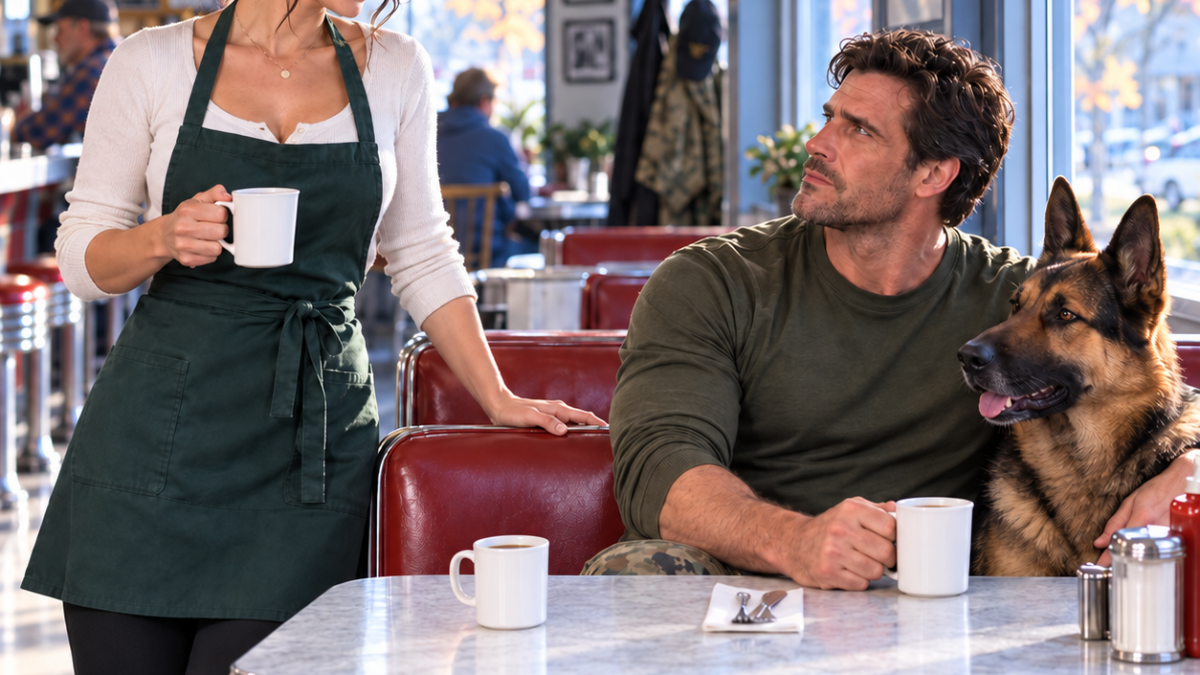
PART3:
Not surprised.
Not embarrassed.
Still.
“No,” he said.
The answer carried no invitation for another question.
He thanked her, opened the paper, and reached for his own cup.
Grace walked back toward the counter.
Dy was pretending very badly not to watch.
Grace stopped beside her. “You gave me two coffees.”
“I did.”
“He’s alone.”
“I noticed.”
Grace waited.
Dy picked up the coffee pot. “Table four needs refills.”
“Dy.”
“If Matt wants you to know, he’ll tell you.”
“People always say that when they already know.”
“And people always ask when they aren’t ready to mind their business.”
Dy walked away.
Grace stood there with the empty tray in her hand, irritation and curiosity mixing in equal measure.
The breakfast rush arrived twenty minutes later and swallowed the question.
By 7:15, every table along the front wall was filled. Rey was calling orders through the kitchen window, two children in booth six were turning crayons into weapons, and Grace remembered why she preferred restaurant ownership from a position that did not involve balancing four plates against one forearm.
She adapted quickly because she had to. Harbor Bell did not care who owned it when coffee ran low.
Matt required almost nothing.
His breakfast arrived. He ate slowly, read the paper, and occasionally exchanged brief comments with other regulars. When an older man at the counter complained that the Patriots had apparently forgotten the purpose of fourth down, Matt answered without looking up, “They’ve been experimenting with disappointment for years.”
The man laughed.
Grace heard it from three tables away.
Sully remained beneath the booth.
When Grace brought the dog’s plate, she crouched and held out the back of her hand before setting it down. Sully looked at her hand, then at Matt, then toward the window.
Nothing.
“Good talk,” Grace said.
Matt lowered the newspaper enough to see her.
She placed the plate on the floor.
Sully sat a little straighter. Matt gave a quiet release word, and the dog began eating.
Grace looked at Matt. “So at least one of you is happy with my service.”
Matt glanced down at Sully. “He’s happy with the kitchen. That’s different.”
“To him?”
“Very.”
There was the beginning of amusement at one corner of Matt’s mouth, but he returned to his paper before it became anything more.
Grace forgot about the second coffee for nearly an hour.
When she passed Matt’s table again, it was still there.
The cream had settled into a pale swirl. The brown sugar packet remained unopened. The cinnamon floated on top like dust on old glass.
Nobody had touched it.
Matt was not waiting in the ordinary way. That was what bothered her.
He did not look up whenever the bell rang. He did not check his watch. He did not glance toward the parking lot. He seemed fully present, reading the paper, reaching down once without looking when Sully shifted beneath the table. His hand found the dog’s shoulder as if it had done so thousands of times.
The empty chair stayed empty.
The coffee cooled.
By nine, the worst of breakfast had passed. Grace was refilling syrup bottles behind the counter when she cornered Dy.
“How long has he been doing that?”
Dy did not ask what she meant.
“More than a year. Every Sunday, near enough.”
“Same booth?”
“Yes.”
“Two coffees?”
Dy looked at her. “Yes, Grace. That’s generally what ‘every Sunday’ means.”
“And nobody drinks the second one.”
“No.”
“Who is it for?”
Dy screwed the cap onto a syrup bottle with exaggerated care. “If Matt wants you to know, he’ll tell you.”
Grace looked toward the rear window.
Matt had turned one page of the paper and was using the edge of his coffee mug to hold the other side flat. The empty cup across from him sat beside the glass, losing heat into the room.
“He looks too young to be that sad,” Grace said before she could stop herself.
Dy’s expression softened in a way Grace rarely saw.
“Sad doesn’t wait for age.”
At 9:30, Matt folded the newspaper. Sully stood before being asked, stretched once, then waited beside the booth while Matt left cash beneath the check folder.
Grace was carrying mugs to the dishwasher when he passed the counter.
“Thanks for covering today,” he said.
She looked up. “You knew I was covering?”
He glanced toward Dy. “Different footsteps.”
Grace stared at him.
“That sounds slightly unsettling.”
“So I’ve been told.”
He held the door while Sully moved through first, then followed him into the morning.
Grace watched them cross the parking lot only long enough to recognize that she was watching.
Then she went back to work.
It was nearly ten before she reached the window booth to clear it.
Matt’s plate was empty. Sully’s small dish looked as though someone had polished it. The newspaper was gone. A few grains of salt rested beside the placemat.
The second coffee had barely changed.
Grace picked up Matt’s empty cup first.
Then she reached for the other one.
For no reason she could explain, she paused before lifting it from the table.
Outside, a wet maple leaf slipped from the window ledge and disappeared beneath the sill.
The coffee was cold.
The chair across from it was empty.
Grace carried both cups back to the kitchen.
One of them had never been touched.
The following Sunday, Kelly still sounded terrible.
Grace took the call before sunrise while standing beside the back counter with a mug of coffee she had already forgotten to drink. Kelly apologized twice, promised she was improving, then coughed so violently Grace ended the argument before it began.
“Tuesday,” Grace said. “Maybe Wednesday. You are not coming in today.”
By 6:30, another apron was tied around Grace’s waist.
Dy noticed.
“You’re getting comfortable out here.”
“Don’t start.”
“I haven’t said anything.”
“That has never stopped you before.”
Grace picked up menus and went to check the rear tables.
She told herself there was nothing unusual about remembering that Matt Harland would arrive in fifteen minutes. Regular customers mattered. Details mattered. Harbor Bell survived because somebody remembered who wanted wheat toast, who complained if the coffee dropped below half full, and which supplier needed three calls before sending a corrected invoice.
That was all.
At 6:45, the bell rang.
Matt entered with Sully beside him.
Grace was halfway through setting clean silverware at the window booth. She finished before looking up, allowing herself to pretend the timing had been accidental.
Matt shrugged out of his jacket.
“Morning.”
“Morning.”
Sully settled beside the same end of the booth, close to Matt’s left leg. Grace noticed he never sprawled into the aisle, even when there was room.
Before Matt could say anything, she went for the coffee station.
Dy was filling a pot.
“Black. Decaf with two creamers, brown sugar, cinnamon.”
Dy looked at her.
Grace reached for the saucers. “What?”
“Nothing.”
“You’re doing the face.”
“What face?”
“The face where you think remembering an order means you’re not emotionally involved.”
“That is oddly specific.”
“I’ve worked here a long time.”
Grace pointed toward the kitchen. “Sully’s egg?”
“Already working on it.”
“That is called service.”
“That is called denial with plates.”
Grace carried the tray away.
Matt looked at the second coffee, then at her.
“You remembered.”
“I own a restaurant. It’s useful.”
“I wasn’t questioning the business model.”
She set the lighter coffee in front of the empty chair and the black one near his right hand.
As she straightened, Sully lifted his head.
Grace looked down at him. “Good morning to you too.”
Sully’s ears moved forward.
He watched her for a moment, then glanced toward the kitchen.
Grace folded her arms. “That’s progress.”
Matt followed the dog’s gaze. “He heard the egg pan.”
“I prefer my interpretation.”
When she returned with Sully’s breakfast, the dog was already sitting. She placed the plate down. Matt gave a small hand signal, barely more than two fingers moving beside his thigh.
Sully waited.
Another signal.
Only then did he lower his head to eat.
Grace paused. “You trained him.”
Matt watched Sully for a moment. “We worked together.”
“At the wood shop?”
A faint smile appeared.
Then Grace understood.
“Before that.”
Matt did not confirm with words.
He did not have to.
Their Sundays became a pattern.
Matt arrived at 6:45. Sully settled beneath the window booth. Two coffees came to the table. The second one sat across from him, untouched. Grace worked through the rush, then found herself noticing pieces of Matt the way diner owners noticed leaks before the ceiling stained.
He knew when the syrup bottle at table three was nearly empty before anyone asked. He moved his boots half an inch when a server passed with a full tray. If a customer stood uncertainly near the restrooms, he pointed without making them ask twice. He never made any of it look like help.
That was probably why Grace kept noticing.
She learned that the dust on his jacket came from Harland Marine and Finish Works, where he repaired boat interiors and built custom cabinets. Mostly wood, sometimes fiberglass, occasionally clients with more money than sense.
“Mostly wood?” she asked one morning while refilling his cup.
“Mostly people changing their minds after I cut the wood.”
“That sounds expensive for them.”
“It can be educational.”
Grace glanced toward the diner ceiling. “Do not start evaluating this building.”
“I haven’t.”
“You looked at the crown molding.”
“I looked upward.”
“That is how it begins.”
Matt smiled into his coffee.
Two Sundays later, the side entrance began slamming.
A hard wind had been moving in from the river since dawn, rattling the old maple branches beside the parking lot. Every time someone used the side door, it swung back too quickly and hit the frame with a flat metallic bang that traveled across the diner.
The first time, Grace flinched.
The second time, Rey shouted something from the kitchen that nobody heard clearly.
By the fifth, Matt had stopped reading.
Grace saw him studying the top of the door.
She approached with a coffee pot. “Don’t.”
Matt looked at her. “I haven’t done anything.”
“Your face has.”
“My face.”
“You’re already taking the door apart in your head.”
He glanced at it again. “The closer is out of adjustment.”
Grace pointed the coffee pot at him. “That sentence is exactly how people end up removing hinges.”
The next customer pushed through.
Bang.
Matt closed his eyes for half a second.
Grace laughed before she could help it. “You’re suffering.”
“Quietly.”
Another gust pressed against the glass.
Matt lasted perhaps three more minutes.
He stood, walked to the door, and examined the closer without touching it. Grace passed carrying plates, expecting to find screws scattered across the floor.
Instead, Matt asked, “Do you have a small adjustable wrench?”
She stopped. “You’re asking permission?”
“I’ve been told growth is important.”
Grace found the wrench in the utility drawer.
Matt made one adjustment, opened the door, let it close, watched the speed, changed the setting slightly, tested it again, then handed the wrench back.
“That should hold until you replace the closer.”
Grace pushed the door herself. It closed without slamming.
“That was annoyingly efficient.”
“I get that a lot.”
Later that morning, she put a slice of maple pecan pie beside his coffee.
Matt looked at it. “I didn’t order this.”
“Payment for tightening one screw.”
“I don’t work for pie.”
Grace walked away. “You do now.”
The next Sunday, she placed a slice at his table before he had found anything wrong with the building.
Matt looked at it, then around the diner. “What broke?”
“Nothing.”
“That seems unlikely.”
“Eat your pie.”
Sully raised his head.
Grace pointed at him. “Not yours.”
Sully continued looking at the plate.
Matt lowered his voice. “Vendor status can be revoked.”
Grace smiled and moved on.
Their conversations remained small enough that neither had to decide what they meant.
Matt learned Grace had been married once. She mentioned it when a customer complained that his wife reorganized kitchen drawers every six months, and Matt said some disagreements were probably older than civilization.
“Mine was labeling leftovers,” Grace said.
Matt glanced at her. “Serious?”
“Apparently not serious enough.”
That was all she said then.
The rest surfaced in pieces.
The marriage had ended five years ago without screaming, infidelity, or lawyers fighting over furniture. Grace and Mark had simply become competent at maintaining a household together. Bills were paid. Groceries appeared. Appointments went on the calendar. Somewhere in all that efficiency, they had stopped telling each other anything that did not fit on a list.
By the time they admitted it, neither had much blame left.
Grace kept Harbor Bell.
Mark moved to Rhode Island.
They still exchanged birthday texts and embarrassingly once traded plumber recommendations.
Matt listened without offering comfort she had not asked for.
That made it easier to continue.
After the divorce, Grace worked more. At first because the diner genuinely needed her. Then because work had a way of filling whatever space she gave it. Sundays became invoices. Days off became supplier calls. Even when she went home, Harbor Bell followed through camera notifications, schedule changes, and employee texts from people who could usually solve the problem themselves if Grace waited five minutes.
One morning, Matt watched her answer two calls, sign for a delivery, and correct a produce invoice while standing beside his booth.
“When was your last full day off?” he asked.
Grace tucked the invoice under her arm. “I take days off.”
“When?”
“Regularly.”
Matt waited.
Grace picked up the coffee pot. “Do you need a refill?”
His expression suggested he had received an answer.
She filled the cup anyway.
By late November, the mornings had sharpened. Most of the maple leaves were down, leaving branches outside the window visible against clear gray sky.
Grace brought coffee to Matt after the first rush. His black cup was nearly empty.
She looked at it. “I still don’t understand how you drink that.”
“Coffee?”
“That is not coffee. That is a disciplinary measure.”
Matt gave the cup a thoughtful glance. “My wife used to say black coffee tasted like a bad decision served hot.”
Grace stopped with the pot halfway above his mug.
Matt smiled at the memory, small and unforced.
“She had stronger opinions about coffee than I did.”
Grace poured the refill.
She had already known there had been a wife.
What she noticed was the wording.
Used to.
She set the coffee pot against her hip.
For a moment, she considered asking the obvious question.
She did not.
Across from Matt, the second cup sat untouched beside the window.
The name came weeks later.
For the first Sunday in a while, Harbor Bell had enough staff. Kelly was back. Dy had the front. Rey was already complaining about a produce delivery that had arrived with twice as many onions as anyone remembered ordering.
Grace should have spent most of breakfast behind the register and in the office.
At 9:15, she poured herself coffee and walked to Matt’s booth anyway.
For the past few Sundays, when the breakfast rush slowed enough to give her ten minutes, she had been pulling a chair from the small two-top beside the window and sitting at the end of Matt’s booth. Not across from him. Never in the empty chair. Beside it.
It had become an arrangement without becoming a plan.
She did the same now.
Matt folded the paper. “Full staff today.”
“I know.”
“And yet.”
“I like to inspect customer behavior personally.”
“That sounds expensive.”
“So does owning a boat, and people still do it.”
Their conversation wandered through Rey’s unnecessary number of onions, a customer who had asked whether decaf still contained coffee, and Sully’s continuing refusal to admit that Grace had progressed beyond vendor status.
Grace was arguing that allowing someone to scratch behind your ear should count as formal recognition when Matt’s phone lit on the table.
She did not mean to read it.
There was only enough time to see a calendar notification.
Emily’s birthday call.
Anne and Robert.
Matt’s hand moved over the screen.
The phone went dark.
Grace looked at her coffee.
The quiet between them lasted only a few seconds, but something in it had changed shape.
“Emily?” she asked.
Matt rested his hand beside the phone.
“My wife.”
Grace looked toward him.
“I didn’t know her name.”
“Most people here don’t.”
That was all.
Grace could have asked who Anne and Robert were. She could have looked at the untouched coffee sitting beside the window and finally asked the question she had been carrying for weeks.
She did neither.
Someone at the counter called for a refill.
Grace stood.
“I should get back.”
Matt nodded.
Neither mentioned the second cup.
During the next several days, nothing obvious happened.
Matt came in once for lunch and stayed only long enough to finish it. Grace was busy with a supplier problem and did not stop beside him. On Thursday, he picked up a takeout order while she was in the kitchen checking an invoice.
She was not avoiding him.
Exactly.
She simply stopped finding reasons not to.
Matt noticed.
He did not ask.
That restraint made Grace more aware of the distance than a question would have.
On Friday afternoon, she found herself standing beside the window booth, wiping down a table Kelly had already cleaned. The maple outside had lost most of its leaves. For the first time in weeks, nothing sat on the opposite side of the table.
No second coffee.
No Matt.
No reason for Grace to be thinking about either.
She went back to work.
Saturday night stretched later than usual. A freezer delivery came in wrong. Two employees traded shifts without updating the schedule properly. Grace stayed until the last table was cleared, the kitchen floor had been mopped, and the register was counted.
Dy left first. Rey followed ten minutes later.
By 9:30, Harbor Bell was quiet except for the refrigerator motors and the occasional click of cooling metal from the kitchen.
Grace had just finished counting the register when someone knocked on the front glass.
Matt stood outside.
Sully sat beside him.
Grace looked at the locked door, then at the empty parking lot behind him. He carried no takeout bag. No toolbox. No cracked piece of trim. Nothing that required repair.
She unlocked the door.
“You know we’re closed.”
“I noticed.”
Matt stepped inside when she moved aside. Sully followed, shook once near the mat, then waited while Grace locked the door again.
For a moment, nobody seemed to know where to go.
Matt finally looked toward the back of the diner.
“The window booth?” Grace asked.
He nodded.
They walked there without turning on any more lights. Only the counter lamps and the single fixture above the kitchen pass remained on, leaving the rear of the diner softer than Grace was used to seeing. Sully settled beneath the table.
Matt sat in his usual place.
Grace chose the chair at the end.
The window seat remained empty.
Matt looked at it.
“Emily sat there.”
Grace’s hands rested around her own lukewarm coffee.
Matt did not begin with illness.
He began with breakfast.
Emily had preferred the window because she liked watching the maple change through the year. Matt preferred the opposite side because he could see most of the room. She had once told him that after spending half his adult life watching doors, he could at least let her have the window on Sunday mornings.
Grace could hear the shape of Emily in that sentence.
Not a memorial.
A woman.
A woman who teased her husband.
Matt said the second coffee had been hers. Decaf. Two creamers. Brown sugar. Cinnamon if Harbor Bell had it.
The scrambled egg had started with her too. When Sully first came home with them after Matt left service, Emily decided the dog looked personally offended by ordinary kibble on Sunday mornings. So she ordered him plain scrambled egg with turkey.
Matt glanced down.
Sully was asleep, chin near Matt’s boot.
“She spoiled him.”
Grace looked at the dog. “He seems deeply damaged by it.”
Matt smiled briefly.
Then the smile disappeared on its own.
Emily had been tired for months before either of them understood that tired meant anything. Some weeks she ate less. Other weeks she complained of a dull discomfort that came and went. There were appointments that got moved, days she felt better, days when work and stress seemed like obvious explanations.
Matt did not tell the story as if one missed appointment had decided everything.
That would have been easier.
By the time pancreatic cancer was found, it was already advanced.
Grace did not ask for dates.
Matt did not give them.
What mattered was afterward.
He had spent almost seventeen years in a profession where mistakes were examined because pretending they had not happened could get people killed the next time. Timelines mattered. Decisions mattered. Missed details mattered. Assumptions mattered.
After Emily died, Matt brought that same habit home.
He replayed the months before diagnosis until ordinary memories became evidence.
The dinner when she pushed half her food away.
The afternoon she said she was exhausted.
A phone call he ended too quickly because he was running late.
An appointment she rescheduled.
A morning when she mentioned pain and then laughed it off before breakfast.
Nothing had seemed decisive at the time.
Looking backward made everything look sharper.
“That isn’t the same as knowing,” Grace said quietly.
“I know.”
The answer came without resistance.
That surprised her.
Matt looked toward the window.
“I know that here.” He touched two fingers against his temple.
Then his hand dropped.
Grace understood the part he did not finish.
Knowing something and living as if you believed it were different skills.
He told her about Anne and Robert next.
Emily’s parents lived in Old Lyme. They had not disliked Matt during the years the Navy kept him gone longer than anyone wanted. Robert complained about deployments. Anne mailed food Matt did not need and birthday cards he always opened late.
After Emily died, grief changed the geometry of the room.
At the funeral, Robert said something he could not take back.
“You spent half your life seeing danger before anybody else did. How did you not see this?”
Matt repeated the words without making Robert sound cruel.
Grace looked at him.
“He said that?”
“He had just buried his daughter.”
“That doesn’t make it true.”
“No.”
Again, Matt did not argue.
Anne had said almost nothing.
In the weeks after the funeral, calls became shorter. Then less frequent. Eventually, there were none. Matt had not spoken to either of them in nearly two years.
The first Sunday after the funeral, he came back to Harbor Bell.
He ordered his coffee.
Emily’s coffee.
Sully’s egg.
The next Sunday, he did the same.
Then again.
And again.
Grace looked toward the empty window seat.
The diner was quiet enough that she could hear the refrigerator cycle off behind the kitchen wall.
“So that’s what this is.”
Matt followed her gaze. “Yes.”
Grace let the silence stay.
She understood remembrance. She understood routines people kept because removing them seemed more painful than continuing them.
But something about the untouched coffee bothered her now in a way it had not before.
“Do you think you’d forget her if you stopped ordering it?”
Matt’s eyes moved to her. “No.”
She waited.
He looked back at the empty chair.
Grace chose her next words carefully.
“Then maybe forgetting isn’t what you’re afraid of.”
Matt did not move.
“Maybe you’re afraid that if you stop doing this, it means you’re letting yourself off the hook.”
His expression tightened only slightly.
Grace kept her voice even.
“Like not punishing yourself would somehow make what happened acceptable.”
“It wasn’t acceptable.”
“I know.”
The answer came immediately.
Grace looked at the place where the second cup sat every Sunday.
“But that booth doesn’t feel like a place where you remember her anymore.”
Matt said nothing.
“It feels like where you keep putting yourself on trial.”
The refrigerator came back on.
Sully lifted one ear, then settled again.
Matt remained still so long Grace wondered whether she had gone too far.
Then his attention dropped to the ring of keys clipped near her waist.
Front door.
Office.
Storage.
Register drawer.
Grace saw where he was looking.
“No.”
Matt leaned back slightly. “I didn’t say anything.”
“You were about to.”
He looked toward the dark counter. “You don’t keep a chair empty.”
Grace folded her arms. “Good observation.”
“You keep keys.”
She almost laughed, but he was not joking.
Matt mentioned the schedule she approved herself. The deliveries she double-checked after Dy signed them. The way Rey could tell her the freezer was fine and she would still walk into the kitchen to confirm.
Grace said, “Harbor Bell needs someone responsible.”
Matt nodded. “That isn’t what I said.”
“This place needs me.”
“I know.”
He paused.
“But if everything here always needs you, how do you know who you are somewhere that doesn’t?”
Grace looked at him.
She had an answer about payroll. Another about staffing. A third about what happened when people stopped paying attention to small details.
None answered his question.
Matt did not press.
Grace did not defend herself further.
They sat in the half-lit diner with an empty chair beside them and a dog asleep under the table.
No one raised their voice.
That made it harder.
The next Sunday arrived without requiring either of them to decide anything.
Matt came through the front door at 6:45 with Sully beside him. Dy poured two coffees before he reached the booth. Rey started Sully’s egg. Grace heard the bell from behind the register without looking up.
The old routine survived the conversation from Saturday night.
Only one part of it was missing.
Grace did not bring her coffee over after the rush.
She found reasons to remain behind the counter.
Receipts to sort.
A milk delivery to check.
Schedule requests that could have waited until Monday.
None of the work was invented, though the urgency probably was.
Matt stayed until his usual time.
He did not pull a chair out for her.
Sully finished breakfast and lifted his head once toward the kitchen pass. After a few seconds, he lowered it between his paws.
Grace saw him from the register.
She went back to receipts.
Nothing between her and Matt could be called a fight.
Neither had said anything cruel. No one walked out angry. They had simply told each other the truth and discovered that truth could create its own distance.
At Harland Marine and Finish Works, Monday morning smelled of sawdust, varnish, and cold air entering every time the loading door opened.
The shop occupied a converted commercial building near Groton, large enough for two boats to be worked on indoors and small enough that Matt still knew where every clamp had been left. Cabinets in various stages of completion lined one wall. Strips of teak, oak, and maple were stored overhead according to size.
Dean Porter, thirty-one, patient with wood and less patient with Matt’s habit of correcting things before they technically became wrong, was fitting a cabinet assembly for the cabin of a thirty-two-foot cruiser when Matt stopped beside his bench.
Matt studied the cabinet.
“The hinge placement is different from the drawing.”
Dean kept working. “Yeah.”
Matt reached toward the nearest hinge, then stopped.
That first movement had been automatic.
See a deviation.
Identify the reason.
Correct before the problem travels downstream.
He could already hear the sentence forming.
That’s not where those go.
Instead, Matt looked at the grain along the door panel.
“Walk me through it.”
Dean glanced up.
The question seemed to concern him more than criticism would have.
“You serious?”
Matt leaned against the bench. “Try me.”
Dean explained that the original placement put more pull against a weaker section of grain near the edge. He had tested the alternate position on scrap and thought it would distribute weight better once the door was loaded.
Matt listened.
He still would have placed the hinges differently.
That fact arrived easily.
Another followed more slowly.
Dean’s way was not wrong simply because it was not his.
Matt ran a thumb along the cabinet edge, checked alignment once, then stepped back.
“Finish it.”
Dean waited.
Matt picked up a pencil from the neighboring bench. “What?”
“You’re not going to change it after lunch?”
“I hadn’t planned to.”
“You’ve planned that before.”
Matt looked at him.
Dean returned to the cabinet.
By 10:30, the hinges were still where Dean had put them.
Matt considered that progress.
The email was harder.
He opened a blank message that evening at the desk in the small office above the shop.
To: Anne Whitcomb, Robert Whitcomb.
He stared at the names for several minutes before beginning.
The first version started with dates.
He wrote about the month Emily first mentioned feeling unusually tired. The week she moved an appointment. The afternoon she stopped halfway through lunch and said she was not hungry. He included what he remembered from the first doctor’s visit, then another appointment, then a phone call.
By the third paragraph, he had constructed a timeline.
By the fifth, he was explaining where he had been and what he had known.
At each point, he stopped typing.
The office was quiet except for the small heater beneath the window. Sully slept near the door, one paw twitching once against the floor.
Matt reread the message.
Every sentence was true.
That was the problem.
It looked less like something written to two people who had lost their daughter and more like a document prepared for review.
He was building a defense.
Matt highlighted nearly everything.
Deleted it.
The empty screen returned.
He tried again.
He wrote that he had been sorry every day.
Deleted that too.
It sounded as if sorrow were evidence he deserved something in return.
He tried to explain why he had stopped calling Anne and Robert after they stopped calling him.
That version lasted three sentences before he erased it.
At 11:17, only two paragraphs remained.
He left them overnight.
The next morning, he removed another sentence.
By Wednesday, the message was shorter than some work orders.
He told Anne and Robert that he had spent too long replaying the months before Emily died and too long allowing the silence afterward to become permanent. He was sorry for his part in that silence. He still loved Emily and understood they did too.
He did not explain the medical timeline.
He did not mention Robert’s words after the funeral.
He did not ask them to tell him he had done his best.
At the end, Matt wrote that they did not owe him forgiveness or even an answer. If they ever wanted to speak, he would be there.
He read it once more.
There was nothing left to improve without turning it back into an argument.
Matt pressed send.
A small confirmation appeared on the screen.
He closed the laptop and went downstairs to help Dean fit the cabinet.
No reply came that day.
At Harbor Bell, Grace was discovering that giving up control looked unimpressive from the outside.
On Wednesday afternoon, she handed Dy the closing deposit bag.
Dy looked at the bag.
Then at Grace.
“You leaving the country?”
“You’ve closed before.”
“Many times.”
“You’ve handled deposits before.”
“Also many times.”
Grace kept holding the bag.
Dy waited.
Eventually, Grace released it.
“There are two deposit slips inside.”
“I know what money looks like, and I know the register total. Go away.”
Grace went as far as the kitchen.
Rey was stirring a pot on the stove. He had been talking for three weeks about adding roasted squash and apple soup to the seasonal board. Grace had delayed it twice because she wanted to adjust the stock, reduce sweetness, and reconsider whether customers ordering eggs at seven in the morning had any interest in squash.
Rey lifted a spoon toward her. “Try this.”
Grace did.
It was good.
She immediately thought it needed more pepper.
Then she remembered Matt describing his email without meaning to describe it at all.
The impulse to examine everything until uncertainty became manageable.
Grace set down the spoon.
“Run it tomorrow.”
Rey stared at her. “As is?”
“Yes.”
“You don’t want to change anything?”
Grace reconsidered her entire decision.
“No.”
Rey looked suspicious. “You feeling all right?”
“I’m surrounded by extremely supportive people.”
The soup went on the board Thursday.
By 1:30, they had sold most of it.
Grace found that mildly annoying.
The larger experiment happened the following week at 4:20 in the afternoon.
Harbor Bell still had three tables occupied, two customers at the counter, and a delivery expected before five.
Grace put on her coat.
She checked the room.
Dy saw her. “Don’t.”
Grace paused. “I didn’t say anything.”
“You’re about to tell me where every key is.”
“You know where every key is?”
Dy pointed toward Grace’s office. “Yes.”
“Rey needs to check the freezer temperature before he signs the dairy delivery.”
“I can count milk.”
Grace looked toward the register.
Dy folded her arms. “If you turn around one more time, I’m changing the locks.”
“You don’t have authority to do that.”
“You gave me the keys.”
Grace left before Dy could enjoy the point further.
Outside, she stood beside her car.
She had nowhere she needed to be.
That realization felt stranger than leaving the diner.
For years, any unscheduled hour had been absorbed by Harbor Bell before Grace considered using it differently. There was always an invoice, repair, menu, call, or supply run that could be justified.
She left the car where it was and walked downtown.
The air had the clean bite of late November. A few leaves clung to sheltered branches. Sidewalks had mostly been cleared into damp piles along the curb.
Grace walked without trying to make the outing useful.
She wandered into a used bookstore and bought a novel simply because she liked the first page.
She found a coffee shop several blocks away and ordered something she would never have served at Harbor Bell because it had too much foam and cost more than coffee reasonably should.
She sat beside the window.
For fifteen minutes, her phone remained face up on the table.
No one called.
Grace picked it up and nearly opened the Harbor Bell cameras.
She stopped.
Turned the phone over.
Nearly two hours passed before she checked again.
No emergency messages.
No broken equipment.
No panicked employees.
Harbor Bell had continued operating without her.
Grace was pleased.
She was also, in a way she would never admit to Dy, slightly offended.
On Sunday, Matt returned to the window booth.
Grace did not join him.
The second coffee remained untouched.
They spoke briefly when she refilled his cup, and neither tried to recover the easy rhythm they had before. It was not hostility. If anything, both seemed more careful with the other than when things had been simpler.
Sully watched Grace walk away.
Matt rested one hand on the dog’s shoulder.
That night at home, Matt checked his phone before turning off the kitchen light.
Nothing from Anne.
Nothing from Robert.
For a few seconds, his thumb hovered over the message thread.
There were several things he could add. He could explain more clearly. He could make sure they had received it. He could send one sentence saying there was no pressure to respond, which would, of course, be another form of pressure.
Matt locked the phone.
Set it face down on the counter.
For once, silence was allowed to remain unanswered.
The last Sunday of November came in dry and cold. A thin band of frost clung to the lower edges of Harbor Bell’s windows, and the maple outside the rear booth had nearly finished changing.
At 6:45, the front bell rang.
Matt stepped inside with Sully beside him.
Nothing about his arrival looked different. His jacket still carried the faint smell of wood and finish from the shop. Sully still paused inside the door long enough for Matt to take in the room before they moved toward the back.
Dy was behind the counter filling sugar dispensers. Rey had started the first home fries.
The window booth was waiting.
So was the tray.
Dy had placed it there by habit before Matt arrived.
Black coffee.
Cinnamon decaf.
Sully’s egg.
Matt stopped beside the table.
For more than a year, the second cup had been part of the booth before he sat down. Some Sundays he noticed the steam. Other Sundays he barely looked at it. The ritual had lasted long enough to feel less like a decision than a feature of the room.
This morning, he looked at it.
The cup was exactly as it always had been.
Two creamers.
Brown sugar.
A little cinnamon floating across the surface.
Matt did not touch it.
He did not move Emily’s chair, turn the cup around, or do anything dramatic enough to make the room stop.
He simply looked toward the counter.
“Dy.”
She came over with the coffee pot.
Matt rested one hand on the back of his seat.
“Just mine today.”
Dy’s eyes moved to the second cup for only a moment.
Then she picked it up.
“All right.”
That was the entire ceremony.
No questions.
No reassurance.
Dy carried the coffee back toward the counter and poured it out with the remains from the morning pots.
Sully sat beneath the table and watched Rey approach with breakfast.
The dog ate exactly as he had every Sunday before.
Matt unfolded the newspaper.
For the first few minutes, the booth felt oddly unfinished. The empty place across from him seemed larger without the cup. He could see a small nick in the wood near the edge of the table, probably there for years. A faint circle where a hot mug had once marked the finish. The reflection of maple branches moving across the window.
Matt nearly reached for his phone.
He stopped.
Nothing from Anne.
Nothing from Robert.
He put the phone face down beside the paper without opening the thread.
People came through the diner in waves.
A couple he recognized from the marina took a table near the front. A man in a knit cap complained the coffee had become weaker since October, though Dy assured him it had been the same blend for eight years. Rey sent a plate back through the pass because someone ordered eggs over hard and apparently changed their mind halfway through cooking.
The front bell rang again.
Matt heard it.
He did not look up every time.
That was new.
For months, the sound of the door had been part of the Sunday ritual, even though he had never admitted he was listening to it. The bell did not mean Emily might walk through it. Matt was not confused about reality.
But ritual did not require logic.
It survived because changing it required a decision.
Today, the bell was only a bell.
At the register, Grace noticed the missing coffee before anything else.
Dy had not told her.
She did not need to.
From thirty feet away, the window booth looked strangely open.
Grace did not go over immediately.
The breakfast rush thickened around 7:30. Kelly handled the rear tables. Grace stayed at the counter, corrected a supplier invoice, found a missing receipt in the wrong folder, and watched Dy resolve an argument about rye toast without becoming involved.
That last part required effort.
At 9:20, Grace looked at the clock.
Then she poured herself coffee.
Dy was wiping down the counter.
Grace set the pot back. “I’ll be ten minutes.”
Dy kept wiping. “Take fifteen.”
Grace ignored that and walked toward the rear of the diner.
Matt heard her coming.
He folded the newspaper but did not move the chair beside the window.
Grace stopped at the edge of the booth.
For weeks, she had pulled a chair from the neighboring table whenever she sat with him.
Today, she left it where it was.
Her hand settled on the back of Emily’s chair.
“Is this seat taken?”
Matt looked at her hand.
Then at the chair.
Beyond the glass, the maple branches were mostly bare, revealing more sky than they had in October.
“No,” he said.
Grace waited.
Matt understood.
He looked back at her.
“But I’d like you to sit there.”
Grace pulled out the chair.
Nothing about it had changed.
Same wood.
Same worn edge near the corner.
Same window beside it.
She sat.
Sully lifted his head from beneath the table, looked at her, then at Matt.
Grace took a sip of coffee.
“You didn’t order the second one.”
“No.”
“How was that?”
Matt considered the question longer than the answer probably required.
“Quiet.”
Grace nodded.
He rubbed one thumb along the edge of his mug.
“I still thought about her.”
“I assumed you would.”
“I don’t think that’s going away.”
“I didn’t ask it to.”
That mattered.
Matt looked at Grace across the table.
For the first time, she was sitting exactly where Emily used to sit.
He expected the fact to feel disloyal.
Instead, it felt specific.
Emily had sat there.
Now Grace was sitting there.
One fact did not erase the other.
Grace placed her cup down.
“I don’t want to be the person who fixes this for you.”
“You won’t be.”
“Good.”
Matt almost smiled.
“And I don’t want you turning me into your next project because I leave work five minutes early twice.”
“Two hours.”
Grace looked at him. “You’ve been counting.”
“I noticed patterns.”
“That defense is getting old.”
“So I’ve heard.”
The ease between them returned in small pieces.
Not enough to pretend the last weeks had not happened.
Enough to sit there without needing to solve them all at once.
Matt told her he had sent the message to Anne and Robert.
Grace asked whether they had replied.
He said no.
She did not tell him they would.
She did not say people needed time or everything happened for a reason.
She only nodded.
Matt appreciated that more than he expected.
Under the table, Sully stood.
Grace glanced down.
The dog turned once in the narrow space, stepped away from Matt’s boot, and lowered himself across the open area between them. His back rested closer to Grace’s shoe than before.
She looked at Matt.
“Don’t,” he said.
“I didn’t say anything.”
“You were about to make this a major event.”
“I was observing.”
“Vendor status remains unchanged.”
Grace looked down at Sully. “He moved.”
“Dogs do that.”
Grace’s mouth tightened to hold back a smile.
They stayed until Dy called Grace’s name from the counter and pointed toward a delivery driver holding a clipboard.
Grace stood. “Apparently, civilization needs me again.”
Matt looked toward the front briefly.
She gave him a look and returned to work.
That afternoon, Grace left Harbor Bell before closing.
Not dramatically.
She gave Dy the keys, told Rey she trusted him with the evening special, then stopped herself after only one reminder about the dairy delivery.
Matt was waiting outside with Sully.
Neither had called the plan a date.
They walked toward the river. The air had warmed enough that Grace carried her gloves instead of wearing them. Boats along the waterfront rocked gently against their lines. The remaining tourists had thinned enough that the sidewalks belonged mostly to locals, dog walkers, and people carrying takeout coffee.
Sully walked between them for part of the way before drifting to Matt’s side.
They talked about almost nothing important.
Grace told Matt Harbor Bell had survived another afternoon without her, despite her staff’s obvious lack of gratitude for how significant this was. Matt told her Dean had finished the cabinet his own way and that, annoyingly, it turned out well.
Grace stopped walking. “You let someone else be right?”
“Let’s not exaggerate.”
She laughed.
The sound carried farther in the colder air.
The following week, Matt drove Grace to an orchard outside Ledyard on an afternoon when the trees were mostly bare and the farm stand sold late apples, cider, and jars of preserves from a heated room near the barn.
Grace bought apple butter.
Matt questioned whether apple needed to become butter.
Grace informed him that his opinions about food had already been compromised by black coffee.
Sully received a small dog biscuit from the woman at the counter and immediately transferred his loyalty to her for approximately thirty seconds.
Grace took that personally.
Matt called it market competition.
By the third time they met somewhere other than Harbor Bell, refusing to call it a date became more effort than either wanted to spend.
They did not announce the change.
They simply stopped correcting people.
Some evenings Matt came by after closing with Sully and no practical excuse.
That was new too.
He did not inspect shelves. He did not ask whether the door closer behaved. Sometimes he sat at the counter while Grace finished paperwork. Sometimes she locked the office early and they ate whatever Rey had left in the kitchen.
The quiet between them became easier.
One evening in early December, rain started just before closing and ended by the time Grace turned off the front sign.
Matt had driven over after work. He walked her to her car, even though they were standing in the Harbor Bell parking lot and she had not requested escort services.
The pavement shone beneath streetlights. Water slipped from the diner awning in slow drops. Sully waited near Matt’s truck, watching them with the patient expression of a dog who had spent most of his life standing around humans.
Grace stopped beside her car.
Matt stopped too.
Neither reached for the door.
“You’re being careful,” Grace said.
Matt looked at her. “I thought that was generally considered positive.”
“Sometimes.”
He put his hands into his jacket pockets. “I don’t want to rush something because I finally stopped standing still.”
Grace considered that.
“Good.”
Matt nodded.
The moment could have ended there.
Grace stepped closer instead.
Not much.
Enough.
Matt waited another second, giving her space to change her mind.
She didn’t.
Their first kiss was warm and brief, without urgency, and without the kind of certainty stories sometimes gave people before real life had earned it.
When they stepped apart, Grace looked toward Sully.
The dog had turned his head away.
“He’s pretending not to watch.”
Matt glanced over. “He’s giving us privacy.”
“That’s generous.”
“He expects an egg tomorrow.”
“There it is.”
Matt smiled.
Nothing had been promised.
Emily had not disappeared from his life.
Harbor Bell had not disappeared from hers.
They were simply no longer pretending that coffee, repaired trim, and Sunday mornings explained everything between them.
Nearly three weeks after Matt sent the email, his phone vibrated against the workbench at Harland Marine and Finish Works.
He was checking the finish on a cabinet door, turning it beneath overhead lights to make sure the surface had cured evenly. Dean was across the shop measuring a teak panel. Sully slept near the office stairs in a patch of afternoon sun.
Matt almost let the phone ring.
Then he saw the name.
Anne Whitcomb.
He set the cabinet door down carefully.
The message was long enough that he had to scroll.
She did not tell him he had misunderstood everything. She did not say Robert had never blamed him or that the months after Emily’s death had been some unfortunate miscommunication that could now be dismissed.
For a while, she wrote, they had blamed Matt.
They had blamed the doctors too.
They had blamed themselves for not asking more questions, for assuming Emily would tell them if anything serious was wrong, for accepting the reassuring days too easily. Robert had spent time angry at God, though Anne added he would probably prefer she not include that part.
Matt read that sentence twice.
Then he kept going.
Their anger needed somewhere to go, Anne wrote, and Matt had been close enough to carry more of it than he should have. Robert’s words after the funeral had been unfair. The silence afterward became something different. Seeing Matt meant seeing the life Emily had built and the future she expected to have.
For a while, Anne and Robert avoided that because it made their daughter’s absence harder to deny.
Once enough months passed, calling Matt began to feel more difficult than remaining silent.
Eventually, silence became habit.
Matt understood that better than he wanted to.
The final paragraph was shorter.
They were having dinner the following Sunday at their house in Old Lyme.
If Matt was willing, Anne wanted him to come.
He should bring Sully.
Then one more sentence.
If Grace is important to you, she’s welcome too.
Matt stood beside the workbench with the phone in his hand.
Dean looked over. “You all right?”
Matt nodded once.
“Yeah.”
This time, the word was close enough.
He started a reply, wrote three sentences, deleted two of them, and looked at what remained.
Thank you. Will come.
Matt sent it.
Dean watched him put the phone away.
“No report?”
Matt looked over.
Dean had learned too much.
“Get back to work.”
The following Sunday afternoon, Matt drove toward Old Lyme with Grace in the passenger seat and Sully behind them.
Grace had asked twice whether bringing something would be appropriate.
Matt said Anne would already have enough food for twice the number attending.
Grace brought pie anyway.
“It’s a neutral object,” she said.
“It’s dessert.”
“Exactly.”
Matt did not argue.
The Whitcomb house sat on a quiet road beneath tall oaks that had already lost most of their leaves. Matt had parked there hundreds of times before, though the driveway seemed narrower than he remembered.
For several seconds after turning off the engine, he stayed seated.
Grace did not tell him they could leave.
She did not tell him everything would be fine either.
She simply waited until Matt opened his door.
Anne answered before they reached the porch.
She looked older than Matt remembered, though he knew nearly two years of avoidance had probably done as much to his memory as time had done to her face.
Her eyes went first to him.
Then to Sully.
Sully stopped, ears lifted.
Anne crouched before calling him.
The dog approached on his own and leaned one shoulder against her leg while she ran a hand along the gray beginning to show around his muzzle.
“Well,” Anne said quietly. “You remember where the turkey came from.”
Robert appeared behind her.
“That dog remembers food better than people.”
Grace stood beside Matt holding the pie.
“Finally, someone understands him.”
Robert looked at her, then at Sully.
A smile reached one side of his face.
It was enough to get everyone through the doorway.
Dinner was more ordinary than Matt expected.
Anne made pot roast, mashed potatoes, and green beans. Robert complained she had cooked enough for a church supper. Grace helped carry dishes after Anne objected twice and then surrendered.
Emily was present without becoming the only subject anyone was allowed to discuss.
Anne told Grace about the summer Emily tried growing tomatoes and produced three plants large enough to threaten the porch while somehow yielding four edible tomatoes.
Robert remembered the used station wagon Matt and Emily bought during their first year of marriage and how Emily refused to admit the air conditioning had failed because she liked the car too much.
Matt added details.
Sometimes they laughed.
Once Anne stopped halfway through a story because the next sentence seemed harder than she expected. She took a drink of water and continued with something else.
Nobody tried to rescue the moment.
Sully spent dinner beneath the table.
At one point, Grace felt a nose touch the side of her knee and looked down to find him staring at Anne’s plate.
“Absolutely not.”
Sully remained optimistic.
After dinner, Grace stayed with Anne while Robert and Matt carried dishes into the kitchen.
They worked without talking.
Robert rinsed plates.
Matt dried.
It felt absurdly familiar.
Matt had stood at that same sink years earlier while Robert complained about a faucet washer and Emily argued from the next room that nobody needed to discuss plumbing during Thanksgiving.
Robert placed another plate into the rack.
“What I said to you after the funeral.”
Matt’s hands slowed against the dish towel.
Robert kept looking at the sink. “I was wrong.”
Matt began to speak.
Robert raised one hand. “Don’t turn it into a report.”
Matt stopped.
Robert dried his hands.
“I’ve had enough time to know what I said. You don’t need to explain the medical part to me. And you don’t need to explain where you were every day.”
Matt rested the towel on the counter.
“I thought you believed it.”
“For a while, I probably did.” Robert finally looked at him. “That doesn’t mean it was fair.”
Nothing in his face asked Matt to make the moment easier.
So Matt didn’t.
“Okay,” Matt said.
Robert nodded.
“Okay.”
It was not the kind of reconciliation people applauded.
It was better suited to the two men involved.
When they returned to the dining room, Anne was showing Grace an old photograph of Emily holding Sully’s leash while the dog stared toward something outside the frame.
Matt noticed the picture.
He did not ask Anne to put it away.
Later, while Grace helped clear dessert plates, Anne came to stand beside him near the window.
“I don’t know what Emily would tell you to do now,” she said.
Matt looked at her.
Anne folded her arms. “And I’m not going to pretend I do. She was my daughter. I knew her well. That still doesn’t give me the right to speak for her.”
Matt looked toward the photograph on the sideboard.
Anne followed his eyes.
“What I do know,” she said, “is that you don’t have to stay unhappy to prove you loved her.”
The sentence remained between them.
Matt did not promise he would stop feeling guilty.
Anne did not ask him to.
At the table, Robert poured coffee. When everyone had sat down again, he lifted his glass.
“To Emily.”
Matt raised his.
Grace followed.
“To Emily.”
Robert lowered his glass, then seemed to reconsider. He lifted it once more.
“And to the people still at the table.”
No one added anything.
They drank.
The months that followed did not organize themselves neatly around that dinner.
Matt still had mornings when Emily appeared in ordinary details before he was prepared for her. A cinnamon smell from a bakery. A song she used to skip halfway through. A picture frame hung slightly crooked in a client’s cabin.
He no longer treated every memory like evidence.
Anne sometimes answered his messages quickly and sometimes took days. Robert remained uncomfortable with emotional conversations and therefore became extremely interested in discussing marine hardware whenever Grace was present.
Grace adapted to the Whitcombs without trying to occupy a place that had belonged to someone else.
Sully required less adjustment than anyone.
He accepted whichever house contained food.
At Harbor Bell, Grace continued giving away pieces of responsibility. Dy handled more closing shifts. Rey took ownership of seasonal specials and became insufferably pleased when roasted squash soup remained popular.
Grace still checked things she did not need to check.
Just less often.
One Sunday in early spring, Matt entered Harbor Bell at 6:45 and realized Grace was nowhere in sight.
Dy brought him coffee.
He looked toward the office. “Everything okay?”
“Perfectly.”
Matt waited.
Dy wiped the counter.
“That’s why she’s not here.”
Grace had taken the morning for herself.
Matt smiled.
At 9:15, she finally came through the front door wearing a coat instead of an apron and carrying coffee from another shop.
Dy stared at the cup.
“You brought outside coffee into my diner.”
Grace pointed toward her. “My diner? Not between seven and nine.”
She ignored Dy and walked to the window booth.
She slid into the chair across from Matt without asking whether it was taken.
Neither of them noticed.
A few weeks later, Harbor Bell was already closed when Matt knocked on the front glass.
Sully stood beside him.
Grace was finishing paperwork at the counter. She unlocked the door.
“You know we’re closed.”
Matt looked at the darkened dining room. “I noticed something broken.”
“No.”
“You need something repaired?”
“No.”
Grace leaned against the door. “Then why are you here?”
Matt considered the question.
“No reason that needs fixing.”
Grace looked at him for a moment, then stepped aside.
Sully entered first.
“He’s still not getting special treatment,” she said.
Ten minutes later, Sully had plain scrambled egg.
Grace claimed this did not count.
Matt did not challenge her accounting.
She poured two coffees and carried them toward the back window booth.
Both cups had someone waiting for them.
They sat while the diner settled into nighttime quiet, talking about Dean’s latest cabinet job, Rey’s campaign for a larger soup pot, and the book Grace had finally finished on one of her afternoons away from work.
Nothing important needed to happen.
The coffee cooled while they talked.
Sully slept beneath the table.
Outside the window, traffic moved occasionally along the road, and the glass reflected two people sitting across from each other beneath low diner lights.
Nobody looked at the chair anymore.
It was simply where Grace was sitting.
Certain things remain after loss because letting them go feels too much like letting go of the person attached to them. A coffee order. A chair nobody uses. A Sunday routine that outlives the life it once belonged to.
Matt learned, slowly, painfully, that memory was not a courtroom.
Love did not require evidence every week at 6:45.
Emily did not become less loved when her coffee stopped appearing untouched across from him. She was in the cinnamon he still noticed. In Sully’s expectation of turkey. In Anne’s old photographs. In Robert’s awkward hardware conversations. In the way Matt sometimes caught a crooked frame and smiled before fixing it.
Grace learned that responsibility could hide fear so well it almost looked noble.
Harbor Bell needed her.
But it did not need her every second.
Her staff could close. Rey could make soup. Dy could count money. A coffee shop down the street could overcharge for foam, and the world would continue.
Sully learned nothing, because Sully had always understood the essential truth: food mattered, people complicated things, and sometimes the best thing a dog could do was wait under the table while humans figured out where to sit.
One Sunday, almost a year after Grace first noticed the second coffee, Matt arrived at Harbor Bell before sunrise.
The maple outside the window had started turning again.
Not fully. Just a few red leaves at the tips of the branches, early signs of the season circling back.
Grace was behind the counter, laughing at something Dy had said. She looked up when the bell rang.
Matt crossed to the booth.
Sully settled beneath the table.
Dy poured one black coffee and set it down.
Grace poured her own and carried it over after the first rush.
She slid into the window chair.
“Someone joining you?” she asked, her eyes teasing.
Matt looked across the table.
The old question moved through him, but it no longer cut.
He reached down, touched Sully’s shoulder, then looked at Grace.
“Already here.”
Grace smiled.
Outside, the maple moved in the morning wind.
Inside, two coffees steamed between them.
Both would be touched.
Both would cool for ordinary reasons.
And the chair that had once held only grief now held something grief had never been able to destroy.
Not replacement.
Not forgetting.
Not betrayal.
Life.
Quiet, imperfect, undeserved, and still brave enough to sit down.








