Every Man Rejected the Gunfighter’s Daughter, So a Lonely Rancher Paid Her $10 Fare—Three Weeks Later, Her Survival Skills Helped Save the Entire Town From a Deadly Blizzard
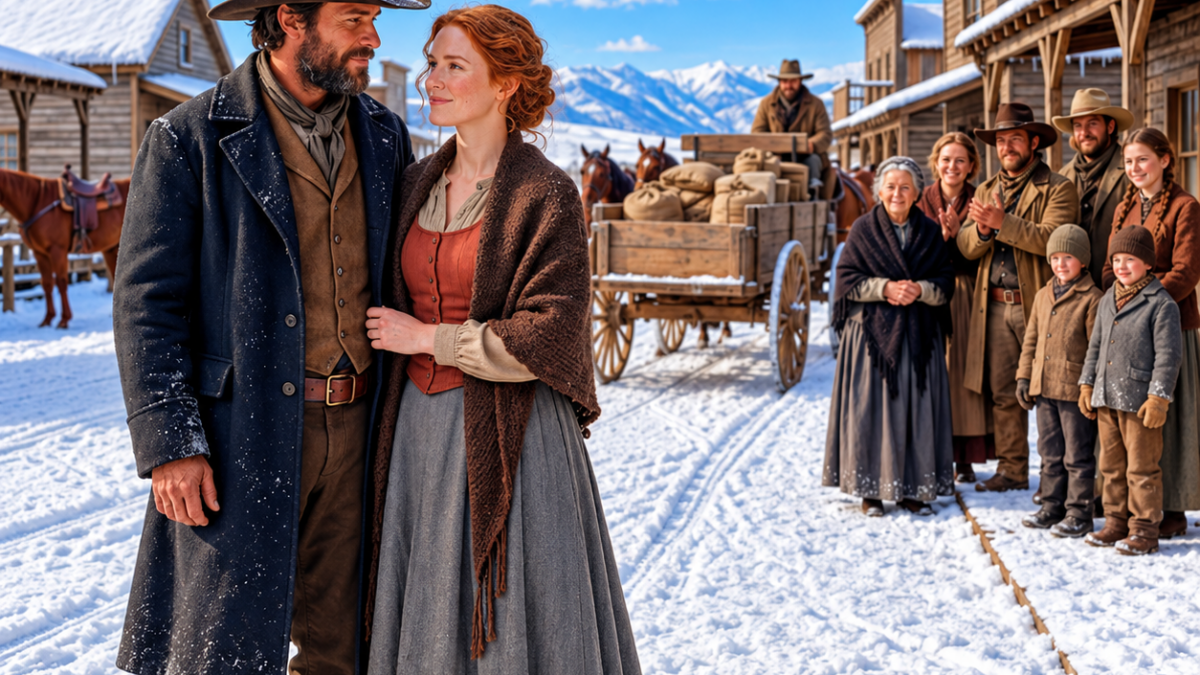
Every Man Rejected the Gunfighter’s Daughter, So a Lonely Rancher Paid Her $10 Fare—Three Weeks Later, Her Survival Skills Helped Save the Entire Town From a Deadly Blizzard.
Every man in Silver Hollow backed away the moment they heard my last name, leaving me alone beside my trunk while the other women from the train walked away with men willing to court them.
Then a quiet rancher named Jonah Whitlock placed ten dollars on the agency table—not to buy me, not to claim me, but simply to cover the remaining cost of my journey so I would not be forced onto the next train east—and told me he expected absolutely nothing in return.
Three weeks later, one of the worst blizzards Wyoming had seen in years buried the town, a little girl disappeared into the whiteout, the food supply became trapped beneath a collapsed building, and suddenly the same people who had been afraid of Amos Slate’s daughter were begging me to remember everything my father had ever taught me about staying alive.
My name is Ren Slate.
In October of 1886, that name could empty a room faster than a gunshot.
I had known that since childhood.
Slate.
People rarely reacted to Ren.
Ren was harmless enough.
It was the second part that made strangers stop smiling.
My father was Amos Slate.
If you had lived anywhere between southern Wyoming, northern Colorado, and half the bad country stretching west toward Utah in those years, you had probably heard some version of him.
Gunfighter.
Killer.
Outlaw.
Protector.
Murderer.
Hired pistol.
The labels changed according to who told the story.
The number of men he had supposedly killed changed even faster.
Some people swore it was twelve.
Others twenty.
One drunk in Cheyenne once insisted my father had killed forty-three men before breakfast on a single Tuesday.
I told him that was remarkable considering Father usually slept late on Tuesdays.
The drunk did not appreciate the correction.
The truth was more complicated than the legend.
Father had killed men.
I will not pretend otherwise.
He had also lived in a country where land companies hired armed riders to force small ranchers away from claims they had worked for years.
Where a sheriff might serve the law or the wealthiest man paying him.
Where families disappeared overnight because somebody with money wanted water rights.
Amos Slate had done violent things.
Some necessary.
Some perhaps not.
I loved him.
I was also afraid of parts of him.
Both could be true.
That was something the world never seemed interested in allowing.
People wanted saints or devils.
My father had been neither.
He had simply been Amos.
PART2:
And by the time he died, his reputation had become larger than the man.
I was twenty-four when I boarded the train to Silver Hollow.
Father had been dead three years.
I had spent most of those years moving.
Not because anyone was actively chasing me every day.
That is another exaggeration people liked.
But Father had enemies.
Old debts.
Old grudges.
Men who believed hurting Amos Slate’s daughter might settle something with a dead man.
Others simply recognized the surname and decided I was trouble before I opened my mouth.
So I learned not to stay long.
I taught school briefly in Laramie.
Worked laundry in Fort Collins.
Kept books for a feed merchant outside Cheyenne.
Everywhere, sooner or later, somebody asked whether I was that Slate.
Then the room changed.
Not always dramatically.
Sometimes a landlord decided my rent needed increasing.
Sometimes a woman stopped inviting me for Sunday dinner.
Sometimes a man who had been friendly suddenly remembered he was promised elsewhere.
You learn to recognize rejection before the words arrive.
A glance.
A pause.
A surname repeated too slowly.
Eventually I heard about the marriage agency.
Calling it a bride train was simpler and crueler than the truth.
The agency arranged introductions between unmarried women willing to move west and men living in isolated settlements where eligible women were scarce.
The agency advanced travel costs.
PART3:
A man interested in formally courting one of the women could settle the remaining balance of her fare.
Ten dollars in my case.
That did not purchase a wife.
No man acquired a claim on a woman because he paid it.
She could refuse him.
Leave.
Choose someone else.
Return east.
At least according to the contract.
Human beings are capable of turning even reasonable arrangements into ugliness, but the written terms were clear.
I joined because I was tired of leaving before I had even arrived.
I told myself perhaps Wyoming would be different.
That should have warned me how badly I wanted it to be true.
The train carried six women into Silver Hollow.
By noon, five had men sitting beside them.
By midafternoon, four had already agreed to formal courtships.
Nobody acted as though we were livestock.
The town hall had coffee.
A respectable widow from the church sat with us.
Men introduced themselves.
Women asked questions.
Some matches failed within ten minutes.
One woman rejected a rancher because he smelled like he had slept in his horse’s stall.
He looked offended.
I thought her reasoning sound.
I spoke to three men before the clerk called my full name.
“Miss Ren Slate.”
The hall changed.
Not silence at first.
Recognition.
Then silence.
A farmer named Benson had been sitting across from me.
Pleasant man.
Widower.
Two daughters.
He had spent twenty minutes telling me about an apple tree he was convinced could survive Wyoming winters if protected properly.
I liked him.
When the clerk said Slate, Benson’s expression emptied.
“Slate?”
“Yes.”
“As in Amos Slate?”
There was no good answer.
“Yes.”
He stood.
Not angrily.
Almost apologetically.
“I’m sorry.”
“For what?”
“I have girls.”
I knew exactly what he meant.
He left.
The second man never sat down.
The third asked whether Father’s enemies still lived.
“I imagine some do.”
He looked toward the door.
That was enough.
Whispers started.
Amos Slate’s girl.
Gunfighter’s daughter.
Violent blood.
Trouble.
One man said:
“No woman raised by a killer brings peace into a house.”
I heard him.
He knew I heard.
He did not apologize.
I kept my hands folded.
Chin level.
Father had taught me that.
Not because he cared about manners.
Because looking frightened encourages certain kinds of men.
“Don’t give a room your fear until you decide whether the room deserves it.”
He used to say.
So I sat.
One by one, the other women left.
Smiling.
Nervous.
Carrying trunks.
By supper, the hall was nearly empty.
My trunk remained beside me.
I had packed it so many times the leather straps had worn pale where my hands pulled them tight.
The agency clerk, Mr. Loman, approached.
He looked embarrassed.
That made it worse.
“Miss Slate.”
“Yes?”
“There’s still the matter of your balance.”
“I know.”
“Ten dollars.”
“I know.”
“If no courtship arrangement is made…”
“I return east.”
He nodded.
The next train would leave the following morning.
Back toward Cheyenne.
Then wherever came next.
I stared at my trunk.
I remember thinking I should never have unpacked the comb.
A ridiculous thought.
I had unpacked one comb in the hotel.
That was apparently enough for disappointment to feel like foolishness.
Then a man walked toward the agency table.
I had noticed him earlier.
Not because he had joined the introductions.
He had not.
He was small by frontier standards.
Not weak.
Compact.
Thirty-five, perhaps.
Brown hair.
Short beard.
Sun-darkened face.
Plain coat.
He had spent most of the afternoon loading sacks from the mercantile into a wagon outside.
He carried ten dollars in his hand.
He placed it on the table.
Mr. Loman blinked.
“You’re entering a courtship?”
“No.”
The man glanced toward me.
“I don’t know the woman.”
That was reassuring.
He looked back at the clerk.
“I’m not looking for a wife.”
Less reassuring in a different way.
Mr. Loman frowned.
“Then why—”
“Because she shouldn’t be sent back because a room full of men is frightened of a dead man.”
Several people still lingering heard.
The quiet returned.
The stranger looked at me.
“A man’s sins don’t belong to his daughter.”
My throat tightened unexpectedly.
Not because the words were poetic.
Because nobody had said them plainly in years.
Mr. Loman looked uncertain.
“The ten dollars would settle her fare.”
“That’s what it’s for.”
“And what arrangement do you expect from Miss Slate?”
“None.”
I stood.
“None?”
The man shook his head.
“I’ve a spare room.”
“Ranch is nine miles out.”
“You can stay a few days.”
“Decide what you want.”
“If you decide to leave tomorrow, next week, whenever—”
He nodded toward the ten dollars.
“I won’t hold that over you.”
I stared at him.
“What do you want from me?”
“Nothing.”
“Nobody wants nothing.”
He considered.
“Fair point.”
The room seemed to lean toward us.
He finally said:
“I want to go home tonight knowing I didn’t watch something wrong happen when fixing it cost me ten dollars.”
That was the first time Jonah Whitlock surprised me.
It would not be the last.
“Why?”
I asked.
He shrugged.
“Seemed right.”
Father would have distrusted him immediately.
Amos Slate believed any man who claimed simple motives was hiding complicated ones.
Maybe that was why I distrusted Jonah too.
But the alternative was another train.
Another town.
Another room hearing my name.
So I accepted.
“Few days.”
I said.
“Few days.”
Jonah agreed.
He lifted my trunk before I could stop him.
“I can carry it.”
“I know.”
He kept walking.
I followed.
His ranch was smaller than I expected.
One-story house.
Barn.
Corral.
A few cattle.
Enough land to make one man tired and two men busy.
The interior was clean in the way bachelors believe a room is clean if dirt has been pushed toward corners.
Jonah set my trunk in a small guest room.
Bed.
Washstand.
Two hooks.
Window.
I looked around.
“Does anyone usually stay here?”
“No.”
“Then why have a guest room?”
“House came with walls.”
I stared.
He almost smiled.
Supper was beans, salt pork, and biscuits so hard I suspected they had originally been intended as building materials.
Jonah apologized for nothing.
Afterward I helped put dishes away.
That was when I saw the cups.
Two ceramic cups.
White.
Blue edge.
One chipped.
“You live alone.”
“Yes.”
“Why two cups?”
“Cups came in pairs.”
He did not look at me.
I let it go.
The next morning, I discovered his coffee.
I poured.
The liquid looked capable of stripping paint.
“How long has this been on the stove?”
“Since breakfast.”
I looked toward the window.
Sun well above the horizon.
“Which breakfast?”
Jonah actually considered.
“Yesterday’s, possibly.”
I laughed.
It came out before I could stop it.
I had not laughed since the train.
Jonah looked at me.
Not pleased with himself.
Simply surprised.
Then he said:
“I take it you’ll be making coffee.”
“Yes.”
“Good.”
My trunk remained closed.
That was habit.
Unpacking had always felt dangerous.
A fully opened trunk meant belief.
Belief that I would still be in the same room next week.
That the landlord would not change his mind.
That nobody would discover my name.
That no old story would walk through the door.
So I removed what I needed.
Dress.
Nightgown.
Comb.
Nothing else.
On the third morning, Jonah nodded toward the hooks.
“You can hang things.”
“They’ll stay less wrinkled.”
“I’m not stopping long.”
The answer came too quickly.
Jonah noticed.
He noticed almost everything.
But unlike most men, he did not treat noticing as permission to question.
“Didn’t say you were.”
He went outside.
That should have relieved me.
Instead, I thought about it all day.
Living with Jonah was strange because he asked for little and offered help badly.
He would repair a hinge without comment.
Leave extra wood beside my stove.
Ride to town and return with tea after noticing I avoided his coffee.
But if I attempted to help him, he became stubborn.
“I can manage.”
Those were his favorite words.
“I can manage.”
Fence post leaning?
“I can manage.”
Heavy feed sack?
“I can manage.”
Split wagon wheel?
“I can manage.”
One afternoon I watched him fight a fence post that clearly required two people.
“You want help?”
“I can manage.”
“Obviously.”
He ignored the insult.
The post shifted.
Jonah nearly fell.
I walked over.
Put both hands against the timber.
“Hold.”
“I said—”
“I heard you.”
Together we set it in half the time.
Afterward Jonah rubbed dirt from his gloves.
“You didn’t need to do that.”
“I know.”
He looked at me.
“I did it anyway.”
Something changed in his expression.
I continued:
“You might consider learning that accepting help is not the same thing as admitting weakness.”
Jonah smiled slightly.
“I’ll consider it.”
“You won’t.”
“Probably not.”
A week later he cut his forearm on fence wire.
Deep.
He wrapped it poorly and tried hiding it.
I saw blood through his sleeve.
“Sit.”
“It’s fine.”
“Jonah.”
“I’ve had worse.”
“That is not a medical measurement.”
I made him sit at the kitchen table.
Washed the wound.
Needle.
Thread.
Whiskey for cleaning.
He watched my hands.
“You’ve done this before.”
“Yes.”
“Where’d you learn?”
“My father.”
Jonah went quiet.
People always went quiet when Father entered conversation.
“Amos taught you to stitch wounds?”
“He had practice creating circumstances where somebody needed stitching.”
Jonah almost laughed.
I tied the first stitch.
“He taught me medicine.”
“Tracking.”
“Reading weather.”
“How to find water.”
“How to disappear.”
Jonah’s eyes lifted.
“Disappear?”
“When men came looking for him.”
I tied another stitch.
“How to go hungry without complaining.”
“How to sleep lightly.”
“How to tell whether tracks belonged to men who wanted conversation or men who wanted blood.”
Jonah said nothing.
I glanced at him.
“He wasn’t cruel to me.”
“I didn’t say he was.”
“Most people think that.”
“I’m not most people.”
“No.”
I tied the last stitch.
“You aren’t.”
That was the first real conversation we had about Amos Slate.
Not legend.
Father.
After that, we began talking in evenings.
At first about practical things.
Ranch.
Weather.
Town.
Then less practical.
One night we sat on the porch.
Sun dropping.
Cold beginning.
Jonah asked:
“What would you do?”
“If what?”
“If nobody was chasing anything.”
“Nobody expected you to move.”
“No name to outrun.”
“What would you do?”
I opened my mouth.
Nothing came.
I laughed once.
Not happily.
“I don’t know.”
“Never thought about it?”
“I learned not to.”
Jonah leaned back.
“Seems worth imagining.”
“Easy for a man with a ranch.”
“Wasn’t always.”
I looked toward him.
“What did you imagine when you built this place?”
His gaze went to the kitchen window.
“Someone else.”
The second cup.
I understood.
“Who?”
“Nobody particular.”
“I thought I’d marry.”
“House seemed large enough.”
“Bought cups in pairs.”
“Kept buying things in twos longer than made sense.”
“What happened?”
“Nothing.”
That answer surprised me.
“No lost sweetheart?”
“No.”
“No tragic fiancée?”
“No.”
“You simply never married.”
“Yes.”
“That’s terribly undramatic.”
“I’ve worked hard at it.”
I smiled.
Jonah continued:
“Years passed.”
“Then admitting I’d built parts of a life for someone who never came felt more foolish than keeping the second cup.”
I looked at him.
“Maybe the cup isn’t foolish.”
“Maybe.”
He turned the question back.
“House.”
“What?”
“If you could build one.”
“What would it look like?”
I should have said I had never imagined.
Instead the answer appeared.
“South-facing kitchen windows.”
Jonah looked amused.
“You’ve never thought about it?”
“I imagine houses.”
“Apparently.”
“Wide porch.”
“How wide?”
“Two chairs.”
He nodded solemnly.
“Specific.”
“Enough kitchen shelves that everything doesn’t become a pile.”
“Insulting my cabinets now?”
“Accurately describing them.”
“Continue.”
“Root cellar.”
“Good stove.”
“Bedroom that doesn’t face the road.”
“Why?”
I hesitated.
“So headlights and riders don’t wake me.”
Jonah’s expression softened.
I regretted saying it.
Then he asked only:
“Anything else?”
“Flowers.”
“What kind?”
“I don’t know.”
“Something unnecessary.”
Jonah smiled.
“That seems worth having.”
For a woman who did not plan to stay, I had apparently planned an entire house.
That frightened me more than I admitted.
The third week, the birds disappeared.
Not entirely.
But their noise changed.
Fewer.
Quieter.
The horses grew restless.
Wind came steady from a direction it rarely favored in October.
At sunrise, a thin hard skin of ice appeared along the river edge.
I stood outside.
Watched.
Felt old lessons return.
Father had been brutal about weather.
Not cruel.
Exact.
“Sky can kill you as quick as a man.”
He said.
So I learned clouds.
Wind.
Animals.
Pressure changes before anyone used those words around me.
The ache in an old scar before snow.
How birds moved before storms.
What silence meant.
I found Jonah repairing tack.
“There’s a storm coming.”
He looked outside.
Sky clear.
“How bad?”
“Bad.”
“How bad?”
“I don’t know.”
He waited.
“That bothers you?”
“Yes.”
“Why?”
“Because every sign Father taught me to fear is showing at once.”
Jonah stood.
“Then we prepare.”
No argument.
No joke about Amos Slate’s daughter seeing ghosts.
He believed me.
The simplicity of it almost hurt.
“We need to warn town.”
He nodded.
We rode.
Silver Hollow did not believe me.
Not all of them.
The storekeeper listened politely.
One rancher laughed.
“Sky’s clear enough to shave under.”
I pointed toward the western line.
“For now.”
A man named Callaway folded his arms.
“Wyoming weather has fooled better trackers than a girl who’s been here three weeks.”
Jonah stepped forward.
“I’ve worked this valley six years.”
That quietened some.
“I’ve never seen river ice this early.”
He looked around.
“I’d rather be laughed at for preparing than buried for not.”
A few listened.
Most did not.
Then an old man named Turley approached.
Bent shoulders.
White beard.
Eyes still sharp.
“Slate.”
He said.
My spine tightened.
“Amos Slate’s girl?”
“Yes.”
He studied me.
“Didn’t think I’d live long enough.”
“You knew him?”
“Knew of him.”
He corrected.
“Different thing.”
Then:
“If weather holds, we ought to talk.”
It did not hold.
By the time Jonah and I planned to return to the ranch, the sky shut.
Clouds swallowed afternoon.
Wind hit.
Snow began sideways.
Not falling.
Moving.
Main street disappeared within an hour.
Jonah looked west.
“We’re not getting home.”
“No.”
The church was the strongest building in Silver Hollow.
Stone foundation.
Heavy beams.
Central stove.
We moved there with half the town before dark.
That first night still felt manageable.
Children thought the storm exciting.
Men laughed.
Women made coffee.
Then the wind strengthened.
By midnight, nobody laughed.
The building shook.
Roof groaned.
Snow forced through door cracks.
Jonah and I worked without discussing leadership.
It simply happened.
He knew people.
I knew cold.
Jonah identified houses close enough to reach.
Who owned tools.
Which men could work without panicking.
Which barns had strong roofs.
Which families had spare blankets.
I reorganized the church.
One room.
Then another closed.
“Everyone together.”
I told the reverend.
“We heat bodies, not empty space.”
Families moved inward.
Blankets across doorways.
Children away from exterior walls.
I showed boys how to bank snow against the windward side where gaps allowed cold through.
Callaway’s wife found me beside the stove.
She had three children wrapped in blankets.
Her husband had laughed at me.
Mrs. Callaway looked miserable.
“I owe you an apology.”
“You owe your children dry socks.”
She blinked.
“Keep them warm.”
“We can discuss apologies when the roof stops sounding like it wants to leave.”
She nodded.
Later she brought me coffee.
Fresh.
I suspected she had made it herself.
By morning, the town was trapped.
Drifts blocked roads.
One roof collapsed.
Then another shed.
The general store’s rear section gave way beneath snow load.
Its back entrance disappeared under timber and packed snow.
That became our next crisis.
The main food supply was inside.
Flour.
Beans.
Salt pork.
Coffee.
Medical alcohol.
Blankets.
Everything.
Visible through parts of the building.
Impossible to reach safely from the main entrance because roof beams had fallen.
People began calculating meals.
I hated that sound.
The quiet way adults count children against food.
Father had taught me famine arithmetic before I was ten.
I knew where it led.
“We ration now.”
I said.
A merchant objected.
“We’re not starving.”
“Good.”
I replied.
“Then rationing will keep that true.”
Jonah supported me immediately.
Half portions.
Children first.
Elderly next.
Men working outside received more because they burned more.
No arguments.
Not after the storm proved me right.
By afternoon, Silver Hollow’s opinion of Amos Slate’s daughter had become considerably less important than whether Amos Slate’s daughter knew how to keep water from freezing in containers.
I did.
On the second day, the child disappeared.
Her name was Annie Callaway.
Seven years old.
Mrs. Callaway’s youngest.
Nobody knew exactly how.
The family had briefly returned to their nearby house with two men assisting to retrieve medicine.
Some confusion.
Door open.
Annie followed.
Wind blinded everyone.
By the time they realized, she was gone.
Mrs. Callaway’s scream filled the church.
I will never forget it.
“Annie!”
Every man reached for a coat.
That could have killed half of them.
“Stop!”
I shouted.
People froze.
Callaway turned on me.
“My daughter—”
“And if twenty men walk into whiteout without a plan, your daughter gets twenty funerals around her.”
He looked ready to strike me.
Jonah stepped between us.
Not threatening.
Steady.
“Ren’s right.”
Callaway breathed hard.
I knelt.
“Where did she leave from?”
Mrs. Callaway pointed.
“What was she wearing?”
“Blue coat.”
“Boots?”
“Brown.”
“Hat?”
“Red.”
“Does she hide when frightened?”
Mrs. Callaway started crying.
“She likes barns.”
“What?”
“She hides in our hayloft when upset.”
I looked at Jonah.
“What structures can a seven-year-old reach from that side of town?”
He named four.
Blacksmith shed.
Feed barn.
Old Miller place.
Abandoned livestock barn east.
“We search those.”
“How?”
Callaway demanded.
“Rope teams.”
I said.
“No one alone.”
“Mark door-to-door.”
“If visibility disappears, turn back.”
Outside, the world did not exist beyond fifteen feet.
Snow erased tracks almost immediately.
But not entirely.
At the edge of the Callaway yard, I found impressions.
Small.
Half-filled.
Pointing east.
I crouched.
Jonah beside me.
“You see that?”
“Barely.”
“Short stride.”
“One boot dragging?”
“Maybe.”
We followed.
Lost them.
Found one print behind a wagon.
Then nothing.
I stopped.
Closed my eyes.
Not magic.
Memory.
Wind direction.
Child movement.
Shelter instinct.
Father’s voice:
Wind pushes frightened people toward cover even when they think they’re walking straight.
I looked east.
“The abandoned barn.”
Jonah nodded.
“Terrain drops that way.”
“Wind would push her toward it.”
We tied rope.
Moved.
Every twenty feet, Jonah called Annie’s name.
No answer.
Then shape.
Barn.
Half-collapsed roof.
Door jammed by snow.
Jonah forced it.
Inside:
Dark.
Hay.
Cold.
Then a sound.
Crying.
Annie was curled behind an old stall divider.
Red hat gone.
Blue coat white with frost.
Alive.
Callaway later told everyone I saved his daughter.
Not true.
Jonah knew the buildings.
Mrs. Callaway remembered Annie’s habits.
I read tracks.
We all did it.
But when I carried Annie into church wrapped in Jonah’s coat, the entire room looked at me differently.
That felt worse than hatred for a moment.
Gratitude can be heavy.
Mrs. Callaway fell to her knees.
Held Annie.
Then grabbed my hand.
I tried pulling away.
She held tighter.
“Thank you.”
I looked at the child.
“Keep her warm.”
I was not ready for more.
Later Jonah found me alone near the church door.
“You all right?”
“Yes.”
“Poor lie.”
I looked at him.
“You’re becoming irritating.”
“Learning.”
I leaned against the wall.
“They hated me three days ago.”
“Some did.”
“Now they stare like I’m something else.”
“You are.”
I bristled.
Jonah corrected himself.
“To them.”
“Not to me.”
That mattered.
“What am I to you?”
The question came out before I thought.
Jonah’s eyes held mine.
“Ren.”
Nothing more.
My name.
Not Slate.
Not Amos’s daughter.
Ren.
I looked away.
“Fair answer.”
The third day, food became urgent.
Church stores nearly gone.
We needed the general store.
Jonah remembered something.
“Cellar.”
“What?”
“Store has an old seller entrance behind the rear wall.”
“You’ve seen it?”
“Helped dig drainage there years back.”
“Collapsed section?”
“Main beams fell above.”
“Cellar wall may still be sound.”
We gathered six men.
Not twelve.
Cold punishes large groups that stop moving.
I organized rotation.
Ten minutes digging.
Warm.
Switch.
Dry gloves.
Check fingers.
Jonah directed where.
Men who had refused to shake my hand days before now followed every instruction.
We dug through packed snow.
Timber.
Ice.
One man started shaking.
I sent him inside.
“I’m fine.”
“No.”
“I can manage.”
Jonah glanced at me.
I almost laughed despite the cold.
“Inside.”
The man went.
Hours.
Then a hollow sound.
Jonah struck wood.
“Door.”
We cleared it.
Cellar opened.
Dry.
Flour sacks intact.
Beans.
Salt pork.
Enough.
Men cheered.
I sat in snow.
Too tired to cheer.
Jonah crouched.
“Fair team.”
He said.
I looked at him.
“Fair?”
“Improving.”
That evening another crisis.
Young rancher named Ben Morrow came in from checking livestock.
His glove was frozen stiff.
Hand pale.
Then mottled.
Frostbite.
A neighbor heated water nearly to boiling.
I saw the basin.
“No.”
He looked at me.
“What?”
“Not hot.”
“Needs warming.”
“Slow.”
“He can’t feel it.”
“That’s exactly why hot water is dangerous.”
Father had treated frostbite in line camps.
Not perfectly by modern standards.
But he understood sudden heat could damage tissue.
I prepared warm water.
Clean cloth.
Slow rewarming.
Ben cursed when pain returned.
Good.
Pain meant tissue alive.
Weeks later, he kept every finger.
For years afterward, he credited me.
I credited his hand for being stubborn.
The storm broke on the fourth morning.
No dramatic sunlight.
Just exhaustion.
Sky pale.
Wind weaker.
Snow covering everything.
Silver Hollow looked buried.
Roofs damaged.
Livestock lost.
Fences gone.
But people alive.
All of them.
Annie alive.
Food found.
No one froze to death.
No one starved.
The church smelled terrible.
Smoke.
Wet wool.
Bodies.
Beans.
I had never loved a smell more.
When the door finally opened safely, people stepped into silence.
The town survived.
Not because of me alone.
That version irritates me.
A town survives because people work.
Jonah organized.
Turley carried wood despite being seventy.
Mrs. Callaway fed children.
Reverend Hale gave up his own coat.
Men dug.
Women cooked.
Older children fetched water.
I contributed knowledge.
Important knowledge.
But survival is almost always collective.
That was one of the things Father got wrong.
He had spent his life believing strength meant being the person nobody needed to help.
Jonah taught me something better.
Strength could be coordination.
Trust.
Knowing who else knew something you did not.
A few days after the storm, Turley found me inside the church.
Most families had gone home.
He sat.
“Still want to know about your father?”
I did.
Did not.
“Yes.”
Turley rubbed his hands over his cane.
“Amos Slate killed men.”
“I know.”
“Some stories say he killed ranchers for money.”
“I’ve heard.”
“Some are lies.”
My breath slowed.
Turley told me about a land company.
Eastern investors.
Water claims.
Small ranch families pressured to sell.
When they refused, fences cut.
Cattle stolen.
Barns burned.
Men threatened.
Amos intervened.
Not because he was noble.
Turley refused to make him one.
Father took money sometimes.
Had grudges.
Drank too much in periods.
Shot men faster than necessary.
“But some of the worst stories?”
Turley said.
“Written by people trying to remove families from land.”
“That doesn’t make him good.”
I said.
“No.”
Turley nodded.
“Didn’t say good.”
“Just more than one thing.”
That sentence rearranged something.
More than one thing.
For years I had defended Father or condemned him depending on who stood in front of me.
Maybe I did not have to choose.
He could love me.
Teach me.
Protect ranchers.
Kill men.
Make terrible decisions.
All true.
A person can contain contradictions.
Children inherit names.
They do not inherit guilt.
I cried that evening.
Not much.
Enough.
Jonah found me outside.
He did not ask whether I was all right.
Good man.
He sat beside me.
After a while:
“Turley talked?”
“Yes.”
“Help?”
“I don’t know.”
“Fair.”
“I spent my whole life trying to decide what Father was.”
Jonah waited.
“Maybe I don’t need one answer.”
“Probably not.”
“People prefer one.”
“People prefer easy weather too.”
“Doesn’t make Wyoming cooperative.”
I smiled.
Days later, the town held supper.
For me.
I tried refusing.
Mrs. Callaway threatened to come drag me from Jonah’s ranch personally.
She was five feet tall.
I believed her.
So we attended.
Same hall where men had rejected me.
Different room now.
Tables covered in food.
Three pies from Mrs. Callaway.
Ben Morrow with his bandaged but functioning hand.
Callaway avoiding my eyes until he finally approached.
Hat in hands.
“Miss Slate.”
“Yes?”
“I said things.”
“I remember.”
“My daughter—”
“I know.”
He swallowed.
“I was wrong.”
Not:
I’m sorry you were offended.
Not:
We all make mistakes.
“I was wrong.”
That mattered.
“Thank you.”
I said.
He looked surprised.
“For apologizing?”
“Yes.”
“Seems small compared to Annie.”
“Different debts.”
He nodded.
One by one, people spoke.
Awkward.
Some overly sentimental.
One man admitted he had refused to shake my hand.
Then offered it now.
I looked at his hand.
Then shook.
No speech.
That was enough.
Someone raised a glass.
“Jonah Whitlock made the best ten-dollar trade in Wyoming history.”
The hall laughed.
I did not.
Not immediately.
Because the phrase hit the old wound.
Trade.
Bride.
Bought.
My face changed.
Jonah noticed.
He stood.
Quiet Jonah.
Whole room settled because he rarely stood to speak.
“I didn’t buy a bride.”
His voice carried.
The man with the glass lowered it.
Jonah continued:
“I paid ten dollars so a good woman wouldn’t be forced back onto a train because a room full of us couldn’t see past her father’s name.”
No anger.
Just truth.
“The ten dollars never bought me a promise.”
“Didn’t buy a courtship.”
“Didn’t buy a minute of her time.”
My eyes burned.
Jonah looked at me.
Then said:
“I’ve never asked Ren for anything because of it.”
He walked back to the table.
Sat beside me.
His hand rested near mine.
Not touching.
Choice.
Always.
Then, for the first time, he asked.
“Would you stay?”
The hall went silent.
My heart nearly stopped.
Jonah glanced around.
“No.”
He said.
“That’s wrong.”
People looked confused.
He turned fully toward me.
“I’m not asking because the town needs you.”
“Not because you owe anyone.”
“Not because your trunk is at my house.”
His eyes stayed on mine.
“Would you stay if leaving was easy?”
That was the right question.
My trunk.
Still half packed.
Hooks mostly empty.
Second cup.
South windows.
Porch.
Jonah.
I could leave.
The town no longer wanted me gone.
I could work.
Teach.
Keep books.
Travel anywhere.
For the first time in years, I did not need to flee.
So if I stayed—
it would actually mean something.
“Yes.”
I said.
Jonah breathed.
“I would.”
The room erupted.
I hated that.
Loved it too.
Mrs. Callaway put pie in front of me.
Largest piece.
No discussion.
That night at the ranch, Jonah did not suddenly propose marriage.
Another reason I loved him later.
He asked:
“You sure?”
“Yes.”
“You can change your mind.”
“I know.”
“You have money now.”
The town had collected funds for storm work.
Ben’s family offered wages for bookkeeping.
The school needed help.
“I know.”
“Could get your own place.”
“Yes.”
Jonah looked almost pained.
“I’m trying to make certain staying is still a choice.”
“It is.”
“And?”
“I’m still here.”
That was enough.
Winter settled.
My trunk slowly opened.
Not all at once.
One dress hung.
Then another.
Books on shelf.
Comb on washstand.
A shawl over Jonah’s chair.
One morning I saw a new hook near the door.
“You added that.”
Jonah continued putting on his coat.
“Kept finding your shawl on my chair.”
“Your chair offended?”
“Seemed easier than moving it.”
“That your reason?”
“It’s the one I’m admitting.”
I smiled.
The guest room stopped feeling like a guest room.
Neither of us marked when.
The trunk finally emptied in March.
I stared at the bottom.
Wood.
Nothing.
For years that sight would have terrified me.
Empty trunk meant belongings elsewhere.
Commitment.
Vulnerability.
This time I carried the trunk to the barn.
Jonah saw.
He said nothing.
Good.
Later I found tools stored inside it.
Practical man.
By spring, Jonah asked me to marry him.
He did it on the porch.
Two chairs now.
I noticed that too.
He had built the second after the storm.
Poorly.
One leg uneven.
I sat carefully.
Jonah stood.
“Ren.”
“Yes?”
“I’ve been thinking.”
“Dangerous.”
“Yes.”
“I paid ten dollars for your fare.”
I narrowed my eyes.
“If this proposal is going where that sentence suggests—”
“It isn’t.”
He smiled.
“I want to say it correctly.”
“Good.”
“That money meant nothing except you deserved a chance to decide your own life.”
“It still means that.”
“Yes.”
Jonah removed his hat.
“I want to marry you.”
“But not because I helped you.”
“Not because you stayed.”
“Not because Silver Hollow thinks we make a story.”
“I want you to marry me because when I picture this house twenty years from now, you’re in it.”
My throat tightened.
He continued.
“And if your answer is no, the room is still yours until you decide where you’re going.”
I stared at him.
“You’re giving me an exit during the proposal.”
“Seems important.”
“It is.”
I stood.
“You’re a strange man, Jonah Whitlock.”
“Been told.”
“Yes.”
His eyebrows lifted.
“Yes strange?”
“Yes marriage.”
He smiled.
That smile changed the house.
We married in the church.
Same building that sheltered half the valley.
Small ceremony.
Turley in back.
Mrs. Callaway brought pie.
Ben Morrow shook Jonah’s hand and told him he remained jealous of “the ten-dollar investment.”
Jonah replied:
“She costs considerably more now.”
I elbowed him.
People laughed.
When the preacher asked whether I took Jonah willingly, I almost laughed again.
Willingly.
Yes.
That word mattered.
“I do.”
I said.
And for once, my last name did not enter the room before me.
Years passed.
Silver Hollow grew.
Rail line expanded.
New families arrived who knew nothing about Amos Slate until somebody told them.
Eventually, people began telling my story too.
That bothered me.
Stories simplify.
Amos Slate became the feared gunfighter.
Ren Slate became the rejected bride who saved a town.
Jonah Whitlock became the rancher who “paid ten dollars for his wife.”
Every version lost something.
So when children asked, I corrected them.
“No one bought me.”
“The ten dollars paid the remaining fare.”
“Jonah asked for nothing.”
“What mattered was that he saw me before he saw my name.”
That became the story I preferred.
Not rescue.
Recognition.
Our house changed.
Jonah added windows to the kitchen.
South-facing.
I noticed while he pretended it was practical.
“Better winter light.”
He said.
“You remembered.”
“What?”
I stared.
Jonah surrendered.
“Yes.”
The porch widened.
Two chairs.
Then three after our daughter was born.
Then four.
Flowers near the steps.
Unnecessary things.
The house I had described without believing I would live in one.
Sometimes I would stand in the kitchen and remember the woman on the train who kept her trunk tied because unpacking felt dangerous.
I wished I could tell her:
You will stop moving.
Not because nobody can hurt you.
Because eventually you will live somewhere your first instinct is no longer escape.
Father’s name remained complicated.
I never changed history to make my children comfortable.
When they asked about Grandfather Amos, I told them truth appropriate to age.
He loved me.
He taught me to survive.
He also lived violently.
Some things he did defended people.
Some things I still questioned.
A person does not become harmless because we loved him.
Neither does loving him make us guilty for everything he did.
My daughter once asked:
“Were you scared of him?”
“Sometimes.”
“Did you love him?”
“Always.”
She frowned.
Children prefer clean answers too.
“Can both happen?”
“Yes.”
That lesson may have been the most useful inheritance Amos Slate ever gave me unintentionally.
Multiple truths.
Jonah never asked me to stop using Slate.
I became Ren Slate Whitlock in official records.
In town, often Mrs. Whitlock.
At home:
Ren.
The simplest name.
Turley died years later.
Before he did, he told me more about Father.
Some good.
Some terrible.
I listened.
Did not defend.
Did not condemn everything.
Carried both.
Exactly as he had told me I could.
The winter storm became legend.
Each year the story worsened.
Snow twenty feet high.
Wind strong enough to lift horses.
We apparently survived by eating one bean per day.
Annie Callaway supposedly followed a wolf into the barn.
None true.
Reality was enough.
We were frightened.
Cold.
Hungry.
We worked.
No one died.
That was miracle enough.
Annie grew.
Became a teacher.
Every year on the storm anniversary, Mrs. Callaway brought me pie until arthritis made baking difficult.
Then Annie brought it.
“Mother says debt continues.”
I always replied:
“There is no debt.”
Annie smiled.
“She knows.”
That is how gratitude should work.
Given freely.
Not obligation.
Ben Morrow kept all his fingers.
He never let anyone warm frostbite with hot water again.
He became annoyingly evangelical about it.
Good.
Jonah and I argued.
Often.
Marriage should not be made sentimental simply because the courtship had dramatic snow.
He was stubborn.
I was worse.
He believed asking for help remained optional despite every lesson.
I would find him repairing roofs alone.
“Jonah.”
“I can manage.”
“Do you remember the fence post?”
“I feared you might.”
He eventually improved.
So did I.
When fear told me to pack during arguments, I learned to leave the trunk in the barn.
That sounds small.
It was not.
My childhood had taught me conflict meant preparation for flight.
Raised voices?
Pack.
Stranger asks wrong question?
Pack.
Horse saddled before dawn?
Pack.
Jonah and I argued once about money so fiercely that I walked into our bedroom and pulled open a drawer.
My hands shook.
Not because I intended to leave.
Because my body remembered what leaving felt like.
Jonah found me.
Saw the open drawer.
His face changed.
“Ren.”
“I’m not leaving.”
I said.
He stopped several feet away.
“I know.”
“You don’t.”
“I do.”
He did not block the door.
Did not demand reassurance.
He sat on the bed.
“We can finish the argument tomorrow.”
I looked at him.
“You’re still wrong.”
“Likely.”
“You don’t believe that.”
“No.”
I almost laughed.
My hand released the drawer.
That was healing too.
Not dramatic.
A drawer closing without a trunk being packed.
Years later, when our son was twelve, another blizzard struck.
Not as bad.
Still dangerous.
He asked:
“Ma, how do you know what weather means?”
“Your grandfather.”
“Amos?”
“Yes.”
“Can you teach me?”
The question stopped me.
For years I had treated Father’s lessons as survival scars.
Now they could become knowledge.
Without guns.
Without fleeing.
I taught my son clouds.
Birds.
Snow texture.
Wind shifts.
How horses behave.
How ice speaks beneath weight.
We removed fear from the lesson where we could.
That felt like changing inheritance rather than rejecting it.
You cannot choose what your parents hand you.
You can choose what you pass forward.
Jonah aged before me by several years.
His hands stiffened.
Hair gray.
The ranch became our children’s work more than ours.
The second cup remained.
Chipped badly.
Still used.
One morning I replaced it.
Jonah objected.
“That cup is half broken.”
“It works.”
“The handle is cracked.”
“I can manage.”
I stared.
He laughed.
“All right.”
We kept the old cup on a shelf.
Sometimes objects deserve retirement too.
The ten-dollar story never disappeared.
At our twenty-fifth anniversary supper, Ben Morrow raised his glass.
“Still the best ten dollars spent in Wyoming.”
Jonah groaned.
I stood.
Everyone expected sentiment.
I said:
“For accuracy, the ten dollars purchased railway fare.”
The room laughed.
“Everything after that cost Jonah significantly more.”
Louder laughter.
Jonah shook his head.
Then I became serious.
“He did not buy me.”
“He bought me nothing.”
“He gave me room to make a choice when everyone else had already made one about me.”
That quietened them.
“And when he finally asked me to stay, he waited until leaving was possible.”
I looked at him.
“That is why I stayed.”
Jonah’s eyes filled.
He pretended dust.
Inside a dining hall.
Terrible liar.
When he died, years later, it was in the house with south-facing windows.
Not suddenly.
Heart.
Age.
Enough time for goodbye.
He lay near that window.
I sat beside him.
His hand in mine.
He looked toward the old second cup on the shelf.
“Never explained that properly.”
He whispered.
“What?”
“The cup.”
“I figured it out.”
“Did you?”
“You were waiting for someone before you knew who.”
Jonah smiled.
“Maybe.”
I squeezed his hand.
“I’m glad she came.”
“So am I.”
His last hours were quiet.
No snowstorm.
No gunfire.
No dramatic rescue.
Good.
After he died, my children asked whether I would leave the ranch.
The question almost offended me.
Then I understood.
They remembered my stories.
The packed trunk.
Running.
Movement.
“No.”
I said.
For the first time in my life, loss did not make me leave.
That may have been Jonah’s final gift.
The house could contain grief and still remain home.
I stayed.
Years.
Grandchildren.
Flowers.
Porch.
Two chairs even when one sat empty.
Eventually my granddaughter found the old trunk in the barn.
“What’s this?”
“My suitcase.”
“It’s huge.”
“People used to own dresses with opinions.”
She laughed.
Then found scratches.
Old labels.
Marks from train stations.
“How many places?”
“I don’t know.”
“Why keep it?”
I looked at the trunk.
Once symbol of readiness.
Then tool storage.
Now history.
“To remember that leaving and being forced to leave are not the same thing.”
She frowned.
I explained.
“When I was young, I believed survival meant always being prepared to run.”
“What changed?”
I looked toward the house.
“Eventually I found a place where staying was safe.”
“And Grandpa?”
“Yes.”
“But not only him.”
I pointed toward Silver Hollow in the distance.
“The town changed too.”
That was important.
Communities can fail people.
They can also learn.
Silver Hollow rejected me.
Then apologized.
Not perfectly.
Some people never admitted wrong.
Others became friends.
A town is not one moral creature.
It is individuals making choices.
Fear spread through individuals.
So did courage.
Mrs. Callaway changed.
Ben changed.
Callaway changed.
Jonah stood first.
Then others followed.
I never told the story as though saving Annie erased their prejudice.
It did not.
Good behavior afterward does not delete harm before.
But accountability matters.
Change matters.
We should allow people to improve without pretending the original wound never happened.
That was another thing Father’s reputation taught me.
History need not be flattened to forgiveness or condemnation.
The full account is usually harder.
And more useful.
Toward the end of my life, people began asking me about that winter because younger generations had turned it into legend.
A newspaper writer came once.
He asked:
“Mrs. Whitlock, is it true every man rejected you and your husband bought you for ten dollars?”
I nearly threw him off the porch.
“No.”
He looked disappointed.
“Then what happened?”
I told him.
Agency fare.
Choice.
No obligation.
Jonah not seeking a wife.
The writer scribbled less enthusiastically.
“What about saving the town?”
“I helped.”
“People say you saved everyone.”
“People enjoy making survival into one person because cooperation takes longer to explain.”
“Did your father really teach you all those skills?”
“Yes.”
“Was he a murderer?”
I stared at him.
“Ask a better question.”
He paused.
“What was he?”
That was better.
“My father.”
I said.
“And many other things.”
The article came out less dramatic than he hoped.
More accurate.
I kept it.
I think Jonah would have approved.
In old age, snow still made me wake before dawn.
Even safe indoors.
Body memory.
I would listen.
Wind.
Roof.
Horses long gone.
Then realize where I was.
Silver Hollow.
Home.
Sometimes I walked into the kitchen.
Sunrise through southern windows.
Two chairs on the porch outside.
The old cup on the shelf.
And I thought about the hall where every man had stepped away when my name was spoken.
If I could return to that young woman, I would not tell her to ignore them.
Rejection hurts even when you understand the ignorance behind it.
I would tell her:
Keep your chin level.
Not because Amos told you to.
Because you have nothing to be ashamed of.
I would tell her the quiet rancher near the mercantile is watching.
Not your body.
Not your father’s reputation.
The room.
The injustice.
I would tell her ten dollars will not buy her future.
It will purchase time.
Space.
Choice.
And she will use that space to become something she never imagined.
Not somebody’s wife.
That comes later.
First:
Someone who unpacks.
Someone who warns a town.
Someone who walks into a blizzard.
Someone who brings a child home.
Someone who lets the same people who insulted her become more than their first mistake.
Someone who stops measuring every doorway as an exit.
That is the story.
Not ten dollars.
Not bride.
Not gunfighter’s daughter.
Home.
People often think home is the place where everyone loves you immediately.
Mine wasn’t.
Silver Hollow mistrusted me.
Laughed.
Turned away.
Then, when weather stripped away reputation and social standing and left only what each person knew how to do, we finally saw one another clearly.
I saw men who had rejected me dig until their hands bled to reach food for children.
They saw Amos Slate’s daughter kneeling in snow reading a child’s footprints.
We became more complicated to each other.
Better.
Real.
Jonah had done that from the start.
He looked at my name.
Then looked again.
At me.
Maybe that is why ten dollars changed everything.
Not because money saved me.
Because one person refused to let inherited reputation make the decision.
He paid a fare.
Opened a room.
Expected nothing.
Then waited.
He waited while I kept my trunk packed.
Waited while I distrusted kindness.
Waited while I decided whether his house was temporary.
Waited until I had other choices before asking me to stay.
That is what love looked like in the end.
Not rescue.
Not possession.
Room.
The freedom to leave.
And a reason not to.
When I finally emptied that trunk, I did not realize I was performing the bravest act of my life.
No gun.
No storm.
No missing child.
Just dresses hanging on hooks.
A comb on a table.
A trunk empty.
Because for someone who has spent her whole life preparing to run, unpacking is an act of faith.
By spring, the trunk sat in the barn.
Tools inside.
Useless for travel.
Exactly where I wanted it.
And that is why, whenever people repeat the story about Jonah Whitlock paying ten dollars for the bride everyone rejected, I correct them.
He did not pay ten dollars for me.
He paid ten dollars so I would still have a choice tomorrow.
Everything that followed—
the storm,
the town,
the child,
the marriage,
the house,
the south-facing windows,
the two chairs,
the years—
I chose those myself.
And for the first time in my life, I stayed somewhere not because I had nowhere else to go—
but because home had finally become the place where I stopped preparing to leave.








