Eight Minutes After Our Divorce, My Ex Ran to His Pregnant Mistress—Then Her Doctor Asked One Question That Destroyed Him
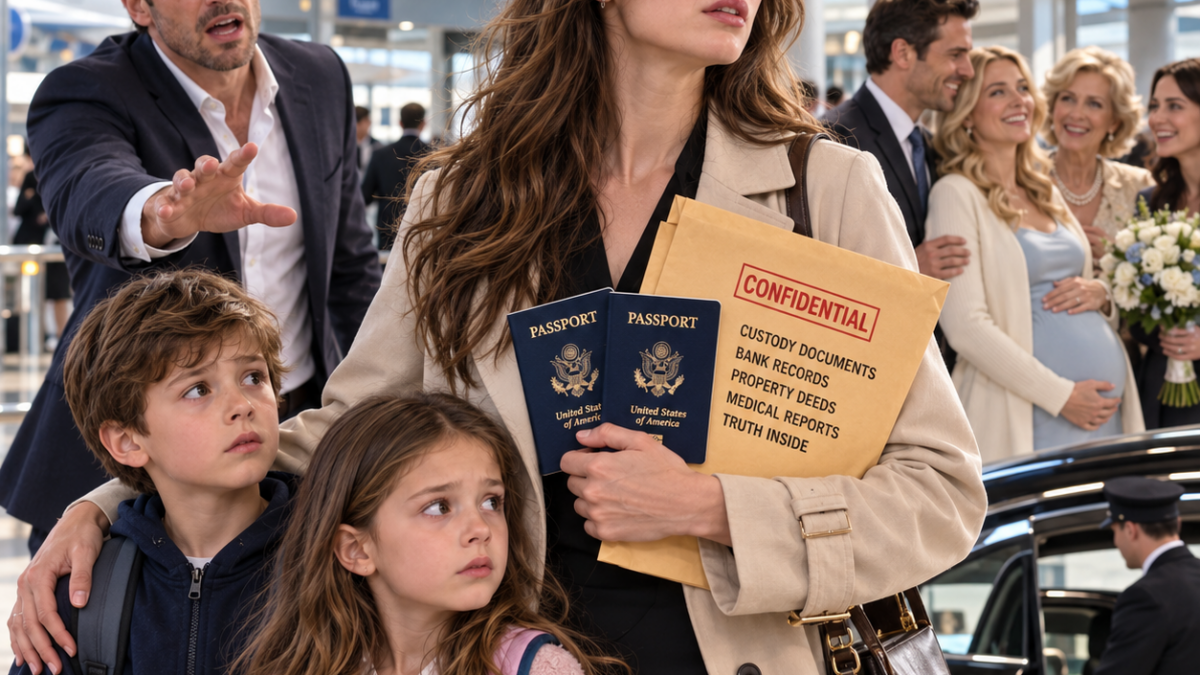
Eight Minutes After Our Divorce, My Ex Ran to His Pregnant Mistress—Then Her Doctor Asked One Question That Destroyed Him
Eight minutes after Bradley told me there was nothing left to divide, he rushed off to celebrate the baby he said would replace the family he had ruined.
I handed over the penthouse keys, took our children’s passports, and left with a folder full of hidden transfers he thought I would never trace.
By the time Tiffany’s doctor asked one simple question about her conception date, Bradley was calling me in panic—because he finally understood I had the one document that could destroy everything.
Eight minutes after my divorce became official, Bradley leaned back in his chair and smiled at me like a man who had just escaped a burning house while locking his wife and children inside.
“There’s nothing left to divide, Sarah,” he said.
His voice was soft, almost bored, but his eyes were bright with victory.
That was Bradley’s favorite kind of cruelty.
He rarely shouted when he thought he was winning. He lowered his voice instead. He made himself sound reasonable. Calm. Mature. Like the rest of us were making unnecessary noise around facts he had already arranged in his favor.
“The penthouse was mine before we married,” he continued. “The car is mine. Most of the investment accounts are separate. And you wanted the kids anyway.”
You wanted the kids anyway.
Connor was twelve.
Madison was seven.
They were sitting outside the mediator’s office with my attorney’s assistant, sharing a pair of headphones and pretending not to understand that their father had just described them like furniture I had insisted on keeping.
His sister Brittany sat beside him, ankles crossed, red manicure resting on the strap of her designer bag. She tried to hide her smile and failed. Brittany had always failed at subtlety. She had their mother’s sharp chin, Bradley’s entitlement, and the emotional depth of a champagne flute.
“Bradley,” the mediator said carefully, “we still need to finalize the custodial travel provision—”
“Fine,” he said, waving one hand. “She can take them on trips. She’s the one who wanted to become international all of a sudden.”
I looked at him.
“International all of a sudden” meant I had accepted a consulting contract in London after he moved his mistress into the social space once occupied by his wife. It meant I had chosen work, distance, and schools where my children could breathe without hearing their grandmother call Tiffany “the fresh start” at Sunday dinner.
But Bradley did not know most of that yet.
He knew only what arrogance allowed him to know.
That I had been quiet.
That I had stopped arguing.
That I had agreed, on paper, not to fight over the penthouse.
That I had declined to drag the divorce into a public war.
He mistook restraint for defeat.
People like Bradley often do.
The mediator, a tired woman named Helen Marsh, looked between us. She had handled divorces for twenty years and had the exhausted patience of someone who had watched too many people weaponize love after it expired. My attorney, Caroline Voss, sat to my left, slim, silver-haired, silent, one finger resting on the closed folder in front of her.
Bradley thought Caroline was a formality.
He had no idea another legal team had been working quietly for four months.
He had no idea I had stopped crying and started copying.
He had no idea that while he was telling everyone I was too emotional to understand money, I had been tracing transfers through shell accounts, cross-referencing property records, and building a timeline so clean it could have been framed.
His phone lit up before the mediator even finished organizing the signatures.
He glanced at it.
His entire face changed.
Not softened.
Opened.
That was worse.
I had not seen him look at me that way in years.
He answered immediately.
“Hey, babe. I’m done here.”
Brittany looked down to hide her smile again.
Bradley turned slightly away from me, as if that made the conversation private in a room where he had just legally ended a fifteen-year marriage.
“I’ll meet you at the clinic,” he said, voice warm. “Mom’s already there.”
He paused.
Then laughed gently.
PART2:
“No, no, I’m fine. Seriously. It’s over. Clean break.”
Clean break.
I stared at the table.
My wedding ring had already been removed weeks earlier, but the pale indentation remained. Fifteen years did not disappear because a judge entered an order and a man wanted to make an ultrasound appointment on time.
“I’ll bring flowers,” Bradley said. “Tell Mom not to cry before I get there.”
He hung up.
He did not need to say Tiffany’s name.
Everyone knew.
Tiffany Lane.
Twenty-nine years old.
Former marketing coordinator at Bradley’s firm.
Glossy hair, careful laugh, soft voice when men were listening, razor under silk when women were not.
She was the woman Bradley insisted was “just a colleague” when her text messages started arriving after midnight. The woman who had “nowhere else to stay” during the week he claimed we needed space. The woman his mother, Evelyn, invited to brunch before our divorce petition had even been filed. The woman carrying the baby everyone in Bradley’s family called their miracle, their second chance, their new beginning.
As if Connor and Madison were an old draft.
As if our family had been an unfortunate first attempt.
Bradley slipped his phone into his jacket pocket and smiled at me again.
Not kindly.
Efficiently.
“Well,” he said. “I guess that’s that.”
I opened my purse.
For a moment, his eyes flicked toward it, suspicious. Bradley had spent the final year of our marriage treating my purse, laptop, phone, and calendar like possible evidence of rebellion. He used to joke that I was “secretive,” but what he meant was that he hated any part of me not available for his inspection.
I pulled out the penthouse keys.
Two silver keys.
One black fob.
One small mailbox key.
The keys to the home where I had brought Madison after she was born. The home where Connor took his first steps across polished walnut floors. The home Bradley used to say proved we were building something permanent.
The home he later told Tiffany was “basically mine anyway.”
I placed the keys on the table and slid them toward him.
Bradley looked pleased.
“Finally,” he said. “No drama.”
“You’re right,” I replied. “There’s no reason for me to interfere with your new life.”
My voice was steady.
That bothered him.
I could see it in the slight narrowing of his eyes.
PART3:
Then I opened my purse again and placed two passports beside the divorce papers.
Connor’s.
Madison’s.
Brittany stopped smiling.
Bradley stared at them.
“What are those?”
“Our travel documents.”
“For what?”
“London.”
His laugh came too quickly.
“You’re taking the kids to London?”
“Yes.”
“With what money?”
The mediator glanced down at the custody provision he had just approved.
Caroline did not move.
I did not answer.
Outside the office window, a dark sedan pulled to the curb. The driver stepped out, buttoned his black coat against the wind, and opened the rear door.
Bradley followed my gaze.
His expression tightened.
“Sarah, what exactly is going on?”
I stood.
“Nothing you need to worry about.”
I collected my copy of the finalized divorce order, the travel consent language, and the passports. Caroline rose beside me, still silent, still composed.
I turned toward the door.
“You have somewhere important to be.”
Bradley’s face changed.
He knew I meant Tiffany’s ultrasound.
He knew I meant the appointment he had scheduled eight minutes after ending our marriage, as if grief could be pushed aside by calendar efficiency.
“Don’t start,” he said.
I looked at him.
“I’m done starting.”
Then I walked out.
Connor stood when he saw me.
He had Bradley’s dark hair, my eyes, and the wary posture of a child who had learned to read adult temperature before entering rooms. Madison sat beside him wearing her pink backpack and clutching a stuffed rabbit named Mr. Waffles, whose ear had been repaired twice. She looked up at me.
“Is it over?” she asked.
The question should not have belonged to a seven-year-old.
I swallowed.
“Yes, sweetheart.”
Bradley stepped into the hallway behind us.
“Connor,” he said, forcing brightness. “Maddie. Come give Dad a hug before I go.”
Connor hesitated.
Madison looked at me first.
That hurt Bradley.
Good.
Not because I wanted my children to fear him.
Because he needed to feel the consequence of becoming someone they had to check with me before approaching.
“It’s okay,” I said softly.
Madison walked over and let Bradley hug her. He kissed the top of her head, but his eyes were already down the hallway, already at the clinic, already beside Tiffany, already performing fatherhood for a baby who had not yet asked anything difficult of him.
Connor accepted a side hug.
Bradley gripped his shoulder.
“Be good for your mom.”
Connor looked at him.
“I always am.”
Bradley missed the edge in it.
Or chose to.
Brittany came out behind him.
“Have fun in London,” she said, her smile thin. “Try not to make everything about yourself.”
I looked at her for one long second.
“Brittany, you should go with your brother. You won’t want to miss the beginning of the end.”
Her smile faltered.
Bradley frowned.
“What does that mean?”
I adjusted Madison’s backpack strap.
“Goodbye, Bradley.”
The driver stood by the elevator.
“Ms. Sarah,” he said, “everything is ready.”
Bradley’s eyes moved from the driver to me.
“Since when do you have a driver?”
I took Connor’s hand.
“Since I stopped letting you decide what I could afford.”
The elevator doors opened.
I stepped inside with my children.
Bradley started forward.
“Sarah.”
Caroline moved half a step between us.
“Mr. Whitmore, the order is final. The travel provision is signed. Any further communication goes through counsel unless it concerns the children.”
His face reddened.
“I’m their father.”
“Then start acting like it in writing,” Caroline said.
The doors closed before he could answer.
Madison leaned against my side.
“Mom?”
“Yes?”
“Are we really going to London?”
“Yes.”
“Today?”
“Yes.”
She blinked.
“Do they have pancakes in London?”
Connor looked at her like she was insane.
I almost laughed.
“I believe they do.”
“Okay,” she said. “Then I’m fine.”
Connor did not laugh.
He kept looking at the closed elevator doors.
“He didn’t ask what school we’ll go to,” he said quietly.
I squeezed his hand.
“I know.”
“He didn’t ask when we’re coming back.”
“I know.”
“He asked about money.”
The elevator descended in silence.
There are moments when your child names the wound more precisely than any adult ever could. I wanted to protect Connor from that clarity. I wanted to tell him his father loved him badly but loved him still. I wanted to soften the edges, because mothers are often expected to wrap the knife in cloth before handing truth to their children.
But I had lied enough for Bradley.
So I said, “That hurt me too.”
Connor looked down.
Madison hugged Mr. Waffles tighter.
The sedan smelled faintly of leather and rain. The driver closed the door behind us, and for the first time all morning, I exhaled fully.
Then he handed me a thick envelope.
“Ms. Voss asked me to give you this before you reach the airport.”
Connor looked at it.
“What is that?”
“Work papers,” I said.
It was not exactly a lie.
It was work.
The work of proving that the man who said there was nothing left to divide had spent the last eighteen months dividing everything in secret.
I placed the envelope in my carry-on without opening it.
Not yet.
First, I buckled Madison properly. Checked Connor’s seat belt. Texted Caroline that we were in the car. Texted my London contact that we were on schedule. Texted my mother one word.
Done.
She replied immediately.
Come home.
That was when I almost broke.
Home.
For fifteen years, Bradley had convinced me that home was wherever he was willing to include me. The penthouse. His family’s lake house. His mother’s dining room, where Evelyn toasted Tiffany’s pregnancy with sparkling cider while I was still legally married to her son.
But before Bradley, before New York, before the penthouse, before I became Sarah Whitmore, I had been Sarah Alden of Notting Hill and then Connecticut boarding school and then Columbia business school.
I had a mother in London.
A sister in Hampstead.
A trust he never knew about because I kept it separate and because Bradley believed any money not visible to him must not exist.
And I had Caroline.
Caroline had been my mother’s attorney long before she became mine. Bradley thought she was just the mediator’s recommended counsel, a polite older woman there to keep me from crying too loudly over furniture.
He had no idea Caroline Voss had been quietly collecting documents since April.
Four months earlier, I noticed a transfer I did not recognize.
Then another.
Then a property tax search that made my stomach turn.
At first, I did what betrayed wives often do.
I tried to explain it to myself before I accused him.
Maybe the transfer was business-related.
Maybe the property belonged to a client.
Maybe the account was temporary.
Maybe the woman whose perfume I smelled on his shirt had nothing to do with the credit card charge at a boutique hotel.
Maybe.
Maybe.
Maybe is the drug that keeps women sleeping beside liars.
The first transfer was $18,000 to a holding company called BLR Management.
Bradley’s initials were B.L.R.
Bradley Lawrence Whitmore.
He told me it was a vendor.
He forgot that I had spent eight years before motherhood as a compliance analyst for an international bank.
Vendors leave footprints.
Shells leave shadows.
So I followed the shadows.
BLR Management owned a small condo under renovation in Jersey City.
Two weeks after purchase, Tiffany changed her mailing address to that building.
The second transfer went through a consulting expense account Bradley swore had been inactive for years.
The third connected to a private medical clinic.
Then came property records.
A mortgage pre-approval.
Photographs.
One signed agreement involving Bradley, Tiffany, and an amount of money that made my stomach turn.
Money he had insisted did not exist when Connor needed new soccer equipment after making the travel team.
Money he claimed was unavailable when Madison’s dentist recommended treatment not fully covered by insurance.
Money he said we had to “preserve for legal costs” while he bought Tiffany a car under a company lease.
I stayed quiet.
Not because I was weak.
Because I had learned from Caroline that timing is not the same as fear.
“Do not confront a man while he still controls the documents,” she told me in her office the first week I hired her. “Confront him when his denials have nowhere left to stand.”
That became my rule.
While Bradley texted Tiffany from our bathroom, I made backups.
While he told me the penthouse was his before marriage, I traced improvements paid from marital funds.
While Evelyn called me “dignified but unrealistic,” I documented every vacation charged to accounts Bradley claimed were depleted.
While Brittany told mutual friends I was “walking away with the children because she can’t compete with Tiffany,” I let her talk.
People show their hands when they think you have folded yours.
At the airport, I opened the envelope while Connor and Madison ate sandwiches near the gate.
Caroline had arranged the documents in numbered sections.
Transfers.
Property.
Communications.
Clinic payments.
Corporate filings.
The signed agreement.
And near the back, a sealed subsection labeled Page Seven Reference.
My phone buzzed.
Caroline.
They’re all there. Everything is in place.
I looked across the gate at my children.
Madison had ketchup on her cheek. Connor was pretending not to watch me, which meant he was watching me completely.
I locked my screen.
Across town, Bradley’s mother and sister were waiting at the private clinic with flowers and baby gifts.
I knew because Caroline’s investigator had confirmed it.
Evelyn Whitmore never missed a performance. She had raised Bradley and Brittany to believe family image mattered more than family truth. She was the kind of woman who arranged suffering by seating chart. Blonde helmet of hair. Pearls for daytime. Diamonds for courtrooms. A voice that could turn “dear” into a threat.
She had loved Tiffany immediately.
Not because Tiffany was good.
Because Tiffany was useful.
Tiffany was young, grateful, easily impressed by old money, and pregnant. To Evelyn, that baby was not a child. It was a public relations strategy. Proof that Bradley had moved on. Proof that the Whitmore name would continue. Proof that Sarah, with her inconvenient dignity and two children old enough to have opinions, had been replaced by someone softer.
The ultrasound was supposed to be their victory lap.
At first, from what I learned later, the appointment seemed normal.
Tiffany lay on the exam table in a cream sweater dress rolled up over her abdomen, one hand pressed dramatically to her chest. Bradley sat beside her holding her other hand. Evelyn and Brittany waited outside with a blue gift bag, though nobody knew the sex yet because Evelyn believed optimism was the same as control.
The doctor, a maternal-fetal specialist named Dr. Harris, began the scan.
The baby appeared healthy.
That was important.
I want to say that clearly.
The child was innocent.
No matter what adults had done around conception, money, betrayal, and timing, that baby was innocent. I never wished harm on Tiffany’s pregnancy. I never wanted bad news for a child.
But healthy did not mean simple.
Dr. Harris studied the screen longer than expected.
He checked Tiffany’s chart.
Then checked it again.
Bradley became impatient.
“Is the baby okay?”
“The baby appears healthy,” the doctor said.
Bradley relaxed.
But Dr. Harris did not.
Instead, he asked Tiffany one question.
“Can you confirm the date of your embryo transfer?”
Bradley blinked.
“What?”
Tiffany’s face reportedly went still.
Dr. Harris looked from the chart to the screen.
“The date listed here is February 11. But your intake paperwork from Mr. Whitmore lists conception later. I need to clarify before we continue.”
Bradley turned to Tiffany.
“Embryo transfer?”
The room went quiet.
Outside, Evelyn noticed the silence.
Then a clinic administrator arrived.
Not a nurse.
Not another doctor.
An administrator with a folder and the practiced expression of someone about to say words no rich family wants spoken in a hallway.
At almost the same moment, my phone buzzed again.
Caroline.
Open page seven before your flight.
My fingers felt cold as I pulled the envelope from my carry-on.
I found page seven.
At the top was Bradley’s name.
Underneath it was Tiffany’s.
And beside the February 11 date Bradley had repeatedly lied to me about was a signature that connected their hidden property purchase, the missing money, and the reason Caroline had been so interested in Tiffany’s pregnancy timeline.
It was a private assisted reproduction funding agreement.
Not a standard clinic consent form.
Not medical paperwork alone.
A side agreement.
Bradley had agreed to pay Tiffany $250,000, provide housing through BLR Management, cover private prenatal care, and transfer additional funds upon “successful confirmation of viable pregnancy following embryo transfer.”
The language made my skin crawl.
It framed Tiffany’s pregnancy like a milestone schedule.
But the most important clause was not the money.
It was the date.
February 11.
On February 11, Bradley and I were still in marriage counseling.
On February 11, he had sat beside me in Dr. Keene’s office and said, “There is nobody else.”
On February 11, Connor had a fever, Madison had a dentist appointment, and Bradley told me he had an overnight strategy retreat in Boston.
There had been no retreat.
There had been Tiffany.
There had been a clinic payment.
There had been an embryo transfer.
And there had been one final attachment behind the agreement.
Consent acknowledgment.
Intended parent designation: Tiffany Lane.
Financial sponsor: Bradley L. Whitmore.
Biological material declaration: non-partner donor sperm selected through clinic bank.
I read that line three times.
Non-partner donor sperm.
Selected through clinic bank.
Bradley was not listed as genetic father.
He was listed as financial sponsor.
My phone began vibrating.
Bradley.
Once.
Twice.
Three times.
I did not answer.
On the fourth call, he left a voicemail.
His voice no longer sounded confident.
“Sarah… whatever you think you know, don’t do anything until we talk.”
I stared at page seven.
Because Bradley still thought the folder was about money.
He had no idea the most damaging document was near the back.
The final document was not from the clinic.
It was from a fertility law attorney.
A draft parentage strategy memo.
Prepared for Tiffany Lane.
Copied to Bradley through a private email address he never knew I had discovered.
The memo explained that because donor sperm had been used, Bradley would need to complete a separate legal acknowledgment or post-birth parentage process if he wanted to be recognized as the legal father. It also noted that if Bradley remained legally married to another woman at the time of embryo transfer or pregnancy establishment, “public communication should avoid statements implying natural conception during the divorce period.”
Public communication.
Avoid statements.
Natural conception.
The memo was dated two months before Bradley announced to his family that Tiffany was pregnant with “his miracle baby.”
Two months before Evelyn called Madison and told her, “Daddy is giving you a baby brother or sister, isn’t that exciting?”
Two months before Connor stopped speaking at dinner after Bradley said, “You’ll understand someday that adults deserve happiness too.”
I closed the folder.
The gate agent announced pre-boarding.
Madison looked up.
“Is it time?”
“Yes,” I said.
Connor studied my face.
“Mom?”
I tucked the folder into my carry-on.
“We’re okay.”
He did not fully believe me.
That was fair.
I was not fully sure what okay meant anymore.
As we boarded, Bradley called again.
Then Brittany.
Then Evelyn.
Then Bradley again.
I put the phone on airplane mode before takeoff.
For seven hours, while the plane crossed the Atlantic, nobody could reach me.
That was the most peaceful silence I had known in years.
Madison slept curled against my side, Mr. Waffles tucked under her chin. Connor watched a movie without really seeing it. I looked out into darkness and thought about the woman Bradley believed he had divorced.
Quiet Sarah.
Naive Sarah.
The wife who let him keep the penthouse.
The mother who wanted the kids anyway.
The woman who had smiled while handing him keys.
He thought quiet meant empty.
It had been full of evidence.
We landed at Heathrow just after morning broke silver across the clouds.
My mother was waiting beyond arrivals.
Eleanor Alden had been born in London, educated in Switzerland, widowed once, divorced once, and frightened by almost nothing except emotional stupidity, which she considered a preventable disease. She wore a camel coat, no makeup except lipstick, and held a sign Madison had requested over FaceTime weeks earlier:
WELCOME HOME, TROUBLEMAKERS.
Madison ran to her.
“Nana!”
My mother caught her carefully and held on longer than usual.
Connor walked slower, trying to be twelve and not need a hug.
My mother opened one arm.
He lasted three seconds before stepping into it.
I stood there with my carry-on, passport, folder, and the strange exhaustion of a woman whose old life was screaming from across an ocean but whose children were finally in safe arms.
Mother looked at me over Connor’s shoulder.
“Is he calling?”
“Probably.”
“Good.”
She kissed my cheek.
“You look awful.”
“I missed you too.”
“You can collapse in the car.”
“I have documents.”
“Of course you do. You are my daughter.”
Her driver took our bags.
In the car, I turned my phone back on.
It nearly melted.
Twenty-three missed calls.
Nine voicemails.
Seventeen texts.
Bradley:
Call me now.
Sarah, this is serious.
You don’t understand what you have.
Do not send anything to my attorney.
I need to explain.
Tiffany is hysterical.
My mother is threatening to go to court.
Pick up.
Brittany:
You vindictive psycho.
You ruined their ultrasound.
Bradley deserves happiness.
You always hated this baby.
Mom is devastated.
Evelyn:
Sarah, whatever Caroline has told you, you are making a grave mistake.
This is still a family matter.
You cannot take children abroad to punish their father.
Call me immediately.
I handed the phone to my mother.
She read silently.
Then said, “Brittany remains underdeveloped.”
Despite everything, I laughed.
The sound cracked open something in my chest.
Mother handed the phone back.
“Caroline?”
I texted.
Landed.
Her reply came within seconds.
Good. Do not engage directly. Bradley’s counsel contacted me at 3:42 a.m. Eastern. Clinic administration has preserved records. Tiffany’s attorney is now involved. Evelyn attempted to frame your departure as custodial interference; I sent the signed travel order. She stopped.
Mother smiled slightly.
“I do like Caroline.”
“She likes facts more than people.”
“Excellent trait in counsel.”
We drove through London traffic while my children pressed their faces to the windows and asked questions about buses, accents, breakfast, and whether Nana’s house still had the garden fox.
It did.
By the time we reached my mother’s townhouse, my old room had been prepared for Madison, the guest room for Connor, and the study for me. There were pancakes because Madison had apparently made diplomatic requests in advance.
For one hour, life looked almost normal.
Then Caroline called.
I took it in the study.
“Tell me,” I said.
Caroline did.
At the clinic, Dr. Harris’s question had forced Tiffany to admit the pregnancy resulted from embryo transfer, not natural conception. Bradley had apparently believed donor sperm had been used only as a backup option and that Tiffany intended to list him as father regardless. Tiffany claimed Bradley knew everything. Bradley claimed he did not know the donor line was final. The clinic administrator confirmed all signed consents had been completed under the names provided.
“Was Bradley a legal intended parent?” I asked.
“Not according to the documents I have. He was financial sponsor and possible future legal parent pending additional steps. Tiffany is the sole intended parent in the initial clinic file.”
I closed my eyes.
“So his family’s miracle heir—”
“Is legally and genetically more complicated than they told people.”
“That poor baby.”
“Yes,” Caroline said quietly. “And that is why we move carefully. We are not attacking the pregnancy. We are documenting Bradley’s financial misconduct, misrepresentations during divorce, and the timeline of marital dissipation.”
Marital dissipation.
A clean phrase for money drained from a family while a man built a replacement life.
“What about the settlement?”
“We have grounds to reopen financial disclosure. He represented there were no undisclosed assets, transfers, or liabilities. Page seven alone creates serious issues. The property and clinic payments strengthen it. The side agreement is worse.”
“Worse how?”
“It suggests he entered a financial arrangement with Tiffany during the marriage and concealed it while negotiating divorce terms.”
I looked through the study window at the garden. Madison had found the fox statue, not the actual fox, and was introducing Mr. Waffles to it with great seriousness.
“And the children?”
“The travel order stands. Primary physical custody remains with you. Bradley can request modification, but his failure to ask about their schooling, location, or schedule while prioritizing the ultrasound will not help him.”
I sat down.
For the first time since leaving the mediator’s office, my body felt the distance.
New York across an ocean.
Bradley across consequences.
My children downstairs eating pancakes in their grandmother’s kitchen.
“Sarah,” Caroline said.
“Yes?”
“You did well.”
My throat tightened.
“I don’t feel like it.”
“That’s because doing well and feeling well are different.”
I laughed softly.
“Did my mother write that?”
“No. But she would bill for it.”
After we hung up, I listened to Bradley’s first voicemail.
I do not know why.
Maybe because part of me wanted to hear him afraid.
That is not noble, but it is honest.
“Sarah,” he said, breathing hard, “Tiffany is saying things that aren’t true. I did not hide money the way you think. The clinic paperwork is complicated. You need to call me before Caroline weaponizes this. I know you’re angry, but don’t punish an innocent baby.”
There it was.
The innocent baby.
A shield he had discovered only after using Connor and Madison as disposable evidence of his old life.
I saved the voicemail.
Then I listened to the second.
“My mother is losing her mind. Brittany says you planned this whole thing. If you send those documents to court, you’ll embarrass everyone. Is that what you want? After fifteen years, is that who you are?”
I saved that one too.
The third voicemail was quieter.
“I didn’t know about the donor thing. Not really. I mean, we discussed options, but Tiffany said the timeline would work and Mom said it didn’t matter because I’d raise the baby. I thought… I don’t know what I thought. Sarah, please. I can’t lose everything in one day.”
That was when I put the phone down.
Not because I felt sorry for him.
Because the sentence revealed too much.
I can’t lose everything in one day.
Bradley had taken years from me.
Months of deception.
Money from our children.
Dignity from our marriage.
Stability from Connor and Madison.
A home they loved.
A father they trusted.
He could survive one day.
The first week in London was strange.
The children adjusted in uneven ways.
Madison loved everything loudly. The buses. The pancakes. The garden. The school uniforms we looked at online. The way Nana said rubbish instead of trash. She asked if the Queen lived “near enough for playdates,” and Connor informed her with great seriousness that monarchs did not do playdates with Americans named after rabbits.
Connor was quieter.
He helped carry bags. Asked practical questions. Wanted to know whether his soccer cleats had been packed and whether Bradley could force us back. At night, I found him in the kitchen twice, eating cereal in silence because hunger is easier to admit than fear.
On the fourth night, I sat beside him.
“Ask me.”
He stared into the bowl.
“Ask what?”
“The thing you keep not asking.”
He swallowed.
“Did Dad not want us?”
The question entered my body like cold water.
I wanted to say no immediately.
I wanted to say of course he wants you, baby.
But Connor was twelve, not four. He had eyes. He had ears. He had stood outside mediator rooms and watched his father choose everyone else’s emergencies first.
“Your father loves you,” I said carefully. “But he has been selfish, dishonest, and careless with that love. And those things hurt.”
Connor looked at me.
“That sounds like yes but nicer.”
I breathed in.
“It means his failures are his. Not yours.”
“He didn’t fight for us.”
“No.”
His face tightened.
“He fought for the penthouse.”
I looked away.
Then back.
“Yes.”
Connor nodded like he had suspected and hated confirmation anyway.
“Are you going to make him poor?”
That startled me.
“No.”
“Brittany texted me.”
My blood went cold.
“What?”
He looked guilty.
“She said you’re trying to ruin Dad and the baby.”
“Show me.”
He hesitated.
“Connor.”
He handed me his phone.
Brittany had texted my twelve-year-old son.
Your mom is hurting your dad because she’s bitter. Don’t let her turn you against your family. Your new sibling needs peace.
I stared at the screen until the edges blurred.
Brittany had always been cruel, but this was different.
This was reaching into my child’s pocket to plant adult poison.
I took a screenshot and forwarded it to Caroline.
Then I blocked Brittany from Connor’s phone.
Connor watched me.
“Am I in trouble?”
“No. She is.”
He exhaled.
“I didn’t answer.”
“I’m proud of you.”
“She said new sibling.”
“I saw.”
“Is the baby Dad’s?”
There it was.
The question I had hoped to delay.
I chose truth with boundaries.
“The situation is legally and medically complicated. The baby is innocent. Your father and Tiffany made choices they need to explain through adults and attorneys, not through you.”
Connor frowned.
“So maybe not.”
I sighed.
“You are too smart for my careful wording.”
“Obviously.”
Despite everything, I smiled.
Then I grew serious.
“Whatever is true about that baby, it has nothing to do with your worth. You and Madison are not being replaced.”
His eyes filled fast, and he looked down before the tears could fall.
I moved closer.
This time, he let me put my arm around him.
He leaned into me like he had when he was little.
“I hate him,” he whispered.
“I know.”
“Is that bad?”
“No. It’s honest right now. It may change. It may not. But don’t let hate become the only room you live in.”
He cried into my shoulder.
I held him and silently added Brittany’s text to the growing list of things Bradley’s family would never be allowed to call “misunderstandings.”
Back in New York, the story spread in the way rich family scandals always do: first through whispers, then through legal filings, then through people pretending not to read the filings while quoting them exactly.
Caroline filed a motion to reopen financial disclosures and preserve assets. Bradley’s original divorce attorney withdrew within forty-eight hours, a development Caroline described as “unsurprising and possibly wise.” A new attorney appeared, more aggressive, more expensive, and much less amused by Bradley’s lack of documentation.
The hidden transfers were hard for him to explain.
The property was worse.
The clinic agreement was catastrophic.
Bradley tried to claim the funds were gifts to Tiffany unrelated to marital assets. Caroline produced transfer paths showing marital money moved through BLR Management and into costs connected to Tiffany’s condo and fertility treatment. He tried to claim I knew about the spending. Caroline produced emails where I asked why Connor’s soccer fees had to wait and Bradley replied, We need to be careful this quarter.
Careful this quarter.
Three days after transferring $22,000 toward Tiffany’s housing.
Evelyn submitted a statement saying the family had “rallied around Bradley during Sarah’s emotional instability.” Caroline read it over a video call and said, “How generous of her to defame you in writing.”
My mother, seated beside me with tea, said, “Evelyn always did have more confidence than intellect.”
I should not have enjoyed that.
I did.
Then came the deposition.
I attended remotely from London.
Bradley appeared on screen in a conference room wearing a suit I had bought him for our anniversary two years earlier. He looked thinner. Less polished. His eyes had shadows beneath them.
When Caroline asked about the day of the divorce, he tried to remain calm.
“Did you schedule Tiffany Lane’s ultrasound for the same day your divorce was finalized?” she asked.
“I didn’t schedule it. Tiffany did.”
“Did you choose to attend?”
“Yes.”
“Did you call your children before attending?”
He paused.
“No.”
“Did you ask where they would be living in London?”
“My understanding was—”
“Did you ask?”
“No.”
“Did you ask about schooling?”
“No.”
“Medical providers?”
“No.”
“Travel dates?”
“No.”
Caroline looked down at her notes.
“Did you ask Ms. Alden how she could afford international relocation?”
His jaw tightened.
“I asked something to that effect.”
“You asked, ‘With what money?’”
He closed his eyes briefly.
“Yes.”
My mother reached under the table and squeezed my hand.
Caroline moved to the financial documents.
Bradley became more defensive.
He claimed pressure.
Confusion.
Temporary cash flow.
Emotional dependence on his mother.
Misunderstanding about Tiffany’s clinic arrangements.
At one point, Caroline asked, “Mr. Whitmore, did you tell your wife on February 11 that you were attending a business retreat in Boston?”
“Yes.”
“Were you in Boston?”
“No.”
“Where were you?”
“At a clinic.”
“With Tiffany Lane?”
“Yes.”
“For an embryo transfer?”
He hesitated.
“Yes.”
“Later that evening, did you text your wife, ‘Long day, don’t wait up’?”
His face reddened.
“I don’t remember.”
Caroline shared the exhibit.
He remembered.
The deposition lasted six hours.
When it ended, I closed my laptop and sat very still.
My mother did not speak immediately.
Neither did I.
Finally, she said, “You survived that very elegantly.”
“I wanted to throw up.”
“Elegance often looks like not vomiting.”
I laughed.
Then cried.
My mother held my hand until both passed.
Tiffany reached out through her attorney two weeks later.
Not to apologize.
Not exactly.
Her attorney proposed a settlement regarding any claims tied to the financial agreement and property disclosures. Tiffany wanted to distance herself from Bradley’s family. She claimed Evelyn had pushed the public story of Bradley as father before the legal steps were complete. She claimed Bradley understood donor sperm had been selected but did not understand the legal implications. She claimed she felt pressured by Evelyn to present the pregnancy as “a natural continuation of the Whitmore family.”
I read the letter three times.
Then called Caroline.
“Is she lying?”
“Probably selectively.”
“That’s lawyer for yes.”
“It’s lawyer for she is protecting herself while possibly telling useful truths.”
“Do we need her?”
“We need documents. She has some. Evelyn’s communications especially.”
Evelyn.
Of course.
Tiffany eventually produced messages.
They were worse than I expected.
Evelyn had called the baby “our chance to reset the family narrative.” She had instructed Tiffany not to discuss donor sperm with Brittany because Brittany had “a careless mouth.” She had encouraged Bradley to settle quickly with me before the pregnancy timeline raised questions. She had written, in one message that made my hands go numb:
Sarah is too proud to dig if Bradley lets her keep the children. She has always cared more about being morally superior than being financially clever.
I stared at that line for a long time.
Too proud to dig.
Not financially clever.
My mother read it and laughed so sharply the dog barked.
“Oh, Evelyn,” she said. “How devastating for you.”
It became Caroline’s favorite exhibit.
The court did reopen the financial settlement.
Bradley was ordered to provide full accounting of transfers, property interests, and liabilities. The penthouse, while purchased before marriage, became subject to claims for marital contributions used for improvements, debt servicing, and concealed offsets. The car remained his. I did not care. The hidden condo went into the financial analysis. The clinic payments too.
Most importantly, the children’s financial protections were revised.
Education funds secured.
Medical reserves restored.
Support recalculated based on actual assets and undisclosed spending.
Brittany was ordered not to contact the children about litigation or adult family matters after Caroline submitted the text she sent Connor. Evelyn received the same restriction after trying to send Madison a birthday card that said, Nana misses you even though Mommy is angry.
Madison never saw it.
I burned a copy in my mother’s fireplace.
Caroline said that was not legally necessary.
I said some rituals are for the soul.
Bradley fought less after Tiffany’s documents surfaced.
Not because he became noble overnight.
Because the facts had surrounded him.
Men like Bradley do not surrender when they understand the harm.
They surrender when denial becomes expensive.
Still, something changed in him during those months.
At first, his calls with the children were awkward and shallow.
“How’s school?”
“Good.”
“What did you do today?”
“Stuff.”
“Do you need anything?”
“No.”
Madison performed cheerfulness. Connor performed indifference. Bradley performed fatherhood like a man reading from a script he had never bothered to study before opening night.
Then one evening, during a video call, Madison asked, “Is the new baby our sibling?”
Bradley froze.
I was sitting just out of frame.
Connor looked at me.
I did not save Bradley.
He had to answer.
“The baby is Tiffany’s,” he said carefully. “And I thought I was going to be the baby’s father in every way. Some adult things are being figured out.”
Madison frowned.
“But are you?”
His face changed.
“I don’t know yet,” he said.
It was the first honest answer he had given her in months.
Madison considered it.
“Did you lie to Mom?”
He closed his eyes.
“Yes.”
Connor looked at the screen sharply.
Bradley opened his eyes.
“I lied to your mom. I hurt her. I hurt both of you. I spent money I should not have spent. I let Grandma Evelyn and Aunt Brittany say things they should not have said. I am sorry.”
Connor’s jaw tightened.
“Sorry doesn’t make it not happen.”
“No,” Bradley said. “It doesn’t.”
Madison whispered, “You didn’t say bye right.”
Bradley looked confused.
“At the office,” she said. “You hugged me but you were already leaving in your head.”
I covered my mouth.
Bradley’s face crumpled.
“You’re right,” he said. “I was. That was wrong.”
Madison nodded once.
“Okay.”
Not forgiveness.
A child filing truth where it belonged.
After the call ended, Connor said, “That was weird.”
“Yes.”
“Good weird or bad weird?”
“Honest weird.”
He nodded.
“I hate honest weird.”
“Me too.”
Life in London became real slowly.
The children started school.
Madison came home with three new friends, two new songs, and a passionate opinion about British playground snacks. Connor joined a football club and corrected anyone who called it soccer with the zeal of a convert, though he still wore his old New York team hoodie to practice.
I worked.
Not because I had to, though that felt good.
Because competence felt like returning to a language Bradley had tried to make me forget. My consulting role involved cross-border compliance reviews, forensic tracing, and governance risk—professional phrases for finding where powerful people hid what they did not want named.
I was very good at it.
Perhaps marriage had been unpaid training.
My mother watched the children when I traveled to the office. My sister, Julia, took them to museums and taught Madison how to insult rain dramatically. Slowly, the tightness in Connor’s shoulders eased. Madison stopped asking whether we had enough money for dentist appointments.
That one broke me when I first realized she had been asking.
Bradley had not only lied to me.
He had taught our children to feel expensive.
I opened accounts in their names with protected funds restored from the settlement. I showed Connor—not the amounts, not the adult details, but enough.
“Your needs are not burdens,” I told him. “Your father was wrong to make ordinary childhood costs sound like problems you caused.”
Connor stared at the bank folder.
“Can I still worry?”
“Yes.”
“For how long?”
“As long as you need. But when worry says you’re too expensive, tell me.”
His eyes filled.
“Okay.”
Madison’s dentist appointment in London went beautifully. She needed treatment, yes, but nothing terrifying. Afterward, we got hot chocolate, and she asked if Daddy had money now.
I said, “Daddy is working on fixing money mistakes.”
She stirred whipped cream with her straw.
“Did Tiffany take our dentist money?”
I breathed carefully.
“No, sweetheart. Adults made bad decisions with accounts. You don’t need to figure out which adult held which piece.”
She nodded.
“Can I be mad at all of them?”
“Yes.”
“Even the baby?”
“No.”
She sighed.
“I know. Babies are innocent. But they are loud.”
“That is true.”
Tiffany gave birth in the spring.
A girl.
Healthy.
I learned from Caroline, not Bradley. Then Bradley emailed me first before telling the children, asking how to handle it.
That mattered.
The old Bradley would have sent a picture and expected me to manage the emotional fallout.
The new, humbled, still-untrusted Bradley asked.
We agreed he would tell Connor and Madison on their call, without forcing excitement, without calling the baby their sister until legal clarity existed, and without mentioning Evelyn’s feelings.
The baby’s name was Ava.
I felt nothing simple about it.
Not hatred.
Not joy.
A strange sorrow.
For Ava, born into a story adults had corrupted before she took her first breath.
For Tiffany, who had chased a life she thought would elevate her and found herself tied to Evelyn Whitmore.
For Bradley, who had mistaken replacement for renewal.
For my children, who had to learn that a baby could be innocent and still symbolize pain.
After Ava’s birth, Tiffany cut off Evelyn.
That surprised everyone except my mother.
“Ambitious young women often tolerate controlling older women until the baby arrives,” Mother said over tea. “Then biology and legal advice sharpen the spine.”
Tiffany’s attorney confirmed she did not intend to pursue Bradley’s legal parentage without further agreement. Donor sperm meant biology was not on his side. The side agreement was messy and potentially unenforceable in ways that embarrassed everyone who had touched it. Bradley had spent a fortune, lied to his family, destroyed his marriage, and still ended up uncertain whether he would have any legal relationship with the child he had paraded as his new beginning.
I did not celebrate that.
I sat with it.
Consequences can be deserved and still tragic.
Months later, Bradley flew to London to see Connor and Madison.
The visit was supervised at first, not by court order anymore, but by my condition. We met at a park near my mother’s house. He arrived without Evelyn, without Brittany, without gifts too large to be apologies in disguise.
He looked thinner again.
More ordinary.
That was good.
He hugged Madison when she ran to him, then waited for Connor to decide. Connor allowed a brief hug. Bradley did not force more.
We walked under plane trees while Madison told him about school and Connor kept one ear on the conversation while pretending not to care.
After an hour, Bradley asked if he could speak to me alone within sight of the children.
I agreed.
We stood near a bench while Connor helped Madison climb a low stone wall.
Bradley looked at the ground.
Then lifted his eyes.
“I’m sorry,” he said.
I almost laughed from exhaustion.
“You’ve said that.”
“I know. I’m trying to say it without asking you to do anything with it.”
That stopped me.
He continued.
“I told myself you were cold because you stopped begging. I told myself you were naive because you didn’t fight publicly. I told myself you didn’t understand money because that made it easier to hide what I was doing.”
I folded my arms.
“I told myself the kids would adjust because I wanted to believe damage that happened after I got what I wanted didn’t count.”
My throat tightened.
“And now?”
“Now Connor barely looks at me, and Madison remembers that I didn’t say goodbye right.”
He swallowed.
“They counted everything.”
“Yes,” I said. “Children do.”
He nodded.
“I’m not asking to come back.”
“Good.”
Pain crossed his face, but he accepted it.
“I’m asking for permission to keep showing up.”
“You don’t need my permission to be consistent. You need my boundaries.”
He almost smiled sadly.
“That sounds like Caroline.”
“It sounds like me.”
“You’re right.”
We stood in silence.
Then he said, “I didn’t know how much of myself was built around my mother’s approval until I lost everything trying to keep it.”
I looked toward the children.
“What about Brittany?”
“She’s angry. Mom is worse. They think I let you humiliate the family.”
“You humiliated the family.”
“I know.”
He said it plainly.
No defense.
That was something.
Not enough to rewrite the past.
Enough to mark where he stood now.
The settlement revision finished nine months after our divorce was supposedly final.
Bradley owed a substantial equalization payment, restored children’s funds, covered my legal fees connected to nondisclosure, and accepted revised support terms. The penthouse had to be sold or refinanced to satisfy the judgment. He chose to sell.
I expected to feel triumphant.
I felt tired.
When Caroline called with the final order, I was folding Madison’s laundry while rain tapped against the London windows.
“We won,” she said.
I looked at a small unicorn shirt in my hands.
“Did we?”
“We secured what Bradley tried to hide.”
“Yes.”
“That is a form of winning.”
“I know.”
But divorce is strange that way.
You can win legally and still grieve the fact that winning was necessary.
That night, Connor, Madison, my mother, Julia, and I ate dinner around my mother’s old oak table. Nothing fancy. Roast chicken, potatoes, green beans, gravy. Madison told a story about a classmate who claimed to have seen a ghost in the girls’ bathroom. Connor rolled his eyes but listened.
My phone buzzed.
Bradley.
Not a call.
A message.
The penthouse sold. I know it held memories for all of you. I’m sorry I treated it like only mine.
I stared at it.
For years, I had thought I needed Bradley to admit the big things.
The affair.
The money.
The lies.
But sometimes the smaller admissions cut deeper.
The penthouse had not been only his.
It had been Connor’s first bedroom with glow-in-the-dark stars. Madison’s nursery. My kitchen. Our Christmas mornings. The hallway where I measured the kids’ heights in pencil until Evelyn said it looked tacky and Bradley painted over it.
I replied:
Thank you for saying that.
Nothing more.
That was enough for one night.
A year after the divorce, I returned to New York for a work conference and a custody hearing update. Connor and Madison stayed in London with my mother because school was in session and because I no longer dragged them through adult rooms unless necessary.
Caroline and I met in person at her office before court.
She looked exactly the same as the first day I hired her. Impeccable suit. Silver hair. Folder aligned perfectly with the desk edge.
“You look different,” she said.
“Older?”
“Less apologetic.”
I smiled.
“That’s expensive legal work.”
“I’ll add it to my marketing materials.”
In court, Bradley appeared with his attorney. Evelyn was not there. Brittany was not there. That alone changed the air.
The hearing was brief.
Custody arrangement confirmed.
Support compliance documented.
Communication protocols working.
The judge praised both parties for stabilizing the children’s situation.
Both parties.
I nearly laughed.
But I understood the legal language.
Courts like cooperation once the bleeding has been mopped up.
Afterward, Bradley approached me in the hallway.
“Sarah.”
“Bradley.”
He looked nervous.
Not performative.
Human.
“I’m moving to a smaller place near the park. Two bedrooms. For when the kids visit.”
“That’s good.”
“I’d like them to help choose things for their room. If they want.”
“I’ll ask them.”
“Thank you.”
He hesitated.
Then said, “Tiffany moved to California with Ava.”
I had heard.
“I hope the baby is well.”
“She is.”
His eyes softened, then filled with regret.
“I don’t have legal standing right now. Maybe someday. Maybe not.”
“I’m sorry for Ava,” I said.
He nodded.
“Me too.”
It would have been easy to say something cruel.
There was a time I might have wanted to.
But standing in that courthouse hallway, I realized revenge had become too heavy to carry across oceans.
Truth had done what revenge promised but rarely delivered.
It had returned weight to the people who created it.
That was enough.
Before I left, Bradley said, “I told Mom she can’t contact the kids.”
I looked at him.
“She’s furious.”
“I’m sure.”
“She says you turned them against her.”
“No,” I said. “She aimed adult cruelty at children. I documented the direction.”
He gave a sad laugh.
“That sounds like you.”
“Yes.”
“For what it’s worth, I should have listened to you long before the folder.”
“Yes,” I said.
He nodded.
“I know.”
No embrace.
No warm ending.
No illusion that one honest hallway could erase years.
But there was something clean in the air when I walked away.
That mattered.
That evening, before my flight back to London, I went to see the old penthouse one last time.
It was empty.
Staged for final walkthrough, stripped of our furniture, our photos, our noise. The walnut floors gleamed. The city stretched beyond the windows. Without toys, shoes, mail, backpacks, and life, the place looked like what Bradley had always wanted it to be.
Expensive.
Untouched.
Hollow.
I walked down the hallway to where Connor’s height marks used to be before Bradley painted over them. I knew the spot anyway. Mothers know the walls that held their children.
I touched the paint.
Then I took out my phone and opened a photo from years earlier.
Connor at six, standing barefoot while I drew a pencil line above his head.
Madison in my arms as a baby, reaching for the pencil.
Bradley in the background, smiling then.
A real smile.
I let myself cry.
Not for the man he became.
For the family I had tried to build before he began dismantling it in rooms I could not see.
Then I wiped my face, locked the door, and left the keys with the agent.
The penthouse had been divided after all.
Bradley kept the illusion.
I kept the proof that love had lived there before lies.
London became home by the second autumn.
Not because everything stopped hurting.
Because life grew around the hurt.
Connor made the starting lineup on his team. Madison lost two teeth and wrote a letter to the tooth fairy demanding clarity on exchange rates. My mother taught both children to make Yorkshire puddings badly and then blamed the oven. Julia took us to Brighton and let Madison buy a hat shaped like a seagull.
Bradley visited every other school break.
Sometimes the visits were good.
Sometimes strained.
Connor’s anger softened into caution. Madison’s questions became more direct.
“Why did you like Tiffany more than Mommy?”
Bradley answered badly the first time.
“I didn’t like her more, sweetheart. It was complicated.”
Madison frowned.
“Complicated is what grown-ups say when they did bad things slowly.”
I had to leave the room.
Not because she was wrong.
Because I could not let Bradley see me laugh.
The second time, he did better.
“I liked how I felt around Tiffany because she didn’t ask hard things of me. Your mom did. That doesn’t mean Tiffany was better. It means I was weaker.”
Madison considered this.
“Okay.”
Children do not need perfect answers.
They need honest ones that do not make them carry adult lies.
Connor eventually asked Bradley about the money.
They talked privately in the garden while I watched from the kitchen window, resisting every urge to intervene. Connor’s shoulders were stiff. Bradley’s hands were open. At one point, Connor turned away and cried angrily. Bradley did not touch him without permission. He waited.
Later, Connor told me, “He said he used money to feel like he had choices, but he took ours.”
I nodded.
“How do you feel?”
“Still mad.”
“That makes sense.”
“But less confused.”
That was better than forgiveness.
Less confused is a kind of mercy.
As for Evelyn, she never apologized.
She sent letters through lawyers. Gifts through cousins. Messages disguised as concern. Eventually, even Bradley stopped forwarding them and simply kept them for records.
Brittany married a man with more money than patience and moved to Palm Beach. She occasionally posted vague things online about “protecting peace from bitter people.” Caroline sent me one screenshot and wrote, Brittany remains legally irrelevant.
I printed that and kept it in a drawer for bad days.
Three years after the divorce, I found page seven again while reorganizing files.
The paper had softened at the edges from being handled too many times. Bradley’s name. Tiffany’s name. February 11. The clause. The donor sperm declaration. The signature that had cracked open the story he thought he controlled.
I sat at my desk in London and felt, not anger exactly, but awe.
One page.
That was all it took sometimes.
Not to create truth.
Truth already exists.
One page can simply force people to stop stepping around it.
Madison wandered into the study wearing pajamas and one sock.
“What’s that?”
“An old document.”
“Is it boring?”
“Very.”
“Then why are you looking at it like that?”
I smiled.
“Because boring things can be important.”
She leaned against me.
“Like taxes?”
“Yes.”
“Like school forms?”
“Sometimes.”
“Like Dad’s court stuff?”
I looked at her carefully.
“Sometimes.”
She nodded with the grave wisdom of a child who had grown up around adults trying to translate damage into paperwork.
Then she said, “I like London.”
“I do too.”
“Did we leave because of Dad?”
“We left because we needed a safe new start.”
“And because Dad did bad stuff.”
“Yes.”
She nodded again.
“I’m glad we brought Mr. Waffles.”
“Me too.”
She wandered out.
I looked at page seven one last time, then placed it in the folder and locked it away.
Not because I wanted to forget.
Because I did not need to carry it in my hands anymore.
People often ask me why I stayed quiet until the divorce was finalized.
The answer is not simple.
I stayed quiet because I needed custody orders before Bradley’s family realized I had options. I stayed quiet because financial liars become creative when warned too early. I stayed quiet because Caroline told me that good evidence is patient. I stayed quiet because my children needed one parent thinking three moves ahead while the other rushed toward an ultrasound built on lies.
But there is another reason.
I stayed quiet because I was done pleading.
For years, I had explained my pain to Bradley as if the right wording might make him loyal.
I explained why Connor needed his father at games.
I explained why Madison cried when he missed bedtime.
I explained why inviting Tiffany to family spaces before the divorce was cruel.
I explained why money disappearing from household accounts scared me.
I explained and explained until my own voice became background noise in a marriage where Bradley only heard what benefited him.
So at the end, I stopped explaining.
I gathered.
I documented.
I signed.
I left.
That is not weakness.
That is strategy with a broken heart.
I am not the same woman who sat across from Bradley eight minutes after our divorce, watching him smile like there was nothing left to divide.
There was plenty left to divide.
Truth from performance.
Parenthood from possession.
Money from theft.
Children from adult manipulation.
Love from control.
Silence from surrender.
He got the penthouse for a while.
Then lost it.
He got the ultrasound celebration.
Then lost the story attached to it.
He got the mistress.
Then lost the fantasy.
He got his mother’s approval.
Then finally understood what it had cost him.
I got Connor and Madison.
I got London.
I got the right to stop pretending a man had won because he smiled first.
And in the end, I got something I did not know I needed.
My own voice back.
Not raised.
Not bitter.
Not begging.
Clear.
The day Bradley came home to find Gideon Sterling holding another woman’s baby belonged to Phoebe in a different life, a different story. My version had no billionaire father in the living room. No dramatic rescue by someone more powerful. No man arriving to frighten Bradley into truth.
I had Caroline.
I had my mother.
I had my children.
I had a folder.
And I had myself.
That was enough.
On the anniversary of our arrival in London, Connor, Madison, my mother, Julia, and I took a walk along the Thames. The sky was gray, the wind rude, the city alive around us. Madison ran ahead chasing pigeons she insisted were “emotionally suspicious.” Connor walked beside me, taller than the year before, hands in his jacket pockets.
“Mom,” he said.
“Yes?”
“Do you miss New York?”
“Sometimes.”
“Do you miss Dad?”
I looked across the river.
“I miss who I thought he was.”
Connor nodded.
“I get that.”
We walked a little farther.
Then he said, “I’m glad you didn’t answer his calls on the plane.”
I looked at him.
“You knew?”
“I saw your phone before you turned it off.”
“I didn’t want the flight ruined.”
“No,” he said. “I mean, I’m glad you didn’t let him pull you back.”
Tears stung my eyes.
Connor kept looking ahead, giving me privacy like the kind boy he was trying not to admit he still was.
“Me too,” I said.
Madison ran back to us, cheeks pink from cold.
“Nana says we’re getting hot chocolate.”
“Does she?”
“Nana says it’s legally required.”
My mother, walking behind us, lifted one hand.
“It is.”
Connor smiled.
A real one.
I took both my children’s hands, one on each side, and kept walking.
That was the ending Bradley never expected.
Not his panic.
Not his exposure.
Not the revised settlement.
Not the penthouse sale.
This.
A gray London afternoon.
Two children learning they were not leftovers from their father’s old life.
A mother who had stopped making herself small enough for betrayal to feel comfortable.
And somewhere in a locked cabinet, a folder full of documents that proved quiet women should never be mistaken for empty ones.








