At 6:30, the shelter lights were supposed to go out, and that old cat finally understood nobody was coming.
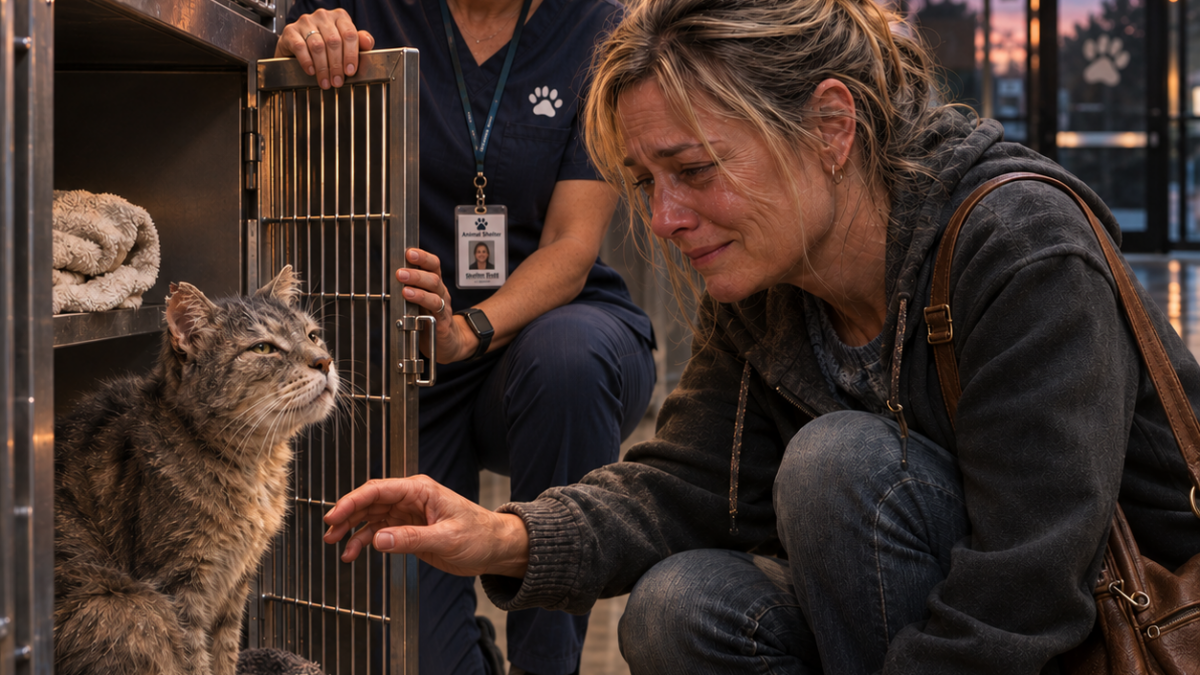
At 6:30, the shelter lights were supposed to go out, and that old cat finally understood nobody was coming.
At 6:30, the shelter lights dimmed, the old gray-faced cat stopped watching the front door, and I watched him understand that the family who had promised to return was not coming back.
Three months after I took Oliver home and promised him I would never disappear, my phone rang with news that made me feel like I had stolen somebody else’s last reason to keep going.
His eighty-four-year-old owner was still alive—and his own children had been telling him for months that Oliver was safe with family while the cat sat unwanted in a shelter cage waiting for them to keep their word.
My name is Laura Bennett.
I was fifty-one years old the evening I met Oliver, and if you had asked me then whether I was lonely, I would have said no.
I would have said independent.
Busy.
Comfortable.
Peaceful.
People use respectable words when they do not want to admit something hurts.
I had a small house outside Columbus, Ohio, a job in medical billing that consumed more hours than it deserved, enough money to pay my mortgage, and nobody expecting me home at night.
There had been relationships.
Nothing dramatic.
No devastating divorce.
No husband lost young.
No great romantic tragedy I could point toward and say, There. That is why the house is quiet.
Life had simply narrowed through ordinary decisions.
Work first.
Family obligations.
Wrong timing.
A few men I liked but did not love.
One man I loved who wanted children when I already knew I didn’t.
Then suddenly I was fifty-one and had become very good at eating dinner over the sink.
The Saturday I went to Franklin County Animal Care, I was not looking for a cat.
I had two unopened bags of senior-cat food that had belonged to my neighbor after her cat died.
I also had six towels.
That was it.
Donation.
Drop-off.
Leave.
I even parked in the space closest to the exit so I could make it quick.
The shelter was closing at 6:30.
I arrived at 6:07.
Twenty-three minutes.
Plenty of time to hand over food and towels without changing my life.
Then I walked through the adoption room.
The kittens were exactly where shelters put kittens.
Up front.
Bright signs.
Little hammocks.
PART2:
Tiny paws appearing through the cage bars.
One black kitten climbed directly onto the mesh door and screamed at me.
A volunteer laughed.
“That’s Peanut.”
“I can tell Peanut has opinions.”
“He’s been here four days and already runs the building.”
I smiled.
Kept walking.
I had no interest in Peanut.
That should have warned me.
People who truly do not want animals do not walk all the way to the back row.
Oliver was in the bottom kennel at the far end.
There was no colorful sign.
No photograph showing him wearing a bow tie.
Just an index card.
OLIVER.
MALE.
NEUTERED.
SENIOR.
OWNER SURRENDER.
Then beneath it:
QUIET. GENTLE. NEEDS TIME.
He was sitting with his front paws together.
Old.
That was obvious.
Not dying-old.
But old enough that the fur around his mouth had turned silver.
Gray tabby.
White chin.
PART3:
One ear folded slightly forward as though years ago someone had pressed it and forgotten to straighten it again.
His coat looked rough.
Not dirty.
Just neglected by grief.
He was thin through the shoulders.
When he stood, his back legs took a second to follow.
Then he sat again.
Facing the front entrance.
Not me.
The door.
I watched him for perhaps thirty seconds before a woman in navy scrubs walked over.
Her name tag said:
MELANIE.
“Oliver’s sweet,” she said.
“How old?”
“Seventeen.”
I looked at her.
“Seventeen?”
She nodded.
“Best estimate from his records.”
“That’s old.”
“Yes.”
It came out too quickly.
Blunt.
Melanie did not judge me.
She had probably heard worse.
“He came in three weeks ago.”
“What happened?”
She glanced toward Oliver.
“Owner went into a nursing facility.”
“Oh.”
“Family brought him.”
“They couldn’t keep him?”
“They said they needed a few days.”
I waited.
Melanie sighed.
“They said they’d come back.”
I looked at Oliver.
He was still watching the entrance.
“They never did?”
“No.”
“How long has he been expecting them?”
Melanie did not answer immediately.
That was an answer.
“All three weeks?”
“Pretty much.”
Something hot moved through my chest.
Not sadness exactly.
Anger needs somewhere to stand before it becomes anger.
I asked:
“Has anyone been interested?”
“Some.”
“Some?”
“People ask.”
“But?”
She lowered her voice.
“He’s seventeen.”
“So?”
“You’d be surprised how many people want to rescue an animal until they hear that the rescue might involve medication, vet bills, or losing them sooner than they’d like.”
That sentence stayed with me.
Losing them sooner than they’d like.
As if loving anything came with a scheduling guarantee.
Oliver finally looked toward us.
His eyes were green.
Clouded slightly with age.
Not dramatic.
Not begging.
Just tired.
I crouched.
He watched me.
I held my fingers near the kennel door.
He did not approach.
Behind us, someone laughed because a kitten had climbed onto a volunteer’s shoulder.
A dog barked from another room.
Metal doors rattled.
Voices carried.
Oliver looked past all of it toward the entrance.
At 6:27, Melanie said:
“We’re about to dim the lights.”
I nodded.
I should have left.
My purse was still on my shoulder.
Car keys in hand.
No cat carrier.
No litter box.
No food appropriate for a seventeen-year-old cat with unknown medical needs.
No plan.
Then the overhead lights shifted.
The bright white adoption-room lights dimmed to the softer evening setting.
Oliver turned his head toward the lobby.
Slowly.
I remember that exactly.
He looked at the door.
He waited.
Five seconds.
Maybe ten.
Then something changed.
His head lowered.
His shoulders relaxed.
And he stopped looking.
I know how ridiculous it sounds to claim a cat understood what 6:30 meant.
Maybe he didn’t.
Maybe I projected everything onto him.
But I know what resignation looks like.
I had worn it myself for years.
It does not always cry.
Sometimes it simply stops checking the door.
“Can I hold him?”
Melanie looked at me.
“You want to meet him?”
“Yes.”
She opened the kennel.
Oliver did not back away.
Did not come forward.
He simply waited.
I slid both hands beneath him.
He was lighter than I expected.
That detail still bothers me.
I had prepared for an old cat to feel heavy.
Solid.
Instead I could feel his bones.
The moment I lifted him, he did something I did not expect.
He rested.
His whole body softened into my chest.
Not collapsed.
Not weak.
Released.
Like he had spent twenty-one days holding himself upright because nobody else was holding anything for him.
His face pressed into my sweater.
One paw touched my collarbone.
I remember whispering:
“Oh.”
That was the entire decision.
Not noble.
Not well considered.
Just:
“Oh.”
Melanie saw my face.
“Want me to get the paperwork?”
I nodded.
I adopted Oliver at 6:43.
Thirteen minutes after closing.
The drive home was forty-two minutes.
He sat inside a borrowed shelter carrier on the passenger seat.
Silent.
I talked because silence made me nervous.
“You should know I work too much.”
Nothing.
“My house is small.”
Nothing.
“I have terrible television taste.”
Oliver blinked.
“I watch old game shows.”
Blink.
“I occasionally eat cereal for dinner.”
He turned slightly.
“Don’t judge.”
For the first two hours at my house, he hid behind the couch.
I sat on the floor.
Then the floor became uncomfortable.
So I sat in a chair.
Then I made tea.
Then I wondered whether adopting an elderly cat because he leaned into my sweater was one of those decisions women later describe to therapists.
At midnight, he still had not come out.
At 1:30, I went to bed.
At 2:07, I woke.
Oliver was beside the mattress.
Standing.
Watching me.
No meow.
No paw.
No attempt to climb up.
Just checking.
I whispered:
“Hey.”
His ears moved.
I reached down.
“I’m still here.”
My fingertips touched his back.
He leaned.
Then purred.
Rusty.
Uneven.
Like an engine that had sat too long in winter.
I cried.
Quietly.
I did not want to scare him.
The next morning, he hid again.
That was how trust worked with Oliver.
Forward.
Back.
Forward.
Back.
He learned breakfast came at seven.
He learned I left for work at 7:45 and returned around 6:15.
For the first week, Melanie told me to expect separation anxiety.
She was right.
When I came home, Oliver was always behind the couch.
I would call:
“Oliver?”
Nothing.
Then I would hear movement.
He would appear.
Slowly.
Stand six feet away.
Look at me as though verifying my face.
Only after that would he walk toward me.
By week three, he started waiting in the hallway.
By week six, he waited at the door.
By month two, he recognized my keys before I touched the lock.
He had arthritis.
Early kidney disease.
High blood pressure.
A heart murmur the veterinarian wanted monitored but not treated aggressively yet.
Dr. Nina Patel looked at me during his first exam.
“You understand what adopting a seventeen-year-old cat means?”
“Yes.”
She gave me a look.
“Do you?”
“No.”
That made her smile.
“Better answer.”
We did blood work.
Prescription food.
Joint supplements.
Medication hidden inside something Oliver found sufficiently insulting.
He hated pills.
Loved tuna.
Disliked rain.
Distrusted men wearing baseball caps.
Was terrified of the vacuum.
Slept on my right side.
I had not asked where he slept with his previous owner.
I did not want to know too much.
That sounds selfish.
It was.
The first few months, I could tolerate knowing Oliver had been loved.
I could not tolerate details about the person he loved before me.
I wanted the present.
Not competition with a ghost who was not even dead.
I knew his owner was in a nursing home.
That was enough.
Then the phone rang.
Thursday.
Three months and six days after I adopted him.
I was working from home because freezing rain had covered the roads.
Oliver was asleep beside the radiator.
My coffee had been cold for an hour.
At 3:14 p.m., my cell rang from an unfamiliar Ohio number.
I nearly ignored it.
Work habit made me answer.
“Laura Bennett.”
A woman said:
“Ms. Bennett?”
“Yes.”
“My name is Emily Rhodes. I’m a social worker at Hawthorne Senior Living.”
I sat straighter.
“Okay.”
“I’m sorry to call unexpectedly.”
Something in her voice changed the room before she said anything else.
“Is this about Oliver?”
Silence.
Then:
“Yes.”
I looked toward the radiator.
Oliver was asleep.
“What happened?”
“Nothing happened to him.”
“I know.”
“I have him.”
Another pause.
“I know.”
My stomach tightened.
“How?”
Emily exhaled.
“This is difficult.”
“Please just tell me.”
She did.
Oliver’s owner was named Samuel Whitaker.
Eighty-four.
Retired high school English teacher.
Widower.
He had suffered a stroke four months earlier.
Not catastrophic.
But serious enough that he could no longer safely live alone.
His two adult children, Rebecca and Thomas, arranged placement at Hawthorne.
Samuel’s speech had been affected initially.
Mobility too.
But his cognition was intact.
From the day he arrived, one concern dominated every conversation.
Oliver.
Where was Oliver?
Was he eating?
Did he sleep?
Did he scratch the recliner?
Was he frightened at night?
His children told him the same thing repeatedly.
Oliver was with Rebecca.
Then, later, when Samuel asked why Rebecca never brought photographs:
Oliver was staying with Thomas temporarily because Rebecca’s dog made him nervous.
Then:
Oliver was comfortable.
Then:
Oliver did not travel well.
Then:
The veterinarian said visits would stress him.
Every answer delayed the next question.
Emily had not suspected anything.
Why would she?
Families manage pets during nursing-home transitions all the time.
Then Samuel improved.
He began using a tablet.
A physical therapist helped him create an email account.
One afternoon, Samuel searched Oliver’s name plus the shelter where his children had said they were “handling paperwork.”
He found an old shelter post.
My adoption photograph.
Me kneeling.
Oliver in my arms.
Date visible.
Three months earlier.
Samuel had been told Oliver was with family during that exact period.
Emily’s voice softened.
“He became extremely upset.”
I could barely breathe.
“What did they do?”
“His daughter admitted they surrendered him.”
I stood.
Oliver opened one eye.
“She admitted what?”
“They said they believed adoption was the best option.”
“That is not what they told him.”
“No.”
“They told him the cat was with them.”
“Yes.”
“Why?”
Emily paused.
“Samuel says he had specifically instructed them not to surrender Oliver.”
My hand tightened around the phone.
“What did he want?”
“He wanted to pay for pet-friendly assisted living.”
I sat down again.
Emily continued.
“He had financial resources.”
“He asked them to find somewhere that would accept both of them.”
I stared at the wall.
“Did such a place exist?”
“Yes.”
That hurt more.
“They found one?”
“Samuel had found one himself before his stroke.”
“Then why is he at Hawthorne?”
Emily was quiet long enough that I knew the answer would be bad.
“His children told him there was a six-month waiting list.”
“Was there?”
“No.”
I closed my eyes.
“Why?”
“We’re still sorting through that.”
“Meaning?”
“Meaning Samuel believes decisions were made for financial convenience.”
There it was.
Not a dramatic villain.
Something uglier because it was ordinary.
Money.
Ease.
Convenience.
Samuel owned a house.
Investments.
A pension.
Moving him into Hawthorne was cheaper than the pet-friendly facility.
His children were handling his finances under a power of attorney he had signed during rehabilitation.
Every additional monthly expense reduced what would eventually remain.
I said:
“Are you telling me they got rid of his cat to protect an inheritance?”
“I’m telling you that Samuel believes that.”
“Do you?”
“I’m a social worker.”
“That wasn’t my question.”
“No.”
“It wasn’t.”
Emily paused.
Then said:
“I think he deserves an explanation.”
My eyes moved toward Oliver.
He had stood.
Watching me.
I whispered:
“Why are you calling me?”
“Because Samuel asked us to find you.”
My throat tightened.
“What does he want?”
“To know if Oliver is alive.”
I looked at the old cat.
He had walked toward my desk.
I put my hand down.
He rubbed his cheek against it.
“Yes.”
“He’s alive.”
Emily exhaled.
“May I tell him?”
“Of course.”
“And…”
She stopped.
“What?”
“He wants to see him.”
There are sentences that expose who you really are.
Not who you think you are.
Not who you hope you are.
Who you are in the first selfish second before morality catches up.
My first thought was:
No.
Oliver is mine.
I hated myself for it immediately.
But there it was.
Mine.
The cat I had promised not to leave.
The cat who slept beside me.
The cat who waited for my keys.
The cat whose medications were lined beside my coffee.
The cat who had taught my house to make noise again.
I imagined taking him into a nursing home.
Samuel reaching.
Oliver recognizing him.
Then what?
Would he want to stay?
Would Samuel demand him back?
Could I refuse?
Legally maybe.
Morally?
I did not know.
Emily must have heard my silence.
“No one is asking you to surrender him.”
“Not yet.”
“No.”
“Does Samuel want him back?”
Another pause.
“He wants to see him.”
“That’s not an answer.”
“It’s the only answer he gave.”
I stood at the kitchen sink for a long time after the call.
Oliver jumped into his window chair.
Rain slid down the glass.
I looked at him.
“You had a teacher.”
His ear moved.
“Samuel.”
Nothing.
“Did he call you Ollie?”
Oliver turned.
My heart stopped.
I tried again.
“Ollie?”
He looked directly at me.
“Oh.”
I sat.
“You know that.”
Of course he did.
For seventeen years somebody had called him something I did not know.
That night I searched Samuel Whitaker online.
Retired teacher.
Thirty-seven years at Westbrook High School.
English literature.
Debate club.
Yearbook adviser.
Widowed eleven years.
His wife’s name had been Ruth.
There was a photograph from a school retirement ceremony.
Samuel was holding a cake.
Beside him on a table sat a gray tabby.
Oliver.
Younger.
Rounder.
Wearing a ridiculous red bow tie.
I stared at that photograph until my screen dimmed.
The cat beside me had an entire history I had not rescued him from.
I had simply entered it late.
The next morning, I called Emily.
“I’ll bring him.”
Samuel did not know what day.
I requested that.
Not because I wanted drama.
Because I did not want his children interfering.
By then Hawthorne’s administration had involved an elder-law attorney after Samuel accused Rebecca and Thomas of misusing his power of attorney.
A bank review had begun.
Adult Protective Services had been contacted.
That startled me.
Emily explained:
“Financial exploitation can be subtle.”
“Is that what happened?”
“We don’t know yet.”
“But someone is investigating?”
“Yes.”
I hated how relieved that made me feel.
I wanted people punished.
That is not noble either.
You can care about justice and still enjoy imagining consequences.
I bought Oliver a new carrier.
Soft-sided.
Blue.
He hated it immediately.
Saturday morning, I put Samuel’s name into my navigation system.
Not his home.
Hawthorne.
Forty-eight minutes away.
Oliver cried for the first fifteen.
I kept talking.
“I know.”
“I know.”
“I don’t know what we’re doing either.”
At a red light, I put my fingers through the mesh.
He pressed his nose against them.
“I’m still here.”
The same promise.
But this time it frightened me.
Hawthorne Senior Living was nicer than I expected.
Brick building.
Large windows.
Landscaped courtyard.
No smell of antiseptic.
Lobby fireplace.
Emily met me near reception.
Late thirties.
Curly hair.
Glasses.
Expression of someone who had been apologizing for other people all week.
She looked at Oliver.
“Oh.”
“What?”
“He looks exactly like Samuel described.”
“That seems logical.”
She smiled.
Then her face changed.
“He’s nervous.”
“So am I.”
Emily led me through a corridor.
I could hear a piano from somewhere.
Television.
Wheelchairs moving.
A woman laughing loudly.
Then:
“Samuel’s in the sunroom.”
I stopped.
Emily turned.
“You okay?”
“No.”
“That’s also okay.”
“What if Oliver wants to stay?”
She considered.
“Then we figure out what is best for Oliver.”
That irritated me.
“I know.”
“No.”
She looked directly at me.
“You’re afraid this visit erases what you’ve become to him.”
I hated social workers for being professionally accurate.
“I adopted him.”
“Yes.”
“I love him.”
“I know.”
“He was abandoned.”
“By the children.”
“Not Samuel.”
Exactly.
Emily touched my arm.
“Laura, two truths can exist.”
“What?”
“Samuel loved him.”
“And you love him.”
My eyes filled.
“I hate that sentence.”
“I know.”
We walked into the sunroom.
Samuel Whitaker sat near the window.
Thin.
White hair.
Cardigan.
Blanket across his knees.
A cane hooked over one arm of the chair.
He looked older than eighty-four.
Then he saw the carrier.
Everything in his face became younger.
Not physically.
Emotionally.
His mouth opened.
No sound came.
Oliver heard something.
I had not.
Maybe breath.
Maybe scent.
Maybe simply the pause.
He stood inside the carrier.
Samuel whispered:
“Ollie?”
The cat screamed.
I had never heard that sound.
Not meow.
Not yowl.
Something torn from deep inside him.
He threw his body against the carrier door.
I dropped to my knees.
Opened it.
Oliver came out so fast he nearly fell.
He crossed the carpet.
Samuel reached.
Oliver climbed.
Not elegantly.
Old legs.
Arthritis.
He clawed at Samuel’s trousers trying to get onto his lap.
Samuel began sobbing.
“Ollie.”
Again.
“Ollie.”
Oliver pushed his entire face into Samuel’s chest.
Samuel’s hands shook around him.
“Oh, my boy.”
I turned away.
I could not watch for a second.
Not because it was sad.
Because I was jealous.
There.
I said it.
I was jealous of an eighty-four-year-old stroke survivor whose children had lied to him.
I watched Oliver give Samuel something he had never given me.
Recognition without caution.
No checking.
No waiting.
No learning.
Home.
I felt horrible.
Then Samuel looked at me.
His speech was slower than normal but clear.
“You’re Laura?”
“Yes.”
He held Oliver.
“Come here.”
I did.
Samuel touched the chair beside him.
I sat.
Oliver remained across his lap.
Purring so loudly I could hear it.
Samuel looked down.
“He got thin.”
“He was thinner when I adopted him.”
His eyes closed.
“I know.”
I waited.
“I saw the picture.”
The shelter photograph.
“Yes.”
“I thought…”
His voice broke.
I handed him a tissue.
He laughed weakly.
“Thank you.”
Then:
“I thought he believed I left him.”
I swallowed.
“Maybe he did.”
Samuel looked at me.
It was cruel.
It was also true.
I said:
“He watched the door.”
Samuel’s face collapsed.
I regretted it instantly.
“I’m sorry.”
“No.”
He rubbed Oliver’s head.
“Tell me.”
I did.
Three weeks.
Bottom kennel.
Watching the entrance.
6:30.
Lights dimming.
Stopping.
Samuel listened.
Tears ran down his face.
When I finished, he said:
“My daughter promised.”
His tone changed.
Not grief now.
Betrayal.
“I told Rebecca.”
“I told Tom.”
“I said I would pay.”
“I had already spoken to Cedar Grove.”
“What’s Cedar Grove?”
“Assisted living.”
“Pets allowed.”
He pointed weakly toward the hallway.
“I could have taken him.”
Oliver shifted.
Samuel steadied him automatically.
“I was confused after the stroke.”
“But not stupid.”
“No.”
“They treated me like those were the same thing.”
That sentence stayed with me too.
Samuel explained.
After the stroke, his children arrived.
His house needed decisions.
Bills.
Rehab.
Living arrangements.
Rebecca took control.
She had always been organized.
Thomas handled the financial paperwork.
Samuel trusted them.
He signed temporary power of attorney because his right hand barely worked.
“I thought it was temporary.”
“Wasn’t it?”
“It was supposed to be.”
He looked at Oliver.
“They told me Cedar Grove couldn’t take me.”
“Why?”
“Waiting list.”
“There wasn’t one.”
“I know now.”
Samuel’s face hardened.
“Hawthorne costs almost three thousand less a month.”
I said nothing.
“My daughter said she’d take Oliver.”
He swallowed.
“She brought him to the shelter two days later.”
“Why didn’t she just tell you?”
“Because she knew I’d refuse to come here.”
That was the betrayal.
Not surrendering a cat because circumstances changed.
People face impossible situations.
The betrayal was using Samuel’s weakened body to separate him from the one living thing he had explicitly planned to keep.
Then lying.
Day after day.
Knowing he asked.
Knowing Oliver waited.
Samuel rubbed his thumb over Oliver’s ear.
“I want to ask you something.”
Here it came.
My chest tightened.
“Yes.”
“Did he sleep beside you?”
“Yes.”
“Which side?”
“Right.”
Samuel smiled through tears.
“Ruth’s side.”
I stopped.
“Your wife?”
“Yes.”
“After she died, he slept there.”
“He still does.”
Samuel nodded.
Then asked:
“Does he still paw water before drinking?”
I laughed.
“Yes.”
“He’s done that since he was a kitten.”
“You had him since kittenhood?”
“Seventeen years.”
I looked down.
Samuel noticed.
“He’s yours now.”
My head snapped up.
“What?”
“He’s yours.”
“You don’t have to say that.”
“I know.”
“You could move to Cedar Grove.”
“Maybe.”
“They allow pets.”
“Yes.”
“And you want him.”
Samuel’s hands tightened around Oliver.
“More than you know.”
Then he looked at me.
“But wanting him isn’t enough.”
I said nothing.
Samuel continued.
“He’s old.”
“I’m older.”
“He needs medicine.”
“I need more.”
“You give it?”
“Yes.”
“He trusts you?”
“I think so.”
Samuel smiled.
“He came back to you after he saw me.”
I looked.
Oliver had shifted.
One paw remained on Samuel.
But his head had turned toward me.
Watching.
Samuel saw.
“He’s checking.”
I wiped my face.
“You know that too?”
“For seventeen years.”
He kissed Oliver’s head.
“You found somebody.”
The words were for the cat.
Not me.
Samuel started crying again.
This time quietly.
“You found somebody.”
I reached toward him.
Then stopped.
He put his hand over mine.
“Thank you.”
I shook my head.
“I didn’t know.”
“That’s why it counts.”
We stayed almost three hours.
Oliver moved between us.
Samuel told stories.
Oliver once stole an entire pork chop.
Oliver hated Ruth’s sister.
Oliver climbed into a Christmas tree at age four.
Oliver disappeared into the basement ceiling for seven hours after contractors left a panel open.
I told mine.
The radiator.
The ice cube.
The 2:00 a.m. checking.
Samuel laughed.
“He used to do that to me after Ruth died.”
“What?”
“Stand by the bed.”
“Just look?”
“Yes.”
My throat tightened.
“He’s making sure.”
Samuel nodded.
“Making sure the person is still there.”
At the end of the visit, I dreaded the carrier.
So did Samuel.
Oliver was asleep across his lap.
Emily came quietly.
“We can give you more time.”
Samuel shook his head.
“No.”
He looked at me.
“If we wait until I’m ready, she’ll be here overnight.”
I tried to laugh.
Couldn’t.
Samuel lifted Oliver slightly.
His arms were weak.
I took the cat.
Oliver looked back.
Samuel touched his face.
“Go home, Ollie.”
Oliver’s ears moved.
Samuel whispered:
“It’s okay.”
I put Oliver into the carrier.
He cried once.
Samuel closed his eyes.
I almost opened it again.
Samuel stopped me.
“Laura.”
I looked.
“Take him home.”
So I did.
Oliver was silent most of the drive.
I cried enough for both of us.
That evening, he walked through my front door.
Sniffed.
Then went straight to the radiator.
I stood there.
“What?”
He looked at me.
I laughed.
“You’re unbelievable.”
At bedtime, he jumped onto the mattress.
Right side.
Curled.
Stayed.
I placed my hand on him.
“I thought you’d choose him.”
Oliver purred.
“I would’ve understood.”
Purr.
“I would’ve hated it.”
Purr.
“I’m a terrible person.”
Oliver slept.
Over the following weeks, Samuel became part of our lives.
I took Oliver every Sunday.
At first, I called them visits.
Then routine.
Samuel’s physical therapy improved.
Emily claimed Oliver deserved no clinical credit.
Samuel disagreed.
“He outranks therapists.”
The facility eventually gave us a private visiting room because Oliver became too popular.
Residents learned his name.
One woman with dementia called him Harold.
Another insisted he was her childhood cat.
Samuel did not mind.
“Everybody gets an Oliver.”
Rebecca did.
That was the day everything became ugly.
I had met Samuel five Sundays by then.
The Adult Protective Services review was ongoing.
His bank had frozen certain transfers pending investigation.
An elder-law attorney named Maria Delgado had petitioned for independent review of his power of attorney.
Samuel had revoked Rebecca and Thomas’s authority.
That alone caused war.
I arrived at Hawthorne with Oliver and heard voices from the lobby.
A woman saying:
“This is a family matter.”
Emily replied:
“It became a safeguarding matter when Mr. Whitaker reported financial concerns.”
Then the woman saw me.
Late fifties.
Blonde bob.
Expensive raincoat.
Her eyes dropped to the carrier.
She knew immediately.
“You.”
I stopped.
Emily moved between us slightly.
“Laura, this is Rebecca Whitaker.”
Rebecca stared.
“You adopted my father’s cat.”
I answered:
“Yes.”
“You had no right to bring him here.”
That shocked me.
“No right?”
“You’re confusing him.”
“Samuel asked me.”
“He is vulnerable.”
“He is competent.”
“You don’t know my father.”
“No.”
I held the carrier tighter.
“But I know what you did to his cat.”
Her face changed.
“Excuse me?”
“You promised you’d come back.”
Emily said:
“Laura.”
A warning.
I should have stopped.
I didn’t.
“He sat in that shelter for three weeks watching the door.”
Rebecca flushed.
“You have no idea what we were dealing with.”
“You’re right.”
I stepped closer.
“But you knew what he was dealing with.”
She looked at the carrier.
“This animal needed veterinary care my father couldn’t provide.”
“I provide it.”
“You expect applause?”
“No.”
“I expect you not to pretend abandoning him was medical care.”
Rebecca’s voice rose.
“We did not abandon him.”
“What do you call promising to return and never coming back?”
People in the lobby turned.
Public humiliation.
I should say I felt guilty.
I did not.
Not then.
Rebecca said:
“The shelter was supposed to place him.”
“They did.”
She pointed at me.
“With a stranger.”
I laughed once.
“He became a stranger because you made him one.”
Emily intervened.
“Enough.”
Then Samuel appeared.
Wheelchair.
Physical therapist behind him.
He had heard.
Rebecca’s face changed instantly.
“Dad.”
Samuel looked at her.
“Why are you here?”
“To talk.”
“I told you not without Maria.”
“I’m your daughter.”
“That used to mean I could trust you.”
Nobody moved.
Rebecca’s eyes filled.
“Dad.”
“No.”
His voice shook.
Not weakness.
Anger.
“You told me Oliver slept on your bed.”
Rebecca looked at the floor.
“You told me he wouldn’t eat unless you sat beside him.”
Silence.
“You told me Tom bought him a scratching post.”
Rebecca whispered:
“I was trying to protect you.”
Samuel stared.
“From what?”
“You’d just had a stroke.”
“From what?”
She finally said:
“From knowing he was gone.”
Samuel’s face became almost peaceful.
That frightened me more than yelling.
“You took him.”
“I found him a home.”
“You took him.”
“The shelter—”
“You took him.”
Rebecca started crying.
Samuel did not.
“I would have chosen Cedar Grove.”
“It was too expensive.”
“It was my money.”
“We were trying to preserve your estate.”
“For who?”
That question silenced the lobby.
Rebecca’s face changed.
Samuel repeated:
“For who?”
She could not answer.
Because there were only two possibilities.
For him.
Or for them.
Samuel said:
“You treated my life like whatever remained after your inheritance was protected.”
“That’s not fair.”
“Neither was a cage.”
Rebecca looked at me.
Perhaps because I was easier to hate.
“This woman is manipulating you.”
Samuel laughed.
Weakly.
Bitterly.
“She brought my cat.”
Then:
“You brought me lies.”
Rebecca left crying.
I wish I could tell you that moment felt satisfying.
For about ten seconds, it did.
Then I saw Samuel.
His hands were shaking.
His breathing too fast.
He had humiliated his daughter publicly.
Necessary maybe.
Still painful.
Justice does not erase love.
A child can betray you and still be your child.
I crouched beside his wheelchair.
“You okay?”
“No.”
Honest answer.
Oliver meowed inside the carrier.
Samuel smiled faintly.
“Let him out.”
Oliver climbed directly onto his lap.
Samuel closed his eyes.
That was how the confrontation ended.
Not with victory.
With an old man holding an old cat because one heartbreak did not cancel another.
The financial investigation took months.
There had been no dramatic theft of Samuel’s entire fortune.
Reality was messier.
Rebecca and Thomas had used their authority in ways they believed were justified.
They had moved approximately $38,000 from Samuel’s account into a joint estate-management account.
Some expenses were legitimate.
Property repairs.
Medical bills.
Insurance.
Some were not.
Thomas had used Samuel’s funds to cover legal fees connected to his own business.
Rebecca had reimbursed herself thousands for “care coordination” Samuel had never agreed to.
They had listed Samuel’s house for sale before he had decided whether he wanted to sell it.
The elder-law attorney challenged several transactions.
Money was returned.
Thomas hired his own lawyer.
Rebecca stopped speaking to Samuel for six weeks.
Then came the house.
Samuel had lived there forty-three years.
He wanted to see it again before deciding anything.
Emily asked whether I would drive him.
Not because I was family.
Because Samuel asked.
I said yes.
Oliver came too.
The house was in Westerville.
Small colonial.
Blue shutters.
Maple tree out front.
When we pulled in, Samuel became silent.
I helped him from the car.
Walker now.
Not wheelchair.
Oliver remained in the carrier until we were inside.
Then Samuel said:
“Open it.”
I did.
Oliver stepped out.
Stopped.
His entire body changed.
Tail lifted.
He walked faster than I had seen him move in months.
Living room.
Hallway.
Kitchen.
Then stairs.
He looked up.
Samuel laughed.
“You’re not doing those.”
Oliver disagreed.
I carried him.
At the top, he went directly to a bedroom.
Right side of the bed.
Jumped up with difficulty.
Curled against a pillow.
Samuel stood in the doorway.
His wife’s side.
Ruth’s side.
He started crying.
I moved away.
He said:
“No.”
I stopped.
“Stay.”
So I did.
Samuel sat on the edge of the bed.
Oliver climbed into his lap.
I stood by the window while an old man said goodbye to a house.
He told me where Ruth had kept perfume.
Where Oliver hid during thunderstorms.
Where they measured grandchildren against a door frame.
Where Ruth died.
Right there.
In that bed.
Samuel touching her hand.
Oliver near her feet.
“I thought losing her was the last big loss.”
He said it quietly.
“It wasn’t.”
I understood.
Age brings a strange cruelty.
People imagine death as the ending.
But before death, there can be dozens of smaller deaths.
Driving.
Stairs.
Your own kitchen.
Your own bed.
Privacy.
Strength.
Pets.
Home.
Samuel looked at me.
“I’m not going back.”
“To the house?”
“No.”
I waited.
“I want Cedar Grove.”
The pet-friendly facility.
“Even without Oliver?”
He smiled.
“Especially without him.”
I frowned.
Samuel explained.
“I want to know I chose something.”
That was it.
Not about getting the cat back.
Agency.
His children had taken choices while telling themselves they were protecting him.
Samuel wanted one decision nobody could reinterpret.
Maria helped.
Cedar Grove accepted him.
His finances could support it comfortably.
He moved six weeks later.
A small one-bedroom apartment.
Balcony.
Bookshelves.
Enough room for a cat he no longer technically owned.
Oliver visited.
Sometimes overnight.
Samuel and I negotiated like divorced parents who had never been married.
“Tuesday?”
“I work late.”
“Friday?”
“He has labs.”
“Sunday?”
“Sunday.”
The first overnight terrified me.
Not because of Oliver.
Because of me.
I went home alone.
The house felt enormous.
I opened the door at 6:20 and automatically said:
“Ollie?”
Nothing.
I froze.
Three months earlier that silence had been normal.
Now it was unbearable.
I laughed.
Then cried.
Sat on the kitchen floor.
“Great.”
I had spent years congratulating myself for needing no one.
An old cat had dismantled that identity in less than six months.
At 8:00, Samuel called.
Video.
I answered.
Oliver was asleep on his chest.
“You calling to brag?”
Samuel smiled.
“He remembers the chair.”
“What chair?”
Samuel turned the camera.
Cedar Grove had allowed him to bring one piece of furniture from home.
His recliner.
Oliver was lying exactly where he apparently had for years.
Samuel said:
“He’s happy.”
I smiled.
“Good.”
Then he looked at me.
“You okay?”
“Fine.”
“Liar.”
I laughed.
“Apparently you know me now.”
“I taught teenagers for thirty-seven years.”
“Lying is visible from space.”
The next morning I arrived at 8:15.
Oliver heard my voice.
He jumped down.
Walked toward me.
Samuel watched.
I picked him up.
He purred.
Samuel smiled.
“There.”
“What?”
“He knows.”
“Knows what?”
“That leaving and coming back can both be true.”
That sentence changed something in me.
Oliver had spent three weeks believing departure meant disappearance.
I had spent years believing dependence guaranteed pain.
Samuel had spent months learning that people could love him and still betray him.
All three of us were relearning the same thing.
Trust is not the belief that nobody ever leaves.
People leave.
They die.
They fail.
They make mistakes.
Trust is believing some departures have returns.
Rebecca eventually came back.
Not dramatically.
No tearful reunion in a hallway.
She wrote Samuel a letter.
Eight pages.
He did not read it for two weeks.
Then he did.
She apologized.
Not perfectly.
At first, too much explanation.
She had panicked after his stroke.
She was terrified he would fall again.
She feared he would spend everything on long-term care and leave himself without enough money.
Thomas had told her preserving the estate was “responsible.”
She admitted something uglier.
She hated Oliver.
Not personally.
What he represented.
Her father refusing to accept that life had changed.
Every conversation about assisted living ended with:
“What about Oliver?”
She began seeing the cat as an obstacle.
So she removed the obstacle.
Then she lied because admitting what she had done felt worse.
Samuel read the letter twice.
He called me.
“What do I do?”
I nearly laughed.
“You think I know?”
“You’re very opinionated.”
“True.”
I asked:
“Do you want her back in your life?”
He took a long time.
“Yes.”
“Then maybe start there.”
“What about forgiveness?”
“I don’t think that has to happen first.”
He was quiet.
“Ruth would know.”
“Probably.”
“She was smarter than me.”
“Most wives are.”
He laughed.
Rebecca visited Cedar Grove a week later.
Samuel asked me not to come.
Good.
That conversation belonged to them.
Later he told me:
“She apologized without asking me to make her feel better.”
That mattered.
Thomas took longer.
His financial misuse was more serious.
He repaid the money under settlement.
Resigned as trustee.
Did not speak to Samuel for almost a year.
Then Samuel developed pneumonia.
Thomas came.
Sat beside the bed.
Samuel survived.
Nothing became simple.
Families rarely do.
But the final years of Samuel’s life were not defined entirely by betrayal.
Rebecca rebuilt trust slowly.
She drove him to appointments.
No access to accounts.
No decision-making authority.
Just daughter.
Sometimes that was harder.
Thomas called every Sunday.
Some Sundays Samuel answered.
Some he did not.
Oliver remained the bridge nobody could own.
Rebecca asked to see him eventually.
I agreed.
She came to my house.
The first time she had ever been there.
Oliver was sleeping in the window.
Rebecca stood in the doorway.
“Does he remember me?”
“I don’t know.”
She approached slowly.
Oliver looked up.
No fear.
No excitement.
Rebecca crouched.
“I’m sorry, Ollie.”
The cat stared.
Then went back to sleep.
Rebecca laughed through tears.
“Fair.”
She handed me something.
A small red blanket.
“His.”
“From your dad’s house?”
“Yes.”
“He used to sleep on it in winter.”
I took it.
“Thank you.”
She looked around.
At the radiator.
Prescription food.
Steps beside the couch.
Medication chart.
She said:
“He really is okay.”
I heard what she meant.
Not accusation.
Relief.
“Yes.”
Rebecca wiped her eyes.
“My father was right.”
“About what?”
“You were supposed to keep him.”
That surprised me.
“I thought Samuel wanted him.”
“He does.”
She smiled sadly.
“But he wants Oliver safe more.”
That was the difference she had failed to understand the first time.
Love does not always mean keeping something physically beside you.
Sometimes love means asking what life is best for the thing you love.
Samuel knew Oliver was settled with me.
Routine.
Vet.
House.
No moves.
At seventeen, then eighteen, stability mattered.
So Samuel accepted visits instead of possession.
Not because he loved Oliver less.
Because he finally had the freedom to choose sacrifice instead of having it forced on him.
One year after the phone call, Samuel turned eighty-five.
Cedar Grove let us use the community room.
Small birthday.
Rebecca.
Thomas.
Two grandchildren.
Emily.
Maria.
Me.
Oliver.
Someone put a paper hat on Oliver.
He hated everyone.
Samuel laughed so hard he coughed.
I had never seen him that happy.
He held Oliver.
Then handed him back to me.
That little gesture almost broke me.
No fear.
No claim.
No competition.
Just:
Here.
He’s yours too.
At eighteen, Oliver slowed significantly.
Kidney disease progressed.
Arthritis worse.
He slept twenty hours a day.
Still checked the front door when I came home.
Still stood beside my bed some nights.
Less often.
Once every few weeks.
I would wake.
There he was.
Looking.
I always said:
“I’m here.”
Then he would lie down.
Samuel’s health also declined.
Congestive heart failure.
Repeated infections.
Mobility worse.
Their timelines began narrowing together.
That frightened me.
I felt responsible for both somehow.
One winter, Samuel entered hospice care at Cedar Grove.
Not because death was imminent that day.
Because treatment had become about comfort.
He called me.
“Bring Ollie.”
I did.
Oliver was eighteen years and nine months.
Samuel eighty-six.
Two old men.
One human.
One cat.
Both thinner.
Both sleeping more.
Oliver climbed into Samuel’s bed.
Slowly.
I lifted his rear legs.
Samuel touched his face.
“Look at you.”
Oliver purred.
Samuel whispered:
“We did okay.”
I sat by the window.
He looked at me.
“No.”
“What?”
“Come here.”
I pulled the chair closer.
Samuel held Oliver with one hand.
Took mine with the other.
“I need you to promise something.”
My stomach tightened.
“No.”
He smiled.
“You don’t know what it is.”
“Promises in hospice rooms are never fun.”
“Laura.”
I looked at him.
“When he goes…”
I shook my head.
“No.”
“Listen.”
“I don’t want to.”
“Neither do I.”
Oliver slept.
Samuel continued.
“When Oliver goes, don’t make your house quiet again on purpose.”
I stared.
He knew.
Of course he knew.
“I’m not saying get another cat the next morning.”
“Good.”
“Wait two.”
I laughed despite myself.
Samuel smiled.
Then became serious.
“You had a life before him.”
“Yes.”
“But not this life.”
“No.”
“Don’t confuse grief with proof you should go backward.”
That was a teacher speaking.
I hated him for it.
“Fine.”
“Promise.”
“I promise.”
“Good.”
Samuel died eleven days later.
Rebecca was with him.
So was Thomas.
I was not.
Oliver had visited the day before.
Samuel had held him for forty minutes.
Before I left, he whispered something into Oliver’s fur.
I heard only the last word.
“Home.”
After the funeral, Rebecca gave me an envelope.
Samuel’s handwriting.
LAURA.
Inside was one page.
Thank you for keeping the promise I made badly through other people.
Oliver was never an obstacle.
He was proof that home can be a person, then another person, then a room, then a lap, then a habit, and still be real every time.
You did not replace me.
You came after me.
That is different.
Please remember that when you are tempted to think love is a limited resource.
And stop feeding him tuna every time he looks sad.
He has been running that scam since 2009.
I laughed so hard at the last line that people at the funeral luncheon looked at me.
Then I cried in a bathroom stall for fifteen minutes.
Oliver outlived Samuel by eight months.
He turned nineteen.
Technically nobody knew his exact birthday.
Samuel had chosen April 2 because that was the day Oliver first appeared beneath his porch seventeen years earlier.
So I celebrated April 2.
One candle.
No cake for the cat.
A small piece of chicken.
Rebecca came.
We video-called Emily.
Oliver slept through most of his own party.
By autumn, his kidneys failed quickly.
Dr. Patel gave me options.
Hospitalization.
IV fluids.
More tests.
Maybe days.
Maybe weeks.
I asked:
“Will it make him feel better?”
“Possibly.”
“For how long?”
She looked at me.
That was the answer.
I took him home.
The final night, Oliver did something he had not done in months.
At 2:03 a.m., I woke.
He was standing beside my bed.
Barely.
His back legs trembled.
But there he was.
Watching me.
I sat up.
“Oh, buddy.”
He looked.
I reached down.
“I’m here.”
He leaned into my hand.
Weak purr.
Rusty.
The same sound from the first night.
Nineteen years of life inside that engine.
I lifted him onto the bed.
Right side.
Samuel’s Ruth’s side.
My side now.
Everybody’s.
I lay beside him.
He pressed his face against my sweater.
Exactly like he had at the shelter.
I remembered 6:30.
The dim lights.
The door.
The moment he stopped waiting.
I whispered:
“Nobody’s leaving you this time.”
Oliver breathed slowly.
I stayed awake until dawn.
At seven, Dr. Patel came to the house.
She had offered.
No carrier.
No clinic.
No final frightening ride.
Oliver lay on the red blanket Rebecca had brought.
I held him against my chest.
Dr. Patel gave the sedative.
His body relaxed.
That old release again.
The same surrender from the shelter.
I’ve got you.
He believed it.
I cried into his fur.
“You were chosen.”
I don’t know why I said it.
Maybe because that was what I needed him to know.
“You were chosen twice.”
Then I corrected myself.
“No.”
“More than twice.”
Samuel.
Ruth.
Me.
Even Rebecca in her flawed way.
A whole chain of imperfect people around one old cat.
His purring stopped before his breathing did.
Then one final breath.
And silence.
I sat there for a long time.
My first instinct afterward was exactly what Samuel had predicted.
Close the house.
No more animals.
No more medicine.
No more waking at 2:00 a.m.
No more loving something whose life was shorter than mine.
I packed Oliver’s bowls.
Could not throw them away.
Put his red blanket in a drawer.
Vacuumed fur from the couch.
Then cried because the couch looked wrong.
For three months, I lived alone again.
I called it grief.
It was.
Then gradually, it started becoming my old “peace.”
That dangerous quiet.
One Saturday, I drove past Franklin County Animal Care.
Did not stop.
The next Saturday, I drove past again.
Third Saturday, I pulled into the parking lot.
I sat in my car twenty minutes.
Samuel’s note was still in my purse.
I carried it everywhere for reasons I could not explain.
DON’T MAKE YOUR HOUSE QUIET AGAIN ON PURPOSE.
I went inside.
Melanie still worked there.
She recognized me.
Her face changed when she saw mine.
“Oliver?”
I shook my head.
“Oh, Laura.”
“He made nineteen.”
“That old thief.”
I laughed.
Then cried.
She hugged me.
I had come with no intention to adopt.
Again.
Apparently I learn nothing.
We walked past the kittens.
Bright eyes.
Tiny paws.
People clustered around them.
At the back was a black-and-white cat.
Thirteen.
Diabetic.
Owner died.
Nobody interested.
I looked at Melanie.
“No.”
She smiled.
“I didn’t say anything.”
“I know that face.”
“What face?”
“The face that ruined my life the first time.”
She laughed.
The cat’s card said:
MARTHA.
SENIOR.
QUIET.
NEEDS DAILY INSULIN.
I crouched.
Martha looked at me.
Not hopeful.
Not pleading.
Just tired.
I said:
“Absolutely not.”
Martha blinked.
Melanie said:
“I’ll get the paperwork.”
I adopted her at 6:18.
Twelve minutes before the lights were supposed to dim.
I did not wait for her to stop looking at the door.
That was years ago.
Martha is asleep beside me as I tell this.
She is not Oliver.
That mattered.
She has never become Oliver.
She hates the radiator.
Sleeps on the left side of the bed.
Screams before breakfast.
Bites me if I miss her insulin window by ten minutes.
She is entirely herself.
That is what Samuel meant.
Love is not a room with one chair.
Choosing someone new does not eject whoever sat there before.
Oliver taught me that by loving Samuel before me.
Samuel taught me that by letting Oliver love me after him.
And Martha teaches me every morning by screaming at 5:47 because apparently grief should never interfere with breakfast.
I still think about the shelter at 6:30.
The old cat.
Bottom kennel.
Lights dimming.
A door nobody entered.
I thought that was the saddest moment of Oliver’s life.
I was wrong.
The saddest part came before.
It was Samuel asking about him every day while his children lied.
It was Oliver waiting while people who had promised to return decided it was easier not to.
It was both of them believing, for a while, that the other had disappeared willingly.
But that was not where their story ended.
Samuel learned Oliver had been loved.
Oliver saw Samuel again.
Rebecca faced what she had done.
Money was returned.
Authority was taken away from people who had abused it.
A father and daughter slowly rebuilt something honest from what remained.
And an old cat who had once stopped checking the door eventually learned something far more important than whether people leave.
Some people come back.
Some people arrive late.
Some people fail you and spend years trying to earn their way back.
Some people meet you after your whole world has already fallen apart and still become home.
The night I adopted Oliver, I whispered:
“I’m not leaving.”
At the time, I thought I was making him a promise about permanence.
I know better now.
Nobody can promise permanence.
Samuel could not.
Ruth could not.
Oliver could not.
Neither can I.
What we can promise is presence while we have it.
Today.
Tonight.
The next morning.
The next medicine dose.
The next quiet hour beside the bed.
That is what Oliver taught me.
Nobody is too old to be chosen.
Nobody is too damaged to trust again.
And love does not become less real simply because it arrives after another love has ended.
Sometimes the creature everyone passes over is not waiting for someone to save him.
He is waiting for somebody willing to say:
I know you loved before me.
I know you lost before me.
I know part of you may always be listening for footsteps that belong to somebody else.
That’s okay.
You can still come home with me.
Oliver did.
And in the end, so did I.








