A Woman Flew 4,400 Miles From Alaska to Florida to Adopt a Deaf and Blind Cat Returned Four Times—Then She Made Sure There Would Never Be a Fifth Return
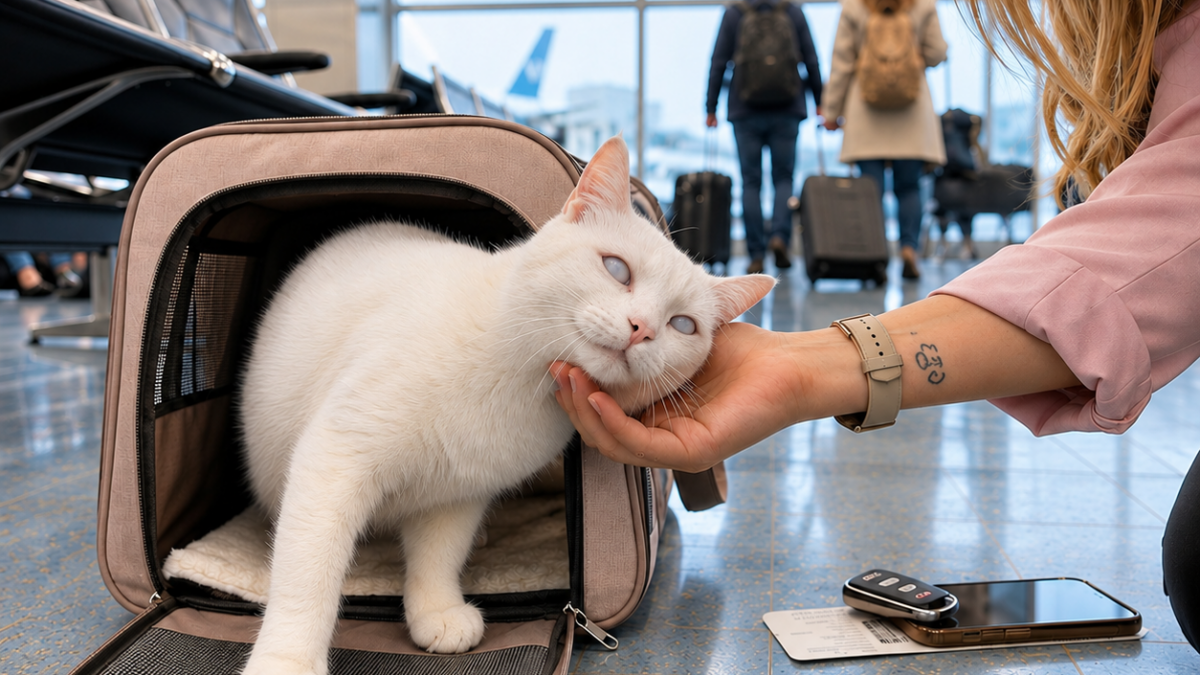
A Woman Flew 4,400 Miles From Alaska to Florida to Adopt a Deaf and Blind Cat Returned Four Times—Then She Made Sure There Would Never Be a Fifth Return.
By the time Moon came back to the Jacksonville shelter for the fourth time, someone had written “UNSUITABLE FOR MOST HOMES” across her file even though the little white cat had never bitten, attacked, or deliberately hurt anyone.
Four thousand four hundred miles away in Alaska, a woman named Ruth watched fourteen seconds of Moon leaning desperately into a volunteer’s hand and realized the cat everyone kept rejecting was not difficult at all—she was simply living in a world she could neither see nor hear.
But when Ruth crossed the country to take her home, she would uncover what had really happened during Moon’s four failed adoptions, force the shelter to confront an ugly mistake it had been hiding, and prove that sometimes the animal nobody wants is only waiting for one person willing to understand the life everyone else expected her to live.
The video was fourteen seconds long.
That was all.
No dramatic music.
No professional editing.
No donation link flashing across the screen.
Just a small white cat sitting inside a stainless-steel kennel at the Jacksonville County Animal Shelter on a rainy Tuesday afternoon in March.
Moon’s head was tilted slightly to the left.
Her pale blue eyes were open, but they didn’t track the camera.
They didn’t follow the volunteer’s hand when it moved in front of her.
A woman named Lena reached through the kennel door and touched one finger gently between Moon’s shoulders.
Moon reacted instantly.
Her entire body leaned toward the contact.
Not cautiously.
Not halfway.
She leaned so hard that one front paw slid across the blanket beneath her.
For a second, she nearly tipped over.
Lena steadied her.
Moon pushed her face against Lena’s wrist.
The video ended.
Underneath it, the shelter wrote:
Moon has been adopted and returned four times in two years.
She is deaf.
She is blind.
She is five years old.
She is gentle, affectionate, litter-trained, and the kindest cat we have ever known.
We don’t know what else to do.
At 11:07 that night, more than 4,000 miles away in Anchorage, Alaska, Ruth Ellison saw the post.
She had just finished washing a coffee mug.
Outside her apartment window, snow was piled against the curb in gray ridges left by the plows.
March in Anchorage was still winter by almost anyone else’s definition.
The parking lot lights reflected off ice.
Ruth had been sitting on her couch with a blanket over her knees, scrolling through animal rescue posts because that was what she did when she couldn’t sleep.
She had been doing it more often lately.
Sleep had become difficult after her husband, David, died.
It had been eighteen months.
People had stopped checking on her as frequently.
The casseroles had ended.
The sympathy cards had stopped appearing.
Friends still cared, but life had carried them back into their own routines.
Ruth understood.
She was fifty-eight years old.
She worked remotely processing insurance claims for a company based in Seattle.
She had no children.
Her sister lived in Oregon.
PART2:
Most days, Ruth could go from waking until four or five in the afternoon without hearing another person’s voice except through a headset.
Before David’s death, quiet had never bothered her.
Afterward, it seemed to occupy physical space.
She sometimes left the television on in another room just so the apartment wouldn’t feel so empty.
That Tuesday night, she watched Moon’s video once.
Then again.
Then a third time.
She noticed something most people in the comments didn’t mention.
Moon didn’t lean toward the hand because she saw it coming.
She couldn’t.
She didn’t react to Lena’s voice either.
Moon only knew Lena was there once the touch reached her.
And the second it did, Moon moved toward it as if contact itself were proof that the world had not disappeared.
Ruth set her phone down.
Then picked it back up.
She opened the shelter’s page.
She searched Moon’s name.
The first post was almost two years old.
FOUND NEAR BEACH BOULEVARD. WHITE FEMALE CAT. POSSIBLE SPECIAL NEEDS. VERY FRIENDLY.
There was a photograph of Moon crouched under a towel.
Her fur was dirty then.
Her eyes cloudy.
A later update said a veterinary exam confirmed that Moon had severe congenital vision loss and no measurable hearing response.
No microchip.
No owner found.
Then:
MOON IS READY FOR ADOPTION.
PART3:
The next post appeared six weeks later.
ADOPTED!
Moon sat in the arms of a smiling couple.
A blue bow had been clipped to the carrier handle.
Ruth scrolled.
Three weeks later:
Moon has returned to us through no fault of her own.
No explanation.
Then another adoption.
Another photograph.
Another return.
Again.
Again.
Four times.
Ruth opened every post.
Every photograph.
Every update.
There was Moon in different collars.
Moon on different blankets.
Moon in the arms of people who smiled as though she had finally been chosen.
Then Moon back behind the same kennel door.
The fourth return had happened only nine days before.
Ruth enlarged the photograph.
Moon looked thinner.
Not dramatically.
Just slightly.
Her chin was lower.
Her posture more withdrawn.
Ruth read the comments.
Some were kind.
“Please don’t give up on her.”
“I wish I lived closer.”
“Special needs babies are the best.”
Others made Ruth angry.
“Four returns? There has to be more to the story.”
“Sounds like behavioral problems.”
“Why keep adopting her out if she can’t adjust?”
“Maybe the humane thing is to stop putting her through this.”
That last comment stayed with Ruth.
The humane thing.
People used those words when they wanted cruelty to sound compassionate.
Ruth clicked back to the video.
Moon leaned into Lena’s hand again.
Fourteen seconds.
Ruth whispered, “What did they expect you to do?”
Her apartment remained silent.
She watched the video once more.
Then she went to bed.
She did not sleep.
At 4:18 in the morning, Ruth was sitting at her kitchen table with a legal pad.
At the top she had written:
MOON.
Underneath:
Jacksonville, Florida.
Blind.
Deaf.
5 years old.
Then:
How does she navigate?
Medical conditions?
Can fly?
Carrier requirements.
Airline pet rules.
Veterinary certificate?
Temperature restrictions?
She stopped.
She stared at the page.
“This is ridiculous.”
She said it aloud.
No one answered.
Ruth had never been to Florida.
She didn’t particularly like flying.
She had not owned a cat in twelve years.
David had been allergic when they first married, mildly at first, then badly enough that they never adopted another after Ruth’s old tabby, Clementine, died.
After David passed, people had suggested getting a pet.
Ruth always said no.
She didn’t want a replacement for a husband.
She especially didn’t want to make a grief decision.
But Moon did not feel like a replacement.
Moon felt like a question.
What exactly were you waiting for?
At 6:02 a.m., Ruth called the shelter.
Nobody answered.
She called again at 8:01, forgetting the time difference.
Still too early.
At 9:17 Anchorage time, she tried again.
Jacksonville was four hours ahead.
A woman answered.
“Jacksonville County Animal Shelter, this is Andrea.”
Ruth stood despite having nowhere to go.
“Hi. I’m calling about Moon.”
There was a pause.
“The white special-needs cat?”
“Yes.”
“Are you interested in adopting?”
“I think so.”
Andrea’s voice brightened.
“Great. Are you in Jacksonville?”
“No.”
“Nearby?”
“No.”
“What city?”
“Anchorage.”
Andrea typed.
“Anchorage, Georgia?”
Ruth almost smiled.
“Alaska.”
Typing stopped.
“I’m sorry?”
“Anchorage, Alaska.”
Silence.
Then Andrea said, “As in Alaska Alaska?”
“Yes.”
“Oh.”
Ruth waited.
Andrea recovered.
“That’s… quite a distance.”
“About 4,400 miles.”
“You already checked?”
“I couldn’t sleep.”
Andrea laughed once.
Then became serious.
“Ms…?”
“Ellison. Ruth Ellison.”
“Ms. Ellison, Moon is a special-needs cat.”
“I know.”
“She’s completely deaf.”
“I know.”
“Functionally blind.”
“I know.”
“She needs a predictable environment.”
“I understand.”
“She has been returned multiple times.”
“Four.”
Another pause.
“You’ve done your homework.”
“I’ve read every post your shelter has made about her.”
Andrea sighed quietly.
“Then you probably know we’re being very careful.”
“I hope you are.”
That answer seemed to surprise her.
Andrea asked, “Do you have other pets?”
“No.”
“Children?”
“No.”
“Stairs?”
“One flight to my apartment. None inside.”
“Do you move furniture often?”
Ruth looked around.
A couch David had chosen fifteen years earlier sat exactly where he had put it.
“No.”
“Do you work outside the home?”
“I work remotely.”
“How many hours are you gone on an average day?”
“Usually less than two.”
Andrea was quiet again.
Then, “May I ask why Moon?”
Ruth sat down.
There were many answers.
Because Moon was deaf.
Because Moon was blind.
Because she had been returned four times.
Because Ruth knew something about waking in a world that had suddenly become unfamiliar.
Instead she said, “Because everyone keeps describing what she can’t do.”
Andrea didn’t respond.
Ruth continued.
“I want to know what she can do.”
That changed the conversation.
Andrea transferred her to Lena Morales, the shelter’s senior adoption coordinator and the volunteer whose hand appeared in the video.
Lena had worked with Moon from the first week.
“She’s sleeping right now,” Lena said.
“What does she like?”
“People.”
Ruth smiled.
“Food?”
“Chicken. Unfortunately, the more expensive the better.”
“Naturally.”
“Warm laundry.”
“Reasonable.”
“Soft rugs. Sunlight. Sitting near someone’s legs.”
“Does she like being held?”
“Sometimes. She prefers choosing the contact.”
“How does she know where people are?”
“Floor vibration. Smell. Touch.”
“Does she get scared?”
“Yes.”
“Of what?”
“Sudden contact if she isn’t expecting it. Big changes in floor texture. Being placed somewhere unfamiliar and left there.”
Ruth wrote every word.
“How do you wake her?”
Lena’s answer came immediately.
“Touch the blanket first.”
Ruth stopped writing.
“What?”
“Don’t touch Moon directly when she’s asleep. Tap or press the blanket near her so she feels the vibration. Then touch her shoulder once she’s awake.”
Ruth wrote:
WAKE BLANKET FIRST.
“What else?”
“Never pick her up and put her down somewhere random without letting her orient.”
“Meaning?”
“If she’s on the couch and you move her to a different room, she may not know where she is. Put her near something she recognizes. Rug edge. Food mat. Bed.”
Ruth wrote faster.
“Keep water in the same location. Litter too. Don’t leave bags or boxes in her walking routes. She maps spaces.”
“Like memorizing?”
“Exactly.”
“Can she jump?”
“Yes, but we discourage high surfaces.”
“Does she climb stairs?”
“Carefully.”
“Any medications?”
“No daily medication.”
“Health issues?”
“Nothing major.”
“Then why was she returned four times?”
The line went quiet.
Too quiet.
Ruth waited.
Lena finally said, “Different reasons.”
“What reasons?”
“I can’t give you private information about previous adopters.”
“I’m not asking for names.”
“I know.”
“Then tell me what I need to understand before I become number five.”
That landed.
Lena exhaled.
“First home said Moon bumped into furniture and cried at night.”
“How long did they keep her?”
“Nineteen days.”
“Nineteen?”
“Yes.”
“The second?”
“Six weeks.”
“Reason?”
“They had children and said Moon startled too easily.”
“Third?”
“About five months.”
“That’s longer.”
“Yes.”
“What happened?”
“Household changes.”
“And the fourth?”
Lena hesitated.
“Three months.”
“Why?”
“They said she couldn’t adapt.”
“To what?”
“I can’t say.”
Ruth put her pen down.
“Four families adopted a deaf and blind cat and then acted surprised that she couldn’t see or hear?”
Lena did not answer.
She didn’t need to.
Ruth looked out at Anchorage snow.
“Can I apply?”
“Yes.”
“When?”
“I can email you the form.”
“Send it now.”
Ruth completed the application before finishing breakfast.
She listed her veterinarian from twelve years earlier even though the man had probably retired.
She uploaded proof that pets were allowed in her apartment.
She measured the carrier space under airline seats.
She called three airlines.
She spoke to the shelter veterinarian.
She sent photographs of her apartment.
The next afternoon, Lena video-called Ruth and walked her through Moon’s enclosure.
Moon was asleep.
“Watch.”
Lena pressed two fingers gently against the fleece blanket.
Moon’s ears did not move.
But her head lifted.
Lena touched her shoulder.
Moon turned toward the hand and leaned.
Ruth felt tears rise unexpectedly.
“She’s beautiful.”
“She is.”
“Does she always do that?”
“Do what?”
“Lean like she’s afraid your hand is going away.”
Lena looked at Moon.
“More since the last return.”
Ruth swallowed.
“When can I come?”
Lena stared at the screen.
“You’re serious.”
“Very.”
“Ruth, it’s a nine-hour trip on a good itinerary.”
“I know.”
“Flying back with a deaf-blind cat isn’t simple.”
“I know.”
“There’s a chance she’ll be terrified.”
“I know.”
“There’s a chance she won’t bond with you immediately.”
“I know.”
“A lot of people see a video and fall in love with an idea.”
Ruth’s expression changed.
“I don’t need her to be grateful.”
Lena stopped.
“I don’t need a dramatic rescue moment. I don’t need her to know I crossed the country. She doesn’t owe me affection because I bought a plane ticket.”
Lena’s eyes filled.
Ruth continued.
“I just don’t want anyone asking her to be a different cat anymore.”
Lena looked away.
When she spoke again, her voice was softer.
“I’ll talk to the director.”
The shelter approved the adoption forty-eight hours later.
Ruth booked the flight that night.
Anchorage to Seattle.
Seattle to Jacksonville.
Return two days later.
Round-trip airfare: $1,218.
Pet fee: $125.
Carrier: $89.
Hotel: $146.
Cab fare and meals would take the total close to $1,600.
Ruth stared at the credit-card screen before clicking purchase.
David would have called it insane.
Then he would have helped her choose the carrier.
That thought made her smile.
She printed the itinerary.
Thursday.
She would meet Moon Thursday.
The day before her flight, Lena called.
Her voice sounded wrong.
“Is Moon okay?”
“Yes.”
Ruth stood.
“What happened?”
“We need to tell you something.”
“Tell me.”
“There was a review this morning.”
“What kind of review?”
“Our shelter has been over capacity for three weeks.”
Ruth’s stomach tightened.
“Okay.”
“When animals have repeated adoption failures, their cases are discussed.”
“Discussed how?”
“Length of stay. Stress. Placement likelihood.”
Ruth went cold.
“Are you telling me Moon was on some kind of euthanasia list?”
“No.”
The answer came too quickly.
“Lena.”
“She was under review.”
“What does that mean?”
“It means someone raised the question.”
“Who?”
“I can’t—”
“Who?”
“One of the administrators.”
Ruth started pacing.
“I’m flying tomorrow.”
“I know.”
“Was somebody going to kill her before I got there?”
“No.”
“Would they have if I hadn’t called?”
Silence.
That was answer enough.
Ruth sat down.
She did not cry.
She became angry.
A very specific kind of anger.
Quiet.
Organized.
“What is her status right now?”
“Adoption hold under your name.”
“In writing?”
“Yes.”
“Email it to me.”
“I will.”
“Is she safe until I arrive?”
“Yes.”
“Promise me.”
“I promise.”
Ruth closed her eyes.
“Then I’ll be there tomorrow.”
After they hung up, Ruth barely slept.
At 4:30 a.m., she stood in the Anchorage airport with one backpack and an empty soft-sided carrier folded inside her luggage.
Snow blew across the runway.
Her first flight left before sunrise.
She watched Alaska disappear beneath clouds.
She spent the Seattle layover reviewing Moon’s care instructions.
Keep pathways predictable.
Approach with floor vibration.
Use scented markers if needed.
Food mat textured.
Carpet runners.
No essential oils.
Keep litter accessible.
Tap blanket before waking.
Never assume distress is disobedience.
That last sentence had been handwritten by Lena.
Ruth underlined it.
In Jacksonville, heat hit her like a wall.
Alaska had been twenty-two degrees when she left.
Florida was eighty-one.
Ruth stood outside the airport in a sweater, regretting every clothing choice she had made.
The cab driver asked if she was visiting family.
“Sort of.”
“Disney?”
“No.”
“Beach?”
“No.”
“What brings you down?”
“A cat.”
He looked at her in the mirror.
“You flew from Alaska for a cat?”
“Apparently.”
He laughed.
“That’s a good cat.”
“I haven’t met her yet.”
“Then that’s a very lucky cat.”
Ruth looked out the window.
She wasn’t sure she believed in luck.
Moon had been adopted four times.
Returned four times.
Lucky wasn’t the word Ruth would have chosen.
The shelter was a low tan building behind a row of palms.
Ruth saw the sign and immediately started shaking.
Not dramatically.
Just enough that she had difficulty fastening her purse.
Lena met her at the front.
They recognized each other from video.
“You came.”
Ruth smiled nervously.
“I bought a ticket. It seemed rude not to.”
Lena hugged her.
Then Ruth noticed three other employees standing nearby.
Andrea from the phone.
Dr. Marcus Green, the shelter veterinarian.
A kennel technician named Jay.
Everyone looked emotional.
Ruth became uncomfortable.
“Please don’t make this into a thing.”
Lena laughed.
“Too late.”
“Where is she?”
“Quiet room.”
The shelter had planned to bring Moon out in a carrier.
Ruth asked them not to.
“Can I go to her?”
Lena smiled.
“That’s better.”
Moon was inside a small adoption room on a blanket.
She was smaller than Ruth expected.
That was the first thing.
Photos made her look substantial.
In reality, Moon weighed barely seven pounds.
White fur.
Pink nose.
Pale blue eyes that seemed to look past things.
A slight tilt to her head.
Ruth stood three feet away.
Moon didn’t react.
Of course she didn’t.
She couldn’t see Ruth enter.
Couldn’t hear the door.
Ruth knelt.
She pressed one palm gently to the floor.
Moon’s head lifted.
Lena whispered, “She feels you.”
Ruth swallowed.
She tapped the blanket.
Moon turned.
Ruth extended her hand.
She didn’t touch the cat immediately.
She let Moon smell first.
Moon’s nose moved.
Once.
Twice.
Then she stepped forward.
Her shoulder bumped Ruth’s knee.
She stopped.
Ruth put two fingers against Moon’s cheek.
Moon froze.
Then pushed her entire face into Ruth’s palm.
Not delicately.
Hard.
Ruth’s breath caught.
Moon leaned.
Ruth moved her hand so the cat wouldn’t lose balance.
Moon followed it.
Ruth whispered, “Hi.”
Moon couldn’t hear.
Ruth knew that.
She said it anyway.
“You’re okay.”
Moon pressed against her.
For nearly a minute, neither moved.
Lena wiped her eyes.
Ruth’s own tears slipped down her face.
“This doesn’t mean she chose me,” Ruth said quietly.
Lena smiled.
“No.”
Ruth stroked Moon’s back.
“But I’ll take it.”
They spent two hours together.
Lena demonstrated Moon’s signals.
If Moon felt cornered, she crouched low.
If uncertain, she lifted one paw.
If comfortable, she leaned.
If frightened by sudden touch, she might spin around—but she had never bitten.
“Never?”
“Not once.”
“Four returns.”
“Not once.”
Ruth looked at Moon.
That bothered her.
The shelter records bothered her more.
Before leaving, Dr. Green sat with Ruth in the staff office.
“I want you to understand something.”
“Okay.”
“Moon’s previous placements weren’t all malicious.”
“I didn’t assume they were.”
“The first couple really did care about her.”
“Then why return her after nineteen days?”
“They lived in a three-story townhouse.”
Ruth stared.
“For a blind cat?”
“They thought she’d adjust.”
“Did anyone tell them that was a bad setup?”
Dr. Green looked down.
“Apparently not strongly enough.”
“Apparently?”
“The adoption counselor who handled that placement no longer works here.”
Ruth leaned back.
“Continue.”
“The second family had three children under eight.”
Ruth closed her eyes.
“Again.”
“We should have screened better.”
“The third?”
Dr. Green hesitated.
“That one is complicated.”
“Complicated how?”
“The adopter was actually quite good with Moon initially.”
“What changed?”
“She moved in with a boyfriend.”
“And?”
“He didn’t want Moon.”
“So Moon came back.”
“Yes.”
“The fourth?”
Dr. Green looked at Lena.
Lena’s jaw tightened.
“Tell her.”
Dr. Green folded his hands.
“The fourth adopter was a woman named Brittany Hale.”
Ruth said nothing.
“Brittany has a fairly large social media following.”
Ruth’s expression changed.
“She adopted a blind and deaf cat for content?”
“We don’t know her motivation.”
“Do you?”
Lena looked furious.
Dr. Green continued carefully.
“At first she posted videos about adopting a special-needs cat.”
Ruth pulled out her phone.
“What’s her account?”
“Ruth—”
“If Moon’s image was public, this is relevant.”
Lena gave her the name.
Ruth searched.
There it was.
Brittany Hale.
Lifestyle creator.
Nearly 300,000 followers.
Ruth scrolled backward three months.
Video:
MEET MY NEW BABY MOON!
Brittany held Moon toward the camera.
Moon’s paws searched for footing.
Caption:
I always wanted to rescue a special-needs animal and give her the life she deserves.
Another video.
Moon walking through a living room.
Furniture everywhere.
Decorative stools.
Low glass tables.
A large indoor plant.
Camera equipment.
Moon bumped a table leg.
Brittany laughed.
“Oh my God, girl.”
Another.
Brittany calling Moon from across the room.
“Moon! Moon!”
The cat did not move.
Text over the video:
She literally ignores me 😂
Ruth’s face became hot.
“She is deaf.”
“I know,” Lena said.
Another video.
Moon knocked over a drinking glass.
It shattered.
Moon froze from the vibration.
Brittany shrieked.
Caption:
Life with a blind cat is NOT for the weak.
Ruth looked up.
“This woman knew.”
“Yes.”
“She knew Moon couldn’t hear.”
“Yes.”
“She kept filming herself calling the cat.”
Lena nodded.
“There was worse.”
The final video had been deleted.
But shelter staff had screenshots.
Brittany had posted a story complaining that Moon was “impossible.”
She said Moon wouldn’t “learn boundaries.”
That she wandered at night.
That she had knocked over decor.
That she didn’t come when called.
That she startled when touched.
Then:
I know everyone will judge me, but I need to protect my peace too.
Three days later, Moon was returned.
Ruth stared at the records.
“What did she tell you?”
Lena answered.
“That Moon was unmanageable.”
“Was that put in the file?”
“Yes.”
“By whom?”
Lena looked toward the door.
“The adoption manager.”
“Is that why someone put unsuitable for most homes?”
Neither answered.
Ruth stood.
“Show me the file.”
Dr. Green hesitated.
Then turned a folder around.
There it was.
In black capital letters.
UNSUITABLE FOR MOST HOMES.
Underneath:
REPEATED RETURNS.
POOR ADAPTABILITY.
HIGH MANAGEMENT NEEDS.
Ruth read it twice.
“Poor adaptability?”
She looked at Moon through the office window.
The little cat was asleep on a blanket.
“You’re blaming her for the houses you sent her into.”
Dr. Green’s face tightened.
“No one is blaming—”
“Three-story townhouse.”
Silence.
“Three small children.”
Silence.
“A boyfriend who didn’t want her.”
Silence.
“An influencer who rearranged furniture for videos and called a deaf cat from across the room.”
Dr. Green lowered his eyes.
Ruth tapped the file.
“And Moon gets labeled?”
Lena said quietly, “That’s why I posted the video.”
Ruth turned.
“What?”
“I wasn’t authorized to say what I really wanted to say.”
“What did you want to say?”
Lena looked at Moon.
“That we failed her too.”
That silenced the room.
Lena continued.
“Every time she came back, people said the adopter wasn’t the right fit.”
Her voice shook.
“But we were the ones approving the fits.”
Dr. Green didn’t argue.
“The administration wanted shorter stays,” Lena said. “More placements. Better numbers.”
“Numbers.”
“Adoptions look good in reports.”
“And returns?”
“They don’t make the promotional graphics.”
Ruth stared at her.
It was not the kind of cruelty people expected.
No one had beaten Moon.
No one had starved her deliberately.
No one had stood over her laughing.
Instead, people had repeatedly asked her to function in environments built for a cat who could see and hear.
Then blamed her when she couldn’t.
A quieter cruelty.
Easier to excuse.
Harder to recognize.
Ruth sat back down.
“What happens now?”
Lena looked at her.
“Now you take her home.”
The shelter director met Ruth before the paperwork was signed.
His name was Charles Whitcomb.
He was polished.
Apologetic.
He had clearly been briefed.
“We’re reviewing Moon’s case.”
“You should.”
“And our special-needs placement procedures.”
“You should.”
“We regret that some homes may not have been appropriately matched.”
“Some?”
Charles paused.
Ruth’s expression did not change.
“All four failed.”
“We can’t say—”
“You can count.”
Lena looked down to hide a smile.
Charles straightened.
“I understand you’re frustrated.”
Ruth said, “I’m not frustrated.”
“What are you?”
“Angry.”
Charles did not expect that answer.
Ruth continued.
“But I’m not angry because Moon had four returns.”
She put one hand on the paperwork.
“I’m angry because every return became evidence against the cat instead of evidence that someone needed to examine the placements.”
Charles said nothing.
“She can’t see.”
“I understand.”
“She can’t hear.”
“Yes.”
“Those are not behavioral problems.”
“No.”
“Then don’t write them like they are.”
The room went quiet.
Ruth signed the adoption agreement.
She paid the fee.
Charles tried to waive it.
Ruth refused.
“No.”
“We’d like to—”
“No.”
She placed her card on the desk.
“I don’t want Moon to leave here as a charity case.”
Charles seemed confused.
Ruth looked toward the cat.
“She isn’t broken merchandise you’re discounting because nobody wants her.”
Lena’s eyes filled again.
Ruth paid eighty-five dollars.
Then she added a hundred-dollar donation.
“For the next special-needs cat.”
By 4:30 that afternoon, Moon was inside the airline-approved carrier.
Ruth had lined it with a familiar blanket from the shelter.
A small cloth square scented with Lena’s hand lotion sat inside.
The flight was not until the next morning, so Ruth took Moon to the hotel.
She had worried about the room.
Too unfamiliar.
Too many edges.
Too many smells.
She started small.
Bathroom first.
Litter box in one corner.
Water in another.
Food on a textured mat.
Carrier open.
Ruth sat on the tile floor.
Moon explored.
She moved slowly.
Nose forward.
Whiskers working.
One paw testing before the other followed.
She bumped the vanity once.
Stopped.
Turned.
Mapped again.
Within twenty minutes, she found the litter box.
Within forty, the water.
Within an hour, she climbed halfway into Ruth’s lap.
“You’re better at this than people think.”
Moon pressed into her palm.
Ruth slept on the bathroom floor that night.
Not intentionally.
She sat against the tub around ten.
Moon curled beside her leg.
Ruth woke at 2:15 with a stiff neck and Moon’s chin resting on her ankle.
She smiled in the dark.
“All right.”
Moon slept.
“We’re doing this.”
The airport was harder.
Noise didn’t bother Moon.
She couldn’t hear it.
But vibrations did.
Rolling luggage.
Footsteps.
Security tables.
Aircraft engines.
Ruth kept one hand on the carrier whenever possible.
Not stroking constantly.
Just present.
At security, she had to remove Moon.
That frightened her more than the flight.
The TSA agent was patient.
Ruth held Moon against her chest.
Moon’s paws tightened into Ruth’s sweater.
“It’s okay.”
Ruth knew the words were for herself.
Once the carrier was back beneath the seat, Moon settled.
She never cried.
Never clawed.
Never panicked.
During the Seattle layover, Ruth took her to a pet relief room but decided not to let her roam.
Too unfamiliar.
She offered water.
Moon drank.
Then pushed her face into Ruth’s hand through the carrier opening.
On the final Anchorage leg, a flight attendant named Erica noticed the carrier.
“What have you got in there?”
“A cat.”
“Can I see?”
Ruth opened the top slightly.
Moon’s white head appeared.
Erica smiled.
“Oh, sweetheart.”
“She’s deaf and blind.”
Erica’s expression softened.
“Really?”
“Yes.”
“Traveling okay?”
“Better than I am.”
Erica laughed.
“Where are you coming from?”
“Jacksonville.”
“Florida?”
“Yes.”
“With the cat?”
“I flew down to adopt her.”
Erica stared.
“From Alaska?”
“Yes.”
“You’re serious.”
“Unfortunately for my credit card.”
Erica crouched.
“What’s her name?”
“Moon.”
Ruth told her the story.
Four adoptions.
Four returns.
The shelter video.
The flight.
Erica didn’t say much afterward.
Ten minutes later, she returned with a small paper cup of water.
And a napkin.
Folded repeatedly into a tiny rectangle.
Ruth looked at it.
“What’s this?”
“A bed.”
Ruth laughed.
“For a seven-pound cat?”
“I worked with what I had.”
Moon ignored the napkin completely.
Ruth kept it anyway.
It went into a drawer in Anchorage and stayed there for years.
When the plane landed, Alaska was dark.
Cold.
Familiar.
Ruth carried Moon through the terminal.
“Home.”
She stopped.
That word felt dangerous.
Moon had been told “home” four times.
Ruth touched the carrier.
“No.”
She corrected herself.
“We’re going somewhere permanent.”
Her apartment had changed while she was gone.
Before the trip, Ruth had rearranged almost everything.
Not decor.
Routes.
She pushed the coffee table against the wall.
Removed a narrow floor lamp from the hallway.
Moved a decorative bench.
Bought carpet runners.
One ran from the bedroom to the living room.
Another from the living room to the kitchen.
A textured mat marked the food area.
A different one marked the litter area.
Moon would be able to feel where she was through her paws.
Ruth had placed a second litter box near the bedroom.
No location was more than ten steps from one.
She had padded two sharp furniture corners.
She taped electrical cords against the baseboards.
David would have laughed at the level of preparation.
Not mockingly.
He used to say Ruth approached ordinary life like she was planning a military invasion.
She set the carrier in the bedroom.
Opened it.
Moon stayed inside.
Ruth sat three feet away.
Five minutes.
Ten.
Moon emerged.
One paw.
Then another.
She smelled the carpet.
Found the runner.
Followed it.
At the doorway, she stopped.
Ruth pressed her palm against the floor behind her.
Moon turned toward the vibration.
Then continued.
She bumped into the wall once.
Ruth did not rush over.
Lena had warned her.
Don’t rescue her from every mistake.
Let her learn.
Moon turned.
Tried again.
Found the rug edge.
Kitchen.
Food mat.
She ate.
Then back.
Bedroom.
Litter.
By midnight, Moon had mapped three rooms.
By the third day, she knew the apartment.
By the second week, she moved with a confidence that made visitors forget she was blind.
She followed carpet routes.
Counted distances in ways Ruth could only guess at.
She knew the couch by smell.
The bed by texture.
The kitchen by the temperature change beneath her paws where runner met tile.
If Ruth sat on the couch, Moon found her.
Not by sight.
Not by sound.
Ruth eventually realized Moon could detect the faint vibration when she shifted her feet.
Moon would approach.
Tap Ruth’s ankle with one paw.
Then climb beside her.
The first time Moon slept against Ruth’s hip for an entire afternoon, Ruth did not move for three hours.
Her leg went numb.
She considered it a fair trade.
There were bad moments too.
The first happened when Ruth moved a dining chair.
Only six inches.
She forgot.
Moon followed her normal route and struck the chair leg.
Not hard.
But enough.
Moon froze.
Then crouched.
Her whole body began trembling.
Ruth’s heart broke.
She moved the chair back immediately.
Then sat on the floor.
Tapped once.
Moon did not approach.
Ruth waited.
Ten minutes.
Fifteen.
Finally Moon came.
She touched Ruth’s knee.
Ruth whispered, “I’m sorry.”
She never moved that chair again.
Another setback happened when maintenance entered the apartment while Ruth was working.
The man knocked.
Ruth heard him through her headset and opened the door.
Moon was asleep in the bedroom.
The maintenance worker replaced a smoke detector.
He moved a small stool in the hallway.
Ruth did not notice.
Moon woke later.
Hit the stool.
Panicked.
Ran in the wrong direction.
Struck the bedroom doorframe.
Ruth scooped her up.
Moon twisted violently.
Not attacking.
Terrified.
Ruth almost cried.
That evening, she sent Lena a message.
I failed her.
Lena called immediately.
“You moved one stool?”
“The maintenance guy did.”
“Then you didn’t fail her.”
“She panicked.”
“She recovered?”
“Eventually.”
“Did she eat?”
“Yes.”
“Use the litter box?”
“Yes.”
“Is she beside you now?”
Ruth looked down.
Moon was touching her foot.
“Yes.”
“Then stop demanding perfection from yourself.”
Ruth was quiet.
Lena added, “That’s what everyone demanded from Moon.”
That sentence changed something.
Ruth stopped trying to create a world in which Moon never bumped into anything.
Instead, she created a world where bumping into something did not mean losing her home.
That was different.
And more important.
The shelter posted an update one month after the adoption.
Moon in Alaska!
The photograph showed Moon on Ruth’s couch.
Snow filled the window behind her.
The caption mentioned the 4,400-mile journey.
Comments exploded.
“She went HOW FAR?”
“Alaska to Florida?”
“For one cat?”
“That’s love.”
“Please keep us updated.”
Someone wrote:
Imagine being returned four times and then finding out your real person lived on the other side of the continent.
Ruth cried at that comment.
She didn’t know why.
Maybe because she didn’t think of herself as Moon’s “real person.”
That sounded possessive.
Destined.
Too simple.
Ruth hadn’t been waiting specifically for Moon.
Moon hadn’t been waiting specifically for Ruth.
They had simply met at the point where both of them were tired of living around absence.
That was enough.
Three months after Moon’s adoption, Ruth received an email from Lena.
Subject:
You were right.
Inside was a copy of a new shelter policy.
SPECIAL-NEEDS PLACEMENT PROTOCOL.
It required:
Home-environment screening.
Written accommodation plans.
Mandatory counseling for adopters of deaf or blind animals.
Thirty-day support follow-up.
No adoption of blind cats into unsuitable multi-level homes without documented safety modifications.
Return descriptions had to use observable behavior rather than judgment labels.
“Unmanageable” was not acceptable without specific examples.
“Poor adaptability” required context.
And most importantly:
Repeated returns must trigger placement review before behavioral labeling.
Ruth read the policy twice.
Then she reached one line near the bottom.
This protocol was developed following the internal review of Case M-1147, “Moon.”
Ruth put a hand over her mouth.
Moon was asleep in sunlight.
She knew nothing about policies.
Nothing about files.
Nothing about words like unsuitable.
That was probably for the best.
The review led to personnel changes too.
The adoption manager who had repeatedly approved mismatched homes was reassigned and later resigned.
The shelter board removed “adoption volume” as the primary metric for the department.
They began measuring thirty-, ninety-, and 180-day retention instead.
Charles Whitcomb publicly admitted the shelter had prioritized getting Moon adopted over making sure the adoption could last.
“We celebrated each placement,” he said at a board meeting, “instead of asking why the previous one failed.”
Lena sent Ruth the recording.
Ruth watched it with Moon asleep in her lap.
Charles continued:
“Moon was not returned four times because she failed four homes. We failed to build four homes around what she actually needed.”
Ruth paused the video.
She looked at Moon.
“That took them long enough.”
Moon slept.
The fourth adopter, Brittany, saw the story too.
Her response came two days later.
She posted a video.
Ruth did not watch it initially.
Lena did.
Then Andrea.
Then half the shelter.
Finally Ruth did.
Brittany sat in a bright kitchen.
Perfect lighting.
Perfect hair.
Serious expression.
“I’ve seen people discussing a cat I previously adopted.”
Ruth already disliked the wording.
A cat.
Not Moon.
Brittany continued.
“I want to remind everyone that social media never shows the full picture. Caring for a disabled animal is incredibly challenging, and nobody should be shamed for recognizing their limits.”
That part was true.
Ruth knew it.
Then Brittany said:
“Moon had behaviors that were not disclosed to me.”
Ruth sat straighter.
“Such as roaming at night, bumping into objects, not responding to verbal direction, and becoming startled when touched.”
Ruth actually laughed.
Moon lifted her head from the vibration.
Ruth tapped the couch gently.
“Sorry.”
Brittany had just described blindness and deafness as undisclosed behaviors.
The comments noticed.
“So… she couldn’t see?”
“You adopted a deaf cat and were surprised she didn’t respond to verbal direction?”
“Did you think the shelter meant metaphorically blind?”
The video spread for the wrong reasons.
Brittany deleted it.
Then someone reposted clips from her older Moon videos.
Calling Moon from another room.
Moving furniture while filming.
Laughing when Moon bumped into a table.
Suddenly the public humiliation Ruth had never asked for arrived on its own.
Ruth felt no satisfaction.
That surprised her.
She had been angry.
Very angry.
But watching thousands of people attack Brittany made Ruth uncomfortable.
Some comments were cruel.
Too cruel.
People found Brittany’s employer.
Posted family photographs.
Threatened her.
Ruth contacted Lena.
“This needs to stop.”
“We can’t control the internet.”
“Say something.”
“From the shelter?”
“Yes.”
“What?”
Ruth looked at Moon.
“Tell people Moon doesn’t need revenge.”
Lena was silent.
Then she said, “Okay.”
The shelter posted:
We appreciate the enormous support for Moon, but harassment of any previous adopter is not acceptable.
Special-needs animal placement is a shared responsibility between shelters and adopters.
Our goal is not to shame people who discover they are unprepared.
Our goal is to prepare them better before the adoption happens.
Moon is safe.
Please let that be the ending she deserves.
Ruth shared it.
Then added one sentence:
If you love Moon, help the next cat instead of hurting a person.
That post received fewer likes than the angry ones.
Ruth didn’t care.
Justice didn’t require cruelty to imitate cruelty.
Five months after Moon came home, the Anchorage summer sun stretched late into the evening.
Ruth’s apartment looked different.
Not because she had redecorated.
Because Moon had created paths.
There were carpet runners across hardwood.
A low cat bed beside the radiator.
Textured mats.
Two litter boxes.
A water fountain Moon preferred over the bowl.
A small ramp leading to the couch.
Ruth had bought the ramp after watching Moon misjudge the jump twice.
Moon learned it in three days.
She rarely hit walls now.
She navigated from bedroom to kitchen, kitchen to living room, living room to Ruth’s desk.
Every morning, Moon walked the same route.
Bed.
Rug.
Hallway.
Food.
Water.
Litter.
Then Ruth.
If Ruth was working, Moon found the padded bed beneath the desk and slept against Ruth’s slipper.
Every few hours, Moon woke.
Touched Ruth’s ankle.
Then went back to sleep.
One afternoon, Ruth’s friend Janet visited.
She watched Moon travel from the bedroom to the couch without touching a single object.
“You’d never know.”
“Know what?”
“That she can’t see.”
Ruth smiled.
“She knows where everything is.”
“That’s incredible.”
“It’s memory.”
Janet crouched.
Moon approached.
“Can I pet her?”
“Let her smell you first.”
Moon sniffed Janet’s fingers.
Then leaned.
Janet laughed.
“Oh.”
Ruth knew that sound.
Everyone made it the first time Moon leaned.
The surprise of being trusted so completely.
Janet stroked Moon’s back.
“How could anyone return this cat?”
Ruth looked at her.
“That’s not the right question.”
“What is?”
“How could anyone know what she needed if they were never taught?”
Janet frowned.
“You’re defending them?”
“Some.”
“Four returns.”
“I know.”
“Would you ever return her?”
“No.”
Ruth answered before Janet finished.
Then she softened.
“But I built my life around being able to keep her.”
She looked around.
“I work from home. No kids. No other pets. No stairs. I can afford her care. I don’t move furniture every week. That’s not virtue. That’s compatibility.”
Janet nodded slowly.
Ruth had learned something important.
Love mattered.
But love without preparation could still fail.
The first family probably loved Moon.
So had the third adopter.
Maybe even Brittany, briefly, in the shallow way people sometimes love the feeling of being someone who rescues.
But Moon needed more than feeling.
She needed structure.
Consistency.
Humility.
A person willing to accept that accommodation was not a temporary inconvenience while she “got better.”
Moon was never going to see.
She was never going to hear Ruth call her name.
That wasn’t tragedy.
It was simply fact.
The tragedy had been everyone measuring Moon against a version of cat life she could never live.
Ruth stopped doing that.
When she came home, she didn’t call “Moon!”
She pressed her foot twice against the floor.
Moon felt the vibration.
When Ruth wanted to wake her, she tapped the blanket.
When she approached from behind, she touched the floor first.
When she changed a location, she guided Moon there repeatedly until the new path became familiar.
Once every two weeks, Ruth took Moon onto the enclosed balcony.
Never loose.
Always in a soft harness.
Moon couldn’t see the mountains.
Couldn’t hear birds.
But she could smell cold air.
Feel sunlight.
Sense wind in her whiskers.
She loved it.
Ruth sat beside her.
They stayed like that for long stretches.
One afternoon, Ruth said, “David would have loved you.”
Moon’s head shifted slightly.
Ruth smiled.
“No, he would’ve sneezed himself unconscious.”
She laughed.
Then cried.
Grief did that sometimes.
Arrived in the middle of humor.
Moon walked toward her.
Bumped Ruth’s thigh.
Then leaned.
Ruth put a hand along her side.
“You don’t know anything about him.”
Moon pressed harder.
Ruth closed her eyes.
“But somehow you know when I’m lonely.”
That became the truth Ruth rarely admitted publicly.
People said she saved Moon.
The newspaper said it.
The shelter said it.
Commenters said it.
Even flight attendant Erica, who found Ruth online months later, wrote:
I’ve thought about Moon ever since that flight. Thank you for saving her.
Ruth always felt uncomfortable.
Moon had already survived without Ruth.
She had survived being found.
Being surrendered.
Four homes.
Four returns.
Kennel stress.
Confusion.
People moving her bowls.
People calling to a cat who couldn’t hear.
People expecting eye contact from a cat who couldn’t see them.
People reaching suddenly and then calling her skittish when she startled.
People measuring her against their convenience.
The shelter had kept taking her back.
Feeding her.
Treating her.
Trying again.
Ruth hadn’t rescued Moon from a burning building.
She had simply reached the point where she could make one promise nobody else had managed to keep.
You do not have to leave again.
The promise was tested eight months after the adoption.
Moon became sick.
It started with vomiting.
Then she stopped eating.
Ruth took her to an emergency veterinarian.
The diagnosis was pancreatitis.
Treatable.
But Moon needed two nights in the hospital.
Ruth almost refused.
“She’ll think I abandoned her.”
Dr. Sullivan, the emergency veterinarian, looked at her.
“She may be confused.”
“That’s what I’m afraid of.”
“She also needs IV fluids.”
Ruth looked into the carrier.
Moon pressed against Ruth’s fingers.
“I can’t leave her.”
Dr. Sullivan crouched.
“You can.”
Ruth’s eyes filled.
“No.”
“You can because leaving temporarily to get her treatment is not abandoning her.”
That distinction should have been obvious.
It wasn’t.
Ruth had become so determined to be different from Moon’s previous homes that she had turned permanence into something frighteningly rigid.
Dr. Sullivan said gently, “Being trustworthy doesn’t mean you never leave. It means you come back.”
Ruth stared at him.
The sentence sounded like something meant for both of them.
She left Moon overnight.
Then drove home to an apartment that felt exactly as empty as it had after David died.
Moon’s rug.
Moon’s ramp.
Moon’s food mat.
No Moon.
Ruth didn’t sleep.
She arrived at the hospital before visiting hours.
The technician brought Moon into a room.
Moon was weak.
She did not react at first.
Ruth pressed her hand against the exam table.
Once.
Twice.
Moon’s head lifted.
Ruth touched her shoulder.
Moon leaned so hard she nearly pulled out the IV line.
Ruth cried.
“I’m back.”
Moon pressed into her hand.
“I came back.”
After that, Ruth understood something else.
Safety was not the absence of separation.
Safety was the confidence that separation could end.
Moon recovered.
When she came home, she mapped the apartment again.
Not because it had changed.
Because she needed reassurance.
Bedroom.
Hallway.
Food.
Water.
Couch.
Ruth.
Within an hour, Moon was sleeping.
The following spring marked one year since the fourteen-second video.
The Jacksonville shelter called Ruth.
“We’re doing something,” Lena said.
“That sounds dangerous.”
“You started it.”
“I live 4,400 miles away. Blame somebody local.”
Lena laughed.
“We’re opening a sensory-adaptation room.”
“A what?”
“For blind, deaf, and neurologically impaired cats.”
Ruth sat up.
The shelter had converted a storage room.
Low furniture.
Textured floor paths.
Padded walls.
Fixed feeding stations.
Dimmable lights for partially sighted animals.
No overhead metal clanging.
Staff training.
Foster families could practice home layouts.
Adopters could learn how to guide animals.
“What are you calling it?”
Lena was quiet.
“Moon’s Room.”
Ruth covered her face.
“No.”
“Too late.”
“Moon has never been in a room she didn’t eventually walk into a wall.”
“That makes her qualified.”
Ruth laughed through tears.
Lena sent photographs.
On one wall was a framed picture.
Moon in Anchorage.
Sunlight across white fur.
Her chin on a carpet runner.
Underneath:
SHE DID NOT NEED A PERFECT HOME.
SHE NEEDED A PREDICTABLE ONE.
The program changed outcomes.
A blind senior cat named Hector was adopted by a retired couple after they learned how to use scented landmarks safely.
A deaf kitten named Poppy went to a family that learned hand signals.
A neurologically impaired tabby named Simon was matched with a one-level home instead of being repeatedly rejected for an unusual gait.
Returns dropped.
Not to zero.
Nothing real ever drops to zero.
But enough.
Two years after Moon’s adoption, Ruth returned to Jacksonville.
This time she did not bring Moon.
The travel would have been stressful and unnecessary.
Ruth went alone.
The shelter invited her for the anniversary of Moon’s Room.
She almost declined.
Then Lena said, “There are people here who need to meet you.”
The room was full.
Adopters.
Volunteers.
Staff.
A local reporter.
Charles Whitcomb.
And, to Ruth’s surprise, one of Moon’s previous adopters.
Not Brittany.
The first.
A woman named Kelly Hart.
Ruth recognized her from the old adoption photo.
Kelly approached carefully.
“I don’t know if you want to talk to me.”
Ruth studied her.
“You returned Moon after nineteen days.”
Kelly’s face flushed.
“Yes.”
“Why are you here?”
“To apologize.”
Ruth crossed her arms.
“To me?”
“No.”
Kelly looked toward Moon’s photograph.
“To her.”
That changed the conversation.
Kelly explained.
She and her husband had lived in a tall townhouse.
Three floors.
Open staircase.
Hardwood everywhere.
They were told Moon would “learn the layout.”
They believed it.
“We loved her.”
Kelly’s voice shook.
“We really did.”
“But?”
“She fell.”
Ruth’s anger disappeared.
“Down the stairs?”
“Half a flight.”
“Oh.”
“She wasn’t seriously hurt.”
Kelly wiped her eyes.
“But I became terrified.”
“Why didn’t you gate the stairs?”
“We did afterward.”
“What happened?”
“She became anxious because half the house was inaccessible.”
Ruth nodded.
“Then she cried at night?”
Kelly stared.
“You know.”
“The file.”
“We thought we were hurting her.”
“So you returned her.”
“Yes.”
Kelly looked ashamed.
“Then I read people saying we gave up because she bumped into furniture.”
Ruth said nothing.
“That’s not what happened.”
“I believe you.”
Kelly blinked.
“You do?”
“Yes.”
“I thought you’d hate us.”
“I did, briefly.”
Kelly almost smiled.
Ruth continued.
“But the shelter shouldn’t have approved that home.”
Kelly nodded.
“We shouldn’t have applied without understanding.”
“Both can be true.”
Kelly took a breath.
“When I saw Moon in Alaska, I cried.”
“She’s doing well.”
“I know.”
“I’ve followed everything.”
Ruth looked at her.
“You still think about her?”
“All the time.”
Kelly’s eyes filled.
“I wanted to be the person who could handle it.”
Ruth understood.
That was the hidden shame in many failed adoptions.
People didn’t only grieve losing the animal.
They grieved the version of themselves they had hoped to become.
Ruth touched Kelly’s arm.
“You did one important thing.”
“What?”
“You brought her back somewhere safe instead of pretending you could manage until something worse happened.”
Kelly cried then.
So did Ruth.
The shelter event began.
Charles spoke.
Then Lena.
Then Ruth.
Ruth hated microphones.
She stood behind the podium anyway.
People expected a grand rescue speech.
She had written one.
Then folded it into her purse.
Instead she said:
“I flew 4,400 miles for Moon, and people keep telling me that means I loved her more than the people who returned her.”
The room became quiet.
“I don’t believe that.”
Kelly looked up.
Ruth continued.
“Some people failed Moon. Some homes failed her. The shelter failed her. One adopter treated her disability like content, and yes, that made me very angry.”
A few people smiled.
“But distance is not proof of love.”
Ruth looked around.
“I had the right apartment.”
“I had the right work schedule.”
“I had no children.”
“No other animals.”
“No stairs.”
“And enough stubbornness to leave my furniture exactly where it is.”
Laughter.
“Moon didn’t need somebody heroic.”
Ruth’s voice softened.
“She needed somebody compatible.”
That sentence was quoted later in the newspaper.
But the next one mattered more to Ruth.
“We do animals a disservice when we turn adoption into a morality contest.”
Silence.
“Returning an animal can be heartbreaking and sometimes necessary. But we owe them honesty about why.”
She looked at Moon’s photograph.
“If a deaf cat doesn’t respond when called, that isn’t disobedience.”
“If a blind cat hits a chair you moved, that isn’t failure.”
“If a frightened animal needs time, that isn’t ingratitude.”
“And if an adoption falls apart, the question should never be only, ‘What is wrong with this animal?'”
Ruth paused.
“Sometimes the question is, ‘What did we ask them to survive?'”
No one applauded immediately.
That was how Ruth knew they were listening.
Then Lena stood.
The room followed.
Ruth hated standing ovations.
She cried anyway.
Back in Anchorage, Moon grew older.
The white fur around her face did not show age the way darker fur might.
But Ruth noticed.
Moon slept more.
Moved more slowly.
Her routes became even more precise.
At seven, she could cross the apartment faster than most visitors.
At eight, arthritis made the couch ramp necessary instead of optional.
At nine, Ruth added another runner because Moon’s back feet sometimes slipped.
At ten, kidney disease appeared in routine bloodwork.
Ruth took the news quietly.
She had learned what second chances cost.
They eventually end too.
She adjusted Moon’s diet.
Gave medication.
Learned subcutaneous fluids.
Moon hated the fluids.
After each session, she marched straight to the couch and refused to acknowledge Ruth for approximately seven minutes.
Then she leaned against her.
Every time.
The original shelter video remained online.
People still found it.
New comments appeared years later.
“I just discovered Moon’s story. Is she still alive?”
“How is she doing?”
“Did she stay adopted?”
Ruth sent updates.
One photograph became famous among the shelter community.
Moon asleep on Ruth’s bed.
One paw resting on Ruth’s wrist.
Caption:
Still here.
The words meant more than most people knew.
On Moon’s eleventh birthday—or the date the shelter estimated as her birthday—Lena called from Florida.
“We have a surprise.”
“No more rooms named after her.”
“Not a room.”
“What?”
“We checked the numbers.”
“What numbers?”
“Since Moon’s Room opened, seventy-three special-needs cats have been placed through the program.”
Ruth sat down.
“Seventy-three?”
“Sixty-four still in their original homes.”
Ruth closed her eyes.
“Nine returns?”
“Yes.”
“That’s okay.”
“I know.”
“Did the nine get placed again?”
“Seven.”
“And two?”
“Still with us.”
Ruth smiled.
“Then keep trying.”
“We will.”
Lena paused.
“Moon did that.”
“No.”
Ruth looked toward the cat.
Moon was sleeping in a patch of weak winter sunlight.
“People did that because of Moon.”
“Same difference.”
“No.”
Ruth smiled.
“Moon would rather have chicken.”
Lena laughed.
That evening, Ruth sat beside Moon.
“Seventy-three cats.”
Moon slept.
“You’ve accidentally become an activist.”
Nothing.
“Very irresponsible.”
Moon shifted.
Ruth touched the blanket first.
Always.
Even after all those years.
Especially after all those years.
Moon woke.
She leaned into Ruth’s hand.
The same movement.
Slower.
But the same.
Ruth remembered the fourteen-second video.
The kennel.
The little white body nearly losing balance because someone touched her.
At the time, Ruth had thought Moon leaned so hard because she was desperate.
Now she understood it differently.
Moon trusted touch because touch was information.
In a silent, dark world, contact said:
Someone is here.
You are not alone.
The power of that was easy for sighted, hearing people to underestimate.
They could hear footsteps in another room.
See lights under doors.
Notice shadows.
Moon had none of that.
When contact disappeared, the world became enormous.
So Ruth learned to announce herself through the floor.
Through a mattress.
Through a hand.
That was not pity.
It was language.
One January morning when Moon was twelve, Ruth woke and found her still sleeping.
That wasn’t unusual.
Ruth pressed the blanket.
Moon did not move.
She pressed again.
Still nothing.
Her heart stopped.
Then Moon lifted her head slowly.
Ruth exhaled.
“Don’t do that.”
Moon couldn’t hear.
Ruth touched her shoulder.
Moon leaned.
But weakly.
The veterinary appointment confirmed what Ruth already feared.
Kidney failure had progressed.
There were treatments.
Adjustments.
Good days left.
But time had become measurable.
Ruth called Lena.
For several seconds, neither spoke.
Then Lena asked, “Is she comfortable?”
“Yes.”
“Eating?”
“Some.”
“Leaning?”
Ruth laughed through tears.
“Always.”
“Then she’s still Moon.”
The last months were quiet.
Ruth stopped traveling.
Friends visited her instead.
Janet brought groceries.
Her sister flew up from Oregon.
Erica, the flight attendant, mailed another folded napkin with a note:
For Moon’s luxury accommodations.
Ruth framed it.
Lena sent a fleece blanket from Jacksonville.
The same pattern Moon had slept on in the shelter.
Blue with tiny white stars.
Ruth placed it on the couch.
Moon found it.
She slept there every day.
One evening in October, snow began falling early.
Ruth sat beside the window.
Moon was on the star blanket.
Her breathing looked different.
Not painful.
Tired.
Ruth knew.
The veterinarian came to the apartment the next morning.
Dr. Farrow had treated Moon for years.
She sat on the floor.
“Are you sure?”
No one is ever sure.
Ruth had learned that too.
Sure was the wrong standard.
“She’s tired.”
Dr. Farrow nodded.
“Yes.”
“I don’t want her to be afraid.”
“We can keep her right here.”
Ruth picked Moon up carefully.
She placed her on the couch.
The room was exactly as Moon had known it for years.
Same couch.
Same rug.
Same food mat in the distance.
Same scents.
Same pathways.
No stainless-steel kennel.
No carrier.
No stranger handing her away.
Ruth pressed one palm against the blanket.
Moon lifted her head.
Ruth touched her cheek.
Moon leaned.
Still.
Always.
Ruth cried silently.
“You have no idea what you did.”
Moon’s paw moved.
Ruth put her hand beneath it.
“You crossed the country.”
She laughed.
“Well, technically I did.”
Moon rested her chin against Ruth’s wrist.
“You changed a shelter.”
Ruth stroked her back.
“You helped seventy-three cats.”
Moon breathed slowly.
“You cost me an irresponsible amount of money.”
Dr. Farrow smiled through tears.
“And you never once learned to stay off the kitchen counter.”
Moon had not been on a kitchen counter in six years.
Details didn’t matter.
Ruth bent close.
“I told Lena I didn’t rescue you.”
Her voice broke.
“I still believe that.”
Moon’s breathing slowed.
“The shelter rescued you four times.”
Ruth pressed her forehead against Moon’s.
“All I did was make sure nobody could return you again.”
Dr. Farrow gave the medication.
Moon’s body softened.
Her final movement was small.
She leaned.
Barely.
Into Ruth’s palm.
Then she was still.
Ruth stayed on the couch long after Dr. Farrow left.
Snow fell outside.
The apartment was silent.
It had always been silent to Moon.
Ruth wondered what that had felt like.
Not emptiness, perhaps.
Just life.
The silence felt different to Ruth now.
It hurt.
For days, she could not move anything.
Not Moon’s bowl.
Not the ramp.
Not the runners.
Especially not the runners.
Friends said there was no rush.
They were right.
Weeks later, Ruth finally picked up the second litter box.
Then the water fountain.
Then the medication.
The carpet runners stayed.
A month passed.
Then two.
One afternoon, Ruth realized she had been stepping along Moon’s routes herself.
Bedroom.
Hallway.
Kitchen.
Living room.
She laughed.
Then cried.
She left the runners in place.
The Jacksonville shelter posted Moon’s final update.
The photograph Ruth chose was not from Moon’s last days.
It was from her first summer in Anchorage.
Moon lay on a thick carpet runner.
Sunlight across her back.
Eyes closed.
Chin resting on her paws.
The caption read:
Moon was adopted five times.
The fifth one stuck.
She lived the rest of her life in Anchorage, Alaska, with Ruth, who crossed more than 4,400 miles to bring her home.
Because of Moon, our shelter changed the way we place special-needs animals.
Because of Moon, dozens of blind, deaf, and neurologically impaired cats found homes better prepared to understand them.
Moon was never difficult.
She was never defective.
She simply needed the world explained to her differently.
Thank you, Moon.
Someone commented:
Anchorage to Jacksonville.
4,400 miles for a cat no one wanted.
Ruth stared at the comment for a long time.
Then she replied.
She was wanted.
We just took too long to find the right place for all that love to land.
Months later, Ruth returned to Jacksonville one final time.
Lena met her at the airport.
They were both older.
They hugged.
No cat carrier this time.
That hurt.
At the shelter, Moon’s Room was busy.
A white-and-orange blind kitten was learning a textured pathway.
An elderly deaf cat slept in a low bed.
A volunteer demonstrated floor vibrations to a young couple.
On the wall hung Moon’s photograph.
Ruth stood in front of it.
Lena joined her.
“You okay?”
“No.”
Lena smiled sadly.
“Good answer.”
Ruth looked around.
“How many now?”
“Eighty-nine.”
“Adoptions?”
“Yes.”
“Still home?”
“Seventy-eight.”
Ruth nodded.
“Not bad.”
“Not bad at all.”
A volunteer approached.
“Ruth?”
“Yes?”
“There’s someone we want you to meet.”
Ruth groaned.
“No.”
Lena laughed.
“You haven’t even seen her.”
“No.”
The volunteer carried a small carrier.
Inside sat a black cat.
One eye missing.
The other cloudy.
“Absolutely not.”
“Her name is Nova.”
“No.”
“She’s partially deaf.”
Ruth pointed at Lena.
“This is manipulation.”
“Probably.”
“Florida is full of criminals.”
“Also probably.”
Nova pushed her face against the carrier door.
Ruth looked away.
“I am not flying another cat to Alaska.”
Lena said nothing.
Ruth looked back.
Nova pressed harder.
“How old?”
“Eight.”
“Medical?”
“Stable.”
“Other pets?”
“Prefers none.”
“Stairs?”
“No.”
Ruth narrowed her eyes.
“You already checked my apartment?”
Lena looked innocent.
“Maybe.”
“Unbelievable.”
Nova lifted one paw against the carrier door.
Ruth’s throat tightened.
For a second, she saw Moon.
Not literally.
Nova was nothing like Moon.
Black instead of white.
Larger.
More cautious.
One eye.
Different animal.
Different story.
That mattered.
Ruth crouched.
She let Nova smell her fingers.
Nova did not lean.
She sniffed.
Then walked away.
Ruth laughed.
“Good.”
Lena frowned.
“Good?”
“She doesn’t owe me anything.”
Ruth sat beside the carrier.
“Maybe we’ll start there.”
Years earlier, a fourteen-second video had traveled from Florida to Alaska.
It showed a blind and deaf cat leaning into a hand because touch was the safest language she knew.
People saw tragedy.
Ruth saw instructions.
Don’t move the furniture.
Tap the blanket.
Keep the bowl in the same place.
Give her time.
Come back when you leave.
Do not confuse disability with disobedience.
Do not confuse inconvenience with failure.
And never make an animal ashamed of needing the world translated.
Moon’s life did not become beautiful because Ruth crossed 4,400 miles.
The flight was dramatic.
The number sounded impressive.
The photograph made a good story.
But Moon’s real rescue happened afterward.
It happened every ordinary morning Ruth left the chair where Moon expected it.
Every time she remembered not to move a table.
Every time she tapped the floor before touching her.
Every veterinarian visit.
Every carpet runner.
Every meal.
Every night.
Every return home.
That was what permanence looked like.
Not one grand gesture.
Thousands of small ones.
Moon had been adopted four times by people who hoped love alone would make her easier.
Ruth became the fifth person by understanding that Moon did not need to become easier.
The home needed to become kinder.
And once it did, the cat who had been called unmanageable mapped every inch of it by memory, walked its hallways without fear, found Ruth whenever she needed her, and never again had to learn the layout of another place.
Four families had returned Moon because she could not fit into the lives they already had.
One woman flew across a continent and changed hers instead.
That was why the fifth adoption lasted.
Not because Ruth loved Moon more loudly.
Because she finally understood what Moon had been asking for all along.
Keep things where I can find them.
Touch me so I know you’re there.
And when you choose me, please mean it.








