A Soldier Had Three Days Before Deployment and No One Could Take His Cat—Then He Removed His Dog Tags and Tied Them Around Her Neck
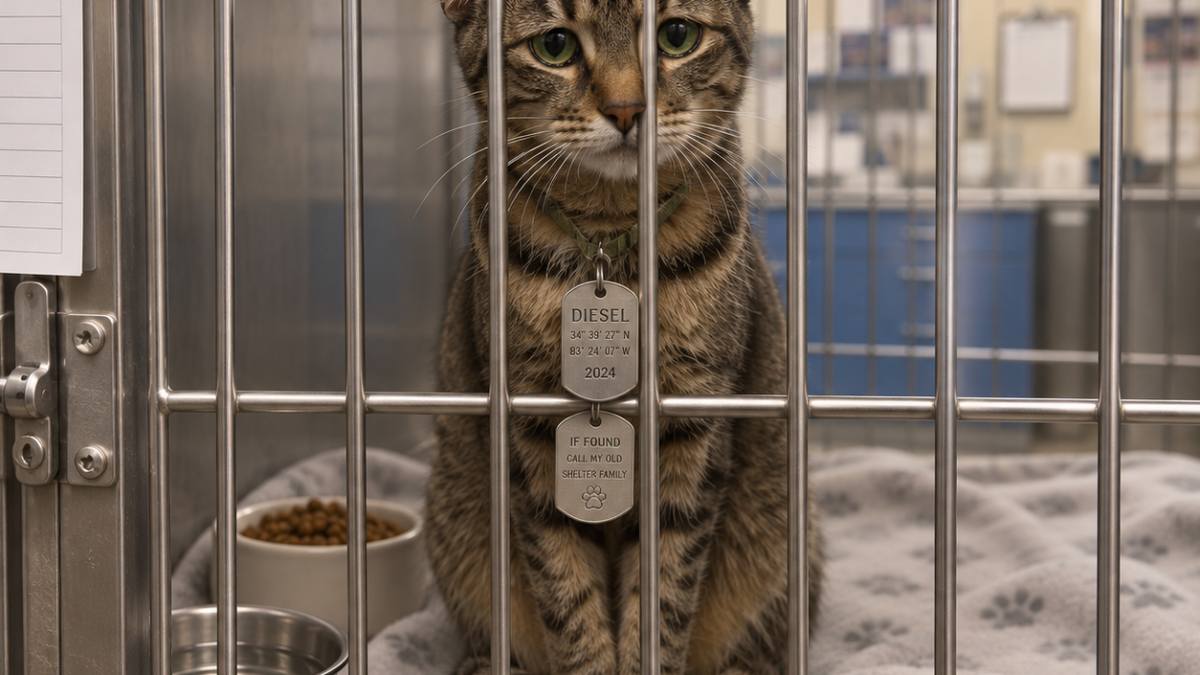
A Soldier Had Three Days Before Deployment and No One Could Take His Cat—Then He Removed His Dog Tags and Tied Them Around Her Neck
The young soldier had only three days before deployment when he carried his tabby cat into our shelter, apologized through tears, and asked me the one question every surrender worker dreads: “Do you think she’ll understand I didn’t leave because I stopped loving her?”
He had spent weeks begging relatives, friends, landlords, and boarding facilities to keep Sergeant safe until he came home, but when every door closed, he gave his cat the only thing he still knew belonged completely to him—his military dog tags.
What none of us knew that afternoon was that the tags around Sergeant’s neck would eventually reach a family hundreds of miles away, expose a mistake that almost separated them forever, and bring a soldier home to the one reunion he had stopped allowing himself to hope for.
I’ve worked in animal rescue long enough to recognize the difference between someone giving up an animal and someone running out of options.
They do not look the same.
People imagine owner surrenders as simple things.
A person walks into a shelter.
Signs a form.
Leaves a pet.
Shelter staff judge them.
Animal gets adopted.
Life goes on.
Sometimes that happens.
More often, the truth is messier.
I’ve watched elderly women surrender dogs after moving into nursing facilities that would not allow animals.
I’ve watched fathers bring in cats after apartment fires left families sleeping in motels.
I’ve watched people escaping violent relationships choose between a shelter bed and the dog that had slept beside them for eight years.
I’ve watched teenagers sob because a parent died and the landlord gave them seventy-two hours to clear the apartment.
I’ve met cruel people too.
People who got bored.
People who surrendered animals for scratching furniture they had never trained them not to scratch.
People angry that puppies grew.
People who treated animals like broken appliances.
You learn not to assume before somebody finishes speaking.
The young man who walked through our doors that Tuesday afternoon did not need anyone to teach him guilt.
He had brought enough with him.
It was 2:14 p.m.
I remember because I had just glanced at the clock while trying to decide whether I had enough time to eat the granola bar hidden in my desk before the next scheduled intake appointment.
I did not.
The front door opened.
Cold January air came through first.
Then the soldier.
He looked twenty-six or twenty-seven.
Close-cropped brown hair.
Olive-green jacket.
Jeans.
Combat boots.
A military duffel slung over one shoulder.
In his right hand was a blue plastic cat carrier.
The carrier was old.
Scratched.
One corner repaired with black tape.
Inside sat a brown-and-gray tabby.
Small.
Round green eyes.
PART2:
White patch beneath her chin.
She was watching him.
Not the room.
Him.
The man reached the desk.
Opened his mouth.
Nothing came out.
I knew immediately this was not a normal drop-off.
“Take your time.”
He nodded.
Tried again.
“I’m sorry.”
“You don’t have to apologize.”
“I do.”
“No.”
He looked down at the carrier.
Tears were already running down his face.
“I have to surrender her.”
The cat made a small sound.
Not a full meow.
More of a questioning chirp.
His face tightened.
I stepped around the counter.
“What happened?”
He swallowed.
“Deployment.”
That one word changed everything.
“When?”
PART3:
“Friday.”
It was Tuesday.
“Three days?”
He nodded.
“Orders changed.”
“I was supposed to have another month.”
“Then everything moved.”
He wiped his face quickly, embarrassed by the tears.
“I’m sorry.”
“You’re allowed to cry.”
He shook his head.
“No, I mean I’m sorry for bringing her here.”
I crouched beside the carrier.
The tabby looked at me.
Then back at him.
“What’s her name?”
“Sergeant.”
Despite the situation, I almost smiled.
“Sergeant?”
“Yeah.”
“She outranks me.”
That got the smallest laugh.
Barely.
But it mattered.
“How old?”
“Five.”
“Spayed?”
“Yes.”
“Vaccines?”
“Up to date.”
“Medical issues?”
“No.”
“Behavior?”
“She hates closed bathroom doors.”
I looked at him.
“That serious?”
“Extremely.”
Another almost-smile.
Then his face collapsed again.
“I’ve had her since she was six weeks old.”
He looked toward the carrier.
“I found her behind the barracks.”
That was how I first learned his name.
Specialist Daniel Mercer.
United States Army.
He had just finished basic training and advanced individual training when a mechanic at the base motor pool found a litter of kittens behind a storage shed.
Their mother had disappeared.
Three kittens were taken by other soldiers.
One tiny tabby remained.
Daniel told me he had never owned a cat before.
“I actually said no.”
He laughed weakly.
“My roommate said I was too responsible to say no.”
“How does that work?”
“No idea.”
But he took her.
Bottle-fed her for several days because she was younger than anyone realized.
Hid her in off-base housing until he could move into an apartment that allowed pets.
Named her Sergeant because the kitten had spent her first week screaming orders at him.
“She woke me every two hours.”
“She stole my socks.”
“She slept inside my duffel.”
He looked at her through the carrier door.
“She was there when I got my first permanent duty station.”
“Every move.”
“Every breakup.”
“Every stupid apartment.”
“Every Christmas I couldn’t make it home.”
“She was just…”
He stopped.
I waited.
“The one thing that stayed.”
Sergeant pressed her face against the carrier door.
Daniel placed two fingers through the bars.
She rubbed against them immediately.
That was when I began struggling not to cry.
Shelter workers learn to control emotional reactions.
Not because we don’t feel.
Because the person in front of us often needs somebody who can still function.
If I cried every time someone handed me a dying kitten or explained why they had lost a home, I would never finish a shift.
So I breathed.
Asked practical questions.
“What options have you tried?”
“All of them.”
He meant it.
Parents in North Carolina.
Father had two large dogs with strong prey drive.
Mother cared for his grandmother and could not manage another animal.
His younger sister lived nearby but had a severe cat allergy.
A friend had originally agreed to take Sergeant, then his landlord refused.
Another friend was moving out of state.
Military boarding programs he found either had waiting lists or required arrangements earlier than his deployment date.
He contacted two foster networks.
Full.
A third could not guarantee placement beyond sixty days.
His deployment could last nine months.
Possibly longer.
“What about your apartment?”
“Lease ends next week.”
“I asked the landlord if I could keep it and pay.”
“He won’t leave an apartment officially occupied by somebody overseas unless I keep utilities and full rent active.”
“Can you?”
Daniel gave me a tired look.
“I’m an E-4.”
Fair answer.
He had tried.
That mattered.
It did not make the surrender easier.
But it mattered.
“Do you think she’ll find another family?”
There it was.
The question.
I have been asked versions of it hundreds of times.
Will somebody want him?
Do you think she’ll be okay?
Will they love her?
Can you promise he won’t be put down?
People want certainty.
Shelters rarely have the right to give it.
Sergeant was healthy.
Five years old.
Friendly.
Beautiful.
All good things.
But she was an adult cat in January.
We had thirty-eight cats available.
Nine kittens.
Three young adults.
Two bonded pairs.
Four seniors.
Adoptions had slowed after Christmas.
Could she find a home?
Absolutely.
Could I tell Daniel how fast?
No.
Could I promise it would happen before shelter stress changed her?
No.
Could I promise she would never face risk if space became critical?
Our shelter worked hard to avoid euthanasia for space.
But rescue workers learn not to make promises larger than the system.
I looked at him.
“We’re going to do everything we can.”
His eyes dropped.
“I figured you’d say that.”
“I’m sorry.”
“No.”
He rubbed his forehead.
“I’d rather you tell me the truth.”
I reached for the intake forms.
Then he asked:
“Can I hold her one more time?”
I put the forms down.
“Take as long as you need.”
He carried the carrier into our small visitation room.
I should have given them privacy.
I tried.
But protocol required an employee nearby while paperwork was incomplete, and honestly, neither of us trusted Daniel to be alone with that goodbye.
Not because he would hurt Sergeant.
Because grief can make people change their mind, grab a carrier, and leave without a safe plan.
I’ve seen it.
So I sat near the door.
Daniel placed the carrier on the floor.
Opened it.
“Come here, Sarge.”
Sergeant came out immediately.
No hesitation.
She climbed onto his lap.
Then up his chest.
He lifted her.
She tucked herself under his chin as if she had done it thousands of times.
Probably had.
Daniel closed his eyes.
For almost twenty minutes, nothing happened.
That is the part people have difficulty imagining.
No dramatic speech.
No sobbing confession.
No phone recording the moment.
He did not take photos.
Did not ask me to photograph him.
He simply held her.
One hand against her back.
One beneath her body.
Thumb moving slowly through the fur behind her ear.
Sergeant purred.
At one point she lifted her face and licked his chin.
Daniel broke.
His shoulders shook.
He pressed his face into her fur.
“I’m sorry.”
Sergeant purred harder.
“I’m so sorry.”
I looked away.
He whispered things too softly for me to hear.
Maybe promises.
Maybe memories.
Maybe nothing that needed another person.
Eventually Daniel lowered Sergeant onto his lap.
Then reached beneath his shirt.
A metal chain appeared.
Dog tags.
Two stainless-steel identification tags.
He removed them over his head.
I frowned.
He reached into his jacket pocket.
Pulled out a short piece of green paracord.
“What are you doing?”
He separated one tag from the chain.
Then threaded the cord through it.
His hands shook so badly he had to start twice.
“Daniel.”
He looked up.
“Can she keep this?”
I hesitated.
Personal items usually came off during intake.
Collars could snag.
Tags could become lost.
Shelters standardize everything because standardization keeps animals safe.
“What are you thinking?”
He tied the tag carefully to Sergeant’s collar.
Not hanging low.
Short enough to rest against her chest.
Then adjusted the knot.
“So whoever gets her knows.”
“Knows what?”
His eyes filled again.
“That she belonged to somebody.”
I could not speak.
Daniel looked down.
“I don’t want her thinking I dumped her.”
That sentence stayed with me.
Animals probably do not construct abandonment narratives the way humans do.
Sergeant could not read deployment orders.
She would not understand military logistics.
But she understood one fact.
Her person was leaving.
And Daniel understood that too.
“I want them to know she was loved.”
He touched the tag.
“Maybe they’ll tell her.”
My throat closed.
“I think they’ll know.”
He kissed Sergeant’s forehead.
“Be brave, Sarge.”
She looked at him.
He handed her to me.
That moment was worse than the crying.
Because Sergeant immediately leaned toward him.
Front paws reaching.
Daniel stepped backward.
She made that questioning chirp again.
He almost took her back.
I saw it.
His arms lifted.
Then stopped.
He clenched both hands.
Turned.
Walked toward the door.
Did not look back.
I carried Sergeant against my chest.
The dog tag tapped lightly against her collar.
Daniel signed the paperwork with a hand that barely produced his own signature.
Then left.
Through the front window, I watched him get into a dark-blue sedan.
He did not drive away.
He sat.
Five minutes.
Ten.
Head down.
Hands on the steering wheel.
Then he finally started the engine.
Sergeant watched through the glass.
I wish I could tell you she understood.
I don’t know.
What I do know is that she did not eat dinner that night.
She sat at the front of her kennel.
Every time the shelter door opened, her head lifted.
The staff knew the story by closing.
Nobody removed the dog tag.
Our manager, Diane, noticed.
“That can’t stay if it’s unsafe.”
“I know.”
She examined the knot.
Short.
Secure.
No loose loop.
She touched the metal.
Then sighed.
“Leave it tonight.”
One night became two.
The tag remained.
Not because it made Sergeant more adoptable.
Maybe it did.
We didn’t care.
It was part of the truth.
On Wednesday morning, I photographed her for the shelter page.
Sergeant sat on a fleece blanket.
Green eyes.
One paw tucked beneath her chest.
Silver dog tag visible against striped fur.
I wrote:
SERGEANT — 5 YEARS OLD
Gentle, affectionate, healthy adult tabby. Recently surrendered due to military deployment after her owner exhausted temporary-care options. Sergeant has lived as a beloved indoor cat her entire life. She is confused by the shelter but responds quickly to affection and quiet voices. Her person left one of his military ID tags on her collar so her next family would know she was loved.
I deleted the final sentence twice.
Too emotional.
Potential privacy issue.
We contacted Daniel first.
He answered from a hotel near base.
“Can we tell her story?”
Silence.
“If it helps her.”
“We won’t use your full name.”
“Use it.”
“You sure?”
“I don’t care.”
He paused.
“If somebody sees it and takes care of her, use whatever.”
We posted.
The reaction was immediate.
Hundreds of shares.
Military families.
Veterans.
Rescue groups.
People offering to foster.
People asking if Sergeant could be held until Daniel returned.
That last question mattered.
Why not temporary foster?
Could we reverse the surrender?
I called every military-pet foster organization we knew.
The story had spread far enough that new possibilities appeared.
One organization in Maryland said they might be able to find long-term foster placement.
But Daniel was leaving in less than forty-eight hours.
Paperwork.
Vaccination verification.
Home inspection.
Matching.
No guarantee.
Another group had a volunteer family available but they were six hours away.
I called Daniel.
“There’s a chance.”
He went silent.
“Temporary?”
“Yes.”
“How sure?”
“Not sure.”
“For the entire deployment?”
“They’re checking.”
I could hear voices behind him.
Base announcements.
Doors.
“Should I come back?”
“Not yet.”
His breathing changed.
“If I see her again…”
“I know.”
“I can’t say goodbye twice.”
I understood.
“Let me work.”
We did.
All day.
Then the volunteer family withdrew.
Their landlord changed his mind.
The Maryland foster already had two cats and one was not accepting new animals.
Another lead disappeared.
By Thursday night, Daniel’s unit was moving.
He called once.
“Anything?”
“No.”
Silence.
“Okay.”
“I’m sorry.”
“Don’t apologize.”
He did something unexpected.
“Will you keep the tag on her?”
“As long as it’s safe.”
“Thank you.”
Then:
“If she gets adopted…”
“Yes?”
“Don’t tell me immediately.”
I stared at my desk.
“What?”
“I need to get through the flight.”
His voice tightened.
“If I’m sitting there wondering whether she is scared or whether somebody has her…”
He stopped.
“I don’t know.”
“Daniel.”
“Actually.”
He changed his mind.
“Tell me.”
“You sure?”
“No.”
That became the theme of every decision.
No.
But yes.
He emailed us a military contact address.
Then deployed.
Sergeant’s post kept spreading.
Potential adopters came.
The first family wanted a young cat for two small children.
Sergeant hid.
Not a fit.
Second applicant had two dogs.
Sergeant’s history with dogs unknown.
Not ideal.
A retired veteran named Mr. Landry came specifically because of the tag.
He sat with Sergeant forty minutes.
She liked him.
But his resident cat did not like other cats.
We appreciated honesty.
Then came Avery and Michael Reed.
They were not the family I expected.
Avery was thirty-three.
Elementary-school music teacher.
Michael was thirty-five.
Paramedic.
One child.
Ethan, nine.
They lived nearly seventy miles away.
They had seen Sergeant shared by a veterans’ group.
Michael’s older brother was in the Army.
Their previous cat had died the year before.
They entered the visitation room quietly.
Ethan sat on the floor.
Did not call Sergeant.
Did not reach.
That matters with cats.
Sergeant approached him.
Sniffed his shoe.
Then sat beside him.
Ethan looked at me.
“Can I touch her?”
“Yes.”
“Where?”
“Cheeks first.”
He offered one finger.
Sergeant rubbed her face against it.
Avery began crying.
Michael smiled.
“That seems clear.”
Then Ethan noticed the dog tag.
“Is that his?”
“Yes.”
“Her soldier?”
The phrase hit me.
“Her person.”
Ethan touched the tag gently.
“Does he know we’re here?”
“No.”
“Can we tell him?”
Michael looked at me.
“Would that be allowed?”
I thought of Daniel.
Tell me.
“Yes.”
The Reeds completed the application.
Homeownership verified.
Veterinary references excellent.
Quiet household.
No other pets.
Sergeant would be indoor-only.
Everything looked right.
But adoption counseling included one question.
“What happens when Daniel returns?”
Michael asked it first.
I had been wondering the same thing.
Legally, surrender meant surrender.
Once Sergeant was adopted, the new family became her owners.
Daniel had signed that away.
But emotionally?
Nobody in that room believed paperwork could answer everything.
Avery said:
“If he comes home and wants her back…”
She looked at Michael.
He nodded.
“We’d talk.”
Ethan immediately said:
“She’s his cat.”
His mother touched his hair.
“It could be more complicated later.”
“No.”
Ethan frowned.
“He had to leave.”
“He didn’t stop wanting her.”
The simplicity of children again.
I called Daniel.
The connection was terrible.
Delay.
Static.
When I finally told him, he was quiet for so long I thought we had disconnected.
“Daniel?”
“I’m here.”
“A family wants to adopt Sergeant.”
Another pause.
“Good family?”
“Yes.”
“Kid?”
“One.”
“Age nine.”
“Other animals?”
“No.”
“House?”
“Yes.”
“Indoor?”
“Yes.”
I smiled despite myself.
He had questions like a father screening a date.
“Vet history is good.”
“They came because they saw her story.”
“Will they keep the tag?”
“They said yes.”
Silence.
Then:
“Okay.”
His voice broke.
“Okay.”
“Do you want to speak with them?”
“No.”
I was surprised.
“Why?”
“I can’t.”
Fair.
He asked:
“Did she like them?”
“Yes.”
“How do you know?”
“She sat beside the boy.”
Daniel laughed softly.
“She likes kids.”
“I didn’t know that.”
“My neighbor had a daughter.”
“She used to read to Sergeant.”
“Then maybe…”
He stopped.
“Maybe what?”
“Nothing.”
A long breath.
“Tell them thank you.”
Sergeant went home with the Reeds on Saturday.
One week after Daniel surrendered her.
Ethan insisted on carrying the carrier.
Michael helped because Sergeant was heavier than expected.
Before they left, Ethan asked:
“Can we send pictures to the soldier?”
“Yes.”
“If he wants them.”
Daniel wanted them.
At first, we sent photographs through the shelter.
Sergeant on Ethan’s bed.
Sergeant in a sunny window.
Sergeant lying across Avery’s sheet music.
Sergeant trying to drink from Michael’s water glass.
Each photo received short replies.
Thank you.
She always steals water.
That blanket looks like the one she had as a kitten.
Then messages became longer.
Daniel wrote:
Tell Ethan if he taps the couch twice, she might jump up. I trained her accidentally because I always did that before picking her up.
Avery sent a video.
Tap tap.
Sergeant jumped up.
Ethan screamed with laughter.
Daniel replied:
That’s my girl.
Months passed.
Sergeant became fully part of the Reed family.
That worried me.
Not because it was bad.
Because love complicates every eventual choice.
Daniel remained deployed.
He rarely discussed his work.
We did not ask.
Sometimes weeks passed without messages.
Then a short email.
Still here. How’s Sarge?
Avery began communicating with him directly after everyone agreed.
Ethan sent drawings.
One showed Sergeant wearing a tiny Army helmet.
Daniel wrote back:
She would hate that hat.
Ethan sent another without the helmet.
Daniel’s deployment extended.
Nine months became eleven.
Then twelve.
By that point, Sergeant had spent more than a year with the Reeds.
She slept in Ethan’s room.
Waited by the door when Michael worked night shifts.
Sat on Avery’s piano bench during lessons.
The dog tag remained on her collar.
Polished by movement.
Avery replaced the paracord when it frayed.
She emailed Daniel first.
I need to replace the cord but I won’t remove the tag permanently. Is green still okay?
Daniel answered:
Green is perfect. Thank you for asking.
Then everything changed.
A military liaison contacted the shelter.
Daniel’s unit had returned to the United States.
He would be home within two weeks.
Diane called me into her office.
“He asked about Sergeant.”
My stomach tightened.
“What did you say?”
“That she is safe.”
“He knows that.”
“He asked whether the Reed family still has her.”
“Yes.”
“What else?”
Diane looked at me.
“He wants to see her.”
Of course.
We contacted Avery.
Silence on the phone.
Then:
“Yes.”
“You don’t have to decide anything beyond a visit.”
“I know.”
“Legally Sergeant is yours.”
“I know.”
Another silence.
“Ethan?”
“He’s going to be devastated.”
I closed my eyes.
That was the part nobody had planned for.
A nine-year-old boy had spent a year loving a cat left by a soldier who never wanted to leave her.
There was no villain.
No cruel owner.
No careless adopter.
Just two homes.
One cat.
And the impossible reality that love does not divide neatly.
Avery told Ethan that night.
He cried.
Then asked:
“Does Daniel want her back?”
“We don’t know.”
“He should.”
Avery was surprised.
“You think so?”
Ethan wiped his face.
“If I had to leave Sergeant because of my job, I would want her back.”
“Would you be okay with that?”
“No.”
The answer was honest.
“But I’d understand.”
The reunion was scheduled at our shelter.
Neutral place.
I arrived early.
Avery.
Michael.
Ethan.
Sergeant.
The cat seemed irritated to be back.
She remembered the smell.
Her ears flattened.
Ethan held the carrier.
“You’re okay.”
Then Daniel walked in.
He looked older.
Not dramatically.
Just changed.
Thinner.
More lines near his eyes.
Military duffel.
Civilian clothes.
He stopped when he saw the carrier.
Sergeant had been meowing.
The moment Daniel spoke, she stopped.
“Sarge?”
The carrier door rattled.
She turned.
Daniel crouched.
Avery opened the door.
Sergeant exploded out.
I had never seen her move like that.
She ran across the room.
Daniel dropped to both knees.
Sergeant climbed him.
Front paws on his chest.
Then shoulder.
She pressed her face against his jaw.
Daniel began sobbing before he touched her.
“Oh God.”
He wrapped both arms around her.
“Hi.”
Sergeant purred.
Loud.
Ethan cried quietly beside his parents.
Daniel buried his face against the cat.
“You remembered.”
Of course none of us knew what Sergeant remembered or understood.
But she knew him.
That was enough.
Then Daniel noticed Ethan.
Still holding the empty carrier.
Daniel slowly stood.
Sergeant remained in his arms.
“You’re Ethan?”
The boy nodded.
Daniel walked closer.
“Thank you.”
Ethan stared at Sergeant.
“She sleeps on my bed.”
“I know.”
“She doesn’t like chicken-flavored treats.”
“I know that too.”
“She likes turkey.”
Daniel smiled.
“She always did.”
Ethan started crying harder.
Daniel’s face changed.
He understood.
This was not going to be the happy reunion he had imagined overseas.
Somebody else would hurt.
He looked at Avery and Michael.
“I don’t know what I’m supposed to do.”
Michael answered:
“Neither do we.”
For nearly two hours, they talked.
Daniel explained his new orders.
He would be stationed stateside for at least eighteen months.
Pet-friendly apartment already arranged.
Stable schedule.
He could care for Sergeant again.
Avery explained the year Sergeant had lived with them.
Ethan’s bond.
The routines.
The family.
Nobody argued ownership.
Nobody quoted the surrender contract.
That was almost harder.
Eventually Daniel said:
“She is legally yours.”
Avery nodded.
“Yes.”
“But?”
She looked toward Sergeant.
The cat had moved.
Now she sat between Daniel and Ethan.
Literally.
Daniel’s hand on one side.
Ethan’s on the other.
Avery whispered:
“But I don’t know if legal is the only thing that matters.”
Daniel looked at Ethan.
“What do you want?”
Avery started:
“Daniel—”
“No.”
He looked at the boy.
“I want to know.”
Ethan cried silently.
“I want her to stay.”
Daniel nodded.
“Okay.”
Then Ethan added:
“But I think she should go with you.”
Every adult in the room broke a little.
“Why?”
“Because she was yours first.”
Daniel swallowed.
“She loves you too.”
Ethan looked at Sergeant.
“I know.”
Then:
“Can she have both?”
The room went silent.
Michael laughed softly through tears.
“Maybe the kid solved it.”
What followed was not conventional.
But it worked.
Daniel moved back to the area.
The Reeds lived seventy miles away.
For the first two months, Sergeant stayed with them while Daniel settled.
He visited.
Then weekend stays began.
Sergeant adjusted.
Better than any of us expected.
Daniel and the Reeds stayed in contact.
Eventually Sergeant spent most weekdays with Daniel and many weekends with Ethan.
No legal battle.
No dramatic transfer.
Shared care.
People said that was strange.
Maybe.
Sergeant did not care about conventional ownership.
She cared about familiar voices.
Sunlight.
Food.
Warm beds.
Two homes had become part of her world.
Daniel attended Ethan’s tenth birthday.
Ethan attended Daniel’s promotion ceremony.
Avery joked that Sergeant had created the world’s most complicated custody agreement.
Nobody disagreed.
Then came the surprise none of us expected.
Two years after Daniel returned, he came back to the shelter.
No carrier this time.
Flowers.
A paper bag.
Coffee for staff.
“What’s this?”
I asked.
“Bribery.”
“For?”
“I need help.”
My stomach dropped.
“Sergeant?”
“She’s fine.”
I exhaled.
“Then what?”
Daniel smiled.
“I want to foster.”
I stared.
“You?”
“Is that insulting?”
“No.”
“Yes.”
He laughed.
He had been volunteering with a military-pet support organization.
Helping service members create emergency pet-care plans before deployments.
Temporary fosters.
Legal documents.
Emergency contacts.
Boarding funds.
Anything that could prevent another surrender like his.
“I keep thinking about that day.”
He looked around the shelter.
“I had no plan left.”
“I thought surrender was the only door.”
“And maybe if somebody had shown me another option six months earlier…”
He stopped.
“You want to foster cats for deployed service members?”
“Yes.”
“You have Sergeant.”
“She hates other cats.”
I laughed.
“That’s a problem.”
“So I was thinking dogs.”
“You know nothing about dogs.”
“That’s what training is for.”
He fostered his first dog three months later.
A twelve-year-old Beagle belonging to a National Guard nurse deployed overseas.
Daniel sent me a photograph.
Sergeant sat on top of a bookshelf glaring down at the dog.
Caption:
Diplomatic relations remain tense.
The Beagle stayed seven months.
Returned to his owner.
Daniel cried at the reunion.
Then fostered another.
Meanwhile, the story of Sergeant’s dog tag inspired something larger.
Our shelter created a program.
We called it The Sergeant Project.
Not because Sergeant had done anything heroic.
Because her story revealed a gap.
Service members with pets often needed temporary care on short notice.
So did hospitalized owners.
Domestic-violence survivors.
People entering treatment.
Families displaced by fire.
The program built a network of emergency fosters.
It created simple forms people could complete before crisis.
Temporary guardianship.
Veterinary authorization.
Medication records.
Contact lists.
Pet-care instructions.
The boring paperwork nobody thinks about until there is no time.
Daniel became one of its strongest advocates.
He spoke at bases.
Veterans’ groups.
Community events.
He always brought a replica dog tag.
The original stayed on Sergeant.
At one event, somebody asked:
“Why did you tie your military tag to a cat?”
Daniel laughed.
“Because I was twenty-seven and heartbroken.”
The audience laughed too.
Then he became serious.
“I thought identity was what I had left to give her.”
“I wanted whoever adopted her to know she belonged to somebody.”
“Now I understand something.”
He paused.
“Animals don’t need proof they were once loved.”
“They need people willing to keep loving them when somebody temporarily can’t.”
Years passed.
Sergeant aged.
Gray appeared around her muzzle.
Her jumping slowed.
The Reeds remained family.
Ethan became a teenager.
Then a high-school student.
Sergeant still slept on his bed during weekend visits.
Daniel eventually married.
A woman named Lauren who met Sergeant before she agreed to a second date.
Lauren joked that the cat conducted the background check.
Sergeant approved.
Barely.
At fourteen, kidney disease appeared.
Daniel called me after the vet visit.
“I knew this would happen eventually.”
“Yes.”
“It still feels unfair.”
“Yes.”
A special diet.
Medication.
Fluids later.
More veterinary checks.
The Reeds helped when Daniel traveled for training.
Ethan, now seventeen, learned how to administer subcutaneous fluids.
Sergeant tolerated it from him better than anyone.
Daniel pretended not to be offended.
At sixteen, her health declined significantly.
The final weeks were quiet.
No dramatic emergency.
Just less eating.
More sleeping.
Weight loss.
The veterinarian explained.
Kidneys.
Age.
Comfort.
Daniel called the Reeds.
They came.
All of them.
Ethan was nineteen by then.
Tall.
College sweatshirt.
He sat on the floor beside Sergeant.
She rested across his legs.
Daniel sat opposite him.
The dog tag still hung from her collar.
Same metal.
Scratched.
Edges worn smooth.
Green cord replaced many times.
Lauren sat beside Daniel.
Avery and Michael behind Ethan.
The veterinarian came to Daniel’s apartment.
Before the injection, Daniel removed the dog tag.
Everyone looked at him.
He stared at the metal.
Then at Sergeant.
For sixteen years, she had worn collars.
For years, that tag.
He whispered:
“You don’t need this anymore.”
His hands shook.
Sergeant looked tired.
He kissed her forehead.
“Everybody knows.”
The room broke.
Ethan cried.
Daniel cried.
Avery.
Michael.
Lauren.
Even the veterinarian.
Sergeant died with Daniel’s hand on her chest and Ethan’s fingers against her paw.
Two families beside her.
No kennel.
No carrier.
No goodbye forced by orders.
Afterward, Daniel held the tag.
He did not put it back around his neck.
The next week, he came to the shelter.
I was still working there.
Older.
More gray.
Different desk.
Same building smell.
Daniel placed the dog tag in my hand.
“You should keep this.”
I shook my head.
“No.”
“Why?”
“It’s yours.”
He closed my fingers around it.
“No.”
“It was hers.”
I started crying before I could stop myself.
“What do you want us to do with it?”
He pointed toward the wall.
The Sergeant Project had grown.
Hundreds of temporary foster placements.
Dozens of military deployments.
Hospitalizations.
Housing crises.
Animals reunited with people who might otherwise have surrendered them permanently.
“Put it there.”
We did.
The tag now sits inside a simple frame.
Nothing expensive.
Below it is a photograph.
Daniel at twenty-seven.
Sergeant in his arms.
Taken the week he adopted her as a kitten.
Beside it:
SERGEANT
Beloved for sixteen years.
Her surrender inspired a program that keeps pets with the people who love them—even when life temporarily pulls them apart.
And below that, the sentence Daniel said during the hardest goodbye of his life:
“I don’t ever want her to think she was abandoned.”
I’ve worked at the shelter for more than two decades now.
Thousands of animals.
Thousands of families.
Many stories fade.
Faces blur.
Names disappear.
That is not cruelty.
It is survival.
You cannot carry every goodbye forever.
But sometimes a moment stays.
A young soldier standing in a visitation room.
A tabby tucked beneath his chin.
Twenty minutes where neither moved.
Hands shaking as he threaded green cord through a military dog tag.
The small metallic tap against her chest when he handed her to me.
I remember asking why.
Daniel looked at me as though the answer should have been obvious.
“So whoever finds her knows she belonged to someone.”
At the time, I thought the heartbreaking part was that he believed Sergeant needed evidence.
Years later, I understand the tag was never really for the next family.
It was for Daniel.
He needed to leave proof behind that the surrender was not the end of his love.
And maybe all humans do that in one form or another.
Wedding rings.
Photographs.
Letters.
Old voicemails.
Dog tags tied to cat collars.
Objects become witnesses when words feel too small.
Daniel’s deployment ended.
His relationship with Sergeant did not.
It changed.
Expanded.
Made room for another family.
Then brought them all together.
The surrender he considered his greatest failure eventually helped create a network that prevented hundreds of other people from facing the same impossible decision.
That does not make the first goodbye beautiful.
I don’t believe pain becomes good simply because something meaningful eventually grows from it.
Daniel should have had better options before he entered our shelter.
People facing deployment should not have to choose between orders and animals they love.
People entering hospitals should not lose pets because temporary foster care does not exist.
People escaping violence should not remain in danger because shelters refuse animals.
Love is powerful.
But love needs infrastructure.
A phone number.
A foster home.
A temporary agreement.
A landlord willing to bend.
A rescue with one open space.
The Sergeant Project became those things.
That is why the story matters to me differently now.
Not because a soldier cried.
Not because a cat wore military tags.
Not because the reunion was dramatic.
It matters because Daniel walked through our doors believing he had failed Sergeant.
He had not.
He had simply reached the limit of what one person could solve alone.
And once other people stepped into that gap, the ending changed.
A shelter worker.
A family.
A nine-year-old boy.
A foster network.
A community.
A soldier who later became the person answering someone else’s desperate call.
That is how rescue often works.
Not one hero.
A chain.
Years after Sergeant died, Ethan returned to the shelter too.
He was twenty-three.
Working as an EMT like his father had.
He stood in front of the framed dog tag.
“You remember me?”
I laughed.
“The nine-year-old who asked whether a surrendered cat could have two families?”
He smiled.
“Yeah.”
He looked at the frame.
“I used to think Daniel gave us Sergeant.”
I waited.
“Then I got older.”
He continued.
“I think he trusted us with her.”
“That sounds more accurate.”
Ethan nodded.
“There’s a difference.”
He had come to volunteer.
The same way stories seem to circle back when you’re lucky.
His first assignment was cleaning cat kennels.
One orange kitten climbed onto his shoulder.
He looked alarmed.
“I’m not taking this one home.”
I smiled.
“Of course not.”
He narrowed his eyes.
“Why did you say that like that?”
Experience.
That’s why.
Before Ethan left that evening, he stopped again at Sergeant’s photograph.
Then touched the glass near the dog tag.
“I’m glad he got her back.”
I thought about it.
Then corrected him gently.
“He never really lost her.”
Ethan looked at me.
I nodded toward the tag.
“He lost control of where she lived.”
“That’s not always the same thing as losing the relationship.”
He smiled.
“Yeah.”
Maybe that was the lesson Daniel had spent years learning too.
People sometimes think love is proved by possession.
Keeping.
Holding.
Never letting go.
But sometimes circumstances take keeping away from you.
Deployment.
Illness.
Money.
Housing.
Age.
Death.
Then love has to become something else.
Planning.
Trust.
Surrender without indifference.
Letting another person protect what matters when you cannot.
And, if you’re fortunate, finding your way back.
The day Daniel first left Sergeant, he walked through our shelter doors without looking back because he knew if he turned around, he might not be able to go.
He sat alone in his car for nearly ten minutes before driving toward a military base that would send him thousands of miles away.
Inside, Sergeant waited at the front of her kennel.
A military dog tag resting against her striped chest.
Neither one knew what came next.
Neither knew about Avery.
Michael.
Ethan.
The reunion.
The shared weekends.
The Sergeant Project.
The hundreds of animals that would eventually remain connected to their people because one soldier’s goodbye forced a shelter to ask whether there had to be another way.
All Daniel knew was that he loved his cat and could no longer keep her safely.
Sometimes that is the most painful kind of love.
The kind that cannot protect by holding on.
So it protects by finding another pair of hands.
And sometimes, if life is merciful, those hands do not replace yours.
They simply hold on until you can reach back.








