A Man Quit His Career and Sold His Home for a 20-Year-Old Blind Cat Given One Month to Live—Three Years Later, a Veterinarian Looked at Her Records and Couldn’t Explain What He Was Seeing
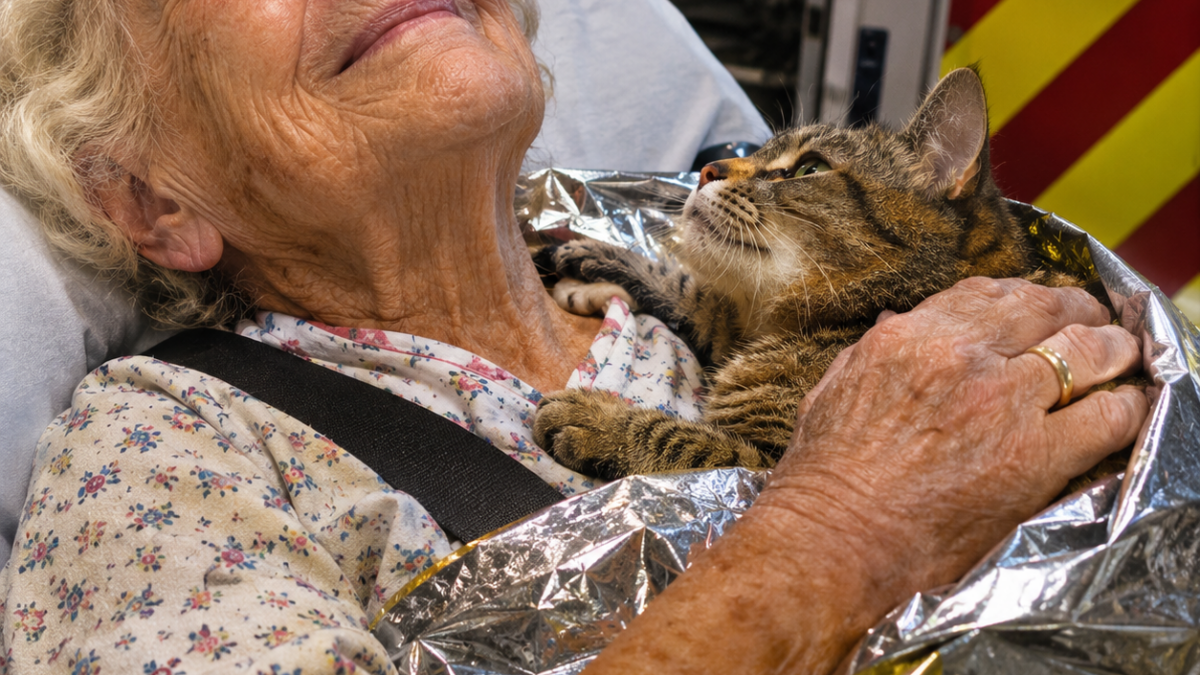
A Man Quit His Career and Sold His Home for a 20-Year-Old Blind Cat Given One Month to Live—Three Years Later, a Veterinarian Looked at Her Records and Couldn’t Explain What He Was Seeing.
The Tucson shelter told Nate Holloway that the blind twenty-year-old cat in kennel fourteen probably had only a few weeks left, maybe a month if her kidneys held on longer than expected.
Three weeks after adopting her, Nate resigned from the IT job he had worked for nearly eighteen years, listed his Arizona house for sale, bought a used white Chevy Express van, and told everyone who thought he had lost his mind that he wasn’t giving up his life for a dying cat—he was finally deciding what he wanted his life to contain.
That was three years ago.
Willow is twenty-three now.
Still blind.
Still living with Stage 4 kidney disease.
Still sleeping beside Nate every night.
And somehow, the little cat everyone expected to die inside a shelter kennel has crossed thirty-eight states.
Nate Holloway did not think of himself as an unhappy man.
That distinction mattered.
At forty-four, his life looked exactly like the kind of life people describe as stable.
He owned a small stucco house on the northwest side of Tucson.
Two bedrooms.
Two bathrooms.
A backyard he rarely used.
A mortgage almost paid off.
A silver sedan with no mechanical problems.
Health insurance.
Retirement contributions.
A refrigerator containing the same basic groceries every Sunday.
He worked in information technology for a regional medical-services company and had been with the organization long enough to know which servers misbehaved before an alert appeared.
His coworkers liked him.
His manager trusted him.
His salary was good.
He had paid vacation days he barely used.
He did not wake every morning hating his life.
He simply woke.
Coffee.
Shower.
Computer.
Tickets.
Meetings.
Lunch at his desk.
More meetings.
Drive home.
Dinner.
Television.
Sleep.
Repeat.
Weekends were different only in clothing.
Laundry.
Groceries.
PART2:
A hardware-store trip for something the house technically needed.
Maybe lunch with a friend.
Occasionally a hike if the weather cooperated.
Then Monday returned.
People asked:
“How’s everything?”
Nate answered:
“Good.”
Because nothing was wrong enough to explain.
That made the emptiness harder to name.
He was not grieving.
Not broke.
Not trapped in a terrible marriage.
Not recovering from catastrophe.
He just kept getting the strange feeling that his life was becoming a room he had finished furnishing years ago and forgotten to leave.
He didn’t tell anyone that.
It sounded ungrateful.
So he kept working.
Then, on a Tuesday evening in March, Willow appeared on his phone.
Nate had been sitting on his couch eating reheated pasta when he opened social media and saw a post from Sonoran Haven Animal Shelter.
He followed several local rescue pages.
Mostly dogs.
Occasionally senior cats.
He had grown up with animals but hadn’t owned one for years because he always told himself his work schedule wasn’t fair to a pet.
The photograph stopped him.
A small white cat sat inside a stainless-steel shelter kennel.
Her fur was thin around the shoulders.
Her body narrow.
Eyes closed.
Not sleepy.
PART3:
Closed in the permanent way eyes sometimes look when vision is gone.
She looked impossibly small against the metal.
The caption read:
WILLOW.
20 YEARS OLD.
COMPLETELY BLIND.
STAGE 4 KIDNEY DISEASE.
HOSPICE PLACEMENT NEEDED.
OUR VETERINARIAN BELIEVES SHE MAY HAVE ONLY WEEKS LEFT.
63 DAYS IN SHELTER.
NO ADOPTION INTEREST.
Nate read it twice.
Then a third time.
He scrolled.
Stopped.
Scrolled back.
He told himself the same thing almost everyone does when confronted with an animal they cannot save.
Someone will take her.
Then he noticed:
63 DAYS.
He clicked the shelter page.
Willow had been posted before.
Once at forty-two days.
Again at fifty-three.
Little engagement.
A few heart emojis.
Comments:
Poor baby.
Someone please adopt her.
If I lived closer.
Wish I could.
Nate read them.
Then looked at his house.
Quiet.
Clean.
Empty.
He had a spare bedroom.
A backyard.
Money.
Reliable transportation.
No children.
No other animals.
No landlord.
Nothing obvious preventing him.
He opened the shelter’s website.
Closed it.
Opened again.
Read about hospice fostering.
Then Stage 4 kidney disease.
Then blind-cat care.
Then quality-of-life assessment.
He should have gone to bed.
Instead, at 1:14 a.m., he was reading an article about administering subcutaneous fluids to cats.
At 6:30 the next morning, he called in late to work.
At 8:57, he pulled into Sonoran Haven.
The shelter opened at nine.
He was standing outside before the doors unlocked.
The adoption coordinator was named Elena Ruiz.
Forty-something.
Dark hair in a bun.
Purple scrub top.
Expression of someone who had learned to be cautious when strangers arrived with emotional ideas.
“How can I help you?”
“I want to meet Willow.”
Elena stopped typing.
“The senior?”
“Yes.”
“The blind white cat?”
“Yes.”
She studied him.
“Are you looking to foster?”
“Adopt.”
That made her sit straighter.
“Have you spoken with anyone about her medical condition?”
“No.”
“Okay.”
She did not sound excited.
Nate had expected gratitude.
Instead he got a chair.
Paperwork.
Reality.
Elena explained that Willow’s kidney disease was advanced.
Her blood values were poor.
She was underweight.
She needed prescription food if she would eat it.
Hydration support.
Frequent veterinary monitoring.
Possibly subcutaneous fluids.
Potential nausea medication.
Possibly appetite stimulants.
Blindness itself was not painful, but environmental changes could frighten her.
She might decline suddenly.
Hours.
Days.
Weeks.
No one could promise.
“She may die very soon,” Elena said.
“I understand.”
“People say that.”
Nate waited.
Elena continued:
“Then the cat stops eating. Or can’t make it to the litter box. Or cries at night. Hospice isn’t just taking home an old cat and giving her a soft blanket.”
“I know.”
“You may have to decide when to euthanize.”
“I know.”
“You may bring her home and lose her tomorrow.”
Nate looked toward the kennel hallway.
“I know.”
Elena folded her hands.
“Why Willow?”
That was the question.
Nate could have said:
Because she’s cute.
Because I feel sorry for her.
Because twenty years is too long to die alone.
All true.
None complete.
He answered:
“Because everybody else seems to be waiting for someone else to do it.”
Elena said nothing.
Nate continued.
“If she has a month, she should have a month somewhere that doesn’t sound like a shelter.”
“What if it’s a week?”
“Then a week.”
“What if it’s tonight?”
“Then tonight.”
Elena’s expression changed slightly.
Not trust yet.
But enough.
She led him back.
Willow occupied kennel fourteen.
She was smaller than in the photograph.
Seven pounds.
Maybe slightly less.
White fur with a faint cream patch over one ear.
Eyes sealed by old damage and clouding.
Whiskers long.
Nose pink.
When Nate approached, she did not look up.
Of course.
He crouched.
Elena said:
“Talk before touching her.”
Nate whispered:
“Hi, Willow.”
The cat’s ears moved.
One toward him.
He waited.
Then held out one finger near her nose.
Willow sniffed.
Moved forward.
Touched her forehead against his knuckle.
Once.
That was it.
Nate laughed quietly.
Elena watched.
“She’s selective.”
“Was that good?”
“For Willow?”
“Yeah.”
“Very.”
Nate sat outside the kennel for forty minutes.
He did not pet her continuously.
Did not try to make her love him.
He talked.
Mostly nonsense.
His job.
Traffic.
How bad shelter coffee smelled.
Willow eventually lay down with one paw against the gate.
At 11:20, Nate signed the hospice adoption agreement.
The shelter waived the fee.
He paid anyway.
Then donated another hundred dollars.
Willow went home in a blue carrier.
She cried during the drive.
Not loudly.
Small uncertain calls.
Nate spoke the entire way.
“Left turn.”
Pause.
“Speed bump.”
“Truck’s loud.”
“Almost there.”
He had read that blind animals benefited from predictable sound.
Maybe true.
Maybe he simply needed something to do.
At his house, Nate placed the carrier in the living room.
Opened it.
Waited.
Willow remained inside almost an hour.
Then one paw appeared.
Nose.
Head.
She stepped onto the carpet.
Froze.
Her whiskers worked.
Nate stayed silent.
Willow walked in a slow circle.
She bumped lightly into the couch.
Backed up.
Mapped the edge.
Found a rug.
Kitchen entrance.
Wall.
Returned to the carrier.
Nate had placed food, water, and a low litter tray nearby.
Willow found all three before evening.
At 11:00 p.m., she climbed onto the couch using a small ottoman Nate had positioned as a step.
She walked toward the heat of his body.
Then curled against his thigh.
He didn’t move for nearly two hours.
The next morning, Willow was alive.
That sounds obvious.
It did not feel obvious to Nate.
He woke before sunrise.
His first thought:
Did she make it?
He found her asleep on the blanket beside his bed.
Breathing.
He crouched.
“Morning.”
One ear moved.
Day two.
Still alive.
Day three.
Still.
Day four.
Still.
Nate began marking days in a notebook.
Not because he believed he could earn more of them.
Because he’d been told there wouldn’t be many.
Willow ate inconsistently.
Some mornings well.
Some barely.
She drank enormous amounts of water.
Kidney disease.
Urinated frequently.
Occasionally vomited.
Nate learned medications.
Bloodwork.
Phosphorus.
Creatinine.
BUN.
Hydration.
Quality-of-life scales.
He learned that caring for an old cat meant measuring victories differently.
Half a can of food.
Good day.
No vomiting.
Good.
Walked into sunshine.
Good.
Purred.
Very good.
He also discovered Willow loved open windows.
Tucson mornings were still cool that March.
Nate opened the screen.
Willow climbed onto a padded bench.
She couldn’t see desert mountains beyond the houses.
But she turned her face toward the breeze.
Nose moving.
Birds.
Creosote.
Dust.
Cars.
Some neighbor cooking bacon.
She stayed there nearly an hour.
Nate watched.
Something in him shifted.
Not dramatically.
No voice.
No revelation.
Just a question.
If she has only weeks, what am I waiting for?
Three weeks after adopting Willow, Nate took a Thursday off work.
Then Friday.
He drove north with her.
Nothing ambitious.
Mount Lemmon.
Cooler air.
Pines.
He parked at a quiet overlook.
Opened the side windows.
Willow sat on his lap.
Sun on her face.
Wind in her whiskers.
Nate laughed.
It was the first day he could remember in years when he had not checked work email until evening.
On the drive home, he began thinking about the spare room.
The mortgage.
The job.
The fact that nearly everything he owned had been selected to support a routine he did not enjoy enough to miss.
The next Monday, he opened a spreadsheet.
House value.
Remaining mortgage.
Savings.
Retirement.
Health-insurance options.
Van costs.
Fuel.
Food.
Vet care.
Emergency fund.
Remote contract work possibility.
He did not quit impulsively.
That part got lost when people later told the story.
He planned.
For eighteen days.
Talked to a financial advisor.
A veterinarian.
A friend who lived in an RV.
His sister, who told him he had become insane.
His best friend, Marcus, asked:
“Are you having a midlife crisis?”
“Probably.”
“Because of a cat?”
“No.”
“Then why now?”
Nate looked toward Willow sleeping in the window.
“Because she doesn’t have time for someday.”
Marcus laughed.
“You do.”
Nate thought about that.
“That’s what I keep assuming.”
The house went on the market.
His manager thought he was negotiating.
“Take a sabbatical.”
Nate considered.
Then declined.
“You’ve been here eighteen years.”
“Seventeen and eight months.”
“That makes it worse.”
Nate smiled.
His manager leaned back.
“You’re really quitting to travel with a cat?”
“That’s the simplified version.”
“What’s the complicated one?”
Nate took a long time.
“I realized I built a life I was proud of on paper and bored inside.”
His manager didn’t laugh.
That surprised him.
Two weeks later, a coworker came into his office.
“I heard you’re leaving.”
“Apparently.”
“I’m jealous.”
“Don’t be. I don’t know what I’m doing.”
The coworker looked around.
“Neither do the rest of us.”
That sentence followed him.
Nate sold the house.
Not for some enormous fortune.
Enough.
He sold furniture.
Television.
Dining set.
Tools he hadn’t used in years.
Boxes of electronics.
Clothes.
A motorcycle he had ridden six times.
Kept:
Laptop.
Clothes.
Photographs.
Camping gear.
Willow’s supplies.
And an old coffee mug his father had given him.
He purchased a used white Chevrolet Express conversion van.
Nine years old.
High mileage.
Mechanically solid.
Ugly curtains.
Tan interior.
The previous owner had installed a bed platform.
Nate rebuilt part of it.
Small refrigerator.
Battery system.
Roof vent.
Storage drawers.
Litter box behind the passenger seat.
Low step so Willow could reach the bed.
Textured mats so she could navigate by feel.
Water bowl secured against sliding.
Her carrier permanently strapped in place as a safe den.
He placed small strips of different-textured fabric along key edges.
Bed.
Litter.
Food.
Door.
Blind-cat landmarks.
Willow mapped the van in one afternoon.
Nate was stunned.
She bumped the refrigerator once.
Never again.
Three days later, she could wake from sleep, cross the van, find water, litter, and bed without hesitation.
Marcus saw it.
“She’s better at this than you.”
“Much.”
They left Tucson in early May.
Nate had no route beyond Flagstaff.
That was deliberate.
First morning, Willow rode in a secured padded carrier while the van moved.
Nate did not allow her loose in the vehicle while driving, despite later photographs making it look that way.
At stops, she sat on his lap.
Sometimes passenger seat while parked.
Harness attached.
Door closed or screened.
He took safety seriously because hospice did not mean recklessness.
Their first campground was outside Flagstaff.
Cool night.
Ponderosa pines.
Willow hated the temperature.
Nate discovered this at 2:00 a.m. when she crawled beneath his blanket and pressed against his stomach.
He turned on the heater.
Next morning, she ate almost an entire breakfast.
Then vomited.
Nate panicked.
He called a veterinarian.
Appointment that afternoon.
Dr. Priya Shah examined Willow.
Bloodwork.
Dehydration.
Kidney disease still severe.
But not dramatically worse.
Priya asked:
“Are you comfortable giving subcutaneous fluids?”
“No.”
“Want to learn?”
“Yes.”
She showed him.
Needle beneath loose skin between shoulders.
Fluid bag elevated.
Slow administration.
Watch breathing.
Monitor comfort.
Nate hated the needle.
Willow hated it more.
First attempt, Nate flinched.
Needle came out.
Fluid ran onto Willow’s fur.
She turned her blind face toward him with what he interpreted as profound disappointment.
Dr. Shah laughed.
“She’ll forgive you.”
Second attempt worked.
Every other day thereafter, depending on veterinary guidance and Willow’s condition, Nate hung a fluid bag from a hook inside the van.
Willow sat on a folded towel.
Nate spoke.
“Little poke.”
Needle.
“Good.”
Fluid.
“Almost done.”
Treat.
Routine.
Eventually Willow purred through some sessions.
The cat expected to die within a month reached day thirty-one outside Sedona.
Nate marked it in the notebook.
He looked at Willow.
“You’re officially inconvenient.”
She slept.
Day forty.
Utah.
Day fifty-three.
Colorado.
Day sixty.
Wyoming.
Nate stopped counting daily after ninety.
Not because he assumed she would survive.
Because the countdown began making every morning feel like borrowed time.
He wanted ordinary time.
They went west first.
Utah red rock.
Nevada.
Northern California.
Oregon.
Willow’s first ocean.
Nate parked near a quiet Oregon beach.
He carried her outside in a soft carrier, then sat far above the surf where she could feel wind without being overwhelmed.
He placed a blanket on the sand.
Willow stepped out wearing her harness.
She froze.
Sand was strange.
She lifted each paw exaggeratedly.
Nate laughed.
“Yeah, I know.”
Wind moved her white fur.
Ocean thundered.
Willow’s ears rotated constantly.
She walked toward the sound.
Nate kept the leash short.
Not restrictive.
Safe.
She stopped after six feet.
Sat.
Face toward the Pacific.
She couldn’t see it.
Nate understood that.
People later loved saying:
The blind cat saw the ocean.
She didn’t.
That language bothered him.
She smelled salt.
Felt wind.
Heard waves.
Felt cool sand.
Warmth came and went as clouds crossed the sun.
That was her ocean.
It was enough.
That night Willow slept twelve hours.
Nate woke twice to check breathing.
Still.
Oregon became Washington.
Then Idaho.
Montana.
At a clinic outside Missoula, Willow’s bloodwork frightened a veterinarian.
He repeated the values.
Then repeated them again.
“How long has she been Stage 4?”
“About a year before I got her, according to records.”
“How long have you had her?”
“Fourteen months.”
The veterinarian looked at Willow.
Then Nate.
“That doesn’t make sense.”
Nate smiled.
“People say that.”
“I mean medically.”
“I know.”
Cats with comparable kidney values often declined much sooner.
But kidney disease did not follow identical timelines.
Some animals compensated longer.
Hydration helped.
Diet helped.
Luck mattered.
Individual physiology mattered.
No one could turn Willow into evidence of a cure.
Nate refused to.
People online later suggested travel had healed her.
No.
She still had kidney failure.
Bloodwork proved it.
She still had bad days.
Sometimes terrifying ones.
In Montana, she stopped eating for two days.
Nate thought that was the end.
He parked beside a clinic overnight.
Sat with her.
Willow slept in his lap.
At dawn, she licked a spoonful of chicken baby food.
Nate cried harder than seemed reasonable over half a teaspoon of pureed meat.
Treatment helped nausea.
She recovered.
For a while.
That was hospice life.
Not one decline.
Waves.
Good stretch.
Bad morning.
Recovery.
Another setback.
Each time, Nate asked the same question.
Is she suffering?
Not:
Can I keep her alive?
Different question.
He carried a quality-of-life worksheet.
Mobility.
Appetite.
Hydration.
Comfort.
Interest.
Rest.
Grooming.
Good days versus bad.
He promised himself Willow’s survival would never become a trophy he protected at her expense.
That promise became harder as she became famous.
It started accidentally.
New Mexico.
An RV park outside Las Cruces.
Nate parked facing west.
Sunset turned the desert orange.
He opened the van’s side door.
Sat on the edge with Willow in his lap.
She turned her blind face toward the warmth.
A retired teacher named Carol Jensen walked past.
Stopped.
“May I take a picture?”
Nate glanced down at his old T-shirt and messy hair.
“Why?”
Carol laughed.
“The cat.”
“Of course.”
She asked permission again.
He agreed.
One photograph.
Nate sitting in the open van doorway.
White desert van.
Orange sky.
Willow on his lap.
Eyes closed.
Face toward sunset.
Carol posted it in a small RV travel group.
Caption:
Met this man tonight. He gave up normal life to travel with his blind 22-year-old hospice cat. She was given weeks. They’ve had almost two years.
The photograph spread.
RV groups.
Cat groups.
Senior pet pages.
Millions of impressions eventually, according to someone who tracked those things.
Nate did not.
His social media account gained followers.
Messages arrived.
Some beautiful.
Some strange.
People offered money.
Nate declined most.
A pet-food company offered sponsorship.
He declined.
A van brand offered equipment.
He accepted one solar upgrade after verifying there were no content requirements, then donated the equivalent value to senior-cat hospice care.
Someone accused him of exploiting Willow.
That bothered him.
He stopped posting for two months.
Then a veterinarian said:
“You know people are seeing what hospice adoption can look like.”
Nate thought about that.
He eventually shared occasional updates.
No dramatic music.
No fake emergencies.
No:
Willow may not survive the night—click here.
Mostly:
Willow ate breakfast.
Willow hates rain.
Willow stole chicken.
Willow slept through Nebraska.
People responded.
Willow became an old cat thousands of strangers worried about.
But inside the van, none of that existed.
She remained Willow.
Bad breath.
White fur everywhere.
Kidney food she sometimes rejected after Nate bought a full case.
A habit of stepping on his chest at 4:30 a.m.
She disliked certain roads.
Nate discovered rough interstate pavement made her restless.
He adjusted routes.
She loved heat.
Arizona.
Texas.
Florida.
Gulf Coast sunlight.
She hated cold bathroom floors.
Preferred fleece.
Loved rotisserie chicken too much.
Was not supposed to have much.
Negotiated anyway.
Together they crossed the country.
Great Lakes.
Blue Ridge Mountains.
Gulf Coast.
Badlands.
Appalachia.
Maine coastline.
Texas Hill Country.
They did not rush.
Nate stopped thinking in vacation itineraries.
No need to maximize attractions.
Sometimes they remained in one place ten days because Willow was tired.
Sometimes Nate drove only eighty miles.
Sometimes none.
He took occasional remote contract projects.
Enough to maintain emergency savings and travel expenses.
His old IT skills did not disappear because he quit the office.
He worked from campground picnic tables.
Libraries.
Coffee shops.
Inside the van while Willow slept beside his laptop.
One client video meeting began with Willow yowling in the background.
“What’s that?”
“My supervisor.”
Willow yowled again.
“She’s unhappy with the project plan.”
The client laughed.
Nate got the contract.
At campgrounds, people often asked the same question.
“Why?”
Why sell everything?
Why quit?
Why travel for a cat?
The phrasing always irritated him slightly.
He had not done it for the cat alone.
Willow was the trigger.
Not the entire reason.
One evening in Colorado, a man named Roger sat beside Nate’s campfire.
Retired accountant.
Fifth-wheel trailer.
Beer in hand.
Willow slept wrapped in a fleece blanket on Nate’s lap.
Roger asked:
“Can I ask something rude?”
“Probably.”
“You really sold your house because this cat was dying?”
“Basically.”
“That’s crazy.”
“Probably.”
“Don’t you feel like you sacrificed everything?”
Nate looked at Willow.
Then at the van.
Campground lights.
Dark mountain outline.
He answered:
“I didn’t sacrifice everything.”
Roger waited.
“I got rid of things that weren’t making me happy.”
“What about your career?”
“I still know how to do IT.”
“House?”
“I can own another house someday.”
“Retirement?”
“Still have retirement savings.”
Roger nodded toward Willow.
“But all this because she had a month?”
Nate scratched Willow beneath the chin.
“I think knowing she had a month made me stop assuming I had unlimited time.”
Roger went quiet.
That became the quote people repeated later.
Nate didn’t remember saying it exactly that way.
Stories polish sentences.
Real conversations are messier.
What he remembered was Willow waking halfway through and sneezing on Roger’s pants.
The third year began in Florida.
Willow turned twenty-three.
There was no exact birthday.
Shelter records estimated.
Nate chose the anniversary of her adoption.
He bought a tiny piece of salmon.
No candle.
Fire near cat whiskers seemed unnecessary.
He said:
“Three years.”
Willow ate salmon.
Then demanded more.
Nate gave her a little.
That afternoon, he looked through the notebook from the beginning.
Day 1.
Day 2.
Day 8.
Day 31.
After ninety, entries changed.
Vet in Flagstaff.
First ocean.
Bad eating day.
Blue Ridge.
Great Lakes.
Montana scare.
New Mexico photo.
Birthday.
38 states.
The notebook had begun as a death watch.
It became a travel journal.
Willow remained medically fragile.
At twenty-three, age itself became as important as the kidney disease.
Muscle loss.
Arthritis.
Hearing decline.
She slept more.
Sometimes confused after waking.
Nate stopped adding states.
Thirty-eight was enough.
He didn’t care about finishing fifty.
The goal had never been a map.
They returned west.
Arizona.
New Mexico.
Colorado.
Places Willow already knew by smell if not memory.
One afternoon outside Santa Fe, Willow stopped eating.
Again.
Nate knew the routine.
Medication.
Fluids.
Vet.
But this time she remained weak.
Dr. Elena Park examined her.
Bloodwork worse.
Weight down.
She sat with Nate.
“This may be the decline we’ve been expecting.”
He nodded.
“How do I know?”
“You know her.”
“That isn’t enough.”
“It has to be part of it.”
Nate hated that.
He wanted a number.
A lab value that said:
Today.
Or:
Not today.
Veterinary medicine rarely gives that.
Elena asked:
“Does she still seek you?”
“Yes.”
“Eat anything voluntarily?”
“A little.”
“Rest comfortably?”
“Mostly.”
“Still interested in warmth, sounds, smells?”
“Yes.”
“Then we’re not necessarily at the end today.”
Today.
Hospice lives inside that word.
Willow recovered enough to eat that evening.
Not much.
Three bites.
Nate celebrated all three.
Two weeks later, she was back to sitting in sunshine.
People called it miraculous.
Nate did not.
He had learned the danger of treating every recovery like a promise.
It was simply another good day.
That became his philosophy.
No one more.
No forever.
Good day.
Then another if it comes.
By then, Nate had changed too.
His beard longer.
Skin darker from the road.
Fewer possessions.
More friends.
Not conventional friends.
People in campgrounds.
Veterinarians across states.
An elderly couple in Oregon.
A mechanic in Wisconsin who refused payment after fixing the van’s alternator because his wife followed Willow online.
A nurse in Tennessee who had adopted a hospice cat after seeing the desert photograph.
That woman sent Nate a message months later.
Her cat lived only nineteen days.
She wrote:
I thought I would regret it because it hurt so much.
I don’t.
He slept in a bed for nineteen nights.
Nate read that message beside Willow.
It changed how he understood their story.
Three years was extraordinary.
But duration was not the measure.
Nineteen days could be enough to matter.
One night beneath the Blue Ridge Mountains, rain hit the van roof.
Willow slept beside Nate’s pillow.
He thought about the shelter.
Kennel fourteen.
Sixty-three days.
Nobody interested.
What if she had died there?
The thought upset him.
Then another thought followed.
What if he had adopted her and she died that night?
Would the decision have been less meaningful?
No.
That surprised him.
Three years made the story unusual.
One night would have made the act the same.
A creature expected to die without a home had been given one.
Everything after that was extra.
Nate eventually visited Tucson again.
Sonoran Haven looked mostly the same.
Elena Ruiz was still there.
She walked into the lobby.
Saw him.
Then saw the carrier.
Her mouth fell open.
“No.”
Nate smiled.
“Yes.”
“Is that Willow?”
He opened the carrier door while kneeling.
Willow remained inside.
She was twenty-three now.
Thinner.
Whiter somehow.
Elena crouched.
“Willow?”
The cat’s ear moved.
Elena began crying.
“I thought…”
“I know.”
“We told you a month.”
“You did.”
She laughed through tears.
“Your warranty was terrible.”
Nate smiled.
Elena touched one finger near Willow’s nose.
Willow sniffed.
Then bumped it.
Exactly as she had done with Nate three years earlier.
Elena sat on the floor.
“Where has she been?”
Nate showed a map.
Not every stop.
Just states.
Thirty-eight shaded.
Elena stared.
“This cat has traveled more than I have.”
“She complains more too.”
“Does she still hate wet food?”
“Only after I buy twenty-four cans of the flavor she liked yesterday.”
Elena laughed.
Several shelter workers gathered.
No crowd.
No social-media livestream.
Nate asked that Willow not be overwhelmed.
They brought the old intake photograph.
Kennel fourteen.
Tiny white cat.
Eyes closed.
Nate looked at it.
He barely recognized her.
Not physically.
Emotionally.
The cat in the photograph looked like an ending.
The animal sleeping in his carrier had become a life.
Elena asked:
“Do you regret selling the house?”
“No.”
“Job?”
“No.”
“Anything?”
Nate thought.
“I wish I’d done something sooner.”
“With Willow?”
“With myself.”
He walked through the shelter before leaving.
Kennel fourteen housed a senior black cat.
Fourteen years old.
Diabetic.
Nate stopped.
Elena saw.
“No.”
“What?”
“You already have one hospice cat.”
“I know.”
“Don’t.”
He laughed.
“I was looking.”
“You have a pattern.”
He did not adopt the black cat.
Someone else did four days later.
Elena texted him.
Nate smiled for an hour.
Willow’s twenty-third year was quieter.
Less travel.
More long stays.
Nate began choosing campgrounds with nearby veterinary clinics.
No remote desert boondocking without service.
No twelve-hour drives.
Safety narrowed adventure.
He did not resent it.
One afternoon in Utah, a young couple recognized them.
“Is that Willow?”
Nate looked surprised.
“Apparently.”
The woman began crying.
She asked whether she could touch the cat.
Nate said:
“Let her smell you first.”
Willow sniffed her hand.
Allowed one gentle stroke.
The woman said:
“We adopted a seventeen-year-old cat because of her.”
Nate smiled.
“How long?”
“Six months.”
“Still with you?”
She shook her head.
“He died.”
“I’m sorry.”
She wiped tears.
“Best six months.”
Nate nodded.
He understood.
Later, he told Willow:
“You’re causing trouble.”
She slept.
People often said:
You saved her.
Nate disliked it.
She would have received care at the shelter.
Maybe not a home.
But food.
Medicine.
Warmth.
And he had not cured anything.
He gave her time in a van.
Likewise, Willow had not saved Nate from depression.
He had never claimed that.
He was not suicidal.
Not broken.
Not rescued from catastrophe.
She disrupted him.
That was different.
She made mortality impossible to keep theoretical.
A twenty-year-old cat with a one-month prognosis forced him to look at his own life without the comforting assumption that he could always change it later.
That was what she gave him.
Urgency.
Not panic.
Permission.
Three years after they left Tucson, Nate returned to the same desert RV park where Carol had taken the famous sunset photograph.
He parked in almost the same row.
Carol wasn’t there.
The sky was.
Orange.
Purple.
Dust softening the horizon.
Nate opened the side door.
Sat.
Placed Willow on his lap.
She weighed barely six pounds.
Her blind eyes closed.
Face turned toward the fading sun.
Nate rubbed one finger along her cheek.
“Remember this?”
Willow purred.
Maybe she remembered.
Maybe warmth was simply warmth.
Nate didn’t need more.
A camper passing stopped.
Recognized them.
Did not take a photograph.
Just said:
“She’s still here.”
Nate looked down.
“Yeah.”
The man smiled.
“That’s something.”
“Yeah.”
It was.
That night Willow ate well.
The next morning, not much.
The day after, better.
The road continued like that.
Nobody knew how many days remained.
Not Nate.
Not the veterinarians.
Not Willow.
That uncertainty no longer felt like a failure of prediction.
It felt like life.
Years earlier, Nate had organized everything around long-term assumptions.
Career.
Mortgage.
Retirement.
Someday.
Willow lived differently.
Warm place.
Food.
Water.
Nate.
Sleep.
Morning.
She had no use for a five-year plan.
That didn’t make her wiser.
She was a cat.
Nate was careful about saying that.
People wanted Willow to become a philosopher.
She wasn’t.
She licked plastic bags.
Walked into cabinet doors if Nate moved them.
Complained when medication tasted bad.
Loved sunlight.
Sometimes missed the litter box.
She did not understand that strangers admired her.
Did not know thirty-eight states meant anything.
Did not know she had outlived a prognosis by years.
Did not know Nate had sold a house because of what he felt while watching her sleep.
She simply trusted the sound of his voice.
That was enough.
On difficult nights, Nate sometimes wondered what would happen afterward.
The van without her.
Empty carrier.
No fluid bags.
No litter box behind the seat.
No white fur on every black shirt.
The thought frightened him.
Not because he would return to his old life.
That life no longer existed.
Because Willow had become the rhythm of the new one.
He knew that could not be a reason to keep her alive past comfort.
So he maintained the promise.
When bad days become more than good.
When she no longer seeks warmth.
When she stops eating despite treatment.
When she cannot rest comfortably.
When staying is for me instead of her.
Then I let go.
He wrote it on paper.
Kept it in the glove compartment.
Not morbid.
Necessary.
Hospice love requires both hands.
One to hold on.
One prepared to open.
Until then, they drove.
Slowly.
Southwest winters.
Northern summers.
Sunrise through van windows.
Rain on the roof.
Veterinary parking lots.
Campgrounds.
Highways.
Cheap coffee.
Bad Wi-Fi.
Good days.
People occasionally asked Nate where home was.
At first he named Arizona.
Later:
“The van.”
Eventually he stopped answering quickly.
Home was not the van exactly.
Vehicles break.
Metal rusts.
Engines fail.
Home was the small repeatable arrangement inside it.
Willow knew where the water lived.
Nate knew where her medication lived.
She slept against his ribs.
He woke when she moved.
He opened windows when she wanted air.
She found sun.
They moved.
That was home.
The little white cat who was supposed to die inside kennel fourteen never saw Oregon.
Or Montana.
Or Maine.
Or Florida.
Not in the visual sense.
She never saw the Badlands turn gold.
Never saw fog on the Blue Ridge.
Never saw the Great Lakes.
That wasn’t a tragedy.
Sight wasn’t the only way to inhabit a place.
She felt Oregon wind.
Smelled pine in Montana.
Heard gulls on the Gulf Coast.
Felt humid air in Florida.
Listened to rain over North Carolina mountains.
Felt sunlight through a windshield in New Mexico.
She experienced what her body could experience.
Nate stopped measuring her life by what she lacked.
Blind.
Old.
Sick.
Those were facts.
Not the whole animal.
One evening, almost exactly three years after their departure, Nate sat outside the van while Willow slept inside.
A neighboring camper asked:
“Would you do it again?”
“Adopt her?”
“All of it.”
“Sell the house. Leave the job. Van. Everything.”
Nate looked through the open side door.
Willow was curled on her fleece blanket.
Fluid bag hung from a hook.
Half a can of prescription food in the refrigerator.
A litter mat needed sweeping.
His laptop was on the bed beside unpaid campground invoices.
Nothing glamorous.
He answered:
“Yes.”
“No hesitation?”
Nate smiled.
“Plenty.”
“But yes?”
“Yes.”
The camper nodded.
“Because she lived three years?”
Nate thought about that.
Then shook his head.
“No.”
“Why then?”
“Because it would’ve been worth doing if she lived three days.”
That was the truth he had taken three years to understand.
Willow’s extraordinary survival made the story easier to tell.
But it did not make the original choice correct.
The choice had been made when death still looked close.
When there was no reward except grief.
When Nate expected to take her home, love her briefly, and bury her.
That was the promise.
Everything else had been a gift neither of them was owed.
The next morning, Willow woke before him.
She climbed slowly across the bed.
Placed one paw on his cheek.
Nate opened his eyes.
“Morning.”
She meowed.
Breakfast.
Not philosophy.
He laughed.
“Yeah, yeah.”
He opened the van door.
Cool desert air entered.
Willow lifted her face.
Sunlight reached the floor.
She moved toward it.
Slow.
Careful.
Twenty-three years old.
Blind.
Kidneys failing.
Still here.
Nate placed her breakfast in the usual spot.
Then sat beside her.
People would continue asking who saved whom.
He had finally stopped trying to answer.
“Saved” was too dramatic.
Too clean.
Willow had not been drowning in a river.
Nate had not been standing on a ledge.
They had simply reached the same point at the same time.
One life had almost run out.
The other had become too predictable.
He gave her a home.
She gave him a reason to question what home meant.
He gave her medical care.
She gave him deadlines he could no longer pretend were theoretical.
He drove.
She stayed.
That was enough.
Outside, the desert brightened.
Another road waited.
Maybe they would drive fifty miles.
Maybe none.
Willow finished two-thirds of breakfast.
Good day.
Nate marked nothing in the old notebook anymore.
No countdown.
No state total.
No expectation.
He cleaned the bowl.
Prepared her medications.
Opened the side door wider.
Willow found the warmest patch of light and lowered herself into it.
Her blind face turned toward the sun.
Nate sat beside her.
Three years earlier, a shelter had told him she might have one month.
Maybe they had been wrong.
Maybe they had been medically reasonable and Willow happened to be an extraordinary outlier.
Maybe fluids, careful monitoring, low stress, stable routine, and luck gave her time.
Maybe nobody would ever know.
Nate didn’t need an explanation.
Willow had never promised him three years.
She had never promised him tomorrow.
She had only given him today.
Again.
And again.
And again.
That was more than enough.








