A Cat Disappeared 72 Hours After Being Rehomed 41 Miles Away—19 Days Later, a Mail Carrier Found Him Sitting at One Familiar Front Door
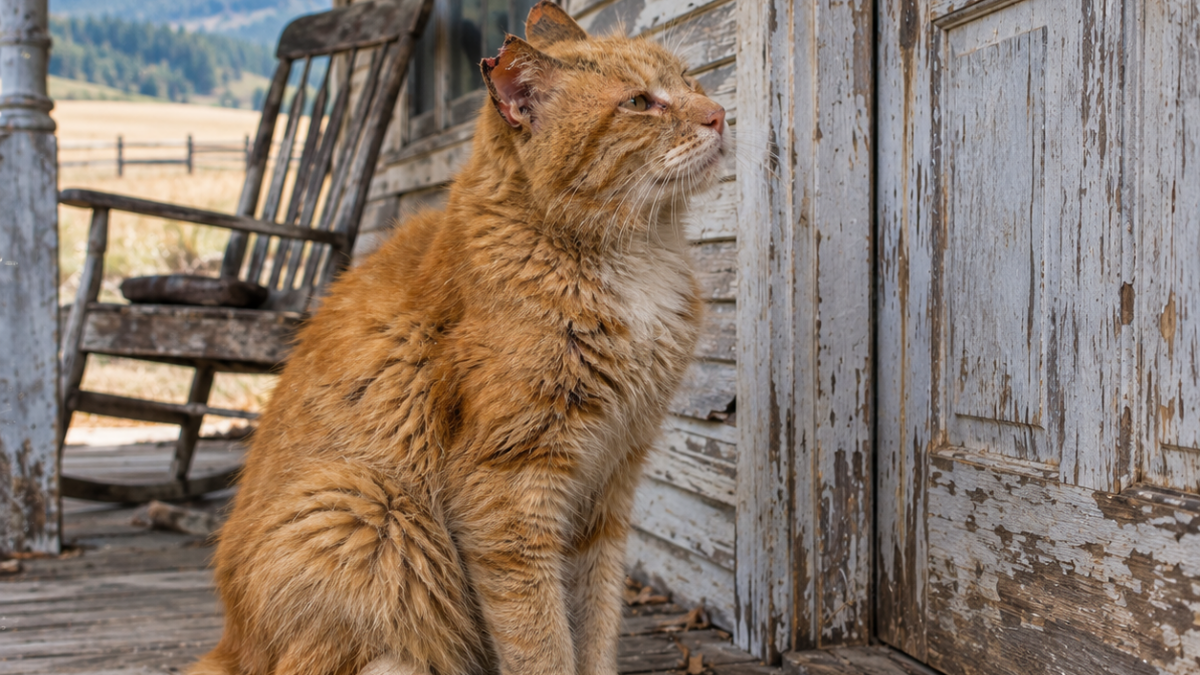
A Cat Disappeared 72 Hours After Being Rehomed 41 Miles Away—19 Days Later, a Mail Carrier Found Him Sitting at One Familiar Front Door
For nineteen days, the old orange tabby crossed rivers, highways, cattle fields, and miles of open Oregon country to get back to the one man he trusted, unaware that the man had already been buried and the house had been emptied.
When a mail carrier finally found him sitting on the familiar porch, one paw worn nearly raw and his body a third lighter, he was still facing the front door as if he believed it might open at any moment.
But the most painful truth came later, when a shelter volunteer discovered that the dying farmer had left specific instructions for his cat—and someone in the family had quietly ignored them.
The first person to realize something was wrong with Walter Bennett was his cat.
That was what Mrs. Cline from the next property always believed, anyway.
Walter was eighty-one years old in the spring of 2021, a widower living alone on thirty-two acres outside a small farming community in central Oregon where the winters cut hard across the open ground and summers baked the sage until the whole valley smelled dry and sharp.
His house sat at the end of a gravel drive lined with leaning fence posts, a weathered red barn on one side and two old cottonwoods on the other.
Nothing about the place had changed much in forty years.
The porch sagged slightly near the eastern corner.
The screen door slapped shut too hard.
One gutter leaned away from the roof.
Walter always said he would fix it when the weather warmed.
Then the weather warmed.
Then cooled again.
Then warmed.
The gutter stayed.
So did Walter.
Until one Tuesday morning in April.
He had been living alone for six years by then.
His wife, Evelyn, had died after a long illness.
Their two adult children lived in California.
His daughter, Marlene, was outside Sacramento.
His son, David, lived near San Diego.
They called.
Sometimes.
Visited less often.
There had been no dramatic family break.
No screaming argument.
No slammed doors.
Life had simply stretched.
Children got jobs.
Grandchildren came.
Flights became expensive.
Walter became more stubborn about traveling.
Then age made everything complicated.
The distance grew.
The one constant in his house was an orange tabby named Jasper.
Walter found him behind Miller’s Feed & Grain in November 2016.
It was raining that afternoon.
PART2:
Cold Oregon rain that seemed to come sideways.
Walter had gone to pick up mineral blocks and a bag of cracked corn for the hens.
He heard the sound before he saw the animal.
A thin rasping cry from behind a stack of wooden pallets.
Walter crouched.
“Come on out.”
Nothing.
He moved one pallet.
There was a cat.
Young adult.
Orange.
Mud soaked through his coat.
One ear nicked.
Eyes enormous.
He was crouched beside a torn feed sack, trying to make himself disappear.
Walter held out a hand.
The cat hissed.
PART3:
Walter sat down on an overturned bucket.
“Fair.”
The employee loading his truck found him ten minutes later.
“You planning to spend winter back here, Walt?”
“Cat’s negotiating.”
“That cat’s been here two weeks.”
“Whose is he?”
“Nobody’s.”
Walter looked at the animal.
The cat looked back.
“Everybody’s somebody’s.”
He went home with a fifty-pound bag of feed, mineral blocks, cracked corn, and one furious orange cat inside a cardboard box.
Evelyn had been gone less than a year.
Walter still set two mugs on the counter some mornings by accident.
The bedroom door remained closed because her robe still hung behind it.
He ate dinner in front of the television because the kitchen table was too large for one person.
Jasper changed the rhythm of the house.
Not immediately.
For three days, he lived beneath the guest bed.
Walter put food outside.
Water.
A litter tray.
Said nothing.
Fourth night, Walter woke at 2:13 a.m. and found the cat sitting in the bedroom doorway.
“Couldn’t sleep either?”
Jasper blinked.
Walter lifted the blanket.
“I’m not inviting you up.”
The cat jumped onto the mattress.
Walter sighed.
“You listen about as well as Evelyn did.”
Jasper walked across his legs.
Circled twice.
Then lay against Walter’s ribs.
That became the arrangement.
For six years, Jasper followed Walter through the slow narrowing of his life.
Morning coffee on the porch.
Trip to the feed store.
Mail at noon.
Weather radio in the afternoon.
Soup for dinner.
Baseball if it was on.
Jasper slept in the tractor seat while Walter fixed fence.
Sat on hay bales while he swept the barn.
Followed him to the mailbox.
Waited outside the bathroom.
If Walter stayed seated too long, Jasper climbed onto his lap.
If Walter coughed, the cat opened one eye.
If Walter forgot breakfast, Jasper reminded him.
Walter spoke to him constantly.
“You’re gaining weight.”
Jasper stared.
“Don’t look at me like that.”
Stare.
“The vet said eleven pounds.”
Jasper yawned.
Walter would mutter:
“Your mother spoiled you.”
By “your mother,” he meant Evelyn.
A woman Jasper had never known.
It made perfect sense to Walter.
Mrs. Cline heard the conversations whenever she visited.
“You do realize that cat does not speak English.”
Walter looked offended.
“He understands plenty.”
Jasper sat beside him.
Mrs. Cline said:
“He understands the can opener.”
“More than some people.”
Walter’s health declined gradually.
His knees bothered him.
Then his heart.
Blood pressure.
A mild stroke at seventy-nine that left his left hand weaker.
His doctor suggested he move nearer his children.
Walter refused.
Marlene tried.
“Dad, you could get a condo fifteen minutes from me.”
“I have a house.”
“You have thirty-two acres you can barely manage.”
“I’m managing.”
“You hired the Wagners to cut hay.”
“That’s called delegation.”
“Dad.”
“I’m not moving to California.”
“Why?”
“Too many people.”
“That is not a medical reason.”
“It’s enough.”
David tried next.
“What if you fall?”
“I’ll get up.”
“What if you can’t?”
Walter looked at Jasper.
“Cat’ll call somebody.”
David laughed.
Walter did too.
Nobody knew that sentence would later become unbearable.
The morning Walter died was clear.
Cold sunlight.
The kind that makes every fence wire bright.
Mrs. Cline saw him at 8:20 when she drove past.
He was on the porch.
Coffee mug.
Jasper beside him.
Walter lifted one hand.
She waved.
At around ten, the mail carrier left an envelope in the box.
At noon, Walter usually went out to get it.
He did not.
At 1:30, Jasper appeared near Mrs. Cline’s property.
That was unusual.
He never crossed the road.
He sat on her driveway.
Meowed.
When she approached, he ran toward Walter’s place.
Stopped.
Looked back.
Mrs. Cline followed.
The front door was open.
Walter was on the kitchen floor.
He had suffered what the coroner later described as a massive cardiac event.
It was quick.
That comforted people.
Mrs. Cline was not sure it comforted Jasper.
The cat sat against Walter’s shoulder while she called 911.
When the paramedics arrived, Jasper hissed.
Not aggressively.
Terrified.
He backed beneath the table.
Watched strangers lift Walter.
Watched the stretcher leave.
Then he walked to the front door.
Sat.
Waited.
Walter never came back.
Marlene arrived two days later.
David came the next morning.
The funeral was small.
Walter had outlived most of his friends.
A few farmers.
Mrs. Cline.
People from the feed store.
A retired pastor.
Marlene and David.
Three grandchildren.
Jasper stayed at the house.
Nobody thought bringing him to the funeral made sense.
That evening, he sat on Walter’s side of the bed.
Marlene found him there.
She had not seen him in almost three years.
“Hey.”
Jasper looked at her.
She reached.
He moved away.
Marlene pulled her hand back.
“Okay.”
She stood in the room.
Her father’s boots were beside the dresser.
Hat on the hook.
Half-read farm newspaper on the nightstand.
She began crying.
Jasper watched.
Neither approached the other.
The family stayed a week.
They sorted.
Clothes.
Tools.
Financial papers.
Furniture.
Walter’s pickup.
Old farm equipment.
Boxes of Evelyn’s things.
Every object became a decision.
Keep.
Sell.
Donate.
Trash.
The process was exhausting.
And Jasper became another decision.
“Can you take him?” David asked.
Marlene shook her head.
“Our apartment doesn’t allow pets.”
“You have a house.”
“Homeowners association.”
“Same thing.”
“Your daughter likes cats.”
“My wife’s allergic.”
Mrs. Cline offered suggestions.
“Shelter in Bend.”
“He’s older,” Marlene said.
“Not that old.”
“Do we know his age?”
“Maybe ten.”
David frowned.
“And he’s attached to this place.”
Mrs. Cline said:
“He’s attached to Walter.”
Nobody answered.
That was the truth they kept trying not to touch.
Jasper did not care about thirty-two acres.
He cared about the man who moved through them.
Every morning during that week, Jasper waited by the porch around seven.
Walter’s usual coffee time.
Around noon, he walked toward the mailbox.
At five, he sat near the kitchen.
At nine, he went to the bedroom.
Routine without the person.
Mrs. Cline watched it and felt something crack inside her.
“He needs somebody steady.”
Marlene looked exhausted.
“We know.”
“Not just anybody.”
“We’re trying.”
A solution came from a neighbor named Thomas Reed.
Thomas lived two counties away near Prineville.
His sister had known Evelyn.
He owned a small place with a barn.
Three barn cats.
No dogs.
When Mrs. Cline called, he said:
“I can try.”
It sounded good.
Forty-one miles.
Not across the country.
Country environment.
Barn.
Quiet.
Experienced cat owner.
Marlene felt relieved.
David felt relieved.
Everyone felt relieved.
Except Mrs. Cline.
She asked:
“You sure he’ll stay?”
Thomas shrugged.
“Cats settle.”
Mrs. Cline looked at Jasper sleeping on Walter’s chair.
“Some do.”
Before they moved Jasper, Walter’s attorney came to the house.
That detail mattered later.
His name was James Avery.
Sixty-three.
Gray suit.
County practice.
He sat at the kitchen table with Marlene and David.
Reviewed the will.
Property to be sold.
Proceeds divided.
Specific tools to David.
Evelyn’s jewelry to Marlene.
Small donations to church and volunteer fire department.
Then he said:
“There is also a provision concerning the cat.”
Marlene looked up.
“The cat?”
James opened a folder.
“Your father revised this two years ago.”
David almost smiled.
“He put Jasper in the will?”
“Not exactly.”
James read.
Walter had set aside eight thousand dollars for Jasper’s lifetime care.
The money was to be held by the estate and reimbursed to whoever permanently cared for the cat.
Food.
Veterinary expenses.
Medication.
Reasonable boarding.
There was also a handwritten attachment.
James unfolded it.
Walter’s writing.
Uneven.
Block letters.
JASPER DOESN’T DO WELL WITH CAGES.
LET HIM SLEEP INSIDE.
DON’T SHUT HIM IN A BARN.
IF MRS. CLINE CAN’T KEEP HIM, FIND SOMEBODY WHO WILL LET HIM LIVE IN THE HOUSE.
HE LIKES WINDOWS.
HE SLEEPS ON THE RIGHT SIDE OF THE BED.
PLEASE DON’T DUMP HIM SOMEWHERE BECAUSE I’M DEAD.
The kitchen went silent.
Marlene put a hand over her mouth.
David stared at the paper.
Mrs. Cline, who had come to discuss farm access, turned away.
James continued:
“He also specified that placement should be permanent and preferably within central Oregon.”
Marlene whispered:
“Why didn’t he tell us?”
David said:
“He probably thought the will was telling us.”
Nobody liked that answer.
Thomas Reed had already agreed to take Jasper.
But Thomas’s property included a heated mudroom connected to the house.
He told them the cat could sleep inside.
That seemed compliant enough.
James asked for Thomas’s contact information so he could arrange reimbursement later.
Marlene said she would send it.
Then, amid funeral paperwork and property appraisal and bank forms and exhaustion, the instruction became just another document.
That would become the first mistake.
The second came three days later.
Thomas arrived with a hard plastic carrier.
Jasper refused to enter.
He spread every claw.
Hissed.
Backed behind Walter’s chair.
David said:
“He’s never like this.”
Mrs. Cline looked at him.
“He knows.”
“Knows what?”
“That another person is leaving.”
It took twenty minutes.
Eventually they wrapped Jasper in Walter’s old flannel shirt.
Placed him inside the carrier.
The cat made one sound.
Low.
Long.
Mrs. Cline started crying.
Marlene kissed two fingers.
Touched the top of the carrier.
“I’m sorry.”
Thomas put Jasper in the passenger seat.
The truck drove away.
For the first mile, Jasper cried.
Then stopped.
He pressed his nose against the carrier door.
Watched the landscape.
The route wound east.
Across a river.
Through two small towns.
Past pasture.
Three miles of open country.
Eventually Thomas’s property appeared.
A gray farmhouse.
Barn.
Equipment shed.
Fenced pasture.
Thomas opened the carrier in the mudroom.
Jasper stayed inside.
Food.
Water.
Litter.
Nothing.
Thomas waited.
That night, Jasper came out.
Sniffed the room.
Found the door.
Sat.
Next morning, Thomas let him see the kitchen.
The cat searched every room.
Bedroom.
Hallway.
Windows.
Back door.
Front door.
Then returned to the mudroom.
Thomas thought he was settling.
He was wrong.
On the second day, Jasper found the barn.
Thomas was moving hay.
He allowed the cat to follow.
Jasper walked the perimeter.
Sniffed.
Sat near the open door.
By evening, he had eaten a little.
That was encouraging.
On the third afternoon, Thomas stepped inside the house for twenty minutes.
When he returned, Jasper was gone.
At first, he assumed the cat was hunting.
Then evening came.
No Jasper.
He shook food.
Called.
Checked the barn.
Equipment shed.
Trees.
Culverts.
Nothing.
At midnight, he drove the county road with headlights low.
Nothing.
The next morning, Thomas called Mrs. Cline.
Her stomach dropped before he finished the sentence.
“You lost him?”
“He got out.”
“He was supposed to be inside.”
“He was in the barn.”
Walter’s handwritten instruction flashed through her mind.
DON’T SHUT HIM IN A BARN.
Mrs. Cline said:
“You were told he stays in the house.”
Thomas sounded defensive.
“He followed me.”
“You were told.”
“I know.”
“Then why was he outside?”
“He’s a farm cat.”
“No.”
“He lived on a farm.”
“That is not the same thing.”
Thomas went quiet.
“I’m looking.”
Mrs. Cline called Marlene.
Marlene was already back in California.
She had spent the previous night sorting digital estate documents.
When the phone rang, she almost ignored it.
Then she heard.
“What do you mean gone?”
Thomas explained.
Marlene stood in her kitchen.
Her husband watched her face change.
“How long?”
“Since yesterday afternoon.”
“Twenty hours?”
“Yes.”
“You waited twenty hours to call?”
“I thought he’d come back.”
“Back where?”
Thomas said nothing.
The answer was obvious.
This was not Jasper’s home.
Marlene called David.
David swore.
Then went quiet.
“What are the odds he heads west?”
Marlene asked.
“Forty-one miles?”
“He doesn’t know the route.”
“He was awake in the truck.”
“He was in a carrier.”
“Still.”
They posted online.
Orange tabby.
Older male.
Large.
Small notch in left ear.
Last seen near Thomas Reed’s property.
They called shelters.
Veterinary clinics.
Animal control.
Neighbors.
The weather stayed dry.
That was good.
Nights were cold.
That was not.
Three days.
No sightings.
Five.
A woman reported an orange cat near a hay field seven miles west.
Thomas drove there.
Wrong cat.
Day six, someone saw a large orange animal near a culvert.
Coyote.
Day seven, Mrs. Cline drove nearly two hours searching rural roads.
Nothing.
Day eight, a gas station clerk said an orange cat had crossed behind the dumpster before dawn.
Possible.
Eleven miles from Thomas’s property.
Mrs. Cline left food.
No result.
Day ten.
Silence.
Marlene began sleeping badly.
She had spent years telling herself distance did not mean indifference.
She loved her father.
She did.
But the cat became a symbol of everything she had failed to understand about Walter’s final years.
His life had not been empty simply because she was absent.
There had been routines.
Neighbors.
Fields.
A cat.
She had arrived after his death and reduced everything to logistics.
Sell.
Donate.
Move.
Place.
Now Jasper was somewhere outside because everyone wanted the problem solved quickly.
Her husband found her crying at three in the morning.
“He’s a cat,” he said gently.
She looked at him.
“He was Dad’s family.”
“I know.”
“No.”
She shook her head.
“I don’t think I did.”
Meanwhile, Jasper moved.
No human saw most of it.
No one could later reconstruct the exact route.
But they could make reasonable guesses.
He had to cross open pasture.
Two major roads.
Several drainage channels.
A river corridor.
Miles of gravel.
Sage.
Barbed wire.
Farms guarded by dogs.
Territory claimed by other cats.
Coyotes moved at dusk.
Raptors hunted fields.
Cars traveled faster than they should.
Water was unpredictable.
Food more so.
One woman later remembered seeing an orange cat moving along an irrigation ditch around day nine.
She had called to him.
The cat stopped.
Looked.
Then continued west.
Another rancher saw what might have been Jasper near a cattle guard three nights later.
“Skinny orange thing.”
Would not approach.
Heading toward the river.
One question came up repeatedly afterward.
How did he know?
Science offered possibilities.
Cats can navigate over surprising distances.
Scent.
Sun angle.
Magnetic sensitivity has been proposed.
Landmarks.
Memory.
Sound.
None of it fully explained Jasper.
He had traveled the route once.
Inside a truck.
In a carrier.
Yet every day, somehow, he moved in the direction of Walter’s house.
Not toward food.
Not toward people.
Toward home.
Or what he believed home still contained.
Day thirteen brought rain.
Hard rain.
The first significant storm since he disappeared.
That likely caused the infection later found in his respiratory tract.
At some point, Jasper’s rear paw was injured.
The pad wore away.
Maybe road surface.
Maybe gravel.
Maybe he stepped on something sharp and kept walking.
He developed a limp.
Still moved.
His fur collected burrs.
His right ear tore.
Possibly a fight.
Possibly barbed wire.
The wound stayed fresh.
Still moved.
His body began burning its own reserves.
Hip bones appeared.
Ribs.
Still moved.
By day seventeen, if the later sightings were correct, Jasper had reached country he once knew.
Not clearly.
But enough.
Familiar irrigation smell.
Feed lot.
Rail crossing.
The distant grain silos near Miller’s Feed & Grain.
Maybe that was when certainty returned.
Maybe it had never left.
On the nineteenth morning, postal carrier Naomi Wells turned onto Walter Bennett’s road at 10:46.
Naomi was forty-four.
She had delivered mail there for nine years.
She knew Walter.
Not well.
Enough.
He left a Christmas card in the box every December with a five-dollar coffee card inside.
Once, during wildfire season, Walter put a cooler of water at the end of the drive with a sign:
MAIL PEOPLE TOO.
Naomi had cried when she saw his obituary.
The Bennett house had been empty nearly three weeks.
Estate cleaners had removed most furniture.
Utilities had been shut off.
A real-estate sign stood near the road.
Naomi had delivered nothing there for several days.
She almost drove past.
Then she saw orange.
At first she thought it was a bucket on the porch.
Then it moved.
Naomi stopped.
A cat.
Large orange tabby.
Sitting on the top step.
Facing the front door.
Something about him felt wrong.
Too still.
Naomi pulled into the drive.
“Hey, buddy.”
No reaction.
She came closer.
Then recognized him.
“Jasper?”
One ear turned.
Walter’s cat.
Naomi’s chest tightened.
“Oh my God.”
She climbed out.
Jasper looked at her.
His face was thinner.
Eyes dull.
Fur clumped with burrs and mud.
One rear paw held slightly off the ground.
Right ear torn.
He looked ancient.
“Where have you been?”
Jasper turned back to the door.
Naomi approached slowly.
He did not run.
Did not hiss.
Did not meow.
She sat two steps below him.
“Walter’s not in there.”
No reaction.
Naomi swallowed.
“I’m sorry.”
Jasper stared at the door.
She stayed.
Five minutes.
Ten.
Fifteen.
The cat did not leave.
At twenty minutes, Naomi extended one hand.
Jasper sniffed.
Then placed his chin briefly against her knuckles.
That was permission.
She lifted him.
He weighed far too little.
Naomi gasped.
“Jesus.”
Jasper did not fight.
His head rested against her arm.
She called the county shelter from the porch.
Volunteer coordinator Rachel Monroe answered.
Naomi explained.
Rachel knew the story immediately.
“The missing Bennett cat?”
“Yes.”
“You’re sure?”
“I’ve delivered to this house for years.”
“Where is he?”
“On Walter’s porch.”
There was a pause.
Rachel said:
“He walked forty miles?”
“Forty-one.”
Neither spoke for a second.
Rachel arrived forty minutes later.
Jasper had returned to the top step.
Naomi had offered water from her route bottle.
He drank.
Slowly.
Then resumed waiting.
Rachel sat beside him.
She had handled frightened animals for seventeen years.
She expected fear.
Pain response.
Defensiveness.
Jasper showed none.
He acknowledged her.
Then watched the door.
Rachel whispered:
“You really thought he was coming back.”
Naomi looked away.
At the shelter, the veterinarian examined him.
Weight loss:
More than one-third of normal body mass.
Severe dehydration.
Rear paw pad almost completely worn away.
Inflamed tissue exposed.
Secondary infection.
Ear tear.
Burr matting across belly and inner legs.
Mild upper respiratory infection.
Muscle loss.
Exhaustion.
But heart strong.
Kidneys acceptable.
No fractures.
Dr. Lena Hart said:
“I don’t know how he kept walking on that paw.”
Rachel answered:
“Apparently he had somewhere to be.”
They shaved the worst matting.
Cleaned the ear.
Bandaged the paw.
Started fluids.
Antibiotics.
Pain medication.
Food in tiny portions.
Jasper ate.
Then slept.
Not curled.
Flat.
Completely spent.
Rachel photographed him the next morning.
Not for publicity.
For the shelter page.
The image showed Jasper lying on a blue blanket with one bandaged rear paw.
Orange coat uneven where burrs had been shaved.
Eyes half open.
Caption:
This is Jasper.
After his owner died, Jasper was rehomed approximately 41 miles away.
He escaped within three days.
Nineteen days later, he was found sitting on the porch of his former home.
He appears to have traveled the entire distance back.
His owner is no longer there.
Jasper is receiving treatment and will need a quiet permanent home once he recovers.
That was all.
No dramatic headline.
No music.
No “you won’t believe.”
Just facts.
People believed them anyway.
By afternoon, the post had been shared thousands of times.
Comments flooded in.
“He went home.”
“He didn’t know.”
“My heart.”
“Please tell me someone keeps him.”
“Forty-one miles?”
“Poor baby.”
Then came the anger.
“Who dumps an old cat 40 miles away?”
“Why didn’t the family keep him?”
“They ignored the man’s wishes.”
That last comment startled Rachel.
What wishes?
She called Mrs. Cline.
Mrs. Cline told her about the will.
Then about Walter’s note.
Rachel sat very still.
“He specifically said not to put Jasper in a barn?”
“Yes.”
“And that’s where he escaped?”
“Yes.”
Mrs. Cline’s voice cracked.
“We failed him.”
Rachel said nothing for a moment.
Then:
“You made a mistake.”
“That cat walked forty miles because of our mistake.”
“Yes.”
Mrs. Cline began crying.
Rachel softened.
“But he made it.”
“Barely.”
“He made it.”
News spread.
Local paper called.
Then regional television.
Marlene saw the shelter post while standing in her kitchen in California.
She recognized Jasper before reading the caption.
Her phone fell onto the counter.
Her husband rushed in.
“What happened?”
She pointed.
Couldn’t speak.
Then she read the line:
His owner is no longer there.
Marlene sat down.
She cried harder than she had at her father’s funeral.
That embarrassed her.
Then made her angry at herself for being embarrassed.
Grief does not organize itself fairly.
She called the shelter.
Rachel answered.
“I’m Walter Bennett’s daughter.”
Silence.
Then:
“Okay.”
“I need to know how he is.”
Rachel explained.
Marlene listened.
Every injury.
Every mile.
Every detail.
Then said:
“I want to pay for everything.”
Rachel answered carefully.
“Your father already planned for that.”
“What?”
“The estate provision.”
Marlene knew.
Of course.
“I forgot.”
The words sounded terrible as soon as she said them.
“I didn’t mean—”
Rachel did not rescue her.
She simply said:
“Mr. Bennett didn’t.”
That hurt.
Marlene deserved some of it.
Not cruelty.
Truth.
She called attorney James Avery next.
“Why wasn’t the Jasper fund activated?”
James sounded confused.
“I was waiting for permanent placement information.”
“We placed him.”
“You never sent Thomas Reed’s details.”
Marlene closed her eyes.
“I forgot.”
“Yes.”
“Then Dad’s instructions weren’t followed.”
James paused.
“He specified indoor placement.”
“He was in a barn.”
“I was not aware of that.”
Marlene leaned against the wall.
“Can Thomas claim the money?”
“No.”
“Good.”
That surprised James.
Marlene continued:
“He isn’t getting a cent.”
The investigation into the estate did not reveal fraud.
No stolen money.
No secret crime.
Just negligence.
Human negligence.
The ordinary kind.
The dangerous kind.
People overwhelmed by grief and paperwork.
A neighbor trying to help without understanding the animal.
A daughter forgetting to send a contact.
A family deciding an old cat would adapt because adaptation was convenient.
Nobody had intended Jasper harm.
Intent did not change his paw.
Marlene flew back to Oregon two days later.
She went directly to the shelter.
Jasper was in recovery.
Rachel warned her:
“He may not recognize you.”
“That’s okay.”
“He may associate you with leaving.”
Marlene’s face tightened.
“That’s fair too.”
She entered.
Jasper looked at her.
No reaction.
Marlene sat on the floor.
“I’m sorry.”
The cat watched.
“I know that doesn’t mean anything to you.”
She placed Walter’s flannel shirt beside her.
She had taken it from the house before leaving.
Jasper’s nose moved.
He stood.
Limped toward it.
Pressed his face into the fabric.
Marlene covered her mouth.
He lay on the shirt.
Not her lap.
Not near her.
On Walter’s shirt.
Marlene cried quietly.
“I should’ve known.”
Rachel stood outside the kennel area and let her.
Later, Marlene asked whether she could take Jasper.
Rachel hesitated.
“Back to California?”
“Yes.”
“You said before you couldn’t.”
“I can change things.”
“Can you?”
Marlene looked at Jasper.
Her instinct was guilt.
Fix it.
Take him.
Prove something.
Rachel saw that.
“Don’t adopt him because you feel bad.”
Marlene looked at her sharply.
Rachel continued:
“He already lost one home.”
“He needs the next one to be about him.”
Not absolution.
That sentence changed Marlene.
She nodded.
“You’re right.”
She sat with Jasper another hour.
Then left.
She did something better.
She paid the shelter’s unreimbursed medical costs herself.
Not from Walter’s fund.
Her money.
Then told James to preserve the eight thousand dollars for whoever permanently adopted Jasper.
Every cent.
She also paid Thomas Reed’s fuel and search expenses.
But nothing more.
Thomas called her.
“I’m sorry.”
Marlene said:
“I know.”
“I really thought he’d stay.”
“I know.”
“I shouldn’t have let him into the barn.”
“No.”
Thomas swallowed.
“I saw your father’s note after.”
Marlene closed her eyes.
“How?”
“Mrs. Cline sent it.”
“I wish I’d seen it before.”
“So do I.”
No yelling.
No revenge.
Just a mistake that could not be undone.
The shelter received 212 adoption inquiries in four days.
Many were emotional.
Some unsuitable.
Families with young dogs.
People wanting a “famous cat.”
One person asked whether Jasper would be good for social media.
Rachel deleted that application.
Then a woman named Diane Mercer called.
Sixty-seven.
Widow.
Lived outside Redmond.
One-story house.
No other pets.
Quiet street.
Retired school librarian.
She said:
“I saw Jasper.”
Rachel replied:
“Everyone saw Jasper.”
“I know.”
“What makes you interested?”
Diane went quiet.
Then:
“My husband died eight months ago.”
Rachel waited.
“I keep waking up and forgetting.”
Diane’s voice remained steady.
“I make two cups of coffee.”
“I still turn toward his chair when the news comes on.”
“I haven’t moved his boots from the garage.”
Rachel looked through the glass at Jasper sleeping.
Diane continued:
“I don’t want a kitten.”
“I don’t have energy for one.”
“I don’t want an animal that expects me to be cheerful.”
“What do you want?”
Diane answered:
“Something that understands a quiet house.”
Rachel did not speak.
Then Diane said the sentence that everyone later remembered.
“He understands what it means to miss someone.”
“I don’t need to explain anything to him.”
Rachel scheduled a meeting.
Diane drove more than an hour.
She wore jeans.
A green cardigan.
Carried no cat toys.
No treats.
No carrier.
Rachel noticed.
“You didn’t bring supplies?”
“If he doesn’t like me, I’m going home alone.”
Good answer.
They brought Diane into the visitation room.
Jasper entered slowly.
Still bandaged.
Still limping.
Diane sat on the floor.
Did not call.
Did not reach.
She simply said:
“Hi.”
Jasper looked.
Then walked toward the window.
Sat.
Diane looked at Rachel.
“He likes windows?”
Rachel smiled.
“His old owner wrote that.”
Diane nodded.
“My husband did too.”
She moved to the chair near the window.
Jasper remained there.
Ten minutes.
Twenty.
Diane spoke occasionally.
Not to persuade him.
Just talking.
“My name is Diane.”
“I live thirty-eight minutes from here.”
“House has too many rooms.”
“You can pick one.”
Jasper blinked.
“My husband’s name was Frank.”
Another blink.
“He snored.”
Jasper looked away.
Diane smiled.
“I’m told you do too.”
At thirty minutes, Jasper walked toward her.
Sniffed her shoes.
Then sat beside her chair.
Not touching.
Rachel knew.
Sometimes shelter work gives you a moment before paperwork.
A knowing.
This was one.
Diane adopted Jasper after his veterinarian cleared him for foster-to-adopt placement.
Walter’s trust covered medical care.
But Diane refused reimbursement for food.
James called.
“The fund specifically allows it.”
“I can buy cat food.”
“That money was left for his care.”
“Then use it when he needs something I can’t afford.”
James wrote that down.
Diane took Jasper home in a soft carrier with Walter’s flannel shirt inside.
During the drive, she talked.
“I’m not Walter.”
Jasper watched through the mesh.
“I know that.”
The house was small.
Cream siding.
Two bedrooms.
A wide front window overlooking juniper and open sky.
Frank’s recliner sat beside it.
Diane had not allowed anyone to move it.
She set Jasper’s carrier in the living room.
Opened it.
The cat remained inside.
Diane said:
“No rush.”
She made tea.
Jasper came out twenty-three minutes later.
Walked the room.
Sniffed Frank’s recliner.
Stopped.
Then jumped up.
Diane froze.
Jasper circled once.
Lay down.
Frank’s chair.
For the first time since her husband died, Diane laughed in that room.
“Oh.”
She wiped her eyes.
“Well.”
“You’ve got some nerve.”
Jasper slept there three hours.
That night, Diane expected him to use the cat bed.
He did not.
At 2:11 a.m., something landed on her mattress.
Jasper.
He walked to the right side.
The side Frank had slept on.
Diane stopped breathing.
Jasper curled near the pillow.
Walter’s note had said:
HE SLEEPS ON THE RIGHT SIDE OF THE BED.
Diane began crying.
Jasper opened one eye.
She whispered:
“You too?”
He put his head down.
They slept.
Jasper never tried to leave.
Not once.
For weeks, Diane kept every door secure.
Windows screened.
No outdoor access.
She worried he would search for Walter again.
He didn’t.
The front door opened.
He stayed.
Visitors came.
Stayed.
Diane walked outside to get mail.
He watched from the window.
Stayed.
Maybe he understood.
Maybe exhaustion ended the search.
Maybe grief had finally found a place where it was allowed to rest.
His paw took eleven weeks to heal.
The pad regrew imperfectly.
Scar tissue remained.
He walked with a slight limp for the rest of his life.
Diane installed small carpet runners because hardwood made him slip.
She put a step beside the bed.
Another beside Frank’s chair.
The eight-thousand-dollar trust paid for orthopedic supplements.
Blood work.
Dental care.
Eventually kidney medication.
The first time James sent Diane a reimbursement check, she called Marlene.
They had never spoken.
Marlene answered cautiously.
“Hello?”
“This is Diane Mercer.”
Silence.
“Jasper’s Diane.”
Marlene inhaled.
“How is he?”
“Asleep in my dead husband’s chair.”
Marlene laughed unexpectedly.
Then cried.
Diane waited.
“I’m sorry.”
“Don’t apologize.”
“I should have kept him.”
Diane looked at Jasper.
“Maybe.”
The word surprised Marlene.
Diane did not soften it.
“But you didn’t.”
“No.”
“And now he’s here.”
Marlene whispered:
“Yes.”
“What do you want to do with that?”
Marlene sat down.
“I don’t know.”
“Then start by visiting.”
So she did.
Three months later, Marlene came to Diane’s house.
Jasper recognized Walter’s flannel shirt immediately.
Recognized Marlene less clearly.
She sat.
Waited.
Eventually he approached.
Marlene touched his head once.
“I’m sorry, Dad.”
Diane heard.
Said nothing.
Marlene looked at her.
“I keep saying that to the cat.”
“Maybe you’re not talking to the cat.”
That landed.
Marlene stayed two hours.
Before leaving, she asked:
“Can I come again?”
Diane looked at Jasper.
“He doesn’t run the calendar.”
Then:
“Yes.”
David came later.
He brought Walter’s old coffee mug.
The one with a faded tractor printed on the side.
Diane placed it on a shelf near Jasper’s window.
Not as a shrine.
Just because it belonged.
Mrs. Cline visited too.
She stood in Diane’s living room and cried when Jasper walked toward her.
“You idiot.”
She knelt.
“You absolute idiot.”
Jasper rubbed his head against her hand.
Mrs. Cline buried her face in his fur.
“You scared me to death.”
Diane said:
“Pretty sure he had worse week.”
Mrs. Cline laughed through tears.
Jasper’s story continued circulating online.
People wanted dramatic closure.
They got something quieter.
An old cat.
An old widow.
A chair.
A window.
Routine.
Diane woke at six.
Coffee.
Jasper ate breakfast.
At eight, he sat in Frank’s chair.
At noon, window.
At three, nap.
At six, dinner.
At nine, bed.
Right side.
Diane talked to him.
Not baby talk.
Conversation.
“Mail’s late.”
Jasper blinked.
“Frank used to say the same thing.”
Blink.
“I know you didn’t know him.”
Jasper stretched.
“Doesn’t stop you from taking his chair.”
Some evenings Diane told Jasper about Frank.
Twenty-nine years married.
He taught history.
Hated olives.
Loved jazz.
Could not fix plumbing.
Once drove three hours in the wrong direction and refused to admit it until they reached Idaho.
Diane laughed.
Then sometimes cried.
Jasper never moved away.
Other evenings she talked about Walter.
What little she knew.
Marlene eventually gave her more.
Photographs.
Stories.
Walter as young farmer.
Walter and Evelyn dancing at their fiftieth anniversary.
Walter holding Jasper on the porch.
Jasper much heavier then.
Diane framed one photograph.
Placed it near the window.
Not because Jasper needed it.
Because she did.
It reminded her that the animal beside her had a life before her.
That love did not become invalid when a new home began.
One year after Jasper came home, Diane drove him back to Walter’s property.
People argued about that decision.
Rachel questioned it.
“What if he tries to stay?”
Diane said:
“Then I’ll stay until he’s ready.”
The property had sold.
New owners were a young couple named Aaron and Shelby Mills.
They knew Jasper’s story.
When Diane called, they said yes immediately.
She arrived on a cool April morning.
Jasper rode in his carrier.
He was eleven or twelve by then.
Paw healed.
Limp permanent.
Diane opened the carrier near the porch.
Leash attached to a harness.
She did not trust sentiment more than safety.
Jasper stepped out.
Stopped.
Smelled.
The house looked different.
New paint.
Gutter repaired.
Porch reinforced.
Wind chimes.
Children’s bicycle near the barn.
Jasper walked toward the steps.
Diane’s chest tightened.
He climbed slowly.
One step.
Two.
Three.
Top step.
Then front door.
Exactly where Naomi had found him.
He sat.
Diane waited.
Five minutes.
Ten.
Jasper sniffed the threshold.
Aaron and Shelby watched from inside without opening the door.
Diane whispered:
“You can take your time.”
Jasper stood.
Walked to Walter’s old porch chair.
The new owners had kept it.
Aaron had planned to throw it away, then recognized it in a photograph from the story.
He repaired one leg.
Left it on the porch.
Jasper sniffed the wood.
Rubbed his cheek against it.
Then turned.
Walked back to Diane.
That was all.
No refusal.
No desperate scratching.
No waiting.
Diane crouched.
“You ready?”
Jasper leaned against her leg.
They went home.
Marlene cried when Diane told her.
“Do you think he understood?”
Diane answered:
“I think he knew something had changed.”
“Is that understanding?”
“Close enough.”
The visit changed Diane too.
She went home and moved Frank’s boots.
Not far.
From the garage doorway into a storage box.
Then she donated half his clothes.
Kept his favorite flannel.
Made room in the closet.
Healing did not arrive because Jasper showed her how.
That was too simple.
But living with an animal who had walked forty-one miles toward someone who could never open the door forced Diane to confront a question.
How long can love wait in front of a closed door before waiting becomes its own kind of wound?
She did not want to spend the rest of her life on a porch.
Neither did Marlene.
She began calling Mrs. Cline.
Not out of obligation.
Because Mrs. Cline had known her father as an old man.
Marlene knew him as Dad.
Those were different people.
Mrs. Cline told her things.
Walter sometimes danced with Jasper in the kitchen.
Walter hated canned peaches.
Walter cried on Evelyn’s birthday every year.
Walter donated firewood anonymously to a young family down the road.
Walter once drove thirty miles to retrieve Mrs. Cline’s escaped goat and complained about it for three years.
Marlene learned her father had lived a whole life after she stopped seeing it regularly.
That knowledge hurt.
Then helped.
Two years after Walter died, Marlene and David used part of their inheritance to create a small emergency pet-care fund through the county shelter.
Not named after themselves.
Not announced publicly.
They called it Walter & Jasper Home Care.
It covered temporary boarding and foster placement for pets whose owners died or entered hospitals unexpectedly.
The rules were simple.
Keep the animal’s routine when possible.
Do not treat “old” as “unadoptable.”
Do not assume a barn is the same as a home.
Read the owner’s instructions.
That last one was Marlene’s insistence.
Every intake form had a box printed in bold:
WHAT WOULD THIS ANIMAL’S PERSON WANT US TO KNOW?
Rachel kept Walter’s handwritten note pinned inside the shelter office.
Not publicly.
Staff only.
PLEASE DON’T DUMP HIM SOMEWHERE BECAUSE I’M DEAD.
Nobody needed a second explanation.
Jasper lived with Diane for three years.
They were quiet years.
Good years.
His orange coat became pale around the face.
Kidneys weakened.
Arthritis worsened.
His limp became more pronounced.
He stopped jumping onto Frank’s chair.
Diane added steps.
Eventually even the steps became difficult.
So she placed a bed beside the chair.
Jasper ignored it.
She placed the cushion from Frank’s chair on the floor.
Jasper approved.
At night, he still slept on the right side.
Until climbing became too difficult.
Diane lowered the mattress.
Then added a ramp.
“You are costing me more carpentry than my husband ever did.”
Jasper stared.
“Don’t get smug.”
At age roughly thirteen or fourteen, he developed chronic kidney disease.
The trust still had money.
Walter’s eight thousand dollars had been managed carefully.
Medication.
Fluids.
Prescription food.
Regular labs.
Diane learned to give subcutaneous fluids at home.
The first time, her hands shook.
Jasper tolerated it.
Mostly.
“You walked forty miles on a missing paw pad.”
She looked at the needle.
“You can handle this.”
Jasper disagreed vocally.
Diane laughed.
“You finally have opinions.”
He always had.
She just understood more now.
One winter evening, snow began falling.
Rare heavy snow.
Diane sat near the window.
Jasper slept beside her.
She thought about Frank.
Walter.
Evelyn.
People she never met.
The strange chain of loss connecting everyone in that room.
A farmer found a stray.
The farmer lost his wife.
The cat stayed.
Then the farmer died.
The cat searched.
The cat found an empty house.
A mail carrier stopped.
A shelter volunteer waited on a porch.
A widow drove an hour.
And now two creatures who had each lost someone slept in the same quiet room.
No grand plan.
Just accident after accident.
Loss after loss.
Choice after choice.
Diane put her hand on Jasper.
“He understood what it means to miss someone.”
That was what she had said at the shelter.
Three years later, she understood the other half.
He also understood what it meant to stay after the missing.
Jasper’s final decline came gently.
He stopped eating full meals.
Then half.
Then only tuna water.
Dr. Hart examined him.
Kidney values terrible.
Weight down.
Dehydration despite fluids.
Diane asked the question every pet owner dreads.
“Is he suffering?”
Dr. Hart did not dodge.
“Some.”
“Can we make him comfortable?”
“For a little while.”
“How little?”
“Days.”
Diane looked at Jasper.
He was resting on Walter’s old flannel shirt.
She had kept it all three years.
Still smelled like nothing now.
Not Walter.
Not really.
Laundry soap.
Time.
Cat.
Diane called Marlene.
“He’s close.”
Marlene flew to Oregon the next morning.
David came too.
Mrs. Cline drove over.
Rachel visited after shift.
Naomi the mail carrier came last.
Jasper had assembled a strange family without meaning to.
Nobody crowded him.
They took turns.
Marlene sat first.
“Hey, buddy.”
Jasper opened his eyes.
She touched his ear.
The tear from his journey had healed into a small notch.
“I wish Dad could see you.”
Then she corrected herself.
“No.”
“He did.”
She smiled through tears.
“He saw enough.”
David knelt.
“You cost us a lot of trouble.”
Jasper did not care.
Mrs. Cline cried before she entered.
“You’re still an idiot.”
Jasper purred faintly.
Naomi sat beside him.
“I almost drove past.”
That haunted her.
“I almost did.”
Diane put a hand on her shoulder.
“But you didn’t.”
Rachel came after dark.
She looked at Diane.
“You ready?”
“No.”
“Good.”
Diane frowned.
Rachel smiled sadly.
“Nobody should be ready.”
The veterinarian came to Diane’s house the next morning.
Jasper lay on the cushion from Frank’s chair.
Walter’s flannel beneath him.
Window open an inch.
Cool Oregon air.
Diane sat on the floor.
Marlene beside her.
No clinic.
No carrier.
No fear.
Diane put one hand on Jasper’s back.
Marlene touched his head.
The first medication made him sleepy.
His muscles relaxed.
His breathing slowed.
Diane whispered:
“You don’t have to go anywhere this time.”
Jasper’s eyes half closed.
“No roads.”
“No rivers.”
“No porch.”
“Just rest.”
Marlene’s face crumpled.
She touched the old flannel.
Then said:
“Dad would say you took long enough.”
Diane laughed through tears.
The veterinarian gave the final medication.
Jasper exhaled.
Then stopped.
No struggle.
No sound.
Just stillness.
Diane remained with her hand on him.
Marlene looked toward the window.
A long time passed.
Finally Diane said:
“He made it home twice.”
Marlene looked at her.
Diane continued:
“Once to Walter.”
“Once to me.”
They buried Jasper’s ashes in two places.
Most stayed with Diane.
A small amount, with permission from the new property owners, was placed beneath Walter’s cottonwood.
Not on the porch.
Not at the front door.
Under the tree where Walter used to sit in summer.
Marlene placed a small stone there.
No long inscription.
Just:
JASPER
HE CAME HOME
Diane kept the rest beside Frank’s ashes.
Not because the two men knew each other.
Because grief had already introduced them.
Years later, the Walter & Jasper fund still operated.
A shelter worker would occasionally receive an old dog whose owner entered hospice.
A cat whose person died alone.
Two bonded animals nobody wanted to separate.
And inside the office was Walter’s faded note.
JASPER DOESN’T DO WELL WITH CAGES.
LET HIM SLEEP INSIDE.
DON’T SHUT HIM IN A BARN.
IF MRS. CLINE CAN’T KEEP HIM, FIND SOMEBODY WHO WILL LET HIM LIVE IN THE HOUSE.
HE LIKES WINDOWS.
HE SLEEPS ON THE RIGHT SIDE OF THE BED.
PLEASE DON’T DUMP HIM SOMEWHERE BECAUSE I’M DEAD.
Marlene read it every time she visited.
She stopped seeing it as an accusation eventually.
It became something else.
A final act of care from a stubborn old man who knew exactly what his cat would lose when he died.
Walter had tried to prepare everyone.
They had not listened closely enough.
Jasper paid for that mistake with forty-one miles.
Nineteen days.
A torn ear.
A ruined paw.
A body starved nearly to the bone.
But the story did not end on the empty porch.
That was the part people remembered because it hurt.
The old cat sitting in front of a dark door.
Waiting for a man who could not answer.
But what came after mattered more.
A mail carrier stopped.
A volunteer sat beside him.
A veterinarian treated him.
A daughter admitted she had failed him.
A widow opened her house.
An attorney honored Walter’s last request.
A shelter changed how it handled orphaned pets.
A family learned that grief did not excuse carelessness.
And Jasper, after traveling forty-one miles backward toward the life he had lost, finally discovered he did not have to keep walking in order to remain loved.
For the rest of his life, he never ran away again.
Diane could open the door.
He stayed.
She could walk to the mailbox.
He watched from the window.
Visitors came and left.
He stayed.
Years earlier, Jasper had believed home was one gravel road, one porch, one old farmer’s voice behind a screen door.
He had crossed two counties to find it.
What he found instead was silence.
An empty house.
A locked door.
No Walter.
No coffee mug.
No familiar boots crossing the kitchen.
Nothing he understood.
And still, somehow, life did not end there.
That may have been the lesson the humans needed more than the cat.
Sometimes the person you would cross forty miles to find is gone.
Sometimes you arrive too late.
Sometimes the door you believed would always open never opens again.
Grief can leave you sitting in front of that door for a long time.
But eventually, if you are lucky, someone sits beside you on the porch.
They do not drag you away.
They do not tell you to forget.
They do not pretend the old home never mattered.
They simply wait until you are ready to be carried somewhere warm.
Jasper had walked forty-one miles back to an empty house where no one was waiting anymore.
But someone came for him anyway.
And this time, when he finally stopped searching, he did not lose home.
He found another one.








